EP0636324B1 - Rauchartikel mit kontrollierter Abgabe und Verfahren - Google Patents
Rauchartikel mit kontrollierter Abgabe und Verfahren Download PDFInfo
- Publication number
- EP0636324B1 EP0636324B1 EP94109392A EP94109392A EP0636324B1 EP 0636324 B1 EP0636324 B1 EP 0636324B1 EP 94109392 A EP94109392 A EP 94109392A EP 94109392 A EP94109392 A EP 94109392A EP 0636324 B1 EP0636324 B1 EP 0636324B1
- Authority
- EP
- European Patent Office
- Prior art keywords
- filter
- pressure drop
- cigarette
- puff
- rod end
- Prior art date
- Legal status (The legal status is an assumption and is not a legal conclusion. Google has not performed a legal analysis and makes no representation as to the accuracy of the status listed.)
- Expired - Lifetime
Links
Images

Classifications
-
- A—HUMAN NECESSITIES
- A24—TOBACCO; CIGARS; CIGARETTES; SIMULATED SMOKING DEVICES; SMOKERS' REQUISITES
- A24D—CIGARS; CIGARETTES; TOBACCO SMOKE FILTERS; MOUTHPIECES OF CIGARS OR CIGARETTES; MANUFACTURE OF TOBACCO SMOKE FILTERS OR MOUTHPIECES
- A24D1/00—Cigars; Cigarettes
-
- A—HUMAN NECESSITIES
- A24—TOBACCO; CIGARS; CIGARETTES; SIMULATED SMOKING DEVICES; SMOKERS' REQUISITES
- A24D—CIGARS; CIGARETTES; TOBACCO SMOKE FILTERS; MOUTHPIECES OF CIGARS OR CIGARETTES; MANUFACTURE OF TOBACCO SMOKE FILTERS OR MOUTHPIECES
- A24D3/00—Tobacco smoke filters, e.g. filter tips or filtering inserts; Filters specially adapted for simulated smoking devices; Mouthpieces of cigars or cigarettes
- A24D3/04—Tobacco smoke filters characterised by their shape or structure
- A24D3/043—Tobacco smoke filters characterised by their shape or structure with ventilation means, e.g. air dilution
Definitions
- the present invention relates to filtered smoking articles, such as cigarettes, in which the yield or delivery of particulate material, both total and per puff, is controlled and a method of making filtered smoking articles with predetermined total and per puff yields of particulate matter.
- high filtration efficiency and air dilution configured in the conventional way in a cigarette not only produces the desired lower total yield, but also produces an undesirable per puff yield or puff profile of little yield in the first few puffs and a high yield in the final few puffs.
- Such a puff profile results in a perception by the smoker of a cigarette with inconsistent taste characteristics, i.e., little or no taste in the first few puffs and a harsh and overbearing taste in the final few puffs.
- a compound filter is made up of two filter segments, a rod end segment and a mouth end segment.
- the rod end segment is made of a cellulose acetate fiber tow with a relatively high pressure drop thereacross (high efficiency) and which has been provided with one or more hollow cellulose acetate fibers or capillary tubes extending therethrough.
- the mouth end filter segment abuts the rod end filter segment and is made of a cellulose acetate fiber tow with a relatively low pressure drop thereacross (low efficiency).
- Air ventilation holes are provided in the rod end filter segment.
- a major portion of the smoke travels from the lighted end of the cigarette through the tobacco rod, through the capillary tube(s) in the rod end filter segment and thence through the low efficiency mouth end filter segment.
- a relatively small volume of smoke and air travels through the high efficiency filter and air ventilation holes of the rod end segment during the first few puffs because the pressure drop across the two filter elements is higher than the pressure drop through the capillary tube(s).
- particulate matter or "tar" begins to accumulate at the mouth end of the capillary tube(s) where that end abuts the mouth end filter segment. Such accumulation is supposed to block the capillary tube(s) thereby increasing the pressure drop through the tube(s) and causing more of the higher yield smoke to flow through the high efficiency, air diluted filter surrounding the tubes.
- the capillary tubes are supposed to be substantially blocked so that most of the high yield smoke from the tobacco rod is more efficiently filtered and air diluted to maintain the per puff yield at a level substantially the same as the per puff yield of the first few puffs. The result is a cigarette with a substantially constant per puff yield.
- U.S. Patent Nos. 4,460,001 and 4,469,112 disclose a compound cigarette filter construction which is said to provide a substantially constant nicotine and tar delivery.
- a barrier positioned upstream of a filter segment is provided with one or more passageways through which the smoke passes.
- Buildup of tar in the filter segment downstream of the barrier results in an increasing blockage of flow which results in increased pressure drop and filtration efficiency and thereby yield a substantially constant nicotine and tar delivery.
- U.S. Patent Nos. 4,393,885 and 4,585,015 disclose a cigarette filter formed of an air or air ventilated pervious filter rod of cellulose acetate tow or the like with a central channel and a gas pervious partition disposed between the filter segment and the tobacco rod.
- An orifice in the partition communicates with the central channel and is gradually blocked by particulate matter during smoking to thereby increase the pressure drop and air ventilation resulting in a more constant per puff delivery of particulate matter.
- the present invention is directed generally to a cigarette smoking article with a compound filter design having dual filter segments, a mouth end segment and a tobacco rod end segment with one or more capillary tubes extending from end-to-end through the rod end segment in the same prior art arrangement described above.
- the abutment or interface flow resistance or pressure drop between the two filter segments is carefully controlled to a predetermined value for a given filter design and within a range for all filter designs according to the invention of from about 10 mm to about 100 mm water gauge. It has been found that this abutment resistance is subject to the greatest variation of any of the design parameters for a compound filter of the above-described construction.
- the filter is inoperative or ineffective to cause gradual blockage of the capillary tube(s) in the rod end filter segment and the per puff yield increases resulting in a harsh taste during the last few puffs of the cigarette.
- the abutment resistance is greater than about 100 mm water gauge, the capillary tube(s) are effectively blocked during the first few puffs and the draw resistance of the cigarette will be sufficiently high that the per puff yield of the first few puffs may be so low that the smoker receives inadequate initial taste and satisfaction, and may receive little or no satisfaction from smoking the entire cigarette.
- the predetermined abutment resistance is not controlled within reasonably close tolerances for a given filter design, the total pressure drop for the filter will be so variable that a commercially acceptable cigarette cannot be economically manufactured in production quantities.
- Experiments with cigarettes made with the compound filter design of the invention provide mathematical models that can be utilized to design a compound filter of the type described above that will provide a given total yield (WTPM) at a desired puff profile, such as a constant per puff yield or a decreasing per puff yield.
- WTPM total yield
- the ability to control the puff profile of a cigarette makes it possible to reduce the total yield without compromising the taste perception of the smoker. It is possible, for example, to design a filter according to the invention with a per puff yield that decreases from the initial puffs to the final puffs. In this way, total yield can be markedly reduced over a conventional cigarette and even over a cigarette with a constant per puff yield if the first few puffs have a sufficient per puff yield to provide the necessary early taste and satisfaction to the smoker.
- Such lower total yield, decreasing puff profile cigarette styles may be perceived as better tasting and more acceptable to smokers because of several factors, namely, (a) a lower initial resistance to draw without loss of initial taste; (b) a reduced buildup of taste from the first to the last puff perceived as a smoother taste; and (c) lower total yield without decreased total yield satisfaction.
- the Puff Ratio is an indication of the relationship between the yield of the early puffs with the yield of later puffs. Puff Ratio is determined by dividing the yield of the first two puffs by the yield of the last two puffs. Conventional filtered and unfiltered cigarettes have a Puff Ratio in the range of from about 0.5 to about 0.8 (i.e., an increasing per puff yield) regardless of the total yield which may range from about 35 mg WTPM for an unfiltered cigarette to about 6-8 mg WTPM for an ultra low tar cigarette.
- the Puff Ratio is 1.0 and for a cigarette filter with a decreasing per puff yield, the Puff Ratio is greater than about 1.2 and is typically in the range of from about 1.2 to about 2.5.
- Cigarette 10 comprises a tobacco rod 12 wrapped with a standard cigarette paper 14 and a compound filter 16 attached to the tobacco rod 12 with a standard non-porous tipping paper 18.
- the compound filter 16 is configured generally according to a known filter construction with a rod end filter segment 20 and a mouth end filter segment 22.
- Each filter segment 20, 22 is wrapped with a standard non-porous paper plug wrap 21, 23, respectively, and the two segments are combined with the same type of paper plug wrap 24 to form an interface 25 therebetween.
- the rod end filter segment 20 is provided with a centrally located passage or capillary tube 26 which extends the full length of the rod end filter segment 20.
- Air dilution holes 28 are provided about the circumference of the rod end segment 20 of the filter 16 and extend through the tipping paper 28, the combiner paper 24 and the plug wrap 21.
- operation of the filter 16 is as described above in connection with the prior art filter of the same construction.
- the tube 26 in the rod end filter segment 20 is preferably made of a weight mixture of about 66% cellulose acetate; about 33% triacetin and about 1% Tritanox and may be purchased as an indeterminate length of tubing from Sunlite Plastics, Inc., Germantown, Wisconsin under the designation VYSUN 901-A-01 (white).
- the inside diameter of the tube 26 may be selected from the range of about 45 mils to about 60 mils with a wall thickness of about 4 mils.
- the tube 26 may also be made of paper or extruded polymers.
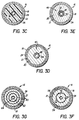
- the central passage may also be formed as a plurality or bundle of smaller diameter tubes 30 (FIG. 3A) or as an extruded cylindrical rod 32 with a plurality of longitudinal channels 34 extending therethrough (FIG. 3B).
- the filter segments 20, 22 are preferably made of a cellulose acetate tow having from 0% to about 12% by weight of triacetin that may include carbowax and/or a flavorant in an amount of up to about half the weight of the triacetin.
- the segments 20, 22 may be made of a gathered web of paper or polymer which may include, or be coated with organic or inorganic taste modifiers or other materials for reducing unwanted constituents of the mainstream smoke.
- the segments 20, 22 may also be made of a controlled porosity foam structure with or without the plug wraps 21, 23.
- FIG. 3C illustrates an embodiment of a rod end filter segment made of an open-celled foam 36 with an impervious tube 38 extending coaxially therethrough.
- the central tube of the rod end filter segment may incorporate an organic or inorganic flavorant material to enhance taste, especially of the initial puffs of the cigarette.
- a LDPE or HDPE or a mixture thereof may be blended with about 0.1% up to about 70% by weight of a flavorant and formed into a tube encapsulated on the outside thereof with a continuous barrier layer of EVOH, nylon or polyester to prevent migration of the flavorant in the tube to the surrounding filter material.
- the polarity and crystallinity of the tube polymer may be adjusted to vary the release of flavor.
- FIG. 3D illustrates a two-layer tube 40 comprising an inner layer 42 of a flavorant blended LDPE or HDPE and an encapsulating layer 44.
- 3E illustrates a three-layer tube 46 with inner and outer flavorant blended layers 48, 50 and a middle barrier layer 52 for preventing migration between the flavorant layers 48, 50.
- This layer embodiment may be used, for example, where different flavor layers or differently yielding flavor layers of the same flavorant are used in combination.
- the rod end filter segment may be formed with one or more concentric layers of carbon sheet alternating with cellulose acetate tow.
- FIG. 3F illustrates a rod end filter segment with two concentric carbon sheet layers 54 alternating with two concentric layers of cellulose acetate tow 56 with a central tube 58 which may also be made of carbon.
- FIG. 3G illustrates a rod end filter segment with three concentric carbon sheet layers 60 alternating with three concentric layers of cellulose acetate tow 62 with a central tube 64 which may also be made of carbon. Concentric carbon layers may also be used in the mouth end filter segment.
- the carbon tube and carbon sheets are used to remove certain gas phase components of the smoke. See, for example, U.S. Patent No. 3,101,723. Also see European Patent Application Publication No. 532,329, which is incorporated herein by reference.
- the carbon tube 58 can be made of other materials disclosed herein, such as polymers, and a flavorant may be included in the concentric carbon sheets. In such an embodiment, as the cigarette is smoked, a major portion of the smoke will travel through the center tube until such time as the particulate matter accumulates at the mouth end of the tube where it abuts with the mouth end filter segment.
- the pressure drop through the tube increases, and the major portion of the smoke then begins to travel through the cellulose acetate portion of the filter segment past the concentric carbon sheets. Furthermore, during smoking the burning fire cone progresses down the tobacco rod toward the filter, thus increasing the heat which is transferred to the filter.
- the flavorant and the concentric carbon sheet material can be selected so that the flavorant is given off to provide additional flavor to the smoke or to provide flavor to the last few puffs to produce a pleasant aftertaste.
- the segments of the compound filter may be made from longer rod segments of the mouth end filter and the rod end filter.
- the filter rods may be made on a Hauni KDF filter maker or an extruder manufactured, for example, by Killion Extruders, Inc., of Cedar Grove, New Jersey.
- the central tube may be drawn by the surrounding tow from a spool and compressed into the filter rod at the garniture of the Hauni filter maker.
- a laser beam may be used to form the tube(s) in the manner described in U.S. Patent No. 4,291,712.
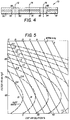
- the filter segments may be combined, for example, in a MULFI PTC filter combiner, in the form of a four-up filter as shown in FIG. 4 and as designated generally by reference numeral 70.
- a MULFI PTC filter combiner By cutting the four-up filter 70 along transverse planes 72, 74 and 76, four compound filters of the type shown in FIGS. 1-3 are formed. Since the four-up filter 70 includes four abutments or interfaces 78, 80, 82, 84 between the two double length mouth end filter segments 86, 88 and the three rod end filter segments (one a double length segment) 90, 91, 92 the pressure drop across the four-up filter 70 will be substantially the same as the sum of the pressure drops across four individual filters.
- the interface or abutment resistance or pressure drop should be set at a predetermined value in the range of from about 10 mm to about 100 mm water gauge and should not vary from that value by more than about 5 mm water.
- the cigarettes are perforated by a mechanical or laser perforator at the desired vent location.
- a preperforated tipping paper and porous plug wraps may also be used to provide the air vents at the proper location in a conventional manner.
- the preferred location of the air vents for the compound filter of the invention is in the rod end segment 20 approximately 2-5 mm from the interface 25 between the rod end segment 20 and the mouth end segment 22. For other compound filter designs, it may be desirable to perforate the rod end segment 2-5 mm from the tobacco rod, for example, when it is desired to enhance a tube flavorant.
- the test cigarettes were provided with filters having a 14 mm length mouth end segment of 8.0/40,000 dpf yielding a pressure drop of 25 mm water, a 17 mm length rod end filter segment of 1.6/48,000 dpf with a 0.048 inch ID center tube yielding a tube closed pressure drop of 200 mm water and a tobacco rod of 57 mm length from a typical light brand, i.e., CAMEL Lights KS.
- the data from this experiment was statistically analyzed to provide mathematical formulas which can be used to predict the WTPM and Puff Ratio possibilities of the compound filter design and tobacco rod combination of the test cigarettes.
- PR 0.884 + 0.236(CAD) + 0.469(FPD) + 0.222(FPD) 2
- a regression chart shown in FIG. 5 was prepared with Puff Ratio curves from 0.4 to 2.0 superposed on WTPM lines of 5 mg to 21 mg total yield per cigarette.
- the chart provides a means for easily determining the specifications for filter pressure drop (FPD) and air dilution (CAD).
- FPD filter pressure drop
- CAD air dilution
- the regression chart provides the cigarette developer with the means to design a range of different cigarette types, with different tastes and puff profiles using substantially the same filter components by varying primarily the air dilution and the abutment pressure drop.
- the regression chart of FIG. 5 is specific to the particular compound filter and tobacco rod combination for which the designed experiment was performed. It should also be noted that the WTPM and Puff Ratio curves outside the filter pressure drop range of 69-89 mm and outside the air dilution range of 0% to 40% were not derived from actual test data. If the regression chart is to be used outside those ranges above 0% air dilution, the curves for WTPM and Puff Ratio should be verified by experiment.
- the measured values of the flow resistance for selected filter components can be used to determine the required abutment pressure drop. So long as this abutment pressure drop is a value within the range of about 10 mm to about 100 mm and is maintained substantially the same from filter to filter as manufactured, a consistent Puff Ratio and WTPM will result from cigarette to cigarette.
- This example is a cigarette prototype E8 with a Puff Ratio of 1.0 and a total yield (WTPM) of about 13 mg.
- Standard Blend: CLT85 Standard leaf blend, casing, and top dressing components Filter Length: 31 mm Circumference: 24.43 mm
- Plug Wrap (646) Standard non-porous paper Pressure Drop: 30 mm (Tube(s) Open); 200 mm (Tube(s) Closed) Weight: 0.1743 g Tipping Paper Standard non-porous cork-on-white Vent Location 19 mm from the mouth-end of the cigarette Air Dilution 40% WTPM 13.1 mg/Cigarette Puff Count 8 Puffs/Cigarette Puff Ratio 1.00
- This example is a cigarette prototype D7 with a Puff Ratio of 1.8 and a total yield (WTPM) of 7.4 mg.
- Standard Blend: CLT85 Standard leaf blend, casing, and top dressing components Filter Length: 31 mm Circumference: 24.43 mm
- Plug Wrap (646) Standard non-porous paper Pressure Drop: 30 mm (Tube(s) Open); 200 mm (Tube(s) Closed) Weight: 0.1743 g Tipping Paper Standard non-porous cork-on-white Vent Location 19 mm from the mouth-end of the cigarette Air Dilution 40% WTPM 7.4 mg/Cigarette Puff Count 9 Puffs/Cigarette Puff Ratio 1.80
- Tables II and III show smoke profiles with per puff and total WTPM data for the E8 and D7 prototypes of Examples 1 and 2 as well as for a number of prototype cigarettes with differently constructed filters. Prototypes with level per puff yields are shown in Table II and prototypes with decreasing per puff yields are shown in Table III. The prototypes are listed in decreasing amount of total yield (WTPM).
- the present invention provides a unique way of designing cigarettes with a desired puff profile and total yield.
- a decreasing per puff yield can be advantageously attained.
Landscapes
- Cigarettes, Filters, And Manufacturing Of Filters (AREA)
- Manufacture Of Tobacco Products (AREA)
- Agricultural Chemicals And Associated Chemicals (AREA)
Claims (30)
- Filter für einen Rauchartikel mit einem mundseitigen Filtersegment (22) und einem strangseitigen Filtersegment (20), wobei das strangseitige Filtersegment einen sich in Längsrichtung hindurcherstreckenden Durchlaß (26; 30) aufweist, wobei die genannten Filtersegmente aneinanderstoßen, mit einer zwischen ihnen liegenden Grenzfläche (25), wobei die Grenzfläche einen Druckabfall von ca. 10 mmWS bis ca. 100 mmWS aufweist und wobei eines der Filtersegmente mit Luftverdünnungsmitteln für den Zutritt von Ventilationsluft in das Filter versehen ist.
- Filter nach Anspruch 1, worin der Gesamtdruckabfall über das Filter den Druckabfall der Grenzfläche und den Druckabfall über das mundseitige sowie über das strangseitige Segment umfaßt, wobei der Gesamtdruckabfall des Filters und die dem Filter zugeführte Ventilationsluftmenge so gewählt sind, daß eine im wesentlichen gleichmäßige Ausbeute pro Zug der feuchten Teilchen vom ersten bis zum letzten Zug des Rauchartikels erhalten wird.
- Filter nach Anspruch 2, worin der Gesamtdruckabfall des Filters und die dem Filter zugeführte Ventilationsluftmenge ferner so gewählt sind, daß eine vorbestimmte Gesamtmenge der feuchten Teilchen für den Rauchartikel erhalten wird.
- Filter nach Anspruch 1, worin der Gesamtdruckabfall über das Filter den Druckabfall der Grenzfläche und den Druckabfall über das mundseitige sowie über das strangseitige Segment umfaßt, wobei der Gesamtdruckabfall des Filters und die dem Filter zugeführte Ventilationsluftmenge so gewählt sind, daß eine abnehmende Ausbeute pro Zug der feuchten Teilchen vom ersten bis zum letzten Zug des Rauchartikels erhalten wird.
- Filter nach Anspruch 4, worin der Gesamtdruckabfall des Filters und die dem Filter zugeführte Ventilationsluftmenge ferner so gewählt sind, daß eine vorbestimmte Gesamtmenge der feuchten Teilchen für den Rauchartikel erhalten wird.
- Filter nach Anspruch 1, worin der Durchlaß mindestens ein Röhrchen mit einem Innendurchmesser von ca. 45 Mil bis ca. 60 Mil umfaßt.
- Filter nach Anspruch 1, worin der Durchlaß eine Mehrzahl von Röhrchen oder einen in seiner Längsrichtung von mehreren Kanälen durchzogenen Strang umfaßt.
- Filter nach Anspruch 6, worin das Röhrchen aus einem extrudierten Polymeren oder Papier hergestellt ist.
- Filter nach Anspruch 6, worin das Röhrchen einen organischen oder anorganischen Aromastoff aufweist.
- Filter nach Anspruch 1, worin das strangseitige Filtersegment Celluloseacetat-Tow umfaßt, wobei in dem Tow eine oder mehrere konzentrisch angeordnete Lagen von Kohleblattmaterial vorgesehen sind.
- Filter nach Anspruch 10, worin der Durchlaß ein axial zu dem strangseitigen Filtersegment und koaxial mit den konzentrischen Lagen von Kohleblattmaterial angeordnetes Kohle-Röhrchen umfaßt.
- Filter nach Anspruch 1, worin die Luftverdünnungsmittel in dem strangseitigen Segment vorgesehen sind, wobei diese Luftverdünnungsmittel am Umfang des strangseitigen Segments angeordnete Perforationen umfassen.
- Filter nach Anspruch 1, worin die Perforationen ca. 2 mm bis ca. 5 mm von der Grenzfläche entfernt liegen.
- Filter nach Anspruch 1, worin das mundseitige Segment und das strangseitige Segment von Celluloseacetat-Tow oder von einer gerafften Papierbahn oder Polymerfolie oder von einem offenzelligen Schaumstoff gebildet sind.
- Zigarette mit einem Tabakstrang und einem Filter, worin das Filter einen Druckabfall aufweist und ein mundseitiges Segment sowie ein mit einem sich in Längsrichtung hindurcherstreckenden Durchlaß versehenes strangseitiges Segment umfaßt, wobei diese Filtersegmente gegeneinanderstoßen, mit einer zwischen ihnen liegenden Grenzfläche, wobei der Tabakstrang mit dem strangseitigen Segment verbunden ist, wobei in dem Filter Luftverdünnungsmittel für den Zutritt von Ventilationsluft in das Filter vorgesehen sind, wobei der Druckabfall über das Filter und die dem Filter zugeführte Ventilationsluftmenge so gewählt sind, daß eine abnehmende Ausbeute pro Zug der feuchten Teilchen vom ersten bis zum letzten Zug der Zigarette erhalten wird.
- Zigarette nach Anspruch 15, worin der Druckabfall über die Grenzfläche in einem Bereich von ca. 10 mmWS bis ca. 100 mmWS liegt.
- Zigarette nach Anspruch 15, worin der Druckabfall über das Filter und die dem Filter durch die Luftverdünnungsmittel zugeführte Luftmenge ferner so gewählt sind, daß eine vorbestimmte Gesamtmenge der feuchten Teilchen für die Zigarette erhalten wird.
- Zigarette nach Anspruch 15, worin die Zigarette ein Zugverhältnis von größer als ca. 1,2 aufweist, wobei das Zugverhältnis definiert ist als die in den ersten zwei Zügen der Zigarette enthaltenen feuchten Teilchen dividiert durch die in den letzten zwei Zügen der Zigarette enthaltenen feuchten Teilchen.
- Zigarette nach Anspruch 18, worin das Zugverhältnis in einem Bereich von ca. 1,2 bis ca. 2,5 angesiedelt ist.
- Verfahren zur Steuerung der von einer Zigarette während des Rauchens erhaltenen Abgabe des teilchenförmigen Materials, welches als Schritte aufweist:Gestalten einer Zigarette mit einem Tabakstrang und einem Filter, worin das Filter einen Druckabfall aufweist und ein mundseitiges Segment sowie ein mit einem sich in Längsrichtung hindurcherstreckenden Durchlaß versehenes strangseitiges Segment umfaßt, wobei diese Filtersegmente aneinanderstoßen, mit einer zwischen ihnen liegenden Grenzfläche, wobei der Tabakstrang mit dem strangseitigen Segment verbunden ist, wobei in dem Filter Luftverdünnungsmittel für den Zutritt von Ventilationsluft in das Filter vorgesehen sind,Steuern des Druckabfalls über das Filter und der dem Filter zugeführten Ventilationsluftmenge derart, daß eine abnehmende Ausbeute pro Zug der feuchten Teilchen vom ersten bis zum letzten Zug der Zigarette erhalten wird.
- Verfahren nach Anspruch 20, worin der Schritt des Gestaltens die Herstellung eines vierfachlangen Filters mit vier Grenzflächen und das Messen des Druckabfalls über dieses vierfachlange Filter umfaßt.
- Zigarette mit einem Tabakstrang und einem Filter, worin das Filter einen Druckabfall aufweist und ein mundseitiges Segment sowie ein mit einem sich in Längsrichtung hindurcherstreckenden Durchlaß versehenes strangseitiges Segment umfaßt, wobei diese Filtersegmente gegeneinanderstoßen, mit einer zwischen ihnen liegenden Grenzfläche, wobei der Tabakstrang mit dem strangseitigen Segment verbunden ist, wobei in dem Filter Luftverdünnungsmittel für den Zutritt von Ventilationsluft in das Filter vorgesehen sind, wobei mindestens eine einen Aromastoff enthaltende Kohleblatt-Lage in dem den Durchlaß umgebenden strangseitigen Segment angeordnet ist.
- Zigarette nach Anspruch 22, worin das Kohleblatt eine in bezug auf den Durchlaß konzentrische Anordnung aufweist.
- Zigarette nach Anspruch 22 mit mehreren Kohleblatt-Lagen in beabstandeter konzentrischer Anordnung in bezug auf den Durchlaß.
- Zigarette nach Anspruch 22, worin der Gesamtdruckabfall über das Filter den Druckabfall der Grenzfläche und den Druckabfall über das mundseitige sowie über das strangseitige Segment umfaßt, wobei der Gesamtdruckabfall des Filters und die dem Filter zugeführte Ventilationsluftmenge so gewählt sind, daß eine im wesentlichen gleichmäßige Ausbeute pro Zug der feuchten Teilchen vom ersten bis zum letzten Zug des Rauchartikels erhalten wird.
- Zigarette nach Anspruch 25, worin der Gesamtdruckabfall des Filters und die dem Filter zugeführte Ventilationsluftmenge ferner so gewählt sind, daß eine vorbestimmte Gesamtmenge der feuchten Teilchen für den Rauchartikel erhalten wird.
- Zigarette nach Anspruch 22, worin der Gesamtdruckabfall über das Filter den Druckabfall der Grenzfläche und den Druckabfall über das mundseitige sowie über das strangseitige Segment umfaßt, wobei der Gesamtdruckabfall des Filters und die dem Filter zugeführte Ventilationsluftmenge so gewählt sind, daß eine abnehmende Ausbeute pro Zug der feuchten Teilchen vom ersten bis zum letzten Zug des Rauchartikels erhalten wird.
- Zigarette nach Anspruch 27, worin der Gesamtdruckabfall des Filters und die dem Filter zugeführte Ventilationsluftmenge ferner so gewählt sind, daß eine vorbestimmte Gesamtmenge der feuchten Teilchen für den Rauchartikel erhalten wird.
- Zigarette nach Anspruch 22, worin das strangseitige Filtersegment Celluloseacetat-Tow umfaßt, wobei in dem Tow eine oder mehrere konzentrisch angeordnete Lagen von Kohleblattmaterial vorgesehen sind.
- Zigarette nach Anspruch 22, worin der Druckabfall über die Grenzfläche in einem Bereich von ca. 10 mmWS bis ca. 100 mmWS liegt.
Priority Applications (1)
| Application Number | Priority Date | Filing Date | Title |
|---|---|---|---|
| SI9430151T SI0636324T1 (en) | 1993-07-27 | 1994-06-17 | Controlled delivery smoking article and method |
Applications Claiming Priority (2)
| Application Number | Priority Date | Filing Date | Title |
|---|---|---|---|
| US97822 | 1993-07-27 | ||
| US08/097,822 US5435326A (en) | 1993-07-27 | 1993-07-27 | Controlled delivery smoking article and method |
Publications (2)
| Publication Number | Publication Date |
|---|---|
| EP0636324A1 EP0636324A1 (de) | 1995-02-01 |
| EP0636324B1 true EP0636324B1 (de) | 1998-04-15 |
Family
ID=22265296
Family Applications (1)
| Application Number | Title | Priority Date | Filing Date |
|---|---|---|---|
| EP94109392A Expired - Lifetime EP0636324B1 (de) | 1993-07-27 | 1994-06-17 | Rauchartikel mit kontrollierter Abgabe und Verfahren |
Country Status (8)
| Country | Link |
|---|---|
| US (1) | US5435326A (de) |
| EP (1) | EP0636324B1 (de) |
| JP (1) | JPH07147964A (de) |
| AT (1) | ATE164983T1 (de) |
| DE (1) | DE69409590T2 (de) |
| DK (1) | DK0636324T3 (de) |
| ES (1) | ES2115807T3 (de) |
| SI (1) | SI0636324T1 (de) |
Cited By (2)
| Publication number | Priority date | Publication date | Assignee | Title |
|---|---|---|---|---|
| US9089163B2 (en) | 2010-12-01 | 2015-07-28 | Tobacco Research And Development Institute (Proprietary) Limited | Feed mechanism |
| US9462828B2 (en) | 2009-03-09 | 2016-10-11 | British American Tobacco (Investments) Limited | Apparatus for introducing objects into filter rod material |
Families Citing this family (40)
| Publication number | Priority date | Publication date | Assignee | Title |
|---|---|---|---|---|
| JP3181248B2 (ja) | 1997-10-06 | 2001-07-03 | 日本たばこ産業株式会社 | フィルター付きシガレットおよびシガレット用フィルター |
| DE10252823A1 (de) * | 2002-11-13 | 2004-06-09 | Biotec Biologische Naturverpackungen Gmbh & Co. Kg | Filterelement |
| US6814786B1 (en) | 2003-04-02 | 2004-11-09 | Philip Morris Usa Inc. | Filters including segmented monolithic sorbent for gas-phase filtration |
| US20040231684A1 (en) * | 2003-05-20 | 2004-11-25 | Zawadzki Michael A. | Smoking article and smoking article filter |
| US7503960B2 (en) * | 2005-03-15 | 2009-03-17 | Philip Morris Usa Inc. | Smoking articles and filters with carbon fiber composite molecular sieve sorbent |
| US20070074733A1 (en) * | 2005-10-04 | 2007-04-05 | Philip Morris Usa Inc. | Cigarettes having hollow fibers |
| US7914622B2 (en) * | 2005-12-21 | 2011-03-29 | Philip Morris Usa Inc. | Smoking article having flavorant materials retained in hollow heat conductive tubes |
| ITBO20050779A1 (it) * | 2005-12-22 | 2006-03-23 | Gd Spa | Unita' convogliatrice di articoli da fumo |
| US7987856B2 (en) * | 2005-12-29 | 2011-08-02 | Philip Morris Usa Inc. | Smoking article with bypass channel |
| US8240315B2 (en) * | 2005-12-29 | 2012-08-14 | Philip Morris Usa Inc. | Smoking article with improved delivery profile |
| AU2007231147B2 (en) * | 2006-03-28 | 2013-05-23 | Philip Morris Products S.A. | Smoking article with a restrictor |
| US8353298B2 (en) | 2006-07-12 | 2013-01-15 | Philip Morris Usa Inc. | Smoking article with impaction filter segment |
| US20080047571A1 (en) * | 2006-07-12 | 2008-02-28 | Philip Morris Usa Inc. | Smoking article with plate impactor |
| US8424539B2 (en) * | 2006-08-08 | 2013-04-23 | Philip Morris Usa Inc. | Smoking article with single piece restrictor and chamber |
| US8235056B2 (en) * | 2006-12-29 | 2012-08-07 | Philip Morris Usa Inc. | Smoking article with concentric hollow core in tobacco rod and capsule containing flavorant and aerosol forming agents in the filter system |
| TW200900014A (en) * | 2007-03-09 | 2009-01-01 | Philip Morris Prod | Smoking article filter with annular restrictor and downstream ventilation |
| TW200911138A (en) * | 2007-03-09 | 2009-03-16 | Philip Morris Prod | Smoking articles with restrictor and aerosol former |
| TW200911143A (en) * | 2007-03-09 | 2009-03-16 | Philip Morris Prod | Restrictor attachment for unfiltered smoking article |
| TW200911141A (en) * | 2007-03-09 | 2009-03-16 | Philip Morris Prod | Super recessed filter cigarette restrictor |
| US8113215B2 (en) * | 2007-06-21 | 2012-02-14 | Philip Morris Usa Inc. | Smoking article filter having liquid additive containing tubes therein |
| US8424540B2 (en) * | 2009-10-09 | 2013-04-23 | Philip Morris Usa Inc. | Smoking article with valved restrictor |
| AR080556A1 (es) | 2009-10-09 | 2012-04-18 | Philip Morris Prod | Diseno de filtro para mejorar el perfil sensorial de articulos para fumar con boquilla de filtro de carbono |
| US20110083687A1 (en) * | 2009-10-09 | 2011-04-14 | Philip Morris Usa Inc. | Cigarette filter to reduce smoke deliveries in later puffs |
| US8905037B2 (en) * | 2009-10-15 | 2014-12-09 | Philip Morris Inc. | Enhanced subjective activated carbon cigarette |
| GB0920397D0 (en) * | 2009-11-20 | 2010-01-06 | Filtrona Int Ltd | Tobacco smoke filter |
| US9138016B2 (en) | 2010-03-26 | 2015-09-22 | Philip Morris Usa Inc. | Smoking articles with significantly reduced gas vapor phase smoking constituents |
| WO2015035220A1 (en) * | 2013-09-05 | 2015-03-12 | Lorillard Tobacco Company | Filter components, filters, smoking articles, and related methods, all for the controlled delivery of aerosols |
| RU2679467C2 (ru) * | 2014-05-30 | 2019-02-11 | Филип Моррис Продактс С.А. | Курительное изделие с вентилируемой полостью на мундштучном конце |
| US20160165950A1 (en) * | 2014-12-12 | 2016-06-16 | Lorillard Tobacco Company | Reduction of carbon monoxide in mainstream cigarette smoke |
| GB201615608D0 (en) | 2016-09-14 | 2016-10-26 | British American Tobacco Investments Ltd | A container |
| GB2556331A (en) * | 2016-09-14 | 2018-05-30 | British American Tobacco Investments Ltd | A container |
| KR102330291B1 (ko) * | 2018-07-04 | 2021-11-24 | 주식회사 케이티앤지 | 궐련 |
| KR101976325B1 (ko) * | 2018-07-06 | 2019-05-07 | 주식회사 케이티앤지 | 연기 성분 저감 담배 필터, 담배, 그리고 그 제조 방법 |
| EP3861867A4 (de) * | 2018-10-05 | 2022-09-28 | Japan Tobacco Inc. | Herstellungsverfahren für rauchartikel |
| GB201910738D0 (en) * | 2019-07-26 | 2019-09-11 | British American Tobacco Investments Ltd | Combustible tobacco product design system and method |
| KR20220154136A (ko) * | 2020-03-12 | 2022-11-21 | 필립모리스 프로덕츠 에스.에이. | 복수의 공기 유입 구역을 갖는 에어로졸 발생 물품 |
| JP7743996B2 (ja) * | 2021-03-25 | 2025-09-25 | Future Technology株式会社 | 加熱式タバコ用カートリッジ |
| CN116649614B (zh) * | 2022-02-17 | 2025-09-16 | 上海烟草集团有限责任公司 | 一种气溶胶生成制品 |
| CN114847515B (zh) * | 2022-06-23 | 2024-02-02 | 南通烟滤嘴有限责任公司 | 一种功能材料棒的制备方法 |
| JPWO2024142167A1 (de) * | 2022-12-26 | 2024-07-04 |
Family Cites Families (18)
| Publication number | Priority date | Publication date | Assignee | Title |
|---|---|---|---|---|
| US2900989A (en) * | 1955-01-26 | 1959-08-25 | Davidson Glenn | Cigarette filter tip |
| BE790395A (fr) * | 1971-10-21 | 1973-02-15 | British American Tobacco Co | Perfectionnements aux articles a fumer |
| GB1428018A (en) * | 1973-02-27 | 1976-03-17 | British American Tobacco Co | Filtering device for a smoking product |
| GB1527705A (en) * | 1976-03-01 | 1978-10-11 | Liggett & Myers Inc | Cigarette filter |
| NL7712441A (nl) * | 1977-11-11 | 1979-05-15 | Laurens Sigaretten | Sigarettefilter en filtersigaret. |
| US4460001A (en) * | 1980-09-08 | 1984-07-17 | Celanese Corporation | Process for preparing compound filter |
| US4469112A (en) * | 1980-09-08 | 1984-09-04 | Celanese Corporation | Compound filter |
| US4984588A (en) * | 1981-09-14 | 1991-01-15 | Philip Morris Incorporated | Low delivery cigarette |
| KR840001262A (ko) * | 1981-09-21 | 1984-04-30 | 라리 씨이. 아모스 | 담배 휠터 |
| US4585015A (en) * | 1984-11-16 | 1986-04-29 | Brown & Williamson Tobacco Corporation | Cigarette filter |
| US4821750A (en) * | 1985-05-31 | 1989-04-18 | Celanese Corporation | Cigarette filters |
| GB8518385D0 (en) * | 1985-07-20 | 1985-08-29 | British American Tobacco Co | Tobacco smoke filters |
| US4638820A (en) * | 1986-02-03 | 1987-01-27 | R. J. Reynolds Tobacco Company | Puff control cigarette |
| GB8713904D0 (en) * | 1987-06-15 | 1987-07-22 | Tabac Fab Reunies Sa | Filter for smoking articles |
| GB2212705B (en) * | 1987-11-27 | 1991-09-04 | Cigarette Components Ltd | Paper filters |
| US5360023A (en) * | 1988-05-16 | 1994-11-01 | R. J. Reynolds Tobacco Company | Cigarette filter |
| US4971078A (en) * | 1989-08-15 | 1990-11-20 | Hoechst Celanese Corporation | Filter for a smoking article containing a flavored hollow fiber |
| GB9022530D0 (en) * | 1990-10-17 | 1990-11-28 | Tabac Fab Reunies Sa | Filter mouthpiece for smoking articles |
-
1993
- 1993-07-27 US US08/097,822 patent/US5435326A/en not_active Expired - Lifetime
-
1994
- 1994-06-17 EP EP94109392A patent/EP0636324B1/de not_active Expired - Lifetime
- 1994-06-17 AT AT94109392T patent/ATE164983T1/de active
- 1994-06-17 SI SI9430151T patent/SI0636324T1/xx unknown
- 1994-06-17 DK DK94109392T patent/DK0636324T3/da active
- 1994-06-17 DE DE69409590T patent/DE69409590T2/de not_active Expired - Fee Related
- 1994-06-17 ES ES94109392T patent/ES2115807T3/es not_active Expired - Lifetime
- 1994-07-27 JP JP6196140A patent/JPH07147964A/ja active Pending
Cited By (4)
| Publication number | Priority date | Publication date | Assignee | Title |
|---|---|---|---|---|
| US9462828B2 (en) | 2009-03-09 | 2016-10-11 | British American Tobacco (Investments) Limited | Apparatus for introducing objects into filter rod material |
| US9089163B2 (en) | 2010-12-01 | 2015-07-28 | Tobacco Research And Development Institute (Proprietary) Limited | Feed mechanism |
| US9101166B2 (en) | 2010-12-01 | 2015-08-11 | Tobacco Research And Development Institute (Proprietary) Limited | Feed mechanism |
| US10092032B2 (en) | 2010-12-01 | 2018-10-09 | Tobacco Research And Development Institute (Proprietary) Limited | Feed mechanism |
Also Published As
| Publication number | Publication date |
|---|---|
| DE69409590D1 (de) | 1998-05-20 |
| EP0636324A1 (de) | 1995-02-01 |
| DE69409590T2 (de) | 1998-09-17 |
| ES2115807T3 (es) | 1998-07-01 |
| DK0636324T3 (da) | 1999-02-01 |
| US5435326A (en) | 1995-07-25 |
| ATE164983T1 (de) | 1998-05-15 |
| SI0636324T1 (en) | 1998-10-31 |
| JPH07147964A (ja) | 1995-06-13 |
Similar Documents
| Publication | Publication Date | Title |
|---|---|---|
| US5435326A (en) | Controlled delivery smoking article and method | |
| EP2007233B1 (de) | Rauchartikel mit restriktor | |
| KR100390357B1 (ko) | 담배용 필터 및 끝에 필터가 붙은 담배 | |
| US9138016B2 (en) | Smoking articles with significantly reduced gas vapor phase smoking constituents | |
| US4582071A (en) | Tipping assembly for an elongate smoking article | |
| US4357950A (en) | Tobacco smoke filter having improved tar/carbon monoxide ratio | |
| KR101108636B1 (ko) | 담배 필터 | |
| US4508525A (en) | Method and apparatus for producing tobacco smoke filter having improved tar/carbon monoxide ratio | |
| US4380241A (en) | Smoking articles | |
| US10219540B2 (en) | Filter components, filters, smoking articles, and related methods, all for the controlled delivery of aerosols | |
| KR20100061560A (ko) | 담배 연기 전달이 변경된 흡연 제품 | |
| US5713377A (en) | Tobacco cartridge | |
| GB2090117A (en) | Ventilated cigarette tip | |
| NL8202557A (nl) | Sigaretfilter. | |
| US20160165950A1 (en) | Reduction of carbon monoxide in mainstream cigarette smoke | |
| GB2103065A (en) | Ventilated cigarette filter | |
| HK1124214B (en) | Smoking article with a restrictor | |
| HK1124214A (en) | Smoking article with a restrictor |
Legal Events
| Date | Code | Title | Description |
|---|---|---|---|
| PUAI | Public reference made under article 153(3) epc to a published international application that has entered the european phase |
Free format text: ORIGINAL CODE: 0009012 |
|
| AK | Designated contracting states |
Kind code of ref document: A1 Designated state(s): AT BE CH DE DK ES FR GB GR IE IT LI LU NL PT SE |
|
| RAX | Requested extension states of the european patent have changed |
Free format text: SI PAYMENT 940617 |
|
| 17P | Request for examination filed |
Effective date: 19950722 |
|
| GRAG | Despatch of communication of intention to grant |
Free format text: ORIGINAL CODE: EPIDOS AGRA |
|
| 17Q | First examination report despatched |
Effective date: 19970812 |
|
| GRAG | Despatch of communication of intention to grant |
Free format text: ORIGINAL CODE: EPIDOS AGRA |
|
| GRAH | Despatch of communication of intention to grant a patent |
Free format text: ORIGINAL CODE: EPIDOS IGRA |
|
| GRAH | Despatch of communication of intention to grant a patent |
Free format text: ORIGINAL CODE: EPIDOS IGRA |
|
| GRAA | (expected) grant |
Free format text: ORIGINAL CODE: 0009210 |
|
| AK | Designated contracting states |
Kind code of ref document: B1 Designated state(s): AT BE CH DE DK ES FR GB GR IE IT LI LU NL PT SE |
|
| AX | Request for extension of the european patent |
Free format text: SI PAYMENT 940617 |
|
| REF | Corresponds to: |
Ref document number: 164983 Country of ref document: AT Date of ref document: 19980515 Kind code of ref document: T |
|
| REG | Reference to a national code |
Ref country code: CH Ref legal event code: EP |
|
| REF | Corresponds to: |
Ref document number: 69409590 Country of ref document: DE Date of ref document: 19980520 |
|
| ITF | It: translation for a ep patent filed | ||
| REG | Reference to a national code |
Ref country code: CH Ref legal event code: NV Representative=s name: ISLER & PEDRAZZINI AG |
|
| REG | Reference to a national code |
Ref country code: ES Ref legal event code: FG2A Ref document number: 2115807 Country of ref document: ES Kind code of ref document: T3 |
|
| ET | Fr: translation filed | ||
| REG | Reference to a national code |
Ref country code: IE Ref legal event code: FG4D Free format text: 79817 |
|
| REG | Reference to a national code |
Ref country code: PT Ref legal event code: SC4A Free format text: AVAILABILITY OF NATIONAL TRANSLATION Effective date: 19980527 |
|
| REG | Reference to a national code |
Ref country code: DK Ref legal event code: T3 |
|
| PLBE | No opposition filed within time limit |
Free format text: ORIGINAL CODE: 0009261 |
|
| STAA | Information on the status of an ep patent application or granted ep patent |
Free format text: STATUS: NO OPPOSITION FILED WITHIN TIME LIMIT |
|
| 26N | No opposition filed | ||
| PGFP | Annual fee paid to national office [announced via postgrant information from national office to epo] |
Ref country code: GR Payment date: 20000327 Year of fee payment: 7 |
|
| PGFP | Annual fee paid to national office [announced via postgrant information from national office to epo] |
Ref country code: FR Payment date: 20000328 Year of fee payment: 7 |
|
| PGFP | Annual fee paid to national office [announced via postgrant information from national office to epo] |
Ref country code: PT Payment date: 20000524 Year of fee payment: 7 |
|
| PGFP | Annual fee paid to national office [announced via postgrant information from national office to epo] |
Ref country code: BE Payment date: 20000526 Year of fee payment: 7 |
|
| PGFP | Annual fee paid to national office [announced via postgrant information from national office to epo] |
Ref country code: IE Payment date: 20000614 Year of fee payment: 7 |
|
| PGFP | Annual fee paid to national office [announced via postgrant information from national office to epo] |
Ref country code: GB Payment date: 20000615 Year of fee payment: 7 Ref country code: ES Payment date: 20000615 Year of fee payment: 7 |
|
| PGFP | Annual fee paid to national office [announced via postgrant information from national office to epo] |
Ref country code: SE Payment date: 20000616 Year of fee payment: 7 |
|
| PGFP | Annual fee paid to national office [announced via postgrant information from national office to epo] |
Ref country code: AT Payment date: 20000619 Year of fee payment: 7 |
|
| PGFP | Annual fee paid to national office [announced via postgrant information from national office to epo] |
Ref country code: LU Payment date: 20000626 Year of fee payment: 7 |
|
| PGFP | Annual fee paid to national office [announced via postgrant information from national office to epo] |
Ref country code: DK Payment date: 20000628 Year of fee payment: 7 |
|
| PGFP | Annual fee paid to national office [announced via postgrant information from national office to epo] |
Ref country code: NL Payment date: 20000630 Year of fee payment: 7 |
|
| PGFP | Annual fee paid to national office [announced via postgrant information from national office to epo] |
Ref country code: CH Payment date: 20000706 Year of fee payment: 7 |
|
| PGFP | Annual fee paid to national office [announced via postgrant information from national office to epo] |
Ref country code: DE Payment date: 20000726 Year of fee payment: 7 |
|
| PG25 | Lapsed in a contracting state [announced via postgrant information from national office to epo] |
Ref country code: LU Free format text: LAPSE BECAUSE OF NON-PAYMENT OF DUE FEES Effective date: 20010617 Ref country code: GB Free format text: LAPSE BECAUSE OF NON-PAYMENT OF DUE FEES Effective date: 20010617 Ref country code: DK Free format text: LAPSE BECAUSE OF NON-PAYMENT OF DUE FEES Effective date: 20010617 Ref country code: AT Free format text: LAPSE BECAUSE OF NON-PAYMENT OF DUE FEES Effective date: 20010617 |
|
| PG25 | Lapsed in a contracting state [announced via postgrant information from national office to epo] |
Ref country code: SE Free format text: LAPSE BECAUSE OF NON-PAYMENT OF DUE FEES Effective date: 20010618 Ref country code: IE Free format text: LAPSE BECAUSE OF NON-PAYMENT OF DUE FEES Effective date: 20010618 Ref country code: ES Free format text: LAPSE BECAUSE OF NON-PAYMENT OF DUE FEES Effective date: 20010618 |
|
| PG25 | Lapsed in a contracting state [announced via postgrant information from national office to epo] |
Ref country code: LI Free format text: LAPSE BECAUSE OF NON-PAYMENT OF DUE FEES Effective date: 20010630 Ref country code: GR Free format text: LAPSE BECAUSE OF NON-PAYMENT OF DUE FEES Effective date: 20010630 Ref country code: CH Free format text: LAPSE BECAUSE OF NON-PAYMENT OF DUE FEES Effective date: 20010630 Ref country code: BE Free format text: LAPSE BECAUSE OF NON-PAYMENT OF DUE FEES Effective date: 20010630 |
|
| BERE | Be: lapsed |
Owner name: R.J. REYNOLDS TOBACCO CY Effective date: 20010630 |
|
| PG25 | Lapsed in a contracting state [announced via postgrant information from national office to epo] |
Ref country code: PT Free format text: LAPSE BECAUSE OF NON-PAYMENT OF DUE FEES Effective date: 20011231 |
|
| PG25 | Lapsed in a contracting state [announced via postgrant information from national office to epo] |
Ref country code: NL Free format text: LAPSE BECAUSE OF NON-PAYMENT OF DUE FEES Effective date: 20020101 |
|
| EUG | Se: european patent has lapsed |
Ref document number: 94109392.4 |
|
| GBPC | Gb: european patent ceased through non-payment of renewal fee |
Effective date: 20010617 |
|
| REG | Reference to a national code |
Ref country code: CH Ref legal event code: PL |
|
| REG | Reference to a national code |
Ref country code: DK Ref legal event code: EBP |
|
| PG25 | Lapsed in a contracting state [announced via postgrant information from national office to epo] |
Ref country code: FR Free format text: LAPSE BECAUSE OF NON-PAYMENT OF DUE FEES Effective date: 20020228 |
|
| NLV4 | Nl: lapsed or anulled due to non-payment of the annual fee |
Effective date: 20020101 |
|
| PG25 | Lapsed in a contracting state [announced via postgrant information from national office to epo] |
Ref country code: DE Free format text: LAPSE BECAUSE OF NON-PAYMENT OF DUE FEES Effective date: 20020403 |
|
| REG | Reference to a national code |
Ref country code: PT Ref legal event code: MM4A Free format text: LAPSE DUE TO NON-PAYMENT OF FEES Effective date: 20011231 |
|
| REG | Reference to a national code |
Ref country code: ES Ref legal event code: FD2A Effective date: 20030203 |
|
| PG25 | Lapsed in a contracting state [announced via postgrant information from national office to epo] |
Ref country code: IT Free format text: LAPSE BECAUSE OF NON-PAYMENT OF DUE FEES;WARNING: LAPSES OF ITALIAN PATENTS WITH EFFECTIVE DATE BEFORE 2007 MAY HAVE OCCURRED AT ANY TIME BEFORE 2007. THE CORRECT EFFECTIVE DATE MAY BE DIFFERENT FROM THE ONE RECORDED. Effective date: 20050617 |