EP0638092B1 - Vaccins de peptides de synthese pour prevenir les caries dentaires - Google Patents
Vaccins de peptides de synthese pour prevenir les caries dentaires Download PDFInfo
- Publication number
- EP0638092B1 EP0638092B1 EP93910953A EP93910953A EP0638092B1 EP 0638092 B1 EP0638092 B1 EP 0638092B1 EP 93910953 A EP93910953 A EP 93910953A EP 93910953 A EP93910953 A EP 93910953A EP 0638092 B1 EP0638092 B1 EP 0638092B1
- Authority
- EP
- European Patent Office
- Prior art keywords
- amino acid
- acid sequence
- glucosyltransferase
- peptide
- vaccine composition
- Prior art date
- Legal status (The legal status is an assumption and is not a legal conclusion. Google has not performed a legal analysis and makes no representation as to the accuracy of the status listed.)
- Expired - Lifetime
Links
Images
Classifications
-
- C—CHEMISTRY; METALLURGY
- C12—BIOCHEMISTRY; BEER; SPIRITS; WINE; VINEGAR; MICROBIOLOGY; ENZYMOLOGY; MUTATION OR GENETIC ENGINEERING
- C12N—MICROORGANISMS OR ENZYMES; COMPOSITIONS THEREOF; PROPAGATING, PRESERVING, OR MAINTAINING MICROORGANISMS; MUTATION OR GENETIC ENGINEERING; CULTURE MEDIA
- C12N9/00—Enzymes; Proenzymes; Compositions thereof; Processes for preparing, activating, inhibiting, separating or purifying enzymes
- C12N9/10—Transferases (2.)
- C12N9/1048—Glycosyltransferases (2.4)
- C12N9/1051—Hexosyltransferases (2.4.1)
-
- A—HUMAN NECESSITIES
- A61—MEDICAL OR VETERINARY SCIENCE; HYGIENE
- A61K—PREPARATIONS FOR MEDICAL, DENTAL OR TOILETRY PURPOSES
- A61K39/00—Medicinal preparations containing antigens or antibodies
- A61K39/02—Bacterial antigens
- A61K39/09—Lactobacillales, e.g. aerococcus, enterococcus, lactobacillus, lactococcus, streptococcus
- A61K39/092—Streptococcus
-
- A—HUMAN NECESSITIES
- A61—MEDICAL OR VETERINARY SCIENCE; HYGIENE
- A61P—SPECIFIC THERAPEUTIC ACTIVITY OF CHEMICAL COMPOUNDS OR MEDICINAL PREPARATIONS
- A61P31/00—Antiinfectives, i.e. antibiotics, antiseptics, chemotherapeutics
- A61P31/04—Antibacterial agents
-
- A—HUMAN NECESSITIES
- A61—MEDICAL OR VETERINARY SCIENCE; HYGIENE
- A61K—PREPARATIONS FOR MEDICAL, DENTAL OR TOILETRY PURPOSES
- A61K39/00—Medicinal preparations containing antigens or antibodies
- A61K2039/60—Medicinal preparations containing antigens or antibodies characteristics by the carrier linked to the antigen
- A61K2039/6031—Proteins
- A61K2039/6037—Bacterial toxins, e.g. diphteria toxoid [DT], tetanus toxoid [TT]
-
- C—CHEMISTRY; METALLURGY
- C07—ORGANIC CHEMISTRY
- C07K—PEPTIDES
- C07K2319/00—Fusion polypeptide
-
- Y—GENERAL TAGGING OF NEW TECHNOLOGICAL DEVELOPMENTS; GENERAL TAGGING OF CROSS-SECTIONAL TECHNOLOGIES SPANNING OVER SEVERAL SECTIONS OF THE IPC; TECHNICAL SUBJECTS COVERED BY FORMER USPC CROSS-REFERENCE ART COLLECTIONS [XRACs] AND DIGESTS
- Y02—TECHNOLOGIES OR APPLICATIONS FOR MITIGATION OR ADAPTATION AGAINST CLIMATE CHANGE
- Y02A—TECHNOLOGIES FOR ADAPTATION TO CLIMATE CHANGE
- Y02A50/00—TECHNOLOGIES FOR ADAPTATION TO CLIMATE CHANGE in human health protection, e.g. against extreme weather
- Y02A50/30—Against vector-borne diseases, e.g. mosquito-borne, fly-borne, tick-borne or waterborne diseases whose impact is exacerbated by climate change
Definitions
- GTF glucosyltransferase
- mutans species of the mutans streptococci have been demonstrated to elicit immune responses which are protective for experimental dental caries caused by infection with several mutans streptococcal species (Taubman and Smith, J. Immunol, 118 :710, (1978); Smith and Taubman, Infect. Immunity, 21 :843, (1978)). Oral and/or local administration of glucosyltransferases to humans has also been significantly correlated with the reduction of the ability of indigenous mutans streptococci to reaccumulate in the oral cavity (Smith and Taubman, Infect. Immunity, 55 :2562, (1987); J. Clin. Immunol., 10 :273, (1990)).
- GTF-based vaccines have been associated with the appearance of mucosal (predominantly IgA) antibody alone, or with the combined appearance of mucosal and systemic (IgG) antibody.
- vaccines based on intact GTF have a variety of disadvantages such as the presence of inappropriate epitopes and excess molecular material that does not possess appropriate immunogenic features.
- GTF glycosyltransferase
- Dertzbaugh et al in Infection and Immunity, 58 (6):1509-1513 (1990) teaches the in vitro inhibition of GTF enzymatic activity (e.g. synthesis of a glucan polymer from sucrose) using an antisera elicited in rabbits by the administration of a fusion protein comprising the N-terminal end of the B subunit of cholera toxin and a specific 15 amino acid peptide derived from the gtfB enzyme.
- the gtfB.1 peptide was not derived from the catalytic domain of GTF. Further, there is no showing in this reference that the administration of the disclosed fusion protein elicits protective immunity in vivo.
- WO91/07979 reports the early work of the same group of investigators (Dertzbaugh et al) responsible for the publication of the Infection and Immunity paper just reviewed. WO91/07979 teaches the use of chimeric fusion proteins comprising "at least a portion of the B subunit of choleratoxin and an epitope region of a desired antigen fused in the N-terminal end of the B subunit".
- One of the embodiments represents the same fusion protein reported in Dertzbaugh et al paper (e.g.
- GTF glucosyltransferase
- the vaccine is prepared from particular immunogenic portions of the catalytic domain of GTF.
- These vaccine compositions are comprised of a peptide which consists of at least one amino acid sequence of glycosyltransferase of sufficient length to raise an immune response in the mammal to whom it is administered.
- the amino acid sequence can consist of an amino acid sequence from the catalytic domain of glucosyltransferase alone or in combination with amino acid sequences of the glucan-binding domain of glucosyltransferase and/or the native surface domain of glucosyltransferase.
- the amino acid sequences are DANFDSIRVDAVDNVDADLLQI (SEQ.ID NO: 1) or PLDKRSGLNPLIHNSLVDREVDDRE (SEQ.ID NO: 2) of the catalytic domain.
- the vaccine composition comprises both an amino acid sequence of the catalytic domain of glucosyltransferase and an amino acid sequence of the glucan-binding domain of glucosyltransferase and each is of sufficient length to raise an immune response in a mammal to whom it is administered.
- At least 2 peptides of glucosyltransferase are present and arranged on a peptidyl core matrix and each peptide consists of an amino acid sequence of glucosyltransferase of sufficient length to raise an immune response.
- the at least 2 peptides of glycosyltransferase and an additional immunologic component comprised of an amino acid sequence which is not an amino acid sequence of glycosyltransferase are present on the peptidyl core matrix.
- glycosyltransferase used in the vaccine composition of the present invention elicit both the production of antibodies and immunogen-recognizing T-cells causing interference with either the enzymatic or glucan-binding activity of glucosyltransferase resulting in reduction of colonization or accumulation of S. mutans strains and generating protective immunity against dental caries in mammals to whom the composition is administered.
- the present invention makes available a method of provoking an immune response to glucosyltransferase in mammals by administering to the mammal a peptide consisting of an amino acid sequence from the catalytic domain of glucosyltransferase, of sufficient length which thereby provokes an immune response in the mammal to whom the peptide is administered.
- the present invention therefore provides a vaccine that is useful for preventing or halting progression of dental caries in a mammal to whom the vaccine is administered.
- a vaccine composition comprised of 2 or more peptides wherein each peptide consists essentially of amino acid sequences of glycosyltransferase
- each peptide consists essentially of amino acid sequences of glycosyltransferase
- sequences which are useful in a GTF-based synthetic vaccine include epitopes that correspond to critical GTF enzymatic functions. Inappropriate epitopes of glucosyltransferase are excluded, such as those that trigger suppressive immune responses or cross-react with host components.
- Synthetic peptide technology ultimately permits known effective T-cell epitopes and sequences imparting enhanced adjuvanticity to be combined with epitopes that elicit protective responses. This technology can be extended to create multivalent vaccines by including the appropriate epitopes from several vaccine antigens in one synthetic macromolecule.
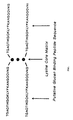
- the figure is a diagrammatic representation of the tetravalent antigenic peptide structure used for immunization.
- mutans streptococci The principal etiologic agents of the infectious disease, dental caries, are mutans streptococci. These oral pathogens infect the oral cavity during early childhood and normally remain associated with the host's dentition for life. Mutans streptococci must colonize and then accumulate on the tooth surface in sufficient numbers to achieve dissolution of the enamel. After the initial colonization by mutans streptococci on the tooth surface, the mutans streptococci produce glucosyltransferase (GTF), an enzyme which catalyzes the synthesis of glucans from sucrose. In addition, S. mutans express cell surface proteins which serve as glucan binding sites. Glucans mediate much of the subsequent accumulation of mutans streptococci on the tooth surface.
- GTF glucosyltransferase
- the vaccine composition of the present invention is comprised of a peptide consisting of at least one amino acid sequence from the catalytic domain of glucosyltransferase of sufficient length to raise an immune response against glucosyltransferase in a mammal to whom it is administered, thereby intercepting the cariogenic process.
- Glucosyltransferases of the mutans streptococci are particularly well-suited for application of synthetic vaccine technology for dental caries.
- the primary sequences of several mutans streptococcal GTFs have been deduced from DNA studies. Ferretti, J.J., et al ., Infect. Imm., 56 :1585-1588 (1988); Russell, R.R.B., et al ., J.
- the peptide consisting of at least one amino acid sequence of glucosyltransferase used to elicit an immune response, is comprised of at least one amino acid sequence of glucosyltransferase which is associated with a catalytic function of the glucosyltransferase molecule.
- the peptide consists of at least one amino acid sequence from the amino acid sequence of the catalytic domain; it may be combined with another peptide which consists of the amino acid sequence of the glucan binding domain of GTF.
- the amino acid sequence DANFDSIRVDAVDNVDADLLQI (SEQ ID NO: 1) or PLDKRSGLNPLIHNSLVDREVDDRE (SEQ ID NO: 2) of the catalytic domain of GTF, and TGAQTIKGQKLYFKANGQQVKG (SEQ ID NO: 3) or DGKLRYYDANSGDQAFNKSV (SEQ ID NO: 4) of the glucan-binding domain of GTF
- Synthetic vaccine design containing peptides consisting of an amino acid sequence from the catalytic domain of GTF (CAT-pep) and an amino acid sequence from the glucan binding domain of GTF (GLUa-pep) is described in Example 1.
- both an amino acid sequence of all or a portion of the catalytic domain and an amino acid sequence from all or a portion of the glucan-binding domain of glucosyltransferase are present.
- Each amino acid sequence of glucosyltransferase is of sufficient length to raise an immune response in a mammal to whom the vaccine composition is administered.
- a peptide is present which consists of an amino acid sequence which exists on the native surface domain of glucosyltransferase.
- the amino acid sequence QWNGESEKPYDDHL SEQ ID NO: 5 of the native glucosyltransferase surface domain can be used.
- the vaccine composition of the present invention can contain one peptide consisting of at least one amino acid sequence from the catalytic domain of GTF
- preferred embodiments of the vaccine composition of the present invention consist of at least 2 peptides containing an amino acid sequence of GTF in which each amino acid sequence is of sufficient length to raise an immune response.
- both an amino acid sequence of the catalytic domain and of the glucan-binding domain of glucosyltransferase are present and each amino acid sequence is of sufficient length to raise an immune response in a mammal to whom it is administered.
- 2 or more peptides containing an amino acid sequence of all or a portion of the catalytic domain, the glucan binding domain, or the native surface domain of GTF are present in the vaccine composition.
- 2 or more peptides containing a combination of amino acid sequences of all or a portion of the catalytic domain, the glucan binding domain, the native surface domain and other immunologic domains of GTF are present, producing a multicomponent vaccine composition.
- 2 or more peptides containing all or a portion of an amino acid sequence of the catalytic domain, the glucan binding domain, the native surface domain and other immunologic domains of GTF, as well as additional immunologic components of non-GTF origin which enhance adjuvanticity or produce an immunogenic response against other infectious agents, are present in the vaccine composition.
- the additional immunologic components can be amino acid sequences selected from immunologic domains of infectious diseases such as, but not limited to, diphtheria, pertussis, tetanus, measles and polio vaccine, resulting in a multivalent vaccine producing protection against greater than one infectious disease or agent.
- a multivalent vaccine can be produced which incorporates relevant protective epitopes and appropriate adjuvant sequences targeting early childhood infections.
- the peptides present in the vaccine composition of the present invention may be designed in a number of ways to enhance immunogenicity.
- the vaccine composition contains one or more peptides
- the peptide(s) is conjugated to a known protein, (such as tetanus toxoid) or a carrier (such as a synthetic polymer carrier) to give a macromolecular structure to the vaccine which thereby enhances immunogenicity.
- the vaccine composition contains at least 2 peptides
- the peptides are synthesized and covalently attached to a peptidyl core matrix to yield a macromolecule with a high density of peptides in a single structure.
- Each peptide in such a structure consists essentially of amino acid sequences of GTF of sufficient length to raise an immune response in the mammal to whom it is administered.
- the peptidyl core matrix can consist of amino acids such as lysine, arginine and histidine.
- at least 2 peptides are synthesized on a core matrix of at least one lysine to yield a macromolecular vaccine composition.
- at least 2 peptides are synthesized on a core matrix of 3 lysines.
- a vaccine composition is designed in which four peptides of the present invention are synthesized and covalently attached to a core matrix of 3 lysines yielding a radially branched peptide with four dendritic arms.
- the four peptides present can be the same or different.
- This macromolecular vaccine structure is described in Example 1 using 4 peptides from the catalytic domain of GTF and demonstrated in the Figure using 4 peptides from the glucan binding domain of GTF.
- the immune response elicited by the synthetic peptides of the vaccine composition of the present invention comprises a B cell response and/or a T cell response.
- the B cell response is associated with the appearance of mucosal antibody which is predominately IgA and systemic antibody which is predominantly IgG.
- both the CAT-pep peptide and the GLUa-pep peptide synthesized in Example 1 elicit a B cell response in vivo to GTF.
- the GLUa peptide also elicits a T cell response in vivo to GTF.
- the present invention makes available a method of provoking an immune response to glucosyltransferase in mammals by administering a peptide consisting essentially of an amino acid sequence from the catalytic domain of glucosyltransferase of sufficient length to raise an immune response in a mammal.
- the immune response may result in interference with the enzymatic or glucan binding activity of glucosyltransferase in mammals after administration of the vaccine composition.
- the immune response elicited by use of the present invention results in reduction of the colonization or accumulation of mutans streptococcal strains in the mammal to whom the vaccine is administered.
- the vaccine composition of the present invention can be administered to any mammal in which the prevention of dental caries is desired.
- the present invention provides a vaccine that is useful for preventing or halting the progression of dental caries in a mammal to whom the vaccine is administered.
- the vaccine composition can be included in a formulation which is administered to an individual being treated; such a formulation can also include a physiologically compatible carrier (e.g., a physiological buffer), stabilizers, flavorants, adjuvants and other components.
- a physiologically compatible carrier e.g., a physiological buffer
- the amount to be administered and the frequency of administration can be determined empirically and will take into consideration the age and size of the mammal being treated and the stage of the dental caries disease (e.g., prior to colonization of mutans streptococci, soon after colonization of mutans streptococci or in later stages of colonization).
- CAT-pep It was presumed that antibody-mediated interference with the catalytic activity of GTF will significantly reduce the colonization and/or accumulation potential of mutans streptococci. A synthetic peptide which includes the DSIRVDAVD region of the catalytic region of GTF was presumed to elicit antibody with these characteristics. Therefore, the location of the nonapeptide within published sequences of S. sobrinus (Ferretti et al. , J. Dent. Res. 67 :541, (1988)) was identified. Since immunogenicity of a peptide usually requires that the host recognizes at least two epitopes of at least 5-7 amino acids within a structure, a larger 22 amino acid sequence was synthesized which included the target aspartic acid. This sequence is shown in Table 1 and is referred to as CAT-pep.
- GLUa-pep There is evidence for a second functional domain on the GTF molecule. Structural (Ferretti et al., J. Bact . 169 :4271, (1987)) and biochemical (Mooser & Wong, Infect. Immunity, 56 :880, (1988); (Wong et al., Infect. Immunity, 58 :2165, (1990)) studies suggest that a separate glucan-binding region(s) exists in the C-terminal third of the GTF molecule. Analysis of the primary structure of deduced sequences of GTFs from both S . mutans and S.
- sobrinus reveal multiple repeating amino acid regions that have been theoretically associated with the glucan binding properties of GTF. This hypothesis is supported by high affinity binding of glucan by tryptic fragments from this area of the molecule (Wong et al ., Infect. Immunity, 58 :2165, (1990)) and by the amino acid homology of these regions with repeating sequences in an independent streptococcal protein with glucan-binding characteristics (Banas et al ., Infect. Immunity, 58 :667, (1990)). A sequence was selected that was derived from one of the repeating regions (residues 1293-1328) for synthetic peptide preparation, based on homology with the other repeating regions of S.
- sobrinus GTF homology with corresponding sequences in S . mutans GTF, hydrophilicity, and secondary structure.
- This sequence is referred to as GLUa-pep.
- the core matrix synthesis procedure used for the CAT-pep was also used to synthesize a four chain GLUa-pep peptide structure with a lysine backbone ( Figure 1), which however is not within the scope of the claimed invention.
- ELISA Both peptides were exceptionally immunogenic. Each elicited vigorous serum IgG responses to the injected antigen. The sera of rats injected with the GLUa-pep could be shown to react with bound GLUa-pep at a reciprocal titer of >50,000. Sera from rats injected with the CAT-pep or GTF from S . sobrinus did not demonstrate significant reaction with the GLUa-pep by this technique. Antisera from a rat injected with GTF from S. mutans did react modestly at low dilutions with the GLUa-synthetic peptide.
- the CAT-synthetic peptide also elicited vigorous responses in the respectively injected rats. Reaction with the homologous synthetic peptide was observed to occur at reciprocal serum dilutions greater than 10,000. Antisera from rats injected with GTF from S . mutans also reacted with the CAT-pep at reciprocal dilutions greater than 1,000, suggesting that common epitopes exist on the intact GTF and CAT-synthetic peptide. Essentially no reaction was observed with antisera from rats immunized with GTF from S . sobrinus or the GLUa-pep by this technique.
- GTF from S . sobrinus elicited a serum IgG antibody response which reacted with the homologous antigen at reciprocal dilutions greater than 10 6 , and at dilutions greater than 10 4 with the heterologous GTF.
- GTF from S. mutans elicited vigorous reactive and crossreactive responses with both intact GTF enzymes.
- the antisera from rats injected with the CAT- or GLUa-synthetic peptides also reacted with both intact GTF antigens, albeit at a lower dilution (1:800-1:1600).
- WESTERN BLOT Western blot techniques also provided evidence that antibody to epitopes on intact GTF could be elicited by injection with either synthetic peptide.
- Antisera from CAT-pep and GLUa-pep injected rats were reacted with GTF in the following manner.
- Glucosyltransferase from S . sobrinus strain 6715 was electrophoresed in SDS 7% polyacrylamide gels, together with prestained standards. After electrophoresis, proteins from the gels were transferred to nitrocellulose. Reactivity of the rat antisera to the synthetic peptide and to intact GTF antigens was measured by exposing each antiserum to the electrophoresed GTF and developing for rat IgG antibody.
- Rat antisera to the intact GTF ( S . sobrinus ) reacted strongly, and antisera to intact S. mutans GTF reacted moderately, to S . sobrinus GTF bands in the 150-165 kD range.
- Antisera to both the CAT and GLUa-synthetic peptides also formed bands which were visible in this range. Although these bands were much less intense than those formed with the rat antisera to GTF, the reactions indicated the presence of similar epitopes on GTF and the synthetic peptides.
- LYMPHOCYTE BLASTOGENESIS In order to evaluate the T-cell epitopes of the respective peptides used to immunize rats, spleens were removed from each animal and single cell suspensions were prepared and lymphocytes were isolated by gradient centrifugation. Cells (5 x 10 5 ) were reacted with either, no additive (control), CAT-peptide, poly-lysine peptide, S. sobrinus GTF or S. mutans GTF for 5 days in culture. Tritiated thymidine was added for the final 16 hours of culture. The positive findings are summarized in Table 2.
- Cells from 1 to 3 animals immunized with CAT-pep showed a highly significant elevated stimulation with the homologous CAT-pep.
- Cells from 2 of 3 animals immunized with GLUa-pep showed highly significant reactivity with S. sobrinus GTF.
- Cells from animals immunized with S . sobrinus GTF demonstrated significant stimulation with GLUa-pep and with the homologous GTF (p ⁇ 0.01).
- Cells from the 1 animal immunized with S. mutans GTF only showed stimulation with the homologous GTF.
- the results indicate that: 1) Cells from animals immunized with CAT peptide will proliferate to a high concentration of CAT peptide. 2) Cells of animals immunized with GLUa peptide will react with S. sobrinus GTF. 3) Cells from animals sensitized to S . sobrinus GTF react with S . sobrinus GTF and GLUa peptide. 4) Cells from an animal immunized with S. mutans GTF reacted only with the homologous GTF.
- T cell epitopes are present on the CAT-synthetic peptide, as predicted from sequence patterns common to T cell epitopes (Rothbard & Taylor, EMBO 7 :93, 1988)). Also, these experiments reveal that T cell epitopes, that are cross-reactive with those on the synthetic peptides, are present on the intact GTF from S. sobrinus.
- T lymphocyte (proliferation) and B (antibody) lymphocyte responses in humans to the subject peptide constructs were investigated.
- Blood was taken from 14 subjects with decayed, missing and filled tooth surfaces (DMFS) from ages 2 to 37 years and serum (plasma) antibodies and lymphocyte proliferation were examined.
- DMFS decayed, missing and filled tooth surfaces
- SERUM ANTIBODY The IgG antibody in plasma of these individuals to GTFss ( S . sobrinus ), GTFsm ( S . mutans ), CAT and GLUa was measured by ELISA techniques. The antibody levels to each of these antigens were ranked, with 1 being the highest. Although antibody levels were ranked, all subjects appeared to demonstrate some level of antibody to the peptides which suggests that B cell epitopes recognizable by humans were probably present on the CAT and GLUa peptides (Table 3).
- LYMPHOCYTE BLASTOGENIC RESPONSES The ability of these human peripheral blood T lymphocytes to recognize the subject peptides was also investigated (Table 3). Peripheral blood lymphocytes were prepared by centrifugation into Ficoll Histopaque. The mononuclear cells from 14 individuals (7F, 7M) aged 22-58 years were examined for proliferative response to concanavalin A, CAT, GLUa, poly-lysine, GTFss and GTFsm. Responses to GLUa and CAT and to S . mutans GTF were dose dependent with no detectable responses to poly-1-lysine as a control peptide.
- T cell epitopes do not appear to be present on the CAT-peptide but are present on the GLUa peptide.
- These findings demonstrate that individuals with the highest antibody levels do not necessarily have elevated lymphocyte proliferative responses to the same antigens but that B cell epitopes probably exist on both the CAT and GLUa peptides.
Landscapes
- Health & Medical Sciences (AREA)
- Life Sciences & Earth Sciences (AREA)
- Chemical & Material Sciences (AREA)
- Organic Chemistry (AREA)
- Medicinal Chemistry (AREA)
- General Health & Medical Sciences (AREA)
- Wood Science & Technology (AREA)
- Zoology (AREA)
- Microbiology (AREA)
- Genetics & Genomics (AREA)
- Engineering & Computer Science (AREA)
- Bioinformatics & Cheminformatics (AREA)
- Pharmacology & Pharmacy (AREA)
- Animal Behavior & Ethology (AREA)
- Public Health (AREA)
- Veterinary Medicine (AREA)
- Biomedical Technology (AREA)
- Biotechnology (AREA)
- Molecular Biology (AREA)
- Epidemiology (AREA)
- Mycology (AREA)
- Biochemistry (AREA)
- General Engineering & Computer Science (AREA)
- Immunology (AREA)
- Oncology (AREA)
- Communicable Diseases (AREA)
- Chemical Kinetics & Catalysis (AREA)
- General Chemical & Material Sciences (AREA)
- Nuclear Medicine, Radiotherapy & Molecular Imaging (AREA)
- Medicines Containing Antibodies Or Antigens For Use As Internal Diagnostic Agents (AREA)
- Peptides Or Proteins (AREA)
- Cosmetics (AREA)
- Medicines That Contain Protein Lipid Enzymes And Other Medicines (AREA)
Abstract
Claims (18)
- Composition vaccinale comprenant un fragment de peptide glucosyltransférase de longueur suffisante pour induire une réponse immune chez un mammifère, dans laquelle ledit fragment est une séquence d'acides aminés du domaine catalytique de la glucosyltransférase.
- Composition vaccinale selon la revendication 1, dans laquelle la séquence d'acides aminés est sélectionnée dans le groupe constitué de :et


- Composition vaccinale selon la revendication 1, dans laquelle la réponse immune comprend à la fois une réponse cellulaire B et une réponse cellulaire T ou produit des anticorps d'isotype IgG ou IgA.
- Composition vaccinale comprenant au moins deux fragments d'un peptide glucosyltransférase, chaque fragment étant d'une longueur suffisante pour induire une réponse immune chez un mammifère, dans laquelle un fragment consiste en une séquence d'acides aminés du domaine catalytique de la glucosyltransférase et un fragment consiste en une séquence d'acides aminés du domaine de liaison au glucane de la glucosyltransférase, et par exemple deux ou plusieurs des peptides sont présents et disposés sur une matrice nucléaire de trois lysines ou plus.
- Composition vaccinale selon la revendication 5, dans laquelle la séquence d'acides aminés du domaine catalytique est sélectionnée dans le groupe constitué de :et
 et la séquence d'acides aminés du domaine de liaison au glucane est sélectionnée dans le groupe constitué de :
 et
et

- Composition vaccinale comprenant une pluralité de peptides, liés de manière covalente à une matrice nucléaire peptydile, c'est-à-dire au moins une lysine, dans laquelle un premier peptide consiste en une séquence d'acides aminés du domaine catalytique de la glucosyltransférase et un second peptide consiste en une séquence d'acides aminés du domaine de liaison au glucane de la glucosyltransférase, chaque peptide étant d'une longueur suffisante pour induire une réponse immune chez un mammifère auquel il est administré.
- Composition vaccinale selon la revendication 6 ayant au moins un composant immunologique additionnel lié de façon covalente à ladite matrice nucléaire peptidyle, dans laquelle ledit composant immunologique additionnel n'est pas une séquence d'acides aminés de la glucosyltransférase, et par exemple le composant immunologique additionnel est sélectionné parmi les vaccins de la diphtérie, de la coqueluche, du tétanos, de la rubéole et de la polio.
- Composition vaccinale selon la revendication 6 comprenant trois peptides dans laquelle les séquences d'acides aminés des peptides sont une séquence d'acides aminés du domaine catalytique de la glucosyltransférase; une séquence d'acides aminés du domaine de liaison au glucane de la glucosyltransférase; et une séquence d'acides aminés d'un domaine de surface de la glucosyltransférase native.
- Composition vaccinale selon la revendication 8, dans laquelle les séquences d'acides aminés sont sélectionnées dans le groupe constitué de :


 et
et
- Composition vaccinale selon la revendication 6, dans laquelle la réponse immune comprend à la fois une réponse cellulaire B et une réponse cellulaire T, et par exemple à la fois la réponse cellulaire B et la réponse cellulaire T sont induites par la même séquence d'acides aminés.
- Composition vaccinale selon la revendication 10, dans laquelle la réponse immune produit des anticorps d'isotype IgG ou IgA.
- Composition vaccinale selon la revendication 1, comprenant en outre trois peptides, les trois peptides identiques ou différents consistant chacun essentiellement en une séquence d'acides aminés sélectionnée dans le groupe constitué de tout ou partie de la séquence d'acides aminés du domaine catalytique de la glucosyltransférase; tout ou partie de la séquence d'acides aminés du domaine de liaison au glucane de la glucosyltransférase et tout ou partie de la séquence d'acides aminés d'un domaine de surface de la glucosyltransférase native; et les quatre peptides sont sur une matrice nucléaire de trois lysines, ledit vaccin étant capable d'induire une réponse du système immunitaire contre la glucosyltransférase chez un mammifère auquel il est administré, par exemple une diminution de la colonisation ou de l'accumulation de souches mutantes de streptocoques chez un mammifère auquel est administrée la composition vaccinale.
- Composition vaccinale selon la revendication 12, dans laquelle la séquence d'acides aminés de chaque peptide supplémentaire est sélectionnée dans le groupe constitué de :


 et
et

- Composition vaccinale selon l'une quelconque des revendications précédentes qui est capable de provoquer une interférence médiée par les anticorps avec l'activité enzymatique de la glucosyltransférase chez un mammifère auquel elle est administrée.
- Utilisation d'un peptide consistant en une séquence d'acides aminés du domaine catalytique de la glucosyltransférase d'une longueur suffisante pour induire une réponse immune chez un mammifère, pour la fabrication d'un médicament destiné à interférer avec l'activité enzymatique de la glucosyltransférase chez les mammifères.
- Utilisation selon la revendication 15, pour la fabrication d'un médicament destiné à diminuer la colonisation ou l'accumulation de souches mutantes de streptocoques chez le mammifère.
- Utilisation selon la revendication 15 ou 16, dans laquelle le peptide a la séquence d'acides aminés sélectionnée parmi :et


- Utilisation selon la revendication 15, 16 ou 17, d'un second peptide en combinaison avec ledit peptide, pour la fabrication dudit médicament, ledit second peptide consistant en une séquence d'acides aminés sélectionnée dans le groupe constitué de :et


Priority Applications (1)
| Application Number | Priority Date | Filing Date | Title |
|---|---|---|---|
| EP02017131A EP1266662A3 (fr) | 1992-05-01 | 1993-04-30 | Vaccins de peptides de synthése pour prevenir les caries dentaires |
Applications Claiming Priority (3)
| Application Number | Priority Date | Filing Date | Title |
|---|---|---|---|
| US87729592A | 1992-05-01 | 1992-05-01 | |
| PCT/US1993/004094 WO1993022341A1 (fr) | 1992-05-01 | 1993-04-30 | Vaccins de peptides de synthese pour prevenir les caries dentaires |
| US877295 | 1997-06-17 |
Related Child Applications (1)
| Application Number | Title | Priority Date | Filing Date |
|---|---|---|---|
| EP02017131A Division EP1266662A3 (fr) | 1992-05-01 | 1993-04-30 | Vaccins de peptides de synthése pour prevenir les caries dentaires |
Publications (2)
| Publication Number | Publication Date |
|---|---|
| EP0638092A1 EP0638092A1 (fr) | 1995-02-15 |
| EP0638092B1 true EP0638092B1 (fr) | 2002-12-04 |
Family
ID=25369658
Family Applications (2)
| Application Number | Title | Priority Date | Filing Date |
|---|---|---|---|
| EP93910953A Expired - Lifetime EP0638092B1 (fr) | 1992-05-01 | 1993-04-30 | Vaccins de peptides de synthese pour prevenir les caries dentaires |
| EP02017131A Withdrawn EP1266662A3 (fr) | 1992-05-01 | 1993-04-30 | Vaccins de peptides de synthése pour prevenir les caries dentaires |
Family Applications After (1)
| Application Number | Title | Priority Date | Filing Date |
|---|---|---|---|
| EP02017131A Withdrawn EP1266662A3 (fr) | 1992-05-01 | 1993-04-30 | Vaccins de peptides de synthése pour prevenir les caries dentaires |
Country Status (7)
| Country | Link |
|---|---|
| US (1) | US5686075A (fr) |
| EP (2) | EP0638092B1 (fr) |
| JP (1) | JPH07506374A (fr) |
| CA (1) | CA2134761C (fr) |
| DE (1) | DE69332539T2 (fr) |
| DK (1) | DK0638092T3 (fr) |
| WO (1) | WO1993022341A1 (fr) |
Families Citing this family (14)
| Publication number | Priority date | Publication date | Assignee | Title |
|---|---|---|---|---|
| GB9409387D0 (en) * | 1994-05-11 | 1994-06-29 | Unilever Plc | Glucan-binding domains (gbp's) and hybird proteins containing gbd's as novel active systems targeted to dental plaque |
| EP1001736A1 (fr) * | 1996-10-11 | 2000-05-24 | Novo Nordisk A/S | Domaines de liaison a l'amidon pour produits de soins bucco-dentaires |
| EP1011620A1 (fr) | 1996-10-11 | 2000-06-28 | Novo Nordisk A/S | Domaine de liaison a la cellulose pour produits de soins bucco-dentaires |
| US5786343A (en) * | 1997-03-05 | 1998-07-28 | Immudyne, Inc. | Phagocytosis activator compositions and their use |
| JP2002511422A (ja) | 1998-04-10 | 2002-04-16 | リーズ,アンドリュー | う食症予防用のコンジュゲートワクチン |
| US7163682B2 (en) * | 1998-04-13 | 2007-01-16 | The Forsyth Institute | Glucan binding protein and glucosyltransferase immunogens |
| US7056517B2 (en) * | 1998-04-13 | 2006-06-06 | The Forsyth Institute | Glucosyltransferase immunogens |
| US6827936B1 (en) | 1998-04-13 | 2004-12-07 | Forsyth Dental Infirmary For Children | Synthetic peptide vaccines for dental caries |
| US6231857B1 (en) | 1998-09-28 | 2001-05-15 | The Regents Of The University Of California | Antibodies to S. mutans and uses thereof |
| AUPR446801A0 (en) * | 2001-04-18 | 2001-05-17 | University Of Queensland, The | Novel compositions and uses therefor |
| CA2480962A1 (fr) * | 2002-03-07 | 2003-09-18 | The Forsyth Institute | Immunogenicite d'une proteine de liaison au glucaneimmunogenicite d'une proteine de liaison au glucane |
| US7875598B2 (en) * | 2004-03-04 | 2011-01-25 | The Regents Of The University Of California | Compositions useful for the treatment of microbial infections |
| US7846895B2 (en) | 2006-09-06 | 2010-12-07 | The Regents Of The University Of California | Selectively targeted antimicrobial peptides and the use thereof |
| GB202307100D0 (en) * | 2023-05-12 | 2023-06-28 | Univ Ramot | Methods and tools for determining an individual's dental caries risk |
Family Cites Families (6)
| Publication number | Priority date | Publication date | Assignee | Title |
|---|---|---|---|---|
| US4150116A (en) * | 1978-02-21 | 1979-04-17 | Forsyth Dental Infirmary For Children | Immunization against dental caries with glucosyltransferase antigens |
| US4250262A (en) * | 1979-12-14 | 1981-02-10 | Forsyth Dental Infirmary For Children | Method of preparing a purified glucosyltransferase |
| DE3224788A1 (de) * | 1981-07-17 | 1983-02-03 | South African Inventions Development Corp., Scientia, Pretoria,Transvaal | Traegergebundenes immunogenes material |
| US4438200A (en) * | 1982-09-13 | 1984-03-20 | Forsyth Dental Infirmary For Children | Method for the preparation of glucosylranferase |
| CA1341285C (fr) * | 1988-02-12 | 2001-08-14 | Chang Yi Wang | Peptides synthetiques servant a la detection d'anticorps de la proteine de surface gp120 du virus hiv, destines au diagnostic du sida, ainsi que d'etats pre-sidatiques, ou aux fins de vaccins |
| IL96475A0 (en) * | 1989-11-29 | 1991-08-16 | Innovative Tech Center | Chimeric proteins |
-
1993
- 1993-04-30 EP EP93910953A patent/EP0638092B1/fr not_active Expired - Lifetime
- 1993-04-30 CA CA002134761A patent/CA2134761C/fr not_active Expired - Fee Related
- 1993-04-30 EP EP02017131A patent/EP1266662A3/fr not_active Withdrawn
- 1993-04-30 US US08/057,162 patent/US5686075A/en not_active Expired - Lifetime
- 1993-04-30 DE DE69332539T patent/DE69332539T2/de not_active Expired - Fee Related
- 1993-04-30 JP JP5519549A patent/JPH07506374A/ja active Pending
- 1993-04-30 DK DK93910953T patent/DK0638092T3/da active
- 1993-04-30 WO PCT/US1993/004094 patent/WO1993022341A1/fr not_active Ceased
Also Published As
| Publication number | Publication date |
|---|---|
| DK0638092T3 (da) | 2003-01-06 |
| EP1266662A2 (fr) | 2002-12-18 |
| US5686075A (en) | 1997-11-11 |
| JPH07506374A (ja) | 1995-07-13 |
| DE69332539T2 (de) | 2003-04-10 |
| WO1993022341A1 (fr) | 1993-11-11 |
| CA2134761C (fr) | 2005-03-22 |
| EP1266662A3 (fr) | 2003-05-28 |
| EP0638092A1 (fr) | 1995-02-15 |
| CA2134761A1 (fr) | 1993-11-11 |
| DE69332539D1 (de) | 2003-01-16 |
Similar Documents
| Publication | Publication Date | Title |
|---|---|---|
| Rothbard et al. | Antibodies to peptides corresponding to a conserved sequence of gonococcal pilins block bacterial adhesion. | |
| JP3851938B2 (ja) | 植物、動物、およびヒトのワクチンとして並びに免疫療法に有用な抗体の免疫優性エピトープの弱化 | |
| EP0638092B1 (fr) | Vaccins de peptides de synthese pour prevenir les caries dentaires | |
| EP0863211A1 (fr) | Expression de protéines recombinantes fusionnées dans des bactéries attenuées | |
| CN107602676B (zh) | OspA的突变片段以及其相关方法和用途 | |
| Dale et al. | Type-specific immunogenicity of a chemically synthesized peptide fragment of type 5 streptococcal M protein. | |
| EP1069909B1 (fr) | Vaccins conjugues pour la prevention contre les caries dentaires | |
| Taubman et al. | Diepitopic construct of functionally and epitopically complementary peptides enhances immunogenicity, reactivity with glucosyltransferase, and protection from dental caries | |
| Lett et al. | Immunogenicity of polysaccharides conjugated to peptides containing T-and B-cell epitopes | |
| KR19990087436A (ko) | 치주염의 진단 및 치료용 포르피로모나스 긴기발리스 항원 | |
| Krasse et al. | An anticaries vaccine: report on the status of research | |
| US5536497A (en) | Fimbrial polypeptides useful in the prevention of periodontitis | |
| CN102488898A (zh) | 龋齿疫苗及制备方法 | |
| US6673601B1 (en) | Chimeric lyssavirus nucleic acids and polypeptides | |
| AU700104B2 (en) | Prolactin as a vaccine adjuvant | |
| EP1180119B1 (fr) | Proteines recombinantes d'adhesine d'hemophilus influenzae | |
| US5756105A (en) | Opacity associated proteins, DNA encoding the same, and methods of use thereof | |
| HU205372B (en) | Process for producing vaccines against cholera | |
| Beachey et al. | Prospects for group A streptococcal vaccine | |
| WO1997039020A2 (fr) | Sequences antigeniques d'une proteine seminale et methodes immunocontraceptives | |
| US20010048926A1 (en) | Synthetic peptide vaccines for dental caries | |
| HK1207982B (en) | Mutant fragments of ospa and methods and uses relating thereto | |
| NZ539569A (en) | Recombinant haemophilus influenzae adhesin proteins |
Legal Events
| Date | Code | Title | Description |
|---|---|---|---|
| PUAI | Public reference made under article 153(3) epc to a published international application that has entered the european phase |
Free format text: ORIGINAL CODE: 0009012 |
|
| 17P | Request for examination filed |
Effective date: 19941103 |
|
| AK | Designated contracting states |
Kind code of ref document: A1 Designated state(s): BE CH DE DK FR GB IE IT LI NL SE |
|
| 17Q | First examination report despatched |
Effective date: 19960130 |
|
| GRAG | Despatch of communication of intention to grant |
Free format text: ORIGINAL CODE: EPIDOS AGRA |
|
| RIC1 | Information provided on ipc code assigned before grant |
Free format text: 7C 07K 7/08 A, 7C 07K 14/315 B, 7C 12N 9/10 B, 7A 61K 39/09 B |
|
| GRAG | Despatch of communication of intention to grant |
Free format text: ORIGINAL CODE: EPIDOS AGRA |
|
| GRAH | Despatch of communication of intention to grant a patent |
Free format text: ORIGINAL CODE: EPIDOS IGRA |
|
| GRAH | Despatch of communication of intention to grant a patent |
Free format text: ORIGINAL CODE: EPIDOS IGRA |
|
| GRAA | (expected) grant |
Free format text: ORIGINAL CODE: 0009210 |
|
| AK | Designated contracting states |
Kind code of ref document: B1 Designated state(s): BE CH DE DK FR GB IE IT LI NL SE |
|
| REG | Reference to a national code |
Ref country code: GB Ref legal event code: FG4D |
|
| REG | Reference to a national code |
Ref country code: CH Ref legal event code: EP |
|
| REG | Reference to a national code |
Ref country code: DK Ref legal event code: T3 |
|
| REG | Reference to a national code |
Ref country code: IE Ref legal event code: FG4D |
|
| REF | Corresponds to: |
Ref document number: 69332539 Country of ref document: DE Date of ref document: 20030116 |
|
| REG | Reference to a national code |
Ref country code: CH Ref legal event code: NV Representative=s name: PATENTANWAELTE SCHAAD, BALASS, MENZL & PARTNER AG |
|
| ET | Fr: translation filed | ||
| PLBE | No opposition filed within time limit |
Free format text: ORIGINAL CODE: 0009261 |
|
| STAA | Information on the status of an ep patent application or granted ep patent |
Free format text: STATUS: NO OPPOSITION FILED WITHIN TIME LIMIT |
|
| 26N | No opposition filed |
Effective date: 20030905 |
|
| PGFP | Annual fee paid to national office [announced via postgrant information from national office to epo] |
Ref country code: DK Payment date: 20080429 Year of fee payment: 16 Ref country code: DE Payment date: 20080602 Year of fee payment: 16 Ref country code: CH Payment date: 20080430 Year of fee payment: 16 |
|
| PGFP | Annual fee paid to national office [announced via postgrant information from national office to epo] |
Ref country code: BE Payment date: 20080527 Year of fee payment: 16 Ref country code: IT Payment date: 20080429 Year of fee payment: 16 |
|
| PGFP | Annual fee paid to national office [announced via postgrant information from national office to epo] |
Ref country code: SE Payment date: 20080429 Year of fee payment: 16 Ref country code: NL Payment date: 20080424 Year of fee payment: 16 Ref country code: IE Payment date: 20080425 Year of fee payment: 16 |
|
| PGFP | Annual fee paid to national office [announced via postgrant information from national office to epo] |
Ref country code: FR Payment date: 20080417 Year of fee payment: 16 |
|
| PGFP | Annual fee paid to national office [announced via postgrant information from national office to epo] |
Ref country code: GB Payment date: 20080429 Year of fee payment: 16 |
|
| BERE | Be: lapsed |
Owner name: *FORSYTH DENTAL INFIRMARY FOR CHILDREN Effective date: 20090430 |
|
| REG | Reference to a national code |
Ref country code: CH Ref legal event code: PL |
|
| REG | Reference to a national code |
Ref country code: DK Ref legal event code: EBP |
|
| GBPC | Gb: european patent ceased through non-payment of renewal fee |
Effective date: 20090430 |
|
| NLV4 | Nl: lapsed or anulled due to non-payment of the annual fee |
Effective date: 20091101 |
|
| REG | Reference to a national code |
Ref country code: FR Ref legal event code: ST Effective date: 20091231 |
|
| PG25 | Lapsed in a contracting state [announced via postgrant information from national office to epo] |
Ref country code: LI Free format text: LAPSE BECAUSE OF NON-PAYMENT OF DUE FEES Effective date: 20090430 Ref country code: DE Free format text: LAPSE BECAUSE OF NON-PAYMENT OF DUE FEES Effective date: 20091103 Ref country code: CH Free format text: LAPSE BECAUSE OF NON-PAYMENT OF DUE FEES Effective date: 20090430 |
|
| REG | Reference to a national code |
Ref country code: IE Ref legal event code: MM4A |
|
| PG25 | Lapsed in a contracting state [announced via postgrant information from national office to epo] |
Ref country code: NL Free format text: LAPSE BECAUSE OF NON-PAYMENT OF DUE FEES Effective date: 20091101 |
|
| PG25 | Lapsed in a contracting state [announced via postgrant information from national office to epo] |
Ref country code: IE Free format text: LAPSE BECAUSE OF NON-PAYMENT OF DUE FEES Effective date: 20090430 Ref country code: GB Free format text: LAPSE BECAUSE OF NON-PAYMENT OF DUE FEES Effective date: 20090430 Ref country code: FR Free format text: LAPSE BECAUSE OF NON-PAYMENT OF DUE FEES Effective date: 20091222 Ref country code: DK Free format text: LAPSE BECAUSE OF NON-PAYMENT OF DUE FEES Effective date: 20090430 |
|
| PG25 | Lapsed in a contracting state [announced via postgrant information from national office to epo] |
Ref country code: BE Free format text: LAPSE BECAUSE OF NON-PAYMENT OF DUE FEES Effective date: 20090430 |
|
| PG25 | Lapsed in a contracting state [announced via postgrant information from national office to epo] |
Ref country code: IT Free format text: LAPSE BECAUSE OF NON-PAYMENT OF DUE FEES Effective date: 20090430 |
|
| PG25 | Lapsed in a contracting state [announced via postgrant information from national office to epo] |
Ref country code: SE Free format text: LAPSE BECAUSE OF NON-PAYMENT OF DUE FEES Effective date: 20090501 |