EP0638862A2 - Sprachverarbeitungssystem und -verfahren - Google Patents
Sprachverarbeitungssystem und -verfahren Download PDFInfo
- Publication number
- EP0638862A2 EP0638862A2 EP94112667A EP94112667A EP0638862A2 EP 0638862 A2 EP0638862 A2 EP 0638862A2 EP 94112667 A EP94112667 A EP 94112667A EP 94112667 A EP94112667 A EP 94112667A EP 0638862 A2 EP0638862 A2 EP 0638862A2
- Authority
- EP
- European Patent Office
- Prior art keywords
- code
- optimization
- range
- intermediate code
- enabling
- Prior art date
- Legal status (The legal status is an assumption and is not a legal conclusion. Google has not performed a legal analysis and makes no representation as to the accuracy of the status listed.)
- Granted
Links
Images







Classifications
-
- G—PHYSICS
- G06—COMPUTING OR CALCULATING; COUNTING
- G06F—ELECTRIC DIGITAL DATA PROCESSING
- G06F8/00—Arrangements for software engineering
- G06F8/40—Transformation of program code
- G06F8/41—Compilation
- G06F8/44—Encoding
- G06F8/443—Optimisation
Definitions
- the present invention relates generally to a method and a system for processing a language information. More specifically, the invention relates to a language processing system and a language processing method to be employed for code processing in a high-level language as a program language for a microcomputer.
- a machine language program for commanding operation to a computer is described as a string of figures in binary, hexadecimal notation and so forth so that the computer may executes the commanded operation.
- the machine language program described in the string of figures is too difficult to understand. Therefore, a programmer prepares a program (hereinafter referred to as "source program") employing a high-level language which takes expression easy to be understood.
- the source program thus written in the high-level language is translated into a machine language program by means of a language processing system (a language processing program).
- the machine language program thus translated is transferred to the computer for execution.
- a compiler is one of the language processing system for performing translation.
- the programmer prepares the source program and input to the compiler.
- the compiler input the source program performs parsing of the source program to generate an intermediate code for outputting.
- the intermediate code is an aggregate of information obtained through conversion of the source program described by the high level language into a format easy to be processed by the language processing program.
- the three address code is a kind of the intermediate code and having a format shown in the following table 1.
- each of A, B and C is a constant, a symbol defined by the programmer or a name generated by the compiler.
- "go to L” represents a jump command for jumping a control of the program to the position represented by a label L.
- the label is a kind of tag described in the program for identifying the position of the program or the location of a storage region.
- the source programs 1 and 2 written by C language are converted into three address codes 1 and 2 as shown in the following table 2.
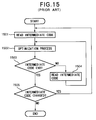
- Fig. 15 is a flowchart showing one example of the process of the conventional optimization process.
- the intermediate code generated from the source program is read out from the beginning (step 1501).
- optimization is performed (step 1502).
- check is performed whether the optimization for the intermediate code is completed or not (step 1503).
- the judgement step of the step 1503 is performed by checking whether the trailing end of the intermediate code is reached or not. Until completion of the optimization for the intermediate code is judged at the step 1503, the optimization process is repeated with reading out the next intermediate code at a step 1504.
- step 1503 When judgement is made at the step 1503 that the end of the intermediate code is reached, check is performed whether the intermediate code is modified or not (step 1505). When judgement is made that no modification is made for the intermediate code, the process goes END. On the other hand, when judgement is made that modification is effected for the intermediate code, the process is returned to the step 1501 to perform the optimization process again. The foregoing process is performed until modification for the intermediate code becomes unnecessary.
- code strings are read out per line.
- the optimization process is progressed with making judgement whether one of the above-listed optimization condition is satisfied or not.
- the foregoing optimization process for the intermediate code is advantageous in speeding up the program execution of the machine language program and in down-sizing the machine language program for efficiently use the storage region, by eliminating the unnecessary codes.
- a language processing system comprises: parsing means for inputting a source program described by a high-level language of a computer, parsing instruction statement, and generating an intermediate code on the basis of the result of parsing; optimization enabling and disabling information generating means for checking the range to be optimized with respect to the source program, generating optimization enabling and disabling code defining the range to perform optimization and inserting the optimization enabling and disabling code to the intermediate code; code optimizing means for performing optimizing process for the range of the intermediate code defined by the optimization enabling and disabling code inserted in the intermediate code; and code generating means for translating an optimized intermediate code optimized by the code optimizing means into a machine language program.
- the optimization enabling and disabling information generating means may generate a start code indicative of initiation of the optimization process and an end code indicative of termination of the optimization process, and insert the start code at an optimization start position in the intermediate code and the end code at an optimization end position in the intermediate code.
- the optimization enabling and disabling information generating means detects the range where control statements controlling flow of the program are combined as the range to be optimized.
- the optimization enabling and disabling information generating means may detect the range where control statements controlling flow of the program are combined as the range to be optimized and inserts a start code indicative of starting of the range for optimization and an end code indicative of end of the range for optimization.
- the code optimizing means may include optimization enabling and disabling judgement means for selecting the range of the intermediate code to be optimized on the basis of the optimization enabling and disabling code.
- the optimization enabling and disabling information generating means detects the range where control statements controlling flow of the program are combined as the range to be optimized and inserts a start code indicative of starting of the range for optimization and an end code indicative of end of the range for optimization, and the code optimizing means reads out the intermediate code from the beginning and responsive to the start code read out as a fraction of the intermediate code to perform optimization process for the intermediate code until the end code is read out.
- the code optimizing means may perform optimization process by detecting a loop and an invariant within the loop within the range for optimization defined by the optimization enabling and disabling code, and moving detected invariant out of the loop.
- a language processing method comprises the steps of: step of inputting a source program described by a high-level language of a computer, parsing instruction statement, and generating an intermediate code on the basis of the result of parsing; step of checking the range to be optimized with respect to the source program, generating optimization enabling and disabling code defining the range to perform optimization and inserting the optimization enabling and disabling code to the intermediate code; step of performing optimizing process for the range of the intermediate code defined by the optimization enabling and disabling code inserted in the intermediate code; and step of translating an optimized intermediate code optimized by the code optimizing means into a machine language program.
- a start code indicative of initiation of the optimization process and an end code indicative of termination of the optimization process may be generated and inserted at an optimization start position and at an optimization end position in the intermediate code.
- the range where control statements controlling flow of the program are combined may be detected as the range to be optimized.
- the range where control statements controlling flow of the program are combined is detected as the range to be optimized and a start code indicative of starting of the range for optimization and an end code indicative of end of the range for optimization are inserted in the intermediate code.
- the step of performing optimization process may include a step of selecting the range of the intermediate code to be optimized on the basis of the optimization enabling and disabling code.
- the range where control statements controlling flow of the program are combined is detected as the range to be optimized and inserts a start code indicative of starting of the range for optimization and an end code indicative of end of the range for optimization, and in the step of performing optimization process, the intermediate code is from the beginning and optimization process is performed in response to detection of the start code in the intermediate code and continued until the end code is read out.
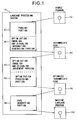
- Fig. 1 is a block diagram showing one embodiment of a language processing system according to the present invention.
- the shown embodiment of the language processing system 10 generally comprises a parsing portion 20, an optimization enabling and disabling information generating portion 30, an optimization enabling and disabling judgement portion 40, an optimization processing portion 50 and a code generating portion 60.
- the source program 70 When a source program 70 prepared by a programmer is input to the language processing system 10, the source program 70 is subject to parsing by the parsing portion 20.
- the parsing portion 20 then generates an intermediate code 80, such as a three address code corresponding to the source program 70.
- an optimization enabling and disabling information generating portion 30 is provided in the parsing portion.
- the optimization enabling and disabling information generating portion 30 generates an enabling and disabling information indicative of the range of the intermediate code, for which optimization can be performed, and insert the generated enabling and disabling information in the intermediate code, during the process of generating the intermediate code.
- the optimization enabling and disabling information generating portion 30 generates codes (three address code) of "OPTBEG" indicative of the optimization start position and "OPTEND" indicative of the optimization end position, as the optimization enabling and disabling information.
- the optimization enabling and disabling information generating portion 30 detects the range capable of performing optimization in the intermediate code (three address code) generated from the source program. Then, the optimization enabling and disabling information generating portion 30 inserts the code "OPTBEG" at the leading end of the detected range and inserts the code "OPTEND" at the trailing end of the detected range. By this, the optimization process is performed within the range defined by the codes "OPTBEG” and "OPTEND".
- the optimization processing portion 50 which performs optimization of the intermediate code 80 includes the optimization enabling and disabling judgement portion 40.
- the optimization enabling and disabling judgement portion 40 selects the range capabl e of performing the optimization in the intermediate code 80 on the basis of the optimization enabling and disabling information contained in the intermediate code.
- optimization process is performed only for the selected range in the intermediate code 80 to output an optimized intermediate code 90.
- the code generating portion 60 converts the optimized intermediate code 90 into the machine language program 100.
- Fig. 2 shows a flowchart illustrating one example of the optimization process to be performed by the optimization processing portion 50.
- the intermediate code (three address code) 80 is read from the first line (step 201). Reading out of the intermediate code is repeated until the judgement is made that the process reaches the end of the intermediate code (steps 204, 205). Next, with respect to the read out intermediate code, judgement is made whether the optimization can be performed (or is necessary) (step 202). Judgement whether the optimization is enabled or not is made on the basis of the optimization enabling and disabling information contained in the intermediate code 80.
- optimization process is performed (step 203).
- the optimization process at the step 204 is not performed.
- check is performed whether the intermediate code is modified for optimization through the optimization process (step 206). If modification is effected for the intermediate code, the foregoing steps are repeated from the step 201, again. On the other hand, if no modification is made for the intermediate code, the optimization process is terminated.
- the reason for repeating the optimization process when the intermediate code is modified as checked at the step 206, is that when the intermediate code (three address code) is modified through the optimization process, it is possible to arise necessity for further optimization. On the other hand, if no modification of the intermediate code is effective, no more optimization will not be effected, and thus the optimization process can be terminated.
- the optimization process is performed according to the following optimization conditions 1) to 3):
- a flag "CHGFLG” is a flag set when the intermediate code (three address code) is modified and otherwise held in reset state.
- the flag "CHGFLG” is reset upon initiation of optimization process.
- the flag CHGFLG is set.
- the optimization processing portion 50 repeats the optimization process as long as the flag CHGFLG is held in set state. Through this process, maximum effect of the optimization process can be attained.
- the individual control codes for controlling flow of the program the best intermediate code is generated for respective codes. Therefore, there is no possibility for necessity of optimization. However, when a combination of the flow of control statement is present, there is possibility for necessity of optimization.
- the optimization enabling and disabling information generating portion 30 makes judgement whether the combination of the control codes is present or not upon generation of the intermediate code by the parsing portion 20.
- possibility of optimization is judged to insert the codes "OPTBEG” and "OPTEND”.
- the code "OPTBEG” indicative of beginning of the optimization process and the code “OPTEND” indicative of end of the optimization process are inserted at line 1 and line 15 to define the range where the optimization is possible.
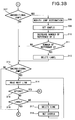
- the optimization processing portion 50 resets the flag "CHGFLG" (step 301). Then, the content of the intermediate code (three address code) shown in the table 4 generated by the parsing portion 20 are read from the first line (step 302).
- step 303 check is performed whether the read out intermediate code is the code "OPTBEG" or not (step 303).
- step 304 the optimization process is not performed, and next intermediate code is read out (step 304) and check if the read out code is the last code of the intermediate code (step 305). If the read code is the last code, check is performed if the flag "CHGFLG” is in set state or not (step 323). If the flag "CHGFLG” is not set, the process is terminated. On the other hand, if the flag "CHGFLG” is set, the process is returned to the step 301 to repeat the process. When the code as checked at the step 305 is not the last code, the process is moved to the process beginning from the step 303.
- the code "OPTBEG" is read at the first line at the step 302.
- judgement is made whether the read out intermediate code is a jump instruction and whether the code is "OPTEND” (step 306, 309).
- the next intermediate code (the code at the line 2 of the table 2) is read out (step 320).
- the read out intermediate code is the jump instruction "goto L4"
- positive judgement is made at the step 306.
- check is performed whether the instruction at the jump destination of the jump instruction is the unconditional jump or not (step 307).
- the process is advanced to the step 309 set forth above.
- the objective code is the unconditional code (goto L4).
- the next intermediate code (three address code: label L1) is read out (step 314). Then, judgement is made whether the read out code is the code "OPTEND" or not (step 315). If the code is "OPTEND", the process is advanced to the step 309.
- the judgement at the step 316 becomes negative. Then, check is made whether the read out code is label or not (step 316). As set forth, since the read out code is label L1, the answer at the step 316 becomes positive. Then, the process is advanced to the step 309.
- the next line of the intermediate code read out at the step 320 is the unconditional jump instruction "goto L2", the answer at the step 306 becomes positive. Then, the process is advanced to the step 307. Since the instruction next to the jump destination of the unconditional jump instruction "goto L2" is the unconditional jump instruction (goto L5 in line 7), the answer at the step 307 becomes positive.
- the jump destination of the objective code "goto L2" is modified to the jump destination of the unconditional jump "goto L5" of the line next to the label L2 (step 308).
- the optimization process for modifying the jump destination on the basis of the optimization condition 1) is performed.
- the line 4 of the intermediate code is modified from “goto L2" to "goto L5".
- the flag "CHGFLG" indicative of modification of the intermediate code (three address code) is set (step 309). Then, the number of reference to the modified label (label L2) is decreased by "1" (step 310).
- the number of reference of label in the table 6 is varied by the process at the step 310 as shown in table 7 shown above.
- step 310 After subtracting process of the number of reference for the label (step 310), check is performed with the label having the number of reference "0" (step 311). Namely, the optimization by deleting of the label on the basis of the optimizing condition 2) is performed.
- the process is advanced to a step 313.
- the objective code to be processed is the unconditional jump, the line of the intermediate code next to the jump destination line.
- the line of the intermediate code read at the step is neither the code "OPTEND" nor label (step 315, 316), the lines of the intermediate code up to preceding line to the next label is deleted through the process of the steps 317 and 318. Namely, the optimization by deleting the code on the basis of the foregoing optimizing condition 3) is performed.
- This code "goto L5" is also supplied through the processes through the steps 315 to 318 as shown in the following table 9. Namely, the lines 5 and 6 of the table 8 are deleted. As a result, initial 21 lines of the intermediate code shown in the table 4 becomes 18 lines of code.
- This code is not the jump instruction, the negative answer is issued at the step 306. Then, the 7th line of the code "goto L5" of the table 9 as the next line of the intermediate code is read out at the step 320.
- the number of reference for the label "L1” is decreased by 1.
- the number of reference for the label "L1” becomes "0". Therefore, the label "L1" is deleted sat the step 312.
- the code read out at the step 320 is the label "L5"
- the answer at the step 306 becomes negative and the answer at the step 309 becomes also negative to cause further reading of he next line of the intermediate code at the step 320.
- the code "OPTEND" of the intermediate code next to the line of the label "L5" is read out at the step 320.
- the intermediate code shown in the foregoing table 10 is read out from the first line. Then, the subsequent processes similar to those set out above are repeated until the answer at the step 323 becomes negative (flag "CHGFLG" is held in reset condition). When the answer at the step 323 becomes negative, further optimization process is not performed, and the process is terminated.
- the optimization processing portion 50 initiates process at the step 301 and performs the optimization process through the steps 306 to 318 once the code "OPTBEG" is found in the process of the step 303 and continue optimization process until the code "OPTEND" is found during the process at the step 315. Therefore, for the range of the intermediate code from the code "OPTBEG” to the code “OPTEND”m the optimization process is performed. In contrast, in the ranges out of the range between the codes "OPTBEG” and "OPTEND", each line of the intermediate code is processed through a loop of the steps 303 to 305 skipping the optimization process loop to process the intermediate code (three address code) up to the end. If the intermediate code is modified through the process of the optimization process, the flag "CHGFLG" is set so that the optimization process is repeatedly performed as long as the flag "CHGFLG” is held in set state.
- the code generating portion 60 receives the optimized intermediate code 90 (three address code) and converts the intermediate code into the machine language instruction string to output the machine language program 100.
- the code generating portion 60 terminates operation when all of the intermediate code (three address code) is translated into the machine language instruction string.
- the equation having invariable result within the loop is not necessary to perform operation every time in the loop. It should be rather efficient to initially execute operation to obtain the invariable result out of the loop and use only result of the operation within the loop.
- the base block 8 is supervised or controlled by the base blocks 1 and 6, In the relationship between the base blocks 2, 4, 5, 7 and the base block 8, the base block 8 is reached through one of two paths of base block 6 ⁇ base block 2 ⁇ base block 4 ⁇ base block 8 and base block 6 ⁇ base block 7 ⁇ base block 5 ⁇ base block 8. Therefore, the base block is not supervised by the base blocks 2, 4, 5, 7. In Fig. 5, these hierarchal relationship is illustrated.
- the loop is detected from the flowgraph and the hierarchy tree thus established.
- a loop is present. Namely, a flow from the base block A to the base block B is present, and the base block B is inherently past to reach the base block A, the presence of the loop is detected.
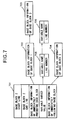
- Fig. 7 shows the content of the base block information which shows an example of the base block information generated with respect to the base block 2 in the flowgraph of Fig. 6.
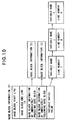
- Each base block information includes the base block information of the immediately preceding base block, the base block information of the immediately following base block, and information of the variable having the varied value. Each information can be present in plural. Therefore, the base block information should have a structure to accept a plurality of information. Also, the information contained in the base block information includes the starting line, terminating line and line number of the intermediate code.
- the base block information 701 of the base block 2 contains the starting line, terminating line of the base block 2 in the intermediate code, the base block information 702 and 703 of the immediately preceding base block 1 and 3, the base block information 704 of the base block 3 as the information of the immediately following base block.
- the name 705 of the variable and the line number 706 of the corresponding variable in the intermediate code are included.
- the source program illustrated in the foregoing table 15 is parsed by the parsing portion 20 and output as the intermediate code as illustrated in the following table 16.
- the optimization enabling and disabling information generating portion 30 inserts the codes "OPTBEG” and "OPTEND” for the range where the optimizing process may be performed when the combination of the control code is present through judgment of the presence of the combination of the control codes as in the former embodiment, during generation of the intermediate code.
- the code "OPTBEG” indicative of the beginning of the range to be optimized and the code "OPTEND” indicative of the range to be optimized are inserted before and after the lines 5 to 11.
- the lines 5 to 11 become the range for effecting the optimization process.
- the parsing portion 20 outputs the intermediate code 80 as shown in the table 16 and containing the codes "OPTBEG” and "OPTEND” as the optimization enabling and disabling information generated by the optimization enabling and disabling information generating portion 30. Then, judgement is made whether optimization process is to be performed or not by the optimization enabling and disabling judgement portion 40 so that the optimization processing portion 50 performs optimization process for the selected range.
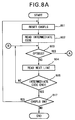
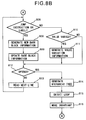
- Figs. 8A and 8B is a flowchart showing detail of the second embodiment of the optimization process of the shown embodiment of the language processing system of the invention.
- the optimization process of the intermediate code by moving the invariant out of the loop, as set forth above. The following discussion will be given about application of the optimization process of Figs. 8A and 8B to the intermediate code as shown in the table 16.
- the optimization processing portion 50 rests the flag "CHGFLG" immediately after initiation of the process (step 801).
- the intermediate code three address code is read pout from the first line (step 802).
- the code is the jump instruction or the label
- such code indicates the boundary of the base block in the intermediate code.
- information necessary for the base block information is generated (steps 808, 809). Namely, when the jump instruction or the label is read out at first time after the code "OPTBEG", the corresponding code becomes the starting line of the first base block, and the line of the jump instruction or the label read out subsequently becomes the end line of the first base block. Then, the line next to the end line of the first base block becomes the starting line of the second base block.
- the intermediate code is divided into the base blocks every time the jump instruction or the label is read out. Division of the base block is performed within the range of the intermediate code defined by the codes "OPTBEG" and "OPTEND".
- the label "L1" on the 5th line becomes the starting line of the first base block.
- the jump instruction on the 6th line becomes the end line of the first base block.
- the 7th line becomes the starting line of the second base block
- the jump instruction on the 10th line becomes the end line of the second base block.
- the label on the 11th line becomes the starting line of the third base block. Since the line next to the 11th line contains the code "OPTEND" so that optimization process will not be performed for the subsequent lines until the next code "OPTBEG" is read out, the label on the 11th line also becomes the end line of the third base block.
- the base block information for new base block is generated.
- updating of the base block information is performed by adding the base block information of the immediately preceding base block and the immediately following base block and so forth.
- step 810 check is performed whether the value of the variable is varied or not (step 810). If the value of the variable is varied, the variable value varying information is generated to set in the base block information (step 811).
- the loop is exit at the step 812. Then, on the basis of the base block information generated as set forth above, the hierarchy tree is established (step 814).
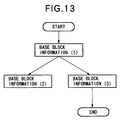
- the hierarchy tree established on the basis of the base block information shown in Figs. 9 to 11 is illustrated in Fig. 13.
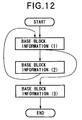
- the loop is detected (step 815). Paying attention to the edge of 2 ⁇ 1 in Fig. 12, the base block 1 controls the base block 2, the presence of the loop can be detected. In this case, the base blocks 1 and 2 are forming the loop.
- the invariant in the loop is detected (step 815).
- the variables which are varied the values are variables "i". "j", "q” and respectively varied at seventh, eighth and ninth lines of the intermediate code.
- the value of the variable "i" at the seventh line is determined from the value of "i” and a constant. However, since the value of "i" is not indeterminable value, the code on the seventh line of the intermediate code is not invariant.
- the value of "j” is determined from the value of "k” and a constant. Since the value of "k” is not varied within the loop, the code of the eighth line can be judged as the invariant.
- the value of "q” is determined from the value of "q” and the value of "i". Since the "i" has undetermined value, the code on the ninth line is not invariant in the loop.
- optimization of the intermediate code is performed. It should be appreciated that when no loop is detected at the step 815, the process at the step 816 is of course not performed.
- the code generating portion 60 translates the optimized intermediate code 90 into the machine language program 100. This process is similar to that discussed with respect to the first embodiment.
- TA denotes a range of the source program which can be optimized (namely the range defined between the codes "OPTBEG” and “OPTEND”, "TB” denotes a range where optimization cannot be performed.
- TC', TD' and TE' respectively represent periods required for parsing, optimization and code generation in the conventional language processing system, and "TC”, “TD” and “TE” represent periods required for parsing, optimization and code generation in the language processing system according to the present invention.
- the period "TD'" is required for optimization of the overall source program.
- the processing period for the range "TV" of the source program can be neglected so that the processing period for optimization can be shorted for the difference ⁇ T.
- the present invention can be more effective for shortening the process period for optimization for more complicate intermediate code which otherwise requires substantial period for optimization.
Landscapes
- Engineering & Computer Science (AREA)
- General Engineering & Computer Science (AREA)
- Theoretical Computer Science (AREA)
- Software Systems (AREA)
- Physics & Mathematics (AREA)
- General Physics & Mathematics (AREA)
- Devices For Executing Special Programs (AREA)
Applications Claiming Priority (3)
| Application Number | Priority Date | Filing Date | Title |
|---|---|---|---|
| JP20133993 | 1993-08-13 | ||
| JP5201339A JPH0756745A (ja) | 1993-08-13 | 1993-08-13 | 言語処理プログラムのコンパイラ処理方式 |
| JP201339/93 | 1993-08-13 |
Publications (3)
| Publication Number | Publication Date |
|---|---|
| EP0638862A2 true EP0638862A2 (de) | 1995-02-15 |
| EP0638862A3 EP0638862A3 (de) | 1995-06-14 |
| EP0638862B1 EP0638862B1 (de) | 2001-11-07 |
Family
ID=16439390
Family Applications (1)
| Application Number | Title | Priority Date | Filing Date |
|---|---|---|---|
| EP94112667A Expired - Lifetime EP0638862B1 (de) | 1993-08-13 | 1994-08-12 | Sprachverarbeitungssystem und -verfahren |
Country Status (4)
| Country | Link |
|---|---|
| US (1) | US5758164A (de) |
| EP (1) | EP0638862B1 (de) |
| JP (1) | JPH0756745A (de) |
| DE (1) | DE69428951T2 (de) |
Families Citing this family (7)
| Publication number | Priority date | Publication date | Assignee | Title |
|---|---|---|---|---|
| JP3196675B2 (ja) * | 1996-12-27 | 2001-08-06 | 日本電気株式会社 | 言語処理方式 |
| US6260191B1 (en) * | 1997-04-07 | 2001-07-10 | Hewlett-Packard Company | User controlled relaxation of optimization constraints related to volatile memory references |
| JP4462676B2 (ja) * | 1999-10-27 | 2010-05-12 | 富士通株式会社 | プログラム変換装置、コンパイラ装置およびプログラム変換プログラムを記録したコンピュータ読み取り可能な記録媒体 |
| US6772413B2 (en) * | 1999-12-21 | 2004-08-03 | Datapower Technology, Inc. | Method and apparatus of data exchange using runtime code generator and translator |
| JP3801545B2 (ja) * | 2002-08-02 | 2006-07-26 | 松下電器産業株式会社 | コンパイラ用プログラム、コンパイラ装置及びコンパイル方法 |
| US7257807B2 (en) * | 2003-09-22 | 2007-08-14 | Lsi Corporation | Method for optimizing execution time of parallel processor programs |
| JP2024061058A (ja) * | 2022-10-21 | 2024-05-07 | 株式会社デンソー | コンパイラ |
Family Cites Families (3)
| Publication number | Priority date | Publication date | Assignee | Title |
|---|---|---|---|---|
| JPS60258648A (ja) * | 1984-06-04 | 1985-12-20 | Fujitsu Ltd | プログラム最適化処理方式 |
| US4667290A (en) * | 1984-09-10 | 1987-05-19 | 501 Philon, Inc. | Compilers using a universal intermediate language |
| US4989132A (en) * | 1988-10-24 | 1991-01-29 | Eastman Kodak Company | Object-oriented, logic, and database programming tool with garbage collection |
-
1993
- 1993-08-13 JP JP5201339A patent/JPH0756745A/ja active Pending
-
1994
- 1994-08-12 DE DE69428951T patent/DE69428951T2/de not_active Expired - Fee Related
- 1994-08-12 EP EP94112667A patent/EP0638862B1/de not_active Expired - Lifetime
-
1997
- 1997-06-09 US US08/871,627 patent/US5758164A/en not_active Expired - Fee Related
Non-Patent Citations (4)
| Title |
|---|
| COMPUTER DESIGN, vol. 27,no. 18, October 1988 pages 67-70, 72, MUELLER R A ET AL 'AUTOMATED OPTIMIZATION REFINES SIMD MICROCODE FOR EFFICIENT PROGRAMMING' * |
| HEWLETT-PACKARD JOURNAL, JAN. 1986, USA, vol. 37,no. 1, ISSN 0018-1153, pages 4-18, COUTANT D S ET AL 'Compilers for the new generation of Hewlett-Packard computers' * |
| IBM TECHNICAL DISCLOSURE BULLETIN, vol. 33,no. 10B, March 1991 NEW YORK, US, pages 486-488, ANONYMOUS 'Branch Exception Mechanism.' * |
| WESCON TECHNICAL PAPERS, LOS ANGELES, CALIF, US, vol. 31, 1987 pages 2/1 1-13, GHIASSI M 'VALIDATING OPTIMIZING COMPILERS' * |
Also Published As
| Publication number | Publication date |
|---|---|
| EP0638862A3 (de) | 1995-06-14 |
| US5758164A (en) | 1998-05-26 |
| DE69428951T2 (de) | 2002-08-29 |
| JPH0756745A (ja) | 1995-03-03 |
| EP0638862B1 (de) | 2001-11-07 |
| DE69428951D1 (de) | 2001-12-13 |
Similar Documents
| Publication | Publication Date | Title |
|---|---|---|
| US11579856B2 (en) | Multi-chip compatible compiling method and device | |
| US4860203A (en) | Apparatus and method for extracting documentation text from a source code program | |
| CN109086215B (zh) | 一种嵌入式软件单元测试用例生成方法及系统 | |
| CN103077064B (zh) | 一种解析并执行程序语言方法及解释装置 | |
| US5832273A (en) | System for deleting redundant instructions from high level language source code containing in-line assembly instructions | |
| CN112114866B (zh) | 一种json文件的数据转换加载方法、装置及存储介质 | |
| JPH04500132A (ja) | 2進符号の機械語のプログラムを別の2進符号の機械語に翻訳する機械処理 | |
| CN104267654A (zh) | 梯形图程序转换成指令表程序及其编译的方法与系统 | |
| US5303147A (en) | Computer aided planning method and system | |
| EP0638862B1 (de) | Sprachverarbeitungssystem und -verfahren | |
| CN120085869A (zh) | Plc领域下可扩展结构化文本生成方法、装置、设备及介质 | |
| CN116841564B (zh) | 一种数据处理方法、装置、设备以及计算机可读存储介质 | |
| CN104809067B (zh) | 面向等式约束的测试用例生成方法和装置 | |
| CN120449844A (zh) | 一种基于智能体的Excel自动化实施方法、装置及介质 | |
| JP2009086898A (ja) | プログラム可能な論理制御装置用マシーンコード・プログラムのコンパイル法 | |
| CN110554860B (zh) | 一种软件项目自然语言编程接口nli的构造方法及代码生成方法 | |
| CN115562649B (zh) | 一种计算机混合程序语言源代码辅助编写方法及系统 | |
| JPH0667871A (ja) | プログラム自動更新方式 | |
| CN121477769B (zh) | 代码生成方法、装置、设备及存储介质 | |
| JPH07160490A (ja) | コーディング支援装置 | |
| JP2009064207A (ja) | コンパイル装置 | |
| KR100423742B1 (ko) | 순차기능챠트에 의한 전용 제어 시스템 | |
| JP5181788B2 (ja) | ソースプログラムの言語変換装置、方法及びプログラム | |
| JP3003459B2 (ja) | プログラム作成支援装置 | |
| JPH02253443A (ja) | プログラム生成方法 |
Legal Events
| Date | Code | Title | Description |
|---|---|---|---|
| PUAI | Public reference made under article 153(3) epc to a published international application that has entered the european phase |
Free format text: ORIGINAL CODE: 0009012 |
|
| AK | Designated contracting states |
Kind code of ref document: A2 Designated state(s): DE FR GB NL |
|
| PUAL | Search report despatched |
Free format text: ORIGINAL CODE: 0009013 |
|
| AK | Designated contracting states |
Kind code of ref document: A3 Designated state(s): DE FR GB NL |
|
| 17P | Request for examination filed |
Effective date: 19950829 |
|
| 17Q | First examination report despatched |
Effective date: 20000127 |
|
| GRAG | Despatch of communication of intention to grant |
Free format text: ORIGINAL CODE: EPIDOS AGRA |
|
| GRAG | Despatch of communication of intention to grant |
Free format text: ORIGINAL CODE: EPIDOS AGRA |
|
| GRAH | Despatch of communication of intention to grant a patent |
Free format text: ORIGINAL CODE: EPIDOS IGRA |
|
| GRAH | Despatch of communication of intention to grant a patent |
Free format text: ORIGINAL CODE: EPIDOS IGRA |
|
| GRAA | (expected) grant |
Free format text: ORIGINAL CODE: 0009210 |
|
| AK | Designated contracting states |
Kind code of ref document: B1 Designated state(s): DE FR GB NL |
|
| REF | Corresponds to: |
Ref document number: 69428951 Country of ref document: DE Date of ref document: 20011213 |
|
| REG | Reference to a national code |
Ref country code: GB Ref legal event code: IF02 |
|
| ET | Fr: translation filed | ||
| PGFP | Annual fee paid to national office [announced via postgrant information from national office to epo] |
Ref country code: GB Payment date: 20020807 Year of fee payment: 9 |
|
| PGFP | Annual fee paid to national office [announced via postgrant information from national office to epo] |
Ref country code: FR Payment date: 20020808 Year of fee payment: 9 |
|
| PGFP | Annual fee paid to national office [announced via postgrant information from national office to epo] |
Ref country code: DE Payment date: 20020821 Year of fee payment: 9 |
|
| PGFP | Annual fee paid to national office [announced via postgrant information from national office to epo] |
Ref country code: NL Payment date: 20020829 Year of fee payment: 9 |
|
| PLBE | No opposition filed within time limit |
Free format text: ORIGINAL CODE: 0009261 |
|
| STAA | Information on the status of an ep patent application or granted ep patent |
Free format text: STATUS: NO OPPOSITION FILED WITHIN TIME LIMIT |
|
| 26N | No opposition filed | ||
| PG25 | Lapsed in a contracting state [announced via postgrant information from national office to epo] |
Ref country code: GB Free format text: LAPSE BECAUSE OF NON-PAYMENT OF DUE FEES Effective date: 20030812 |
|
| PG25 | Lapsed in a contracting state [announced via postgrant information from national office to epo] |
Ref country code: NL Free format text: LAPSE BECAUSE OF NON-PAYMENT OF DUE FEES Effective date: 20040301 |
|
| PG25 | Lapsed in a contracting state [announced via postgrant information from national office to epo] |
Ref country code: DE Free format text: LAPSE BECAUSE OF NON-PAYMENT OF DUE FEES Effective date: 20040302 |
|
| GBPC | Gb: european patent ceased through non-payment of renewal fee |
Effective date: 20030812 |
|
| PG25 | Lapsed in a contracting state [announced via postgrant information from national office to epo] |
Ref country code: FR Free format text: LAPSE BECAUSE OF NON-PAYMENT OF DUE FEES Effective date: 20040430 |
|
| NLV4 | Nl: lapsed or anulled due to non-payment of the annual fee |
Effective date: 20040301 |
|
| REG | Reference to a national code |
Ref country code: FR Ref legal event code: ST |