EP0641141A2 - Méthode pour l'envoi et la réception d'images vidéo - Google Patents
Méthode pour l'envoi et la réception d'images vidéo Download PDFInfo
- Publication number
- EP0641141A2 EP0641141A2 EP94306041A EP94306041A EP0641141A2 EP 0641141 A2 EP0641141 A2 EP 0641141A2 EP 94306041 A EP94306041 A EP 94306041A EP 94306041 A EP94306041 A EP 94306041A EP 0641141 A2 EP0641141 A2 EP 0641141A2
- Authority
- EP
- European Patent Office
- Prior art keywords
- telecommunications device
- signal
- telecommunications
- sending
- communication
- Prior art date
- Legal status (The legal status is an assumption and is not a legal conclusion. Google has not performed a legal analysis and makes no representation as to the accuracy of the status listed.)
- Withdrawn
Links
- 238000000034 method Methods 0.000 title claims abstract description 44
- 230000011664 signaling Effects 0.000 claims abstract description 8
- 238000004891 communication Methods 0.000 claims description 31
- 230000005540 biological transmission Effects 0.000 claims description 8
- 230000000977 initiatory effect Effects 0.000 claims description 6
- 230000004044 response Effects 0.000 description 4
- 230000000007 visual effect Effects 0.000 description 4
- 238000003384 imaging method Methods 0.000 description 2
- 230000006870 function Effects 0.000 description 1
- 230000000737 periodic effect Effects 0.000 description 1
- 230000036316 preload Effects 0.000 description 1
- 238000012545 processing Methods 0.000 description 1
- 230000005236 sound signal Effects 0.000 description 1
- 230000003068 static effect Effects 0.000 description 1
- 238000012546 transfer Methods 0.000 description 1
- 238000012795 verification Methods 0.000 description 1
Images

Classifications
-
- H—ELECTRICITY
- H04—ELECTRIC COMMUNICATION TECHNIQUE
- H04H—BROADCAST COMMUNICATION
- H04H20/00—Arrangements for broadcast or for distribution combined with broadcast
- H04H20/28—Arrangements for simultaneous broadcast of plural pieces of information
-
- H—ELECTRICITY
- H04—ELECTRIC COMMUNICATION TECHNIQUE
- H04M—TELEPHONIC COMMUNICATION
- H04M1/00—Substation equipment, e.g. for use by subscribers
- H04M1/57—Arrangements for indicating or recording the number of the calling subscriber at the called subscriber's set
- H04M1/575—Means for retrieving and displaying personal data about calling party
- H04M1/576—Means for retrieving and displaying personal data about calling party associated with a pictorial or graphical representation
-
- H—ELECTRICITY
- H04—ELECTRIC COMMUNICATION TECHNIQUE
- H04M—TELEPHONIC COMMUNICATION
- H04M3/00—Automatic or semi-automatic exchanges
- H04M3/42—Systems providing special services or facilities to subscribers
- H04M3/436—Arrangements for screening incoming calls, i.e. evaluating the characteristics of a call before deciding whether to answer it
-
- H—ELECTRICITY
- H04—ELECTRIC COMMUNICATION TECHNIQUE
- H04M—TELEPHONIC COMMUNICATION
- H04M3/00—Automatic or semi-automatic exchanges
- H04M3/42—Systems providing special services or facilities to subscribers
- H04M3/487—Arrangements for providing information services, e.g. recorded voice services or time announcements
- H04M3/493—Interactive information services, e.g. directory enquiries ; Arrangements therefor, e.g. interactive voice response [IVR] systems or voice portals
-
- H—ELECTRICITY
- H04—ELECTRIC COMMUNICATION TECHNIQUE
- H04N—PICTORIAL COMMUNICATION, e.g. TELEVISION
- H04N7/00—Television systems
- H04N7/14—Systems for two-way working
- H04N7/141—Systems for two-way working between two video terminals, e.g. videophone
- H04N7/147—Communication arrangements, e.g. identifying the communication as a video-communication, intermediate storage of the signals
-
- H—ELECTRICITY
- H04—ELECTRIC COMMUNICATION TECHNIQUE
- H04Q—SELECTING
- H04Q11/00—Selecting arrangements for multiplex systems
- H04Q11/04—Selecting arrangements for multiplex systems for time-division multiplexing
- H04Q11/0428—Integrated services digital network, i.e. systems for transmission of different types of digitised signals, e.g. speech, data, telecentral, television signals
-
- H—ELECTRICITY
- H04—ELECTRIC COMMUNICATION TECHNIQUE
- H04Q—SELECTING
- H04Q11/00—Selecting arrangements for multiplex systems
- H04Q11/04—Selecting arrangements for multiplex systems for time-division multiplexing
- H04Q11/0428—Integrated services digital network, i.e. systems for transmission of different types of digitised signals, e.g. speech, data, telecentral, television signals
- H04Q11/0435—Details
- H04Q11/0457—Connection protocols
-
- H—ELECTRICITY
- H04—ELECTRIC COMMUNICATION TECHNIQUE
- H04M—TELEPHONIC COMMUNICATION
- H04M2201/00—Electronic components, circuits, software, systems or apparatus used in telephone systems
- H04M2201/38—Displays
-
- H—ELECTRICITY
- H04—ELECTRIC COMMUNICATION TECHNIQUE
- H04M—TELEPHONIC COMMUNICATION
- H04M2203/00—Aspects of automatic or semi-automatic exchanges
- H04M2203/20—Aspects of automatic or semi-automatic exchanges related to features of supplementary services
- H04M2203/2038—Call context notifications
-
- H—ELECTRICITY
- H04—ELECTRIC COMMUNICATION TECHNIQUE
- H04M—TELEPHONIC COMMUNICATION
- H04M2203/00—Aspects of automatic or semi-automatic exchanges
- H04M2203/65—Aspects of automatic or semi-automatic exchanges related to applications where calls are combined with other types of communication
- H04M2203/654—Pre, in or post-call message
-
- H—ELECTRICITY
- H04—ELECTRIC COMMUNICATION TECHNIQUE
- H04M—TELEPHONIC COMMUNICATION
- H04M3/00—Automatic or semi-automatic exchanges
- H04M3/42—Systems providing special services or facilities to subscribers
- H04M3/42025—Calling or Called party identification service
- H04M3/42034—Calling party identification service
- H04M3/42042—Notifying the called party of information on the calling party
-
- H—ELECTRICITY
- H04—ELECTRIC COMMUNICATION TECHNIQUE
- H04M—TELEPHONIC COMMUNICATION
- H04M3/00—Automatic or semi-automatic exchanges
- H04M3/42—Systems providing special services or facilities to subscribers
- H04M3/42382—Text-based messaging services in telephone networks such as PSTN/ISDN, e.g. User-to-User Signalling or Short Message Service for fixed networks
-
- H—ELECTRICITY
- H04—ELECTRIC COMMUNICATION TECHNIQUE
- H04Q—SELECTING
- H04Q2213/00—Indexing scheme relating to selecting arrangements in general and for multiplex systems
- H04Q2213/13174—Data transmission, file transfer
-
- H—ELECTRICITY
- H04—ELECTRIC COMMUNICATION TECHNIQUE
- H04Q—SELECTING
- H04Q2213/00—Indexing scheme relating to selecting arrangements in general and for multiplex systems
- H04Q2213/13176—Common channel signaling, CCS7
-
- H—ELECTRICITY
- H04—ELECTRIC COMMUNICATION TECHNIQUE
- H04Q—SELECTING
- H04Q2213/00—Indexing scheme relating to selecting arrangements in general and for multiplex systems
- H04Q2213/13204—Protocols
-
- H—ELECTRICITY
- H04—ELECTRIC COMMUNICATION TECHNIQUE
- H04Q—SELECTING
- H04Q2213/00—Indexing scheme relating to selecting arrangements in general and for multiplex systems
- H04Q2213/13209—ISDN
-
- H—ELECTRICITY
- H04—ELECTRIC COMMUNICATION TECHNIQUE
- H04Q—SELECTING
- H04Q2213/00—Indexing scheme relating to selecting arrangements in general and for multiplex systems
- H04Q2213/13337—Picturephone, videotelephony
-
- H—ELECTRICITY
- H04—ELECTRIC COMMUNICATION TECHNIQUE
- H04Q—SELECTING
- H04Q2213/00—Indexing scheme relating to selecting arrangements in general and for multiplex systems
- H04Q2213/13396—Signaling in general, in-band signalling
Definitions
- the invention relates to a method for transmitting information between telecommunications devices.
- the invention allows users to send and display customized video images.
- In-band signaling is a transmission technique in which digital information or data signals are transmitted, in addition to voice signals, through the 3.3 kHz analog bandwidth of a traditional telephone.
- In-band signaling is typically performed in one of several ways.
- Signaling System 7 is used in implementing a caller identification signal to the receiver of an incoming call between the first and second rings.
- ISDN Integrated Services Data Network
- Other methods for in-band use of voice and data signals include the ADSI standard TR-NWT-001273 which inserts data between voice and the "data under voice.”
- the AT&T Videophone allows users to conduct in-band, private conversations and to send video information.
- Videophone operation is similar to conventional telephone operation.
- Person A initiates a telephone call which is then answered by Person B.
- Person A may elect to transmit images (typically of Person A) captured by a video camera in the videophone to Person B by pushing a button.
- Person B may then elect to display those images on Person B's videophone display.
- Person B may elect to send, and Person A may elect to receive, images captured by Person B's videophone. See , generally, Scott H. Early, Andrew Kuzma and Eric Dorsey, "The Videophone 2500 - Video telephony on the Public Switched Telephone Network," AT&T Technical Journal , pp. 22-32, Jan./Feb. 1993.
- the capabilities of the videophone and telecommunications network are underutilized.
- no general system exists for transmitting custom video images that permits: 1) imaging or other data signals to be resident with the users; 2) use independent of ISDN availability; 3) two way conversations (i.e. peer-to-peer conversations rather than one way digital imaging); 4) simultaneous transfer of data signals; and 5) capturing the icon to the network terminal.
- the inventive method allows users to customize portions of an audio/video communication.
- the method allows users to pre-load an image or set of images into the user's telecommunication device.
- the images which may be pre-compressed to minimize data transmission requirements, may be sent with the initialization of a communication.
- Applications include video caller identification schemes.
- the method can provide a "screen saver" or video muting program.
- the method can serve as a marketing tool providing an icon for caller identification.
- FIG. 1 illustrates a method for video caller identification.
- FIG. 2 illustrates a method for transmitting data from a database.
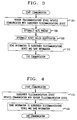
- FIG. 3 illustrates a method for transmitting data using a subscription service.
- FIG. 4 illustrates a method for transmitting data in response to an auto-dialed call.
- FIG. 1 illustrates a method for one-way or two-way transmission of identification icons for use as caller identifiers in a peer-to-peer, in-band, all digital call between two telecommunication devices.
- a first telecommunications device initiates communication with a second telecommunications device.
- the first device sends a signal comprising icon information to the second device as indicated in step 106.
- the icon information may represent stored information such as text, video, audio, data or other information and may identify the caller.
- the second device displays or otherwise utilizes the information, e.g. edit or store the information.
- Either or both users of the telecommunications devices may employ a recoding device (audio and/or video) to screen the communication as shown in step 118.
- the user of the second device may then decide to initiate a communication between users of the devices (i.e. initiate live voice and/or data transmissions) based on the transmitted data displayed on the screen of the second device.
- the method illustrated in FIG. 1 may also be configured so that icon information may be transmitted initially from the second device to the first device as shown in step 108 or simultaneously between the telecommunications devices.
- the communication is ended when either device terminates the communication.
- a separate, optional, feature illustrated in steps 112, 114 and 116 of FIG. 1 is a "mute" feature whereby if one user wishes to mute the audio or video portion of the communication, the transmitted data will revert to a specified format (i.e. a pre-selected audio or video message such as the identification icon).
- the method advantageously serves as a one-way or two-way video caller identification scheme.
- telecommunication device users can elect to transmit an identification icon, e.g. an electronic business card capable of providing logo information as well as name and address information to called parties.
- called parties can also elect to send information to parties initiating calls to confirm that the proper party is being contacted.
- the caller identification may advantageously be sent either before or after any response to the communication need be made. For example with the caller identification schemes described in the background section above, the phone number of the calling party is displayed between the first and second rings of the telephone (e.g. in the case of the telephone network, the second device is still "on hook").
- the signal containing the caller identification information can advantageously be transmitted only after a response to the communication is received (e.g. in the case of the telephone network, the second device would go "off-hook").
- the second device is akin to an answering machine in that communications are initiated between devices, and the second telecommunications device may be used to screen calls and to record audio and video messages.
- telecommunications device may be any device with means for sending and receiving audio signals and video signals which may be represented on a display. Further, the telecommunications device may be capable of storing such signals. By way of example, such devices may include, but are not limited to, personal communicators and video windows on personal computers.
- the "display" may be visual static (characters or graphical), visual dynamic, audible or tactile (for disabled users), and may be in more than one media (e.g., audio and visual).
- the display may be controlled by a processor with memory in the telecommunications device itself.
- FIG. 2 illustrates a method in which a user communicates with a vendor to request data or information (e.g. images or audio recordings) be transmitted to the user's telecommunication device from the vendor's database so that the user may capture or store the information as an icon for use in identification.
- the user first simply initiates communications with the vendor and selects the requested information from the vendor's database as shown in steps 204 and 206.
- the process of selecting the information may be done in a variety of ways. For example, the user may simply tell a vendor which information to transmit. Similarly, a speaker recognition system could be used to identify the information selected.
- the database may recite a menu of options or send to the user a list of available information for display on the user's telecommunications device.
- the user may then make a selection in any of a variety of ways, e.g. vocally for the vendor to recognize or by transmitting data indicative of the menu item selected. If only one data or information file is available, no selection process is required. After transmission, the user may store or capture the information for later processing to generate a caller identification signature or icon as indicated in step 208. Finally, either the user or vendor may terminate the communication.
- FIG. 3 illustrates a method for transmitting data using a subscription service in which specific data or information (e.g. a comic strip or cartoon of the day) may be sent to and captured by a subscriber's telecommunications device for use as an icon for identification.
- a vendor telecommunication device initiates a communication with the subscriber's telecommunication device.
- the subscriber's device then may do any of several things. For example, the subscriber's device may mute any ringing or alerting signal as shown in step 306 since the vendor's device will typically initiate the communication when rates are lowest, i.e. late at night and early in the morning. Likewise, since communications are established, the subscriber's device may verify the caller identification number (e.g.
- the vendor's device may transmit an in-band code for verification that the information is authorized to be received. After these steps, the vendor's device then transmits the information to the subscriber's device. Finally, a saving function for the information can be enabled by either device before the communication is ended so that the information will be available for use as a caller identification as indicated in step 310. In this embodiment, the method may be used by vendors for periodic delivery of information.
- FIG. 4 illustrates a method for transmitting specific data in response to an automatically initiated communication.
- a user telecommunications device initiates the communication with a vendor telecommunications device, as for example to an 800 or 900 number. This call may be pre-programmed to take advantage of lower phone rates or to fit in a time convenient for the user's being ready to receive the data.
- the vendor telecommunications device sends the specific data.
- the signal to enable the data to be saved may be generated so that the image may be stored for later use.
Landscapes
- Engineering & Computer Science (AREA)
- Signal Processing (AREA)
- Computer Networks & Wireless Communication (AREA)
- Multimedia (AREA)
- Telephonic Communication Services (AREA)
- Two-Way Televisions, Distribution Of Moving Picture Or The Like (AREA)
Applications Claiming Priority (2)
| Application Number | Priority Date | Filing Date | Title |
|---|---|---|---|
| US08/113,935 US5559868A (en) | 1993-08-30 | 1993-08-30 | Method for sending and receiving video images |
| US113935 | 1993-08-30 |
Publications (2)
| Publication Number | Publication Date |
|---|---|
| EP0641141A2 true EP0641141A2 (fr) | 1995-03-01 |
| EP0641141A3 EP0641141A3 (fr) | 1998-05-13 |
Family
ID=22352398
Family Applications (1)
| Application Number | Title | Priority Date | Filing Date |
|---|---|---|---|
| EP94306041A Withdrawn EP0641141A3 (fr) | 1993-08-30 | 1994-08-17 | Méthode pour l'envoi et la réception d'images vidéo |
Country Status (4)
| Country | Link |
|---|---|
| US (1) | US5559868A (fr) |
| EP (1) | EP0641141A3 (fr) |
| JP (1) | JPH07154510A (fr) |
| CA (1) | CA2117451C (fr) |
Cited By (15)
| Publication number | Priority date | Publication date | Assignee | Title |
|---|---|---|---|---|
| NL1013721C2 (nl) * | 1999-12-02 | 2000-11-07 | Josephus Franciscus Berendina | Werkwijze en systeem voor het aanmelden van een telefoongesprek. |
| EP1065865A1 (fr) * | 1999-06-28 | 2001-01-03 | Siemens Aktiengesellschaft | Procédé de réalisation d'une identification d'appelant librement programmable dans un réseau de télécommunications ainsi qu'un terminal associé |
| WO2001041405A1 (fr) * | 1999-12-02 | 2001-06-07 | Verspaget Josephus Franciscus | Procede et systeme permettant d'acheminer un appel telephonique |
| WO2002017602A1 (fr) * | 2000-08-22 | 2002-02-28 | Symbian Limited | Procede et appareil pour la transmission d'information liee a l'utilisateur au moyen d'un dispositif hertzien |
| EP1202536A1 (fr) * | 2000-10-30 | 2002-05-02 | Siemens Aktiengesellschaft | Terminal de communication et procédé d'identification et de signalisation de données d'un appelant abonné |
| WO2001078358A3 (fr) * | 2000-04-10 | 2002-08-22 | Nortel Networks Ltd | Procede permettant de fournir des informations d'annonce sur commande afin d'etablir des sessions d'appel interactifs |
| EP1014653A3 (fr) * | 1998-12-28 | 2003-01-02 | Nortel Networks Limited | Affichage graphique de l'identité de l'abonné appelant et appelé |
| EP1315374A2 (fr) * | 1995-04-20 | 2003-05-28 | Canon Kabushiki Kaisha | Terminal de communication, système de supervision et procédé de communication |
| EP1067748A3 (fr) * | 1999-07-06 | 2003-08-20 | Matsushita Electric Industrial Co., Ltd. | Appareil téléphonique |
| WO2003073730A1 (fr) * | 2002-02-21 | 2003-09-04 | Siemens Aktiengesellschaft | Procede, terminal de reception et terminal d'emission destines a l'identification d'un appelant |
| EP1188245A4 (fr) * | 1999-05-31 | 2004-08-11 | Won-Seop Park | Terminal de communication et procede publicitaire par utilisation de ce terminal |
| NL1031015C2 (nl) * | 2006-01-27 | 2007-07-30 | Urs Internat B V | Communicatiesysteem, communicatiewerkwijze en communicatie-inrichting. |
| EP1860822A1 (fr) | 2006-05-23 | 2007-11-28 | Microsoft Corporation | Création de groupes pour appareils de communication |
| EP1898615A3 (fr) * | 2000-08-22 | 2008-11-19 | Symbian Limited | Procédé et appareil pour communiquer des informations relatives à l'utilisateur à l'aide d'un dispositif d'information sans fil |
| EP1784015A3 (fr) * | 2005-11-03 | 2011-06-08 | Samsung Electronics Co., Ltd. | Appareil de visiophonie et méthode pour terminal mobile |
Families Citing this family (49)
| Publication number | Priority date | Publication date | Assignee | Title |
|---|---|---|---|---|
| US6681028B2 (en) * | 1995-07-27 | 2004-01-20 | Digimarc Corporation | Paper-based control of computer systems |
| US7142846B1 (en) | 1994-01-05 | 2006-11-28 | Henderson Daniel A | Method and apparatus for improved paging receiver and system |
| US7266186B1 (en) | 1994-01-05 | 2007-09-04 | Intellect Wireless Inc. | Method and apparatus for improved paging receiver and system |
| US7426264B1 (en) | 1994-01-05 | 2008-09-16 | Henderson Daniel A | Method and apparatus for improved personal communication devices and systems |
| US20020082043A1 (en) * | 1994-05-19 | 2002-06-27 | Kari-Pekka Wilska | Device for personal communications, data collection and data processing, and a circuit card |
| US5724407A (en) * | 1994-12-16 | 1998-03-03 | At&T Corp. | Network based multimedia messaging method for non-CCITT compliant switches |
| CA2177815C (fr) * | 1994-12-16 | 2000-08-22 | Mon-Mei Chen | Systeme et procede de messagerie multimedia fondee sur des reseaux |
| US5796945A (en) * | 1995-06-07 | 1998-08-18 | Tarabella; Robert M. | Idle time multimedia viewer method and apparatus for collecting and displaying information according to user defined indicia |
| US6807558B1 (en) | 1995-06-12 | 2004-10-19 | Pointcast, Inc. | Utilization of information “push” technology |
| US6650761B1 (en) * | 1999-05-19 | 2003-11-18 | Digimarc Corporation | Watermarked business cards and methods |
| US5748190A (en) * | 1995-09-05 | 1998-05-05 | Wisevision As | Presentation system for individual personal computers in a personal computer network |
| US5778053A (en) * | 1995-12-21 | 1998-07-07 | Intel Corporation | Answering machine services for data conferences |
| US6104802A (en) | 1997-02-10 | 2000-08-15 | Genesys Telecommunications Laboratories, Inc. | In-band signaling for routing |
| US6480600B1 (en) | 1997-02-10 | 2002-11-12 | Genesys Telecommunications Laboratories, Inc. | Call and data correspondence in a call-in center employing virtual restructuring for computer telephony integrated functionality |
| US7031442B1 (en) | 1997-02-10 | 2006-04-18 | Genesys Telecommunications Laboratories, Inc. | Methods and apparatus for personal routing in computer-simulated telephony |
| US6138162A (en) | 1997-02-11 | 2000-10-24 | Pointcast, Inc. | Method and apparatus for configuring a client to redirect requests to a caching proxy server based on a category ID with the request |
| US6173311B1 (en) | 1997-02-13 | 2001-01-09 | Pointcast, Inc. | Apparatus, method and article of manufacture for servicing client requests on a network |
| US5907604A (en) * | 1997-03-25 | 1999-05-25 | Sony Corporation | Image icon associated with caller ID |
| US6226367B1 (en) * | 1997-04-23 | 2001-05-01 | Nortel Networks Limited | Calling line identification with location icon |
| US6711611B2 (en) | 1998-09-11 | 2004-03-23 | Genesis Telecommunications Laboratories, Inc. | Method and apparatus for data-linking a mobile knowledge worker to home communication-center infrastructure |
| US6985943B2 (en) | 1998-09-11 | 2006-01-10 | Genesys Telecommunications Laboratories, Inc. | Method and apparatus for extended management of state and interaction of a remote knowledge worker from a contact center |
| USRE46528E1 (en) | 1997-11-14 | 2017-08-29 | Genesys Telecommunications Laboratories, Inc. | Implementation of call-center outbound dialing capability at a telephony network level |
| US7907598B2 (en) | 1998-02-17 | 2011-03-15 | Genesys Telecommunication Laboratories, Inc. | Method for implementing and executing communication center routing strategies represented in extensible markup language |
| US6332154B2 (en) | 1998-09-11 | 2001-12-18 | Genesys Telecommunications Laboratories, Inc. | Method and apparatus for providing media-independent self-help modules within a multimedia communication-center customer interface |
| US6621514B1 (en) * | 1998-03-12 | 2003-09-16 | Intel Corporation | Video conferencing system |
| JP2000092086A (ja) * | 1998-06-24 | 2000-03-31 | Canon Inc | 通信装置、通信情報記録方法、応答情報再生/通信情報記録方法及び記憶媒体 |
| JP4131052B2 (ja) | 1998-07-17 | 2008-08-13 | ソニー株式会社 | 撮像装置 |
| US5999599A (en) * | 1998-07-17 | 1999-12-07 | Siemens Information And Communication Networks, Inc. | System and method for enhanced caller name alerting |
| USRE46153E1 (en) | 1998-09-11 | 2016-09-20 | Genesys Telecommunications Laboratories, Inc. | Method and apparatus enabling voice-based management of state and interaction of a remote knowledge worker in a contact center environment |
| US6577861B2 (en) * | 1998-12-14 | 2003-06-10 | Fujitsu Limited | Electronic shopping system utilizing a program downloadable wireless telephone |
| US6192115B1 (en) * | 1999-03-09 | 2001-02-20 | Lucent Technologies | Obtaining information about a called telecommunications party |
| US6542587B1 (en) * | 1999-09-30 | 2003-04-01 | Gateway, Inc. | Preliminary communication identification |
| US7929978B2 (en) | 1999-12-01 | 2011-04-19 | Genesys Telecommunications Laboratories, Inc. | Method and apparatus for providing enhanced communication capability for mobile devices on a virtual private network |
| WO2001084813A1 (fr) * | 2000-04-14 | 2001-11-08 | Sharp Kabushiki Kaisha | Dispositif repondeur et equipement de communication communiquant avec celui-ci, support d'enregistrement enregistrant son programme et programme |
| GB0011747D0 (en) * | 2000-05-17 | 2000-07-05 | Butterworth Martyn | Improvements related to telecoms |
| US7099304B2 (en) | 2000-09-05 | 2006-08-29 | Flexiworld Technologies, Inc. | Apparatus, methods and systems for anonymous communication |
| US8271333B1 (en) * | 2000-11-02 | 2012-09-18 | Yahoo! Inc. | Content-related wallpaper |
| JP2002176679A (ja) * | 2000-12-07 | 2002-06-21 | Toshiba Corp | 移動無線端末装置 |
| US7174163B2 (en) * | 2001-07-17 | 2007-02-06 | Comverse, Inc. | Method and apparatus for providing images for caller identification over a mobile network |
| US7177627B2 (en) * | 2001-07-17 | 2007-02-13 | Comverse, Inc. | Method and apparatus for providing images for caller identification over a mobile network |
| US7006613B2 (en) * | 2001-07-27 | 2006-02-28 | Digeo, Inc. | System and method for screening incoming video communications within an interactive television system |
| US20030025786A1 (en) * | 2001-07-31 | 2003-02-06 | Vtel Corporation | Method and system for saving and applying a video address from a video conference |
| US7142230B2 (en) * | 2001-08-22 | 2006-11-28 | Digeo, Inc. | System and method for screening incoming and outgoing video communications within an interactive television system |
| US6757533B2 (en) * | 2002-01-23 | 2004-06-29 | Nokia Corporation | Rich calling line handling in call setup signalling |
| US8107600B1 (en) | 2005-02-07 | 2012-01-31 | O'keeffe Sean P | High volume call advertising system and method |
| US20060252417A1 (en) * | 2005-05-05 | 2006-11-09 | Avaya Technology Corp. | Changing the user interface at a telecommunications terminal |
| US9008075B2 (en) | 2005-12-22 | 2015-04-14 | Genesys Telecommunications Laboratories, Inc. | System and methods for improving interaction routing performance |
| US20070280454A1 (en) * | 2006-06-01 | 2007-12-06 | Avaya Technology Llc | Signaling a Telecommunications Terminal Through a Remote System |
| US8396514B2 (en) | 2008-05-23 | 2013-03-12 | Research In Motion Limited | Systems and methods for presenting an image on a display of a mobile device |
Family Cites Families (22)
| Publication number | Priority date | Publication date | Assignee | Title |
|---|---|---|---|---|
| JPS5915547B2 (ja) * | 1976-05-08 | 1984-04-10 | 橋本コ−ポレイション株式会社 | ダイヤル情報表示装置 |
| USRE31789F1 (en) * | 1976-05-08 | 1995-03-07 | Hashimoto Corp | Telephone information displaying device |
| US4258387A (en) * | 1979-10-17 | 1981-03-24 | Lemelson Jerome H | Video telephone |
| US4597058A (en) * | 1983-05-09 | 1986-06-24 | Romox, Inc. | Cartridge programming system |
| US4551581B1 (en) * | 1983-07-12 | 1995-06-20 | Bell Telephone Labor Inc | Method and apparatus for sending a data message to a selected station during a silent interval between ringing |
| US4591665A (en) * | 1983-07-12 | 1986-05-27 | At&T Bell Laboratories | Method and apparatus for providing call tracing service |
| US4582956B1 (en) * | 1983-07-12 | 1994-09-20 | Bell Telephone Labor Inc | Method and apparatus for displaying at a selected station special service information during a silent interval between ringing |
| US4567323A (en) * | 1983-07-12 | 1986-01-28 | At&T Bell Laboratories | Method and apparatus for providing a plurality of special services |
| JP2664665B2 (ja) * | 1985-06-27 | 1997-10-15 | ソニー株式会社 | 利用者端末装置 |
| JPH0711779B2 (ja) * | 1986-02-21 | 1995-02-08 | 株式会社日立製作所 | 処理対象指示図柄表示装置 |
| JPH01212056A (ja) * | 1988-02-18 | 1989-08-25 | Toshiba Corp | 電話装置 |
| JP3002471B2 (ja) * | 1988-08-19 | 2000-01-24 | 株式会社日立製作所 | 番組配信装置 |
| JPH073985B2 (ja) * | 1988-10-14 | 1995-01-18 | 橋本コーポレイション株式会社 | テレビ電話付留守番電話装置 |
| JP2601528B2 (ja) * | 1988-10-21 | 1997-04-16 | 日本電信電話株式会社 | 提示画面制御方式 |
| US5305097A (en) * | 1989-12-20 | 1994-04-19 | Canon Kabushiki Kaisha | Communicating apparatus having a calling party number display device |
| US5033076A (en) * | 1990-01-31 | 1991-07-16 | At&T Bell Laboratories | Enhanced privacy feature for telephone systems |
| US5056136A (en) * | 1990-03-09 | 1991-10-08 | The United States Of America As Represented By The United States Department Of Energy | Secure video communications system |
| US5054055A (en) * | 1990-04-26 | 1991-10-01 | Bell Atlantic Network Services, Inc. | Telephone system and method for the intelligent use of individual calling line identification information |
| US5191607A (en) * | 1990-10-09 | 1993-03-02 | Motorola, Inc. | Ring tone muting with disable |
| EP0493084B1 (fr) * | 1990-12-26 | 1997-06-04 | Canon Kabushiki Kaisha | Appareil de communication multi-média |
| US5274699A (en) * | 1992-07-24 | 1993-12-28 | Motorola, Inc. | Method for providing caller identification to a call recipient |
| CA2100139C (fr) * | 1992-09-29 | 1997-02-18 | William Walter Demlow | Affichage d'informations chez un appelant |
-
1993
- 1993-08-30 US US08/113,935 patent/US5559868A/en not_active Expired - Lifetime
-
1994
- 1994-08-10 CA CA002117451A patent/CA2117451C/fr not_active Expired - Fee Related
- 1994-08-17 EP EP94306041A patent/EP0641141A3/fr not_active Withdrawn
- 1994-08-29 JP JP6226019A patent/JPH07154510A/ja active Pending
Cited By (18)
| Publication number | Priority date | Publication date | Assignee | Title |
|---|---|---|---|---|
| EP1315374A2 (fr) * | 1995-04-20 | 2003-05-28 | Canon Kabushiki Kaisha | Terminal de communication, système de supervision et procédé de communication |
| EP1014653A3 (fr) * | 1998-12-28 | 2003-01-02 | Nortel Networks Limited | Affichage graphique de l'identité de l'abonné appelant et appelé |
| EP1188245A4 (fr) * | 1999-05-31 | 2004-08-11 | Won-Seop Park | Terminal de communication et procede publicitaire par utilisation de ce terminal |
| EP1065865A1 (fr) * | 1999-06-28 | 2001-01-03 | Siemens Aktiengesellschaft | Procédé de réalisation d'une identification d'appelant librement programmable dans un réseau de télécommunications ainsi qu'un terminal associé |
| EP1067748A3 (fr) * | 1999-07-06 | 2003-08-20 | Matsushita Electric Industrial Co., Ltd. | Appareil téléphonique |
| WO2001041405A1 (fr) * | 1999-12-02 | 2001-06-07 | Verspaget Josephus Franciscus | Procede et systeme permettant d'acheminer un appel telephonique |
| NL1013721C2 (nl) * | 1999-12-02 | 2000-11-07 | Josephus Franciscus Berendina | Werkwijze en systeem voor het aanmelden van een telefoongesprek. |
| US6771639B1 (en) | 2000-04-10 | 2004-08-03 | Nortel Networks Limited | Providing announcement information in requests to establish interactive call sessions |
| WO2001078358A3 (fr) * | 2000-04-10 | 2002-08-22 | Nortel Networks Ltd | Procede permettant de fournir des informations d'annonce sur commande afin d'etablir des sessions d'appel interactifs |
| US7248677B2 (en) | 2000-08-22 | 2007-07-24 | Symbian Software Ltd. | Method of and apparatus for communicating user related information using a wireless information device |
| WO2002017602A1 (fr) * | 2000-08-22 | 2002-02-28 | Symbian Limited | Procede et appareil pour la transmission d'information liee a l'utilisateur au moyen d'un dispositif hertzien |
| EP1898615A3 (fr) * | 2000-08-22 | 2008-11-19 | Symbian Limited | Procédé et appareil pour communiquer des informations relatives à l'utilisateur à l'aide d'un dispositif d'information sans fil |
| EP1202536A1 (fr) * | 2000-10-30 | 2002-05-02 | Siemens Aktiengesellschaft | Terminal de communication et procédé d'identification et de signalisation de données d'un appelant abonné |
| WO2003073730A1 (fr) * | 2002-02-21 | 2003-09-04 | Siemens Aktiengesellschaft | Procede, terminal de reception et terminal d'emission destines a l'identification d'un appelant |
| EP1784015A3 (fr) * | 2005-11-03 | 2011-06-08 | Samsung Electronics Co., Ltd. | Appareil de visiophonie et méthode pour terminal mobile |
| US8681200B2 (en) | 2005-11-03 | 2014-03-25 | Samsung Electronics Co., Ltd | Video telephony apparatus and method for mobile terminal |
| NL1031015C2 (nl) * | 2006-01-27 | 2007-07-30 | Urs Internat B V | Communicatiesysteem, communicatiewerkwijze en communicatie-inrichting. |
| EP1860822A1 (fr) | 2006-05-23 | 2007-11-28 | Microsoft Corporation | Création de groupes pour appareils de communication |
Also Published As
| Publication number | Publication date |
|---|---|
| CA2117451A1 (fr) | 1995-03-01 |
| EP0641141A3 (fr) | 1998-05-13 |
| JPH07154510A (ja) | 1995-06-16 |
| US5559868A (en) | 1996-09-24 |
| CA2117451C (fr) | 1999-04-20 |
Similar Documents
| Publication | Publication Date | Title |
|---|---|---|
| US5559868A (en) | Method for sending and receiving video images | |
| USH1714H (en) | Automatic still image transmission upon call connection | |
| US6337898B1 (en) | Method for monitoring voicemail calls using ADSI capable CPE | |
| US6038443A (en) | Calling party announcement apparatus | |
| US6072859A (en) | Apparatus and method of generating voice message of caller's number in case of incoming call in telephone | |
| US5937040A (en) | Method and apparatus for using a D-channel for displaying user data | |
| EP0827665B1 (fr) | Procede de messagerie multimedia utilisant des reseaux a commutateurs non conformes ccitt | |
| US5365577A (en) | Telecommunication display system | |
| US6493428B1 (en) | Text-enhanced voice menu system | |
| US6442245B1 (en) | System and method for providing voice messaging services utilizing a network connection | |
| WO2008076539A1 (fr) | Procédé et appareil pour fournir des tonalités de retour d'appels vidéo personnalisés | |
| EP0969643A2 (fr) | Système de messagerie vocale avec possibilité de renvoi d'appel sans déconnexion de la ligne téléphonique | |
| WO1994026056A1 (fr) | Caracteristiques ameliorees pour un systeme d'affichage de systeme de telecommunications | |
| EP1190555B1 (fr) | Procede et systeme de fourniture de l'image d'un appelant | |
| US5909481A (en) | Method relating to telecommunications | |
| JPH10341293A (ja) | データベース端末装置および発信者情報検出装置 | |
| Blonder | Method for sending and receiving video images | |
| JP3049757B2 (ja) | テレビ電話機の留守番機能制御方法および通信制御方法 | |
| JP3334253B2 (ja) | 映像通信装置 | |
| US20070060154A1 (en) | Method and device for transmitting user-selected data with a request for connection signal over a telecommunications network | |
| JPH01278150A (ja) | ディジタル通信端末 | |
| KR20040001361A (ko) | 전화망의 복수 가입자 번호 서비스 제공을 위한 가입자종단 장치 및 그의 착신 제어 방법 | |
| KR100238526B1 (ko) | 음성우편장치에서 호출자 식별정보를 이용하여 메세지 송신자표시방법 | |
| JPH02117250A (ja) | 音声通信端末装置 | |
| JPH11136362A (ja) | 通信システム |
Legal Events
| Date | Code | Title | Description |
|---|---|---|---|
| PUAI | Public reference made under article 153(3) epc to a published international application that has entered the european phase |
Free format text: ORIGINAL CODE: 0009012 |
|
| AK | Designated contracting states |
Kind code of ref document: A2 Designated state(s): DE FR GB IT |
|
| PUAL | Search report despatched |
Free format text: ORIGINAL CODE: 0009013 |
|
| AK | Designated contracting states |
Kind code of ref document: A3 Designated state(s): DE FR GB IT |
|
| 17P | Request for examination filed |
Effective date: 19981029 |
|
| STAA | Information on the status of an ep patent application or granted ep patent |
Free format text: STATUS: THE APPLICATION HAS BEEN WITHDRAWN |
|
| 18W | Application withdrawn |
Withdrawal date: 19990204 |