EP0642876B1 - Soudage d'alliages nickel-titane - Google Patents
Soudage d'alliages nickel-titane Download PDFInfo
- Publication number
- EP0642876B1 EP0642876B1 EP94306229A EP94306229A EP0642876B1 EP 0642876 B1 EP0642876 B1 EP 0642876B1 EP 94306229 A EP94306229 A EP 94306229A EP 94306229 A EP94306229 A EP 94306229A EP 0642876 B1 EP0642876 B1 EP 0642876B1
- Authority
- EP
- European Patent Office
- Prior art keywords
- flux
- nickel
- titanium
- alloy
- layer
- Prior art date
- Legal status (The legal status is an assumption and is not a legal conclusion. Google has not performed a legal analysis and makes no representation as to the accuracy of the status listed.)
- Expired - Lifetime
Links
Images

Classifications
-
- B—PERFORMING OPERATIONS; TRANSPORTING
- B23—MACHINE TOOLS; METAL-WORKING NOT OTHERWISE PROVIDED FOR
- B23K—SOLDERING OR UNSOLDERING; WELDING; CLADDING OR PLATING BY SOLDERING OR WELDING; CUTTING BY APPLYING HEAT LOCALLY, e.g. FLAME CUTTING; WORKING BY LASER BEAM
- B23K35/00—Rods, electrodes, materials, or media, for use in soldering, welding, or cutting
- B23K35/22—Rods, electrodes, materials, or media, for use in soldering, welding, or cutting characterised by the composition or nature of the material
- B23K35/34—Rods, electrodes, materials, or media, for use in soldering, welding, or cutting characterised by the composition or nature of the material comprising compounds which yield metals when heated
-
- B—PERFORMING OPERATIONS; TRANSPORTING
- B23—MACHINE TOOLS; METAL-WORKING NOT OTHERWISE PROVIDED FOR
- B23K—SOLDERING OR UNSOLDERING; WELDING; CLADDING OR PLATING BY SOLDERING OR WELDING; CUTTING BY APPLYING HEAT LOCALLY, e.g. FLAME CUTTING; WORKING BY LASER BEAM
- B23K35/00—Rods, electrodes, materials, or media, for use in soldering, welding, or cutting
- B23K35/001—Interlayers, transition pieces for metallurgical bonding of workpieces
- B23K35/004—Interlayers, transition pieces for metallurgical bonding of workpieces at least one of the workpieces being of a metal of the iron group
-
- B—PERFORMING OPERATIONS; TRANSPORTING
- B23—MACHINE TOOLS; METAL-WORKING NOT OTHERWISE PROVIDED FOR
- B23K—SOLDERING OR UNSOLDERING; WELDING; CLADDING OR PLATING BY SOLDERING OR WELDING; CUTTING BY APPLYING HEAT LOCALLY, e.g. FLAME CUTTING; WORKING BY LASER BEAM
- B23K35/00—Rods, electrodes, materials, or media, for use in soldering, welding, or cutting
- B23K35/001—Interlayers, transition pieces for metallurgical bonding of workpieces
- B23K35/005—Interlayers, transition pieces for metallurgical bonding of workpieces at least one of the workpieces being of a refractory metal
-
- B—PERFORMING OPERATIONS; TRANSPORTING
- B23—MACHINE TOOLS; METAL-WORKING NOT OTHERWISE PROVIDED FOR
- B23K—SOLDERING OR UNSOLDERING; WELDING; CLADDING OR PLATING BY SOLDERING OR WELDING; CUTTING BY APPLYING HEAT LOCALLY, e.g. FLAME CUTTING; WORKING BY LASER BEAM
- B23K35/00—Rods, electrodes, materials, or media, for use in soldering, welding, or cutting
- B23K35/22—Rods, electrodes, materials, or media, for use in soldering, welding, or cutting characterised by the composition or nature of the material
- B23K35/36—Selection of non-metallic compositions, e.g. coatings or fluxes; Selection of soldering or welding materials, conjoint with selection of non-metallic compositions, both selections being of interest
- B23K35/3601—Selection of non-metallic compositions, e.g. coatings or fluxes; Selection of soldering or welding materials, conjoint with selection of non-metallic compositions, both selections being of interest with inorganic compounds as principal constituents
- B23K35/3603—Halide salts
-
- A—HUMAN NECESSITIES
- A61—MEDICAL OR VETERINARY SCIENCE; HYGIENE
- A61M—DEVICES FOR INTRODUCING MEDIA INTO, OR ONTO, THE BODY; DEVICES FOR TRANSDUCING BODY MEDIA OR FOR TAKING MEDIA FROM THE BODY; DEVICES FOR PRODUCING OR ENDING SLEEP OR STUPOR
- A61M25/00—Catheters; Hollow probes
- A61M25/01—Introducing, guiding, advancing, emplacing or holding catheters
- A61M25/09—Guide wires
-
- Y—GENERAL TAGGING OF NEW TECHNOLOGICAL DEVELOPMENTS; GENERAL TAGGING OF CROSS-SECTIONAL TECHNOLOGIES SPANNING OVER SEVERAL SECTIONS OF THE IPC; TECHNICAL SUBJECTS COVERED BY FORMER USPC CROSS-REFERENCE ART COLLECTIONS [XRACs] AND DIGESTS
- Y10—TECHNICAL SUBJECTS COVERED BY FORMER USPC
- Y10T—TECHNICAL SUBJECTS COVERED BY FORMER US CLASSIFICATION
- Y10T428/00—Stock material or miscellaneous articles
- Y10T428/12—All metal or with adjacent metals
- Y10T428/12458—All metal or with adjacent metals having composition, density, or hardness gradient
-
- Y—GENERAL TAGGING OF NEW TECHNOLOGICAL DEVELOPMENTS; GENERAL TAGGING OF CROSS-SECTIONAL TECHNOLOGIES SPANNING OVER SEVERAL SECTIONS OF THE IPC; TECHNICAL SUBJECTS COVERED BY FORMER USPC CROSS-REFERENCE ART COLLECTIONS [XRACs] AND DIGESTS
- Y10—TECHNICAL SUBJECTS COVERED BY FORMER USPC
- Y10T—TECHNICAL SUBJECTS COVERED BY FORMER US CLASSIFICATION
- Y10T428/00—Stock material or miscellaneous articles
- Y10T428/12—All metal or with adjacent metals
- Y10T428/12493—Composite; i.e., plural, adjacent, spatially distinct metal components [e.g., layers, joint, etc.]
- Y10T428/12771—Transition metal-base component
- Y10T428/12806—Refractory [Group IVB, VB, or VIB] metal-base component
Definitions
- This invention relates generally to a joint, a laminate, and a method of preparing the surface of a nickel-titanium alloy member for bonding to another layer of metal and, electively, to similar or dissimilar members.
- Nitinol A problem in bonding to nickel-titanium alloys such as Nitinol is that as the alloy is heated, desirable properties such as shape memory or superelasticity are commonly destroyed or severely degraded as the alloy is heated through its annealing temperature range. The loss of these desirable properties is also a function of the size and shape of the alloy member, as well as the time period and temperature of the applied heat.
- nickel-titanium alloy wires are commonly used to form baskets, filters, and the like that are percutaneously introduced into the patient with an introducer catheter or sheath. When the nickel-titanium wire is welded or brazed, the shape memory or superelastic properties are typically destroyed or severely degraded.
- attachment means such as a short length of stainless steel cannula being typically crimped to attach a nickel-titanium wire to itself or another device component, which undesirably stiffens the overall device and contributes to its overall bulk.
- one prior art technique for bonding two or more metallic members together is welding, in which the members are heated to their melting points and deformed.
- the annealing temperature of nickel-titanium alloys such as Nitinol ranges from 177 to 510°C (350 degrees to 950 degrees Fahrenheit) depending on the time period that a particular temperature is applied. Since the annealing temperature range is well below the typical 1288°C (2350 degree Fahrenheit) melting temperature of Nitinol, welding nickel-titanium alloy wires clearly destroys the desirable shape memory and superelastic properties of the alloy particularly at the weld joint.
- brazing in which a bonding material is typically heated above 425 degrees Celsius (797 degrees Fahrenheit) but below the melting temperature of the metallic members.
- brazing normally exceeds the annealing temperatures of nickel-titanium alloys, and as a result, desirable shape memory and superelastic properties are, again, typically destroyed or severely degraded.
- soldering utilizes a solder material typically having a melting point below 425 degrees Celsius.
- the melting point of the solder material is a function of the proportional weights of the constituent metals.
- melting temperatures of solder materials are somewhat lower, soldering may also destroy or severely degrade desirable characteristic properties of the nickel-titanium alloy member if the activation temperature of the soldering flux and the melting temperature of the solder material are too high.
- Nitinol Another problem with soldering to nickel-titanium alloys such as Nitinol is that these alloys readily form an outer layer of titanium oxide which prevents fluxes from wetting and solder material from flowing on the surface to. form a good metallic bond or joint. The oxidation also contaminates and weakens the joint.
- One solution to the oxidation layer problem is the addition of one or more layers of an interface material for adhering both to the nickel-titanium alloy member surface and the bonding material.
- Several techniques for depositing these interface layers include electroplating or applying compounds, solutions, powders, or fluxes to the nickel-titanium alloy member surface. However, many of these techniques also present the same previously described heat problem.
- the plated surface may not have the same desirable characteristic properties as the nickel-titanium alloy member.
- Nitinol a nickel-plated surface exhibits local loss of flexibility and increased tendency to crack or flake when the member is flexed.
- contaminants Prior to applying a material or adding interface layers to the surface of a nickel-titanium alloy member, contaminants such as titanium oxide must be removed.
- One solution for removing contaminants is the application of a cleaning fluid or flux.
- the flux must have an activation temperature lower than a particular annealing temperature of the nickel-titanium alloy for preventing destruction and degradation of desirable characteristic properties.
- Traditional fluxes that remove the titanium oxide from the surface of nickel-titanium alloys have activation temperatures typically above the nominal annealing temperature of the alloy. Again, the use of these fluxes destroys or severely degrades the superelasticity or shape memory properties of the alloy as the nominal annealing temperature is approached.
- Still another problem with nickel-titanium alloys is that a clean surface oxidizes rapidly, even within fractions of a second when exposed to air.
- gas atmosphere reduction may be utilized in which a nonoxidizing or inert gas is provided during the bonding process.
- the contaminants must also be removed in a nonoxidizing environment.
- a disadvantage of this technique is the use of an evacuation or vacuum chamber.
- EP-A-515078 discloses a method of preparing a surface of a nickel-titanium alloy member for bonding another metal thereto, the method comprising the steps of applying to the member a flux having an activation temperature below a predetermined annealing temperature of the alloy member, the flux having a composition suitable for removing a contaminant from the member surface, and for further removing portions of titanium from the member surface by substitution thereof by metal or metals from the flux, and removing with the flux the contaminant and the substituted titanium from the member surface, the flux comprising: SnCl 2 , ZnCl 2 , hydrofluoric acid and ethanolamine.
- a new method for preparing the surface of a nickel-titanium alloy member for bonding or soldering a layer of another metal thereto has been produced. Leaching or removing titanium from the cleaned surface is not performed in completing the preparation or soldering process. It has been discovered that a thin layer of metal from the flux is deposited by metallic substitution on the contaminant free surface of the alloy. This metal layer resulted from the metallic halide within the halogen containing flux and further enhanced the flowing of solder material on the deposited layer and contaminant free surface of the nickel-titanium alloy. It was determined that the provision of a nickel-rich interface layer was not a necessary condition for the preparation or soldering process to be successfully completed.
- the method may further include flowing a solder material in a molten state on the metal deposited on the member surface.
- the method may also include flowing solder in a molten state on the surface and on the other member to displace from the alloy surface the flux with the solder flowing on the alloy surface and cooling the solder on the alloy surface to a solid state.
- the halogen containing flux may further contain a fluorine compound such as hydrofluoric acid in addition to another halogen compound.
- a fluorine compound such as hydrofluoric acid
- the flux comprises an organic carrier such as ethanol amine, which also functions as a flux and prevents the flux from running off the surface being prepared.
- FIGS. 1 to 8 describe the invention of EP-A-515078 and do not form part of the present invention. They are intended to merely describe background information.
- FIGS. 1-8 Depicted in FIGS. 1-8 is an illustrative preferred method of preparing the surface of a nickel-titanium alloy member wire for bonding thereto a layer of another metal, such as a solder material, and, electively, thereto another similar or dissimilar member.
- the method further includes soldering the nickel-titanium alloy member wire to the other member and forming a solder joint therebetween.
- a joint comprising the nickel-titanium alloy member wire and an interface surface formed in the surface of the member wire with a flux heated to its activation temperature. The flux removes the titanium oxide contaminant layer from the surface and also leaches titanium from the surface to form a nickel-rich surface on which a solder material is readily flowed.
- the joint further includes a layer of solder or other bonding material flowed on the interface surface and a second member adhering to the solder material.
- a layer of solder or other bonding material flowed on the interface surface and a second member adhering to the solder material.
- FIGS. 1-8 Further illustrated in FIGS. 1-8 is a laminate comprising a base member of a nickel-titanium alloy with an upper surface of the base member having a lower percentage of titanium than throughout the base member as a whole, a layer of solder material bonded to the upper surface, and a second member bonded to the solder material layer.
- FIG. 9-12 is an illustrative preferred method of preparing the surface of a nickel-titanium alloy member for bonding a layer of another metal thereto, which includes depositing a metal such as tin from a metallic halide of the halogen containing flux on the member surface. Also depicted in FIGs. 9-12 is the method of soldering a nickel-titanium alloy member having oxidation on the surface thereof to another member.
- the nickel-titanium alloy member commonly known as Nitinol, has desirable properties such as shape memory and superelasticity which are impaired when the alloy is heated above its annealing temperature (typically 600°F).
- the halogen containing flux removes contaminant oxidation such as titanium oxide (TiO 2 ) from the surface of the alloy member for bonding a layer of another metal to the contaminant free surface or for soldering the alloy member to another member.
- the flux also includes a metallic halide for depositing a metal on the contaminant free surface of the alloy member. The deposition of this metal from the metallic halide by metallic substitution pre-tins the contaminant free surface to further facilitate the flow of solder thereon.
- the halogen containing flux has activation and eutectic temperatures well below the annealing temperature of the alloy member, and also preferably at or below the flow temperature of the solder material being utilized.
- FIGs. 9-11 also depict a joint comprising a base substrate of a nickel-titanium alloy of which a metal from a metallic halide containing flux is deposited on the base substrate.
- the joint is further characterized by a solder material having a melting temperature less than the annealing temperature of the metal alloy and adhering to the metal deposited on the base substrate.
- the metallic halide containing flux also preferably has a eutectic temperature at or below the flow temperature of the solder material.
- the halogen containing flux utilized in the preparation and solder methods as well as the joint includes one or more metallic halides working in combination with another halogen such as fluorine to remove the contaminant oxidation from the surface of the nickel-titanium alloy member and to suspend the contamination in the activated flux.
- Metallic halides are used in combination to form a eutectic temperature to that of or below the flow temperature of the solder material, which is in turn lower than the annealing temperature than that of the nickel-titanium alloy.
- the eutectic temperature of the metallic halide flux as well as the flow temperature of the solder material is lower than the annealing temperature of the nickel-titanium alloy to preserve the desirable properties of shape memory and superelasticity of the alloy.
- the metallic halide containing flux also includes an organic amine such as ethanol amine as a carrier and active flux component. The organic amine maintains the viscosity of the activated flux to prevent reoxidation of the alloy surface.
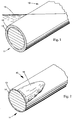
- FIG. 1 Depicted in FIG. 1 is a cross-sectional view of distal end 11 of nickel-titanium member alloy wire 10 submerged in pickling solution 12.
- the preferred method of preparing the surface of the nickel-titanium alloy member wire comprises the initial step of at least partially removing titanium oxide layer 13 from base metal substrate layer 14 of nickel-titanium alloy member wire 10.
- pickling solution 12 comprises a mixture of 120 ml 52 percent concentration hydrofluoric acid, 600 ml 70 percent concentration nitric acid, and 4,000 ml water.
- the titanium oxide layer constitutes a contaminant that should at least be partially removed from the surface of the alloy member wire to assist the subsequently applied flux in the removal of the titanium oxide contaminant from the base metal layer.
- the member Depending on the depth of the titanium oxide layer, the member remains in the pickling solution preferably for a period of time such as between one to one and a half minutes to partially etch or dissolve the contaminant layer from the base metal alloy wire. Completion of this initial step is evidenced when the member wire with a polished, shiny surface changes color to a light grey or when the member wire with a blackened oxidation layer changes color to a dark grey.
- a .6mm (.024") nickel-titanium alloy member wire indicated that no better joint was formed even after the wire was submerged in the pickling solution for 30 minutes. In fact, leaving the wire in the pickling solution longer than one and a half minutes etched or dissolved the base metal.
- Nickel-titanium alloy member wire 10 comprises a nickel-titanium alloy having nickel by weight in a range of 50 to 58 percent and titanium by weight in a range of 50 to 42 percent, respectively.
- the alloy exhibits desirable well-known shape memory and superelastic characteristic properties. Practically, these desirable properties are more pronounceably exhibited with alloys including nickel by weight in a range of 52 to 57 percent and titanium by weight in a range of 48 to 43 percent, respectively. Iron by weight of up to 3 percent is added in particular applications to add strength to the alloy. In such a case, the alloy contains 52 percent nickel, 45 percent titanium, and 3 percent iron.
- chromium, copper, iron, molybdenum, zinc, zirconium, and hafnium are permitted. Up to 1 percent of chromium and iron are also permitted in the alloy; however, normally no more than .2 percent of chromium and iron are added to the alloy to alter the well-known transformation temperature between the martensite and austenite states of the alloy. The transformation temperature of the alloy may also be changed 10 to 12 degrees Celsius by the drawing process utilized for the nickel-titanium alloy member wire.
- Nickel-titanium alloy wire such as Nitinol, is commercially available from Shape Memory Applications, Inc., Sunnyvale, California, and others.
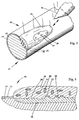
- alloy member wire 10 of FIG. 1 removed from the pickling solution. Titanium oxide contaminant layer 13 has been reduced in thickness by the pickling solution, and flux 15 is applied over a portion of the reduced thickness oxidation layer. Similar to aluminum oxide with respect to aluminum, titanium oxide readily forms on the surface of the nickel-titanium metal wire. Reoxidation of the alloy member wire occurs within fractions of a second after the pickling solution has removed the oxide layer and base metal 14 has been exposed to air.
- the flux commonly known as Indalloy Flux No. 3, is an aluminum flux paste commercially available from Indium Corporation of America, Utica, New York. The use of this flux does not fall within the scope of the claims and the following example is merely for explanatory purposes.
- the active ingredients of the flux and their concentration by weight percentage include tin chloride (SnCl 2 ) 13.0 percent, zinc chloride (ZnCl 2 ) 8.0 percent, concentrated hydrofluoric acid (HF-48% active) 14.0 percent, and ethanolamine (HOCH 2 CH 2 NH 2 ) 65.0 percent.
- Recommended mixing of these ingredients includes dissolving the tin chloride and zinc chloride in the hydrofluoric acid and then adding the ethanolamine. Since the hydrofluoric acid is a very active ingredient, the tin chloride and zinc chloride should be completely dissolved in the hydrofluoric acid prior to adding the ethanolamine. The ethanolamine should be added very slowly to the hydrofluoric acid solution to prevent a violent reaction, which can be further avoided by monitoring the temperature of the acid solution for large and rapid increases. Protective wear and a ventilated hood should also be utilized.
- FIG. 3 depicts alloy member wire 10 of FIG. 2 with flux 15 being heated to its activation temperature.
- the activation temperature of this flux is approximately 93°C (200 degrees Fahrenheit), and is heated thereto using, for example, soldering iron 16 set to approximately 232°C (450 degrees Fahrenheit).
- the soldering iron temperature is set at the lower end of the 177 to 510°C (350 to 950 degree Fahrenheit) range of annealing temperatures of the alloy member wire. Since the heat of the soldering iron is only being applied for a short time to heat the flux to its activation temperature and to flow subsequently applied solder material, the 232°C (450 degree Fahrenheit) temperature does not adversely effect the shape memory and superelastic properties of alloy member wire 10.
- the activation temperature of this flux may also range as high as 343°C (650 degrees Fahrenheit), which is still below the nominal 399°C (750 degree Fahrenheit) annealing temperature of nickel-titanium member wire 10. However, the preferred activation temperature of the flux is maintained as low as possible so as not to adversely effect the shape memory and superelastic properties of the wire.
- Heat activated flux 15 removes reduced thickness titanium oxide layer 13 thereunder and suspends the oxidation therein.
- the activated flux also removes or leaches titanium from the surface of the base metal nickel-titanium alloy wire layer to form a nickel-rich interface surface 26.
- the activated flux also leaches titanium from the base metal layer to form a nickel-rich layer 18 under interface surface 26.
- the leached titanium is believed to combine with the chlorides of the flux to form titanium tetrachloride (TiCl 4 ) which is suspended in the flux.
- TiCl 4 titanium tetrachloride
- the activated flux with the removed titanium oxide contaminant and leached titanium suspended therein coats the nickel-rich interface surface 26 and layer 18 to prevent further oxidation or reoxidation of the surface or layer.
- the activated flux cools, forming a solidified coating.
- the flux used according to the invention must be one which has an activation temperature below the annealing temperature of the Nitinol alloy so that the superelastic and shape retention properties are not impaired during the soldering operation.
- the flux must be in a form that can be easily applied and in a form that will coat all surfaces of the parts to be joined prior to the flow of the solder. It also must be in a form that will stay in place during the soldering procedure.
- the flux is soluble in a readily available low-cost solvent such as water for ease of removal. Further, the flux must melt and perform its cleaning function before the solder melts, i.e., the melting and activation temperature must be below the melting temperature of solder.
- the flux must remove oxides from the surface of the metals to be joined, preferably by dissolution.
- the flux with the oxides should flow to the surface so that oxides are removed with the flux and are not incorporated into the solder which would adversely change the properties of the joint.
- the flux solder system must function below 318°C (600°F) preferably below 260°C (500°F), so that the properties of Nitinol are not changed adversely by the soldering operation.
- the flux must protect the solder and base metals from reoxidation during the post-solder flow, until the joint has cooled.
- the flux will deposit a metal on the surface of the Nitinol alloy after cleaning the surface to promote adhesion of the solder to the Nitinol alloy.
- a wide variety of fluxes can be used according to the invention, not however an aluminum paste flux having about 13 percent by weight of tin chloride (SnCl 2 ), 8 percent by weight zinc chloride (ZnCl 2 ), 14 percent weight of concentrated hydrochloric acid (48 percent active) and 65 percent by weight ethanol amine, which has been found to be a particularly satisfactory flux composition as disclosed in EP-A-515078.
- the zinc chloride-tin chloride portion of this flux composition has a liquidus (the temperature at which it is completely molten) of 238°C (460°F) and a solidus (the temperature at which it is completely solid) of 188°C (370°F).
- the flux composition according to the invention includes organic flux materials which may also function as carriers to form a paste for the solder.
- organic flux constituents are abietic acid, ethylene diamine glutamic acid, lactic acid, phthalic acid, hydrazine hydrobromide oleic acid, stearic acid, urea, and organic amines such as ethanol amine.
- non-metallic halogen compounds are used in the flux composition.
- Those non-metallic halogen compounds which are suitable are aniline hydrochloride, glutamic hydrochloride, bromide derivatives of palmitic acid, hydrazine hydrochloride (or hydrobromide).
- the eutectic mixtures which may be used as fluxes according to the invention are as follows: CsF-ZrF 4 ; KF-LiF; HF-NaF; KF-NaF; KBr-HgBr 2 ; KBr-SrBr 2 ; LiBr-NaBr; KBr-MgBr 2 ; LiBr-BaBr 2 ; NaBr-SrBr 2 ; CdBr 2 -PbBr 2 ; NH 4 Br-HgBr 2 ; CdBr 2 -ZnBr 2 ; HgBr 2 -PbBr 2 ; AgCl-BiCl; AgCl-KCl; AgCl-CsCl; AgCl-LiCl; AgCl-CuCl; AgCl-NaCl; CsCl-TiCl; CsCl-VCl 2 ; CsCl-ZnCl 2
- Hydrofluoric acid can be present, which is believed to act as a catalyst in promoting the removal of the oxide and the deposition of the metallic component of the metallic halide onto the surface of the Nitinol alloy.
- FIG. 3 Also shown in FIG. 3 is a top partially cut-away view of nickel-rich interface surface 26 under the activated flux with islands 21 of titanium oxide remaining thereon. This is due to the unevenness or to the nonuniformity of the titanium oxide layer, the flux layer, and the base metal alloy surface.
- the nickel-rich surface includes titanium by weight in a range of approximately 49.5 to 0 percent and nickel by weight in the range of 50.5 to 100 percent, depending on the initial concentration of the alloy member wire.
- the nickel-rich surface and layer includes a higher percentage of nickel and a lower percentage of titanium than that of base metal alloy layer 14. A higher percentage of nickel or a lower percentage of titanium increases the flow of solder material on the interface surface and strengthens the metallic bond therebetween.
- the preferred method also includes wiping or scrubbing the activated flux with the removed titanium oxide particles and leached titanium suspended therein from nickel-rich interface surface 26. This is performed by wiping the flux from the surface of the wire in a well-known manner or scrubbing the surface by submerging and agitating the surface of the wire in a soapy water solution. Not all of the flux is removed in this process. However, the remaining coating of flux acts to prevent further oxidation or reoxidation of the surface.
- FIG. 4 depicts an enlarged, longitudinal sectional view of FIG. 3 illustrating base metal layer 14 of alloy wire 10, nickel-rich interface surface 26, nickel-rich interface layer 18, and flux 15 thereon with removed titanium oxide particles 17 from titanium oxide layer 13 suspended therein.
- the activated flux also leaches titanium from the base metal alloy member surface shown as particles 20 and suspends them therein as titanium tetrachloride.
- nickel-rich interface surface 26 is etched having pores 19 formed therein with residual islands 21 of titanium oxide remaining thereon. Titanium is at least partially removed or etched from the surface of the alloy member wire, leaving nickel-rich interface surface 26 and layer 18.
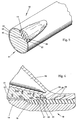
- FIG. 5 depicts alloy member wire 10 of FIG. 3 with initial flux layer 15 partially scrubbed from the surface of the wire and an additional layer of flux 22 applied thereover.
- the additional layer of flux when activated removes and suspends any titanium oxide remaining on the surface thereof and further leaches and suspends titanium from interface surface 26 and interface layer 18 of alloy member wire 10.
- this step is not absolutely necessary, experiments have indicated that the solder joint or laminate formed by base metal layer 14, nickel-rich surface 26, and a solder material is 25 percent stronger. Likewise, the step of submerging or applying a pickling solution to the titanium oxide layer also increases the strength of the solder joint or laminate by another 25 percent.
- Additional flux layer 22 is heated to its activation temperature to suspend any additional titanium oxide contaminant particles and to further leach titanium from the nickel-rich interface surface and layer. Additional flux layer 22 also provides a liquid or solidified coating to protect the nickel-rich interface surface and layer of the wire from further oxidation or reoxidation.
- FIG. 6 Depicted in FIG. 6 is an enlarged, partially sectioned, longitudinal view of alloy member wire 10 of FIG. 5 with molten solder material 23 being flowed on nickel-rich interface surface 26 and displacing flux coating 22 therefrom.
- Soldering iron 16 heats flux 22 having removed titanium oxide particles 17 and leached titanium particles 20 suspended therein to above its activation temperature and solder material 23 to a molten state.
- Molten solder material 23 flows on nickel-rich interface surface 26 and then cools to form solidified solder material 24 and a good metallic bond with nickel-rich interface surface 26 and layer 18.
- the flowing molten solder material fills pores 19 in and on nickel-rich interface surface 26 and layer 18.
- solder material 24 adheres to nickel-rich interface surface 26 and has a melting point temperature less than the annealing temperature of the base metal alloy so as not to adversely effect the shape memory and superelastic properties of the base metal alloy member wire.
- the preferred solder material for the joint or laminate is a tin-silver composition consisting by weight of 96.5 percent tin and 3.5 percent silver and having a melting temperature of 221 degrees Celsius (429 degrees Fahrenheit).
- the metallic bond formed by this composition solder is qualitatively described as excellent.
- the solder material may also be formed from the group of elements consisting of gold, nickel, indium, tin, silver, cadmium, lead, zirconium, and hafnium. Table A includes a list of commercially available solders along with their compositions and melting point temperatures as well as a qualitative assessment of the resulting metallic bond formed with a 0.06 cms. (.024") Nitinol alloy member wire.
- Nitinol wire tip usually broke with 3175 gms (7 pounds) applied thereto.
- pull-tests were performed on a 0.06 cms (.024") diameter Nitinol wire bonded with a 3 mm by 2 mm tin-silver solder joint to a wire of platinum, stainless steel, and Nitinol.
- Table B includes a summary of the results obtained from these pull-tests.
- Nitinol to Nitinol solder joint produced the lowest strength pull-test results.
- the metallic bonding or soldering of Nitinol to Nitinol provides a joint in which the interface layer broke away from the base metal substrate even though wetting and flowing occurred.
- the solder material also appeared to fracture as the interface layer broke away from the base metal substrate. Nevertheless, the Nitinol to Nitinol joint still provided a satisfactory bond for use in medical devices such as wire guides and the like.
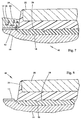
- alloy member 10 of FIG. 6 Depicted in FIG. 7 is alloy member 10 of FIG. 6 with another metallic member 25 having been added to the molten solder and cooled to form solidified material 24. As a result, metallic member 25 is bonded or adheres to the solder material to form a laminate or joint.
- Metallic member 25 may be another nickel-titanium member wire having a nickel-rich interface surface formed therein, a stainless steel alloy member, a platinum member, or other metal member.
- Member 25 is applied to the molten solder which cools to form solidified solder material 24 for bonding two members together. The molten solder flows on nickel-rich interface surface 26 of layer 18 and the surface of member 25. The molten solder material is cooled to bond the two members together.
- a joint comprising a nickel-titanium alloy member 10, an interface layer 18 formed in the surface of the member and having titanium oxide contaminant 13 removed and a predetermined amount of titanium at least partially removed therefrom with flux 22 heated to its activation temperature.
- the joint further comprises a bonding material 24 coated on and adhering to interface layer 18 and member 25 bonded to the same solder material 24.
- the joint may also be characterized as a base substrate 14 of a metal alloy having by weight a given percentage of nickel and titanium resulting in an alloy having superelastic and shape memory properties.
- the metal alloy has an annealing temperature above which the superelastic and shape memory properties are impaired.
- the joint further comprises nickel-rich interface layer 18 on base substrate 14 which has a greater percentage of nickel and a lower percentage of titanium than of the base substrate.
- Solder material 24 has a melting temperature less than the annealing temperature of the base metal alloy adhering to interface layer 18.
- the joint is formed as previously described.
- flux 22 with removed titanium oxide contaminant particles 17 and titanium 20 suspended therein is displaced by the molten solder onto titanium oxide layer 13.
- Flux 22 also forms a layer over solidified solder material 24 as shown.
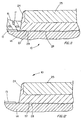
- FIG. 8 Depicted in FIG. 8 is a sectioned view of the solder joint of FIG. 7 and further illustrating the step of scrubbing the flux from the surfaces of alloy member wire 10 and other member 25.
- the flux is cleaned from the titanium oxide layer 13 as well as the solidified solder material 24 using any of a number of well-known techniques, for example, the use of water with mechanical scrubbing or the use of ultrasound, abrasives, or cleaning solutions.
- Nitinol mandril wire approximately 165 to 180 cm in length.
- the distal end of the Nitinol mandril wire was tapered to 0.01 cms (.004") and the platinum wire coil positioned over the tapered distal end.
- the Nitinol mandril wire was submerged in the aforementioned pickling solution for one and a half minutes, and a first layer of Indalloy aluminum flux paste No.
- solder readily flowed over the wire coil and tapered distal end of the mandril wire.
- the solder was allowed to cool, thereby forming a metallic bond or joint between the platinum wire coil and the Nitinol mandril wire.
- Other medical devices using a nickel-titanium or Nitinol alloy member are contemplated.
- FIG. 9 depicts an enlarged, longitudinal sectional view similar to FIG. 3 illustrating another aspect of base layer 14 of alloy wire 10 with metal layer 27 being deposited on contaminant free surface 28 of the base layer when halogen containing flux 15 is heated to its activation temperature.
- the activated, halogen containing flux suspends titanium oxide particles 17 when removed from titanium oxide layer 13 formed on the surface of the alloy member.
- a metallic halide such as tin chloride (SnCl 2 ) of the halogen containing flux deposits by metallic substitution thin layer 27 of tin on contaminant free surface 28 of the base metal layer.
- Soldering iron 16 is utilized to heat halogen containing flux 15 to its activation temperature.
- FIG. 10 Depicted in FIG. 10 is an enlarged, partially sectioned longitudinal view of alloy wire 10 of FIG. 9 with molten solder material 23 being flowed on contaminant free surface 28 and displacing flux coating 15 therefrom.
- soldering iron 16 heats halogen containing flux 15 to its activation temperature to remove and suspend titanium oxide particles 17 from alloy surface 28.
- Thin layer 27 of tin is deposited by well-known metallic substitution from the heated halogen containing flux on contaminant free surface 28 of alloy wire member 14.
- the soldering iron also heats solder material 23 to a molten state.
- Molten solder material 23 of, for example, silver tin solder flows on deposited tin layer 27, combines with the tin layer as illustrated by phantom line 29, and then cools to form solidified solder material 24. As a result, a good metallic bond is formed between the tin-silver solder and the tin layer on contaminant free surface 28 of the alloy wire member 14. As molten solder material 23 flows on tin layer 27, flux 15 is burned off or displaced onto titanium oxide layer 13. A joint is formed comprising a base substrate of nickel-titanium alloy layer 14, tin layer 27 on contaminant free surface 28 of the alloy member wire, and solder material 24.
- the metal deposited on the surface of the base substrate is formed from the metallic halide containing flux by metallic substitution.
- the activation temperature of the flux is below the annealing temperature of the base substrate as well as the melting temperature of the tin-silver solder material.
- the joint is also characterized by the solder material, which adheres to the metal deposited on the base substrate.
- the melting temperature of the solder as well as the activation temperature of the flux is selected to be below that of the base metal alloy so as not to adversely affect the shape memory and superelastic properties of base metal alloy member wire 14.
- alloy wire member 10 of FIG. 10 with another metallic member 25 such as platinum having been added to the molten solder and cooled to form solidified material 24.
- metallic member 25 is bonded or adheres to the solder material to form a laminate or joint.
- Member 25 is applied to the molten solder which cools to form a solidified material for bonding the two members together.
- a joint is formed comprising a nickel-titanium alloy member 14 and a layer 27 of tin, as indicated by phantom line 29 on contaminant free surface 28 of the alloy member.
- the joint further comprises bonding material 24 adhering to or forming with tin layer 27 to complete the joint.
- flux 15 with removed titanium oxide contaminant particles 17 is displaced by the molten solder onto titanium oxide layer 17.
- flux 15 forms a layer over solidified solder material 24, as shown.
- FIG. 12 Depicted in FIG. 12 is a sectioned view of the solder joint of FIG. 11, which further illustrates the step of cleaning the flux from alloy member 10 and other member 25.
- the water soluble flux is cleaned from the titanium oxide layer 13 as well as the solidified solder material 24 on contaminant free surface 28 of the alloy using any of a number of well-known techniques, for example, involving the use of water with commercially available detergents to clean the acid and any organic films remaining thereon. Mechanical scrubbing or the use of ultrasound, abrasives, or other cleaning solutions is also contemplated.
- the present invention solves the problem of bonding or soldering to nickel-titanium alloys such as Nitinol and without adversely degrading the desirable shape memory and superelastic properties of the alloy.
- the flux utilized with this invention advantageously removes the outer layer of titanium dioxide from the surface of the alloy, which heretofore had prevented traditional fluxes from wetting and solder material from flowing on the surface to form a good metallic bond or joint. The results from the use of this flux was totally unexpected since the flux was designated for use with aluminum. Furthermore, Indalloy Flux No.
- the flux of the present invention advantageously removes the titanium oxide contaminant layer from the surface of the Nitinol and further provides a coating layer to prevent reoxidation of the base metal substrate during the soldering process.
- nickel-titanium alloys such as Nitinol were believed not solderable.
- the present invention solves these problems by providing an acceptable joint by which Nitinol is bondable to itself and other metals and, in addition, without affecting the shape memory and superelastic properties of the Nitinol.
- Nitinol could be brazed; however, the brazing process destroyed the shape memory and superelastic properties of the alloy, which renders it unacceptable for many medical device applications.
- solder joint, laminate, and the method of preparing the surface of the nickel-titanium alloy member for bonding solder material thereto have been illustrated and described in the drawing and foregoing description, the same is to be considered illustrative and not restrictive in character. It is to be understood that only the preferred embodiment has been shown and that all changes and modifications that come within the scope of the claims are to be protected. In particular, it is contemplated that different composition solder materials may be utilized that more closely conform to the desired characteristics, such as flexibility, tensile strength, and hardness of the nickel-titanium alloy member. Furthermore, the percentages of nickel and titanium in the alloy may be varied or other small percentages of elements utilized to exhibit modified or different shape memory and superelastic properties and to provide different annealing temperatures.
- a high temperature solder material may be used to form a small initial joint, and a larger deposit of a low temperature solder material be subsequently applied to form a stronger overall joint.
- This is particularly useful when bonding materials that are extremely difficult to solder, such as when soldering wires end to end or soldering Nitinol to Nitinol.
- the method of preparing a nickel-titanium alloy member surface for bonding another layer of metal thereto is believed to involve the removal of the outside titanium oxide layer and the leaching of titanium from the base metal substrate.
- the use of the aluminum paste flux is not completely understood since the use of this flux with aluminum involves removing the outside aluminum oxide layer and replacing aluminum in the base metal substrate with zinc which is present in the flux. Accordingly, it is contemplated that titanium in the base metal substrate of the alloy may be replaced with zinc in the flux.
- the results of the present invention were totally unexpected, only further tests can substantiate or refute this contemplation.
Landscapes
- Engineering & Computer Science (AREA)
- Mechanical Engineering (AREA)
- Chemical & Material Sciences (AREA)
- Inorganic Chemistry (AREA)
- Electric Connection Of Electric Components To Printed Circuits (AREA)
Claims (4)
- Procédé de préparation d'une surface d'un élément en alliage nickel-titane pour y lier un autre métal, le procédé comprenant les étapes consistant à appliquer à l'élément un flux ayant une température d'activation inférieure à une température de recuit prédéterminée de l'élément en alliage, le flux ayant une composition appropriée pour éliminer un contaminant de la surface de l'élément, et pour éliminer par ailleurs des parties de titane de la surface de l'élément en y substituant un métal ou des métaux du flux, et à éliminer avec le flux le contaminant et le titane substitué de la surface de l'élément, dans lequel le flux comprend: un véhicule choisi parmi l'acide abiétique, l'acide éthylènediamineglutamique, l'acide lactique, l'acide phtalique, le bromhydrate d'hydrazine, l'acide oléique, l'acide stéarique, l'urée et les amines organiques telles que l'éthanolamine; et un composé halogéné non métallique choisi parmi le chlorhydrate d'aniline, le chlorhydrate glutamique, les dérivés bromés de l'acide palmitique, le chlorhydrate ou le bromhydrate d'hydrazine, et un mélange eutectique choisi parmi
CsF-ZrF4; KF-LiF; HF-NaF; KF-NaF, KBr-HgBr2; KBr-SrBr2; LiBr-NaBr; KBr-MgBr2; LiBr-BaBr2; NaBr-SrBr2;CdBr2-PbBr2; NH4Br-HgBr2; CdBr2-ZnBr2; HgBr2-PbBr2; AgCl-BiCl; AgCl-KCl; AgCl-CsCl; AgCl-LiCl; AgCl-CuCl; AgCl-NaCl; CsCl-TiCl; CsCl-VCl2; CsCl-ZnCl2; CsCl-AlCl3; NaCl-SrCl2; NaCl-TiCl2; NaCl-VCl2; NaCl-AlCl3; NaCl-FeCl3; AsI3-SbI3; PI3-SBi3; NaI-CdI2-PbI2; Br2-UF6; Al-Zn-AlCl3; Cd-Zn-CdCl2-ZnCl2; Zn-ZnCl2-AlCl3; Al-Zn-ZnCl2-AlCl3; Mg-Pb-MgCl2-PbCl2; SiCl4-PCl5; SnCl4-NbCl5; SnCl4-TaCl5; ZrCl4-PCl5; MoCl5-WCl6; NbCl5-WCl6; KCl-NaCl-NbCl5-TaCl5; KCl-MgCl2- NbCl5-TaCl5; AlI3-SbI3; AlI3- SnI4; BI3-SiI4; AlI3-SiI4; HfI4-ZrI4; KBr-BaBr2; KBr-CoBr2; NaCl-BiCl3; GaCl-AlCl3-GaCl3; et Ga2Cl4-GaAlCa4. - Procédé selon la revendication 1, dans lequel ledit flux contenant un halogène contient par ailleurs de l'acide fluorhydrique.
- Procédé selon la revendication 1, comprenant en outre le fait de faire couler un matériau de soudure à l'étain à l'état fondu sur ledit métal après avoir déposé ledit métal sur la surface dudit élément.
- Procédé selon la revendication 3, dans lequel on fait couler la soudure à l'étain à l'état fondu sur ladite surface et sur un autre élément afin de déplacer de ladite surface ledit flux à l'aide de l'écoulement de ladite soudure à l'étain sur ladite surface; etrefroidir ladite soudure à l'étain sur ladite surface jusqu'à l'état solide.
Applications Claiming Priority (2)
| Application Number | Priority Date | Filing Date | Title |
|---|---|---|---|
| US116443 | 1993-09-03 | ||
| US08/116,443 US5354623A (en) | 1991-05-21 | 1993-09-03 | Joint, a laminate, and a method of preparing a nickel-titanium alloy member surface for bonding to another layer of metal |
Publications (2)
| Publication Number | Publication Date |
|---|---|
| EP0642876A1 EP0642876A1 (fr) | 1995-03-15 |
| EP0642876B1 true EP0642876B1 (fr) | 2000-03-15 |
Family
ID=22367239
Family Applications (1)
| Application Number | Title | Priority Date | Filing Date |
|---|---|---|---|
| EP94306229A Expired - Lifetime EP0642876B1 (fr) | 1993-09-03 | 1994-08-24 | Soudage d'alliages nickel-titane |
Country Status (4)
| Country | Link |
|---|---|
| US (1) | US5354623A (fr) |
| EP (1) | EP0642876B1 (fr) |
| JP (1) | JPH07171676A (fr) |
| DE (1) | DE69423405T2 (fr) |
Cited By (4)
| Publication number | Priority date | Publication date | Assignee | Title |
|---|---|---|---|---|
| US6399886B1 (en) | 1997-05-02 | 2002-06-04 | General Science & Technology Corp. | Multifilament drawn radiopaque high elastic cables and methods of making the same |
| US6449834B1 (en) | 1997-05-02 | 2002-09-17 | Scilogy Corp. | Electrical conductor coils and methods of making same |
| US7300708B2 (en) | 2004-03-16 | 2007-11-27 | General Electric Company | Erosion and wear resistant protective structures for turbine engine components |
| US7575418B2 (en) | 2004-09-30 | 2009-08-18 | General Electric Company | Erosion and wear resistant protective structures for turbine components |
Families Citing this family (99)
| Publication number | Priority date | Publication date | Assignee | Title |
|---|---|---|---|---|
| US6682608B2 (en) * | 1990-12-18 | 2004-01-27 | Advanced Cardiovascular Systems, Inc. | Superelastic guiding member |
| US6000601A (en) * | 1996-10-22 | 1999-12-14 | Boston Scientific Corporation | Welding method |
| US5827349A (en) * | 1996-11-14 | 1998-10-27 | Megy; Joseph A. | Method of recycling nickel and cobalt alloy scrap metal contaminated with titanium |
| US6049042A (en) * | 1997-05-02 | 2000-04-11 | Avellanet; Francisco J. | Electrical cables and methods of making same |
| US7637948B2 (en) | 1997-10-10 | 2009-12-29 | Senorx, Inc. | Tissue marking implant |
| US8668737B2 (en) | 1997-10-10 | 2014-03-11 | Senorx, Inc. | Tissue marking implant |
| IT1297448B1 (it) * | 1997-12-18 | 1999-12-17 | Soprin S R L | Metodo per la zincatura a caldo di materiali ferrosi |
| US20060047223A1 (en) * | 2004-08-31 | 2006-03-02 | Ryan Grandfield | Apparatus and method for joining stainless steel guide wire portion to nitinol portion, without a hypotube |
| US6161034A (en) * | 1999-02-02 | 2000-12-12 | Senorx, Inc. | Methods and chemical preparations for time-limited marking of biopsy sites |
| US6306105B1 (en) | 1998-05-14 | 2001-10-23 | Scimed Life Systems, Inc. | High performance coil wire |
| US6752309B1 (en) * | 1999-07-22 | 2004-06-22 | Oatey Co. | Water soluble fluxes and methods of using the same |
| ES2228165T3 (es) | 1998-12-09 | 2005-04-01 | Cook Incorporated | Aguja hueca, curvada, superelastica, para uso medico. |
| US8498693B2 (en) | 1999-02-02 | 2013-07-30 | Senorx, Inc. | Intracorporeal marker and marker delivery device |
| US7651505B2 (en) * | 2002-06-17 | 2010-01-26 | Senorx, Inc. | Plugged tip delivery for marker placement |
| US6725083B1 (en) | 1999-02-02 | 2004-04-20 | Senorx, Inc. | Tissue site markers for in VIVO imaging |
| US8361082B2 (en) | 1999-02-02 | 2013-01-29 | Senorx, Inc. | Marker delivery device with releasable plug |
| US9820824B2 (en) | 1999-02-02 | 2017-11-21 | Senorx, Inc. | Deployment of polysaccharide markers for treating a site within a patent |
| US20090030309A1 (en) | 2007-07-26 | 2009-01-29 | Senorx, Inc. | Deployment of polysaccharide markers |
| US6862470B2 (en) | 1999-02-02 | 2005-03-01 | Senorx, Inc. | Cavity-filling biopsy site markers |
| US7983734B2 (en) | 2003-05-23 | 2011-07-19 | Senorx, Inc. | Fibrous marker and intracorporeal delivery thereof |
| CA2370770A1 (fr) * | 1999-04-16 | 2000-10-26 | Edison Welding Institute | Alliage de brasage |
| US6575991B1 (en) | 1999-06-17 | 2003-06-10 | Inrad, Inc. | Apparatus for the percutaneous marking of a lesion |
| US6352515B1 (en) * | 1999-12-13 | 2002-03-05 | Advanced Cardiovascular Systems, Inc. | NiTi alloyed guidewires |
| US6602272B2 (en) | 2000-11-02 | 2003-08-05 | Advanced Cardiovascular Systems, Inc. | Devices configured from heat shaped, strain hardened nickel-titanium |
| US7976648B1 (en) | 2000-11-02 | 2011-07-12 | Abbott Cardiovascular Systems Inc. | Heat treatment for cold worked nitinol to impart a shape setting capability without eventually developing stress-induced martensite |
| US7713275B2 (en) | 2000-11-03 | 2010-05-11 | Cook Incorporated | Medical grasping device |
| DE60123990T2 (de) | 2000-11-03 | 2007-05-10 | Cook Inc., Bloomington | Medizinische greifvorrichtung |
| US7727253B2 (en) | 2000-11-03 | 2010-06-01 | Cook Incorporated | Medical grasping device having embolic protection |
| US7753917B2 (en) | 2000-11-03 | 2010-07-13 | Cook Incorporated | Medical grasping device |
| AU2002239290A1 (en) | 2000-11-20 | 2002-06-03 | Senorx, Inc. | Tissue site markers for in vivo imaging |
| US6855161B2 (en) | 2000-12-27 | 2005-02-15 | Advanced Cardiovascular Systems, Inc. | Radiopaque nitinol alloys for medical devices |
| WO2003004086A2 (fr) | 2001-07-05 | 2003-01-16 | Precision Vascular Systems, Inc. | Dispositif medical a pointe souple pouvant etre soumis a un couple et son procede d'utilisation |
| US7914467B2 (en) | 2002-07-25 | 2011-03-29 | Boston Scientific Scimed, Inc. | Tubular member having tapered transition for use in a medical device |
| US6953146B2 (en) * | 2002-10-24 | 2005-10-11 | Leonard Nanis | Low-temperature flux for soldering nickel-titanium alloys and other metals |
| US20060036158A1 (en) * | 2003-11-17 | 2006-02-16 | Inrad, Inc. | Self-contained, self-piercing, side-expelling marking apparatus |
| US8377035B2 (en) | 2003-01-17 | 2013-02-19 | Boston Scientific Scimed, Inc. | Unbalanced reinforcement members for medical device |
| US6960370B2 (en) | 2003-03-27 | 2005-11-01 | Scimed Life Systems, Inc. | Methods of forming medical devices |
| US7942892B2 (en) | 2003-05-01 | 2011-05-17 | Abbott Cardiovascular Systems Inc. | Radiopaque nitinol embolic protection frame |
| US7877133B2 (en) | 2003-05-23 | 2011-01-25 | Senorx, Inc. | Marker or filler forming fluid |
| US20050273002A1 (en) | 2004-06-04 | 2005-12-08 | Goosen Ryan L | Multi-mode imaging marker |
| US7824345B2 (en) | 2003-12-22 | 2010-11-02 | Boston Scientific Scimed, Inc. | Medical device with push force limiter |
| US20060038302A1 (en) * | 2004-08-19 | 2006-02-23 | Kejun Zeng | Thermal fatigue resistant tin-lead-silver solder |
| US7998090B2 (en) * | 2004-08-31 | 2011-08-16 | Abbott Cardiovascular Systems Inc. | Guide wire with core having welded wire segments |
| US8419656B2 (en) * | 2004-11-22 | 2013-04-16 | Bard Peripheral Vascular, Inc. | Post decompression marker introducer system |
| US10357328B2 (en) | 2005-04-20 | 2019-07-23 | Bard Peripheral Vascular, Inc. and Bard Shannon Limited | Marking device with retractable cannula |
| CA2621074A1 (fr) * | 2005-09-08 | 2007-03-15 | Medical Research Products-B, Inc. | Procede de soudage d'un treillis a base de titane sur un substrat a base de titane |
| CA2562580C (fr) | 2005-10-07 | 2014-04-29 | Inrad, Inc. | Marqueur de tissu a elution medicamenteuse |
| US7850623B2 (en) | 2005-10-27 | 2010-12-14 | Boston Scientific Scimed, Inc. | Elongate medical device with continuous reinforcement member |
| US8021311B2 (en) * | 2006-08-16 | 2011-09-20 | Boston Scientific Scimed, Inc. | Mechanical honing of metallic tubing for soldering in a medical device construction |
| US8551020B2 (en) | 2006-09-13 | 2013-10-08 | Boston Scientific Scimed, Inc. | Crossing guidewire |
| ES2443526T3 (es) | 2006-10-23 | 2014-02-19 | C.R. Bard, Inc. | Marcador mamario |
| US9579077B2 (en) | 2006-12-12 | 2017-02-28 | C.R. Bard, Inc. | Multiple imaging mode tissue marker |
| US8401622B2 (en) | 2006-12-18 | 2013-03-19 | C. R. Bard, Inc. | Biopsy marker with in situ-generated imaging properties |
| US7896820B2 (en) * | 2006-12-26 | 2011-03-01 | Terumo Kabushiki Kaisha | Guide wire |
| JP5214878B2 (ja) * | 2006-12-28 | 2013-06-19 | テルモ株式会社 | ガイドワイヤ |
| JP4917900B2 (ja) * | 2007-01-12 | 2012-04-18 | テルモ株式会社 | ガイドワイヤ用中間部材およびガイドワイヤ |
| US8206837B2 (en) * | 2007-01-12 | 2012-06-26 | Terumo Kabushiki Kaisha | Interventional medical device |
| US20080239660A1 (en) * | 2007-03-29 | 2008-10-02 | Lateef Mustapha | Flux precoated solder preform for thermal interface material |
| JP4277117B2 (ja) * | 2007-03-29 | 2009-06-10 | 福井県 | ニッケル・チタン合金材料及び純チタン材料の異種金属接合体並びにその接合方法 |
| EP2143460B1 (fr) * | 2007-05-09 | 2015-07-22 | Japan Science and Technology Agency | Fil guide et endoprothèse |
| US8678271B2 (en) * | 2007-06-26 | 2014-03-25 | Globalfoundries Inc. | Method for preventing void formation in a solder joint |
| US8409114B2 (en) | 2007-08-02 | 2013-04-02 | Boston Scientific Scimed, Inc. | Composite elongate medical device including distal tubular member |
| US8105246B2 (en) | 2007-08-03 | 2012-01-31 | Boston Scientific Scimed, Inc. | Elongate medical device having enhanced torque and methods thereof |
| US8821477B2 (en) | 2007-08-06 | 2014-09-02 | Boston Scientific Scimed, Inc. | Alternative micromachined structures |
| US9808595B2 (en) | 2007-08-07 | 2017-11-07 | Boston Scientific Scimed, Inc | Microfabricated catheter with improved bonding structure |
| US7841994B2 (en) | 2007-11-02 | 2010-11-30 | Boston Scientific Scimed, Inc. | Medical device for crossing an occlusion in a vessel |
| WO2009099767A2 (fr) | 2008-01-31 | 2009-08-13 | C.R. Bard, Inc. | Marqueur de tissu pour biopsie |
| JP5631744B2 (ja) | 2008-02-05 | 2014-11-26 | ブリッジポイント、メディカル、インコーポレイテッドBridgepoint Medical, Inc. | 血管内の閉塞部分の横断 |
| US11992238B2 (en) | 2008-02-05 | 2024-05-28 | Boston Scientific Scimed, Inc. | Endovascular device with a tissue piercing distal probe and associated methods |
| US8337425B2 (en) | 2008-02-05 | 2012-12-25 | Bridgepoint Medical, Inc. | Endovascular device with a tissue piercing distal probe and associated methods |
| US8376961B2 (en) | 2008-04-07 | 2013-02-19 | Boston Scientific Scimed, Inc. | Micromachined composite guidewire structure with anisotropic bending properties |
| US8535243B2 (en) | 2008-09-10 | 2013-09-17 | Boston Scientific Scimed, Inc. | Medical devices and tapered tubular members for use in medical devices |
| US9327061B2 (en) | 2008-09-23 | 2016-05-03 | Senorx, Inc. | Porous bioabsorbable implant |
| DE102008052247A1 (de) * | 2008-10-18 | 2010-04-22 | Mtu Aero Engines Gmbh | Bauteil für eine Gasturbine und Verfahren zur Herstellung des Bauteils |
| US8795254B2 (en) | 2008-12-10 | 2014-08-05 | Boston Scientific Scimed, Inc. | Medical devices with a slotted tubular member having improved stress distribution |
| WO2010068804A1 (fr) * | 2008-12-10 | 2010-06-17 | Boston Scientific Scimed, Inc. | Procédé de formation d’un joint entre un élément d’alliage de titane et un élément d’alliage d'acier et dispositif médical comprenant ledit joint |
| WO2010077244A1 (fr) | 2008-12-30 | 2010-07-08 | C.R. Bard Inc. | Dispositif d'administration de marqueurs destiné à placer des marqueurs dans des tissus |
| US8444577B2 (en) | 2009-01-05 | 2013-05-21 | Cook Medical Technologies Llc | Medical guide wire |
| US20100204570A1 (en) * | 2009-02-06 | 2010-08-12 | Paul Lubock | Anchor markers |
| US8137293B2 (en) | 2009-11-17 | 2012-03-20 | Boston Scientific Scimed, Inc. | Guidewires including a porous nickel-titanium alloy |
| WO2011062736A1 (fr) | 2009-11-17 | 2011-05-26 | Cook Incorporated | Dispositif de biopsie déformable |
| US8551021B2 (en) | 2010-03-31 | 2013-10-08 | Boston Scientific Scimed, Inc. | Guidewire with an improved flexural rigidity profile |
| US11298251B2 (en) | 2010-11-17 | 2022-04-12 | Abbott Cardiovascular Systems, Inc. | Radiopaque intraluminal stents comprising cobalt-based alloys with primarily single-phase supersaturated tungsten content |
| JP5382953B2 (ja) * | 2011-01-28 | 2014-01-08 | 朝日インテック株式会社 | ガイドワイヤ |
| WO2012106628A1 (fr) | 2011-02-04 | 2012-08-09 | Boston Scientific Scimed, Inc. | Fils guides et procédés pour fabriquer et utiliser ceux-ci |
| US9072874B2 (en) | 2011-05-13 | 2015-07-07 | Boston Scientific Scimed, Inc. | Medical devices with a heat transfer region and a heat sink region and methods for manufacturing medical devices |
| US9724494B2 (en) | 2011-06-29 | 2017-08-08 | Abbott Cardiovascular Systems, Inc. | Guide wire device including a solderable linear elastic nickel-titanium distal end section and methods of preparation therefor |
| US9061088B2 (en) | 2012-02-02 | 2015-06-23 | Abbott Cardiovascular Systems, Inc. | Guide wire core wire made from a substantially titanium-free alloy for enhanced guide wire steering response |
| CN103817453A (zh) * | 2012-11-16 | 2014-05-28 | 通用汽车环球科技运作有限责任公司 | 用于焊接应用的自调节式包复丝 |
| US9636485B2 (en) | 2013-01-17 | 2017-05-02 | Abbott Cardiovascular Systems, Inc. | Methods for counteracting rebounding effects during solid state resistance welding of dissimilar materials |
| DE102013101334A1 (de) * | 2013-02-11 | 2014-08-14 | Acandis Gmbh & Co. Kg | Intravaskuläres Funktionselement und Verfahren zu dessen Herstellung, Verwendung eines Salzbades zur Wärmebehandlung |
| USD715442S1 (en) | 2013-09-24 | 2014-10-14 | C. R. Bard, Inc. | Tissue marker for intracorporeal site identification |
| USD716450S1 (en) | 2013-09-24 | 2014-10-28 | C. R. Bard, Inc. | Tissue marker for intracorporeal site identification |
| USD716451S1 (en) | 2013-09-24 | 2014-10-28 | C. R. Bard, Inc. | Tissue marker for intracorporeal site identification |
| USD715942S1 (en) | 2013-09-24 | 2014-10-21 | C. R. Bard, Inc. | Tissue marker for intracorporeal site identification |
| JP6302754B2 (ja) * | 2014-06-04 | 2018-03-28 | オリンパス株式会社 | 接合構造及び生検針 |
| US9775252B2 (en) | 2015-11-03 | 2017-09-26 | GM Global Technology Operations LLC | Method for soldering shape memory alloys |
| US20170164942A1 (en) * | 2015-12-15 | 2017-06-15 | Heartstitch, Inc. | Holding Block For Multiple Catheter Needles |
| US12151049B2 (en) | 2019-10-14 | 2024-11-26 | Abbott Cardiovascular Systems, Inc. | Methods for manufacturing radiopaque intraluminal stents comprising cobalt-based alloys with supersaturated tungsten content |
Family Cites Families (30)
| Publication number | Priority date | Publication date | Assignee | Title |
|---|---|---|---|---|
| US2169098A (en) * | 1937-06-19 | 1939-08-08 | Gen Electric | Method for soft soldering alloys containing aluminum |
| US2875514A (en) * | 1951-12-31 | 1959-03-03 | Olin Mathieson | Composition of matter and method of using same in soldering aluminum |
| US2640793A (en) * | 1952-02-04 | 1953-06-02 | Olin Mathieson | Composition of matter |
| US3037880A (en) * | 1952-05-09 | 1962-06-05 | Gen Motors Corp | Coating of titanium and titanium alloys with aluminum and aluminum alloys |
| US2801194A (en) * | 1953-04-14 | 1957-07-30 | Olin Mathieson | Soldering flux composition and method of joining aluminum therewith |
| US2906008A (en) * | 1953-05-27 | 1959-09-29 | Gen Motors Corp | Brazing of titanium members |
| GB746648A (en) * | 1953-05-27 | 1956-03-14 | Gen Motors Corp | Assembly of titanium or titanium alloy parts and method of brazing same |
| US2858600A (en) * | 1954-02-19 | 1958-11-04 | Gen Motors Corp | Surface hardening of titanium |
| US2834101A (en) * | 1955-02-23 | 1958-05-13 | Curtiss Wright Corp | Method of brazing titanium |
| US2801943A (en) * | 1955-04-15 | 1957-08-06 | Horizons Inc | Composition of matter for soldering aluminum |
| US2844867A (en) * | 1955-06-24 | 1958-07-29 | Martin Co | Dip brazing |
| US3002265A (en) * | 1957-02-14 | 1961-10-03 | Stalker Corp | Fabrication of blades for compressors and the like |
| US2882593A (en) * | 1957-06-10 | 1959-04-21 | Curtiss Wright Corp | Brazing flux |
| GB879463A (en) * | 1957-06-26 | 1961-10-11 | Bristol Siddeley Engines Ltd | Improvements in fluxes and methods for soldering titanium |
| US2957239A (en) * | 1958-12-10 | 1960-10-25 | Orenda Engines Ltd | Brazing of nickel base alloys |
| FR2048191A5 (en) * | 1969-06-03 | 1971-03-19 | Sp Konstruktors | Paste for the timming of surfaces and brazing |
| US3923609A (en) * | 1973-12-19 | 1975-12-02 | Ppg Industries Inc | Method of joining silicon metal |
| US3956098A (en) * | 1973-12-19 | 1976-05-11 | Ppg Industries, Inc. | Apparatus containing silicon metal joints |
| GB1510197A (en) * | 1974-09-06 | 1978-05-10 | Messerschmitt Boelkow Blohm | Process for applying metal coatings to titanium or titanium alloys |
| FR2380354A1 (fr) * | 1977-02-09 | 1978-09-08 | Armines | Procede et appareillage de traitement superficiel thermochimique de pieces et de poudres en super-alliages refractaires |
| US4151015A (en) * | 1977-12-02 | 1979-04-24 | Lake Chemical Company | Flux for use in soldering |
| AT375303B (de) * | 1979-09-28 | 1984-07-25 | Nippon Musical Instruments Mfg | Material auf ti-basis fuer brillengestelle sowie verfahren zu dessen herstellung |
| JPS5681665A (en) * | 1979-12-04 | 1981-07-03 | Natl Res Inst For Metals | Surface hardening process for titanium |
| US4331258A (en) * | 1981-03-05 | 1982-05-25 | Raychem Corporation | Sealing cover for an hermetically sealed container |
| JPS58167073A (ja) * | 1982-03-29 | 1983-10-03 | Arakawa Kako Kk | チタン材のロウ付け方法 |
| JPS59116342A (ja) * | 1982-12-24 | 1984-07-05 | Sumitomo Electric Ind Ltd | 形状記憶合金の製造方法 |
| US4566939A (en) * | 1985-01-25 | 1986-01-28 | Avco Corporation | Surface preparation of nickel base alloys for brazing |
| US4984581A (en) * | 1988-10-12 | 1991-01-15 | Flexmedics Corporation | Flexible guide having two-way shape memory alloy |
| JPH04162982A (ja) * | 1990-10-24 | 1992-06-08 | Nippon Stainless Steel Co Ltd | TiNi合金のロウ付け |
| US5242759A (en) * | 1991-05-21 | 1993-09-07 | Cook Incorporated | Joint, a laminate, and a method of preparing a nickel-titanium alloy member surface for bonding to another layer of metal |
-
1993
- 1993-09-03 US US08/116,443 patent/US5354623A/en not_active Expired - Lifetime
-
1994
- 1994-08-24 DE DE69423405T patent/DE69423405T2/de not_active Expired - Lifetime
- 1994-08-24 EP EP94306229A patent/EP0642876B1/fr not_active Expired - Lifetime
- 1994-09-05 JP JP6235976A patent/JPH07171676A/ja active Pending
Cited By (4)
| Publication number | Priority date | Publication date | Assignee | Title |
|---|---|---|---|---|
| US6399886B1 (en) | 1997-05-02 | 2002-06-04 | General Science & Technology Corp. | Multifilament drawn radiopaque high elastic cables and methods of making the same |
| US6449834B1 (en) | 1997-05-02 | 2002-09-17 | Scilogy Corp. | Electrical conductor coils and methods of making same |
| US7300708B2 (en) | 2004-03-16 | 2007-11-27 | General Electric Company | Erosion and wear resistant protective structures for turbine engine components |
| US7575418B2 (en) | 2004-09-30 | 2009-08-18 | General Electric Company | Erosion and wear resistant protective structures for turbine components |
Also Published As
| Publication number | Publication date |
|---|---|
| US5354623A (en) | 1994-10-11 |
| DE69423405T2 (de) | 2000-09-07 |
| JPH07171676A (ja) | 1995-07-11 |
| EP0642876A1 (fr) | 1995-03-15 |
| DE69423405D1 (de) | 2000-04-20 |
Similar Documents
| Publication | Publication Date | Title |
|---|---|---|
| EP0642876B1 (fr) | Soudage d'alliages nickel-titane | |
| US5242759A (en) | Joint, a laminate, and a method of preparing a nickel-titanium alloy member surface for bonding to another layer of metal | |
| KR970010891B1 (ko) | 고온의 무연 주석 기재 납땜 조성물 | |
| JP3599101B2 (ja) | はんだ、それを使用したプリント配線基板の表面処理方法及びそれを使用した電子部品の実装方法 | |
| US4117968A (en) | Method for soldering metals with superhard man-made materials | |
| JP3544904B2 (ja) | はんだ、それを使用したプリント配線基板の表面処理方法及びそれを使用した電子部品の実装方法 | |
| CN100364711C (zh) | 无铅焊料 | |
| EP0538446B1 (fr) | Composition de brasage pour metaux et alliages formant des couches d'oxyde | |
| US9775252B2 (en) | Method for soldering shape memory alloys | |
| US4613069A (en) | Method for soldering aluminum and magnesium | |
| EP3369520B1 (fr) | Alliage de brasage pour empêcher l'érosion du fe, brasure fourrée de flux de résine, brasure en fil, brasure en fil fourré de flux de résine, brasure revêtue de flux, joint de brasure et procédé de brasage | |
| US2937438A (en) | Method for joining aluminum to stainless steel | |
| US20060081680A1 (en) | Desoldering wick for lead-free solder | |
| JP2011031253A (ja) | 無鉛ハンダ合金 | |
| JPH04162982A (ja) | TiNi合金のロウ付け | |
| JP2002307187A (ja) | 鉛フリーはんだ及びはんだ継手 | |
| JP2909351B2 (ja) | はんだ付用フラックス | |
| JP2006509635A (ja) | クラッド層および鉄合金の被覆層を有するろう付けシート製品およびその製造方法 | |
| Xia et al. | Intermetallic compounds evolution between lead-free solder and cu-based lead frame alloys during isothermal aging | |
| JP4724650B2 (ja) | はんだ接合方法およびはんだ接合部 | |
| Choe et al. | Fluxless Sn-Bi-Au bonding process using multilayer design | |
| KR100320545B1 (ko) | Sn계저융점땜납재 | |
| Voiculescu et al. | BRAZING OF MoNbTaTiZrW0. 2 HIGH ENTROPY ALLOY USING ECOLOGICALLY COATED RODS | |
| Yamashita et al. | The effects of Ag, Ni, and Ge elements in lead-free Sn base solder alloy | |
| JPH0796387A (ja) | Al接合用材料とそれを用いた接合部品の接合方法 |
Legal Events
| Date | Code | Title | Description |
|---|---|---|---|
| PUAI | Public reference made under article 153(3) epc to a published international application that has entered the european phase |
Free format text: ORIGINAL CODE: 0009012 |
|
| AK | Designated contracting states |
Kind code of ref document: A1 Designated state(s): DE FR GB IT |
|
| 17P | Request for examination filed |
Effective date: 19950815 |
|
| 17Q | First examination report despatched |
Effective date: 19961216 |
|
| GRAG | Despatch of communication of intention to grant |
Free format text: ORIGINAL CODE: EPIDOS AGRA |
|
| GRAG | Despatch of communication of intention to grant |
Free format text: ORIGINAL CODE: EPIDOS AGRA |
|
| GRAH | Despatch of communication of intention to grant a patent |
Free format text: ORIGINAL CODE: EPIDOS IGRA |
|
| GRAH | Despatch of communication of intention to grant a patent |
Free format text: ORIGINAL CODE: EPIDOS IGRA |
|
| GRAA | (expected) grant |
Free format text: ORIGINAL CODE: 0009210 |
|
| AK | Designated contracting states |
Kind code of ref document: B1 Designated state(s): DE FR GB IT |
|
| ITF | It: translation for a ep patent filed | ||
| REF | Corresponds to: |
Ref document number: 69423405 Country of ref document: DE Date of ref document: 20000420 |
|
| ET | Fr: translation filed | ||
| PLBE | No opposition filed within time limit |
Free format text: ORIGINAL CODE: 0009261 |
|
| STAA | Information on the status of an ep patent application or granted ep patent |
Free format text: STATUS: NO OPPOSITION FILED WITHIN TIME LIMIT |
|
| 26N | No opposition filed | ||
| REG | Reference to a national code |
Ref country code: GB Ref legal event code: IF02 |
|
| REG | Reference to a national code |
Ref country code: GB Ref legal event code: 732E Free format text: REGISTERED BETWEEN 20110929 AND 20111005 |
|
| PGFP | Annual fee paid to national office [announced via postgrant information from national office to epo] |
Ref country code: GB Payment date: 20120726 Year of fee payment: 19 |
|
| PGFP | Annual fee paid to national office [announced via postgrant information from national office to epo] |
Ref country code: IT Payment date: 20120810 Year of fee payment: 19 Ref country code: FR Payment date: 20120809 Year of fee payment: 19 Ref country code: DE Payment date: 20120831 Year of fee payment: 19 |
|
| GBPC | Gb: european patent ceased through non-payment of renewal fee |
Effective date: 20130824 |
|
| PG25 | Lapsed in a contracting state [announced via postgrant information from national office to epo] |
Ref country code: DE Free format text: LAPSE BECAUSE OF NON-PAYMENT OF DUE FEES Effective date: 20140301 |
|
| REG | Reference to a national code |
Ref country code: DE Ref legal event code: R119 Ref document number: 69423405 Country of ref document: DE Effective date: 20140301 |
|
| REG | Reference to a national code |
Ref country code: FR Ref legal event code: ST Effective date: 20140430 |
|
| PG25 | Lapsed in a contracting state [announced via postgrant information from national office to epo] |
Ref country code: IT Free format text: LAPSE BECAUSE OF NON-PAYMENT OF DUE FEES Effective date: 20130824 |
|
| PG25 | Lapsed in a contracting state [announced via postgrant information from national office to epo] |
Ref country code: GB Free format text: LAPSE BECAUSE OF NON-PAYMENT OF DUE FEES Effective date: 20130824 |
|
| PG25 | Lapsed in a contracting state [announced via postgrant information from national office to epo] |
Ref country code: FR Free format text: LAPSE BECAUSE OF NON-PAYMENT OF DUE FEES Effective date: 20130902 |