EP0643683B1 - Procede et appareil de recuperation des catalyseurs metalliques - Google Patents
Procede et appareil de recuperation des catalyseurs metalliques Download PDFInfo
- Publication number
- EP0643683B1 EP0643683B1 EP93912709A EP93912709A EP0643683B1 EP 0643683 B1 EP0643683 B1 EP 0643683B1 EP 93912709 A EP93912709 A EP 93912709A EP 93912709 A EP93912709 A EP 93912709A EP 0643683 B1 EP0643683 B1 EP 0643683B1
- Authority
- EP
- European Patent Office
- Prior art keywords
- cobalt
- oxo
- aqueous phase
- gas
- stripping
- Prior art date
- Legal status (The legal status is an assumption and is not a legal conclusion. Google has not performed a legal analysis and makes no representation as to the accuracy of the status listed.)
- Expired - Lifetime
Links
- 238000000034 method Methods 0.000 title claims abstract description 54
- 239000003054 catalyst Substances 0.000 title claims abstract description 39
- 238000011084 recovery Methods 0.000 title claims abstract description 20
- 229910052751 metal Inorganic materials 0.000 title claims description 8
- 239000002184 metal Substances 0.000 title claims description 8
- 239000010941 cobalt Substances 0.000 claims abstract description 171
- 229910017052 cobalt Inorganic materials 0.000 claims abstract description 170
- GUTLYIVDDKVIGB-UHFFFAOYSA-N cobalt atom Chemical compound [Co] GUTLYIVDDKVIGB-UHFFFAOYSA-N 0.000 claims abstract description 152
- 239000008346 aqueous phase Substances 0.000 claims abstract description 96
- MQIKJSYMMJWAMP-UHFFFAOYSA-N dicobalt octacarbonyl Chemical group [Co+2].[Co+2].[O+]#[C-].[O+]#[C-].[O+]#[C-].[O+]#[C-].[O+]#[C-].[O+]#[C-].[O+]#[C-].[O+]#[C-] MQIKJSYMMJWAMP-UHFFFAOYSA-N 0.000 claims abstract description 15
- 239000003960 organic solvent Substances 0.000 claims abstract description 14
- -1 cobalt carbonyl compounds Chemical class 0.000 claims abstract description 11
- 229910000510 noble metal Inorganic materials 0.000 claims abstract description 6
- 239000007791 liquid phase Substances 0.000 claims description 64
- 239000000047 product Substances 0.000 claims description 64
- XLYOFNOQVPJJNP-UHFFFAOYSA-N water Substances O XLYOFNOQVPJJNP-UHFFFAOYSA-N 0.000 claims description 40
- 238000006243 chemical reaction Methods 0.000 claims description 35
- 239000012071 phase Substances 0.000 claims description 32
- 125000002915 carbonyl group Chemical group [*:2]C([*:1])=O 0.000 claims description 23
- KDLHZDBZIXYQEI-UHFFFAOYSA-N Palladium Chemical compound [Pd] KDLHZDBZIXYQEI-UHFFFAOYSA-N 0.000 claims description 22
- 150000001869 cobalt compounds Chemical class 0.000 claims description 20
- 239000012043 crude product Substances 0.000 claims description 17
- 239000011949 solid catalyst Substances 0.000 claims description 17
- 150000001336 alkenes Chemical class 0.000 claims description 13
- JRZJOMJEPLMPRA-UHFFFAOYSA-N olefin Natural products CCCCCCCC=C JRZJOMJEPLMPRA-UHFFFAOYSA-N 0.000 claims description 12
- XLJKHNWPARRRJB-UHFFFAOYSA-N cobalt(2+) Chemical compound [Co+2] XLJKHNWPARRRJB-UHFFFAOYSA-N 0.000 claims description 10
- 230000006315 carbonylation Effects 0.000 claims description 8
- 238000005810 carbonylation reaction Methods 0.000 claims description 8
- 238000004064 recycling Methods 0.000 claims description 8
- 239000011260 aqueous acid Substances 0.000 claims description 6
- 230000003197 catalytic effect Effects 0.000 claims description 6
- 229910001429 cobalt ion Inorganic materials 0.000 claims description 6
- 150000001875 compounds Chemical class 0.000 claims description 6
- 239000002904 solvent Substances 0.000 claims description 6
- 229910052763 palladium Inorganic materials 0.000 claims description 5
- BASFCYQUMIYNBI-UHFFFAOYSA-N platinum Chemical compound [Pt] BASFCYQUMIYNBI-UHFFFAOYSA-N 0.000 claims description 4
- 239000002351 wastewater Substances 0.000 claims description 4
- 150000002739 metals Chemical class 0.000 claims description 3
- 239000004435 Oxo alcohol Substances 0.000 claims description 2
- PCHJSUWPFVWCPO-UHFFFAOYSA-N gold Chemical compound [Au] PCHJSUWPFVWCPO-UHFFFAOYSA-N 0.000 claims description 2
- 229910052737 gold Inorganic materials 0.000 claims description 2
- 239000010931 gold Substances 0.000 claims description 2
- 229910052697 platinum Inorganic materials 0.000 claims description 2
- 238000005406 washing Methods 0.000 claims description 2
- 239000007795 chemical reaction product Substances 0.000 abstract description 4
- 238000004519 manufacturing process Methods 0.000 abstract description 2
- 239000002699 waste material Substances 0.000 abstract 1
- 239000007789 gas Substances 0.000 description 94
- BDAGIHXWWSANSR-UHFFFAOYSA-N methanoic acid Natural products OC=O BDAGIHXWWSANSR-UHFFFAOYSA-N 0.000 description 40
- OSWFIVFLDKOXQC-UHFFFAOYSA-N 4-(3-methoxyphenyl)aniline Chemical compound COC1=CC=CC(C=2C=CC(N)=CC=2)=C1 OSWFIVFLDKOXQC-UHFFFAOYSA-N 0.000 description 20
- 235000019253 formic acid Nutrition 0.000 description 20
- 238000007037 hydroformylation reaction Methods 0.000 description 17
- LFQSCWFLJHTTHZ-UHFFFAOYSA-N Ethanol Chemical compound CCO LFQSCWFLJHTTHZ-UHFFFAOYSA-N 0.000 description 13
- 239000007788 liquid Substances 0.000 description 12
- UGFAIRIUMAVXCW-UHFFFAOYSA-N Carbon monoxide Chemical compound [O+]#[C-] UGFAIRIUMAVXCW-UHFFFAOYSA-N 0.000 description 8
- 229910002091 carbon monoxide Inorganic materials 0.000 description 8
- PFQLIVQUKOIJJD-UHFFFAOYSA-L cobalt(ii) formate Chemical compound [Co+2].[O-]C=O.[O-]C=O PFQLIVQUKOIJJD-UHFFFAOYSA-L 0.000 description 8
- 239000012141 concentrate Substances 0.000 description 8
- 239000002253 acid Substances 0.000 description 7
- OIQOECYRLBNNBQ-UHFFFAOYSA-N carbon monoxide;cobalt Chemical compound [Co].[O+]#[C-].[O+]#[C-].[O+]#[C-].[O+]#[C-] OIQOECYRLBNNBQ-UHFFFAOYSA-N 0.000 description 7
- 239000001257 hydrogen Substances 0.000 description 7
- 229910052739 hydrogen Inorganic materials 0.000 description 7
- 239000000203 mixture Substances 0.000 description 7
- QTBSBXVTEAMEQO-UHFFFAOYSA-N Acetic acid Chemical compound CC(O)=O QTBSBXVTEAMEQO-UHFFFAOYSA-N 0.000 description 6
- UFHFLCQGNIYNRP-UHFFFAOYSA-N Hydrogen Chemical compound [H][H] UFHFLCQGNIYNRP-UHFFFAOYSA-N 0.000 description 6
- 150000001299 aldehydes Chemical class 0.000 description 6
- 239000000463 material Substances 0.000 description 6
- 150000001298 alcohols Chemical class 0.000 description 5
- 239000007864 aqueous solution Substances 0.000 description 5
- 239000012074 organic phase Substances 0.000 description 5
- CSCPPACGZOOCGX-UHFFFAOYSA-N Acetone Chemical compound CC(C)=O CSCPPACGZOOCGX-UHFFFAOYSA-N 0.000 description 4
- IJGRMHOSHXDMSA-UHFFFAOYSA-N Atomic nitrogen Chemical compound N#N IJGRMHOSHXDMSA-UHFFFAOYSA-N 0.000 description 4
- 150000001868 cobalt Chemical class 0.000 description 4
- 238000001816 cooling Methods 0.000 description 4
- 238000009826 distribution Methods 0.000 description 4
- 239000007787 solid Substances 0.000 description 4
- 239000006096 absorbing agent Substances 0.000 description 3
- 230000002378 acidificating effect Effects 0.000 description 3
- 230000015572 biosynthetic process Effects 0.000 description 3
- 239000006227 byproduct Substances 0.000 description 3
- 229910052799 carbon Inorganic materials 0.000 description 3
- 238000004821 distillation Methods 0.000 description 3
- 238000000605 extraction Methods 0.000 description 3
- 238000005984 hydrogenation reaction Methods 0.000 description 3
- 150000007524 organic acids Chemical class 0.000 description 3
- 230000003647 oxidation Effects 0.000 description 3
- 238000007254 oxidation reaction Methods 0.000 description 3
- 239000002244 precipitate Substances 0.000 description 3
- 239000000376 reactant Substances 0.000 description 3
- 230000000717 retained effect Effects 0.000 description 3
- 239000000243 solution Substances 0.000 description 3
- PLLBRTOLHQQAQQ-UHFFFAOYSA-N 8-methylnonan-1-ol Chemical compound CC(C)CCCCCCCO PLLBRTOLHQQAQQ-UHFFFAOYSA-N 0.000 description 2
- OKTJSMMVPCPJKN-UHFFFAOYSA-N Carbon Chemical compound [C] OKTJSMMVPCPJKN-UHFFFAOYSA-N 0.000 description 2
- BDAGIHXWWSANSR-UHFFFAOYSA-M Formate Chemical group [O-]C=O BDAGIHXWWSANSR-UHFFFAOYSA-M 0.000 description 2
- ATUOYWHBWRKTHZ-UHFFFAOYSA-N Propane Chemical compound CCC ATUOYWHBWRKTHZ-UHFFFAOYSA-N 0.000 description 2
- SKYGTJFKXUWZMD-UHFFFAOYSA-N ac1l2n4h Chemical compound [Co].[Co] SKYGTJFKXUWZMD-UHFFFAOYSA-N 0.000 description 2
- 239000003513 alkali Substances 0.000 description 2
- 229910052784 alkaline earth metal Inorganic materials 0.000 description 2
- 150000001450 anions Chemical class 0.000 description 2
- IVMYJDGYRUAWML-UHFFFAOYSA-N cobalt(ii) oxide Chemical compound [Co]=O IVMYJDGYRUAWML-UHFFFAOYSA-N 0.000 description 2
- UMYVESYOFCWRIW-UHFFFAOYSA-N cobalt;methanone Chemical compound O=C=[Co] UMYVESYOFCWRIW-UHFFFAOYSA-N 0.000 description 2
- 238000007796 conventional method Methods 0.000 description 2
- 230000009849 deactivation Effects 0.000 description 2
- 239000013505 freshwater Substances 0.000 description 2
- 239000012535 impurity Substances 0.000 description 2
- 229910052757 nitrogen Inorganic materials 0.000 description 2
- 150000002894 organic compounds Chemical class 0.000 description 2
- 230000036961 partial effect Effects 0.000 description 2
- 230000002829 reductive effect Effects 0.000 description 2
- 150000003839 salts Chemical class 0.000 description 2
- 238000005070 sampling Methods 0.000 description 2
- 239000000344 soap Substances 0.000 description 2
- 238000012546 transfer Methods 0.000 description 2
- 239000003039 volatile agent Substances 0.000 description 2
- 229910021012 Co2(CO)8 Inorganic materials 0.000 description 1
- 238000010306 acid treatment Methods 0.000 description 1
- 239000003929 acidic solution Substances 0.000 description 1
- 150000007513 acids Chemical class 0.000 description 1
- PNEYBMLMFCGWSK-UHFFFAOYSA-N aluminium oxide Inorganic materials [O-2].[O-2].[O-2].[Al+3].[Al+3] PNEYBMLMFCGWSK-UHFFFAOYSA-N 0.000 description 1
- 238000013459 approach Methods 0.000 description 1
- 239000001273 butane Substances 0.000 description 1
- 150000001721 carbon Chemical group 0.000 description 1
- 150000001722 carbon compounds Chemical class 0.000 description 1
- 150000001728 carbonyl compounds Chemical class 0.000 description 1
- 150000004700 cobalt complex Chemical class 0.000 description 1
- 229910000428 cobalt oxide Inorganic materials 0.000 description 1
- 238000000354 decomposition reaction Methods 0.000 description 1
- 230000003247 decreasing effect Effects 0.000 description 1
- 230000008021 deposition Effects 0.000 description 1
- 230000001627 detrimental effect Effects 0.000 description 1
- 238000010586 diagram Methods 0.000 description 1
- 230000000694 effects Effects 0.000 description 1
- 150000002431 hydrogen Chemical class 0.000 description 1
- 239000011261 inert gas Substances 0.000 description 1
- 229910052500 inorganic mineral Inorganic materials 0.000 description 1
- 230000000670 limiting effect Effects 0.000 description 1
- 239000012528 membrane Substances 0.000 description 1
- 239000011707 mineral Substances 0.000 description 1
- 238000002156 mixing Methods 0.000 description 1
- 125000000896 monocarboxylic acid group Chemical group 0.000 description 1
- IJDNQMDRQITEOD-UHFFFAOYSA-N n-butane Chemical compound CCCC IJDNQMDRQITEOD-UHFFFAOYSA-N 0.000 description 1
- OFBQJSOFQDEBGM-UHFFFAOYSA-N n-pentane Natural products CCCCC OFBQJSOFQDEBGM-UHFFFAOYSA-N 0.000 description 1
- 230000007935 neutral effect Effects 0.000 description 1
- 239000011368 organic material Substances 0.000 description 1
- 150000002941 palladium compounds Chemical class 0.000 description 1
- 230000000737 periodic effect Effects 0.000 description 1
- 238000001556 precipitation Methods 0.000 description 1
- 238000002360 preparation method Methods 0.000 description 1
- 238000012545 processing Methods 0.000 description 1
- 239000001294 propane Substances 0.000 description 1
- 238000010926 purge Methods 0.000 description 1
- 239000002994 raw material Substances 0.000 description 1
- 229930195734 saturated hydrocarbon Natural products 0.000 description 1
- 238000010517 secondary reaction Methods 0.000 description 1
- 238000000926 separation method Methods 0.000 description 1
- 239000000126 substance Substances 0.000 description 1
Images



Classifications
-
- C—CHEMISTRY; METALLURGY
- C07—ORGANIC CHEMISTRY
- C07C—ACYCLIC OR CARBOCYCLIC COMPOUNDS
- C07C45/00—Preparation of compounds having >C = O groups bound only to carbon or hydrogen atoms; Preparation of chelates of such compounds
- C07C45/78—Separation; Purification; Stabilisation; Use of additives
- C07C45/85—Separation; Purification; Stabilisation; Use of additives by treatment giving rise to a chemical modification
-
- C—CHEMISTRY; METALLURGY
- C07—ORGANIC CHEMISTRY
- C07C—ACYCLIC OR CARBOCYCLIC COMPOUNDS
- C07C45/00—Preparation of compounds having >C = O groups bound only to carbon or hydrogen atoms; Preparation of chelates of such compounds
- C07C45/49—Preparation of compounds having >C = O groups bound only to carbon or hydrogen atoms; Preparation of chelates of such compounds by reaction with carbon monoxide
- C07C45/50—Preparation of compounds having >C = O groups bound only to carbon or hydrogen atoms; Preparation of chelates of such compounds by reaction with carbon monoxide by oxo-reactions
-
- C—CHEMISTRY; METALLURGY
- C07—ORGANIC CHEMISTRY
- C07C—ACYCLIC OR CARBOCYCLIC COMPOUNDS
- C07C45/00—Preparation of compounds having >C = O groups bound only to carbon or hydrogen atoms; Preparation of chelates of such compounds
- C07C45/78—Separation; Purification; Stabilisation; Use of additives
-
- C—CHEMISTRY; METALLURGY
- C07—ORGANIC CHEMISTRY
- C07C—ACYCLIC OR CARBOCYCLIC COMPOUNDS
- C07C45/00—Preparation of compounds having >C = O groups bound only to carbon or hydrogen atoms; Preparation of chelates of such compounds
- C07C45/78—Separation; Purification; Stabilisation; Use of additives
- C07C45/80—Separation; Purification; Stabilisation; Use of additives by liquid-liquid treatment
Definitions
- This invention relates to the oxo process and, in particular, to the catalyst cycle of the oxo process. That is, it relates to a method for removing metal-containing catalyst residues, for example, cobalt-containing residues, from crude oxo products and recovering therefrom catalyst residues in a form suitable for recycle to the oxo reaction.
- Oxo reactions involve the preparation of oxygenated organic compounds by the reaction of a carbon monoxide and hydrogen mixture ("syn gas") with carbon compounds containing olefinic unsaturation.
- the reaction is performed in the presence of a carbonylation catalyst and results in the formation of a compound, for example, an aldehyde, which has one more carbon atom in its molecular structure than the starting olefinic feedstock.
- a carbonylation catalyst results in the formation of a compound, for example, an aldehyde, which has one more carbon atom in its molecular structure than the starting olefinic feedstock.
- higher alcohols may be produced in the oxo process by hydroformylation of commercial C 6 -C 12 olefin fractions to an aldehyde-containing oxonation product, which on hydrogenation yields C 7 -C 13 alcohols.
- the crude product of the hydroformylation reaction will contain catalyst, aldehydes, alcohols, unreacted feedstock, syn gas
- US Patent No. 3725534 proposes a method for recovery of cobalt values from crude oxo product in which, after separation from unreacted gases, the oxo product containing substantially all the cobalt values in the form of dissolved cobalt compounds is mixed with an acidic solution, the cobalt materials being converted to water-soluble salts of the acid.
- a promotor for example, an alkali or alkaline earth metal salt of a weak acid
- the separated aqueous phase is introduced into a preformer containing a preforming catalyst, for example, a noble metal catalyst.
- the amount of the promotor is so selected that substantially complete carbonylation of the cobaltous ions present is achieved.
- the effluent is then preferably treated with a strong mineral acid to convert complex cobalt carbonyl compounds to volatile hydrocobalt carbonyl, which is stripped out of the acidified effluent by an inert gas, absorbed in an organic solvent and fed to the oxonation reactor.
- a strong mineral acid to convert complex cobalt carbonyl compounds to volatile hydrocobalt carbonyl, which is stripped out of the acidified effluent by an inert gas, absorbed in an organic solvent and fed to the oxonation reactor.
- cobalt carbonyls complex compounds of cobalt with carbon monoxide, known as cobalt carbonyls, which are either formed during the principal reaction from the cobalt metal or compound introduced into the hydroformylation reactor, or which are introduced into the reactor direct in the form of carbonyls.
- cobalt carbonyls are readily soluble in organic liquids (such as the organic products of the oxo process) when in the form, for example, of the highly volatile hydrocobalt carbonyl (HCo[CO] 4 ), or in the form of dicobalt octacarbonyl Co 2 (CO) 8 , which has a low volatility; however, the exact species of the cobalt complex in the crude product depends to a large extent upon the temperature and pressure conditions obtaining.
- organic liquids such as the organic products of the oxo process
- dicobaltoctacarbonyl which is solid at room temperature
- hydrocobalt carbonyl which is highly volatile at room temperature
- concentration of dicobalt octacarbonyl being low at high temperatures and high hydrogen partial pressures.
- both of those carbonyls decompose with precipitation of cobalt or cobalt oxide.
- Hitherto known stripping techniques have in general had to take account of the equilibria established in the cobalt/carbon monoxide complex system, and accordingly gas stripping techniques using specified conditions have been necessary.
- the concentrate is, instead of being recycled to the reactor, passed to a preformer unit, where it is mixed with fresh cobalt, and volatile cobalt carbonyls are removed by means of a flow of gas, preferably syn gas, injected into the unit. Those cobalt carbonyls are carried by the gas to the oxo reactor.
- a flow of gas preferably syn gas
- the present invention provides a method of recovery of cobalt values from a cobalt-containing aqueous phase, comprising contacting the aqueous phase, in the presence of syn gas, with a solid catalyst that is suitable for catalysing carbonylation of cobalt ions and with an organic solvent in which hydrocobaltcarbonyl and dicobalt octacarbonyl are soluble, the said solvent being substantially immiscible with water and being present in an amount of not less than 20% by volume, based on the combined volume of the organic solvent and the aqueous phase to be contacted with the solid catalyst, and recovering from the aqueous phase and organic liquid phase so obtained volatile cobalt carbonyl compounds for use as hydroformylation catalysts.
- organic phases that are in liquid form are referred to throughout the specification as "organic liquid phases”. It will be appreciated that the aqueous phases referred to herein are all in the liquid phase.
- the aqueous phase and the organic liquid phase are treated in a stripping step in which the said phases are contacted with a stripping gas, volatile cobalt compounds being entrained in the stripping gas.
- the aqueous phase and the organic liquid phase are combined with fresh oxo product from an oxo reactor before they are contacted with the stripping gas.
- the invention further provides a method for recovery of cobalt values from the crude product of a cobalt-catalysed oxo reaction, the crude oxo product containing cobalt compounds in addition to an organic oxo product, the method comprising
- the defined cobalt recovery method may be employed as a process step in an oxo process comprising hydroformylating an olefinic feedstock with syn gas in the presence of a cobalt-containing catalyst to form a product mixture containing higher aldehyde, alcohol, unreacted feed and secondary products.
- the decobalting method is employed prior to further treatment of the oxo product mixture.
- At least one of the cobalt-containing syn gas and the cobalt-containing aqueous and organic liquid phases obtained is treated to remove volatile cobalt compounds therefrom.
- the crude oxo product is treated in a stripping step in which it is contacted with a stream of stripping gas in the presence of an aqueous phase of pH not greater than 7, to entrain volatile cobalt compounds in said stripping gas and to form an aqueous phase containing cobalt values.
- the aqueous phase so obtained is then contacted in a further step (hereinafter referred to as the "preforming step") with a solid catalyst in the presence of an organic liquid phase and syn gas, as will be described in more detail below.
- the cobalt-containing aqueous and organic liquid phases and the cobalt-containing syn gas are treated to remove volatile cobalt compounds therefrom, the treatment preferably comprising recycling one or more of that gas and those phases to the said stripping step.
- the cobalt-containing aqueous and organic liquid phases and the cobalt-containing syn gas obtained in the preforming step are advantageously combined with fresh crude hydroformylation product and fed therewith to the stripping step.
- Cobalt values that have been converted to volatile cobalt carbonyls in the preforming step may then be entrained in the stripping gas and returned to the oxo reactor while unconverted cobalt values are once again removed with the aqueous phase for recycling to the preforming step.
- the stripping gas in the stripping step there is preferably used syn gas, the particular proportions of the carbon monoxide and hydrogen in the syn gas being adjusted to suit the reaction system.
- the stripping gas may, though, be any gas that does not react in undesired manner with the cobalt compounds to be entrained therein, for example, nitrogen or a light saturated hydrocarbon such as propane or butane.
- the volume ratio of stripping gas to crude product at the applied conditions is from 20:1 to 250:1, more preferably 50:1 to 125:1. Higher ratios may be used, with good effect, but high ratios may be detrimental to the economic basis of the process. The limiting lower value of the ratio, it will be appreciated, will be reached when there is insufficient stripping gas flow to achieve the desired degree of cobalt volatiles removal. Similarly any flow rate of stripping gas may be used, provided that it is sufficient to give the desired entrainment of cobalt volatiles.
- the liquid (organic and aqueous) phases are preferably well dispersed to give good contact between the liquids. It is preferred, too, that the stripper unit in which the stripping step is performed should include inert solid surfaces, for example, trays, to facilitate contact between the liquid and gas phases.
- the stripping step is performed in the presence of water or an aqueous organic acid, and cobalt salts formed are taken up in the aqueous phase. It is therefore unnecessary to maintain a tight control on the temperature and pressure conditions in order to adjust the dicobaltoctacarbonyl/hydrocobalt carbonyl equilibrium, so as to prevent the cobalt carbonyl decomposition that leads to deposition of solids.
- cobalt may be transformed into Co[Co(CO) 4 ] 2 but, because of the presence of formic acid, which is formed in the oxo reaction and present in the oxo product, the Co[Co(CO) 4 ] 2 is transformed into cobalt formate or hydrocobalt carbonyl.
- Any suitable organic acid may be used, for example, acetic acid or formic acid.
- the aqueous phase should comprise dilute formic acid, for example, at concentrations of from 1 to 5, especially from 1 to 2 wt. %.
- the water or aqueous acid is present in an amount of from 5 to 15 wt. % based on the amount of crude product.
- the acid proton combines with (d) to form the more volatile (a) in the aqueous phase, and (a) is removed by means of the stripping gas directly from the aqueous phase or following its extraction into the organic liquid phase.
- the acid anion (formate) functions to solubilise the Co 2+ cation (e) in the aqueous phase as cobalt formate solution.
- concentration of hydrocobalt carbonyl present in the aqueous phase (as hydrocobalt carbonyl (a) per se or as its anion (d)) is reduced in an advantageous manner when the aqueous phase is acidic; the amount of volatile cobalt remaining in the aqueous phase (and in the organic liquid phase) is decreased to minimal amounts.
- aqueous formic acid is one of the organic compounds produced in the hydroformylation reaction and its associated secondary reactions to which this invention primarily relates.
- the stripping step may be carried out at relatively low pressures, and preferably the method is conducted at pressures lower than the pressure at which, under the temperature conditions employed, the cobalt compounds present in the crude oxo reaction product will decompose. More preferably the pressure is below 20 atmospheres (2 x 10 6 Pa), most preferably below 10 atmospheres (10 6 Pa), especially for example a pressure below 7 atmospheres such as from 1 to 5 atmospheres (10 5 to 5 x 10 5 Pa).
- the temperature employed is preferably no more than 120°C, more preferably from 90 to 100°C. The optimum temperature will depend on the pressure employed.
- stripping may be performed at about 95°C and about 1 atmosphere gauge (10 5 Pa gauge) pressure, using syn gas as the stripping gas, in a volume ratio of about 100:1 at the stripping conditions compared with the total liquid flow.
- Volatile cobalt compounds entrained in the stripping gas are advantageously utilised in the hydroformylation reaction.
- the stripping gas is contacted with olefin to be fed to the oxo reactor, the stripping gas advantageously being passed in countercurrent to the olefinic feed.
- the volatile cobalt compounds entrained in the stripping gas dissolve in the olefinic feed and are thus returned to the oxo reaction zone.
- the treated stripping gas may then either be purged or recycled for further contact with the crude product. It will be appreciated therefore that syn gas is the preferred stripping gas because its subsequent recycle contact with the olefinic feedstock will not cause the introduction of undesirable materials into the oxo reactor.
- stripping gas syn gas
- cobalt-containing stripping gas may be cooled prior to contact with the olefinic feed, and condensed water refluxed into the stripper.
- the aqueous phase is separated from the treated oxo product.
- the aqueous phase so obtained which may especially advantageously have been obtained using the stripping step described above, is concentrated before being passed to the reactor (preformer) containing the solid catalyst.
- the aqueous concentrate advantageously contains the maximum possible amount of solubilised cobalt for the particular operating temperature. If formic acid has been employed in the stripping step, the aqueous phase is preferably concentrated to give a cobalt concentration of from 0.5 to 2 wt %, based on the total concentrate, expressed as elementary cobalt.
- the concentration of free formic acid in the concentrate is from 2 to 8 wt % based on the total concentrate.
- the concentrate may be produced by flashing the aqueous phase in an evaporator or by using any other convenient means, for example, a membrane, to yield the concentrate, for example, a cobalt formate/formic acid aqueous solution, and an aqueous effluent.
- aqueous effluent it is especially advantageous for the aqueous effluent to be recycled to the stripping step to form a part of the aqueous phase with which the oxo product is contacted, the effluent preferably being passed to the stripping step via a wash tower as described in US Patent No. 4625067.
- the water stream fed to the wash tower is exclusively aqueous effluent from the evaporator.
- fresh water make-up for example, in an amount of 1 to 3% by volume, based on the oxo product, may be added to the aqueous effluent from the evaporator that is fed to the wash tower.
- water from the evaporator may be retained within a substantially closed cycle, it being possible substantially to avoid the need to purge water from the evaporator. If it is necessary, for example, in order to remove undesired impurities, some aqueous effluent from the evaporator may be purged from the system.
- aqueous formic acid solution although other acids, for example acetic acid, may be used.
- formic acid is used in the stripping step.
- the cobalt values contained in the aqueous phase obtained from the stripping step will be primarily in the form of cobalt formate, which, in the presence of a noble metal catalyst, for example, palladium, and syn gas is converted to Co[Co(CO) 4 ] 2 in accordance with the following reaction:
- Hydrocobalt carbonyl is liberated from the Co[Co(CO) 4 ] 2 by the following reaction, formation of the hydrocobalt carbonyl being enhanced by the presence of free formic acid, which is produced as a by-product in the hydroformylation process as well as in the conversion of cobalt formate to Co[Co(CO) 4 ] 2 , and will normally be present in the aqueous phase: Co[Co(CO) 4 ] 2 + 2HCOOH ⁇ 2HCo(CO) 4 + Co(COOH) 2
- Hydrocobalt carbonyl is relatively insoluble in water (maximum solubility at 20°C 3000 ppm, expressed as elemental cobalt). It is believed that as the concentration of the hydrocobalt carbonyl in the aqueous phase approaches a concentration corresponding to the said maximum solubility, the carbonyl separates from the aqueous phase and is extracted into the organic liquid phase. Some of the hydrocobalt carbonyl becomes entrained in the syn gas. Further hydrocobalt carbonyl may be transformed in accordance with equilibrium (1) above into dicobaltoctacarbonyl, which is extracted into the organic liquid phase. In the absence of an organic liquid phase, the dicobaltoctacarbonyl would precipitate onto the catalyst causing deactivation thereof.
- solid catalyst for promotion of the formation of cobalt carbonyl compounds there may be used, for example, any metals of Group IB or Group VIII of the Periodic Table of the elements, for example, palladium, platinum or gold, the metals being present in elementary form or in an oxidation state greater than zero.
- the catalyst material may be provided on a solid support, for example, on carbon or alumina. Palladium and palladium compounds are preferred as the metal catalyst.
- Advantageously palladium supported on carbon (Pd/C) is used.
- the organic solvent used in the preforming step may be any organic solvent that is substantially immiscible with water and that when introduced with oxo product to the stripping step does not interfere with the subsequent recovery of the products of the oxo process.
- the organic solvent may advantageously be olefin, decobalted crude oxo product (that is, the product obtained after treatment of crude oxo product to remove catalytic residues but without hydrogenation or distillation of the organic material) hydrogenated oxo product, oxo alcohols, light oxo fraction or heavy oxo fraction.
- olefin there may be used any olefin or mixture of olefins that is liquid under the conditions obtaining in the pre-former.
- the feed olefin to be used in the oxo reaction is used as the organic solvent.
- decobalted crude oxo product or a distillation product derived from crude oxo product is used as the organic solvent.
- a hydrogenated oxo product for example, a hydrogenated isodecyl oxo product containing a mixture of decanols may be used.
- the ratio of organic liquid phase to aqueous phase in the preforming step may be from 0.2:1 to 5:1 V/V and may, for example, be 1:1 V/V.
- the amount of syn gas is preferably so selected that both hydrogen and carbon monoxide are present in a stoichiometric excess of at least 20% over the total cobalt in the preformer feed.
- the molar ratio of hydrogen to carbon monoxide may be from 0.5:1 to 2:1.
- the aqueous phase obtained from the stripping step is combined with the organic solvent and the combined aqueous and organic liquid phases obtained are passed to a two-liquid-phase plug flow reactor having one or more fixed beds of Pd/C, to which syn gas is also fed.
- the reactor comprises means for effecting mixing of the two liquid phases and the gas phase so that the two liquid phases are well dispersed and the interface between the liquid phases and the gas phase is sufficiently large that the mass transfer of material from the liquid phases to the gas phase is not limited by the size of the said interface.
- the temperature in the reactor is preferably from 50 to 175°C, more preferably from 120 to 140°C.
- the pressure in the reactor may be from 100 to 300 atm g (1 x 10 7 to 3 x 10 7 Pa g), and is preferably from 250 to 300 atm g (2.5 x 10 7 to 3 x 10 7 Pa g).
- the preferred preforming cycle described above allows essentially all the water to be in a closed loop, the waste water from the evaporator being recycled, preferably via a wash tower, to the stripping step, the need to dispose of waste water can be substantially avoided.
- the method of the invention enables environmentally clean cobalt recovery to be attained.
- the invention provides an internal closed loop for any cobalt formate in the aqueous phase that remains unreacted in the preformer, it is not important for complete preforming conversion to be obtained.
- Cobalt values that have not been preformed that is, converted to cobalt in an active form
- a countercurrent preformer with fixed catalyst bed could be used, if desired.
- the process may be operated without the addition of chemical reactants, other than the reactants for use in the oxo process, because formic acid, which promotes the conversion of Co[Co(CO) 4 ] 2 to hydrocobalt carbonyl, is produced in the oxo reaction.
- formic acid which promotes the conversion of Co[Co(CO) 4 ] 2 to hydrocobalt carbonyl
- an overall cobalt recovery of about 58%, based on the cobalt entering the preformer, may be achieved, with approximately 78% of cobalt values being converted in the preformer to volatile cobalt carbonyls and about 76% of that preformed cobalt being taken up by the stripping gas in the stripping step.
- Significantly more efficient recovery may be obtainable by using, for example, a countercurrent preformer with a fixed catalyst bed at high pressure.
- Any cobalt loss may be made up by introducing cobalt, for example, in the form of cobalt soap, into the preformer with the organic phase or in the form of an organic cobalt salt, for example, cobalt formate, in aqueous solution.
- cobalt for example, in the form of cobalt soap
- organic phase for example, cobalt soap
- organic cobalt salt for example, cobalt formate
- the invention further provides an oxo apparatus comprising
- the invention provides the use of a two-liquid-phase catalytic preformer for improving the efficiency of recovery of cobalt values, the preformer containing a solid catalyst that is suitable for catalysing carbonylation of cobalt cations.
- feed olefin and syn gas are delivered in a desired ratio via lines 1 and 3 respectively to an oxo-reactor 5, wherein hydroformylation is conducted under conventional conditions to yield a crude hydroformylation product containing aldehydes, alcohols, by-products and cobalt catalyst compounds.
- the crude product is carried via line 7 to a stripper unit 9.
- Also introduced into the stripper unit 9 are water from a wash tower 11 via line 13 and stripper gas via line 15.
- the stripper gas may be for example syn gas or nitrogen.
- the stripper gas contacts the crude hydroformylation product and entrains much of the volatile cobalt carbonyl compounds contained therein, carrying off the entrained material via line 17 to an absorber unit 19.
- the cobalt-containing stripper gas is run in countercurrent to a supply of feed olefin delivered from line 21 and, by virtue of its good solubility in the organic liquid phase, the volatile cobalt becomes absorbed in the olefin and carried via line 1 to the oxo reactor.
- the feed introduced into the reactor thus contains cobalt, effecting recycle of at least part of the cobalt used in the hydroformylation reaction.
- the stripping gas leaving the absorber 19 may be purged via line 23 or recycled to the stripper unit 9 via line 15.
- stripping is conducted in the presence of an aqueous phase, into which dissolves the water-soluble cobalt species not entrained by the stripping gas.
- Such aqueous phase is removed from the stripper 9 via line 25, into which air is optionally injected to oxidise any volatile cobalt carbonyls contained therein.
- the cobalt-containing aqueous phase is subjected to concentration in a flash unit 27, with water being removed overhead and recycled to the stripper unit 9 via the lines 29 and 35, wash tower 11 and line 13.
- concentration in a flash unit 27 with water being removed overhead and recycled to the stripper unit 9 via the lines 29 and 35, wash tower 11 and line 13.
- from 1 to 3% by volume based on the oxo product of fresh water make-up can be added from line 37. If any water is not recycled from flash unit 27 to the stripper unit 9, it may be purged from the system via line 41.
- Concentrated aqueous phase is removed from the flash unit via line 2.
- the crude oxo product having had substantially all its cobalt content removed in the stripper unit 9, is carried therefrom via line 33 to the wash tower 11, where water introduced via line 35 (which is recycled clean flash unit water from line 29 optionally including some make-up water introduced through line 37) is used in a conventional washing step for finally removing the remaining cobalt catalyst content of the oxo product.
- wash water is returned to the stripper via line 13.
- the thus decobalted oxo product is carried via line 39 to further process stages such as hydrogenation and distillation.
- formic acid is produced during the oxo reaction, even if pure water is employed initially, the closed system described soon stabilises into a closed formic acid system, with the advantages described hereinbefore.
- formic acid may be introduced into the system initially at any convenient point.
- the concentrated aqueous phase leaving the flash unit 27 is delivered via line 2 to a cobalt catalyst preformer unit 4.
- the preformer unit 4 contains a noble metal catalyst and may be, for example, in the form of a tubular reactor having a fixed bed containing Pd/C.
- An organic phase for example, feed olefin, oxo product, alcohol, light oxo fraction or heavy oxo fraction, is delivered to the preformer unit 4 via line 40.
- a supply of cobalt make-up for example, in the form of a solution of cobalt soap in a higher alcohol or of an organic cobalt salt in water is delivered to the preformer unit 4 via line 6. Syn gas is fed to the preformer unit 4 via line 10.
- the gas phase, the organic liquid phase and the aqueous phase are preferably well mixed to give good contact between the liquids themselves, between the liquids and the gas phase, and between the liquid phases and the catalyst.
- Volatile cobalt carbonyls become entrained in the syn gas, and some cobalt dissolves in the organic liquid phase, leaving a proportion of the cobalt dissolved in the aqueous phase.
- Both liquid phases and the syn gas are delivered via the line 8 to the stripper 9 where cobalt values that have been converted to volatile cobalt carbonyls are removed by the stripping gas via line 17 and unconverted cobalt values are taken up in the aqueous phase and thus recycled to preformer unit 4 via flash unit 27.
- the organic liquid phase may be separated from the aqueous phase and the gas phase and fed direct to the oxo reactor, only the aqueous phase and the gas phase being fed to the stripper unit 9; a separator in line 17 and a further line for feeding the organic liquid phase to the oxo reactor (neither of which is shown in Fig. 1) are then provided.
- aqueous phase containing l.02 wt % cobalt and isodecanol was continuously fed to a preformer unit.
- Syn gas consisting of hydrogen and carbon monoxide in a molar ratio of l.3:1
- the preformer unit contained three continuously stirred tank reactors arranged in series, each having a catalyst basket containing l30 ml of Pd/C. Such an arrangement permits a level of conversion to be obtained on a laboratory scale that is similar to that obtained on a production scale using a single tubular plug flow reactor.
- the ratio of aqueous phase to alcohol phase was 0.88:1 V/V.
- the flow of the combined aqueous and organic liquid phases was such that the volume of liquid per hour/total volume of catalyst was 2.4 h -1 .
- the temperature in the preformer was l20°C and the pressure was 300 bar g (300 x 10 5 Pa gauge).
- Effluent comprising aqueous phase, alcohol phase and syn gas was withdrawn from the preformer unit and delivered to a stripper tower.
- the cobalt content of the aqueous feed to the preformer unit and of the effluent from the preformer unit was ascertained.
- the pressure within the stripper tower was 2.3 bar g (2.3 x 10 5 Pa gauge) and the flow rate of the stripping gas was maintained at ll6 l/h measured at the stripping conditions.
- the liquid flow rate (combined aqueous and alcohol phases) was 0.9l6 1/h.
- the ratio of stripping gas to liquid phase was l27:1 V/V at the applied conditions and the ratio of aqueous to alcohol phase was 0.88:1 V/V.
- the alcohol phase and aqueous phase leaving the bottom of the stripper were separated and the cobalt content of the aqueous phase ascertained.
- the aqueous phase was recycled to the preformer, after being combined with fresh isodecanol.
- the preforming operation was run continuously for 58.l hours.
- Table la illustrates the transfer of cobalt from the aqueous phase fed to the preformer to the organic phase.
- Table la Total water phase fed to preformer 25l6l g
- Total alcohol phase fed to preformer 23904 g ( 28628 cm 3 )
- Average Co 2+ in water after preformer 0.2407 wt% Co 59.l2g Co (1)
- Average preformed cobalt* in water after preformer 0.3554 wt% Co 87.30g Co
- Average preformed cobalt* in alcohol after preformer 0.3620 wt% Co 88.7 g Co (3)
- the stripper tower Based on the amount of preformed cobalt (l98 g) present in the feed to the stripper tower, the stripper tower gives a cobalt recovery (that is cobalt recovered in stripping gas) of 76%.
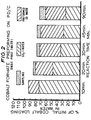
- the catalyst was washed with acetone to recover the missing cobalt, and the amounts of cobalt in the aqueous and organic liquid phases, in the gas phase, and in the catalyst were determined, the cobalt distribution as determined being shown in Fig. 4A. Most of the cobalt retained in the catalyst during the reaction was in the form of water-insoluble crystalline precipitate.
Landscapes
- Chemical & Material Sciences (AREA)
- Organic Chemistry (AREA)
- Chemical Kinetics & Catalysis (AREA)
- General Chemical & Material Sciences (AREA)
- Organic Low-Molecular-Weight Compounds And Preparation Thereof (AREA)
- Catalysts (AREA)
Abstract
Claims (23)
- Procédé pour récupérer la teneur en cobalt d'une phase aqueuse contenant du cobalt, comprenant la mise en contact de la phase aqueuse, en présence de gaz de synthèse, avec un catalyseur solide qui convient pour catalyser la carbonylation des ions cobalt et avec un solvant organique pour l'hydrocobalt-carbonyle et le dicobalt-octacarbonyle, le solvant en question étant sensiblement non miscible à l'eau et étant présent en une quantité non inférieure à 20 % en volume, sur la base du volume total du solvant et de la phase aqueuse devant entrer en contact avec le catalyseur solide, et la récupération des composés formés de cobalt-carbonyles volatils ainsi obtenus de la phase aqueuse et de la phase liquide organique.
- Procédé suivant la revendication 1, dans lequel la phase aqueuse et la phase liquide organique sont ensuite traitées dans une étape d'entraînement dans laquelle les phases en question sont mises en contact avec un gaz d'entraînement, les composés de cobalt volatils étant entraînés dans le gaz d'entraînement.
- Procédé suivant la revendication 2, dans lequel la phase aqueuse et la phase liquide organique sont mélangées à un produit oxo provenant d'un réacteur oxo avant d'être mises en contact avec le gaz d'entraînement.
- Procédé pour récupérer la teneur en cobalt du produit brut d'une réaction oxo catalysée au cobalt, le produit oxo brut contenant des composés de cobalt en plus d'un produit oxo organique, ce procédé comprenantle traitement du produit oxo brut pour en séparer les composés de cobalt volatils ;la mise en contact du produit oxo brut avec une phase aqueuse de pH non supérieur à 7 pour former une phase aqueuse contenant du cobalt ; età faire entrer la phase aqueuse ainsi obtenue, en présence de gaz de synthèse, en contact avec un catalyseur solide qui convient pour catalyser la carbonylation des ions cobalt et avec un solvant organique pour l'hydrocobalt-carbonyle et le dicobalt-octacarbonyle, ce solvant étant sensiblement non miscible à l'eau, afin d'obtenir des phases liquides aqueuse et organique contenant du cobalt et une phase gazeuse contenant du cobalt.
- Procédé suivant la revendication 4, dans lequel l'un au moins des phases liquides aqueuse et organique contenant du cobalt et du gaz de synthèse contenant du cobalt qui sont obtenus est traité pour en éliminer les composés de cobalt volatils.
- Procédé suivant la revendication 4 ou la revendication 5, dans lequel le produit oxo brut est traité dans une étape d'entraînement dans laquelle il est mis en contact avec un courant de gaz d'entraînement en présence d'une phase aqueuse de pH non supérieur à 7 afin d'entraîner les composés de cobalt volatils dans ce gaz d'entraînement pour former une phase aqueuse contenant du cobalt.
- Procédé suivant la revendication 6, dans lequel l'un au moins du gaz de synthèse contenant du cobalt et des phases liquides aqueuse et organique contenant du cobalt est traité afin d'en éliminer les composés de cobalt volatils, ce traitement comprenant le recyclage d'un ou plusieurs de ce gaz et de ces phases à l'étape d'entraînement.
- Procédé suivant la revendication 6 ou la revendication 7, dans lequel le gaz d'entraînement est du gaz de synthèse.
- Procédé suivant l'une quelconque des revendications 6 à 8, dans lequel les composés de cobalt qui sont éliminés du produit oxo par le gaz d'entraînement sont recyclés dans la réaction oxo.
- Procédé suivant la revendication 9, dans lequel, après contact avec le produit brut, le gaz d'entraînement est mis en contact avec une phase oléfinique destinée au réacteur oxo, le cobalt présent dans ce gaz d'entraînement étant entraîné dans la charge oléfinique.
- Procédé suivant l'une quelconque des revendications 6 à 10, dans lequel, après contact avec le catalyseur solide, les phases liquides aqueuse et organique contenant du cobalt et le gaz de synthèse contenant du cobalt sont réunies avec le produit oxo brut et le mélange est chargé dans l'étape d'entraînement.
- Procédé suivant l'une quelconque des revendications 4 à 11, dans lequel la phase aqueuse est concentrée à une concentration en cobalt d'au moins 0,5 % en poids de cobalt (exprimée en métal) avant sa mise en contact avec le catalyseur solide.
- Procédé suivant la revendication 12, dans lequel une partie au moins de l'effluent aqueux de l'étape de concentration est recyclée pour former une partie de la phase aqueuse de pH non supérieur à 7 qui est mise en contact avec le produit oxo brut.
- Procédé suivant la revendication 13, dans lequel, avant la mise en contact de l'effluent aqueux avec le produit oxo brut, il est utilisé comme eau de lavage dans une étape de lavage dans laquelle le cobalt résiduel est éliminé du produit oxo après qu'il a été traité pour éliminer les composants volatils et mis en contact avec une phase aqueuse de pH non supérieur à 7.
- Procédé suivant l'une quelconque des revendications 4 à 14, dans lequel l'eau utilisée dans ce procédé est contenue dans un circuit sensiblement fermé, sensiblement sans génération d'eau résiduaire.
- Procédé suivant l'une quelconque des revendications 4 à 15, dans lequel le solvant pour l'hydrocobalt-carbonyle et le dicobalt-octacarbonyle est choisi entre le produit oxo brut débarrassé du cobalt, le produit oxo hydrogéné, des oxo-alcools, une fraction oxo légère, une fraction oxo lourde et des oléfines.
- Procédé suivant l'une quelconque des revendications 4 à 16, dans lequel le catalyseur solide est un catalyseur à base de métal noble.
- Procédé suivant la revendication 17, dans lequel du palladium, du platine ou de l'or ou un composé de l'un de ces métaux est utilisé comme catalyseur à base de métal noble.
- Procédé pour récupérer la teneur en cobalt du produit brut d'une réaction oxo catalysée au cobalt, sensiblement tel que décrit en regard de la figure 1 des dessins.
- Procédé pour récupérer la teneur en cobalt du produit brut d'une réaction oxo catalysée au cobalt, sensiblement tel que décrit en regard de la figure 1.
- Appareil comprenantun réacteur oxo ;un moyen d'entraînement conçu pour recevoir le produit oxo brut du réacteur et comprenant un moyen pour établir le contact entre ce produit oxo et du gaz de synthèse en présence d'eau ou d'un acide aqueux et un moyen pour séparer la phase aqueuse du produit oxo et du gaz de synthèse ;un dispositif de préformage conçu pour recevoir la phase aqueuse séparée du moyen d'entraînement, ce dispositif de préformage étant équipé de moyens permettant de contenir un catalyseur solide et d'un moyen d'admission de la phase aqueuse séparée, d'une phase liquide organique et d'un gaz, le dispositif de préformage comprenant en outre un moyen permettant d'établir un contact entre les phases liquides et le catalyseur solide, et un moyen établissant le contact entre les phases liquides aqueuse et organique et le gaz ; etun moyen servant à recycler au moyen d'entraînement l'effluent du dispositif de préformage comprenant un ou plusieurs de la phase liquide organique, de la phase aqueuse et du gaz.
- Appareil oxo comprenant un système de récupération du cobalt sensiblement tel que décrit en regard de la figure 1 des dessins annexés.
- Utilisation d'un dispositif de préformage catalytique à deux phases liquides pour améliorer le rendement de récupération de la teneur en cobalt.
Applications Claiming Priority (3)
| Application Number | Priority Date | Filing Date | Title |
|---|---|---|---|
| GB9211880 | 1992-06-04 | ||
| GB929211880A GB9211880D0 (en) | 1992-06-04 | 1992-06-04 | Method and apparatus for the recovery of metal catalysts |
| PCT/EP1993/001209 WO1993024436A1 (fr) | 1992-06-04 | 1993-05-14 | Procede et appareil de recuperation des catalyseurs metalliques |
Publications (2)
| Publication Number | Publication Date |
|---|---|
| EP0643683A1 EP0643683A1 (fr) | 1995-03-22 |
| EP0643683B1 true EP0643683B1 (fr) | 1997-08-20 |
Family
ID=10716564
Family Applications (1)
| Application Number | Title | Priority Date | Filing Date |
|---|---|---|---|
| EP93912709A Expired - Lifetime EP0643683B1 (fr) | 1992-06-04 | 1993-05-14 | Procede et appareil de recuperation des catalyseurs metalliques |
Country Status (3)
| Country | Link |
|---|---|
| EP (1) | EP0643683B1 (fr) |
| GB (1) | GB9211880D0 (fr) |
| WO (1) | WO1993024436A1 (fr) |
Families Citing this family (7)
| Publication number | Priority date | Publication date | Assignee | Title |
|---|---|---|---|---|
| US5321168A (en) * | 1993-09-16 | 1994-06-14 | Exxon Chemical Patents Inc. | Activation of cobalt preformer catalyst for oxo process |
| WO2003082789A2 (fr) | 2002-03-29 | 2003-10-09 | Exxonmobil Chemical Patents Inc. | Synthese oxo |
| WO2003082788A1 (fr) | 2002-03-29 | 2003-10-09 | Exxonmobil Chemical Patents Inc. | Procédé amélioré de vaporisation instantanée de cobalt |
| ATE520459T1 (de) | 2007-04-18 | 2011-09-15 | Exxonmobil Chem Patents Inc | Verbesserungen bei der oxidativen demetallisierung |
| WO2010022881A1 (fr) * | 2008-08-29 | 2010-03-04 | Exxonmobil Chemical Patents Inc. | Procédé d’hydroformylation comprenant le recyclage du catalyseur |
| WO2010022880A1 (fr) * | 2008-08-29 | 2010-03-04 | Exxonmobil Chemical Patents Inc. | Nettoyage des effluents gazeux dans l’hydroformylation des oléfines |
| EP4361123B1 (fr) * | 2022-10-24 | 2025-01-29 | Evonik Oxeno GmbH & Co. KG | Préformation de catalyseur dans l'hydroformylation |
Family Cites Families (4)
| Publication number | Priority date | Publication date | Assignee | Title |
|---|---|---|---|---|
| US3725534A (en) * | 1969-03-10 | 1973-04-03 | Exxon Research Engineering Co | Method of forming complex cobalt carbonyl compounds |
| DE2332638C2 (de) * | 1973-06-27 | 1982-03-18 | Basf Ag, 6700 Ludwigshafen | Verfahren zur kontinuierlichen Herstellung von Lösungen von Kobaltcarbonyl und Kobaltcarbonylwasserstoff in organischen Lösungsmitteln |
| US4255279A (en) * | 1979-07-20 | 1981-03-10 | Exxon Research & Engineering Co. | Dual demetalling of oxo products with catalyst recycle |
| GB8430225D0 (en) * | 1984-11-30 | 1985-01-09 | Exxon Research Engineering Co | Hydroformylation catalyst removal |
-
1992
- 1992-06-04 GB GB929211880A patent/GB9211880D0/en active Pending
-
1993
- 1993-05-14 EP EP93912709A patent/EP0643683B1/fr not_active Expired - Lifetime
- 1993-05-14 WO PCT/EP1993/001209 patent/WO1993024436A1/fr not_active Ceased
Also Published As
| Publication number | Publication date |
|---|---|
| EP0643683A1 (fr) | 1995-03-22 |
| GB9211880D0 (en) | 1992-07-15 |
| WO1993024436A1 (fr) | 1993-12-09 |
Similar Documents
| Publication | Publication Date | Title |
|---|---|---|
| EP0183546B1 (fr) | Elimination d'un catalyseur d'hydroformylation | |
| KR950007581B1 (ko) | 옥소 합성 생성물의 증류 잔사로부터 로듐을 회수하는 방법 | |
| US5237105A (en) | Method for removing hydroformylation catalyst | |
| US20010023306A1 (en) | Process for the hydroformylation of olefins by reducing the formic acid concentration | |
| GB2055371A (en) | Dual demetalling of oxo products with catalyst recycle | |
| US4473655A (en) | Method for the recovery of rhodium complexes | |
| US4390473A (en) | Recovery of rhodium and cobalt low pressure oxo catalyst | |
| JPS6212774B2 (fr) | ||
| EP0643683B1 (fr) | Procede et appareil de recuperation des catalyseurs metalliques | |
| EP0642488B1 (fr) | Regeneration de catalyseur | |
| US5457240A (en) | Use of stripper reactor reflux as an initiator for preforming reaction of cobaltous salts to cobalt carbonyls | |
| NL8204969A (nl) | Werkwijze voor het winnen van kobaltkatalysatoren. | |
| AU635973B2 (en) | Process for the recovery of rhodium from distillation residues of products of the oxo synthesis | |
| WO1993024227A1 (fr) | Recuperation des catalyseurs au cobalt au moyen d'un agent absorbant a base d'olefines lourdes | |
| EP0183199A1 (fr) | Procédé pour la préparation de l'aldéhyde chloro-2 propionique | |
| US5410090A (en) | Airless cobalt demetalling in the cobalt flash combination catalyst cycle | |
| US4292448A (en) | Process for the hydroformylation of olefins | |
| EP4093722B1 (fr) | Procédés permettant d'augmenter les taux de préformage d'un catalyseur d'hydroformylation | |
| US5151537A (en) | Process for the recovery of rhodium from the residues of distillation processes | |
| US3634291A (en) | Method of recovering cobalt or cobalt plus group ii metal catalyst in oxo synthesis process | |
| JPH0753434A (ja) | アルデヒド類の製造方法 | |
| JPH0767532B2 (ja) | オキソ合成の生成物の蒸留残留物からロジウムを回収する方法 | |
| CS213974B1 (cs) | Způsob odkobaltování produktů hydroformylace nenasycených sloučenin | |
| JPH10102154A (ja) | カルボニル化反応液から第viii族金属を回収する方法 |
Legal Events
| Date | Code | Title | Description |
|---|---|---|---|
| PUAI | Public reference made under article 153(3) epc to a published international application that has entered the european phase |
Free format text: ORIGINAL CODE: 0009012 |
|
| 17P | Request for examination filed |
Effective date: 19941123 |
|
| AK | Designated contracting states |
Kind code of ref document: A1 Designated state(s): FR NL |
|
| GRAG | Despatch of communication of intention to grant |
Free format text: ORIGINAL CODE: EPIDOS AGRA |
|
| 17Q | First examination report despatched |
Effective date: 19960702 |
|
| GRAH | Despatch of communication of intention to grant a patent |
Free format text: ORIGINAL CODE: EPIDOS IGRA |
|
| GRAH | Despatch of communication of intention to grant a patent |
Free format text: ORIGINAL CODE: EPIDOS IGRA |
|
| GRAA | (expected) grant |
Free format text: ORIGINAL CODE: 0009210 |
|
| AK | Designated contracting states |
Kind code of ref document: B1 Designated state(s): FR NL |
|
| ET | Fr: translation filed | ||
| PLBE | No opposition filed within time limit |
Free format text: ORIGINAL CODE: 0009261 |
|
| STAA | Information on the status of an ep patent application or granted ep patent |
Free format text: STATUS: NO OPPOSITION FILED WITHIN TIME LIMIT |
|
| 26N | No opposition filed | ||
| PGFP | Annual fee paid to national office [announced via postgrant information from national office to epo] |
Ref country code: NL Payment date: 20030403 Year of fee payment: 11 |
|
| PGFP | Annual fee paid to national office [announced via postgrant information from national office to epo] |
Ref country code: FR Payment date: 20030505 Year of fee payment: 11 |
|
| PG25 | Lapsed in a contracting state [announced via postgrant information from national office to epo] |
Ref country code: NL Free format text: LAPSE BECAUSE OF NON-PAYMENT OF DUE FEES Effective date: 20041201 |
|
| PG25 | Lapsed in a contracting state [announced via postgrant information from national office to epo] |
Ref country code: FR Free format text: LAPSE BECAUSE OF NON-PAYMENT OF DUE FEES Effective date: 20050131 |
|
| NLV4 | Nl: lapsed or anulled due to non-payment of the annual fee |
Effective date: 20041201 |
|
| REG | Reference to a national code |
Ref country code: FR Ref legal event code: ST |