EP0643719B1 - Für den interleukin-9-rezeptor kodierende nukleinsäuresequenzen bzw. dafür komplementäre nuleinsäuresequenzen - Google Patents
Für den interleukin-9-rezeptor kodierende nukleinsäuresequenzen bzw. dafür komplementäre nuleinsäuresequenzen Download PDFInfo
- Publication number
- EP0643719B1 EP0643719B1 EP93907050A EP93907050A EP0643719B1 EP 0643719 B1 EP0643719 B1 EP 0643719B1 EP 93907050 A EP93907050 A EP 93907050A EP 93907050 A EP93907050 A EP 93907050A EP 0643719 B1 EP0643719 B1 EP 0643719B1
- Authority
- EP
- European Patent Office
- Prior art keywords
- cell line
- interleukin
- receptor
- nucleic acid
- acid molecule
- Prior art date
- Legal status (The legal status is an assumption and is not a legal conclusion. Google has not performed a legal analysis and makes no representation as to the accuracy of the status listed.)
- Expired - Lifetime
Links
Images
Classifications
-
- C—CHEMISTRY; METALLURGY
- C07—ORGANIC CHEMISTRY
- C07K—PEPTIDES
- C07K16/00—Immunoglobulins [IG], e.g. monoclonal or polyclonal antibodies
- C07K16/18—Immunoglobulins [IG], e.g. monoclonal or polyclonal antibodies against material from animals or humans
- C07K16/28—Immunoglobulins [IG], e.g. monoclonal or polyclonal antibodies against material from animals or humans against receptors, cell surface antigens or cell surface determinants
- C07K16/2866—Immunoglobulins [IG], e.g. monoclonal or polyclonal antibodies against material from animals or humans against receptors, cell surface antigens or cell surface determinants against receptors for cytokines, lymphokines, interferons
-
- C—CHEMISTRY; METALLURGY
- C07—ORGANIC CHEMISTRY
- C07K—PEPTIDES
- C07K14/00—Peptides having more than 20 amino acids; Gastrins; Somatostatins; Melanotropins; Derivatives thereof
- C07K14/435—Peptides having more than 20 amino acids; Gastrins; Somatostatins; Melanotropins; Derivatives thereof from animals; from humans
- C07K14/705—Receptors; Cell surface antigens; Cell surface determinants
- C07K14/715—Receptors; Cell surface antigens; Cell surface determinants for cytokines; for lymphokines; for interferons
- C07K14/7155—Receptors; Cell surface antigens; Cell surface determinants for cytokines; for lymphokines; for interferons for interleukins [IL]
-
- A—HUMAN NECESSITIES
- A61—MEDICAL OR VETERINARY SCIENCE; HYGIENE
- A61K—PREPARATIONS FOR MEDICAL, DENTAL OR TOILETRY PURPOSES
- A61K38/00—Medicinal preparations containing peptides
Definitions
- This invention relates to the reception of the cytokine known as interleukin 9 by cells, via its receptor. More particularly, it relates to the isolation of nucleic acid sequences which code for interleukin 9 receptor molecules ("IL-9R" hereafter). These sequences can be used, e.g. as a source for IL-9 receptor, and as probes for cells which respond to the cytokine. The complementary sequences can be used to inhibit expression as well as to probe for the coding sequences.
- IL-9R interleukin 9 receptor molecules
- interleukin-2 interleukin-2
- growth factors cytokines
- leukotrienes cytokines
- lymphokines interleukin-2
- IL-2 interleukin-2
- U.S. Patent No. 4,778,879 to Mertelsmann et al.
- U.S. Patent No. 4,490,289 to Stern
- Additional patents have issued which relate to interleukin 1 - (“IL-1”), such as U.S. Patent No. 4,808,611, to Cosman.
- the lymphokine IL-9 is a T-cell derived molecule which was originally identified as a factor which sustained permanent antigen independent growth of T4 cell lines. See, e.g., Uyttenhove, et al., Proc. Natl. Acad. Sci. 85 : 6934 (1988), and Van Snick et al., J. Exp. Med. 169 : 363 (1989), and Simpson et al., Eur. J. Biochem. 183 : 715 (1989).
- IL-9 The activity of IL-9 was at first observed to act on restricted T4 cell lines, failing to show activity on CTLs or freshly isolated T cells. See, e.g., Uyttenhove et al. , supra, and Schmitt et al., Eur. J. Immunol. 19 : 2167 (1989). This range of activity was expanded when experiments showed that IL-9 and the molecule referred to as T cell growth Factor III ("TCGF III”) are identical. IL-9 enhances the proliferative effect of bone marrow derived mast cells to "IL-3", as is described by Hültner et al., Eur. J. Immunol. 20: 1413-1416 (1990) and in U.S. Patent No. 5,164,317.
- TCGF III T cell growth Factor III
- IL-9 stimulates proliferation of megakaryoblastic leukemia. See Yang et al., Blood 74: 1880 (1989). Recent work on IL9 has shown that it also supports erythroid colony formation (Donahue et al., Blood 75(12): 2271-2275 (6-15-90)); promotes the proliferation of myeloid erythroid burst formation (Williams et al., Blood 76: 306-311 (9-1-90)); and supports clonal maturation of BFU.E's of adult and fetal origin (Holbrook et al., Blood 77(10): 2129-2134 (5/15/91)). Expression of IL9 has also been implicated in Hodgkin's disease and large cell anaplastic lymphoma (Merz et al., Blood 78(8): 1311-1317 (9-1-90)).
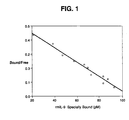
- Figure 1 presents Scatchard analysis of expression of murine IL9 receptor following transfection of COS cells.
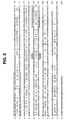
- Figure 2 aligns deduced human and murine IL-9R amino acid sequences.
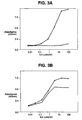
- Figure 3 compares the response of TS1 cells, both before and after transfection with DNA coding for human IL-9R.
- the murine T cell clone, TS1 described by, e.g., Uyttenhove et al., Proc. Natl. Acad. Sci. 85: 6934-6938 (1988) expresses approximately 200 high affinity binding sites for IL-9, i.e., it expresses the IL-9 receptor molecule. See Druez et al., J. Immunol. 145: 2494-2499 (1990). This cell line, while presenting few receptor molecules does show the highest density of IL9R of all cells tested, and thus was selected as a source of mRNA for constructing a cDNA library.
- Poly(A)+ mRNA was extracted from TS1 cells, and was then converted to double stranded cDNA using random hexanucleotide primers, following Grubler et al, Gene 25: 263-269 (1983).
- the size selected cDNA was then inserted into the ECORI site of expression vector pCDSRa taught by Takebe et al., Mol. Cell Biol. 8: 466-472 (1988). This was then transfected into E. coli strain XL1-blue using standard transformation procedures. (Maniatis). In order to screen for clones expressing IL-9R, plasmid DNA from the cDNA library was tested for the ability to express IL-9 binding activity by expression in COS cells.
- the cDNA library was subfractionated into 100 pools of about 500 clones each, and the DNA was transfected using the DEAE-dextran-chloroquine method of Aruffo et al., supra , into 1.5 x 10 5 COS cells, seeded on glass microscope slides. Cells were allowed to grow for 2-3 days, and were then tested for expression of IL-9R with 125 I labelled, purified recombinant murine IL9. This labeled material was prepared following Bolton et al., Biochem. J. 133: 529-539 (1973). The cells were incubated for three hours at 20°C with 0.2 nM of this material, washed briefly, fixed, and then dipped into liquid photographic emulsion. The slides were exposed for 10 days, then developed and examined microscopically for autoradiographic grains.
- This screening resulted in two positive pools out of 100.
- One positive pool showed a single positive cell, and the second one showed 33 positive cells.
- This latter pool was selected for further testing, and was divided, first into 100 pools of 15 clones each, after which a single positive pool was selected, and divided into 100 single clones.
- p9RB1 1600 bp p9RB3 900 bp p9RC2 2000 bp p9RC3 1000 bp p9RC4 3000 bp p9RC9 2100 bp.
- a megakaryoblast cell line i.e., Mo7E was used as a source of mRNA to make double stranded cDNA as per example 1.
- the plasmid pRC/RSV was used to receive the cDNA.
- This cDNA library was screened, using p9RA1 as a probe, and hybridization was carried out using the same conditions described supra, except washes were carried out at low stringency (2 x SSC, 0.1% SDS, 55°C).
- Six clones were isolated, i.e., ph9RA2, 3, 4, 5, 6 and 9, and sequenced.
- the clone ph9RA3 contained a 1566 base pair open reading frame, which showed 66% identity with murine p9RC4.
- the deduced murine and human protein sequences are shown in figure 2, with a 53% identity over 522 amino acids.
- TS1 murine cell line
- TS1 cells were resuspended at 37°C in 0.8 ml of Dulbecco's modified Eagle's medium, supplemented with 10% fetal bovine serum, 50 mM 2-mercaptoethanol, 0.55 mM L-arginine, 0.24 mM L-asparagine, and 1.25 mM L-glutamine. Plasmid DNA (50 ug) was added to the cells in 0.4 cm cuvettes just before electroporation.
- Figure 3 shows that original TS1 cells, unresponsive to 100 units/ml of human IL9, became responsive and proliferated after transfection with the human IL9R cDNA.
- the deduced amino acid sequence predicts two hydrophobic regions, one of which spans amino acids 15-40, and probably represents a signal peptide.
- the probability weight matrix of von Heyne, Nucl. Acids Res. 14: 4683-4690 (1986) predicts a cleavage site for the signal peptide between positions 37 and 39.
- the second hydrophobic domain spans amino acids 271-291. This is presumed to constitute the transmembrane domain.
- the putative extracellular domain contains 233 amino acids, including 6 cysteine residues and two potential N-linked glycosylation sites at positions 116 and 155.
- a 'WSEWS” motif i.e., "Trp-Ser-Glu-Trp-Ser", typical of the hematopoietin receptor superfamily described by Idzerda et al., J. Exp. Med. 171: 861-873 (1990), is found at positions 244-248.
- the cytoplasmic portion of the molecule is characterized by a high percentage of serine (13%), and proline (12.4%), as well as three potential protein kinase C phosphorylation sites at positions 294, 416 and 465.
- p9RB3 The analysis of p9RB3 implies the existence of a soluble form of IL9R.
- the cDNA for this clone contains a large part of extracellular domain, but lacks nucleotides 651-1719, which code the end of the N-terminal domain, the transmembrane and the cytoplasmic domain.
- Clone p9RA1 is different from all other clones in that there is a stop codon after alanine (379), which is followed by a 736 base pair sequence unrelated to any other cDNA's sequenced.
- sequences for the murine cDNA described in this example is provided as follows: p9RC4 p9RA1 p9RB3
- cDNA for human IL9-R was also analyzed. As indicated supra , clone ph9RA3 showed 66% identity with murine p9RC4 and 53% homology on the amino acid sequence level. A putative cleavage site is positioned between amino acids 39 and 40. This site is conserved between species, as is the transmembrane domain, the two potential N-glycosylation sites, and the consensus sequence for the hematopoietic superfamily, all of which are described in Example 7.
- the cytoplasmic portion of the protein seemed less conserved, and was much larger (231 amino acids) than the murine counterpart (177 residues). Due to a stretch of 9 consecutive serines in positions 431-439, there is a high percentage of serine in the molecule (11.2%).
- Clones ph9RA2, 4, 6 and 9 confirmed the sequence derived from ph9RA3.
- the clone ph9RA5 has an 85 nucleotide deletion in positions 1063-1147, suggesting a truncated protein.
- the putative truncated protein would be 307 amino acids long, and contain the complete extracellular and transmembrane regions of IL9-R, 5 amino acids of the cytoplasmic domain, and 11 unrelated residues.
- pH9RA6 contains a short intervening sequence at the beginning of the DNA, which leads into a stop codon, in frame with the normal initiative codon. It also creates a new ATG triplet in frame with the downstream portion of the coding sequence. In the IL9R molecule, this yields a transcript with a unique N-terminal sequence, the rest of the sequence being identical to pH9RA3.
- Comparison of pH9RA6 and pH9RA3 shows that, after the initial methionine common to both clones, pH9RA6 contains an insert of 22 amino acids. These are followed by the sequence "GWTLESE " which is the sequence beginning at position 10 of pH9RA3.
- the nucleic acid sequences for pH9RA3, pH9RA5 and pH9RA6 are presented as SEQ ID NO: 7, SEQ ID NO: 9 and SEQ ID NO: 11, respectively.
- nucleic acid sequence which codes for the interleukin-9 receptor. Both murine and the homology found therebetween (53%, with up to 67% in the extracellular region) suggests that nucleic acid sequences coding for IL9-R from other species could also be identified.
- vectors such as plasmids, which contain the nucleic acid sequences of interest, i.e., those coding for mammalian IL9R.
- Such vectors may contain components in addition to the coding sequence, such as promoters operably linked to the coding sequence, "markers", such as genes for antibiotic resistance or selection, including the thymidine kinase or "TK” gene, as well as others which will be known to the skilled artisan.
- the nucleic acid sequences and vectors may be used - as has been shown - to transfect various cell types, such as "COS", "CHO”, Spodoptera frugiperda or other insect cell lines.
- the sequences either alone or in appropriate vectors, can be used to transfect a panoply of prokaryotic and eukaryotic cells.
- nucleic acid sequences coding for the IL9 receptor makes it possible for investigators to carry out several lines of investigation which were not possible or much more difficult without these. For example, as pointed out supra , even on these cells which express it best, expression of IL-9R is low. Isolation of the gene makes it possible to transfect recipient cells, followed by overexpression, amplification, etc. This leads to sufficient expression on cell surfaces to permit immunization with these cells, and generation of an immunogenic response to IL-9R, including the production of antibodies. Isolation of the antibody producing cells, followed by standard techniques of hybridoma biology leads to production of IL-9R specific monoclonal antibodies.
- the antibodies produced can then be used in therapeutic methods to block IL-9 from binding to IL-9R molecules.
- binding of IL-9 to cell surfaces is implicated in several pathological conditions, this is an important therapeutic goal.
- IL-9R specific antibodies can be used for both qualitative and quantitative measurement of IL-9R expression on cells, following known immunoassay protocols.
- soluble form of IL-9R As with other soluble interleukin receptor molecules (see Fanslow et al., supra ), this molecule can be used to prevent the binding of IL-9 to cell bound receptor, and thus interfere with the affect of IL-9 on a cell type, subpopulation, etc. As such, soluble IL-9R may be said to be an antagonist for IL-9.
- the soluble form of one interleukin receptor i.e., IL-6R
- IL-6R interleukin-6R
- the soluble form of IL-9R might function in a similar manner.
- the IL-9R molecule either the soluble form or a solubilized form of the molecule may be used as an immunogen for generation of IL-9R specific antibodies.
- Either the entire receptor molecule, or an immunogenic portion thereof, can be used in an appropriate animal, such as a mouse, rabbit or guinea pig, to generate an immune response which includes antibody formation.
- the antibodies can then be purified using standard techniques.
- antibody producing B cells can be isolated and utilized in any of the standard methods for producing hybridomas, so as to lead to the generation of IL-9R specific monoclonal antibodies.
- IL-9R cDNA expression is assayed by measuring the responsiveness of a transfected cell line to IL9.
- This assay methodology provides a means for screening for various agonists and antagonists.
- a transfected cell sample containing a sequence coding for IL9R is contacted with a compound of interest. If the compound is an agonist, it will bind to the IL-9R molecule on the cell surface, and lead to the series of events usually associated with IL-9/IL-9R binding.
- an antagonist can be assayed by combining the compound of interest with IL-9 and the cell sample to determine whether the IL-9 has diminished impact, or no impact.
- the assay for agonist/antagonist may be viewed as part of a broader invention wherein one may assay for molecules which compete for binding to IL-9R.
- the invention also embraces sequences complementary to the coding sequences. These complements, which can be derived from the coding sequences themselves, may be used, e.g., as probes or as "anti-sense" inhibitors to prevent expression of the IL9R coding sequences. Other aspects of the invention will be clear to the skilled artisan, and do not require elaboration here.
Landscapes
- Health & Medical Sciences (AREA)
- Chemical & Material Sciences (AREA)
- Life Sciences & Earth Sciences (AREA)
- Organic Chemistry (AREA)
- Immunology (AREA)
- Proteomics, Peptides & Aminoacids (AREA)
- General Health & Medical Sciences (AREA)
- Genetics & Genomics (AREA)
- Medicinal Chemistry (AREA)
- Molecular Biology (AREA)
- Biophysics (AREA)
- Biochemistry (AREA)
- Zoology (AREA)
- Toxicology (AREA)
- Cell Biology (AREA)
- Gastroenterology & Hepatology (AREA)
- Peptides Or Proteins (AREA)
- Preparation Of Compounds By Using Micro-Organisms (AREA)
- Micro-Organisms Or Cultivation Processes Thereof (AREA)
- Measuring Or Testing Involving Enzymes Or Micro-Organisms (AREA)
- Saccharide Compounds (AREA)
- Medicines Containing Antibodies Or Antigens For Use As Internal Diagnostic Agents (AREA)
- Medicines Containing Material From Animals Or Micro-Organisms (AREA)
Claims (28)
- Isoliertes Nukleinsäuremolekül, das für einen Interleukin-9-Rezeptor kodiert oder komplementär zu einer Sequenz ist, die für einen Interleukin-9-Rezeptor kodiert, wobei das genannte Molekül mindestens eine der SEQ ID Nr.: 1-6 oder deren Komplementären hybridisiert und unter den folgenden Bedingungen: ,,2 x SSC, 0,1% SDS, 55°C".
- Isoliertes Nukleinsäuremolekül gemäß Anspruch 1, wobei die genannte Sequenz cDNS ist.
- Isoliertes Nukleinsäuremolekül gemäß Anspruch 1, wobei die genannte Sequenz für menschliches Interleukin-9-Rezeptor kodiert.
- Isoliertes Nukleinsäuremolekül gemäß Anspruch 1, wobei die genannte Sequenz für Mäuse-Interleukin-9-Rezeptor kodiert.
- Isoliertes Nukleinsäuremolekül gemäß Anspruch 1, das aus der Gruppe bestehend aus SEQ ID NR.: 1, SEQ ID NR.: 2, SEQ ID NR.:3, SEQ ID NR.: 4. SEQ ID NR.: 5 und SEQ ID NR.: 6 gewählt wird.
- Isoliertes Nukleinsäuremolekül gemäß Anspruch 1, wobei die genannte Sequenz genomisches DNS ist.
- Vektor einschließlich des isolierten Nukleinsäuremoleküls gemäß Anspruch 1, der betriebsgemäß mit einem Promotor verbunden ist.
- Vektor gemäß Anspruch 7, der weiterhin eine Markierungssequenz enthält.
- Vektor gemäß Anspruch 8, wobei die genannte Markierungssequenz eine Widerstandsmarkierung ist.
- Vektor gemäß Anspruch 7, wobei der Vektor ein Plasmid ist.
- Mikroorganismus, der mit dem Nukleinsäuremolekül gemäß Anspruch 1 transfiziert ist.
- Mikroorganismus von Anspruch 11, wobei der genannte Mikroorganismus Escherichia coli ist.
- Zellreihe die mit dem Nukleinsäuremolekül gemäß Anspruch 1 transfiziert ist.
- Zellreihe gemäß Anspruch 13, wobei die genannte Zellreihe eine eukariotische Zellreihe ist.
- Zellreihe gemäß Anspruch 14, wobei die genannte eukariotische Zellreihe eine CHO-Zellreihe ist.
- Zellreihe gemäß Anspruch 14, wobei die genannte eukariotische Zellreihe eine CSO-Zellreihe ist.
- Zellreihe gemäß Anspruch 14, wobei die genannte eukariotische Zellreihe eine Hefe-Zellreihe ist.
- Zellreihe gemäß Anspruch 14, wobei die genannte Zellreihe eine Insektenzellreihe ist.
- Zellreihe gemäß Anspruch 18, wobei die genannte Zellreihe Spodoptera frugiperda ist.
- Zellreihe gemäß Anspruch 18, wobei das Nukleinsäuremolekül in einem Ausdrucksvektor enthalten ist.
- Zellreihe gemäß Anspruch 20, wobei der genannte Ausdrucksvektor ein Baculovirusvektor ist.
- Verfahren zur Erzeugung eines Antikörpers, der sich spezifisch an einen Interleukin-9-Rezeptor bindet, einschließlich Immunisierung eines Versuchtieres mit der Zellreihe gemäß Anspruch 14 unter Bedingungen, die die Erzeugung von Antikörpern fördern, die sich spezifisch an Interleukin-9-Rezeptoren binden und Isolierung der genannten Antikörper vom genannten Tier.
- Gereinigter Antikörper, der mit dem Verfahren gemäß Anspruch 22 erzeugt wurde und spezifisch Interleukin-9-Rezeptoren bindet.
- Einsatz eines Antikörpers gemäß Anspruch 23 bei der Herstellung eines Arzneimittels zur Hemmung der Auswirkung von Interleukin-9 auf ein Versuchstier einschließlich einer ausreichenden Menge des Antikörpers von Anspruch 23 zur Hemmung der Bindung von Interleukin-9 an Zellen, die den Interleukin-9-Rezeptor ausdrücken.
- Verfahren zur Bestimmung einer Substanz, die sich an den Interleukin-9-Rezeptor bindet einschließlich des Kontaktes der Zellreihe gemäß Anspruch 14 mit einer zu prüfenden Substanz und Ermittlung der Bindung oder der fehlenden Bindung an die genannte Zellreihe.
- Verfahren zur Bestimmung eines Interleukin-9-Rezeptoragonisten einschließlich des Kontaktes der Zellreihe gemäß Anspruch 14 mit einer zu prüfenden Substanz und Ermittlung der Auswirkung davon, wobei eine Wirkungseigenschaft von Interleukin-9 einen Interleukin-9-Rezeptoragonisten anzeigt.
- Verfahren zur Bestimmung eines Interleukin-9-Rezeptorantagonisten einschließlich des Kontaktes der Zellreihe gemäß Anspruch 14 mit einer zu prüfenden Substanz und Ermittlung ob die genannte Substanz die Auswirkung von Interleukin-9 auf die genannte Zellreihe stört, wobei eine Störung einen Interleukin-9-Rezeptorantagonisten anzeigt.
- Verfahren zur Erzeugung eines Antikörpers, der sich speziell an den Interleukin-9-Rezeptor bindet, der durch ein Nukleinsäuremolekül gemäß Anspruch 1 kodiert ist, einschließlich der Immunisierung eines nichtmenschlichen Tieres mit einer immunogenisch wirksamen Form des genannten Interleukin-9-Rezeptors in einer Menge, die ausreicht, um einen für den genannten Interleukin-9-Rezeptor spezifischen Antikörper zu erzeugen und Reinigung des genannten Antikörpers.
Applications Claiming Priority (3)
| Application Number | Priority Date | Filing Date | Title |
|---|---|---|---|
| US84734792A | 1992-03-09 | 1992-03-09 | |
| US847347 | 1992-03-09 | ||
| PCT/US1993/001720 WO1993018047A1 (en) | 1992-03-09 | 1993-02-25 | Nucleic acid sequences coding for or complementary to nucleic acid sequences coding for interleukin 9 receptor |
Publications (3)
| Publication Number | Publication Date |
|---|---|
| EP0643719A1 EP0643719A1 (de) | 1995-03-22 |
| EP0643719A4 EP0643719A4 (de) | 1996-03-27 |
| EP0643719B1 true EP0643719B1 (de) | 1998-10-21 |
Family
ID=25300394
Family Applications (1)
| Application Number | Title | Priority Date | Filing Date |
|---|---|---|---|
| EP93907050A Expired - Lifetime EP0643719B1 (de) | 1992-03-09 | 1993-02-25 | Für den interleukin-9-rezeptor kodierende nukleinsäuresequenzen bzw. dafür komplementäre nuleinsäuresequenzen |
Country Status (10)
| Country | Link |
|---|---|
| US (2) | US5789237A (de) |
| EP (1) | EP0643719B1 (de) |
| JP (1) | JP3598386B2 (de) |
| AT (1) | ATE172470T1 (de) |
| AU (1) | AU669889B2 (de) |
| CA (1) | CA2131719C (de) |
| DE (1) | DE69321720T2 (de) |
| DK (1) | DK0643719T3 (de) |
| ES (1) | ES2123641T3 (de) |
| WO (1) | WO1993018047A1 (de) |
Families Citing this family (10)
| Publication number | Priority date | Publication date | Assignee | Title |
|---|---|---|---|---|
| AU690743B2 (en) * | 1994-09-05 | 1998-04-30 | Walter And Eliza Hall Institute Of Medical Research, The | A novel haemopoietin receptor |
| EP0804576B1 (de) | 1994-09-05 | 2008-09-03 | Amrad Operations Pty.,Ltd. | Hemopoietin-rezeptor |
| US5965439A (en) * | 1996-11-18 | 1999-10-12 | The Regents Of The University Of California | Host defense enhancement |
| CA2302936A1 (en) * | 1997-09-19 | 1999-04-01 | Magainin Pharmaceuticals, Inc. | Asthma associated factors as targets for treating atopic allergies including asthma and related disorders |
| AU3072799A (en) * | 1998-03-19 | 1999-10-11 | Human Genome Sciences, Inc. | Cytokine receptor common gamma chain like |
| US6861227B2 (en) | 1998-03-19 | 2005-03-01 | Human Genome Sciences, Inc. | Antibodies to cytokine receptor common gamma chain like |
| US6982320B2 (en) | 1998-03-19 | 2006-01-03 | Human Genome Sciences, Inc. | Cytokine receptor common gamma chain like |
| US6472179B2 (en) * | 1998-09-25 | 2002-10-29 | Regeneron Pharmaceuticals, Inc. | Receptor based antagonists and methods of making and using |
| DE19947082B4 (de) * | 1999-09-30 | 2005-02-10 | Infineon Technologies Ag | Integrierte Speicherzellenanordnung mit mindestens einem Kondensator und einem Transistor und Verfahren zur Herstellung einer integrierten Speicherzelle |
| DK2990420T3 (en) | 2000-05-26 | 2017-04-03 | Immunex Corp | USE OF INTERLEUKIN-4 RECEPTOR ANTIBODIES AND COMPOSITIONS THEREOF |
Family Cites Families (11)
| Publication number | Priority date | Publication date | Assignee | Title |
|---|---|---|---|---|
| US4636463A (en) * | 1984-04-05 | 1987-01-13 | Scripps Clinic And Research Foundation | Antibodies to human interleukin-2 induced by synthetic polypeptides |
| US4578335A (en) * | 1984-05-21 | 1986-03-25 | Immunex Corporation | Interleukin 2 receptor |
| US4675285A (en) * | 1984-09-19 | 1987-06-23 | Genetics Institute, Inc. | Method for identification and isolation of DNA encoding a desired protein |
| US4707443A (en) * | 1985-04-19 | 1987-11-17 | The United States Of America As Represented By The Secretary Of The Department Of Health And Human Services | Soluble interleukin-2 receptor as a disease indicator and a method of assaying the same |
| US4816565A (en) * | 1985-08-13 | 1989-03-28 | Tasuku Honjo | Interleukin 2 receptor and a method for production thereof |
| US5030576A (en) * | 1986-04-30 | 1991-07-09 | Genentech, Inc. | Receptors for efficient determination of ligands and their antagonists or agonists |
| US4965195A (en) * | 1987-10-26 | 1990-10-23 | Immunex Corp. | Interleukin-7 |
| US5350683A (en) * | 1990-06-05 | 1994-09-27 | Immunex Corporation | DNA encoding type II interleukin-1 receptors |
| US5116951A (en) * | 1990-09-19 | 1992-05-26 | Ludwig Institute For Cancer Research | Substantially pure interleukin-9 receptor and uses thereof |
| US5246701A (en) * | 1990-10-05 | 1993-09-21 | Ludwig Institute For Cancer Research | Method for inhibiting production of IgE by using IL-9 inhibitors |
| US5132109A (en) * | 1990-10-05 | 1992-07-21 | Ludwig Institute For Cancer Research | Method for inhibiting production of ige and method for enhancing production of igg using interleukin 9 and inhibitors thereof |
-
1993
- 1993-02-25 AU AU37790/93A patent/AU669889B2/en not_active Ceased
- 1993-02-25 AT AT93907050T patent/ATE172470T1/de active
- 1993-02-25 JP JP51576293A patent/JP3598386B2/ja not_active Expired - Lifetime
- 1993-02-25 CA CA002131719A patent/CA2131719C/en not_active Expired - Lifetime
- 1993-02-25 EP EP93907050A patent/EP0643719B1/de not_active Expired - Lifetime
- 1993-02-25 WO PCT/US1993/001720 patent/WO1993018047A1/en not_active Ceased
- 1993-02-25 DK DK93907050T patent/DK0643719T3/da active
- 1993-02-25 ES ES93907050T patent/ES2123641T3/es not_active Expired - Lifetime
- 1993-02-25 DE DE69321720T patent/DE69321720T2/de not_active Expired - Lifetime
- 1993-12-08 US US08/164,614 patent/US5789237A/en not_active Expired - Lifetime
-
1995
- 1995-06-01 US US08/456,489 patent/US5962269A/en not_active Expired - Lifetime
Also Published As
| Publication number | Publication date |
|---|---|
| EP0643719A4 (de) | 1996-03-27 |
| CA2131719C (en) | 2003-09-16 |
| DE69321720T2 (de) | 1999-05-06 |
| ES2123641T3 (es) | 1999-01-16 |
| AU3779093A (en) | 1993-10-05 |
| EP0643719A1 (de) | 1995-03-22 |
| DK0643719T3 (da) | 1999-06-28 |
| JPH07504816A (ja) | 1995-06-01 |
| DE69321720D1 (de) | 1998-11-26 |
| US5962269A (en) | 1999-10-05 |
| WO1993018047A1 (en) | 1993-09-16 |
| ATE172470T1 (de) | 1998-11-15 |
| US5789237A (en) | 1998-08-04 |
| CA2131719A1 (en) | 1993-09-16 |
| AU669889B2 (en) | 1996-06-27 |
| JP3598386B2 (ja) | 2004-12-08 |
Similar Documents
| Publication | Publication Date | Title |
|---|---|---|
| Demoulin et al. | A single tyrosine of the interleukin-9 (IL-9) receptor is required for STAT activation, antiapoptotic activity, and growth regulation by IL-9 | |
| Tavernier et al. | A human high affinity interleukin-5 receptor (IL5R) is composed of an IL5-specific α chain and a β chain shared with the receptor for GM-CSF | |
| Skoda et al. | Murine c‐mpl: a member of the hematopoietic growth factor receptor superfamily that transduces a proliferative signal. | |
| EP1131333B1 (de) | Isolierte nukleinsäuremoleküle die t-zellen induzierbare faktoren kodieren (tif), kodierte proteine und ihre anwendung | |
| Hilton et al. | Cloning and characterization of a binding subunit of the interleukin 13 receptor that is also a component of the interleukin 4 receptor. | |
| JP3415162B2 (ja) | Il―13受容体ポリペプチド | |
| AU683073B2 (en) | Hybrid receptor molecules | |
| Kelly et al. | Different forms of the prolactin receptor insights into the mechanism of prolactin action | |
| Barton et al. | A tissue specific IL‐1 receptor antagonist homolog from the IL‐1 cluster lacks IL‐1, IL‐1ra, IL‐18 and IL‐18 antagonist activities | |
| JP4125954B2 (ja) | 可溶性il−tif/il−22レセプターまたはil−tif/il−22に結合する結合タンパク質をコードする単離された核酸分子、およびその使用 | |
| EP1806404B1 (de) | Verwendung von IL-10 Rezeptor beta antagonistische Antikörper zur Hemmung einer IL-TIF/IL-21 Induktion von Akutphasen-Proteine | |
| EP0643719B1 (de) | Für den interleukin-9-rezeptor kodierende nukleinsäuresequenzen bzw. dafür komplementäre nuleinsäuresequenzen | |
| EP1243597B1 (de) | Rezeptoren für das humane Interleukin-12 | |
| US6274708B1 (en) | Mouse interleukin-11 receptor | |
| WO1997033913A1 (en) | Cytokine-receptor expressed in testis cells | |
| US20010024652A1 (en) | Isolated nucleic acid molecules which encode T cell inducible factors (TIFs), the proteins encoded, and used thereof | |
| LV10724B (en) | Human follicle stimulating hormone receptor | |
| US6455683B1 (en) | DNA molecules encoding human CLAX proteins and their soluble fusion proteins | |
| Baird et al. | Cytokine receptor genes: structure, chromosomal location, and involvement in human disease | |
| US20030100046A1 (en) | Testis-specific receptor | |
| Miyoshi et al. | A transmembrane trap method for efficient cloning of genes encoding proteins possessing transmembrane domain | |
| US20020146767A1 (en) | Human EMR1-like G protein-coupled receptor | |
| Family | Cytokine-Like Factor-1, a Novel Soluble Protein |
Legal Events
| Date | Code | Title | Description |
|---|---|---|---|
| PUAI | Public reference made under article 153(3) epc to a published international application that has entered the european phase |
Free format text: ORIGINAL CODE: 0009012 |
|
| 17P | Request for examination filed |
Effective date: 19940929 |
|
| AK | Designated contracting states |
Kind code of ref document: A1 Designated state(s): AT BE CH DE DK ES FR GB GR IE IT LI LU MC NL PT SE |
|
| RIN1 | Information on inventor provided before grant (corrected) |
Inventor name: VAN SNICK, JACQUES Inventor name: DRUEZ, CATHERINE Inventor name: RENAULD, JEAN-CHRISTOPHE |
|
| RHK1 | Main classification (correction) |
Ipc: C07K 14/715 |
|
| A4 | Supplementary search report drawn up and despatched | ||
| AK | Designated contracting states |
Kind code of ref document: A4 Designated state(s): AT BE CH DE DK ES FR GB GR IE IT LI LU MC NL PT SE |
|
| 17Q | First examination report despatched |
Effective date: 19961111 |
|
| GRAG | Despatch of communication of intention to grant |
Free format text: ORIGINAL CODE: EPIDOS AGRA |
|
| GRAG | Despatch of communication of intention to grant |
Free format text: ORIGINAL CODE: EPIDOS AGRA |
|
| GRAH | Despatch of communication of intention to grant a patent |
Free format text: ORIGINAL CODE: EPIDOS IGRA |
|
| GRAH | Despatch of communication of intention to grant a patent |
Free format text: ORIGINAL CODE: EPIDOS IGRA |
|
| GRAA | (expected) grant |
Free format text: ORIGINAL CODE: 0009210 |
|
| AK | Designated contracting states |
Kind code of ref document: B1 Designated state(s): AT BE CH DE DK ES FR GB GR IE IT LI LU MC NL PT SE |
|
| REF | Corresponds to: |
Ref document number: 172470 Country of ref document: AT Date of ref document: 19981115 Kind code of ref document: T |
|
| REG | Reference to a national code |
Ref country code: CH Ref legal event code: EP |
|
| REF | Corresponds to: |
Ref document number: 69321720 Country of ref document: DE Date of ref document: 19981126 |
|
| REG | Reference to a national code |
Ref country code: IE Ref legal event code: FG4D |
|
| REG | Reference to a national code |
Ref country code: ES Ref legal event code: FG2A Ref document number: 2123641 Country of ref document: ES Kind code of ref document: T3 |
|
| ITF | It: translation for a ep patent filed | ||
| REG | Reference to a national code |
Ref country code: CH Ref legal event code: NV Representative=s name: BRAUN & PARTNER PATENT-, MARKEN-, RECHTSANWAELTE |
|
| ET | Fr: translation filed | ||
| PG25 | Lapsed in a contracting state [announced via postgrant information from national office to epo] |
Ref country code: LU Free format text: LAPSE BECAUSE OF NON-PAYMENT OF DUE FEES Effective date: 19990225 |
|
| REG | Reference to a national code |
Ref country code: PT Ref legal event code: SC4A Free format text: AVAILABILITY OF NATIONAL TRANSLATION Effective date: 19990108 |
|
| REG | Reference to a national code |
Ref country code: DK Ref legal event code: T3 |
|
| PLBE | No opposition filed within time limit |
Free format text: ORIGINAL CODE: 0009261 |
|
| STAA | Information on the status of an ep patent application or granted ep patent |
Free format text: STATUS: NO OPPOSITION FILED WITHIN TIME LIMIT |
|
| PG25 | Lapsed in a contracting state [announced via postgrant information from national office to epo] |
Ref country code: MC Free format text: LAPSE BECAUSE OF NON-PAYMENT OF DUE FEES Effective date: 19990831 |
|
| 26N | No opposition filed | ||
| REG | Reference to a national code |
Ref country code: GB Ref legal event code: IF02 |
|
| PGFP | Annual fee paid to national office [announced via postgrant information from national office to epo] |
Ref country code: GB Payment date: 20101201 Year of fee payment: 19 |
|
| PGFP | Annual fee paid to national office [announced via postgrant information from national office to epo] |
Ref country code: IE Payment date: 20110216 Year of fee payment: 19 Ref country code: DK Payment date: 20110222 Year of fee payment: 19 |
|
| PGFP | Annual fee paid to national office [announced via postgrant information from national office to epo] |
Ref country code: PT Payment date: 20110214 Year of fee payment: 19 Ref country code: SE Payment date: 20110221 Year of fee payment: 19 Ref country code: CH Payment date: 20110221 Year of fee payment: 19 Ref country code: AT Payment date: 20110217 Year of fee payment: 19 Ref country code: DE Payment date: 20110222 Year of fee payment: 19 Ref country code: FR Payment date: 20110301 Year of fee payment: 19 Ref country code: NL Payment date: 20110216 Year of fee payment: 19 Ref country code: IT Payment date: 20110224 Year of fee payment: 19 |
|
| PGFP | Annual fee paid to national office [announced via postgrant information from national office to epo] |
Ref country code: GR Payment date: 20110225 Year of fee payment: 19 |
|
| PGFP | Annual fee paid to national office [announced via postgrant information from national office to epo] |
Ref country code: ES Payment date: 20110221 Year of fee payment: 19 Ref country code: BE Payment date: 20110221 Year of fee payment: 19 |
|
| BERE | Be: lapsed |
Owner name: *LUDWIG INSTITUTE FOR CANCER RESEARCH Effective date: 20120228 |
|
| REG | Reference to a national code |
Ref country code: PT Ref legal event code: MM4A Free format text: LAPSE DUE TO NON-PAYMENT OF FEES Effective date: 20120827 |
|
| REG | Reference to a national code |
Ref country code: NL Ref legal event code: V1 Effective date: 20120901 |
|
| REG | Reference to a national code |
Ref country code: CH Ref legal event code: PL |
|
| GBPC | Gb: european patent ceased through non-payment of renewal fee |
Effective date: 20120225 |
|
| REG | Reference to a national code |
Ref country code: GR Ref legal event code: ML Ref document number: 990400186 Country of ref document: GR Effective date: 20120905 |
|
| PG25 | Lapsed in a contracting state [announced via postgrant information from national office to epo] |
Ref country code: CH Free format text: LAPSE BECAUSE OF NON-PAYMENT OF DUE FEES Effective date: 20120229 Ref country code: SE Free format text: LAPSE BECAUSE OF NON-PAYMENT OF DUE FEES Effective date: 20120226 Ref country code: LI Free format text: LAPSE BECAUSE OF NON-PAYMENT OF DUE FEES Effective date: 20120229 |
|
| REG | Reference to a national code |
Ref country code: DK Ref legal event code: EBP |
|
| REG | Reference to a national code |
Ref country code: IE Ref legal event code: MM4A |
|
| REG | Reference to a national code |
Ref country code: FR Ref legal event code: ST Effective date: 20121031 |
|
| PG25 | Lapsed in a contracting state [announced via postgrant information from national office to epo] |
Ref country code: PT Free format text: LAPSE BECAUSE OF NON-PAYMENT OF DUE FEES Effective date: 20120827 Ref country code: IT Free format text: LAPSE BECAUSE OF NON-PAYMENT OF DUE FEES Effective date: 20120225 Ref country code: GR Free format text: LAPSE BECAUSE OF NON-PAYMENT OF DUE FEES Effective date: 20120905 |
|
| REG | Reference to a national code |
Ref country code: AT Ref legal event code: MM01 Ref document number: 172470 Country of ref document: AT Kind code of ref document: T Effective date: 20120225 |
|
| REG | Reference to a national code |
Ref country code: DE Ref legal event code: R119 Ref document number: 69321720 Country of ref document: DE Effective date: 20120901 |
|
| PG25 | Lapsed in a contracting state [announced via postgrant information from national office to epo] |
Ref country code: BE Free format text: LAPSE BECAUSE OF NON-PAYMENT OF DUE FEES Effective date: 20120228 |
|
| PG25 | Lapsed in a contracting state [announced via postgrant information from national office to epo] |
Ref country code: NL Free format text: LAPSE BECAUSE OF NON-PAYMENT OF DUE FEES Effective date: 20120901 Ref country code: GB Free format text: LAPSE BECAUSE OF NON-PAYMENT OF DUE FEES Effective date: 20120225 Ref country code: IE Free format text: LAPSE BECAUSE OF NON-PAYMENT OF DUE FEES Effective date: 20120225 Ref country code: AT Free format text: LAPSE BECAUSE OF NON-PAYMENT OF DUE FEES Effective date: 20120225 Ref country code: FR Free format text: LAPSE BECAUSE OF NON-PAYMENT OF DUE FEES Effective date: 20120229 |
|
| REG | Reference to a national code |
Ref country code: PT Ref legal event code: MM4A Free format text: MAXIMUM VALIDITY LIMIT REACHED Effective date: 20130225 |
|
| PG25 | Lapsed in a contracting state [announced via postgrant information from national office to epo] |
Ref country code: PT Free format text: LAPSE BECAUSE OF EXPIRATION OF PROTECTION Effective date: 20130305 |
|
| PG25 | Lapsed in a contracting state [announced via postgrant information from national office to epo] |
Ref country code: DE Free format text: LAPSE BECAUSE OF NON-PAYMENT OF DUE FEES Effective date: 20120901 |
|
| REG | Reference to a national code |
Ref country code: ES Ref legal event code: FD2A Effective date: 20130708 |
|
| PG25 | Lapsed in a contracting state [announced via postgrant information from national office to epo] |
Ref country code: ES Free format text: LAPSE BECAUSE OF NON-PAYMENT OF DUE FEES Effective date: 20120226 |
|
| PG25 | Lapsed in a contracting state [announced via postgrant information from national office to epo] |
Ref country code: DK Free format text: LAPSE BECAUSE OF NON-PAYMENT OF DUE FEES Effective date: 20120229 |
|
| PG25 | Lapsed in a contracting state [announced via postgrant information from national office to epo] |
Ref country code: PT Free format text: LAPSE BECAUSE OF EXPIRATION OF PROTECTION Effective date: 20120225 |