EP0644268A2 - Sterol-Delta-14-reductase Siebtest - Google Patents
Sterol-Delta-14-reductase Siebtest Download PDFInfo
- Publication number
- EP0644268A2 EP0644268A2 EP94111839A EP94111839A EP0644268A2 EP 0644268 A2 EP0644268 A2 EP 0644268A2 EP 94111839 A EP94111839 A EP 94111839A EP 94111839 A EP94111839 A EP 94111839A EP 0644268 A2 EP0644268 A2 EP 0644268A2
- Authority
- EP
- European Patent Office
- Prior art keywords
- culture
- test sample
- reductase
- sterol
- growth inhibition
- Prior art date
- Legal status (The legal status is an assumption and is not a legal conclusion. Google has not performed a legal analysis and makes no representation as to the accuracy of the status listed.)
- Granted
Links
- 229930182558 Sterol Natural products 0.000 title claims abstract description 104
- 150000003432 sterols Chemical class 0.000 title claims abstract description 104
- 235000003702 sterols Nutrition 0.000 title claims abstract description 104
- 108090000854 Oxidoreductases Proteins 0.000 claims abstract description 88
- 238000012360 testing method Methods 0.000 claims abstract description 84
- 102000004316 Oxidoreductases Human genes 0.000 claims abstract description 63
- 230000009036 growth inhibition Effects 0.000 claims abstract description 44
- 108090000623 proteins and genes Proteins 0.000 claims abstract description 40
- 240000004808 Saccharomyces cerevisiae Species 0.000 claims abstract description 31
- 101001010792 Homo sapiens Transcriptional regulator ERG Proteins 0.000 claims abstract description 30
- 235000014680 Saccharomyces cerevisiae Nutrition 0.000 claims abstract description 30
- 102100029983 Transcriptional regulator ERG Human genes 0.000 claims abstract description 30
- 241000221961 Neurospora crassa Species 0.000 claims abstract description 28
- 230000005764 inhibitory process Effects 0.000 claims abstract description 27
- 239000003112 inhibitor Substances 0.000 claims abstract description 25
- 101100445499 Neurospora crassa (strain ATCC 24698 / 74-OR23-1A / CBS 708.71 / DSM 1257 / FGSC 987) erg-1 gene Proteins 0.000 claims abstract description 23
- 230000035772 mutation Effects 0.000 claims abstract description 19
- 238000011534 incubation Methods 0.000 claims abstract 5
- 239000013612 plasmid Substances 0.000 claims description 43
- YNAVUWVOSKDBBP-UHFFFAOYSA-N Morpholine Chemical compound C1COCCN1 YNAVUWVOSKDBBP-UHFFFAOYSA-N 0.000 claims description 40
- RYAUSSKQMZRMAI-ALOPSCKCSA-N (2S,6R)-4-[3-(4-tert-butylphenyl)-2-methylpropyl]-2,6-dimethylmorpholine Chemical compound C=1C=C(C(C)(C)C)C=CC=1CC(C)CN1C[C@H](C)O[C@H](C)C1 RYAUSSKQMZRMAI-ALOPSCKCSA-N 0.000 claims description 38
- 239000005778 Fenpropimorph Substances 0.000 claims description 38
- 238000000034 method Methods 0.000 claims description 30
- 238000012216 screening Methods 0.000 claims description 19
- YTOPFCCWCSOHFV-UHFFFAOYSA-N 2,6-dimethyl-4-tridecylmorpholine Chemical compound CCCCCCCCCCCCCN1CC(C)OC(C)C1 YTOPFCCWCSOHFV-UHFFFAOYSA-N 0.000 claims description 18
- 239000000417 fungicide Substances 0.000 claims description 17
- MGNFYQILYYYUBS-UHFFFAOYSA-N 1-[3-(4-tert-butylphenyl)-2-methylpropyl]piperidine Chemical compound C=1C=C(C(C)(C)C)C=CC=1CC(C)CN1CCCCC1 MGNFYQILYYYUBS-UHFFFAOYSA-N 0.000 claims description 12
- 239000005777 Fenpropidin Substances 0.000 claims description 12
- 230000010261 cell growth Effects 0.000 claims description 11
- 230000002538 fungal effect Effects 0.000 claims description 11
- 210000005253 yeast cell Anatomy 0.000 claims description 8
- 230000000855 fungicidal effect Effects 0.000 claims description 7
- 239000013598 vector Substances 0.000 claims description 7
- BZFBDUQOBQHBSZ-DLCQERRASA-N (3s,8r,9s,10r,13s,14s,17s)-17-[3-(dimethylamino)propyl-methylamino]-10,13-dimethyl-2,3,4,7,8,9,11,12,14,15,16,17-dodecahydro-1h-cyclopenta[a]phenanthren-3-ol;dihydrochloride Chemical compound Cl.Cl.C1C=C2C[C@@H](O)CC[C@]2(C)[C@@H]2[C@@H]1[C@@H]1CC[C@H](N(C)CCCN(C)C)[C@@]1(C)CC2 BZFBDUQOBQHBSZ-DLCQERRASA-N 0.000 claims description 4
- 230000008687 biosynthesis inhibition Effects 0.000 claims description 4
- -1 tridimorph Chemical compound 0.000 claims description 4
- 108091028043 Nucleic acid sequence Proteins 0.000 claims description 3
- 238000003556 assay Methods 0.000 abstract description 18
- 230000008686 ergosterol biosynthesis Effects 0.000 abstract description 9
- 239000003795 chemical substances by application Substances 0.000 abstract description 8
- 238000001514 detection method Methods 0.000 abstract description 6
- 150000001875 compounds Chemical class 0.000 description 19
- OILXMJHPFNGGTO-UHFFFAOYSA-N (22E)-(24xi)-24-methylcholesta-5,22-dien-3beta-ol Natural products C1C=C2CC(O)CCC2(C)C2C1C1CCC(C(C)C=CC(C)C(C)C)C1(C)CC2 OILXMJHPFNGGTO-UHFFFAOYSA-N 0.000 description 18
- OQMZNAMGEHIHNN-UHFFFAOYSA-N 7-Dehydrostigmasterol Natural products C1C(O)CCC2(C)C(CCC3(C(C(C)C=CC(CC)C(C)C)CCC33)C)C3=CC=C21 OQMZNAMGEHIHNN-UHFFFAOYSA-N 0.000 description 18
- RQOCXCFLRBRBCS-UHFFFAOYSA-N (22E)-cholesta-5,7,22-trien-3beta-ol Natural products C1C(O)CCC2(C)C(CCC3(C(C(C)C=CCC(C)C)CCC33)C)C3=CC=C21 RQOCXCFLRBRBCS-UHFFFAOYSA-N 0.000 description 16
- DNVPQKQSNYMLRS-NXVQYWJNSA-N Ergosterol Natural products CC(C)[C@@H](C)C=C[C@H](C)[C@H]1CC[C@H]2C3=CC=C4C[C@@H](O)CC[C@]4(C)[C@@H]3CC[C@]12C DNVPQKQSNYMLRS-NXVQYWJNSA-N 0.000 description 16
- DNVPQKQSNYMLRS-SOWFXMKYSA-N ergosterol Chemical compound C1[C@@H](O)CC[C@]2(C)[C@H](CC[C@]3([C@H]([C@H](C)/C=C/[C@@H](C)C(C)C)CC[C@H]33)C)C3=CC=C21 DNVPQKQSNYMLRS-SOWFXMKYSA-N 0.000 description 16
- 229920001817 Agar Polymers 0.000 description 14
- 239000008272 agar Substances 0.000 description 14
- XLYOFNOQVPJJNP-UHFFFAOYSA-N water Substances O XLYOFNOQVPJJNP-UHFFFAOYSA-N 0.000 description 14
- 101001077418 Homo sapiens Potassium voltage-gated channel subfamily H member 6 Proteins 0.000 description 12
- 102100025135 Potassium voltage-gated channel subfamily H member 6 Human genes 0.000 description 12
- 230000012010 growth Effects 0.000 description 12
- 210000004027 cell Anatomy 0.000 description 11
- 230000000694 effects Effects 0.000 description 11
- WQZGKKKJIJFFOK-GASJEMHNSA-N Glucose Natural products OC[C@H]1OC(O)[C@H](O)[C@@H](O)[C@@H]1O WQZGKKKJIJFFOK-GASJEMHNSA-N 0.000 description 10
- 239000012634 fragment Substances 0.000 description 10
- 230000035945 sensitivity Effects 0.000 description 10
- 108090000769 Isomerases Proteins 0.000 description 9
- 102000004190 Enzymes Human genes 0.000 description 8
- 108090000790 Enzymes Proteins 0.000 description 8
- 102000004195 Isomerases Human genes 0.000 description 8
- ISAKRJDGNUQOIC-UHFFFAOYSA-N Uracil Chemical compound O=C1C=CNC(=O)N1 ISAKRJDGNUQOIC-UHFFFAOYSA-N 0.000 description 8
- 238000004458 analytical method Methods 0.000 description 8
- 239000008121 dextrose Substances 0.000 description 8
- 239000000243 solution Substances 0.000 description 8
- 241000233866 Fungi Species 0.000 description 7
- 230000015572 biosynthetic process Effects 0.000 description 7
- 229940041514 candida albicans extract Drugs 0.000 description 7
- 239000012153 distilled water Substances 0.000 description 7
- 101150050623 erg-6 gene Proteins 0.000 description 7
- 150000002780 morpholines Chemical class 0.000 description 7
- 239000013641 positive control Substances 0.000 description 7
- 239000012138 yeast extract Substances 0.000 description 7
- 108020004414 DNA Proteins 0.000 description 6
- 101001077420 Homo sapiens Potassium voltage-gated channel subfamily H member 7 Proteins 0.000 description 6
- 102100025133 Potassium voltage-gated channel subfamily H member 7 Human genes 0.000 description 6
- 239000002609 medium Substances 0.000 description 6
- 239000006151 minimal media Substances 0.000 description 6
- 230000037361 pathway Effects 0.000 description 6
- ZWTGNSZOWCZDDE-BNYLYJPMSA-N (3s,5s,10s,13r,17r)-17-[(2r,5s)-5,6-dimethylheptan-2-yl]-10,13-dimethyl-2,3,4,5,6,7,11,12,16,17-decahydro-1h-cyclopenta[a]phenanthren-3-ol Chemical compound C([C@@]12C)C[C@H](O)C[C@@H]1CCC1=C2CC[C@]2(C)[C@@H]([C@H](C)CC[C@H](C)C(C)C)CC=C21 ZWTGNSZOWCZDDE-BNYLYJPMSA-N 0.000 description 5
- 241000221960 Neurospora Species 0.000 description 5
- 230000009471 action Effects 0.000 description 5
- 150000001413 amino acids Chemical class 0.000 description 5
- 230000002068 genetic effect Effects 0.000 description 5
- ZWTGNSZOWCZDDE-UHFFFAOYSA-N ignosterol Natural products CC12CCC(O)CC1CCC1=C2CCC2(C)C(C(C)CCC(C)C(C)C)CC=C21 ZWTGNSZOWCZDDE-UHFFFAOYSA-N 0.000 description 5
- 230000007246 mechanism Effects 0.000 description 5
- YBJHBAHKTGYVGT-ZKWXMUAHSA-N (+)-Biotin Chemical compound N1C(=O)N[C@@H]2[C@H](CCCCC(=O)O)SC[C@@H]21 YBJHBAHKTGYVGT-ZKWXMUAHSA-N 0.000 description 4
- BQPPJGMMIYJVBR-UHFFFAOYSA-N (10S)-3c-Acetoxy-4.4.10r.13c.14t-pentamethyl-17c-((R)-1.5-dimethyl-hexen-(4)-yl)-(5tH)-Delta8-tetradecahydro-1H-cyclopenta[a]phenanthren Natural products CC12CCC(OC(C)=O)C(C)(C)C1CCC1=C2CCC2(C)C(C(CCC=C(C)C)C)CCC21C BQPPJGMMIYJVBR-UHFFFAOYSA-N 0.000 description 4
- CHGIKSSZNBCNDW-UHFFFAOYSA-N (3beta,5alpha)-4,4-Dimethylcholesta-8,24-dien-3-ol Natural products CC12CCC(O)C(C)(C)C1CCC1=C2CCC2(C)C(C(CCC=C(C)C)C)CCC21 CHGIKSSZNBCNDW-UHFFFAOYSA-N 0.000 description 4
- XYTLYKGXLMKYMV-UHFFFAOYSA-N 14alpha-methylzymosterol Natural products CC12CCC(O)CC1CCC1=C2CCC2(C)C(C(CCC=C(C)C)C)CCC21C XYTLYKGXLMKYMV-UHFFFAOYSA-N 0.000 description 4
- FPTJELQXIUUCEY-UHFFFAOYSA-N 3beta-Hydroxy-lanostan Natural products C1CC2C(C)(C)C(O)CCC2(C)C2C1C1(C)CCC(C(C)CCCC(C)C)C1(C)CC2 FPTJELQXIUUCEY-UHFFFAOYSA-N 0.000 description 4
- IJGRMHOSHXDMSA-UHFFFAOYSA-N Atomic nitrogen Chemical compound N#N IJGRMHOSHXDMSA-UHFFFAOYSA-N 0.000 description 4
- HEDRZPFGACZZDS-UHFFFAOYSA-N Chloroform Chemical compound ClC(Cl)Cl HEDRZPFGACZZDS-UHFFFAOYSA-N 0.000 description 4
- 241000196324 Embryophyta Species 0.000 description 4
- BKLIAINBCQPSOV-UHFFFAOYSA-N Gluanol Natural products CC(C)CC=CC(C)C1CCC2(C)C3=C(CCC12C)C4(C)CCC(O)C(C)(C)C4CC3 BKLIAINBCQPSOV-UHFFFAOYSA-N 0.000 description 4
- ROHFNLRQFUQHCH-YFKPBYRVSA-N L-leucine Chemical compound CC(C)C[C@H](N)C(O)=O ROHFNLRQFUQHCH-YFKPBYRVSA-N 0.000 description 4
- LOPKHWOTGJIQLC-UHFFFAOYSA-N Lanosterol Natural products CC(CCC=C(C)C)C1CCC2(C)C3=C(CCC12C)C4(C)CCC(C)(O)C(C)(C)C4CC3 LOPKHWOTGJIQLC-UHFFFAOYSA-N 0.000 description 4
- CAHGCLMLTWQZNJ-UHFFFAOYSA-N Nerifoliol Natural products CC12CCC(O)C(C)(C)C1CCC1=C2CCC2(C)C(C(CCC=C(C)C)C)CCC21C CAHGCLMLTWQZNJ-UHFFFAOYSA-N 0.000 description 4
- 239000001888 Peptone Substances 0.000 description 4
- 108010080698 Peptones Proteins 0.000 description 4
- 230000008901 benefit Effects 0.000 description 4
- LGJMUZUPVCAVPU-UHFFFAOYSA-N beta-Sitostanol Natural products C1CC2CC(O)CCC2(C)C2C1C1CCC(C(C)CCC(CC)C(C)C)C1(C)CC2 LGJMUZUPVCAVPU-UHFFFAOYSA-N 0.000 description 4
- 230000006696 biosynthetic metabolic pathway Effects 0.000 description 4
- HVYWMOMLDIMFJA-DPAQBDIFSA-N cholesterol Chemical compound C1C=C2C[C@@H](O)CC[C@]2(C)[C@@H]2[C@@H]1[C@@H]1CC[C@H]([C@H](C)CCCC(C)C)[C@@]1(C)CC2 HVYWMOMLDIMFJA-DPAQBDIFSA-N 0.000 description 4
- 230000002950 deficient Effects 0.000 description 4
- 238000009792 diffusion process Methods 0.000 description 4
- QBSJHOGDIUQWTH-UHFFFAOYSA-N dihydrolanosterol Natural products CC(C)CCCC(C)C1CCC2(C)C3=C(CCC12C)C4(C)CCC(C)(O)C(C)(C)C4CC3 QBSJHOGDIUQWTH-UHFFFAOYSA-N 0.000 description 4
- 230000001747 exhibiting effect Effects 0.000 description 4
- 238000000338 in vitro Methods 0.000 description 4
- CAHGCLMLTWQZNJ-RGEKOYMOSA-N lanosterol Chemical compound C([C@]12C)C[C@@H](O)C(C)(C)[C@H]1CCC1=C2CC[C@]2(C)[C@H]([C@H](CCC=C(C)C)C)CC[C@@]21C CAHGCLMLTWQZNJ-RGEKOYMOSA-N 0.000 description 4
- 229940058690 lanosterol Drugs 0.000 description 4
- 235000019319 peptone Nutrition 0.000 description 4
- 150000004291 polyenes Chemical class 0.000 description 4
- 229920000136 polysorbate Polymers 0.000 description 4
- 108091008146 restriction endonucleases Proteins 0.000 description 4
- 150000003839 salts Chemical class 0.000 description 4
- 239000000725 suspension Substances 0.000 description 4
- 229940035893 uracil Drugs 0.000 description 4
- WEVYAHXRMPXWCK-UHFFFAOYSA-N Acetonitrile Chemical compound CC#N WEVYAHXRMPXWCK-UHFFFAOYSA-N 0.000 description 3
- XEKOWRVHYACXOJ-UHFFFAOYSA-N Ethyl acetate Chemical compound CCOC(C)=O XEKOWRVHYACXOJ-UHFFFAOYSA-N 0.000 description 3
- HNDVDQJCIGZPNO-YFKPBYRVSA-N L-histidine Chemical compound OC(=O)[C@@H](N)CC1=CN=CN1 HNDVDQJCIGZPNO-YFKPBYRVSA-N 0.000 description 3
- QIVBCDIJIAJPQS-VIFPVBQESA-N L-tryptophane Chemical compound C1=CC=C2C(C[C@H](N)C(O)=O)=CNC2=C1 QIVBCDIJIAJPQS-VIFPVBQESA-N 0.000 description 3
- ROHFNLRQFUQHCH-UHFFFAOYSA-N Leucine Natural products CC(C)CC(N)C(O)=O ROHFNLRQFUQHCH-UHFFFAOYSA-N 0.000 description 3
- 241001465754 Metazoa Species 0.000 description 3
- OKKJLVBELUTLKV-UHFFFAOYSA-N Methanol Chemical compound OC OKKJLVBELUTLKV-UHFFFAOYSA-N 0.000 description 3
- IMNFDUFMRHMDMM-UHFFFAOYSA-N N-Heptane Chemical compound CCCCCCC IMNFDUFMRHMDMM-UHFFFAOYSA-N 0.000 description 3
- 108700026244 Open Reading Frames Proteins 0.000 description 3
- 241000209140 Triticum Species 0.000 description 3
- 235000021307 Triticum Nutrition 0.000 description 3
- QIVBCDIJIAJPQS-UHFFFAOYSA-N Tryptophan Natural products C1=CC=C2C(CC(N)C(O)=O)=CNC2=C1 QIVBCDIJIAJPQS-UHFFFAOYSA-N 0.000 description 3
- 210000000170 cell membrane Anatomy 0.000 description 3
- KRKNYBCHXYNGOX-UHFFFAOYSA-N citric acid Chemical compound OC(=O)CC(O)(C(O)=O)CC(O)=O KRKNYBCHXYNGOX-UHFFFAOYSA-N 0.000 description 3
- 238000001976 enzyme digestion Methods 0.000 description 3
- 238000004817 gas chromatography Methods 0.000 description 3
- 238000004128 high performance liquid chromatography Methods 0.000 description 3
- HNDVDQJCIGZPNO-UHFFFAOYSA-N histidine Natural products OC(=O)C(N)CC1=CN=CN1 HNDVDQJCIGZPNO-UHFFFAOYSA-N 0.000 description 3
- 230000003902 lesion Effects 0.000 description 3
- 230000035699 permeability Effects 0.000 description 3
- 241000894007 species Species 0.000 description 3
- 239000000126 substance Substances 0.000 description 3
- 239000000758 substrate Substances 0.000 description 3
- 230000035899 viability Effects 0.000 description 3
- KZJWDPNRJALLNS-VPUBHVLGSA-N (-)-beta-Sitosterol Natural products O[C@@H]1CC=2[C@@](C)([C@@H]3[C@H]([C@H]4[C@@](C)([C@H]([C@H](CC[C@@H](C(C)C)CC)C)CC4)CC3)CC=2)CC1 KZJWDPNRJALLNS-VPUBHVLGSA-N 0.000 description 2
- CSVWWLUMXNHWSU-UHFFFAOYSA-N (22E)-(24xi)-24-ethyl-5alpha-cholest-22-en-3beta-ol Natural products C1CC2CC(O)CCC2(C)C2C1C1CCC(C(C)C=CC(CC)C(C)C)C1(C)CC2 CSVWWLUMXNHWSU-UHFFFAOYSA-N 0.000 description 2
- NKDFYOWSKOHCCO-YPVLXUMRSA-N 20-hydroxyecdysone Chemical compound C1[C@@H](O)[C@@H](O)C[C@]2(C)[C@@H](CC[C@@]3([C@@H]([C@@](C)(O)[C@H](O)CCC(C)(O)C)CC[C@]33O)C)C3=CC(=O)[C@@H]21 NKDFYOWSKOHCCO-YPVLXUMRSA-N 0.000 description 2
- KLEXDBGYSOIREE-UHFFFAOYSA-N 24xi-n-propylcholesterol Natural products C1C=C2CC(O)CCC2(C)C2C1C1CCC(C(C)CCC(CCC)C(C)C)C1(C)CC2 KLEXDBGYSOIREE-UHFFFAOYSA-N 0.000 description 2
- MKPCNMXYTMQZBE-UHFFFAOYSA-N 7h-purin-6-amine;sulfuric acid;dihydrate Chemical compound O.O.OS(O)(=O)=O.NC1=NC=NC2=C1NC=N2.NC1=NC=NC2=C1NC=N2 MKPCNMXYTMQZBE-UHFFFAOYSA-N 0.000 description 2
- 241000123650 Botrytis cinerea Species 0.000 description 2
- LPZCCMIISIBREI-MTFRKTCUSA-N Citrostadienol Natural products CC=C(CC[C@@H](C)[C@H]1CC[C@H]2C3=CC[C@H]4[C@H](C)[C@@H](O)CC[C@]4(C)[C@H]3CC[C@]12C)C(C)C LPZCCMIISIBREI-MTFRKTCUSA-N 0.000 description 2
- 108020004705 Codon Proteins 0.000 description 2
- ARVGMISWLZPBCH-UHFFFAOYSA-N Dehydro-beta-sitosterol Natural products C1C(O)CCC2(C)C(CCC3(C(C(C)CCC(CC)C(C)C)CCC33)C)C3=CC=C21 ARVGMISWLZPBCH-UHFFFAOYSA-N 0.000 description 2
- 101150031251 ERG2 gene Proteins 0.000 description 2
- 101150101942 ERG24 gene Proteins 0.000 description 2
- 241000221785 Erysiphales Species 0.000 description 2
- 108010010803 Gelatin Proteins 0.000 description 2
- LKDRXBCSQODPBY-AMVSKUEXSA-N L-(-)-Sorbose Chemical compound OCC1(O)OC[C@H](O)[C@@H](O)[C@@H]1O LKDRXBCSQODPBY-AMVSKUEXSA-N 0.000 description 2
- 101150007280 LEU2 gene Proteins 0.000 description 2
- 240000007594 Oryza sativa Species 0.000 description 2
- 235000007164 Oryza sativa Nutrition 0.000 description 2
- 241000233679 Peronosporaceae Species 0.000 description 2
- NQRYJNQNLNOLGT-UHFFFAOYSA-N Piperidine Chemical compound C1CCNCC1 NQRYJNQNLNOLGT-UHFFFAOYSA-N 0.000 description 2
- 241000813090 Rhizoctonia solani Species 0.000 description 2
- VYPSYNLAJGMNEJ-UHFFFAOYSA-N Silicium dioxide Chemical compound O=[Si]=O VYPSYNLAJGMNEJ-UHFFFAOYSA-N 0.000 description 2
- CZMRCDWAGMRECN-UGDNZRGBSA-N Sucrose Chemical compound O[C@H]1[C@H](O)[C@@H](CO)O[C@@]1(CO)O[C@@H]1[C@H](O)[C@@H](O)[C@H](O)[C@@H](CO)O1 CZMRCDWAGMRECN-UGDNZRGBSA-N 0.000 description 2
- 229930006000 Sucrose Natural products 0.000 description 2
- HZYXFRGVBOPPNZ-UHFFFAOYSA-N UNPD88870 Natural products C1C=C2CC(O)CCC2(C)C2C1C1CCC(C(C)=CCC(CC)C(C)C)C1(C)CC2 HZYXFRGVBOPPNZ-UHFFFAOYSA-N 0.000 description 2
- 235000009754 Vitis X bourquina Nutrition 0.000 description 2
- 235000012333 Vitis X labruscana Nutrition 0.000 description 2
- 240000006365 Vitis vinifera Species 0.000 description 2
- 235000014787 Vitis vinifera Nutrition 0.000 description 2
- 238000009825 accumulation Methods 0.000 description 2
- 239000003242 anti bacterial agent Substances 0.000 description 2
- 229940088710 antibiotic agent Drugs 0.000 description 2
- 229940121375 antifungal agent Drugs 0.000 description 2
- MJVXAPPOFPTTCA-UHFFFAOYSA-N beta-Sistosterol Natural products CCC(CCC(C)C1CCC2C3CC=C4C(C)C(O)CCC4(C)C3CCC12C)C(C)C MJVXAPPOFPTTCA-UHFFFAOYSA-N 0.000 description 2
- NJKOMDUNNDKEAI-UHFFFAOYSA-N beta-sitosterol Natural products CCC(CCC(C)C1CCC2(C)C3CC=C4CC(O)CCC4C3CCC12C)C(C)C NJKOMDUNNDKEAI-UHFFFAOYSA-N 0.000 description 2
- 235000020958 biotin Nutrition 0.000 description 2
- 239000011616 biotin Substances 0.000 description 2
- 229960002685 biotin Drugs 0.000 description 2
- 230000001413 cellular effect Effects 0.000 description 2
- 238000012512 characterization method Methods 0.000 description 2
- 235000012000 cholesterol Nutrition 0.000 description 2
- 238000010367 cloning Methods 0.000 description 2
- 239000011248 coating agent Substances 0.000 description 2
- 238000000576 coating method Methods 0.000 description 2
- 238000010520 demethylation reaction Methods 0.000 description 2
- 235000021186 dishes Nutrition 0.000 description 2
- 230000006870 function Effects 0.000 description 2
- 238000002290 gas chromatography-mass spectrometry Methods 0.000 description 2
- 239000008273 gelatin Substances 0.000 description 2
- 229920000159 gelatin Polymers 0.000 description 2
- 235000019322 gelatine Nutrition 0.000 description 2
- 235000011852 gelatine desserts Nutrition 0.000 description 2
- 239000008103 glucose Substances 0.000 description 2
- XLYOFNOQVPJJNP-ZSJDYOACSA-N heavy water Substances [2H]O[2H] XLYOFNOQVPJJNP-ZSJDYOACSA-N 0.000 description 2
- 239000007788 liquid Substances 0.000 description 2
- 238000009630 liquid culture Methods 0.000 description 2
- 239000012528 membrane Substances 0.000 description 2
- 239000000203 mixture Substances 0.000 description 2
- 238000012986 modification Methods 0.000 description 2
- 230000004048 modification Effects 0.000 description 2
- 229910052757 nitrogen Inorganic materials 0.000 description 2
- 229960000988 nystatin Drugs 0.000 description 2
- VQOXZBDYSJBXMA-NQTDYLQESA-N nystatin A1 Chemical group O[C@H]1[C@@H](N)[C@H](O)[C@@H](C)O[C@H]1O[C@H]1/C=C/C=C/C=C/C=C/CC/C=C/C=C/[C@H](C)[C@@H](O)[C@@H](C)[C@H](C)OC(=O)C[C@H](O)C[C@H](O)C[C@H](O)CC[C@@H](O)[C@H](O)C[C@](O)(C[C@H](O)[C@H]2C(O)=O)O[C@H]2C1 VQOXZBDYSJBXMA-NQTDYLQESA-N 0.000 description 2
- 230000003287 optical effect Effects 0.000 description 2
- 230000003032 phytopathogenic effect Effects 0.000 description 2
- 150000003053 piperidines Chemical class 0.000 description 2
- 102000004169 proteins and genes Human genes 0.000 description 2
- 230000004044 response Effects 0.000 description 2
- 235000009566 rice Nutrition 0.000 description 2
- 238000005096 rolling process Methods 0.000 description 2
- 238000002805 secondary assay Methods 0.000 description 2
- KZJWDPNRJALLNS-VJSFXXLFSA-N sitosterol Chemical compound C1C=C2C[C@@H](O)CC[C@]2(C)[C@@H]2[C@@H]1[C@@H]1CC[C@H]([C@H](C)CC[C@@H](CC)C(C)C)[C@@]1(C)CC2 KZJWDPNRJALLNS-VJSFXXLFSA-N 0.000 description 2
- 235000015500 sitosterol Nutrition 0.000 description 2
- 229950005143 sitosterol Drugs 0.000 description 2
- NLQLSVXGSXCXFE-UHFFFAOYSA-N sitosterol Natural products CC=C(/CCC(C)C1CC2C3=CCC4C(C)C(O)CCC4(C)C3CCC2(C)C1)C(C)C NLQLSVXGSXCXFE-UHFFFAOYSA-N 0.000 description 2
- HCXVJBMSMIARIN-PHZDYDNGSA-N stigmasterol Chemical compound C1C=C2C[C@@H](O)CC[C@]2(C)[C@@H]2[C@@H]1[C@@H]1CC[C@H]([C@H](C)/C=C/[C@@H](CC)C(C)C)[C@@]1(C)CC2 HCXVJBMSMIARIN-PHZDYDNGSA-N 0.000 description 2
- 229940032091 stigmasterol Drugs 0.000 description 2
- 235000016831 stigmasterol Nutrition 0.000 description 2
- BFDNMXAIBMJLBB-UHFFFAOYSA-N stigmasterol Natural products CCC(C=CC(C)C1CCCC2C3CC=C4CC(O)CCC4(C)C3CCC12C)C(C)C BFDNMXAIBMJLBB-UHFFFAOYSA-N 0.000 description 2
- 238000003756 stirring Methods 0.000 description 2
- 239000005720 sucrose Substances 0.000 description 2
- MHMRAFONCSQAIA-UHFFFAOYSA-N thiolutin Chemical compound S1SC=C2N(C)C(=O)C(NC(=O)C)=C21 MHMRAFONCSQAIA-UHFFFAOYSA-N 0.000 description 2
- 239000011573 trace mineral Substances 0.000 description 2
- 235000013619 trace mineral Nutrition 0.000 description 2
- YKJYKKNCCRKFSL-RDBSUJKOSA-N (-)-anisomycin Chemical compound C1=CC(OC)=CC=C1C[C@@H]1[C@H](OC(C)=O)[C@@H](O)CN1 YKJYKKNCCRKFSL-RDBSUJKOSA-N 0.000 description 1
- MQHLMHIZUIDKOO-OKZBNKHCSA-N (2R,6S)-2,6-dimethyl-4-[(2S)-2-methyl-3-[4-(2-methylbutan-2-yl)phenyl]propyl]morpholine Chemical compound C1=CC(C(C)(C)CC)=CC=C1C[C@H](C)CN1C[C@@H](C)O[C@@H](C)C1 MQHLMHIZUIDKOO-OKZBNKHCSA-N 0.000 description 1
- ZWTGNSZOWCZDDE-ICQQJLFESA-N (3s,10s,13r,17r)-17-[(2r,5s)-5,6-dimethylheptan-2-yl]-10,13-dimethyl-2,3,4,5,6,7,11,12,16,17-decahydro-1h-cyclopenta[a]phenanthren-3-ol Chemical compound C([C@@]12C)C[C@H](O)CC1CCC1=C2CC[C@]2(C)[C@@H]([C@H](C)CC[C@H](C)C(C)C)CC=C21 ZWTGNSZOWCZDDE-ICQQJLFESA-N 0.000 description 1
- MMNYKQIDRZNIKT-VSADUBDNSA-N (3s,4s,5s,10s,13r,14r,17r)-4,10,13,14-tetramethyl-17-[(2r)-6-methyl-5-methylideneheptan-2-yl]-1,2,3,4,5,6,7,11,12,15,16,17-dodecahydrocyclopenta[a]phenanthren-3-ol Chemical compound C([C@@]12C)C[C@H](O)[C@@H](C)[C@@H]1CCC1=C2CC[C@]2(C)[C@@H]([C@H](C)CCC(=C)C(C)C)CC[C@]21C MMNYKQIDRZNIKT-VSADUBDNSA-N 0.000 description 1
- SLQKYSPHBZMASJ-QKPORZECSA-N 24-methylene-cholest-8-en-3β-ol Chemical compound C([C@@]12C)C[C@H](O)C[C@@H]1CCC1=C2CC[C@]2(C)[C@@H]([C@H](C)CCC(=C)C(C)C)CC[C@H]21 SLQKYSPHBZMASJ-QKPORZECSA-N 0.000 description 1
- SBUKOHLFHYSZNG-UHFFFAOYSA-N 4-dodecyl-2,6-dimethylmorpholine Chemical compound CCCCCCCCCCCCN1CC(C)OC(C)C1 SBUKOHLFHYSZNG-UHFFFAOYSA-N 0.000 description 1
- 241000213004 Alternaria solani Species 0.000 description 1
- YKJYKKNCCRKFSL-UHFFFAOYSA-N Anisomycin Natural products C1=CC(OC)=CC=C1CC1C(OC(C)=O)C(O)CN1 YKJYKKNCCRKFSL-UHFFFAOYSA-N 0.000 description 1
- 241000235349 Ascomycota Species 0.000 description 1
- 241000219310 Beta vulgaris subsp. vulgaris Species 0.000 description 1
- 241000895502 Blumeria graminis f. sp. tritici Species 0.000 description 1
- 241001465180 Botrytis Species 0.000 description 1
- UXVMQQNJUSDDNG-UHFFFAOYSA-L Calcium chloride Chemical compound [Cl-].[Cl-].[Ca+2] UXVMQQNJUSDDNG-UHFFFAOYSA-L 0.000 description 1
- 235000002566 Capsicum Nutrition 0.000 description 1
- 241001157813 Cercospora Species 0.000 description 1
- 241000530549 Cercospora beticola Species 0.000 description 1
- INMUZOBPSGXABB-OJIQHVHUSA-N Cycloeucalenol Natural products CC(C)C(=C)CC[C@@H](C)[C@H]1CCC[C@@]2(C)[C@@H]3CC[C@H]4[C@H](C)[C@@H](O)CC[C@@]45C[C@@]35CC[C@]12C INMUZOBPSGXABB-OJIQHVHUSA-N 0.000 description 1
- FBPFZTCFMRRESA-KVTDHHQDSA-N D-Mannitol Chemical compound OC[C@@H](O)[C@@H](O)[C@H](O)[C@H](O)CO FBPFZTCFMRRESA-KVTDHHQDSA-N 0.000 description 1
- 239000005765 Dodemorph Substances 0.000 description 1
- 101150040602 ERG4 gene Proteins 0.000 description 1
- 229940127489 Ergosterol Synthesis Inhibitors Drugs 0.000 description 1
- 241000588724 Escherichia coli Species 0.000 description 1
- 229910016876 Fe(NH4)2(SO4)2 Inorganic materials 0.000 description 1
- 241000223221 Fusarium oxysporum Species 0.000 description 1
- 230000005526 G1 to G0 transition Effects 0.000 description 1
- 108010001496 Galectin 2 Proteins 0.000 description 1
- 102100021735 Galectin-2 Human genes 0.000 description 1
- 239000007836 KH2PO4 Substances 0.000 description 1
- 235000007688 Lycopersicon esculentum Nutrition 0.000 description 1
- 241001330975 Magnaporthe oryzae Species 0.000 description 1
- 229930195725 Mannitol Natural products 0.000 description 1
- 102000018697 Membrane Proteins Human genes 0.000 description 1
- 108010052285 Membrane Proteins Proteins 0.000 description 1
- 102000016397 Methyltransferase Human genes 0.000 description 1
- 108060004795 Methyltransferase Proteins 0.000 description 1
- 229910018890 NaMoO4 Inorganic materials 0.000 description 1
- 101100389668 Neurospora crassa (strain ATCC 24698 / 74-OR23-1A / CBS 708.71 / DSM 1257 / FGSC 987) erg-4 gene Proteins 0.000 description 1
- QLDNWJOJCDIMKK-UHFFFAOYSA-N Obtusifoliol Natural products CC12CCC(O)C(C)C1CCC1=C2CCC2(C)C(C(C)CCC(=C)C(C)C)CCC21 QLDNWJOJCDIMKK-UHFFFAOYSA-N 0.000 description 1
- 241001668536 Oculimacula yallundae Species 0.000 description 1
- 239000006002 Pepper Substances 0.000 description 1
- 241000233629 Phytophthora parasitica Species 0.000 description 1
- 235000016761 Piper aduncum Nutrition 0.000 description 1
- 235000017804 Piper guineense Nutrition 0.000 description 1
- 244000203593 Piper nigrum Species 0.000 description 1
- 235000008184 Piper nigrum Nutrition 0.000 description 1
- 241001281803 Plasmopara viticola Species 0.000 description 1
- 241000540505 Puccinia dispersa f. sp. tritici Species 0.000 description 1
- 229940123934 Reductase inhibitor Drugs 0.000 description 1
- 206010039509 Scab Diseases 0.000 description 1
- 238000012300 Sequence Analysis Methods 0.000 description 1
- FAPWRFPIFSIZLT-UHFFFAOYSA-M Sodium chloride Chemical compound [Na+].[Cl-] FAPWRFPIFSIZLT-UHFFFAOYSA-M 0.000 description 1
- 240000003768 Solanum lycopersicum Species 0.000 description 1
- 235000021536 Sugar beet Nutrition 0.000 description 1
- 241000228452 Venturia inaequalis Species 0.000 description 1
- 240000008042 Zea mays Species 0.000 description 1
- 235000007244 Zea mays Nutrition 0.000 description 1
- XJLXINKUBYWONI-DQQFMEOOSA-N [[(2r,3r,4r,5r)-5-(6-aminopurin-9-yl)-3-hydroxy-4-phosphonooxyoxolan-2-yl]methoxy-hydroxyphosphoryl] [(2s,3r,4s,5s)-5-(3-carbamoylpyridin-1-ium-1-yl)-3,4-dihydroxyoxolan-2-yl]methyl phosphate Chemical compound NC(=O)C1=CC=C[N+]([C@@H]2[C@H]([C@@H](O)[C@H](COP([O-])(=O)OP(O)(=O)OC[C@@H]3[C@H]([C@@H](OP(O)(O)=O)[C@@H](O3)N3C4=NC=NC(N)=C4N=C3)O)O2)O)=C1 XJLXINKUBYWONI-DQQFMEOOSA-N 0.000 description 1
- 238000002814 agar dilution Methods 0.000 description 1
- 229960003204 amorolfine Drugs 0.000 description 1
- 230000000843 anti-fungal effect Effects 0.000 description 1
- FIVPIPIDMRVLAY-UHFFFAOYSA-N aspergillin Natural products C1C2=CC=CC(O)C2N2C1(SS1)C(=O)N(C)C1(CO)C2=O FIVPIPIDMRVLAY-UHFFFAOYSA-N 0.000 description 1
- SLQKYSPHBZMASJ-UHFFFAOYSA-N bastadin-1 Natural products CC12CCC(O)CC1CCC1=C2CCC2(C)C(C(C)CCC(=C)C(C)C)CCC21 SLQKYSPHBZMASJ-UHFFFAOYSA-N 0.000 description 1
- 239000011324 bead Substances 0.000 description 1
- 230000003115 biocidal effect Effects 0.000 description 1
- KGBXLFKZBHKPEV-UHFFFAOYSA-N boric acid Chemical compound OB(O)O KGBXLFKZBHKPEV-UHFFFAOYSA-N 0.000 description 1
- 239000001110 calcium chloride Substances 0.000 description 1
- 235000011148 calcium chloride Nutrition 0.000 description 1
- 229910001628 calcium chloride Inorganic materials 0.000 description 1
- 230000022131 cell cycle Effects 0.000 description 1
- 230000030833 cell death Effects 0.000 description 1
- 229910052927 chalcanthite Inorganic materials 0.000 description 1
- 239000013043 chemical agent Substances 0.000 description 1
- 238000006243 chemical reaction Methods 0.000 description 1
- 230000002759 chromosomal effect Effects 0.000 description 1
- 210000000349 chromosome Anatomy 0.000 description 1
- 238000004590 computer program Methods 0.000 description 1
- 230000034373 developmental growth involved in morphogenesis Effects 0.000 description 1
- 201000010099 disease Diseases 0.000 description 1
- 208000037265 diseases, disorders, signs and symptoms Diseases 0.000 description 1
- JMXKCYUTURMERF-UHFFFAOYSA-N dodemorph Chemical compound C1C(C)OC(C)CN1C1CCCCCCCCCCC1 JMXKCYUTURMERF-UHFFFAOYSA-N 0.000 description 1
- 238000009585 enzyme analysis Methods 0.000 description 1
- 229910052564 epsomite Inorganic materials 0.000 description 1
- 238000002474 experimental method Methods 0.000 description 1
- 238000000855 fermentation Methods 0.000 description 1
- 230000004151 fermentation Effects 0.000 description 1
- 239000011888 foil Substances 0.000 description 1
- 230000014509 gene expression Effects 0.000 description 1
- 239000011521 glass Substances 0.000 description 1
- FIVPIPIDMRVLAY-RBJBARPLSA-N gliotoxin Chemical compound C1C2=CC=C[C@H](O)[C@H]2N2[C@]1(SS1)C(=O)N(C)[C@@]1(CO)C2=O FIVPIPIDMRVLAY-RBJBARPLSA-N 0.000 description 1
- 229940103893 gliotoxin Drugs 0.000 description 1
- 229930190252 gliotoxin Natural products 0.000 description 1
- 235000001727 glucose Nutrition 0.000 description 1
- 239000001963 growth medium Substances 0.000 description 1
- 230000007412 host metabolism Effects 0.000 description 1
- 238000002169 hydrotherapy Methods 0.000 description 1
- 238000001727 in vivo Methods 0.000 description 1
- 238000012750 in vivo screening Methods 0.000 description 1
- 208000015181 infectious disease Diseases 0.000 description 1
- 239000004615 ingredient Substances 0.000 description 1
- 239000002054 inoculum Substances 0.000 description 1
- 229910052500 inorganic mineral Inorganic materials 0.000 description 1
- 150000002500 ions Chemical class 0.000 description 1
- JEIPFZHSYJVQDO-UHFFFAOYSA-N iron(III) oxide Inorganic materials O=[Fe]O[Fe]=O JEIPFZHSYJVQDO-UHFFFAOYSA-N 0.000 description 1
- 238000002955 isolation Methods 0.000 description 1
- 230000002147 killing effect Effects 0.000 description 1
- 150000002632 lipids Chemical class 0.000 description 1
- 210000004185 liver Anatomy 0.000 description 1
- 230000014759 maintenance of location Effects 0.000 description 1
- SQQMAOCOWKFBNP-UHFFFAOYSA-L manganese(II) sulfate Chemical compound [Mn+2].[O-]S([O-])(=O)=O SQQMAOCOWKFBNP-UHFFFAOYSA-L 0.000 description 1
- 229910000357 manganese(II) sulfate Inorganic materials 0.000 description 1
- 239000000594 mannitol Substances 0.000 description 1
- 235000010355 mannitol Nutrition 0.000 description 1
- 230000010534 mechanism of action Effects 0.000 description 1
- 230000003228 microsomal effect Effects 0.000 description 1
- 235000010755 mineral Nutrition 0.000 description 1
- 239000011707 mineral Substances 0.000 description 1
- 229910000402 monopotassium phosphate Inorganic materials 0.000 description 1
- 235000019796 monopotassium phosphate Nutrition 0.000 description 1
- YZBLFMPOMVTDJY-CBYMMZEQSA-N moxidectin Chemical compound O1[C@H](C(\C)=C\C(C)C)[C@@H](C)C(=N/OC)\C[C@@]11O[C@H](C\C=C(C)\C[C@@H](C)\C=C\C=C/2[C@]3([C@H](C(=O)O4)C=C(C)[C@@H](O)[C@H]3OC\2)O)C[C@H]4C1 YZBLFMPOMVTDJY-CBYMMZEQSA-N 0.000 description 1
- 229960004816 moxidectin Drugs 0.000 description 1
- 238000002703 mutagenesis Methods 0.000 description 1
- 231100000350 mutagenesis Toxicity 0.000 description 1
- 229930027945 nicotinamide-adenine dinucleotide Natural products 0.000 description 1
- 239000006916 nutrient agar Substances 0.000 description 1
- 244000052769 pathogen Species 0.000 description 1
- 230000001717 pathogenic effect Effects 0.000 description 1
- 239000000575 pesticide Substances 0.000 description 1
- 239000002459 polyene antibiotic agent Substances 0.000 description 1
- 239000011148 porous material Substances 0.000 description 1
- GNSKLFRGEWLPPA-UHFFFAOYSA-M potassium dihydrogen phosphate Chemical compound [K+].OP(O)([O-])=O GNSKLFRGEWLPPA-UHFFFAOYSA-M 0.000 description 1
- 230000003389 potentiating effect Effects 0.000 description 1
- 238000002360 preparation method Methods 0.000 description 1
- 238000011084 recovery Methods 0.000 description 1
- 238000003329 reductase reaction Methods 0.000 description 1
- 230000009467 reduction Effects 0.000 description 1
- 230000002441 reversible effect Effects 0.000 description 1
- 238000012163 sequencing technique Methods 0.000 description 1
- 239000013605 shuttle vector Substances 0.000 description 1
- 239000000377 silicon dioxide Substances 0.000 description 1
- 239000011780 sodium chloride Substances 0.000 description 1
- 239000001509 sodium citrate Substances 0.000 description 1
- NLJMYIDDQXHKNR-UHFFFAOYSA-K sodium citrate Chemical compound O.O.[Na+].[Na+].[Na+].[O-]C(=O)CC(O)(CC([O-])=O)C([O-])=O NLJMYIDDQXHKNR-UHFFFAOYSA-K 0.000 description 1
- 230000002269 spontaneous effect Effects 0.000 description 1
- 230000028070 sporulation Effects 0.000 description 1
- 238000012289 standard assay Methods 0.000 description 1
- 238000010561 standard procedure Methods 0.000 description 1
- 125000002328 sterol group Chemical group 0.000 description 1
- 239000011550 stock solution Substances 0.000 description 1
- 208000024891 symptom Diseases 0.000 description 1
- LJRHSDGQWGPCCR-UHFFFAOYSA-N thiolutin Natural products S1SC=C2NC(=O)C(NC(=O)C)C21 LJRHSDGQWGPCCR-UHFFFAOYSA-N 0.000 description 1
- 230000009466 transformation Effects 0.000 description 1
- 230000001131 transforming effect Effects 0.000 description 1
- 238000011144 upstream manufacturing Methods 0.000 description 1
- 235000013311 vegetables Nutrition 0.000 description 1
- 235000013343 vitamin Nutrition 0.000 description 1
- 239000011782 vitamin Substances 0.000 description 1
- 229940088594 vitamin Drugs 0.000 description 1
- 229930003231 vitamin Natural products 0.000 description 1
- NWONKYPBYAMBJT-UHFFFAOYSA-L zinc sulfate Chemical compound [Zn+2].[O-]S([O-])(=O)=O NWONKYPBYAMBJT-UHFFFAOYSA-L 0.000 description 1
- 229910000368 zinc sulfate Inorganic materials 0.000 description 1
- 239000011686 zinc sulphate Substances 0.000 description 1
- 235000009529 zinc sulphate Nutrition 0.000 description 1
Images

Classifications
-
- C—CHEMISTRY; METALLURGY
- C12—BIOCHEMISTRY; BEER; SPIRITS; WINE; VINEGAR; MICROBIOLOGY; ENZYMOLOGY; MUTATION OR GENETIC ENGINEERING
- C12N—MICROORGANISMS OR ENZYMES; COMPOSITIONS THEREOF; PROPAGATING, PRESERVING, OR MAINTAINING MICROORGANISMS; MUTATION OR GENETIC ENGINEERING; CULTURE MEDIA
- C12N9/00—Enzymes; Proenzymes; Compositions thereof; Processes for preparing, activating, inhibiting, separating or purifying enzymes
- C12N9/0004—Oxidoreductases (1.)
- C12N9/001—Oxidoreductases (1.) acting on the CH-CH group of donors (1.3)
-
- C—CHEMISTRY; METALLURGY
- C12—BIOCHEMISTRY; BEER; SPIRITS; WINE; VINEGAR; MICROBIOLOGY; ENZYMOLOGY; MUTATION OR GENETIC ENGINEERING
- C12Q—MEASURING OR TESTING PROCESSES INVOLVING ENZYMES, NUCLEIC ACIDS OR MICROORGANISMS; COMPOSITIONS OR TEST PAPERS THEREFOR; PROCESSES OF PREPARING SUCH COMPOSITIONS; CONDITION-RESPONSIVE CONTROL IN MICROBIOLOGICAL OR ENZYMOLOGICAL PROCESSES
- C12Q1/00—Measuring or testing processes involving enzymes, nucleic acids or microorganisms; Compositions therefor; Processes of preparing such compositions
- C12Q1/02—Measuring or testing processes involving enzymes, nucleic acids or microorganisms; Compositions therefor; Processes of preparing such compositions involving viable microorganisms
- C12Q1/18—Testing for antimicrobial activity of a material
-
- C—CHEMISTRY; METALLURGY
- C12—BIOCHEMISTRY; BEER; SPIRITS; WINE; VINEGAR; MICROBIOLOGY; ENZYMOLOGY; MUTATION OR GENETIC ENGINEERING
- C12Q—MEASURING OR TESTING PROCESSES INVOLVING ENZYMES, NUCLEIC ACIDS OR MICROORGANISMS; COMPOSITIONS OR TEST PAPERS THEREFOR; PROCESSES OF PREPARING SUCH COMPOSITIONS; CONDITION-RESPONSIVE CONTROL IN MICROBIOLOGICAL OR ENZYMOLOGICAL PROCESSES
- C12Q1/00—Measuring or testing processes involving enzymes, nucleic acids or microorganisms; Compositions therefor; Processes of preparing such compositions
- C12Q1/26—Measuring or testing processes involving enzymes, nucleic acids or microorganisms; Compositions therefor; Processes of preparing such compositions involving oxidoreductase
-
- C—CHEMISTRY; METALLURGY
- C12—BIOCHEMISTRY; BEER; SPIRITS; WINE; VINEGAR; MICROBIOLOGY; ENZYMOLOGY; MUTATION OR GENETIC ENGINEERING
- C12Y—ENZYMES
- C12Y103/00—Oxidoreductases acting on the CH-CH group of donors (1.3)
- C12Y103/01—Oxidoreductases acting on the CH-CH group of donors (1.3) with NAD+ or NADP+ as acceptor (1.3.1)
- C12Y103/0107—DELTA14-sterol reductase (1.3.1.70)
Definitions
- the present invention provides a method for the identification of agents which inhibit sterol ⁇ 14 reductase involved in ergosterol biosynthesis.
- the method is a screening test that, in the most preferred embodiment, involves a primary and a secondary screen.
- sterol ⁇ 14 reductase inhibition by a test sample is assayed by adding the test sample both to a culture of a Neurospora crassa strain having an erg-3 mutation (such as FGSC2725) and to a culture of a Neurospora crassa strain having an erg-1 mutation (such as FGSC2721).
- samples that test positive in the primary screen are reassayed by adding the test sample to a culture of a Saccharomyces cerevisiae strain into which has been introduced multiple copies of a gene encoding sterol ⁇ 14 reductase such as strain Y294(pML100), and also to a culture of a corresponding Saccharomyces cerevisiae strain which does not have an introduced sterol ⁇ 14 reductase gene such as Y294(YEp13).
- the samples are incubated in the cultures for such time under such conditions sufficient to observe yeast cell growth in corresponding cultures containing no test sample, and the extent of growth inhibition is compared.
- sterol ⁇ 14 inhibition is determined by observation that growth inhibition in the culture having no introduced reductase gene exceeds growth inhibition in the corresponding culture having the introduced reductase gene.
- a known inhibitor of sterol ⁇ 14 reductase such as fenpropimorph, is added to solidified cultures as a control, and test and control samples are added on a disk or in a well so that inhibition can be easily observed visually.
- Each screen can be employed independently to assay for sterol ⁇ 14 reductase inhibition.
- the N . crassa screen is less specific than the S. cerevisiae screen, and the S. cerevisiae screen is less sensitive than the N. crassa screen. Therefore, preferred embodiments employ both screens.
- the binary assay comprising the two screens is highly sensitive and specific for the detection of sterol ⁇ 14 reductase inhibitors.
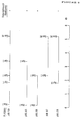
- Figure 1 shows restriction maps of four plasmid inserts recovered via selection for fenpropimorph resistance in Saccharomyces cerevisiae as described in Example 2. Selected restriction enzyme digestion sites are shown for each insert.
- Figure 2 shows fenpropimorph resistance of subclones of pML100, a plasmid containing the cloned sterol ⁇ 14 reductase gene.
- Erg-3 mutants are much more sensitive to morpholine-type fungicides (morpholines and structurally related piperidines) than the wild-type parent strain.
- morpholine sensitivity comparisons in cultured plates the following differences in the size of zone inhibition are obtained in the lawns of the cultures:
- the erg-3 mutant strain also shows increased sensitivity to a large number of compounds with varied mechanisms of action, perhaps due to general increased plasma membrane permeability exhibited by the strain.
- the erg-1 mutant strain which, as illustrated in the above data, shows a fairly normal level of sensitivity to morpholine-type fungicides relative to the wildtype and is more sensitive to other compounds, is used as a control in the screen.
- the test sample is added to a culture of a Neurospora crassa strain having an erg-3 mutation and also to a second culture of a Neurospora crassa strain having an erg-1 mutation.
- the samples are incubated in the cultures for such time under such conditions sufficient to observe fungal cell growth in corresponding cultures containing no test sample.
- sterol ⁇ 14 reductase inhibitors are added to both cultures as controls.
- the extent of growth inhibition in the culture containing the erg-3 mutation is then compared with the extent of growth inhibition in the culture containing the erg-1 mutant.
- the presence of sterol biosynthesis inhibition, particularly sterol ⁇ 14 reductase inhibition is determined by observation that growth inhibition in the erg-3 culture exceeds growth inhibition in the erg-1 culture.
- Example media include Difco Neurospora Minimal Media, Vogel's Media containing salts, sucrose and biotin, and yeast media containing yeast extract and sorbose. Example media are provided hereinafter.
- liquid cultures differences in growth are generally determined by observing and comparing turbidity; for this purpose, optical density (OD) readings at 550 to 650 nm are made and compared.
- Preferred media are solidified by adding agar or gelatin forming cultures in plates or dishes. Agar is especially preferred.
- a positive control is employed to assist in the identification of potential agents.
- a known inhibitor of sterol biosynthesis is employed.
- a known sterol ⁇ 14 reductase inhibitor such as tridemorph, fenpropimorph, or fenpropidin is useful as a control.
- Positive controls are added to cultures or culture areas of both N. crassa strains, and the control effects on culture growth are compared to the cultures or culture areas with the test samples.
- Tridemorph is preferred in one embodiment; in solidified cultures, a 200 ng tridemorph disk gives a clear differential response.
- test samples and positive controls are observed visually and simultaneously as regions of the same culture.
- Samples or controls are introduced on a disk or in a well of the plate. Inhibition is observed visually as measurable zones around disks or wells in the lawn of growth in the plate or dish. Actives produce a larger zone around test samples grown in a lawn of the erg-3 strain than in a lawn of the erg-1 strain.
- a distinct advantage of this screening method is its speed and simplicity.
- the protocol is simple. Many samples are readily analyzed in a short time, providing new potential sterol biosynthesis inhibitors, notably sterol ⁇ 14 reductase inhibitors.
- the inhibitors can be employed in the arsenal against undesirable fungi, some of which are resistant to currently known fungicides, and interfere with pathogen but not host metabolism.
- the assay is not completely selective, however, and a few compounds that are not inhibitors of ergosterol biosynthesis test positive. Therefore, preferred embodiments employ the assay only as a primary screen. Compounds testing positive in the screen are then reassayed with a Saccharomyces cerevisiae ergosterol ⁇ 14 reductase assay as a secondary screen.
- the test sample is added to a culture of a S. cerevisiae strain into which has been introduced a gene encoding sterol ⁇ 14 reductase, preferably at high copy.
- the test sample is also added to a culture of a corresponding S. cerevisiae strain which does not have an introduced sterol ⁇ 14 reductase gene.
- the samples are incubated in the cultures for such time under such conditions sufficient to observe yeast cell growth in corresponding cultures containing no test sample, and the extent of growth inhibition in the culture having the reductase gene is compared with the extent of growth inhibition in the culture having no introduced gene.
- the presence of sterol ⁇ 14 reductase inhibition is determined by observation that growth inhibition in the culture having no introduced reductase gene exceeds growth inhibition in the culture having the introduced reductase gene.
- Any S. cerevisiae strain into which has been introduced a gene encoding sterol ⁇ 14 reductase can be employed in the screen.
- Typical strains are obtained by cloning the sterol ⁇ 14 reductase gene and integrating it at multiple sites into the chromosome of wild-type or parental strains, or by transforming a wild-type or parental strain with a multi-copy plasmid encoding the enzyme.
- the gene has been cloned by selecting strains resistant to fenpropimorph and fenpropidin as set out in Example 2 below and in Lorenz, T., and Parks, L.W., DNA and Cell Biol .
- growth inhibition by a test sample in the yeast strain having an introduced sterol ⁇ 14 reductase gene is compared to another strain such as a corresponding wild-type or parental strain having no introduced gene.
- a parental strain exhibiting similar growth characteristics but having no introduced gene is preferred for the comparison.
- strain Y294(pML100) is employed as the strain having the reductase gene
- another Y294 strain is used in the screen, most preferably a strain transformed with a similar plasmid that does not encode the gene.
- An example illustrated below employs Y294(YEp13) in screens with Y294(pML100).
- Any type of solidified or liquid media that will support growth and reproduction of the S. cerevisiae strains may be employed as cultures in the method.
- Numerous yeast media are known to the skilled artisan, and an advantage of the invention is that baker's yeast is relatively easy to grow.
- Typical media are yeast extract, peptone and dextrose (YEPD) or yeast extract and dextrose (YED) media; yeast basal growth media (YBGM) containing glucose, vitamins, minerals, and water; yeast extract, peptone, and adenine sulfate (YPA) media; yeast mannitol (YM) media and YM plus glucose; synthetic dextrose (SD) media containing dextrose, a nitrogen base, water, and, optionally amino acids, adenine sulfate and uracil; and the like.
- Example media are provided hereinafter.
- differences in growth are generally determined by observing and comparing turbidity; for this purpose, optical density (OD) readings at 550 to 650 nm are made and compared.
- Preferred media are solidified by adding agar or gelatin to form cultures in plates or dishes. Agar is especially preferred.
- differential growth between the strains is observed visually and simultaneously as regions of the same culture. Samples are introduced on a disk or in a well of the plate. Inhibition around the disk or well in the lawn of growth of the strain having the gene is compared to inhibition around the disk or well in the lawn of the strain that does not have the introduced gene. Actives produce a smaller zone on the strain with the gene than in the other strain.
- a positive control is employed to assist in the identification of potential agents.
- a known inhibitor of sterol ⁇ 14 reductase is employed, such as, for example, fenpropimorph, fenpropidin, tridimorph, or azasterol or a mixture of these. Fenpropimorph is preferred in one embodiment.
- Positive controls are added to cultures or culture areas of both S. cerevisiae strains, and the effects of the control on culture growth are compared to the cultures or culture areas with the test samples to assess activity of test samples on the two strains.
- the secondary screen can, in some embodiments, be employed as a primary screen for sterol ⁇ 14 reductase inhibitors.
- the assay is intrinsically less sensitive than the primary screen using N. crassa described above. Therefore, as set out above, the S. cerevisiae screen is preferably employed as a secondary screen to test positive samples from the N. crassa primary screen.
- Morpholines are detected in the S. cerevisiae screen at about 12.5 ⁇ g/disk for fenpropimorph and fenpropidin and 50 ⁇ g/disk for tridimorph.
- actives from-the N. crassa primary screen are concentrated about 2500-fold prior to testing in the secondary screen.
- all of the actives from the primary screen with undesired mechanisms of action are inactive in the secondary assay.
- the two screens are highly sensitive and specific for the detection of sterol ⁇ 14 reductase inhibitors.
- the binary sterol ⁇ 14 reductase assay exhibits a low positive rate assay if compounds which do not inhibit sterol ⁇ 14 reductase in the primary screen are eliminated using the secondary screen. Other tests are, therefore, not of high importance. However, standard in vitro and in vivo fungicide discovery screens are employed in some embodiments as tertiary tests to prioritize actives from the binary assay.
- the in vitro screens test samples for their ability to inhibit the growth of selected phytopathogenic fungi cultured in nutrient agar.
- Three of these species typically employed Pseudocercosporella herpotrichoides causing wheat eyespot, Rhizoctonia solani causing rice sheath blight, and Fusarium oxysporum causing damping off, synthesize ergosterol.
- fenpropomorph and tridemorph are primarly active in vitro against Rhizoctonia solani in the 1 ppm range (1 ⁇ g/ml), while fenpropimorph is detected at ⁇ 10 ng/ml in the sterol ⁇ 14 reductase primary screen if 30 ⁇ l volumes are tested in welled plates.
- fermentations in the in vitro screen are generally retested after about a 200-fold concentration.
- fungi In in vivo screens, a variety of phytopathogenic fungi are used to infect plants treated with test compounds. Active compounds block or reduce the appearance of disease symptoms.
- a number of model plant infections are employed in the screen and include fungi that cause apple scab ( Venturia inaequalis ), grape downy mildew ( Botrytis cinerea ), pepper botrytis ( Botrytis cinerea ), rice blast ( Pyricularia oryzae ), sugar beet cercospora ( Cercospora beticola ), tomato early blight ( Alternaria solani ), wheat leaf rust ( Puccinia recondita tritici ), and wheat powdery mildew ( Erysiphe graminis tritici ).
- FGSC Fungal Genetics Stock Center
- ATCC American Type Culture Collection
- Fenpropimorph, fenpropidin and tridemorph are purchased from Crescent Chemical Company, Inc., Hauppauge, New York.
- Synthetic dextrose (SD) media contains 0.7% yeast nitrogen base without amino acids, 2% dextrose and 2% agar.
- Yeast extract, peptone and dextrose (YEPD) media contains 1% yeast extract, 2% peptone, 2% dextrose and 2% agar.
- This example describes a sterol ⁇ 14 reductase primary screen using erg-1 and erg-3 Neurospora crassa strains.
- FGSC2721 (erg-1) and FGSC2725 (erg-3) are cultured as follows. A suspension of conidia stored at 4°C in 0.005% Tween® 80 is stable for at least 6 weeks. Every 6 to 8 weeks, a fresh culture is prepared by coating the lower half of three 250 ml Erlenmeyer flasks with Neurospora minimal media or Vogel's minimal media described below.
- the unwrapped flasks are placed under a fluorescent lamp or placed by a window to induce sporulation.
- the orange conidia can be harvested after 5 or more days by rinsing the flasks twice with 5 ml 0.005% Tween® 80 and a small quantity of 0.3 mm glass beads. Yields should be ⁇ 30 ml, at 0.5 - 1.0 x 10⁸ spores per ml (determined using a hemocytometer).
- Working stock solution for the screen should be adjusted to ⁇ 1 x 10⁷ spores per ml 0.005% Tween® 80.
- Neurospora minimal media is prepared by combining Difco Neurospora Minimal Media 27.7 gm Difco Agar 20.0 gm Distilled Water 1000 ml and autoclaving 15 minutes at 20 pounds pressure.
- a trace minerals solution is first prepared for use as an ingredient in the stock salts solution, by adding in order, to 95 ml distilled water with continuous stirring: Citric Acid ⁇ H2O 5 g ZnSO4 ⁇ 7H2O 5 g Fe(NH4)2(SO4)2 ⁇ 6H2O 1 g CuSO4 ⁇ 5H2O 0.25 g MnSO4 ⁇ H2O 0.05 g H3BO3 0.05 g NaMoO4 ⁇ 2H2O 0.05 g The solution is stored at room temperature over 1 ml chloroform.
- a liter of a 50X Stock Salts Solution is prepared by dissolving the following, in order, with continuous stirring, in 750 ml distilled water: Sodium Citrate ⁇ 5 1/2 H2O 150 g KH2PO4 250 g NH4NO3 100 g MgSO4 ⁇ 7H2O 10 g CaCl2 ⁇ 2H2O 5 g Trace Minerals Solution 5 ml Biotin (0.1 mg/ml) 2.5 ml The pH of the solution is adjusted to ⁇ 5.8 and distilled water is added to a final volume of 1 liter. The solution is stored at room temperature over 2 ml chloroform.
- Media for the primary sterol ⁇ 14 reductase screen is prepared by combining Yeast Morphology Agar 35 gm Yeast Extract 1 gm L-Sorbose 25 gm and adding Distilled Water to 1000 ml.
- the innocula are the counted suspensions of FGSC2725 and FGSC2721 spores.
- Working stocks are 5 x 10⁶ to 1 x 10⁷ spores/ml as described above. One part spores is added to 100 parts media.
- test plates are poured and dried before duplicate test samples are each added to a FGSC2725 plate and a FGSC2721 plate.
- Each test should include a positive control that gives a clear response such as a 200 ng tridemorph disk.
- the plates are incubated 48 hours at 37°C. Positives are scored by comparing growth inhibition zones on test and control plates; zones should be larger on the plate inoculated with strain FGSC2725 than on the plate inoculated with strain FGSC2721.
- the compounds are tested by disk diffusion assay at a rate of 20 ⁇ g/disk.
- Six active compounds are observed: gliotoxin, moxidectin, thiolutin, antibiotic F42248 ⁇ , anisomycin and auriothin.
- This example describes the cloning and sequencing of the Saccharomyces cerevisiae gene encoding sterol ⁇ 14 reductase, and the preparation of a strain transformed with a plasmid containing the gene for use in the secondary screen described in the next example.
- the gene is isolated and cloned by selecting strains carrying sequences on a 2 ⁇ based vector for resistance to the morpholine fungicide, fenpropimorph, to obtain a plasmid which is shown to carry the structural gene based upon the phenotype of gene disruption strains.
- Morpholine and structurally related piperidine fungicides reportedly inhibit sterol ⁇ 14 reductase and sterol ⁇ 8 - ⁇ 7 isomerase (Baloch, R. and Mercer, I., Phytochemistry 26 : 663-668 (1987)).
- the growth of S. cerevisiae strain Y294, genotype MAT ⁇ , leu2-3,112, ura3--52, his3 ⁇ , trpl, Gal+ (Brugge, J.S., et al . , Mol. Cell . Biol .
- YEp13 cerevisiae sequences in the multicopy vector YEp13 (Nasmyth, K.A., and Tatchell, K ., Cell 19 : 753-764 (1980)) is introduced into strain Y294 and cells are plated on SD media supplemented with tryptophan, uracil, histidine and fenyropimorph, resistant colonies appeared at the rate of ⁇ 1 per 104, suggesting that resistance is produced by library plasmids in some of the colonies. Plasmids are cured from randomly selected resistant colonies by growing the cells in non-selective rich YEPD media and retesting for fenpropimorph resistance. In 13 strains, the plasmid-cured derivative shows sensitivity to 20 ⁇ g/ml fenpropimorph while the original plasmid carrying strain retested as fenpropimorph-resistant.
- DNA is isolated from these 13 strains and plasmid DNA is recovered by E. coli transformation.
- Five different types of plasmid DNA are identified following an examination of restriction enzyme digestion patterns using standard methods ( Figure 1). Seven strains carry one plasmid type, pML99, which has an insert of approximately 5.5 kb.
- Two additional strains carry a second plasmid type, pML-100, which has an insert of approximately 5.6 kb.
- a third plasmid type, pML101 is found in two strains and carries an insert of approximately 5.5 kb.
- Two additional plasmid types are each recovered from a single strain and named pML102 ( ⁇ 7.5 kb insert) and pML103 ( ⁇ 5.1 kb insert).
- a panel of fungicides representing a variety of chemical structures and mechanisms of action listed in Table 1 is tested by disk diffusion assay against strains carrying each of these plasmids in a YEp13 vector control. All five strains show similar levels of sensitivity to all of the tested compounds with the exception of the morpholines, fenpropimorph and tridemorph, and azasterol. These compounds are less active on the strains carrying the four plasmids recovered by selection for fenpropimorph resistance. Consistent with agar dilution sensitivity results, fenpropimorph is more active by disk diffusion than tridemorph. These results suggest that the cloned sequences encode functions specific to the activity of morpholines and related compounds and do not carry genes which produce general fungicide resistance, e.g., by altering cell permeability.
- the library employed for the selection is prepared using DNA isolated from strain AB320 (genotype HO, ade2-1, lys2-1, trp5-2, leu2-1, can1-100, ura3-1 and/or ura1-1, met4-1, Nasmyth and Tatchell, cited above).
- strain AB320 is found to be slightly more sensitive to fenpropimorph than strain Y294, suggesting that the cloned sequences are likely to be producing resistance as the result of gene dosage effects.
- ERG2 sterol ⁇ 8 - ⁇ 7 isomerase
- One gene that would be expected to produce morpholine resistance at high copy is ERG2, which encodes a reported morpholine target, ⁇ 8 - ⁇ 7 isomerase.
- This gene was recently cloned by the complementation of a polyene resistance mutation (Ashman, cited above).
- the published ERG2 restriction map is different from the restriction maps of the four sequences recovered by morpholine resistance selection. Since it is possible that the ERG2 sequence is missed in the morpholine resistance screen, this gene is introduced into S.
- fenpropimorph resistance plasmid pML100 Characterization of fenpropimorph resistance plasmid pML100 .
- the four fenpropimorph resistance plasmids pML99, pML100, pML101, and pML103 are transformed into three ergosterol pathway mutant strains, erg2 (denoted WAO, genotype MATa, his7-2, leu2-3,112, ura3-52, erg2-3, Ashman, et al ., cited above); erg3 (denoted XML39-1d, genotype MATa, leu2-3,112, erg3-2); and erg6 (denoted XML40-1c, genotype MAT ⁇ , leu2-3,112, gal2, erg6-5).
- Morpholine sensitivity is determined by disk diffusion assay on appropriately supplemented SD medium using tridemorph and fenpropimorph. A zone size difference of greater than 3 mm performed in duplicate is recorded as resistance.
- the ergosterol pathway mutant strains vary in absolute level of morpholine sensitivity, and all resistance and sensitivity determinations are reported relative to vector (YEp-13)-transformed control strains. The results are tabulated in Table 3. Only plasmid pML100 transformants are consistently fenpropimorph-resistant in all genetic backgrounds, but the other plasmics are useful in screening methods.
- Subclones of the pML100 insert are prepared in the yeast shuttle vector YEp352, transformed into yeast strain Y294, and tested for fenpropimorph resistance. As shown in Figure 2, the fenpropimorph resistance region is limited to a 2.5 kb Sph I/ Xba I fragment located near one side of the insert/vector border.
- Plasmid pML106 which contains this fragment in vector YEp352, is cleaved with Bgl II, which cuts once at a site near the middle of the Sph I/ Xba I fragment.
- Bgl II A 3.0 kb Bgl II fragment containing the S. cerevisiae LEU2 gene is isolated from plasmid YEp13 and ligated into this Bgl II cite, producing plasmid pML108.
- the disrupted 5.5 kb Sph I/ Xba I fragment containing the LEU2 gene is isolated from plasmid pML108 and used to transform S. cerevisiae strain YPH501 to leucine prototrophy. Transformants in which the 5.5 kb Sph I/ Xba I fragment replaced the 2.5 kb Sph I/ Xba I fragment in one chromosomal homologue are identified by Southern analysis.
- Tetrads from one such transformant are dissected and the spores germinated under anaerobic conditions on YEPD medium supplemented with Tween® 80 (500 ⁇ g/ml) and ergosterol (20 ⁇ g/ml).
- Strain YPH501-2-1 shows low (approximately 50%) spore viability, and no tetrads are recovered. This is found to be a property of strain YPH501 which showed a similar low level of spore viability when spores from the host strain are germinated anaerobically.
- 15 of 32 segregants are both Leu+ and obligate anaerobes, suggesting that the disruption has produced a genetic lesion in sterol biosynthesis. (The remaining 17 segregants are Leu ⁇ and grow aerobically.)
- YPH501-2-1-3C One such obligate anaerobe segregant, denoted YPH501-2-1-3C, is analyzed for sterol content.
- the strain is grown anaerobically on YEPD medium containing ergosterol (5 ⁇ g/ml) to facilitate sterol uptake. After one day, the cells are harvested, washed in saline, resuspended in YEPD medium with no added sterol and grown for an additional 2 days to deplete cellular sterol. After 3 days, sterols are extracted from stationary phase yeast cells into n-heptane and analyzed by ultraviolet (UV) between 200 and 300 nm, gas chromatography (GC) and gas chromatography-mass spectrometry (GC-MS).
- UV ultraviolet
- GC gas chromatography
- GC-MS gas chromatography-mass spectrometry
- GC-MC analyses are performed on a Hewlett Packard (HP) 5980 instrument using a 30 meter x 0.25 mm HP-5 column with a 25 micron film thickness.
- the column temperature is programmed from 280°C to 300°C with the initial temperature maintained for 2 minutes and increased at 3°C/minute. The final temperature is held for 6 minutes.
- the mass spectrometer is operated in the electron impact ionization mode at 70 eV.
- High pressure liquid chromatography (HPLC) analyses are performed using a reverse phase column (2.1 x 100 mm) packed with 5 micron spherical C18 bonded silica.
- Sterol samples are dissolved in a methanol:ethyl acetate (1:1) mixture and eluted from HPLC with 95% acetonitrile in water at 1 ml/minute.
- the detection wavelength is 270 nm.
- UV analysis demonstrates a 250 nm broad peak indicative of a sterol containing a conjugated double bond system involving C-8(9) and C-14(15).
- GC analyses indicate a-major peak with the relative retention time of 1.30 consistent with ignosterol (ergosta-8,14-dien-3 ⁇ -ol, molecular weight 398), the sterol ⁇ 14 reductase substrate.
- GC-MS analysis confirms that the major sterol accumulating in this disrupted strain is ignosterol.
- Small amounts of lanosterol, approximately 5%, are also observed, consistent with a block in the sterol pathway downstream of lanosterol and affecting the reduction of the C-14 double bond.
- the accumulation of ignosterol indicates a genetic lesion in sterol ⁇ 14 reductase activity.
- DNA sequence analysis of plasmid pML100 The DNA sequence of the 2.5 kb Sph I/ Xba I fragment of plasmid pML100 is set out in the Sequence Listing section hereinafter as SEQ ID NO 1 and more particularly described in copending U.S. Application Number filed concurrently with this application and incorporated in its entirety by reference.
- SEQ ID NO 1 The DNA sequence of the 2.5 kb Sph I/ Xba I fragment of plasmid pML100 is set out in the Sequence Listing section hereinafter as SEQ ID NO 1 and more particularly described in copending U.S. Application Number filed concurrently with this application and incorporated in its entirety by reference.
- An open reading frame of 1314 base pairs is identified starting at an ATG codon at position 419 within the sequence. No other open reading frame of significant size is present within this fragment. Upstream of this ATG codon is an AT-rich sequence (66%), typical of many functionally expressed S. cerevisiae genes.
- Synthetic Dropout Media is first prepared by combining Dropout Agar Base (DOBA, Bio-101) 44 g CSM-LEU (Bio-101) 0.8 g Distilled Water 1000 ml and autoclaving 15 minutes at 20 pounds pressure.
- DOBA Dropout Agar Base
- CSM-LEU Bio-101
- Distilled Water 1000 ml
- Test medium is prepared by combining 1 part Y294 (pML100) or Y294(YEp13) into warm synthetic dropout media. Pour plates for each culture, prepare test samples in duplicate and place each test sample on a Y294(pML100) plate and a Y294(YEp13) plate. A 1/4" disc containing 100 ⁇ g of fenpropimorph is used as a positive control. The plates are incubated at 30°C for two days and then examined to compare activity on the two strains. Actives produce a smaller zone on the Y294(pML100) plate than on the Y294(YEp13) plate.
- Morpholines are detected in this assay at 12.5 ⁇ g/-disk for fenpropimorph and fenpropidin and 50 ⁇ g/disk for tridimorph.
- actives are generally concentrated 2500-fold prior to testing in the secondary screen.
- the same panel of fungicides set out in Table 1 and antibiotics set out in Table 2 (Example 1) are tested in the secondary screen. All of the actives from the primary screen with undesired mechanisms of action are inactive in the secondary assay. All of the active compounds from the panel of 7000 compounds tested in the primary screen of Example 1 were tested, and only one is active in the secondary screen.
- the two screens when carried out together, are highly sensitive and specific for the detection of sterol ⁇ 14 reductase inhibitors.
Landscapes
- Chemical & Material Sciences (AREA)
- Life Sciences & Earth Sciences (AREA)
- Organic Chemistry (AREA)
- Health & Medical Sciences (AREA)
- Wood Science & Technology (AREA)
- Engineering & Computer Science (AREA)
- Zoology (AREA)
- Bioinformatics & Cheminformatics (AREA)
- Genetics & Genomics (AREA)
- General Health & Medical Sciences (AREA)
- General Engineering & Computer Science (AREA)
- Proteomics, Peptides & Aminoacids (AREA)
- Biochemistry (AREA)
- Molecular Biology (AREA)
- Microbiology (AREA)
- Biotechnology (AREA)
- Immunology (AREA)
- Physics & Mathematics (AREA)
- Analytical Chemistry (AREA)
- Biophysics (AREA)
- Biomedical Technology (AREA)
- Medicinal Chemistry (AREA)
- Toxicology (AREA)
- Measuring Or Testing Involving Enzymes Or Micro-Organisms (AREA)
- Micro-Organisms Or Cultivation Processes Thereof (AREA)
- Preparation Of Compounds By Using Micro-Organisms (AREA)
- Confectionery (AREA)
- Fats And Perfumes (AREA)
- Steroid Compounds (AREA)
Applications Claiming Priority (2)
| Application Number | Priority Date | Filing Date | Title |
|---|---|---|---|
| US107348 | 1979-12-26 | ||
| US08/107,348 US5591576A (en) | 1993-08-16 | 1993-08-16 | Sterol Δ14 reductase screen |
Publications (3)
| Publication Number | Publication Date |
|---|---|
| EP0644268A2 true EP0644268A2 (de) | 1995-03-22 |
| EP0644268A3 EP0644268A3 (de) | 1996-07-24 |
| EP0644268B1 EP0644268B1 (de) | 2002-10-09 |
Family
ID=22316182
Family Applications (1)
| Application Number | Title | Priority Date | Filing Date |
|---|---|---|---|
| EP94111839A Expired - Lifetime EP0644268B1 (de) | 1993-08-16 | 1994-07-29 | Sterol-Delta-14-reductase Siebtest |
Country Status (4)
| Country | Link |
|---|---|
| US (1) | US5591576A (de) |
| EP (1) | EP0644268B1 (de) |
| AT (1) | ATE225855T1 (de) |
| DE (1) | DE69431509T2 (de) |
Cited By (2)
| Publication number | Priority date | Publication date | Assignee | Title |
|---|---|---|---|---|
| WO1996023075A1 (en) * | 1995-01-23 | 1996-08-01 | Microcide Pharmaceuticals, Inc. | Screening for modulators of biomolecules |
| WO2001023539A3 (en) * | 1999-09-30 | 2002-03-07 | Du Pont | Genes encoding sterol delta-15 reductase in plants |
Families Citing this family (2)
| Publication number | Priority date | Publication date | Assignee | Title |
|---|---|---|---|---|
| DE10056899A1 (de) * | 2000-11-16 | 2002-05-29 | Aventis Pharma Gmbh | Promotor zur funktionellen Charakterisierung von G-Protein gekoppelten Rezeptoren in der Hefe Saccharomyces cerevisiae |
| WO2005033287A2 (en) * | 2003-09-29 | 2005-04-14 | The Regents Of The University Of California | Methods for identifying a biosynthetic pathway gene product |
-
1993
- 1993-08-16 US US08/107,348 patent/US5591576A/en not_active Expired - Fee Related
-
1994
- 1994-07-29 EP EP94111839A patent/EP0644268B1/de not_active Expired - Lifetime
- 1994-07-29 DE DE69431509T patent/DE69431509T2/de not_active Expired - Lifetime
- 1994-07-29 AT AT94111839T patent/ATE225855T1/de active
Non-Patent Citations (3)
| Title |
|---|
| CURRENT GENETICS, vol. 22, no. 4, October 1992, BERLIN, pages 267-272, XP000196020 MARCIREAU ET AL.: "Construction and growth properties of a yeast strain defective in sterol 14-reductase" * |
| JOURNAL OF GENERAL MICROBIOLOGY, vol. 137, no. 11, November 1991, LONDON, pages 2627-2630, XP000196027 ELLIS ET AL.: "Identification of a sterol mutant of Neurospora crassa deficient in delta14,15-reductase activity" * |
| MOLECULAR & GENERAL GENETICS, vol. 165, 1978, BERLIN, pages 305-308, XP000196026 GRINDLE ET AL.: "Sterol content and enzyme defects of nystatin-resistant mutants of neurospora crassa" * |
Cited By (3)
| Publication number | Priority date | Publication date | Assignee | Title |
|---|---|---|---|---|
| WO1996023075A1 (en) * | 1995-01-23 | 1996-08-01 | Microcide Pharmaceuticals, Inc. | Screening for modulators of biomolecules |
| WO2001023539A3 (en) * | 1999-09-30 | 2002-03-07 | Du Pont | Genes encoding sterol delta-15 reductase in plants |
| US7009089B1 (en) | 1999-09-30 | 2006-03-07 | E.I. Du Pont De Nemours And Company | Genes encoding sterol delta-14 reductase in plants |
Also Published As
| Publication number | Publication date |
|---|---|
| DE69431509D1 (de) | 2002-11-14 |
| EP0644268B1 (de) | 2002-10-09 |
| US5591576A (en) | 1997-01-07 |
| DE69431509T2 (de) | 2003-06-26 |
| EP0644268A3 (de) | 1996-07-24 |
| ATE225855T1 (de) | 2002-10-15 |
Similar Documents
| Publication | Publication Date | Title |
|---|---|---|
| Cregg et al. | Peroxisome‐deficient mutants of Hansenula polymorpha | |
| Schafer et al. | Genetic and pharmacological suppression of oncogenic mutations in ras genes of yeast and humans | |
| Mitchell et al. | Regulation of glutamine-repressible gene products by the GLN3 function in Saccharomyces cerevisiae | |
| Bulawa et al. | Chitin synthase I and chitin synthase II are not required for chitin synthesis in vivo in Saccharomyces cerevisiae. | |
| Lamb et al. | Molecular aspects of azole antifungal action and resistance | |
| Neigeborn et al. | Genes affecting the regulation of SUC2 gene expression by glucose repression in Saccharomyces cerevisiae | |
| Schamber et al. | The role of mitogen‐activated protein (MAP) kinase signalling components and the Ste12 transcription factor in germination and pathogenicity of Botrytis cinerea | |
| Powers et al. | RAM, a gene of yeast required for a functional modification of RAS proteins and for production of mating pheromone a-factor | |
| Gu et al. | A transcription factor FgSte12 is required for pathogenicity in F usarium graminearum | |
| McCusker et al. | Cycloheximide-resistant temperature-sensitive lethal mutations of Saccharomyces cerevisiae | |
| Murakami et al. | The inactive form of a yeast casein kinase I suppresses the secretory defect of the sec12 mutant: Implication of negative regulation by the Hrr25 kinase in the vesicle budding from the endoplasmic reticulum | |
| Zubenko et al. | Septum formation, cell division, and sporulation in mutants of yeast deficient in proteinase B. | |
| Bisson | High-affinity glucose transport in Saccharomyces cerevisiae is under general glucose repression control | |
| Ma et al. | Rho2 is a target of the farnesyltransferase Cpp1 and acts upstream of Pmk1 mitogen-activated protein kinase signaling in fission yeast | |
| Zhang et al. | SNARE protein FgVam7 controls growth, asexual and sexual development, and plant infection in Fusarium graminearum | |
| Roze et al. | Regulation of aflatoxin synthesis by FadA/cAMP/protein kinase A signaling in Aspergillus parasiticus | |
| Yun et al. | Functional characterization of FgERG3 and FgERG5 associated with ergosterol biosynthesis, vegetative differentiation and virulence of Fusarium graminearum | |
| Sun et al. | Stage‐specific regulation of purine metabolism during infectious growth and sexual reproduction in Fusarium graminearum | |
| Wu et al. | The plasma membrane H+‐ATPase FgPMA1 regulates the development, pathogenicity, and phenamacril sensitivity of Fusarium graminearum by interacting with FgMyo‐5 and FgBmh2 | |
| Jenness et al. | Saccharomyces cerevisiae mutants unresponsive to α-factor pheromone: α-factor binding and extragenic suppression | |
| Kubo | Function of peroxisomes in plant-pathogen interactions | |
| Ohya et al. | A galactose-dependent cmd1 mutant of Saccharomyces cerevisiae: involvement of calmodulin in nuclear division | |
| Soto et al. | Rga4 modulates the activity of the fission yeast cell integrity MAPK pathway by acting as a Rho2 GTPase-activating protein | |
| Seong et al. | Cryptic promoter activity in the coding region of the HMG-CoA reductase gene in Fusarium graminearum | |
| Straede et al. | The effect of tea tree oil and antifungal agents on a reporter for yeast cell integrity signalling |
Legal Events
| Date | Code | Title | Description |
|---|---|---|---|
| PUAI | Public reference made under article 153(3) epc to a published international application that has entered the european phase |
Free format text: ORIGINAL CODE: 0009012 |
|
| AK | Designated contracting states |
Kind code of ref document: A2 Designated state(s): AT BE CH DE DK ES FR GB GR IE IT LI LU NL PT SE |
|
| RAX | Requested extension states of the european patent have changed |
Free format text: SI PAYMENT 940729 |
|
| PUAL | Search report despatched |
Free format text: ORIGINAL CODE: 0009013 |
|
| AK | Designated contracting states |
Kind code of ref document: A3 Designated state(s): AT BE CH DE DK ES FR GB GR IE IT LI LU NL PT SE |
|
| AX | Request for extension of the european patent |
Free format text: SI PAYMENT 940729 |
|
| 17P | Request for examination filed |
Effective date: 19960828 |
|
| 17Q | First examination report despatched |
Effective date: 19990225 |
|
| RAP1 | Party data changed (applicant data changed or rights of an application transferred) |
Owner name: BASF AKTIENGESELLSCHAFT |
|
| GRAG | Despatch of communication of intention to grant |
Free format text: ORIGINAL CODE: EPIDOS AGRA |
|
| GRAG | Despatch of communication of intention to grant |
Free format text: ORIGINAL CODE: EPIDOS AGRA |
|
| GRAH | Despatch of communication of intention to grant a patent |
Free format text: ORIGINAL CODE: EPIDOS IGRA |
|
| GRAH | Despatch of communication of intention to grant a patent |
Free format text: ORIGINAL CODE: EPIDOS IGRA |
|
| GRAA | (expected) grant |
Free format text: ORIGINAL CODE: 0009210 |
|
| AK | Designated contracting states |
Kind code of ref document: B1 Designated state(s): AT BE CH DE DK ES FR GB GR IE IT LI LU NL PT SE |
|
| AX | Request for extension of the european patent |
Free format text: SI PAYMENT 19940729 |
|
| PG25 | Lapsed in a contracting state [announced via postgrant information from national office to epo] |
Ref country code: IT Free format text: LAPSE BECAUSE OF FAILURE TO SUBMIT A TRANSLATION OF THE DESCRIPTION OR TO PAY THE FEE WITHIN THE PRE;WARNING: LAPSES OF ITALIAN PATENTS WITH EFFECTIVE DATE BEFORE 2007 MAY HAVE OCCURRED AT ANY TIME BEFORE 2007. THE CORRECT EFFECTIVE DATE MAY BE DIFFERENT FROM THE ONE RECORDED.SCRIBED TIME-LIMIT Effective date: 20021009 Ref country code: GR Free format text: LAPSE BECAUSE OF FAILURE TO SUBMIT A TRANSLATION OF THE DESCRIPTION OR TO PAY THE FEE WITHIN THE PRESCRIBED TIME-LIMIT Effective date: 20021009 |
|
| REF | Corresponds to: |
Ref document number: 225855 Country of ref document: AT Date of ref document: 20021015 Kind code of ref document: T |
|
| REG | Reference to a national code |
Ref country code: GB Ref legal event code: FG4D |
|
| REG | Reference to a national code |
Ref country code: CH Ref legal event code: EP |
|
| REG | Reference to a national code |
Ref country code: IE Ref legal event code: FG4D |
|
| REF | Corresponds to: |
Ref document number: 69431509 Country of ref document: DE Date of ref document: 20021114 |
|
| REG | Reference to a national code |
Ref country code: CH Ref legal event code: NV Representative=s name: A. BRAUN, BRAUN, HERITIER, ESCHMANN AG PATENTANWAE |
|
| PG25 | Lapsed in a contracting state [announced via postgrant information from national office to epo] |
Ref country code: SE Free format text: LAPSE BECAUSE OF FAILURE TO SUBMIT A TRANSLATION OF THE DESCRIPTION OR TO PAY THE FEE WITHIN THE PRESCRIBED TIME-LIMIT Effective date: 20030109 Ref country code: PT Free format text: LAPSE BECAUSE OF FAILURE TO SUBMIT A TRANSLATION OF THE DESCRIPTION OR TO PAY THE FEE WITHIN THE PRESCRIBED TIME-LIMIT Effective date: 20030109 Ref country code: DK Free format text: LAPSE BECAUSE OF FAILURE TO SUBMIT A TRANSLATION OF THE DESCRIPTION OR TO PAY THE FEE WITHIN THE PRESCRIBED TIME-LIMIT Effective date: 20030109 |
|
| ET | Fr: translation filed | ||
| PG25 | Lapsed in a contracting state [announced via postgrant information from national office to epo] |
Ref country code: ES Free format text: LAPSE BECAUSE OF FAILURE TO SUBMIT A TRANSLATION OF THE DESCRIPTION OR TO PAY THE FEE WITHIN THE PRESCRIBED TIME-LIMIT Effective date: 20030429 |
|
| PG25 | Lapsed in a contracting state [announced via postgrant information from national office to epo] |
Ref country code: LU Free format text: LAPSE BECAUSE OF NON-PAYMENT OF DUE FEES Effective date: 20030729 Ref country code: IE Free format text: LAPSE BECAUSE OF NON-PAYMENT OF DUE FEES Effective date: 20030729 |
|
| PLBE | No opposition filed within time limit |
Free format text: ORIGINAL CODE: 0009261 |
|
| STAA | Information on the status of an ep patent application or granted ep patent |
Free format text: STATUS: NO OPPOSITION FILED WITHIN TIME LIMIT |
|
| 26N | No opposition filed |
Effective date: 20030710 |
|
| REG | Reference to a national code |
Ref country code: IE Ref legal event code: MM4A |
|
| REG | Reference to a national code |
Ref country code: CH Ref legal event code: PFA Owner name: BASF AKTIENGESELLSCHAFT Free format text: BASF AKTIENGESELLSCHAFT# #67056 LUDWIGSHAFEN (DE) -TRANSFER TO- BASF AKTIENGESELLSCHAFT# #67056 LUDWIGSHAFEN (DE) |
|
| PGFP | Annual fee paid to national office [announced via postgrant information from national office to epo] |
Ref country code: GB Payment date: 20110622 Year of fee payment: 18 |
|
| PGFP | Annual fee paid to national office [announced via postgrant information from national office to epo] |
Ref country code: FR Payment date: 20110727 Year of fee payment: 18 Ref country code: CH Payment date: 20110729 Year of fee payment: 18 |
|
| PGFP | Annual fee paid to national office [announced via postgrant information from national office to epo] |
Ref country code: AT Payment date: 20110623 Year of fee payment: 18 Ref country code: DE Payment date: 20110729 Year of fee payment: 18 |
|
| PGFP | Annual fee paid to national office [announced via postgrant information from national office to epo] |
Ref country code: NL Payment date: 20110721 Year of fee payment: 18 Ref country code: BE Payment date: 20110727 Year of fee payment: 18 |
|
| BERE | Be: lapsed |
Owner name: *BASF A.G. Effective date: 20120731 |
|
| REG | Reference to a national code |
Ref country code: NL Ref legal event code: V1 Effective date: 20130201 |
|
| REG | Reference to a national code |
Ref country code: CH Ref legal event code: PL |
|
| REG | Reference to a national code |
Ref country code: AT Ref legal event code: MM01 Ref document number: 225855 Country of ref document: AT Kind code of ref document: T Effective date: 20120729 |
|
| GBPC | Gb: european patent ceased through non-payment of renewal fee |
Effective date: 20120729 |
|
| REG | Reference to a national code |
Ref country code: FR Ref legal event code: ST Effective date: 20130329 |
|
| PG25 | Lapsed in a contracting state [announced via postgrant information from national office to epo] |
Ref country code: DE Free format text: LAPSE BECAUSE OF NON-PAYMENT OF DUE FEES Effective date: 20130201 Ref country code: GB Free format text: LAPSE BECAUSE OF NON-PAYMENT OF DUE FEES Effective date: 20120729 Ref country code: NL Free format text: LAPSE BECAUSE OF NON-PAYMENT OF DUE FEES Effective date: 20130201 Ref country code: LI Free format text: LAPSE BECAUSE OF NON-PAYMENT OF DUE FEES Effective date: 20120731 Ref country code: CH Free format text: LAPSE BECAUSE OF NON-PAYMENT OF DUE FEES Effective date: 20120731 Ref country code: FR Free format text: LAPSE BECAUSE OF NON-PAYMENT OF DUE FEES Effective date: 20120731 |
|
| PG25 | Lapsed in a contracting state [announced via postgrant information from national office to epo] |
Ref country code: BE Free format text: LAPSE BECAUSE OF NON-PAYMENT OF DUE FEES Effective date: 20120731 |
|
| PG25 | Lapsed in a contracting state [announced via postgrant information from national office to epo] |
Ref country code: AT Free format text: LAPSE BECAUSE OF NON-PAYMENT OF DUE FEES Effective date: 20120729 |
|
| REG | Reference to a national code |
Ref country code: DE Ref legal event code: R119 Ref document number: 69431509 Country of ref document: DE Effective date: 20130201 |