EP0647271B1 - Gene de l'ataxie-telangiectasies du groupe de complementation d (atdc) - Google Patents
Gene de l'ataxie-telangiectasies du groupe de complementation d (atdc) Download PDFInfo
- Publication number
- EP0647271B1 EP0647271B1 EP93918123A EP93918123A EP0647271B1 EP 0647271 B1 EP0647271 B1 EP 0647271B1 EP 93918123 A EP93918123 A EP 93918123A EP 93918123 A EP93918123 A EP 93918123A EP 0647271 B1 EP0647271 B1 EP 0647271B1
- Authority
- EP
- European Patent Office
- Prior art keywords
- gene
- atdc
- sequence
- dna
- fragments
- Prior art date
- Legal status (The legal status is an assumption and is not a legal conclusion. Google has not performed a legal analysis and makes no representation as to the accuracy of the status listed.)
- Expired - Lifetime
Links
- 108090000623 proteins and genes Proteins 0.000 title claims abstract description 177
- 206010003594 Ataxia telangiectasia Diseases 0.000 title claims description 94
- 239000002299 complementary DNA Substances 0.000 claims abstract description 74
- 239000012634 fragment Substances 0.000 claims abstract description 66
- 102000004169 proteins and genes Human genes 0.000 claims abstract description 49
- 238000003752 polymerase chain reaction Methods 0.000 claims abstract description 45
- 238000000034 method Methods 0.000 claims abstract description 38
- 230000035772 mutation Effects 0.000 claims abstract description 25
- 150000007523 nucleic acids Chemical class 0.000 claims abstract description 21
- 108020004707 nucleic acids Proteins 0.000 claims abstract description 12
- 102000039446 nucleic acids Human genes 0.000 claims abstract description 12
- 101000785063 Homo sapiens Serine-protein kinase ATM Proteins 0.000 claims abstract 12
- 101000634975 Homo sapiens Tripartite motif-containing protein 29 Proteins 0.000 claims abstract 12
- 108020004414 DNA Proteins 0.000 claims description 48
- 108090000765 processed proteins & peptides Proteins 0.000 claims description 43
- 102000004196 processed proteins & peptides Human genes 0.000 claims description 40
- 108091028043 Nucleic acid sequence Proteins 0.000 claims description 39
- 229920001184 polypeptide Polymers 0.000 claims description 39
- 230000000295 complement effect Effects 0.000 claims description 24
- 125000003729 nucleotide group Chemical group 0.000 claims description 20
- 239000002773 nucleotide Substances 0.000 claims description 19
- 238000003556 assay Methods 0.000 claims description 13
- 239000000203 mixture Substances 0.000 claims description 8
- 230000003321 amplification Effects 0.000 claims description 6
- 238000003199 nucleic acid amplification method Methods 0.000 claims description 6
- 238000001502 gel electrophoresis Methods 0.000 claims description 3
- 239000011544 gradient gel Substances 0.000 claims description 3
- 125000003275 alpha amino acid group Chemical group 0.000 claims 7
- 102100020824 Serine-protein kinase ATM Human genes 0.000 claims 1
- 101150036080 at gene Proteins 0.000 abstract description 11
- 108020004711 Nucleic Acid Probes Proteins 0.000 abstract description 3
- 239000002853 nucleic acid probe Substances 0.000 abstract description 3
- 210000004027 cell Anatomy 0.000 description 79
- 235000018102 proteins Nutrition 0.000 description 42
- 108020004999 messenger RNA Proteins 0.000 description 27
- 150000001413 amino acids Chemical group 0.000 description 22
- 239000000523 sample Substances 0.000 description 21
- 210000000349 chromosome Anatomy 0.000 description 18
- 238000013507 mapping Methods 0.000 description 14
- 101000800116 Homo sapiens Thy-1 membrane glycoprotein Proteins 0.000 description 13
- 102100033523 Thy-1 membrane glycoprotein Human genes 0.000 description 13
- 235000001014 amino acid Nutrition 0.000 description 12
- 229940024606 amino acid Drugs 0.000 description 12
- 230000005865 ionizing radiation Effects 0.000 description 12
- 230000005855 radiation Effects 0.000 description 12
- 238000009396 hybridization Methods 0.000 description 11
- 230000002068 genetic effect Effects 0.000 description 10
- 239000013612 plasmid Substances 0.000 description 10
- 238000002105 Southern blotting Methods 0.000 description 9
- 230000002759 chromosomal effect Effects 0.000 description 9
- 238000001890 transfection Methods 0.000 description 9
- 108020004705 Codon Proteins 0.000 description 8
- 238000010367 cloning Methods 0.000 description 8
- 210000002950 fibroblast Anatomy 0.000 description 8
- 238000004458 analytical method Methods 0.000 description 7
- 239000000047 product Substances 0.000 description 7
- 230000008707 rearrangement Effects 0.000 description 7
- 108091008146 restriction endonucleases Proteins 0.000 description 7
- 241001045988 Neogene Species 0.000 description 6
- 206010028980 Neoplasm Diseases 0.000 description 6
- 238000002944 PCR assay Methods 0.000 description 6
- ISAKRJDGNUQOIC-UHFFFAOYSA-N Uracil Chemical compound O=C1C=CNC(=O)N1 ISAKRJDGNUQOIC-UHFFFAOYSA-N 0.000 description 6
- OPTASPLRGRRNAP-UHFFFAOYSA-N cytosine Chemical compound NC=1C=CNC(=O)N=1 OPTASPLRGRRNAP-UHFFFAOYSA-N 0.000 description 6
- 230000007547 defect Effects 0.000 description 6
- 101150091879 neo gene Proteins 0.000 description 6
- RWQNBRDOKXIBIV-UHFFFAOYSA-N thymine Chemical compound CC1=CNC(=O)NC1=O RWQNBRDOKXIBIV-UHFFFAOYSA-N 0.000 description 6
- 239000013598 vector Substances 0.000 description 6
- 102000007592 Apolipoproteins Human genes 0.000 description 5
- 108010071619 Apolipoproteins Proteins 0.000 description 5
- 230000006820 DNA synthesis Effects 0.000 description 5
- 241000588724 Escherichia coli Species 0.000 description 5
- 238000000636 Northern blotting Methods 0.000 description 5
- 238000012300 Sequence Analysis Methods 0.000 description 5
- 230000005856 abnormality Effects 0.000 description 5
- 201000011510 cancer Diseases 0.000 description 5
- 108091092356 cellular DNA Proteins 0.000 description 5
- 238000007901 in situ hybridization Methods 0.000 description 5
- 238000002955 isolation Methods 0.000 description 5
- 239000003550 marker Substances 0.000 description 5
- 230000004983 pleiotropic effect Effects 0.000 description 5
- 239000003981 vehicle Substances 0.000 description 5
- 239000003298 DNA probe Substances 0.000 description 4
- ROHFNLRQFUQHCH-YFKPBYRVSA-N L-leucine Chemical compound CC(C)C[C@H](N)C(O)=O ROHFNLRQFUQHCH-YFKPBYRVSA-N 0.000 description 4
- 102000000422 Matrix Metalloproteinase 3 Human genes 0.000 description 4
- 108010016160 Matrix Metalloproteinase 3 Proteins 0.000 description 4
- 238000001514 detection method Methods 0.000 description 4
- UYTPUPDQBNUYGX-UHFFFAOYSA-N guanine Chemical compound O=C1NC(N)=NC2=C1N=CN2 UYTPUPDQBNUYGX-UHFFFAOYSA-N 0.000 description 4
- 238000004519 manufacturing process Methods 0.000 description 4
- 238000011160 research Methods 0.000 description 4
- 230000035945 sensitivity Effects 0.000 description 4
- 238000013518 transcription Methods 0.000 description 4
- 230000035897 transcription Effects 0.000 description 4
- 108091032973 (ribonucleotides)n+m Proteins 0.000 description 3
- 241000576133 Alphasatellites Species 0.000 description 3
- 108091026890 Coding region Proteins 0.000 description 3
- 108020003215 DNA Probes Proteins 0.000 description 3
- 241000701959 Escherichia virus Lambda Species 0.000 description 3
- 108700024394 Exon Proteins 0.000 description 3
- DHMQDGOQFOQNFH-UHFFFAOYSA-N Glycine Chemical compound NCC(O)=O DHMQDGOQFOQNFH-UHFFFAOYSA-N 0.000 description 3
- 108091081024 Start codon Proteins 0.000 description 3
- 241000700605 Viruses Species 0.000 description 3
- 230000001580 bacterial effect Effects 0.000 description 3
- 238000010276 construction Methods 0.000 description 3
- 229940104302 cytosine Drugs 0.000 description 3
- 238000012217 deletion Methods 0.000 description 3
- 230000037430 deletion Effects 0.000 description 3
- 230000006870 function Effects 0.000 description 3
- 238000012254 genetic linkage analysis Methods 0.000 description 3
- 210000003917 human chromosome Anatomy 0.000 description 3
- 229930027917 kanamycin Natural products 0.000 description 3
- 229960000318 kanamycin Drugs 0.000 description 3
- SBUJHOSQTJFQJX-NOAMYHISSA-N kanamycin Chemical compound O[C@@H]1[C@@H](O)[C@H](O)[C@@H](CN)O[C@@H]1O[C@H]1[C@H](O)[C@@H](O[C@@H]2[C@@H]([C@@H](N)[C@H](O)[C@@H](CO)O2)O)[C@H](N)C[C@@H]1N SBUJHOSQTJFQJX-NOAMYHISSA-N 0.000 description 3
- 229930182823 kanamycin A Natural products 0.000 description 3
- 238000012986 modification Methods 0.000 description 3
- 230000004048 modification Effects 0.000 description 3
- 238000012360 testing method Methods 0.000 description 3
- 229940113082 thymine Drugs 0.000 description 3
- 238000012546 transfer Methods 0.000 description 3
- 229940035893 uracil Drugs 0.000 description 3
- YBJHBAHKTGYVGT-ZKWXMUAHSA-N (+)-Biotin Chemical compound N1C(=O)N[C@@H]2[C@H](CCCCC(=O)O)SC[C@@H]21 YBJHBAHKTGYVGT-ZKWXMUAHSA-N 0.000 description 2
- FWBHETKCLVMNFS-UHFFFAOYSA-N 4',6-Diamino-2-phenylindol Chemical compound C1=CC(C(=N)N)=CC=C1C1=CC2=CC=C(C(N)=N)C=C2N1 FWBHETKCLVMNFS-UHFFFAOYSA-N 0.000 description 2
- 229930024421 Adenine Natural products 0.000 description 2
- GFFGJBXGBJISGV-UHFFFAOYSA-N Adenine Chemical compound NC1=NC=NC2=C1N=CN2 GFFGJBXGBJISGV-UHFFFAOYSA-N 0.000 description 2
- 241000894006 Bacteria Species 0.000 description 2
- 101150097493 D gene Proteins 0.000 description 2
- 230000005778 DNA damage Effects 0.000 description 2
- 231100000277 DNA damage Toxicity 0.000 description 2
- 241000702374 Enterobacteria phage fd Species 0.000 description 2
- 108090000790 Enzymes Proteins 0.000 description 2
- 102000004190 Enzymes Human genes 0.000 description 2
- WHUUTDBJXJRKMK-UHFFFAOYSA-N Glutamic acid Natural products OC(=O)C(N)CCC(O)=O WHUUTDBJXJRKMK-UHFFFAOYSA-N 0.000 description 2
- 101000876829 Homo sapiens Protein C-ets-1 Proteins 0.000 description 2
- 101100288095 Klebsiella pneumoniae neo gene Proteins 0.000 description 2
- DCXYFEDJOCDNAF-REOHCLBHSA-N L-asparagine Chemical compound OC(=O)[C@@H](N)CC(N)=O DCXYFEDJOCDNAF-REOHCLBHSA-N 0.000 description 2
- CKLJMWTZIZZHCS-REOHCLBHSA-N L-aspartic acid Chemical compound OC(=O)[C@@H](N)CC(O)=O CKLJMWTZIZZHCS-REOHCLBHSA-N 0.000 description 2
- AGPKZVBTJJNPAG-WHFBIAKZSA-N L-isoleucine Chemical compound CC[C@H](C)[C@H](N)C(O)=O AGPKZVBTJJNPAG-WHFBIAKZSA-N 0.000 description 2
- COLNVLDHVKWLRT-QMMMGPOBSA-N L-phenylalanine Chemical compound OC(=O)[C@@H](N)CC1=CC=CC=C1 COLNVLDHVKWLRT-QMMMGPOBSA-N 0.000 description 2
- OUYCCCASQSFEME-QMMMGPOBSA-N L-tyrosine Chemical compound OC(=O)[C@@H](N)CC1=CC=C(O)C=C1 OUYCCCASQSFEME-QMMMGPOBSA-N 0.000 description 2
- ROHFNLRQFUQHCH-UHFFFAOYSA-N Leucine Natural products CC(C)CC(N)C(O)=O ROHFNLRQFUQHCH-UHFFFAOYSA-N 0.000 description 2
- KDXKERNSBIXSRK-UHFFFAOYSA-N Lysine Natural products NCCCCC(N)C(O)=O KDXKERNSBIXSRK-UHFFFAOYSA-N 0.000 description 2
- 241001465754 Metazoa Species 0.000 description 2
- 108700026244 Open Reading Frames Proteins 0.000 description 2
- 102100035251 Protein C-ets-1 Human genes 0.000 description 2
- 229960000643 adenine Drugs 0.000 description 2
- 230000001413 cellular effect Effects 0.000 description 2
- 239000002131 composite material Substances 0.000 description 2
- 238000003935 denaturing gradient gel electrophoresis Methods 0.000 description 2
- 238000011161 development Methods 0.000 description 2
- 230000018109 developmental process Effects 0.000 description 2
- 230000029087 digestion Effects 0.000 description 2
- 229940088598 enzyme Drugs 0.000 description 2
- 239000013604 expression vector Substances 0.000 description 2
- MHMNJMPURVTYEJ-UHFFFAOYSA-N fluorescein-5-isothiocyanate Chemical compound O1C(=O)C2=CC(N=C=S)=CC=C2C21C1=CC=C(O)C=C1OC1=CC(O)=CC=C21 MHMNJMPURVTYEJ-UHFFFAOYSA-N 0.000 description 2
- 230000004927 fusion Effects 0.000 description 2
- 210000004754 hybrid cell Anatomy 0.000 description 2
- 238000003780 insertion Methods 0.000 description 2
- 230000037431 insertion Effects 0.000 description 2
- 238000011835 investigation Methods 0.000 description 2
- 239000000463 material Substances 0.000 description 2
- 230000007246 mechanism Effects 0.000 description 2
- 230000001404 mediated effect Effects 0.000 description 2
- 229930182817 methionine Natural products 0.000 description 2
- 230000007171 neuropathology Effects 0.000 description 2
- 238000010422 painting Methods 0.000 description 2
- 238000010647 peptide synthesis reaction Methods 0.000 description 2
- 238000012545 processing Methods 0.000 description 2
- 238000011084 recovery Methods 0.000 description 2
- 238000010561 standard procedure Methods 0.000 description 2
- 238000007619 statistical method Methods 0.000 description 2
- 230000004083 survival effect Effects 0.000 description 2
- 210000001519 tissue Anatomy 0.000 description 2
- 230000002103 transcriptional effect Effects 0.000 description 2
- 230000009466 transformation Effects 0.000 description 2
- 238000013519 translation Methods 0.000 description 2
- BRZYSWJRSDMWLG-DJWUNRQOSA-N (2r,3r,4r,5r)-2-[(1s,2s,3r,4s,6r)-4,6-diamino-3-[(2s,3r,4r,5s,6r)-3-amino-4,5-dihydroxy-6-[(1r)-1-hydroxyethyl]oxan-2-yl]oxy-2-hydroxycyclohexyl]oxy-5-methyl-4-(methylamino)oxane-3,5-diol Chemical compound O1C[C@@](O)(C)[C@H](NC)[C@@H](O)[C@H]1O[C@@H]1[C@@H](O)[C@H](O[C@@H]2[C@@H]([C@@H](O)[C@H](O)[C@@H]([C@@H](C)O)O2)N)[C@@H](N)C[C@H]1N BRZYSWJRSDMWLG-DJWUNRQOSA-N 0.000 description 1
- RYCNUMLMNKHWPZ-SNVBAGLBSA-N 1-acetyl-sn-glycero-3-phosphocholine Chemical compound CC(=O)OC[C@@H](O)COP([O-])(=O)OCC[N+](C)(C)C RYCNUMLMNKHWPZ-SNVBAGLBSA-N 0.000 description 1
- PWVRXSQPCQPQHM-UHFFFAOYSA-N 2-(4-aminophenyl)-1h-indol-6-amine Chemical compound C1=CC(N)=CC=C1C1=CC2=CC=C(N)C=C2N1 PWVRXSQPCQPQHM-UHFFFAOYSA-N 0.000 description 1
- 229920001817 Agar Polymers 0.000 description 1
- 239000004475 Arginine Substances 0.000 description 1
- DCXYFEDJOCDNAF-UHFFFAOYSA-N Asparagine Natural products OC(=O)C(N)CC(N)=O DCXYFEDJOCDNAF-UHFFFAOYSA-N 0.000 description 1
- 206010003591 Ataxia Diseases 0.000 description 1
- 108090001008 Avidin Proteins 0.000 description 1
- OYPRJOBELJOOCE-UHFFFAOYSA-N Calcium Chemical compound [Ca] OYPRJOBELJOOCE-UHFFFAOYSA-N 0.000 description 1
- UXVMQQNJUSDDNG-UHFFFAOYSA-L Calcium chloride Chemical compound [Cl-].[Cl-].[Ca+2] UXVMQQNJUSDDNG-UHFFFAOYSA-L 0.000 description 1
- 101710132601 Capsid protein Proteins 0.000 description 1
- 241000819038 Chichester Species 0.000 description 1
- 208000031404 Chromosome Aberrations Diseases 0.000 description 1
- 101710094648 Coat protein Proteins 0.000 description 1
- 108020004635 Complementary DNA Proteins 0.000 description 1
- -1 D11S528 Proteins 0.000 description 1
- 102000053602 DNA Human genes 0.000 description 1
- 239000012623 DNA damaging agent Substances 0.000 description 1
- 102000004163 DNA-directed RNA polymerases Human genes 0.000 description 1
- 108090000626 DNA-directed RNA polymerases Proteins 0.000 description 1
- 241000196324 Embryophyta Species 0.000 description 1
- 241000206602 Eukaryota Species 0.000 description 1
- 241000233866 Fungi Species 0.000 description 1
- 108700039691 Genetic Promoter Regions Proteins 0.000 description 1
- 239000004471 Glycine Substances 0.000 description 1
- 102100021181 Golgi phosphoprotein 3 Human genes 0.000 description 1
- 241000238631 Hexapoda Species 0.000 description 1
- 206010020751 Hypersensitivity Diseases 0.000 description 1
- 206010061598 Immunodeficiency Diseases 0.000 description 1
- 208000029462 Immunodeficiency disease Diseases 0.000 description 1
- 208000026350 Inborn Genetic disease Diseases 0.000 description 1
- FFEARJCKVFRZRR-BYPYZUCNSA-N L-methionine Chemical compound CSCC[C@H](N)C(O)=O FFEARJCKVFRZRR-BYPYZUCNSA-N 0.000 description 1
- GUBGYTABKSRVRQ-QKKXKWKRSA-N Lactose Natural products OC[C@H]1O[C@@H](O[C@H]2[C@H](O)[C@@H](O)C(O)O[C@@H]2CO)[C@H](O)[C@@H](O)[C@H]1O GUBGYTABKSRVRQ-QKKXKWKRSA-N 0.000 description 1
- 239000004472 Lysine Substances 0.000 description 1
- 101710125418 Major capsid protein Proteins 0.000 description 1
- 101000598063 Mus musculus Transmembrane protease serine 11D Proteins 0.000 description 1
- 229930193140 Neomycin Natural products 0.000 description 1
- 101710141454 Nucleoprotein Proteins 0.000 description 1
- 102000057297 Pepsin A Human genes 0.000 description 1
- 108090000284 Pepsin A Proteins 0.000 description 1
- 101710083689 Probable capsid protein Proteins 0.000 description 1
- ONIBWKKTOPOVIA-UHFFFAOYSA-N Proline Natural products OC(=O)C1CCCN1 ONIBWKKTOPOVIA-UHFFFAOYSA-N 0.000 description 1
- 108020004511 Recombinant DNA Proteins 0.000 description 1
- 240000004808 Saccharomyces cerevisiae Species 0.000 description 1
- MTCFGRXMJLQNBG-UHFFFAOYSA-N Serine Natural products OCC(N)C(O)=O MTCFGRXMJLQNBG-UHFFFAOYSA-N 0.000 description 1
- AYFVYJQAPQTCCC-UHFFFAOYSA-N Threonine Natural products CC(O)C(N)C(O)=O AYFVYJQAPQTCCC-UHFFFAOYSA-N 0.000 description 1
- 239000004473 Threonine Substances 0.000 description 1
- QIVBCDIJIAJPQS-UHFFFAOYSA-N Tryptophan Natural products C1=CC=C2C(CC(N)C(O)=O)=CNC2=C1 QIVBCDIJIAJPQS-UHFFFAOYSA-N 0.000 description 1
- 108010075344 Tryptophan synthase Proteins 0.000 description 1
- 108091023045 Untranslated Region Proteins 0.000 description 1
- 239000002253 acid Substances 0.000 description 1
- 150000007513 acids Chemical class 0.000 description 1
- 239000008272 agar Substances 0.000 description 1
- 238000000246 agarose gel electrophoresis Methods 0.000 description 1
- 235000004279 alanine Nutrition 0.000 description 1
- 208000026935 allergic disease Diseases 0.000 description 1
- 230000004075 alteration Effects 0.000 description 1
- 230000003698 anagen phase Effects 0.000 description 1
- 239000000427 antigen Substances 0.000 description 1
- 102000036639 antigens Human genes 0.000 description 1
- 108091007433 antigens Proteins 0.000 description 1
- ODKSFYDXXFIFQN-UHFFFAOYSA-N arginine Natural products OC(=O)C(N)CCCNC(N)=N ODKSFYDXXFIFQN-UHFFFAOYSA-N 0.000 description 1
- 235000009582 asparagine Nutrition 0.000 description 1
- 229960001230 asparagine Drugs 0.000 description 1
- 235000003704 aspartic acid Nutrition 0.000 description 1
- 208000025341 autosomal recessive disease Diseases 0.000 description 1
- 239000013602 bacteriophage vector Substances 0.000 description 1
- 230000008901 benefit Effects 0.000 description 1
- OQFSQFPPLPISGP-UHFFFAOYSA-N beta-carboxyaspartic acid Natural products OC(=O)C(N)C(C(O)=O)C(O)=O OQFSQFPPLPISGP-UHFFFAOYSA-N 0.000 description 1
- 230000002457 bidirectional effect Effects 0.000 description 1
- 230000001588 bifunctional effect Effects 0.000 description 1
- 230000027455 binding Effects 0.000 description 1
- 238000010876 biochemical test Methods 0.000 description 1
- 230000004071 biological effect Effects 0.000 description 1
- 230000033228 biological regulation Effects 0.000 description 1
- 230000015572 biosynthetic process Effects 0.000 description 1
- 229960002685 biotin Drugs 0.000 description 1
- 235000020958 biotin Nutrition 0.000 description 1
- 239000011616 biotin Substances 0.000 description 1
- 229910052791 calcium Inorganic materials 0.000 description 1
- 239000011575 calcium Substances 0.000 description 1
- 239000001110 calcium chloride Substances 0.000 description 1
- 229910001628 calcium chloride Inorganic materials 0.000 description 1
- 239000001506 calcium phosphate Substances 0.000 description 1
- 229910000389 calcium phosphate Inorganic materials 0.000 description 1
- 235000011010 calcium phosphates Nutrition 0.000 description 1
- 239000000969 carrier Substances 0.000 description 1
- 230000015556 catabolic process Effects 0.000 description 1
- 230000036755 cellular response Effects 0.000 description 1
- 210000003850 cellular structure Anatomy 0.000 description 1
- 230000008859 change Effects 0.000 description 1
- 238000012512 characterization method Methods 0.000 description 1
- 239000003153 chemical reaction reagent Substances 0.000 description 1
- 239000003795 chemical substances by application Substances 0.000 description 1
- 231100000005 chromosome aberration Toxicity 0.000 description 1
- 238000003776 cleavage reaction Methods 0.000 description 1
- 239000013599 cloning vector Substances 0.000 description 1
- 238000011109 contamination Methods 0.000 description 1
- 238000007796 conventional method Methods 0.000 description 1
- 239000013601 cosmid vector Substances 0.000 description 1
- 235000018417 cysteine Nutrition 0.000 description 1
- XUJNEKJLAYXESH-UHFFFAOYSA-N cysteine Natural products SCC(N)C(O)=O XUJNEKJLAYXESH-UHFFFAOYSA-N 0.000 description 1
- 230000002559 cytogenic effect Effects 0.000 description 1
- 230000007812 deficiency Effects 0.000 description 1
- 230000002950 deficient Effects 0.000 description 1
- 238000006731 degradation reaction Methods 0.000 description 1
- 230000001419 dependent effect Effects 0.000 description 1
- 238000003745 diagnosis Methods 0.000 description 1
- 201000010099 disease Diseases 0.000 description 1
- 208000037265 diseases, disorders, signs and symptoms Diseases 0.000 description 1
- 229940079593 drug Drugs 0.000 description 1
- 239000003814 drug Substances 0.000 description 1
- 230000000694 effects Effects 0.000 description 1
- 238000007823 electrophoretic assay Methods 0.000 description 1
- 230000007613 environmental effect Effects 0.000 description 1
- 210000003743 erythrocyte Anatomy 0.000 description 1
- 238000002474 experimental method Methods 0.000 description 1
- 239000000499 gel Substances 0.000 description 1
- 208000016361 genetic disease Diseases 0.000 description 1
- 235000013922 glutamic acid Nutrition 0.000 description 1
- 239000004220 glutamic acid Substances 0.000 description 1
- ZDXPYRJPNDTMRX-UHFFFAOYSA-N glutamine Natural products OC(=O)C(N)CCC(N)=O ZDXPYRJPNDTMRX-UHFFFAOYSA-N 0.000 description 1
- 230000012010 growth Effects 0.000 description 1
- HNDVDQJCIGZPNO-UHFFFAOYSA-N histidine Natural products OC(=O)C(N)CC1=CN=CN1 HNDVDQJCIGZPNO-UHFFFAOYSA-N 0.000 description 1
- 210000005260 human cell Anatomy 0.000 description 1
- 230000009610 hypersensitivity Effects 0.000 description 1
- 230000007813 immunodeficiency Effects 0.000 description 1
- 238000001727 in vivo Methods 0.000 description 1
- 238000011534 incubation Methods 0.000 description 1
- 230000002401 inhibitory effect Effects 0.000 description 1
- 230000010354 integration Effects 0.000 description 1
- 230000003993 interaction Effects 0.000 description 1
- AGPKZVBTJJNPAG-UHFFFAOYSA-N isoleucine Natural products CCC(C)C(N)C(O)=O AGPKZVBTJJNPAG-UHFFFAOYSA-N 0.000 description 1
- 229960000310 isoleucine Drugs 0.000 description 1
- 230000002147 killing effect Effects 0.000 description 1
- 238000009533 lab test Methods 0.000 description 1
- 239000008101 lactose Substances 0.000 description 1
- 239000002502 liposome Substances 0.000 description 1
- 230000004807 localization Effects 0.000 description 1
- 210000004698 lymphocyte Anatomy 0.000 description 1
- 238000010841 mRNA extraction Methods 0.000 description 1
- 238000012423 maintenance Methods 0.000 description 1
- 230000014759 maintenance of location Effects 0.000 description 1
- 230000031864 metaphase Effects 0.000 description 1
- 244000005700 microbiome Species 0.000 description 1
- 238000000520 microinjection Methods 0.000 description 1
- 238000010369 molecular cloning Methods 0.000 description 1
- 229960004927 neomycin Drugs 0.000 description 1
- 208000015122 neurodegenerative disease Diseases 0.000 description 1
- 230000002232 neuromuscular Effects 0.000 description 1
- 229940111202 pepsin Drugs 0.000 description 1
- COLNVLDHVKWLRT-UHFFFAOYSA-N phenylalanine Natural products OC(=O)C(N)CC1=CC=CC=C1 COLNVLDHVKWLRT-UHFFFAOYSA-N 0.000 description 1
- 239000002244 precipitate Substances 0.000 description 1
- 238000009598 prenatal testing Methods 0.000 description 1
- 238000002360 preparation method Methods 0.000 description 1
- 230000008569 process Effects 0.000 description 1
- 230000000750 progressive effect Effects 0.000 description 1
- 230000017854 proteolysis Effects 0.000 description 1
- 210000001938 protoplast Anatomy 0.000 description 1
- 230000031267 regulation of DNA replication Effects 0.000 description 1
- 230000010076 replication Effects 0.000 description 1
- 230000004044 response Effects 0.000 description 1
- 238000012552 review Methods 0.000 description 1
- 210000003705 ribosome Anatomy 0.000 description 1
- 230000007017 scission Effects 0.000 description 1
- 238000012216 screening Methods 0.000 description 1
- 238000004513 sizing Methods 0.000 description 1
- 238000010532 solid phase synthesis reaction Methods 0.000 description 1
- 238000010186 staining Methods 0.000 description 1
- 239000000126 substance Substances 0.000 description 1
- 208000024891 symptom Diseases 0.000 description 1
- 238000003786 synthesis reaction Methods 0.000 description 1
- 230000002194 synthesizing effect Effects 0.000 description 1
- MPLHNVLQVRSVEE-UHFFFAOYSA-N texas red Chemical compound [O-]S(=O)(=O)C1=CC(S(Cl)(=O)=O)=CC=C1C(C1=CC=2CCCN3CCCC(C=23)=C1O1)=C2C1=C(CCC1)C3=[N+]1CCCC3=C2 MPLHNVLQVRSVEE-UHFFFAOYSA-N 0.000 description 1
- 231100000419 toxicity Toxicity 0.000 description 1
- 230000001988 toxicity Effects 0.000 description 1
- 230000002463 transducing effect Effects 0.000 description 1
- 238000003151 transfection method Methods 0.000 description 1
- 238000011830 transgenic mouse model Methods 0.000 description 1
- 230000005945 translocation Effects 0.000 description 1
- QORWJWZARLRLPR-UHFFFAOYSA-H tricalcium bis(phosphate) Chemical compound [Ca+2].[Ca+2].[Ca+2].[O-]P([O-])([O-])=O.[O-]P([O-])([O-])=O QORWJWZARLRLPR-UHFFFAOYSA-H 0.000 description 1
- OUYCCCASQSFEME-UHFFFAOYSA-N tyrosine Natural products OC(=O)C(N)CC1=CC=C(O)C=C1 OUYCCCASQSFEME-UHFFFAOYSA-N 0.000 description 1
- 241001515965 unidentified phage Species 0.000 description 1
Images







Classifications
-
- C—CHEMISTRY; METALLURGY
- C07—ORGANIC CHEMISTRY
- C07K—PEPTIDES
- C07K14/00—Peptides having more than 20 amino acids; Gastrins; Somatostatins; Melanotropins; Derivatives thereof
- C07K14/435—Peptides having more than 20 amino acids; Gastrins; Somatostatins; Melanotropins; Derivatives thereof from animals; from humans
- C07K14/46—Peptides having more than 20 amino acids; Gastrins; Somatostatins; Melanotropins; Derivatives thereof from animals; from humans from vertebrates
- C07K14/47—Peptides having more than 20 amino acids; Gastrins; Somatostatins; Melanotropins; Derivatives thereof from animals; from humans from vertebrates from mammals
Definitions
- the present invention is in the general area of medical genetics. More specifically, it relates to the identification of a new gene--the ataxia-telangiectasia group D gene--the ATDC gene.
- Ataxia-telangiectasia is a human autosomal recessive disease that exhibits progressive neuromuscular problems, immunodeficiencies, a high incidence of lymphoreticular cancer, and sensitivity to ionizing radiation [Taylor, "Cytogenetics of ataxia telangiectasia," IN : Bridges and Harnden (eds.) Ataxia-telangiectasia--a cellular and molecular link between cancer, neuropathology and immune deficiency, pp.
- AT cells to exhibit radioresistant DNA synthesis has been used to establish the presence of several complementation groups within this disease [Jaspers and Bootsma, PNAS (USA), 79: 2641-2644 (1982); Murnane and Painter, PNAS (USA), 79: 1960-1963 (1982); Jaspers et al., Cytogenet. Cell Genet., 49: 259-263 (1988)].
- Complementation groups A and C have been mapped by genetic linkage analysis [Gatti et al. 1988; McConville et al. 1990a and 1990b; Sanal et al. 1990; Ziv et al. 1991; and Foroud et al., Am. J. Hum. Genet., 49: 1263-1279 (1991)].
- two groups of investigators independently reported linkage of the AT gene(s) to two separate regions, one of which is near THY1 [McConville et al. 1990a and 1990b; Sanal et al. 1990; Foroud et al. 1991].
- the inventors hereof cloned DNA from a fragment of an AT gene for complementation group D. That DNA was of value as a probe to find and clone an entire AT gene for complementation group D, that is, an ATDC gene, and to identify a region in 11q23 where the ATDC gene is located.
- ATDC gene an ATDC gene
- the instant invention provides a clear direction for AT research and the means to identify mutations in ATDC genes.
- Identifying such mutations provides for method to diagnose AT, preferably AT-D, and to detect AT heterozygotes, preferably AT-D heterozygotes. Detection of AT heterozygotes is important because they have been reported to have an increased risk of cancer in response to treatment with ionizing radiation [Swift et al., N. Engl. J. Med. 325: 1831-1836 (1991)].
- an AT gene for complementation group D the ATDC gene. Fragments of said gene are useful as nucleic acid probes and as polymerase chain reaction (PCR) primers.
- One embodiment of said ATDC gene comprises the human DNA in cosmids K1 and 4-1 which were deposited at the American Type Culture Collection [ATCC; Rockville, MD (USA)] on June 16, 1992, respectively under ATCC Nos. 75250 and 75251.
- compositions comprising an isolated ATDC gene or one or more fragments thereof; the nucleotide sequence for said gene or fragment(s) thereof is or are substantially complementary to the nucleotide sequence of the ATDC gene contained in cosmid K1 and/or cosmid 4-1, or to fragments of said nucleotide sequence contained within either or both of said cosmids.
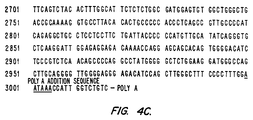
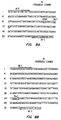
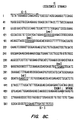
- cDNA from said ATDC gene preferably a 3 kilobase (kb) cDNA and/or fragments thereof, the entire nucleotide sequence for which is shown in Figures 4A-4C [SEQ. ID. NO.: 1].
- AT proteins and/or polypeptides translated from said cDNA preferably from said 3 kb cDNA.
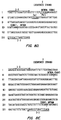
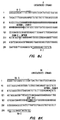
- the amino acid sequence for a preferred AT protein is shown in Figures 5A-5D [SEQ. ID. NO.: 3]. Portions of said amino acid sequence are included in this invention as well as homologous variants of said amino acid sequence and portions of said homologous variants.
- AT proteins and/or polypeptides preferably ATDC proteins and/or polypeptides, produced recombinantly, chemically and/or biologically, wherein said proteins and/or polypeptides are in a substantially pure form.
- this invention concerns an isolated nucleic acid sequence encoding a human AT protein/polypeptide wherein the sequence is substantially complementary, that is, hybridizable under standard stringency conditions, to a nucleic acid sequence encoding the amino acid sequence depicted in Figures 5A-5D, or at least a portion of said amino acid sequence.
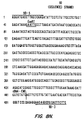
- Representative nucleic acid sequences encoding such a human AT protein/polypeptide are those nucleic acid sequences shown in Figures 4A-4C [SEQ. ID. NO.: 1] and in Figures 5A-5D [SEQ. ID. NO.: 2].
- this invention concerns recombinant nucleic acid molecules comprising a genomic DNA sequence or a cDNA sequence that encodes an AT protein or polypeptide, wherein said DNA or cDNA sequence is operatively linked to an expression control sequence in said nucleic acid molecule.
- exemplary embodiments of said recombinant nucleic acid molecules include those wherein the genomic DNA sequence is selected from the group consisting of the DNA sequence of the ATDC gene contained in cosmid K1 and cosmid 4-1, DNA sequences substantially complementary to the DNA sequence contained in those cosmids, fragments of the DNA sequence contained in those cosmids, and fragments of DNA sequences that are substantially complementary to the DNA sequence contained in said cosmids.
- Representative embodiments of said recombinant molecules also include those wherein the cDNA sequence is selected from the group consisting of the 3 kilobase (kb) cDNA shown in Figures 4A-4C [SEQ. ID. NO.: 1], DNA sequences substantially complementary to said 3 kb cDNA, the cDNA sequence shown in Figures 5A-5D [SEQ. ID. NO.: 2], and DNA sequences substantially complementary to the cDNA sequence shown in Figures 5A-5D.
- the cDNA sequence is selected from the group consisting of the 3 kilobase (kb) cDNA shown in Figures 4A-4C [SEQ. ID. NO.: 1], DNA sequences substantially complementary to said 3 kb cDNA, the cDNA sequence shown in Figures 5A-5D [SEQ. ID. NO.: 2], and DNA sequences substantially complementary to the cDNA sequence shown in Figures 5A-5D.
- PCR polymerase chain reaction
- Said ATDC gene, fragments thereof and/or the related cDNA are useful as follows: 1) to identify AT proteins and polypeptides as well as homologs or near-homologs thereto, preferably of the AT complementation group D; 2) to identify mutations in ATDC genes leading to AT-D; 3) to identify various mRNAs transcribed from ATDC genes in various AT cell lines and from different human tissues; 4) to provide the means to construct probes to test for persons with AT and that are AT heterozygotes; 5) and to elucidate the mechanisms by which AT mutations lead to radiosensitivity, immunodeficiences and ataxia.
- fragments of the ATDC gene as contained in the deposited cosmids K1 and 4-1, or fragments thereof, or the 3 kb cDNA as shown in Figures 4A-4C and/or fragments thereof, or the PCR primers for each of the nine exons can be used as probes to identify and isolate ATDC genes from various AT patients.
- the nucleotide sequences of the ATDC gene from persons with AT and from those without AT can be compared, and the mutation(s) responsible for AT pleiotropic abnormalities can be identified.
- nucleic acid probes preferably DNA probes, or PCR primers, can be constructed that span the mutated region(s).
- Such probes or PCR primers will provide the basis for the development of tests, hybridization or PCR assays, to identify people with AT and heterozygote carriers of the mutated AT gene. PCR assays are preferred.
- the sequence of the ATDC gene and/or fragments thereof and the resulting probes should allow for research to progress on the mechanism(s) underlying the pleiotropic abnormalities of AT and investigations into the reported high rates of some types of cancers in AT heterozygotes.
- a representative method of detecting mutations in an ATDC gene according to this invention comprises the steps of:
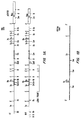
- Figure 1A illustrates the structure of cosmid clones K1 and K41.
- the locations of the human DNA (thinner black lines) and integrated pCV108 cosmid sequences (undarkened bars) are shown.
- the neo gene, with an SV40 promoter and bifunctional termination sequences are positioned as shown.
- the darkened bars indicate restriction fragments in the K1 and K41 cosmids that contain sequences complementary to cDNA from a HeLa cDNA library.
- Figure 1B illustrates the structure of the full-length 3.0 kilobase (kb) cDNA.
- Figure 2A illustrates the structure of the 4-1 and 3-1 cosmids containing the 3' portion of the ATDC gene (the ataxia-telangiectasia complementation group D gene).
- Figure 2B illustrates the structure of the intact ATDC gene, as reconstructed from the sequences in the K1 (left) and 4-1 (right) cosmids.
- the symbols for the DNA sequences and restriction sites are as defined in the description of Figures 1A-1B, supra .
- Figure 3 provides a graph of survival as a function of X-ray dose for the following cell lines: AT5BIVA (indicated by blackened circle); 1B3 (indicated by unblackened circles); and C6 (indicated by blackened triangles).
- Figures 4A-4C show the nucleotide sequence for the full-length 3 kb cDNA [SEQ. ID. NO.: 1], the restriction map for which is shown in Figure 1B.
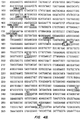
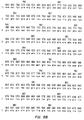
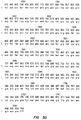
- Figures 5A-5D provide the translated open reading frame nucleotide sequence [SEQ. ID. No.: 2] for the 3 kb cDNA. [The amino acid sequence is SEQ. ID. NO. 3.]
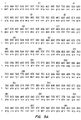
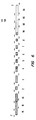
- Figure 6 schematically shows the nine exons of the 3 kb cDNA. Fourteen PCR fragments are delineated wherein the arrows indicate the positions of the primers. The primers are shown in Figure 7, and the sequences of the PCR fragments in Figures 8A-8N. The open box indicates the untranslated region whereas the hatched boxes indicate the region of the alpha helix.
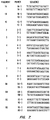
- Figure 7 provides the nucleotide sequences for the PCR primers [SEQ. ID. NOS.: 4-31] for the 3 kb cDNA, the placement of which is shown schematically in Figure 6 and specifically in Figures 8A-8N.
- Figures 8A-8N provide the nucleotide sequences [SEQ. ID. NOS. 32-45] for the PCR fragments of the 3 kb cDNA schematically indicated in Figure 6 as well as the placement of the PCR primers listed in Figure 7.
- the symbol Y represents cytosine or thymine/uracil; whereas the symbol N represents adenine or cytosine or guanine or thymine/uracil according to the standard convention.
- nucleotide sequence herein described and shown in Figures 4A-4C represent only the precise structure of the cDNA nucleotide sequence isolated according to this invention. It is expected that slightly modified nucleotide sequences will be found or can be modified by techniques known in the art to code for substantially similar AT proteins and polypeptides, for example, those having similar epitopes, and such nucleotide sequences and proteins/polypeptides are considered to be equivalents for the purpose of this invention.
- DNA having equivalent codons is considered within the scope of the invention, as are synthetic DNA sequences that encode proteins/polypeptides homologous or substantially homologous to AT proteins/polypeptides, as well as those sequences but for the degeneracy of the genetic code would hybridize to said 3 kb cDNA nucleotide sequence. Modifications and variations of DNA sequences as indicated herein are considered to result in sequences that are substantially the same as the ATDC sequences and fragments thereof herein.
- an AT gene more specifically the ATDC gene. That gene was isolated by complementation of ionizing radiation sensitivity in an AT cell line from complementation group D. Claimed herein is said ATDC gene and nucleotide sequences that are substantially complementary to said gene or fragments thereof. Strong evidence is provided herein to indicate that a defect in said gene is responsible for radiosensitivity in AT cells of complementation group D.
- the radiosensitive AT cells of the AT5BIVA cell line were first transfected with a human cosmid library containing a selectable neo gene, followed by selection with both the antibiotic G418 and ionizing radiation to isolate cell clones containing human/cosmid DNA that complements the defective gene.
- a cell clone (1B3) that demonstrates partial recovery of resistance to ionizing radiation was isolated. That clone was found to contain three integrated human/cosmid sequences.
- the integrated human/cosmid sequences were rescued by a process which first comprised the construction of a cosmid library from the 1B3 cell DNA and then the selection with kanamycin for clones containing the neo gene.
- the selected cosmid clones were then used as chromosome-specific painting probes [Pinkel et al., PNAS (USA), 85 : 9138-9142 (Dec. 1988); Gray et al., European Patent Application 430,402 (published June 5, 1991); and Ward et al., WO 90/05789 (published May 31, 1990)] for in situ hybridization to chromosomes from normal human lymphocytes.
- Two related cosmid clones (K1 and K41) were found to contain human sequences that originated from chromosomal region llq23. As indicated in the Background above, the llq23 region has been previously determined by genetic linkage analysis to be the location of the AT gene(s) from three separate complementation groups.
- ATDC is a previously unidentified gene.
- the ATDC gene is a single-copy gene, five mRNAs have been detected in a range of from about 1.8 kilobases (kb) to about 5.7 kb.
- the variation in size of the mRNAs may result from differences at the 5' end, indicating that the ATDC gene is a complex gene that can code for several different proteins.
- the ATDC gene may therefore have multiple functions, consistent with the pleiotropic abnormalities seen in individuals with AT.
- the ATDC gene and/or fragments thereof and/or cDNA therefrom may be used as probes to identify homologous genes from other AT complementation groups. Linkage analysis has demonstrated that the AT gene(s) for the various complementation groups are clustered together, and thus it is possible that they are distantly related. Chromosome 11-specific libraries, preferably chromosome 11q23-specific libraries, and still more preferably chromosome 11q23-specific cosmid libraries, can be screened to identify clones that cross hybridize with ATDC.
- mouse cDNA libraries can be screened with ATDC probes for a related mouse gene. Isolation of a mouse homolog would allow for the development of a transgenic mouse AT model.
- the probes and assays enabled by this invention will be useful in proving that a defect in the ATDC gene is responsible for AT-D.
- Proof required would be (1) the demonstration of genetic rearrangements, such as, deletions, amplifications, translocations, inversions, point mutations among others, in the ATDC gene in AT-D cells, and/or (2) functional complementation of radiosensitivity in AT-D cells after transfection with an appropriate vector, preferably a cosmid vector containing the gene or a fragment thereof, or a cDNA therefrom in an expression vector.
- An important utility of the instant invention is to detect the mutations that cause defect(s) in the ATDC gene resulting in the phenotypic symptoms of AT-D.
- hybridization tests preferably Southern or Northern assays
- assays incorporating PCR are preferably used.
- Preferred methods of identifying mutations within the ATDC gene comprise assays wherein PCR is used.
- the mechanics of PCR are described in Saiki et al., Science, 230: 1350 (1985) and U.S. Patent Nos. 4,800,159 (issued January 24, 1989), 4,683,195 and 4,683,202 (both of the latter issued July 28, 1987).
- a PCR assay amplifies and analyses cellular DNA, such that mutations within splice sites as well as within coding regions can be detected when appropriate primers are used.
- mRNA could also be isolated, and cDNA prepared therefrom. Appropriate PCR primers could then be used to amplify the cDNA, and the cDNA PCR products from normal and AT cells could then be compared.
- An exemplary PCR assay is that wherein the PCR primers listed in Figure 7 [SEQ. ID. NOS.: 4-31] are used.
- cellular DNA from people with AT and without AT is isolated and amplified with the PCR primers.
- the PCR products from the normal and AT cells are compared, preferably initially upon a sizing gel. Changes in size indicative of certain genetic rearrangements are thus determined. If no changes are found in the size of the fragments, then further comparisons can be made to detect genetic rearrangements that would not be evident in such a size comparison, for example, deletions of a few base pairs or point mutations.
- PCR-SSCP PCR-single-strand conformation polymorphism
- denaturing gradient gel electrophoretic assay PCR-SSCP
- the PCR-SSCP method is described in a review article by Kenshi Hayashi entitled “PCR-SSCP: A Simple and Sensitive Method for Detection of Mutations in the Genomic DNA” in PCR Methods and Applications, 1 : 34-38 (1991).
- Denaturing gradient gel electrophoresis is described in Myers et al., "Detection and Localization of Single Base Changes by Denaturing Gradient Gel Electrophoresis," Methods in Enzymology, 155 : 501-527 (1987).
- Such assays as hybridization and PCR assays, preferably PCR assays including the PCR-SSCP or denaturing gradient gel electrophoretic assays, as applied in the context of this invention may be used to screen people for AT heterozygosity, which can be a significant risk factor in regard, for example, to ionizing radiation, and for prenatal testing for and diagnosis of AT, among other uses.
- AT proteins and/or polypeptides is herein defined to mean proteins and/or polypeptides encoded by an ATDC gene and/or fragments thereof.
- An exemplary and preferred AT protein is that for which the amino acid sequence is shown in Figures 5A-5D [SEQ. ID. NO.: 3].
- a “polypeptide” is a chain of amino acids covalently bound by peptide linkages and is herein considered to be composed of 50 or less amino acids.
- a “protein” is herein defined to be a polypeptide composed of more than 50 amino acids.
- amino acid sequence of AT proteins and polypeptides can be modified by genetic techniques.
- One or more amino acids can be deleted or substituted.
- Such amino acid changes may not cause any measurable change in the biological activity of the protein or polypeptide and result in proteins or polypeptides which are within the scope of this invention.
- AT proteins and polypeptides of this invention can be prepared in a variety of ways according to this invention, for example, recombinantly, synthetically or otherwise biologically, that is, by cleaving longer proteins and polypeptides enzymatically and/or chemically.
- a preferred method to prepare AT proteins is by recombinant means.
- a representative method to prepare the AT protein as shown in Figures 5A-5D or fragments thereof would be to insert the appropriate fragment of the 3 kb cDNA pictured in Figures 4A-4C into an appropriate expression vector.
- a wide variety of host-cloning vector combinations may be usefully employed in cloning the ATDC DNA isolated as described herein.
- useful cloning vehicles may include chromosomal, nonchromosomal and synthetic DNA sequences such as various known bacterial plasmids such as pBR322, other E.
- coli plasmids and their derivatives and wider host range plasmids such as RP4, phage DNA such as the numerous derivatives of phage lambda, e.g., NB989 and vectors derived from combinations of plasmids and phage DNAs such as plasmids which have been modified to employ phage DNA expression control sequences.
- Useful hosts may be eukaryotic or prokaryotic and include bacterial hosts such as E. coli and other bacterial strains, yeasts and other fungi, animal or plant hosts such as animal or plant cells in culture, insect cells and other hosts. Of course, not all hosts may be equally efficient.
- bacterial hosts such as E. coli and other bacterial strains, yeasts and other fungi
- animal or plant hosts such as animal or plant cells in culture, insect cells and other hosts.
- host-cloning vehicle combination may be made by those of skill in the art after due consideration of the principles set forth herein without departing from the scope of this invention.
- the particular site chosen for insertion of the selected DNA fragment into the cloning vehicle to form a recombinant DNA molecule is determined by a variety of factors. These include size and structure of the protein or polypeptide to be expressed, susceptibility of the desired protein or polypeptide to endoenzymatic degradation by the host cell components and contamination by its proteins, expression characteristics such as the location of start and stop codons, and other factors recognized by those of skill in the art.
- the recombinant nucleic acid molecule containing the ATDC gene, fragment thereof, or cDNA thereform may be employed to transform a host so as to permit that host (transformant) to express the structural gene or fragment thereof and to produce the protein or polypeptide for which the hybrid DNA codes.
- the recombinant nucleic acid molecule may also be employed to transform a host so as to permit that host on replication to produce additional recombinant nucleic acid molecules as a source of ATDC DNA and fragments thereof.
- the selection of an appropriate host for either of these uses is controlled by a number of factors recognized in the art. These include, for example, compatibility with the chosen vector, toxicity of the co-products, ease of recovery of the desired protein or polypeptide, expression characteristics, biosafety and costs.
- competent cells which are capable of DNA uptake are prepared from cells harvested after exponential growth phase and subsequently treated by the CaCl 2 method by well known procedures. Transformation can also be performed after forming a protoplast of the host cell.
- transfection method of DNA as calcium phosphate-precipitate conventional mechanical procedures such as microinjection, insertion of a plasmid encapsulated in red blood cell hosts or in liposomes, treatment of cells with agents such as lysophosphatidylcholine or use of virus vectors, or the like may be used.
- the level of production of protein or polypeptide is governed by two major factors: the number of copies of its gene or DNA sequence encoding for it within the cell and the efficiency with which these gene and sequence copies are transcribed and translated. Efficiencies of transcription and translation (which together comprise expression) are in turn dependent upon nucleotide sequences, normally situated ahead of the desired coding sequence. These nucleotide sequences or expression control sequences define, inter alia, the location at which RNA polymerase interacts to initiate transcription (the promoter sequence) and at which ribosomes bind and interact with the mRNA (the product of transcription) to initiate translation. Not all such expression control sequences function with equal efficiency.
- the newly engineered DNA fragment may be inserted into a multicopy plasmid or a bacteriophage derivative in order to increase the number of gene or sequence copies within the cell and thereby further improve the yield of expressed protein.
- expression control sequences may be employed. These include the operator, promoter and ribosome binding and interaction sequences (including sequences such as the Shine-Dalgarno sequences) of the lactose operon of E. coli ("the lac system"), the corresponding sequences of the tryptophan synthetase system of E. coli ("the trp system”), a fusion of the trp and lac promoter ("the tac system”), the major operator and promoter regions of phage lambda (O L P L and O R P R ,), and the control region of the phage fd coat protein.
- the lac system the lactose operon of E. coli
- the trp system the corresponding sequences of the tryptophan synthetase system of E. coli
- the tac system a fusion of the trp and lac promoter
- the tac system the major operator and promoter regions of phage lambda (O L P L and O R P R
- DNA fragments containing these sequences are excised by cleavage with restriction enzymes from the DNA isolated from transducing phages that carry the lac or trp operons, or from the DNA of phage lambda or fd. These fragments are then manipulated in order to obtain a limited population of molecules such that the essential controlling sequences can be joined very close to, or in juxtaposition with, the initiation codon of the coding sequence.
- the fusion product is then inserted into a cloning vehicle for transformation of the appropriate hosts and the level of antigen production is measured. Cells giving the most efficient expression may be thus selected.
- cloning vehicles carrying the lac, trp or lambda P L control system attached to an initiation codon may be employed and fused to a fragment containing a sequence coding for an AT protein or polypeptide such that the gene or sequence is correctly translated from the initiation codon of the cloning vehicle.
- nucleic acid molecule is herein defined to mean a hybrid nucleotide sequence comprising at least two nucleotide sequences, the first sequence not normally being found together in nature with the second.
- expression control sequence is herein defined to mean a DNA sequence of nucleotides that controls and regulates expression of structural genes when operatively linked to those genes.
- AT proteins and polypeptides of this invention may be prepared not only by recombinant means but also by synthetic and by other biologic means.
- Exemplary of other biologic means to prepare the desired polypeptide or protein is to subject to selective proteolysis a longer AT polypeptide or protein containing the desired amino acid sequence; for example, the longer polypeptide or protein can be split with chemical reagents or with enzymes. Synthetic formation of the polypeptide or protein requires chemically synthesizing the desired chain of amino acids by methods well known in the art.
- simian virus (SV)40-transformed cell lines LM217 (normal) and AT2SF (unknown AT complementation group) were established by transfection of primary human fibroblasts with pSVori- plasmid [Murnane et al., Exp. Cell Res., 158 : 119-126 (1985); Murnane et al., Mol. Cell Biol., 6: 549-558 (1986)].
- AT-A The SV40-transformed fibroblast cell line AT3BISV (AT-A) was provided by A. M. R. Taylor (Birmingham, United Kingdom).
- Cell line 1B3 was derived from the SV40-transformed fibroblast cell line AT5BIVA (GM5849) [Kapp and Painter 1989, supra ], which was obtained from the NIGMS Human Genetic Mutant Cell Repository [Camden, NJ (USA)].
- HeLa cells Hela S3; ATCC CCL 2.2
- ATCC American Type Culture Collection
- Rockville, MD USA
- the cosmid library from 1B3 was constructed according to standard procedures [Sambrook et al., "Molecular Cloning: A Laboratory Manual", 2d ed. (Cold Spring Harbor Laboratory, Cold Spring Harbor, New York; 1989)]. DNA from 1B3 was partially digested with Mbo I, and fragments of about 30 kilobases (kb) to about 50 kb were ligated to Bam HI-digested pWE16 cosmid DNA [Stratagene, La Jolla, CA (USA); Wahl et al., PNAS, 84: 2160 (1987)].
- Clones containing the neo (neomycin resistance) gene in the integrated pCV108 cosmid were selected by growth of the XL1-Blue bacteria (Stratagene) containing the cosmid library on agar plates with 50 ⁇ g kanamycin/ml. Restriction-enzyme mapping was accomplished by digestion with various combinations of enzymes and was confirmed by further mapping of the individual Eco RI fragments cloned into a Bluescript plasmid (Stratagene).
- a commercially available HeLa cell cDNA library (Stratagene) within the bacteriophage vector ZAPII was screened according to a method described elsewhere [Murnane, Mol. Cell Biol., 6: 549-558 (1986)] with a probe that consisted of cosmid fragments containing only nonrepetitive sequences. Positive cDNA clones were then rescued from ZAPII by in vivo excision of the Bluescript plasmid by using a protocol provided with the vector (Stratagene).
- a chromosome 11-specific cosmid library obtained from L. Deaven [Los Alamos National Laboratory; Los Alamos, NM (USA)] was screened by conventional methods (Sambrook et al. 1989, supra ) with the use of a 3.0 kb cDNA as a probe ( Figures 1B, 4A-4C and 8A-8N).
- RNA agarose gel electrophoresis and RNA blot analysis were carried out according to standard procedures (Sambrook et al. 1989, supra ).
- DNA to be tested for complementation was introduced into AT5BIVA cells by calcium phosphate-mediated transfection (Murnane et al. 1985, supra ). Before transfection, the cosmid clones were linearized with Not I, which cuts between the vector and human sequences. Cell clones containing the integrated DNA were selected by incubation with 400 ⁇ g G418/ml. X-ray survival was determined according to a method described elsewhere (Kapp and Painter 1989, supra ) with or without feeder layers that consisted of HeLa cells exposed to 60 Gy (gray) of X-rays.
- Metaphase spreads were prepared according to the method described by Yunis in Science, 191 : 1268-1270 (1976). Slides were treated with 20 ⁇ g pepsin/ml (in 0.1 M HCl) for 10 min at 37°C before in situ hybridization. Hybridization conditions and staining procedures were modified from those of Pinkel et al. [ PNAS (USA), 83: 2934-2938 (1986)] and Trask et al. [ Am. J. Hum. Genet., 48: 1-15 (1991)].
- the in situ hybridization probe strategy specifically comprised the use of a dioxigenin-labeled K1 or K41 cosmid probe that was detected with FITC-conjugated antibodies, and a biotin-labeled chromosome 11-specific alpha-satellite DNA probe that was detected with Texas Red-conjugated avidin.
- the chromosome 11-specific alpha-satellite DNA probe was used as a marker in locating the origin of the cosmid probes to human chromosomal region 11q23. Chromosomes were counterstained with 4',6-diamino-2-phenylindole (DAPI).
- the chromosomal map location of the ATDC gene was determined by a radiation hybrid mapping technique [Richard et al., Am. J. Hum. Genet., 49 : 1189-1196 (1991)].
- the order and distances between ATDC and the markers stromely-sin 1 (STMY1), CJ52.193 (D11S384), CJ52.77 (D11S424), CD3D, apolipoprotein (APO), THY1, D11S528, or ETS1 were established by a statistical analysis of the cosegregation of markers in 100 radiation hybrids, and the method of moments was used to determine the frequency of breakage between markers [Cox et al., Science, 250: 245-250 (1990)].
- the integrated cosmid sequences from cell line 1B3 were isolated by construction of a cosmid library from 1B3 DNA, and then by using kanamycin to select bacteria that had cosmids containing the integrated neo gene.
- Cosmid clones isolated by this method were screened by in situ hybridization to identify cosmids containing human DNA from the chromosomal region 11q23, previously demonstrated to be the location of the gene(s) associated with three AT complementation groups. Two of the cosmid clones (K1 and K41) hybridized to chromosomal region 11q23.
- a dioxigenin-labeled K1 or K41 cosmid probe was localized to llq23 in a chromosome-specific painting experiment wherein a chromosome 11-specific alpha-satellite DNA probe was used concurrently to identify the centromeric chromosome 11 region.
- K1 and K41 contained overlapping sequences, consisting of both the integrated pCV108 cosmid and adjacent human DNA ( Figure 1A).
- the orientation of the integrated sequences placed the SV40 bidirectional transcriptional termination sequences, which are located adjacent to the neo gene in the pCV108 cosmid, down-stream from the truncated gene ( Figure 1A).
- the form of the ATDC gene integrated into cell line 1B3 is therefore a functional transcriptional unit despite the absence of the 3' end.
- the cDNA was used as a probe to screen a human genomic chromosome 11 library. Two cosmid clones (3-1 and 4-1) were identified. Restriction mapping of these clones demonstrated that they contained overlapping regions ( Figure 2A). With the use of the 3.0-kb cDNA ( Figures 1B and 4A-4C) as a probe, Southern blot analysis revealed three separate regions of hybridization within the cosmid DNA ( Figure 2A). One of these regions, which was contained within cosmid clone 4-1 but not within 3-1, overlapped with cosmid clones K1 and K41 ( Figure 2A). That was determined by sequence analysis with primers derived from the cDNA sequence.
- Cosmid clone 4-1 therefore contains the ATDC gene 3' portion that was missing from clones K1 and K41.
- a composite map derived from cosmid clones K1 and 4-1 indicates that the missing 3' portion of the ATDC gene is more than 30 kb in length ( Figure 2B).
- ATDC is a single-copy gene, it produces several mRNAs of varous sizes, apparently because of alternate processing of RNA transcripts.
- mRNA isolated from HeLa cells upon RNA blot analysis lacked the largest mRNA transcript (which was seen more clearly on shorter exposures), and instead contained at least two others (3.0 and 1.8 kb).
- the 3.0-kb mRNA transcript was the most abundant, consistent with the fact that the cDNA for this mRNA was the only one identified in the HeLa cell library ( Figure 1B).
- Two SV40-transformed AT fibroblast cell lines (AT3BISV and AT5BIVA) were shown upon RNA blot analysis to contain various amounts of the mRNA transcripts seen in the LM217 and HeLa cells.
- the 1B3 cell line appeared identical to the SV40-transformed normal line LM217, in size of mRNAs.
- the significance of the differences between the mRNA observed in the AT3BISV and AT5BIVA cell lines and that seen in LM217 or 1B3 is not known. No additional mRNA transcript from the truncated ATDC gene was evident in 1B3, indicating that it is either below the level of detection or is similar in size to one of the mRNAs transcribed from the endogenous gene.
- the ATDC gene lies outside the linkage region predicted to contain the AT gene(s) for complementation groups A and C, indicating a separate locus for the complementation group D gene.
- the results described herein clearly demonstrate that the ATDC gene is not linked to the centromeric (STMY1) and telomeric (D11S424) flanking markers for the AT-A and AT-C gene(s).
- the evidence that the ATDC gene isolated from 1B3 is telomeric to THY1 is consistent with the evidence for an additional AT gene within that region. It appears from the evidence that several genes within the 11q23 region are associated with AT; the lack of hybridization of ATDC to other human DNA sequences suggests that they are not closely related.
Landscapes
- Chemical & Material Sciences (AREA)
- Health & Medical Sciences (AREA)
- Life Sciences & Earth Sciences (AREA)
- Organic Chemistry (AREA)
- General Health & Medical Sciences (AREA)
- Molecular Biology (AREA)
- Biochemistry (AREA)
- Biophysics (AREA)
- Zoology (AREA)
- Genetics & Genomics (AREA)
- Medicinal Chemistry (AREA)
- Gastroenterology & Hepatology (AREA)
- Proteomics, Peptides & Aminoacids (AREA)
- Toxicology (AREA)
- Measuring Or Testing Involving Enzymes Or Micro-Organisms (AREA)
- Peptides Or Proteins (AREA)
- Preparation Of Compounds By Using Micro-Organisms (AREA)
- Organic Low-Molecular-Weight Compounds And Preparation Thereof (AREA)
Claims (14)
- Composition comprenant un gène isolé caractérisant le groupe D de complémentation de l'ataxie-télangiectasie (ATDC) ou un fragment d'un tel gène, dans laquelle la séquence de nucléotides dudit gène ou dudit fragment est la séquence de nucléotides du gène ATDC ou d'un fragment de ce gène ATDC qui est contenue dans le cosmide K1 et le cosmide 4-1, déposés à l'American Type Culture Collection (ATCC) avec les numéros ATCC respectifs 75250 et 75251, ou est pratiquement complémentaire de la séquence de gène ATDC contenue dans lesdits cosmides ou de fragments de ladite séquence de gène ATDC.
- Composition comprenant le cosmide K-1 et/ou le cosmide 4-1, déposés à l'American Type Culture Collection (ATCC) avec les numéros ATCC respectifs 75250 et 75251.
- Composition comprenant une séquence d'acide nucléique isolée codant une protéine ou un polypeptide humain AT, choisie dans l'ensemble que constituent la séquence d'ADNc représentée sur les figures 4A-4C (Séquence n° 1), les séquences pratiquement complémentaires de ladite séquence d'ADNc (Séquence n° 1), des fragments de ladite séquence d'ADNc (Séquence n° 1), et des fragments pratiquement complémentaires de fragments de ladite séquence d'ADNc (Séquence n° 1).
- Composition conforme à la revendication 3, dans laquelle lesdits fragments de ladite séquence d'ADNc (Séquence n°1) sont les fragments représentés sur les figures 8A-8N (Séquences n° 32-45), et les fragments pratiquement complémentaires de fragments de ladite séquence d'ADNc (Séquence n° 1) sont des séquences d'acide nucléique qui sont pratiquement complémentaires de celles des fragments représentés sur les figures 8A-8N (Séquences n° 32-45).
- Composition comprenant des amorces pour une réaction en chaíne de polymérase (PCR), choisies dans l'ensemble que constituent les amorces représentées sur la figure 7 (Séquences n° 4-31) et les séquences d'acide nucléique pratiquement complémentaires de celles-ci.
- Composition comprenant une protéine ou un polypeptide codé par un gène ATDC ou par un fragment d'un tel gène, défini dans la revendication 1.
- Composition comprenant une protéine ou un polypeptide AT, lié à l'ataxie-télangiectasie, qui possède une séquence d'acides aminés choisie dans l'ensemble que constituent la séquence d'acides aminés représentée sur les figures 5A-5D (Séquence n° 3), une partie de la séquence d'acides aminés représentée sur les figures 5A-5D, des séquences d'acides aminés qui sont des variantes homologues de la séquence d'acides aminés représentée sur les figures 5A-5D, et des parties des séquences d'acides aminés qui sont des variantes homologues de la séquence d'acides aminés représentée sur les figures 5A-5D.
- Molécule d'acide nucléique recombiné, comprenant une séquence d'ADN génomique ou d'ADNc qui code une protéine ou un polypeptide AT, définie dans la revendication 7, ladite séquence d'ADN génomique ou d'ADNc étant opérationnellement liée à une séquence de contrôle de l'expression au sein de ladite molécule d'acide nucléique.
- Molécule d'acide nucléique recombiné, conforme à la revendication 8, dans laquelle ladite séquence d'ADN génomique est choisie dans l'ensemble que constituent la séquence d'ADN du gène ATDC, contenue dans le cosmide K1 et le cosmide 4-1, déposés à l'American Type Culture Collection (ATCC) avec les numéros ATCC respectifs 75250 et 75251, les séquences d'ADN pratiquement complémentaires de ladite séquence d'ADN contenue dans lesdits cosmides, des fragments de ladite séquence d'ADN contenue dans lesdits cosmides, et des séquences d'ADN pratiquement complémentaires de fragments de la séquence d'ADN contenue dans lesdits cosmides.
- Molécule d'acide nucléique recombiné, conforme à la revendication 8, dans laquelle ladite séquence d'ADNc est choisie dans l'ensemble que constituent l'ADNc de 3 kb (kilobases) représenté sur les figures 4A-4C (Séquence n° 1), les séquences d'ADN pratiquement complémentaires dudit ADNc de 3 kb, la séquence d'ADNc représentée sur les figures 5A-5D (Séquence n° 2), et les séquences d'ADN pratiquement complémentaires de ladite séquence d'ADNc représentée sur les figures 5A-5D.
- Procédé de détection de mutations du gène ATDC défini dans la revendication 1, qui comporte les étapes consistant à :amplifier un ou plusieurs fragments dudit gène et d'un gène d'ATDC dont on sait qu'il est normal, par réaction en chaíne de polymérase (PCR) réalisée avec les mêmes ou pratiquement les mêmes amorces de PCR ; etdéterminer si ledit gène ATDC comporte des mutations, en comparant les produits de l'amplification par PCR dudit gène avec ceux de l'amplification du gène normal, et en détectant les différences entre les produits de PCR associées à des mutations.
- Procédé conforme à la revendication 11, dans lequel on compare lesdits produits de PCR pour y détecter des différences de taille.
- Procédé conforme à la revendication 11, qui comporte le fait de recourir à une analyse en PCR des polymorphismes de conformation d'ADN simple brin ou à une analyse par électrophorèse sur gel à gradient dénaturant, pour déterminer si ledit gène ATDC comporte des mutations.
- Procédé conforme à la revendication 11, dans lequel lesdites amorces de PCR sont choisies dans l'ensemble que constituent les amorces représentées sur la figure 7 (Séquences n° 4-31) et les séquences d'acide nucléique pratiquement complémentaires de ces amorces.
Applications Claiming Priority (3)
| Application Number | Priority Date | Filing Date | Title |
|---|---|---|---|
| US07/903,466 US5395767A (en) | 1992-06-22 | 1992-06-22 | Gene for ataxia-telangiectasia complementation group D (ATDC) |
| PCT/US1993/005794 WO1994000572A2 (fr) | 1992-06-22 | 1993-06-18 | Gene de l'ataxie-telangiectasies du groupe de complementation d (atdc) |
| US903466 | 1997-07-30 |
Publications (2)
| Publication Number | Publication Date |
|---|---|
| EP0647271A1 EP0647271A1 (fr) | 1995-04-12 |
| EP0647271B1 true EP0647271B1 (fr) | 1999-01-20 |
Family
ID=25417553
Family Applications (1)
| Application Number | Title | Priority Date | Filing Date |
|---|---|---|---|
| EP93918123A Expired - Lifetime EP0647271B1 (fr) | 1992-06-22 | 1993-06-18 | Gene de l'ataxie-telangiectasies du groupe de complementation d (atdc) |
Country Status (8)
| Country | Link |
|---|---|
| US (1) | US5395767A (fr) |
| EP (1) | EP0647271B1 (fr) |
| JP (1) | JPH07508172A (fr) |
| AT (1) | ATE175995T1 (fr) |
| AU (1) | AU690522B2 (fr) |
| CA (1) | CA2136986A1 (fr) |
| DE (1) | DE69323199T2 (fr) |
| WO (1) | WO1994000572A2 (fr) |
Families Citing this family (11)
| Publication number | Priority date | Publication date | Assignee | Title |
|---|---|---|---|---|
| NZ277946A (en) | 1993-11-30 | 1998-03-25 | Lxr Biotechnology Inc | Apoptosis modulating protein and nucleotide sequence compositions using bcl-2 homologs termed cdn-1, cdn-2 and cdn3 |
| US5998131A (en) * | 1994-10-07 | 1999-12-07 | Lxr Biotechnology, Inc. | Screening methods for the identification of compounds capable of abrogating BaK-BHRF-1 protein interactions |
| US5635351A (en) * | 1995-03-14 | 1997-06-03 | The Regents Of The University Of California | Genetic gain and loss in gliomas |
| US5858661A (en) | 1995-05-16 | 1999-01-12 | Ramot-University Authority For Applied Research And Industrial Development | Ataxia-telangiectasia gene and its genomic organization |
| US5756288A (en) * | 1995-05-16 | 1998-05-26 | Ramot-University Of Authority For Applied Research And Industrial Dev. Ltd. | Ataxia-telangiectasai gene |
| US5777093A (en) * | 1995-05-16 | 1998-07-07 | Ramot-University Authority For Applied Research & Industrial Development Ltd. | cDNAs associated with ataxia-telangiectasia |
| US5728807A (en) * | 1995-05-16 | 1998-03-17 | Ramot-University Authority For Applied Research And Industrial Development, Ltd. | Mutated proteins associated with ataxia-telangiectasia |
| US5955279A (en) * | 1996-06-13 | 1999-09-21 | Gatti; Richard A. | Ataxia-telangiectasia: mutations in the ATM gene |
| CN1314409A (zh) * | 2000-03-22 | 2001-09-26 | 上海博德基因开发有限公司 | 一种新的多肽——人共济失调-毛细血管扩张症突变蛋白11和编码这种多肽的多核苷酸 |
| US20040009537A1 (en) * | 2002-01-11 | 2004-01-15 | Jack Roos | Methods of modulating and of identifying agents that modulate intracellular calcium |
| WO2003095972A2 (fr) * | 2002-05-09 | 2003-11-20 | The Regents Of The University Of California | Procede d'analyse d'une proteine de l'ataxie-telangiectasie |
Family Cites Families (1)
| Publication number | Priority date | Publication date | Assignee | Title |
|---|---|---|---|---|
| EP0390323B2 (fr) * | 1989-03-29 | 2012-08-08 | Johns Hopkins University | Détection de l'écoulement du type sauvage du p53 gène |
-
1992
- 1992-06-22 US US07/903,466 patent/US5395767A/en not_active Expired - Lifetime
-
1993
- 1993-06-18 AT AT93918123T patent/ATE175995T1/de not_active IP Right Cessation
- 1993-06-18 DE DE69323199T patent/DE69323199T2/de not_active Expired - Lifetime
- 1993-06-18 WO PCT/US1993/005794 patent/WO1994000572A2/fr not_active Ceased
- 1993-06-18 CA CA002136986A patent/CA2136986A1/fr not_active Abandoned
- 1993-06-18 AU AU47684/93A patent/AU690522B2/en not_active Expired
- 1993-06-18 EP EP93918123A patent/EP0647271B1/fr not_active Expired - Lifetime
- 1993-06-18 JP JP6502450A patent/JPH07508172A/ja not_active Ceased
Also Published As
| Publication number | Publication date |
|---|---|
| WO1994000572A2 (fr) | 1994-01-06 |
| AU4768493A (en) | 1994-01-24 |
| WO1994000572A3 (fr) | 1994-02-17 |
| CA2136986A1 (fr) | 1994-01-06 |
| EP0647271A1 (fr) | 1995-04-12 |
| DE69323199D1 (de) | 1999-03-04 |
| US5395767A (en) | 1995-03-07 |
| ATE175995T1 (de) | 1999-02-15 |
| JPH07508172A (ja) | 1995-09-14 |
| DE69323199T2 (de) | 1999-06-24 |
| AU690522B2 (en) | 1998-04-30 |
Similar Documents
| Publication | Publication Date | Title |
|---|---|---|
| Kapp et al. | Cloning of a candidate gene for ataxia-telangiectasia group D | |
| Hahn et al. | DPC4, a candidate tumor suppressor gene at human chromosome 18q21. 1 | |
| van Duin et al. | Molecular characterization of the human excision repair gene ERCC-1: cDNA cloning and amino acid homology with the yeast DNA repair gene RAD10 | |
| Nuell et al. | Prohibitin, an evolutionarily conserved intracellular protein that blocks DNA synthesis in normal fibroblasts and HeLa cells | |
| US20080166730A1 (en) | Therapeutic and diagnostic proteins comprising a SOCS box | |
| US5395767A (en) | Gene for ataxia-telangiectasia complementation group D (ATDC) | |
| Tommerup et al. | A zinc-finger gene ZNF141 mapping at 4p16. 3/D4S90 is a candidate gene for the Wolf-Hirschhorn (4p-) syndrome | |
| EP0932674B1 (fr) | NOUVEAU GENE DE MAMMIFERE bcl-w APPARTENANT A LA FAMILLE bcl-2 DE GENES LUTTANT CONTRE L'APOPTOSE | |
| US20060003377A1 (en) | Therapeutic and diagnostic proteins comprising a SOCS box | |
| US5866372A (en) | Nucleic acids encoding lymphoid CD30 antigen | |
| Allikmets et al. | Characterization and mapping of three new mammalian ATP-binding transporter genes from an EST database | |
| Wheeler et al. | Microconversion between murine H-2 genes integrated into yeast | |
| JPH11506909A (ja) | 血管拡張性運動失調症遺伝子 | |
| CA2197233C (fr) | Methodes pour caracteriser des composes utiles pour le traitement des maladies auto-immunes | |
| Holzfeind et al. | Structural organization of the gene encoding the human lipocalin tear prealbumin and synthesis of the recombinant protein in Escherichia coli | |
| US5543303A (en) | Recombinant myelomonocytic differentiation antigen CD14 | |
| Goldberg et al. | Cloning and mapping of the α-adducin gene close to D4S95 and assessment of its relationship to Huntington disease | |
| Brookman et al. | Isolation and characterization of mouse Xrcc-1, a DNA repair gene affecting ligation | |
| US6548258B2 (en) | Methods for diagnosing tuberous sclerosis by detecting mutation in the TSC-1 gene | |
| US6197932B1 (en) | Modulators of actin | |
| US5869247A (en) | Natural resistance associated macrophage protein and uses thereof | |
| Dower et al. | Organization and chromosomal locations of Rap1a/Krev sequences in the mouse | |
| US6309821B1 (en) | DNA encoding a PAC10 human homolog | |
| WO1992011289A1 (fr) | Formation d'antigene | |
| JP3683000B2 (ja) | Spa−1蛋白質及びそれをコードする遺伝子 |
Legal Events
| Date | Code | Title | Description |
|---|---|---|---|
| PUAI | Public reference made under article 153(3) epc to a published international application that has entered the european phase |
Free format text: ORIGINAL CODE: 0009012 |
|
| 17P | Request for examination filed |
Effective date: 19950113 |
|
| AK | Designated contracting states |
Kind code of ref document: A1 Designated state(s): AT BE CH DE DK ES FR GB GR IE IT LI LU MC NL PT SE |
|
| 17Q | First examination report despatched |
Effective date: 19951006 |
|
| GRAG | Despatch of communication of intention to grant |
Free format text: ORIGINAL CODE: EPIDOS AGRA |
|
| GRAG | Despatch of communication of intention to grant |
Free format text: ORIGINAL CODE: EPIDOS AGRA |
|
| GRAG | Despatch of communication of intention to grant |
Free format text: ORIGINAL CODE: EPIDOS AGRA |
|
| GRAH | Despatch of communication of intention to grant a patent |
Free format text: ORIGINAL CODE: EPIDOS IGRA |
|
| GRAH | Despatch of communication of intention to grant a patent |
Free format text: ORIGINAL CODE: EPIDOS IGRA |
|
| GRAA | (expected) grant |
Free format text: ORIGINAL CODE: 0009210 |
|
| AK | Designated contracting states |
Kind code of ref document: B1 Designated state(s): AT BE CH DE DK ES FR GB GR IE IT LI LU MC NL PT SE |
|
| PG25 | Lapsed in a contracting state [announced via postgrant information from national office to epo] |
Ref country code: SE Free format text: THE PATENT HAS BEEN ANNULLED BY A DECISION OF A NATIONAL AUTHORITY Effective date: 19990120 Ref country code: NL Free format text: LAPSE BECAUSE OF FAILURE TO SUBMIT A TRANSLATION OF THE DESCRIPTION OR TO PAY THE FEE WITHIN THE PRESCRIBED TIME-LIMIT Effective date: 19990120 Ref country code: LI Free format text: LAPSE BECAUSE OF FAILURE TO SUBMIT A TRANSLATION OF THE DESCRIPTION OR TO PAY THE FEE WITHIN THE PRESCRIBED TIME-LIMIT Effective date: 19990120 Ref country code: IT Free format text: LAPSE BECAUSE OF FAILURE TO SUBMIT A TRANSLATION OF THE DESCRIPTION OR TO PAY THE FEE WITHIN THE PRESCRIBED TIME-LIMIT;WARNING: LAPSES OF ITALIAN PATENTS WITH EFFECTIVE DATE BEFORE 2007 MAY HAVE OCCURRED AT ANY TIME BEFORE 2007. THE CORRECT EFFECTIVE DATE MAY BE DIFFERENT FROM THE ONE RECORDED. Effective date: 19990120 Ref country code: GR Free format text: LAPSE BECAUSE OF NON-PAYMENT OF DUE FEES Effective date: 19990120 Ref country code: ES Free format text: THE PATENT HAS BEEN ANNULLED BY A DECISION OF A NATIONAL AUTHORITY Effective date: 19990120 Ref country code: CH Free format text: LAPSE BECAUSE OF FAILURE TO SUBMIT A TRANSLATION OF THE DESCRIPTION OR TO PAY THE FEE WITHIN THE PRESCRIBED TIME-LIMIT Effective date: 19990120 Ref country code: BE Free format text: LAPSE BECAUSE OF FAILURE TO SUBMIT A TRANSLATION OF THE DESCRIPTION OR TO PAY THE FEE WITHIN THE PRESCRIBED TIME-LIMIT Effective date: 19990120 Ref country code: AT Free format text: LAPSE BECAUSE OF FAILURE TO SUBMIT A TRANSLATION OF THE DESCRIPTION OR TO PAY THE FEE WITHIN THE PRESCRIBED TIME-LIMIT Effective date: 19990120 |
|
| REF | Corresponds to: |
Ref document number: 175995 Country of ref document: AT Date of ref document: 19990215 Kind code of ref document: T |
|
| REG | Reference to a national code |
Ref country code: CH Ref legal event code: EP |
|
| REG | Reference to a national code |
Ref country code: IE Ref legal event code: FG4D |
|
| ET | Fr: translation filed | ||
| REF | Corresponds to: |
Ref document number: 69323199 Country of ref document: DE Date of ref document: 19990304 |
|
| PG25 | Lapsed in a contracting state [announced via postgrant information from national office to epo] |
Ref country code: PT Free format text: LAPSE BECAUSE OF FAILURE TO SUBMIT A TRANSLATION OF THE DESCRIPTION OR TO PAY THE FEE WITHIN THE PRESCRIBED TIME-LIMIT Effective date: 19990420 Ref country code: DK Free format text: LAPSE BECAUSE OF FAILURE TO SUBMIT A TRANSLATION OF THE DESCRIPTION OR TO PAY THE FEE WITHIN THE PRESCRIBED TIME-LIMIT Effective date: 19990420 |
|
| PG25 | Lapsed in a contracting state [announced via postgrant information from national office to epo] |
Ref country code: DE Free format text: LAPSE BECAUSE OF FAILURE TO SUBMIT A TRANSLATION OF THE DESCRIPTION OR TO PAY THE FEE WITHIN THE PRESCRIBED TIME-LIMIT Effective date: 19990421 |
|
| PG25 | Lapsed in a contracting state [announced via postgrant information from national office to epo] |
Ref country code: LU Free format text: LAPSE BECAUSE OF NON-PAYMENT OF DUE FEES Effective date: 19990618 Ref country code: IE Free format text: LAPSE BECAUSE OF NON-PAYMENT OF DUE FEES Effective date: 19990618 |
|
| NLV1 | Nl: lapsed or annulled due to failure to fulfill the requirements of art. 29p and 29m of the patents act | ||
| REG | Reference to a national code |
Ref country code: CH Ref legal event code: PL |
|
| PLBE | No opposition filed within time limit |
Free format text: ORIGINAL CODE: 0009261 |
|
| STAA | Information on the status of an ep patent application or granted ep patent |
Free format text: STATUS: NO OPPOSITION FILED WITHIN TIME LIMIT |
|
| PG25 | Lapsed in a contracting state [announced via postgrant information from national office to epo] |
Ref country code: MC Free format text: LAPSE BECAUSE OF NON-PAYMENT OF DUE FEES Effective date: 19991231 |
|
| 26N | No opposition filed | ||
| REG | Reference to a national code |
Ref country code: IE Ref legal event code: MM4A |
|
| REG | Reference to a national code |
Ref country code: GB Ref legal event code: IF02 |
|
| PGFP | Annual fee paid to national office [announced via postgrant information from national office to epo] |
Ref country code: DE Payment date: 20120627 Year of fee payment: 20 |
|
| PGFP | Annual fee paid to national office [announced via postgrant information from national office to epo] |
Ref country code: FR Payment date: 20120705 Year of fee payment: 20 Ref country code: GB Payment date: 20120625 Year of fee payment: 20 |
|
| REG | Reference to a national code |
Ref country code: DE Ref legal event code: R071 Ref document number: 69323199 Country of ref document: DE |
|
| REG | Reference to a national code |
Ref country code: DE Ref legal event code: R071 Ref document number: 69323199 Country of ref document: DE |
|
| REG | Reference to a national code |
Ref country code: GB Ref legal event code: PE20 Expiry date: 20130617 |
|
| PG25 | Lapsed in a contracting state [announced via postgrant information from national office to epo] |
Ref country code: DE Free format text: LAPSE BECAUSE OF EXPIRATION OF PROTECTION Effective date: 20130619 Ref country code: GB Free format text: LAPSE BECAUSE OF EXPIRATION OF PROTECTION Effective date: 20130617 |