EP0651004A1 - Biaxial orientierte Polyolefinfolie, Verfahren zu ihrer Herstellung und ihre Verwendung - Google Patents
Biaxial orientierte Polyolefinfolie, Verfahren zu ihrer Herstellung und ihre Verwendung Download PDFInfo
- Publication number
- EP0651004A1 EP0651004A1 EP94116479A EP94116479A EP0651004A1 EP 0651004 A1 EP0651004 A1 EP 0651004A1 EP 94116479 A EP94116479 A EP 94116479A EP 94116479 A EP94116479 A EP 94116479A EP 0651004 A1 EP0651004 A1 EP 0651004A1
- Authority
- EP
- European Patent Office
- Prior art keywords
- film
- polyolefin film
- biaxially oriented
- propylene
- oriented polyolefin
- Prior art date
- Legal status (The legal status is an assumption and is not a legal conclusion. Google has not performed a legal analysis and makes no representation as to the accuracy of the status listed.)
- Granted
Links
- 238000000034 method Methods 0.000 title claims description 29
- 229920000098 polyolefin Polymers 0.000 claims abstract description 61
- 238000010438 heat treatment Methods 0.000 claims abstract description 43
- -1 polypropylene Polymers 0.000 claims abstract description 31
- 229920001155 polypropylene Polymers 0.000 claims abstract description 29
- QQONPFPTGQHPMA-UHFFFAOYSA-N propylene Natural products CC=C QQONPFPTGQHPMA-UHFFFAOYSA-N 0.000 claims abstract description 23
- 125000004805 propylene group Chemical group [H]C([H])([H])C([H])([*:1])C([H])([H])[*:2] 0.000 claims abstract description 20
- 238000001816 cooling Methods 0.000 claims abstract description 18
- 239000000203 mixture Substances 0.000 claims abstract description 16
- 239000004743 Polypropylene Substances 0.000 claims abstract description 13
- 238000009998 heat setting Methods 0.000 claims abstract description 13
- VGGSQFUCUMXWEO-UHFFFAOYSA-N Ethene Chemical compound C=C VGGSQFUCUMXWEO-UHFFFAOYSA-N 0.000 claims description 19
- 229920001577 copolymer Polymers 0.000 claims description 16
- 239000004711 α-olefin Substances 0.000 claims description 16
- 239000005977 Ethylene Substances 0.000 claims description 13
- 125000004432 carbon atom Chemical group C* 0.000 claims description 13
- VYPSYNLAJGMNEJ-UHFFFAOYSA-N Silicium dioxide Chemical compound O=[Si]=O VYPSYNLAJGMNEJ-UHFFFAOYSA-N 0.000 claims description 12
- 239000000654 additive Substances 0.000 claims description 11
- 238000004806 packaging method and process Methods 0.000 claims description 9
- 125000000383 tetramethylene group Chemical group [H]C([H])([*:1])C([H])([H])C([H])([H])C([H])([H])[*:2] 0.000 claims description 9
- 235000019504 cigarettes Nutrition 0.000 claims description 7
- 229920001897 terpolymer Polymers 0.000 claims description 7
- 238000004804 winding Methods 0.000 claims description 7
- GWEVSGVZZGPLCZ-UHFFFAOYSA-N Titan oxide Chemical compound O=[Ti]=O GWEVSGVZZGPLCZ-UHFFFAOYSA-N 0.000 claims description 6
- TZCXTZWJZNENPQ-UHFFFAOYSA-L barium sulfate Chemical compound [Ba+2].[O-]S([O-])(=O)=O TZCXTZWJZNENPQ-UHFFFAOYSA-L 0.000 claims description 6
- 238000010030 laminating Methods 0.000 claims description 6
- 229920001384 propylene homopolymer Polymers 0.000 claims description 6
- 239000000377 silicon dioxide Substances 0.000 claims description 6
- 235000012239 silicon dioxide Nutrition 0.000 claims description 6
- 238000011282 treatment Methods 0.000 claims description 6
- 239000003795 chemical substances by application Substances 0.000 claims description 4
- 229920000728 polyester Polymers 0.000 claims description 4
- 239000004952 Polyamide Substances 0.000 claims description 3
- 239000004698 Polyethylene Substances 0.000 claims description 3
- 239000004793 Polystyrene Substances 0.000 claims description 3
- DIZPMCHEQGEION-UHFFFAOYSA-H aluminium sulfate (anhydrous) Chemical compound [Al+3].[Al+3].[O-]S([O-])(=O)=O.[O-]S([O-])(=O)=O.[O-]S([O-])(=O)=O DIZPMCHEQGEION-UHFFFAOYSA-H 0.000 claims description 3
- 229920001903 high density polyethylene Polymers 0.000 claims description 3
- 239000004700 high-density polyethylene Substances 0.000 claims description 3
- 239000011256 inorganic filler Substances 0.000 claims description 3
- 229920000092 linear low density polyethylene Polymers 0.000 claims description 3
- 239000004707 linear low-density polyethylene Substances 0.000 claims description 3
- 229920001684 low density polyethylene Polymers 0.000 claims description 3
- 239000004702 low-density polyethylene Substances 0.000 claims description 3
- 238000002844 melting Methods 0.000 claims description 3
- 230000008018 melting Effects 0.000 claims description 3
- 239000012766 organic filler Substances 0.000 claims description 3
- 229920000620 organic polymer Polymers 0.000 claims description 3
- TWNQGVIAIRXVLR-UHFFFAOYSA-N oxo(oxoalumanyloxy)alumane Chemical compound O=[Al]O[Al]=O TWNQGVIAIRXVLR-UHFFFAOYSA-N 0.000 claims description 3
- 229920006280 packaging film Polymers 0.000 claims description 3
- 239000012785 packaging film Substances 0.000 claims description 3
- 239000002245 particle Substances 0.000 claims description 3
- 229920002647 polyamide Polymers 0.000 claims description 3
- 229920000573 polyethylene Polymers 0.000 claims description 3
- 229920005606 polypropylene copolymer Polymers 0.000 claims description 3
- 229920002223 polystyrene Polymers 0.000 claims description 3
- 150000004760 silicates Chemical class 0.000 claims description 3
- 239000004408 titanium dioxide Substances 0.000 claims description 3
- 229910052681 coesite Inorganic materials 0.000 claims description 2
- 229910052906 cristobalite Inorganic materials 0.000 claims description 2
- 239000004205 dimethyl polysiloxane Substances 0.000 claims description 2
- 239000000314 lubricant Substances 0.000 claims description 2
- 229920000435 poly(dimethylsiloxane) Polymers 0.000 claims description 2
- 229920005629 polypropylene homopolymer Polymers 0.000 claims description 2
- 230000005855 radiation Effects 0.000 claims description 2
- 229910052682 stishovite Inorganic materials 0.000 claims description 2
- 229910052905 tridymite Inorganic materials 0.000 claims description 2
- BVKZGUZCCUSVTD-UHFFFAOYSA-L Carbonate Chemical compound [O-]C([O-])=O BVKZGUZCCUSVTD-UHFFFAOYSA-L 0.000 claims 1
- 238000010276 construction Methods 0.000 claims 1
- 229920006300 shrink film Polymers 0.000 claims 1
- 239000010408 film Substances 0.000 description 144
- 239000010410 layer Substances 0.000 description 37
- VTYYLEPIZMXCLO-UHFFFAOYSA-L Calcium carbonate Chemical compound [Ca+2].[O-]C([O-])=O VTYYLEPIZMXCLO-UHFFFAOYSA-L 0.000 description 12
- 238000012545 processing Methods 0.000 description 12
- 239000011888 foil Substances 0.000 description 10
- 229920005989 resin Polymers 0.000 description 10
- 239000011347 resin Substances 0.000 description 10
- 229920000642 polymer Polymers 0.000 description 8
- IMNFDUFMRHMDMM-UHFFFAOYSA-N N-Heptane Chemical compound CCCCCCC IMNFDUFMRHMDMM-UHFFFAOYSA-N 0.000 description 6
- 229910000019 calcium carbonate Inorganic materials 0.000 description 6
- 235000010216 calcium carbonate Nutrition 0.000 description 6
- 238000001125 extrusion Methods 0.000 description 5
- 239000000155 melt Substances 0.000 description 5
- 229920002959 polymer blend Polymers 0.000 description 4
- 230000015556 catabolic process Effects 0.000 description 3
- 238000006731 degradation reaction Methods 0.000 description 3
- 239000000945 filler Substances 0.000 description 3
- 238000004519 manufacturing process Methods 0.000 description 3
- 239000003208 petroleum Substances 0.000 description 3
- 238000007639 printing Methods 0.000 description 3
- PPBRXRYQALVLMV-UHFFFAOYSA-N Styrene Chemical compound C=CC1=CC=CC=C1 PPBRXRYQALVLMV-UHFFFAOYSA-N 0.000 description 2
- 230000000996 additive effect Effects 0.000 description 2
- 238000003851 corona treatment Methods 0.000 description 2
- ZSWFCLXCOIISFI-UHFFFAOYSA-N cyclopentadiene Chemical compound C1C=CC=C1 ZSWFCLXCOIISFI-UHFFFAOYSA-N 0.000 description 2
- 239000008187 granular material Substances 0.000 description 2
- ZLNQQNXFFQJAID-UHFFFAOYSA-L magnesium carbonate Chemical compound [Mg+2].[O-]C([O-])=O ZLNQQNXFFQJAID-UHFFFAOYSA-L 0.000 description 2
- 239000001095 magnesium carbonate Substances 0.000 description 2
- 229910000021 magnesium carbonate Inorganic materials 0.000 description 2
- 150000001451 organic peroxides Chemical class 0.000 description 2
- 238000007789 sealing Methods 0.000 description 2
- 239000007858 starting material Substances 0.000 description 2
- DMWVYCCGCQPJEA-UHFFFAOYSA-N 2,5-bis(tert-butylperoxy)-2,5-dimethylhexane Chemical compound CC(C)(C)OOC(C)(C)CCC(C)(C)OOC(C)(C)C DMWVYCCGCQPJEA-UHFFFAOYSA-N 0.000 description 1
- 239000005995 Aluminium silicate Substances 0.000 description 1
- 239000013032 Hydrocarbon resin Substances 0.000 description 1
- RTAQQCXQSZGOHL-UHFFFAOYSA-N Titanium Chemical compound [Ti] RTAQQCXQSZGOHL-UHFFFAOYSA-N 0.000 description 1
- YKTSYUJCYHOUJP-UHFFFAOYSA-N [O--].[Al+3].[Al+3].[O-][Si]([O-])([O-])[O-] Chemical compound [O--].[Al+3].[Al+3].[O-][Si]([O-])([O-])[O-] YKTSYUJCYHOUJP-UHFFFAOYSA-N 0.000 description 1
- 235000012211 aluminium silicate Nutrition 0.000 description 1
- 239000002216 antistatic agent Substances 0.000 description 1
- 238000013459 approach Methods 0.000 description 1
- 125000004429 atom Chemical group 0.000 description 1
- 239000011111 cardboard Substances 0.000 description 1
- 239000004927 clay Substances 0.000 description 1
- 230000000052 comparative effect Effects 0.000 description 1
- 238000011161 development Methods 0.000 description 1
- LSXWFXONGKSEMY-UHFFFAOYSA-N di-tert-butyl peroxide Chemical compound CC(C)(C)OOC(C)(C)C LSXWFXONGKSEMY-UHFFFAOYSA-N 0.000 description 1
- 230000000694 effects Effects 0.000 description 1
- 229920001971 elastomer Polymers 0.000 description 1
- 238000010292 electrical insulation Methods 0.000 description 1
- 238000005516 engineering process Methods 0.000 description 1
- 229920005674 ethylene-propylene random copolymer Polymers 0.000 description 1
- 239000003292 glue Substances 0.000 description 1
- 229920001519 homopolymer Polymers 0.000 description 1
- 229920006270 hydrocarbon resin Polymers 0.000 description 1
- 229910003475 inorganic filler Inorganic materials 0.000 description 1
- 239000011147 inorganic material Substances 0.000 description 1
- NLYAJNPCOHFWQQ-UHFFFAOYSA-N kaolin Chemical compound O.O.O=[Al]O[Si](=O)O[Si](=O)O[Al]=O NLYAJNPCOHFWQQ-UHFFFAOYSA-N 0.000 description 1
- 238000003475 lamination Methods 0.000 description 1
- 238000010147 laser engraving Methods 0.000 description 1
- ZADYMNAVLSWLEQ-UHFFFAOYSA-N magnesium;oxygen(2-);silicon(4+) Chemical compound [O-2].[O-2].[O-2].[Mg+2].[Si+4] ZADYMNAVLSWLEQ-UHFFFAOYSA-N 0.000 description 1
- 238000012423 maintenance Methods 0.000 description 1
- 239000011159 matrix material Substances 0.000 description 1
- 230000003472 neutralizing effect Effects 0.000 description 1
- 229920006113 non-polar polymer Polymers 0.000 description 1
- 239000011368 organic material Substances 0.000 description 1
- 239000011087 paperboard Substances 0.000 description 1
- 229920001707 polybutylene terephthalate Polymers 0.000 description 1
- 238000003303 reheating Methods 0.000 description 1
- 229920006395 saturated elastomer Polymers 0.000 description 1
- 239000002356 single layer Substances 0.000 description 1
- 239000007921 spray Substances 0.000 description 1
- 239000003381 stabilizer Substances 0.000 description 1
- 238000003860 storage Methods 0.000 description 1
- 150000003505 terpenes Chemical class 0.000 description 1
- 235000007586 terpenes Nutrition 0.000 description 1
- 238000007669 thermal treatment Methods 0.000 description 1
- 239000012815 thermoplastic material Substances 0.000 description 1
- 239000010409 thin film Substances 0.000 description 1
- 229910052719 titanium Inorganic materials 0.000 description 1
- 239000010936 titanium Substances 0.000 description 1
- 235000010215 titanium dioxide Nutrition 0.000 description 1
Images


Classifications
-
- B—PERFORMING OPERATIONS; TRANSPORTING
- B32—LAYERED PRODUCTS
- B32B—LAYERED PRODUCTS, i.e. PRODUCTS BUILT-UP OF STRATA OF FLAT OR NON-FLAT, e.g. CELLULAR OR HONEYCOMB, FORM
- B32B27/00—Layered products comprising a layer of synthetic resin
- B32B27/32—Layered products comprising a layer of synthetic resin comprising polyolefins
-
- B—PERFORMING OPERATIONS; TRANSPORTING
- B29—WORKING OF PLASTICS; WORKING OF SUBSTANCES IN A PLASTIC STATE IN GENERAL
- B29C—SHAPING OR JOINING OF PLASTICS; SHAPING OF MATERIAL IN A PLASTIC STATE, NOT OTHERWISE PROVIDED FOR; AFTER-TREATMENT OF THE SHAPED PRODUCTS, e.g. REPAIRING
- B29C55/00—Shaping by stretching, e.g. drawing through a die; Apparatus therefor
- B29C55/02—Shaping by stretching, e.g. drawing through a die; Apparatus therefor of plates or sheets
- B29C55/10—Shaping by stretching, e.g. drawing through a die; Apparatus therefor of plates or sheets multiaxial
- B29C55/12—Shaping by stretching, e.g. drawing through a die; Apparatus therefor of plates or sheets multiaxial biaxial
- B29C55/14—Shaping by stretching, e.g. drawing through a die; Apparatus therefor of plates or sheets multiaxial biaxial successively
- B29C55/143—Shaping by stretching, e.g. drawing through a die; Apparatus therefor of plates or sheets multiaxial biaxial successively firstly parallel to the direction of feed and then transversely thereto
-
- B—PERFORMING OPERATIONS; TRANSPORTING
- B32—LAYERED PRODUCTS
- B32B—LAYERED PRODUCTS, i.e. PRODUCTS BUILT-UP OF STRATA OF FLAT OR NON-FLAT, e.g. CELLULAR OR HONEYCOMB, FORM
- B32B27/00—Layered products comprising a layer of synthetic resin
- B32B27/06—Layered products comprising a layer of synthetic resin as the main or only constituent of a layer, which is next to another layer of the same or of a different material
- B32B27/08—Layered products comprising a layer of synthetic resin as the main or only constituent of a layer, which is next to another layer of the same or of a different material of synthetic resin
-
- B—PERFORMING OPERATIONS; TRANSPORTING
- B32—LAYERED PRODUCTS
- B32B—LAYERED PRODUCTS, i.e. PRODUCTS BUILT-UP OF STRATA OF FLAT OR NON-FLAT, e.g. CELLULAR OR HONEYCOMB, FORM
- B32B27/00—Layered products comprising a layer of synthetic resin
- B32B27/18—Layered products comprising a layer of synthetic resin characterised by the use of special additives
- B32B27/20—Layered products comprising a layer of synthetic resin characterised by the use of special additives using fillers, pigments, thixotroping agents
-
- B—PERFORMING OPERATIONS; TRANSPORTING
- B32—LAYERED PRODUCTS
- B32B—LAYERED PRODUCTS, i.e. PRODUCTS BUILT-UP OF STRATA OF FLAT OR NON-FLAT, e.g. CELLULAR OR HONEYCOMB, FORM
- B32B38/00—Ancillary operations in connection with laminating processes
- B32B38/0012—Mechanical treatment, e.g. roughening, deforming, stretching
-
- B—PERFORMING OPERATIONS; TRANSPORTING
- B32—LAYERED PRODUCTS
- B32B—LAYERED PRODUCTS, i.e. PRODUCTS BUILT-UP OF STRATA OF FLAT OR NON-FLAT, e.g. CELLULAR OR HONEYCOMB, FORM
- B32B38/00—Ancillary operations in connection with laminating processes
- B32B38/0036—Heat treatment
-
- C—CHEMISTRY; METALLURGY
- C08—ORGANIC MACROMOLECULAR COMPOUNDS; THEIR PREPARATION OR CHEMICAL WORKING-UP; COMPOSITIONS BASED THEREON
- C08J—WORKING-UP; GENERAL PROCESSES OF COMPOUNDING; AFTER-TREATMENT NOT COVERED BY SUBCLASSES C08B, C08C, C08F, C08G or C08H
- C08J5/00—Manufacture of articles or shaped materials containing macromolecular substances
- C08J5/18—Manufacture of films or sheets
-
- B—PERFORMING OPERATIONS; TRANSPORTING
- B29—WORKING OF PLASTICS; WORKING OF SUBSTANCES IN A PLASTIC STATE IN GENERAL
- B29C—SHAPING OR JOINING OF PLASTICS; SHAPING OF MATERIAL IN A PLASTIC STATE, NOT OTHERWISE PROVIDED FOR; AFTER-TREATMENT OF THE SHAPED PRODUCTS, e.g. REPAIRING
- B29C71/00—After-treatment of articles without altering their shape; Apparatus therefor
-
- B—PERFORMING OPERATIONS; TRANSPORTING
- B32—LAYERED PRODUCTS
- B32B—LAYERED PRODUCTS, i.e. PRODUCTS BUILT-UP OF STRATA OF FLAT OR NON-FLAT, e.g. CELLULAR OR HONEYCOMB, FORM
- B32B38/00—Ancillary operations in connection with laminating processes
- B32B38/0012—Mechanical treatment, e.g. roughening, deforming, stretching
- B32B2038/0028—Stretching, elongating
-
- B—PERFORMING OPERATIONS; TRANSPORTING
- B32—LAYERED PRODUCTS
- B32B—LAYERED PRODUCTS, i.e. PRODUCTS BUILT-UP OF STRATA OF FLAT OR NON-FLAT, e.g. CELLULAR OR HONEYCOMB, FORM
- B32B2307/00—Properties of the layers or laminate
- B32B2307/50—Properties of the layers or laminate having particular mechanical properties
- B32B2307/514—Oriented
- B32B2307/518—Oriented bi-axially
-
- B—PERFORMING OPERATIONS; TRANSPORTING
- B32—LAYERED PRODUCTS
- B32B—LAYERED PRODUCTS, i.e. PRODUCTS BUILT-UP OF STRATA OF FLAT OR NON-FLAT, e.g. CELLULAR OR HONEYCOMB, FORM
- B32B2309/00—Parameters for the laminating or treatment process; Apparatus details
- B32B2309/02—Temperature
-
- B—PERFORMING OPERATIONS; TRANSPORTING
- B32—LAYERED PRODUCTS
- B32B—LAYERED PRODUCTS, i.e. PRODUCTS BUILT-UP OF STRATA OF FLAT OR NON-FLAT, e.g. CELLULAR OR HONEYCOMB, FORM
- B32B2323/00—Polyalkenes
- B32B2323/04—Polyethylene
- B32B2323/043—HDPE, i.e. high density polyethylene
-
- B—PERFORMING OPERATIONS; TRANSPORTING
- B32—LAYERED PRODUCTS
- B32B—LAYERED PRODUCTS, i.e. PRODUCTS BUILT-UP OF STRATA OF FLAT OR NON-FLAT, e.g. CELLULAR OR HONEYCOMB, FORM
- B32B2323/00—Polyalkenes
- B32B2323/04—Polyethylene
- B32B2323/046—LDPE, i.e. low density polyethylene
-
- B—PERFORMING OPERATIONS; TRANSPORTING
- B32—LAYERED PRODUCTS
- B32B—LAYERED PRODUCTS, i.e. PRODUCTS BUILT-UP OF STRATA OF FLAT OR NON-FLAT, e.g. CELLULAR OR HONEYCOMB, FORM
- B32B2519/00—Labels, badges
-
- B—PERFORMING OPERATIONS; TRANSPORTING
- B32—LAYERED PRODUCTS
- B32B—LAYERED PRODUCTS, i.e. PRODUCTS BUILT-UP OF STRATA OF FLAT OR NON-FLAT, e.g. CELLULAR OR HONEYCOMB, FORM
- B32B2553/00—Packaging equipment or accessories not otherwise provided for
-
- C—CHEMISTRY; METALLURGY
- C08—ORGANIC MACROMOLECULAR COMPOUNDS; THEIR PREPARATION OR CHEMICAL WORKING-UP; COMPOSITIONS BASED THEREON
- C08J—WORKING-UP; GENERAL PROCESSES OF COMPOUNDING; AFTER-TREATMENT NOT COVERED BY SUBCLASSES C08B, C08C, C08F, C08G or C08H
- C08J2323/00—Characterised by the use of homopolymers or copolymers of unsaturated aliphatic hydrocarbons having only one carbon-to-carbon double bond; Derivatives of such polymers
- C08J2323/02—Characterised by the use of homopolymers or copolymers of unsaturated aliphatic hydrocarbons having only one carbon-to-carbon double bond; Derivatives of such polymers not modified by chemical after treatment
- C08J2323/10—Homopolymers or copolymers of propene
-
- Y—GENERAL TAGGING OF NEW TECHNOLOGICAL DEVELOPMENTS; GENERAL TAGGING OF CROSS-SECTIONAL TECHNOLOGIES SPANNING OVER SEVERAL SECTIONS OF THE IPC; TECHNICAL SUBJECTS COVERED BY FORMER USPC CROSS-REFERENCE ART COLLECTIONS [XRACs] AND DIGESTS
- Y10—TECHNICAL SUBJECTS COVERED BY FORMER USPC
- Y10S—TECHNICAL SUBJECTS COVERED BY FORMER USPC CROSS-REFERENCE ART COLLECTIONS [XRACs] AND DIGESTS
- Y10S428/00—Stock material or miscellaneous articles
- Y10S428/91—Product with molecular orientation
-
- Y—GENERAL TAGGING OF NEW TECHNOLOGICAL DEVELOPMENTS; GENERAL TAGGING OF CROSS-SECTIONAL TECHNOLOGIES SPANNING OVER SEVERAL SECTIONS OF THE IPC; TECHNICAL SUBJECTS COVERED BY FORMER USPC CROSS-REFERENCE ART COLLECTIONS [XRACs] AND DIGESTS
- Y10—TECHNICAL SUBJECTS COVERED BY FORMER USPC
- Y10T—TECHNICAL SUBJECTS COVERED BY FORMER US CLASSIFICATION
- Y10T428/00—Stock material or miscellaneous articles
- Y10T428/13—Hollow or container type article [e.g., tube, vase, etc.]
- Y10T428/1328—Shrinkable or shrunk [e.g., due to heat, solvent, volatile agent, restraint removal, etc.]
-
- Y—GENERAL TAGGING OF NEW TECHNOLOGICAL DEVELOPMENTS; GENERAL TAGGING OF CROSS-SECTIONAL TECHNOLOGIES SPANNING OVER SEVERAL SECTIONS OF THE IPC; TECHNICAL SUBJECTS COVERED BY FORMER USPC CROSS-REFERENCE ART COLLECTIONS [XRACs] AND DIGESTS
- Y10—TECHNICAL SUBJECTS COVERED BY FORMER USPC
- Y10T—TECHNICAL SUBJECTS COVERED BY FORMER US CLASSIFICATION
- Y10T428/00—Stock material or miscellaneous articles
- Y10T428/13—Hollow or container type article [e.g., tube, vase, etc.]
- Y10T428/1328—Shrinkable or shrunk [e.g., due to heat, solvent, volatile agent, restraint removal, etc.]
- Y10T428/1331—Single layer [continuous layer]
-
- Y—GENERAL TAGGING OF NEW TECHNOLOGICAL DEVELOPMENTS; GENERAL TAGGING OF CROSS-SECTIONAL TECHNOLOGIES SPANNING OVER SEVERAL SECTIONS OF THE IPC; TECHNICAL SUBJECTS COVERED BY FORMER USPC CROSS-REFERENCE ART COLLECTIONS [XRACs] AND DIGESTS
- Y10—TECHNICAL SUBJECTS COVERED BY FORMER USPC
- Y10T—TECHNICAL SUBJECTS COVERED BY FORMER US CLASSIFICATION
- Y10T428/00—Stock material or miscellaneous articles
- Y10T428/13—Hollow or container type article [e.g., tube, vase, etc.]
- Y10T428/1352—Polymer or resin containing [i.e., natural or synthetic]
-
- Y—GENERAL TAGGING OF NEW TECHNOLOGICAL DEVELOPMENTS; GENERAL TAGGING OF CROSS-SECTIONAL TECHNOLOGIES SPANNING OVER SEVERAL SECTIONS OF THE IPC; TECHNICAL SUBJECTS COVERED BY FORMER USPC CROSS-REFERENCE ART COLLECTIONS [XRACs] AND DIGESTS
- Y10—TECHNICAL SUBJECTS COVERED BY FORMER USPC
- Y10T—TECHNICAL SUBJECTS COVERED BY FORMER US CLASSIFICATION
- Y10T428/00—Stock material or miscellaneous articles
- Y10T428/13—Hollow or container type article [e.g., tube, vase, etc.]
- Y10T428/1352—Polymer or resin containing [i.e., natural or synthetic]
- Y10T428/1397—Single layer [continuous layer]
-
- Y—GENERAL TAGGING OF NEW TECHNOLOGICAL DEVELOPMENTS; GENERAL TAGGING OF CROSS-SECTIONAL TECHNOLOGIES SPANNING OVER SEVERAL SECTIONS OF THE IPC; TECHNICAL SUBJECTS COVERED BY FORMER USPC CROSS-REFERENCE ART COLLECTIONS [XRACs] AND DIGESTS
- Y10—TECHNICAL SUBJECTS COVERED BY FORMER USPC
- Y10T—TECHNICAL SUBJECTS COVERED BY FORMER US CLASSIFICATION
- Y10T428/00—Stock material or miscellaneous articles
- Y10T428/25—Web or sheet containing structurally defined element or component and including a second component containing structurally defined particles
- Y10T428/259—Silicic material
-
- Y—GENERAL TAGGING OF NEW TECHNOLOGICAL DEVELOPMENTS; GENERAL TAGGING OF CROSS-SECTIONAL TECHNOLOGIES SPANNING OVER SEVERAL SECTIONS OF THE IPC; TECHNICAL SUBJECTS COVERED BY FORMER USPC CROSS-REFERENCE ART COLLECTIONS [XRACs] AND DIGESTS
- Y10—TECHNICAL SUBJECTS COVERED BY FORMER USPC
- Y10T—TECHNICAL SUBJECTS COVERED BY FORMER US CLASSIFICATION
- Y10T428/00—Stock material or miscellaneous articles
- Y10T428/31504—Composite [nonstructural laminate]
- Y10T428/31855—Of addition polymer from unsaturated monomers
- Y10T428/31909—Next to second addition polymer from unsaturated monomers
-
- Y—GENERAL TAGGING OF NEW TECHNOLOGICAL DEVELOPMENTS; GENERAL TAGGING OF CROSS-SECTIONAL TECHNOLOGIES SPANNING OVER SEVERAL SECTIONS OF THE IPC; TECHNICAL SUBJECTS COVERED BY FORMER USPC CROSS-REFERENCE ART COLLECTIONS [XRACs] AND DIGESTS
- Y10—TECHNICAL SUBJECTS COVERED BY FORMER USPC
- Y10T—TECHNICAL SUBJECTS COVERED BY FORMER US CLASSIFICATION
- Y10T428/00—Stock material or miscellaneous articles
- Y10T428/31504—Composite [nonstructural laminate]
- Y10T428/31855—Of addition polymer from unsaturated monomers
- Y10T428/31909—Next to second addition polymer from unsaturated monomers
- Y10T428/31913—Monoolefin polymer
-
- Y—GENERAL TAGGING OF NEW TECHNOLOGICAL DEVELOPMENTS; GENERAL TAGGING OF CROSS-SECTIONAL TECHNOLOGIES SPANNING OVER SEVERAL SECTIONS OF THE IPC; TECHNICAL SUBJECTS COVERED BY FORMER USPC CROSS-REFERENCE ART COLLECTIONS [XRACs] AND DIGESTS
- Y10—TECHNICAL SUBJECTS COVERED BY FORMER USPC
- Y10T—TECHNICAL SUBJECTS COVERED BY FORMER US CLASSIFICATION
- Y10T428/00—Stock material or miscellaneous articles
- Y10T428/31504—Composite [nonstructural laminate]
- Y10T428/31855—Of addition polymer from unsaturated monomers
- Y10T428/31938—Polymer of monoethylenically unsaturated hydrocarbon
Definitions
- the invention relates to a biaxially oriented polyolefin film which contains a propylene polymer or a polypropylene mixture, and to a process for its production and its use.
- Biaxially oriented polyolefin films such as polypropylene films (boPP films) are preferably used in the packaging sector. Most of the applications require printing on the foils. They are processed on vertical or horizontal forming and filling machines and on wrapping machines. The packaging is usually sealed together by sealing the edges of the film. Around 80% of the boPP films produced are currently processed in the packaging sector.
- the rest of the boPP film is used for technical applications, e.g. used as metallizing or laminating foils.
- the films are usually processed using high-speed rollers.
- the foils are printed on very precisely working and very fast-running machines.
- new techniques e.g. laser engraving
- much finer motifs can be created today than previously, e.g. by means of high pressure technology over rubber rollers, which was the case.
- the film properties must be adapted to the higher processing speeds and the high precision with which the automatic wrapping or laminating machines work today.
- a sliding friction coefficient of around 0.4 was sufficient to process it on the machine.
- the coefficient of friction of the film must be well below 0.3 so that the film runs perfectly on the machine.
- the relative thickness deviations of the films in the longitudinal and transverse directions are significantly less than 3%.
- the film In addition to the properties mentioned, it is essential for perfect processing that the film has excellent flatness properties.
- the film must be practically free of gauges, it must have no sag, and so-called bowing, which is an arched warp, certain values must not be exceeded.
- the object of the invention is to provide a biaxially stretched polyolefin film which has excellent flatness properties, in particular a low bowing value.
- the polyolefin is a propylene polymer that contains at least 90% propylene and has a melting point higher than 140 ° C.
- the propylene polymer is selected from the group of isotactic propylene homopolymers with an n-heptane-soluble fraction, copolymers of ethylene and propylene, copolymers of propylene with ⁇ -olefins.
- the polypropylene mixture is in particular a mixture of propylene homo- and / or copolymers and / or polyolefins with 2 to 6 carbon atoms, for example polyethylene, especially HDPE, LDPE and LLDPE.
- Inorganic and / or organic fillers from the group aluminum oxide, aluminum sulfate, barium sulfate, calcium carbonate, magnesium carbonate, silicates, silicon dioxide and / or titanium dioxide as well as polyester polystyrenes, polyamides, halogenated organic polymers are expediently added to the propylene polymer or the polypropylene mixture.
- the n-heptane soluble fraction is usually less than 6% of the propylene homopolymer.
- the films listed above are single-layer films, such as electrical insulation films, or base layers of multilayer films.
- the process for producing such a biaxially oriented polyolefin film which is extruded from a slot die in the form of a pre-film, passed over at least one roller and cooled, is longitudinally and transversely stretched, heat-set and cooled in succession, characterized in that the biaxially oriented film after heat setting and cooling, before winding, is subjected to a heat treatment such that its temperature is higher than after cooling.
- the biaxially oriented polyolefin film is cooled to a temperature of less than or equal to 40 ° C. after transverse stretching and leaving the heat-setting zone, and the subsequent heat treatment is carried out in a temperature range from greater than 40 ° C. to 80 ° C.
- the biaxially oriented polyolefin film is wound on a take-up roll and cooled to a temperature of 10 to 30 ° C. over a period of 10 to 72 hours.
- the biaxially oriented polyolefin film is heat-treated by means of one or more heated rollers, to which the polyolefin film is applied with the aid of application devices such as air knives or nip rollers, by means of inflated, preheated air, by means of IR radiation, by a flame treatment in which the film after cooling, passed over a heated roller and at the same time its surface facing away from the circumference of the roller is heated to the required temperature by a burner system or on both sides by a corona discharge, the surface tension being greater than 37 mN / m and up to 45 mN / m.
- Polyolefin foils produced in this way are used as printed packaging foils, in particular as packaging foils for cigarette packs, as unprinted / printed laminating foils, electrical insulating foils, but also as shrink foils for rum labels for cylindrical packaging goods.
- the advantage is achieved that a biaxially oriented polyolefin film is provided, in which the bowing - expressed by the size of the saber bow - is significantly reduced compared to the prior art, whereby the flatness properties of the film are considerably improved, so that the precise The printability of the film and the processing speed on packaging machines can be increased considerably when the film is used as wrapping film for packaging goods, such as cigarette packets.
- Bowing can e.g. can be quantitatively determined by the size of the so-called saber bow of the film.
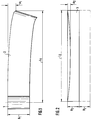
- 1 and 2 show two common measuring methods for determining the saber bow A.
- a film 2 is unwound from a film roll 1 of width B1 by the length L1. It becomes the deviation A1 too the imaginary straight line.
- a measure of the bowing is the absolute size A 1 or the relative size A 1 / L 1.
- the standard length L1 is 4.0 m with this method, while the width B1 is less than or equal to 200 mm.
- a piece of film with the width 2B2 and the length L2 is folded around the longitudinal center line to the width B2 so that the corners come to lie on each other.
- the folded film 3 is pulled tight. If there is no bowing, all four edges are congruent. In the other case, the one longitudinal edge steps back by the dimension A2.
- a measure of the bowing is again the absolute size A2 or the relative size A2 / L2.
- the folded piece of film is shown with solid lines and the unfolded piece of film in the lower half with dashed lines.
- the standard length L2 is 4.0 m with this method, and the width 2 B2 is greater than 200 mm.
- Bowing causes a deviation in the printed image when printing or folds in the film when laminated with paper or cardboard.
- the bowing causes the tear tape to shift, which leads to the sorting out of the packet.
- odd edges are formed, which can result in leaky sealing seams.
- Bowing is a result of non-uniform orientation of the biaxially oriented film across the width. This non-uniform orientation is mainly caused by transverse stretching in the so-called tenter oven.
- thermoplastic material is first melted in an extruder, formed into a pre-film in a nozzle and cooled on one or more rollers.
- the undrawn film is then stretched longitudinally and transversely one after the other, with the longitudinal stretching usually taking place before the transverse stretching.
- the film is heat set, cooled, optionally pretreated for printing and finally wound up.
- the bowing of the film can be made directly visible from the film as it passes through the transverse stretching furnace.
- a straight line which is applied to the film over the width of the film entering the oven, deforms during the transverse stretching to a line curved over the film width after leaving the oven.
- Bowing is initiated by the different forces acting on the film and by the simultaneous film shrinkage. Especially at the end of the transverse stretch when crossing into the fixation, where the mechanical properties of the film are the smallest, can be characterized by the forces acting on the film in the machine direction, the bowing.
- the polyolefin films are essentially a propylene polymer or a propylene mixture, to which fillers are added in an amount of 0.1 to 20% by weight.
- the propylene polymer predominantly contains at least 90% propylene and has a melting point of 140 ° C or higher, preferably 150 to 170 ° C.
- the propylene polymer generally has a melt flow index from 0.5 g / 10 min to 8 g / 10 min, in particular from 2 g / 10 min to 5 g / 10 min, at 230 ° C. and a force of 21.6 N (DIN 53 735).
- Suitable other polyolefins in the polymer mixture are polyethylenes, in particular HDPE, LDPE and LLDPE, the proportion of these polyolefins in each case not exceeding 50% by weight, based on the polymer mixture.
- the fillers are the usual inorganic and / or organic materials. Inorganic fillers are aluminum oxide, aluminum sulfate, barium sulfate, calcium carbonate, magnesium carbonate, silicates, such as aluminum silicate (kaolin clay) and magnesium silicate (talc), silicon dioxide and / or titanium dioyide, of which calcium carbonate, silicon dioxide, titanium dioxide or mixtures thereof are preferably used.
- Suitable organic fillers are the customarily used polymers, in particular those such as polyesters, polystyrenes, polyamides, halogenated organic polymers, polyesters, such as polybutylene terephthalates, being preferred.
- the amount of filler in particular that of calcium carbonate CaCO3, is 1 to 30% by weight, in particular 2 to 15% by weight, based on the total weight of the film.
- the average particle size, in particular that of calcium carbonate is in the range from 1 to 5 ⁇ m, in particular in the range from 1.5 to 3 ⁇ m.
- the density of the film is generally in the range from 0.5 to 0.97 g / cm3.
- the polypropylene polymer can be partially degraded by the addition of organic peroxides.
- a measure of the degree of degradation of the polymer is the so-called degradation factor A, which indicates the relative change in the melt flow index according to DIN 53 735 of the polypropylene, based on the starting polymer.
- the degradation factor A of the polypropylene polymer used is in a range from 3 to 15, preferably 6 to 10.
- alkyl peroxides are particularly suitable as organic peroxides, an alkyl radical being understood to mean the customary saturated, straight-chain or branched lower alkyl radicals having up to 6 carbon atoms. 2,5-Dimethyl-2,5-di (t-butylperoxy) hexane or di-t-butyl peroxide are particularly suitable.
- the polyolefin film may optionally contain a low molecular weight resin, the proportion of which is 1 to 30% by weight, preferably 2 to 20% by weight.
- the softening point of the resin is between 80 and 160 ° C, preferably between 120 and 160 ° C (measured according to DIN 1995-U4, corresponds to ASTME E-28).
- the hydrocarbon resins are preferred, namely in the form of petroleum resins (petroleum resins), styrene resins, cyclopentadiene resins and terpene resins (these resins are described in Ullmann's Encyclopedia of Technical Chemistry, 4th edition, volume 12, pages 525 to 555).
- Suitable petroleum resins are, for example, from EP-A - 0 180 087 known, to which express reference is made here.
- the biaxially oriented polyolefin film is usually a multilayer film which consists of a base layer and at least one cover layer which is arranged on the base layer. In general, at least two cover layers are provided, which sandwich the base layer in a symmetrical structure.
- the cover layer (s) arranged on the surface (s) of the base layer essentially consist of a copolymer of ethylene and propylene or ethylene and butylene or propylene and butylene or ethylene and an ⁇ -olefin with 5 to 10 carbon atoms.
- the propylene polymer of the top layer can be identical to that of the base layer if a non-sealable top layer is desired.
- the propylene polymer or the polymer mixture of the outer layer (s) has a melt flow index (DIN 53 735 at 230 ° C. and 21.6 N load) of 4 g / 10 min to 15 g / 10 min, preferably 5 g / 10 min to 12 g / 10 min, the melt flow index of the top layer (s) being higher than that of the propylene polymer of the base layer.
- a melt flow index (DIN 53 735 at 230 ° C. and 21.6 N load) of 4 g / 10 min to 15 g / 10 min, preferably 5 g / 10 min to 12 g / 10 min, the melt flow index of the top layer (s) being higher than that of the propylene polymer of the base layer.
- cover layers depends on the intended use of the film. In general, a cover layer is applied on both sides of the base layer, corresponding to a layer structure ABA, wherein the cover layers A can be the same or different in terms of their structure and composition.
- the thickness of the cover layer (s) is generally in the range from 0.2 to 3 ⁇ m, it being possible for cover layers on both sides to be of the same or different thickness.
- the total thickness of the multilayer polyolefin film can vary within wide limits and depends on the intended use. It is, for example, 3 to 120 ⁇ m, in particular 5 to 100 ⁇ m, the base layer making up approximately 90 to 95% of the total film thickness.
- both the base layer and the cover layer (s) can contain further additives, preferably antistatic agents and / or antiblocking agents and / or lubricants and / or stabilizers and / or neutralizing agents, which are compatible with the polymers of the base layer and the cover layer are compatible.
- further additives preferably antistatic agents and / or antiblocking agents and / or lubricants and / or stabilizers and / or neutralizing agents, which are compatible with the polymers of the base layer and the cover layer are compatible.
- further additives described in DE-A - 41 41 989 which are also used in the polyolefin film here.
- the polyolefin film is produced in a known manner by extrusion or coextrusion.
- the polymer in granular form or the polymer mixture of the individual layers is combined in one Extruder compresses and liquefies, the additives being added or already contained in the starting materials.
- the melts are then simultaneously pressed through a slot die and the extruded multilayer prefilm is drawn off on one or more take-off rolls, where it cools and solidifies.
- the film is then stretched longitudinally and transversely to the direction of extrusion, which leads to an orientation of the molecular chains.
- the biaxially stretched film is heat set and then wound up.
- the biaxial stretching or orientation can be carried out simultaneously or the individual stretchings can be carried out in succession by first longitudinally, i.e. in the machine direction, and then across, i.e. perpendicular to the machine direction.
- the longitudinal stretching is expediently carried out with the aid of two high-speed rollers which differ according to the desired stretching ratio, and the transverse stretching is carried out with the aid of a tenter frame which acts on the two longitudinal edges of the film.
- the polyolefin film After leaving the transverse stretching zone or the transverse stretching furnace and cooling below a temperature of about 40 ° C., the polyolefin film is subjected to a heat treatment in such a way that the wound film on the winding roll has an elevated temperature in the range of over 40 ° C to about 80 ° C. Following this thermal treatment, the polyolefin film is slowly cooled on the take-up roll, the take-up roll being approximately the same temperature as the sheet during the cooling process Has heat treatment. The wound film is cooled during storage over a period of 10 to 72 hours, with no strictly defined conditions having to be observed in order to achieve the desired effect on the bowing.
- the decisive factor for the reduction of the bowing value is obviously the reheating of the film after the transverse stretching and the maintenance of the temperature for a certain period of time, which, as has already been mentioned, is 10 to 72 hours.
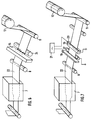
- the heat treatment of the film can be carried out in various ways. Various embodiments of the arrangement for such a heat treatment are briefly explained below with reference to FIGS. 3 to 7.
- a processing plant for a film 22 is shown schematically in FIG. 3, from the extrusion of the film to the winding.
- the granules of the starting materials of the film are filled into an extruder 4.
- This granulate is melted in the extruder and fed to a slot die 5 which, by extrusion or coextrusion, if it is a multilayer film, produces a pre-film which is guided over a take-off and cooling roll 23.
- a longitudinal stretch 6 which consists of a number of rollers which rotate at different speeds, the film is oriented in the longitudinal direction, ie in the machine direction.
- the film then reaches the transverse stretching and heat setting station 7, in which it is stretched or oriented transversely to the machine direction and at the same time the alignment of the molecular chains is stabilized by the heat setting.
- the film 22 then runs through a cooling air shower and over one or more cooling rollers 8, on which it is cooled to a temperature of approximately 40 ° C. and below.
- the film 22 is heated by means of a heating roller 10, to which the film is applied by a suitable application device, for example a nip roller 9.
- a suitable application device for example a nip roller 9.
- An air knife for example, is also suitable as the application device, but is not shown in FIG. 3.
- the film 22 is heated to about 40 to 80 ° C. After leaving the heating zone, the film 22 is guided around a deflecting roller 11 and reaches a driven take-up roll 12.
- FIGS. 4 to 7 have largely the same structure as the processing system according to FIG. 3, and differ from them only in the heat treatment station after transverse stretching, heat setting and cooling of the film.
- the film 22 is heated by preheated air, which is blown onto the film by means of suitable nozzles. Suitable nozzles are, for example, so-called air knives.
- the film 22 is after leaving the The transverse stretching and heat-setting station 7 is guided over the cooling roll 8 and then subsequently reaches the heat treatment station, in which it runs over a roll above which there are air nozzles 13.
- the film 22, which has been cooled to a temperature of less than 40 ° C. is heated to a temperature in the range between 40 and 80 ° C.
- the film 22 is deflected by a deflecting roller 11 in the direction of the take-up roll 12.
- the heat treatment of the film 22 takes place in the processing plant according to FIG. 5, with the aid of IR radiators 14 which are arranged transversely to the film web above it.
- the film 22 runs over the cooling roll 8 and arrives in the heat treatment station, in which it is guided over rolls above which the IR radiators 14 are arranged.
- the film 22 runs around the deflection roller 11, in the direction of the winding roll 12.
- the heating of the film 22 by means of flame heating is shown schematically in FIG.
- the film 22 runs after exiting from the transverse stretching and heat setting station 7 over the cooling roll 8 and reaches the heat treatment station, which consists of a roll 24 and a burner system 15 for flame treatment located above it.
- Flame treatment is a known method such as that described in U.S. Patent 4,622,237.
- the roller 24 can be heated or slightly cooled.
- the burner system 15 brings the film 22 to the desired temperature in the range of 40 to 80 ° C.
- Figure 7 shows a heat treatment station consisting of two corona devices.
- the heat treatment of sequence 22 is carried out by heating using the corona device (s).
- Corona heat treatment can generally only work satisfactorily with very thin films and double-sided corona treatment.
- the film 22 After exiting the transverse stretching and heat setting station 7, the film 22 is guided over the cooling roll 8 and reaches a counter roll 17 of the corona device.
- the counter roller 17 is at earth potential.
- the high-voltage electrodes 18, for example strip electrodes, as shown in FIG. 7, are located above the counter roller 17 and run parallel to one another at a small distance from one another. Instead of ledge electrodes, the high-voltage electrodes 18 can also consist of wire electrodes.
- the high voltage electrodes 18 ionize the air between them and the top of the film 22.
- the high voltage electrodes 18 are connected to a high voltage source 21 which applies an alternating voltage of approximately 10,000 volts at a frequency of 10 kHz to the high voltage electrodes. Due to the corona or spray discharge, the air between the electrodes and the film surface is ionized and reacts with the molecules of the film surface, so that polar deposits occur in the essentially non-polar polymer matrix, and in addition the film 22 is heated to a temperature between 40 and Heated to 80 ° C. The corona heat treatment takes place in the Way that the surface tension of the film is greater than 37 mN / m and is up to about 45 mN / m.
- the counter roller 19 is arranged above the film 22, while the high-voltage electrodes 20 are located below the film 22.
- the counter roller 19 is at ground potential, while the high voltage electrodes 20 are connected to the high voltage source 21.
- the film 22 After leaving the corona devices of this heat treatment station, the film 22 is guided around the deflecting roller 11 and wound onto the take-up roll 12.
- the heat treatment of the film 22 can also be carried out by combining at least two of the heat treatment methods described above.
- a biaxially oriented, thermally treated film in the processing system according to FIGS. 3 to 7 is distinguished by a very small saber arch.
- the saber bow A is below 10 mm, measured by the method described with reference to FIG. 2.
- the films can be sealable or not sealable. They also contain the usual additives that they need for use as packaging films. In addition, the films are generally pressure-pretreated on at least one side, the flame or electrical corona treatment or the combination of both treatments preferably being used.
- a transparent three-layer film with a symmetrical structure and a total thickness of 20 ⁇ m was produced by coextrusion and subsequent stepwise orientation in the longitudinal and transverse directions.
- the cover layers each had a thickness of 0.5 ⁇ m.
- the average temperature of the roll was approximately 60 ° C.
- the roll was stored at a temperature of about 30 ° C, wherein it was cooled within 24 hours.
- the film was made to customer width and the saber bow A was measured.
- the saber bow of the film 22 according to the invention by the method according to FIG. 2 was 5 mm.
- a film identical to that of the example was produced in terms of the thickness ratios, the film structure and the process conditions.
- the film was not subjected to heat treatment after transverse stretching and heat setting.
- the saber bow of this film was 25 mm.
Landscapes
- Engineering & Computer Science (AREA)
- Chemical & Material Sciences (AREA)
- Manufacturing & Machinery (AREA)
- Mechanical Engineering (AREA)
- Materials Engineering (AREA)
- Chemical Kinetics & Catalysis (AREA)
- Medicinal Chemistry (AREA)
- Polymers & Plastics (AREA)
- Organic Chemistry (AREA)
- Health & Medical Sciences (AREA)
- Physics & Mathematics (AREA)
- Thermal Sciences (AREA)
- Shaping By String And By Release Of Stress In Plastics And The Like (AREA)
- Laminated Bodies (AREA)
- Manufacture Of Macromolecular Shaped Articles (AREA)
Abstract
Description
- Die Erfindung betrifft eine biaxial orientierte Polyolefinfolie, die ein Propylenpolymer oder eine Polypropylenmischung enthält, sowie ein Verfahren zu ihrer Herstellung und ihre Verwendung.
- Biaxial orientierte Polyolefinfolien, wie beispielsweise Polypropylenfolien (boPP-Folien), werden bevorzugt im Verpackungsbereich eingesetzt. Für die Mehrzahl der Anwendungen ist dort eine Bedruckung der Folien erforderlich. Ihre Verarbeitung erfolgt auf vertikal oder horizontal arbeitenden Form- und Füllmaschinen und auf Einschlagautomaten. Die Verpackung wird üblicherweise durch Siegelung der Folienränder miteinander verschlossen. Im Verpackungsbereich werden derzeit etwa 80 % der hergestellten boPP-Folien verarbeitet.
- Der restliche Anteil der boPP-Folien wird für technische Anwendungen, z.B. als Metallisier- oder Kaschierfolien, verwendet. Hier erfolgt die Verarbeitung der Folien in der Regel über schnellaufende Walzen.
- In den letzten Jahren sind die Folienverarbeitungsmaschinen immer schneller und immer präziser geworden.
- Beim Einschlag von Zigarettenpäckchen in boPP-Folien lagen vor zehn Jahren die Taktzahlen, mit denen aie Päckchen eingeschlagen wurden, bei 200 bis 300 Päckchen pro Minute. Heute liegen die Taktzahlen dagegen bei ca. 350 bis 450 Päckchen pro Minute.
- Bei der Kaschierung oder der Laminierung von boPP-Folien haben sich die Verarbeitungsgeschwindigkeiten in den letzten 10 Jahren nahezu verdoppelt.
- Die Bedruckung der Folien erfolgt auf sehr präzise arbeitenden und sehr schnellaufenden Maschinen. Durch die Einführung neuer Techniken, z.B. die Lasergravierung, können heute wesentlich feinere Motive erzeugt werden, als dies früher, z.B. mittels der Hochdrucktechnik über Gummiwalzen, der Fall war.
- Den höheren Verarbeitungsgeschwindigkeiten und der hohen Präzision, mit der heute die Einschlag- oder Kaschierautomaten arbeiten, müssen die Folieneigenschaften angepaßt werden. Bei den niedrigen Verarbeitungsgeschwindigkeiten vor etwa zehn Jahren reichte beispielsweise ein Gleitreibungskoeffizient der Folie von ca. 0,4 aus, um diese auf der Maschine verarbeiten zu können. Bei den heutigen Geschwindigkeiten muß der Reibungskoeffizient der Folie deutlich unter 0,3 liegen, damit die Folie einwandfrei auf der Maschine läuft. Ähnliches gilt für das Dickenprofil der Folie, an das heute weitaus höhere Anforderungen gestellt werden, als dies vor einigen Jahren noch der Fall gewesen ist. Für die Verarbeitung der Folien auf den schnellaufenden Zigaretteneinschlagautomaten ist es heute erforderlich, daß die relativen Dickenabweichungen der Folien in Längs- und in Querrichtung deutlich kleiner als 3 % sind.
- Wesentlich für eine einwandfreie Verarbeitung ist, neben den angeführten Eigenschaften, daß die Folie hervorragende Planlageeigenschaften aufweist. Die Folie muß praktisch frei sein von Verdehnungen (gauge bands), sie darf keine Durchhänge aufweisen, und beim sogenannten Bowing, es handelt sich hierbei um bogenförmige Verwerfungen, dürfen bestimmte Werte nicht überschritten werden.
- Aufgabe der Erfindung ist es, eine biaxial gestreckte Polyolefinfolie zur Verfügung zu stellen, die ausgezeichnete Planlageeigenschaften, insbesondere einen geringen Bowing-Wert, besitzt.
- Im Rahmen dieser Aufgabe soll auch ein Verfahren zur Herstellung einer derartigen Folie und deren Verwendung angegeben werden.
- Erfindungsgemäß wird diese Aufgabe dadurch gelöst, daß der Säbelbogen der Polyolefinfolie kleiner als 10 mm ist, bezogen auf eine Länge von L = 4,0 m der Polyolefinfolie.
- Bei dem Polyolefin handelt es sich um ein Propylenpolymer, das zumindest 90 % Propylen enthält, und einen Schmelzpunkt höher als 140 °C besitzt.
- In Ausgestaltung der Erfindung ist das Propylenpolymer aus der Gruppe isotaktische Propylenhomopolymere mit einem n-heptanlöslichen Anteil, Copolymere von Ethylen und Propylen, Copolymere von Propylen mit α-Olefinen ausgewählt. Die Polypropylenmischung ist insbesondere eine Mischung aus Propylenhomo- und/oder Copolymeren und/oder Polyolefinen mit 2 bis 6 C-Atomen, z.B. Polyethylen, insbesondere HDPE, LDPE und LLDPE. Dem Propylenpolymer oder der Polypropylenmischung sind zweckmäßigerweise anorganische und/oder organische Füllstoffe aus der Gruppe Aluminiumoxid, Aluminiumsulfat, Bariumsulfat, Calcium-, Magnesiumcarbonat, Silikate, Siliziumdioxid und/oder Titandioxid sowie Polyesterpolystyrole, Polyamide, halogenierte organische Polymere zugesetzt.
- Der n-heptanlösliche Anteil beträgt üblicherweise weniger als 6 % des Propylenhomopolymers.
- Bei den voranstehend angeführten Folien handelt es sich um Einschichtfolien, wie Elektroisolationsfolien, oder um Basisschichten von Mehrschichtfolien.
- Bei der Polyolefinfolie kann es sich um eine Mehrschichtfolie aus einer Basisschicht und zumindest einer darauf angeordneten Deckschicht handeln, wobei
- a) die Basisschicht ein Polypropylen-Homopolymer und gegebenenfalls Additive enthält,
- b) die Deckschicht/en ein Copolymer aus Ethylen und Propylen oder Ethylen und Butylen oder Propylen und Butylen oder Ethylen und einem α-Olefin mit 5 bis 10 C-Atomen oder Propylen und einem α-Olefin mit 5 bis 10 C-Atomen oder ein Terpolymer aus Ethylen, Propylen und Butylen oder Ethylen, Propylen una einem α-Olefin mit 5 bis 10 C-Atomen oder eine Mischung aus zwei oder mehreren der genannten Copolymere und/oder Terpolymere und gegebenenfalls Additive enthält/enthalten und
- c) die Mehrschicht-Polyolefinfolie einen Säbelbogen von 5 bis kleiner 10 mm aufweist.
- Die Weiterbildung der biaxial orientierten Polyolefinfolie ergibt sich aus den Merkmalen der Patentansprüche 7 und 8.
- Das Verfahren zur Herstellung einer derartigen biaxial orientierten Polyolefinfolie, die aus einer Breitschlitzdüse in Gestalt einer Vorfolie extrudiert, über zumindest eine Walze geführt und abgekühlt wird, nacheinander längs- und querverstreckt, thermofixiert und abgekühlt wird, zeichnet sich dadurch aus, daß die biaxial orientierte Folie nach der Thermofixierung und Kühlung, vor dem Aufwickeln, einer Wärmebehandlung derart unterzogen wird, daß ihre Temperatur höher als nach der Abkühlung ist. Hierzu wird die biaxial orientierte Polyolefinfolie nach der Querstreckung und dem Verlassen der Thermofixierzone auf eine Temperatur von kleiner/gleich 40 °C abgekühlt, und die nachfolgende Wärmebehandlung wird in einem Temperaturbereich von größer 40 °C bis 80 °C ausgeführt.
- Unmittelbar nach der Wärmebehandlung wird die biaxial orientierte Polyolefinfolie auf eine Aufwickelwalze aufgewickelt und auf eine Temperatur von 10 bis 30 °C über eine Zeitspanne von 10 bis 72 Stunden abgekühlt.
- Die Wärmebehandlung der biaxial orientierten Polyolefinfolie erfolgt mittels einer oder mehrerer beheizter Walzen, an die die Polyolefinfolie mit Hilfe von Anlegevorrichtungen, wie Luftmesser oder Nipwalzen, angelegt wird, durch aufgeblasene, vorgewärmte Luft, mittels IR-Strahlung, durch eine Flammbehandlung, bei der die Folie nach dem Abkühlen über eine beheizte Walze geführt und zugleich ihre von dem Walzenumfang weg gerichtete Oberfläche von einem Brennersystem auf die erforderliche Temperatur erwärmt wird oder zweiseitig durch eine Koronaentladung, wobei die Oberflächenspannung größer 37 mN/m ist und bis zu 45 mN/m beträgt.
- Derart hergestellte Polyolefinfolien werden als bedruckte Verpackungsfolien, insbesondere als Verpackungsfolien für Zigarettenpäckchen, als unbedruckte/bedruckte Kaschierfolien, Elektroisolierfolien, aber auch als Schrumpffolien für Rumdumetiketten für zylinderförmiges Verpackungsgut, verwendet.
- Mit der Erfindung wird der Vorteil erzielt, daß eine biaxial orientierte Polyolefinfolie bereitgestellt wird, bei der das Bowing - ausgedrückt durch die Größe des Säbelbogens - deutlich reduziert ist gegenüber dem Stand der Technik, wodurch die Planlageeigenschaften der Folie erheblich verbessert sind, so daß die präzise Bedruckbarkeit der Folie und die Verarbeitungsgeschwindigkeit auf Verpackungsautomaten, bei Einsatz der Folie als Einschlagfolie für Verpackungsgut, wie beispielsweise Zigarettenpäckchen, erheblich gesteigert werden können.
- Die Erfindung wird im folgenden anhand der Zeichnungen näher erläutert. Es zeigen:
- Figuren 1 und 2
- schematisch das Bowing von Folien, bestimmt nach zwei unterschiedlichen Methoden,
- Figur 3
- eine Anordnung zur Wärmebehandlung einer biaxial orientierten Polyolefinfolie mittels beheizter Walze/n,
- Figur 4
- eine Düsenanordnung zur Wärmebehandlung einer biaxial orientierten Polyolefinfolie mittels Heißluft,
- Figur 5
- eine IR-Strahleranordnung zur Wärmebehandlung einer biaxial orientierten Polyolefinfolie,
- Figur 6
- ein Brennersystem zur Flammbehandlung einer biaxial orientierten Polyolefinfolie, und
- Figur 7
- eine Koronavorrichtung zur zweiseitigen Vorbehandlung einer biaxial orientierten Polyolefinfolie.
- Das Bowing kann z.B. durch die Größe des sogenannten Säbelbogens der Folie quantitativ erfaßt werden. In den Figuren 1 und 2 sind zwei übliche Meßmethoden zur Bestimmung des Säbelbogens A dargestellt.
- Bei der in Figur 1 dargestellten Methode wird eine Folie 2 von einer Folienrolle 1 der Breite B₁ um die Länge L₁ abgewickelt. Es wird die Abweichung A₁ zu der gedachten geraden Linie gemessen. Ein Maß für das Bowing ist die absolute Größe A₁ oder die relative Größe A₁/L₁. Die Standardlänge L₁ beträgt bei dieser Methode 4,0 m, während die Breite B1 kleiner/gleich 200 mm ist.
- Bei der in Figur 2 dargestellten Methode wird ein Folienstück der Breite 2B₂ und der Länge L₂ um die Längsmittellinie auf die Breite B₂ so gefaltet, daß die Ecken aufeinander zu liegen kommen. Die gefaltete Folie 3 wird strammgezogen. Ist kein Bowing vorhanden, so legen sich alle vier Kanten deckungsgleich aufeinander. Im anderen Fall tritt die eine Längskante um das Maß A₂ zurück. Ein Maß für das Bowing ist wiederum die absolute Größe A₂ oder die relative Größe A₂/L₂. Das gefaltete Folienstück ist mit durchgehenden Linien und das ungefaltete Folienstück in der unteren Hälfte mit gestrichelten Linien dargestellt. Die Standardlänge L₂ beträgt bei dieser Methode 4,0 m, und die Breite 2 B2 ist größer als 200 mm.
- Das Bowing bewirkt beim Drucken eine Abweichung im Druckbild oder bei der Kaschierung mit Papier oder Pappe Falten in der Folie. Beim Einschlag z.B. von Zigarettenpäckchen auf Zigaretteneinschlagautomaten bewirkt das Bowing ein Verschieben des Aufreißbandes, was zur Aussortierung des Päckchens führt. Außerdem bilden sich ungerade verlaufende Kanten, die undichte Siegelnähte zur Folge haben können. Wie Untersuchungen bei der Kaschierung von BoPP-Folien gezeigt haben, gibt es bei einem Säbelbogen A von bereits 20 mm (gemessen nach der zweiten Methode) Schwierigkeiten beim gleichmäßigen Kleberauftrag, und damit Faltenbildung, was nicht akzeptiert werden kann.
- Das Bowing ist eine Folge ungleichförmiger Orientierung der biaxial orientierten Folie über die Breite. Diese ungleichförmige Orientierung wird hauptsächlich bei der Querstreckung im sogenannten Tenterofen verursacht.
- Bei der biaxialen Orientierung von Polypropylenfolie nach der Tentermethode wird üblicherweise die Folgestreckung angewendet. Bei diesem Prozeß wird das thermoplastische Material zunächst in einem Extruder aufgeschmolzen, in einer Düse zu einer Vorfolie ausgeformt und auf einer oder mehreren Walzen abgekühlt. Die ungestreckte Folie wird dann nacheinander längs- und quergestreckt, wobei üblicherweise die Längsstreckung vor der Querstreckung erfolgt. Nach der Querstreckung wird die Folie thermofixiert, abgekühlt, gegebenenfalls druckvorbehandelt und schließlich aufgewickelt.
- Das Bowing der Folie kann aus der Folie beim Durchlaufen des Querstreckofens direkt sichtbar gemacht werden. Eine gerade Linie, die über die Breite der in den Ofen einlaufenden Folie auf die Folie aufgetragen wird, verformt sich während der Querstreckung zu einer über die Folienbreite gekrümmten Linie nach Verlassen des Ofens.
- Das Bowing wird durch die an der Folie unterschiedlich angreifenden Kräfte und durch den gleichzeitig eintretenden Folienschrumpf initiiert. Besonders am Ende der Querstreckung beim Übergang in die Fixierung, wo die mechanischen Eigenschaften der Folie am kleinsten sind, kann durch die auf die Folie in Maschinenrichtung angreifenden Kräfte das Bowing ausgeprägt werden.
- Mit den bisher bekannt gewordenen Ansätzen zur Reduzierung des Bowing ist es noch nicht gelungen, die oben beschriebenen Anforderungen zu erfüllen. So wird u.a. versucht, das Bowing der Folie durch Variation der Streckparameter und durch Änderung der Rahmengeometrie zu verringern (Journal of Applied Polymer Science, Vol. 48, S. 1399-1406, 1993, "An Attempt to Simulate the Bowing Phenomenon in Tenter", Verfasser: T. Yamada und Ch. Nonomura).
- Bei den Polyolefinfolien handelt es sich im wesentlichen um ein Propylenpolymer oder eine Propylenmischung, der Füllstoffe in einer Menge von 0,1 bis 20 Gew.% zugesetzt sind.
- Das Propylenpolymer enthält zum überwiegenden Teil zumindest 90 % Propylen und besitzt einen Schmelzpunkt von 140 °C oder höher, vorzugsweise 150 bis 170 °C. Isotaktisches Propylenhomopolymer mit einem n-heptanlöslichen Anteil von 6 Gew.% und weniger, bezogen auf das isotaktische Propylenhomopolymer, Copolymere von Ethylen und Propylen mit einem Ethylengehalt von 10 Gew.% oder weniger, Copolymere von Propylen mit C₄-C₈-α-Olefinen mit einem α-Olefingehalt von 10 Gew.% oder weniger stellen bevorzugte Propylenpolymere dar, wobei isotaktisches Propylenhomopolymer bevorzugt ist. Die angegebenen Gewichtsprozente beziehen sich auf das jeweilige Copolymer. Das Propylenpolymer hat im allgemeinen einen Schmelzflußindex von 0,5 g/10 min bis 8 g/10 min, insbesondere von 2 g/10 min bis 5 g/10 min, bei 230 °C und einer Kraft von 21,6 N (DIN 53 735). Desweiteren ist eine Mischung aus den genannten Propylenhomo- und/oder -copolymeren und/oder anderen Polyolefinen, insbesondere mit 2 bis 6 C-Atomen, geeignet, wobei die Mischung mindestens 50 Gew.%, insbesondere mindestens 75 Gew.%, Propylenpolymerisat enthält. Geeignete andere Polyolefine in der Polymermischung sind Polyethylene, insbesondere HDPE, LDPE und LLDPE, wobei der Anteil dieser Polyolefine jeweils 50 Gew.%, bezogen auf die Polymermischung, nicht übersteigt. Bei den Füllstoffen handelt es sich um die üblichen anorganischen und/oder organischen Materialien. Anorganische Füllstoffe sind Aluminiumoxid, Aluminiumsulfat, Bariumsulfat, Calciumcarbonat, Magnesiumcarbonat, Silikate, wie Aluminiumsilikat (Kaolinton) und Magnesiumsilikat (Talkum), Siliziumdioxid und/oder Titandioyid, worunter Calciumcarbonat, Siliziumdioxid, Titandioxid oder Mischungen hiervon bevorzugt eingesetzt werden.
- Als organische Füllstoffe kommen die üblicherweise verwendeten Polymere in Frage, insbesondere solche wie Polyester, Polystyrole, Polyamide, halogenierte organische Polymere, wobei Polyester, wie beispielsweise Polybutylenterephthalate, bevorzugt sind.
- Die Füllstoffmenge, insbesondere die des Calciumcarbonats CaCO₃, beträgt 1 bis 30 Gew.%, insbesondere 2 bis 15 Gew.%, bezogen auf das Gesamtgewicht der Folie. Die mittlere Teilchengröße, insbesondere die des Calciumcarbonats, liegt im bereich von 1 bis 5 µm, insbesondere im Bereich von 1,5 bis 3 µm.
- Die Dichte der Folie liegt im allgemeinen im Bereich von 0,5 bis 0,97 g/cm³.
- Gegebenenfalls kann das Polypropylenpolymer durch den Zusatz von organischen Peroxiden teilabgebaut werden. Ein Maß für den Grad des Abbaus des Polymers ist der sogenannte Abbaufaktor A, der die relative Änderung des Schmelzflußindex nach DIN 53 735 des Polypropylens, bezogen auf das Ausgangspolymer, angibt. Im allgemeinen liegt der Abbaufaktor A des eingesetzten Polypropylenpolymers in einem Bereich von 3 bis 15, vorzugsweise 6 bis 10.
- Als organische Peroxide sind die Alkylperoxide besonders geeignet, wobei unter einem Alkylrest die üblichen gesättigten, geradkettigen oder verzweigten niederen Alkylreste mit bis zu 6 C-Atomen verstanden werden. Insbesondere sind 2,5-Dimethyl-2,5-di(t-butylperoxy)-hexan oder Di-t-butylperoxid geeignet.
- Die Polyolefinfolie kann gegebenenfalls ein niedermolekulares Harz enthalten, dessen Anteil 1 bis 30 Gew.%, vorzugsweise 2 bis 20 Gew.%, beträgt. Der Erweichungspunkt des Harzes liegt zwischen 80 und 160 °C, vorzugsweise zwischen 120 und 160 °C (gemessen nach DIN 1995-U4, entspricht ASTME E-28). Unter den niedrigmolekularen Harzen sind die Kohlenwasserstoffharze bevorzugt, und zwar in Form der Erdölharze (Petroleumharze), Styrolharze, Cyclopentadienharze und Terpenharze (diese Harze sind in Ullmann's Enzyklopädie der Technischen Chemie, 4. Auflage, Band 12, Seiten 525 bis 555 beschrieben). Geeignete Erdölharze sind beispielsweise aus der EP-A - 0 180 087 bekannt, auf die hier ausdrücklich Bezug genommen wird.
- Bei der biaxial orientierten Polyolefinfolie handelt es sich üblicherweise um eine Mehrschichtfolie, die aus einer Basisschicht und zumindest einer Deckschicht besteht, die auf der Basisschicht angeordnet ist. Im allgemeinen sind zumindest zwei Deckschichten vorgesehen, die in einem symmetrischen Aufbau die Basisschicht sandwichartig einschließen. Die auf der oder den Oberfläche/n der Basisschicht angeordnete/n Deckschicht/en besteht bzw. bestehen im wesentlichen aus einem Copolymer von Ethylen und Propylen oder Ethylen und Butylen oder Propylen und Butylen oder Ethylen und einem α-Olefin mit 5 bis 10 C-Atomen oder Propylen und einem α-Olefin mit 5 bis 10 C-Atomen oder aus einem Terpolymer von Ethylen, Propylen und Butylen oder Ethylen, Propylen und einem anderen α-Olefin mit 5 bis 10 C-Atomen oder aus einer Mischung aus zwei oder mehreren der genannten Copolymere und/oder Terpolymere, und gegebenenfalls zugesetzten Additiven. Das Propylenpolymer der Deckschicht kann mit dem der Basisschicht identisch sein, wenn eine nicht siegelfähige Deckschicht gewünscht ist.
- Das Propylenpolymer bzw. die Polymermischung der Deckschicht/en hat einen Schmelzflußindex (DIN 53 735 bei 230 °C und 21,6 N Belastung) von 4 g/10 min bis 15 g/10 min, vorzugsweise von 5 g/10 min bis 12 g/10 min, wobei der Schmelzflußindex der Deckschicht/en höher liegt als jener des Propylenpolymer der Basisschicht.
- Die Anzahl der Deckschichten richtet sich nach dem beabsichtigten Verwendungszweck der Folie. Im allgemeinen sind auf beiden Seiten der Basisschicht je eine Deckschicht aufgebracht, entsprechend einem Schichtaufbau ABA, wobei die Deckschichten A nach ihrem Aufbau und ihrer Zusammensetzung gleich oder verschieden sein können.
- Die Dicke der Deckschicht/en liegt im allgemeinen im Bereich von 0,2 bis 3 µm, wobei beidseitige Deckschichten gleich oder verschieden dick sein können. Die Gesamtdicke der mehrschichtigen Polyolefinfolie kann innerhalb weiter Grenzen variieren und richtet sich nach dem beabsichtigten Einsatz. Sie beträgt beispielsweise 3 bis 120 µm, insbesondere 5 bis 100 µm, wobei die Basisschicht etwa 90 bis 95 % der Gesamtfoliendicke ausmacht.
- Um bestimmte Eigenschaften der Polyolefinfolie zu verbessern, können sowohl die Basisschicht als auch die Deckschicht/en weitere Zusätze enthalten, vorzugsweise Antistatika und/oder Antiblockmittel und/oder Gleitmittel und/oder Stabilisatoren und/oder Neutralisationsmittel, die mit den Polymeren der Basisschicht und der Deckschicht/en verträglich sind. In diesem Zusammenhang wird ausdrücklich auf die in der DE-A - 41 41 989 beschriebenen weiteren Zusätze Bezug genommen, die auch bei der hier vorliegenden Polyolefinfolie eingesetzt werden.
- Die Polyolefinfolie wird in bekannter Weise durch Extrusion bzw. Coextrusion hergestellt. Hierzu wird das in Granulatform vorliegende Polymer oder die Polymermischung der einzelnen Schichten in einem Extruder komprimiert und verflüssigt, wobei die Additive hinzugesetzt oder in den Ausgangsstoffen bereits enthalten sein können. Die Schmelzen werden dann gleichzeitig durch eine Breitschlitzdüse gepreßt und die extrudierte mehrschichtige Vorfolie auf einer oder mehreren Abzugswalzen abgezogen, wobei sie abkühlt und sich verfestigt. Anschließend wird die Folie längs und quer zur Extrusionsrichtung gestreckt, was zu einer Orientierung der Molekülketten führt. Die biaxial gestreckte Folie wird thermofixiert und anschließend aufgewickelt.
- Die biaxiale Streckung bzw. Orientierung kann simultan oder die einzelnen Streckungen aufeinanderfolgend durchgeführt werden, indem zuerst längs, d.h. in Maschinenrichtung, und dann quer, d.h. senkrecht zur Maschinenrichtung, gestreckt wird. Das Längsstrecken erfolgt zweckmäßigerweise mit Hilfe zweier entsprechend dem angestrebten Streckverhältnis unterschiedlicher schnellaufender Walzen und das Querstrecken mit Hilfe eines Kluppenrahmens, der an den beiden Längskanten der Folie angreift.
- Die Polyolefinfolie wird nach dem Verlassen der Querstreckzone bzw. des Querstreckofens und erfolgter Abkühlung unterhalb einer Temperatur von etwa 40 °C, vor der Aufwicklung, einer Wärmebehandlung in der Weise unterzogen, daß die aufgewickelte Folie auf der Aufwickelrolle eine erhöhte Temperatur im Bereich von über 40 °C bis ca. 80 °C aufweist. Im Anschluß an diese thermische Behandlung wird die Polyolefinfolie auf der Aufwickelrolle langsam abgekühlt, wobei bei Beginn der Abkühlung die Aufwickelrolle etwa die gleiche Temperatur wie die Folie während der Wärmebehandlung aufweist. Die Abkühlung der aufgewickelten Folie erfolgt während der Lagerung über eine Zeitspanne von 10 bis 72 h, wobei zur Erzielung des gewünschten Effekts auf das Bowing keine streng definierten Bedingungen eingehalten werden müssen. Maßgeblich für die Reduzierung des Bowing-Wertes ist offensichtlich die nochmalige Aufwärmung der Folie nach der Querverstreckung und das Halten der Temperatur über eine bestimmte Zeitspanne, die etwa, wie vorhin schon erwähnt wurde, 10 bis 72 h beträgt.
- Die Wärmebehandlung der Folie kann dabei auf verschiedene Weise durchgeführt werden. Verschiedene Ausführungsformen der Anordnung für eine solche Wärmebehandlung werden nachstehend anhand der Figuren 3 bis 7 kurz erläutert.
- In Figur 3 ist schematisch eine Verarbeitungsanlage für eine Folie 22 dargestellt, von der Extrusion der Folie bis zum Aufwickeln. In einen Extruder 4 wird das Granulat der Ausgangsstoffe der Folie eingefüllt. Dieses Granulat wird im Extruder aufgeschmolzen und einer Breitschlitzdüse 5 zugeführt, die durch Extrusion bzw. Coextrusion, falls es sich um eine Mehrschichtfolie handelt, ein Vorfolie erzeugt, die über eine Abzugs- und Kühlwalze 23 geführt wird. In einer Längsstreckung 6, die aus einer Anzahl von Walzen besteht, die mit unterschiedlichen Geschwindigkeiten umlaufen, erfolgt eine Orientierung der Folie in Längsrichtung, d.h. in Maschinenlaufrichtung. Anschließend gelangt die Folie in die Querstreck- und Thermofixierstation 7, in der sie quer zur Maschinenlaufrichtung gestreckt bzw. orientiert wird und zugleich die Ausrichtung der Molekülketten durch die Thermofixierung stabilisiert wird. Anschließend läuft die Folie 22 durch eine Kühlluftdusche und über eine oder mehrere Abkühlwalzen 8, auf denen sie auf eine Temperatur von etwa 40 °C und darunter abgekühlt wird. In der anschließenden Wärmezone erfolgt die Aufheizung der Folie 22 mittels einer Aufheizwalze 10, an die die Folie durch eine geeignete Anlegevorrichtung, beispielsweise eine Nipwalze 9, angelegt wird. Das gezielte Anlegen der Folie 22 auf die Aufheizwalze 10 ist wegen der hohen Maschinenlaufgeschwindigkeit erforderlich. Als Anlegevorrichtung ist z.B. auch ein Luftmesser geeignet, das jedoch in Figur 3 nicht gezeigt ist. Anstelle einer einzigen Aufheizwalze 10 können auch zwei oder mehr Aufheizwalzen 10, je nach Bedarf, vorgesehen werden. In der Wärmezone wird die Folie 22 auf etwa 40 bis 80 °C erwärmt. Nach dem Verlassen der Wärmezone wird die Folie 22 um eine Umlenkwalze 11 geführt und gelangt auf eine angetriebene Aufwickelrolle 12.
- Die Verarbeitungsanlagen gemäß den Figuren 4 bis 7 besitzen einen weitgehend gleichen Aufbau wie die Verarbeitungsanlage nach Figur 3, und unterscheiden sich von dieser nur jeweils in der Wärmebehandlungsstation nach erfolgter Querstreckung, Thermofixierung und Abkühlung der Folie.
- Bei der Verarbeitungsanlage gemäß Figur 4 erfolgt die Aufheizung der Folie 22 durch vorgewärmte Luft, die mittels geeigneter Düsen auf die Folie geblasen wird. Geeignete Düsen sind beispielsweise sogenannte Luftmesser. Die Folie 22 wird nach dem Verlassen der Querstreck- und Thermofixierstation 7 über die Abkühlwalze 8 geführt und gelangt dann anschließend in die Wärmebehandlungsstation, in der sie über eine Walze läuft, oberhalb der sich Luftdüsen 13 befinden. Es erfolgt hier wieder eine Erwärmung der auf eine Temperatur von weniger als 40 °C abgekühlten Folie 22 auf eine Temperatur im Bereich zwischen 40 und 80 °C. Nach dem Verlassen der Wärmebehandlungsstation wird die Folie 22 von einer Umlenkwalze 11 in Richtung der Aufwickelrolle 12 umgelenkt.
- Die Wärmebehandlung der Folie 22 erfolgt in der Verarbeitungsanlage gemäß Figur 5, mit Hilfe von IR-Strahlern 14, die quer zur Folienbahn oberhalb von dieser angeordnet sind. Nach dem Austritt aus der Querstreck- und Thermofixierstation 7 läuft die Folie 22 über die Abkühlwalze 8 und gelangt in die Wärmebehandlungsstation, in der sie über Walzen geführt ist, oberhalb denen die IR-Strahler 14 angeordnet sind. Nach dem Verlassen der Wärmebehandlungsstation läuft die Folie 22 um die Umlenkwalze 11 herum, in Richtung Aufwickelrolle 12.
- In Figur 6 ist schematisch die Aufheizung der Folie 22 mittels Flammheizung dargestellt. Hierbei läuft die Folie 22 nach dem Austritt aus der Querstreck- und Thermofixierstation 7 über die Abkühlwalze 8 und gelangt in die Wärmebehandlungsstation, die aus einer Walze 24 und einem darüber befindlichen Brennersystem 15 für die Flammbehandlung besteht. Bei der Flammbehandlung handelt es sich um eine bekannte Methode, wie sie beispielsweise in dem US-Patent 4,622,237 beschrieben ist. Die Walze 24 kann beheizt oder auch geringfügig gekühlt sein. Das Brennersystem 15 bringt die Folie 22 auf die gewünschte Temperatur im Bereich von 40 bis 80 °C.
- Figur 7 zeigt eine Wärmebehandlungsstation, die aus zwei Koronavorrichtungen besteht. Die Wärmebehandlung der Folge 22 erfolgt durch Aufheizung mittels der Koronavorrichtung/en. Die Koronawärmebehandlung kann im allgemeinen nur bei sehr dünnen Folien und zweiseitiger Koronabehandlung zufriedenstellend arbeiten. Die Folie 22 wird nach dem Austritt aus der Querstreck- und Thermofixierstation 7 über die Abkühlwalze 8 geführt und gelangt auf eine Gegenwalze 17 der Koronavorrichtung. Die Gegenwalze 17 liegt auf Erdpotential. Oberhalb der Gegenwalze 17 befinden sich die Hochspannungselektroden 18, beispielsweise Leistenelektroden, wie sie in Figur 7 gezeigt sind, die in geringem Abstand voneinander parallel zueinander verlaufen. Anstelle von Leistenelektroden können die Hochspannungselektroden 18 auch aus Drahtelektroden bestehen. Die Hochspannungselektroden 18 ionisieren die Luft zwischen ihnen und der Oberseite der Folie 22. Die Hochspannungselektroden 18 sind mit einer Hochspannungsquelle 21 verbunden, die eine Wechselspannung von etwa 10000 Volt, bei einer Freuquenz von 10 kHz an die Hochspannungselektroden anlegt. Durch die Korona- bzw. Sprühentladung wird die Luft zwischen den Elektroden und der Folienoberfläche ionisiert und reagiert mit den Molekülen der Folienoberfläche, so daß polare Einlagerungen in der im wesentlichen unpolaren Polymermatrix entstehen, und darüber hinaus wird die Folie 22 auf eine Temperatur zwischen 40 und 80 °C erwärmt. Die Koronawärmebehandlung erfolgt in der Weise, daß die Oberflächenspannung der Folie größer 37 mN/m ist und bis etwa 45 mN/m beträgt.
- Bei der zweiten Koronavorrichtung ist die Gegenwalze 19 oberhalb der Folie 22 angeordnet, während die Hochspannungselektroden 20 sich unterhalb der Folie 22 befinden. Die Gegenwalze 19 liegt auf Erdpotential, während die Hochspannungselektroden 20 mit der Hochspannungsquelle 21 verbunden sind.
- Nach dem Verlassen der Koronavorrichtungen dieser Wärmebehandlungsstation wird die Folie 22 um die Umlenkwalze 11 herumgeführt und auf die Aufwickelrolle 12 aufgewickelt.
- Die Wärmebehandlung der Folie 22 kann auch durch Kombination von zumindest zwei der voranstehend beschriebenen Wärmebehandlungsmethoden erfolgen.
- Eine in der Verarbeitungsanlage nach den Figuren 3 bis 7 biaxial orientierte, thermisch behandelte Folie zeichnet sich durch einen sehr geringen Säbelbogen aus. Erfindungsgemäß liegt der Säbelbogen A unterhalb von 10 mm, gemessen nach der anhand von Figur 2 beschriebenen Methode.
- Die Folien können siegelbar oder nicht siegelbar sein. Sie enthalten desweiteren die üblichen Additive, die sie für die Anwendung als Verpackungsfolien benötigen. Daneben werden die Folien in der Regel zumindest einseitig druckvorbehandelt, wobei bevorzugt die Flamm- oder die elektrische Koronabehandlung oder die Kombination aus beiden Behandlungen angewendet wird.
- Die Erfindung wird im folgenden anhand eines Beispiels näher erläutert.
- Es wurde durch Koextrusion und durch anschließende stufenweise Orientierung in Längs- und in Querrichtung eine transparente dreischichtige Folie mit symmetrischem Aufbau mit einer Gesamtdicke von 20 µm hergestellt. Die Deckschichten hatten eine Dicke von jeweils 0,5 µm.
- 99,8 Gew.% isotaktisches Polypropylen
0,2 Gew.% N,N-bis-etoxyalkylamin und - 98,9 Gew.% statistisches Ethylen-Propylen-Copolymer mit einem C₂-Gehalt von 4,5 Gew.%
0,3 Gew.% SiO₂ als Antiblockmittel mit einer mittleren Teilchengröße von 3 µm
0,8 Gew.% Polydimethylsiloxan mit einer Viskosität von 30000 mm²/s
Die Herstellungsbedingungen in den einzelnen Verfahrensschritten sind:Extrusion: Temperaturen: A-Schicht 290 °C B-Schichten: 280 °C Temperatur der Kühl- und Abzugswalze 23 20 °C Längsstreckung: Temperatur 130 °C Längsstreckverhältnis 5,0 Querstreckung: Temperatur 160 °C Querstreckverhältnis 10,0 Fixierung: Temperatur 110 °C Konvergenz 20 % Abkühlung der Folie 22 nach der Querstreckung auf: 30 °C - Aufheizung der Folie 22 auf 60 °C mittels einer beheizten verchromten Walze 10, die einen Durchmesser von 400 mm hat und bei der der Umschlingungswinkel 170 °C beträgt.
- Aufwicklung der Folie 22 zu einer Rolle mit einer Breite von 4,70 m, wobei die Länge der aufgewickelten Folie 10000 m beträgt. Die mittlere Temperatur der Rolle betrug ca. 60 °C. Die Rolle wurde bei einer Temperatur von ca. 30 °C gelagert, wobei sie innerhalb von 24 h abgekühlt wurde.
- Die Folie wurde in einem weiteren Schritt auf Kundenbreite konfektioniert, und es wurde der Säbelbogen A gemessen. Der Säbelbogen der erfindungsgemäßen Folie 22 nach der Methode gemäß Fig. 2 betrug 5 mm.
- Es wurde eine, von den Dickenverhältnissen, vom Folienaufbau und von den Verfahrensbedingungen, identische Folie zu derjenigen des Beispiels hergestellt.
- Im Gegensatz zum Beispiel wurde die Folie nicht einer Wärmebhandlung nach der Querstreckung und Thermofixierung unterzogen.
- Der Säbelbogen dieser Folie betrug 25 mm.
Claims (20)
- Biaxial orientierte Polyolefinfolie, die ein Propylenpolymer oder eine Polypropylenmischung enthält, dadurch gekennzeichnet, daß der Säbelbogen der Polyolefinfolie kleiner als 10 mm ist, bezogen auf eine Länge von L = 4 m der Polyolefinfolie.
- Biaxial orientierte Polyolefinfolie nach Anspruch 1, dadurch gekennzeichnet, daß das Propylenpolymer zumindest 90 % Propylen enthält und einen Schmelzpunkt höher als 140 °C besitzt.
- Biaxial orientierte Polyolefinfolie nach Anspruch 1, dadurch gekennzeichnet, daß das Propylenpolymer aus der Gruppe isotaktische Propylenhomopolymere mit einem n-heptanlöslichen Anteil, Copolymere von Ethylen und Propylen, Copolymere von Propylen mit α-Olefinen ausgewählt ist.
- Biaxial orientierte Polyolefinfolie nach den Ansprüchen 1 und 3, dadurch gekennzeichnet, daß die Polypropylenmischung eine Mischung aus Propylenhomo- und/oder -copolymeren und/oder Polyolefinen mit 2 bis 6 C-Atomen oder Polyethylenen, insbesondere HDPE, LDPE und LLDPE, ist.
- Biaxial orientierte Polyolefinfolie nach Anspruch 1, dadurch gekennzeichnet, daß anorganische und/oder organische Füllstoffe aus der Gruppe Aluminiumoxid, Aluminiumsulfat, Bariumsulfat, Ca-, Mg-Carbonat, Silikate, Siliziumdioxid und/oder Titandioxid sowie Polyester, Polystyrole, Polyamide, halogenierte organische Polymere zugesetzt sind.
- Biaxial orientierte Polyolefinfolie nach Anspruch 1, dadurch gekennzeichnet, daß sie eine Mehrschichtfolie aus einer Basisschicht und zumindest einer darauf angeordneten Deckschicht ist, wobeia) die Basisschicht ein Polypropylen-Homopolymer und gegebenenfalls Additive enthält,b) die Deckschicht/en ein Copolymer aus Ethylen und Propylen oder Ethylen und Butylen oder Propylen und Butylen oder Ethylen und ein α-Olefin mit 5 bis 10 Kohlenstoffatomen oder Propylen und ein α-Olefin mit 5 bis 10 Kohlenstoffatomen oder ein Terpolymer aus Ethylen, Propylen und Butylen oder Ethylen, Propylen und ein α-Olefin mit 5 bis 10 Kohlenstoffatomen oder eine Mischung aus zwei oder mehreren der genannten Copolymer und/oder Terpolymere und gegebenenfalls Additive enthält/enthalten undc) die Mehrschicht-Polyolefinfolie einen Säbelbogen von 5 bis kleiner 10 mm aufweist.
- Biaxial orientierte Polyolefinfolie nach Anspruch 6, dadurch gekennzeichnet, daß die Mehrschicht-Polyolefinfolie eine transparente dreischichtige Folie symmetrischen Aufbaus ist.
- Biaxial orientierte Polyolefinfolie nach Anspruch 7, dadurch gekennzeichnet, daß die Basisschicht aus einem isotaktischen Polypropylen mit 99,8 Gew.% und N,N-bis-etoxyalkylamin mit 0,2 Gew.% besteht und daß jede der Deckschichten ein statistisches Ethylen-Propylen-Copolymer mit 98,9 Gew.%, von denen 4,5 Gew.% auf einen C₂-Gehalt entfallen, 0,3 Gew.% SiO₂ als Antiblockmittel mit einer mittleren Teilchengröße von 3 µm und 0,8 Gew.% Polydimethylsiloxan als Gleitmittel mit einer Viskosität von 30000 mm²/s enthält.
- Verfahren zur Herstellung einer biaxial orientierten Polyolefinfolie, die aus einer Breitschlitzdüse in Gestalt einer Vorfolie extrudiert, über zumindest eine Walze geführt und abgekühlt wird, nacheinander längs- und querverstreckt, thermofixiert und abgekühlt wird, dadurch gekennzeichnet, daß die biaxial orientierte Folie nach der Thermofixierung und Abkühlung, vor dem Aufwickeln, einer Wärmebehandlung derart unterzogen wird, daß ihre Temperatur höher als nach der Abkühlung ist.
- Verfahren nach Anspruch 9, dadurch gekennzeichnet, daß die biaxial orientierte Polyolefinfolie nach der Querstreckung und dem Verlassen der Thermofixierzone auf eine Temperatur von kleiner/gleich 40 °C abgekühlt wird und die nachfolgende Wärmebehandlung in einem Temperaturbereich von größer 40 °C bis 80 °C ausgeführt wird.
- Verfahren nach Anspruch 9, dadurch gekennzeichnet, daß die biaxial orientierte Polyolefinfolie nach der Wärmebehandlung auf eine Aufwickelwalze aufgewickelt und auf eine Temperatur von 10 bis 30 °C über eine Zeitspanne von 10 bis 72 Stunden abgekühlt wird.
- Verfahren nach Anspruch 10, dadurch gekennzeichnet, daß die Wärmebehandlung der biaxial orientierten Polyolefinfolie mittels einer oder mehrerer beheizter Walzen erfolgt, an die die Polyolefinfolie mit Hilfe von Anlegevorrichtungen, wie Luftmesser oder Nipwalzen, angelegt wird.
- Verfahren nach Anspruch 10, dadurch gekennzeichnet, daß die biaxial orientierte Polyolefinfolie durch aufgeblasene, vorgewärmte Luft wärmebehandelt wird.
- Verfahren nach Anspruch 10, dadurch gekennzeichnet, daß die Wärmebehandlung der Polyolefinfolie mittels IR-Strahlung vorgenommen wird.
- Verfahren nach Anspruch 10, dadurch gekennzeichnet, daß die Wärmebehandlung der Polyolefinfolie eine Flammbehandlung ist, bei der die Folie nach dem Abkühlen über eine beheizte Walze geführt und zugleich ihre von dem Walzenumfang weg gerichtete Oberfläche von einem Brennersystem auf die erforderliche Temperatur erwärmt wird.
- Verfahren nach Anspruch 10, dadurch gekennzeichnet, daß die Wärmebehandlung der Polyolefinfolie zweiseitig durch eine Koronaentladung vorgenommen wird, wobei die Oberflächenspannung größer 37 mN/m ist und bis zu 45 mN/m beträgt.
- Verwendung der biaxial orientierten Polyolefinfolie nach einem oder mehreren der Ansprüche 1 bis 16 als bedruckte Verpackungsfolie oder unbedruckte/bedruckte Kaschierfolie.
- Verwendung der biaxial orientierten Polyolefinfolie nach Anspruch 17 als Verpackungsfolie für Zigarettenpäckchen.
- Verwendung der biaxial orientierten Polyolefinfolie gemäß einem oder mehreren der Anspräche 1 bis 16 als Schrumpffolie für Rundumetiketten für zylinderförmiges Verpackungsgut.
- Verwendung der biaxial orientierten Polyolefinfolie gemäß einem oder mehreren der Ansprüche 1 bis 16 als Elektroisolierfolie.
Applications Claiming Priority (2)
| Application Number | Priority Date | Filing Date | Title |
|---|---|---|---|
| DE4336560A DE4336560A1 (de) | 1993-10-27 | 1993-10-27 | Biaxial orientierte Polyolefinfolie, Verfahren zu ihrer Herstellung und ihre Verwendung |
| DE4336560 | 1993-10-27 |
Publications (2)
| Publication Number | Publication Date |
|---|---|
| EP0651004A1 true EP0651004A1 (de) | 1995-05-03 |
| EP0651004B1 EP0651004B1 (de) | 2003-01-22 |
Family
ID=6501077
Family Applications (1)
| Application Number | Title | Priority Date | Filing Date |
|---|---|---|---|
| EP94116479A Expired - Lifetime EP0651004B1 (de) | 1993-10-27 | 1994-10-19 | Biaxial orientierte Polyolefinfolie, Verfahren zu ihrer Herstellung und ihre Verwendung |
Country Status (5)
| Country | Link |
|---|---|
| US (1) | US5756169A (de) |
| EP (1) | EP0651004B1 (de) |
| DE (2) | DE4336560A1 (de) |
| ES (1) | ES2191670T3 (de) |
| ZA (1) | ZA948416B (de) |
Cited By (3)
| Publication number | Priority date | Publication date | Assignee | Title |
|---|---|---|---|---|
| EP1019290A4 (de) * | 1997-06-10 | 2002-04-10 | Exxonmobil Oil Corp | Monoaxial schrumpfbare, biaxial orientierte polypropylenfolie für tabakverpackungsumhüllung |
| EP0963292A4 (de) * | 1997-02-26 | 2002-04-10 | Exxonmobil Oil Corp | Biaxial gestreckter, monoaxial schrumpfbarer polypropylenfilm, mit hdpe-deckschicht |
| US6534189B1 (en) | 1994-07-15 | 2003-03-18 | Exxonmobil Oil Corporation | Uniaxially shrinkable biaxially oriented polypropylene film and method for use as tobacco pack overwrap |
Families Citing this family (20)
| Publication number | Priority date | Publication date | Assignee | Title |
|---|---|---|---|---|
| IT1312057B1 (it) * | 1999-04-09 | 2002-04-04 | Bimo Italia S P A | Film plastici termoretraibili. |
| US20030039826A1 (en) | 2000-03-20 | 2003-02-27 | Sun Edward I. | Conformable and die-cuttable biaxially oriented films and labelstocks |
| US6528134B1 (en) | 2000-06-21 | 2003-03-04 | Pechiney Emballage Flexible Europe | Non-wax packaging film |
| FR2810987B1 (fr) * | 2000-07-03 | 2002-08-16 | Rhodianyl | Compositions polymeres aux proprietes mecaniques ameliorees |
| CA2449829A1 (en) * | 2001-07-31 | 2003-02-13 | Avery Dennison Corporation | Conformable holographic labels |
| AU2003247735B2 (en) | 2002-06-26 | 2010-03-11 | Avery Dennison Corporation | Oriented films comprising polypropylene / olefin elastomer blends |
| WO2004046214A2 (en) | 2002-10-15 | 2004-06-03 | Exxonmobil Chemical Patents Inc. | Multiple catalyst system for olefin polymerization and polymers produced therefrom |
| US7550528B2 (en) | 2002-10-15 | 2009-06-23 | Exxonmobil Chemical Patents Inc. | Functionalized olefin polymers |
| US7700707B2 (en) | 2002-10-15 | 2010-04-20 | Exxonmobil Chemical Patents Inc. | Polyolefin adhesive compositions and articles made therefrom |
| CN100460202C (zh) * | 2006-05-15 | 2009-02-11 | 高学文 | Pvdc-聚烯烃共挤出热成型高阻隔复合包装材料 |
| ES2398725T3 (es) | 2006-06-14 | 2013-03-21 | Avery Dennison Corporation | Material para etiquetas orientado en la dirección longitudinal que se puede conformar y cortar con troquel y etiquetas y proceso para su preparación |
| BRPI0713492A2 (pt) | 2006-06-20 | 2012-01-24 | Avery Dennison Corp | filme polimérico de multi-camadas para rotulagem de adesivos de derretimento a quente e etiqueta e rótulo dos mesmos |
| US20080006378A1 (en) * | 2006-07-06 | 2008-01-10 | Maciel Antonio N | Paper sheet with high/low density polyethylene |
| JP5579436B2 (ja) | 2006-07-17 | 2014-08-27 | エーブリー デニソン コーポレイション | 非対称の多層高分子フィルム、並びにラベルストック及びそのラベル |
| US9676532B2 (en) | 2012-08-15 | 2017-06-13 | Avery Dennison Corporation | Packaging reclosure label for high alcohol content products |
| WO2015004314A1 (en) * | 2013-07-12 | 2015-01-15 | Upm Raflatac Oy | Multilayer film for label and a method for providing such |
| US9492332B2 (en) * | 2014-05-13 | 2016-11-15 | Clopay Plastic Products Company, Inc. | Breathable and microporous thin thermoplastic film |
| JP2017520642A (ja) | 2014-06-02 | 2017-07-27 | アベリー・デニソン・コーポレイションAvery Dennison Corporation | 耐スカッフ性、透明性、及び順応性が改善されたフィルム |
| WO2017011341A1 (en) | 2015-07-10 | 2017-01-19 | Berry Plastics Corporation | Microporous breathable film and method of making the microporous breathable film |
| US11472085B2 (en) | 2016-02-17 | 2022-10-18 | Berry Plastics Corporation | Gas-permeable barrier film and method of making the gas-permeable barrier film |
Citations (5)
| Publication number | Priority date | Publication date | Assignee | Title |
|---|---|---|---|---|
| EP0423630A2 (de) * | 1989-10-16 | 1991-04-24 | Toyo Boseki Kabushiki Kaisha | Thermoplastische Kunststoffolie und Verfahren zu ihrer Herstellung |
| US5152946A (en) * | 1991-01-30 | 1992-10-06 | Hercules Incorporated | Producing low shrink packaging film |
| EP0538746A1 (de) * | 1991-10-24 | 1993-04-28 | Hoechst Aktiengesellschaft | Nicht siegelbare, matte, trübe, biaxial orientierte Polyolefin-Mehrschichtfolie, Verfahren zu ihrer Herstellung und ihre Verwendung |
| JPH05154905A (ja) * | 1991-12-10 | 1993-06-22 | Toray Ind Inc | 高温時カールの少ないポリプロピレンフィルム |
| DE4141989A1 (de) * | 1991-12-19 | 1993-06-24 | Hoechst Ag | Querschrumpffaehige, transparente polyolefin-mehrschichtfolie, verfahren zu ihrer herstellung und ihre verwendung |
Family Cites Families (3)
| Publication number | Priority date | Publication date | Assignee | Title |
|---|---|---|---|---|
| GB2055855A (en) * | 1979-08-07 | 1981-03-11 | Ici Ltd | Heat-treating polyolefin films |
| JPS58160122A (ja) * | 1982-03-19 | 1983-09-22 | Teijin Ltd | 物性の均一なフイルムの製造法 |
| US5158637A (en) * | 1989-09-20 | 1992-10-27 | Idemitsu Petrochemical Co., Ltd. | Method of and an apparatus for thermally processing crystalline thermoplastic resin film |
-
1993
- 1993-10-27 DE DE4336560A patent/DE4336560A1/de not_active Withdrawn
-
1994
- 1994-10-19 DE DE59410233T patent/DE59410233D1/de not_active Expired - Fee Related
- 1994-10-19 ES ES94116479T patent/ES2191670T3/es not_active Expired - Lifetime
- 1994-10-19 EP EP94116479A patent/EP0651004B1/de not_active Expired - Lifetime
- 1994-10-25 US US08/328,861 patent/US5756169A/en not_active Expired - Fee Related
- 1994-10-26 ZA ZA948416A patent/ZA948416B/xx unknown
Patent Citations (5)
| Publication number | Priority date | Publication date | Assignee | Title |
|---|---|---|---|---|
| EP0423630A2 (de) * | 1989-10-16 | 1991-04-24 | Toyo Boseki Kabushiki Kaisha | Thermoplastische Kunststoffolie und Verfahren zu ihrer Herstellung |
| US5152946A (en) * | 1991-01-30 | 1992-10-06 | Hercules Incorporated | Producing low shrink packaging film |
| EP0538746A1 (de) * | 1991-10-24 | 1993-04-28 | Hoechst Aktiengesellschaft | Nicht siegelbare, matte, trübe, biaxial orientierte Polyolefin-Mehrschichtfolie, Verfahren zu ihrer Herstellung und ihre Verwendung |
| JPH05154905A (ja) * | 1991-12-10 | 1993-06-22 | Toray Ind Inc | 高温時カールの少ないポリプロピレンフィルム |
| DE4141989A1 (de) * | 1991-12-19 | 1993-06-24 | Hoechst Ag | Querschrumpffaehige, transparente polyolefin-mehrschichtfolie, verfahren zu ihrer herstellung und ihre verwendung |
Non-Patent Citations (1)
| Title |
|---|
| DATABASE WPI Derwent World Patents Index; AN 93-231949 * |
Cited By (3)
| Publication number | Priority date | Publication date | Assignee | Title |
|---|---|---|---|---|
| US6534189B1 (en) | 1994-07-15 | 2003-03-18 | Exxonmobil Oil Corporation | Uniaxially shrinkable biaxially oriented polypropylene film and method for use as tobacco pack overwrap |
| EP0963292A4 (de) * | 1997-02-26 | 2002-04-10 | Exxonmobil Oil Corp | Biaxial gestreckter, monoaxial schrumpfbarer polypropylenfilm, mit hdpe-deckschicht |
| EP1019290A4 (de) * | 1997-06-10 | 2002-04-10 | Exxonmobil Oil Corp | Monoaxial schrumpfbare, biaxial orientierte polypropylenfolie für tabakverpackungsumhüllung |
Also Published As
| Publication number | Publication date |
|---|---|
| ES2191670T3 (es) | 2003-09-16 |
| EP0651004B1 (de) | 2003-01-22 |
| DE59410233D1 (de) | 2003-02-27 |
| ZA948416B (en) | 1995-05-02 |
| US5756169A (en) | 1998-05-26 |
| DE4336560A1 (de) | 1995-05-04 |
Similar Documents
| Publication | Publication Date | Title |
|---|---|---|
| EP0651004B1 (de) | Biaxial orientierte Polyolefinfolie, Verfahren zu ihrer Herstellung und ihre Verwendung | |
| DE69825742T2 (de) | Bei niedriger Temperatur wärmeschrumpfbare Folie für Etiketten | |
| DE69719772T2 (de) | Film aus polyethylenhoher dichte mit hoher biaxialer orientierung | |
| EP0004633B2 (de) | Verfahren zur Herstellung einer heissiegelbaren, opaken Kunststoffolie und ihre Verwendung | |
| EP0613771B1 (de) | Transparente, nicht siegelfähige orientierte Polyolefin-Mehrschichtfolie, Verfahren zu ihrer Herstellung und ihre Verwendung | |
| EP0400456B1 (de) | Mehrschichtige transparente Polyolefinfolie für die Schrumpfetikettieranwendung | |
| DE69831800T2 (de) | Verbesserte zusammensetzung für uniaxial hitzeschrumpfbare biaxial-orientierte polypropylenfolie | |
| EP0578149B1 (de) | Niedrig siegelnde, biaxial orientierte Polyolefin-Mehrschichtfolie mit hohem Schrumpf | |
| EP1282508B1 (de) | Transparente, biaxial orientierte polyolefinfolie mit verbesserten hafteigenschaften | |
| DE19653750A1 (de) | Siegelfähige biaxial orientierte Polyesterfolie, Verfahren zu ihrer Herstellung und ihre Verwendung | |
| EP0614755B1 (de) | Siegelfähige orientierte Polyolefin-Mehrschichtfolie, Verfahren zu ihrer Herstellung und ihre Verwendung | |
| EP0546311B1 (de) | Vorrichtung und Verfahren zum Herstellen eines mehrschichtigen Folienverbundes | |
| EP0615839B1 (de) | Siegelfähige orientierte Polyolefin-Mehrschichtfolie, Verfaheren zu ihrer Herstellung und ihre Verwendung | |
| EP0775574B1 (de) | Niedrig siegelnde, biaxial orientierte Polyolefin-Mehrschichtfolie, Verfahren zu ihrer Herstellung und ihre Verwendung | |
| DE19652734A1 (de) | Beidseitig siegelfähige orientierte Polyolefin-Mehrschichtfolie, Verfahren zu ihrer Herstellung und ihre Verwendung | |
| EP0695630A1 (de) | Niedrig siegelnde, biaxial orientierte Polyolefin-Mehschichtfolie, Verfahren zu ihrer Herstellung und ihre Verwendung | |
| DE3144912A1 (de) | Biaxial gestreckte polyolefinische kunststoffolie mit einem elastizitaetsmodul in laengsrichtung von mehr als 4000 n/mm(pfeil hoch)2(pfeil hoch) | |
| DE1704732A1 (de) | Verfahren zur Herstellung von Folien und Baendern | |
| DE3851505T3 (de) | Polypropylen-Film. | |
| DE4128820C2 (de) | Verbundfolie mit guter Sauerstoffbarriere | |
| DE102005052441B4 (de) | Verfahren zur Erhöhung der Oberflächenspannung einer biaxial orientierten Folie aus thermoplastischen Polymeren, sowie die Verwendung dieser Folie | |
| DE4109368A1 (de) | Biaxial gestreckte und gut bedruckbare polypropylenmehrschichtfolie mit niedrigsiegelnden deckschichten | |
| EP0732188B1 (de) | Verfahren zur Behandlung einer siegelfähigen Folienoberfläche | |
| DE2443928C2 (de) | Heißsiegelbare, hitzeschrumpfbare, zweiachsig orientierte Polyesterfolie und Verfahren zur Herstellung einer solchen Folie und deren Verwendung | |
| DE4306154A1 (de) | Siegelfähige orientierte Polyolefin-Mehrschichtfolie, Verfahren zu ihrer Herstellung und ihre Verwendung |
Legal Events
| Date | Code | Title | Description |
|---|---|---|---|
| PUAI | Public reference made under article 153(3) epc to a published international application that has entered the european phase |
Free format text: ORIGINAL CODE: 0009012 |
|
| AK | Designated contracting states |
Kind code of ref document: A1 Designated state(s): BE DE ES FR GB IT NL |
|
| 17P | Request for examination filed |
Effective date: 19951103 |
|
| RAP1 | Party data changed (applicant data changed or rights of an application transferred) |
Owner name: HOECHST TRESPAPHAN GMBH |
|
| 17Q | First examination report despatched |
Effective date: 19980720 |
|
| RAP1 | Party data changed (applicant data changed or rights of an application transferred) |
Owner name: TRESPAPHAN GMBH |
|
| GRAG | Despatch of communication of intention to grant |
Free format text: ORIGINAL CODE: EPIDOS AGRA |
|
| GRAG | Despatch of communication of intention to grant |
Free format text: ORIGINAL CODE: EPIDOS AGRA |
|
| GRAH | Despatch of communication of intention to grant a patent |
Free format text: ORIGINAL CODE: EPIDOS IGRA |
|
| GRAH | Despatch of communication of intention to grant a patent |
Free format text: ORIGINAL CODE: EPIDOS IGRA |
|
| GRAA | (expected) grant |
Free format text: ORIGINAL CODE: 0009210 |
|
| AK | Designated contracting states |
Kind code of ref document: B1 Designated state(s): BE DE ES FR GB IT NL |
|
| REG | Reference to a national code |
Ref country code: GB Ref legal event code: FG4D Free format text: NOT ENGLISH |
|
| REF | Corresponds to: |
Ref document number: 59410233 Country of ref document: DE Date of ref document: 20030227 Kind code of ref document: P |
|
| GBT | Gb: translation of ep patent filed (gb section 77(6)(a)/1977) | ||
| REG | Reference to a national code |
Ref country code: ES Ref legal event code: FG2A Ref document number: 2191670 Country of ref document: ES Kind code of ref document: T3 |
|
| PGFP | Annual fee paid to national office [announced via postgrant information from national office to epo] |
Ref country code: GB Payment date: 20030925 Year of fee payment: 10 |
|
| ET | Fr: translation filed | ||
| PGFP | Annual fee paid to national office [announced via postgrant information from national office to epo] |
Ref country code: NL Payment date: 20031020 Year of fee payment: 10 |
|
| PGFP | Annual fee paid to national office [announced via postgrant information from national office to epo] |
Ref country code: FR Payment date: 20031021 Year of fee payment: 10 |
|
| PGFP | Annual fee paid to national office [announced via postgrant information from national office to epo] |
Ref country code: BE Payment date: 20031024 Year of fee payment: 10 |
|
| PGFP | Annual fee paid to national office [announced via postgrant information from national office to epo] |
Ref country code: ES Payment date: 20031029 Year of fee payment: 10 |
|
| PLBE | No opposition filed within time limit |
Free format text: ORIGINAL CODE: 0009261 |
|
| STAA | Information on the status of an ep patent application or granted ep patent |
Free format text: STATUS: NO OPPOSITION FILED WITHIN TIME LIMIT |
|
| PGFP | Annual fee paid to national office [announced via postgrant information from national office to epo] |
Ref country code: DE Payment date: 20031216 Year of fee payment: 10 |
|
| 26N | No opposition filed |
Effective date: 20031023 |
|
| PG25 | Lapsed in a contracting state [announced via postgrant information from national office to epo] |
Ref country code: GB Free format text: LAPSE BECAUSE OF NON-PAYMENT OF DUE FEES Effective date: 20041019 |
|
| PG25 | Lapsed in a contracting state [announced via postgrant information from national office to epo] |
Ref country code: ES Free format text: LAPSE BECAUSE OF NON-PAYMENT OF DUE FEES Effective date: 20041020 |
|
| PG25 | Lapsed in a contracting state [announced via postgrant information from national office to epo] |
Ref country code: BE Free format text: LAPSE BECAUSE OF NON-PAYMENT OF DUE FEES Effective date: 20041031 |
|
| BERE | Be: lapsed |
Owner name: *TRESPAPHAN G.M.B.H. Effective date: 20041031 |
|
| PG25 | Lapsed in a contracting state [announced via postgrant information from national office to epo] |
Ref country code: NL Free format text: LAPSE BECAUSE OF NON-PAYMENT OF DUE FEES Effective date: 20050501 |
|
| PG25 | Lapsed in a contracting state [announced via postgrant information from national office to epo] |
Ref country code: DE Free format text: LAPSE BECAUSE OF NON-PAYMENT OF DUE FEES Effective date: 20050503 |
|
| GBPC | Gb: european patent ceased through non-payment of renewal fee |
Effective date: 20041019 |
|
| PG25 | Lapsed in a contracting state [announced via postgrant information from national office to epo] |
Ref country code: FR Free format text: LAPSE BECAUSE OF NON-PAYMENT OF DUE FEES Effective date: 20050630 |
|
| NLV4 | Nl: lapsed or anulled due to non-payment of the annual fee |
Effective date: 20050501 |
|
| REG | Reference to a national code |
Ref country code: FR Ref legal event code: ST |
|
| PG25 | Lapsed in a contracting state [announced via postgrant information from national office to epo] |
Ref country code: IT Free format text: LAPSE BECAUSE OF NON-PAYMENT OF DUE FEES Effective date: 20051019 |
|
| REG | Reference to a national code |
Ref country code: ES Ref legal event code: FD2A Effective date: 20041020 |
|
| BERE | Be: lapsed |
Owner name: *TRESPAPHAN G.M.B.H. Effective date: 20041031 |