EP0651397A1 - Dopage ou revêtement sur place de surfaces en acier inox avec palladium - Google Patents
Dopage ou revêtement sur place de surfaces en acier inox avec palladium Download PDFInfo
- Publication number
- EP0651397A1 EP0651397A1 EP94307893A EP94307893A EP0651397A1 EP 0651397 A1 EP0651397 A1 EP 0651397A1 EP 94307893 A EP94307893 A EP 94307893A EP 94307893 A EP94307893 A EP 94307893A EP 0651397 A1 EP0651397 A1 EP 0651397A1
- Authority
- EP
- European Patent Office
- Prior art keywords
- water
- palladium
- stainless steel
- reactor
- metal
- Prior art date
- Legal status (The legal status is an assumption and is not a legal conclusion. Google has not performed a legal analysis and makes no representation as to the accuracy of the status listed.)
- Granted
Links
- KDLHZDBZIXYQEI-UHFFFAOYSA-N Palladium Chemical compound [Pd] KDLHZDBZIXYQEI-UHFFFAOYSA-N 0.000 title claims abstract description 107
- 229910052763 palladium Inorganic materials 0.000 title claims abstract description 53
- 229910001220 stainless steel Inorganic materials 0.000 title claims abstract description 36
- 239000010935 stainless steel Substances 0.000 title claims abstract description 35
- 238000000576 coating method Methods 0.000 title description 9
- 239000011248 coating agent Substances 0.000 title description 7
- 238000011065 in-situ storage Methods 0.000 title description 7
- XLYOFNOQVPJJNP-UHFFFAOYSA-N water Substances O XLYOFNOQVPJJNP-UHFFFAOYSA-N 0.000 claims abstract description 86
- 229910052751 metal Inorganic materials 0.000 claims abstract description 45
- 239000002184 metal Substances 0.000 claims abstract description 45
- 238000000034 method Methods 0.000 claims abstract description 35
- BASFCYQUMIYNBI-UHFFFAOYSA-N platinum Chemical group [Pt] BASFCYQUMIYNBI-UHFFFAOYSA-N 0.000 claims abstract description 25
- 238000005260 corrosion Methods 0.000 claims abstract description 21
- 230000007797 corrosion Effects 0.000 claims abstract description 21
- 150000001875 compounds Chemical class 0.000 claims abstract description 14
- JKDRQYIYVJVOPF-FDGPNNRMSA-L palladium(ii) acetylacetonate Chemical compound [Pd+2].C\C([O-])=C\C(C)=O.C\C([O-])=C\C(C)=O JKDRQYIYVJVOPF-FDGPNNRMSA-L 0.000 claims abstract description 10
- 239000000725 suspension Substances 0.000 claims abstract description 7
- 150000002500 ions Chemical class 0.000 claims abstract 2
- 239000001257 hydrogen Substances 0.000 claims description 39
- 229910052739 hydrogen Inorganic materials 0.000 claims description 39
- UFHFLCQGNIYNRP-UHFFFAOYSA-N Hydrogen Chemical compound [H][H] UFHFLCQGNIYNRP-UHFFFAOYSA-N 0.000 claims description 35
- 150000002902 organometallic compounds Chemical class 0.000 claims description 7
- 238000005336 cracking Methods 0.000 claims description 5
- -1 e.g. Substances 0.000 abstract description 13
- 125000002524 organometallic group Chemical group 0.000 abstract description 3
- 239000010963 304 stainless steel Substances 0.000 description 27
- 229910000589 SAE 304 stainless steel Inorganic materials 0.000 description 27
- 239000001301 oxygen Substances 0.000 description 21
- 229910052760 oxygen Inorganic materials 0.000 description 21
- QVGXLLKOCUKJST-UHFFFAOYSA-N atomic oxygen Chemical compound [O] QVGXLLKOCUKJST-UHFFFAOYSA-N 0.000 description 20
- 230000001590 oxidative effect Effects 0.000 description 20
- 238000002347 injection Methods 0.000 description 19
- 239000007924 injection Substances 0.000 description 19
- 229910045601 alloy Inorganic materials 0.000 description 14
- 239000000956 alloy Substances 0.000 description 14
- 230000005855 radiation Effects 0.000 description 14
- 230000003197 catalytic effect Effects 0.000 description 13
- LFQSCWFLJHTTHZ-UHFFFAOYSA-N Ethanol Chemical compound CCO LFQSCWFLJHTTHZ-UHFFFAOYSA-N 0.000 description 12
- 238000007792 addition Methods 0.000 description 10
- PXHVJJICTQNCMI-UHFFFAOYSA-N Nickel Chemical compound [Ni] PXHVJJICTQNCMI-UHFFFAOYSA-N 0.000 description 8
- 239000000463 material Substances 0.000 description 8
- MHAJPDPJQMAIIY-UHFFFAOYSA-N Hydrogen peroxide Chemical compound OO MHAJPDPJQMAIIY-UHFFFAOYSA-N 0.000 description 7
- 238000000151 deposition Methods 0.000 description 7
- 239000000203 mixture Substances 0.000 description 7
- 239000000243 solution Substances 0.000 description 7
- 239000000758 substrate Substances 0.000 description 6
- XEEYBQQBJWHFJM-UHFFFAOYSA-N Iron Chemical compound [Fe] XEEYBQQBJWHFJM-UHFFFAOYSA-N 0.000 description 5
- 238000000354 decomposition reaction Methods 0.000 description 5
- 150000002431 hydrogen Chemical class 0.000 description 5
- 150000002739 metals Chemical class 0.000 description 5
- 229910052697 platinum Inorganic materials 0.000 description 5
- 238000005215 recombination Methods 0.000 description 5
- 230000006798 recombination Effects 0.000 description 5
- 238000000429 assembly Methods 0.000 description 4
- 230000000712 assembly Effects 0.000 description 4
- 125000004429 atom Chemical group 0.000 description 4
- 229910052759 nickel Inorganic materials 0.000 description 4
- 238000003466 welding Methods 0.000 description 4
- QCWXUUIWCKQGHC-UHFFFAOYSA-N Zirconium Chemical compound [Zr] QCWXUUIWCKQGHC-UHFFFAOYSA-N 0.000 description 3
- 238000009835 boiling Methods 0.000 description 3
- 239000002826 coolant Substances 0.000 description 3
- 230000008021 deposition Effects 0.000 description 3
- 238000007772 electroless plating Methods 0.000 description 3
- 238000009713 electroplating Methods 0.000 description 3
- 238000005516 engineering process Methods 0.000 description 3
- 239000000446 fuel Substances 0.000 description 3
- 150000002941 palladium compounds Chemical class 0.000 description 3
- 239000000843 powder Substances 0.000 description 3
- 230000008569 process Effects 0.000 description 3
- 230000003134 recirculating effect Effects 0.000 description 3
- 239000007921 spray Substances 0.000 description 3
- 238000005979 thermal decomposition reaction Methods 0.000 description 3
- 238000011282 treatment Methods 0.000 description 3
- 229910052726 zirconium Inorganic materials 0.000 description 3
- POILWHVDKZOXJZ-ARJAWSKDSA-M (z)-4-oxopent-2-en-2-olate Chemical compound C\C([O-])=C\C(C)=O POILWHVDKZOXJZ-ARJAWSKDSA-M 0.000 description 2
- 229910000851 Alloy steel Inorganic materials 0.000 description 2
- QGZKDVFQNNGYKY-UHFFFAOYSA-N Ammonia Chemical compound N QGZKDVFQNNGYKY-UHFFFAOYSA-N 0.000 description 2
- 229910000975 Carbon steel Inorganic materials 0.000 description 2
- OAKJQQAXSVQMHS-UHFFFAOYSA-N Hydrazine Chemical compound NN OAKJQQAXSVQMHS-UHFFFAOYSA-N 0.000 description 2
- RTAQQCXQSZGOHL-UHFFFAOYSA-N Titanium Chemical compound [Ti] RTAQQCXQSZGOHL-UHFFFAOYSA-N 0.000 description 2
- MCMNRKCIXSYSNV-UHFFFAOYSA-N Zirconium dioxide Chemical compound O=[Zr]=O MCMNRKCIXSYSNV-UHFFFAOYSA-N 0.000 description 2
- 238000005275 alloying Methods 0.000 description 2
- 238000013459 approach Methods 0.000 description 2
- 230000008901 benefit Effects 0.000 description 2
- 239000010962 carbon steel Substances 0.000 description 2
- 230000000694 effects Effects 0.000 description 2
- 238000006056 electrooxidation reaction Methods 0.000 description 2
- 230000007613 environmental effect Effects 0.000 description 2
- 238000011066 ex-situ storage Methods 0.000 description 2
- 239000012530 fluid Substances 0.000 description 2
- 230000004907 flux Effects 0.000 description 2
- 229910052742 iron Inorganic materials 0.000 description 2
- 238000002156 mixing Methods 0.000 description 2
- 238000012986 modification Methods 0.000 description 2
- 230000004048 modification Effects 0.000 description 2
- 238000012360 testing method Methods 0.000 description 2
- 229910052719 titanium Inorganic materials 0.000 description 2
- 239000010936 titanium Substances 0.000 description 2
- VYZAMTAEIAYCRO-UHFFFAOYSA-N Chromium Chemical group [Cr] VYZAMTAEIAYCRO-UHFFFAOYSA-N 0.000 description 1
- 229910000531 Co alloy Inorganic materials 0.000 description 1
- JPVYNHNXODAKFH-UHFFFAOYSA-N Cu2+ Chemical compound [Cu+2] JPVYNHNXODAKFH-UHFFFAOYSA-N 0.000 description 1
- 229910017060 Fe Cr Inorganic materials 0.000 description 1
- KJTLSVCANCCWHF-UHFFFAOYSA-N Ruthenium Chemical compound [Ru] KJTLSVCANCCWHF-UHFFFAOYSA-N 0.000 description 1
- 229910021607 Silver chloride Inorganic materials 0.000 description 1
- 150000001242 acetic acid derivatives Chemical class 0.000 description 1
- 230000002378 acidificating effect Effects 0.000 description 1
- 229910021529 ammonia Inorganic materials 0.000 description 1
- 238000004458 analytical method Methods 0.000 description 1
- 239000007864 aqueous solution Substances 0.000 description 1
- 238000003491 array Methods 0.000 description 1
- 230000015572 biosynthetic process Effects 0.000 description 1
- 125000002091 cationic group Chemical group 0.000 description 1
- 238000006243 chemical reaction Methods 0.000 description 1
- 238000005229 chemical vapour deposition Methods 0.000 description 1
- UOUJSJZBMCDAEU-UHFFFAOYSA-N chromium(3+);oxygen(2-) Chemical class [O-2].[O-2].[O-2].[Cr+3].[Cr+3] UOUJSJZBMCDAEU-UHFFFAOYSA-N 0.000 description 1
- 229910017052 cobalt Inorganic materials 0.000 description 1
- 239000010941 cobalt Substances 0.000 description 1
- GUTLYIVDDKVIGB-UHFFFAOYSA-N cobalt atom Chemical compound [Co] GUTLYIVDDKVIGB-UHFFFAOYSA-N 0.000 description 1
- 238000004891 communication Methods 0.000 description 1
- 238000010276 construction Methods 0.000 description 1
- 239000000498 cooling water Substances 0.000 description 1
- BERDEBHAJNAUOM-UHFFFAOYSA-N copper(I) oxide Inorganic materials [Cu]O[Cu] BERDEBHAJNAUOM-UHFFFAOYSA-N 0.000 description 1
- KRFJLUBVMFXRPN-UHFFFAOYSA-N cuprous oxide Chemical compound [O-2].[Cu+].[Cu+] KRFJLUBVMFXRPN-UHFFFAOYSA-N 0.000 description 1
- 239000008367 deionised water Substances 0.000 description 1
- 229910021641 deionized water Inorganic materials 0.000 description 1
- 230000001419 dependent effect Effects 0.000 description 1
- 238000010790 dilution Methods 0.000 description 1
- 239000012895 dilution Substances 0.000 description 1
- 230000003628 erosive effect Effects 0.000 description 1
- 238000002474 experimental method Methods 0.000 description 1
- 238000010285 flame spraying Methods 0.000 description 1
- 150000004675 formic acid derivatives Chemical class 0.000 description 1
- 239000007789 gas Substances 0.000 description 1
- 238000010438 heat treatment Methods 0.000 description 1
- 239000012535 impurity Substances 0.000 description 1
- 238000010348 incorporation Methods 0.000 description 1
- 239000011261 inert gas Substances 0.000 description 1
- 150000002484 inorganic compounds Chemical class 0.000 description 1
- 229910010272 inorganic material Inorganic materials 0.000 description 1
- 238000011835 investigation Methods 0.000 description 1
- 238000004255 ion exchange chromatography Methods 0.000 description 1
- 229910052741 iridium Inorganic materials 0.000 description 1
- GKOZUEZYRPOHIO-UHFFFAOYSA-N iridium atom Chemical compound [Ir] GKOZUEZYRPOHIO-UHFFFAOYSA-N 0.000 description 1
- 239000007788 liquid Substances 0.000 description 1
- 238000011068 loading method Methods 0.000 description 1
- 238000004519 manufacturing process Methods 0.000 description 1
- 239000000155 melt Substances 0.000 description 1
- 229910001092 metal group alloy Inorganic materials 0.000 description 1
- 230000000116 mitigating effect Effects 0.000 description 1
- 150000002894 organic compounds Chemical class 0.000 description 1
- 229910052762 osmium Inorganic materials 0.000 description 1
- SYQBFIAQOQZEGI-UHFFFAOYSA-N osmium atom Chemical compound [Os] SYQBFIAQOQZEGI-UHFFFAOYSA-N 0.000 description 1
- 230000003647 oxidation Effects 0.000 description 1
- 238000007254 oxidation reaction Methods 0.000 description 1
- 150000002926 oxygen Chemical class 0.000 description 1
- 239000002245 particle Substances 0.000 description 1
- 238000005240 physical vapour deposition Methods 0.000 description 1
- 238000007750 plasma spraying Methods 0.000 description 1
- 238000010248 power generation Methods 0.000 description 1
- 238000002360 preparation method Methods 0.000 description 1
- 230000000644 propagated effect Effects 0.000 description 1
- 238000003608 radiolysis reaction Methods 0.000 description 1
- 238000011160 research Methods 0.000 description 1
- 229910052703 rhodium Inorganic materials 0.000 description 1
- 239000010948 rhodium Substances 0.000 description 1
- MHOVAHRLVXNVSD-UHFFFAOYSA-N rhodium atom Chemical compound [Rh] MHOVAHRLVXNVSD-UHFFFAOYSA-N 0.000 description 1
- 229910052707 ruthenium Inorganic materials 0.000 description 1
- HKZLPVFGJNLROG-UHFFFAOYSA-M silver monochloride Chemical compound [Cl-].[Ag+] HKZLPVFGJNLROG-UHFFFAOYSA-M 0.000 description 1
- 238000001228 spectrum Methods 0.000 description 1
- 238000004544 sputter deposition Methods 0.000 description 1
- 230000003068 static effect Effects 0.000 description 1
- 238000005482 strain hardening Methods 0.000 description 1
- 239000000126 substance Substances 0.000 description 1
- 230000008719 thickening Effects 0.000 description 1
- 238000002525 ultrasonication Methods 0.000 description 1
- 238000011144 upstream manufacturing Methods 0.000 description 1
Images



Classifications
-
- G—PHYSICS
- G21—NUCLEAR PHYSICS; NUCLEAR ENGINEERING
- G21C—NUCLEAR REACTORS
- G21C17/00—Monitoring; Testing ; Maintaining
- G21C17/02—Devices or arrangements for monitoring coolant or moderator
- G21C17/022—Devices or arrangements for monitoring coolant or moderator for monitoring liquid coolants or moderators
- G21C17/0225—Chemical surface treatment, e.g. corrosion
-
- C—CHEMISTRY; METALLURGY
- C23—COATING METALLIC MATERIAL; COATING MATERIAL WITH METALLIC MATERIAL; CHEMICAL SURFACE TREATMENT; DIFFUSION TREATMENT OF METALLIC MATERIAL; COATING BY VACUUM EVAPORATION, BY SPUTTERING, BY ION IMPLANTATION OR BY CHEMICAL VAPOUR DEPOSITION, IN GENERAL; INHIBITING CORROSION OF METALLIC MATERIAL OR INCRUSTATION IN GENERAL
- C23F—NON-MECHANICAL REMOVAL OF METALLIC MATERIAL FROM SURFACE; INHIBITING CORROSION OF METALLIC MATERIAL OR INCRUSTATION IN GENERAL; MULTI-STEP PROCESSES FOR SURFACE TREATMENT OF METALLIC MATERIAL INVOLVING AT LEAST ONE PROCESS PROVIDED FOR IN CLASS C23 AND AT LEAST ONE PROCESS COVERED BY SUBCLASS C21D OR C22F OR CLASS C25
- C23F11/00—Inhibiting corrosion of metallic material by applying inhibitors to the surface in danger of corrosion or adding them to the corrosive agent
- C23F11/08—Inhibiting corrosion of metallic material by applying inhibitors to the surface in danger of corrosion or adding them to the corrosive agent in other liquids
- C23F11/10—Inhibiting corrosion of metallic material by applying inhibitors to the surface in danger of corrosion or adding them to the corrosive agent in other liquids using organic inhibitors
-
- B—PERFORMING OPERATIONS; TRANSPORTING
- B01—PHYSICAL OR CHEMICAL PROCESSES OR APPARATUS IN GENERAL
- B01J—CHEMICAL OR PHYSICAL PROCESSES, e.g. CATALYSIS OR COLLOID CHEMISTRY; THEIR RELEVANT APPARATUS
- B01J37/00—Processes, in general, for preparing catalysts; Processes, in general, for activation of catalysts
- B01J37/02—Impregnation, coating or precipitation
- B01J37/03—Precipitation; Co-precipitation
- B01J37/031—Precipitation
-
- C—CHEMISTRY; METALLURGY
- C23—COATING METALLIC MATERIAL; COATING MATERIAL WITH METALLIC MATERIAL; CHEMICAL SURFACE TREATMENT; DIFFUSION TREATMENT OF METALLIC MATERIAL; COATING BY VACUUM EVAPORATION, BY SPUTTERING, BY ION IMPLANTATION OR BY CHEMICAL VAPOUR DEPOSITION, IN GENERAL; INHIBITING CORROSION OF METALLIC MATERIAL OR INCRUSTATION IN GENERAL
- C23F—NON-MECHANICAL REMOVAL OF METALLIC MATERIAL FROM SURFACE; INHIBITING CORROSION OF METALLIC MATERIAL OR INCRUSTATION IN GENERAL; MULTI-STEP PROCESSES FOR SURFACE TREATMENT OF METALLIC MATERIAL INVOLVING AT LEAST ONE PROCESS PROVIDED FOR IN CLASS C23 AND AT LEAST ONE PROCESS COVERED BY SUBCLASS C21D OR C22F OR CLASS C25
- C23F11/00—Inhibiting corrosion of metallic material by applying inhibitors to the surface in danger of corrosion or adding them to the corrosive agent
- C23F11/08—Inhibiting corrosion of metallic material by applying inhibitors to the surface in danger of corrosion or adding them to the corrosive agent in other liquids
- C23F11/18—Inhibiting corrosion of metallic material by applying inhibitors to the surface in danger of corrosion or adding them to the corrosive agent in other liquids using inorganic inhibitors
-
- G—PHYSICS
- G01—MEASURING; TESTING
- G01N—INVESTIGATING OR ANALYSING MATERIALS BY DETERMINING THEIR CHEMICAL OR PHYSICAL PROPERTIES
- G01N17/00—Investigating resistance of materials to the weather, to corrosion, or to light
- G01N17/02—Electrochemical measuring systems for weathering, corrosion or corrosion-protection measurement
-
- G—PHYSICS
- G21—NUCLEAR PHYSICS; NUCLEAR ENGINEERING
- G21C—NUCLEAR REACTORS
- G21C17/00—Monitoring; Testing ; Maintaining
- G21C17/02—Devices or arrangements for monitoring coolant or moderator
-
- G—PHYSICS
- G21—NUCLEAR PHYSICS; NUCLEAR ENGINEERING
- G21C—NUCLEAR REACTORS
- G21C19/00—Arrangements for treating, for handling, or for facilitating the handling of, fuel or other materials which are used within the reactor, e.g. within its pressure vessel
- G21C19/28—Arrangements for introducing fluent material into the reactor core; Arrangements for removing fluent material from the reactor core
-
- G—PHYSICS
- G21—NUCLEAR PHYSICS; NUCLEAR ENGINEERING
- G21C—NUCLEAR REACTORS
- G21C19/00—Arrangements for treating, for handling, or for facilitating the handling of, fuel or other materials which are used within the reactor, e.g. within its pressure vessel
- G21C19/28—Arrangements for introducing fluent material into the reactor core; Arrangements for removing fluent material from the reactor core
- G21C19/30—Arrangements for introducing fluent material into the reactor core; Arrangements for removing fluent material from the reactor core with continuous purification of circulating fluent material, e.g. by extraction of fission products deterioration or corrosion products, impurities, e.g. by cold traps
- G21C19/307—Arrangements for introducing fluent material into the reactor core; Arrangements for removing fluent material from the reactor core with continuous purification of circulating fluent material, e.g. by extraction of fission products deterioration or corrosion products, impurities, e.g. by cold traps specially adapted for liquids
-
- G—PHYSICS
- G21—NUCLEAR PHYSICS; NUCLEAR ENGINEERING
- G21C—NUCLEAR REACTORS
- G21C17/00—Monitoring; Testing ; Maintaining
- G21C17/02—Devices or arrangements for monitoring coolant or moderator
- G21C17/022—Devices or arrangements for monitoring coolant or moderator for monitoring liquid coolants or moderators
-
- Y—GENERAL TAGGING OF NEW TECHNOLOGICAL DEVELOPMENTS; GENERAL TAGGING OF CROSS-SECTIONAL TECHNOLOGIES SPANNING OVER SEVERAL SECTIONS OF THE IPC; TECHNICAL SUBJECTS COVERED BY FORMER USPC CROSS-REFERENCE ART COLLECTIONS [XRACs] AND DIGESTS
- Y02—TECHNOLOGIES OR APPLICATIONS FOR MITIGATION OR ADAPTATION AGAINST CLIMATE CHANGE
- Y02E—REDUCTION OF GREENHOUSE GAS [GHG] EMISSIONS, RELATED TO ENERGY GENERATION, TRANSMISSION OR DISTRIBUTION
- Y02E30/00—Energy generation of nuclear origin
- Y02E30/30—Nuclear fission reactors
Definitions
- high-temperature water means water having a temperature of about 150°C or greater, steam, or the condensate thereof.
- High-temperature water can be found in a variety of known apparatus, such as water deaerators, nuclear reactors, and steam-driven power plants.
- Nuclear reactors are used in central-station electric power generation, research and propulsion.
- a reactor pressure vessel contains the reactor coolant, i.e. water, which removes heat from the nuclear core.
- Respective piping circuits carry the heated water or steam to the steam generators or turbines and carry circulated water or feedwater back to the vessel.
- Operating pressures and temperatures for the reactor pressure vessel are about 7 MPa and 288°C for a boiling water reactor (BWR), and about 15 MPa and 320°C for a pressurized water reactor (PWR).
- BWR boiling water reactor
- PWR pressurized water reactor
- the materials used in both BWRs and PWRs must withstand various loading, environmental and radiation conditions.
- Some of the materials exposed to high-temperature water include carbon steel, alloy steel, stainless steel, and nickel-based, cobalt-based and zirconium-based alloys.
- corrosion occurs on the materials exposed to the high-temperature water.
- problems e.g., stress corrosion cracking, crevice corrosion, erosion corrosion, sticking of pressure relief valves and buildup of the gamma radiation-emitting Co-60 isotope.
- SCC Stress corrosion cracking
- reactor components such as structural members, piping, fasteners, and welds
- SCC refers to cracking propagated by static or dynamic tensile stressing in combination with corrosion at the crack tip.
- the reactor components are subject to a variety of stresses associated with, e.g., differences in thermal expansion, the operating pressure needed for the containment of the reactor cooling water, and other sources such as residual stress from welding, cold working and other asymmetric metal treatments.
- water chemistry, welding, heat treatment, and radiation can increase the susceptibility of metal in a component to SCC.
- SCC occurs at higher rates when oxygen is present in the reactor water in concentrations of about 5 ppb or greater.
- SCC is further increased in a high radiation flux where oxidizing species, such as oxygen, hydrogen peroxide, and short-lived radicals, are produced from radiolytic decomposition of the reactor water.
- oxidizing species such as oxygen, hydrogen peroxide, and short-lived radicals
- ECP electrochemical corrosion potential
- Electrochemical corrosion is caused by a flow of electrons from anodic to cathodic areas on metallic surfaces.
- the ECP is a measure of the thermodynamic tendency for corrosion phenomena to occur, and is a fundamental parameter in determining rates of, e.g., SCC, corrosion fatigue, corrosion film thickening, and general corrosion.
- the radiolysis of the primary water coolant in the reactor core causes the net decomposition of a small fraction of the water to the chemical products H2, H2O2, O2 and oxidizing and reducing radicals.
- H2, H2O2, O2 oxidizing and reducing radicals.
- equilibrium concentrations of O2, H2O2, and H2 are established in both the water which is recirculated and the steam going to the turbine.
- This concentration of O2, H2O2, and H2 is oxidizing and results in conditions that can promote inter-granular stress corrosion cracking (IGSCC) of susceptible materials of construction.
- IGSCC inter-granular stress corrosion cracking
- One method employed to mitigate IGSCC of susceptible material is the application of hydrogen water chemistry (HWC), whereby the oxidizing nature of the BWR environment is modified to a more reducing condition.
- HWC hydrogen water chemistry
- This effect is achieved by adding hydrogen gas to the reactor feedwater.
- the hydrogen When the hydrogen reaches the reactor vessel, it reacts with the radiolytically formed oxidizing species on metal surfaces to reform water, thereby lowering the concentration of dissolved oxidizing species in the water in the vicinity of metal surfaces.
- the rate of these recombination reactions is dependent on local radiation fields, water flow rates and other variables.
- the injected hydrogen reduces the level of oxidizing species in the water, such as dissolved oxygen, and as a result lowers the ECP of metals in the water.
- factors such as variations in water flow rates and the time or intensity of exposure to neutron or gamma radiation result in the production of oxidizing species at different levels in different reactors.
- varying amounts of hydrogen have been required to reduce the level of oxidizing species sufficiently to maintain the ECP below a critical potential required for protection from IGSCC in high-temperature water.
- critical potential means a corrosion potential at or below a range of values of about -230 to -300 mV based on the standard hydrogen electrode (SHE) scale.
- IGSCC proceeds at an accelerated rate in systems in which the ECP is above the critical potential, and at a substantially lower or zero rate in systems in which the ECP is below the critical potential.
- Water containing oxidizing species such as oxygen increases the ECP of metals exposed to the water above the critical potential, whereas water with little or no oxidizing species present results in an ECP below the critical potential.
- Corrosion potentials of stainless steels in contact with reactor water containing oxidizing species can be reduced below the critical potential by injection of hydrogen into the water so that the dissolved concentration is about 50 to 100 ppb or greater.
- conditions necessary to inhibit IGSCC can be established in certain locations of the reactor. Different locations in the reactor system require different levels of hydrogen addition. Much higher hydrogen injection levels are necessary to reduce the ECP within the high radiation flux of the reactor core, or when oxidizing cationic impurities, e.g., cupric ion, are present.
- IGSCC of Type 304 stainless steel used in BWRs can be mitigated by reducing the ECP of the stainless steel to values below -0.230 V(SHE).
- An effective method of achieving this objective is to use HWC.
- high hydrogen additions e.g., of about 200 ppb or greater, that may be required to reduce the ECP below the critical potential, can result in a higher radiation level in the steam-driven turbine section from incorporation of the short-lived N-16 species in the steam.
- the amount of hydrogen addition required to provide mitigation of IGSCC of pressure vessel internal components results in an increase in the main steam line radiation monitor by a factor of five. This increase in main steam line radiation can cause high, even unacceptable, environmental dose rates that can require expensive investments in shielding and radiation exposure control.
- recent investigations have focused on using minimum levels of hydrogen to achieve the benefits of HWC with minimum increase in the main steam radiation dose rates.
- An effective approach to achieve this goal is to either coat or alloy the stainless steel surface with palladium or any other platinum group metal.
- the presence of palladium on the stainless steel surface reduces the hydrogen demand to reach the required IGSCC critical potential of -0.230 V(SHE).
- the techniques used to date for palladium coating include electroplating, electroless plating, plasma deposition and related high-vacuum techniques.
- Palladium alloying has been carried out using standard alloy preparation techniques. Both of these approaches are ex-situ techniques in that they cannot be practiced while the reactor is in operation.
- U.S. Patent No. 5,135,709 to Andresen et al. discloses a method for lowering the ECP on components formed from carbon steel, alloy steel, stainless steel, nickel-based alloys or cobalt-based alloys which are exposed to high-temperature water by forming the component to have a catalytic layer of a platinum group metal.
- the term “catalytic layer” means a coating on a substrate, or a solute in an alloy formed into the substrate, the coating or solute being sufficient to catalyze the recombination of oxidizing and reducing species at the surface of the substrate; and the term “platinum group metal” means metals from the group consisting of platinum, palladium, osmium, ruthenium, iridium, rhodium, and mixtures thereof.
- ECP is further increased by higher levels of oxidizing species, e.g., up to 200 ppb or greater of oxygen in the water, from the radiolytic decomposition of water in the core of the nuclear reactor.
- the method disclosed in U.S. Patent No. 5,135,709 further comprises providing a reducing species in the high-temperature water that can combine with the oxidizing species.
- high concentrations of hydrogen i.e., about 100 ppb or more, must be added to provide adequate protection to materials out of the reactor core, and still higher concentrations are needed to afford protection to materials in the reactor core.
- platinum or palladium can be added to increase the ECP of stainless steel exposed to deaerated acidic aqueous solutions, thereby forming a passive oxide layer on the stainless steel and reducing further corrosion.
- a catalytic layer of a platinum group metal on an alloy from the aforementioned group catalyzes the recombination of reducing species, such as hydrogen, with oxidizing species, such as oxygen or hydrogen peroxide, that are present in the water of a BWR.
- reducing species such as hydrogen
- oxidizing species such as oxygen or hydrogen peroxide
- Such catalytic action at the surface of the alloy can lower the ECP of the alloy below the critical potential where IGSCC is minimized.
- the efficacy of hydrogen additions to high-temperature water in lowering the ECP of components made from the alloy and exposed to the injected water is increased manyfold.
- Relatively small amounts of the platinum group metal are sufficient to provide the catalytic layer and catalytic activity at the surface of the metal substrate.
- U.S. Patent No. 5,135,709 teaches that a solute in an alloy of at least about 0.01 wt.%, preferably at least 0.1 wt.%, provides a catalytic layer sufficient to lower the ECP of the alloy below the critical potential.
- the solute of a platinum group metal can be present up to an amount that does not substantially impair the metallurgical properties, including strength, ductility, and toughness of the alloy.
- the solute can be provided by methods known in the art, for example by addition to a melt of the alloy or by surface alloying.
- a coating of the platinum group metal, or a coating of an alloy comprised of a solute of the platinum group metal as described above provides a catalytic layer and catalytic activity at the surface of the metal.
- Suitable coatings can be deposited by methods well known in the art for depositing substantially continuous coatings on metal substrates, such as plasma spraying, flame spraying, chemical vapor deposition, physical vapor deposition processes such as sputtering, welding such as metal inert gas welding, electroless plating, and electrolytic plating.
- reducing species such as hydrogen are effective to reduce the ECP of the metal components below the critical potential, because the efficiency of recombination of oxidizing and reducing species is increased manyfold by the catalytic layer.
- Reducing species that can combine with the oxidizing species in the high-temperature water are provided by conventional means known in the art.
- reducing species such as hydrogen, ammonia, or hydrazine are injected into the feedwater of the nuclear reactor.
- the present invention improves upon the teachings of U.S. Patent No. 5,135,709 by allowing the achievement of specified HWC conditions at key locations in the reactor system by addition of only low (or even no) hydrogen to the feedwater.
- the negative side effect of high main steam line radiation increase can be avoided.
- the amount of hydrogen required and associated costs will be reduced significantly.
- the present invention is a technique to coat or dope oxided stainless steel surfaces in situ by injecting a metal-containing compound into the high-temperature water, which metal has the property of improving the corrosion resistance of those surfaces.
- the compound is injected in situ in the form of a solution or a suspension.
- the preferred compound for this purpose is palladium acetylacetonate, an organometallic compound.
- the concentration of palladium in the reactor water is preferably in the range of 5 to 100 ppb.
- the palladium acetylacetonate decomposes and deposits palladium on the oxided surface.
- the palladium gets incorporated into-the stainless steel oxide film via a thermal decomposition process of the organometallic compound wherein palladium ions/atoms apparently replace iron, nickel and/or chromium atoms in the oxide film, resulting in a palladium-doped oxide film.
- palladium may be deposited within or on the surface of the oxide film in the form of a finely divided metal.
- the oxide film is believed to include mixed nickel, iron and chromium oxides.
- the ECPs of the stainless steel components should all drop by ⁇ 300 mV after palladium injection. It is possible to reduce the ECP of Type 304 stainless steel to IGSCC protection values without injecting hydrogen provided that organics are present in the water. This occurs because of the catalytic oxidation of organics on palladium-doped surfaces.
- palladium compounds of organic, organometallic or inorganic nature as well as compounds of other platinum group metals or non-platinum group metals such as titanium and zirconium, can also be used.
- the oxygen content of the reactor water can be reduced by palladium injection alone initially. Some oxygen will be reduced by the organics of the organometallic palladium compound following thermal decomposition or radiolytic decomposition (induced by gamma and neutron radiation) of the organometallic palladium compound. When palladium injection is combined with hydrogen injection, oxygen will also be reduced as a result of the recombination of dissolved oxygen and hydrogen molecules at the palladium-doped surfaces forming water molecules.
- FIG. 1 is a schematic showing a partially cutaway perspective view of a conventional BWR.
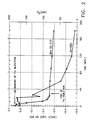
- FIG. 2 is a plot showing the variation of the oxygen level of effluent water and the specimen ECP over time during and after the injection of palladium into an autoclave forming a part of a high-temperature recirculating flow loop.
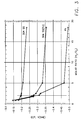
- FIG. 3 is a plot showing the ECPs of platinum, lightly oxidized Type 304 stainless steel and palladium-doped Type 304 stainless steel as a function of the molar ratio of hydrogen to oxygen. In this case, palladium doping was performed for 30 minutes.
- FIG. 4 is a plot showing the ECPs of well oxidized Type 304 stainless steel, palladium-doped Type 304 stainless steel and a Type 304 stainless steel autoclave as a function of the molar ratio of hydrogen to oxygen. In this case, palladium doping was performed for 48 hr.
- FIG. 5 shows an analysis of the Type 304 stainless steel surface after palladium doping for 48 hr.
- Feedwater is admitted into a reactor pressure vessel (RPV) 10 via a feedwater inlet 12 and a feedwater sparger 14, which is a ring-shaped pipe having suitable apertures for circumferentially distributing the feedwater inside the RPV.
- a core spray inlet 11 supplies water to a core spray sparger 15 via core spray line 13.
- the feedwater from feedwater sparger 14 flows downwardly through the downcomer annulus 16, which is an annular region between RPV 10 and core shroud 18.
- Core shroud 18 is a stainless steel cylinder which surrounds the core 20 comprising numerous fuel assemblies 22 (only two 2 ⁇ 2 arrays of which are depicted in FIG. 1). Each fuel assembly is supported at the top by top guide 19 and at the bottom by core plate 21. Water flowing through down-comer annulus 16 then flows to the core lower plenum 24.
- the water subsequently enters the fuel assemblies 22 disposed within core 20, wherein a boiling boundary layer (not shown) is established.
- a mixture of water and steam enters core upper plenum 26 under shroud head 28.
- Core upper plenum 26 provides standoff between the steam-water mixture exiting core 20 and entering vertical standpipes 30, which are disposed atop shroud head 28 and in fluid communication with core upper plenum 26.
- the steam-water mixture flows through standpipes 30 and enters steam separators 32, which are of the axial-flow centrifugal type.
- the separated liquid water then mixes with feedwater in the mixing plenum 33, which mixture then returns to the core via the downcomer annulus.
- the steam passes through steam dryers 34 and enters steam dome 36.
- the steam is withdrawn from the RPV via steam outlet 38.
- the BWR also includes a coolant recirculation system which provides the forced convection flow through the core necessary to attain the required power density.
- a portion of the water is sucked from the lower end of the downcomer annulus 16 via recirculation water outlet 43 and forced by a centrifugal recirculation pump (not shown) into jet pump assemblies 42 (only one of which is shown) via recirculation water inlets 45.
- the BWR has two recirculation pumps, each of which provides the driving flow for a plurality of jet pump assemblies.
- the pressurized driving water is supplied to each jet pump nozzle 44 via an inlet riser 47, an elbow 48 and an inlet mixer 46 in flow sequence.
- a typical BWR has 16 to 24 inlet mixers.
- the present invention is a technique to coat or dope oxided stainless steel surfaces with palladium in-situ by injecting a palladium-containing compound into the high-temperature water of a BWR.
- a palladium-containing compound is injected at a point upstream of the feedwater inlet 12 (see FIG. 1).
- the high temperatures as well as the gamma and neutron radiation in the reactor core act to decompose the compound, thereby freeing palladium ions/atoms for deposition on the surface of the oxide film.
- One Pd-containing compound successfully used for this purpose is an organo-metallic compound, palladium acetylacetonate.
- other palladium compounds of organic, organometallic and inorganic nature can also be used for this purpose.
- the invention consists of two parts: (1) an in-situ method for depositing palladium (or other metal) on oxided stainless steel surfaces while the reactor is operating; and (2) a method that makes the IGSCC critical potential achievable without injecting hydrogen into the water if organics are present in the water.
- the autoclave had a constant extension rate test (CERT) specimen made of Type 304 stainless steel and a stainless steel tip electrode also made of Type 304 stainless steel.
- the reference electrodes used to measure ECPs consisted of a Cu/Cu2O/ZrO2 type reference electrode and an external pressure balanced Ag/AgCl, 0.1 M KCl reference electrode.
- the recirculating flow loop contained deionized water heated to 550°F inside the autoclave.
- the oxygen level in the effluent water was 170 ppb and the CERT specimen potential at this oxygen level was +0.042 V(SHE).
- the palladium acetylacetonate injection solution was prepared by dissolving 52.6 mg of palladium acetylacetonate powder in 40 ml of ethanol. The ethanol solution is then diluted with water. After dilution, 10 ml of ethanol are added to the solution. This is then diluted to a volume of 1 liter. Alternatively, a water-based suspension can be formed, without using ethanol, by mixing palladium acetylacetonate powder in water.
- the palladium acetylacetonate compound dissolved in the ethanol/water mixture, was injected into the inlet side of the main pump in the flow loop using an injection pump at a rate of 0.4 cc/min so that the solution entering the autoclave (at 550°F) had a palladium concentration of ⁇ 50 ppb.
- the ECP of the Type 304 stainless steel CERT sample dropped from +0.042 V(SHE) to -0.256 V(SHE).
- the effluent oxygen content also dropped as palladium was getting into the loop.
- the palladium injection was stopped after 30 minutes, but the ECP of the Type 304 stainless steel CERT specimen continued to drop slowly with time (see FIG. 2).
- the effluent oxygen content also continued to drop to sub-ppb levels despite the fact that the dissolved oxygen in the inlet water was ⁇ 320 ppb (calculated from the gas composition).
- the stainless steel tip electrode potential dropped from -0.007 V(SHE) to -0.329 V(SHE), and the autoclave potential dropped from +0.048 V(SHE) to -0.257 V(SHE). In all cases the potentials continued to drop slowly even after the palladium injection had been discontinued.
- the present invention offers the advantage that Type 304 stainless steel surfaces can be coated or doped with palladium using an in-situ technique (while the reactor is operating) which is simple in application and also inexpensive.
- the technique is not limited to in-situ application.
- the application technology can be implement even for coating ex-situ components.
- the technique can be applied to operating BWRs and PWRs and their associated components, such as steam generators.
- the palladium concentration in the reactor water is preferably in the range of 5 to 100 ppb.
- the invention is advantageous in that IGSCC critical potential can be achieved without the addition of hydrogen if organics are present in the water. Furthermore, when hydrogen addition is required, the amount of hydrogen needed is minimized so that the main steam line radiation dose rates do not reach undesirable levels.
- the technology of the invention is unique because it can be applied during operation of a reactor and is simple when compared with other standard technologies such as electroplating, electroless plating, and plasma deposition, which require complex equipment and tooling.
- metals other than palladium can be applied using this technique, e.g., other platinum group metals.
- a platinum group metal can be injected in the form of an organic or organometallic compound to reduce the potential of stainless steel reactor components even in the absence of hydrogen injection.
- the platinum group metal can be injected in the form of an inorganic compound in conjunction with hydrogen injection to reduce the potential of stainless steel reactor components.
- One option is to inject the palladium acetylacetonate solution or suspension via the same port by which dissolved hydrogen is injected.
- metal acetylacetonate need not be injected as part of an ethanol/water solution. Instead the metal acetylacetonate powder can be mixed with water alone to form a suspension which is injected into the reactor water. To improve the stability of the suspension, it is obvious that ultrasonication can be used to break down the particles. All such variations and modifications are intended to be encompassed by the claims set forth hereinafter.
Landscapes
- Engineering & Computer Science (AREA)
- Physics & Mathematics (AREA)
- Chemical & Material Sciences (AREA)
- Plasma & Fusion (AREA)
- General Engineering & Computer Science (AREA)
- High Energy & Nuclear Physics (AREA)
- Materials Engineering (AREA)
- Organic Chemistry (AREA)
- Life Sciences & Earth Sciences (AREA)
- Mechanical Engineering (AREA)
- Metallurgy (AREA)
- Biodiversity & Conservation Biology (AREA)
- Biochemistry (AREA)
- Ecology (AREA)
- Environmental & Geological Engineering (AREA)
- Environmental Sciences (AREA)
- Health & Medical Sciences (AREA)
- Analytical Chemistry (AREA)
- Inorganic Chemistry (AREA)
- General Health & Medical Sciences (AREA)
- General Physics & Mathematics (AREA)
- Immunology (AREA)
- Pathology (AREA)
- Chemical Kinetics & Catalysis (AREA)
- Preventing Corrosion Or Incrustation Of Metals (AREA)
- Catalysts (AREA)
- Chemically Coating (AREA)
Applications Claiming Priority (2)
| Application Number | Priority Date | Filing Date | Title |
|---|---|---|---|
| US14351393A | 1993-10-29 | 1993-10-29 | |
| US143513 | 1993-10-29 |
Publications (2)
| Publication Number | Publication Date |
|---|---|
| EP0651397A1 true EP0651397A1 (fr) | 1995-05-03 |
| EP0651397B1 EP0651397B1 (fr) | 1997-07-09 |
Family
ID=22504415
Family Applications (1)
| Application Number | Title | Priority Date | Filing Date |
|---|---|---|---|
| EP94307893A Expired - Lifetime EP0651397B1 (fr) | 1993-10-29 | 1994-10-27 | Dopage ou revêtement sur place de surfaces en acier inox avec palladium |
Country Status (8)
| Country | Link |
|---|---|
| EP (1) | EP0651397B1 (fr) |
| JP (1) | JP3066265B2 (fr) |
| KR (1) | KR100264466B1 (fr) |
| CA (1) | CA2118062C (fr) |
| DE (2) | DE651397T1 (fr) |
| FI (1) | FI103993B1 (fr) |
| IL (1) | IL111203A0 (fr) |
| TW (1) | TW241314B (fr) |
Cited By (11)
| Publication number | Priority date | Publication date | Assignee | Title |
|---|---|---|---|---|
| EP0671486A1 (fr) * | 1994-03-10 | 1995-09-13 | General Electric Company | Procédé pour doper ou revêtir à l'aide de métaux nobles l'intérieur de craquelures pour protéger des métaux de la casse à la corrosion sous contrainte |
| EP0671485A1 (fr) * | 1994-03-10 | 1995-09-13 | General Electric Company | Méthode pour réduire le potential de corrosion d'articles |
| WO1996000447A1 (fr) * | 1994-06-24 | 1996-01-04 | General Electric Company | Modification de la conductivite electrique d'un film d'oxyde pour maintenir un faible potentiel de corrosion dans de l'eau a haute temperature |
| EP0707319A1 (fr) | 1994-10-13 | 1996-04-17 | General Electric Company | Déposition simultanée de palladium pendant la formation d'un film d'oxide en présence d'eau à haute température, pour mitiger le fissuration par corrosion sous contrainte |
| EP0731191A1 (fr) * | 1995-03-07 | 1996-09-11 | General Electric Company | Procédé pour diminuer la corrosion |
| EP0736878A1 (fr) * | 1995-04-05 | 1996-10-09 | General Electric Company | Procédé pour atténuer la propagation des criques |
| WO1997040210A1 (fr) * | 1996-04-22 | 1997-10-30 | General Electric Company | Dopage ou enduction in situ de surfaces d'acier inoxydable avec du palladium |
| WO1999028537A1 (fr) * | 1997-11-28 | 1999-06-10 | General Electric Company | Technique fondee sur la temperature permettant de regler la dose de metal appliquee sur des surfaces d'oxyde metallique pour reduire la corrosion et les fissurations par corrosion sous contrainte |
| US6606368B2 (en) * | 2000-04-24 | 2003-08-12 | Hitachi, Ltd. | Method of operating nuclear power plant, nuclear power plant, and method of controlling water chemistry of nuclear power plant |
| US6697449B2 (en) | 1997-11-28 | 2004-02-24 | General Electric Company | Temperature-based method for controlling the amount of metal applied to metal oxide surfaces to reduce corrosion and stress corrosion cracking |
| CN109524136A (zh) * | 2018-11-22 | 2019-03-26 | 西南石油大学 | 一种高能管断裂甩击行为的试验装置及方法 |
Families Citing this family (5)
| Publication number | Priority date | Publication date | Assignee | Title |
|---|---|---|---|---|
| JP2001124891A (ja) | 1999-07-09 | 2001-05-11 | Hitachi Ltd | 原子力プラント構造物の表面処理方法および原子力プラント |
| JP4437256B2 (ja) * | 2004-03-31 | 2010-03-24 | 日立Geニュークリア・エナジー株式会社 | 炭素鋼の腐食減肉防止方法 |
| US20100246745A1 (en) * | 2006-12-29 | 2010-09-30 | Samson Hettiarachchi | Methods for operating and methods for reducing post-shutdown radiation levels of nuclear reactors |
| KR100968744B1 (ko) | 2007-02-20 | 2010-07-08 | 한국원자력연구원 | 가압경수로용 배관재의 백금분말 담지에 의한 표면처리방법 |
| JP5572592B2 (ja) * | 2011-06-16 | 2014-08-13 | 日立Geニュークリア・エナジー株式会社 | ウォータージェットピーニング方法及びその装置 |
Citations (3)
| Publication number | Priority date | Publication date | Assignee | Title |
|---|---|---|---|---|
| EP0450444A1 (fr) * | 1990-04-02 | 1991-10-09 | General Electric Company | Méthode d'allongement de la durée de vie des réacteurs à eau bouillante en service |
| EP0450440A1 (fr) * | 1990-04-02 | 1991-10-09 | General Electric Company | Méthode d'allongement de l'espérance de vie des composants des réacteurs à eau bouillante |
| EP0514089A1 (fr) * | 1991-05-13 | 1992-11-19 | General Electric Company | Méthode pour réduire la corrosion de composés exposés à de l'eau à température élevée |
-
1994
- 1994-05-06 TW TW083104137A patent/TW241314B/zh not_active IP Right Cessation
- 1994-10-07 IL IL11120394A patent/IL111203A0/xx unknown
- 1994-10-13 CA CA002118062A patent/CA2118062C/fr not_active Expired - Fee Related
- 1994-10-27 DE DE0651397T patent/DE651397T1/de active Pending
- 1994-10-27 EP EP94307893A patent/EP0651397B1/fr not_active Expired - Lifetime
- 1994-10-27 DE DE69404112T patent/DE69404112T2/de not_active Expired - Fee Related
- 1994-10-28 KR KR1019940027850A patent/KR100264466B1/ko not_active Expired - Fee Related
- 1994-10-28 FI FI945083A patent/FI103993B1/fi not_active IP Right Cessation
- 1994-10-28 JP JP6264762A patent/JP3066265B2/ja not_active Expired - Fee Related
Patent Citations (3)
| Publication number | Priority date | Publication date | Assignee | Title |
|---|---|---|---|---|
| EP0450444A1 (fr) * | 1990-04-02 | 1991-10-09 | General Electric Company | Méthode d'allongement de la durée de vie des réacteurs à eau bouillante en service |
| EP0450440A1 (fr) * | 1990-04-02 | 1991-10-09 | General Electric Company | Méthode d'allongement de l'espérance de vie des composants des réacteurs à eau bouillante |
| EP0514089A1 (fr) * | 1991-05-13 | 1992-11-19 | General Electric Company | Méthode pour réduire la corrosion de composés exposés à de l'eau à température élevée |
Non-Patent Citations (1)
| Title |
|---|
| KOWALCZYK ET AL.: "Characterization of Palladium Acetylacetonate as a CVD precursor for Pd metallization", 3RD SYMPOSIUM ON CHEMICAL PERSPECTIVES OF MICROELECTRONICS MATERIAL, BOSTON, USA 30 NOV-3 DEC. 1992, pages 353 - 358 * |
Cited By (18)
| Publication number | Priority date | Publication date | Assignee | Title |
|---|---|---|---|---|
| US5768330A (en) * | 1993-10-29 | 1998-06-16 | General Electric Company | Co-deposition of palladium during oxide film growth in high-temperature water to mitigate stress corrosion cracking |
| US5818893A (en) * | 1993-10-29 | 1998-10-06 | General Electric Company | In-situ palladium doping or coating of stainless steel surfaces |
| US5600692A (en) * | 1993-10-29 | 1997-02-04 | General Electric Company | Method for improving tenacity and loading of palladium on palladium-doped metal surfaces |
| US5602888A (en) * | 1993-10-29 | 1997-02-11 | General Electric Company | Radiation-induced palladium doping of metals to protect against stress corrosion cracking |
| US5608766A (en) * | 1993-10-29 | 1997-03-04 | General Electric Company | Co-deposition of palladium during oxide film growth in high-temperature water to mitigate stress corrosion cracking |
| EP0671485A1 (fr) * | 1994-03-10 | 1995-09-13 | General Electric Company | Méthode pour réduire le potential de corrosion d'articles |
| EP0671486A1 (fr) * | 1994-03-10 | 1995-09-13 | General Electric Company | Procédé pour doper ou revêtir à l'aide de métaux nobles l'intérieur de craquelures pour protéger des métaux de la casse à la corrosion sous contrainte |
| WO1996000447A1 (fr) * | 1994-06-24 | 1996-01-04 | General Electric Company | Modification de la conductivite electrique d'un film d'oxyde pour maintenir un faible potentiel de corrosion dans de l'eau a haute temperature |
| EP0707319A1 (fr) | 1994-10-13 | 1996-04-17 | General Electric Company | Déposition simultanée de palladium pendant la formation d'un film d'oxide en présence d'eau à haute température, pour mitiger le fissuration par corrosion sous contrainte |
| EP0731191A1 (fr) * | 1995-03-07 | 1996-09-11 | General Electric Company | Procédé pour diminuer la corrosion |
| EP0736878A1 (fr) * | 1995-04-05 | 1996-10-09 | General Electric Company | Procédé pour atténuer la propagation des criques |
| WO1997040210A1 (fr) * | 1996-04-22 | 1997-10-30 | General Electric Company | Dopage ou enduction in situ de surfaces d'acier inoxydable avec du palladium |
| WO1999028537A1 (fr) * | 1997-11-28 | 1999-06-10 | General Electric Company | Technique fondee sur la temperature permettant de regler la dose de metal appliquee sur des surfaces d'oxyde metallique pour reduire la corrosion et les fissurations par corrosion sous contrainte |
| US6697449B2 (en) | 1997-11-28 | 2004-02-24 | General Electric Company | Temperature-based method for controlling the amount of metal applied to metal oxide surfaces to reduce corrosion and stress corrosion cracking |
| US6714618B1 (en) | 1997-11-28 | 2004-03-30 | General Electric Company | Temperature-based method for controlling the amount of metal applied to metal oxide surfaces to reduce corrosion and stress corrosion cracking |
| US6606368B2 (en) * | 2000-04-24 | 2003-08-12 | Hitachi, Ltd. | Method of operating nuclear power plant, nuclear power plant, and method of controlling water chemistry of nuclear power plant |
| CN109524136A (zh) * | 2018-11-22 | 2019-03-26 | 西南石油大学 | 一种高能管断裂甩击行为的试验装置及方法 |
| CN109524136B (zh) * | 2018-11-22 | 2022-05-20 | 西南石油大学 | 一种高能管断裂甩击行为的试验装置及方法 |
Also Published As
| Publication number | Publication date |
|---|---|
| CA2118062C (fr) | 2000-03-28 |
| FI103993B (fi) | 1999-10-29 |
| KR100264466B1 (ko) | 2000-08-16 |
| FI945083L (fi) | 1995-04-30 |
| FI945083A0 (fi) | 1994-10-28 |
| KR950011650A (ko) | 1995-05-15 |
| JP3066265B2 (ja) | 2000-07-17 |
| JPH07198893A (ja) | 1995-08-01 |
| EP0651397B1 (fr) | 1997-07-09 |
| DE69404112D1 (de) | 1997-08-14 |
| TW241314B (en) | 1995-02-21 |
| FI103993B1 (fi) | 1999-10-29 |
| IL111203A0 (en) | 1995-01-24 |
| CA2118062A1 (fr) | 1995-04-30 |
| DE69404112T2 (de) | 1998-01-15 |
| DE651397T1 (de) | 1996-10-10 |
Similar Documents
| Publication | Publication Date | Title |
|---|---|---|
| EP0833962B1 (fr) | Dopage ou enduction in situ de surfaces d'acier inoxydable | |
| US5805653A (en) | Noble metal doping or coating of crack interior for stress corrosion cracking protection of metals | |
| US5448605A (en) | Palladium acetylacetonate solution and related method of manufacture | |
| US5774516A (en) | Modification of oxide film electrical conductivity to maintain low corrosion potential in high-temperature water | |
| EP0651397B1 (fr) | Dopage ou revêtement sur place de surfaces en acier inox avec palladium | |
| US5600692A (en) | Method for improving tenacity and loading of palladium on palladium-doped metal surfaces | |
| US6714618B1 (en) | Temperature-based method for controlling the amount of metal applied to metal oxide surfaces to reduce corrosion and stress corrosion cracking | |
| US20020101953A1 (en) | Application of noble metals to internal surfaces of operating boiling water reactors in the presence of zinc in reactor water | |
| EP0671485A1 (fr) | Méthode pour réduire le potential de corrosion d'articles | |
| KR100380127B1 (ko) | 고온수내의낮은부식전위를유지하기위한산화막전기전도도의조절 | |
| EP1036218B1 (fr) | Technique fondee sur la temperature permettant de regler la dose de metal appliquee sur des surfaces d'oxyde metallique pour reduire la corrosion et les fissurations par corrosion sous contrainte | |
| WO2000022627A1 (fr) | Application de metaux nobles sur les surfaces internes de reacteurs a eau bouillante en conditions de marche, en presence de zinc dans l'eau de reacteur |
Legal Events
| Date | Code | Title | Description |
|---|---|---|---|
| PUAI | Public reference made under article 153(3) epc to a published international application that has entered the european phase |
Free format text: ORIGINAL CODE: 0009012 |
|
| AK | Designated contracting states |
Kind code of ref document: A1 Designated state(s): CH DE FR GB IT LI SE |
|
| 17P | Request for examination filed |
Effective date: 19951103 |
|
| 17Q | First examination report despatched |
Effective date: 19960409 |
|
| DET | De: translation of patent claims | ||
| GRAG | Despatch of communication of intention to grant |
Free format text: ORIGINAL CODE: EPIDOS AGRA |
|
| GRAH | Despatch of communication of intention to grant a patent |
Free format text: ORIGINAL CODE: EPIDOS IGRA |
|
| GRAH | Despatch of communication of intention to grant a patent |
Free format text: ORIGINAL CODE: EPIDOS IGRA |
|
| GRAA | (expected) grant |
Free format text: ORIGINAL CODE: 0009210 |
|
| AK | Designated contracting states |
Kind code of ref document: B1 Designated state(s): CH DE FR GB IT LI SE |
|
| PG25 | Lapsed in a contracting state [announced via postgrant information from national office to epo] |
Ref country code: IT Free format text: LAPSE BECAUSE OF FAILURE TO SUBMIT A TRANSLATION OF THE DESCRIPTION OR TO PAY THE FEE WITHIN THE PRE;WARNING: LAPSES OF ITALIAN PATENTS WITH EFFECTIVE DATE BEFORE 2007 MAY HAVE OCCURRED AT ANY TIME BEFORE 2007. THE CORRECT EFFECTIVE DATE MAY BE DIFFERENT FROM THE ONE RECORDED.SCRIBED TIME-LIMIT Effective date: 19970709 |
|
| REG | Reference to a national code |
Ref country code: CH Ref legal event code: NV Representative=s name: RITSCHER & SEIFERT PATENTANWAELTE VSP Ref country code: CH Ref legal event code: EP |
|
| ET | Fr: translation filed | ||
| REF | Corresponds to: |
Ref document number: 69404112 Country of ref document: DE Date of ref document: 19970814 |
|
| PLBI | Opposition filed |
Free format text: ORIGINAL CODE: 0009260 |
|
| PLBF | Reply of patent proprietor to notice(s) of opposition |
Free format text: ORIGINAL CODE: EPIDOS OBSO |
|
| 26 | Opposition filed |
Opponent name: SIEMENS AG Effective date: 19980401 |
|
| PLBF | Reply of patent proprietor to notice(s) of opposition |
Free format text: ORIGINAL CODE: EPIDOS OBSO |
|
| PLBF | Reply of patent proprietor to notice(s) of opposition |
Free format text: ORIGINAL CODE: EPIDOS OBSO |
|
| PLBF | Reply of patent proprietor to notice(s) of opposition |
Free format text: ORIGINAL CODE: EPIDOS OBSO |
|
| PLBO | Opposition rejected |
Free format text: ORIGINAL CODE: EPIDOS REJO |
|
| APAC | Appeal dossier modified |
Free format text: ORIGINAL CODE: EPIDOS NOAPO |
|
| APAE | Appeal reference modified |
Free format text: ORIGINAL CODE: EPIDOS REFNO |
|
| APAC | Appeal dossier modified |
Free format text: ORIGINAL CODE: EPIDOS NOAPO |
|
| PLBQ | Unpublished change to opponent data |
Free format text: ORIGINAL CODE: EPIDOS OPPO |
|
| PLAB | Opposition data, opponent's data or that of the opponent's representative modified |
Free format text: ORIGINAL CODE: 0009299OPPO |
|
| R26 | Opposition filed (corrected) |
Opponent name: SIEMENS AG Effective date: 19980401 |
|
| REG | Reference to a national code |
Ref country code: GB Ref legal event code: IF02 |
|
| PLAB | Opposition data, opponent's data or that of the opponent's representative modified |
Free format text: ORIGINAL CODE: 0009299OPPO |
|
| R26 | Opposition filed (corrected) |
Opponent name: FRAMATOME ANP GMBH Effective date: 19980401 |
|
| APBU | Appeal procedure closed |
Free format text: ORIGINAL CODE: EPIDOSNNOA9O |
|
| APAH | Appeal reference modified |
Free format text: ORIGINAL CODE: EPIDOSCREFNO |
|
| PLAY | Examination report in opposition despatched + time limit |
Free format text: ORIGINAL CODE: EPIDOSNORE2 |
|
| PLAH | Information related to despatch of examination report in opposition + time limit modified |
Free format text: ORIGINAL CODE: EPIDOSCORE2 |
|
| PLAB | Opposition data, opponent's data or that of the opponent's representative modified |
Free format text: ORIGINAL CODE: 0009299OPPO |
|
| R26 | Opposition filed (corrected) |
Opponent name: AREVA NP GMBH Effective date: 19980401 |
|
| PLBC | Reply to examination report in opposition received |
Free format text: ORIGINAL CODE: EPIDOSNORE3 |
|
| PGFP | Annual fee paid to national office [announced via postgrant information from national office to epo] |
Ref country code: DE Payment date: 20081201 Year of fee payment: 15 Ref country code: CH Payment date: 20081027 Year of fee payment: 15 |
|
| PLAG | Information modified related to despatch of communication that opposition is rejected |
Free format text: ORIGINAL CODE: EPIDOSCREJ1 |
|
| PGFP | Annual fee paid to national office [announced via postgrant information from national office to epo] |
Ref country code: FR Payment date: 20081018 Year of fee payment: 15 |
|
| PLBN | Opposition rejected |
Free format text: ORIGINAL CODE: 0009273 |
|
| STAA | Information on the status of an ep patent application or granted ep patent |
Free format text: STATUS: OPPOSITION REJECTED |
|
| PGFP | Annual fee paid to national office [announced via postgrant information from national office to epo] |
Ref country code: GB Payment date: 20081029 Year of fee payment: 15 |
|
| 27O | Opposition rejected |
Effective date: 20090302 |
|
| REG | Reference to a national code |
Ref country code: CH Ref legal event code: PL |
|
| REG | Reference to a national code |
Ref country code: FR Ref legal event code: ST Effective date: 20100630 |
|
| PG25 | Lapsed in a contracting state [announced via postgrant information from national office to epo] |
Ref country code: FR Free format text: LAPSE BECAUSE OF NON-PAYMENT OF DUE FEES Effective date: 20091102 Ref country code: DE Free format text: LAPSE BECAUSE OF NON-PAYMENT OF DUE FEES Effective date: 20100501 |
|
| PG25 | Lapsed in a contracting state [announced via postgrant information from national office to epo] |
Ref country code: LI Free format text: LAPSE BECAUSE OF NON-PAYMENT OF DUE FEES Effective date: 20091031 Ref country code: CH Free format text: LAPSE BECAUSE OF NON-PAYMENT OF DUE FEES Effective date: 20091031 |
|
| PG25 | Lapsed in a contracting state [announced via postgrant information from national office to epo] |
Ref country code: GB Free format text: LAPSE BECAUSE OF NON-PAYMENT OF DUE FEES Effective date: 20091027 |
|
| PGFP | Annual fee paid to national office [announced via postgrant information from national office to epo] |
Ref country code: SE Payment date: 20101027 Year of fee payment: 17 |
|
| REG | Reference to a national code |
Ref country code: SE Ref legal event code: EUG |
|
| PG25 | Lapsed in a contracting state [announced via postgrant information from national office to epo] |
Ref country code: SE Free format text: LAPSE BECAUSE OF NON-PAYMENT OF DUE FEES Effective date: 20111028 |