EP0655435B1 - Esters diarylaminoalkyl d'acide 4-hydroxyalkanoique et leur utilisation comme stabilisants dans des matériaux organiques - Google Patents
Esters diarylaminoalkyl d'acide 4-hydroxyalkanoique et leur utilisation comme stabilisants dans des matériaux organiques Download PDFInfo
- Publication number
- EP0655435B1 EP0655435B1 EP94810659A EP94810659A EP0655435B1 EP 0655435 B1 EP0655435 B1 EP 0655435B1 EP 94810659 A EP94810659 A EP 94810659A EP 94810659 A EP94810659 A EP 94810659A EP 0655435 B1 EP0655435 B1 EP 0655435B1
- Authority
- EP
- European Patent Office
- Prior art keywords
- tert
- butyl
- alkyl
- bis
- formula
- Prior art date
- Legal status (The legal status is an assumption and is not a legal conclusion. Google has not performed a legal analysis and makes no representation as to the accuracy of the status listed.)
- Expired - Lifetime
Links
- 0 CC(C1)c(cccc2)c2N(C)C1(C)C=* Chemical compound CC(C1)c(cccc2)c2N(C)C1(C)C=* 0.000 description 6
- BSZXAFXFTLXUFV-UHFFFAOYSA-N CC(c1ccccc1)c1ccccc1 Chemical compound CC(c1ccccc1)c1ccccc1 BSZXAFXFTLXUFV-UHFFFAOYSA-N 0.000 description 1
- QXBUYALKJGBACG-UHFFFAOYSA-N CN1c2ccccc2Sc2c1cccc2 Chemical compound CN1c2ccccc2Sc2c1cccc2 QXBUYALKJGBACG-UHFFFAOYSA-N 0.000 description 1
- WJFKNYWRSNBZNX-UHFFFAOYSA-N c1ccc2Sc(cccc3)c3Nc2c1 Chemical compound c1ccc2Sc(cccc3)c3Nc2c1 WJFKNYWRSNBZNX-UHFFFAOYSA-N 0.000 description 1
Classifications
-
- C—CHEMISTRY; METALLURGY
- C07—ORGANIC CHEMISTRY
- C07C—ACYCLIC OR CARBOCYCLIC COMPOUNDS
- C07C217/00—Compounds containing amino and etherified hydroxy groups bound to the same carbon skeleton
- C07C217/02—Compounds containing amino and etherified hydroxy groups bound to the same carbon skeleton having etherified hydroxy groups and amino groups bound to acyclic carbon atoms of the same carbon skeleton
- C07C217/04—Compounds containing amino and etherified hydroxy groups bound to the same carbon skeleton having etherified hydroxy groups and amino groups bound to acyclic carbon atoms of the same carbon skeleton the carbon skeleton being acyclic and saturated
- C07C217/06—Compounds containing amino and etherified hydroxy groups bound to the same carbon skeleton having etherified hydroxy groups and amino groups bound to acyclic carbon atoms of the same carbon skeleton the carbon skeleton being acyclic and saturated having only one etherified hydroxy group and one amino group bound to the carbon skeleton, which is not further substituted
- C07C217/08—Compounds containing amino and etherified hydroxy groups bound to the same carbon skeleton having etherified hydroxy groups and amino groups bound to acyclic carbon atoms of the same carbon skeleton the carbon skeleton being acyclic and saturated having only one etherified hydroxy group and one amino group bound to the carbon skeleton, which is not further substituted the oxygen atom of the etherified hydroxy group being further bound to an acyclic carbon atom
-
- C—CHEMISTRY; METALLURGY
- C07—ORGANIC CHEMISTRY
- C07C—ACYCLIC OR CARBOCYCLIC COMPOUNDS
- C07C219/00—Compounds containing amino and esterified hydroxy groups bound to the same carbon skeleton
- C07C219/02—Compounds containing amino and esterified hydroxy groups bound to the same carbon skeleton having esterified hydroxy groups and amino groups bound to acyclic carbon atoms of the same carbon skeleton
- C07C219/04—Compounds containing amino and esterified hydroxy groups bound to the same carbon skeleton having esterified hydroxy groups and amino groups bound to acyclic carbon atoms of the same carbon skeleton the carbon skeleton being acyclic and saturated
- C07C219/10—Compounds containing amino and esterified hydroxy groups bound to the same carbon skeleton having esterified hydroxy groups and amino groups bound to acyclic carbon atoms of the same carbon skeleton the carbon skeleton being acyclic and saturated having at least one of the hydroxy groups esterified by a carboxylic acid having the esterifying carboxyl group bound to an acyclic carbon atom of a carbon skeleton containing rings
-
- C—CHEMISTRY; METALLURGY
- C07—ORGANIC CHEMISTRY
- C07D—HETEROCYCLIC COMPOUNDS
- C07D279/00—Heterocyclic compounds containing six-membered rings having one nitrogen atom and one sulfur atom as the only ring hetero atoms
- C07D279/10—1,4-Thiazines; Hydrogenated 1,4-thiazines
- C07D279/14—1,4-Thiazines; Hydrogenated 1,4-thiazines condensed with carbocyclic rings or ring systems
- C07D279/18—[b, e]-condensed with two six-membered rings
- C07D279/22—[b, e]-condensed with two six-membered rings with carbon atoms directly attached to the ring nitrogen atom
-
- C—CHEMISTRY; METALLURGY
- C08—ORGANIC MACROMOLECULAR COMPOUNDS; THEIR PREPARATION OR CHEMICAL WORKING-UP; COMPOSITIONS BASED THEREON
- C08K—Use of inorganic or non-macromolecular organic substances as compounding ingredients
- C08K5/00—Use of organic ingredients
- C08K5/16—Nitrogen-containing compounds
- C08K5/17—Amines; Quaternary ammonium compounds
-
- C—CHEMISTRY; METALLURGY
- C10—PETROLEUM, GAS OR COKE INDUSTRIES; TECHNICAL GASES CONTAINING CARBON MONOXIDE; FUELS; LUBRICANTS; PEAT
- C10M—LUBRICATING COMPOSITIONS; USE OF CHEMICAL SUBSTANCES EITHER ALONE OR AS LUBRICATING INGREDIENTS IN A LUBRICATING COMPOSITION
- C10M133/00—Lubricating compositions characterised by the additive being an organic non-macromolecular compound containing nitrogen
- C10M133/02—Lubricating compositions characterised by the additive being an organic non-macromolecular compound containing nitrogen having a carbon chain of less than 30 atoms
- C10M133/04—Amines, e.g. polyalkylene polyamines; Quaternary amines
- C10M133/12—Amines, e.g. polyalkylene polyamines; Quaternary amines having amino groups bound to a carbon atom of a six-membered aromatic ring
- C10M133/14—Amines, e.g. polyalkylene polyamines; Quaternary amines having amino groups bound to a carbon atom of a six-membered aromatic ring containing hydroxy groups
-
- C—CHEMISTRY; METALLURGY
- C10—PETROLEUM, GAS OR COKE INDUSTRIES; TECHNICAL GASES CONTAINING CARBON MONOXIDE; FUELS; LUBRICANTS; PEAT
- C10M—LUBRICATING COMPOSITIONS; USE OF CHEMICAL SUBSTANCES EITHER ALONE OR AS LUBRICATING INGREDIENTS IN A LUBRICATING COMPOSITION
- C10M133/00—Lubricating compositions characterised by the additive being an organic non-macromolecular compound containing nitrogen
- C10M133/02—Lubricating compositions characterised by the additive being an organic non-macromolecular compound containing nitrogen having a carbon chain of less than 30 atoms
- C10M133/38—Heterocyclic nitrogen compounds
- C10M133/40—Six-membered ring containing nitrogen and carbon only
-
- C—CHEMISTRY; METALLURGY
- C10—PETROLEUM, GAS OR COKE INDUSTRIES; TECHNICAL GASES CONTAINING CARBON MONOXIDE; FUELS; LUBRICANTS; PEAT
- C10M—LUBRICATING COMPOSITIONS; USE OF CHEMICAL SUBSTANCES EITHER ALONE OR AS LUBRICATING INGREDIENTS IN A LUBRICATING COMPOSITION
- C10M135/00—Lubricating compositions characterised by the additive being an organic non-macromolecular compound containing sulfur, selenium or tellurium
- C10M135/32—Heterocyclic sulfur, selenium or tellurium compounds
- C10M135/36—Heterocyclic sulfur, selenium or tellurium compounds the ring containing sulfur and carbon with nitrogen or oxygen
-
- C—CHEMISTRY; METALLURGY
- C10—PETROLEUM, GAS OR COKE INDUSTRIES; TECHNICAL GASES CONTAINING CARBON MONOXIDE; FUELS; LUBRICANTS; PEAT
- C10M—LUBRICATING COMPOSITIONS; USE OF CHEMICAL SUBSTANCES EITHER ALONE OR AS LUBRICATING INGREDIENTS IN A LUBRICATING COMPOSITION
- C10M2201/00—Inorganic compounds or elements as ingredients in lubricant compositions
- C10M2201/02—Water
-
- C—CHEMISTRY; METALLURGY
- C10—PETROLEUM, GAS OR COKE INDUSTRIES; TECHNICAL GASES CONTAINING CARBON MONOXIDE; FUELS; LUBRICANTS; PEAT
- C10M—LUBRICATING COMPOSITIONS; USE OF CHEMICAL SUBSTANCES EITHER ALONE OR AS LUBRICATING INGREDIENTS IN A LUBRICATING COMPOSITION
- C10M2215/00—Organic non-macromolecular compounds containing nitrogen as ingredients in lubricant Compositions
- C10M2215/02—Amines, e.g. polyalkylene polyamines; Quaternary amines
- C10M2215/06—Amines, e.g. polyalkylene polyamines; Quaternary amines having amino groups bound to carbon atoms of six-membered aromatic rings
- C10M2215/064—Di- and triaryl amines
-
- C—CHEMISTRY; METALLURGY
- C10—PETROLEUM, GAS OR COKE INDUSTRIES; TECHNICAL GASES CONTAINING CARBON MONOXIDE; FUELS; LUBRICANTS; PEAT
- C10M—LUBRICATING COMPOSITIONS; USE OF CHEMICAL SUBSTANCES EITHER ALONE OR AS LUBRICATING INGREDIENTS IN A LUBRICATING COMPOSITION
- C10M2215/00—Organic non-macromolecular compounds containing nitrogen as ingredients in lubricant Compositions
- C10M2215/02—Amines, e.g. polyalkylene polyamines; Quaternary amines
- C10M2215/06—Amines, e.g. polyalkylene polyamines; Quaternary amines having amino groups bound to carbon atoms of six-membered aromatic rings
- C10M2215/064—Di- and triaryl amines
- C10M2215/065—Phenyl-Naphthyl amines
-
- C—CHEMISTRY; METALLURGY
- C10—PETROLEUM, GAS OR COKE INDUSTRIES; TECHNICAL GASES CONTAINING CARBON MONOXIDE; FUELS; LUBRICANTS; PEAT
- C10M—LUBRICATING COMPOSITIONS; USE OF CHEMICAL SUBSTANCES EITHER ALONE OR AS LUBRICATING INGREDIENTS IN A LUBRICATING COMPOSITION
- C10M2215/00—Organic non-macromolecular compounds containing nitrogen as ingredients in lubricant Compositions
- C10M2215/22—Heterocyclic nitrogen compounds
-
- C—CHEMISTRY; METALLURGY
- C10—PETROLEUM, GAS OR COKE INDUSTRIES; TECHNICAL GASES CONTAINING CARBON MONOXIDE; FUELS; LUBRICANTS; PEAT
- C10M—LUBRICATING COMPOSITIONS; USE OF CHEMICAL SUBSTANCES EITHER ALONE OR AS LUBRICATING INGREDIENTS IN A LUBRICATING COMPOSITION
- C10M2215/00—Organic non-macromolecular compounds containing nitrogen as ingredients in lubricant Compositions
- C10M2215/22—Heterocyclic nitrogen compounds
- C10M2215/221—Six-membered rings containing nitrogen and carbon only
-
- C—CHEMISTRY; METALLURGY
- C10—PETROLEUM, GAS OR COKE INDUSTRIES; TECHNICAL GASES CONTAINING CARBON MONOXIDE; FUELS; LUBRICANTS; PEAT
- C10M—LUBRICATING COMPOSITIONS; USE OF CHEMICAL SUBSTANCES EITHER ALONE OR AS LUBRICATING INGREDIENTS IN A LUBRICATING COMPOSITION
- C10M2215/00—Organic non-macromolecular compounds containing nitrogen as ingredients in lubricant Compositions
- C10M2215/22—Heterocyclic nitrogen compounds
- C10M2215/225—Heterocyclic nitrogen compounds the rings containing both nitrogen and oxygen
-
- C—CHEMISTRY; METALLURGY
- C10—PETROLEUM, GAS OR COKE INDUSTRIES; TECHNICAL GASES CONTAINING CARBON MONOXIDE; FUELS; LUBRICANTS; PEAT
- C10M—LUBRICATING COMPOSITIONS; USE OF CHEMICAL SUBSTANCES EITHER ALONE OR AS LUBRICATING INGREDIENTS IN A LUBRICATING COMPOSITION
- C10M2215/00—Organic non-macromolecular compounds containing nitrogen as ingredients in lubricant Compositions
- C10M2215/22—Heterocyclic nitrogen compounds
- C10M2215/225—Heterocyclic nitrogen compounds the rings containing both nitrogen and oxygen
- C10M2215/226—Morpholines
-
- C—CHEMISTRY; METALLURGY
- C10—PETROLEUM, GAS OR COKE INDUSTRIES; TECHNICAL GASES CONTAINING CARBON MONOXIDE; FUELS; LUBRICANTS; PEAT
- C10M—LUBRICATING COMPOSITIONS; USE OF CHEMICAL SUBSTANCES EITHER ALONE OR AS LUBRICATING INGREDIENTS IN A LUBRICATING COMPOSITION
- C10M2215/00—Organic non-macromolecular compounds containing nitrogen as ingredients in lubricant Compositions
- C10M2215/24—Organic non-macromolecular compounds containing nitrogen as ingredients in lubricant Compositions having hydrocarbon substituents containing thirty or more carbon atoms, e.g. nitrogen derivatives of substituted succinic acid
- C10M2215/30—Heterocyclic compounds
-
- C—CHEMISTRY; METALLURGY
- C10—PETROLEUM, GAS OR COKE INDUSTRIES; TECHNICAL GASES CONTAINING CARBON MONOXIDE; FUELS; LUBRICANTS; PEAT
- C10M—LUBRICATING COMPOSITIONS; USE OF CHEMICAL SUBSTANCES EITHER ALONE OR AS LUBRICATING INGREDIENTS IN A LUBRICATING COMPOSITION
- C10M2219/00—Organic non-macromolecular compounds containing sulfur, selenium or tellurium as ingredients in lubricant compositions
- C10M2219/10—Heterocyclic compounds containing sulfur, selenium or tellurium compounds in the ring
- C10M2219/104—Heterocyclic compounds containing sulfur, selenium or tellurium compounds in the ring containing sulfur and carbon with nitrogen or oxygen in the ring
- C10M2219/108—Phenothiazine
-
- C—CHEMISTRY; METALLURGY
- C10—PETROLEUM, GAS OR COKE INDUSTRIES; TECHNICAL GASES CONTAINING CARBON MONOXIDE; FUELS; LUBRICANTS; PEAT
- C10N—INDEXING SCHEME ASSOCIATED WITH SUBCLASS C10M RELATING TO LUBRICATING COMPOSITIONS
- C10N2040/00—Specified use or application for which the lubricating composition is intended
- C10N2040/08—Hydraulic fluids, e.g. brake-fluids
-
- C—CHEMISTRY; METALLURGY
- C10—PETROLEUM, GAS OR COKE INDUSTRIES; TECHNICAL GASES CONTAINING CARBON MONOXIDE; FUELS; LUBRICANTS; PEAT
- C10N—INDEXING SCHEME ASSOCIATED WITH SUBCLASS C10M RELATING TO LUBRICATING COMPOSITIONS
- C10N2040/00—Specified use or application for which the lubricating composition is intended
- C10N2040/20—Metal working
- C10N2040/22—Metal working with essential removal of material, e.g. cutting, grinding or drilling
-
- C—CHEMISTRY; METALLURGY
- C10—PETROLEUM, GAS OR COKE INDUSTRIES; TECHNICAL GASES CONTAINING CARBON MONOXIDE; FUELS; LUBRICANTS; PEAT
- C10N—INDEXING SCHEME ASSOCIATED WITH SUBCLASS C10M RELATING TO LUBRICATING COMPOSITIONS
- C10N2040/00—Specified use or application for which the lubricating composition is intended
- C10N2040/20—Metal working
- C10N2040/24—Metal working without essential removal of material, e.g. forming, gorging, drawing, pressing, stamping, rolling or extruding; Punching metal
-
- C—CHEMISTRY; METALLURGY
- C10—PETROLEUM, GAS OR COKE INDUSTRIES; TECHNICAL GASES CONTAINING CARBON MONOXIDE; FUELS; LUBRICANTS; PEAT
- C10N—INDEXING SCHEME ASSOCIATED WITH SUBCLASS C10M RELATING TO LUBRICATING COMPOSITIONS
- C10N2040/00—Specified use or application for which the lubricating composition is intended
- C10N2040/20—Metal working
- C10N2040/241—Manufacturing joint-less pipes
-
- C—CHEMISTRY; METALLURGY
- C10—PETROLEUM, GAS OR COKE INDUSTRIES; TECHNICAL GASES CONTAINING CARBON MONOXIDE; FUELS; LUBRICANTS; PEAT
- C10N—INDEXING SCHEME ASSOCIATED WITH SUBCLASS C10M RELATING TO LUBRICATING COMPOSITIONS
- C10N2040/00—Specified use or application for which the lubricating composition is intended
- C10N2040/20—Metal working
- C10N2040/242—Hot working
-
- C—CHEMISTRY; METALLURGY
- C10—PETROLEUM, GAS OR COKE INDUSTRIES; TECHNICAL GASES CONTAINING CARBON MONOXIDE; FUELS; LUBRICANTS; PEAT
- C10N—INDEXING SCHEME ASSOCIATED WITH SUBCLASS C10M RELATING TO LUBRICATING COMPOSITIONS
- C10N2040/00—Specified use or application for which the lubricating composition is intended
- C10N2040/20—Metal working
- C10N2040/243—Cold working
-
- C—CHEMISTRY; METALLURGY
- C10—PETROLEUM, GAS OR COKE INDUSTRIES; TECHNICAL GASES CONTAINING CARBON MONOXIDE; FUELS; LUBRICANTS; PEAT
- C10N—INDEXING SCHEME ASSOCIATED WITH SUBCLASS C10M RELATING TO LUBRICATING COMPOSITIONS
- C10N2040/00—Specified use or application for which the lubricating composition is intended
- C10N2040/20—Metal working
- C10N2040/244—Metal working of specific metals
-
- C—CHEMISTRY; METALLURGY
- C10—PETROLEUM, GAS OR COKE INDUSTRIES; TECHNICAL GASES CONTAINING CARBON MONOXIDE; FUELS; LUBRICANTS; PEAT
- C10N—INDEXING SCHEME ASSOCIATED WITH SUBCLASS C10M RELATING TO LUBRICATING COMPOSITIONS
- C10N2040/00—Specified use or application for which the lubricating composition is intended
- C10N2040/20—Metal working
- C10N2040/244—Metal working of specific metals
- C10N2040/245—Soft metals, e.g. aluminum
-
- C—CHEMISTRY; METALLURGY
- C10—PETROLEUM, GAS OR COKE INDUSTRIES; TECHNICAL GASES CONTAINING CARBON MONOXIDE; FUELS; LUBRICANTS; PEAT
- C10N—INDEXING SCHEME ASSOCIATED WITH SUBCLASS C10M RELATING TO LUBRICATING COMPOSITIONS
- C10N2040/00—Specified use or application for which the lubricating composition is intended
- C10N2040/20—Metal working
- C10N2040/244—Metal working of specific metals
- C10N2040/246—Iron or steel
-
- C—CHEMISTRY; METALLURGY
- C10—PETROLEUM, GAS OR COKE INDUSTRIES; TECHNICAL GASES CONTAINING CARBON MONOXIDE; FUELS; LUBRICANTS; PEAT
- C10N—INDEXING SCHEME ASSOCIATED WITH SUBCLASS C10M RELATING TO LUBRICATING COMPOSITIONS
- C10N2040/00—Specified use or application for which the lubricating composition is intended
- C10N2040/20—Metal working
- C10N2040/244—Metal working of specific metals
- C10N2040/247—Stainless steel
Definitions
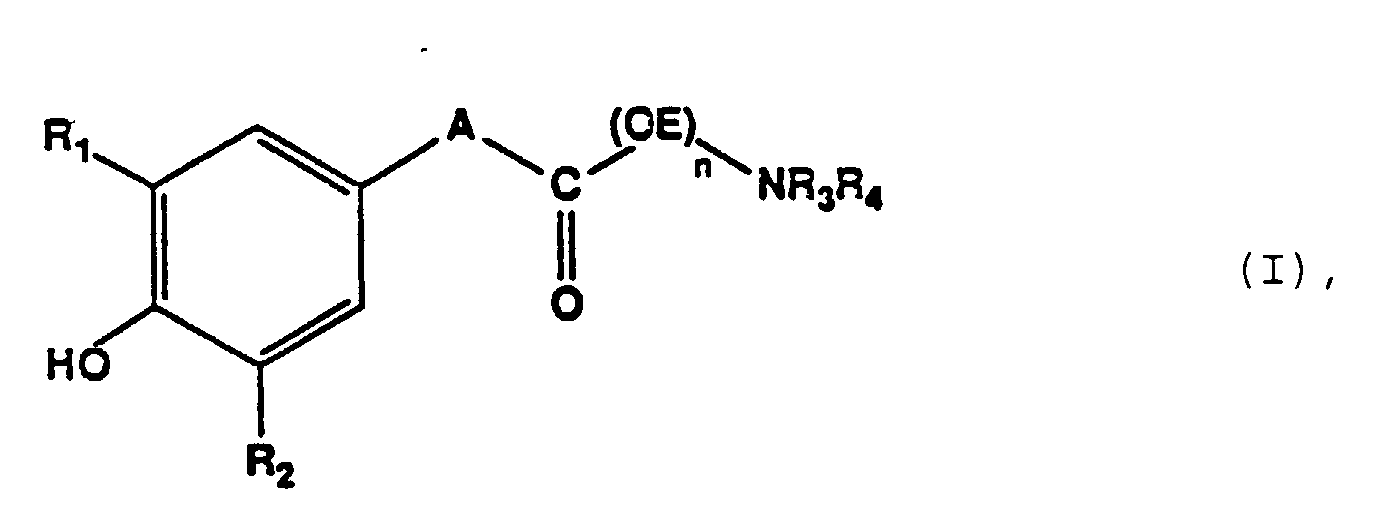
- the present invention relates to new, for stabilizing organic material suitable esters of 4-hydroxyphenylcarboxylic acids, containing them Compositions, a process for their preparation and their use as Stabilizers.
- Antioxidants which amine and phenol functions in one, are now known Combine molecule (cf. EP-A-0,119,160, US-A-3,225,099, -2,962,531, -3,119,871, -3,224,974, -3 457 286, -4 448 969 and -3 920 729).
- antioxidants can also be used will. It is particularly important to prevent sludge deposits (deposit control), which significantly increases the lifespan of internal combustion engines can belittle.
- R 1 , R 2 , R 3 , R 5 and R 6 in the meaning of C 1 -C 18 alkyl or C 1 -C 20 alkyl can be straight or branched chain and are, for example, methyl, ethyl, propyl, isopropyl, n-butyl, isobutyl, t-butyl, pentyl, isopentyl, hexyl, heptyl, octyl, 2-ethylhexyl, nonyl, decyl, undecyl, dodecyl, tridecyl, tetradecyl, pentadecyl, hexadecyl, heptadecyl, octadecyl, 2-ethylbutyl, 1- Methylpentyl, 1,3-dimethylbutyl, 1,1,3,3-tetramethylbutyl, 1-methylhexyl, iso
- radicals mean groups with a smaller number of carbon atoms, corresponding examples can also be found in the list above. This also applies to R 7 and R 8 introduced below in Formula III.
- the alkyl radicals mentioned preferably have 1-12, in particular 1-6, especially 1-4 C atoms.
- R 1 , R 2 , R 4 and R 3 are C 7 -C 9 phenylalkyl, for example benzyl, 1- or 2-phenylethyl, 3-phenylpropyl, ⁇ , ⁇ -dimethylbenzyl or 2-phenylisopropyl, but preferably around benzyl.
- R 4 and R 3 as C 7 -C 18 alkylphenyl can contain linear or branched alkyl groups, 1-3, in particular 1 or 2, alkyl groups being expediently present. Examples are tolyl, the isomeric xylyl, ethylphenyl, isopropylphenyl, tert-butylphenyl, sec-pentylphenyl, n-hexylphenyl, tert-octylphenyl, iso-nonylphenyl or n-dodecylphenyl.
- Examples of the abovementioned unsubstituted or C 1 -C 8 -alkyl-substituted cycloalkyl groups with 5-12 C atoms are cyclopentyl, cyclohexyl, cyclooctyl, cyclododecyl, 2- or 4-methylcyclohexyl, dimethylcyclohexyl, trimethylcyclohexyl, t-butylcyclohexyl, with cyclohexyl being particularly preferred.
- R 1 and R 2 are preferably cyclopentenyl and hexenyl.
- the interrupting atom or group is located within the C chain, which can be interrupted one or more times.
- the interruption is preferred by only one member of the group -O -, - S-, -NR 7 - or -CO-O-.
- R 3 and R 6 are interrupted by oxygen or sulfur, then they contain, for example, structural units such as -CH 2 CH 2 -O-CH 2 CH 2 -, -CH 2 CH 2 -S-CH 2 CH 2 -, or -O- (CH 2 ) 6 -O-.
- the units (O-CH 2 -CH 2 ) and (S-CH 2 CH 2 ) can in particular also occur several times next to one another.
- radicals interrupted by -O- or -S- are CH 3 -O-CH 2 -, CH 3 -S-CH 2 -, CH 3 -O-CH 2 CH 2 -O-CH 2 -, CH 3 - (O-CH 2 CH 2 -) 2 O-CH 2 -, CH 3 - (O-CH 2 CH 2 -) 3 O-CH 2 - or CH 3 - (O-CH 2 CH 2 -) 4 O- CH 2 -.
- C 2 -C 20 alkyl interrupted by> NR 7 means, for example, CH 3 -NH-CH 2 - or CH 3 -N (CH 3 ) -CH 2 -.
- C 2 -C 20 alkyl interrupted by -CO-O- means, for example, CH 3 -CO-O-CH 2 - or C 1 -C 18 alkyl-CO-OCH 2 CH 2 -.
- R 6 as alkyl has no such interruption, it is preferably C 1 -C 17 alkyl, for example C 1 -C 4 alkyl, and especially methyl.
- the invention also relates to mixtures of compounds of the formula I with different index n, especially those mixtures like those from the below described methods are available.
- the index n is preferably 1 or 2, especially 1.
- the compounds of formula I are ideal for stabilizing organic materials against light-induced, thermal and / or oxidative degradation.
- the invention therefore also relates to compositions comprising a counter such degradation reactions sensitive organic material and at least one Compound of formula I or the use of compounds of formula I as Stabilizers for organic materials against the mentioned types of degradation.
- the compounds of the formula I expediently from 0.01 to 10, for example from 0.05 to 5, preferably from 0.05 to 3, in particular, however, contain 0.1 to 2% by weight. It can be a or act several of these compounds of formula I, and the percentages by weight refer to the total amount of these compounds.
- the basis for calculation is the total weight of the organic material without the compounds of the formula I.
- the incorporation into the materials can, for example, by mixing or Application of the compounds of formula I and optionally other additives after the usual methods in technology. If it’s polymers, especially synthetic polymers, can be incorporated before or during the Shaping, or by applying the dissolved or dispersed compounds the polymer, optionally with subsequent evaporation of the solvent respectively. In the case of elastomers, these can also be stabilized as latices.
- the compounds of formula I. can be used as such, but also in encapsulated form (e.g. in waxes, oils or Polymers) are added. In the case of addition before or during the polymerization the compounds of formula I can also be used as regulators for the chain length of the Polymers (chain terminators) work.
- the compounds of formula I or mixtures thereof can also be in the form of a Masterbatches of these compounds, for example in a concentration of 2.5 to Contains 25% by weight, which are added to the plastics to be stabilized.
- Polymer compositions according to the invention can be used in various forms or processed into different products, e.g. as (to) films, fibers, Tapes, molding compounds, profiles, or as binders for paints, adhesives or putties.
- the invention also relates to a method for stabilizing organic material, in particular of thermoplastic polymers, elastomers or functional liquids, especially lubricants, against oxidative, thermal and / or light-induced degradation, characterized in that this material as Stabilizers add compounds of formula I or apply to this.
- the compounds of formula I are particularly suitable, for example, for functional purposes To give liquids improved performance properties. It is particular for their surprisingly good antioxidant and sludge-preventing (deposit control) Point out effect. Therefore the invention also includes compositions containing a functional liquid and at least one compound of the general Formula I as described above.
- Examples of functional liquids are lubricants, hydraulic fluids and to name metalworking fluids. Greases are also supposed to be here functional liquids fall.
- the lubricants in question are based, for example, on mineral or synthetic oils or mixtures thereof or on vegetable and animal oils, Fat and wax.
- the lubricants are familiar to the person skilled in the art and in the relevant area Specialist literature, such as in Dieter Klamann, "Lubricants and related Products “(Verlag Chemie, Weinheim, 1982), in Schewe-Kobek,” The Lubricant Paperback “ (Dr. Alfred Wilsonhig-Verlag, Heidelberg, 1974) and in “Ullmanns Encyclopedia of Technical Chemistry ", Vol. 13, pages 85-94 (Verlag Chemie, Weinheim, 1977).
- the lubricants are in particular oils and greases, for example based on a Mineral oil. Oils are preferred.
- the mineral oils are based in particular on hydrocarbon compounds.
- Examples of synthetic lubricants include lubricants based on the aliphatic or aromatic carboxyl esters, the polymeric esters, the polyalkylene oxides, the phosphoric acid ester, the poly- ⁇ -olefins or the silicones, a diester of a divalent Acid with a monohydric alcohol, e.g. Dioctyl sebacate or dinonyl adipate, a triester of trimethylolpropane with a monovalent acid or with a Mixture of such acids, e.g.
- mineral oils e.g. Poly- ⁇ -olefins, Ester-based lubricants, phosphates, glycols, polyglycols and polyalkylene glycols, and their mixtures with water.
- oils, fats and waxes obtained are vegetable lubricants from olives, palm trees, palm kernels, beets, rapeseed, linen, nuts, soybeans, cotton, Ricinus, sunflowers, pumpkin seeds, coconut, corn or their modified forms, e.g. sulfurized or epoxidized oils, such as epoxidized soybean oil, and mixtures of the substances to call.
- vegetable oils, fats and waxes used as lubricants can be used are tallow, fish oils, sperm oil, claw oil, tears and bacon oils, their modified forms and mixtures.
- Metalworking fluids such as rolling, drawing and cutting oils are mostly based on the mineral and synthetic oils described above and can also be used as Oil-in-water or water-in-oil emulsions are present. The same applies to hydraulic fluids.
- Other functional liquids include Compressor oils and Spin finishes in question.
- the compounds of formula I as described above can e.g. in quantities of 0.01 up to 10% by weight, advantageously in amounts of 0.05 to 5% by weight, preferably in one Amount from 0.05 to 3% by weight and very particularly preferably from 0.5 to 1.5% by weight, based on the composition in which functional liquid is present.
- the compounds of formula I can the functional liquid on known per se Be mixed in ways.
- the compounds are readily soluble in oils, for example. It it is also possible to produce a so-called master batch, which is based on consumption diluted to use concentrations with the appropriate functional liquid can be.
- compositions according to the invention are based on functional fluids, especially lubricants and hydraulic fluids or Metalworking fluids, these can also contain other additives that may be added to improve certain performance properties, e.g. Further Antioxidants, metal deactivators, rust inhibitors, viscosity index improvers, Pour point depressants, dispersants / surfactants and wear protection additives. Examples for this are:
- metal deactivators e.g. for copper
- metal deactivators e.g. for copper
- rust inhibitors are:
- viscosity index improvers examples are:
- Polyacrylates polymethacrylates, vinyl pyrrolidone / methacrylate copolymers, polyvinyl pyrrolidones, Polybutenes, olefin copolymers, styrene / acrylate copolymers, polyethers.
- pour point depressants examples are:
- dispersants / surfactants examples are:
- wear protection additives are:
- the present invention also relates to the use of compounds of the formula I. to stabilize against oxidative, thermal and / or light-induced degradation sensitive organic material, especially natural or (semi) synthetic polymers or of functional liquids, especially of Lubricants.
- the compounds work particularly well as Antioxidants and deposit control agents in functional Liquids as mentioned above.
- An advantage of the compounds of formula I is that e.g. when applying in Lubricants both antioxidant and deposit prevention Control) effect is achieved.
- R 1 , R 2 , A, E, n, R 3 , R 4 , and R 6 for the radicals already described above according to formula I and R 8 is H or lower alkyl, for example C 1 -C 4 alkyl, especially methyl.
- the compounds of formula I can e.g. by esterification or transesterification 4-hydroxyphenylpropionic or acetic acid or its esters of formula III with a Compound of formula II, e.g. catalyzed with a Br ⁇ nsted acid or Lewis acid can be produced [cf. the following examples 1-4].
- a Br ⁇ nsted acid or Lewis acid e.g. catalyzed with a Br ⁇ nsted acid or Lewis acid
- catalysts In addition to Br ⁇ nsted acids and Lewis acids, aluminum silicates, ion exchange resins, Zeolites, naturally occurring layered silicates ("acidic soils" or "acid clays ", such as Fuller's Earth) or modified layered silicates.
- Suitable Br ⁇ nsted acids are mineral acids or organic acids.
- inorganic Acids come hydrohalic and oxygen acids, especially the Sulfur and phosphorus in question. Examples are hydrochloric acid, sulfuric acid, Phosphoric acid.
- Carboxylic acids and organic residues are considered organic acids Acids containing sulfo and phospho groups. Examples are methanesulfonic acid, p-toluenesulfonic acid, acetic and propionic acid. P-Toluenesulfonic acid is particularly preferred.
- Suitable Lewis acids are, for example, tin tetrachloride, aluminum chloride, zinc chloride, Dibutyltin oxide or boron trifluoride diethyl etherate. Dibutyltin oxide is preferred.
- the (di) arylamino alcohols of the formula II are advantageously prepared via the Addition of the corresponding alkylene oxides to the (di) arylamines in the case of reactivity dependent temperatures, optionally with cooling, but preferably between 0 and 60, especially between 15 and 40 ° C or around room temperature if necessary under pressure, preferably in the presence of stoichiometric amounts of base, e.g. out the group of alkali metals and alkali metal organyls, such as sodium or butyllithium [described in G.A. Epling, A. Kumar, Synlett 1991/5, 347-8] or acid catalyzed, e.g. with the above-mentioned Lewis acids such as zinc chloride or boron trifluoride diethyl etherate [described in DE 1,543,335].
- base e.g. out the group of alkali metals and alkali metal organyls, such as sodium or butyllithium [described in
- the invention thus also relates to a process for the preparation of compounds of the formula I, characterized in that in a first step (di) arylamines of the formula HNR 3 R 4 with epoxides of the formula be implemented and in a second step the hydroxyalkylated intermediates H [OE] n -NR 3 R 4 with compounds of the formula be implemented where A, E, R 1 , R 2 , R 3 , R 4 and R 6 have the meanings already described initially according to formula I, and R 8 represents H or C 1 -C 4 alkyl.
- the invention therefore also relates to mixtures of compounds of the formula I. with different index n.
- a molar excess of epoxide therefore usually reacts in the first step, depending on the conversion.
- the exact amount of epoxy required depends on the reaction procedure. Batch operation is possible, for example in an autoclave or at normal pressure with introduction of the epoxide, or continuous operation, possibly with recycling of the unreacted epoxide.
- a small molar excess of alcohol is generally expedient, for example up to 20 mol%, in particular up to 10 mol%, based on the hydroxyphenylcarboxylic acid of the formula III or its ester.
- Step 1 can be carried out with and without solvent.
- a polar aprotic solvent examples are tetrahydrofuran (THF), Dimethylformamide (DMF), dimethylacetamide (DMA), hexamethylphosphoric trisamide (HMPTA), dimethyl sulfoxide (DMSO) and tetramethyl urea (TMU), also pyridine or alkyl pyridines. Is particularly preferred as a solvent anhydrous DMF.
- step 2 you can also work without solvents or diluents.
- a solvent inert under reaction conditions is prefers.
- the solvent is advantageously the same as that used for cleaning later used.
- Preference is given to hydrocarbons, particularly preferably toluene.
- the Solvent is also used to azeotrope the alcohol to distill off.
- step 1 the temperature is expediently from 0 to 60 ° C., preferably from 15 to 40 ° C. When using more reactive amines, especially simple aromatic ones, it can be useful to cool.
- the pressure can be changed if necessary, but it is still preferably in the atmospheric range.
- step 2 the resulting one can, if necessary Alcohol is drawn off under reduced pressure, and the temperature can for example at 70 to 180 ° C, preferably at 120 to 160 ° C.
- the resulting mixtures in the preparation of the compounds with different Index n or with different orientations of group E can usually be without further purification steps can be used. It goes without saying but a separation using common methods such as chromatography, distillation etc. possible if the pure connections are to be obtained.
- n 1,2,3
- n 1,2,3
- the brown, medium-viscosity reaction product is diluted with a little toluene, filtered through 20 g of silica gel (toluene) and evaporated. 42 g of clear, slightly pale yellow, viscous oil are obtained: n D 20 1.5650; approx. 97% yield, based on methyl 3- (3,5-di-tert-butyl-4-hydroxyphenyl) propionate.
- DOPT Deposit and Oxidation Panel Test
- This test is a variant of a test method for engine oils, especially for diesel engine oils, which have been described by G. Abellaneda et al., IIIe Symposium CEC, 1989, New Cavendish Street. London WIM8AR, England. He serves to the suitability of the oils with the respective stabilizer to prevent Check deposits on the piston.
- oil is dripped onto a sloping hot metal plate (panel) at a defined speed, creating an oil film.
- the test duration is 20 hours
- the temperature on the metal plate is 260 ° C
- the air flow 9.7 l / h
- the flow rate of the oil 1 ml / min.
- the moist air atmosphere is enriched with 460 ppm NO 2 and 25 ppm SO 2 .
- the metal plate is dipped in petroleum ether to remove the oil, dried, weighed and visually assessed, e.g. thereupon whether a varnish has formed.
- Commercially available oil of the API classification CD which with the Base oil STANCO 150 is used.
- the stabilizers specified in Table I are mixed with this prepared oil in an amount of 0.6% by weight, based on the oil, and subjected to the DOPT test.
Landscapes
- Chemical & Material Sciences (AREA)
- Organic Chemistry (AREA)
- Chemical Kinetics & Catalysis (AREA)
- General Chemical & Material Sciences (AREA)
- Oil, Petroleum & Natural Gas (AREA)
- Health & Medical Sciences (AREA)
- Medicinal Chemistry (AREA)
- Polymers & Plastics (AREA)
- Compositions Of Macromolecular Compounds (AREA)
- Polyamides (AREA)
- Pharmaceuticals Containing Other Organic And Inorganic Compounds (AREA)
- Nitrogen Condensed Heterocyclic Rings (AREA)
- Quinoline Compounds (AREA)
- Nitrogen- Or Sulfur-Containing Heterocyclic Ring Compounds With Rings Of Six Or More Members (AREA)
- Organic Low-Molecular-Weight Compounds And Preparation Thereof (AREA)
- Lubricants (AREA)
Claims (15)
- Composé de formule Idans laquelle
- R1 et R2,
- indépendamment l'un de l'autre, représentent des groupes alkyle en C1-C20, allyle, méthallyle, cycloalkyle en C5-C12 non substitué ou cycloalkyle en C5-C12 substitué par un groupe alkyle en C1-C8, cycloalcényle en C5-C8, phényle ou phénylalkyle en C7-C9,
- A
- représente une liaison directe, -CH2- -(CH2)2- ou -CH2-CH(CH3)-,
- E
- représente -(CH2)2-, -CHR6-CH2- ou -CH2CHR6-,
- n
- vaut 1, 2 ou 3,
- R3
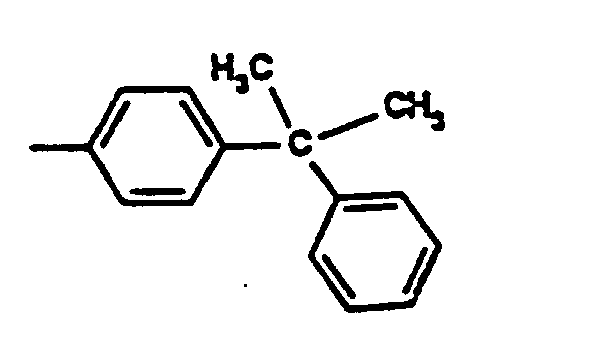
- représente un groupe alkyle en C1-C18 ou un groupe
alkyle en C2-C18 interrompu par O ou S, cycloalkyle
en C5-C12 non substitué ou cycloalkyle en C5-C12
substitué par un groupe alkyle en C1-C8, phényle,
naphtyle, phénylalkyle en C7-C9, (alkyl en C7-C18)-phényle
ou répond à la formule
- R4
- représente un groupe phényle, naphtyle,
phénylalkyle en C7-C9, (alkyl en C7-C18)-phényle, ou
un reste de formule

NR3R4 représente un groupe de formule
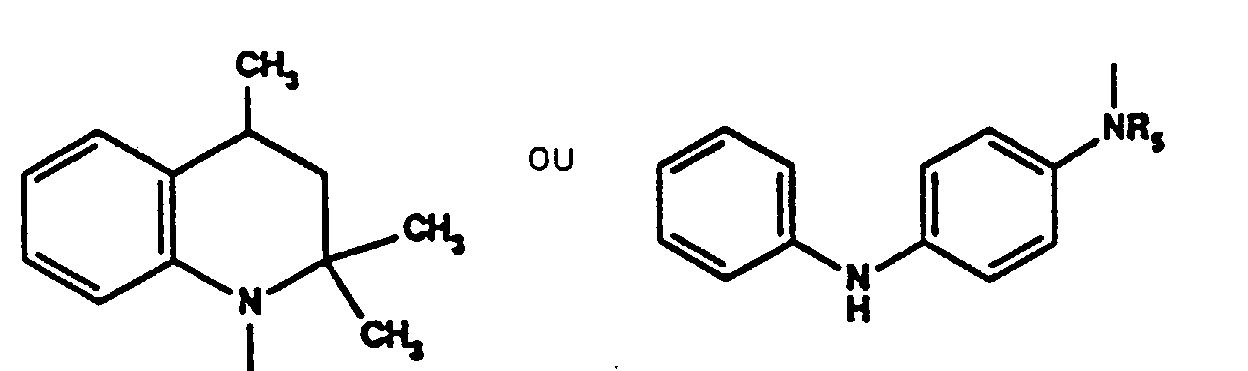
- R5
- représente un atome d'hydrogène, des groupes alkyle en C1-C18, allyle, méthallyle, cycloalkyle en C5-C12 non substitué ou substitué par un groupe alkyle en C1-C8, phényle ou naphtyle,
- R6
- représente un atome d'hydrogène, alkyle en C1-C20, ou alkyle en C2-C20 interrompu par -O-, -S-, -NR- ou -C(O)O-, et
- R7
- représente un atome d'hydrogène ou un groupe alkyle en C1-C6.
- Composé de formule I selonla revendication 1, dans laquelle
- R1 et R2,
- indépendamment l'un de l'autre, représentent un groupe alkyle en C1-C8, cycloalkyle en C5-C8 ou phénylalkyle en C7-C9,
- A
- représente -(CH2)2- ou -CH2-CH(CH3)-,
- n
- vaut 1 ou 2,
- R3 et R4,
- indépendamment l'un de l'autre, représentent des groupes phényle, naphtyle, phénylalkyle en C7-C9, (alkyl en C7-C18)phényle,
NR3R4 représente un groupe de formule
- R5
- représente un atome d'hydrogène, un groupe alkyle en C1-C8 ou phényle, et
- R6
- représente un atome d'hydrogène, un groupe alkyle en C1-C20 ou un groupe alkyle en C2-C20 interrompu par -O- ou -S-.
- Composés selon la revendication 2, dans lesquels
- R1 et R2,
- indépendamment l'un de l'autre, représentent un groupe alkyle en C1-C5, cycloalkyle en C5-C6 ou phénylalkyle en C7-C9,
- n
- vaut 1,
- R3 et R4,
- indépendamment l'un de l'autre, représentent des groupes phényle, naphtyle, phénylalkyle en C7-C9, (alkyl en C7-C18)phényle,
- NR3R4
- représente un groupe de formule
et

- R6
- représente un groupe alkyle en C1-C4.
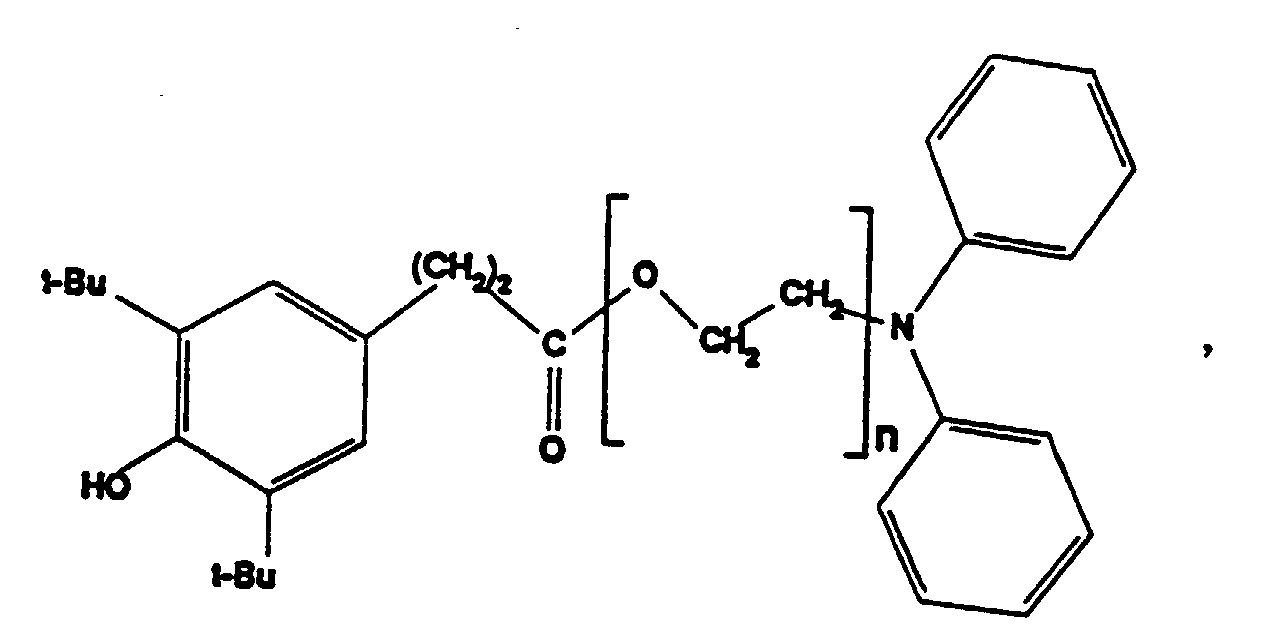
- Composés selon la revendication 1, de formules
 ou
ou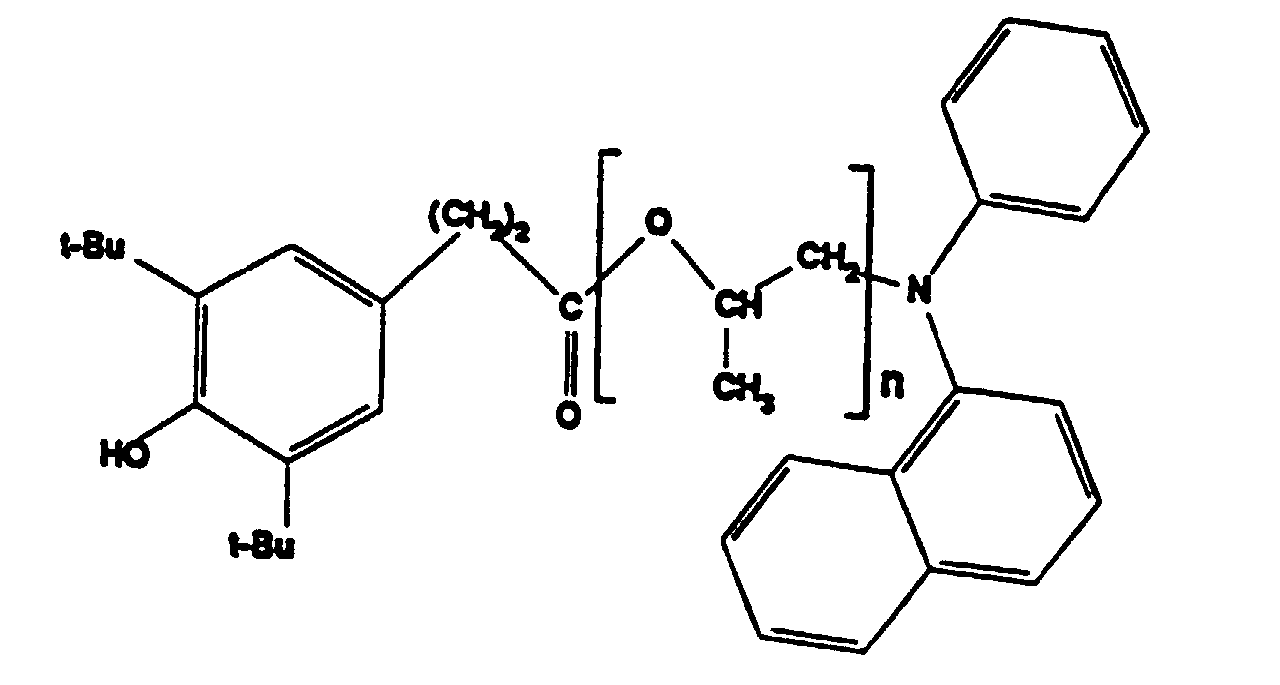 n pouvant valoir 1, 2 et 3, et l'abréviation t-Bu représente tert-butyle.
- Procédé pour la préparation de composés de formule I selon la revendication 1, caractérisé en ce que dans une première étape on fait réagir des (di)arylamines de formule HNR3R4 avec des époxydes de formuleet dans une deuxième étape on fait réagir les produits intermédiaires hydroxyalkylés H[OE]n-NR3R4 (II) avec des composés de formule
 où A, E, n, R1, R2, R3, R4 et R6 ont les significations déjà données dans la formule I et R8 représente un atome d'hydrogène ou un groupe alkyle en C1-C4.
- Procédé selon la revendication 5, caractérisé en ce que, dans une première étape, on effectue la catalyse à l'aide d'une base prise dans le groupe des métaux alcalins et des composés organométalliques des métaux alcalins.
- Composition contenantA) une matière organique sensible à la dégradation induite par la lumière, par la chaleur et/ou par l'oxygène, etB) au moins un composé de formule I selon la revendication 1.
- Composition selon la revendication 7, dans laquelle la matière organique est un polymère naturel, semi-synthétique ou synthétique ou un fluide fonctionnel.
- Composition selon la revendication 8, dans laquelle le fluide fonctionnel est un lubrifiant ou un fluide hydraulique.
- Utilisation de composés de formule I selon la revendication 1 pour la stabilisation de matières organiques sensibles à la dégradation induite par l'oxygène, la chaleur et/ou la lumière.
- Utilisation selon la revendication 10 pour la stabilisation de polymères naturels, semi-synthétiques ou synthétiques ou de fluides fonctionnels.
- Utilisation selon la revendication 11 pour la stabilisation de lubrifiants ou de fluides hydrauliques.
- Procédé pour la stabilisation de matières organiques contre la dégradation induite par l'oxygène, la chaleur et/ou la lumière, caractérisé en ce que l'on ajoute, respectivement on pose sur ces matières en tant que stabilisants des composés de formule I selon la revendication 1.
- Procédé selon la revendication 13, pour la stabilisation de polymères naturels, semi-synthétiques ou synthétiques, ou de fluides fonctionnels.
- Procédé selon la revendication 14, pour la stabilisation de polymères synthétiques ou de lubrifiants ou de fluides hydrauliques.
Applications Claiming Priority (2)
| Application Number | Priority Date | Filing Date | Title |
|---|---|---|---|
| CH3558/93 | 1993-11-29 | ||
| CH355893 | 1993-11-29 |
Publications (2)
| Publication Number | Publication Date |
|---|---|
| EP0655435A1 EP0655435A1 (fr) | 1995-05-31 |
| EP0655435B1 true EP0655435B1 (fr) | 1998-07-15 |
Family
ID=4258583
Family Applications (1)
| Application Number | Title | Priority Date | Filing Date |
|---|---|---|---|
| EP94810659A Expired - Lifetime EP0655435B1 (fr) | 1993-11-29 | 1994-11-21 | Esters diarylaminoalkyl d'acide 4-hydroxyalkanoique et leur utilisation comme stabilisants dans des matériaux organiques |
Country Status (6)
| Country | Link |
|---|---|
| US (1) | US5629422A (fr) |
| EP (1) | EP0655435B1 (fr) |
| JP (1) | JPH07206791A (fr) |
| CA (1) | CA2136687A1 (fr) |
| DE (1) | DE59406447D1 (fr) |
| ES (1) | ES2119133T3 (fr) |
Families Citing this family (2)
| Publication number | Priority date | Publication date | Assignee | Title |
|---|---|---|---|---|
| RU2150463C1 (ru) * | 1998-09-21 | 2000-06-10 | ЗАО Стерлитамакский нефтехимический завод | Соли-(4-окси-3,5-ди-трет-бутилфенил)-пропионовой кислоты в качестве стабилизаторов поливинилхлоридов и способ их получения |
| US8343901B2 (en) * | 2010-10-12 | 2013-01-01 | Chevron Oronite Company Llc | Lubricating composition containing multifunctional hydroxylated amine salt of a hindered phenolic acid |
Citations (1)
| Publication number | Priority date | Publication date | Assignee | Title |
|---|---|---|---|---|
| US3920729A (en) * | 1973-05-10 | 1975-11-18 | Sumitomo Chemical Co | Isopropanolamine esters of 3-(3,5 di-t-butyl-4-hydroxyphenyl)propanoic acid |
Family Cites Families (15)
| Publication number | Priority date | Publication date | Assignee | Title |
|---|---|---|---|---|
| US2962531A (en) * | 1955-09-23 | 1960-11-29 | Ethyl Corp | 3, 5-dialkyl-4-hydroxy benzylamines |
| US3119871A (en) * | 1959-04-27 | 1964-01-28 | Ethyl Corp | Phenolic substituted benzyl amine compounds |
| US3224974A (en) * | 1959-04-27 | 1965-12-21 | Ethyl Corp | Organic material stabilized with substituted hydroxy benzyl amines |
| US3441575A (en) * | 1961-10-30 | 1969-04-29 | Geigy Chem Corp | Esters of di(lower)alkylhydroxyphenyl alkanoic acid containing a hetro atom |
| US3225099A (en) * | 1964-12-03 | 1965-12-21 | Ethyl Corp | N-methyl-n-phenyl-n-(3,5-di-tertiary-butyl-4-hydroxybenzyl)amine |
| US3435065A (en) * | 1965-10-22 | 1969-03-25 | Geigy Chem Corp | N,n,n',n' - (ethylenediamine) - tetrakis (ethylene - 3 - (3',5' - di-tert-butyl-4' - hydroxyphenyl)propionate) and compositions stabilized therewith |
| US3457286A (en) * | 1967-12-01 | 1969-07-22 | Geigy Chem Corp | Organic esters containing an alkylhydroxyphenyl group |
| US3873459A (en) * | 1971-06-21 | 1975-03-25 | Hooker Chemicals Plastics Corp | Antidegradant additive for organic working fluids |
| US3984460A (en) * | 1973-09-25 | 1976-10-05 | Ciba-Geigy Corporation | Esters of trisubstituted hydroxyphenylalkanoic acids |
| US4448969A (en) * | 1982-04-23 | 1984-05-15 | Ferro Corporation | Cyclic ether or carbonate alkylation products of 2,2,5,5-tetramethylimidazolidin-4-one and derivatives, their preparation, and their use as stabilizers for _synthetic polymers |
| EP0119160B1 (fr) * | 1983-02-10 | 1986-11-05 | Ciba-Geigy Ag | 4-hydroxyphénylthiométhyl-amines ou uréides N-substitués |
| DE3426367A1 (de) * | 1984-07-18 | 1986-01-23 | Basf Ag, 6700 Ludwigshafen | Neue phenothiazinderivate, verfahren zu deren herstellung und deren verwendung als stabilisatoren fuer nach dem polyisocyanat-polyadditionsverfahren hergestellte kunststoffe |
| ATE92916T1 (de) * | 1987-04-08 | 1993-08-15 | Ciba Geigy Ag | Schwefelhaltige verbindungen als antioxidantien fuer schmiermittel und elastomere. |
| US5089656A (en) * | 1990-07-18 | 1992-02-18 | Himont Incorporated | Process for the preparation of aryl-substituted propionic acid esters |
| KR0173792B1 (ko) * | 1990-09-13 | 1999-03-20 | 월터콜리웨인; 한스-피터 위트린 | 페노티아진을 함유하는 혼합물 및 조성물 |
-
1994
- 1994-11-21 DE DE59406447T patent/DE59406447D1/de not_active Expired - Fee Related
- 1994-11-21 ES ES94810659T patent/ES2119133T3/es not_active Expired - Lifetime
- 1994-11-21 EP EP94810659A patent/EP0655435B1/fr not_active Expired - Lifetime
- 1994-11-22 US US08/343,393 patent/US5629422A/en not_active Expired - Fee Related
- 1994-11-25 CA CA002136687A patent/CA2136687A1/fr not_active Abandoned
- 1994-11-29 JP JP6319070A patent/JPH07206791A/ja not_active Withdrawn
Patent Citations (1)
| Publication number | Priority date | Publication date | Assignee | Title |
|---|---|---|---|---|
| US3920729A (en) * | 1973-05-10 | 1975-11-18 | Sumitomo Chemical Co | Isopropanolamine esters of 3-(3,5 di-t-butyl-4-hydroxyphenyl)propanoic acid |
Also Published As
| Publication number | Publication date |
|---|---|
| JPH07206791A (ja) | 1995-08-08 |
| EP0655435A1 (fr) | 1995-05-31 |
| CA2136687A1 (fr) | 1995-05-30 |
| ES2119133T3 (es) | 1998-10-01 |
| DE59406447D1 (de) | 1998-08-20 |
| US5629422A (en) | 1997-05-13 |
Similar Documents
| Publication | Publication Date | Title |
|---|---|---|
| AT404941B (de) | 3-aryl-benzofuranone als stabilisatoren | |
| EP0565487B1 (fr) | Antioxydants liquides comme stabilisants | |
| EP0659749B1 (fr) | Mélanges d'amines aromatiques alkylées sur le noyau et de phénothiazines | |
| EP0644195B1 (fr) | Antioxydants liquides comme stabilisants | |
| DE69318422T2 (de) | Neue flüssige phenol-antioxydantien | |
| EP0475904B1 (fr) | Mélanges et compositions contenant des phénothiazines | |
| DE69927486T2 (de) | Verfahren zur herstellung von flüssigen polyfunktionellen zusätzen | |
| EP0466640B1 (fr) | Dérivés d'alpha-carbonylphénylacéronitrile comme stabilisateurs de substances organiques | |
| EP0705870B1 (fr) | Stabiliseurs pour des matériaux organiques | |
| EP0366040B1 (fr) | Composés contenant des groupes phénoliques comme antioxydants pour matières organiques | |
| EP0497735A1 (fr) | Composés d'hydroquinoléine | |
| EP0655435B1 (fr) | Esters diarylaminoalkyl d'acide 4-hydroxyalkanoique et leur utilisation comme stabilisants dans des matériaux organiques | |
| EP0463994B1 (fr) | Dioxaphosphorinanes comme stabilisants de matériaux organiques | |
| EP0473549B1 (fr) | Sulfoxides d'alkylthiométhyl phénols | |
| EP0579576A1 (fr) | 2,4-Dialkyl-6-sec-alkylphénols | |
| DE19823102B4 (de) | Flüssige Antioxidantien als Stabilisatoren | |
| EP0474589A1 (fr) | Orthophénolacétamides | |
| EP0530139B1 (fr) | Compositions contenant d'un N-hétérocycle à 6 chaînons substitué des groupes phosphonates | |
| DE19820994A1 (de) | Flüssige polyfunktionelle Additive | |
| EP0452266B1 (fr) | Composés du type isoindolinone comme stabilisateurs pour matériaux organiques | |
| EP0441742B1 (fr) | Sulfoxydes de phénols bis- et tristhiométhylés | |
| DE4235197A1 (de) | Komplexe oeladditive | |
| DE4103741A1 (de) | Neue (beta)-ketoester mit sterisch gehinderten phenolgruppen | |
| DE19703225A1 (de) | Mit Norbornengruppen substituierte Bisphenole als Antioxidantien | |
| DE3743110A1 (de) | 1,2-diphenylethane |
Legal Events
| Date | Code | Title | Description |
|---|---|---|---|
| PUAI | Public reference made under article 153(3) epc to a published international application that has entered the european phase |
Free format text: ORIGINAL CODE: 0009012 |
|
| AK | Designated contracting states |
Kind code of ref document: A1 Designated state(s): DE ES FR GB IT |
|
| 17P | Request for examination filed |
Effective date: 19951120 |
|
| 17Q | First examination report despatched |
Effective date: 19961111 |
|
| RAP1 | Party data changed (applicant data changed or rights of an application transferred) |
Owner name: CIBA SC HOLDING AG |
|
| RAP3 | Party data changed (applicant data changed or rights of an application transferred) |
Owner name: CIBA SPECIALTY CHEMICALS HOLDING INC. |
|
| GRAG | Despatch of communication of intention to grant |
Free format text: ORIGINAL CODE: EPIDOS AGRA |
|
| GRAG | Despatch of communication of intention to grant |
Free format text: ORIGINAL CODE: EPIDOS AGRA |
|
| GRAH | Despatch of communication of intention to grant a patent |
Free format text: ORIGINAL CODE: EPIDOS IGRA |
|
| GRAH | Despatch of communication of intention to grant a patent |
Free format text: ORIGINAL CODE: EPIDOS IGRA |
|
| GRAA | (expected) grant |
Free format text: ORIGINAL CODE: 0009210 |
|
| ITF | It: translation for a ep patent filed | ||
| AK | Designated contracting states |
Kind code of ref document: B1 Designated state(s): DE ES FR GB IT |
|
| REF | Corresponds to: |
Ref document number: 59406447 Country of ref document: DE Date of ref document: 19980820 |
|
| GBT | Gb: translation of ep patent filed (gb section 77(6)(a)/1977) |
Effective date: 19980804 |
|
| REG | Reference to a national code |
Ref country code: ES Ref legal event code: FG2A Ref document number: 2119133 Country of ref document: ES Kind code of ref document: T3 |
|
| ET | Fr: translation filed | ||
| PLBE | No opposition filed within time limit |
Free format text: ORIGINAL CODE: 0009261 |
|
| STAA | Information on the status of an ep patent application or granted ep patent |
Free format text: STATUS: NO OPPOSITION FILED WITHIN TIME LIMIT |
|
| 26N | No opposition filed | ||
| REG | Reference to a national code |
Ref country code: GB Ref legal event code: IF02 |
|
| PGFP | Annual fee paid to national office [announced via postgrant information from national office to epo] |
Ref country code: FR Payment date: 20021017 Year of fee payment: 9 |
|
| PGFP | Annual fee paid to national office [announced via postgrant information from national office to epo] |
Ref country code: GB Payment date: 20021105 Year of fee payment: 9 |
|
| PGFP | Annual fee paid to national office [announced via postgrant information from national office to epo] |
Ref country code: ES Payment date: 20021108 Year of fee payment: 9 |
|
| PGFP | Annual fee paid to national office [announced via postgrant information from national office to epo] |
Ref country code: DE Payment date: 20021111 Year of fee payment: 9 |
|
| PG25 | Lapsed in a contracting state [announced via postgrant information from national office to epo] |
Ref country code: GB Free format text: LAPSE BECAUSE OF NON-PAYMENT OF DUE FEES Effective date: 20031121 |
|
| PG25 | Lapsed in a contracting state [announced via postgrant information from national office to epo] |
Ref country code: ES Free format text: LAPSE BECAUSE OF NON-PAYMENT OF DUE FEES Effective date: 20031122 |
|
| PG25 | Lapsed in a contracting state [announced via postgrant information from national office to epo] |
Ref country code: DE Free format text: LAPSE BECAUSE OF NON-PAYMENT OF DUE FEES Effective date: 20040602 |
|
| GBPC | Gb: european patent ceased through non-payment of renewal fee |
Effective date: 20031121 |
|
| PG25 | Lapsed in a contracting state [announced via postgrant information from national office to epo] |
Ref country code: FR Free format text: LAPSE BECAUSE OF NON-PAYMENT OF DUE FEES Effective date: 20040730 |
|
| REG | Reference to a national code |
Ref country code: FR Ref legal event code: ST |
|
| REG | Reference to a national code |
Ref country code: ES Ref legal event code: FD2A Effective date: 20031122 |
|
| PG25 | Lapsed in a contracting state [announced via postgrant information from national office to epo] |
Ref country code: IT Free format text: LAPSE BECAUSE OF NON-PAYMENT OF DUE FEES;WARNING: LAPSES OF ITALIAN PATENTS WITH EFFECTIVE DATE BEFORE 2007 MAY HAVE OCCURRED AT ANY TIME BEFORE 2007. THE CORRECT EFFECTIVE DATE MAY BE DIFFERENT FROM THE ONE RECORDED. Effective date: 20051121 |