EP0657495A1 - Halogenfreies Treibmittel enthaltend cycloaliphalische Kohlenwasserstoffen für Polyschaumstoffen auf Isocyanatbasis - Google Patents
Halogenfreies Treibmittel enthaltend cycloaliphalische Kohlenwasserstoffen für Polyschaumstoffen auf Isocyanatbasis Download PDFInfo
- Publication number
- EP0657495A1 EP0657495A1 EP94119248A EP94119248A EP0657495A1 EP 0657495 A1 EP0657495 A1 EP 0657495A1 EP 94119248 A EP94119248 A EP 94119248A EP 94119248 A EP94119248 A EP 94119248A EP 0657495 A1 EP0657495 A1 EP 0657495A1
- Authority
- EP
- European Patent Office
- Prior art keywords
- accordance
- azeotrope
- cyclopentane
- foam
- foams
- Prior art date
- Legal status (The legal status is an assumption and is not a legal conclusion. Google has not performed a legal analysis and makes no representation as to the accuracy of the status listed.)
- Granted
Links
- 239000006260 foam Substances 0.000 title claims abstract description 150
- 239000004604 Blowing Agent Substances 0.000 title claims abstract description 80
- 150000002513 isocyanates Chemical class 0.000 title claims abstract description 30
- 239000012948 isocyanate Substances 0.000 title claims abstract description 25
- 229930195733 hydrocarbon Natural products 0.000 title claims abstract description 17
- 150000002430 hydrocarbons Chemical class 0.000 title claims description 15
- RGSFGYAAUTVSQA-UHFFFAOYSA-N Cyclopentane Chemical compound C1CCCC1 RGSFGYAAUTVSQA-UHFFFAOYSA-N 0.000 claims abstract description 147
- TZIHFWKZFHZASV-UHFFFAOYSA-N methyl formate Chemical compound COC=O TZIHFWKZFHZASV-UHFFFAOYSA-N 0.000 claims abstract description 70
- DMEGYFMYUHOHGS-UHFFFAOYSA-N heptamethylene Natural products C1CCCCCC1 DMEGYFMYUHOHGS-UHFFFAOYSA-N 0.000 claims abstract description 69
- 239000000203 mixture Substances 0.000 claims abstract description 60
- 238000009835 boiling Methods 0.000 claims abstract description 19
- 239000007788 liquid Substances 0.000 claims abstract description 16
- 239000004215 Carbon black (E152) Substances 0.000 claims abstract description 14
- XDTMQSROBMDMFD-UHFFFAOYSA-N Cyclohexane Chemical compound C1CCCCC1 XDTMQSROBMDMFD-UHFFFAOYSA-N 0.000 claims abstract description 12
- 230000009471 action Effects 0.000 claims abstract description 8
- 238000000034 method Methods 0.000 claims description 46
- 230000008569 process Effects 0.000 claims description 35
- YLQBMQCUIZJEEH-UHFFFAOYSA-N Furan Chemical compound C=1C=COC=1 YLQBMQCUIZJEEH-UHFFFAOYSA-N 0.000 claims description 28
- 238000005187 foaming Methods 0.000 claims description 23
- ZWEHNKRNPOVVGH-UHFFFAOYSA-N 2-Butanone Chemical compound CCC(C)=O ZWEHNKRNPOVVGH-UHFFFAOYSA-N 0.000 claims description 22
- RTZKZFJDLAIYFH-UHFFFAOYSA-N Diethyl ether Chemical compound CCOCC RTZKZFJDLAIYFH-UHFFFAOYSA-N 0.000 claims description 22
- LPIQUOYDBNQMRZ-UHFFFAOYSA-N cyclopentene Chemical compound C1CC=CC1 LPIQUOYDBNQMRZ-UHFFFAOYSA-N 0.000 claims description 22
- XBDQKXXYIPTUBI-UHFFFAOYSA-M Propionate Chemical compound CCC([O-])=O XBDQKXXYIPTUBI-UHFFFAOYSA-M 0.000 claims description 21
- HGCIXCUEYOPUTN-UHFFFAOYSA-N cyclohexene Chemical compound C1CCC=CC1 HGCIXCUEYOPUTN-UHFFFAOYSA-N 0.000 claims description 21
- 125000004432 carbon atom Chemical group C* 0.000 claims description 20
- 229920005830 Polyurethane Foam Polymers 0.000 claims description 19
- 239000011496 polyurethane foam Substances 0.000 claims description 19
- KXKVLQRXCPHEJC-UHFFFAOYSA-N acetic acid trimethyl ester Natural products COC(C)=O KXKVLQRXCPHEJC-UHFFFAOYSA-N 0.000 claims description 14
- ZFSLODLOARCGLH-UHFFFAOYSA-N isocyanuric acid Chemical class OC1=NC(O)=NC(O)=N1 ZFSLODLOARCGLH-UHFFFAOYSA-N 0.000 claims description 9
- 229920000582 polyisocyanurate Polymers 0.000 claims description 9
- 239000011495 polyisocyanurate Substances 0.000 claims description 9
- 239000002667 nucleating agent Substances 0.000 claims description 8
- WBJINCZRORDGAQ-UHFFFAOYSA-N formic acid ethyl ester Natural products CCOC=O WBJINCZRORDGAQ-UHFFFAOYSA-N 0.000 claims description 7
- 239000004615 ingredient Substances 0.000 claims description 7
- 125000001931 aliphatic group Chemical group 0.000 claims description 6
- 150000007933 aliphatic carboxylic acids Chemical class 0.000 claims description 5
- 150000001875 compounds Chemical class 0.000 claims description 5
- 239000000470 constituent Substances 0.000 claims description 4
- RXKJFZQQPQGTFL-UHFFFAOYSA-N dihydroxyacetone Chemical compound OCC(=O)CO RXKJFZQQPQGTFL-UHFFFAOYSA-N 0.000 claims description 4
- 229960004692 perflenapent Drugs 0.000 claims 1
- NJCBUSHGCBERSK-UHFFFAOYSA-N perfluoropentane Chemical group FC(F)(F)C(F)(F)C(F)(F)C(F)(F)C(F)(F)F NJCBUSHGCBERSK-UHFFFAOYSA-N 0.000 claims 1
- 238000009472 formulation Methods 0.000 abstract description 25
- CYRMSUTZVYGINF-UHFFFAOYSA-N trichlorofluoromethane Chemical compound FC(Cl)(Cl)Cl CYRMSUTZVYGINF-UHFFFAOYSA-N 0.000 abstract description 20
- -1 alicyclic hydrocarbon Chemical class 0.000 abstract description 9
- 230000008901 benefit Effects 0.000 abstract description 6
- 238000007664 blowing Methods 0.000 abstract description 5
- 229940029284 trichlorofluoromethane Drugs 0.000 abstract description 5
- CBENFWSGALASAD-UHFFFAOYSA-N Ozone Chemical compound [O-][O+]=O CBENFWSGALASAD-UHFFFAOYSA-N 0.000 abstract description 4
- 229910052736 halogen Inorganic materials 0.000 abstract description 3
- 150000002367 halogens Chemical class 0.000 abstract description 3
- 239000000463 material Substances 0.000 abstract description 2
- 238000010792 warming Methods 0.000 abstract description 2
- CSCPPACGZOOCGX-UHFFFAOYSA-N Acetone Chemical compound CC(C)=O CSCPPACGZOOCGX-UHFFFAOYSA-N 0.000 description 22
- 229920005862 polyol Polymers 0.000 description 21
- 150000003077 polyols Chemical class 0.000 description 21
- 239000003054 catalyst Substances 0.000 description 15
- 239000004094 surface-active agent Substances 0.000 description 14
- CURLTUGMZLYLDI-UHFFFAOYSA-N Carbon dioxide Chemical compound O=C=O CURLTUGMZLYLDI-UHFFFAOYSA-N 0.000 description 10
- 229920000570 polyether Polymers 0.000 description 9
- OFBQJSOFQDEBGM-UHFFFAOYSA-N Pentane Chemical compound CCCCC OFBQJSOFQDEBGM-UHFFFAOYSA-N 0.000 description 8
- 239000004721 Polyphenylene oxide Substances 0.000 description 8
- WYURNTSHIVDZCO-UHFFFAOYSA-N Tetrahydrofuran Chemical compound C1CCOC1 WYURNTSHIVDZCO-UHFFFAOYSA-N 0.000 description 8
- 238000006243 chemical reaction Methods 0.000 description 8
- 229920001296 polysiloxane Polymers 0.000 description 7
- 229920002635 polyurethane Polymers 0.000 description 7
- 239000004814 polyurethane Substances 0.000 description 7
- XLYOFNOQVPJJNP-UHFFFAOYSA-N water Substances O XLYOFNOQVPJJNP-UHFFFAOYSA-N 0.000 description 7
- YMWUJEATGCHHMB-UHFFFAOYSA-N Dichloromethane Chemical compound ClCCl YMWUJEATGCHHMB-UHFFFAOYSA-N 0.000 description 6
- XEKOWRVHYACXOJ-UHFFFAOYSA-N Ethyl acetate Chemical compound CCOC(C)=O XEKOWRVHYACXOJ-UHFFFAOYSA-N 0.000 description 6
- JOYRKODLDBILNP-UHFFFAOYSA-N Ethyl urethane Chemical compound CCOC(N)=O JOYRKODLDBILNP-UHFFFAOYSA-N 0.000 description 6
- 210000004027 cell Anatomy 0.000 description 6
- 229920001228 polyisocyanate Polymers 0.000 description 6
- 239000005056 polyisocyanate Substances 0.000 description 6
- 229920002396 Polyurea Polymers 0.000 description 5
- UKLDJPRMSDWDSL-UHFFFAOYSA-L [dibutyl(dodecanoyloxy)stannyl] dodecanoate Chemical compound CCCCCCCCCCCC(=O)O[Sn](CCCC)(CCCC)OC(=O)CCCCCCCCCCC UKLDJPRMSDWDSL-UHFFFAOYSA-L 0.000 description 5
- 229910002092 carbon dioxide Inorganic materials 0.000 description 5
- 239000001569 carbon dioxide Substances 0.000 description 5
- 239000012975 dibutyltin dilaurate Substances 0.000 description 5
- MTHSVFCYNBDYFN-UHFFFAOYSA-N diethylene glycol Substances OCCOCCO MTHSVFCYNBDYFN-UHFFFAOYSA-N 0.000 description 5
- IQPQWNKOIGAROB-UHFFFAOYSA-N isocyanate group Chemical group [N-]=C=O IQPQWNKOIGAROB-UHFFFAOYSA-N 0.000 description 5
- 239000002994 raw material Substances 0.000 description 5
- FRCHKSNAZZFGCA-UHFFFAOYSA-N 1,1-dichloro-1-fluoroethane Chemical compound CC(F)(Cl)Cl FRCHKSNAZZFGCA-UHFFFAOYSA-N 0.000 description 4
- RRHGJUQNOFWUDK-UHFFFAOYSA-N Isoprene Chemical compound CC(=C)C=C RRHGJUQNOFWUDK-UHFFFAOYSA-N 0.000 description 4
- 239000004952 Polyamide Substances 0.000 description 4
- 239000004642 Polyimide Substances 0.000 description 4
- 230000015572 biosynthetic process Effects 0.000 description 4
- MGNZXYYWBUKAII-UHFFFAOYSA-N cyclohexa-1,3-diene Chemical compound C1CC=CC=C1 MGNZXYYWBUKAII-UHFFFAOYSA-N 0.000 description 4
- UAEPNZWRGJTJPN-UHFFFAOYSA-N methylcyclohexane Chemical compound CC1CCCCC1 UAEPNZWRGJTJPN-UHFFFAOYSA-N 0.000 description 4
- GDOPTJXRTPNYNR-UHFFFAOYSA-N methylcyclopentane Chemical compound CC1CCCC1 GDOPTJXRTPNYNR-UHFFFAOYSA-N 0.000 description 4
- 229920002647 polyamide Polymers 0.000 description 4
- 229920001721 polyimide Polymers 0.000 description 4
- 238000002360 preparation method Methods 0.000 description 4
- 230000000694 effects Effects 0.000 description 3
- 238000004519 manufacturing process Methods 0.000 description 3
- 229920000642 polymer Polymers 0.000 description 3
- 229920006926 PFC Polymers 0.000 description 2
- 239000004698 Polyethylene Substances 0.000 description 2
- 239000004743 Polypropylene Substances 0.000 description 2
- VYPSYNLAJGMNEJ-UHFFFAOYSA-N Silicium dioxide Chemical compound O=[Si]=O VYPSYNLAJGMNEJ-UHFFFAOYSA-N 0.000 description 2
- 239000002253 acid Substances 0.000 description 2
- WERYXYBDKMZEQL-UHFFFAOYSA-N butane-1,4-diol Chemical compound OCCCCO WERYXYBDKMZEQL-UHFFFAOYSA-N 0.000 description 2
- 150000001718 carbodiimides Chemical class 0.000 description 2
- 239000006071 cream Substances 0.000 description 2
- WACQKHWOTAEEFS-UHFFFAOYSA-N cyclohexane;ethyl acetate Chemical compound CCOC(C)=O.C1CCCCC1 WACQKHWOTAEEFS-UHFFFAOYSA-N 0.000 description 2
- 238000006006 cyclotrimerization reaction Methods 0.000 description 2
- 150000002170 ethers Chemical class 0.000 description 2
- 239000004088 foaming agent Substances 0.000 description 2
- QWTDNUCVQCZILF-UHFFFAOYSA-N isopentane Chemical compound CCC(C)C QWTDNUCVQCZILF-UHFFFAOYSA-N 0.000 description 2
- GYNNXHKOJHMOHS-UHFFFAOYSA-N methyl-cycloheptane Natural products CC1CCCCCC1 GYNNXHKOJHMOHS-UHFFFAOYSA-N 0.000 description 2
- 239000003607 modifier Substances 0.000 description 2
- 229920000728 polyester Polymers 0.000 description 2
- 229920000573 polyethylene Polymers 0.000 description 2
- 229920001155 polypropylene Polymers 0.000 description 2
- 239000000376 reactant Substances 0.000 description 2
- 229920006395 saturated elastomer Polymers 0.000 description 2
- 239000000126 substance Substances 0.000 description 2
- CXIGIYYQHHRBJC-UHFFFAOYSA-N 1,1,1,4,4,4-hexafluorobutane Chemical compound FC(F)(F)CCC(F)(F)F CXIGIYYQHHRBJC-UHFFFAOYSA-N 0.000 description 1
- OHLVGBXMHDWRRX-UHFFFAOYSA-N 1,1,1-trifluoro-2-methoxyethane Chemical compound COCC(F)(F)F OHLVGBXMHDWRRX-UHFFFAOYSA-N 0.000 description 1
- 239000004971 Cross linker Substances 0.000 description 1
- 150000007513 acids Chemical class 0.000 description 1
- 238000007259 addition reaction Methods 0.000 description 1
- 239000000654 additive Substances 0.000 description 1
- 230000000996 additive effect Effects 0.000 description 1
- 150000001299 aldehydes Chemical class 0.000 description 1
- 125000002723 alicyclic group Chemical group 0.000 description 1
- 150000001335 aliphatic alkanes Chemical class 0.000 description 1
- 238000010640 amide synthesis reaction Methods 0.000 description 1
- 150000001408 amides Chemical class 0.000 description 1
- 150000004984 aromatic diamines Chemical group 0.000 description 1
- FBYUNLMTXMFAQK-UHFFFAOYSA-N butyl dodecanoate Chemical compound CCCCCCCCCCCC(=O)OCCCC.CCCCCCCCCCCC(=O)OCCCC FBYUNLMTXMFAQK-UHFFFAOYSA-N 0.000 description 1
- 210000003850 cellular structure Anatomy 0.000 description 1
- 230000008859 change Effects 0.000 description 1
- 239000002666 chemical blowing agent Substances 0.000 description 1
- 150000004292 cyclic ethers Chemical class 0.000 description 1
- 238000002845 discoloration Methods 0.000 description 1
- 238000005516 engineering process Methods 0.000 description 1
- 238000001704 evaporation Methods 0.000 description 1
- 230000008020 evaporation Effects 0.000 description 1
- 210000000497 foam cell Anatomy 0.000 description 1
- 238000013012 foaming technology Methods 0.000 description 1
- 210000004124 hock Anatomy 0.000 description 1
- 150000003949 imides Chemical class 0.000 description 1
- 150000002576 ketones Chemical class 0.000 description 1
- 239000004620 low density foam Substances 0.000 description 1
- 239000002184 metal Substances 0.000 description 1
- ISWSIDIOOBJBQZ-UHFFFAOYSA-N phenol group Chemical group C1(=CC=CC=C1)O ISWSIDIOOBJBQZ-UHFFFAOYSA-N 0.000 description 1
- 229920000768 polyamine Polymers 0.000 description 1
- 238000006068 polycondensation reaction Methods 0.000 description 1
- 229920000647 polyepoxide Polymers 0.000 description 1
- 238000006116 polymerization reaction Methods 0.000 description 1
- 229920006327 polystyrene foam Polymers 0.000 description 1
- 239000000843 powder Substances 0.000 description 1
- 230000009257 reactivity Effects 0.000 description 1
- 239000000377 silicon dioxide Substances 0.000 description 1
- 239000002904 solvent Substances 0.000 description 1
- 239000005437 stratosphere Substances 0.000 description 1
- 238000006467 substitution reaction Methods 0.000 description 1
- 239000000758 substrate Substances 0.000 description 1
- 230000033772 system development Effects 0.000 description 1
- 229920001169 thermoplastic Polymers 0.000 description 1
- 239000004416 thermosoftening plastic Substances 0.000 description 1
- 229920006305 unsaturated polyester Polymers 0.000 description 1
- 150000003673 urethanes Chemical class 0.000 description 1
- 229920001567 vinyl ester resin Polymers 0.000 description 1
- 230000004580 weight loss Effects 0.000 description 1
Images



Classifications
-
- C—CHEMISTRY; METALLURGY
- C08—ORGANIC MACROMOLECULAR COMPOUNDS; THEIR PREPARATION OR CHEMICAL WORKING-UP; COMPOSITIONS BASED THEREON
- C08J—WORKING-UP; GENERAL PROCESSES OF COMPOUNDING; AFTER-TREATMENT NOT COVERED BY SUBCLASSES C08B, C08C, C08F, C08G or C08H
- C08J9/00—Working-up of macromolecular substances to porous or cellular articles or materials; After-treatment thereof
- C08J9/04—Working-up of macromolecular substances to porous or cellular articles or materials; After-treatment thereof using blowing gases generated by a previously added blowing agent
- C08J9/12—Working-up of macromolecular substances to porous or cellular articles or materials; After-treatment thereof using blowing gases generated by a previously added blowing agent by a physical blowing agent
- C08J9/14—Working-up of macromolecular substances to porous or cellular articles or materials; After-treatment thereof using blowing gases generated by a previously added blowing agent by a physical blowing agent organic
- C08J9/149—Mixtures of blowing agents covered by more than one of the groups C08J9/141 - C08J9/143
-
- C—CHEMISTRY; METALLURGY
- C08—ORGANIC MACROMOLECULAR COMPOUNDS; THEIR PREPARATION OR CHEMICAL WORKING-UP; COMPOSITIONS BASED THEREON
- C08J—WORKING-UP; GENERAL PROCESSES OF COMPOUNDING; AFTER-TREATMENT NOT COVERED BY SUBCLASSES C08B, C08C, C08F, C08G or C08H
- C08J2203/00—Foams characterized by the expanding agent
- C08J2203/12—Organic compounds only containing carbon, hydrogen and oxygen atoms, e.g. ketone or alcohol
-
- C—CHEMISTRY; METALLURGY
- C08—ORGANIC MACROMOLECULAR COMPOUNDS; THEIR PREPARATION OR CHEMICAL WORKING-UP; COMPOSITIONS BASED THEREON
- C08J—WORKING-UP; GENERAL PROCESSES OF COMPOUNDING; AFTER-TREATMENT NOT COVERED BY SUBCLASSES C08B, C08C, C08F, C08G or C08H
- C08J2203/00—Foams characterized by the expanding agent
- C08J2203/14—Saturated hydrocarbons, e.g. butane; Unspecified hydrocarbons
-
- C—CHEMISTRY; METALLURGY
- C08—ORGANIC MACROMOLECULAR COMPOUNDS; THEIR PREPARATION OR CHEMICAL WORKING-UP; COMPOSITIONS BASED THEREON
- C08J—WORKING-UP; GENERAL PROCESSES OF COMPOUNDING; AFTER-TREATMENT NOT COVERED BY SUBCLASSES C08B, C08C, C08F, C08G or C08H
- C08J2375/00—Characterised by the use of polyureas or polyurethanes; Derivatives of such polymers
- C08J2375/04—Polyurethanes
Definitions
- This invention relates to the manufacture of isocyanate based polymeric foams using a halogen-free azeotrope of specific type as a blowing agent.
- Polymeric foams are made using a blowing agent that generates a cellular structure as polymerization of reactants takes place.
- Trichloromonofluoromethane CFC-11
- CFC-11 Trichloromonofluoromethane
- isocyanate-based polymeric foams such as polyurethane foams, polyisocyanurate foams, polyurea foams, and polyamide foams, the hybrid foams, as well as for thermoplastic foams, e.g., polystyrene foams, polyethylene foams, polypropylene foams and phenolic foams.
- CFCs chlorofluorocarbons
- Chemical (or reactive) blowing agents such as water, which generates carbon dioxide gas by the reaction with isocyanate groups, constitute one class of such CFC-free blowing agents.
- water has the following disadvantages as the blowing agent for rigid foams: a relatively high exotherm which may cause scorching, high system viscosity, higher K-factor, poor adhesion to metal substrates due to thinner skin formation, lower dimensional stability (shrinkage), etc.
- disadvantages of water as a blowing agent include: relatively high exotherm which may cause discoloration and possible fire risk, and higher system viscosity.
- integral skin foam preparation is very difficult with such blowing agents, and therefore specific, costly polyols are required.
- Physical (or non-reactive) blowing agents constitute another class of alternative blowing agents.
- Such physical blowing agents exhibit ozone depletion potential (ODP) and include the HCFCs (hydrochlorofluorocarbons, e.g., HCFC 141b, CCl2FCH3), the HFCs (hydrofluorocarbons, e.g., HFC-356, C4H4F6), the PFCs (pefluorohydrocarbons, e.g., PF-5050, C5F12) and the HFCEs (hydrofluorocarbon ethers, e.g., E-245, CF3CH2OCH3).
- HCFCs hydroochlorofluorocarbons, e.g., HCFC 141b, CCl2FCH3
- HFCs hydrofluorocarbons, e.g., HFC-356, C4H4F6
- the PFCs pefluorohydrocarbons,
- a physical blowing agent performs a blowing action by the exothermic reaction of polymer formation. Therefore, the lower the boiling point of the blowing agent, the lower the resulting foam density for the same mole amount of blowing agent. In order to obtain low density foams, a low boiling point liquid is desired. In addition, their raw materials costs are higher than those of other alternative blowing agents, and therefore, their potential for commercial applications is questionable.
- n-pentane and cyclopentane have been used in European countries as physical blowing agents for rigid urethane foams (see, for example, E.E. Ball, Proceedings of the Polyurethanes World Congress 1993, Vancouver, Canada, Oct. 10-13, 1993, p. 10).
- special foaming formulations are required for this application.
- Methylene chloride is another widely used blowing agent for flexible urethane foams, usually as a co-blowing agent with water.
- it is not suitable for use with rigid urethane foams due to a variety of processing problems, e.g., foam collapse or coarse cell foams. Therefore, no commercial applications have been reported to date.
- a blend of methylene chloride and pentane also has been used for polyisocyanurate foam preparation (U.S. Patent No. 4,898,893 to Ashida).
- this blowing agent encounters problems in preparation of rigid polyurethane foams, such as foam collapse, coarse cells, or open cell structure.
- Another type of physical blowing agent that has been used is liquid carbon dioxide (U.S. Patent No. 5,120,770 to Doyle et al.). This blowing agent has a disadvantage in that a high pressure foaming equipment is required.
- a halogen-free blowing agent that includes a cycloaliphatic hydrocarbon is used in the production of isocyanate-based polymeric foams.
- the foams are produced with concurrent foaming of reactants by the action of an organic liquid which is a positive azeotrope having a minimum boiling temperature in the range of about 15°C to about 80°C at normal atmospheric pressure.
- the azeotropic component blend ratio of the organic liquid usually is in a range of about ⁇ 20 weight percent from that of an ideal azeotrope, but the range can be wider.
- Foam formulations previously used with trichloromonofluoromethane (CFC-11) are well suited for practicing the present invention.
- the present invention offers the advantages of zero ozone depletion potential (ODP), zero global warming potential (GWP), and compared to CFC-11, a relatively higher blowing efficiency as well as a relatively lower raw material cost.
- ODP zero ozone depletion potential
- GWP zero global warming potential
- the azeotropes contemplated by the present invention as blowing agents provide foams having relatively lower thermal conductivity than the foams blown with the respective individual components of the azeotrope.
- the contemplated halogen-free blowing agents contain positive azeotropes constituted by a least two compounds one of which is a cycloaliphatic hydrocarbon containing at least 5 but no more than 7 carbon atoms and the other is a member of the group consisting of an aliphatic ether containing 4 carbon atoms, an aliphatic carboxylic acid ester containing at least 2 but no more than 5 carbon atoms, an aliphatic ketone containing 4 carbon atoms, and mixtures thereof.
- the isocyanate-based polymeric foams can be polyurethane foams, polyisocyanurate foams, polyurea foams, polyoxazolidone foams, and the like, prepared according to formulations and processing techniques well known in the art.
- polyurethane foams are made by the reaction of a polyisocyanate with a polyol as foaming ingredients that are foamed concurrently by the action of a blowing agent.
- the present invention contemplates the use of halogen-free organic liquids as physical blowing agents for the aforementioned isocyanate based polymeric foams.
- organic liquids contain positive azeotropes that have a minimum boiling temperature in the range of about 15°C to about 80°C at normal atmospheric pressure. Boiling points below about 15°C are undesirable because they cause handling problems during processing, e.g., material loss by evaporation due to relatively higher vapor pressure. Boiling points in excess of about 80°C reduce blowing efficiency and may cause undesirably high density.
- a minimum boiling temperature in the range of about 15°C to about 45°C at normal atmospheric pressure is preferred. Particularly preferred minimum boiling temperature at normal atmospheric pressure is in the range of about 20°C to about 40°C.
- the halogen-free blowing agent contemplated by the present invention is an organic liquid constituted by compounds that together form a positive azeotrope, that is, a minimum boiling azeotrope.
- the compounds that together form the desired azeotrope are a cycloaliphatic hydrocarbon containing at least 5 but no more than 7 carbon atoms and a member of the group consisting of an aliphatic ether containing 4 carbon atoms, an aliphatic carboxylic acid ester containing at least 2 but no more than 5 carbon atoms, an aliphatic ketone containing 4 carbon atoms, and mixtures thereof.
- the cycloaliphatic (or alicyclic) hydrocarbon containing at least 5 but no more than 7 carbon atoms can be saturated or unsaturated.
- Illustrative saturated cycloaliphatic hydrocarbons are cyclopentane, methylcyclopentane, cyclohexane and methylcyclohexane.
- Illustrative unsaturated cycloaliphatic hydrocarbons are cyclopentene, cyclohexene, and 1,3-cyclohexadiene.
- the aliphatic ether containing four carbon atoms can be an open chain ether or a cyclic ether.
- Illustrative of aliphatic open chain ethers is ethyl ether.
- Illustrative of aliphatic cyclic ethers is furan.
- aliphatic ketones 2-butanone (methyl ethyl ketone).
- Illustrative of the aliphatic carboxylic acid esters are methyl formate, ethyl formate, methyl acetate and ethyl acetate.
- the blend ratio of the blowing agent to be used in the present invention can be within a relatively wide range.
- the present process is not restricted to the use of only ideal azeotropes of the type described herein.
- the weight ratio of the azeotropic constituents in the organic liquid utilized as the blowing agent can be within a deviation range from ideal as wide as about plus or minus 20 percent (+/- 20%), and wider.
- the deviation range is no more than about plus or minus 10 percent (+/- 10%), more preferably no more than about plus or minus 5 percent (+/- 5%) from the ideal azeotrope composition.
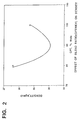
- the ideal azeotropic blend ratio is 33.9/66.1
- the blend ratio can be, respectively, as wide as 14/86 to 54/46, preferably 24/76 to 44/56, more preferably 29/71 to 39/61 as illustrated in FIGURE 1.
- Examples of specific binary azeotropes contemplated for use as blowing agents for practicing the present invention are: cyclopentane/methyl formate cyclopentane/ethyl formate cyclopentane/methyl acetate cyclopentane/2-butanone cyclopentane/furan cyclopentane/tetrahydrofuran cyclopentane/ethyl ether cyclopentene/methyl formate cyclopentene/ethyl formate cyclopentene/methyl acetate cyclopentene/2-butanone cyclopentene/furan cyclopentene/tetrahydrofuran cyclopentene/ethyl ether methylcyclopentane/ethyl acetate cyclohexane/methyl formate cyclohexane/ethyl formate cyclohexane/methyl acetate cyclohexane/ethyl acetate cyclohexan
- the isocyanate based polymeric foams prepared in accordance with the present invention are prepared by the substantially simultaneous formation of polyisocyanate-derived polymers and gas generation
- the isocyanate based polymeric foams include polyurethane foams, polyurea foams, polyisocyanurate foams, polyoxazolidone foams, polyamide foams, polyimide foams, polycarboiimide foams, and hybrid foams thereof.
- Polyurethane foams are prepared by the addition reaction of a polyisocyanate and a polyol in the presence of the presently contemplated halogen-free azeotropic blowing agent, a surfactant, a catalyst, and an additive such as a nucleating agent, if necessary.
- halogen-free azeotropic blowing agent e.g., a surfactant, a catalyst, and an additive such as a nucleating agent, if necessary.
- the choice of polyol and polyisocyanate results in a variety of foam properties, including flexible foams, semi-rigid foams, rigid foams, and others.
- isocyanate-based polymer foams including polyurethane foams, polyurea foams, modified polyisocyanurate foams, polyoxazolidone foams, polyamide foams, polyimide foams and polycarbodiimide foams have been described by in detail in D. Klempner and K.C. Frisch, eds., Polymeric Foams , Chapter 6 by K. Ashida, Hanser Publications (1991).
- Polyurea foams are prepared by the reaction of polyisocyanate with amine-terminated polyethers in the presence of the presently contemplated blowing agent, surfactant, and, if necessary, a cross linker and/or a catalyst.
- Polyisocyanurate foams can be prepared by the cyclotrimerization of isocyanate groups in the presence of the presently contemplated blowing agent, a cyclotrimerization catalyst, a surfactant and a modifier.
- the modifier can be at least one of a polyol, a polyepoxide, a polycarboxylic acid, a polyamine, a secondary aromatic diamine, or the like.
- Urethan-modified isocyanurate foams are the most representative type of the modified isocyanurate foams and are described in U.S. Patent No. 3,625,872 to Ashida. Polyoxazolidone-modified isocyanurate foams are disclosed in U.S. Patent No.
- Unmodified polyamide foams can be prepared by the reaction of isocyanate groups with carboxylic group-terminated polyester oligomers in the presence of a catalyst, and a surfactant.
- a blowing agent is not needed because the amide formation is accompanied by the generation of carbon dioxide gas.
- isocyanate-terminated polyesters having amide linkages i.e., isocyanate-terminated prepolymer, can be used for making foams in the presence of a physical blowing agent of the type contemplated by the present invention, a surfactant, and a catalyst.
- Unmodified polyimide foams can be prepared by the reaction of isocyanate-groups with a carboxylic acid dianhydride in the presence of a catalyst, and a surfactant but without a blowing agent, because the imide formation is accompanied with the evolution of carbon dioxide gas.
- polycarbodiimide foams can be prepared by the polycondensation of isocyanate groups with the simultaneous generation of carbon dioxide in the presence of a surfactant and a catalyst.
- isocyanate-terminated linear prepolymers can be further reacted to form carbodiimide foams or carbodiimide-containing isocyanurate foams. These cases need a physical blowing agent, and the presently contemplated blowing agents are eminently well suited for this purpose.
- Isocyanate-based hybrid foams include polyurethane-polyisocyanurate foams, polyoxazolidone-polyisocyanurate foams, polyurethane-polyimide foams, polyamide-polyurethane foams, and the like.
- isocyanate-based hybrid foams include polyurethane/unsaturated polyester foams, and polyurethane/vinyl ester foams which are described in U.S. Patent No. 5,091,436 to Frisch.
- the polyurethane foam manufacture in general is well known in the art and is described in many books, such as Polyurethanes, Chemistry and Technology , Part 1, and Part 2, by J.H. Saunders and K.C. Frisch, Interscience Publishers (1962), Polyurethane Handbook , Edited by Guenther Oertel, Carl Hanser Verlag (1985), The ICI Polyurethane Book , 2nd Edition, Edited by George Woods, John Wiley & Sons (1990), Flexible Polyurethane Foams , Edited by R. Herrington, and Hock, The Dow Chemical Company (1991), Handbook of Polymeric Foams and Foam Technology , Edited by D. Klempner and K.C. Frisch, Hanser Publishers (1991).
- the isocyanate based polymeric foam systems are composed of at least two components.
- the azeotrope-containing blowing agent can be added into either component, because of non-reactivity with the ingredients.
- the azeotrope-containing blowing agents can be added into either one of the polyol and polyisocyanate components, or into both components.
- a nucleating agent can be added to any foam formulation, if desired, for producing foams having relatively finer cells.
- the amount of nucleating agent that can be added is in a range of about one to ten percent by weight per 100 parts of total foaming ingredients.
- suitable nucleating agents are ultra-fine powders, e.g., 1-5 microns in size, of polyethylene, polypropylene or silica, as well as liquid state nucleating agents, e.g., perfluoroalkanes, such as C5F12, C6F14, C7F16, C5F11NO, which can be emulsified in the foaming ingredients.
- the resulting foams have very fine cells; therefore, higher insulating properties can be achieved.
- Foams were prepared by the cup foaming procedure using a drill mixer. Pure cyclopentane and industrial grade cyclopentane, respectively, were utilized as the blowing agents.
- Formulation (pbw) Example 1 Example 2 Polyether polyol (a) 300 300 Silicone surfactant (b) 4.5 4.5 t-Amine catalyst (c) 6.0 6.0 Dibutyltin dilaurate 0.9 0.9 Cyclopentane 16.2 0 Industrial grade cyclopentane (d) 0 16.2 Methyl formate 31.2 31.2 Polymeric isocyanate (e) 271 271 Foam Properties Density, kg/m3 34.5 31.3 lb/cu.ft.
- Cyclopentene an unsaturated alicyclic hydrocarbon, was used with methyl acetate as blowing agent while preparing foams using the technique as in Examples 1 and 2, above.
- Formulation (pbw) Polyether polyol (a) 100 Silicone surfactant (b) 1.5 t-Amine catalyst (c) 2.0 Dibutyltin dilaurate 0.3 Cyclopentene 12.6 Methyl acetate 4.8
- Polymeric isocyanate (d) 90.3 Moles of blowing agent/100g of polyol 0.25 Foam Properties Density, kg/m3 30.2 Note: (a), (b), (c) and (d) were the same as in Example 4.
- Foams were prepared at various blend ratios of cyclopentane to methyl formate by the cup foaming technique and using a drill mixer.
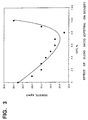
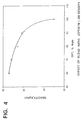
- the following data show the effect of blend ratio of cyclopentane/methyl formate on the density and the thermal conductivity of the resulting foams.
- the results are also graphically presented in FIGURES 1 and 5.
- the amount of blowing agent was kept constant at 0.25 mole/100 g of polyol.
- thermal conductivity of foams made with cyclopentane/methyl formate azeotrope exhibited a relatively lower thermal conductivity than those made with n-pentane/methyl formate azeotrope as the blowing agent.
- foams were prepared at various blend ratios of cyclopentane to acetone by the cup foaming technique and using a drill mixer.
- the foam formulation is set forth below.
- Ratio, CPT/ATN All CPT 90/10 80/20 70/30 60/40 Formulation (pbw) Polyether polyol (a) 100 100 100 100 100 100 100 Silicone surfactant (b) 1.5 1.5 1.5 1.5 1.5 1.5 t-Amine catalyst (c) 2.0 2.0 2.0 2.0 2.0 2.0 2.0 Dibutyl dilaurate 0.3 0.3 0.3 0.3 0.3 0.3 0.3 Cyclopentane 17.7 15.9 14.1 12.4 10.6 Acetone 0 1.5 2.9 4.4 5.8 Polymeric isocyanate (d) 90.3 90.3 90.3 90.3 90.3 90.3 90.3 Foam Properties Density, kg/m3 33.5 35.1 35.3 35.6 35.7 lbs/cu.ft 2.09 2.19 2.20 2.22 2.23 Note: (a) OH No. 360 (b) Poly(dimethylsiloxane-
- Integral skin foams were prepared as shown below, using an azeotrope blowing agent. Mold size: 200 x 200 x 25 mm. Mold temperature: 30°C. Formulation (pbw) Control Example 8
- Example 9 Polyol A (a) 160 160 160 Polyol B (b) 50 50 50 50 50 50 50 50 50 50 50 50 50 50 50 50 50 50 50 50 1,4-Butanediol 2.0 2.0 2.0 t-Amine catalyst (c) 2.2 2.2 2.2 CFC-11 (d) 27.4 0 0 0 Cyclopentane 0 4.4 11.2 Methyl formate 0 8.2 0 Furan 0 0 2.8 Liquid MDI (e) 87.0 87.0 87.0 Foam Properties Average Density, kg/m3 297. 303. 307.
- Foams having an integral skin with a thickness of about 2 mm were obtained.
- Urethane-modified isocyanurate foams were prepared by the conventional cup foaming technique using a blend of cyclopentane and methyl formate, or HCFC 141b, as blowing agent as indicated below.
- Formulation (pbw) Control Example 11
- Example 12 Example 13 NCO/OH (Eq.
- foams were prepared at various cyclopentane/methyl formate blend ratios following the formulations below, by the cup foaming technique using a drill mixer.
- the density and thermal conductivity of the resultant foams were measured, with the results as in the table below the formulations.
- the thermal conductivity values of the foams as indicated in the table were measured in the direction perpendicular to the foaming direction.
- foams were prepared at various cyclopentane/methyl acetate blend ratios following the formulations below, by the cup foaming technique using a drill mixer.
- the density and thermal conductivity of the resultant foams were measured, with the results as in the table below the formulations.
- the thermal conductivity values of the foams as indicated in the table were measured in the direction perpendicular to the foaming direction.
- foams were prepared following the formulations below, by the cup foaming technique using a drill mixer. The density and thermal conductivity of the resultant foams were measured, with the results as in the table below the formulations. The thermal conductivity values of the foams as indicated in the table were measured in the direction perpendicular to the foaming direction.
Landscapes
- Chemical & Material Sciences (AREA)
- Engineering & Computer Science (AREA)
- Materials Engineering (AREA)
- Health & Medical Sciences (AREA)
- Chemical Kinetics & Catalysis (AREA)
- Medicinal Chemistry (AREA)
- Polymers & Plastics (AREA)
- Organic Chemistry (AREA)
- Manufacture Of Porous Articles, And Recovery And Treatment Of Waste Products (AREA)
- Polyurethanes Or Polyureas (AREA)
Applications Claiming Priority (2)
| Application Number | Priority Date | Filing Date | Title |
|---|---|---|---|
| US165362 | 1993-12-10 | ||
| US08/165,362 US5336696A (en) | 1993-12-10 | 1993-12-10 | Halogen-free blowing agents that include cycloaliphatic hydrocarbons and are suitable for isocyanate-based polymeric foams |
Publications (2)
| Publication Number | Publication Date |
|---|---|
| EP0657495A1 true EP0657495A1 (de) | 1995-06-14 |
| EP0657495B1 EP0657495B1 (de) | 2000-05-24 |
Family
ID=22598586
Family Applications (1)
| Application Number | Title | Priority Date | Filing Date |
|---|---|---|---|
| EP94119248A Expired - Lifetime EP0657495B1 (de) | 1993-12-10 | 1994-12-06 | Halogenfreie Treibmittel, enthaltend cycloaliphalische Kohlenwasserstoffe für polymere Schaumstoffe auf Isocyanatbasis |
Country Status (5)
| Country | Link |
|---|---|
| US (1) | US5336696A (de) |
| EP (1) | EP0657495B1 (de) |
| JP (1) | JP2531937B2 (de) |
| CN (1) | CN1106838A (de) |
| DE (1) | DE69424633T2 (de) |
Cited By (3)
| Publication number | Priority date | Publication date | Assignee | Title |
|---|---|---|---|---|
| EP0755968A3 (de) * | 1995-07-25 | 1997-10-22 | Basf Ag | Verfahren zur Herstellung von Hartschaumstoffen auf Isocyanatbasis |
| EP1458781A4 (de) * | 2001-12-18 | 2005-03-09 | Foam Supplies Inc | Hartschaumstoffzusammensetzungen und verfahren unter verwendung von alkansäurealkylestern als treibmittel |
| EP2292683A1 (de) * | 2004-09-03 | 2011-03-09 | Pactiv Corporation | Thermoplastische Schäume unter Mitwirkung von Methylformiat als Blähmittel |
Families Citing this family (37)
| Publication number | Priority date | Publication date | Assignee | Title |
|---|---|---|---|---|
| US5578652A (en) * | 1995-02-17 | 1996-11-26 | Exxon Chemical Patents, Inc. | Method of producing rigid foams and products produced therefrom |
| US6306919B1 (en) | 1995-07-03 | 2001-10-23 | Exxonmobil Chemical Patents, Inc. | Thermosetting plastic foam |
| US5866626A (en) * | 1995-07-03 | 1999-02-02 | Exxon Chemical Patents Inc. | Method of producing rigid foams and products produced therefrom |
| US20030158277A1 (en) * | 1995-07-03 | 2003-08-21 | Blanpied Robert H. | Method of producing rigid foams and products produced therefrom |
| JP4199353B2 (ja) * | 1998-12-24 | 2008-12-17 | シンジーテック株式会社 | 基材上に多孔質被覆層を形成するための方法 |
| US6420443B1 (en) | 1999-09-09 | 2002-07-16 | Crompton Corporation | Additives for enhanced hydrocarbon compatibility in rigid polyurethane foam systems |
| JP3780770B2 (ja) | 1999-09-30 | 2006-05-31 | 豊田合成株式会社 | インテグラルスキンフォームの成形方法及び成形用ポリウレタン材料 |
| GB2362889B (en) * | 1999-09-30 | 2002-10-09 | Toyoda Gosei Kk | Polyurethane Formulation for Molding an Integral Skin Foam |
| US6866923B2 (en) * | 2000-11-15 | 2005-03-15 | Atlas Roofing Corporation | Thermosetting plastic foams and methods of production thereof using adhesion additives |
| KR20140066210A (ko) * | 2004-08-04 | 2014-05-30 | 포움 서플라이즈 인코포레이션 | 폴리우레탄 폼에서의 반응도 변동 및 촉매 분해 |
| US20060052465A1 (en) * | 2004-09-03 | 2006-03-09 | Handa Yash P | Thermoplastic foams made with methyl formate-based blowing agents |
| US8309619B2 (en) | 2004-09-03 | 2012-11-13 | Pactiv LLC | Reduced-VOC and non-VOC blowing agents for making expanded and extruded thermoplastic foams |
| US7307105B2 (en) * | 2004-09-03 | 2007-12-11 | Pactiv Corporation | Thermoplastic foams made with methyl formate-based blowing agents |
| US7312253B2 (en) * | 2004-09-03 | 2007-12-25 | Pactiv Corporation | Insulating thermoplastic foams made with methyl formate-based blowing agents |
| US20060089093A1 (en) * | 2004-10-27 | 2006-04-27 | Swisher Robert G | Polyurethane urea polishing pad |
| US7412966B2 (en) * | 2005-11-30 | 2008-08-19 | Ford Global Technologies, Llc | Engine output control system and method |
| CA2634484A1 (en) * | 2006-02-22 | 2007-09-07 | Pactiv Corporation | Expanded and extruded polyolefin foams made with methyl formate-based blowing agents |
| US7977397B2 (en) * | 2006-12-14 | 2011-07-12 | Pactiv Corporation | Polymer blends of biodegradable or bio-based and synthetic polymers and foams thereof |
| JP2010513604A (ja) * | 2006-12-14 | 2010-04-30 | パクティヴ・コーポレーション | ギ酸メチル系発泡剤を用いて得られた、生分解性および低排出性の膨張および押出発泡体 |
| US9522973B2 (en) | 2012-10-02 | 2016-12-20 | Covestro Llc | Polyurethane and polyisocyanurate rigid foams for roofing insulation |
| CA3168221C (en) | 2015-12-08 | 2026-05-19 | Amrize Technology Switzerland Llc | Process for producing isocyanate-based foam construction boards |
| CA3034242C (en) | 2016-08-19 | 2021-04-06 | Firestone Building Products Company, Llc | Process for producing isocyanate-based foam construction boards |
| CN107501518B (zh) * | 2017-09-12 | 2020-06-26 | 合肥华凌股份有限公司 | 聚氨酯泡沫及其制备方法和用途 |
| US10870987B1 (en) | 2017-12-04 | 2020-12-22 | Firestone Building Products Company, Llc | Isocyanate-based foam construction boards |
| US12291620B2 (en) | 2017-12-04 | 2025-05-06 | Holcim Technology Ltd | Isocyanate-based foam construction boards |
| CN108192065A (zh) * | 2017-12-28 | 2018-06-22 | 青岛海尔股份有限公司 | 聚氨酯硬质泡沫塑料及其制备方法 |
| CN108276546A (zh) * | 2017-12-28 | 2018-07-13 | 青岛海尔股份有限公司 | 聚氨酯硬质泡沫塑料及其制备方法 |
| CN109438649B (zh) * | 2018-10-16 | 2021-04-09 | 上海东大聚氨酯有限公司 | 一种阻燃组合聚醚、聚异氰脲酸酯板材用保温材料及其制备方法 |
| CN109400839B (zh) * | 2018-10-16 | 2021-06-04 | 上海东大聚氨酯有限公司 | 一种阻燃组合聚醚、阻燃聚异氰脲酸酯泡沫及其制备方法 |
| CN109467665B (zh) * | 2018-10-16 | 2021-04-09 | 上海东大聚氨酯有限公司 | 一种环保型组合聚醚、家用电器保温泡沫及其制备方法 |
| CN109438648B (zh) * | 2018-10-16 | 2021-04-09 | 上海东大聚氨酯有限公司 | 一种组合聚醚、仿木装饰用聚氨酯泡沫及其制备方法 |
| CN109438645B (zh) * | 2018-10-16 | 2021-04-09 | 上海东大聚氨酯有限公司 | 一种环保型组合聚醚、太阳能热水器用保温材料及其制备方法 |
| CN109593176B (zh) * | 2018-11-12 | 2020-11-27 | 北京油宝新能科技有限公司 | 一种由酸封端的低聚物作为发泡剂制备的聚氨酯泡沫及其制备方法 |
| WO2020099992A1 (en) * | 2018-11-13 | 2020-05-22 | Invista North America S.A R.L. | Azeotropically-modified blowing agents for forming foams |
| EP3900502A4 (de) * | 2018-12-21 | 2022-11-02 | Honeywell International Inc. | Wärmeübertragungsverfahren, systeme und flüssigkeiten |
| CN112063004A (zh) * | 2020-09-15 | 2020-12-11 | 长虹美菱股份有限公司 | 一种环保型高保温聚氨酯保温层及发泡方法 |
| CN112574387A (zh) * | 2020-12-14 | 2021-03-30 | 长虹美菱股份有限公司 | 一种低成本环保型聚氨酯发泡料及其发泡工艺 |
Citations (5)
| Publication number | Priority date | Publication date | Assignee | Title |
|---|---|---|---|---|
| US3558531A (en) * | 1968-03-28 | 1971-01-26 | Atomic Energy Commission | Process for closed-cell rigid polyurethane foams |
| EP0355874A1 (de) * | 1988-07-12 | 1990-02-28 | Recticel | Verfahren zur Herstellung eines hochelastischen Polyurethanschaums |
| EP0421269A2 (de) * | 1989-10-06 | 1991-04-10 | BASF Aktiengesellschaft | Verfahren zur Herstellung von Polyurethan-Hartschaumstoffen mit geringer Wärmeleitfähigkeit und ihre Verwendung |
| US5227088A (en) * | 1991-11-26 | 1993-07-13 | Allied-Signal Inc. | Azeotrope-like compositions of 1-chloro-3,3,3-trifluoropropane and a C.sub.56 hydrocarbon |
| EP0551636A1 (de) * | 1992-01-11 | 1993-07-21 | BASF Aktiengesellschaft | Verfahren zur Herstellung von Polyurethan-Hartschaumstoffen sowie Treibmittelmischung hierfür |
Family Cites Families (14)
| Publication number | Priority date | Publication date | Assignee | Title |
|---|---|---|---|---|
| FR1511865A (fr) * | 1966-02-18 | 1968-02-02 | Nisshin Boseki Kabushiki Kaish | Procédé de préparation de mousses de matière plastique rigides et produits obtenus |
| US3625872A (en) * | 1967-06-15 | 1971-12-07 | Nisshin Spinning | Flame-resistive polyurethane foam composition |
| US3793236A (en) * | 1971-02-12 | 1974-02-19 | Mitsubishi Chem Ind | Oxazolidone-modified isocyanurate resins |
| US3879315A (en) * | 1973-06-18 | 1975-04-22 | Union Carbide Corp | Process for the preparation of flexible polyurethane foams in the presence of alkyl alkanoate blowing agents |
| IT1016145B (it) * | 1973-06-26 | 1977-05-30 | Dai Ichi Kogyo Seiyaku Co Ltd | Poliuretano espanso resistente alla fiamma e procedimento per preparar lo |
| US4055521A (en) * | 1975-10-08 | 1977-10-25 | Allied Chemical Corporation | Constant boiling ternary compositions and the process for using such compositions in the preparation of polyurethane foam |
| GB8816945D0 (en) * | 1988-07-15 | 1988-08-17 | Ici Plc | Polymeric foams |
| US4898893A (en) * | 1988-09-20 | 1990-02-06 | Harry A. Fischer | Blowing agents for isocyanurate foams and method for producing the same |
| US5120770A (en) * | 1989-11-29 | 1992-06-09 | Doyle Earl N | Use of liquid carbon dioxide as a blowing agent in the production of open-cell polyurethane foam |
| US5091436A (en) * | 1990-02-20 | 1992-02-25 | Frisch Kurt C | Reinforced foam composites comprising hydroxy-containing vinyl ester resin |
| US5057547A (en) * | 1990-04-06 | 1991-10-15 | Mobay Corporation | Rigid foams using blends of chlorofluorocarbons and hydrocarbons as blowing agent |
| US5102920A (en) * | 1991-04-06 | 1992-04-07 | Mobay Corporation | Novel azeotropes and the use thereof in the production of rigid foams |
| US5166182A (en) * | 1992-03-23 | 1992-11-24 | Atlas Roofing Corporation | Thermosetting plastic foams and methods of production thereof using novel blowing agents |
| US5283003A (en) * | 1993-03-04 | 1994-02-01 | Chen Wen Pin | Blowing agents for foaming polyurethane having no ozone depletion potential and uses and preparations thereof |
-
1993
- 1993-12-10 US US08/165,362 patent/US5336696A/en not_active Expired - Lifetime
-
1994
- 1994-12-06 EP EP94119248A patent/EP0657495B1/de not_active Expired - Lifetime
- 1994-12-06 DE DE69424633T patent/DE69424633T2/de not_active Expired - Fee Related
- 1994-12-09 CN CN94112896A patent/CN1106838A/zh active Pending
- 1994-12-09 JP JP6330958A patent/JP2531937B2/ja not_active Expired - Fee Related
Patent Citations (5)
| Publication number | Priority date | Publication date | Assignee | Title |
|---|---|---|---|---|
| US3558531A (en) * | 1968-03-28 | 1971-01-26 | Atomic Energy Commission | Process for closed-cell rigid polyurethane foams |
| EP0355874A1 (de) * | 1988-07-12 | 1990-02-28 | Recticel | Verfahren zur Herstellung eines hochelastischen Polyurethanschaums |
| EP0421269A2 (de) * | 1989-10-06 | 1991-04-10 | BASF Aktiengesellschaft | Verfahren zur Herstellung von Polyurethan-Hartschaumstoffen mit geringer Wärmeleitfähigkeit und ihre Verwendung |
| US5227088A (en) * | 1991-11-26 | 1993-07-13 | Allied-Signal Inc. | Azeotrope-like compositions of 1-chloro-3,3,3-trifluoropropane and a C.sub.56 hydrocarbon |
| EP0551636A1 (de) * | 1992-01-11 | 1993-07-21 | BASF Aktiengesellschaft | Verfahren zur Herstellung von Polyurethan-Hartschaumstoffen sowie Treibmittelmischung hierfür |
Cited By (4)
| Publication number | Priority date | Publication date | Assignee | Title |
|---|---|---|---|---|
| EP0755968A3 (de) * | 1995-07-25 | 1997-10-22 | Basf Ag | Verfahren zur Herstellung von Hartschaumstoffen auf Isocyanatbasis |
| EP1458781A4 (de) * | 2001-12-18 | 2005-03-09 | Foam Supplies Inc | Hartschaumstoffzusammensetzungen und verfahren unter verwendung von alkansäurealkylestern als treibmittel |
| AU2002357892B2 (en) * | 2001-12-18 | 2006-05-04 | Foam Supplies, Inc | Rigid foam compositions and methods employing alkyl alkanoates as a blowing agent |
| EP2292683A1 (de) * | 2004-09-03 | 2011-03-09 | Pactiv Corporation | Thermoplastische Schäume unter Mitwirkung von Methylformiat als Blähmittel |
Also Published As
| Publication number | Publication date |
|---|---|
| EP0657495B1 (de) | 2000-05-24 |
| CN1106838A (zh) | 1995-08-16 |
| DE69424633T2 (de) | 2000-09-21 |
| JP2531937B2 (ja) | 1996-09-04 |
| DE69424633D1 (de) | 2000-06-29 |
| US5336696A (en) | 1994-08-09 |
| JPH07173319A (ja) | 1995-07-11 |
Similar Documents
| Publication | Publication Date | Title |
|---|---|---|
| US5336696A (en) | Halogen-free blowing agents that include cycloaliphatic hydrocarbons and are suitable for isocyanate-based polymeric foams | |
| EP0990006B1 (de) | Isocyanatzusammensetzungen für aufgeschäumte polyurethanschaumstoffe | |
| EP2567993B1 (de) | Schaumbildende Zusammensetzungen mit azeotropen oder azeotropähnlichen Gemischen mit cis-1,1,1,4,4,4-Hexafluor-2-Buten und Cyclopentan und ihre Verwendung bei der Herstellung von Schaumstoffen auf der Basis von Polyisocyanat | |
| US4972003A (en) | Foaming system for rigid urethane and isocyanurate foams | |
| EP1497361B1 (de) | Mit teilfluorierten fluorkohlenwasserstoffen und kohlendioixd getriebene polyurethan- oder polyisocyanatschaumstoffe | |
| AU652034B2 (en) | Manufacture of rigid foams and compositions therefor | |
| JPH06510814A (ja) | ペルフルオロ化複素環発泡剤を含む発泡プラスチックの製造方法 | |
| US5840212A (en) | Rigid foams with improved insulation properties and a process for the production of such foams | |
| JP4166571B2 (ja) | ポリウレタンインテグラルスキンフォーム類の製造方法 | |
| AU2002234544A1 (en) | Process for making polyurethane integral skin foams | |
| JPH05271371A (ja) | 気泡ポリマー生成物の調製法 | |
| EP0960902B1 (de) | Verfahren zur herstellung von schaumkunststoffen | |
| US6117917A (en) | Blowing agent blends and use thereof | |
| JPH05239169A (ja) | 硬質発泡合成樹脂の製造方法 | |
| JPH1087774A (ja) | 硬質ポリウレタンフォームの製造方法 | |
| JPH0680815A (ja) | 硬質ポリウレタンフォームの製造方法 | |
| HK1001694B (en) | Process for cellular polymeric products |
Legal Events
| Date | Code | Title | Description |
|---|---|---|---|
| PUAI | Public reference made under article 153(3) epc to a published international application that has entered the european phase |
Free format text: ORIGINAL CODE: 0009012 |
|
| AK | Designated contracting states |
Kind code of ref document: A1 Designated state(s): DE FR GB |
|
| 17P | Request for examination filed |
Effective date: 19950825 |
|
| 17Q | First examination report despatched |
Effective date: 19960215 |
|
| GRAG | Despatch of communication of intention to grant |
Free format text: ORIGINAL CODE: EPIDOS AGRA |
|
| GRAG | Despatch of communication of intention to grant |
Free format text: ORIGINAL CODE: EPIDOS AGRA |
|
| GRAG | Despatch of communication of intention to grant |
Free format text: ORIGINAL CODE: EPIDOS AGRA |
|
| GRAH | Despatch of communication of intention to grant a patent |
Free format text: ORIGINAL CODE: EPIDOS IGRA |
|
| GRAH | Despatch of communication of intention to grant a patent |
Free format text: ORIGINAL CODE: EPIDOS IGRA |
|
| GRAA | (expected) grant |
Free format text: ORIGINAL CODE: 0009210 |
|
| AK | Designated contracting states |
Kind code of ref document: B1 Designated state(s): DE FR GB |
|
| REF | Corresponds to: |
Ref document number: 69424633 Country of ref document: DE Date of ref document: 20000629 |
|
| ET | Fr: translation filed | ||
| PG25 | Lapsed in a contracting state [announced via postgrant information from national office to epo] |
Ref country code: GB Free format text: LAPSE BECAUSE OF NON-PAYMENT OF DUE FEES Effective date: 20001206 |
|
| PLBE | No opposition filed within time limit |
Free format text: ORIGINAL CODE: 0009261 |
|
| STAA | Information on the status of an ep patent application or granted ep patent |
Free format text: STATUS: NO OPPOSITION FILED WITHIN TIME LIMIT |
|
| 26N | No opposition filed | ||
| GBPC | Gb: european patent ceased through non-payment of renewal fee |
Effective date: 20001206 |
|
| PG25 | Lapsed in a contracting state [announced via postgrant information from national office to epo] |
Ref country code: FR Free format text: LAPSE BECAUSE OF NON-PAYMENT OF DUE FEES Effective date: 20010831 |
|
| REG | Reference to a national code |
Ref country code: FR Ref legal event code: ST |
|
| PG25 | Lapsed in a contracting state [announced via postgrant information from national office to epo] |
Ref country code: DE Free format text: LAPSE BECAUSE OF NON-PAYMENT OF DUE FEES Effective date: 20011002 |