EP0664128A1 - Composition pharmaceutique utilisee pour inhiber la production des facteurs de necrose tumorale - Google Patents
Composition pharmaceutique utilisee pour inhiber la production des facteurs de necrose tumorale Download PDFInfo
- Publication number
- EP0664128A1 EP0664128A1 EP93922048A EP93922048A EP0664128A1 EP 0664128 A1 EP0664128 A1 EP 0664128A1 EP 93922048 A EP93922048 A EP 93922048A EP 93922048 A EP93922048 A EP 93922048A EP 0664128 A1 EP0664128 A1 EP 0664128A1
- Authority
- EP
- European Patent Office
- Prior art keywords
- group
- general formula
- formation
- secretion
- inhibiting
- Prior art date
- Legal status (The legal status is an assumption and is not a legal conclusion. Google has not performed a legal analysis and makes no representation as to the accuracy of the status listed.)
- Withdrawn
Links
- 0 CC=C(CC*)*=*C=C(C=C)C(*)=CCNC(*)=NC Chemical compound CC=C(CC*)*=*C=C(C=C)C(*)=CCNC(*)=NC 0.000 description 3
Images
Classifications
-
- C—CHEMISTRY; METALLURGY
- C07—ORGANIC CHEMISTRY
- C07D—HETEROCYCLIC COMPOUNDS
- C07D409/00—Heterocyclic compounds containing two or more hetero rings, at least one ring having sulfur atoms as the only ring hetero atoms
- C07D409/02—Heterocyclic compounds containing two or more hetero rings, at least one ring having sulfur atoms as the only ring hetero atoms containing two hetero rings
- C07D409/04—Heterocyclic compounds containing two or more hetero rings, at least one ring having sulfur atoms as the only ring hetero atoms containing two hetero rings directly linked by a ring-member-to-ring-member bond
-
- A—HUMAN NECESSITIES
- A61—MEDICAL OR VETERINARY SCIENCE; HYGIENE
- A61K—PREPARATIONS FOR MEDICAL, DENTAL OR TOILETRY PURPOSES
- A61K31/00—Medicinal preparations containing organic active ingredients
- A61K31/33—Heterocyclic compounds
- A61K31/395—Heterocyclic compounds having nitrogen as a ring hetero atom, e.g. guanethidine or rifamycins
- A61K31/495—Heterocyclic compounds having nitrogen as a ring hetero atom, e.g. guanethidine or rifamycins having six-membered rings with two or more nitrogen atoms as the only ring heteroatoms, e.g. piperazine or tetrazines
- A61K31/505—Pyrimidines; Hydrogenated pyrimidines, e.g. trimethoprim
-
- C—CHEMISTRY; METALLURGY
- C07—ORGANIC CHEMISTRY
- C07D—HETEROCYCLIC COMPOUNDS
- C07D239/00—Heterocyclic compounds containing 1,3-diazine or hydrogenated 1,3-diazine rings
- C07D239/70—Heterocyclic compounds containing 1,3-diazine or hydrogenated 1,3-diazine rings condensed with carbocyclic rings or ring systems
- C07D239/72—Quinazolines; Hydrogenated quinazolines
- C07D239/78—Quinazolines; Hydrogenated quinazolines with hetero atoms directly attached in position 2
- C07D239/80—Oxygen atoms
-
- C—CHEMISTRY; METALLURGY
- C07—ORGANIC CHEMISTRY
- C07D—HETEROCYCLIC COMPOUNDS
- C07D239/00—Heterocyclic compounds containing 1,3-diazine or hydrogenated 1,3-diazine rings
- C07D239/70—Heterocyclic compounds containing 1,3-diazine or hydrogenated 1,3-diazine rings condensed with carbocyclic rings or ring systems
- C07D239/72—Quinazolines; Hydrogenated quinazolines
- C07D239/78—Quinazolines; Hydrogenated quinazolines with hetero atoms directly attached in position 2
- C07D239/80—Oxygen atoms
- C07D239/82—Oxygen atoms with an aryl radical attached in position 4
-
- C—CHEMISTRY; METALLURGY
- C07—ORGANIC CHEMISTRY
- C07D—HETEROCYCLIC COMPOUNDS
- C07D487/00—Heterocyclic compounds containing nitrogen atoms as the only ring hetero atoms in the condensed system, not provided for by groups C07D451/00 - C07D477/00
- C07D487/02—Heterocyclic compounds containing nitrogen atoms as the only ring hetero atoms in the condensed system, not provided for by groups C07D451/00 - C07D477/00 in which the condensed system contains two hetero rings
- C07D487/04—Ortho-condensed systems
-
- Y—GENERAL TAGGING OF NEW TECHNOLOGICAL DEVELOPMENTS; GENERAL TAGGING OF CROSS-SECTIONAL TECHNOLOGIES SPANNING OVER SEVERAL SECTIONS OF THE IPC; TECHNICAL SUBJECTS COVERED BY FORMER USPC CROSS-REFERENCE ART COLLECTIONS [XRACs] AND DIGESTS
- Y02—TECHNOLOGIES OR APPLICATIONS FOR MITIGATION OR ADAPTATION AGAINST CLIMATE CHANGE
- Y02A—TECHNOLOGIES FOR ADAPTATION TO CLIMATE CHANGE
- Y02A50/00—TECHNOLOGIES FOR ADAPTATION TO CLIMATE CHANGE in human health protection, e.g. against extreme weather
- Y02A50/30—Against vector-borne diseases, e.g. mosquito-borne, fly-borne, tick-borne or waterborne diseases whose impact is exacerbated by climate change
Definitions
- the present invention relates to a pharmaceutical composition for inhibiting the formation or secretion of a tumor necrosis factor. More particularly, the present invention relates to a pharmaceutical composition inhibiting the formation or secretion of a tumor necrosis factor, which comprises a quinazoline compound or salts thereof as an effective ingredient and which is effective for the treatment of diseases including cachexia, sepsis and multiple organ failure wherein a tumor necrosis factor is considered to be involved in causing those diseases.
- TNF tumor necrosis factor
- TNF had been at first found as a cytokine showing a cytotoxic effect on tumor
- subsequent studies have revealed that the activities of TNF are various, and not only limited to tumor cells but also extended to many other normal cells.
- TNF activities include suppression of the lipoprotein lipase activity in adipocytes, expression of HLA antigen on blood endothelial cells and fibroblasts, interleukin-1 formation by fibroblasts or macrophages, activation of cytotoxic macrophages, suppression of CFU, formation of colony stimulating factor by fibroblasts, endothelial cells or some tumor cells, inhibition of the synthesis of proteoglycans and stimulation of their resorption in cartilage, activation of neutrophils and generation of superoxide, formation of procoagulant factor by blood endothelial cells, proliferation of fibroblasts, change in membrane potential of skeletal muscle, interferon ⁇ 2 production by fibroblasts, and injury of blood endothelial cells. In these days, TNF has thus been
- TNF is known as cachectin which induces cachexia in cancer or infectious diseases which causes catabolic acceleration of total metabolism to lead to extreme wasting (B. Beutler, D. Greenwald, J.D. Hulmes et al., Nature, 316 , 552-554 (1985), Kawakami, M., SEIKAGAKU (Biochemistry), 59 , 1244-1247 (1987)).
- An anti-TNF antibody is considered to be effective also for a septic shock (Starnes, H.F. Jr., Pearce, M.K., Tewari, A., Yim, J.H., Zou, J-C., Abrams, J.S., J. Immunol., 145 , 4185-4191 (1990), Beutler, B., Milsark, I.W., Cerami, A.C., Science, 229 , 869-871 (1985), Hinshaw, L.B., Tekamp-Olson, P., Chang, A.C.K. et al., Circ. Shock, 30 , 279-292 (1990)).
- TNF TNF-induced rheumatoid arthritis
- TNF level increase in blood e.g., Kawasaki disease (Matsubara, T., Furukawa, S., Yabuta, K., Clin. Immunol. Immunopathol., 56 , 29-36 (1990)); ulcerative colitis (Murch, S., Walker-Smith, J.A., Arch. Dis. Child, 66 , 561 (1991)); Behçet disease (Akoglu, T., Direskeneli, H., Yazici, H., Lawrence, R., J.
- TNF inhibitors available for the treatment of these diseases.
- Pentoxifylline having a methylxanthine skeleton is known as a compound showing an activity of inhibiting TNF. It is reported that this compound possesses an activity of preventing death in endotoxin-shocked mice, an activity of improving the sense of well-being or preventing a weight loss in severe pulmonary tuberculosis patients or cancer patients (Zabel, P., Schade, F.U., Schlaak, M., Immunobiol., 187 , 447-463 (1993), Dezube, B.J., Pardee, A.B., et al., Cancer Immuno. Immunother., 36 , 57-60 (1993)).
- glucocorticoid protease inhibitors, phospholipase A2 inhibitors, lipoxygenase inhibitors, PAF (platelet aggregating factor) antagonists, radical scavengers, prostaglandin F2 or I2 and anti-TNF antibody are heretofore known as compounds or factors for showing a TNF inhibitory activity.
- the present invention provides a therapeutic drug for diseases which TNF would cause, due to its inhibition against TNF formation or secretion.
- diseases include cachexia, sepsis, multiple organ failure, rheumatoid arthritis, ulcerative colitis, Behçet disease, systenic lupus erythematosus (SLE), graft versus host disease (GvHD), malaria, acquired immune deficiency syndrome (AIDS), meningitis, fuluminant hepatitis, and inflammatory Bowel disease.
- quinazoline compounds exert on a potent activity of inhibiting the formation or secretion of TNF and have come to accomplish the present invention.
- an object of the present invention is to provide a pharmaceutical composition for inhibiting the formation or secretion of TNF, and comprising as an active ingredient a compound represented by general formula (1) below: wherein R1 represents a hydrogen atom, a halogen atom, a hydroxy group, an amino group, a substituted amino group, a nitro group, a cyano group, an alkyl group, an alkoxy group, an alkylthio group, an acyl group, a carboxyl group or an alkoxycarbonyl group; R2 represents a phenyl group, a substituted phenyl group, a thienyl group, a furyl group, a cycloalkyl group, a cycloalkenyl group, an alkyl group, an amino group or a substituted amino group; R3 represents a hydrogen atom and R4 represents a hydrogen atom or an alkyl group, or R3 and R4 are combined together to form a bond; in R5, R6
- Another object of the present invention is to provide a method for inhibiting the formation or secretion of TNF which comprises administering to human an effective dose of the compound represented by general formula (1) or (2) described above, or a salt thereof.
- a further object of the present invention is to provide use of these compounds or salts thereof for preparing the pharmaceutical composition for the formation or secretion of TNF comprising the compound represented by general formula (1) or (2) described above, or a salt thereof.
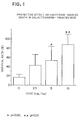
- Fig. 1 is a graph showing the results of a test performed in Test Example 2 herein, in which a protective effect on endotoxin-induced death in galactosamine-treated mice was examined.
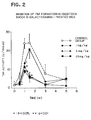
- Fig. 2 is a graph showing the results of a test performed in Test Example 3 herein, in which an effect of inhibiting the formation or secretion of TNF was examined in mice with galactosamine-treated endotoxin shock.
- the abscissa designates a time period passed after administration of LPS, D-galN and 5% dimethylsulfoxide-10% Nikkol solution (control group) or administration of LPS, D-galN and Compound No. 33 in Example 1 in 3 concentrations; the ordinate designates a TNF activity in serum collected from mice (3 in each group) at each passage time.
- the TNF activity (U/ml) is expressed by a mean value of the data measured with serum from 3 mice and standard deviation (s.d.).
- alkyl group the alkoxy group and the alkylthio group
- a lower alkyl group a lower alkoxy group and a lower alkylthio group
- acyl group preferred are a lower alkanoyl group and an aroyl group.
- alkoxycarbonyl group the cycloalkyl group, the cycloalkenyl group, the haloalkyl group, the alkylene group, the alkylhydrazino group, the acylhydrazino group and the acylamino group
- halogen atom examples include fluorine, chlorine, bromine and iodine.
- the lower alkyl group include an alkyl group having 1 to 6 carbon atoms, such as methyl, ethyl, propyl, butyl, pentyl, hexyl, 1-methylethyl, 1-methylpropyl, 2-methylpropyl, 1-ethylpropyl, 2-ethylpropyl, 1-methylbutyl, 2-methylbutyl, 3-methylbutyl, 1-ethylbutyl, 2-ethylbutyl, 3-ethylbutyl, 1-methylpentyl, 2-methylpentyl, 3-methylpentyl, and 4-methylpentyl.
- alkyl group having 1 to 6 carbon atoms such as methyl, ethyl, propyl, butyl, pentyl, hexyl, 1-methylethyl, 1-methylpropyl, 2-methylpropyl, 1-ethylpropyl, 2-ethylpropyl, 1-methylbutyl, 2-methylbutyl
- alkoxy group there are an alkoxy group having 1 to 6 carbon atoms, such as methoxy, ethoxy, propoxy and butoxy.
- alkylthio group there are alkylthio group having 1 to 6 carbon atoms, such as methylthio, ethylthio, propylthio and butylthio.
- alkanoyl group there are an alkanoyl group having 1 to 6 carbon atoms, such as formyl, acetyl, propanoyl and butanoyl.
- the aroyl group is an aroyl group having up to 11 carbon atoms and specific examples include benzoyl, 1-naphthoyl and 2-naphthoyl.
- the lower alkoxycarbonyl group includes an alkoxycarbonyl group having 1 to 6 carbon atoms and specific examples are methoxycarbonyl, ethoxycarbonyl, propoxycarbonyl, butoxycarbonyl, and the like.
- the lower cycloalkyl group includes a cycloalkyl group having 3 to 6 carbon atoms and specific examples are cyclopropyl, cyclobutyl, cyclopentyl, cyclohexyl, and the like.
- the lower cycloalkenyl group includes a cycloalkenyl group having 3 to 6 carbon atoms and specific examples are 1-cyclohexenyl, 2-cyclohexenyl, 3-cyclohexenyl, and the like.
- the halo-lower alkyl group includes a haloalkyl group having 1 to 6 carbon atoms and substituted with the halogen atom described above; specific examples are trifluoromethyl, 1,1,1-trifluoroethyl, 1,1,1,2,2-pentafluoroethyl, and the like.
- substituted phenyl group there are phenyl groups substituted with, e.g., an alkyl group, an alkoxy group, a halogen atom, an alkylthio group or an acyl group.
- phenyl groups substituted with e.g., an alkyl group, an alkoxy group, a halogen atom, an alkylthio group or an acyl group.
- Specific examples include 4-chlorophenyl, 3-chlorophenyl, 2-chlorophenyl, 4-methoxyphenyl and 2-fluorophenyl.
- thienyl group there are, for example, 2-thienyl and 3-thienyl.
- furyl group there are, for example, 2-furyl and 3-furyl.
- the lower alkylene group includes an alkylene group having 1 to 4 carbon atoms, such as methylene, ethylene, trimethylene, tetramethylene, 1-methylethylene, 2-methylethylene, 1,2-dimethylethylene, 1-ethylethylene, 2-ethylethylene, 1-methyltrimethylene, 2-methyltrimethylene and 3-methyltrimethylene.
- the lower alkylhydrazino group includes an alkylhydrazino group having 1 to 6 carbon atoms and specific examples are N-methylhydrazino, N-ethylhydrazino, N-propylhydrazino, N-butylhydrazino, N-pentylhydrazino, N-hexylhydrazino, N'-methylhydrazino, N'-ethylhydrazino, N'-propylhydrazino, N'-butylhydrazino, N'-pentylhydrazino, N'-hexylhydrazino, and the like.
- the lower alkanoylhydrazino group includes an alkanoylhydrazino group containing a lower alkanoyl group having 1 to 6 carbon atoms and specific examples are N-formylhydrazino, N-acetylhydrazino, N-propanoylhydrazino, N-butanoylhydrazino, N'-formylhydrazino, N'-acetylhydrazino, N'-propanoylhydrazino, N'-butanoylhydrazino, and the like.
- substituted aminocarbonyl group mention may be made of an aminocarbonyl group in which one or two alkyl groups are substituted and examples of the alkyl substituent include a lower alkyl group. More specific examples include an alkylaminocarbonyl group containing an alkyl group having 1 to 6 carbon atoms such as methylaminocarbonyl or ethylaminocarbonyl; and a dialkylaminocarbonyl group containing two alkyl groups which may be the same or different and have 1 to 6 carbon atoms, such as dimethylaminocarbonyl, diethylaminocarbonyl and ethylmethylaminocarbonyl.
- a further example of the substituted aminocarbonyl group includes a cyclic aminocarbonyl group. More specifically, the cyclic aminocarbonyl group includes a cyclic aminocarbonyl group having 5 to 6 carbon atoms in which the ring containing the nitrogen atom is 5 or 6 members. Specific examples of such cyclic aminocarbonyl group include 1-pyrrolidinocarbonyl and 1-piperidinocarbonyl.
- the substituted amino group includes an amino group in which, e.g., one or two alkyl groups are substituted and an example of the alkyl substituent is a lower alkyl group. More specific examples include an alkylamino group containing an alkyl group having 1 to 6 carbon atoms such as methylamino, ethylamino, etc.; and a dialkylamino group containing two alkyl groups which may be the same or different and have 1 to 6 carbon atoms, such as dimethylamino, diethylamino and ethylmethylamino.
- a further example of the substituted amino group includes a cyclic amino group. As the cyclic amino group, mention may be made of a cyclic amino group having 4 to 5 carbon atoms, in which the ring containing the nitrogen atom is 5- or 6-members. Specific examples are 1-pyrrolidino and 1-piperidino.
- heterocyclic structure containing 2 to 4 nitrogen atoms there are 5-membered heterocyclic rings containing an oxo group or an alkyl group on the ring, which are exemplified by the following formulas: wherein R8 represents a hydrogen atom or an alkyl group.
- R3 and R4 are combined together to form a bond
- R2 represents phenyl group, a substituted phenyl group, a thienyl group, a furyl group, a cycloalkyl group or a cycloalkenyl group, or salts thereof
- R6 and R7 are combined together to form a bond
- R5 represents amino group, hydroxyamino group, hydrazino group, an alkylhydrazino group, an acylhydrazino group or an acylamino group, or salts thereof.
- 2-amino-6-chloro-4-phenylquinazoline or salt thereof is Especially preferred.
- mineral acids such as hydrochloric acid, hydrobromic acid, sulfuric acid or phosphoric acid
- organic carboxylic acids such as formic acid,
- the compounds of the present invention include optical isomers and tautomeric isomers.
- the compounds of the present invention also include all of the hydrates and crystalline forms.
- the compounds of the present invention are known compounds and can be synthesized, e.g., by the following processes.
- substituent R1 or R7 contains a functional group such as an amino group, a substituted amino group or hydroxy group
- these functional groups may be protected prior to perform the reactions above, and the protective groups may then be deprotected to synthesize the objective compounds.
- a protective group for the amino group or substituted amino group include an alkanoyl or aroyl group such as acetyl and benzoyl
- examples of a protective group for the hydroxy group include an alkanoyl or aroyl group such as acetyl and benzoyl, or benzyl, methyl, methoxymethyl or trimethylsilyl group (T.W. Greene, "Protective Groups in Organic Synthesis", John Wiley & Sons Inc., 1981).
- the active ingredient of the present invention may be administered orally or parenterally. That is, the active ingredient may be administered orally in a conventional form for administration, e.g., in the form of tablets, capsules, syrup or suspension.
- the active ingredient prepared into a liquid form such as a solution, an emulsion or a suspension may be parenterally administered in the form of injection.
- the active ingredient may also be administered rectally in the form of a suppository.
- These pharmaceutical compositions can be prepared in a conventional manner by formulating the active ingredient together with a conventional carrier, excipient, binder, stabilizer, etc. Where the pharmaceutical composition is provided in the form of injection, a buffering agent, a dissolution aid, an isotonic agent or the like may also be added to the composition.
- a dose of the composition and the frequency of administration vary depending upon conditions, age, body weight and preparation form.
- the daily dose of the TNF inhibitor for adult is in the range of 10 to 500 mg for oral administration, or in the range of 1 to 100 mg for parenteral administration, in a single dose or multiple doses.
- Tablet is prepared, e.g., by the following procedure. Quantitiy (mg/tablet) Hydrochloride of Compound No. 33 of Test Example 1, later described 10 Lactose 72.5 Corn starch 30 Carboxymethyl cellulose calcium 5 Hydroxypropyl cellulose (HPC-L) 2 Magnesium stearate 0.5 Total 120 mg
- the respective components are mixed, agglomerated and the resulting mixture is compacted into a tablet of 120 mg.
- a solution of the above components is filtered, sterilized and filled in a vial previously washed and sterilized.
- the vial is plugged with a rubber stopper washed and sterilized, and then sealed with a flip-off-cap to prepare an injection.
- mice (5 weeks old, female, Charles River Japan) were intraperitoneally injected with 1 ml of 3% thioglycollate broth. After feeding for 4 days, the mice were sacrificed.
- Peritoneal exudated cells (PECs) were collected from the peritoneal cavity by washing with minimum essential medium (hereinafter abbreviated as MEM, manufactured by Handai Biseibutubyo Kenkyukai, Osaka, Japan) supplemented with 4 ml of heparin (final concentration of 5 U/ml) and fetal bovine serum (FBS, manufactured by GIBCO Laboratories Inc., final concentration of 1%).
- MEM minimum essential medium
- FBS fetal bovine serum
- PECs were washed three times with MEM, suspended with MEM supplemented with FBS (final concentration of 10%). After the viable cells were counted by exclusion of trypan blue dye, the suspension was adjusted to the final concentration of 2 x 10⁶ cells/ml with MEM supplemented with FBS and 100 ⁇ l each of the dilution was seeded into a 96-well microplate (Costar Company) at 2 x 10⁵ cells/well. The PECs were incubated for an hour at 37°C in a humidified 5% CO2 incubator, and then washed twice with MEM warmed at 37°C to remove non-adherent cells. Residual adherent cells were used as peritoneal macrophages.
- coli 0111B4, manufactured by DIFCO, USA was added to each well in the final concentration of 10 ⁇ g/ml. After the cells were incubated at 37°C for 18 hours in a humidified 5% CO2 incubator, 25 ⁇ l of the supernatant in each well was collected.
- the TNF activity in the supernatant collected was determined by bioassay using TNF-sensitive mouse fibroblast cell line L929 cells. That is, 100 ⁇ l each of MEM containing 10% FBS was added to each well of a 96-well microplate; using the resulting mixture, 25 ⁇ l of the collected supernatant was diluted to 5-fold serial dilution to final concentrations (concentrations after the following addition of L929 cell suspension) of 10%, 2%, 0.4% and 0.08%.
- L929 cells were then suspended in MEM containing FBS (final concentration of 10%) and actinomycin D (Sigma Co., final concentration of 1 ⁇ g/ml) and 100 ⁇ l each of the suspension was added to each well of the above microplate at 4 x 10⁴ cells/well and cultured at 37°C for 18 hours in a humidified 5% CO2.
- the viable cells were counted by partial modification of the MTT method reported by Monosann et al. (Monosann, T., J. Immunol. Method, 65 , 55-63, 1983).
- MTT 3-(4,5-dimethylthiazol-2-yl)-2,5-diphenyltetrazolium bromide
- the absorbance in each well was measured (absorption wavelength of 550 nm) with a microplate reader (Corona Co.). The absorbance correlates to the count of the viable L929 cells and represented the TNF activity in the supernatant.
- the TNF activity was determined in terms of unit (U)/ml from the calibration curve of absorbance for the TNF activity obtained using mouse recombinant TNF ⁇ (TNF-M, manufactured by Genzyme Co.) as a standard.
- the numerical values with asterisk indicate the results obtained with the TNF formation inhibitor in the concentration of 3 ⁇ M and the numerical values with no asterisk show the results obtained with the TNF formation inhibitor in the concentration of 30 ⁇ M.
- D-Galactosamine hydrochloride (hereinbelow abbreviated as D-galN, manufactured by Nakarai Tesque) and LPS were dissolved in water at final concentrations of 75 mg/ml and 0.1 or 0.2 ⁇ g/ml, respectively. Furthermore, the hydrochloride of Compound No. 33 in Test Example 1 was dissolved in a 5% dimethylsulfoxide-10% Nikkol (Nippon Surfactant Kogyo) solution at the final concentrations of 0, 0.25, 0.5 and 1 mg/ml, respectively.
- mice female, 5 weeks old, Charles River Japan, Inc.
- aqueous solution containing D-galN and LPS described above in a dose of 200 ⁇ l/20 g of body weight.
- the animals received i.v. injection with the hydrochloride of Compound No. 33 in Test Example 1 dissolved in the 5% dimethylsulfoxide-10% Nikkol solution in the concentration above in a dose of 200 ⁇ l/20 g of body weight.
- the activity of the compound for protection of endotoxin-induced death in the galactosamine-treated mice is expressed in terms of the survival rate observed for the following last 7 days (a mean value of 3 runs).
- the hydrochloride of Compound No. 33 in Test Example 1 significantly retarded the death caused by endotoxic shock in galactosamine-treated mice in a dose of 5 mg/kg or more (Student t test was performed between the group administered with no compound and the group administered with the compound).
- D-galN and LPS were dissolved in water at final concentrations of 75 mg/ml and 0.2 ⁇ g/ml, respectively. Furthermore, the hydrochloride of Compound No. 33 in Test Example 1 was dissolved in a 5% dimethylsulfoxide-10% Nikkol solution at the final concentrations of 0.5, 1 and 2.5 mg/ml, respectively.
- mice were divided into four groups of 18, 15, 15 and 15 mice (named Groups A, B, C and D in order). All groups received i.v. injection of the aforesaid aqueous solution containing D-galN and LPS in a dose of 200 ⁇ l/20 g of body weight. Immediately after the i.v. injection, Group A received i.v. injection of the 5% dimethylsulfoxide-10% Nikkol solution as a control; and Groups B, C and D received i.v. injection of the hydrochloride of Compound No. 33 in Test Example 1 in the concentrations of 0.5, 1 and 2.5 mg/ml, respectively, in a dose of 200 ⁇ l/20 g of body weight.
- Group A serum was separated from blood collected from the heart of 3 mice immediately after administration of the 5% dimethylsulfoxide-10% Nikkol solution and collected at the time periods of 0.5, 1, 1.5, 3 and 5 hours after the administration. Blood was also collected in Groups B, C and D as in Group A, at the time periods of 0.5, 1, 1.5, 3 and 5 hours after the administration of the compound to obtain serum. All serum were sterilized by filtration and then stored at -20°C until the following procedures were performed.
- the TNF activity in the serum collected was determined by bioassay using L929 cells in a manner similar to Test Example 1. That is, the serum was diluted to 3-fold serial dilution in a test tube using MEM containing FBS (final concentration of 10%) to make the final concentrations (concentrations after the following addition of L929 cell suspension) of 5, 1.7, 0.6 and 0.2%. Then 100 ⁇ l each of the diluted serum was added to each well of a 96-well microplate.
- L929 cells were suspended in MEM containing FBS (final concentration of 10%) and actinomycin D (Sigma Co., final concentration of 1 ⁇ g/ml) and 100 ⁇ l each of the suspension was added to each well of the above microplate at 4 x 10⁴ cells/well, followed by culturing at 37°C for 18 hours in a humidified 5% CO2. The viable cells were counted by partial modification of the MTT method described above. The TNF activity was determined using mouse recombinant TNF ⁇ as a standard.
- the compounds represented by general formula (1) or general formula (2) have the activity of significantly inhibiting the production or secretion of TNF. Accordingly, these compounds are effective for the treatment of diseases including cachexia, sepsis or multiple organ failure wherein a tumor necrosis factor is considered to be involved in causing those diseases.
Landscapes
- Chemical & Material Sciences (AREA)
- Organic Chemistry (AREA)
- Health & Medical Sciences (AREA)
- Medicinal Chemistry (AREA)
- Pharmacology & Pharmacy (AREA)
- Epidemiology (AREA)
- Life Sciences & Earth Sciences (AREA)
- Animal Behavior & Ethology (AREA)
- General Health & Medical Sciences (AREA)
- Public Health (AREA)
- Veterinary Medicine (AREA)
- Pharmaceuticals Containing Other Organic And Inorganic Compounds (AREA)
Applications Claiming Priority (3)
| Application Number | Priority Date | Filing Date | Title |
|---|---|---|---|
| JP29645792 | 1992-10-07 | ||
| JP296457/92 | 1992-10-07 | ||
| PCT/JP1993/001443 WO1994007498A1 (fr) | 1992-10-07 | 1993-10-07 | Composition pharmaceutique utilisee pour inhiber la production des facteurs de necrose tumorale |
Publications (2)
| Publication Number | Publication Date |
|---|---|
| EP0664128A1 true EP0664128A1 (fr) | 1995-07-26 |
| EP0664128A4 EP0664128A4 (fr) | 1997-12-17 |
Family
ID=17833803
Family Applications (1)
| Application Number | Title | Priority Date | Filing Date |
|---|---|---|---|
| EP93922048A Withdrawn EP0664128A4 (fr) | 1992-10-07 | 1993-10-07 | Composition pharmaceutique utilisee pour inhiber la production des facteurs de necrose tumorale. |
Country Status (4)
| Country | Link |
|---|---|
| US (1) | US5646154A (fr) |
| EP (1) | EP0664128A4 (fr) |
| CA (1) | CA2146126A1 (fr) |
| WO (1) | WO1994007498A1 (fr) |
Cited By (15)
| Publication number | Priority date | Publication date | Assignee | Title |
|---|---|---|---|---|
| WO1997009984A1 (fr) * | 1995-09-13 | 1997-03-20 | Takeda Chemical Industries, Ltd. | Agent immunosuppresseur |
| WO1998049157A1 (fr) * | 1997-04-25 | 1998-11-05 | Janssen Pharmaceutica N.V. | Quinazolinones inhibant la farnesyltransferase |
| WO1999037622A1 (fr) | 1998-01-26 | 1999-07-29 | Eisai Co., Ltd. | Derives heterocycliques azotes et medicaments produits a partir de ces derives |
| WO2002043733A1 (fr) * | 2000-11-28 | 2002-06-06 | Janssen Pharmaceutica N.V. | Inhibiteurs de farnesyl proteine transferase destines au traitement d'une maladie intestinale inflammatoire |
| WO2001030328A3 (fr) * | 1999-10-27 | 2002-06-20 | Aventis Pharma Gmbh | Utilisation de 2-amino-3,4-dihydro-quinazolines pour preparer un medicament utilise pour assurer le traitement ou la prophylaxie d'affections induites par des etats ischemiques |
| WO2006122631A1 (fr) * | 2005-05-19 | 2006-11-23 | Merck Patent Gmbh | Derives de 2-amin0-4-phenylchinazoline et leur utilisation comme modulateurs de hsp90 |
| US7364736B2 (en) | 2001-06-26 | 2008-04-29 | Amgen Inc. | Antibodies to OPGL |
| EP1992636A2 (fr) | 1999-11-12 | 2008-11-19 | Amgen Inc. | Procédé pour la correction d'un mauvais repliement de bisulfure dans les molécules Fc |
| US7928074B2 (en) | 2002-12-30 | 2011-04-19 | Amgen Inc. | Combination therapy with co-stimulatory factors |
| CN101588716B (zh) * | 2006-11-22 | 2014-03-05 | 住友化学株式会社 | 能够抑制细胞分裂素信号传导的物质 |
| EP3102567A4 (fr) * | 2014-02-04 | 2017-06-28 | University of Tennessee Research Foundation | Inhibiteurs de fonction de paxilline et compositions et méthodes associées |
| US10570105B2 (en) | 2008-07-31 | 2020-02-25 | Firmenich Incorporated | Processes and intermediates for making sweet taste enhancers |
| WO2021252680A1 (fr) * | 2020-06-10 | 2021-12-16 | Ideaya Biosciences, Inc. | Dérivés de 4-arylquinazoline en tant qu'inhibiteurs de la méthionine adénosyltransférase 2a |
| US11945813B2 (en) | 2018-08-07 | 2024-04-02 | Firmenich Incorporated | 5-substituted 4-amino-1H-benzo[c][1,2,6]thiadiazine 2,2-dioxides and formulations and uses thereof |
| US12503467B2 (en) | 2018-12-10 | 2025-12-23 | Ideaya Biosciences, Inc. | 2-oxoquinazoline derivatives as methionine adenosyltransferase 2A inhibitors |
Families Citing this family (9)
| Publication number | Priority date | Publication date | Assignee | Title |
|---|---|---|---|---|
| US6096336A (en) * | 1996-01-30 | 2000-08-01 | The Stehlin Foundation For Cancer Research | Liposomal prodrugs comprising derivatives of camptothecin and methods of treating cancer using these prodrugs |
| AU3130597A (en) * | 1996-05-16 | 1997-12-05 | Duke University | Tristetraprolin |
| US6184246B1 (en) | 1999-07-30 | 2001-02-06 | The United States Of America As Represented By The Secretary Of Agriculture | Inhibition of cytokine production by polymethoxylated flavones |
| US6228855B1 (en) | 1999-08-03 | 2001-05-08 | The Stehlin Foundation For Cancer Research | Aromatic esters of camptothecins and methods to treat cancers |
| MXPA05011523A (es) * | 2003-04-30 | 2006-01-23 | Inst For Pharm Discovery Inc | Heteroarilos sustituidos como inhibidores de proteinas de tirosina fosfatasas. |
| PL3202460T3 (pl) | 2010-02-11 | 2019-12-31 | Celgene Corporation | Pochodne arylometoksyizoindoliny i zawierające je kompozycje oraz sposoby ich zastosowania |
| WO2017149469A1 (fr) | 2016-03-03 | 2017-09-08 | Emcure Pharmaceuticals Limited | Composés hétérocycliques utiles en tant que modulateurs de l'ido et/ou de la tdo |
| CN109111426B (zh) * | 2017-06-23 | 2021-12-14 | 中国科学院上海药物研究所 | 一类稠合双环杂芳基或芳基化合物,及其用途 |
| IL294032A (en) * | 2019-12-24 | 2022-08-01 | Carna Biosciences Inc | Compounds that regulate diacylglycerol kinase |
Family Cites Families (5)
| Publication number | Priority date | Publication date | Assignee | Title |
|---|---|---|---|---|
| US3305553A (en) * | 1965-10-18 | 1967-02-21 | Parke Davis & Co | 2-aminoquinazoline derivatives |
| JPS5394040A (en) * | 1976-12-06 | 1978-08-17 | Sandoz Ag | Coagolation controlling agent for blood platelet |
| FR2514765A1 (fr) * | 1981-10-21 | 1983-04-22 | Sanofi Sa | Nouveaux derives de la phenyl-4 quinazoline actifs sur le systeme nerveux central |
| AU2436792A (en) * | 1991-08-16 | 1993-03-16 | Merck & Co., Inc. | Quinazoline derivatives as inhibitors of hiv reverse transcriptase |
| IL102764A0 (en) * | 1991-08-16 | 1993-01-31 | Merck & Co Inc | Quinazoline derivatives,and pharmaceutical compositions containing them |
-
1993
- 1993-10-07 WO PCT/JP1993/001443 patent/WO1994007498A1/fr not_active Ceased
- 1993-10-07 CA CA002146126A patent/CA2146126A1/fr not_active Abandoned
- 1993-10-07 US US08/411,595 patent/US5646154A/en not_active Expired - Fee Related
- 1993-10-07 EP EP93922048A patent/EP0664128A4/fr not_active Withdrawn
Cited By (24)
| Publication number | Priority date | Publication date | Assignee | Title |
|---|---|---|---|---|
| WO1997009984A1 (fr) * | 1995-09-13 | 1997-03-20 | Takeda Chemical Industries, Ltd. | Agent immunosuppresseur |
| WO1998049157A1 (fr) * | 1997-04-25 | 1998-11-05 | Janssen Pharmaceutica N.V. | Quinazolinones inhibant la farnesyltransferase |
| US6177432B1 (en) * | 1997-04-25 | 2001-01-23 | Janssen-Cilag S.A. | Farnesyltransferase inhibiting quinazolinones |
| US6358961B1 (en) * | 1997-04-25 | 2002-03-19 | Jannsen-Cilag S.A. | Farnesyltransferase inhibiting quinazolinones |
| CN1094937C (zh) * | 1997-04-25 | 2002-11-27 | 詹森药业有限公司 | 具抑制法呢基转化酶作用的喹唑啉酮类 |
| CZ296959B6 (cs) * | 1997-04-25 | 2006-08-16 | Janssen Pharmaceutica N. V. | Chinazolon, zpusob a meziprodukt pro jeho výrobu a farmaceutický prostredek s jeho obsahem |
| WO1999037622A1 (fr) | 1998-01-26 | 1999-07-29 | Eisai Co., Ltd. | Derives heterocycliques azotes et medicaments produits a partir de ces derives |
| WO2001030328A3 (fr) * | 1999-10-27 | 2002-06-20 | Aventis Pharma Gmbh | Utilisation de 2-amino-3,4-dihydro-quinazolines pour preparer un medicament utilise pour assurer le traitement ou la prophylaxie d'affections induites par des etats ischemiques |
| EP1992636A2 (fr) | 1999-11-12 | 2008-11-19 | Amgen Inc. | Procédé pour la correction d'un mauvais repliement de bisulfure dans les molécules Fc |
| WO2002043733A1 (fr) * | 2000-11-28 | 2002-06-06 | Janssen Pharmaceutica N.V. | Inhibiteurs de farnesyl proteine transferase destines au traitement d'une maladie intestinale inflammatoire |
| EP2087908A1 (fr) | 2001-06-26 | 2009-08-12 | Amgen, Inc. | Anticorps opgl |
| EP3492100A1 (fr) | 2001-06-26 | 2019-06-05 | Amgen Inc. | Anticorps pour opgl |
| US7364736B2 (en) | 2001-06-26 | 2008-04-29 | Amgen Inc. | Antibodies to OPGL |
| US7928074B2 (en) | 2002-12-30 | 2011-04-19 | Amgen Inc. | Combination therapy with co-stimulatory factors |
| WO2006122631A1 (fr) * | 2005-05-19 | 2006-11-23 | Merck Patent Gmbh | Derives de 2-amin0-4-phenylchinazoline et leur utilisation comme modulateurs de hsp90 |
| CN101180278B (zh) * | 2005-05-19 | 2011-05-04 | 默克专利有限公司 | 2-氨基-4-苯基喹唑啉衍生物以及其作为hsp90调节剂的用途 |
| US7947696B2 (en) | 2005-05-19 | 2011-05-24 | Merck Patent Gmbh | 2-amino-4-phenylquinazoline derivatives and the use thereof as HSP90 modulators |
| AU2006246744B2 (en) * | 2005-05-19 | 2011-11-03 | Merck Patent Gmbh | 2-amino-4-phenylquinazoline derivates and their use as HSP90 modulators |
| CN101588716B (zh) * | 2006-11-22 | 2014-03-05 | 住友化学株式会社 | 能够抑制细胞分裂素信号传导的物质 |
| US10570105B2 (en) | 2008-07-31 | 2020-02-25 | Firmenich Incorporated | Processes and intermediates for making sweet taste enhancers |
| EP3102567A4 (fr) * | 2014-02-04 | 2017-06-28 | University of Tennessee Research Foundation | Inhibiteurs de fonction de paxilline et compositions et méthodes associées |
| US11945813B2 (en) | 2018-08-07 | 2024-04-02 | Firmenich Incorporated | 5-substituted 4-amino-1H-benzo[c][1,2,6]thiadiazine 2,2-dioxides and formulations and uses thereof |
| US12503467B2 (en) | 2018-12-10 | 2025-12-23 | Ideaya Biosciences, Inc. | 2-oxoquinazoline derivatives as methionine adenosyltransferase 2A inhibitors |
| WO2021252680A1 (fr) * | 2020-06-10 | 2021-12-16 | Ideaya Biosciences, Inc. | Dérivés de 4-arylquinazoline en tant qu'inhibiteurs de la méthionine adénosyltransférase 2a |
Also Published As
| Publication number | Publication date |
|---|---|
| CA2146126A1 (fr) | 1994-04-14 |
| US5646154A (en) | 1997-07-08 |
| WO1994007498A1 (fr) | 1994-04-14 |
| EP0664128A4 (fr) | 1997-12-17 |
Similar Documents
| Publication | Publication Date | Title |
|---|---|---|
| EP0664128A1 (fr) | Composition pharmaceutique utilisee pour inhiber la production des facteurs de necrose tumorale | |
| AU2014277506B2 (en) | Bisulfate of Janus kinase (JAK) inhibitor and preparation method therefor | |
| KR20010083874A (ko) | 약제용 퀴나졸린 유도체 | |
| JP2008504363A (ja) | P2x7受容体のベンズアミド阻害剤を利用する併用療法 | |
| BG64448B1 (en) | 1,2,4-triazolo[4,3-b]pyrido[3,2-d]pyridazine derivatives and pharmaceutical compositions containing them | |
| JP3162071B2 (ja) | サイトカイン阻害剤 | |
| EP0608565A1 (fr) | Dérivés de la pyridopyrimidine, leur préparation et utilisation | |
| KR102128810B1 (ko) | 요산 또는 통풍 질환의 예방 또는 치료 | |
| JP2003513075A (ja) | 複合5ht1a、5ht1bおよび5ht1d受容体活性を有するイソキノリンおよびキナゾリン誘導体 | |
| JP2005281283A (ja) | ベンズイミダゾール系薬剤の併用医薬 | |
| EP1293213A1 (fr) | Agents prophylactiques/therapeutiques contre le stress postoperatoire | |
| WO1988001168A1 (fr) | Inhibition de l'interleukine-1 par des monocytes et/ou des macrophages | |
| JPH06192099A (ja) | 腫瘍壊死因子産生阻害剤 | |
| US5648359A (en) | Tumor necrosis factor production inhibitors | |
| JP3633008B2 (ja) | チエノトリアゾロジアゼピン化合物 | |
| JPH11302280A (ja) | チアゾリジン誘導体、およびその誘導体を有効成分とする医薬 | |
| JP2001151780A (ja) | 4,5,6,7−テトラヒドロチエノ〔2,3−c〕ピリジン化合物 | |
| CN114828856B (zh) | 以稠合嘧啶化合物为有效成分的治疗剂 | |
| WO2025256633A1 (fr) | Procédé de traitement de la polyarthrite rhumatoïde active modérée à sévère | |
| US11512056B2 (en) | Guanidyl-containing P2Y12 receptor antagonist and preparation method and application thereof | |
| JP2002539114A (ja) | 抗腫瘍活性を有する複素環化合物 | |
| JP2001294527A (ja) | Th2反応に特異的な免疫寛容誘導剤 | |
| US4425354A (en) | Imidazole derivatives and salts thereof, their synthesis, and intermediates, and pharmaceutical formulations | |
| JPS63243029A (ja) | 循環器系疾患治療薬 | |
| JP2004277315A (ja) | 抗腫瘍剤 |
Legal Events
| Date | Code | Title | Description |
|---|---|---|---|
| PUAI | Public reference made under article 153(3) epc to a published international application that has entered the european phase |
Free format text: ORIGINAL CODE: 0009012 |
|
| 17P | Request for examination filed |
Effective date: 19950418 |
|
| AK | Designated contracting states |
Kind code of ref document: A1 Designated state(s): AT BE CH DE DK ES FR GB GR IE IT LI NL PT SE |
|
| A4 | Supplementary search report drawn up and despatched |
Effective date: 19971031 |
|
| AK | Designated contracting states |
Kind code of ref document: A4 Designated state(s): AT BE CH DE DK ES FR GB GR IE IT LI NL PT SE |
|
| STAA | Information on the status of an ep patent application or granted ep patent |
Free format text: STATUS: THE APPLICATION HAS BEEN WITHDRAWN |
|
| 18W | Application withdrawn |
Withdrawal date: 19980808 |