EP0668432A2 - Méthode pour le traitement de gisement de pétrole - Google Patents
Méthode pour le traitement de gisement de pétrole Download PDFInfo
- Publication number
- EP0668432A2 EP0668432A2 EP95102429A EP95102429A EP0668432A2 EP 0668432 A2 EP0668432 A2 EP 0668432A2 EP 95102429 A EP95102429 A EP 95102429A EP 95102429 A EP95102429 A EP 95102429A EP 0668432 A2 EP0668432 A2 EP 0668432A2
- Authority
- EP
- European Patent Office
- Prior art keywords
- zirconium
- hexamethylenetetramine
- polymer
- ammonium
- citrate
- Prior art date
- Legal status (The legal status is an assumption and is not a legal conclusion. Google has not performed a legal analysis and makes no representation as to the accuracy of the status listed.)
- Ceased
Links
Images


Classifications
-
- C—CHEMISTRY; METALLURGY
- C09—DYES; PAINTS; POLISHES; NATURAL RESINS; ADHESIVES; COMPOSITIONS NOT OTHERWISE PROVIDED FOR; APPLICATIONS OF MATERIALS NOT OTHERWISE PROVIDED FOR
- C09K—MATERIALS FOR MISCELLANEOUS APPLICATIONS, NOT PROVIDED FOR ELSEWHERE
- C09K8/00—Compositions for drilling of boreholes or wells; Compositions for treating boreholes or wells, e.g. for completion or for remedial operations
- C09K8/50—Compositions for plastering borehole walls, i.e. compositions for temporary consolidation of borehole walls
- C09K8/504—Compositions based on water or polar solvents
- C09K8/506—Compositions based on water or polar solvents containing organic compounds
- C09K8/508—Compositions based on water or polar solvents containing organic compounds macromolecular compounds
- C09K8/512—Compositions based on water or polar solvents containing organic compounds macromolecular compounds containing cross-linking agents
Definitions
- the present invention relates to a process for altering permeability of oil-bearing subterranean formations in oil field operations.
- gelled or cross linked water-soluble polymers are useful in enhanced oil recovery and other oil field operations. They have been used to alter the permeability of underground formations in order to enhance the effectiveness of water flooring operations.
- polymers along with an appropriate crosslinking system are injected in an aqueous solution into the formation. The polymers then permeate into and gel in the regions having the highest water permeability.
- produced brine which is defined as the brine co-produced with oil and gas
- Use of produced brines eliminates not only the cost associated with acquiring and pre-treating fresh water for use as the aqueous solution but also the disposal cost for the produced brine.
- Most produced brines are known to be hard brines, i.e., those having a divalent cation concentration greater than 1000 ppm.
- Chromium(III) carboxylates such as, for example, chromium acetate or chromium propionate
- crosslinkers which can be used to produce stable gels in produced brines for near-wellbore treatment. See for example R.D. Sydansk, Acrylamide-Polymer/Chromium(III)-Carboxylate Gels for Near Wellbore Matrix Treatments, Proceedings SPE/DOE Seventh Symposium on Enhanced Oil Recovery (1990).
- a chromium(III) salt is not as toxic as a chromium(VI) salt, it is not an environmentally desirable compound and its use may require additional costs to assure the integrity of the injection wells to avoid contamination of ground water sources.
- cross linking agents are not inexpensive. In order to reduce cost in enhanced oil recovery, a process for reducing the permeability of oil-bearing formation by reducing the total quantity of cross linking agents is highly desirable.
- An object of the invention is to provide a process for altering the permeability of oil-bearing formations. Another object of the invention is to provide a process for altering the permeability of oil-bearing formations by using a gelling composition that is environmentally suitable for use in oil field operations. A further object of the invention is to provide a process for altering the permeability of oil-bearing formation with reduced amount of a gelling composition. Still another object of the invention is to provide a process for wellbore treatment employing a gelling composition that is environmentally suitable for oil field operations.
- An advantage of the invention is the invention process employs less crosslinking agents, yet achieves the alteration of permeability of the formations.
- a process for treating an oil-bearing formation comprises adding a cross linking agent intermittently to a stream of aqueous solution of a gellable polymer wherein the gellable polymer forms gels in the presence of the crosslinking agent when injected into a subterranean formation.
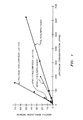
- Figure 1 is the measurement of screen resistance factor (SRF) for several gelling mixtures comprising polymers and cross linking agents as shown.
- POLYDIA 1041 is a polyacrylamide (POLYDIA 1041 commercially available from Nitto Chemical Industry Co. Ltd., Tokyo, Japan) having 3-6% hydrolysis and OFXC-1163 is a polyacrylamide (commercially available from American Cyanamid) having 8% hydrolysis and a molecular weight of 14,000,000-18,000,000.
- ZIRTECH LA-110 is zirconium lactate ](commercially available from BenchMark Research and Technology, Inc.) and MPD-6303 is a zirconium complex (available from DuPont).
- Figure 2 is a comparison of the screen resistance factor of the invention Gel-Alternating-Polymer process (GAP) to that of a standard (single injection) process.
- GAP Gel-Alternating-Polymer process
- Polyacrylamide OFXC-1163 was used as polymer and MPD-6303 was used as cross linking agent. See Example II for detail.
- the total area integrated under the GAP curve was 263.2 area units and that under the standard curve (or at 20 ppm constant zirconium X-linker curve, wherein X-linker denotes crosslinking agent or crosslinker) was 59.0.
- the ratio of GAP area to standard area is 4.46 by integration method, or 4.33 by measuring the weight of the cutup areas under GAP and standard curves.
- Figure 3 is a comparison of the screen resistance factor for the invention process (GAP) to that of a standard (single injection) process.
- GAP screen resistance factor for the invention process
- POLYDIA 1041 Polyacrylamide
- MPD-6303 was used as crosslinking agent. See Example III for details.
- the total area integrated under the GAP curve was 418.9 area units whereas that under the standard (single injection curve) was 79.7.
- the ratio of GAP area to standard area was 5.25.
- a process for treating an oil-bearing formation which comprises adding a cross linking agent intermittently to a stream of a gellable polymer which is being injected into a well.
- the gellable polymer is a water soluble polymer and is present in an aqueous solution containing water.
- water used herein generically refers to, unless otherwise indicated, pure water, regular tap water, a solution or suspension wherein the solution or suspension contain a variety of salts.
- a typical solution is a produced brine.
- the treatment includes, but is not limited to, water shutoff, gas shutoff, and zone abandonment.
- the produced brine is defined as the brine co-produced with oil or gas, or both, which generally is a hard brine, i.e., containing at least 1,000 ppm of Ca+2 Ba+2, Mg +2 , or Sr +2 , or combinations thereof.
- Produced brine generally contains high salinity of from about 1 weight% to about 30% total dissolved solids.
- the gellable polymer generally gels well in produced brines having a salinity of from about 0. 3% to about 27%.
- Polymers suitable for use in this invention are those capable of gelling in the presence of a crosslinking agent.
- Polymers suitable for use in this invention i.e., those capable of gelling in the presence of cross linking agents within a gelation pH range, include biopolysaccharides, cellulose ethers, and acrylamide- based polymers.
- Suitable cellulose ethers are disclosed in U.S. Pat. No. 3,727,688 (herein incorporated by reference). Particularly preferred cellulose ethers include carboxymethylhydroxyethyl cellulose (CMHEC) and carboxymethyl cellulose (CMC) for their ready availability.
- CMC carboxymethylhydroxyethyl cellulose
- biopolysaccharides are disclosed in U.S. Pat. No. 4,068,714 (herein incorporated by reference). Particularly preferred is polysaccharide B-1459 and xanthan gums which are biopolysaccharides produced by the action of Xanthomonas campestris bacteria. This biopolysaccharide is commercially available in various grades under the tradename KELZANO (Kelco Company, Los Angeles, CA) and FLOCON 4800 (Pfizer, Groton, CT) and they are readily available.
- KELZANO Kelco Company, Los Angeles, CA
- FLOCON 4800 Pfizer, Groton, CT
- Suitable acrylamide-containing polymers which also contain small amounts of pendant carboxylate (acrylate) groups are disclosed in U.S. Pat. No. 3,749,172 (herein incorporated by reference). As used herein, the term "small amounts” refers to about 0.5 to 10 mole percent. Particularly preferred are the so-called partially hydrolyzed polyacrylamides possessing pendant carboxylate groups through which metallic cross linking can take place.
- Thermally stable polymers of acrylamide such as copolymers of N-vinyl-2-pyrrolidone and acrylamide, terpolymers of sodium-2-acrylamido-2-methylpropanesulfonate, acrylamide and N-vinyl-2-pyrrolidone, and copolymers of sodium-2-acrylamido-2-methylpropanesulfonate and acrylamide, are particularly preferred for applications in high salinity environments at elevated temperatures for stability.
- Selected terpolymers also are useful in the present process, such as terpolymers derived from acrylamide and N-vinyl-2-pyrrolidone comonomers with lesser amounts of termonomers such as vinyl acetate, vinylpyridine, styrene, methyl methacrylate, and other polymers containing acrylate groups.
- the polymers contain some carboxylate group if the polymers are used to cross link with multivalent cations such as Zr, Ti, Cr, and AI cations.
- the polymers can be used to cross link with organic crosslinkers such as, for example, phenol and formaldehyde, or precursors thereof, or furfuryl alcohol and formaldehyde, or an aminobenzoic acid and formaldehyde.
- organic crosslinkers such as, for example, phenol and formaldehyde, or precursors thereof, or furfuryl alcohol and formaldehyde, or an aminobenzoic acid and formaldehyde.
- Precursors of formaldehyde such as, for example, hexamethylenetetramine can be, and are more preferably, used in place of formaldehyde.
- miscellaneous polymers suitable for use in the present invention include partially hydrolyzed polyacrylonitrile, polystyrene sulfonate, lignosulfonates, or methylolated polyacrylamides, or mixtures thereof.
- CMC CMC
- xanthan gum CMC
- acrylamide-containing polymers particularly the partially hydrolyzed polyacrylamides, polymers containing acrylamide, ammonium or alkali salt of acrylic acid, and polymers containing ammonium or alkali salt of acrylic acid, N-vinyl-2-pyrrolidone, and sodium-2-acrylamido-2-methylpropanesulfonate.
- cross linking agent that is capable of cross linking the gellable polymer in the oil-bearing formations can be used in the process of the present invention.
- suitable crosslinking agents include, but are not limited to, phenol and formaldehyde; resorcinol and formaldehyde; furfuryl alcohol and formaldehyde; phenol and hexamethylenetetramine; p-aminobenzoic acid and hexamethylenetetramine; salicylic acid and hexamethylenetetramine; phenyl salicylate and hexamethylenetetramine; methyl p-hydroxybenzoate and hexamethylenetetramine; phenyl acetate and hexamethylenetetramine; phenyl benzoate and hexamethylenetetramine; phenyl propionate and hexamethylenetetramine; phenyl butyrate and hexamethylenetetramine; aspirin and hexamethylenete
- the preferred crosslinking agent of the present invention is a multivalent metal compound selected from the group consisting of a complexed zirconium compound, a complexed titanium compound, and mixtures thereof.
- suitable crosslinker include, but are not limited to, zirconium citrate, zirconium complex of hydroxyethyl glycine, ammonium zirconium fluoride, zirconium 2-ethylhexanoate, zirconium acetate, zirconium neodecanoate, zirconium acetylacetonate, tetrakis(triethanolamine)zirconate, zirconium carbonate, ammonium zirconium carbonate, zirconyl ammonium carbonate, zirconium lactate, titanium acetylacetonate, titanium ethylacetoacetate, titanium citrate, titanium triethanolamine, ammonium titanium lactate, aluminum citrate, chromium citrate, chromium acetate, chro
- the presently most preferred crosslinking agent is zirconium lactate, zirconium citrate, tetrakis-(triethanolamine)zirconate, or zirconium complex of hydroxyethyl glycine, or combinations thereof. These compounds are commercially available.
- the crosslinking agent can also contain a complexing ligand to delay the rate of gelation.
- the complexing ligand useful for the present invention to retard the rate of gelation is generally a carboxylic acid containing one or more hydroxyl groups and salts thereof.
- the complexing ligand can also be an amine that has more than one functional group and contains one or more hydroxyl groups and that can chelate the zirconium or titanium moiety of the zirconium or titanium compounds described above.
- suitable complexing ligands include, but are not limited to, hydroxyethyl glycine, lactic acid, ammonium lactate, sodium lactate, potassium lactate, citric acid, ammonium, potassium or sodium citrate, isocitric acid, ammonium, potassium or sodium isocitrate, malic acid, ammonium, potassium or sodium malate, tartaric acid, ammonium, potassium or sodium tartrate, triethanolamine, malonic acid, ammonium, potassium or sodium malonate, and mixtures thereof.
- the presently preferred complexing ligands are citric acid, lactic acid, tartaric acid and salts thereof, and triethanolamine because, of their ready availability and low cost.
- the concentration or amount of the water-soluble polymer in the aqueous solution can range widely and be as suitable and convenient for the various polymers, and for the degree of gelation needed for particular reservoirs.
- concentration of polymer in an aqueous solution is made up to a convenient strength of about 100 to 20,000 mg/I (ppm), preferably about 200 to 7,000 ppm.
- any suitable procedures for preparing the aqueous admixtures of the gellable polymer can be used.
- Some of the polymers can require particular mixing conditions, such as slow addition of finely powdered polymer into a vortex of stirred brine, alcohol prewetting, protection from air (oxygen), preparation of stock solutions from fresh rather than salt water, as is known for such polymers.
- the concentration of crosslinking agent used in the present invention depends largely on the concentrations of polymer in the composition. Lower concentrations of polymer, e.g., require lower concentrations of the crosslinking agent. Further, it has been found that for a given concentration of polymer, increasing the concentration of crosslinking agent generally substantially increases the rate of gelation.
- the concentration of crosslinking agent in the injected slug varies generally over the broad range of 1 mg/I (ppm) to 5,000 ppm, preferably over the range of 1 ppm to 1,000 ppm based on Zr or Ti concentration.
- the concentration of the complexing ligand in the composition also depends on the concentrations of the water-soluble polymer in the composition and on the desired rate of gelation. Generally, the lower the concentration of the complexing ligand is, the faster the gelation rate is.
- gelled polymers to alter the water permeability of underground formations is well known to those skilled in the art.
- an aqueous solution containing the polymer and a crosslinker is pumped into the formation so that the solution can enter into the more water swept portions of the formation and alter water permeability by gelling therein.
- an aqueous gellable composition comprising a crosslinking agent and a gellable polymer is injected into an injection or production well.
- the definition and scope of the crosslinking agent and polymer are the same as those described above.
- the amount of the aqueous gellable composition injected can vary widely depending on the final gel strength desired and on the desired number of alternating injection. For example, if two alternating injections (one alternating injection comprises one gelling composition and one polymer only solution) are desired, one might choose to inject about one half of the total cross linking agent required to obtain a desirable gel strength is injected in each of gel injection cycles.
- the number of alternating injections is in the range of from about 1 to about 20, preferably about 1 to about 15, most preferably 1 to 10 to obtain satisfactory results.
- the polymer in aqueous form and in same concentration is continually injected.
- the amount of the gellable polymer injected is also dependent on the number of alternating injections and the gel strength desired, same as that described for the crosslinking agent.
- the gel-alternating-polymer injection process of the present invention can be carried out in the laboratory by monitoring the screen resistance factor.
- SRF Screen Resistance Factor
- the logic employed in Excel was to choose the most sensitive data from the pressure data recorded by the three transducers. Following the polymer injection, 50.0 g of the solution containing microgels was pumped through the sane setup while recording the weight and ⁇ p. SRF value for this microgel solution was then calculated using the following formula at 50.0 g weight of the effluent.
- the nature of the underground formation treated is not critical to the practice of the present invention.
- the described gellable composition can be injected into a formation having a temperature range of from about 70 ° F to about 300 ° F when the polymer used is a gellable copolymer suitable for the brine used at the reservoir temperature or temperatures in the range of from about 70 ° F to about 200 ° F for partially hydrolyzed polyacrylamide, xanthan gum, CMC, or CMHEC, preferably about 80 ° F to about 180°F, and most preferably 80° F to 170° F for best results. Any means known to one skilled in the art can be used for injecting the gelling composition and polymer solution.
- the purpose of this example is to illustrate the measurement of screen resistance factor (SRF).
- SRF screen resistance factor
- the test setup used to measure the screen resistance factor (SRF) values consisted of a Gilson peristaltic pump, one 100-mesh screen to remove large particles (if any), four 100-mesh screens where the polymer or the gelling mixture was pumped through, a Sartorius Balance, three Honeywell ST 3000 "Smart Transmitters” (transducers) and a data acquisition system.
- 50.0 g of 500 ppm polymer solution were pumped into the screens while recording the time, weight and Ap (differential pressure) across the four screens.
- the Ap values were averaged at 50.0 g effluent with the values measured 5 seconds before and 5 seconds after reaching the 50.0 g effluent. These values were then used to calculate SRF value using Eq. 1.
- Figure 1 shows a plot of SRF values measured at various concentrations of zirconium with two different crosslinkers used with two different polyacrylamides solutions. As this plot shows, there was a linear relation between the SRF value and the zirconium crosslinker used. This was due to the formation of larger microgels at higher Zr concentrations. The difference in slope of the lines might be related to the activity of a given crosslinker as well as molecular weight of the polymer.
- This example illustrates the invention process for the gelation of water-soluble polymer with a complexed zirconium compound in a produced brine.
- This example and Example III illustrate microgel solutions which produced higher performance using the invention GAP process.
- Example I The run was carried out the same as those described in Example I where the brine used was a produced brine obtained from Tank Battery 57 (TB-57) of the North Burbank Unit Oil Field, Shidler, Oklahoma and the gellable composition (quantity as noted in Table I) was pumped through the screens intermittently with straight polymer solution (quantity also noted in Table I).
- the produced brine has a total dissolved solids (TDS) of 10 weight% and that the gel-alternating-polymer injection process of the invention monitored by the screen resistance factor as described above was used.
- TDS total dissolved solids
- a standard test which continuously pumped a gellable composition through the screens was also carried out as noted in Table I. The results are shown in Table I.
Landscapes
- Life Sciences & Earth Sciences (AREA)
- General Life Sciences & Earth Sciences (AREA)
- Chemical & Material Sciences (AREA)
- Engineering & Computer Science (AREA)
- Materials Engineering (AREA)
- Organic Chemistry (AREA)
- Compositions Of Macromolecular Compounds (AREA)
- Processes Of Treating Macromolecular Substances (AREA)
- Addition Polymer Or Copolymer, Post-Treatments, Or Chemical Modifications (AREA)
- Physical Or Chemical Processes And Apparatus (AREA)
Applications Claiming Priority (2)
| Application Number | Priority Date | Filing Date | Title |
|---|---|---|---|
| US200083 | 1994-02-22 | ||
| US08/200,083 US5423380A (en) | 1994-02-22 | 1994-02-22 | Process for treating oil-bearing formation |
Publications (2)
| Publication Number | Publication Date |
|---|---|
| EP0668432A2 true EP0668432A2 (fr) | 1995-08-23 |
| EP0668432A3 EP0668432A3 (fr) | 1995-11-29 |
Family
ID=22740254
Family Applications (1)
| Application Number | Title | Priority Date | Filing Date |
|---|---|---|---|
| EP95102429A Ceased EP0668432A3 (fr) | 1994-02-22 | 1995-02-21 | Méthode pour le traitement de gisement de pétrole. |
Country Status (6)
| Country | Link |
|---|---|
| US (1) | US5423380A (fr) |
| EP (1) | EP0668432A3 (fr) |
| AU (1) | AU662272B1 (fr) |
| BR (1) | BR9405330A (fr) |
| CA (1) | CA2135226C (fr) |
| NO (1) | NO950656L (fr) |
Families Citing this family (19)
| Publication number | Priority date | Publication date | Assignee | Title |
|---|---|---|---|---|
| US5617920A (en) * | 1992-08-31 | 1997-04-08 | Union Oil Company Of California | Method for modifying gelation time of organically crosslinked, aqueous gels |
| US5547026A (en) * | 1995-04-19 | 1996-08-20 | Bj Services Company | Crosslinked guar based blocking gel system for use at low to high temperatures |
| US6186231B1 (en) | 1998-11-20 | 2001-02-13 | Texaco Inc. | Conformance improvement in hydrocarbon bearing underground strata using lignosulfonate-acrylic acid graft copolymer gels |
| US6196317B1 (en) * | 1998-12-15 | 2001-03-06 | Halliburton Energy Services, Inc. | Method and compositions for reducing the permeabilities of subterranean zones |
| US8044000B2 (en) | 2007-07-17 | 2011-10-25 | Schlumberger Technology Corporation | Polymer delivery in well treatment applications |
| US9475974B2 (en) * | 2007-07-17 | 2016-10-25 | Schlumberger Technology Corporation | Controlling the stability of water in water emulsions |
| US8648018B2 (en) * | 2009-03-12 | 2014-02-11 | Conocophillips Company | Crosslinked swellable polymer |
| US8960290B2 (en) * | 2011-12-19 | 2015-02-24 | Halliburton Energy Services, Inc. | Method for delayedly crosslinking environmentally friendly fluids |
| CA3069079C (fr) * | 2013-01-18 | 2022-04-19 | Conocophillips Company | Nanogels pour gelification retardee |
| US9869156B2 (en) * | 2013-10-22 | 2018-01-16 | Halliburton Energy Services, Inc. | Gellable treatment fluids with clay-based gel retarders and related methods |
| WO2015138444A1 (fr) * | 2014-03-10 | 2015-09-17 | Board Of Regents, The University Of Texas System | Compositions nh4x ammoniacales destinées à être utilisées avec de la saumure dure |
| US10851286B2 (en) | 2014-11-19 | 2020-12-01 | Conocophillips Company | Delayed gelation of polymers |
| US11549048B2 (en) | 2016-06-02 | 2023-01-10 | The Curators Of The University Of Missouri | Re-assembling polymer particle package for conformance control and fluid loss control |
| US11268009B2 (en) | 2016-06-02 | 2022-03-08 | The Curators Of The University Of Missouri | Fiber assisted re-crosslinkable polymer gel and preformed particle gels for fluid loss and conformance control |
| US11162016B2 (en) | 2016-06-02 | 2021-11-02 | The Curators Of The University Of Missouri | Re-assembling polymer particle package for conformance control and fluid loss control |
| US11214729B2 (en) | 2018-08-31 | 2022-01-04 | The Curators Of The University Of Missouri | Re-crosslinking particle gel for CO2 conformance control and CO2 leakage blocking |
| US10472553B2 (en) | 2017-09-01 | 2019-11-12 | Saudi Arabian Oil Company | Delayed polymer gelation using low total dissolved solids brine |
| FR3102482A1 (fr) * | 2019-10-23 | 2021-04-30 | IFP Energies Nouvelles | Procédé de traitement de fluide aqueux contenant des polymères au moyen de sels de zirconium et de carboxylates alcalins |
| AU2020421493A1 (en) | 2020-01-10 | 2022-08-04 | The Curators Of The University Of Missouri | Re-crosslinkable particle for conformance control and temporary plugging |
Citations (1)
| Publication number | Priority date | Publication date | Assignee | Title |
|---|---|---|---|---|
| US3749172A (en) * | 1972-02-09 | 1973-07-31 | Phillips Petroleum Co | Methods of using gelled polymers in the treatment of wells |
Family Cites Families (21)
| Publication number | Priority date | Publication date | Assignee | Title |
|---|---|---|---|---|
| US3599717A (en) * | 1969-12-03 | 1971-08-17 | Mobil Oil Corp | Alternate flood process for recovering petroleum |
| US3762476A (en) * | 1972-01-03 | 1973-10-02 | Phillips Petroleum Co | Subterranean formation permeability correction |
| US3727688A (en) * | 1972-02-09 | 1973-04-17 | Phillips Petroleum Co | Hydraulic fracturing method |
| US4034810A (en) * | 1975-12-01 | 1977-07-12 | Phillips Petroleum Company | Oil recovery |
| US4068714A (en) * | 1975-12-24 | 1978-01-17 | Phillips Petroleum Company | Method for acidizing subterranean formations |
| US4488601A (en) * | 1982-09-29 | 1984-12-18 | The Standard Oil Company | Control of aluminum cross-linked polyacrylamides for sweep improvement |
| US5003006A (en) * | 1985-01-31 | 1991-03-26 | Mobil Oil Corporation | Oil reservoir permeability control |
| US4679625A (en) * | 1986-02-11 | 1987-07-14 | Marathon Oil Company | Oil recovery process using a viscosity adjusted gelation system |
| US4706754A (en) * | 1986-03-14 | 1987-11-17 | Marathon Oil Company | Oil recovery process using a delayed polymer gel |
| FR2618846A2 (fr) * | 1986-11-25 | 1989-02-03 | Schlumberger Cie Dowell | Procede de colmatage de formations souterraines notamment dans le secteur des forages petroliers ainsi que compositions et applications correspondantes |
| US4848466A (en) * | 1988-01-29 | 1989-07-18 | Union Oil Company Of California | Enhanced oil recovery using a three-stage injection of solvent and water |
| US4856589A (en) * | 1988-08-30 | 1989-08-15 | Shell Oil Company | Gas flooding with dilute surfactant solutions |
| US4846276A (en) * | 1988-09-02 | 1989-07-11 | Marathon Oil Company | Water-alternating-gas flooding of a hydrocarbon-bearing formation |
| US5071890A (en) * | 1989-01-03 | 1991-12-10 | Mobil Oil Corp. | Composition for selective placement of polymer gels for profile control in thermal oil recovery |
| US4957166A (en) * | 1989-07-14 | 1990-09-18 | Marath Oil Company | Lost circulation treatment for oil field drilling operations |
| US5002127A (en) * | 1990-02-27 | 1991-03-26 | Halliburton Company | Placement aid for dual injection placement techniques |
| US5043364A (en) * | 1990-03-15 | 1991-08-27 | Phillips Petroleum Company | Gelation of acrylamide-containing polymers with furfuryl alcohol and water dispersible aldehydes |
| US5018578A (en) * | 1990-08-06 | 1991-05-28 | Halliburton Company | Method of arresting hydraulic fracture propagation |
| FR2668490B1 (fr) * | 1990-10-29 | 1994-04-29 | Elf Aquitaine | Gel se scleroglucane applique a l'industrie petroliere. |
| US5076362A (en) * | 1991-03-12 | 1991-12-31 | Phillips Petroleum Company | Subterranean formation permeability contrast correction methods |
| US5478802A (en) * | 1992-12-29 | 1995-12-26 | Phillips Petroleum Company | Gelling compositions useful for oil field applications |
-
1994
- 1994-02-22 US US08/200,083 patent/US5423380A/en not_active Expired - Fee Related
- 1994-11-07 CA CA002135226A patent/CA2135226C/fr not_active Expired - Fee Related
- 1994-12-07 AU AU80262/94A patent/AU662272B1/en not_active Ceased
- 1994-12-30 BR BR9405330A patent/BR9405330A/pt not_active Application Discontinuation
-
1995
- 1995-02-21 NO NO950656A patent/NO950656L/no unknown
- 1995-02-21 EP EP95102429A patent/EP0668432A3/fr not_active Ceased
Patent Citations (1)
| Publication number | Priority date | Publication date | Assignee | Title |
|---|---|---|---|---|
| US3749172A (en) * | 1972-02-09 | 1973-07-31 | Phillips Petroleum Co | Methods of using gelled polymers in the treatment of wells |
Also Published As
| Publication number | Publication date |
|---|---|
| NO950656L (no) | 1995-08-23 |
| BR9405330A (pt) | 1995-10-24 |
| EP0668432A3 (fr) | 1995-11-29 |
| NO950656D0 (no) | 1995-02-21 |
| CA2135226C (fr) | 1998-04-28 |
| US5423380A (en) | 1995-06-13 |
| CA2135226A1 (fr) | 1995-08-23 |
| AU662272B1 (en) | 1995-08-24 |
Similar Documents
| Publication | Publication Date | Title |
|---|---|---|
| US5423380A (en) | Process for treating oil-bearing formation | |
| US5642783A (en) | Process for treating oil-bearing formation | |
| CA2107550C (fr) | Compositions gelisantes utiles dans les champs petroliferes | |
| CA1254025A (fr) | Sequestrants anioniques microbicides contenant des cations metalliques polyvalents pour un procede de correction de la permeabilite | |
| US3039529A (en) | Secondary recovery of petroleum | |
| US4498539A (en) | Selective plugging of highly permeable subterranean strata by in situ _gelation of polymer solutions | |
| US4917186A (en) | Altering subterranean formation permeability | |
| Reddy et al. | A natural polymer-based cross-linker system for conformance gel systems | |
| US5849674A (en) | Compositions and processes for oil field applications | |
| US4324668A (en) | High viscosity acidic treating fluids and methods of forming and using the same | |
| US3305016A (en) | Displacement of oil from partially depleted reservoirs | |
| US5219476A (en) | Gellable aqueous composition and its use in enhanced petroleum recovery | |
| CA1267747A (fr) | Gel et procede pour prevenir l'infiltration de l'oxyde de carbone | |
| US5131469A (en) | Gellable aqueous compositions and its use in enhanced petroleum recovery | |
| EA009009B1 (ru) | Способ обработки пласта месторождения | |
| US5432153A (en) | Gelling compositions useful for oil field applications | |
| AU2381901A (en) | Process for altering the relative permeability of a hydrocarbon-bearing formation | |
| US4630678A (en) | In-situ formation of polyvalent metal ions for crosslinking polymers within carbonate rock-containing reservoirs | |
| US5048609A (en) | Selective permeability reduction in a subterranean hydrocarbon-bearing formation using a nonselective gel | |
| US4947934A (en) | Method of increasing retention of scale inhibitor in subterranean formations | |
| US4665987A (en) | Prepartially crosslinked gel for retarding fluid flow | |
| Albonico et al. | New polymer gels for reducing water production in high-temperature reservoirs | |
| JPH0134555B2 (fr) | ||
| US4589489A (en) | Process for recovering oil from subterranean formations | |
| US5789350A (en) | Compositions and processes for treating hydrocarbon-bearing formations |
Legal Events
| Date | Code | Title | Description |
|---|---|---|---|
| PUAI | Public reference made under article 153(3) epc to a published international application that has entered the european phase |
Free format text: ORIGINAL CODE: 0009012 |
|
| AK | Designated contracting states |
Kind code of ref document: A2 Designated state(s): DE GB |
|
| PUAL | Search report despatched |
Free format text: ORIGINAL CODE: 0009013 |
|
| AK | Designated contracting states |
Kind code of ref document: A3 Designated state(s): DE GB |
|
| 17P | Request for examination filed |
Effective date: 19960402 |
|
| 17Q | First examination report despatched |
Effective date: 19980427 |
|
| GRAG | Despatch of communication of intention to grant |
Free format text: ORIGINAL CODE: EPIDOS AGRA |
|
| STAA | Information on the status of an ep patent application or granted ep patent |
Free format text: STATUS: THE APPLICATION HAS BEEN REFUSED |
|
| 18R | Application refused |
Effective date: 19990225 |