EP0669402A2 - Nukleinsäuresequenz spezifisch für mycobacterium kansasii - Google Patents
Nukleinsäuresequenz spezifisch für mycobacterium kansasii Download PDFInfo
- Publication number
- EP0669402A2 EP0669402A2 EP95301106A EP95301106A EP0669402A2 EP 0669402 A2 EP0669402 A2 EP 0669402A2 EP 95301106 A EP95301106 A EP 95301106A EP 95301106 A EP95301106 A EP 95301106A EP 0669402 A2 EP0669402 A2 EP 0669402A2
- Authority
- EP
- European Patent Office
- Prior art keywords
- seq
- kansasii
- amplification
- sequence
- primers
- Prior art date
- Legal status (The legal status is an assumption and is not a legal conclusion. Google has not performed a legal analysis and makes no representation as to the accuracy of the status listed.)
- Ceased
Links
- 241000186363 Mycobacterium kansasii Species 0.000 title claims abstract description 88
- 150000007523 nucleic acids Chemical group 0.000 title claims abstract description 43
- 238000003199 nucleic acid amplification method Methods 0.000 claims abstract description 86
- 230000003321 amplification Effects 0.000 claims abstract description 85
- 239000000523 sample Substances 0.000 claims abstract description 68
- 102000039446 nucleic acids Human genes 0.000 claims abstract description 35
- 108020004707 nucleic acids Proteins 0.000 claims abstract description 35
- 108020005187 Oligonucleotide Probes Proteins 0.000 claims abstract description 12
- 239000002751 oligonucleotide probe Substances 0.000 claims abstract description 12
- 238000009396 hybridization Methods 0.000 claims description 29
- 239000002773 nucleotide Substances 0.000 claims description 29
- 125000003729 nucleotide group Chemical group 0.000 claims description 28
- 238000000034 method Methods 0.000 claims description 26
- 230000027455 binding Effects 0.000 claims description 18
- 108091034117 Oligonucleotide Proteins 0.000 claims description 12
- 108091008146 restriction endonucleases Proteins 0.000 claims description 12
- 230000000295 complement effect Effects 0.000 claims description 7
- 238000006073 displacement reaction Methods 0.000 claims description 6
- 239000013615 primer Substances 0.000 abstract description 98
- 239000002987 primer (paints) Substances 0.000 abstract description 22
- 241000894007 species Species 0.000 abstract description 18
- 238000006243 chemical reaction Methods 0.000 abstract description 14
- 238000003556 assay Methods 0.000 abstract description 11
- 239000003155 DNA primer Substances 0.000 abstract description 5
- 238000011895 specific detection Methods 0.000 abstract description 4
- 238000007899 nucleic acid hybridization Methods 0.000 abstract description 3
- 108020004414 DNA Proteins 0.000 description 24
- 102000053602 DNA Human genes 0.000 description 24
- 238000001514 detection method Methods 0.000 description 17
- 239000012634 fragment Substances 0.000 description 16
- 239000000047 product Substances 0.000 description 12
- 201000008827 tuberculosis Diseases 0.000 description 12
- 108090000623 proteins and genes Proteins 0.000 description 10
- TWRXJAOTZQYOKJ-UHFFFAOYSA-L Magnesium chloride Chemical compound [Mg+2].[Cl-].[Cl-] TWRXJAOTZQYOKJ-UHFFFAOYSA-L 0.000 description 8
- 241000186367 Mycobacterium avium Species 0.000 description 7
- 241000186365 Mycobacterium fortuitum Species 0.000 description 6
- 241000187485 Mycobacterium gastri Species 0.000 description 6
- 241000186366 Mycobacterium bovis Species 0.000 description 5
- 241000187484 Mycobacterium gordonae Species 0.000 description 5
- 241000186364 Mycobacterium intracellulare Species 0.000 description 5
- 241000187490 Mycobacterium scrofulaceum Species 0.000 description 5
- 238000002105 Southern blotting Methods 0.000 description 5
- JLCPHMBAVCMARE-UHFFFAOYSA-N [3-[[3-[[3-[[3-[[3-[[3-[[3-[[3-[[3-[[3-[[3-[[5-(2-amino-6-oxo-1H-purin-9-yl)-3-[[3-[[3-[[3-[[3-[[3-[[5-(2-amino-6-oxo-1H-purin-9-yl)-3-[[5-(2-amino-6-oxo-1H-purin-9-yl)-3-hydroxyoxolan-2-yl]methoxy-hydroxyphosphoryl]oxyoxolan-2-yl]methoxy-hydroxyphosphoryl]oxy-5-(5-methyl-2,4-dioxopyrimidin-1-yl)oxolan-2-yl]methoxy-hydroxyphosphoryl]oxy-5-(6-aminopurin-9-yl)oxolan-2-yl]methoxy-hydroxyphosphoryl]oxy-5-(6-aminopurin-9-yl)oxolan-2-yl]methoxy-hydroxyphosphoryl]oxy-5-(6-aminopurin-9-yl)oxolan-2-yl]methoxy-hydroxyphosphoryl]oxy-5-(6-aminopurin-9-yl)oxolan-2-yl]methoxy-hydroxyphosphoryl]oxyoxolan-2-yl]methoxy-hydroxyphosphoryl]oxy-5-(5-methyl-2,4-dioxopyrimidin-1-yl)oxolan-2-yl]methoxy-hydroxyphosphoryl]oxy-5-(4-amino-2-oxopyrimidin-1-yl)oxolan-2-yl]methoxy-hydroxyphosphoryl]oxy-5-(5-methyl-2,4-dioxopyrimidin-1-yl)oxolan-2-yl]methoxy-hydroxyphosphoryl]oxy-5-(5-methyl-2,4-dioxopyrimidin-1-yl)oxolan-2-yl]methoxy-hydroxyphosphoryl]oxy-5-(6-aminopurin-9-yl)oxolan-2-yl]methoxy-hydroxyphosphoryl]oxy-5-(6-aminopurin-9-yl)oxolan-2-yl]methoxy-hydroxyphosphoryl]oxy-5-(4-amino-2-oxopyrimidin-1-yl)oxolan-2-yl]methoxy-hydroxyphosphoryl]oxy-5-(4-amino-2-oxopyrimidin-1-yl)oxolan-2-yl]methoxy-hydroxyphosphoryl]oxy-5-(4-amino-2-oxopyrimidin-1-yl)oxolan-2-yl]methoxy-hydroxyphosphoryl]oxy-5-(6-aminopurin-9-yl)oxolan-2-yl]methoxy-hydroxyphosphoryl]oxy-5-(4-amino-2-oxopyrimidin-1-yl)oxolan-2-yl]methyl [5-(6-aminopurin-9-yl)-2-(hydroxymethyl)oxolan-3-yl] hydrogen phosphate Polymers Cc1cn(C2CC(OP(O)(=O)OCC3OC(CC3OP(O)(=O)OCC3OC(CC3O)n3cnc4c3nc(N)[nH]c4=O)n3cnc4c3nc(N)[nH]c4=O)C(COP(O)(=O)OC3CC(OC3COP(O)(=O)OC3CC(OC3COP(O)(=O)OC3CC(OC3COP(O)(=O)OC3CC(OC3COP(O)(=O)OC3CC(OC3COP(O)(=O)OC3CC(OC3COP(O)(=O)OC3CC(OC3COP(O)(=O)OC3CC(OC3COP(O)(=O)OC3CC(OC3COP(O)(=O)OC3CC(OC3COP(O)(=O)OC3CC(OC3COP(O)(=O)OC3CC(OC3COP(O)(=O)OC3CC(OC3COP(O)(=O)OC3CC(OC3COP(O)(=O)OC3CC(OC3COP(O)(=O)OC3CC(OC3COP(O)(=O)OC3CC(OC3CO)n3cnc4c(N)ncnc34)n3ccc(N)nc3=O)n3cnc4c(N)ncnc34)n3ccc(N)nc3=O)n3ccc(N)nc3=O)n3ccc(N)nc3=O)n3cnc4c(N)ncnc34)n3cnc4c(N)ncnc34)n3cc(C)c(=O)[nH]c3=O)n3cc(C)c(=O)[nH]c3=O)n3ccc(N)nc3=O)n3cc(C)c(=O)[nH]c3=O)n3cnc4c3nc(N)[nH]c4=O)n3cnc4c(N)ncnc34)n3cnc4c(N)ncnc34)n3cnc4c(N)ncnc34)n3cnc4c(N)ncnc34)O2)c(=O)[nH]c1=O JLCPHMBAVCMARE-UHFFFAOYSA-N 0.000 description 5
- 239000003153 chemical reaction reagent Substances 0.000 description 5
- 244000005700 microbiome Species 0.000 description 5
- 238000003752 polymerase chain reaction Methods 0.000 description 5
- 238000012360 testing method Methods 0.000 description 5
- IAZDPXIOMUYVGZ-UHFFFAOYSA-N Dimethylsulphoxide Chemical compound CS(C)=O IAZDPXIOMUYVGZ-UHFFFAOYSA-N 0.000 description 4
- 102000004190 Enzymes Human genes 0.000 description 4
- 108090000790 Enzymes Proteins 0.000 description 4
- 206010062207 Mycobacterial infection Diseases 0.000 description 4
- 241000187478 Mycobacterium chelonae Species 0.000 description 4
- 108700026244 Open Reading Frames Proteins 0.000 description 4
- 238000004458 analytical method Methods 0.000 description 4
- 238000003745 diagnosis Methods 0.000 description 4
- 208000015181 infectious disease Diseases 0.000 description 4
- 229910001629 magnesium chloride Inorganic materials 0.000 description 4
- 208000027531 mycobacterial infectious disease Diseases 0.000 description 4
- 229920002477 rna polymer Polymers 0.000 description 4
- 230000035945 sensitivity Effects 0.000 description 4
- 108020004465 16S ribosomal RNA Proteins 0.000 description 3
- 241000588724 Escherichia coli Species 0.000 description 3
- PEDCQBHIVMGVHV-UHFFFAOYSA-N Glycerine Chemical compound OCC(O)CO PEDCQBHIVMGVHV-UHFFFAOYSA-N 0.000 description 3
- 241000187492 Mycobacterium marinum Species 0.000 description 3
- 241000187919 Mycobacterium microti Species 0.000 description 3
- 241000187494 Mycobacterium xenopi Species 0.000 description 3
- 241000187678 Nocardia asteroides Species 0.000 description 3
- 108091028043 Nucleic acid sequence Proteins 0.000 description 3
- 241000187693 Rhodococcus rhodochrous Species 0.000 description 3
- 239000003795 chemical substances by application Substances 0.000 description 3
- 238000010367 cloning Methods 0.000 description 3
- 238000012258 culturing Methods 0.000 description 3
- 238000007834 ligase chain reaction Methods 0.000 description 3
- 239000012528 membrane Substances 0.000 description 3
- 102000004169 proteins and genes Human genes 0.000 description 3
- 238000011144 upstream manufacturing Methods 0.000 description 3
- YBJHBAHKTGYVGT-ZKWXMUAHSA-N (+)-Biotin Chemical compound N1C(=O)N[C@@H]2[C@H](CCCCC(=O)O)SC[C@@H]21 YBJHBAHKTGYVGT-ZKWXMUAHSA-N 0.000 description 2
- 102000002260 Alkaline Phosphatase Human genes 0.000 description 2
- 108020004774 Alkaline Phosphatase Proteins 0.000 description 2
- 241000894006 Bacteria Species 0.000 description 2
- 241000588832 Bordetella pertussis Species 0.000 description 2
- 108091003079 Bovine Serum Albumin Proteins 0.000 description 2
- 241000186227 Corynebacterium diphtheriae Species 0.000 description 2
- 108020003215 DNA Probes Proteins 0.000 description 2
- 239000003298 DNA probe Substances 0.000 description 2
- 241000187491 Mycobacterium nonchromogenicum Species 0.000 description 2
- 241000187495 Mycobacterium terrae Species 0.000 description 2
- 206010036790 Productive cough Diseases 0.000 description 2
- FAPWRFPIFSIZLT-UHFFFAOYSA-M Sodium chloride Chemical compound [Na+].[Cl-] FAPWRFPIFSIZLT-UHFFFAOYSA-M 0.000 description 2
- 239000011543 agarose gel Substances 0.000 description 2
- 239000000427 antigen Substances 0.000 description 2
- 102000036639 antigens Human genes 0.000 description 2
- 108091007433 antigens Proteins 0.000 description 2
- 229940098773 bovine serum albumin Drugs 0.000 description 2
- 210000004027 cell Anatomy 0.000 description 2
- 239000007795 chemical reaction product Substances 0.000 description 2
- 230000001010 compromised effect Effects 0.000 description 2
- 125000004122 cyclic group Chemical group 0.000 description 2
- 238000013461 design Methods 0.000 description 2
- 238000002405 diagnostic procedure Methods 0.000 description 2
- 230000007613 environmental effect Effects 0.000 description 2
- 238000010438 heat treatment Methods 0.000 description 2
- 238000010369 molecular cloning Methods 0.000 description 2
- 210000003802 sputum Anatomy 0.000 description 2
- 208000024794 sputum Diseases 0.000 description 2
- 238000002560 therapeutic procedure Methods 0.000 description 2
- 238000005406 washing Methods 0.000 description 2
- QKNYBSVHEMOAJP-UHFFFAOYSA-N 2-amino-2-(hydroxymethyl)propane-1,3-diol;hydron;chloride Chemical compound Cl.OCC(N)(CO)CO QKNYBSVHEMOAJP-UHFFFAOYSA-N 0.000 description 1
- 208000030507 AIDS Diseases 0.000 description 1
- 241000972773 Aulopiformes Species 0.000 description 1
- 108090001008 Avidin Proteins 0.000 description 1
- 108020000946 Bacterial DNA Proteins 0.000 description 1
- 102000016938 Catalase Human genes 0.000 description 1
- 108010053835 Catalase Proteins 0.000 description 1
- LZZYPRNAOMGNLH-UHFFFAOYSA-M Cetrimonium bromide Chemical compound [Br-].CCCCCCCCCCCCCCCC[N+](C)(C)C LZZYPRNAOMGNLH-UHFFFAOYSA-M 0.000 description 1
- 101710098119 Chaperonin GroEL 2 Proteins 0.000 description 1
- 108020004705 Codon Proteins 0.000 description 1
- 102000012410 DNA Ligases Human genes 0.000 description 1
- 108010061982 DNA Ligases Proteins 0.000 description 1
- 108010014303 DNA-directed DNA polymerase Proteins 0.000 description 1
- 102000016928 DNA-directed DNA polymerase Human genes 0.000 description 1
- AHCYMLUZIRLXAA-SHYZEUOFSA-N Deoxyuridine 5'-triphosphate Chemical compound O1[C@H](COP(O)(=O)OP(O)(=O)OP(O)(O)=O)[C@@H](O)C[C@@H]1N1C(=O)NC(=O)C=C1 AHCYMLUZIRLXAA-SHYZEUOFSA-N 0.000 description 1
- KCXVZYZYPLLWCC-UHFFFAOYSA-N EDTA Chemical compound OC(=O)CN(CC(O)=O)CCN(CC(O)=O)CC(O)=O KCXVZYZYPLLWCC-UHFFFAOYSA-N 0.000 description 1
- 241000025053 Escherichia coli DSM 30083 = JCM 1649 = ATCC 11775 Species 0.000 description 1
- 102100028138 F-box/WD repeat-containing protein 7 Human genes 0.000 description 1
- 229920001917 Ficoll Polymers 0.000 description 1
- 102100036263 Glutamyl-tRNA(Gln) amidotransferase subunit C, mitochondrial Human genes 0.000 description 1
- 241000282412 Homo Species 0.000 description 1
- 101001060231 Homo sapiens F-box/WD repeat-containing protein 7 Proteins 0.000 description 1
- 101001001786 Homo sapiens Glutamyl-tRNA(Gln) amidotransferase subunit C, mitochondrial Proteins 0.000 description 1
- 108010001336 Horseradish Peroxidase Proteins 0.000 description 1
- 239000006137 Luria-Bertani broth Substances 0.000 description 1
- 241001467553 Mycobacterium africanum Species 0.000 description 1
- 241000187482 Mycobacterium avium subsp. paratuberculosis Species 0.000 description 1
- 241001467552 Mycobacterium bovis BCG Species 0.000 description 1
- 241000187486 Mycobacterium flavescens Species 0.000 description 1
- 241000272761 Mycobacterium intracellulare ATCC 13950 Species 0.000 description 1
- 241000187489 Mycobacterium simiae Species 0.000 description 1
- 241000187496 Mycobacterium szulgai Species 0.000 description 1
- 229910002651 NO3 Inorganic materials 0.000 description 1
- NHNBFGGVMKEFGY-UHFFFAOYSA-N Nitrate Chemical compound [O-][N+]([O-])=O NHNBFGGVMKEFGY-UHFFFAOYSA-N 0.000 description 1
- 238000000636 Northern blotting Methods 0.000 description 1
- 239000004677 Nylon Substances 0.000 description 1
- 229910019142 PO4 Inorganic materials 0.000 description 1
- 108010066717 Q beta Replicase Proteins 0.000 description 1
- 108091081024 Start codon Proteins 0.000 description 1
- 108010090804 Streptavidin Proteins 0.000 description 1
- RYYWUUFWQRZTIU-UHFFFAOYSA-N Thiophosphoric acid Chemical class OP(O)(S)=O RYYWUUFWQRZTIU-UHFFFAOYSA-N 0.000 description 1
- 108010046334 Urease Proteins 0.000 description 1
- CCPIKNHZOWQALM-DLQJRSQOSA-N [[(2r,3s,5r)-5-(6-aminopurin-9-yl)-3-hydroxyoxolan-2-yl]methoxy-hydroxyphosphinothioyl] phosphono hydrogen phosphate Chemical compound C1=NC=2C(N)=NC=NC=2N1[C@H]1C[C@H](O)[C@@H](COP(O)(=S)OP(O)(=O)OP(O)(O)=O)O1 CCPIKNHZOWQALM-DLQJRSQOSA-N 0.000 description 1
- 125000005600 alkyl phosphonate group Chemical group 0.000 description 1
- 150000001413 amino acids Chemical class 0.000 description 1
- 238000002820 assay format Methods 0.000 description 1
- 238000000376 autoradiography Methods 0.000 description 1
- 108010058966 bacteriophage T7 induced DNA polymerase Proteins 0.000 description 1
- 238000010256 biochemical assay Methods 0.000 description 1
- 238000010876 biochemical test Methods 0.000 description 1
- 239000013060 biological fluid Substances 0.000 description 1
- 229960002685 biotin Drugs 0.000 description 1
- 235000020958 biotin Nutrition 0.000 description 1
- 239000011616 biotin Substances 0.000 description 1
- 210000004369 blood Anatomy 0.000 description 1
- 239000008280 blood Substances 0.000 description 1
- 244000309466 calf Species 0.000 description 1
- 101150039352 can gene Proteins 0.000 description 1
- 239000005081 chemiluminescent agent Substances 0.000 description 1
- 239000013599 cloning vector Substances 0.000 description 1
- 230000009260 cross reactivity Effects 0.000 description 1
- 238000012136 culture method Methods 0.000 description 1
- RGWHQCVHVJXOKC-SHYZEUOFSA-N dCTP Chemical compound O=C1N=C(N)C=CN1[C@@H]1O[C@H](CO[P@](O)(=O)O[P@](O)(=O)OP(O)(O)=O)[C@@H](O)C1 RGWHQCVHVJXOKC-SHYZEUOFSA-N 0.000 description 1
- HAAZLUGHYHWQIW-KVQBGUIXSA-N dGTP Chemical compound C1=NC=2C(=O)NC(N)=NC=2N1[C@H]1C[C@H](O)[C@@H](COP(O)(=O)OP(O)(=O)OP(O)(O)=O)O1 HAAZLUGHYHWQIW-KVQBGUIXSA-N 0.000 description 1
- 238000012217 deletion Methods 0.000 description 1
- 230000037430 deletion Effects 0.000 description 1
- 230000001419 dependent effect Effects 0.000 description 1
- 230000029087 digestion Effects 0.000 description 1
- 201000010099 disease Diseases 0.000 description 1
- 231100000676 disease causative agent Toxicity 0.000 description 1
- 208000037265 diseases, disorders, signs and symptoms Diseases 0.000 description 1
- 230000000694 effects Effects 0.000 description 1
- ZMMJGEGLRURXTF-UHFFFAOYSA-N ethidium bromide Chemical compound [Br-].C12=CC(N)=CC=C2C2=CC=C(N)C=C2[N+](CC)=C1C1=CC=CC=C1 ZMMJGEGLRURXTF-UHFFFAOYSA-N 0.000 description 1
- 229960005542 ethidium bromide Drugs 0.000 description 1
- 230000002496 gastric effect Effects 0.000 description 1
- 239000000499 gel Substances 0.000 description 1
- 229920001519 homopolymer Polymers 0.000 description 1
- 230000007062 hydrolysis Effects 0.000 description 1
- 238000006460 hydrolysis reaction Methods 0.000 description 1
- 210000000936 intestine Anatomy 0.000 description 1
- 238000002955 isolation Methods 0.000 description 1
- 239000003446 ligand Substances 0.000 description 1
- 210000002751 lymph Anatomy 0.000 description 1
- 238000004519 manufacturing process Methods 0.000 description 1
- 239000008267 milk Substances 0.000 description 1
- 210000004080 milk Anatomy 0.000 description 1
- 235000013336 milk Nutrition 0.000 description 1
- 239000000203 mixture Substances 0.000 description 1
- 238000012986 modification Methods 0.000 description 1
- 230000004048 modification Effects 0.000 description 1
- 229920001778 nylon Polymers 0.000 description 1
- 244000039328 opportunistic pathogen Species 0.000 description 1
- 239000000049 pigment Substances 0.000 description 1
- 230000003169 placental effect Effects 0.000 description 1
- 239000013612 plasmid Substances 0.000 description 1
- 229920002401 polyacrylamide Polymers 0.000 description 1
- 238000002264 polyacrylamide gel electrophoresis Methods 0.000 description 1
- 229920000136 polysorbate Polymers 0.000 description 1
- 229920000036 polyvinylpyrrolidone Polymers 0.000 description 1
- 239000001267 polyvinylpyrrolidone Substances 0.000 description 1
- 235000013855 polyvinylpyrrolidone Nutrition 0.000 description 1
- 230000010076 replication Effects 0.000 description 1
- 210000003705 ribosome Anatomy 0.000 description 1
- 235000019515 salmon Nutrition 0.000 description 1
- 150000003839 salts Chemical class 0.000 description 1
- 238000012216 screening Methods 0.000 description 1
- 238000012163 sequencing technique Methods 0.000 description 1
- 210000003491 skin Anatomy 0.000 description 1
- 239000011780 sodium chloride Substances 0.000 description 1
- 239000001509 sodium citrate Substances 0.000 description 1
- NLJMYIDDQXHKNR-UHFFFAOYSA-K sodium citrate Chemical compound O.O.[Na+].[Na+].[Na+].[O-]C(=O)CC(O)(CC([O-])=O)C([O-])=O NLJMYIDDQXHKNR-UHFFFAOYSA-K 0.000 description 1
- 210000004872 soft tissue Anatomy 0.000 description 1
- 230000009870 specific binding Effects 0.000 description 1
- 238000010186 staining Methods 0.000 description 1
- 239000000758 substrate Substances 0.000 description 1
- 238000003786 synthesis reaction Methods 0.000 description 1
- 210000001519 tissue Anatomy 0.000 description 1
- 238000013518 transcription Methods 0.000 description 1
- 230000035897 transcription Effects 0.000 description 1
- 239000013598 vector Substances 0.000 description 1
Images
Classifications
-
- C—CHEMISTRY; METALLURGY
- C12—BIOCHEMISTRY; BEER; SPIRITS; WINE; VINEGAR; MICROBIOLOGY; ENZYMOLOGY; MUTATION OR GENETIC ENGINEERING
- C12Q—MEASURING OR TESTING PROCESSES INVOLVING ENZYMES, NUCLEIC ACIDS OR MICROORGANISMS; COMPOSITIONS OR TEST PAPERS THEREFOR; PROCESSES OF PREPARING SUCH COMPOSITIONS; CONDITION-RESPONSIVE CONTROL IN MICROBIOLOGICAL OR ENZYMOLOGICAL PROCESSES
- C12Q1/00—Measuring or testing processes involving enzymes, nucleic acids or microorganisms; Compositions therefor; Processes of preparing such compositions
- C12Q1/68—Measuring or testing processes involving enzymes, nucleic acids or microorganisms; Compositions therefor; Processes of preparing such compositions involving nucleic acids
- C12Q1/6876—Nucleic acid products used in the analysis of nucleic acids, e.g. primers or probes
- C12Q1/6888—Nucleic acid products used in the analysis of nucleic acids, e.g. primers or probes for detection or identification of organisms
- C12Q1/689—Nucleic acid products used in the analysis of nucleic acids, e.g. primers or probes for detection or identification of organisms for bacteria
Definitions
- the present invention relates to oligonucleotide probes and amplification primers, and particularly relates to oligonucleotide probes and primers which hybridize in a species-specific manner to Mycobacterium kansasii nucleic acids.
- the Mycobacteria are a genus of bacteria which are acid-fast, non-motile, gram-positive rods.
- the genus comprises several species which include, but are not limited to, Mycobacterium africanum, M. avium, M. bovis, M. bovis-BCG, M. chelonae, M. fortuitum, M. gordonae, M. intracellulare, M. kansasii, M. microti, M. scrofulaceum, M. paratuberculosis and M. tuberculosis . Certain of these organisms are the causative agents of disease. For the first time since 1953, cases of mycobacterial infections are increasing in the United States.
- tuberculosis the etiological agent of which is M. tuberculosis .
- MOTT tuberculosis
- Many of these new cases are related to the AIDS epidemic, which provides an immune compromised population which is particularly susceptible to infection by Mycobacteria.
- Mycobacterium avium, Mycobacterium kansasii and other non-tuberculosis mycobacteria have been found as opportunistic pathogens in HIV-infected and other immune compromised patients.
- Genus- and species-specific oligonucleotide probes can also be used in direct assays of clinical samples by nucleic acid amplification. However, both of these rapid detection and identification methods require oligonucleotide probes which are specific for the genus Mycobacteria (tuberculosis and non-tuberculosis) or specific for a particular mycobacterial species if specific identification of the organism is desired.
- T. Rogall, et al. (1990. J. Gen. Microbiol. 136 , 1915-1920) used the 16S rRNA sequence in a polymerase chain reaction (PCR) based sequencing strategy for identification of mycobacterial species.
- PCR polymerase chain reaction
- these primers could not be used to differentiate M. gastri from M. kansasii because the 16S rRNA sequence from these two species is identical in spite of their differing phenotypic characteristics.
- Similar studies have been published by B. Böddinghaus, et al. (1990. J. Clin. Microbiol. 28 , 1751-1759), who reported oligonucleotides derived from 16S rRNA sequences which are specific for the M. tuberculosis group, M.
- M. kansasii Unique sequence stretches within 16S rRNA sequences were identified by sequence comparisons for M. kansasii , including M. gastri , M. simiae , and M. scrofulaceum .
- the present invention provides nucleic acid sequences useful as oligonucleotide probes and amplification primers for species-specific detection and identification of Mycobacterium kansasii .
- Species-specificity means that the inventive probes and primers hybridize to M. kansasii nucleic acids with little or no cross-hybridization to the nucleic acids of other species of mycobacteria or to the nucleic acids of closely related microorganisms such as Rhodococcus rhodochrous and Nocardia asteroides .
- the sequences of these probes and primers and the fragment of M. kansasii genomic DNA from which they are derived are distinct from the M.
- the probes and primers may be used after culturing a sample as a means for confirming identity of the culture. Alternatively, the probes and primers may be used prior to culturing in detection and identification methods for bacterial DNA based on nucleic acid hybridization or nucleic acid amplification. In either case, the inventive probes, primers and diagnostic methods provide a means for rapidly discriminating between M. kansasii and other species of mycobacteria, allowing the practitioner to rapidly identify this microorganism without resorting to the time-consuming phenotypic and biochemical procedures customarily relied upon.
- M. kansasii -specific sequences of the invention are distinct from p6123 and pMK1-9 and are derived from a gene or a portion of the M. kansasii genome which was previously unknown.
- the present invention provides oligonucleotide probes and primers which exhibit M. kansasii -specificity in nucleic acid hybridization assays and in nucleic acid amplification reactions.
- the full-length M. kansasii -specific sequence, identified herein as clone MK7, is 493 base pairs in length and has a GC content of 63%.
- M. kansasii -specific subsequences of MK7 were also identified and used to design hybridization probes and amplification primers for use in assays for species-specific detection and identification of M. kansasii.
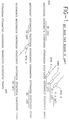
- Fig. 1 depicts the 281 bp fragment of MK7 and illustrates hybridization of representative primers to this fragment.
- the M. kansasii -specific nucleotide sequence of the present invention was derived from an M. kansasii genomic library and is 493 base pairs in length with a GC content of 63% (SEQ ID NO:1).
- M. kansasii -specific subsequences of SEQ ID NO:1 useful as hybridization probes and amplification primers were also identified. These probes and primers may either be hybridized directly to mycobacterial DNA and detected, or they may be used as primers in nucleic acid amplification reactions to produce M. kansasii -specific amplification products which may then be detected. That is, it should be understood that the M.
- kansasii -specific oligonucleotides used as hybridization probes by way of example may also be used as M. kansasii -specific amplification primers in nucleic acid amplification protocols, and vice versa.
- the terms "probe” and "primer” are therefore used herein as an indication of the function of the oligonucleotide in the reaction being described. Any given M. kansasii -specific nucleotide sequence encompassed by the invention may be used as either a probe or a primer as appropriate for the detection method.
- M. kansasii -specific probes and primers in addition to those specifically disclosed herein may also be derived from the MK7 sequence using routine methods and criteria appropriate for any particular assay format employed. In general, these probes and primers will be at least about 10-15 nucleotides in length, preferably about 15-20 nucleotides in length. Probes and primers may be either deoxyribonucleic acid (DNA) or ribonucleic acid (RNA) and may have either a naturally-occurring sugar-phosphate backbone or a backbone modified to include phosphorothioates, dithionates, alkyl phosphonates or ⁇ -nucleotides as is known in the art. The probes and primers may be produced by chemical synthesis of the oligonucleotides, by cloning and amplification in a transformed host cell, or by other means known in the art.
- DNA deoxyribonucleic acid
- RNA ribonucleic acid
- Probes and primers according to the invention are hybridized to nucleic acids in samples suspected of containing mycobacteria.
- the samples may comprise isolated nucleic acids, isolated microorganisms, or they may be clinical samples.
- clinical samples are in the form of a biological fluid or tissue, e.g., sputum, bronchial washings, gastric washings, blood, milk, lymph, skin and soft tissues.
- samples suspected of containing intact microorganisms rather than free nucleic acids are generally treated using methods known in the art to release nucleic acids from any microorganisms present.
- sputum samples are typically liquified prior to releasing nucleic acids for analysis.
- the present invention is applicable to both human and veterinary diagnostic procedures and the sample may be obtained from either source.
- the instant probes, primers and methods may be used to rapidly identify cases in which M. kansasii is the etiologic agent, thereby aiding in selection of an appropriate therapy.
- the oligonucleotide probes and primers are used to detect and/or identify Mycobacterium kansasii by hybridization to mycobacterial nucleic acid or by amplification of mycobacterial nucleic acid target sequences.
- the probes are used in hybridization methods for direct detection of target M. kansasii nucleic acid. These methods include Southern blots for detection of DNA, Northern blots for detection of RNA and dot blots for detection of either DNA or RNA. These methods are generally well-known in the art and are described in Molecular Cloning: A Laboratory Manual , 2nd ed. J. Sambrook, E. F. Fritsch and T. Maniatis, Cold Spring Harbor Laboratory Press, 1989.
- the presence of M. kansasii in a sample is detected and/or identified by species-specific amplification of target nucleic acid sequences.
- the probes or primers of the invention are used in conventional nucleic acid amplification protocols. Any amplification protocol which relies on cyclic hybridization of primers to the target nucleic acid may be used, e.g., PCR (U.S. Patent Nos. 4,683,195; 4,683,202; 4,800,159; 4,965,188), ligase chain reaction (LCR) (R. Weiss (1991) Science 254 :1292), strand displacement amplification (SDA)(G.
- PCR U.S. Patent Nos. 4,683,195; 4,683,202; 4,800,159; 4,965,188
- LCR ligase chain reaction
- SDA strand displacement amplification
- Adjacent primers suitable for use in LCR can be easily selected from SEQ ID NO:1.
- preferred amplification methods for use with the primers of the invention are methods which utilize cyclic hybridization of primers to the target sequence, extension of the primers using the target sequence as a template and displacement of the extended primers from the target sequence, e.g., PCR and SDA.
- An amplification primer is a primer for amplification of a target sequence by primer extension or ligation of adjacent primers hybridized to the target sequence.
- the oligonucleotide primers are preferably selected such that the GC content is low, preferably less than 70% of the total nucleotide composition of the probe.
- the target sequence preferably has a low GC content to minimize secondary structure.
- the 3' end of an SDA amplification primer hybridizes at the 3' end of the target sequence. The target binding sequence confers target specificity on the amplification primer, and the M.
- the SDA amplification primer further comprises a recognition site for a restriction endonuclease near its 5' end.
- the recognition site is for a restriction endonuclease which will nick one strand of a DNA duplex when the recognition site is hemimodified, as described by Walker, et al. (1992. PNAS 89 , 392-396).
- the SDA amplification primer may also comprise additional sequences 5' to the restriction endonuclease recognition site to allow the appropriate restriction endonuclease to bind to its recognition site.
- the amplification primer is responsible for exponential amplification of the target sequence.
- the amplification primer generally consists of only the target binding sequence.
- a bumper primer is a primer used in SDA which anneals to a target sequence upstream of the amplification primer such that extension of the bumper primer displaces the downstream primer and its extension product.
- Extension of bumper primers is one method for displacing the extension products of amplification primers, but heating is also suitable.
- target or target sequence refer to nucleic acid sequences amplifiable by amplification primers. These include the original nucleic acid sequence to be amplified, the complementary second strand of the original nucleic acid sequence to be amplified, and either strand of a copy of the original sequence which is produced by the amplification reaction. These copies also serve as amplifiable target sequences by virtue of the fact that they also contain copies of the original target sequences to which the amplification primers hybridize.
- probe and primer sequences herein disclosed may be modified to some extent without loss of utility as M. kansasii -specific probes and primers.
- hybridization of complementary and partially complementary nucleic acid sequences can be obtained by adjustment of the hybridization conditions to increase or decrease stringency (i.e., adjustment of hybridization temperature or salt content of the buffer).
- stringency i.e., adjustment of hybridization temperature or salt content of the buffer.
- the nucleic acid products of amplification using the inventive primers may be detected by a characteristic size, for example on polyacrylamide or agarose gels stained with ethidium bromide.
- M. kansasii nucleic acid in a sample or specifically amplified M. kansasii target sequences may be detected by hybridization to the inventive probes and primers.
- the oligonucleotide probes are typically tagged with a detectable label.
- the detectable label is a moiety which can be detected either directly or indirectly as an indication of hybridization of the probe to the target nucleic acid.
- probes may be tagged with a radioisotope and detected by autoradiography or tagged with a fluorescent moiety and detected by fluorescence as is known in the art.
- the probes may be indirectly detected by tagging with a label which requires additional reagents to render it detectable.
- Indirectly detectable labels include, for example, chemiluminescent agents, enzymes which produce visible reaction products and ligands (e.g., haptens, antibodies or antigens) which may be detected by binding to labeled specific binding partners (e.g., antibodies or antigens/haptens).
- Particularly useful labels include biotin (detectable by binding to labeled avidin or streptavidin) and enzymes such as horseradish peroxidase or alkaline phosphatase (detectable by addition of enzyme substrates to produce colored reaction products).
- biotin detecttable by binding to labeled avidin or streptavidin
- enzymes such as horseradish peroxidase or alkaline phosphatase (detectable by addition of enzyme substrates to produce colored reaction products).
- the primers used in the amplification reaction may be tagged and used as detector probes because the primers are incorporated into the amplification product.
- at least one tagged probe different from the amplification primers may be used as a probe for detection of amplified target sequences by hybridization. This probe should be selected to hybridize to a sequence in the target which is between the amplification primers, i.e., an internal probe.
- either the primer or the internal probe may be tagged and extended for detection of amplification products as described by Walker, et al., supra .
- probes for species-specific detection and identification of M.kansasii may be packaged in the form of a kit which may further include other components and reagents for performing the detection methods.
- a kit contains at least one probe or at least one pair of amplification primers according to the present invention.
- a hybridization solution such as 6X SSC (0.9M sodium chloride, 0.09M sodium citrate, pH 7.0), 0.1M EDTA pH 8.0, 5X Denhardt's solution (0.1% w/v FICOLL TYPE 400, 0.1% w/v polyvinylpyrrolidone, 0.1% w/v bovine serum albumin) and 100 ⁇ g/ml sheared denatured salmon sperm DNA, or other reagents known to be useful for probe hybridization may also be included. See Molecular Cloning: A Laboratory Manual, supra. Alternatively, reagents appropriate for use with one of the known nucleic acid amplification methods may be included with M.
- kits are packaged together in a common container, typically including instructions for performing a specific embodiment of the inventive methods. Additional, optional components may also be included in the kit, e.g., a second probe tagged with a label suitable for use as a detection probe, and reagents or means for performing detection of the label.
- the mycobacteria used in the following examples were M. avium ATCC25291, M. bovis CDC4, M. chelonae TMC1543, M. flavescens LCDC2601, M. fortuitum TMC1529, M. gastri LCDC1301, M. gordonae TMC1318, M. intracellulare ATCC13950, M. kansasii TMC1201, M. kansasii LCDC711, M. kansasii LCDC714, M. kansasii LCDC715, M. kansasii LCDC724, M. kansasii LCDC725, M. malomense CDC93, M. marinum LCDC801, M.
- microti LCDC203 M. nonchromogenicus LCDC1401, M. scrofulaceum TMC1302, M. szulgai TMC1328, M. terrae TMC1450, M. tuberculosis ATCC27294 and M. xenopi LCDC1901.
- Non-mycobacteria used were Bordetella pertussis ATCC8467, Corynebacterium diphtheriae ATCC11913, Escherichia coli ATCC11775, Nocardia asteroides ATCC3308, Rhodococcus rhodochrous ATCC13808.
- Mycobacteria strains were cultured in BACTEC vials in Middlebrook 7H9 media, then heat killed at 70°C for 4 hours.
- Genomic DNA was isolated as previously described (S. Visuvanathan, et al. 1989. J. Microbiol. Mtds . 10 ,59-64). Non-mycobacteria strains were cultured in Luria broth or other suitable media. Genomic DNA was isolated by the CTAB mini-prep method (F. M. Ausubel, et al. 1987. Current Protocols in Molecular Biology , Greene Publishing Associates and Wiley-Interscience, NY).
- M. kansasii DNA A plasmid library of M. kansasii DNA was constructed and screened for genus- and species-specific clones.
- M. kansasii genomic DNA strain TMC 1201
- Sau3AI Sau3AI
- the cloning vector, BLUESCRIPT SK+ (Stratagene), was digested with BamHI (Gibco BRL) and phosphatased using alkaline phosphatase from calf intestine (CIAP - Boehringer Mannheim Biochemicals)
- the genomic fragments (750 ng) were ligated to 20 ng of the prepared vector in 50 mM Tris-HCl pH 7.5, 7 mM MgCl2, 1 mM DTT, 1 mM ATP and 1 Unit/10 ⁇ l T4 DNA ligase (Gibco BRL).
- the ligation was allowed to proceed overnight at 15°C and was then used to transform JM109 competent cells (Stratagene). One thousand independent transformants were isolated. Of these 1000 clones, 15 were selected for screening genomic blots consisting of various mycobacterial and non-mycobacterial DNA's.
- Southern blots were performed as follows. Genomic DNA from each mycobacterial and non-mycobacterial species was digested with Pstl (Gibco BRL), separated on a 0.8% agarose gel and transferred to a nylon membrane. (Gibco BRL nylon-1) (Maniatis, et al., supra ). The membranes were UV-crosslinked (Stratalinker) and hybridized with 32P-labeled probes (i.e., the inserts isolated from the 15 selected clones) as described by Maniatis, et al., supra .
- the probes were labeled by random primers (Boehringer Mannheim Biochemicals) using [ ⁇ -32P]-deoxyadenosine triphosphate and [ ⁇ -32P]-deoxycytidine triphosphate (NEN-DuPont).
- the hybridized membranes were washed at high stringency, followed by exposure to XAR-5 film for 1-7 days (Maniatis, et al., supra ). Of the 15 clones, MK7 was found to hybridize specifically to M. kansasii DNA.
- MK7 contains three internal Sau3AI sites (GATC). These may have resulted from a partial digestion with Sau3AI or may be the result of ligation of multiple Sau3AI fragments which are not continuous in the genome. While the possibility that MK7 comprises discontinuous segments of the M. kansasii genome is not a concern when using this clone as a hybridization probe, for nucleic acid amplification the target sequences mast be continuous. A 281 base pair segment of MK7 between two of the Sau3AI sites was therefore selected for further analysis and design of M. kansasii -specific amplification primers.
- GTC Sau3AI sites
- This entire 281 bp fragment (nucleotides 213-493 of MK7) exhibited species specificity by hybridization analysis on Southern blots. That is, it hybridized to M. kansasii nucleic acids but did not hybridize to the nucleic acids of other mycobacterial and non-mycobacterial organisms tested. These included M. avium, M. bovis, M. fortuitum, M. gastri, M. gordonae, M. intracellulare , M. tuberculosis, Bordetella pertussis, Corynebacterium diphtheriae, Escherichia coli, Nocardia asteroides and Rhodococcus rhodochrous .
- fragment A comprises nucleotides 221-370 of MK7 and fragment B comprises nucleotides 351-490. Both fragments A and B maintain species-specificity by hybridization analysis on Southern blots and hybridize to a 2.75 kb PstI fragment of M. kansasii genomic DNA.
- the sequence of the 281 bp fragment was compared to known nucleotide sequences by searching GENBANK 75, UEMBL 33-75 and N-GENESEQ 9 and no similar sequences were found.
- Oligonucleotides for use as amplification primers were synthesized on an Applied Biosystems 380B Synthesizer as recommended by the manufacturer. The oligonucleotides were deprotected at 50°C and gel purified as previously described (Ausubel, et al.).
- Strand Displacement Amplification (SDA) reactions were performed as previously described by Walker, et al., supra , in a 50 ⁇ l volume consisting of 6-8 mM MgCl2, 0.2 mM each dGTP, dCTP and ⁇ -thio dATP, 0.5mM dUTP, 100 ⁇ g/ml acetylated bovine serum albumin, 1 ng/ ⁇ l human placental DNA, 50 mM K i PO4 pH 7.6, 0.5 ⁇ M S1 and S2 primers, 0.05 ⁇ M B1 and B2 primers, 3 units/ ⁇ l HincII, 0.1 unit/ ⁇ l exo ⁇ Klenow DNA polymerase (United States Biochemical) and varying amounts of target DNA.
- SDA Strand Displacement Amplification
- the reactions also contained either 15% (v/v) dimethylsulfoxide (DMSO) or 20-25% (v/v) glycerol.
- DMSO dimethylsulfoxide
- the reactions Prior to the addition of HincII, exo ⁇ Klenow and MgCl2, the reactions were heated at 95°C for 2 minutes to denature the target DNA, followed by 2 minutes at 37-40°C to anneal the primers. Following the addition of the enzymes and MgCl2 the reactions were incubated at 37-40°C for 2 hours for amplification. Amplification was terminated by heating for 2 minutes at 95°C. Amplification products were detected by primer extension of a 32P-labeled probe and analyzed by denaturing polyacrylamide gel electrophoresis as described by Walker, et al., supra .
- the amplification primers were selected from within the sequence of the 281 bp fragment described above.
- SEQ ID NO:2 and SEQ ID NO:3 were used as amplification primers (i.e., S1 and S2) and SEQ ID NO:4 and SEQ ID NO:5 were used as bumper primers (i.e., B1 and B2).
- This set of primers was designated Primer Set #1 and the locations of hybridization within the 281 bp fragment are shown in Fig. 1.
- Amplification using this primer set was M. kansasii specific and an amplification product was detected only when M. kansasii nucleic acids were used as the target. No amplification product was detected when M. avium, M. bovis, M.
- chelonae M. fortuitum, M. gastri, M. gordonae, M. intracellulare, M. malomense, M. marinum, M. microti, M. nonchromogenicum, M. tuberculosis or M. xenopi nucleic acids were used as targets for amplification.
- the sensitivity was 20 genome molecules of M. kansasii DNA.
- Additional primer sets were designed in an attempt to increase the sensitivity of the amplification assay.
- SEQ ID NO:6 is shifted four nucleotides downstream (i.e., 3') of SEQ ID NO:2, as shown in Fig. 1.
- SEQ ID NO:7 is shifted six nucleotides downstream of SEQ ID NO:2, also as shown in Fig. 1.
- a new B2 primer (SEQ ID NO:8) was also designed to hybridize closer to the amplified region.
- Primer Set #2 consisted of SEQ ID NO:6, SEQ ID NO:3, SEQ ID NO:4 and SEQ ID NO:8. This primer set showed the same sensitivity (20 genome molecules of M. kansasii DNA) and specificity as Primer Set #1.
- Primer Set #3 consisted of SEQ ID NO:7, SEQ ID NO:3, SEQ ID NO:4 and SEQ ID NO:8. In SDA reactions this primer set showed a 10 fold increase in sensitivity (2 genome molecules of M. kansasii DNA) while retaining M. kansasii species specificity. No cross-reactivity with M. tuberculosis, M. bovis, M. avium, M. intracellulare, M. gastri, M. fortuitum, M. chelonae, M. szuglia, M. malomense, M. scrofulaceum, M. flavence, M. xenopi, M. terrae, M. marinum or M. gordonae was detected.
- Primer Set #3 amplifies a target sequence in typical M. kansasii DNA, e.g., strains TMC1201, LCDC711, LCDC714, LCDC715 and LCDC725. However, it does not amplify M. kansasii LCDC724, the proposed genetically distinct subspecies of M. kansasii .
- SDA was used as the amplification method in this example, however, the target binding sequences of the amplification primers of the example may be used alone as amplification primers in other methods of amplification which do not require attachment of specialized sequences to the target sequence (e.g., PCR). That is, for use in amplification methods such as PCR, SEQ ID NO:9 may be substituted for SEQ ID NO:2, SEQ ID NO:10 may be substituted for SEQ ID NO:3, SEQ ID NO:11 may be substituted for SEQ ID NO:6 and SEQ ID NO:12 may be substituted for SEQ ID NO:7 as amplification primers in the appropriate amplification reaction.
- SEQ ID NO:9 may be substituted for SEQ ID NO:2
- SEQ ID NO:10 may be substituted for SEQ ID NO:3
- SEQ ID NO:11 may be substituted for SEQ ID NO:6
- SEQ ID NO:12 may be substituted for SEQ ID NO:7 as amplification primers in the appropriate
- any other desired sequence may be added to the target binding sequence of the amplification primers to provide a desired function, e.g., a restriction endonuclease recognition site or homopolymer tails (to facilitate cloning), a protein binding site, etc.
- Fig. 1 there is a potential open reading frame (ORF) which begins at nucleotide 344 and continues to the end of the clone at nucleotide 493.
- the initiation codon, ATG is followed by an A which could serve as a stop codon (TGA) for another ORF which begins upstream of the 281 bp fragment.
- ATG is followed by an A which could serve as a stop codon (TGA) for another ORF which begins upstream of the 281 bp fragment.
- Upstream of the ATG, at -7 is a potential ribosomal binding site AGAA AAGG A (Shine-Delgarno sequence).
- TATA TATA
- TCGACC TCGACC
- TCCACA -48
- coli standards however, they compare well with other mycobacterial promoters (McFadden). Also, with a potential overlap from an alternate reading frame, there may not be a need for a promoter sequence in this case.
- the hypothetical protein sequence encoded by the ORF from nucleotides 344-493 is 50 amino acids in length. No similar protein sequence was found when this hypothetical sequence was searched in the SWISSPROT 24 database.
- M. Yang, et al., supra reported that 88% of their strains were positive using the commercial ACCU-PROBE test for M. kansasii and that 100% were positive by hybridization to the p6123 probe.
- the inventive probes and primers detect about 94% of the M. Yang, et al. M. kansasii strains.
- Applicants' SEQ ID NO:1 and the probes and primers derived from this sequence are distinct from p6123 and the ACCU-PROBE probes and have a unique nucleotide sequence not previously reported.
- SEQ ID NO:1 also has the advantage of being more highly conserved among M.
- kansasii strains than p6123 and therefore assay results provide a clearer distinction between positive and negative samples. That is, assays using the primers and probes derived from SEQ ID NO:1 are either very clearly positive or very clearly negative, making interpretation of the assay results easier. In contrast, although 100% of M. kansasii strains test positive using p6123, the greater variability of this sequence results in a broad range of degrees of positivity which complicates interpretation and may obscure the distinction between positive and negative.
Landscapes
- Chemical & Material Sciences (AREA)
- Life Sciences & Earth Sciences (AREA)
- Analytical Chemistry (AREA)
- Proteomics, Peptides & Aminoacids (AREA)
- Organic Chemistry (AREA)
- Zoology (AREA)
- Wood Science & Technology (AREA)
- Health & Medical Sciences (AREA)
- Engineering & Computer Science (AREA)
- Microbiology (AREA)
- Immunology (AREA)
- Molecular Biology (AREA)
- Biotechnology (AREA)
- Biophysics (AREA)
- Physics & Mathematics (AREA)
- Biochemistry (AREA)
- Bioinformatics & Cheminformatics (AREA)
- General Engineering & Computer Science (AREA)
- General Health & Medical Sciences (AREA)
- Genetics & Genomics (AREA)
- Measuring Or Testing Involving Enzymes Or Micro-Organisms (AREA)
- Saccharide Compounds (AREA)
Applications Claiming Priority (2)
| Application Number | Priority Date | Filing Date | Title |
|---|---|---|---|
| US203534 | 1994-02-28 | ||
| US08/203,534 US5518884A (en) | 1994-02-28 | 1994-02-28 | Nucleic acid sequences specific for mycbacterium kansasii |
Publications (2)
| Publication Number | Publication Date |
|---|---|
| EP0669402A2 true EP0669402A2 (de) | 1995-08-30 |
| EP0669402A3 EP0669402A3 (de) | 1996-02-28 |
Family
ID=22754374
Family Applications (1)
| Application Number | Title | Priority Date | Filing Date |
|---|---|---|---|
| EP95301106A Ceased EP0669402A3 (de) | 1994-02-28 | 1995-02-21 | Nukleinsäuresequenz spezifisch für mycobacterium kansasii. |
Country Status (5)
| Country | Link |
|---|---|
| US (1) | US5518884A (de) |
| EP (1) | EP0669402A3 (de) |
| JP (1) | JP2695127B2 (de) |
| CA (1) | CA2142156C (de) |
| SG (1) | SG67316A1 (de) |
Cited By (6)
| Publication number | Priority date | Publication date | Assignee | Title |
|---|---|---|---|---|
| WO1997044488A3 (en) * | 1996-05-22 | 1997-12-24 | Gen Probe Inc | Compositions and methods for the detection of mycobacterium kansasii |
| EP0818541A1 (de) * | 1996-06-14 | 1998-01-14 | Becton, Dickinson and Company | Species-spezifischer Nachweis von Mycobacterium kansasii |
| EP0826779A1 (de) * | 1996-08-22 | 1998-03-04 | Becton, Dickinson and Company | Strangverdrägungsamplifikation unter Verwendung von Bor enthaltenden Nukleotiden |
| US6063604A (en) * | 1996-03-18 | 2000-05-16 | Molecular Biology Resources, Inc. | Target nucleic acid sequence amplification |
| WO2001066797A3 (en) * | 2000-03-03 | 2003-02-27 | Us Gov Health & Human Serv | Multiplex hybridization system for identification of pathogenic mycobacterium and method of use |
| CN110475863A (zh) * | 2017-01-19 | 2019-11-19 | 株式会社钟化 | 用于检测堪萨斯分枝杆菌的引物组、探针、试剂盒及方法 |
Families Citing this family (6)
| Publication number | Priority date | Publication date | Assignee | Title |
|---|---|---|---|---|
| US5858665A (en) * | 1996-07-25 | 1999-01-12 | Navix, Inc. | Homogeneous diagnostic assay method utilizing simultaneous target and signal amplification |
| US6492120B1 (en) | 2000-11-02 | 2002-12-10 | University Of Maryland | Nucleic acid hybridization assay utilizing tricyclic target and signal amplification |
| BR0212773A (pt) * | 2001-09-24 | 2004-10-13 | One Lambda | Métodos para detecção de sequências-alvo de ácido nucléico com marcadores diagnósticos |
| US9404160B2 (en) | 2009-12-22 | 2016-08-02 | Becton, Dickinson And Company | Methods for the detection of microorganisms |
| AU2014248225B2 (en) | 2013-04-01 | 2020-06-25 | Becton, Dickinson And Company | Methods and kits for the diagnosis of influenza |
| CN112538540B (zh) * | 2020-11-26 | 2022-11-22 | 中国医学科学院北京协和医院 | 用于堪萨斯分枝杆菌检测的试剂盒及系统 |
Family Cites Families (3)
| Publication number | Priority date | Publication date | Assignee | Title |
|---|---|---|---|---|
| US5270184A (en) * | 1991-11-19 | 1993-12-14 | Becton, Dickinson And Company | Nucleic acid target generation |
| CA2096497A1 (en) * | 1992-05-26 | 1993-11-27 | Patricia Anne Spears | Mycobacteria probes |
| DE69227678T2 (de) * | 1992-06-04 | 1999-05-27 | Vysis, Inc., Downers Grove, Ill. | Nukleinsäuresonden zum Nachweis von Mycoplasma fermentans |
-
1994
- 1994-02-28 US US08/203,534 patent/US5518884A/en not_active Expired - Fee Related
-
1995
- 1995-02-09 CA CA002142156A patent/CA2142156C/en not_active Expired - Fee Related
- 1995-02-21 EP EP95301106A patent/EP0669402A3/de not_active Ceased
- 1995-02-21 SG SG1996004505A patent/SG67316A1/en unknown
- 1995-02-21 JP JP7031931A patent/JP2695127B2/ja not_active Expired - Fee Related
Cited By (10)
| Publication number | Priority date | Publication date | Assignee | Title |
|---|---|---|---|---|
| US6063604A (en) * | 1996-03-18 | 2000-05-16 | Molecular Biology Resources, Inc. | Target nucleic acid sequence amplification |
| WO1997044488A3 (en) * | 1996-05-22 | 1997-12-24 | Gen Probe Inc | Compositions and methods for the detection of mycobacterium kansasii |
| EP0808907A3 (de) * | 1996-05-22 | 1998-01-07 | Gen-Probe Incorporated | Zusammensetzungen und Verfahren für den Nachweis von Mycobacterium kansasii |
| US6218107B1 (en) | 1996-05-22 | 2001-04-17 | Gen-Probe Incorporated | Compositions and methods for detecting the presence of Mycobacterium kansassii |
| EP0818541A1 (de) * | 1996-06-14 | 1998-01-14 | Becton, Dickinson and Company | Species-spezifischer Nachweis von Mycobacterium kansasii |
| EP0826779A1 (de) * | 1996-08-22 | 1998-03-04 | Becton, Dickinson and Company | Strangverdrägungsamplifikation unter Verwendung von Bor enthaltenden Nukleotiden |
| WO2001066797A3 (en) * | 2000-03-03 | 2003-02-27 | Us Gov Health & Human Serv | Multiplex hybridization system for identification of pathogenic mycobacterium and method of use |
| US7271781B2 (en) | 2000-03-03 | 2007-09-18 | The United States Of America As Represented By The Secretary Of The Department Of Health And Human Services | Multiplex hybridization system for identification of pathogenic mycobacterium and method of use |
| CN110475863A (zh) * | 2017-01-19 | 2019-11-19 | 株式会社钟化 | 用于检测堪萨斯分枝杆菌的引物组、探针、试剂盒及方法 |
| CN110475863B (zh) * | 2017-01-19 | 2023-10-13 | 株式会社钟化 | 用于检测堪萨斯分枝杆菌的引物组、探针、试剂盒及方法 |
Also Published As
| Publication number | Publication date |
|---|---|
| CA2142156A1 (en) | 1995-08-29 |
| CA2142156C (en) | 1999-08-10 |
| US5518884A (en) | 1996-05-21 |
| SG67316A1 (en) | 1999-09-21 |
| JPH07274975A (ja) | 1995-10-24 |
| EP0669402A3 (de) | 1996-02-28 |
| JP2695127B2 (ja) | 1997-12-24 |
Similar Documents
| Publication | Publication Date | Title |
|---|---|---|
| RU2154106C2 (ru) | Одновременное определение, идентификация и дифференциация эубактериальных таксонов с помощью гибридизационного анализа | |
| EP0571911B1 (de) | Sonden für Mycobakterien | |
| US5614390A (en) | Species-specific detection of Mycobacterium kansasii | |
| EP0619375B1 (de) | Detektion und Identifikation von Mycobakterien | |
| US5500341A (en) | Species-specific detection of Mycobacterium kansasii | |
| US5681705A (en) | Amplification and detection of mycobacterium avium complex species | |
| US5518884A (en) | Nucleic acid sequences specific for mycbacterium kansasii | |
| JP3151415B2 (ja) | 鳥型結核菌複合種の増幅および検出 | |
| US5747259A (en) | Materials and methods for species-specific detection of mycobacterium kansasii nucleic acids | |
| Lungu et al. | Differentiation of Nocardia from rapidly growing Mycobacterium species by PCR-RFLP analysis | |
| US5352580A (en) | Selective detection of mycobacteria by nucleicacid probes derived from Mycobacterium kansasii | |
| EP0725148A2 (de) | Amplifikation und Nachweis von mycobacteriellen Nukleinsäuren | |
| US7439022B2 (en) | Nucleic acids for detection of Listeria | |
| US20030027174A1 (en) | Identification of nucleotide sequences specific for mycobacteria and development of differential diagnosis strategies for mycobacterial species | |
| WO2003104493A1 (en) | Improvements in and relating to a method of dna testing for______mycobacterium paratuberculosis strains | |
| JP2003135099A (ja) | 抗酸菌の系統解析による同定法 | |
| KR20000075181A (ko) | 마이코박테리아균종의 진단프로브 및 진단방법 | |
| KR20000075178A (ko) | 마이코박테리움 포튜이튬의 내부전사지역의 염기서열 | |
| KR20000075180A (ko) | 마이코박테리아의 진단도구 및 진단방법 | |
| KR20000075182A (ko) | 마이코박테리아 및 그 균종의 진단 방법 및 진단하기 위한 프로브 | |
| KR20000075179A (ko) | 마이코박테리움 첼로네의 내부전사지역의 염기서열 |
Legal Events
| Date | Code | Title | Description |
|---|---|---|---|
| PUAI | Public reference made under article 153(3) epc to a published international application that has entered the european phase |
Free format text: ORIGINAL CODE: 0009012 |
|
| AK | Designated contracting states |
Kind code of ref document: A2 Designated state(s): DE FR GB IT NL SE |
|
| PUAL | Search report despatched |
Free format text: ORIGINAL CODE: 0009013 |
|
| AK | Designated contracting states |
Kind code of ref document: A3 Designated state(s): DE FR GB IT NL SE |
|
| 17P | Request for examination filed |
Effective date: 19960821 |
|
| 17Q | First examination report despatched |
Effective date: 19990531 |
|
| GRAG | Despatch of communication of intention to grant |
Free format text: ORIGINAL CODE: EPIDOS AGRA |
|
| RTI1 | Title (correction) |
Free format text: NUCLEIC ACID SEQUENCES AND METHODS SPECIFIC FOR MYCOBACTERIUM KANSASII |
|
| 17Q | First examination report despatched |
Effective date: 19990531 |
|
| STAA | Information on the status of an ep patent application or granted ep patent |
Free format text: STATUS: THE APPLICATION HAS BEEN REFUSED |
|
| 18R | Application refused |
Effective date: 20000521 |