EP0675663A2 - Verfahren zum Herstellen einer Verbindung zwischen mehreren Netzen eines Mobilfunksystems - Google Patents
Verfahren zum Herstellen einer Verbindung zwischen mehreren Netzen eines Mobilfunksystems Download PDFInfo
- Publication number
- EP0675663A2 EP0675663A2 EP95104678A EP95104678A EP0675663A2 EP 0675663 A2 EP0675663 A2 EP 0675663A2 EP 95104678 A EP95104678 A EP 95104678A EP 95104678 A EP95104678 A EP 95104678A EP 0675663 A2 EP0675663 A2 EP 0675663A2
- Authority
- EP
- European Patent Office
- Prior art keywords
- mobile
- radio network
- network
- home
- mobile station
- Prior art date
- Legal status (The legal status is an assumption and is not a legal conclusion. Google has not performed a legal analysis and makes no representation as to the accuracy of the status listed.)
- Granted
Links
Images
Classifications
-
- H—ELECTRICITY
- H04—ELECTRIC COMMUNICATION TECHNIQUE
- H04W—WIRELESS COMMUNICATION NETWORKS
- H04W8/00—Network data management
- H04W8/02—Processing of mobility data, e.g. registration information at HLR [Home Location Register] or VLR [Visitor Location Register]; Transfer of mobility data, e.g. between HLR, VLR or external networks
- H04W8/08—Mobility data transfer
- H04W8/12—Mobility data transfer between location registers or mobility servers
-
- H—ELECTRICITY
- H04—ELECTRIC COMMUNICATION TECHNIQUE
- H04W—WIRELESS COMMUNICATION NETWORKS
- H04W76/00—Connection management
- H04W76/10—Connection setup
Definitions
- the invention relates to a method for establishing a connection between a plurality of networks of a mobile radio system. Furthermore, the invention relates to a corresponding mobile radio system and an associated switching center.
- a mobile radio system In a mobile radio system, an area to be covered is usually divided into a large number of radio cells. Base radio stations are provided in each of these radio cells, via which the connections between a public telephone network and the mobile stations of the individual subscribers in the respective cell can be established.
- a mobile radio system is, for example, the GSM (Global System for Mobile Communication) standardized by the European Telecommunication Standards Institute (ETSI).
- GSM Global System for Mobile Communication
- ETSI European Telecommunication Standards Institute
- DCS 1800 / PCN A similar system is the DCS 1800 / PCN.
- the radio cell In the system area, ie in the area in which the mobile radio system is introduced, the radio cell is the smallest service area for calls from and to the mobile stations.
- the system area can comprise a plurality of mobile network areas (Public Land Mobile Network (PLMN) areas).
- PLMN Public Land Mobile Network
- a mobile radio network area is the geographical service area in which a network operator provides its telecommunication services, for example a country.
- the mobile radio subscribers can usually move with their mobile stations in the entire system area, ie in all mobile network areas, and use the telecommunications services offered there.
- HLR home location register
- MSC Mobile Switching Center
- VLR visitor location register
- the exchanges establish links between the public wired telephone network (PSTN) or another public land mobile network (PLMN) and the base radio stations, base station controls being provided between the exchanges and the base radio stations, each with one or more Control base radio stations.
- PSTN public wired telephone network
- PLMN public land mobile network
- the visitor file stores information about those mobile radio subscribers that are currently in the respective visitor file area, and the home file stores all data relating to the mobile radio subscriber, which may be passed on to the visitor file.
- GSM Global System for Mobile communications
- the information about the location of the mobile station must be queried from the home file as part of a query procedure.
- the called mobile station is assigned a temporary telephone number by the switching center at which this mobile station is currently located, which represents the current location area. This temporary number is used for routing the call paths.
- connections which comprise several radio networks
- the calls are set up to a switching center in the home radio network of the called subscriber.
- This agency of the The home radio network carries out the said query procedure and then establishes a connection to the exchange in the further radio network in which the mobile station is currently located.
- the invention is therefore based on the object of specifying a method in which optimal routing for the calls is made possible even when a switching center from which a call originates and a switching center to which the called mobile station is currently assigned are located in radio networks that are different from the home radio network of the mobile station.
- the invention is also based on the object of specifying a corresponding mobile radio system and an associated switching center.
- the invention offers the advantage that simple routing for calls over several radio networks is achieved and the mobile radio system can thus be better utilized since detours are avoided which would otherwise lead to an unnecessary load on the mobile radio system.
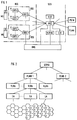
- the part of a mobile radio network shown in FIG. 1 is designed on the basis of an electronic switching system. It contains an SSS switching system, an RSS radio system, and an OMS operating and maintenance system.
- the switching system SSS establishes the connection between the radio system RSS and a public telephone network PSTN, for example an ISDN network, or with another switching center of the same or another mobile radio network PLMN.
- the radio system RSS is divided into base stations BSS and several mobile stations MS.
- the base stations BSS provide all functions that are required to ensure radio coverage of cells and the mobile stations MS provide all functions for the subscriber.
- Each base station BSS comprises a base station controller BSC, which carries out all functions for radio transmission, processes local processes and carries out maintenance functions, and one or more base radio stations BTS.
- a base station controller BSC manages a large number of base radio stations BTS.
- the base radio stations BTS perform all radio functions and they support the radio interface to the mobile stations MS.
- a base radio station BTS supplies one or more cells.
- Such a system is described, for example, in a brochure "D 900 Mobile Communication System” SYD from Siemens AG.
- the switching system SSS contains, in addition to a mobile switching center MSG (Mobile Services Switching Center), a home file HLR (home location register) connected to this, in which data from mobile stations MS registered there are stored, a visitor file VLR (visitor location register) and a device -EIR (Equipment Identification Register).
- the home location file HLR is also connected to an authentication center AC (Authentication Center).
- the visitor file VLR stores information about those mobile stations MS that are currently in the respective visitor file register area (Visitor Location Register Area) VLRA.
- the data stored in the home file HLR and relating to the mobile stations MS registered there may be passed on to the visitor file VLR.
- the authentication center AC stores the keys that are required to check whether a mobile station MS is authorized to use the mobile radio network.
- a localization area LA is a service area in which a mobile radio subscriber can move freely without having to update a localization register VLR or HLR.
- the size of the localization area LA is determined by the network operator in accordance with the requirements of the traffic volume and the movement density.
- One or more localization areas LA form a visitor file register area (VLRA).
- the visitor file area VLRA can range from the size of part of a city to the size of an entire country and is the part of a network that is supported by a visitor file VLR.
- One or more visitor file spaces VLRA form a mobile network area PLMN1 (Public Land Mobile Network Area), ie the geographical service area in which a network operator provides its telecommunication services.
- PLMN1 Public Land Mobile Network Area
- PLMN2 can also be provided.
- These mobile radio network areas PLMN can be provided in a PLMN country and one or more PLMN countries form a mobile radio system area GSMA.
- a mobile radio network PLMN must always be informed about the current location of a mobile radio subscriber.
- the visitor file VLR contains all information about those mobile stations MS that are currently in the visitor file area VLRA that they are monitoring.
- the cellular network PLMN must always be up to date with the location of each cellular subscriber or the associated mobile station MS.
- This home location file HLR sends a request (3) to the visitor location register VLR, in whose area the mobile station MS is currently located.
- MSRN Mobile Station Roaming Number
- the network switching center GMSC forwards the call to the switching center MSC that serves the localization area VLRA in which the mobile station MS is currently located (5).
- This switching center MSC requests (6) from its visitor file VLR the necessary information that is necessary for the call setup (7).
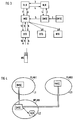
- the mobile station MS is then started with a search call (8) all base radio stations BTS of the localization area VLRA are called. After a call answer (9), the radio cell C is determined and the call connection from the gateway switching center GMSC to the switching center MSC is established (10).
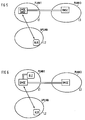
- a calling subscriber station and thus the associated exit switching center OMSC via which the call is entered into the mobile radio system, is not in the home radio network HPLMN (Home PLMN), for example not in the same Country L2, but in another network PLMN1, for example in another country L1, and the called mobile station MS is in another network PLMN3, for example in another country L3.
- the call is first transmitted from the outgoing exchange OMSC in country L1 to the gateway exchange GMSC in the home radio network HPLMN in country L2.
- the network switching center GMSC determines that the mobile station MS is in the network PLMN3 in country L3 and then establishes the corresponding connection to a visitor switching center VMSC in country L3.
- the call is set up and thus the call is made from the network PLMN1 in country L1 via the home radio network HPLMN in country L2 to the network PLMN3 in country L3, i.e.
- the home radio network HPLMN is also involved in the routing, although only calls and / or data are to be transmitted between the networks PLMN1 and PLMN3, i.e. there is no optimization of the connection paths between the networks PLMN1 and PLMN3 or between the countries L1 and L3.
- the exit switching center OMSC in the country L1 also takes on the function of the network switching center GMSC.
- the outgoing exchange OMSC establishes a connection to the home file HLR of the called mobile station MS in the home radio network HPLMN in the country L2 and recognizes from the number of the called mobile station MS because of the international destination that the called mobile station MS is in the network PLMN3 in the country L3.
- the information transmitted from the home file HLR to the exit switching center OMSC contains, in addition to a country code CC (country code), also a network code NDC (network destination code) assigned to the network PLMN3 there.
- country code CC country code
- NDC network destination code
Landscapes
- Engineering & Computer Science (AREA)
- Databases & Information Systems (AREA)
- Computer Networks & Wireless Communication (AREA)
- Signal Processing (AREA)
- Mobile Radio Communication Systems (AREA)
- Telephonic Communication Services (AREA)
Abstract
Description
- Die Erfindung bezieht sich auf ein Verfahren zum Herstellen einer Verbindung zwischen mehreren Netzen eines Mobilfunksystems. Weiterhin bezieht sich die Erfindung auf ein entsprechendes Mobilfunksystem und eine zugehörige Vermittlungsstelle.
- Bei einem Mobilfunksystem ist üblicherweise eine zu versorgende Fläche in eine große Anzahl von Funkzellen eingeteilt. In diesen Funkzellen sind jeweils Basisfunkstationen vorgesehen, über die die Verbindungen zwischen einem öffentlichen Telefonnetz und den Mobilstationen der einzelnen Teilnehmer in der jeweiligen Zelle hergestellt werden können. Ein derartiges Mobilfunksystem ist beispielsweise das vom European Telecommunication Standards Institute (ETSI) standardisierte GSM (Global System for Mobile Communication). Ein ähnliches System ist das DCS 1800/PCN.
- In der Systemfläche, d.h. in Fläche, in der das Mobilfunksystem eingeführt ist, ist die Funkzelle die kleinste Servicefläche für Rufe von und zu den Mobilstationen. Die Systemfläche kann eine Mehrzahl von Mobilfunk-Netzflächen (Public Land Mobile Network (PLMN) Areas) umfassen. Eine Mobilfunk-Netzfläche ist die geographische Servicefläche, in der ein Netzbetreiber seine Telekommunikationsdienste bereitstellt, beispielsweise ein Land. Die Mobilfunkteilnehmer können sich mit ihren Mobilstationen üblicherweise in der gesamten Systemfläche, d.h. in allen Mobilfunk-Netzflächen, bewegen und dort die jeweils angebotenen Telekommunikationsdienste in Anspruch nehmen.
- In einer Heimatdatei (Home Location Register, HLR), die einer Vermittlungsstelle (Mobile Switching Center, MSC) im Heimat-Funknetz zugeordnet ist sind alle einen dort registrierten Mobilfunkteilnehmer betreffenden Daten gespeichert. Diese Daten werden gegebenenfalls an eine Besucherdatei (Visitor Location Register, VLR) weitergegeben, so daß die Mobilfunkteilnehmer in der gesamten Systemfläche erreicht werden können, unabhängig davon, in welcher Funkzelle sie sich gerade befinden.
- Die Vermittlungsstellen stellen Bindeglieder zwischen dem öffentlichen drahtgebundenen Fernsprechnetz (Public Switched Telephone Network, PSTN) oder einem weiteren Mobilfunknetz (Public Land Mobile Network, PLMN) und den Basisfunkstationen her, wobei zwischen den Vermittlungsstellen und den Basisfunkstationen Basisstationssteuerungen vorgesehen sind, die jeweils eine oder mehrere Basisfunkstationen steuern.
- Die Besucherdatei speichert Informationen über diejenigen Mobilfunkteilnehmer, die sich gerade in der jeweiligen Besucherdatei-Fläche befinden, und die Heimatdatei speichert alle den Mobilfunkteilnehmer betreffenden Daten, die gegebenenfalls an die Besucherdatei weitergegeben werden.
- Im GSM muß beim Verbindungsaufbau zu einer Mobilstation im Rahmen einer Abfrageprozedur die Information über den Aufenthalt der Mobilstation von der Heimatdatei abgefragt werden. Der gerufenenen Mobilstation wird dabei von derjenigen Vermittlungsstelle, bei der sich diese Mobilstation gerade aufhält eine temporäre Rufnummer zugeordnet, die den augenblicklichen Aufenthaltsbereich repräsentiert. Diese temporäre Rufnummer wird für die Lenkung der Gesprächswege verwendet.
- Bei Verbindungen, die mehrere Funknetze umfassen, beispielsweise bei internationalen Verbindungen werden die Gespräche bis zu einer Vermittlungsstelle im Heimat-Funknetz des gerufenen Teilnehmers aufgebaut. Diese Vermittlungsstelle des Heimat-Funknetzes führt die genannte Abfrageprozedur durch und stellt dann eine Verbindung zur Vermittlungsstelle in dem weiteren Funknetz her, in dem sich die Mobilstation gerade befindet.
- Da zunächst eine Gesprächsverbindung zur Vermittlungsstelle im Heimat-Funknetz und dann von dieser Vermittlungsstelle eine Verbindung zur Vermittlungsstelle in dem weiteren Funknetz hergestellt wird, in dem sich die Mobilstation gerade befindet, ist die Wegführung nicht optimal. Eine optimale Wegführung ist bisher nur innerhalb eines Funknetzes möglich.
- Der Erfindung liegt daher die Aufgabe zugrunde, ein Verfahren anzugeben, bei dem eine optimale Wegführung für die Gespräche auch dann ermöglicht wird, wenn sich eine Vermittlungsstelle, von der ein Ruf ausgeht und eine Vermittlungsstelle, der die gerufene Mobilstation gerade zugeordnet ist, in Funknetzen befinden, die vom Heimat-Funknetz der Mobilstation verschieden sind. Weiterhin liegt der Erfindung die Aufgabe zugrunde, ein entsprechendes Mobilfunksystem und eine zugehörige Vermittlungsstelle anzugeben.
- Erfindungsgemäß wird die Aufgabe bei dem Verfahren, dem Mobilfunksystem und der Vermittlungsstelle der eingangs genannten Art durch die in den kennzeichnenden Teilen der Patentansprüche 1, 6 bzw. 7 angegebenen Merkmale gelöst. Weiterbildungen der Erfindung ergeben sich aus den Unteransprüchen.
- Die Erfindung bietet den Vorteil, daß eine einfache Wegführung für die Gespräche über mehrere Funknetze hinweg erreicht wird und damit das Mobilfunksystem besser ausgenutzt werden kann, da Umwege vermieden werden, die ansonsten zu einer unnötigen Belastung des Mobilfunksystems führen würden.
- Ausführungsbeispiele der Erfindung werden im folgenden anhand von Zeichnungen näher erläutert. Es zeigen:
- Fig. 1
- ein Blockbild eines Mobilfunknetzes,
- Fig. 2
- eine schematische Darstellung von Serviceflächen in einem Mobilfunksystem,
- Fig. 3
- Eine schematische Darstellung des Ablaufs eines Rufs zu einer Mobilstation,
- Fig. 4
- eine schematische Darstellung einer herkömmlichen internationalen Verbindung,
- Fig. 5
- eine schematische Darstellung des Herstellens einer internationalen Verbindung gemäß einem ersten Ausführungsbeispiel der Erfindung, und
- Fig. 6
- eine schematische Darstellung des Herstellens einer internationalen Verbindung gemäß einem zweiten Ausführungsbeispiel der Erfindung.
- Der in Fig. 1 dargestellte Teil eines Mobilfunknetzes ist auf der Basis eines elektronischen Vermittlungssystems ausgebildet. Er enthält ein Vermittlungssystem SSS, ein Funksystem RSS, und ein Bedien- und Wartungssystem OMS. Das Vermittlungssystem SSS stellt die Verbindung zwischen dem Funksystem RSS und einem öffentlichen Telefonnetz PSTN, beispielsweise einem ISDN-Netz, oder mit einer anderen Vermittlungsstelle des selben oder eines anderen Mobilfunknetzes PLMN her. Das Funksystem RSS wird eingeteilt in Basisstationen BSS und mehrere Mobilstationen MS. Die Basisstationen BSS stellen alle Funktionen zur Verfügung, die erforderlich sind, um eine Funkdeckung von Zellen zu gewährleisten und die Mobilstationen MS stellen alle Funktionen für den Teilnehmer bereit. Jede Basisstation BSS umfaßt eine Basisstationssteuerung BSC, die alle Funktionen für die Funkübertragung durchführt, lokale Vorgänge bearbeitet und Wartungsfunktionen ausführt und eine oder mehrere Basisfunkstationen BTS. Eine Basisstationssteuerung BSC verwaltet eine Vielzahl von Basisfunkstationen BTS. Die Basisfunkstationen BTS führen alle funktechnischen Funktionen aus und sie unterstützen die Funkschnittstelle zu den Mobilstationen MS. Eine Basisfunkstation BTS versorgt eine oder mehrere Zellen. Ein derartiges System ist beispielsweise in einer Broschüre "D 900 Mobile Communication System" SYD der Siemens AG beschrieben.
- Das Vermittlungssystem SSS enthält neben einer Mobilfunk-Vermittlungsstelle MSG (Mobile Services Switching Center) eine mit dieser verbundene Heimatdatei HLR (Home Location Register), in der Daten von dort registrierten Mobilstationen MS gespeichert sind, eine Besucherdatei VLR (Visitor Location Register) und ein Geräte-Identifizierungsregister EIR (Equipment Identification Register). Die Heimatdatei HLR ist außerdem mit einem Authentifikationszentrum AC (Authentification Center) verbunden. Die Besucherdatei VLR speichert Informationen über diejenigen Mobilstationen MS, die sich gerade in der jeweiligen Besucherdatei-Fläche (Visitor Location Register Area) VLRA befinden. Die in der Heimatdatei HLR gespeicherten, die dort registrierten Mobilstationen MS betreffenden Daten werden gegebenenfalls an die Besucherdatei VLR weitergegeben. Das Authentifikationszentrum AC speichert die Schlüssel, die erforderlich sind, um zu prüfen, ob eine Mobilstation MS berechtigt ist, das Mobilfunknetz zu benutzen.
- Wie es in Fig. 2 dargestellt ist, bilden eine oder mehrere Funkzellen C eine Lokalisierungsfläche LA (Location Area). Eine Lokalisierungsfläche LA ist eine Servicefläche, in der sich ein Mobilfunkteilnehmer frei bewegen kann, ohne daß ein Lokalisierungsregister VLR oder HLR auf den neuesten Stand gebracht werden muß. Die Größe der Lokalisierungsfläche LA wird vom Netzbetreiber entsprechend den Erfordernissen des Verkehrsaufkommens und der Bewegungsdichte festgelegt.
- Eine oder mehrere Lokalisierungsflächen LA bilden eine Besucherdatei-Fläche (Visitor Location Register Area) VLRA. Die Besucherdatei-Fläche VLRA kann die Größe eines Teils einer Stadt bis zur Größe eines ganzen Landes annehmen und sie ist derjenige Teil eines Netzes, der von einer Besucherdatei VLR unterstützt wird. Eine oder mehrere Besucherdatei-Flächen VLRA bilden ein Mobilfunk-Netzfläche PLMN1 (Public Land Mobile Network Area), d.h. die geographische Servicefläche, in der ein Netzbetreiber seine Telekommunikationsdienste bereitstellt. Neben der Mobilfunk-Netzfläche PLMN1 können noch eine oder mehrere weitere Mobilfunk-Netzflächen PLMN2 vorgesehen sein. Diese Mobilfunk-Netzflächen PLMN können in einem PLMN-Land vorgesehen sein und eine oder mehrere PLMN-Länder bilden eine Mobilfunk-Systemfläche GSMA.
- Infolge der Mobilität der Mobilfunkteilnehmer muß ein Mobilfunknetz PLMN immer über den gegenwärtigen Aufenthalt eines Mobilfunkteilnehmers informiert sein. Die Besucherdatei VLR beinhaltet alle Informationen über diejenigen Mobilstationen MS, die sich gerade in derjenigen Besucherdatei-Fläche VLRA aufhalten, die sie überwacht. Um diese Information bereitzustellen, muß das Mobilfunknetz PLMN immer auf dem neuesten Stand des Aufenthalts eines jeden Mobilfunkteilnehmers, bzw. der zugehörigen Mobilstation MS sein.
- Wie es in Fig. 3 dargestellt ist, wird bei einem von einer Ausgangs-Vermittlungsstelle OMSC (Originating MSC) bei einer Netzübergangs-Vermittlungsstelle GMSC (Gateway-MSC) ankommenden Ruf (1) zu einer Mobilstation MS von der Netzübergangs-Vermittlungsstelle GMSC zunächst die Heimatdatei HLR der gerufenen Mobilstation MS abgefragt (2). Diese Heimatdatei HLR sendet eine Anforderung (3) an das Besucherregister VLR, in deren Gebiet sich die Mobilstation MS gerade aufhält. Auf der Basis einer temporären Rufnummer MSRN (Mobile Station Roaming Number), die von der Besucherdatei VLR über die Heimatdatei HLR an die End-Vermittlungsstelle GMSC (4) weitergegeben wird, leitet die Netzübergangs-Vermittlungsstelle GMSC den Ruf an diejenige Vermittlungsstelle MSC weiter, die diejenige Lokalisierungsfläche VLRA bedient, in der sich die Mobilstation MS gerade aufhält (5). Diese Vermittlungsstelle MSC fordert (6) von ihrer Besucherdatei VLR die notwendigen Informationen an, die für den Rufaufbau erforderlich sind (7). Die Mobilstation MS wird dann mit einem Suchruf (8) an alle Basisfunkstationen BTS der Lokalisierungsfläche VLRA gerufen. Nach einer Rufantwort (9) wird die Funkzelle C ermittelt, und die Gesprächsverbindung von der Netzübergangs-Vermittlungsstelle GMSC zur Vermittlungsstelle MSC hergestellt (10).
- Bei der in Fig. 4 gezeigten Darstellung wird angenommen, daß sich eine rufende Teilnehmerstation und damit die zugehörige Ausgangs-Vermittlungsstelle OMSC, über die der Ruf in das Mobilfunksystem eingegeben wird, nicht im Heimat-Funknetz HPLMN (Home PLMN), beispielsweise nicht im selben Land L2, sondern in einem anderen Netz PLMN1, beispielsweise in einem anderen Land L1 befindet und sich die gerufene Mobilstation MS in einem weiteren Netz PLMN3, beispielsweise in einem weiteren Land L3 befindet. In diesem Fall wird der Ruf von der Ausgangs-Vermittlungsstelle OMSC im Land L1 zunächst zur Netzübergangs-Vermittlungsstelle GMSC im Heimat-Funknetz HPLMN im Land L2 übertragen. Dort stellt, entsprechend dem in Fig. 3 dargestellten Ablauf die Netzübergangs-Vermittlungsstelle GMSC fest, daß sich die Mobilstation MS im Netz PLMN3 im Land L3 befindet und sie stellt dann die entsprechende Verbindung zu einer Besuchs-Vermittlungsstelle VMSC im Land L3 her. Wie der Fig. 4 zu entnehmen ist, erfolgt somit beim bekannten Verfahren der Rufaufbau und damit die Gesprächsführung vom Netz PLMN1 im Land L1 über das Heimat-Funknetz HPLMN im Land L2 zum Netz PLMN3 im Land L3, d.h. das Heimat-Funknetz HPLMN wird auch in die Streckenführung involviert, obwohl nur Gespräche und/oder Daten zwischen den Netzen PLMN1 und PLMN3 übertragen werden sollen, d.h. es erfolgt keine Optimierung der Verbindungswege zwischen den Netzen PLMN1 und PLMN3 bzw. zwischen den Ländern L1 und L3.
- Bei dem in Fig. 5 dargestellten erfindungsgemäßen Verfahren übernimmt die Ausgangs-Vermittlungsstelle OMSC im Land L1 auch die Funktion der Netzübergangs-Vermittlungsstelle GMSC. Die Ausgangs-Vermittlungsstelle OMSC stellt eine Verbindung zur Heimatdatei HLR der gerufenen Mobilstation MS im Heimat-Funknetz HPLMN im Land L2 her und erkennt anhand der Rufnummer der gerufenen Mobilstation MS wegen des internationalen Zieles daß sich die gerufene Mobilstation MS im Netz PLMN3 im Land L3 aufhält. Die von der Heimatdatei HLR zur Ausgangs-Vermittlungsstelle OMSC übertragenen Informationen enthalten außer einem Ländercode CC (Country Code) auch einen dem dortigen Netzwerk PLMN3 zugeordneten Netzcode NDC (Network Destination Code). Damit stehen in der Ausgangs-Vermittlungsstelle OMSC die temporäre Rufnummer MSRN, der Ländercode CC und der Netzcode NDC zur Verfügung, so daß vom Netz PLMN1 im Land L1 direkt eine Verbindung zum Netz PLMN3 im Land L3 geschaltet werden kann und damit eine Wegoptimierung stattfinden kann. Die Verbindung für die Übertragung der Gespräche und/oder Daten muß damit nicht mehr über das Heimat-Funknetz HPLMN im Land L2 geführt werden, sondern kann direkt von der Ausgangs-Vermittlungsstelle OMSC im Land L1 zur Besuchs-Vermittlungsstelle VMSC im Land L3 geschaltet werden.
- Entsprechendes gilt für einen Verbindungsaufbau vom Netz PLMN1 im Land L1 unter Verwendung einer Ausgangs-Leitungseinheit OLE, die eine beliebige Vermittlungsstelle sein kann, zu einer Mobilstation MS im Netz PLMN3 im Land L3. In diesem Fall ist die Ausgangs-Vermittlungsstelle OMSC mit der Netzübergangs-Vermittlungsstelle GMSC identisch. Ein derartiger Verbindungsaufbau ist schematisch in Fig. 6 dargestellt.
Claims (7)
- Verfahren zum Herstellen einer Verbindung zwischen mehreren Netzen (PLMN1, PLMN3) eines Mobilfunksystems, wobei die Verbindung von einem ersten Mobilfunknetz (PLMN1) zu einer Mobilstation (MS) in einem weiteren Mobilfunknetz (PLMN3) hergestellt wird und wobei beim Herstellen der Verbindung durch eine Ausgangs-Vermittlungsstelle (OMSC) Daten abgerufen werden, die in einer der Mobilstation (MS) zugeordneten Heimatdatei (HLR) im Heimat-Funknetz (HPLMN) der Mobilstation (MS) gespeichert sind,
dadurch gekennzeichnet,
daß die Vermittlungsstelle (OMSC) im ersten Mobilfunknetz (PLMN1) nach dem Abfragen der Daten von der Heimatdatei (HLR) im Heimat-Funknetz (HPLMN) der Mobilstation (MS) eine direkte Verbindung für die Übertragung von Gesprächen und/oder Daten zum weiteren Mobilfunknetz (PLMN3) ohne eine Zwischenschaltung des Heimat-Funknetzes (HPLMN) der Mobilstation (MS) herstellt. - Verfahren nach Anspruch 1,
dadurch gekennzeichnet,
daß die Vermittlungsstelle im ersten Netz (PLMN1) die Ausgangs-Vermittlungsstelle (OMSC) darstellt und gleichzeitig die Funktionen einer Netzübergangs-Vermittlungsstelle (GMSC) durchführt. - Verfahren nach Anspruch 1,
dadurch gekennzeichnet,
daß die Verbindung über eine Ausgangs-Leitungseinheit (OLE) im ersten Netz PLMN1 aufgebaut wird, die mit einer dortigen Vermittlungsstelle (MSC) verbunden ist und daß diese Vermittlungsstelle (MSC) gleichzeitig die Funktionen einer Netzübergangs-Vermittlungsstelle (GMSC) durchführt. - Verfahren nach einem der vorangehenden Ansprüche,
dadurch gekennzeichnet,
daß zur Vermittlungsstelle (OMSC) im ersten Netz (PLMN1) die vollständige temporäre Rufnummer (MSRN) übertragen werden. - Verfahren nach Anspruch 4,
dadurch gekennzeichnet,
daß ein Ländercode (CC) und ein Netzcode (NDC) in der Heimatdatei (HLR) gespeichert sind. - Mobilfunksystem, bei dem eine Verbindung von einem ersten Mobilfunknetz (PLMN1) zu einer Mobilstation (MS) in einem weiteren Mobilfunknetz (PLMN3) hergestellt wird und bei dem beim Herstellen der Verbindung von einer Ausgangs-Vermittlungsstelle (OMSC) Daten abgerufen werden, die in einer der Mobilstation (MS) zugeordneten Heimatdatei (HLR) im Heimat-Funknetz (HPLMN) der Mobilstation (MS) gespeichert sind,
dadurch gekennzeichnet,
daß die Vermittlungsstelle (OMSC) im ersten Mobilfunknetz (PLMN1) derart ausgebildet ist, daß sie nach dem Abfragen der Daten von der Heimatdatei (HLR) im Heimat-Funknetz (HPLMN) der Mobilstation (MS) unter Verwendung eines Ländercodes (CC) und eines Netzcodes (NDC) eine direkte Verbindung für die Übertragung von Gesprächen und/oder Daten zum weiteren Mobilfunknetz (PLMN3) ohne eine Zwischenschaltung des Heimat-Funknetzes (HPLMN) der Mobilstation (MS) herstellt. - Vermittlungsstelle für ein Mobilfunksystem, bei dem eine Verbindung von einem ersten Mobilfunknetz (PLMN1) zu einer Mobilstation (MS) in einem weiteren Mobilfunknetz (PLMN3) hergestellt wird und bei dem beim Herstellen der Verbindung von einer Ausgangs-Vermittlungsstelle (OMSC) Daten abgerufen werden, die in einer der Mobilstation (MS) zugeordneten Heimatdatei (HLR) im Heimat-Funknetz (HPLMN) der Mobilstation (MS) gespeichert sind,
dadurch gekennzeichnet,
daß die Vermittlungsstelle (OMSC) derart ausgebildet ist, daß sie nach dem Abrufen der Daten von der Heimatdatei (HLR) im Heimat-Funknetz (HPLMN) der Mobilstation (MS) unter Verwendung eines Ländercodes (CC) und eines Netzcodes (NDC) eine direkte Verbindung für die Übertragung von Gesprächen und/oder Daten vom ersten Mobilfunknetz (PLMN1) zum zweiten Mobilfunknetz (PLMN2) ohne eine Zwischenschaltung des Heimat-Funknetzes (HPLMN) der Mobilstation (MS) herstellt.
Applications Claiming Priority (2)
| Application Number | Priority Date | Filing Date | Title |
|---|---|---|---|
| DE4411375 | 1994-03-31 | ||
| DE4411375 | 1994-03-31 |
Publications (3)
| Publication Number | Publication Date |
|---|---|
| EP0675663A2 true EP0675663A2 (de) | 1995-10-04 |
| EP0675663A3 EP0675663A3 (de) | 1998-01-14 |
| EP0675663B1 EP0675663B1 (de) | 2000-05-17 |
Family
ID=6514440
Family Applications (1)
| Application Number | Title | Priority Date | Filing Date |
|---|---|---|---|
| EP95104678A Expired - Lifetime EP0675663B1 (de) | 1994-03-31 | 1995-03-29 | Verfahren zum Herstellen einer Verbindung zwischen mehreren Netzen eines Mobilfunksystems |
Country Status (2)
| Country | Link |
|---|---|
| EP (1) | EP0675663B1 (de) |
| DE (1) | DE59508337D1 (de) |
Cited By (10)
| Publication number | Priority date | Publication date | Assignee | Title |
|---|---|---|---|---|
| WO1997008912A1 (en) * | 1995-08-22 | 1997-03-06 | Nokia Telecommunications Oy | Optimal routing of a mobile-terminating call |
| US5654760A (en) * | 1994-03-30 | 1997-08-05 | Sony Corporation | Selection of quantization step size in accordance with predicted quantization noise |
| WO1997047151A3 (en) * | 1996-06-07 | 1998-03-05 | Ericsson Telefon Ab L M | Cellular telephone network routing method and apparatus for internationally roaming mobile stations |
| WO1998011752A1 (en) * | 1996-09-16 | 1998-03-19 | Ericsson Inc. | Optimized routing of calls to roaming subscribers within a telecommunications network |
| WO1998023117A3 (de) * | 1996-11-18 | 1998-10-29 | Siemens Ag | Verfahren und mobil-kommunikationssystem zum routen von anrufverbindungen |
| WO1998039944A3 (en) * | 1997-03-04 | 1998-12-17 | Nokia Telecommunications Oy | Call control method |
| EP0827355A3 (de) * | 1996-09-02 | 1999-10-27 | Siemens Aktiengesellschaft | Verfahren und System zur Bestimmung des Aufenthaltsorts eines in einem zellularen Mobilfunknetz registrierten Funkteilnehmers |
| WO2000033600A1 (en) * | 1998-12-03 | 2000-06-08 | Ericsson Inc. | Optimized routing of mobile calls within a telecommunications network |
| EP1379096A1 (de) * | 2002-07-03 | 2004-01-07 | Koninklijke KPN N.V. | Optimierte Leitweglenkung eines Rufes zu einem Mobilteilnehmer, der sich in einem fremden Netz aufhält |
| CN101977434A (zh) * | 2010-09-29 | 2011-02-16 | 宇龙计算机通信科技(深圳)有限公司 | 一种网络连接方法和移动终端 |
Family Cites Families (1)
| Publication number | Priority date | Publication date | Assignee | Title |
|---|---|---|---|---|
| FI90713C (fi) * | 1991-01-15 | 1994-03-10 | Telenokia Oy | Menetelmä tulevan puhelun muodostamiseksi radiopuhelimelle solukkoradiopuhelinverkossa |
-
1995
- 1995-03-29 EP EP95104678A patent/EP0675663B1/de not_active Expired - Lifetime
- 1995-03-29 DE DE59508337T patent/DE59508337D1/de not_active Expired - Lifetime
Cited By (16)
| Publication number | Priority date | Publication date | Assignee | Title |
|---|---|---|---|---|
| US5654760A (en) * | 1994-03-30 | 1997-08-05 | Sony Corporation | Selection of quantization step size in accordance with predicted quantization noise |
| WO1997008912A1 (en) * | 1995-08-22 | 1997-03-06 | Nokia Telecommunications Oy | Optimal routing of a mobile-terminating call |
| US5978678A (en) * | 1996-06-07 | 1999-11-02 | Telefonaktiebolaget L M Ericsson (Publ) | Cellular telephone network routing method and apparatus for internationally roaming mobile stations |
| WO1997047151A3 (en) * | 1996-06-07 | 1998-03-05 | Ericsson Telefon Ab L M | Cellular telephone network routing method and apparatus for internationally roaming mobile stations |
| EP0827355A3 (de) * | 1996-09-02 | 1999-10-27 | Siemens Aktiengesellschaft | Verfahren und System zur Bestimmung des Aufenthaltsorts eines in einem zellularen Mobilfunknetz registrierten Funkteilnehmers |
| WO1998011752A1 (en) * | 1996-09-16 | 1998-03-19 | Ericsson Inc. | Optimized routing of calls to roaming subscribers within a telecommunications network |
| US5991621A (en) * | 1996-09-16 | 1999-11-23 | Ericsson Inc. | Optimized routing of calls to roaming subscribers within a telecommunications network |
| WO1998023117A3 (de) * | 1996-11-18 | 1998-10-29 | Siemens Ag | Verfahren und mobil-kommunikationssystem zum routen von anrufverbindungen |
| DE19647627C2 (de) * | 1996-11-18 | 2001-03-01 | Siemens Ag | Verfahren und Mobil-Kommunikationssystem zum Routen von Anrufverbindungen |
| US6233457B1 (en) | 1996-11-18 | 2001-05-15 | Siemens Aktiengesellschaft | Method and mobile communication system for routing of call connections |
| WO1998039944A3 (en) * | 1997-03-04 | 1998-12-17 | Nokia Telecommunications Oy | Call control method |
| US6628950B2 (en) | 1997-03-04 | 2003-09-30 | Nokia Corporation | Restriction of incoming calls in a mobil telecommunication system |
| WO2000033600A1 (en) * | 1998-12-03 | 2000-06-08 | Ericsson Inc. | Optimized routing of mobile calls within a telecommunications network |
| EP1379096A1 (de) * | 2002-07-03 | 2004-01-07 | Koninklijke KPN N.V. | Optimierte Leitweglenkung eines Rufes zu einem Mobilteilnehmer, der sich in einem fremden Netz aufhält |
| CN101977434A (zh) * | 2010-09-29 | 2011-02-16 | 宇龙计算机通信科技(深圳)有限公司 | 一种网络连接方法和移动终端 |
| CN101977434B (zh) * | 2010-09-29 | 2014-01-22 | 宇龙计算机通信科技(深圳)有限公司 | 一种网络连接方法和移动终端 |
Also Published As
| Publication number | Publication date |
|---|---|
| EP0675663A3 (de) | 1998-01-14 |
| EP0675663B1 (de) | 2000-05-17 |
| DE59508337D1 (de) | 2000-06-21 |
Similar Documents
| Publication | Publication Date | Title |
|---|---|---|
| DE602004010447T2 (de) | Vorzugsnetzauswahl | |
| DE69714415T2 (de) | Ortsbasiertes abfragen in einem mobilen telekommunikationssystem | |
| DE69124643T2 (de) | Mobiles Kommunikationssystem | |
| DE19630399C1 (de) | Verfahren und System zur Leitweglenkung | |
| DE69317873T2 (de) | Standortsaktualisierung in einem zellularen funknetz | |
| DE69217545T2 (de) | Verfahren zur durchführung einer standortsaktualisierung von einem zellularen mobilfunksystem zu einem anderen zellularen funktelefonsystem | |
| DE69318696T2 (de) | Verfahren zur aktualisierung von teilnehmerdaten in einem zellenfunksystem und zellenfunksystem | |
| DE69732519T2 (de) | Mobilitätsverwaltungssystem in einem persönlichen Kommunikationssystem | |
| DE10296925B4 (de) | Globales Ausrufen von Mobilstationen in einem drahtlosen Netz unter Verwendung eines MSC-Pools | |
| DE69124144T2 (de) | Mobiles Kommunikationssystem | |
| DE69326159T2 (de) | Verfahren und einrichtung zur verarbeitung von kurznachrichten in einem zellularen netz | |
| DE69932623T2 (de) | Mobilkommunikationssystem und alternative netzübergangseinheit zur anrufverarbeitung | |
| EP0760192B1 (de) | Verfahren zur teilnehmerdatenübertragung bei einem wechsel des funkkommunikationssystems | |
| DE60101707T2 (de) | Verfahren zur Bereitstellung von Roaming unter privaten Mobilfunkvermittlungsstellen | |
| EP0954937B1 (de) | Verfahren zur administrierung zusätzlicher dienste in einem kommunikationsnetz | |
| EP1121816B1 (de) | Übergabeverfahren (roaming) für mobile endeinrichtungen | |
| EP0641137A2 (de) | Verfahren und Anordnung zum Beschränken des Zugriffs zu einem Mobilfunksystem | |
| EP0962106B1 (de) | Verfahren und kommunikationsnetz zur bereitstellung von ansagen | |
| DE69937150T2 (de) | System und verfahren zur weiträumigen umgehung für an mobilstationen gerichtete anrufe | |
| EP0675663B1 (de) | Verfahren zum Herstellen einer Verbindung zwischen mehreren Netzen eines Mobilfunksystems | |
| DE19515418A1 (de) | Verfahren und Anordnung zum Rufen einer Mobilstation | |
| DE19827939B4 (de) | Zeitweise drahtlose Amtsleitung in zellularen Mobilnetzen | |
| EP1033897B1 (de) | Verfahren zur Bereitstellung eines persönlichen Kommunikationsdienstes sowie Verfahren zur Anrufleitung und Dienststeuereinheit | |
| DE19982759B4 (de) | Firewall für Signalgebungskanal für Kommunikationsvorgänge zwischen drahtlosen Netzen | |
| DE19814161B4 (de) | Verfahren zum Verbindungsaufbau für ankommende, an einen Teilnehmer eines Kommunikationsnetzes gerichtete Anrufe sowie Dienstesteuerungseinheit zum Unterstützen des Verbindungsaufbaus |
Legal Events
| Date | Code | Title | Description |
|---|---|---|---|
| PUAI | Public reference made under article 153(3) epc to a published international application that has entered the european phase |
Free format text: ORIGINAL CODE: 0009012 |
|
| AK | Designated contracting states |
Kind code of ref document: A2 Designated state(s): DE FR GB SE |
|
| PUAL | Search report despatched |
Free format text: ORIGINAL CODE: 0009013 |
|
| AK | Designated contracting states |
Kind code of ref document: A3 Designated state(s): DE FR GB SE |
|
| 17P | Request for examination filed |
Effective date: 19980709 |
|
| 17Q | First examination report despatched |
Effective date: 19981113 |
|
| GRAG | Despatch of communication of intention to grant |
Free format text: ORIGINAL CODE: EPIDOS AGRA |
|
| GRAG | Despatch of communication of intention to grant |
Free format text: ORIGINAL CODE: EPIDOS AGRA |
|
| GRAH | Despatch of communication of intention to grant a patent |
Free format text: ORIGINAL CODE: EPIDOS IGRA |
|
| GRAH | Despatch of communication of intention to grant a patent |
Free format text: ORIGINAL CODE: EPIDOS IGRA |
|
| GRAA | (expected) grant |
Free format text: ORIGINAL CODE: 0009210 |
|
| AK | Designated contracting states |
Kind code of ref document: B1 Designated state(s): DE FR GB SE |
|
| REF | Corresponds to: |
Ref document number: 59508337 Country of ref document: DE Date of ref document: 20000621 |
|
| GBT | Gb: translation of ep patent filed (gb section 77(6)(a)/1977) |
Effective date: 20000719 |
|
| PG25 | Lapsed in a contracting state [announced via postgrant information from national office to epo] |
Ref country code: SE Free format text: LAPSE BECAUSE OF FAILURE TO SUBMIT A TRANSLATION OF THE DESCRIPTION OR TO PAY THE FEE WITHIN THE PRESCRIBED TIME-LIMIT Effective date: 20000817 |
|
| ET | Fr: translation filed | ||
| PLBE | No opposition filed within time limit |
Free format text: ORIGINAL CODE: 0009261 |
|
| STAA | Information on the status of an ep patent application or granted ep patent |
Free format text: STATUS: NO OPPOSITION FILED WITHIN TIME LIMIT |
|
| 26N | No opposition filed | ||
| REG | Reference to a national code |
Ref country code: GB Ref legal event code: IF02 |
|
| REG | Reference to a national code |
Ref country code: FR Ref legal event code: TP |
|
| REG | Reference to a national code |
Ref country code: GB Ref legal event code: 732E |
|
| PGFP | Annual fee paid to national office [announced via postgrant information from national office to epo] |
Ref country code: DE Payment date: 20140319 Year of fee payment: 20 |
|
| PGFP | Annual fee paid to national office [announced via postgrant information from national office to epo] |
Ref country code: FR Payment date: 20140319 Year of fee payment: 20 |
|
| PGFP | Annual fee paid to national office [announced via postgrant information from national office to epo] |
Ref country code: GB Payment date: 20140319 Year of fee payment: 20 |
|
| REG | Reference to a national code |
Ref country code: DE Ref legal event code: R079 Ref document number: 59508337 Country of ref document: DE Free format text: PREVIOUS MAIN CLASS: H04Q0007380000 Ipc: H04W0004000000 |
|
| REG | Reference to a national code |
Ref country code: DE Ref legal event code: R081 Ref document number: 59508337 Country of ref document: DE Owner name: NOKIA SOLUTIONS AND NETWORKS GMBH & CO. KG, DE Free format text: FORMER OWNER: NOKIA SIEMENS NETWORKS GMBH & CO. KG, 81541 MUENCHEN, DE Effective date: 20140731 Ref country code: DE Ref legal event code: R079 Ref document number: 59508337 Country of ref document: DE Free format text: PREVIOUS MAIN CLASS: H04Q0007380000 Ipc: H04W0004000000 Effective date: 20140801 |
|
| REG | Reference to a national code |
Ref country code: FR Ref legal event code: CD Owner name: NOKIA SOLUTIONS AND NETWORKS GMBH & CO.KG, DE Effective date: 20150211 |
|
| REG | Reference to a national code |
Ref country code: DE Ref legal event code: R071 Ref document number: 59508337 Country of ref document: DE |
|
| REG | Reference to a national code |
Ref country code: GB Ref legal event code: PE20 Expiry date: 20150328 |
|
| PG25 | Lapsed in a contracting state [announced via postgrant information from national office to epo] |
Ref country code: GB Free format text: LAPSE BECAUSE OF EXPIRATION OF PROTECTION Effective date: 20150328 |