EP0678247A1 - Omega-6- und Omega-3-Fettsäuren enthaltendes Haustierfutter - Google Patents
Omega-6- und Omega-3-Fettsäuren enthaltendes Haustierfutter Download PDFInfo
- Publication number
- EP0678247A1 EP0678247A1 EP95302540A EP95302540A EP0678247A1 EP 0678247 A1 EP0678247 A1 EP 0678247A1 EP 95302540 A EP95302540 A EP 95302540A EP 95302540 A EP95302540 A EP 95302540A EP 0678247 A1 EP0678247 A1 EP 0678247A1
- Authority
- EP
- European Patent Office
- Prior art keywords
- omega
- fatty acids
- pet food
- food product
- diet
- Prior art date
- Legal status (The legal status is an assumption and is not a legal conclusion. Google has not performed a legal analysis and makes no representation as to the accuracy of the status listed.)
- Withdrawn
Links
Images




Classifications
-
- A—HUMAN NECESSITIES
- A23—FOODS OR FOODSTUFFS; TREATMENT THEREOF, NOT COVERED BY OTHER CLASSES
- A23K—FODDER
- A23K50/00—Feeding-stuffs specially adapted for particular animals
- A23K50/40—Feeding-stuffs specially adapted for particular animals for carnivorous animals, e.g. cats or dogs
-
- A—HUMAN NECESSITIES
- A23—FOODS OR FOODSTUFFS; TREATMENT THEREOF, NOT COVERED BY OTHER CLASSES
- A23K—FODDER
- A23K20/00—Accessory food factors for animal feeding-stuffs
- A23K20/10—Organic substances
- A23K20/158—Fatty acids; Fats; Products containing oils or fats
Definitions
- This invention relates to a pet food product for use in reducing inflammatory and allergic skin responses, and more particularly to a pet food composition containing omega-6 (n-6) and omega-3 (n-3) fatty acids.
- Omega-6 fatty acids are essential fatty acids and one of the most common fatty acids in the typical diet.
- a lack of n-6 fatty acids can result in dry, flaky skin, skin lesions, stunted growth, and, eventually, death.
- n-6 fatty acids also promote allergic and inflammatory conditions in the skin.
- a pet food product is needed that not only contains n-3 fatty acids, but also uses a ratio of n-6 to n-3 fatty acids that provides the beneficial effects of both fatty acids in pet animals.
- the present invention meets that need by providing a pet food product and a process for reducing inflammatory allergic responses comprising feeding a pet animal a food composition containing a specific ratio of omega-6 to omega-3 fatty acids.
- This diet is useful for maintaining healthy animals and for preventing and/or alleviating symptoms of such skin diseases as dermatitis and pruritus.
- the pet food product of the invention can contain a wide variety of protein sources and additives and is suitable for treating and maintaining pet animals such as dogs, cats, horses, and more exotic animals such as guinea pigs. It is preferably used to treat dogs.
- the important aspect of the invention is that both omega-6 and omega-3 fatty acids are present in the product. These fatty acids can be present in a ratio of omega-6 fatty acids to omega-3 fatty acids of from 3:1 to 10:1.
- the pet food product has a ratio of omega-6 fatty acids to omega-3 fatty acids from 5:1 to 10:1, and most preferably from 5:1 to 7.5:1.
- At least three percent of the total fatty acids in the pet food composition of the present invention are omega-3 fatty acids. This ensures that the n-3 fatty acids will be present in the animal in sufficient quantities to have a significant positive effect. It is also preferable for at least fifteen percent of the total fatty acids in the pet food composition to be n-6 fatty acids.
- Any omega-3 fat source can be used in the present invention.
- fish oil and flax are the preferred sources, with fish oil being the most preferred.
- any n-3 fatty acids can be used, but eicosapentaenoic acids, docosahexaenoic acids, and alpha-linolenic acids are preferred. Most preferably, a combination of all three fatty acids is used.
- Fig. 1 shows the effects of dietary omega-6 to omega-3 fatty acid ratios on lipopolysaccharide-induced LTB4 synthesis in dog skin 90 minutes after lipopolysaccharide injection.
- the values are means +/- standard error of the mean (sem) of six dogs per group.
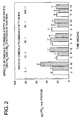
- Fig. 2 shows the effects of dietary omega-6 to omega-3 fatty acid ratios on lipopolysaccharide-induced LTB5 synthesis in dog skin 90 minutes after lipopolysaccharide injection.
- the values are means +/- sem of six dogs per group.
- Fig. 3 shows the effects of dietary omega-6 to omega-3 fatty acid ratios on calcium ionophore A23187-induced LTB4 synthesis in dog neutrophils. The values are means +/- sem of six dogs per group.
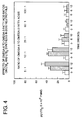
- Fig. 4 shows the effects of dietary omega-6 to omega-3 fatty acid ratios on calcium ionophore A23187-induced LTB5 synthesis in dog neutrophils. The values are means +/- sem of six dogs per group.
- Fig. 5 shows the effects of dietary omega-6 to omega-3 fatty acid ratios on LTB4 in dog plasma. The values are means +/- sem of six dogs per group.
- Fig. 6 shows the effects of dietary omega-6 to omega-3 fatty acid ratios on LTB5 in dog plasma. The values are means +/- sem of six dogs per group.
- This invention effectively reduces skin inflammations and allergic skin reactions in pet animals by using omega-3 fatty acids to reduce the inflammatory effects of omega-6 fatty acids.
- omega-3 fatty acids The n-6 fatty acid connection with inflammatory reactions arises from the fact that fatty acids are converted into isomers of leukotriene B in the body.
- the isomer of leukotriene B derived from n-6 fatty acids is leukotriene B4 (LTB4). Stimulation of LTB4 receptors is one of the primary steps in starting a cascade reaction that perpetuates inflammatory responses in the skin.
- Omega-3 fatty acids are much less proinflammatory.
- Omega-3 fatty acids also reduce the amount of omega-6 fatty acids present in the skin by competing for incorporation into body tissues. Diets enriched in n-3 fatty acids can result in a decrease in concentrations of n-6 fatty acids such as arachidonic acid in several tissues including skin, heart, aorta, platelets, erythrocytes, testis, and adipose tissue in dogs, pigs, rabbits, rats and humans. N-6 and n-3 fatty acids also compete with each other to be enzymatically converted into leukotrienes.
- the net effect of reducing n-6 fatty acid intake and increasing n-3 intake is a large reduction in the amount of proinflammatory LTB4 and an increase in the amount of the much less inflammatory LTB5. This helps to reduce the inflammations and allergic reactions of such common skin disorders as dermatitis and pruritus.
- the pet food composition of the present invention contains a ratio of omega-6 fatty acids to omega-3 fatty acids of from 3:1 to 10:1, preferably from 5:1 to 10:1, and most preferably from 5:1 to 7.5:1.
- a ratio of omega-6 fatty acids to omega-3 fatty acids of from 3:1 to 10:1, preferably from 5:1 to 10:1, and most preferably from 5:1 to 7.5:1.
- At least fifteen percent of the total fatty acids in the pet food composition are n-6 fatty acids. It is also preferred that at least three percent of the total fatty acids in the pet food composition of the present invention be omega-3 fatty acids. This ensures that the n-3 fatty acids will be present in the animal in sufficient quantities to have a significant positive effect.
- the fat source for the omega-3 fatty acids in the product is one or more compounds selected from the group consisting of fish oil and flax, and most preferably is fish oil.
- the omega-3 fatty acids are preferably one or more compounds selected from the group consisting of eicosapentaenoic acid, docosahexaenoic acid, and alpha-linolenic acid. Most preferably, a combination of all three fatty acids is used.
- the pet food product of the present invention can be used to treat and maintain any pet animal, it is preferably used to treat dogs, cats or horses, most preferably dogs.
- the basal diet contained 30-34% crude protein, 20-23% crude fat, 1.5-4.0% crude fiber, 5-8% minerals/ash, and 5-10% moisture with carbohydrates (nitrogen-free extract) forming the balance of the diet.
- the basal diet was formulated with fresh chicken and chicken by-product meal as protein sources, corn and rice as carbohydrate sources, and chicken fat as the lipid source with an overall n-6:n-3 ratio of 28:1.
- the five experimental diets were formulated to the same crude protein, crude fat, and crude fiber levels as the basal diet with varying omega-6 to omega-3 ratios between treatments.
- the ingredients used in the experimental diets were similar to those used in the basal diet with the exception of additional fat sources enriched in specific omega-3 or omega-6 fatty acids.
- Menhaden oil a concentrated source of eicosapentaenoic acid, 20:5n-3, and docosahexaenoic acid, 22:6n-3.
- Flax a concentrated source of alpha-linolenic acid, 18:3n-3) and safflower oil (a concentrated source of linoleic acid, 18:2n-6) were used to produce dietary omega-6:omega-3 fatty acid ratios of 5:1, 10:1, 25:1, 50:1, and 100:1.
- Omega-3 fatty acids were 3.4, 1.8, 0.8, 0.5, and 0.4 percent of total fatty acids for the 5:1, 10:1, 25:1, 50:1, and 100:1 diets, respectively.
- Omega-6 fatty acids were 18.1, 18.7, 19.3, 25.8, and 28.3 percent of total fatty acids for the 5:1, 10:1, 25:1, 50:1, and 100:1 diets, respectively.
- LPS bacterial lipopolysaccharide
- the 5:1 and 10:1 enriched n-3 fatty acid diets had dual effects on LTB synthesis in dog skin.
- the skin concentration of n-6 LTB4 decreased (see Figure 1) and the concentration of the corresponding n-3 isomer of LTB4, LTB5, increased (see Figure 2) after consumption of n-3 enriched diets.
- the 5:1 diet decreased LPS-induced skin LTB4 concentrations by 62% from a baseline concentration of 34 +/- 9 picogram (pg)/milligram (mg) protein to 13 +/- 3 pg/mg protein (see Figure 1).
- the 10:1 diet resulted in a 48% reduction in skin LTB4 concentration at 12 weeks from a basal level of 31 +/- 5 pg/mg protein to 16 +/- 4 pg/mg protein.
- the 25:1, 50:1, and 100:1 diets did not alter LTB4 synthesis significantly in dog skin when compared to pretreatment levels for each group.
- Increased LPS-induced LTB5 immunoreactivity was detected in skin after 12 weeks of feeding the dogs 5:1 and 10:1 diets. Low amounts of LPS-induced LTB5 immunoreactivity were detected in skin tissue from all groups at baseline.
- the 5:1 and 10:1 n-3 enriched diets increased skin LPS-induced LTB5 immunoreactivity by 79% and 48%, respectively (see Figure 2).
- the 5:1 diet increased skin LTB5 immunoreactivity from a baseline concentration of 29 +/- 4 pg/mg protein to 52 +/- 6 pg/mg protein at 12 weeks.
- the 10:1 diet increased skin LTB5 immunoreactivity from a baseline concentration of 21 +/- 3 pg/mg protein to 35 +/- 4 pg/mg protein.
- the other dietary treatments did not significantly alter LPS-induced LTB5 immunoreactivity in dog skin.
- the mean concentration of LTB4 synthesized and released from dog neutrophils was reduced after 6 and 12 weeks of feeding dogs the 5:1 and 10:1 diets (see Figure 3).
- the 5:1 diet reduced the baseline A23187-induced LTB concentration from 77 +/- 8 pg/1.2 x 106 neutrophils to 54 +/- 7 pg/1.2 x 106 neutrophils at 6 weeks, and to 33 +/- 8 pg/1.2 x 106 neutrophils at 12 weeks.
- the 10:1 diet reduced the baseline A23187-induced LTB concentration from 78 +/-11 pg/1.2 x 106 neutrophils to 53 +/- 8 pg/1.2 x 106 neutrophils at 6 weeks, and to 56 +/- 6 pg/1.2 x 106 neutrophils at 12 weeks.
- the other dietary treatments did not significantly alter A23187-induced LTB4 synthesis.
- Leukotriene B5 was readily synthesized and released from neutrophils isolated from dogs fed the 5:1 and 10:1 diets for 6 and 12 weeks (see Figure 4)
- dogs fed a 5:1 diet the A23187-induced LTB5 immunoreactivity increased from a basal concentration of 7 +/- 4 pg/1.2 x 106 neutrophils to 33 +/- 3 pg/1.2 x 106 neutrophils at 6 weeks and 42 +/- 7 pg/1.2 x 106 neutrophils at 12 weeks. This represented increases of 370% and 500% at 6 and 12 weeks, respectively.
- the mean LTB4 plasma concentration for dogs fed a 10:1 diet decreased from a basal concentration of 63 +/- 8 pg/ml to 46 +/- 6 pg/ml at 6 weeks, and to 22 +/- 6 at 12 weeks.
- the 25:1, 50:1, and 100:1 diets did not significantly alter plasma LTB4 concentrations.
- Plasma LTB5 concentrations increased when dogs were fed 5:1 and 10:1 diets (see Figure 6).
- the mean LTB5 plasma concentration for dogs fed a 5:1 diet increased from a basal concentration of 13 +/- 4 pg/ml to 40 +/- 6 pg/ml at 6 weeks, and to 44 +/- 4 at 12 weeks.
- the mean LTB5 plasma concentration for dogs fed a 10:1 diet increased from a basal concentration of 22 +/- 5 pg/ml to 47 +/- 8 pg/ml at 6 weeks, and to 41 +/- 4 at 12 weeks. There was no significant influence of 25:1, 50:1, and 100:1 diets on plasma LTB5 concentrations.
- n-3 and n-6 fatty acids were tested to determine the amounts of omega-3 and omega-6 fatty acids they contain.
- Five diet compositions were tested including Iams Eukanuba Light, Eukanuba Lamb & Rice, and three experimental diets which enhance the quantities of omega-3 and omega-6 fatty acids in Iams Eukanuba Original (Test diet 1), Iams Eukanuba Puppy (Test diet 2), and Iams Eukanuba Adult (Test diet 3).
- the amounts of n-3 and n-6 fatty acids for these diets were determined as percentages of the fatty acid profile and total weight percent of each diet composition. The results are given in Table 1. The percentages of n-3 and n-6 fatty acids used in the 5:1 and 10:1 diets of Examples 1-3 are also presented in Table 1.
- Each data point presented in Tables 1 and 2 is an average of a range of data taken in that category for each diet composition.
- Eukanuba Light was tested 4 times and the range of data for each category is as follows: N-3 % of FAP: 3.7 to 4.5, N-6 % of FAP: 18.4 to 19.2, N-3 % of diet: 0.35 to 0.41, N-6 % of diet: 1.77 to 1.85, N-6 to N-3 ratio: 4.3 to 5.2, ALA % of FAP: 1.4 to 1.7, EPA % of FAP: 0.8 to 1.0, DHA % of FAP: 0.8 to 0.9.
- Eukanuba Lamb & Rice was tested 3 times and the range of data for each category is as follows: N-3 % of FAP: 1.8 to 2.5, N-6 % of FAP: 11.2 to 12.8, N-3 % of diet: 0.27 to 0.37, N-6 % of diet: 1.70 to 1.93, N-6 to N-3 ratio: 5.1 to 6.2, ALA % of FAP: 0.6 to 0.8, EPA % of FAP: 0.3 to 0.5, DHA % of FAP: 0.4 to 0.7.
- Test diet 1 was tested 4 times and the range of data for each category is as follows: N-3 % of FAP: 3.2 to 3.5, N-6 % of FAP: 20.1 to 23.9, N-3 % of diet: 0.48 to 0.68, N-6 % of diet: 3.54 to 4.27, N-6 to N-3 ratio: 6.3 to 7.5, ALA % of FAP: 1.1 to 1.3, EPA % of FAP: 0.7 to 0.8, DHA % of FAP: 0.6 to 0.7.
- Test diet 2 was tested 5 times and the range of data for each category is as follows: N-3 % of FAP: 3.5 to 4.2, N-6 % of FAP: 19.3 to 19.6, N-3 % of diet: 0.81 to 0.94, N-6 % of diet: 4.23 to 4.55, N-6 to N-3 ratio: 4.6 to 5.6, ALA % of FAP: 1.1 to 1.2, EPA % of FAP: 1.1 to 1.3, DHA % of FAP: 0.9 to 1.1.
- Test diet 3 was tested 2 times and the range of data for each category is as follows: N-3 % of FAP: 3.2 to 3.7, N-6 % of FAP: 20.2 to 20.4, N-3 % of diet: 0.52 to 0.64, N-6 % of diet: 3.33 to 3.49, N-6 to N-3 ratio: 5.0 to 6.4, ALA % of FAP: 1.1 to 1.1, EPA % of FAP: 0.9 to 1.0, DHA % of FAP: 0.8 to 0.9.
- feeding pet animals with a diet consisting essentially of the pet food products as hereinbefore described not only reduces allergic and inflammatory conditions in the skin of the animals thereby improving the general comfort and well-being of the animals, but there is also a cosmetic effect in that the appearance of the skin of the animals is improved.
- skin diseases such as dermatitis and pruritis unsightly skin conditions can be avoided or diminished giving the animals an attractive, healthy appearance.
- the present invention also resides in a method of improving the appearance of the skin of a pet animal which comprises feeding said pet animal a diet consisting essentially of a pet food composition containing omega-6 and omega-3 fatty acids in which the ratio of said omega-6 fatty acids to said omega-3 fatty acids is from 3:1 to 10:1 and wherein at least fifteen percent of the total fatty acids in said composition are said omega-6 fatty acids thereby to reduce skin inflammation.
Landscapes
- Life Sciences & Earth Sciences (AREA)
- Chemical & Material Sciences (AREA)
- Polymers & Plastics (AREA)
- Animal Husbandry (AREA)
- Zoology (AREA)
- Engineering & Computer Science (AREA)
- Food Science & Technology (AREA)
- Birds (AREA)
- Fodder In General (AREA)
- Feed For Specific Animals (AREA)
Applications Claiming Priority (2)
| Application Number | Priority Date | Filing Date | Title |
|---|---|---|---|
| US22866994A | 1994-04-18 | 1994-04-18 | |
| US228669 | 1994-04-18 |
Publications (1)
| Publication Number | Publication Date |
|---|---|
| EP0678247A1 true EP0678247A1 (de) | 1995-10-25 |
Family
ID=22858135
Family Applications (1)
| Application Number | Title | Priority Date | Filing Date |
|---|---|---|---|
| EP95302540A Withdrawn EP0678247A1 (de) | 1994-04-18 | 1995-04-18 | Omega-6- und Omega-3-Fettsäuren enthaltendes Haustierfutter |
Country Status (4)
| Country | Link |
|---|---|
| EP (1) | EP0678247A1 (de) |
| JP (1) | JPH0838063A (de) |
| AU (1) | AU1652095A (de) |
| CA (1) | CA2147109A1 (de) |
Cited By (31)
| Publication number | Priority date | Publication date | Assignee | Title |
|---|---|---|---|---|
| WO1997013415A1 (en) * | 1995-10-10 | 1997-04-17 | Colgate-Palmolive Company | Therapeutic diet for dogs with lymphoma |
| DE19706357A1 (de) * | 1997-02-19 | 1998-08-27 | Meyer Lucas Gmbh & Co | Phospholipid-Docosahexaen-Eicosapentaen-Säure-Öl-Gemisch |
| US6001401A (en) * | 1994-09-02 | 1999-12-14 | Designing Health, Inc. | Food supplement composition |
| WO2000000189A1 (en) * | 1998-06-29 | 2000-01-06 | Colgate-Palmolive Company | Method for reducing the damaging effects of radiation therapy on animal skin and mucosa |
| US6060101A (en) * | 1994-09-02 | 2000-05-09 | Designing Health, Inc. | Dietary food supplement |
| US6060102A (en) * | 1994-09-02 | 2000-05-09 | Designing Health, Inc. | Method of preparing food supplement |
| WO2001037678A1 (en) * | 1999-11-24 | 2001-05-31 | The Iams Company | Process for enhancing canine and feline reproductive performance |
| WO2001082720A1 (en) * | 2000-05-01 | 2001-11-08 | The Iams Company | Pet food composition for reducing inflammatory response in cats |
| EP1073343A4 (de) * | 1998-03-24 | 2003-04-23 | Stabar Entpr Inc | Dietetischer zusatz zur verhinderung oder reduzierung von haarausfall |
| WO2003086100A1 (en) * | 2002-04-12 | 2003-10-23 | The Iams Company | Dietary methods for canine performance enhancement |
| US6737078B1 (en) | 1999-11-24 | 2004-05-18 | The Iams Company | Process for enhancing canine and feline reproductive performance |
| WO2004075653A1 (en) * | 2003-02-28 | 2004-09-10 | Wayne Mackinnon | Oral omega-3 fatty acid nutritional supplement for companion animals |
| US20050075399A1 (en) * | 2003-10-01 | 2005-04-07 | The Procter & Gamble Company | Methods and kits for enhancing ability to learn in a puppy or kitten |
| WO2005051093A1 (en) | 2003-11-25 | 2005-06-09 | Hill's Pet Nutrition, Inc. | Composition for animal consumption and method for reducing map kinase activity |
| US6946488B2 (en) | 2000-05-01 | 2005-09-20 | The Iams Company | Pet food composition for reducing inflammatory response in cats |
| US20060024356A1 (en) * | 2004-07-01 | 2006-02-02 | Nestec S.A. | Canine osteoarthritis diet formulation |
| WO2007059439A1 (en) | 2005-11-10 | 2007-05-24 | Hill's Pet Nutrition, Inc. | Compositions and methods for improving skin health and pelage quality |
| WO2007062325A1 (en) | 2005-11-18 | 2007-05-31 | Hill's Pet Nutrition, Inc. | Methods for reducing the amount of proinflammatory substance in animal tissue or body fluid |
| AU2007209781B2 (en) * | 2002-04-12 | 2010-03-04 | Mars, Incorporated | Dietary methods for canine performance enhancement |
| US8148325B2 (en) | 2004-12-30 | 2012-04-03 | Hill's Pet Nutrition, Inc. | Methods for enhancing the quality of life of a senior animal |
| KR101166313B1 (ko) | 2011-04-06 | 2012-07-17 | 박시내 | 오메가-6와 오메가-3 지방산의 비율이 조절된 사료 첨가용 조성물 및 이를 이용한 가축의 사육방법 |
| US8252742B2 (en) | 2004-12-30 | 2012-08-28 | Hill's Pet Nutrition, Inc. | Methods for enhancing the quality of life of a senior animal |
| EP2278885A4 (de) * | 2008-04-21 | 2013-08-28 | Asha Nutrition Sciences Inc | Fetthaltige zusammensetzungen und verfahren zu ihrer verwendung |
| CN103380853A (zh) * | 2013-04-07 | 2013-11-06 | 宝应县金鸡禽业有限公司 | 一种富含ω-3多不饱和脂肪酸和荷叶活性物质鸡蛋的日粮及该鸡蛋的生产方法 |
| CN103385352A (zh) * | 2013-07-17 | 2013-11-13 | 江苏绿茵生物科技有限公司 | 一种宠物食品 |
| US8629183B2 (en) | 2003-08-11 | 2014-01-14 | Hill's Pet Nutrition, Inc. | Methods for decreasing cartilage damage in dogs |
| US8633246B2 (en) | 2003-08-11 | 2014-01-21 | Hill's Pet Nutrition, Inc. | Omega-3 fatty acids for osteoarthritis |
| US8647681B2 (en) | 2001-06-01 | 2014-02-11 | Mars, Inc. | Skin diet |
| US8841344B2 (en) * | 2002-10-03 | 2014-09-23 | Hill's Pet Nutrition, Inc. | Method of using omega-3 fatty acids |
| US20160374940A1 (en) * | 2015-06-29 | 2016-12-29 | Vets Plus, Inc. | Oral delivery compositions for treating dermatitis disorders in mammals |
| US20180279648A1 (en) * | 2015-09-30 | 2018-10-04 | Hill's Pet Nutrition, Inc. | Pet Food Composition for Managing Non-Food Allergies |
Families Citing this family (10)
| Publication number | Priority date | Publication date | Assignee | Title |
|---|---|---|---|---|
| EP1143806B1 (de) * | 1999-09-22 | 2006-04-19 | Societe Des Produits Nestle S.A. | Verfahren zur steigerung der aktivität von haustieren |
| EG22407A (en) * | 2000-02-17 | 2003-01-29 | Iams Company | Method for improving bone modeling and chondrocyte functioning in growing canines |
| DK1641351T3 (da) * | 2003-07-03 | 2014-08-25 | Hills Pet Nutrition Inc | Sammensætninger og fremgangsmåder til at formindske aldersrelateret forringelse af mental aktivitet hos familiedyr |
| EP1896077B1 (de) * | 2005-06-29 | 2012-08-15 | Hill's Pet Nutrition, Inc. | Verfahren und zusammensetzungen zur prävention und behandlung von entzündlichen erkrankungen |
| JP4897426B2 (ja) * | 2005-10-18 | 2012-03-14 | 花王株式会社 | ペットフード |
| JP2007300849A (ja) * | 2006-05-11 | 2007-11-22 | Oji Paper Co Ltd | ペットフード |
| JP5452501B2 (ja) * | 2007-12-21 | 2014-03-26 | ヒルズ・ペット・ニュートリシャン・インコーポレーテッド | ペット用飼料組成物 |
| KR101043686B1 (ko) * | 2008-08-22 | 2011-06-22 | (주)아르테미스코리아 | 애완동물의 피부질환 예방을 위한 애완동물 간식의 제조 방법 |
| MX369318B (es) * | 2013-11-12 | 2019-11-05 | Hills Pet Nutrition Inc | Mejorar el nivel de hidratacion en un gato. |
| MX383445B (es) * | 2016-12-27 | 2025-03-13 | Hills Pet Nutrition Inc Star | Composiciones alimenticias para mascotas. |
Citations (4)
| Publication number | Priority date | Publication date | Assignee | Title |
|---|---|---|---|---|
| WO1988002221A1 (en) * | 1986-09-29 | 1988-04-07 | Kabivitrum Ab | A granulate containing gamma linolenic acid, eicosapentaenoic acid and/or docosahexaenoic acid, the method for its manufacturing, its use in edible products, and a tablet containing it |
| US4868001A (en) * | 1986-10-16 | 1989-09-19 | Kazumitsu Maruta | Feed for animals and process for producing same |
| WO1993025093A1 (en) * | 1991-05-01 | 1993-12-23 | Hannu Karu | Method to manufacture a biotechnical product lowering the cholesterol level in blood and the biotechnical product |
| JPH0662760A (ja) * | 1992-08-19 | 1994-03-08 | Harima Chem Inc | 稚仔魚用の餌料生物栄養強化油脂組成物、稚仔魚用餌料生物、およびそれを用いた稚仔魚増養殖方法 |
Family Cites Families (3)
| Publication number | Priority date | Publication date | Assignee | Title |
|---|---|---|---|---|
| JPH02227030A (ja) * | 1989-02-28 | 1990-09-10 | Nippon Oil & Fats Co Ltd | α―リノレン酸強化油脂性食品 |
| JPH02292397A (ja) * | 1989-05-02 | 1990-12-03 | Lion Corp | 食用油脂組成物及び加工食品 |
| JPH0558902A (ja) * | 1991-08-30 | 1993-03-09 | Nippon Oil & Fats Co Ltd | アレルギー予防油脂組成物 |
-
1995
- 1995-04-13 CA CA002147109A patent/CA2147109A1/en not_active Abandoned
- 1995-04-18 AU AU16520/95A patent/AU1652095A/en not_active Abandoned
- 1995-04-18 EP EP95302540A patent/EP0678247A1/de not_active Withdrawn
- 1995-04-18 JP JP7092576A patent/JPH0838063A/ja active Pending
Patent Citations (4)
| Publication number | Priority date | Publication date | Assignee | Title |
|---|---|---|---|---|
| WO1988002221A1 (en) * | 1986-09-29 | 1988-04-07 | Kabivitrum Ab | A granulate containing gamma linolenic acid, eicosapentaenoic acid and/or docosahexaenoic acid, the method for its manufacturing, its use in edible products, and a tablet containing it |
| US4868001A (en) * | 1986-10-16 | 1989-09-19 | Kazumitsu Maruta | Feed for animals and process for producing same |
| WO1993025093A1 (en) * | 1991-05-01 | 1993-12-23 | Hannu Karu | Method to manufacture a biotechnical product lowering the cholesterol level in blood and the biotechnical product |
| JPH0662760A (ja) * | 1992-08-19 | 1994-03-08 | Harima Chem Inc | 稚仔魚用の餌料生物栄養強化油脂組成物、稚仔魚用餌料生物、およびそれを用いた稚仔魚増養殖方法 |
Non-Patent Citations (1)
| Title |
|---|
| PATENT ABSTRACTS OF JAPAN vol. 018, no. 296 (C - 1209) 6 June 1994 (1994-06-06) * |
Cited By (59)
| Publication number | Priority date | Publication date | Assignee | Title |
|---|---|---|---|---|
| US6001401A (en) * | 1994-09-02 | 1999-12-14 | Designing Health, Inc. | Food supplement composition |
| US6007860A (en) * | 1994-09-02 | 1999-12-28 | Designing Health, Inc. | Preparing food supplement |
| US6060101A (en) * | 1994-09-02 | 2000-05-09 | Designing Health, Inc. | Dietary food supplement |
| US6060102A (en) * | 1994-09-02 | 2000-05-09 | Designing Health, Inc. | Method of preparing food supplement |
| US5776913A (en) * | 1995-10-10 | 1998-07-07 | Colgate Palmolive Company | Therapeutic diet for metabolic abnormalities found in animals with lymphoma |
| WO1997013415A1 (en) * | 1995-10-10 | 1997-04-17 | Colgate-Palmolive Company | Therapeutic diet for dogs with lymphoma |
| DE19706357A1 (de) * | 1997-02-19 | 1998-08-27 | Meyer Lucas Gmbh & Co | Phospholipid-Docosahexaen-Eicosapentaen-Säure-Öl-Gemisch |
| EP1073343A4 (de) * | 1998-03-24 | 2003-04-23 | Stabar Entpr Inc | Dietetischer zusatz zur verhinderung oder reduzierung von haarausfall |
| WO2000000189A1 (en) * | 1998-06-29 | 2000-01-06 | Colgate-Palmolive Company | Method for reducing the damaging effects of radiation therapy on animal skin and mucosa |
| WO2001037678A1 (en) * | 1999-11-24 | 2001-05-31 | The Iams Company | Process for enhancing canine and feline reproductive performance |
| US6737078B1 (en) | 1999-11-24 | 2004-05-18 | The Iams Company | Process for enhancing canine and feline reproductive performance |
| WO2001082720A1 (en) * | 2000-05-01 | 2001-11-08 | The Iams Company | Pet food composition for reducing inflammatory response in cats |
| AU2001257435B2 (en) * | 2000-05-01 | 2006-01-05 | Mars, Incorporated | Pet food composition for reducing inflammatory response in cats |
| US6946488B2 (en) | 2000-05-01 | 2005-09-20 | The Iams Company | Pet food composition for reducing inflammatory response in cats |
| US8647681B2 (en) | 2001-06-01 | 2014-02-11 | Mars, Inc. | Skin diet |
| WO2003086100A1 (en) * | 2002-04-12 | 2003-10-23 | The Iams Company | Dietary methods for canine performance enhancement |
| AU2007209781B2 (en) * | 2002-04-12 | 2010-03-04 | Mars, Incorporated | Dietary methods for canine performance enhancement |
| US8841344B2 (en) * | 2002-10-03 | 2014-09-23 | Hill's Pet Nutrition, Inc. | Method of using omega-3 fatty acids |
| US10071071B2 (en) | 2002-10-03 | 2018-09-11 | Colgate-Palmolive Company | Methods of using omega-3 fatty acids |
| WO2004075653A1 (en) * | 2003-02-28 | 2004-09-10 | Wayne Mackinnon | Oral omega-3 fatty acid nutritional supplement for companion animals |
| US8629182B2 (en) | 2003-08-11 | 2014-01-14 | Hill's Pet Nutrition, Inc. | Method for decreasing cartilage damage in dogs |
| US8629183B2 (en) | 2003-08-11 | 2014-01-14 | Hill's Pet Nutrition, Inc. | Methods for decreasing cartilage damage in dogs |
| US8633247B2 (en) | 2003-08-11 | 2014-01-21 | Hill's Pet Nutrition, Inc. | Method for decreasing cartilage damage in dogs |
| US8633246B2 (en) | 2003-08-11 | 2014-01-21 | Hill's Pet Nutrition, Inc. | Omega-3 fatty acids for osteoarthritis |
| US8921422B2 (en) | 2003-10-01 | 2014-12-30 | The Iams Company | Methods and kits for enhancing ability to learn in a puppy or kitten |
| US20050075399A1 (en) * | 2003-10-01 | 2005-04-07 | The Procter & Gamble Company | Methods and kits for enhancing ability to learn in a puppy or kitten |
| AU2004293110C1 (en) * | 2003-11-25 | 2011-06-02 | Virginia Tech Intellectual Properties, Inc. | Composition for animal consumption and method for reducing map kinase activity |
| EP2260718A1 (de) * | 2003-11-25 | 2010-12-15 | Virginia Tech Intellectual Properties, Inc. | Zusammensetzung für den tierischen Verzehr zur Reduktion der MAP-Kinaseaktivität |
| EP2772140A1 (de) * | 2003-11-25 | 2014-09-03 | Virginia Tech Intellectual Properties, Inc. | Zusammensetzung zur Verringerung der MAP-Kinaseaktivität in Tieren |
| AU2004293110B2 (en) * | 2003-11-25 | 2010-10-07 | Virginia Tech Intellectual Properties, Inc. | Composition for animal consumption and method for reducing map kinase activity |
| US8399411B2 (en) | 2003-11-25 | 2013-03-19 | Virginia Tech Intellectual Properties, Inc. | Composition for animal consumption and method for reducing MAP kinase activity |
| US7744917B2 (en) | 2003-11-25 | 2010-06-29 | Virginia Intellectual Properties Inc. | Composition for animal consumption and method for reducing MAP kinase activity |
| WO2005051093A1 (en) | 2003-11-25 | 2005-06-09 | Hill's Pet Nutrition, Inc. | Composition for animal consumption and method for reducing map kinase activity |
| EP3235384A1 (de) * | 2003-11-25 | 2017-10-25 | Virginia Tech Intellectual Properties, Inc. | Zusammensetzung zum verzehr für tiere |
| US20060024356A1 (en) * | 2004-07-01 | 2006-02-02 | Nestec S.A. | Canine osteoarthritis diet formulation |
| US8637495B2 (en) * | 2004-07-01 | 2014-01-28 | Nestec S.A. | Osteoarthritis diet formulations |
| US8759283B2 (en) | 2004-12-30 | 2014-06-24 | Hill's Pet Nutrition, Inc. | Methods for detecting mRNA and/or protein levels of gene in a biological sample |
| US8252742B2 (en) | 2004-12-30 | 2012-08-28 | Hill's Pet Nutrition, Inc. | Methods for enhancing the quality of life of a senior animal |
| US8148325B2 (en) | 2004-12-30 | 2012-04-03 | Hill's Pet Nutrition, Inc. | Methods for enhancing the quality of life of a senior animal |
| US8669211B2 (en) | 2004-12-30 | 2014-03-11 | Hill's Pet Nutrition, Inc. | Methods for measuring enhancement in the quality of life of an animal |
| WO2007059439A1 (en) | 2005-11-10 | 2007-05-24 | Hill's Pet Nutrition, Inc. | Compositions and methods for improving skin health and pelage quality |
| RU2526631C2 (ru) * | 2005-11-10 | 2014-08-27 | Хилл`С Пет Ньютришн, Инк. | Композиции и способы улучшения состояния кожного покрова и шерстного покрова |
| US8088409B2 (en) | 2005-11-10 | 2012-01-03 | Hill's Pet Nutrition, Inc. | Compositions and methods for improving skin health and pelage quality |
| AU2006315195B2 (en) * | 2005-11-10 | 2011-07-14 | Hill's Pet Nutrition, Inc. | Compositions and methods for improving skin health and pelage quality |
| WO2007062325A1 (en) | 2005-11-18 | 2007-05-31 | Hill's Pet Nutrition, Inc. | Methods for reducing the amount of proinflammatory substance in animal tissue or body fluid |
| US10292958B2 (en) | 2008-04-21 | 2019-05-21 | Asha Nutrition Sciences, Inc. | Lipid-containing compositions and methods of use thereof |
| EP2278885A4 (de) * | 2008-04-21 | 2013-08-28 | Asha Nutrition Sciences Inc | Fetthaltige zusammensetzungen und verfahren zu ihrer verwendung |
| EP3305083A1 (de) * | 2008-04-21 | 2018-04-11 | Asha Nutrition Sciences, Inc. | Fetthaltige zusammensetzungen und verfahren zur verwendung davon |
| KR101166313B1 (ko) | 2011-04-06 | 2012-07-17 | 박시내 | 오메가-6와 오메가-3 지방산의 비율이 조절된 사료 첨가용 조성물 및 이를 이용한 가축의 사육방법 |
| CN103380853A (zh) * | 2013-04-07 | 2013-11-06 | 宝应县金鸡禽业有限公司 | 一种富含ω-3多不饱和脂肪酸和荷叶活性物质鸡蛋的日粮及该鸡蛋的生产方法 |
| CN103380853B (zh) * | 2013-04-07 | 2016-02-17 | 宝应县金鸡禽业有限公司 | 一种富含ω-3多不饱和脂肪酸和荷叶活性物质鸡蛋的日粮及该鸡蛋的生产方法 |
| CN103385352B (zh) * | 2013-07-17 | 2014-11-05 | 江苏绿茵生物科技有限公司 | 一种宠物食品 |
| CN103385352A (zh) * | 2013-07-17 | 2013-11-13 | 江苏绿茵生物科技有限公司 | 一种宠物食品 |
| US20160374940A1 (en) * | 2015-06-29 | 2016-12-29 | Vets Plus, Inc. | Oral delivery compositions for treating dermatitis disorders in mammals |
| US10406232B2 (en) * | 2015-06-29 | 2019-09-10 | Vets Plus, Inc. | Oral delivery compositions for treating dermatitis disorders in mammals |
| US20180279648A1 (en) * | 2015-09-30 | 2018-10-04 | Hill's Pet Nutrition, Inc. | Pet Food Composition for Managing Non-Food Allergies |
| US10842169B2 (en) * | 2015-09-30 | 2020-11-24 | Hill's Pet Nutrition, Inc. | Pet food composition for managing non-food allergies |
| EP3884784A1 (de) * | 2015-09-30 | 2021-09-29 | Hill's Pet Nutrition, Inc. | Haustierfutterzusammensetzung zur verwaltung von nicht-nahrungsmittelallergien |
| US11284633B2 (en) | 2015-09-30 | 2022-03-29 | Hills Pet Nutrition, Inc. | Pet food composition for managing non-food allergies |
Also Published As
| Publication number | Publication date |
|---|---|
| CA2147109A1 (en) | 1995-10-19 |
| JPH0838063A (ja) | 1996-02-13 |
| AU1652095A (en) | 1995-10-26 |
Similar Documents
| Publication | Publication Date | Title |
|---|---|---|
| EP0678247A1 (de) | Omega-6- und Omega-3-Fettsäuren enthaltendes Haustierfutter | |
| US6054147A (en) | Method for increasing the incorporation efficiency of omega-3 highly unsaturated fatty acid in poultry meat | |
| Gonzalez-Esquerra et al. | Alternatives for enrichment of eggs and chicken meat with omega-3 fatty acids | |
| Raes et al. | Effect of dietary fatty acids on incorporation of long chain polyunsaturated fatty acids and conjugated linoleic acid in lamb, beef and pork meat: a review | |
| Scollan et al. | Manipulating the fatty acid composition of muscle and adipose tissue in beef cattle | |
| EP1392127B1 (de) | Verfahren zur verbesserung des geschmacks, der zartheit und der verbraucherakzeptanz insgesamt von geflügelfleisch | |
| DE69019524T2 (de) | Karnitindiät für ausgewachsene schweine. | |
| JP2003210115A (ja) | 肥満動物のための体重管理システム | |
| RU2358439C2 (ru) | Композиция для потребления животным | |
| Prado et al. | The influence of dietary soyabean and linseed on the chemical composition and fatty acid profile of the Longissimus muscle of feedlot-finished bulls | |
| CN106417970A (zh) | 包含有益脂肪酸的家禽肉和蛋 | |
| Kowalska et al. | Meat quality of rabbits fed a diet supplemented with fish oil and antioxidant. | |
| Parsons et al. | Effect of dietary protein and added fat levels on performance of young laying hens | |
| Mir et al. | Growth performance, tissue lipid composition and metabolism, health indices, and serum lipid chemistry of broiler chicken in response to dietary flaxseed and chromium: Flaxseed and chromium in chicken nutrition | |
| Kartikasari et al. | Omega-3 profiles and chemical substances of chicken meat fed diets containing purslane (Portulaca oleraceae) meal rich in omega-3 fats | |
| LIU et al. | The effect of dietary vegetable oilseeds supplement on fatty acid profiles in milk fat from lactating dairy cows | |
| Chae et al. | Effects of inclusion levels of dietary vitamins and trace minerals on growth performance and pork stability in finishing pigs | |
| White et al. | The impact of added diet fat on carcass fat quality. | |
| Mir et al. | Dietary flaxseed meal and chromium: a nutritional intervention in broiler chicken to study the prospective growth performance, tissue lipid composition and metabolism, health indices, and serum lipid chemistry | |
| Palmegiano et al. | Effect of feeding level on nutritional quality of rainbow trout (Oncorhynchus mykiss) flesh | |
| Sharaf et al. | The Effect of Adding Palm Fat Powder to Growing Bovine Calves' Ration on Growth Rate and Redox Status. | |
| Diser | Effect of feeding fatty acids to poultry | |
| Ruban et al. | Nutritional interventions in improvement of Rabbit meat quality: An overview | |
| Abril et al. | Applications of single cell oils for animal nutrition | |
| STICKNEY | Effects of dietary lipids and lipid-temperature interactions on growth, food conversion, percentage lipid and fatty acid composition of channel catfish |
Legal Events
| Date | Code | Title | Description |
|---|---|---|---|
| PUAI | Public reference made under article 153(3) epc to a published international application that has entered the european phase |
Free format text: ORIGINAL CODE: 0009012 |
|
| AK | Designated contracting states |
Kind code of ref document: A1 Designated state(s): BE DE FR GB |
|
| 17P | Request for examination filed |
Effective date: 19960418 |
|
| STAA | Information on the status of an ep patent application or granted ep patent |
Free format text: STATUS: THE APPLICATION HAS BEEN WITHDRAWN |
|
| 18W | Application withdrawn |
Withdrawal date: 19990319 |