EP0682054A2 - Biologisch abbaubares Kopolymer, biologisch abbaubare polymere Zusammensetzung, biologisch abbaubares Produkt und deren Herstellung - Google Patents
Biologisch abbaubares Kopolymer, biologisch abbaubare polymere Zusammensetzung, biologisch abbaubares Produkt und deren Herstellung Download PDFInfo
- Publication number
- EP0682054A2 EP0682054A2 EP95401073A EP95401073A EP0682054A2 EP 0682054 A2 EP0682054 A2 EP 0682054A2 EP 95401073 A EP95401073 A EP 95401073A EP 95401073 A EP95401073 A EP 95401073A EP 0682054 A2 EP0682054 A2 EP 0682054A2
- Authority
- EP
- European Patent Office
- Prior art keywords
- biodegradable
- mol
- copolymer
- carbonate
- caprolactone
- Prior art date
- Legal status (The legal status is an assumption and is not a legal conclusion. Google has not performed a legal analysis and makes no representation as to the accuracy of the status listed.)
- Granted
Links
- 229920001577 copolymer Polymers 0.000 title claims abstract description 88
- 238000002360 preparation method Methods 0.000 title claims abstract description 33
- 239000000203 mixture Substances 0.000 title claims abstract description 30
- 229920002988 biodegradable polymer Polymers 0.000 title claims description 10
- 239000004621 biodegradable polymer Substances 0.000 title claims description 10
- 239000000178 monomer Substances 0.000 claims abstract description 69
- 238000000034 method Methods 0.000 claims abstract description 44
- 229920005604 random copolymer Polymers 0.000 claims abstract description 41
- 239000003999 initiator Substances 0.000 claims abstract description 31
- 150000002596 lactones Chemical class 0.000 claims abstract description 25
- 229910052782 aluminium Inorganic materials 0.000 claims abstract description 24
- XAGFODPZIPBFFR-UHFFFAOYSA-N aluminium Chemical compound [Al] XAGFODPZIPBFFR-UHFFFAOYSA-N 0.000 claims abstract description 24
- 238000007142 ring opening reaction Methods 0.000 claims abstract description 24
- 150000005676 cyclic carbonates Chemical class 0.000 claims abstract description 23
- 239000002841 Lewis acid Substances 0.000 claims abstract description 21
- 150000007517 lewis acids Chemical class 0.000 claims abstract description 21
- 238000012644 addition polymerization Methods 0.000 claims abstract description 8
- OZJPLYNZGCXSJM-UHFFFAOYSA-N 5-valerolactone Chemical compound O=C1CCCCO1 OZJPLYNZGCXSJM-UHFFFAOYSA-N 0.000 claims description 78
- PAPBSGBWRJIAAV-UHFFFAOYSA-N ε-Caprolactone Chemical compound O=C1CCCCCO1 PAPBSGBWRJIAAV-UHFFFAOYSA-N 0.000 claims description 59
- -1 poly(epsilon-caprolactone) Polymers 0.000 claims description 50
- AHHWIHXENZJRFG-UHFFFAOYSA-N oxetane Chemical compound C1COC1 AHHWIHXENZJRFG-UHFFFAOYSA-N 0.000 claims description 37
- JRFXQKZEGILCCO-UHFFFAOYSA-N 5,5-dimethyl-1,3-dioxan-2-one Chemical compound CC1(C)COC(=O)OC1 JRFXQKZEGILCCO-UHFFFAOYSA-N 0.000 claims description 18
- 229920001610 polycaprolactone Polymers 0.000 claims description 15
- OKTJSMMVPCPJKN-UHFFFAOYSA-N Carbon Chemical compound [C] OKTJSMMVPCPJKN-UHFFFAOYSA-N 0.000 claims description 12
- BVKZGUZCCUSVTD-UHFFFAOYSA-L Carbonate Chemical compound [O-]C([O-])=O BVKZGUZCCUSVTD-UHFFFAOYSA-L 0.000 claims description 12
- LYCAIKOWRPUZTN-UHFFFAOYSA-N Ethylene glycol Chemical compound OCCO LYCAIKOWRPUZTN-UHFFFAOYSA-N 0.000 claims description 12
- 125000000217 alkyl group Chemical group 0.000 claims description 12
- 229910052799 carbon Inorganic materials 0.000 claims description 9
- 229920001042 poly(δ-valerolactone) Polymers 0.000 claims description 7
- LFQSCWFLJHTTHZ-UHFFFAOYSA-N Ethanol Chemical compound CCO LFQSCWFLJHTTHZ-UHFFFAOYSA-N 0.000 claims description 4
- 229940093476 ethylene glycol Drugs 0.000 claims description 4
- 125000002887 hydroxy group Chemical group [H]O* 0.000 claims description 4
- SLCVBVWXLSEKPL-UHFFFAOYSA-N neopentyl glycol Chemical group OCC(C)(C)CO SLCVBVWXLSEKPL-UHFFFAOYSA-N 0.000 claims description 4
- 229940117969 neopentyl glycol Drugs 0.000 claims description 4
- 125000000999 tert-butyl group Chemical group [H]C([H])([H])C(*)(C([H])([H])[H])C([H])([H])[H] 0.000 claims description 4
- ZAMOUSCENKQFHK-UHFFFAOYSA-N Chlorine atom Chemical compound [Cl] ZAMOUSCENKQFHK-UHFFFAOYSA-N 0.000 claims description 3
- 229910052801 chlorine Inorganic materials 0.000 claims description 3
- 239000000460 chlorine Substances 0.000 claims description 3
- 125000001997 phenyl group Chemical group [H]C1=C([H])C([H])=C(*)C([H])=C1[H] 0.000 claims description 3
- WKBOTKDWSSQWDR-UHFFFAOYSA-N Bromine atom Chemical compound [Br] WKBOTKDWSSQWDR-UHFFFAOYSA-N 0.000 claims description 2
- GDTBXPJZTBHREO-UHFFFAOYSA-N bromine Substances BrBr GDTBXPJZTBHREO-UHFFFAOYSA-N 0.000 claims description 2
- 229910052794 bromium Inorganic materials 0.000 claims description 2
- PNDPGZBMCMUPRI-UHFFFAOYSA-N iodine Chemical compound II PNDPGZBMCMUPRI-UHFFFAOYSA-N 0.000 claims description 2
- DNIAPMSPPWPWGF-GSVOUGTGSA-N (R)-(-)-Propylene glycol Chemical compound C[C@@H](O)CO DNIAPMSPPWPWGF-GSVOUGTGSA-N 0.000 claims 2
- 229920001519 homopolymer Polymers 0.000 description 47
- 230000000052 comparative effect Effects 0.000 description 33
- 229920000642 polymer Polymers 0.000 description 23
- 229920001400 block copolymer Polymers 0.000 description 19
- 238000006116 polymerization reaction Methods 0.000 description 19
- YXFVVABEGXRONW-UHFFFAOYSA-N Toluene Chemical compound CC1=CC=CC=C1 YXFVVABEGXRONW-UHFFFAOYSA-N 0.000 description 18
- 230000015556 catabolic process Effects 0.000 description 18
- 238000006731 degradation reaction Methods 0.000 description 18
- VLKZOEOYAKHREP-UHFFFAOYSA-N n-Hexane Chemical compound CCCCCC VLKZOEOYAKHREP-UHFFFAOYSA-N 0.000 description 15
- 108090000790 Enzymes Proteins 0.000 description 13
- 102000004190 Enzymes Human genes 0.000 description 13
- 239000003054 catalyst Substances 0.000 description 13
- 238000006243 chemical reaction Methods 0.000 description 13
- 238000005160 1H NMR spectroscopy Methods 0.000 description 12
- UOJDYENJFODXBG-UHFFFAOYSA-N triethylalumane;hydrate Chemical compound O.CC[Al](CC)CC UOJDYENJFODXBG-UHFFFAOYSA-N 0.000 description 11
- 239000002904 solvent Substances 0.000 description 10
- 239000000463 material Substances 0.000 description 9
- 238000007334 copolymerization reaction Methods 0.000 description 8
- 238000011534 incubation Methods 0.000 description 8
- XLYOFNOQVPJJNP-UHFFFAOYSA-N water Substances O XLYOFNOQVPJJNP-UHFFFAOYSA-N 0.000 description 8
- 125000004122 cyclic group Chemical group 0.000 description 7
- UHOVQNZJYSORNB-UHFFFAOYSA-N Benzene Chemical compound C1=CC=CC=C1 UHOVQNZJYSORNB-UHFFFAOYSA-N 0.000 description 6
- HEDRZPFGACZZDS-UHFFFAOYSA-N Chloroform Chemical compound ClC(Cl)Cl HEDRZPFGACZZDS-UHFFFAOYSA-N 0.000 description 6
- ATJFFYVFTNAWJD-UHFFFAOYSA-N Tin Chemical compound [Sn] ATJFFYVFTNAWJD-UHFFFAOYSA-N 0.000 description 5
- 238000009826 distribution Methods 0.000 description 5
- 238000002156 mixing Methods 0.000 description 5
- 238000003756 stirring Methods 0.000 description 5
- KSBAEPSJVUENNK-UHFFFAOYSA-L tin(ii) 2-ethylhexanoate Chemical compound [Sn+2].CCCCC(CC)C([O-])=O.CCCCC(CC)C([O-])=O KSBAEPSJVUENNK-UHFFFAOYSA-L 0.000 description 5
- AYVFLTWVBDDRGB-UHFFFAOYSA-N (3-hydroxy-2,2-dimethylpropyl) hydrogen carbonate Chemical compound OCC(C)(C)COC(O)=O AYVFLTWVBDDRGB-UHFFFAOYSA-N 0.000 description 4
- IMNFDUFMRHMDMM-UHFFFAOYSA-N N-Heptane Chemical compound CCCCCCC IMNFDUFMRHMDMM-UHFFFAOYSA-N 0.000 description 4
- 238000006065 biodegradation reaction Methods 0.000 description 4
- 238000012662 bulk polymerization Methods 0.000 description 4
- 238000010528 free radical solution polymerization reaction Methods 0.000 description 4
- 239000010802 sludge Substances 0.000 description 4
- 239000002689 soil Substances 0.000 description 4
- YMWUJEATGCHHMB-UHFFFAOYSA-N Dichloromethane Chemical compound ClCCl YMWUJEATGCHHMB-UHFFFAOYSA-N 0.000 description 3
- RTZKZFJDLAIYFH-UHFFFAOYSA-N Diethyl ether Chemical compound CCOCC RTZKZFJDLAIYFH-UHFFFAOYSA-N 0.000 description 3
- OKKJLVBELUTLKV-UHFFFAOYSA-N Methanol Chemical compound OC OKKJLVBELUTLKV-UHFFFAOYSA-N 0.000 description 3
- 239000004793 Polystyrene Substances 0.000 description 3
- 229920000704 biodegradable plastic Polymers 0.000 description 3
- MTHSVFCYNBDYFN-UHFFFAOYSA-N diethylene glycol Chemical compound OCCOCCO MTHSVFCYNBDYFN-UHFFFAOYSA-N 0.000 description 3
- 239000001257 hydrogen Substances 0.000 description 3
- 229910052739 hydrogen Inorganic materials 0.000 description 3
- 238000004519 manufacturing process Methods 0.000 description 3
- 125000002496 methyl group Chemical group [H]C([H])([H])* 0.000 description 3
- 150000002902 organometallic compounds Chemical class 0.000 description 3
- 229920002223 polystyrene Polymers 0.000 description 3
- 239000007858 starting material Substances 0.000 description 3
- 239000000725 suspension Substances 0.000 description 3
- YFHICDDUDORKJB-UHFFFAOYSA-N trimethylene carbonate Chemical compound O=C1OCCCO1 YFHICDDUDORKJB-UHFFFAOYSA-N 0.000 description 3
- 238000005406 washing Methods 0.000 description 3
- TXUICONDJPYNPY-UHFFFAOYSA-N (1,10,13-trimethyl-3-oxo-4,5,6,7,8,9,11,12,14,15,16,17-dodecahydrocyclopenta[a]phenanthren-17-yl) heptanoate Chemical compound C1CC2CC(=O)C=C(C)C2(C)C2C1C1CCC(OC(=O)CCCCCC)C1(C)CC2 TXUICONDJPYNPY-UHFFFAOYSA-N 0.000 description 2
- UHZLTTPUIQXNPO-UHFFFAOYSA-N 2,6-ditert-butyl-3-methylphenol Chemical compound CC1=CC=C(C(C)(C)C)C(O)=C1C(C)(C)C UHZLTTPUIQXNPO-UHFFFAOYSA-N 0.000 description 2
- VZSRBBMJRBPUNF-UHFFFAOYSA-N 2-(2,3-dihydro-1H-inden-2-ylamino)-N-[3-oxo-3-(2,4,6,7-tetrahydrotriazolo[4,5-c]pyridin-5-yl)propyl]pyrimidine-5-carboxamide Chemical compound C1C(CC2=CC=CC=C12)NC1=NC=C(C=N1)C(=O)NCCC(N1CC2=C(CC1)NN=N2)=O VZSRBBMJRBPUNF-UHFFFAOYSA-N 0.000 description 2
- OBETXYAYXDNJHR-UHFFFAOYSA-N 2-Ethylhexanoic acid Chemical compound CCCCC(CC)C(O)=O OBETXYAYXDNJHR-UHFFFAOYSA-N 0.000 description 2
- FYELSNVLZVIGTI-UHFFFAOYSA-N 2-[4-[2-(2,3-dihydro-1H-inden-2-ylamino)pyrimidin-5-yl]-5-ethylpyrazol-1-yl]-1-(2,4,6,7-tetrahydrotriazolo[4,5-c]pyridin-5-yl)ethanone Chemical compound C1C(CC2=CC=CC=C12)NC1=NC=C(C=N1)C=1C=NN(C=1CC)CC(=O)N1CC2=C(CC1)NN=N2 FYELSNVLZVIGTI-UHFFFAOYSA-N 0.000 description 2
- 125000000954 2-hydroxyethyl group Chemical group [H]C([*])([H])C([H])([H])O[H] 0.000 description 2
- IJGRMHOSHXDMSA-UHFFFAOYSA-N Atomic nitrogen Chemical compound N#N IJGRMHOSHXDMSA-UHFFFAOYSA-N 0.000 description 2
- NLZUEZXRPGMBCV-UHFFFAOYSA-N Butylhydroxytoluene Chemical compound CC1=CC(C(C)(C)C)=C(O)C(C(C)(C)C)=C1 NLZUEZXRPGMBCV-UHFFFAOYSA-N 0.000 description 2
- XDTMQSROBMDMFD-UHFFFAOYSA-N Cyclohexane Chemical compound C1CCCCC1 XDTMQSROBMDMFD-UHFFFAOYSA-N 0.000 description 2
- IAYPIBMASNFSPL-UHFFFAOYSA-N Ethylene oxide Chemical compound C1CO1 IAYPIBMASNFSPL-UHFFFAOYSA-N 0.000 description 2
- KFZMGEQAYNKOFK-UHFFFAOYSA-N Isopropanol Chemical compound CC(C)O KFZMGEQAYNKOFK-UHFFFAOYSA-N 0.000 description 2
- 101710098554 Lipase B Proteins 0.000 description 2
- CTQNGGLPUBDAKN-UHFFFAOYSA-N O-Xylene Chemical compound CC1=CC=CC=C1C CTQNGGLPUBDAKN-UHFFFAOYSA-N 0.000 description 2
- NBIIXXVUZAFLBC-UHFFFAOYSA-N Phosphoric acid Chemical compound OP(O)(O)=O NBIIXXVUZAFLBC-UHFFFAOYSA-N 0.000 description 2
- 241000235527 Rhizopus Species 0.000 description 2
- 108010055297 Sterol Esterase Proteins 0.000 description 2
- 102000000019 Sterol Esterase Human genes 0.000 description 2
- 229910021626 Tin(II) chloride Inorganic materials 0.000 description 2
- 238000010521 absorption reaction Methods 0.000 description 2
- 238000007259 addition reaction Methods 0.000 description 2
- 150000001338 aliphatic hydrocarbons Chemical class 0.000 description 2
- XXROGKLTLUQVRX-UHFFFAOYSA-N allyl alcohol Chemical compound OCC=C XXROGKLTLUQVRX-UHFFFAOYSA-N 0.000 description 2
- 125000003277 amino group Chemical group 0.000 description 2
- 238000004458 analytical method Methods 0.000 description 2
- 150000004945 aromatic hydrocarbons Chemical class 0.000 description 2
- IISBACLAFKSPIT-UHFFFAOYSA-N bisphenol A Chemical compound C=1C=C(O)C=CC=1C(C)(C)C1=CC=C(O)C=C1 IISBACLAFKSPIT-UHFFFAOYSA-N 0.000 description 2
- 238000009835 boiling Methods 0.000 description 2
- SHZIWNPUGXLXDT-UHFFFAOYSA-N caproic acid ethyl ester Natural products CCCCCC(=O)OCC SHZIWNPUGXLXDT-UHFFFAOYSA-N 0.000 description 2
- 238000000576 coating method Methods 0.000 description 2
- 150000001875 compounds Chemical class 0.000 description 2
- 238000010276 construction Methods 0.000 description 2
- 229910001873 dinitrogen Inorganic materials 0.000 description 2
- 238000001035 drying Methods 0.000 description 2
- 125000001495 ethyl group Chemical group [H]C([H])([H])C([H])([H])* 0.000 description 2
- 238000001704 evaporation Methods 0.000 description 2
- 238000001914 filtration Methods 0.000 description 2
- 239000011521 glass Substances 0.000 description 2
- 125000004435 hydrogen atom Chemical group [H]* 0.000 description 2
- 239000012535 impurity Substances 0.000 description 2
- JVTAAEKCZFNVCJ-UHFFFAOYSA-N lactic acid Chemical compound CC(O)C(O)=O JVTAAEKCZFNVCJ-UHFFFAOYSA-N 0.000 description 2
- 238000010030 laminating Methods 0.000 description 2
- 239000011968 lewis acid catalyst Substances 0.000 description 2
- 238000010926 purge Methods 0.000 description 2
- 229910052761 rare earth metal Inorganic materials 0.000 description 2
- 238000004062 sedimentation Methods 0.000 description 2
- 238000000926 separation method Methods 0.000 description 2
- 235000011150 stannous chloride Nutrition 0.000 description 2
- 239000001119 stannous chloride Substances 0.000 description 2
- 229920001169 thermoplastic Polymers 0.000 description 2
- 239000004416 thermosoftening plastic Substances 0.000 description 2
- JLTRXTDYQLMHGR-UHFFFAOYSA-N trimethylaluminium Chemical compound C[Al](C)C JLTRXTDYQLMHGR-UHFFFAOYSA-N 0.000 description 2
- 239000002699 waste material Substances 0.000 description 2
- 239000008096 xylene Substances 0.000 description 2
- BGJSXRVXTHVRSN-UHFFFAOYSA-N 1,3,5-trioxane Chemical compound C1OCOCO1 BGJSXRVXTHVRSN-UHFFFAOYSA-N 0.000 description 1
- RYHBNJHYFVUHQT-UHFFFAOYSA-N 1,4-Dioxane Chemical compound C1COCCO1 RYHBNJHYFVUHQT-UHFFFAOYSA-N 0.000 description 1
- LINPIYWFGCPVIE-UHFFFAOYSA-N 2,4,6-trichlorophenol Chemical compound OC1=C(Cl)C=C(Cl)C=C1Cl LINPIYWFGCPVIE-UHFFFAOYSA-N 0.000 description 1
- ATGFTMUSEPZNJD-UHFFFAOYSA-N 2,6-diphenylphenol Chemical compound OC1=C(C=2C=CC=CC=2)C=CC=C1C1=CC=CC=C1 ATGFTMUSEPZNJD-UHFFFAOYSA-N 0.000 description 1
- XSGMGAINOILNJR-UHFFFAOYSA-N 2-(9h-fluoren-9-ylmethoxycarbonylamino)-3-methyl-3-tritylsulfanylbutanoic acid Chemical compound C12=CC=CC=C2C2=CC=CC=C2C1COC(=O)NC(C(O)=O)C(C)(C)SC(C=1C=CC=CC=1)(C=1C=CC=CC=1)C1=CC=CC=C1 XSGMGAINOILNJR-UHFFFAOYSA-N 0.000 description 1
- LPZOCVVDSHQFST-UHFFFAOYSA-N 2-[4-[2-(2,3-dihydro-1H-inden-2-ylamino)pyrimidin-5-yl]-3-ethylpyrazol-1-yl]-1-(2,4,6,7-tetrahydrotriazolo[4,5-c]pyridin-5-yl)ethanone Chemical compound C1C(CC2=CC=CC=C12)NC1=NC=C(C=N1)C=1C(=NN(C=1)CC(=O)N1CC2=C(CC1)NN=N2)CC LPZOCVVDSHQFST-UHFFFAOYSA-N 0.000 description 1
- YEYKMVJDLWJFOA-UHFFFAOYSA-N 2-propoxyethanol Chemical compound CCCOCCO YEYKMVJDLWJFOA-UHFFFAOYSA-N 0.000 description 1
- SXIFAEWFOJETOA-UHFFFAOYSA-N 4-hydroxy-butyl Chemical group [CH2]CCCO SXIFAEWFOJETOA-UHFFFAOYSA-N 0.000 description 1
- OVDQEUFSGODEBT-UHFFFAOYSA-N 4-methyl-1,3-dioxan-2-one Chemical compound CC1CCOC(=O)O1 OVDQEUFSGODEBT-UHFFFAOYSA-N 0.000 description 1
- VNXMFQWTDCWMDQ-UHFFFAOYSA-N 5-methyloxepan-2-one Chemical compound CC1CCOC(=O)CC1 VNXMFQWTDCWMDQ-UHFFFAOYSA-N 0.000 description 1
- IWHLYPDWHHPVAA-UHFFFAOYSA-N 6-hydroxyhexanoic acid Chemical compound OCCCCCC(O)=O IWHLYPDWHHPVAA-UHFFFAOYSA-N 0.000 description 1
- ZCYVEMRRCGMTRW-UHFFFAOYSA-N 7553-56-2 Chemical compound [I] ZCYVEMRRCGMTRW-UHFFFAOYSA-N 0.000 description 1
- NIXOWILDQLNWCW-UHFFFAOYSA-M Acrylate Chemical compound [O-]C(=O)C=C NIXOWILDQLNWCW-UHFFFAOYSA-M 0.000 description 1
- 241000228212 Aspergillus Species 0.000 description 1
- PXGOKWXKJXAPGV-UHFFFAOYSA-N Fluorine Chemical compound FF PXGOKWXKJXAPGV-UHFFFAOYSA-N 0.000 description 1
- 241000233866 Fungi Species 0.000 description 1
- UFHFLCQGNIYNRP-UHFFFAOYSA-N Hydrogen Chemical compound [H][H] UFHFLCQGNIYNRP-UHFFFAOYSA-N 0.000 description 1
- 229920000663 Hydroxyethyl cellulose Polymers 0.000 description 1
- 108090001060 Lipase Proteins 0.000 description 1
- 239000004367 Lipase Substances 0.000 description 1
- 102000004882 Lipase Human genes 0.000 description 1
- WHXSMMKQMYFTQS-UHFFFAOYSA-N Lithium Chemical compound [Li] WHXSMMKQMYFTQS-UHFFFAOYSA-N 0.000 description 1
- NIPNSKYNPDTRPC-UHFFFAOYSA-N N-[2-oxo-2-(2,4,6,7-tetrahydrotriazolo[4,5-c]pyridin-5-yl)ethyl]-2-[[3-(trifluoromethoxy)phenyl]methylamino]pyrimidine-5-carboxamide Chemical compound O=C(CNC(=O)C=1C=NC(=NC=1)NCC1=CC(=CC=C1)OC(F)(F)F)N1CC2=C(CC1)NN=N2 NIPNSKYNPDTRPC-UHFFFAOYSA-N 0.000 description 1
- AFCARXCZXQIEQB-UHFFFAOYSA-N N-[3-oxo-3-(2,4,6,7-tetrahydrotriazolo[4,5-c]pyridin-5-yl)propyl]-2-[[3-(trifluoromethoxy)phenyl]methylamino]pyrimidine-5-carboxamide Chemical compound O=C(CCNC(=O)C=1C=NC(=NC=1)NCC1=CC(=CC=C1)OC(F)(F)F)N1CC2=C(CC1)NN=N2 AFCARXCZXQIEQB-UHFFFAOYSA-N 0.000 description 1
- 238000005481 NMR spectroscopy Methods 0.000 description 1
- 241000228168 Penicillium sp. Species 0.000 description 1
- 239000004372 Polyvinyl alcohol Substances 0.000 description 1
- GOOHAUXETOMSMM-UHFFFAOYSA-N Propylene oxide Chemical compound CC1CO1 GOOHAUXETOMSMM-UHFFFAOYSA-N 0.000 description 1
- VYPSYNLAJGMNEJ-UHFFFAOYSA-N Silicium dioxide Chemical compound O=[Si]=O VYPSYNLAJGMNEJ-UHFFFAOYSA-N 0.000 description 1
- 229920002472 Starch Polymers 0.000 description 1
- ZJCCRDAZUWHFQH-UHFFFAOYSA-N Trimethylolpropane Chemical compound CCC(CO)(CO)CO ZJCCRDAZUWHFQH-UHFFFAOYSA-N 0.000 description 1
- HCHKCACWOHOZIP-UHFFFAOYSA-N Zinc Chemical compound [Zn] HCHKCACWOHOZIP-UHFFFAOYSA-N 0.000 description 1
- 230000002411 adverse Effects 0.000 description 1
- 150000001298 alcohols Chemical class 0.000 description 1
- 125000001931 aliphatic group Chemical group 0.000 description 1
- 229920003232 aliphatic polyester Polymers 0.000 description 1
- 239000013566 allergen Substances 0.000 description 1
- PNEYBMLMFCGWSK-UHFFFAOYSA-N aluminium oxide Inorganic materials [O-2].[O-2].[O-2].[Al+3].[Al+3] PNEYBMLMFCGWSK-UHFFFAOYSA-N 0.000 description 1
- 229910000147 aluminium phosphate Inorganic materials 0.000 description 1
- 125000003118 aryl group Chemical group 0.000 description 1
- VEZXCJBBBCKRPI-UHFFFAOYSA-N beta-propiolactone Chemical compound O=C1CCO1 VEZXCJBBBCKRPI-UHFFFAOYSA-N 0.000 description 1
- 229920006167 biodegradable resin Polymers 0.000 description 1
- 239000008280 blood Substances 0.000 description 1
- 210000004369 blood Anatomy 0.000 description 1
- 239000007853 buffer solution Substances 0.000 description 1
- 244000309464 bull Species 0.000 description 1
- CDQSJQSWAWPGKG-UHFFFAOYSA-N butane-1,1-diol Chemical compound CCCC(O)O CDQSJQSWAWPGKG-UHFFFAOYSA-N 0.000 description 1
- 125000000484 butyl group Chemical group [H]C([*])([H])C([H])([H])C([H])([H])C([H])([H])[H] 0.000 description 1
- 239000002775 capsule Substances 0.000 description 1
- 125000005587 carbonate group Chemical group 0.000 description 1
- 238000012656 cationic ring opening polymerization Methods 0.000 description 1
- 229920002678 cellulose Polymers 0.000 description 1
- 235000010980 cellulose Nutrition 0.000 description 1
- 239000000919 ceramic Substances 0.000 description 1
- 238000004587 chromatography analysis Methods 0.000 description 1
- 239000003086 colorant Substances 0.000 description 1
- 150000004292 cyclic ethers Chemical class 0.000 description 1
- 238000000354 decomposition reaction Methods 0.000 description 1
- 230000007423 decrease Effects 0.000 description 1
- 230000003247 decreasing effect Effects 0.000 description 1
- 230000000593 degrading effect Effects 0.000 description 1
- 229960004132 diethyl ether Drugs 0.000 description 1
- 239000000539 dimer Substances 0.000 description 1
- 230000008034 disappearance Effects 0.000 description 1
- 238000004821 distillation Methods 0.000 description 1
- 229940079593 drug Drugs 0.000 description 1
- 239000003814 drug Substances 0.000 description 1
- 238000012377 drug delivery Methods 0.000 description 1
- 230000000694 effects Effects 0.000 description 1
- 238000001962 electrophoresis Methods 0.000 description 1
- 238000005516 engineering process Methods 0.000 description 1
- 230000007613 environmental effect Effects 0.000 description 1
- 150000002170 ethers Chemical class 0.000 description 1
- 229940052303 ethers for general anesthesia Drugs 0.000 description 1
- 230000008020 evaporation Effects 0.000 description 1
- 239000000835 fiber Substances 0.000 description 1
- 229910052731 fluorine Inorganic materials 0.000 description 1
- 239000011737 fluorine Substances 0.000 description 1
- 239000006261 foam material Substances 0.000 description 1
- 229920000578 graft copolymer Polymers 0.000 description 1
- 229910002804 graphite Inorganic materials 0.000 description 1
- 239000010439 graphite Substances 0.000 description 1
- 150000008282 halocarbons Chemical class 0.000 description 1
- 229910052736 halogen Inorganic materials 0.000 description 1
- 150000002367 halogens Chemical class 0.000 description 1
- XXMIOPMDWAUFGU-UHFFFAOYSA-N hexane-1,6-diol Chemical compound OCCCCCCO XXMIOPMDWAUFGU-UHFFFAOYSA-N 0.000 description 1
- 150000002431 hydrogen Chemical class 0.000 description 1
- 235000019447 hydroxyethyl cellulose Nutrition 0.000 description 1
- 238000007654 immersion Methods 0.000 description 1
- 239000012442 inert solvent Substances 0.000 description 1
- 230000000977 initiatory effect Effects 0.000 description 1
- 238000011835 investigation Methods 0.000 description 1
- 239000011630 iodine Substances 0.000 description 1
- 229910052740 iodine Inorganic materials 0.000 description 1
- 125000000959 isobutyl group Chemical group [H]C([H])([H])C([H])(C([H])([H])[H])C([H])([H])* 0.000 description 1
- 125000001449 isopropyl group Chemical group [H]C([H])([H])C([H])(*)C([H])([H])[H] 0.000 description 1
- 235000014655 lactic acid Nutrition 0.000 description 1
- 239000004310 lactic acid Substances 0.000 description 1
- JJTUDXZGHPGLLC-UHFFFAOYSA-N lactide Chemical compound CC1OC(=O)C(C)OC1=O JJTUDXZGHPGLLC-UHFFFAOYSA-N 0.000 description 1
- 235000019421 lipase Nutrition 0.000 description 1
- 239000007788 liquid Substances 0.000 description 1
- 229910052744 lithium Inorganic materials 0.000 description 1
- DLEDOFVPSDKWEF-UHFFFAOYSA-N lithium butane Chemical compound [Li+].CCC[CH2-] DLEDOFVPSDKWEF-UHFFFAOYSA-N 0.000 description 1
- 238000010550 living polymerization reaction Methods 0.000 description 1
- 230000014759 maintenance of location Effects 0.000 description 1
- 239000012528 membrane Substances 0.000 description 1
- 125000001570 methylene group Chemical group [H]C([H])([*:1])[*:2] 0.000 description 1
- 244000005700 microbiome Species 0.000 description 1
- 238000012986 modification Methods 0.000 description 1
- 230000004048 modification Effects 0.000 description 1
- 239000003471 mutagenic agent Substances 0.000 description 1
- 231100000707 mutagenic chemical Toxicity 0.000 description 1
- MZRVEZGGRBJDDB-UHFFFAOYSA-N n-Butyllithium Substances [Li]CCCC MZRVEZGGRBJDDB-UHFFFAOYSA-N 0.000 description 1
- 125000004108 n-butyl group Chemical group [H]C([H])([H])C([H])([H])C([H])([H])C([H])([H])* 0.000 description 1
- 125000004123 n-propyl group Chemical group [H]C([H])([H])C([H])([H])C([H])([H])* 0.000 description 1
- WWZKQHOCKIZLMA-UHFFFAOYSA-N octanoic acid Chemical compound CCCCCCCC(O)=O WWZKQHOCKIZLMA-UHFFFAOYSA-N 0.000 description 1
- 239000003305 oil spill Substances 0.000 description 1
- 125000003566 oxetanyl group Chemical group 0.000 description 1
- WXZMFSXDPGVJKK-UHFFFAOYSA-N pentaerythritol Chemical compound OCC(CO)(CO)CO WXZMFSXDPGVJKK-UHFFFAOYSA-N 0.000 description 1
- 229920003023 plastic Polymers 0.000 description 1
- 239000004033 plastic Substances 0.000 description 1
- 229920000747 poly(lactic acid) Polymers 0.000 description 1
- 239000004626 polylactic acid Substances 0.000 description 1
- 230000037048 polymerization activity Effects 0.000 description 1
- 235000019422 polyvinyl alcohol Nutrition 0.000 description 1
- 229920002451 polyvinyl alcohol Polymers 0.000 description 1
- 150000003112 potassium compounds Chemical class 0.000 description 1
- 229960000380 propiolactone Drugs 0.000 description 1
- 230000001681 protective effect Effects 0.000 description 1
- 150000002910 rare earth metals Chemical class 0.000 description 1
- 229920005989 resin Polymers 0.000 description 1
- 239000011347 resin Substances 0.000 description 1
- 238000007086 side reaction Methods 0.000 description 1
- 239000000741 silica gel Substances 0.000 description 1
- 229910002027 silica gel Inorganic materials 0.000 description 1
- 150000003388 sodium compounds Chemical class 0.000 description 1
- 239000000243 solution Substances 0.000 description 1
- 235000019698 starch Nutrition 0.000 description 1
- 239000008107 starch Substances 0.000 description 1
- 239000000126 substance Substances 0.000 description 1
- 239000000758 substrate Substances 0.000 description 1
- 125000003375 sulfoxide group Chemical group 0.000 description 1
- 238000010557 suspension polymerization reaction Methods 0.000 description 1
- 239000004753 textile Substances 0.000 description 1
- 125000003396 thiol group Chemical group [H]S* 0.000 description 1
- 230000001988 toxicity Effects 0.000 description 1
- 231100000419 toxicity Toxicity 0.000 description 1
- MCULRUJILOGHCJ-UHFFFAOYSA-N triisobutylaluminium Chemical compound CC(C)C[Al](CC(C)C)CC(C)C MCULRUJILOGHCJ-UHFFFAOYSA-N 0.000 description 1
- QYERSNHTHORBCJ-UHFFFAOYSA-N trimethylalumane;hydrate Chemical compound O.C[Al](C)C QYERSNHTHORBCJ-UHFFFAOYSA-N 0.000 description 1
- 125000000026 trimethylsilyl group Chemical group [H]C([H])([H])[Si]([*])(C([H])([H])[H])C([H])([H])[H] 0.000 description 1
- 230000004580 weight loss Effects 0.000 description 1
- 229910052725 zinc Inorganic materials 0.000 description 1
- 239000011701 zinc Substances 0.000 description 1
Images





Classifications
-
- C—CHEMISTRY; METALLURGY
- C08—ORGANIC MACROMOLECULAR COMPOUNDS; THEIR PREPARATION OR CHEMICAL WORKING-UP; COMPOSITIONS BASED THEREON
- C08G—MACROMOLECULAR COMPOUNDS OBTAINED OTHERWISE THAN BY REACTIONS ONLY INVOLVING UNSATURATED CARBON-TO-CARBON BONDS
- C08G63/00—Macromolecular compounds obtained by reactions forming a carboxylic ester link in the main chain of the macromolecule
- C08G63/78—Preparation processes
- C08G63/82—Preparation processes characterised by the catalyst used
- C08G63/823—Preparation processes characterised by the catalyst used for the preparation of polylactones or polylactides
-
- C—CHEMISTRY; METALLURGY
- C08—ORGANIC MACROMOLECULAR COMPOUNDS; THEIR PREPARATION OR CHEMICAL WORKING-UP; COMPOSITIONS BASED THEREON
- C08G—MACROMOLECULAR COMPOUNDS OBTAINED OTHERWISE THAN BY REACTIONS ONLY INVOLVING UNSATURATED CARBON-TO-CARBON BONDS
- C08G63/00—Macromolecular compounds obtained by reactions forming a carboxylic ester link in the main chain of the macromolecule
- C08G63/64—Polyesters containing both carboxylic ester groups and carbonate groups
-
- C—CHEMISTRY; METALLURGY
- C08—ORGANIC MACROMOLECULAR COMPOUNDS; THEIR PREPARATION OR CHEMICAL WORKING-UP; COMPOSITIONS BASED THEREON
- C08G—MACROMOLECULAR COMPOUNDS OBTAINED OTHERWISE THAN BY REACTIONS ONLY INVOLVING UNSATURATED CARBON-TO-CARBON BONDS
- C08G63/00—Macromolecular compounds obtained by reactions forming a carboxylic ester link in the main chain of the macromolecule
- C08G63/66—Polyesters containing oxygen in the form of ether groups
- C08G63/664—Polyesters containing oxygen in the form of ether groups derived from hydroxy carboxylic acids
Definitions
- the present invention relates to a biodegradable copolymer and a biodegradable copolymer composition. Furthermore, the present invention relates to a biodegradable article molded from the copolymer or the copolymer composition. Still further, the present invention relates to a process for the preparation of a biodegradable lactone-carbonate random copolymer.
- the present invention relates to a copolymer or a composition which is capable of being applied as materials for various molded containers such as bottles, trays, box-type packages, and various molded articles, such as films for laminating the inside of paper containers, films for wrapping, films for agricultural uses, fibers, lines for fishing, ropes, nonwoven clothing, nets for construction, etc., which are substantially disposed in surroundings or circumstances in view of purposes for the use thereof.
- the lactone-carbonate random copolymer prepared by the process is also excellent in biodegradability and transparency, making it possible to be used as biodegradable articles and medical devices, etc.
- synthetic high polymers have been used as materials for various molded articles because of their excellence in mechanical properties and moldability, etc., and low price.
- molded articles cannot be naturally degraded even when disposed or buried, because of their durability, for example, weatherability, etc., and further, in the case when such articles are burned, these may damage incinerators because of the high-calorie energy generated in the burning thereof.
- poly(epsilon-caprolactone)s are known, and a demand thereof in the market has increased because of being manufactured at a relatively low price and as a safe biodegradable resin.
- biodegradation rate is largely affected by the conditions in surroundings or circumstances, specifically, soil or types of microorganisms and living concentrations thereof, and temperatures. Accordingly, it is supposed that such a biodegradation rate in poly(epsilon-caprolactone)s is not occasionally satisfied, depending upon the uses.
- Japanese Patent Publication (Kokoku) No. 3396/1967 states that useful polymer products can be prepared by bulk polymerization, suspension polymerization, and solution polymerization using a larger mol% of a cyclic ester such as epsilon-caprolactone and a smaller mol% of a cyclic carbonate monomer such as 4,4-dimethyl-2,6-dioxacyclohexanone, and polymer products are useful for manufacturing grips for brushes, buttons, lamp stands, and toys, etc.
- a cyclic ester such as epsilon-caprolactone
- a cyclic carbonate monomer such as 4,4-dimethyl-2,6-dioxacyclohexanone
- Kokoku No. 3396/1967 does not state that copolymers and copolymer compositions thereof described in the present invention are biodegradable, or that biodegradable articles molded therefrom.
- Japanese Patent Unexamined Publication (Kokai) No. 294326/1990 states a process for the preparation of a block copolymer composed of a lactone monomer and a cyclic carbonate monomer in which there is employed an organometallic compound such as n-BuLi, etc., as an initiator. Furthermore, there is known a process for the preparation of a lactone-carbonate block copolymer in which there is employed a trimethyl aluminum-water complex or a rare earth metal as an initiator.
- US Patent No. 3,301,824 discloses a process for the preparation of a homopolymer of a cyclic carbonate monomer and a graft polymer of a cyclic carbonate monomer and a lactone monomer using stannous chloride or tin octylate, etc., as catalysts.
- Japanese Patent Unexamined Publication (Kokai) No. 502651 /1991 also discloses the use of a copolymer having recurring carbonate units as bioresorbable medical devices capable of being assimilated by living bodies by degrading into biologically innocuous components after degradation or implantable and undegradable medical devices having affinity to blood and/or living bodies.
- tin salts such as stannous octoate (2-ethyl-hexanoate), etc., as catalysts for preparing the random copolymer.
- Japanese Patent Unexamined Publication (Kokai) No. 508627/1993 discloses the use of a random copolymer composed of trimethylene carbonate and caprolactone as a biodegradable reservoir device.
- Kokai No. 508627/1993 there are employed tin salts such as stannous octoate (2-ethyl-hexanoate) or stannous chloride, etc., as catalysts for preparing the random copolymer.
- Kokai No. 508627/1993 discloses the use of a random copolymer composed of trimethylene carbonate and caprolactone as a biodegradable reservoir device or bioabsorbable pharmaceutical devices (e. g., a cylindrical capsule having a 2.4 mm outer diameter and a thickness of 0.1-0.3 mm) for a drug delivery system which can sustainably discharge medicines in living bodies.
- caprolactone-carbonate copolymers exhibit biodegradability, bioabsorbability, and biostability, and provide mechanical strength, transparency, and moldability
- lactone monomers and carbonate monomers must be absolutely and unfailingly copolymerized in the state of random.
- an organic lithium, triethylaluminum-water based complexes, or rare earth element complexes are employed as initiators, only block copolymers having a high content of a block structure are prepared, and random copolymers cannot be prepared.
- a process for the preparation of a lactone-carbonate random copolymer which comprises a ring-opening addition polymerization of an admixture composed of a lactone monomer and a cyclic carbonate monomer with a ring-opening initiator in the presence of a specified organic aluminum-based Lewis acid.
- a first aspect of the present invention relates to a biodegradable copolymer having a number average molecular weight ranging from 1,000 to 1,000,000 which comprises (A) from 5 to 99% by mol of epsilon-caprolactone or delta-valerolactone structural units and (B) from 95 to 1% by mol of oxetane structural units, said structural units being combined in the state of a block.
- a second aspect of the present invention relates to a biodegradable copolymer having a number average molecular weight ranging from 1,000 to 1,000,000 which comprises (A) from 5 to 99% by mol of epsilon-caprolactone or delta-valerolactone structural unit and (C) from 95 to 1% by mol of a dimethyltrimethylene carbonate structural unit, said structural units being combined in the state of a random block.
- a third aspect of the present invention relates to a biodegradable polymer composition which comprises (D) from 60 to 95% by mol of a poly(epsilon-caprolactone) or poly( delta-valerolactone ) and (E) from 40 to 5% by mol of a poly(oxetane).
- a fourth aspect of the present invention relates to a biodegradable article molded from a copolymer in the first aspect.
- a fifth aspect of the present invention relates to a biodegradable article molded from a copolymer in the second aspect.
- a sixth aspect of the present invention relates to a biodegradable article molded from a copolymer composition in the third aspect.
- a seventh aspect of the present invention relates to a process for the preparation of a lactone-carbonate random copolymer which comprises a ring-opening addition polymerization of an admixture composed of a lactone monomer and a cyclic carbonate monomer with a ring-opening initiator in the presence of an organic aluminum-based Lewis acid represented by general formula (I) wherein R is an alkyl group having a carbon number ranging from 1 to 4, Y is independently selected from a substituted group, and p is any one of 1, 2, and 3.
- R is an alkyl group having a carbon number ranging from 1 to 4
- Y is independently selected from a substituted group
- p is any one of 1, 2, and 3.
- An eighth aspect of the present invention relates to a biodegradable copolymer composition which comprises a lactone-carbonate random copolymer obtained by a ring-opening addition polymerization of an admixture composed of a lactone monomer and a cyclic carbonate monomer with a ring-opening initiator in the presence of an organic aluminum-based Lewis acid represented by general formula (I) wherein R is an alkyl group having a carbon number ranging from 1 to 4, Y is independently selected from a substituted group, and p is any one of 1, 2 and 3.
- R is an alkyl group having a carbon number ranging from 1 to 4
- Y is independently selected from a substituted group
- p is any one of 1, 2 and 3.
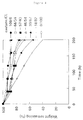
- Figure 1 is a graph representing a remaining ratio of weight versus incubation time by an enzyme for degradation related to the copolymer obtained in Example 1.
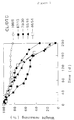
- Figure 2 is a graph representing a remaining ratio of weight versus incubation time without an enzyme for degradation in Example 2.
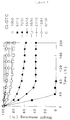
- Figure 3 is a graph representing a remaining ratio of weight versus incubation time by an enzyme for degradation related to the copolymer obtained in Example 3.
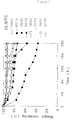
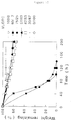
- Figure 4 is a graph representing a remaining ratio of weight versus incubation time without an enzyme for degradation related to the polymer obtained in Example 5.
- Figure 5 is a graph representing a remaining ratio of weight versus the time of period buried in active sludge related to the polymer obtained in Example 6.
- Figure 6 is a graph representing a remaining ratio of weight versus incubation time by an enzyme for degradation related to the copolymer obtained in Example 6.
- Figure 7 is a graph representing a remaining ratio of weight versus incubation time without an enzyme for degradation in Example 8.
- Figure 8 is a graph representing a remaining ratio of weight versus incubation time by the enzyme Lipase B for degradation related to the copolymer obtained in Example 6.
- Figure 9 is a graph representing a remaining ratio of weight versus incubation time by the enzyme Rhizopus delmer Lipase for degradation related to the copolymer obtained in Example 6.
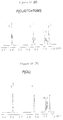
- Figure 10 (A) is an 1H-NMR chart related to the components produced by degradation in Example 8, and Figure 10 (B) is an 1H-NMR chart related to the caprolactone homopolymer (CL).
- Figure 11 is a graph representing a remaining ratio of weight versus incuoation time by the enzyme for degradation related to the dimethyltrimethylene carbonate (DTC) homopolymer (Comparative Example 6), the valerolactone-dimethyltrimethylene carbonate (VL/DTC) block copolymer (Example 11), and the valerolactone (VL) homopolymer (Comparative Example 12).
- DTC dimethyltrimethylene carbonate
- VL/DTC valerolactone-dimethyltrimethylene carbonate
- VL valerolactone
- Figure 12 is an 1H-NMR chart related to the random copolymer obtained in Example 14.
- a biodegradable copolymer having a number average molecular weight ranging from 1,000 to 1,000,000 which comprises (A) from 5 to 99% by mol of epsilon-caprolactone or a delta-valerolactone structural unit and (B) from 95 to 1% by mol of an oxetane structural unit, said structural units being combined in the state of a block.
- a biodegradable copolymer having a number average molecular weight ranging from 1,000 to 1,000,000 which comprises (A) from 5 to 99% by mol of epsilon-caprolactone or delta-valerolactone structural unit and (C) from 95 to 1% by mol of a dimethyltrimethylene carbonate structural unit, said structural units being combined in the state of a random block.
- a biodegradable polymer composition which comprises (D) from 60 to 95% by mol of a poly(epsilon-caprolactone) or a poly(delta-valerolactone) and (E) from 40 to 5% by mol of a poly(oxetane).
- a biodegradable article molded from a copolymer having a number average molecular weight ranging from 1,000 to 1,000,000 which comprises (A) from 5 to 99% by mol of epsilon-caprolactone or delta-valerolactone structural unit and (B) from 95 to 1% by mol of an oxetane structural unit, said structural units being combined in the state of a block.
- a biodegradable article molded from a copolymer having a number average molecular weight ranging from 1,000 to 1,000,000 which comprises (A) from 5 to 99% by mol of epsilon-caprolactone or delta-valerolactone structural unit and (C) from 95 to 1% by mol of a dimethyltrimethylene carbonate structural unit, said structural units being combined in the state of a random block.
- a biodegradable article molded from a biodegradable copolymer composition which comprises (D) from 60 to 95% by mol of a poly(epsilon-caprolactone) or poly(delta-valerolactone ) and (E) from 40 to 5% by mol of a poly(oxetane).
- Monomers to be employed in the biodegradable copolymers or composition, and the biodegradable articles of the present invention include epsilon-caprolactone, delta-valerolactone , oxetane (another name for this is trimethylene oxide or 1,3-epoxypropane), and dimethyltrimethylene carbonate (another name for this is 4,4-dimethyl-2,6-dioxacyclohexanone), which are essential structural units, respectively.
- the biodegradable copolymer which is the first aspect of the present invention is an epsilon-caprolactone-oxetane copolymer or delta-valerolactone oxetane copolymer which is a block type.
- the biodegradable copolymer which is the second aspect of the present invention is an epsilon-caprolactone-dimethyltrimethylene carbonate copolymer or delta-valerolactone-dimethyltrimethylene carbonate copolymer which is a block type.
- the block copolymers are not particularly limited in the type of their block structures, which include a random block type, diblock type, triblock type, etc., and, further, these are classified into a linear type, branch type, and radial type.
- the above-described block copolymers essentially have a number average molecular weight ranging from 1,000 to 1,000,000, preferably from 10,000 to 500,000, more preferably from 30,000 to 300,000 based on a standard polystyrene measured by a GPC.
- the copolymers are frequently in liquid states at ordinary temperatures, unpreferably resulting in being incapable of using as molded articles.
- it exceeds 1,000,000 it is substantially difficult to prepare the copolymers, and the biodegradability thereof would occasionally unpreferably lower.
- the number average molecular weight preferably ranges from 30,000 to 300,000, more preferably from 50,000 to 200,000, from a viewpoint of a balance between mechanical properties, moldability, biodegradability, etc.
- the content of the epsilon-caprolactone structural unit or delta-valerolactone structural unit in the above-described block copolymers generally ranges from 5 to 99% by mol, preferably from 50 to 98% by mol, more preferably from 70 to 95% by mol, based on the total contents containing the oxetane structural units or dimethyltrimethylene structural units.
- a copolymer having a number average molecular weight ranging from 30,000 to 300,000, an epsilon-caprolactone structural unit or a delta-valerolactone structural unit ranging from 70 to 95% by mol and oxetane structural unit ranging from 30 to 5% by mol exhibits mechanical properties, thermal stability and moldability, etc., equal to an epsilon-caprolactone or delta-valerolactone homopolymer, and it is particularly excellent also in biodegradability.
- the bond between the epsilon-caprolactone structural unit and the oxetane structural unit is represented by -CO-(CH2)5-O-(CH2)3-O-
- the bond between the delta-valerolactone structural unit and the oxetane structural unit is represented by -CO-(CH2)4-O-(CH2)3-O- which essentially constitutes the biodegradable copolymer which is the first aspect of the present invention.
- the bond between the epsilon-caprolactone structural unit and the dimethyltrimethylene carbonate structural unit is represented by -CO-(CH2)5-OCOOCH2C(CH3)2-CH2O- and similarly, the bond between the delta-valerolactone structural unit and the dimethyltrimethylene carbonate structural unit is represented by -CO-(C H2)4-OCOOCH2C(CH3)2-CH2O-which essentially constitutes the biodegradable copolymer which is the second aspect of the present invention.
- the biodegradable copolymers which are the first and second aspects of the present invention can be prepared without particular limitations, that is, the copolymers are prepared by any processes in which epsilon-caprolactone or delta-valerolactone can be copolymerized with oxetane or dimethyltrimethylene carbonate. Specifically, there are preferred processes using an organometallic compound which is an initiator.
- the organometallic compound there are specifically exemplified trialkylaluminum-water based complexes, zinc dialkylate-water based complexes, alkyl lithiums, organic potassium compounds, and organic sodium compounds.
- trialkylaluminum-water based complexes more specifically, triethyl aluminum-water based complexes are preferably employed.
- the molar ratio of water/trialkylaluminum ranges preferably from 0.7 to 1.1.
- oxetane is not readily copolymerized with epsilon-caprolactone due to the difference of the copolymerization rate between oxetane and epsilon-caprolactone.
- oxetane alone is partially or totally polymerized using a triethyl aluminum-water-based complex as an initiator at a temperature ranging from -20 to 40 C, and then epsilon-caprolactone is charged to copolymerize with the resulting oxetane homopolymer at a temperature ranging from 0 to 180 C, preferably from 50 to 150 C.
- oxetane can be copolymerized with delta- valerolactone due to a similar copolymerization rate between oxetane and delta-valerolactone. Accordingly, there is preferably carried out a process in which oxetane and delta-valerolactone can be simultaneously charged to copolymerize using a triethyl aluminum-water-based complex as an initiator at a temperature ranging from 0 to 180 C.
- the copolymerization of epsilon-caprolactone or delta-valerolactone with dimethyl trimethylene carbonate can be carried out by mixing these with each other, followed by feeding a triethyl aluminum-water-based complex as an initiator, at a temperature ranging from 0 to 180 C.
- biodegradable copolymers of the first and second aspect of the present invention can be prepared without any limitations using popular polymerization procedures and equipment for the preparation.
- the solvents in the above-described solution polymerization there are employed aromatic hydrocarbons such as benzene, toluene, xylene, etc., ethers such as diethylether, etc.
- the solvents can be mixed with aliphatic hydrocarbons such as hexane, heptane, cyclohexane, etc., in a range capable of dissolving the resulting polymers.
- a continuous, semicontinuous, and batch-type equipment there can be employed a continuous, semicontinuous, and batch-type equipment without any problem.
- a Sultzer-mixer type or an extruder type continuous-polymerization equipment is preferably employed in bulk polymerization, in view of the capability of economically manufacturing the biodegradable copolymer of the present invention on a large scale.
- polymerization are preferably carried out in a temperature ranging from 40 to 180 C, and preferably from 100 to 170 C.
- solution polymerization or sedimentation polymerization it is preferably carried out in a temperature ranging from -20 C to the boiling points of solvents.
- biodegradable copolymers of the first and second aspect in the present invention other copolymerizable monomers can be employed together with epsilon-caprolactone, delta-valerolactone, dimethyl trimethylene carbonate, and oxetane.
- Examples of other copolymerizable monomers include ethylene oxide, propylene oxide, tetrahydrofran, cyclic ethers such as dioxane or trioxane, beta-propiolactone, methylated caprolactone, lactones other than epsilon-caprolactone or delta-valerolactone , lactide which is a dimer of lactic acid, glicolides, cyclic carbonates such as trimethylene carbonate and methyltrimethylene carbonate, etc.
- biodegradable copolymers of the first and second aspect in the present invention can be also mixed with each other, and further with other biodegradable or unbiodegradable thermoplastics in any mixing ratio.
- biodegradable thermoplastics include a polylactic acid, a polyglicolide, an aliphatic polyester, polylactones such as a poly(epsilon-caprolactone) or a poly(delta-valerolactone) , starch, celluloses, and hydroxyethyl celluloses, etc.
- the biodegradable polymer composition of the third aspect in the present invention is a mixed composition composed of poly(epsilon-caprolactone) homopolymer or a poly( delta-valerolactone ) homopolymer and a poly(oxetane) homopolymer.
- the poly(oxetane) homopolymer is employed in an amount ranging from 5 to 40 mol% based on the total amount.
- Number average molecular weight in all of the homopolymers to be mixed ranges from 20,000 to 1,000,000, preferably from 30,000 to 500,000, and more preferably from 50,000 to 200,000.
- the biodegradable polymer composition of the third aspect in the present invention also includes a three-homopolymer admixture composed of a poly(epsilon-caprolactone) homopolymer, a poly(delta-varelolactone) homopolymer, and a poly(oxetane) homopolymer.
- a process for mixing the homopolymers is not limited, a conventional melt kneader such as an extruder can be preferably employed in an industrial fashion.
- biodegradable copolymers of the first and second aspect and the biodegradable polymer composition of the third aspect in the present invention can provide the biodegradable articles of the fourth, fifth and sixth aspect, respectively.
- the biodegradable articles can be molded from biodegradable copolymers and the biodegradable polymer composition.
- Biodegradable articles include all products which are usually left consciously or unconsciously in living circumstances from the viewpoint of usage.
- the products include, for example, materials for agricultural uses such as films or nonwoven clothing, textiles, ropes, materials such as films or nonwoven clothes for engineering works, materials such as nets for construction use, materials such as oil spill blotters for protecting the environment, materials such as lines or nets for fishing, various foam materials (for example, life preservers, materials for cushions, buoys or markers for fishing nets, etc), coatings for ships (coatings for bottom of ships), films for protecting bottom of boats, bottles, trays, various containers such as box-type packages, internal films for laminating on paper containers, wrapping films for waste or shopping, cushion materials or protective films for goods to be exported (electrical appliances, precision parts, large-scale equipments), etc.
- a process for the preparation of a lactone-carbonate random copolymer which comprises a ring-opening addition polymerization of an admixture composed of a lactone monomer and a cyclic carbonate monomer with a ring-opening initiator in the presence of an organic aluminum-based Lewis acid represented by general formula (I); wherein R is an alkyl group having a carbon number ranging from 1 to 4, Y is independently selected from a substituted group, and p is any one of 1, 2 and 3.
- R is an alkyl group having a carbon number ranging from 1 to 4
- Y is independently selected from a substituted group
- p is any one of 1, 2 and 3.
- a biodegradable copolymer composition which comprises a lactone-carbonate random copolymer obtained by a ring-opening addition polymerization of an admixture composed of a lactone monomer and a cyclic carbonate monomer with a ring-opening initiator in the presence of an organic aluminum-based Lewis acid represented by general formula (I); wherein R is an alkyl group having a carbon number ranging from 1 to 4, Y is independently selected from a substituted group, and p is any one of 1, 2 and 3.
- R is an alkyl group having a carbon number ranging from 1 to 4
- Y is independently selected from a substituted group
- p is any one of 1, 2 and 3.
- Ring-opening initiators in the present invention include a compound having at least one active hydrogen atoms such as a hydroxyl group, amino group, carboxylic group, thiol group, and an active methylene group put between at least two electron-attractive groups in the molecule.
- aliphatic alcohols and aliphatic polyvalent alcohols. More specifically, there are exemplified methanol, ethanol, isopropanol, ethyleneglycol, diethyleneglycol, butanediol, hexamethyleneglycol, neopentyl glycol, trimethylolpropane, pentaerythritol, 2-hydroxyethyl(meth)-acrylate, 4-hydroxybutyl(meth)acrylate, allylalcohol, a polyvinylalcohol, a 2-hydroxyethyl(meth)acrylate-modified polymer, and an adduct of ethylene oxide to bisphenol A, and the like.
- lactone monomers in the present invention there can be generally employed publicly known lactones and, specifically, delta-valerolactone epsilon-caprolactone, and an alkylated lactone thereof are preferably employed from a general or practical viewpoint. Of these, epsilon-caprolactone is preferably employed because it is manufactured industrially. One or more of the lactone monomers may be employed.
- cyclic carbonate monomers there can be preferably employed propylglycol carbonate, 2-methylpropylglycol carbonate, neopentyl glycol carbonate, and the like.
- One or more of the cyclic carbonate monomers may be employed.
- Mixing ratio between the lactone monomer and the cyclic carbonate monomer is not particularly limited, both monomers are employed in an amount ranging from 10 to 90 parts by weight, preferably from 20 to 80 parts by weight, respectively, and more preferably one monomer is employed in an amount ranging from 20 to 40 parts by weight, and another monomer is employed in an amount ranging from 80 to 60 parts by weight.
- Admixture composed of the lactone monomer and the cyclic carbonate monomer is employed in a molar ratio ranging from 1 to 10,000, preferably from 100 to 5,000, and more preferably from 500 to 2,000 based on 1 mol of initiators.
- the organic aluminum-based Lewis acid in the present invention is represented by the above-described general formula (I).
- R is an alkyl group having a carbon number ranging from 1 to 4
- Y is independently selected from a substituted group
- p is any one of 1, 2, and 3.
- the alkyl group R specifically includes the methyl group, ethyl group, n-propyl group, iso-propyl group, n-butyl group, iso-butyl group, and tert-butyl group.
- Specific examples of the substituted group Y independently include hydrogen, an alkyl group such as a methyl group, ethyl group, butyl group, and tert-butyl group, and the like, an aryl group such as the phenyl group, and the like, a halogen such as fluorine, chlorine, and iodine, and the like, a trimethylsilyl group, and a trimethylgelmil group, and the like.
- p is any one of 1, 2, and 3.
- p is 1, although the ring-opening addition reaction rate of the cyclic monomers becomes large, there is exhibited a tendency lowering the random structure content in the resulting copolymer and further, in the case when p is 3, it is difficult to prepare catalysts, resulting in that p is most preferably 2.
- the organic aluminum-based Lewis acid in the seventh aspect of the present invention represented by above-described general formula (I) can be prepared by a reaction of an alkylphenol such as 2,6-diphenylphenol, 2,6-ditert-butyl-4-methylphenol, and 2,4,6-trichlorophenol, etc. with a trialkylaluminum such as tri-methylaluminum and triisobutylaluminum, etc.
- an alkylphenol such as 2,6-diphenylphenol, 2,6-ditert-butyl-4-methylphenol, and 2,4,6-trichlorophenol, etc.
- a trialkylaluminum such as tri-methylaluminum and triisobutylaluminum, etc.
- an excessive amount of alkylphenol is allowed to react with the trialkylaluminum, specifically, in a molar ratio ranging from 5/1 to 1/1, preferably from 2.5/1 to 2/1.
- the reaction is preferably carried out in a temperature ranging from 0°C to room temperatures.
- the organic aluminum-based Lewis acid is obtained in the state of a white-colored crystalline after washing with an inert solvent such as hexane or in the state of a solution thereof.
- an organic aluminum-based Lewis acid represented by general formula (II) as described below is preferably employed.
- R is an alkyl group having a carbon number ranging from 1 to 4, X is independently chosen among the tert-butyl group, phenyl group, chlorine, bromine, and iodine. Y is independently any appropriate substituted groups as indicated for the formula (I).
- X is chosen among groups such as a hydrogen and methyl group, the catalysts become sterically less hindered each other, thus giving rise to associability so that the coordinating effect of the lactone monomer, the cyclic carbonate monomer, and the admixture thereof on the catalysts decreases. Therefore, to obtain a highly random copolymer having an excellent biodegradability, X is preferably chosen among the groups which are indicated for the formula (II).
- the organic aluminum-based Lewis acid represented by general formula (I) is employed in a molar ratio ranging from 0.0001 to 1, preferably from 0.001 to 0.5, more preferably from 0.05 to 0.2 based on 1 mol of the initiators.
- the molar ratio is less than 0.0001, the ring-opening reaction of the cyclic monomers is slow, and in the case when it exceeds 1, it is meaninglessly only excessive in a practical manner.
- improved apparatuses for the preparation are preferably employed so that the mixing of moisture and other impurities into starting materials can be prevented.
- the total amount of the above-described impurities including moisture is desirably controlled within an amount of less than 5,000 ppm, preferably less than 500 ppm, and more preferably less than 50 ppm based on the total amount of starting materials.
- solvents may also be employed.
- solvents there are exemplified aliphatic hydrocarbons such as hexane, heptane, cyclohexane, and the like, aromatic hydrocarbons such as benzene, toluene, xylene, and the like, and halogenated hydrocarbons such as chloroform, dichloromethane, and the like which do not have an active hydrogen atom such as hydroxyl group.
- aliphatic hydrocarbons such as hexane, heptane, cyclohexane, and the like
- aromatic hydrocarbons such as benzene, toluene, xylene, and the like
- halogenated hydrocarbons such as chloroform, dichloromethane, and the like which do not have an active hydrogen atom such as hydroxyl group.
- the solvents may be preferably employed in an appropriate amount without any limitations.
- the initiators, the lactone monomer and cyclic carbonate monomer which are the starting materials in the present invention, catalysts, and optional solvents may be fed into a reaction vessel in any order without any limitations for methods to be fed.
- a reaction may be carried out at temperatures ranging from 0 to 200°C, and preferably from room temperatures to 180°C or so. Even in the case when the reaction is carried out at more than 180°C, although the reaction can be carried out, the reaction rate is unpreferably lowered at temperatures higher than the initiation of decomposition of the organic aluminum-based Lewis acid.
- the reaction is not particularly limited by other conditions except the above-described conditions.
- an organic aluminum-based Lewis acid which is a catalyst may also be optionally separated from copolymers produced after the completion of the ring-opening addition reaction.
- solvent separation there are exemplified solvent separation, absorption, distillation or evaporation at reduced pressures, and filtration, and the like.
- solvent separation process there can be carried out all of the methods in which the difference in solubility between copolymers produced and the organic aluminum-based Lewis acid is applied.
- chromatography in which there are employed substrates such as activated carbon, silica gel, alumina, graphite, a polymer having hydroxyl group, amino group, carboxylic group, and sulfoxide group, and the like, and a porous ceramic, and, further, an electrophoresis method.
- substrates such as activated carbon, silica gel, alumina, graphite, a polymer having hydroxyl group, amino group, carboxylic group, and sulfoxide group, and the like, and a porous ceramic, and, further, an electrophoresis method.
- a membrane process can be applied using the difference in molecular sizes.
- oxetane (referred to as Ox in the Table) was firstly polymerized in a bulk state at 0°C for 12 hours using 0.2% by mol of a triethylaluminum-water (1/0.75) based complex as an initiator based on the total amount of the monomers.
- Example 1 For reference, an oxetane homopolymer and an epsilon-caprolactone homopolymer were prepared and analyzed according to the same conditions as in Example 1, and the results are shown in Table 1.
- Table 1 A B C D E F G H Comparative Example 1-1 100/0 1.0 0 24 65.6 12.1 2.61 100/0
- Example 1-1 70/30 0.2 0-60 12-24 47.6 14.6 3.05 33/67 1-2 60/40 0.2 0-60 12-24 60.2 14.5 2.53 27/73 1-3 50/50 0.2 0-60 12-24 82.1 7.06 4.68 28/72 1-4 40/60 0.2 0-60 12-24 84.2 14.0 2.85 20/80 1-5 30/70 0.2 0-60 12-24 79.4 16.3 2.15 9/91 Comparative Example 1-2 0/100 0.2 60 24 81.7 6.33 2.53 0/100 Comparative Example 1-3 0/100 1.0 60 24 89.2 4.39 1.89 0/100
- Films having 1cm X 1cm X 500 ⁇ m were prepared from the copolymers and the homopolymers obtained in Example 1 and Comparative Example 1, and then the films were placed in a sample bottle filled with 10 milliliter of a buffer solution (pH 7.2) composed of phosphoric acid having 0.1M, and then there was added 8 ⁇ g of Cholesterol esterase which is an enzyme for degradation. Successively, the sample bottle was warmed at 37°C and pH 7.2 for 200-300 hours in an incubator, and remained films were taken out, followed by measuring the remaining ratio of the weight after washing with water and freezedly drying. The results are shown in Figure 1.
- a buffer solution pH 7.2
- Cholesterol esterase which is an enzyme for degradation
- Figure 1 shows that biological degradation rate is high in the two samples prepared from the block copolymers having 9 mol% and 20 mol% of oxetane contents (hereinafter, referred to as oxetane/CL in Figures) compared to the poly(epsilon-caprolactone) homopolymers.
- oxetane and delta-valerolactone (referred to as VL in Table and Figure) were mixed, and polymerized in a bulk state at 60°C for 24 hours using 0.2% by mol of a triethylaluminum-water (1/0.75) based complex as an initiator based on the total amount of the monomers.
- a delta-valerolactone homopolymer was prepared in toluene using 1.0% by mol of a diethylzinc-hydrogen complex as an initiator at 60°C for 15 days while stirring, and analyzed according to the same conditions as in Example 3, and the results are shown in Table 2.
- the epsilon-caprolactone homopolymer and oxetane homopolymer obtained in Comparative Example 1 were mixed according to the molar ratio as described in Figure 4, followed by dissolving into chloroform and evaporating chloroform to obtain a film composed of the mixed polymers.
- the film was employed to evaluate biodegradability according to the same procedures as in Example 2. The results obtained are shown in Figure 4. It was confirmed that even a blended polymer composed of the epsilon-caprolactone homopolymer and oxetane homopolymer exhibits a better biodegradability than the respective homopolymers depending upon blend ratio.
- Epsilon-caprolactone, dimethyltrimethylene carbonate (referred to as DTC in Table and Figure), and toluene were mixed and copolymerized at 60°C for 4 hours using 0.2% by mol of a triethylaluminum-water (1/0.75) based complex as an initiator based on the total amount of the monomers.
- the abbreviation A-G shows polymerization conditions or properties in polymers as described below.
- copolymers exhibit a better biodegradability than the epsilon-caprolactone homopolymer.
- Example 6 The copolymers and the epsilon-caprolactone homopolymers obtained in Example 6 and Comparative Example 6, respectively, were employed to evaluate a biodegradability according to the same conditions as described in Example 2. The results obtained are shown in Figure 6. Furthermore, the same tests were carried out without any enzymes. As shown in Figure 7, weight loss was almost no observed in all the samples.
- Example 8 was repeated except that the copolymers and the homopolymers obtained in Example 6 and Comparative Example 6, respectively, were employed, and the enzyme Rhizopus delemer Lipase B (pH 9.0, 37°C) for degradation was employed in place of the enzyme Cholesterol esterase (pH 7.2). The results obtained are shown in Figures 7 and 8, respectively.
- Figure 10(A) is an 1H-NMR chart. Furthermore, Figure 10(B) is an 1H- NMR chart concerning degradation components generated from the epsilon-caprolactone homopolymer.
- Delta-valerolactone, dimethyltrimethylene carbonate, and toluene were mixed and copolymerized at 60°C for 4 hours using 0.2% by mol of a triethylaluminum-water (1/0.75) based complex as an initiator based on the total amount of the monomers.
- a delta-valerolactone homopolymer was prepared according to the same conditions as in Example 6. Molecular weight of the homopolymer is shown in Table 4.
- Example 2 was repeated except that the copolymers and the homopolymers obtained in Comparative Example 6, Example 11, and Comparative Example 12, respectively, were employed to evaluate biodegradability. The results obtained are shown in Figure 11.
- 2,6-ditert-butyl-methylphenol (2.76 g, 12.5 millimole) was dissolved into 10 ml of dried hexane, and then trimethyl-aluminum (0.6 ml, 6.25 millimole) was added dropwise at 0°C to obtain a suspension.
- the suspension obtained was heated to 60°C in order to dissolve it. After the suspension was completely dissolved, it was placed for 10 hours at room temperatures to obtain an aluminum-based Lewis acid substituted by two-fold by mol of 2,6-ditert-butyl-methylphenol (hereinafter, referred to as MeAlBMP) which is a white-colored crystalline.
- MeAlBMP 2,6-ditert-butyl-methylphenol
- a 1-liter dried flask made of glass was charged with 0.186 g (3 millimole) of ethylene glycol as an initiator, 428 g (3.75 mol) of epsilon-caprolactone as a lactone monomer, 162.5 g (1.25 mol) of neopentyl glycol carbonate as a cyclic carbonate monomer, and 0.295 g (500 ppm) of MeAlBMP obtained in the Reference Example 1 as an aluminum-based Lewis acid catalyst, while purging with dried nitrogen gas, followed by stirring at 140°C for 3 hours to obtain a transparent lactone-carbonate random copolymer.
- the random copolymer obtained was analyzed with a GPC to obtain a number average molecular weight of 187,000 and molecular weight distribution (Mn/Mw) of 1.28 based on a standard Polystyrene.
- Figure 12 is an 1H-NMR chart related to the random copolymer, and shows that the molar ratio of epsilon-caprolactone/neopentyl glycol carbonate in the copolymerization is 76/24.
- a 1-liter dried flask made of glass was charged with 0.62 g (10 millimole) of ethylene glycol as an initiator, 342.4 g (3 mol) of epsilon-caprolactone and 128.2 g (1 mol) of 4-methyl-epsilon-caprolactone as lactone monomers, 130.1 g (1 mol) of neopentyl glycol carbonate as a cyclic carbonate monomer, and 0.12 g (200 ppm) of MeAlBMP obtained in the Reference Example 1 as an aluminum-based Lewis acid catalyst, while purging with dried nitrogen gas, followed by stirring at 100°C for 12 hours to obtain a colorless transparent lactone-carbonate random copolymer.
- the random copolymer obtained was analyzed with a GPC to obtain a number average molecular weight of 59,000 and molecular weight distribution (Mn/Mw) of 1.22 based on a standard Polystyrene. Furthermore, unreacted monomers were not detected.
- Example 13 For reference, the same procedures as in Example 13 were repeated except that 0.295 g (500 ppm) of stannous octoate described in the WO89/5664 Publication and WO91/16887 was employed as a catalyst to prepare a random copolymer in place of MeAlBMP. Even after reacting while stirring at 140°C for 3 hours, as a large amount of monomers were remained, the reaction was further continued. After 48 hours, as epsilon-caprolactone in the random copolymer decreased to less than 1%, the reaction was terminated. Although the random copolymer was transparent, it was slightly yellowed.
- Example 15 and Comparative Example 15 Biodegradation test in an activated sludge of a lactone-carbonate random copolymer and a caprolactone homopolymer>
- Example 7 and Comparative Example 7 were repeated except that there were employed films having 30cm X 30cm X 0.5mm prepared from the lactone-carbonate random copolymer prepared in Example 13 and an epsilon-caprolactone homopolymer having a number average molecular weight of 100,000 (PLACCEL H-7 DD001 manufactured by Daicel Chemical Industries, Ltd.) for reference. Films buried in an activated sludge were taken out at a fixed interval over 200 days, and the films were washed with water, followed by being freezedly dried to evaluate retention ratio of the weight.
- PLACCEL H-7 DD001 manufactured by Daicel Chemical Industries, Ltd.
- Figure 12 shows that the lactone-carbonate random copolymer exhibits more excellent biodegradability than the epsilon-caprolactone homopolymer.
Landscapes
- Chemical & Material Sciences (AREA)
- Health & Medical Sciences (AREA)
- Chemical Kinetics & Catalysis (AREA)
- Medicinal Chemistry (AREA)
- Polymers & Plastics (AREA)
- Organic Chemistry (AREA)
- Polyesters Or Polycarbonates (AREA)
- Biological Depolymerization Polymers (AREA)
- Compositions Of Macromolecular Compounds (AREA)
Applications Claiming Priority (6)
| Application Number | Priority Date | Filing Date | Title |
|---|---|---|---|
| JP12058894 | 1994-05-09 | ||
| JP12058894A JP3413957B2 (ja) | 1994-05-09 | 1994-05-09 | 易生分解性共重合体、重合体組成物および環境放置型成形品 |
| JP120588/94 | 1994-05-09 | ||
| JP33586294A JPH08176288A (ja) | 1994-12-21 | 1994-12-21 | ラクトン−カーボネートランダム共重合体の製造方法 |
| JP33586294 | 1994-12-21 | ||
| JP335862/94 | 1994-12-21 |
Publications (3)
| Publication Number | Publication Date |
|---|---|
| EP0682054A2 true EP0682054A2 (de) | 1995-11-15 |
| EP0682054A3 EP0682054A3 (de) | 1996-01-31 |
| EP0682054B1 EP0682054B1 (de) | 2001-08-08 |
Family
ID=26458135
Family Applications (1)
| Application Number | Title | Priority Date | Filing Date |
|---|---|---|---|
| EP95401073A Expired - Lifetime EP0682054B1 (de) | 1994-05-09 | 1995-05-09 | Biologisch abbaubares Kopolymer, biologisch abbaubare polymere Zusammensetzung, biologisch abbaubares Produkt und deren Herstellung |
Country Status (3)
| Country | Link |
|---|---|
| US (1) | US5834567A (de) |
| EP (1) | EP0682054B1 (de) |
| DE (1) | DE69522038T2 (de) |
Cited By (2)
| Publication number | Priority date | Publication date | Assignee | Title |
|---|---|---|---|---|
| WO2002085507A3 (en) * | 2001-04-20 | 2002-12-19 | Avecia Ltd | Dispersants |
| DE19924747B4 (de) * | 1999-05-31 | 2014-07-17 | Dynamit Nobel Gmbh Explosivstoff- Und Systemtechnik | Bleifreies Geschoß mit nach Anforderung einstellbarer Dichte |
Families Citing this family (4)
| Publication number | Priority date | Publication date | Assignee | Title |
|---|---|---|---|---|
| US20030069629A1 (en) * | 2001-06-01 | 2003-04-10 | Jadhav Balkrishna S. | Bioresorbable medical devices |
| US7662883B2 (en) * | 2006-12-28 | 2010-02-16 | The Goodyear Tire & Rubber Company | Rubbery block polymers containing polylactone and rubber compounds including the same |
| BR112013006473B1 (pt) * | 2010-09-21 | 2020-06-16 | Total Research & Technology Feluy | Processo de uma etapa, um recipiente para preparar um copolímero gradiente e multibloco |
| CN112375206B (zh) * | 2020-12-22 | 2022-04-29 | 浙江兆泽实业有限公司 | 一种皮革用高物性无溶剂聚氨酯面料树脂及其制备方法 |
Citations (4)
| Publication number | Priority date | Publication date | Assignee | Title |
|---|---|---|---|---|
| US3301824A (en) | 1963-09-26 | 1967-01-31 | Union Carbide Corp | Polymers of cyclic carbonates |
| WO1989005664A1 (en) | 1987-12-17 | 1989-06-29 | Allied-Signal Inc. | Medical devices fabricated from homopolymers and copolymers having recurring carbonate units |
| JPH02294326A (ja) | 1989-04-08 | 1990-12-05 | Bayer Ag | ブロツク共重合体 |
| WO1991016887A1 (en) | 1990-05-01 | 1991-11-14 | Research Triangle Institute | Biodegradable polyesters for sustained drug delivery |
Family Cites Families (9)
| Publication number | Priority date | Publication date | Assignee | Title |
|---|---|---|---|---|
| US3489819A (en) * | 1967-07-19 | 1970-01-13 | Phillips Petroleum Co | Block copolymers comprising a lactone and tetrahydrofuran |
| US3689531A (en) * | 1969-04-01 | 1972-09-05 | Union Carbide Corp | Copolymers of lactones and alkylene oxides |
| US4605730A (en) * | 1982-10-01 | 1986-08-12 | Ethicon, Inc. | Surgical articles of copolymers of glycolide and ε-caprolactone and methods of producing the same |
| US5132397A (en) * | 1991-04-02 | 1992-07-21 | Polysar Financial Services S.A. | 4-valerolactone copolymers |
| EP0509203A3 (en) * | 1991-04-17 | 1993-04-14 | Christian Dr. Med. Juergens | Resorbable, physiologically acceptable copolymers and their use |
| NL9102148A (nl) * | 1991-12-20 | 1993-07-16 | Dsm Nv | Copolymeer van lacton en carbonaat en werkwijze voor het verkrijgen ervan. |
| US5352515A (en) * | 1992-03-02 | 1994-10-04 | American Cyanamid Company | Coating for tissue drag reduction |
| JPH05262858A (ja) * | 1992-03-18 | 1993-10-12 | Shiro Kobayashi | 新規なブロック共重合体及びその製造法 |
| JP3414029B2 (ja) * | 1994-03-04 | 2003-06-09 | ダイセル化学工業株式会社 | 単分散重合体およびそれらの製造方法 |
-
1995
- 1995-05-09 DE DE69522038T patent/DE69522038T2/de not_active Expired - Fee Related
- 1995-05-09 EP EP95401073A patent/EP0682054B1/de not_active Expired - Lifetime
-
1997
- 1997-02-18 US US08/801,786 patent/US5834567A/en not_active Expired - Fee Related
Patent Citations (6)
| Publication number | Priority date | Publication date | Assignee | Title |
|---|---|---|---|---|
| US3301824A (en) | 1963-09-26 | 1967-01-31 | Union Carbide Corp | Polymers of cyclic carbonates |
| WO1989005664A1 (en) | 1987-12-17 | 1989-06-29 | Allied-Signal Inc. | Medical devices fabricated from homopolymers and copolymers having recurring carbonate units |
| JPH03502651A (ja) | 1987-12-17 | 1991-06-20 | ユナイテッド・ステーツ・サージカル・コーポレーション | 反復カーボネート単位を含むホモポリマーおよびコポリマーから製造された医療用具 |
| JPH02294326A (ja) | 1989-04-08 | 1990-12-05 | Bayer Ag | ブロツク共重合体 |
| WO1991016887A1 (en) | 1990-05-01 | 1991-11-14 | Research Triangle Institute | Biodegradable polyesters for sustained drug delivery |
| JPH05508627A (ja) | 1990-05-01 | 1993-12-02 | リサーチ トライアングル インスティチュート | 持続的な薬剤輸送のための生物分解性ポリエステル |
Non-Patent Citations (4)
| Title |
|---|
| AM. CHEM. SOC. POLYMER PREPRINT, vol. 13, 1972, pages 629 |
| INT. BIODETR. BULL., vol. 11, 1975, pages 127 |
| J. FERMENT TECHNOL., vol. 54, 1976, pages 603 |
| Y. OKAMOTO, MACROMOL. CHEM., SYMP. 42/43, vol. 42-43, 1991, pages 117 - 133 |
Cited By (4)
| Publication number | Priority date | Publication date | Assignee | Title |
|---|---|---|---|---|
| DE19924747B4 (de) * | 1999-05-31 | 2014-07-17 | Dynamit Nobel Gmbh Explosivstoff- Und Systemtechnik | Bleifreies Geschoß mit nach Anforderung einstellbarer Dichte |
| WO2002085507A3 (en) * | 2001-04-20 | 2002-12-19 | Avecia Ltd | Dispersants |
| CN1309463C (zh) * | 2001-04-20 | 2007-04-11 | 路博润公司 | 分散剂 |
| US7361692B2 (en) | 2001-04-20 | 2008-04-22 | The Lubrizol Corporation | Dispersants |
Also Published As
| Publication number | Publication date |
|---|---|
| DE69522038D1 (de) | 2001-09-13 |
| EP0682054B1 (de) | 2001-08-08 |
| US5834567A (en) | 1998-11-10 |
| EP0682054A3 (de) | 1996-01-31 |
| DE69522038T2 (de) | 2002-03-14 |
Similar Documents
| Publication | Publication Date | Title |
|---|---|---|
| EP0723983B1 (de) | Biologisch abbaubare Zusammensetzung | |
| US5461139A (en) | Biodegradable optically active copolymers and processes for producing the same | |
| US20060142536A1 (en) | Biodegradable linear random copolyster and process for preparing it and use of the same | |
| CN109988292B (zh) | 一种可降解脂肪族共聚酯的制备方法 | |
| US4644038A (en) | Unsaturated poly (alpha-hydroxy acid) copolymers | |
| US5631344A (en) | Block copolymer of polyesters and polycarbonates and process for preparation thereof | |
| EP0622390B1 (de) | Verfahren zur Herstellung von Polyester durch Ringöffnungs-Copolymerisation | |
| US5834567A (en) | Biodegradable copolymer, a biodegradable polymer composition, a biodegradable article, and a preparation process thereof | |
| JP3408347B2 (ja) | 光学活性ブロック共重合ポリエステル及びその製造方法 | |
| Edlund et al. | Degradable aliphatic polyesters | |
| Kunioka et al. | Polymerization of poly (ε-caprolactone) using yttrium triflate | |
| JP3408349B2 (ja) | 生分解性高分子用可塑剤 | |
| JPH05132549A (ja) | 新規生分解性重合体及び組成物 | |
| JP3091208B2 (ja) | ラクトン共重合体およびその製造方法 | |
| JP3142658B2 (ja) | 生分解性光学活性ポリエステルおよびその製造方法 | |
| JP3413957B2 (ja) | 易生分解性共重合体、重合体組成物および環境放置型成形品 | |
| KR100200415B1 (ko) | 생분해성 지방족 폴리에스터 제조방법 | |
| JP2794353B2 (ja) | 生分解性光学活性ポリマーおよびその製造方法 | |
| JP3646141B2 (ja) | 生分解性ポリマーの製法 | |
| EP4549487A1 (de) | Copolymer und verfahren zur herstellung eines copolymers | |
| KR20240148282A (ko) | 폴리에스터 폴리올 공중합체 및 폴리에스터 폴리올 공중합체의 제조 방법 | |
| JP3345631B2 (ja) | 生分解性を有する樹脂の製法 | |
| JPH06336519A (ja) | ポリエチレンサクシネート及びその製造方法 | |
| EP4585633A1 (de) | Polyesterpolyolcopolymer und verfahren zur herstellung eines polyesterpolyolcopolymers | |
| KR20130122374A (ko) | 폴리락타이드 수지의 제조 방법 |
Legal Events
| Date | Code | Title | Description |
|---|---|---|---|
| PUAI | Public reference made under article 153(3) epc to a published international application that has entered the european phase |
Free format text: ORIGINAL CODE: 0009012 |
|
| AK | Designated contracting states |
Kind code of ref document: A2 Designated state(s): DE ES GB IT |
|
| PUAL | Search report despatched |
Free format text: ORIGINAL CODE: 0009013 |
|
| AK | Designated contracting states |
Kind code of ref document: A3 Designated state(s): DE ES GB IT |
|
| 17P | Request for examination filed |
Effective date: 19960614 |
|
| 17Q | First examination report despatched |
Effective date: 19970930 |
|
| GRAG | Despatch of communication of intention to grant |
Free format text: ORIGINAL CODE: EPIDOS AGRA |
|
| GRAG | Despatch of communication of intention to grant |
Free format text: ORIGINAL CODE: EPIDOS AGRA |
|
| GRAH | Despatch of communication of intention to grant a patent |
Free format text: ORIGINAL CODE: EPIDOS IGRA |
|
| GRAH | Despatch of communication of intention to grant a patent |
Free format text: ORIGINAL CODE: EPIDOS IGRA |
|
| GRAA | (expected) grant |
Free format text: ORIGINAL CODE: 0009210 |
|
| AK | Designated contracting states |
Kind code of ref document: B1 Designated state(s): DE ES GB IT |
|
| PG25 | Lapsed in a contracting state [announced via postgrant information from national office to epo] |
Ref country code: IT Free format text: LAPSE BECAUSE OF FAILURE TO SUBMIT A TRANSLATION OF THE DESCRIPTION OR TO PAY THE FEE WITHIN THE PRE;WARNING: LAPSES OF ITALIAN PATENTS WITH EFFECTIVE DATE BEFORE 2007 MAY HAVE OCCURRED AT ANY TIME BEFORE 2007. THE CORRECT EFFECTIVE DATE MAY BE DIFFERENT FROM THE ONE RECORDED.SCRIBED TIME-LIMIT Effective date: 20010808 |
|
| REF | Corresponds to: |
Ref document number: 69522038 Country of ref document: DE Date of ref document: 20010913 |
|
| REG | Reference to a national code |
Ref country code: GB Ref legal event code: IF02 |
|
| PG25 | Lapsed in a contracting state [announced via postgrant information from national office to epo] |
Ref country code: ES Free format text: LAPSE BECAUSE OF FAILURE TO SUBMIT A TRANSLATION OF THE DESCRIPTION OR TO PAY THE FEE WITHIN THE PRESCRIBED TIME-LIMIT Effective date: 20020228 |
|
| PLBE | No opposition filed within time limit |
Free format text: ORIGINAL CODE: 0009261 |
|
| STAA | Information on the status of an ep patent application or granted ep patent |
Free format text: STATUS: NO OPPOSITION FILED WITHIN TIME LIMIT |
|
| 26N | No opposition filed | ||
| PGFP | Annual fee paid to national office [announced via postgrant information from national office to epo] |
Ref country code: GB Payment date: 20060503 Year of fee payment: 12 |
|
| PGFP | Annual fee paid to national office [announced via postgrant information from national office to epo] |
Ref country code: DE Payment date: 20060508 Year of fee payment: 12 |
|
| GBPC | Gb: european patent ceased through non-payment of renewal fee |
Effective date: 20070509 |
|
| PG25 | Lapsed in a contracting state [announced via postgrant information from national office to epo] |
Ref country code: DE Free format text: LAPSE BECAUSE OF NON-PAYMENT OF DUE FEES Effective date: 20071201 |
|
| PG25 | Lapsed in a contracting state [announced via postgrant information from national office to epo] |
Ref country code: GB Free format text: LAPSE BECAUSE OF NON-PAYMENT OF DUE FEES Effective date: 20070509 |