EP0683464A2 - Staffelstabübergabe-Optimierungsschema für Belastungsausgleich/Konfigurationsplanung in einem Video-auf-Anfrage-Rechnersystem - Google Patents
Staffelstabübergabe-Optimierungsschema für Belastungsausgleich/Konfigurationsplanung in einem Video-auf-Anfrage-Rechnersystem Download PDFInfo
- Publication number
- EP0683464A2 EP0683464A2 EP95102075A EP95102075A EP0683464A2 EP 0683464 A2 EP0683464 A2 EP 0683464A2 EP 95102075 A EP95102075 A EP 95102075A EP 95102075 A EP95102075 A EP 95102075A EP 0683464 A2 EP0683464 A2 EP 0683464A2
- Authority
- EP
- European Patent Office
- Prior art keywords
- storage media
- videos
- video
- computer system
- disks
- Prior art date
- Legal status (The legal status is an assumption and is not a legal conclusion. Google has not performed a legal analysis and makes no representation as to the accuracy of the status listed.)
- Granted
Links
Images



Classifications
-
- G—PHYSICS
- G06—COMPUTING OR CALCULATING; COUNTING
- G06F—ELECTRIC DIGITAL DATA PROCESSING
- G06F17/00—Digital computing or data processing equipment or methods, specially adapted for specific functions
- G06F17/40—Data acquisition and logging
-
- H—ELECTRICITY
- H04—ELECTRIC COMMUNICATION TECHNIQUE
- H04N—PICTORIAL COMMUNICATION, e.g. TELEVISION
- H04N7/00—Television systems
- H04N7/16—Analogue secrecy systems; Analogue subscription systems
- H04N7/173—Analogue secrecy systems; Analogue subscription systems with two-way working, e.g. subscriber sending a programme selection signal
- H04N7/17309—Transmission or handling of upstream communications
- H04N7/17336—Handling of requests in head-ends
-
- Y—GENERAL TAGGING OF NEW TECHNOLOGICAL DEVELOPMENTS; GENERAL TAGGING OF CROSS-SECTIONAL TECHNOLOGIES SPANNING OVER SEVERAL SECTIONS OF THE IPC; TECHNICAL SUBJECTS COVERED BY FORMER USPC CROSS-REFERENCE ART COLLECTIONS [XRACs] AND DIGESTS
- Y10—TECHNICAL SUBJECTS COVERED BY FORMER USPC
- Y10S—TECHNICAL SUBJECTS COVERED BY FORMER USPC CROSS-REFERENCE ART COLLECTIONS [XRACs] AND DIGESTS
- Y10S707/00—Data processing: database and file management or data structures
- Y10S707/99941—Database schema or data structure
- Y10S707/99944—Object-oriented database structure
- Y10S707/99945—Object-oriented database structure processing
-
- Y—GENERAL TAGGING OF NEW TECHNOLOGICAL DEVELOPMENTS; GENERAL TAGGING OF CROSS-SECTIONAL TECHNOLOGIES SPANNING OVER SEVERAL SECTIONS OF THE IPC; TECHNICAL SUBJECTS COVERED BY FORMER USPC CROSS-REFERENCE ART COLLECTIONS [XRACs] AND DIGESTS
- Y10—TECHNICAL SUBJECTS COVERED BY FORMER USPC
- Y10S—TECHNICAL SUBJECTS COVERED BY FORMER USPC CROSS-REFERENCE ART COLLECTIONS [XRACs] AND DIGESTS
- Y10S707/00—Data processing: database and file management or data structures
- Y10S707/99941—Database schema or data structure
- Y10S707/99948—Application of database or data structure, e.g. distributed, multimedia, or image
Definitions
- the present invention generally relates to management of storage devices by a file server in a multimedia computer system and, more particularly, to an optimization scheme for load balancing/configuration planning in a video-on-demand computer system, sometimes called a movie-on-demand computer system.
- Pay-for-view movies have been an increasingly popular service provided by cable TV operators and hotels for their subscribers and guests.
- the pay-for-view movies are typically stored on video cassette tape in analog form.
- the video cassettes may be loaded into a carousel which is programmed to play the movies at predetermined times.
- a subscriber or guest, having a set top converter, may select a movie, and that movie will be played at the subscriber's or guest's TV set at the programmed time.
- the subscriber or guest is automatically billed for the service.
- movie-on-demand services which allow subscribers and guests to select a movie from a menu of available movies to be played on the subscriber or room TV at any time. This is made possible by storing the movies in digital form on magnetic disk and/or system random access memory (RAM).
- a movie stored on disk is first read into system memory and then read out as a data stream which is used to generate the analog TV signal that is supplied to a subscriber's or guest's TV set. If the movies which are played for a subscriber or guest are stored statically in system memory, read out can occur at any time without the limitations represented by the dynamic analog storage used in pay-for-view systems.
- Movie-on-demand computer systems must be able to "play" multiple streams of many movies simultaneously. These movies may reside in memory or on one or more disks in the system. While a projection can be made as to the expected demand for any given movie currently available, the demand can vary widely. This in turn can cause a number of problems that will degrade the performance of the system. For example, perhaps the three most popular movies may be loaded from disk into system memory for play, but because of the limitations of system memory, the other movies available for play reside on disk. A portion of system memory is reserved to "page” in movies from disk as the movies are requested by subscribers and guests. Multiple copies of the more popular movies reside on multiple disks, although the number of copies will vary depending on the current popularity of the movies.
- the disk load minimization and balancing problem is solved by (1) determining statically which movies should reside in memory and which disks should have copies of the remaining movies, (2) determining dynamically which disk copies of the various movies should be used to play the customer demands, and (3) implementing dynamic adjustments to the streams via a technique we will refer to as movie baton passing. Solving this load balancing problem enables the movie-on-demand system to support a larger customer load with a given memory and disk configuration.
- the invention can be used to solve the related configuration planning problem of determining how much memory and/or how many disks the movie-on-demand system needs to safely meet its playing requirements at minimal cost.
- the invention solves two related movie-on-demand problems.
- the first is disk load balancing which has as input constraints existing memory and disk configuration and forecasted and actual movie loads.
- the solution of this problem has a static phase and a dynamic phase.
- movies are assigned to memory and disks, and in the dynamic phase there is provided a scheme for playing movies with minimal and balanced loads on the disks.
- the static phase supports the dynamic phase which insures optimal real-time operation of the system.
- the invention accomplishes dynamic phase load balancing by a process of baton passing which, as will become clear from the detailed description of the invention, is referred to as "DASD dancing".
- the static phase decides the DASD placement of the movie replicates in such a way that it can
- the movies stored on the underloaded DASD may be completely different from those stored on the overloaded DASD; however, the load balancing can be achieved from a sequence of shifts across different DASDs where each shift causes the transfer of the performance of a video from one of the DASDs (the source) to another DASD (the target) having a copy of a movie being shifted, and the source becomes the target DASD for the next load shift.
- the underloaded DASD is the target of the first load shift and the overloaded DASD is the source of the last shift.
- the final load on the intermediate DASDs in the sequence is not changed.
- the goal of the solution to the first problem is to maximize the ability to handle the load given a fixed cost configuration.
- the second, related problem is configuration planning which has as input constraints forecasted movie loads and memory and disk costs.
- the solution to this problem is a configuration which minimizes system costs while meeting movie play requirements.
- the goal of this solution is to minimize configuration costs given a fixed load.
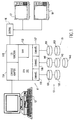
- the computer system may be for example a mainframe computer, such as the International Business Machines (IBM) Corp. System 390 class of computer, or one of the newer IBM Scalable Powerparallel Systems 9076 or any such other computer system capable of supporting sufficient input/output (I/O) functions to support the movie-on-demand function of the invention.
- the computer system comprises a system unit 11 which houses the central processing unit (CPU) 111 connected to system memory (RAM) 112.
- CPU central processing unit
- RAM system memory
- An operator communicates with the computer via a central console 12 which is connected to the CPU 111 via a console adaptor 114.
- the CPU 111 is connected by a plurality of channels 115, 116 and 117 to a plurality of direct access storage device (DASD) strings 13, 14 and 15, respectively.
- Each DASD string has one or more DASDs connected in a daisy chain.
- the number of channels and DASDs on a string will vary, depending on the specific installation.
- DASD string 13 comprises DASDs 131 and 132
- DASD string 14 comprises DASDs 141, 142 and 144
- DASD string 15 comprises DASDs 151 and 152.
- the DASDs are typically magnetic disks capable of storing a large amount of data. Data read from the DASDs are stored in system memory 112 from which it is read out to input/output (I/O) function 118.
- I/O input/output
- Computer systems like that shown in Figure 1 have been used for other applications, including transaction processing and database management. Such applications are supported by an operating system (OS), such as IBM's Multiple Virtual Storage (MVS) OS or IBM's AIX OS. AIX is IBM's enhanced version of the UNIX® operating system (UNIX® is a registered trademark of Novell, Inc.). Characteristic of such applications are that data is both read and written to the DASDs, whereas in the present movie-on-demand application, data is only read from the DASDs. Writing occurs only in the initial configuration and in the static phase when movies are written to selected disks. There is, however, no modification of the data, merely duplication.
- OS operating system
- MVS Multiple Virtual Storage
- AIX IBM's enhanced version of the UNIX® operating system
- Characteristic of such applications are that data is both read and written to the DASDs, whereas in the present movie-on-demand application, data is only read from the DASDs. Writing occurs only in the initial configuration and in the static phase when movies
- the data streams from the I/O function 118 are output to distribution system 16 which supplies video signals to subscriber or guest TV sets 17 and 18.
- the movie-on-demand application has certain properties that differentiate it from prior applications on mainframe computers.
- a data stream from a DASD is a logically defined unit which is read-only. All data streams may be viewed as equal; that is, bits/second data rates are independent of the movie being read out.
- the data streams generated by the system are basically predictable, both in forecasts and in real-time.
- the real-time scheduling requirements of the movie-on-demand system mean that each disk can satisfy some maximum number of concurrent data streams, making load balancing crucial. This requirement, however, can be offset by making multiple copies of popular movies on several different DASDs.
- disks mean storage devices, whether a geometric disk or some other configuration, on which the data can be stored. These may include, for example, disk arrays, magneto-optic disks and other technologies.
- the first component is a load balancing scheme
- the second component is a configuration planning scheme.
- the load balancing scheme proceeds in two stages, one static and one dynamic. In the static stage, a good quality assignment of which videos should reside in memory and which disks should have copies of the remaining videos is computed. These assignments are adjusted incremetally, for example on a daily basis. As many of the videos as possible with the largest demand are placed into system memory 113. Depending on system memory limitations, this may be for example three videos, out of a total of 100 or more, allowing additional system memory for paging data from several of the attached disks. The videos in system memory 113 can be played can be played on demand without further consideration.
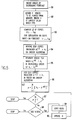
- FIG. 2 illustrates the various events which will invoke the dynamic phase of the invention.
- the first event is a request for the playing of a video, as indicated in block 21. This event has the effect of adding a data stream.
- the second event is the completion of the playing of a video, as indicated in block 22. This event has the effect of ending a data stream.
- subscribers and guests are provided with the option of pausing and resuming play of a video, just as may be done when using a home video cassette recorder (VCR).
- VCR home video cassette recorder
- the digital technology of videos-on-demand make this feature possible.
- this event has the effect of suspending (i.e., ending temporarily) a data stream.
- the subscriber or guest resumes the playing of the paused video as indicated in block 24, this event has the effect of adding a data stream.
- Each of these events invokes the dynamic load balancing phase 25 of the invention, which will now be described in more detail.
- This problem is a so-called class constrained resource allocation problem and can be solved exactly and efficiently using a graph-theoretic optimization algorithm as described, for example, by A. Tantawi, D. Towsley and J. Wolf, "Optimal Allocation of Multiple Class Resources in Computer Systems," ACM Sigmetrics Conference, Santa Fe NM, 1988. For the optimal solution, represents the desired load on disk j.
- Stream demands are increased by one when a subscriber or guest starts a new video or resumes a currently paused video, as illustrated in Figure 2.
- stream demands are decreased by one when a subscriber or guest finishes a video or pauses a currently playing video.
- handling demand increases can be accomplished by employing a greedy algorithm; that is, an algorithm which provides a local optimal solution while ignoring the global picture.
- a greedy algorithm that is, an algorithm which provides a local optimal solution while ignoring the global picture.
- a new stream of video i 1 is to be added, that disk j satisfying whose first difference is minimal is chosen.
- the dynamic phase algorithm will be initiated.
- the norm could computed as the sum of squares:
- the initiated algorithm is also graph-theoretic, maintaining at all times a directed graph G defined as follows:
- the badness value B is computed and graph G and the quantities D 1 and D 2 are updated in step 33. Then a decision is made in step 34 as to whether B is greater than T . If not, the process stops; otherwise, j 1 is set to 1 in step 35 and j 2 is set to D in step 36. A decision is then made in step 37 as to whether there is a shortest path from j 1 to j 2.
- Existence of directed arc from j 1 to j 2 signifies the potential for transferring a single stream of some video on-line from one disk to another without exceeding the load capacity of the receiving disk.
- step 38 If there is a shortest path from j 1 to j 2, then the baton passing scheme described below and illustrated in Figure 4 is invoked in step 38, and the process loops back to step 33. If there is not a shortest path from j 1 to j 2, then j 2 is decremented in step 39 and a decision is made in step 40 as to whether j 2 is greater than or equal to D - D 2+1 . If so, the process loops back to step 37; otherwise, j 1 is incremented in step 41. After incrementing j 1, a decision is made in step 42 as to whether j 1 is less than or equal to D 1. If so, the process loops back to step 36; otherwise, the process ends (unsuccessfully).
- Figure 4 shows the logic of the baton passing process invoked in step 38 of Figure 3.
- the shortest path from disk j 1 is to disk j 2 consists of k nodes, indexed by l , the first node corresponding to disc j 1 and the k th node corresponding to disk j 2.
- the first step 44 is to set l to k -1.
- This common video must exist by the definition of G .
- step 46 l is decremented by one. This is followed in step 47 by a decision as to whether l is greater than or equal to 1. If it is, the process loops back to step 45; otherwise, the process stops and a return is made to the main program as shown in Figure 3.
- baton passing can be accomplished via some sort of synchronization primitive.
- a path of length greater than one it should be performed in reverse order; that is, from the last arc back through the first. This avoids overloading any disks, even temporarily.
- the net effect will be to add one stream to the final disk in the path, remove one stream from the initial disk in the path, and have no net effect on any other disks.
- the process may be described as "dancing backwards".
- the process as illustrated in Figures 3 and 4 has a main routine and one subroutine.
- the main routine is as follows:
- the subroutine is as follows: This dynamic scheme has the effect of balancing the load to a larger degree than would be possible without transferring videos dynamically.
- the dynamic phase scheme determines optimal disk loads via optimization algorithm and reindexes disks via increasing values of the order being from most overloaded to most underloaded where, according to the notation used, the first D 1 disks are overloaded and the last D 2 disks are underloaded.
- the dynamic phase assumes a measure of badness and a badness threshold T then uses an improvement routine to tune up the load when badness threshold is exceeded.
- FIG. 5 shows the process for the static phase of the invention.
- the first step 51 orders videos by decreasing forecasted demand.
- the videos in most demand are played from system memory, these videos being greedily assigned to system memory in step 52.
- the remaining M videos are now indexed in terms of decreasing forecasted play demand ⁇ i .
- ⁇ 1 ⁇ ... ⁇ M The next step 53 is to compute the number of copies A i required for each such video i . There are two possible alternatives for doing this step.
- the static phase has two possible modes. Mode 1 is "from scratch” and is used to configure a new system on which no videos have yet been placed onto disks. Mode 2 is "incremental” and is used on an approximately day by day basis to adjust existing video to disk assignments because of revised forecasts. The goal in both approaches is to increase the connectivity of the undirected graph H defined as follows:
- the copies of the most popular videos are first assigned to different disks, and these disks are mapped to the root node of the clique tree. (Each disk can contain one copy of a video.)
- the new nodes are hung off as close to the root as possible. This is achieved by assigning the "connection" copy to a node closest to the root and having a disk with additional capacity.
- the process is repeated as long as there are disks remaining not included in the clique tree.
- the leaf nodes represent the less popular videos with replications.
- the videos may have more copies (excluding the connection copy) than the disks remaining unassigned.
- the assignment of those copies which exceed the number of disks remaining unassigned will be addressed in the next step.
- the remaining copies of the videos are assigned greedily to the disks, i.e.,
- the graph H obtained after the greedy phase is shown in Figure 6.
- there are four copies of video A one copy of which are assigned to each of disks 611, 612, 613, and 614.
- This group of four disks are the root 61 of the clique-tree.
- the next most popular video is video B which has three copies. One of these is assigned to disk 611 and serves as the connection copy of the video.
- the other two copies of the video B are assigned to disks 621 and 622, respectively. These two disks form a branch 62 of the clique-tree.
- Video C also has three copies, one of which is assigned to disk 612 to serve as a connection copy to branch 63 having disks 631 and 632 to which the other two copies of video C are assigned.
- This "dancing backwards” prevents any overload condition on the intermediate disk 621, even temporarily.
- the net effect is to increase by one the video stream output of disk 66, decrease by one the video stream of disk 611, and have no net effect on the video stream output of disk 621.
- stage 1 we greedily remove disk copies from net-loss videos, in order from greatest to least loss.
- stage 2 we greedily add disk copies to net-gain videos, in order from greatest to least gain, with constraints on disk storage capacity.
- U the number of new video copies. If this number is greater than or equal to U , we stop. Otherwise, we perform stage three, a neighborhood escape heuristic on the entire set of video copies.
- the neighborhood escape heuristic used is described by J. Wolf in "The Placement Optimization Program", ACM Sigmetrics Conference, Berkeley CA, 1989. This includes single moves (which are distance 1), swaps (which are distance 2), and so on, with constraints on disk storage capacity.
- step 54 disk copies are removed whenever A i old is greater than A i using a greedy algorithm.
- a i old represents the old number of required disk copies of video i
- a i represents the new number.
- step 55 the videos are reordered for each A i old less than A i in decreasing order of A i - A i old .
- Disk copies of videos are added in step 56 whenever A i old is less than A i in order. This is done via a greedy algorithm.
- step 57 A decision is made in step 57 as to whether ⁇ is greater than or equal to U . If so, the process stops; otherwise, a decision is made in step 58 as to whether new video copies are to be added using the neighborhood escape heuristic described by J. Wolf, supra . If not, the process stops; otherwise, a video is copied in step 59 and then ⁇ is updated in step 60 before the process loops back to step 57.
- the static phase modes are from scratch and incremental.
- the from scratch mode is used only when configuring new system.
- Forecasts are used to determine memory resident videos and number of disk copies for remaining videos.
- the approach is to build clique-tree, employing a greedy strategy, taking into account constraints on disk storage capacity.
- the incremental mode is used in normal day-to-day operation.
- the incremental mode uses revised forecasts to update memory resident videos and adjust number of disk copies for remaining videos.
- a neighborhood heuristic is used for moving all video copies, taking into consideration constraints on the number of disk moves and disk storage capacity.
- the configuration planning problem is essentially the dual to the load balancing problem. It can be accomplished using the same basic technique by (1) developing a suite of video load simulation tests, (2) exploring the search space for memory and disk configurations which pass these tests, and (3) picking that configuration which satisfies (2) and has minimal cost.
Landscapes
- Engineering & Computer Science (AREA)
- Multimedia (AREA)
- Signal Processing (AREA)
- Theoretical Computer Science (AREA)
- General Engineering & Computer Science (AREA)
- Physics & Mathematics (AREA)
- Data Mining & Analysis (AREA)
- Databases & Information Systems (AREA)
- Mathematical Physics (AREA)
- Software Systems (AREA)
- General Physics & Mathematics (AREA)
- Computer Hardware Design (AREA)
- Television Signal Processing For Recording (AREA)
- Two-Way Televisions, Distribution Of Moving Picture Or The Like (AREA)
- Signal Processing For Digital Recording And Reproducing (AREA)
Applications Claiming Priority (2)
| Application Number | Priority Date | Filing Date | Title |
|---|---|---|---|
| US08/241,087 US5544313A (en) | 1994-05-11 | 1994-05-11 | Baton passing optimization scheme for load balancing/configuration planning in a video-on-demand computer system |
| US241087 | 1994-05-11 |
Publications (3)
| Publication Number | Publication Date |
|---|---|
| EP0683464A2 true EP0683464A2 (de) | 1995-11-22 |
| EP0683464A3 EP0683464A3 (de) | 1996-07-03 |
| EP0683464B1 EP0683464B1 (de) | 1999-05-06 |
Family
ID=22909198
Family Applications (1)
| Application Number | Title | Priority Date | Filing Date |
|---|---|---|---|
| EP95102075A Expired - Lifetime EP0683464B1 (de) | 1994-05-11 | 1995-02-15 | Staffelstabübergabe-Optimierungsschema für Belastungsausgleich/Konfigurationsplanung in einem Video-auf-Anfrage-Rechnersystem |
Country Status (6)
| Country | Link |
|---|---|
| US (1) | US5544313A (de) |
| EP (1) | EP0683464B1 (de) |
| JP (1) | JP3305916B2 (de) |
| KR (1) | KR0160218B1 (de) |
| CA (1) | CA2145164C (de) |
| DE (1) | DE69509433T2 (de) |
Cited By (10)
| Publication number | Priority date | Publication date | Assignee | Title |
|---|---|---|---|---|
| US5893140A (en) * | 1996-08-14 | 1999-04-06 | Emc Corporation | File server having a file system cache and protocol for truly safe asynchronous writes |
| US5892915A (en) * | 1997-04-25 | 1999-04-06 | Emc Corporation | System having client sending edit commands to server during transmission of continuous media from one clip in play list for editing the play list |
| US5933603A (en) * | 1995-10-27 | 1999-08-03 | Emc Corporation | Video file server maintaining sliding windows of a video data set in random access memories of stream server computers for immediate video-on-demand service beginning at any specified location |
| US5935206A (en) * | 1996-12-13 | 1999-08-10 | International Business Machines Corporation | Automatic replication of digital video as needed for video-on-demand |
| US5948062A (en) * | 1995-10-27 | 1999-09-07 | Emc Corporation | Network file server using a cached disk array storing a network file directory including file locking information and data mover computers each having file system software for shared read-write file access |
| US5974503A (en) * | 1997-04-25 | 1999-10-26 | Emc Corporation | Storage and access of continuous media files indexed as lists of raid stripe sets associated with file names |
| US5987621A (en) * | 1997-04-25 | 1999-11-16 | Emc Corporation | Hardware and software failover services for a file server |
| US6061504A (en) * | 1995-10-27 | 2000-05-09 | Emc Corporation | Video file server using an integrated cached disk array and stream server computers |
| US6182138B1 (en) * | 1996-02-15 | 2001-01-30 | Nec Corporation | Data distribution system that performs load balancing by directly transmitting data between distribution servers |
| US6298386B1 (en) | 1996-08-14 | 2001-10-02 | Emc Corporation | Network file server having a message collector queue for connection and connectionless oriented protocols |
Families Citing this family (103)
| Publication number | Priority date | Publication date | Assignee | Title |
|---|---|---|---|---|
| US6289390B1 (en) | 1993-08-18 | 2001-09-11 | Microsoft Corporation | System and method for performing remote requests with an on-line service network |
| US6101495A (en) * | 1994-11-16 | 2000-08-08 | Hitachi, Ltd. | Method of executing partition operations in a parallel database system |
| JP3023441B2 (ja) * | 1993-11-16 | 2000-03-21 | 株式会社日立製作所 | データベース分割管理方法および並列データベースシステム |
| US7599910B1 (en) | 1993-11-16 | 2009-10-06 | Hitachi, Ltd. | Method and system of database divisional management for parallel database system |
| US5774714A (en) * | 1995-03-27 | 1998-06-30 | Hewlett-Packard Company | Zone bit recording enhanced video data layout |
| US6901433B2 (en) * | 1995-06-07 | 2005-05-31 | Microsoft Corporation | System for providing users with a filtered view of interactive network directory obtains from remote properties cache that provided by an on-line service |
| US6181867B1 (en) | 1995-06-07 | 2001-01-30 | Intervu, Inc. | Video storage and retrieval system |
| US5956489A (en) * | 1995-06-07 | 1999-09-21 | Microsoft Corporation | Transaction replication system and method for supporting replicated transaction-based services |
| US5774668A (en) * | 1995-06-07 | 1998-06-30 | Microsoft Corporation | System for on-line service in which gateway computer uses service map which includes loading condition of servers broadcasted by application servers for load balancing |
| US5933599A (en) * | 1995-07-17 | 1999-08-03 | Microsoft Corporation | Apparatus for presenting the content of an interactive on-line network |
| US5787482A (en) * | 1995-07-31 | 1998-07-28 | Hewlett-Packard Company | Deadline driven disk scheduler method and apparatus with thresholded most urgent request queue scan window |
| US5956509A (en) | 1995-08-18 | 1999-09-21 | Microsoft Corporation | System and method for performing remote requests with an on-line service network |
| US5941947A (en) * | 1995-08-18 | 1999-08-24 | Microsoft Corporation | System and method for controlling access to data entities in a computer network |
| US6047309A (en) * | 1995-10-02 | 2000-04-04 | International Business Machines Corporation | Recording observed and reported response characteristics at server and/or client nodes in a replicated data environment, and selecting a server to provide data based on the observed and/or reported response characteristics |
| US5737747A (en) * | 1995-10-27 | 1998-04-07 | Emc Corporation | Prefetching to service multiple video streams from an integrated cached disk array |
| IL117133A (en) | 1996-02-14 | 1999-07-14 | Olivr Corp Ltd | Method and system for providing on-line virtual reality movies |
| WO1997030551A1 (en) * | 1996-02-14 | 1997-08-21 | Olivr Corporation Ltd. | Method and systems for progressive asynchronous transmission of multimedia data |
| JPH09233412A (ja) * | 1996-02-23 | 1997-09-05 | Mitsubishi Electric Corp | 映像データの記録再生システム |
| US5828370A (en) * | 1996-07-01 | 1998-10-27 | Thompson Consumer Electronics Inc. | Video delivery system and method for displaying indexing slider bar on the subscriber video screen |
| US5790795A (en) * | 1996-07-01 | 1998-08-04 | Sun Microsystems, Inc. | Media server system which employs a SCSI bus and which utilizes SCSI logical units to differentiate between transfer modes |
| ATE536588T1 (de) * | 1996-07-25 | 2011-12-15 | Xcelera Inc | Web-server system mit primären und sekundären servern |
| US6721952B1 (en) | 1996-08-06 | 2004-04-13 | Roxio, Inc. | Method and system for encoding movies, panoramas and large images for on-line interactive viewing and gazing |
| JP3563541B2 (ja) * | 1996-09-13 | 2004-09-08 | 株式会社東芝 | データ格納装置及びデータ格納方法 |
| US5870553A (en) * | 1996-09-19 | 1999-02-09 | International Business Machines Corporation | System and method for on-demand video serving from magnetic tape using disk leader files |
| JP4151991B2 (ja) * | 1997-05-26 | 2008-09-17 | コーニンクレッカ フィリップス エレクトロニクス エヌ ヴィ | ビデオサーバにおいてデータを取り出すシステム |
| US6199110B1 (en) * | 1997-05-30 | 2001-03-06 | Oracle Corporation | Planned session termination for clients accessing a resource through a server |
| US6351775B1 (en) * | 1997-05-30 | 2002-02-26 | International Business Machines Corporation | Loading balancing across servers in a computer network |
| US6490610B1 (en) | 1997-05-30 | 2002-12-03 | Oracle Corporation | Automatic failover for clients accessing a resource through a server |
| US6128649A (en) * | 1997-06-02 | 2000-10-03 | Nortel Networks Limited | Dynamic selection of media streams for display |
| US6230200B1 (en) * | 1997-09-08 | 2001-05-08 | Emc Corporation | Dynamic modeling for resource allocation in a file server |
| JP3810530B2 (ja) * | 1997-09-18 | 2006-08-16 | 富士通株式会社 | ビデオサーバシステム、コンテンツ動的配置装置及びコンテンツ動的配置方法 |
| US6061761A (en) * | 1997-10-06 | 2000-05-09 | Emc Corporation | Method for exchanging logical volumes in a disk array storage device in response to statistical analyses and preliminary testing |
| US6173420B1 (en) | 1997-10-31 | 2001-01-09 | Oracle Corporation | Method and apparatus for fail safe configuration |
| US6330609B1 (en) | 1997-11-07 | 2001-12-11 | Lucent Technologies, Inc. | Admission control system and method for media-on-demand servers |
| US6035306A (en) * | 1997-11-24 | 2000-03-07 | Terascape Software Inc. | Method for improving performance of large databases |
| US6374336B1 (en) * | 1997-12-24 | 2002-04-16 | Avid Technology, Inc. | Computer system and process for transferring multiple high bandwidth streams of data between multiple storage units and multiple applications in a scalable and reliable manner |
| USRE42761E1 (en) | 1997-12-31 | 2011-09-27 | Crossroads Systems, Inc. | Storage router and method for providing virtual local storage |
| US5941972A (en) | 1997-12-31 | 1999-08-24 | Crossroads Systems, Inc. | Storage router and method for providing virtual local storage |
| US7054935B2 (en) | 1998-02-10 | 2006-05-30 | Savvis Communications Corporation | Internet content delivery network |
| US8296396B2 (en) | 1998-02-10 | 2012-10-23 | Level 3 Communications, Llc | Delivering resources to clients in a distributed computing environment with rendezvous based on load balancing and network conditions |
| US6185598B1 (en) | 1998-02-10 | 2001-02-06 | Digital Island, Inc. | Optimized network resource location |
| US6438595B1 (en) | 1998-06-24 | 2002-08-20 | Emc Corporation | Load balancing using directory services in a data processing system |
| US6195703B1 (en) | 1998-06-24 | 2001-02-27 | Emc Corporation | Dynamic routing for performance partitioning in a data processing network |
| US6260120B1 (en) | 1998-06-29 | 2001-07-10 | Emc Corporation | Storage mapping and partitioning among multiple host processors in the presence of login state changes and host controller replacement |
| US6421711B1 (en) | 1998-06-29 | 2002-07-16 | Emc Corporation | Virtual ports for data transferring of a data storage system |
| US6295575B1 (en) | 1998-06-29 | 2001-09-25 | Emc Corporation | Configuring vectors of logical storage units for data storage partitioning and sharing |
| US6973455B1 (en) | 1999-03-03 | 2005-12-06 | Emc Corporation | File server system providing direct data sharing between clients with a server acting as an arbiter and coordinator |
| US7305451B2 (en) * | 1998-08-24 | 2007-12-04 | Microsoft Corporation | System for providing users an integrated directory service containing content nodes located in different groups of application servers in computer network |
| US6324581B1 (en) | 1999-03-03 | 2001-11-27 | Emc Corporation | File server system using file system storage, data movers, and an exchange of meta data among data movers for file locking and direct access to shared file systems |
| US6275470B1 (en) | 1999-06-18 | 2001-08-14 | Digital Island, Inc. | On-demand overlay routing for computer-based communication networks |
| US8032634B1 (en) | 1999-08-23 | 2011-10-04 | Oracle America, Inc. | Approach for allocating resources to an apparatus based on resource requirements |
| US6779016B1 (en) * | 1999-08-23 | 2004-08-17 | Terraspring, Inc. | Extensible computing system |
| US8543901B1 (en) | 1999-11-01 | 2013-09-24 | Level 3 Communications, Llc | Verification of content stored in a network |
| US6687846B1 (en) | 2000-03-30 | 2004-02-03 | Intel Corporation | System and method for error handling and recovery |
| JP2003536329A (ja) * | 2000-06-02 | 2003-12-02 | コーニンクレッカ フィリップス エレクトロニクス エヌ ヴィ | 記憶媒体からブロックを読み出すための方法及びシステム |
| US7020709B1 (en) | 2000-06-30 | 2006-03-28 | Intel Corporation | System and method for fault tolerant stream splitting |
| US7318107B1 (en) | 2000-06-30 | 2008-01-08 | Intel Corporation | System and method for automatic stream fail-over |
| JP2002108350A (ja) | 2000-09-28 | 2002-04-10 | Internatl Business Mach Corp <Ibm> | 音楽配信のための方法及びシステム |
| US7188357B1 (en) * | 2000-11-16 | 2007-03-06 | Unisys Corporation | Video-on demand video server disk/memory streaming selection methodology |
| US20020091612A1 (en) * | 2000-12-21 | 2002-07-11 | International Business Machines Corporation | Method, system, and business method for providing a marketplace for computing capacity in a network |
| US6651141B2 (en) | 2000-12-29 | 2003-11-18 | Intel Corporation | System and method for populating cache servers with popular media contents |
| US6990667B2 (en) * | 2001-01-29 | 2006-01-24 | Adaptec, Inc. | Server-independent object positioning for load balancing drives and servers |
| US6775679B2 (en) | 2001-03-20 | 2004-08-10 | Emc Corporation | Building a meta file system from file system cells |
| US7444662B2 (en) * | 2001-06-28 | 2008-10-28 | Emc Corporation | Video file server cache management using movie ratings for reservation of memory and bandwidth resources |
| WO2003027906A2 (en) | 2001-09-28 | 2003-04-03 | Savvis Communications Corporation | System and method for policy dependent name to address resolutioin. |
| US7860964B2 (en) | 2001-09-28 | 2010-12-28 | Level 3 Communications, Llc | Policy-based content delivery network selection |
| US7373644B2 (en) | 2001-10-02 | 2008-05-13 | Level 3 Communications, Llc | Automated server replication |
| US20030079027A1 (en) | 2001-10-18 | 2003-04-24 | Michael Slocombe | Content request routing and load balancing for content distribution networks |
| US9167036B2 (en) | 2002-02-14 | 2015-10-20 | Level 3 Communications, Llc | Managed object replication and delivery |
| US6985914B2 (en) * | 2002-02-20 | 2006-01-10 | Emc Corporation | Cluster meta file system of file system cells managed by respective data movers of a network file server |
| US7878908B2 (en) * | 2002-11-14 | 2011-02-01 | Nintendo Co., Ltd. | Multiplexed secure video game play distribution |
| US20040162768A1 (en) * | 2003-01-31 | 2004-08-19 | Snyder Aaron Francis | System architecture for a vendor management inventory solution |
| US20050114235A1 (en) * | 2003-11-25 | 2005-05-26 | Snyder Aaron F. | Demand and order-based process flow for vendor managed inventory |
| US7415470B2 (en) * | 2004-08-12 | 2008-08-19 | Oracle International Corporation | Capturing and re-creating the state of a queue when migrating a session |
| US7587400B2 (en) * | 2004-08-12 | 2009-09-08 | Oracle International Corporation | Suspending a result set and continuing from a suspended result set for transparent session migration |
| US7743333B2 (en) * | 2004-08-12 | 2010-06-22 | Oracle International Corporation | Suspending a result set and continuing from a suspended result set for scrollable cursors |
| US7613710B2 (en) * | 2004-08-12 | 2009-11-03 | Oracle International Corporation | Suspending a result set and continuing from a suspended result set |
| US7502824B2 (en) * | 2004-08-12 | 2009-03-10 | Oracle International Corporation | Database shutdown with session migration |
| US8166005B2 (en) * | 2004-09-21 | 2012-04-24 | Emc Corporation | Pathname caching and protection of the root directory in a nested multilayer directory structure |
| DE102004062116B3 (de) * | 2004-12-23 | 2006-05-11 | Ab Skf | Lageranordnung für einen Computertomographen |
| US9176772B2 (en) * | 2005-02-11 | 2015-11-03 | Oracle International Corporation | Suspending and resuming of sessions |
| US8260945B2 (en) * | 2005-11-16 | 2012-09-04 | ABSi Corporation | System and method for wirelessly broadcasting content from a core for receipt by a mobile client |
| EP1955219A4 (de) * | 2005-11-16 | 2011-06-29 | Absi Corp | System und verfahren zum bereitstellen von inhalt über ein netzwerk |
| US8286218B2 (en) | 2006-06-08 | 2012-10-09 | Ajp Enterprises, Llc | Systems and methods of customized television programming over the internet |
| WO2008058823A1 (de) * | 2006-11-14 | 2008-05-22 | Siemens Aktiengesellschaft | Verfahren zur lastverteilung bei einem peer-to-peer-overlay-netzwerk |
| US8627514B1 (en) * | 2007-03-23 | 2014-01-14 | Spartan Tactical Concepts, LLC | Vehicle ready modular light weight load bearing equipment apparatus |
| US10924573B2 (en) | 2008-04-04 | 2021-02-16 | Level 3 Communications, Llc | Handling long-tail content in a content delivery network (CDN) |
| WO2009123868A2 (en) | 2008-04-04 | 2009-10-08 | Level 3 Communications, Llc | Handling long-tail content in a content delivery network (cdn) |
| US9762692B2 (en) | 2008-04-04 | 2017-09-12 | Level 3 Communications, Llc | Handling long-tail content in a content delivery network (CDN) |
| US20090254931A1 (en) * | 2008-04-07 | 2009-10-08 | Pizzurro Alfred J | Systems and methods of interactive production marketing |
| US8224899B2 (en) | 2008-04-17 | 2012-07-17 | Eloy Technology, Llc | Method and system for aggregating media collections between participants of a sharing network |
| US8484311B2 (en) * | 2008-04-17 | 2013-07-09 | Eloy Technology, Llc | Pruning an aggregate media collection |
| US8285811B2 (en) * | 2008-04-17 | 2012-10-09 | Eloy Technology, Llc | Aggregating media collections to provide a primary list and sorted sub-lists |
| US8285810B2 (en) * | 2008-04-17 | 2012-10-09 | Eloy Technology, Llc | Aggregating media collections between participants of a sharing network utilizing bridging |
| US20100070490A1 (en) * | 2008-09-17 | 2010-03-18 | Eloy Technology, Llc | System and method for enhanced smart playlists with aggregated media collections |
| US8997154B2 (en) * | 2008-09-19 | 2015-03-31 | At&T Intellectual Property I, Lp | Apparatus and method for obtaining media content |
| US8880599B2 (en) | 2008-10-15 | 2014-11-04 | Eloy Technology, Llc | Collection digest for a media sharing system |
| US8484227B2 (en) * | 2008-10-15 | 2013-07-09 | Eloy Technology, Llc | Caching and synching process for a media sharing system |
| US20100114979A1 (en) * | 2008-10-28 | 2010-05-06 | Concert Technology Corporation | System and method for correlating similar playlists in a media sharing network |
| US9014832B2 (en) | 2009-02-02 | 2015-04-21 | Eloy Technology, Llc | Augmenting media content in a media sharing group |
| US8776158B1 (en) | 2009-09-30 | 2014-07-08 | Emc Corporation | Asynchronous shifting windows caching for forward and backward video streaming |
| US20120117110A1 (en) | 2010-09-29 | 2012-05-10 | Eloy Technology, Llc | Dynamic location-based media collection aggregation |
| TW201224773A (en) * | 2010-12-10 | 2012-06-16 | Inst Information Industry | System and method for playing advertisement |
Family Cites Families (9)
| Publication number | Priority date | Publication date | Assignee | Title |
|---|---|---|---|---|
| JPS5841538B2 (ja) * | 1975-12-04 | 1983-09-13 | 株式会社東芝 | マルチプロセツサシステム ノ ユウセンセイギヨホウシキ |
| US4207609A (en) * | 1978-05-08 | 1980-06-10 | International Business Machines Corporation | Method and means for path independent device reservation and reconnection in a multi-CPU and shared device access system |
| JPH06100981B2 (ja) * | 1983-12-28 | 1994-12-12 | 株式会社日立製作所 | 記憶階層制御方式 |
| US5172413A (en) * | 1990-12-20 | 1992-12-15 | Sasktel | Secure hierarchial video delivery system and method |
| US5168353A (en) * | 1990-12-21 | 1992-12-01 | Gte Laboratories Incorporated | Video distribution system allowing viewer access to time staggered indentical prerecorded programs |
| US5383112A (en) * | 1991-01-07 | 1995-01-17 | Gte Service Corporation | Inventory management method |
| US5345584A (en) * | 1991-03-11 | 1994-09-06 | Laclead Enterprises | System for managing data storage based on vector-summed size-frequency vectors for data sets, devices, and residual storage on devices |
| US5371532A (en) * | 1992-05-15 | 1994-12-06 | Bell Communications Research, Inc. | Communications architecture and method for distributing information services |
| US5423018A (en) * | 1992-11-16 | 1995-06-06 | International Business Machines Corporation | Queue time reduction in a data storage hierarchy using volume mount rate |
-
1994
- 1994-05-11 US US08/241,087 patent/US5544313A/en not_active Expired - Lifetime
-
1995
- 1995-02-15 EP EP95102075A patent/EP0683464B1/de not_active Expired - Lifetime
- 1995-02-15 DE DE69509433T patent/DE69509433T2/de not_active Expired - Lifetime
- 1995-03-20 CA CA002145164A patent/CA2145164C/en not_active Expired - Fee Related
- 1995-04-27 JP JP10330395A patent/JP3305916B2/ja not_active Expired - Lifetime
- 1995-05-10 KR KR1019950011358A patent/KR0160218B1/ko not_active Expired - Fee Related
Non-Patent Citations (3)
| Title |
|---|
| IBM TECHNICAL DISCLOSURE BULLETIN, vol. 36, no. 6A, June 1993, pages 553-555, XP000373091 "INTEGRATED DISK MANAGEMENT TO PROVIDE HIGH PERFORMANCE LOGICAL DRIVES FOR MULTIPLE ACCESSES AND LARGE SEQUENTIAL ACCESSES TO A MULTI-DISK STORAGE SUBSYSTEM" * |
| PROCEEDINGS OF NETWORK AND OPERATING SYSTEM SUPPORT FOR DIGITAL AUDIO AND VIDEO (NOSSDAV'93), LANCASTER, UK, 3-5 NOV. 1993, ISBN 3-540-58404-8, 1994, BERLIN, SPRINGER-VERLAG, GERMANY, pages 204-215, XP000563157 LITTLE T D C ET AL: "Probabilistic assignment of movies to storage devices in a video-on-demand system" * |
| SMPTE JOURNAL, SEPT. 1993, USA, vol. 102, no. 9, ISSN 0036-1682, pages 791-803, XP000195689 HODGE W ET AL: "Video on demand: architecture, systems, and applications" * |
Cited By (10)
| Publication number | Priority date | Publication date | Assignee | Title |
|---|---|---|---|---|
| US5933603A (en) * | 1995-10-27 | 1999-08-03 | Emc Corporation | Video file server maintaining sliding windows of a video data set in random access memories of stream server computers for immediate video-on-demand service beginning at any specified location |
| US5948062A (en) * | 1995-10-27 | 1999-09-07 | Emc Corporation | Network file server using a cached disk array storing a network file directory including file locking information and data mover computers each having file system software for shared read-write file access |
| US6061504A (en) * | 1995-10-27 | 2000-05-09 | Emc Corporation | Video file server using an integrated cached disk array and stream server computers |
| US6182138B1 (en) * | 1996-02-15 | 2001-01-30 | Nec Corporation | Data distribution system that performs load balancing by directly transmitting data between distribution servers |
| US5893140A (en) * | 1996-08-14 | 1999-04-06 | Emc Corporation | File server having a file system cache and protocol for truly safe asynchronous writes |
| US6298386B1 (en) | 1996-08-14 | 2001-10-02 | Emc Corporation | Network file server having a message collector queue for connection and connectionless oriented protocols |
| US5935206A (en) * | 1996-12-13 | 1999-08-10 | International Business Machines Corporation | Automatic replication of digital video as needed for video-on-demand |
| US5892915A (en) * | 1997-04-25 | 1999-04-06 | Emc Corporation | System having client sending edit commands to server during transmission of continuous media from one clip in play list for editing the play list |
| US5974503A (en) * | 1997-04-25 | 1999-10-26 | Emc Corporation | Storage and access of continuous media files indexed as lists of raid stripe sets associated with file names |
| US5987621A (en) * | 1997-04-25 | 1999-11-16 | Emc Corporation | Hardware and software failover services for a file server |
Also Published As
| Publication number | Publication date |
|---|---|
| EP0683464A3 (de) | 1996-07-03 |
| US5544313A (en) | 1996-08-06 |
| KR950033924A (ko) | 1995-12-26 |
| JP3305916B2 (ja) | 2002-07-24 |
| JPH08102933A (ja) | 1996-04-16 |
| KR0160218B1 (ko) | 1998-12-15 |
| CA2145164A1 (en) | 1995-11-12 |
| CA2145164C (en) | 1998-12-15 |
| DE69509433D1 (de) | 1999-06-10 |
| EP0683464B1 (de) | 1999-05-06 |
| DE69509433T2 (de) | 1999-12-16 |
Similar Documents
| Publication | Publication Date | Title |
|---|---|---|
| EP0683464B1 (de) | Staffelstabübergabe-Optimierungsschema für Belastungsausgleich/Konfigurationsplanung in einem Video-auf-Anfrage-Rechnersystem | |
| JP3346957B2 (ja) | ビデオ配置をバランスさせる方法及びビデオ配置システム | |
| JP2902975B2 (ja) | メモリバッファ管理方法及びシステム | |
| US6223206B1 (en) | Method and system for load balancing by replicating a portion of a file being read by a first stream onto second device and reading portion with a second stream capable of accessing | |
| US5928327A (en) | System and process for delivering digital data on demand | |
| US5935206A (en) | Automatic replication of digital video as needed for video-on-demand | |
| CA2196483C (en) | Method and apparatus for providing enhanced pay per view in a video server | |
| US5892913A (en) | System and method for datastreams employing shared loop architecture multimedia subsystem clusters | |
| US6401126B1 (en) | File server system and method for scheduling data streams according to a distributed scheduling policy | |
| AU654885B2 (en) | Information broadcasting system and method | |
| JP4523077B2 (ja) | オーディオビジュアル分配システム | |
| WO1999014687A2 (en) | Continuous media file server and method for scheduling network resources | |
| JP2003533138A (ja) | 双方向テレビジョンにおけるコンテンツ伝達 | |
| US5964829A (en) | Method and apparatus for providing enhanced pay per view in a video server employing a coarse-grained striping scheme | |
| US5940865A (en) | Apparatus and method for accessing plural storage devices in predetermined order by slot allocation | |
| US6564231B1 (en) | Method for managing optical disk library files in accordance with the frequency of playback requests selected simultanenously at a specified time intervals | |
| EP0845906A2 (de) | Geteiltes Ring Audio/Videoserversystem | |
| EP0771099A2 (de) | Verteiltes Multimediadienstsystem | |
| US20010012446A1 (en) | Data allocation method, recording medium with data recorded by the method, and data server apparatus | |
| US7784079B1 (en) | Video on demand transaction server | |
| EP1175776A1 (de) | Video-auf-anfrage-systeme | |
| JPH09244979A (ja) | 双方向サービス資源配置制御方法 | |
| Philip et al. | Look-ahead scheduling to support pause-resume for video-on-demand applications | |
| Mostefaoui | The design of a high performance video server for managing TV archives | |
| Santos et al. | Using heterogeneous disks on a multimedia storage system with random data allocation |
Legal Events
| Date | Code | Title | Description |
|---|---|---|---|
| PUAI | Public reference made under article 153(3) epc to a published international application that has entered the european phase |
Free format text: ORIGINAL CODE: 0009012 |
|
| AK | Designated contracting states |
Kind code of ref document: A2 Designated state(s): DE FR GB |
|
| 17P | Request for examination filed |
Effective date: 19960308 |
|
| PUAL | Search report despatched |
Free format text: ORIGINAL CODE: 0009013 |
|
| RHK1 | Main classification (correction) |
Ipc: H04N 7/173 |
|
| AK | Designated contracting states |
Kind code of ref document: A3 Designated state(s): DE FR GB |
|
| 17Q | First examination report despatched |
Effective date: 19970415 |
|
| GRAG | Despatch of communication of intention to grant |
Free format text: ORIGINAL CODE: EPIDOS AGRA |
|
| GRAG | Despatch of communication of intention to grant |
Free format text: ORIGINAL CODE: EPIDOS AGRA |
|
| GRAH | Despatch of communication of intention to grant a patent |
Free format text: ORIGINAL CODE: EPIDOS IGRA |
|
| GRAH | Despatch of communication of intention to grant a patent |
Free format text: ORIGINAL CODE: EPIDOS IGRA |
|
| GRAA | (expected) grant |
Free format text: ORIGINAL CODE: 0009210 |
|
| AK | Designated contracting states |
Kind code of ref document: B1 Designated state(s): DE FR GB |
|
| REF | Corresponds to: |
Ref document number: 69509433 Country of ref document: DE Date of ref document: 19990610 |
|
| ET | Fr: translation filed | ||
| PLBE | No opposition filed within time limit |
Free format text: ORIGINAL CODE: 0009261 |
|
| STAA | Information on the status of an ep patent application or granted ep patent |
Free format text: STATUS: NO OPPOSITION FILED WITHIN TIME LIMIT |
|
| 26N | No opposition filed | ||
| REG | Reference to a national code |
Ref country code: GB Ref legal event code: IF02 |
|
| REG | Reference to a national code |
Ref country code: GB Ref legal event code: 732E |
|
| REG | Reference to a national code |
Ref country code: FR Ref legal event code: TP |
|
| REG | Reference to a national code |
Ref country code: GB Ref legal event code: 732E |
|
| REG | Reference to a national code |
Ref country code: FR Ref legal event code: CL |
|
| REG | Reference to a national code |
Ref country code: GB Ref legal event code: 732E Free format text: REGISTERED BETWEEN 20111215 AND 20111221 |
|
| REG | Reference to a national code |
Ref country code: DE Ref legal event code: R082 Ref document number: 69509433 Country of ref document: DE Representative=s name: BOSCH JEHLE PATENTANWALTSGESELLSCHAFT MBH, DE |
|
| REG | Reference to a national code |
Ref country code: FR Ref legal event code: TP Owner name: CISCO TECHNOLOGY, INC., US Effective date: 20120210 |
|
| REG | Reference to a national code |
Ref country code: DE Ref legal event code: R082 Ref document number: 69509433 Country of ref document: DE Representative=s name: BOSCH JEHLE PATENTANWALTSGESELLSCHAFT MBH, DE Effective date: 20120307 Ref country code: DE Ref legal event code: R081 Ref document number: 69509433 Country of ref document: DE Owner name: CISCO TECHNOLOGY, INC., US Free format text: FORMER OWNER: CISCO SYSTEMS, INC., SAN JOSE, US Effective date: 20120307 Ref country code: DE Ref legal event code: R081 Ref document number: 69509433 Country of ref document: DE Owner name: CISCO TECHNOLOGY, INC., SAN JOSE, US Free format text: FORMER OWNER: CISCO SYSTEMS, INC., SAN JOSE, CALIF., US Effective date: 20120307 |
|
| PGFP | Annual fee paid to national office [announced via postgrant information from national office to epo] |
Ref country code: DE Payment date: 20140227 Year of fee payment: 20 |
|
| PGFP | Annual fee paid to national office [announced via postgrant information from national office to epo] |
Ref country code: FR Payment date: 20140220 Year of fee payment: 20 |
|
| PGFP | Annual fee paid to national office [announced via postgrant information from national office to epo] |
Ref country code: GB Payment date: 20140227 Year of fee payment: 20 |
|
| REG | Reference to a national code |
Ref country code: DE Ref legal event code: R071 Ref document number: 69509433 Country of ref document: DE |
|
| REG | Reference to a national code |
Ref country code: DE Ref legal event code: R071 Ref document number: 69509433 Country of ref document: DE |
|
| REG | Reference to a national code |
Ref country code: GB Ref legal event code: PE20 Expiry date: 20150214 |
|
| PG25 | Lapsed in a contracting state [announced via postgrant information from national office to epo] |
Ref country code: GB Free format text: LAPSE BECAUSE OF EXPIRATION OF PROTECTION Effective date: 20150214 |