EP0684337A2 - Transferpapier und Verfahren zum Übertragen von Xerokopien auf textile Unterlagen - Google Patents
Transferpapier und Verfahren zum Übertragen von Xerokopien auf textile Unterlagen Download PDFInfo
- Publication number
- EP0684337A2 EP0684337A2 EP95105721A EP95105721A EP0684337A2 EP 0684337 A2 EP0684337 A2 EP 0684337A2 EP 95105721 A EP95105721 A EP 95105721A EP 95105721 A EP95105721 A EP 95105721A EP 0684337 A2 EP0684337 A2 EP 0684337A2
- Authority
- EP
- European Patent Office
- Prior art keywords
- layer
- paper
- vinyl acetate
- pressure
- weight
- Prior art date
- Legal status (The legal status is an assumption and is not a legal conclusion. Google has not performed a legal analysis and makes no representation as to the accuracy of the status listed.)
- Granted
Links
- 239000004753 textile Substances 0.000 title claims abstract description 17
- 238000000034 method Methods 0.000 title claims abstract description 15
- 239000000758 substrate Substances 0.000 title claims abstract 3
- FPYJFEHAWHCUMM-UHFFFAOYSA-N maleic anhydride Chemical compound O=C1OC(=O)C=C1 FPYJFEHAWHCUMM-UHFFFAOYSA-N 0.000 claims abstract description 10
- 239000012188 paraffin wax Substances 0.000 claims abstract description 9
- XTXRWKRVRITETP-UHFFFAOYSA-N Vinyl acetate Chemical compound CC(=O)OC=C XTXRWKRVRITETP-UHFFFAOYSA-N 0.000 claims abstract description 6
- 229920001897 terpolymer Polymers 0.000 claims abstract description 5
- 239000000463 material Substances 0.000 claims abstract description 4
- 239000005038 ethylene vinyl acetate Substances 0.000 claims description 11
- 229920001200 poly(ethylene-vinyl acetate) Polymers 0.000 claims description 11
- DQXBYHZEEUGOBF-UHFFFAOYSA-N but-3-enoic acid;ethene Chemical compound C=C.OC(=O)CC=C DQXBYHZEEUGOBF-UHFFFAOYSA-N 0.000 claims description 10
- 239000011248 coating agent Substances 0.000 claims description 7
- 238000000576 coating method Methods 0.000 claims description 7
- 239000000203 mixture Substances 0.000 claims description 5
- 239000001993 wax Substances 0.000 claims description 5
- 238000002844 melting Methods 0.000 claims description 3
- 230000008018 melting Effects 0.000 claims description 3
- 239000004744 fabric Substances 0.000 description 5
- 238000010409 ironing Methods 0.000 description 5
- XEEYBQQBJWHFJM-UHFFFAOYSA-N Iron Chemical compound [Fe] XEEYBQQBJWHFJM-UHFFFAOYSA-N 0.000 description 2
- 238000005259 measurement Methods 0.000 description 2
- 238000004064 recycling Methods 0.000 description 2
- 238000000926 separation method Methods 0.000 description 2
- 238000010586 diagram Methods 0.000 description 1
- 229910052742 iron Inorganic materials 0.000 description 1
- 229920000642 polymer Polymers 0.000 description 1
- 229920001296 polysiloxane Polymers 0.000 description 1
- 230000037380 skin damage Effects 0.000 description 1
Images
Classifications
-
- G—PHYSICS
- G03—PHOTOGRAPHY; CINEMATOGRAPHY; ANALOGOUS TECHNIQUES USING WAVES OTHER THAN OPTICAL WAVES; ELECTROGRAPHY; HOLOGRAPHY
- G03G—ELECTROGRAPHY; ELECTROPHOTOGRAPHY; MAGNETOGRAPHY
- G03G7/00—Selection of materials for use in image-receiving members, i.e. for reversal by physical contact; Manufacture thereof
- G03G7/0093—Image-receiving members, based on materials other than paper or plastic sheets, e.g. textiles, metals
-
- D—TEXTILES; PAPER
- D06—TREATMENT OF TEXTILES OR THE LIKE; LAUNDERING; FLEXIBLE MATERIALS NOT OTHERWISE PROVIDED FOR
- D06P—DYEING OR PRINTING TEXTILES; DYEING LEATHER, FURS OR SOLID MACROMOLECULAR SUBSTANCES IN ANY FORM
- D06P5/00—Other features in dyeing or printing textiles, or dyeing leather, furs, or solid macromolecular substances in any form
- D06P5/001—Special chemical aspects of printing textile materials
-
- D—TEXTILES; PAPER
- D06—TREATMENT OF TEXTILES OR THE LIKE; LAUNDERING; FLEXIBLE MATERIALS NOT OTHERWISE PROVIDED FOR
- D06P—DYEING OR PRINTING TEXTILES; DYEING LEATHER, FURS OR SOLID MACROMOLECULAR SUBSTANCES IN ANY FORM
- D06P5/00—Other features in dyeing or printing textiles, or dyeing leather, furs, or solid macromolecular substances in any form
- D06P5/003—Transfer printing
-
- G—PHYSICS
- G03—PHOTOGRAPHY; CINEMATOGRAPHY; ANALOGOUS TECHNIQUES USING WAVES OTHER THAN OPTICAL WAVES; ELECTROGRAPHY; HOLOGRAPHY
- G03G—ELECTROGRAPHY; ELECTROPHOTOGRAPHY; MAGNETOGRAPHY
- G03G15/00—Apparatus for electrographic processes using a charge pattern
- G03G15/65—Apparatus which relate to the handling of copy material
- G03G15/6588—Apparatus which relate to the handling of copy material characterised by the copy material, e.g. postcards, large copies, multi-layered materials, coloured sheet material
- G03G15/6591—Apparatus which relate to the handling of copy material characterised by the copy material, e.g. postcards, large copies, multi-layered materials, coloured sheet material characterised by the recording material, e.g. plastic material, OHP, ceramics, tiles, textiles
-
- G—PHYSICS
- G03—PHOTOGRAPHY; CINEMATOGRAPHY; ANALOGOUS TECHNIQUES USING WAVES OTHER THAN OPTICAL WAVES; ELECTROGRAPHY; HOLOGRAPHY
- G03G—ELECTROGRAPHY; ELECTROPHOTOGRAPHY; MAGNETOGRAPHY
- G03G7/00—Selection of materials for use in image-receiving members, i.e. for reversal by physical contact; Manufacture thereof
- G03G7/0006—Cover layers for image-receiving members; Strippable coversheets
- G03G7/002—Organic components thereof
- G03G7/0026—Organic components thereof being macromolecular
- G03G7/004—Organic components thereof being macromolecular obtained by reactions only involving carbon-to-carbon unsaturated bonds
-
- G—PHYSICS
- G03—PHOTOGRAPHY; CINEMATOGRAPHY; ANALOGOUS TECHNIQUES USING WAVES OTHER THAN OPTICAL WAVES; ELECTROGRAPHY; HOLOGRAPHY
- G03G—ELECTROGRAPHY; ELECTROPHOTOGRAPHY; MAGNETOGRAPHY
- G03G7/00—Selection of materials for use in image-receiving members, i.e. for reversal by physical contact; Manufacture thereof
- G03G7/0053—Intermediate layers for image-receiving members
-
- G—PHYSICS
- G03—PHOTOGRAPHY; CINEMATOGRAPHY; ANALOGOUS TECHNIQUES USING WAVES OTHER THAN OPTICAL WAVES; ELECTROGRAPHY; HOLOGRAPHY
- G03G—ELECTROGRAPHY; ELECTROPHOTOGRAPHY; MAGNETOGRAPHY
- G03G7/00—Selection of materials for use in image-receiving members, i.e. for reversal by physical contact; Manufacture thereof
- G03G7/006—Substrates for image-receiving members; Image-receiving members comprising only one layer
-
- G—PHYSICS
- G03—PHOTOGRAPHY; CINEMATOGRAPHY; ANALOGOUS TECHNIQUES USING WAVES OTHER THAN OPTICAL WAVES; ELECTROGRAPHY; HOLOGRAPHY
- G03G—ELECTROGRAPHY; ELECTROPHOTOGRAPHY; MAGNETOGRAPHY
- G03G2215/00—Apparatus for electrophotographic processes
- G03G2215/00362—Apparatus for electrophotographic processes relating to the copy medium handling
- G03G2215/00443—Copy medium
- G03G2215/00523—Other special types, e.g. tabbed
- G03G2215/00527—Fabrics, e.g. textiles
Definitions
- the present invention relates to a transfer paper and a method for transferring xerocopies to textile documents.
- DE 42 10 976 A1 discloses a transfer paper which has a first coating consisting of a mixture of paraffin wax with ethylene vinyl acetate in the same proportion as a separating layer, to which a second layer consisting of a terpolymer of ethylene vinyl acetate and maleic anhydride is applied is, the polymer preferably contains 9-28% vinyl acetate and 0.5-3% maleic anhydride groups.
- a template is photocopied onto the second layer.
- the paper is placed with its printed side on the textile base and heated under pressure. After a short exposure time, which has to be matched to the pad used, the paper is peeled off, the transferred image remains on the fabric pad.
- Paper of this type has the advantage that, compared to other transfer papers, it does not have a silicone release layer and can therefore be used in recycling. On the other hand, it shows a particularly high quality in terms of pressure and washability.
- a disadvantage is that relatively little time is available immediately after ironing on the fabric and when the paper is peeled off, the break between the backing layer and the paper can lie in the latter, which leads to unusable products if the separation is too cold , and that the grip of the picture on the textile is relatively hard. Furthermore, ironing onto the fabric base requires relatively high temperatures (180 ° C) and pressures so that sensitive textiles can suffer.
- the present invention therefore has for its object to provide a method and a transfer paper in which longer times are available to detach the paper from the textile and which ensures a higher quality in terms of the grip of the pressure on the fabric. At the same time, the high image quality and the high wash resistance of the known product should be maintained and the use of low temperatures when ironing on should be possible.
- a transfer paper transfer paper for transferring colored xerocopy prints to textile documents consisting of the backing paper, a first layer applied thereon, containing a mixture of paraffin wax and ethylene vinyl acetate as a separating layer and an overlying, pressure-bearing second layer made of an ethylene vinyl acetate / Maleic anhydride terpolymer with 9-28% by weight vinyl acetate and 0.5-3% by weight maleic anhydride, according to the invention in that the first layer contains 60-70% by weight paraffin wax with a melting point between 50 and 70 ° C and is applied to the paper in an amount of 10-30 g / m 2 .
- the paper can be ironed on at 100 ° C. and even below, which for the first time makes it possible for sensitive textiles to be printed using the xerocopy process.
- the usual temperatures of over 120 to 180 ° C to date there is now a time period of up to 30 seconds during which the backing paper can be detached without the breakage between the coating and the paper in the paper.
- T-shirts according to the invention have a softer "natural" feel, which increases the wearing comfort of items of clothing printed in this way.
- the pressure-absorbing second, ie outer, layer is likewise present on the paper in amounts of approximately 10-30 g / m 2 .
- a paper with a coating of approximately 12 g / m 2 in the outer and approximately 20 g / m 2 of the inner separating layer has proven particularly useful.
- the procedure for transferring any motifs, such as steps and pictures, is similar to the cited prior art.
- the motif is photocopied onto the printable side of the paper, then, if desired, the motif is cut out and the paper is placed on the textile base, the layer bearing the copy lying on the fabric.
- a stamp is pressed on the paper and this z for a few seconds.
- the grip is significantly improved compared to conventional processes. Wax residue adhering to the paper is not a problem in recycling.
- the pressure to be applied when ironing in the press can be set at 2 to 8 bar.
- the grip of the image on the textile can surprisingly still ver be improved by stretching the textile by hand in a warm to hot condition, ie after the paper has been removed in width.
Landscapes
- Physics & Mathematics (AREA)
- General Physics & Mathematics (AREA)
- Engineering & Computer Science (AREA)
- Textile Engineering (AREA)
- Chemical Kinetics & Catalysis (AREA)
- Chemical & Material Sciences (AREA)
- Ceramic Engineering (AREA)
- Spectroscopy & Molecular Physics (AREA)
- Paper (AREA)
- Developing Agents For Electrophotography (AREA)
- Thermal Transfer Or Thermal Recording In General (AREA)
- Decoration By Transfer Pictures (AREA)
- Polysaccharides And Polysaccharide Derivatives (AREA)
Abstract
Description
- Die vorliegende Erfindung betrifft ein Transferpapier sowie ein Verfahren zum Übertragen von Xerokopien auf textile Unterlagen.
- Aus der DE 42 10 976 A1 ist zu diesem Zweck ein Transferpapier bekannt, das eine erste Beschichtung bestehend aus einer Mischung von Paraffinwachs mit Ethylenvinylacetat in je gleichem Anteil als Trennschicht aufweist, auf welche eine zweite Schicht, bestehend aus einem Terpolymer aus Ethylenvinylacetat und Maleinsäureanhydrid aufgetragen ist, wobei das Polymerisat vorzugsweise 9-28 % Vinylacetat und 0,5-3 % Maleinsäureanhydridgruppen enthält.
- Auf die zweite Schicht wird dabei eine Vorlage fotokopiert. Das Papier wird dazu mit seiner bedruckten Seite auf die textile Unterlage gelegt und unter Druck erhitzt. Nach einer geringen Einwirkungszeit, die auf die verwendete Unterlage abzustimmen ist, wird das Papier abgezogen, das übertragene Bild verbleibt auf der Stoffunterlage.
- Derartige Papier weisen den Vorteil auf, daß sie gegenüber anderen Transferpapieren keine Silicontrennschicht besitzen und damit im Recycling verwendet werden können, zum anderen zeigen sie eine hinsichtlich des Druckes und der Waschbeständigkeit besonders hohe Qualität.
- Ein Nachteil besteht jedoch darin, daß unmittelbar nach dem Aufbügeln des Druckes auf den Stoff relativ wenig Zeit zur Verfügung steht und beim Abziehen des Papiers der Bruch zwischen Trägerschicht und Papier in letzterem liegen kann, was zu unbrauchbaren Produkten führt, wenn die Trennung zu kalt erfolgt, und daß der Griff des Bildes auf dem Textil relativ hart ist. Weiterhin erfordert das Aufbügeln auf die Stoffunterlage relativ hohe Temperaturen (180 °C) und Drücke so daß empfindliche Textilien hierunter leiden können.
- Die vorliegende Erfindung hat sich daher die Aufgabe gestellt, ein Verfahren und ein Transferpapier zu schaffen, bei welchem längere Zeiten zur Verfügung stehen, um das Papier vom Textil abzulösen und das hinsichtlich des Griffes des Druckes auf dem Gewebe eine höhere Qualität gewährleistet. Gleichzeitig soll die hohe Bildqualität und die hohe Waschbeständigkeit des bekannten Produktes aufrechterhalten bleiben sowie die Anwendung niedriger Temperaturen beim Aufbügeln möglich sein.
- Die Lösung dieser Aufgabe gelingt mit einem Transferpapier Transferpapier zum Übertragen von farbigen Xerokopiedrucken auf textile Unterlagen bestehend aus dem Trägerpapier, einer darauf aufgetragenen ersten Schicht, enthaltend eine Mischung aus Paraffinwachs und Ethylenvinylacetat als Trennschicht sowie einer darüber liegenden, den Druck tragenden zweiten Schicht aus einem Ethylenvinylacetat/Maleinsäureanhydrid-Terpolymer mit 9-28 Gew.-% Vinylacetat und 0,5-3 Gew.-% Maleinsäureanhydrid, erfindungsgemäß dadurch, daß die erste Schicht 60-70 Gew.-% Paraffinwachs eines Schmelzpunktes zwischen 50 und 70 °C enthält und in einer Menge von 10-30 g/m2 auf das Papier aufgetragen ist.
- Das Papier kann erfindungsgemäß bei 100 ° C und sogar darunter aufgebügelt werden, was für empfindliche Textilien erstmals die Möglichkeit schafft, diese im Xerokopieverfahren zu bedrucken. Bei den üblichen, bisher anzuwendenden Temperaturen von über 120 bis zu 180 ° C steht nunmehr eine bis zu 30 Sekunden währende Zeitdauer zur Verfügung, während derer das Trägerpapier abgelöst werden kann, ohne daß der Bruch zwischen Beschichtung und Papier im Papier geschieht.
- Dies bedeutet auch, daß das kältere Material für das mit dem Aufbügeln beschäftigten Personal sicher vor Hautverletrungen zu handhaben ist. Der gegenüber der herkömmlichen Vorgehensweise höhere Wachsanteil führt im Zusammenhang mit den besonderen Gewichtsverhältnissen überraschenderweise auch zu einer hinsichtlich des Materialgriffs erhöhten Qualität. Erfindungsgemäße T-Shirts fassen sich weicher "natürlicher" an, was den Tragekomfort von auf diese Weise bedruckten Kleidungsstücken erhöht.
- Die den Druck aufnehmende zweite, d. h. äußere Schicht ist hierbei ebenfalls in Mengen von etwa 10-30 g/m2 auf dem Papier vorhanden.
- Besonders bewährt hat sich ein Papier mit einer Beschichtung von etwa 12 g/m2 in der äußeren und etwa 20 g/m2 der inneren Trennschicht.
- Die Vorgehensweise beim Übertragen von beliebigen Motiven, wie Schritten und Bildern, ist dabei ähnlich wie beim zitierten Stand der Technik. Zunächst wird auf die bedruckbare Seite des Papiers das Motiv fotokopiert, danach schneidet man gewünschtenfalls das Motiv aus und legt das Papier auf die textile Unterlage, wobei die die Kopie tragende Schicht auf dem Stoff liegt. Danach wird ein Stempel auf das Papier gedrückt und dieser für einige Sekunden z. B. auf ca. 130 ° C erwärmt Man läßt die Wärme noch einige Sekunden nachwirken und öffnet die Presse. Dank der erfindungsgemäße Vorgehensweise steht nunmehr eine erhöhte Zeit zur Verfügung, um das Papier von der Druckschicht zu trennen, ohne daß die Gefahr besteht, daß der Bruch zwischen Beschichtung und Papier in letzterem geschieht. Der Druck ist überraschend brillant und von hoher Waschbarkeit. Der Griff ist gegenüber herkömmlichen Verfahren erheblich verbessert. Am Papier anhaftende Wachsreste stellen im Recycling kein Problem dar.
- Der beim Aufbügeln in der Presse anzuwendende Druck kann mit 2 bis 8 bar angesetzt werden.
- Der Griff der auf dem Textil befindlichen Abbildung kann überraschenderweise noch dadurch verbessert werden, in dem man das Textil in noch warmem bis heißen Zustand, d.h. nach Ablösen des Papiers in der Breite von Hand reckt.
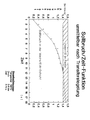
- Im beiliegenden Diagramm ist eine Meßreihe wiedergegeben, aus welcher hervorgeht, daß bei erfindungsgemäßem Vorgehen der Sollbruch zwischen Papier und Beschichtung bis zu einer Zeit von etwa 12 Sekunden in der Beschichtung (EVA/Wachs) stattfindet und erst danach im Papier, was unbrauchbare Produkte bedeutet. Das heißt es steht nunmehr eine wesentlich längere Zeit (herkömmlich ca. 4 Sekunden) zur Verfügung, was zu einer wesentlichen Arbeitserleichterung darstellt. Hierbei ist darauf hinzuweisen, daß die Meßreihe der Grafik sich auf eine Aufwandsmenge in der Wachsschicht von etwa 10 g/m2 bezieht. Die zur Abtrennung zur Verfügung stehende Zeit ist bei 30 g/m2 wesentlich höher und beträgt bis zu 30 Sekunden.
- Da es erfindungsgemäß möglich ist, den Druck bei 2 bar aufzubügeln, besteht erfindungsgemäß auch der große Vorteil, daß hierzu Handpressen eingesetzt werden können.
Claims (8)
Applications Claiming Priority (2)
| Application Number | Priority Date | Filing Date | Title |
|---|---|---|---|
| DE4418565 | 1994-05-27 | ||
| DE4418565A DE4418565A1 (de) | 1994-05-27 | 1994-05-27 | Transferpapier und Verfahren zum Übertragen von Xerokopien auf textile Unterlagen |
Publications (3)
| Publication Number | Publication Date |
|---|---|
| EP0684337A2 true EP0684337A2 (de) | 1995-11-29 |
| EP0684337A3 EP0684337A3 (de) | 1997-09-17 |
| EP0684337B1 EP0684337B1 (de) | 1999-01-13 |
Family
ID=6519136
Family Applications (1)
| Application Number | Title | Priority Date | Filing Date |
|---|---|---|---|
| EP95105721A Expired - Lifetime EP0684337B1 (de) | 1994-05-27 | 1995-04-18 | Transferpapier und Verfahren zum Übertragen von Xerokopien auf textile Unterlagen |
Country Status (3)
| Country | Link |
|---|---|
| EP (1) | EP0684337B1 (de) |
| AT (1) | ATE175736T1 (de) |
| DE (2) | DE4418565A1 (de) |
Cited By (4)
| Publication number | Priority date | Publication date | Assignee | Title |
|---|---|---|---|---|
| WO1998004418A1 (en) * | 1996-07-25 | 1998-02-05 | Minnesota Mining And Manufacturing Company | Image receptor medium |
| WO1998049604A1 (en) * | 1997-04-30 | 1998-11-05 | Minnesota Mining And Manufacturing Company | Imaging medium comprising polyvinyl chloride, method of imaging said medium, and image-bearing medium |
| WO1999028791A1 (en) * | 1997-12-02 | 1999-06-10 | Minnesota Mining And Manufacturing Company | Multilayer imaging medium comprising polypropylene, method of imaging said medium, and image-bearing medium |
| WO2008149067A1 (en) * | 2007-06-04 | 2008-12-11 | Arjowiggins Licensing | Transfer sheet and method of manufacturing a transfer sheet |
Family Cites Families (2)
| Publication number | Priority date | Publication date | Assignee | Title |
|---|---|---|---|---|
| JPH0482789A (ja) * | 1990-07-25 | 1992-03-16 | Ricoh Co Ltd | 熱転写記録媒体 |
| DE4210976C2 (de) * | 1991-10-17 | 1997-05-22 | Buelent Oez | Verfahren zum Übertragen von auf Druckvorlagen befindlichen Abbildungen auf Stoffe und Papier zur Durchführung des Verfahrens |
-
1994
- 1994-05-27 DE DE4418565A patent/DE4418565A1/de not_active Withdrawn
-
1995
- 1995-04-18 EP EP95105721A patent/EP0684337B1/de not_active Expired - Lifetime
- 1995-04-18 DE DE59504779T patent/DE59504779D1/de not_active Expired - Fee Related
- 1995-04-18 AT AT95105721T patent/ATE175736T1/de not_active IP Right Cessation
Cited By (8)
| Publication number | Priority date | Publication date | Assignee | Title |
|---|---|---|---|---|
| WO1998004418A1 (en) * | 1996-07-25 | 1998-02-05 | Minnesota Mining And Manufacturing Company | Image receptor medium |
| US5721086A (en) * | 1996-07-25 | 1998-02-24 | Minnesota Mining And Manufacturing Company | Image receptor medium |
| AU724243B2 (en) * | 1996-07-25 | 2000-09-14 | Minnesota Mining And Manufacturing Company | Image receptor medium |
| CN1090104C (zh) * | 1996-07-25 | 2002-09-04 | 美国3M公司 | 图象接受介质 |
| WO1998049604A1 (en) * | 1997-04-30 | 1998-11-05 | Minnesota Mining And Manufacturing Company | Imaging medium comprising polyvinyl chloride, method of imaging said medium, and image-bearing medium |
| US6015603A (en) * | 1997-04-30 | 2000-01-18 | 3M Innovative Properties Company | Imaging medium comprising polyvinyl chloride, method of imaging said medium, and image-bearing medium |
| WO1999028791A1 (en) * | 1997-12-02 | 1999-06-10 | Minnesota Mining And Manufacturing Company | Multilayer imaging medium comprising polypropylene, method of imaging said medium, and image-bearing medium |
| WO2008149067A1 (en) * | 2007-06-04 | 2008-12-11 | Arjowiggins Licensing | Transfer sheet and method of manufacturing a transfer sheet |
Also Published As
| Publication number | Publication date |
|---|---|
| EP0684337B1 (de) | 1999-01-13 |
| DE4418565A1 (de) | 1995-11-30 |
| EP0684337A3 (de) | 1997-09-17 |
| DE59504779D1 (de) | 1999-02-25 |
| ATE175736T1 (de) | 1999-01-15 |
Similar Documents
| Publication | Publication Date | Title |
|---|---|---|
| DE3855784T2 (de) | Formprägen von beschichteten blättern | |
| DE3751484T2 (de) | Vorrichtung zur Herstellung von Bildern auf Gegenständen. | |
| DE2732576C2 (de) | Wärmeübertragungsdruckmuster und Verfahren zum Markieren und Bedrucken von Oberflächen | |
| DE69637281T2 (de) | Bildgebungsverfahren | |
| DE2340809A1 (de) | Waermedruckfolie | |
| DE1298423B (de) | Trockenes UEbergangsmaterial | |
| EP0619184A1 (de) | Schmucketiketten und Verfahren zu ihrer Herstellung | |
| EP0684337B1 (de) | Transferpapier und Verfahren zum Übertragen von Xerokopien auf textile Unterlagen | |
| EP0692742A1 (de) | Transferpapier und Verfahren zur Übertragung von Fotokopien auf Textilien | |
| DE4210976C2 (de) | Verfahren zum Übertragen von auf Druckvorlagen befindlichen Abbildungen auf Stoffe und Papier zur Durchführung des Verfahrens | |
| DE4432383C1 (de) | Transferpapier und dessen Verwendung zur Übertragung von Fotokopien auf Textilien | |
| EP1184508A1 (de) | Transfermaterial | |
| DE1571922C3 (de) | Verfahren zur Druckübertragung und Vervielfältigung insbesondere von Schriftinformationen | |
| DE2915555C2 (de) | Verfahren und Material zum Aufbringen von Formen aus Sublimierfarben auf mit derartigen Farben im Transferdruckverfahren bedruckbare Materialien, vorzugsweise eine mit einer Akzeptorschicht für die Sublimierfarbe versehene Metallfolie | |
| DE69915752T2 (de) | Schiebebilder | |
| EP1391311A1 (de) | System zum Übertragen von Bildern auf dunkle Textilien | |
| DE10125681C1 (de) | Verfahren zum Übertragen von auf Druckvorlagen befindlichen Abbildungen auf farbige Unterlagen sowie hierzu geeignetes Vorlagematerial | |
| DE69223387T2 (de) | Mehrfach verwendbare farbstoffenthaltende schicht für thermoübertragungsdruck | |
| DE3920864A1 (de) | Verfahren zum uebertragen von darstellungen auf eine textile unterlage | |
| DE3685754T2 (de) | Wiederverwendbare farbstoff enthaltende schicht fuer thermouebertragungsdruck. | |
| DE69821178T2 (de) | Schablonendruckverfahren und Vorrichtung | |
| DE69223751T2 (de) | Farbstoffenthaltende schicht für thermoübertragungsdruck zur herstellung von farbbildern | |
| DE3325244C2 (de) | Verfahren zur Herstellung einer Siebdruckschablone und Werkzeug zur Verwendung bei diesem Verfahren | |
| DE2700249C2 (de) | Verfahren zur Herstellung einer vorbedruckten Vervielfältigungsmatrize | |
| DE3110585C2 (de) | Flockenübertragungsblatt und Flockenübertragungs-Druckverfahren |
Legal Events
| Date | Code | Title | Description |
|---|---|---|---|
| PUAI | Public reference made under article 153(3) epc to a published international application that has entered the european phase |
Free format text: ORIGINAL CODE: 0009012 |
|
| AK | Designated contracting states |
Kind code of ref document: A2 Designated state(s): AT BE CH DE DK ES FR GB GR IE IT LI LU MC NL PT SE |
|
| RAX | Requested extension states of the european patent have changed |
Free format text: SI |
|
| PUAL | Search report despatched |
Free format text: ORIGINAL CODE: 0009013 |
|
| AK | Designated contracting states |
Kind code of ref document: A3 Designated state(s): AT BE CH DE DK ES FR GB GR IE IT LI LU MC NL PT SE |
|
| AX | Request for extension of the european patent |
Free format text: SI |
|
| 17P | Request for examination filed |
Effective date: 19970913 |
|
| GRAG | Despatch of communication of intention to grant |
Free format text: ORIGINAL CODE: EPIDOS AGRA |
|
| 17Q | First examination report despatched |
Effective date: 19980129 |
|
| RAP1 | Party data changed (applicant data changed or rights of an application transferred) |
Owner name: OEZ, BUELENT |
|
| GRAG | Despatch of communication of intention to grant |
Free format text: ORIGINAL CODE: EPIDOS AGRA |
|
| GRAH | Despatch of communication of intention to grant a patent |
Free format text: ORIGINAL CODE: EPIDOS IGRA |
|
| GRAH | Despatch of communication of intention to grant a patent |
Free format text: ORIGINAL CODE: EPIDOS IGRA |
|
| GRAA | (expected) grant |
Free format text: ORIGINAL CODE: 0009210 |
|
| AK | Designated contracting states |
Kind code of ref document: B1 Designated state(s): AT BE CH DE DK ES FR GB GR IE IT LI LU MC NL PT SE |
|
| PG25 | Lapsed in a contracting state [announced via postgrant information from national office to epo] |
Ref country code: NL Free format text: LAPSE BECAUSE OF FAILURE TO SUBMIT A TRANSLATION OF THE DESCRIPTION OR TO PAY THE FEE WITHIN THE PRESCRIBED TIME-LIMIT Effective date: 19990113 Ref country code: IT Free format text: LAPSE BECAUSE OF FAILURE TO SUBMIT A TRANSLATION OF THE DESCRIPTION OR TO PAY THE FEE WITHIN THE PRE;WARNING: LAPSES OF ITALIAN PATENTS WITH EFFECTIVE DATE BEFORE 2007 MAY HAVE OCCURRED AT ANY TIME BEFORE 2007. THE CORRECT EFFECTIVE DATE MAY BE DIFFERENT FROM THE ONE RECORDED.SCRIBED TIME-LIMIT Effective date: 19990113 Ref country code: GR Free format text: LAPSE BECAUSE OF NON-PAYMENT OF DUE FEES Effective date: 19990113 Ref country code: GB Free format text: LAPSE BECAUSE OF NON-PAYMENT OF DUE FEES Effective date: 19990113 Ref country code: FR Free format text: LAPSE BECAUSE OF FAILURE TO SUBMIT A TRANSLATION OF THE DESCRIPTION OR TO PAY THE FEE WITHIN THE PRESCRIBED TIME-LIMIT Effective date: 19990113 Ref country code: ES Free format text: THE PATENT HAS BEEN ANNULLED BY A DECISION OF A NATIONAL AUTHORITY Effective date: 19990113 |
|
| REF | Corresponds to: |
Ref document number: 175736 Country of ref document: AT Date of ref document: 19990115 Kind code of ref document: T |
|
| REG | Reference to a national code |
Ref country code: CH Ref legal event code: EP |
|
| REG | Reference to a national code |
Ref country code: CH Ref legal event code: NV Representative=s name: PATENTANWALTSBUERO FELDMANN AG |
|
| REG | Reference to a national code |
Ref country code: IE Ref legal event code: FG4D Free format text: GERMAN |
|
| REF | Corresponds to: |
Ref document number: 59504779 Country of ref document: DE Date of ref document: 19990225 |
|
| PG25 | Lapsed in a contracting state [announced via postgrant information from national office to epo] |
Ref country code: PT Free format text: LAPSE BECAUSE OF FAILURE TO SUBMIT A TRANSLATION OF THE DESCRIPTION OR TO PAY THE FEE WITHIN THE PRESCRIBED TIME-LIMIT Effective date: 19990413 Ref country code: DK Free format text: LAPSE BECAUSE OF FAILURE TO SUBMIT A TRANSLATION OF THE DESCRIPTION OR TO PAY THE FEE WITHIN THE PRESCRIBED TIME-LIMIT Effective date: 19990413 |
|
| PG25 | Lapsed in a contracting state [announced via postgrant information from national office to epo] |
Ref country code: LU Free format text: LAPSE BECAUSE OF NON-PAYMENT OF DUE FEES Effective date: 19990418 Ref country code: AT Free format text: LAPSE BECAUSE OF NON-PAYMENT OF DUE FEES Effective date: 19990418 |
|
| PG25 | Lapsed in a contracting state [announced via postgrant information from national office to epo] |
Ref country code: SE Free format text: LAPSE BECAUSE OF NON-PAYMENT OF DUE FEES Effective date: 19990419 |
|
| PG25 | Lapsed in a contracting state [announced via postgrant information from national office to epo] |
Ref country code: LI Free format text: LAPSE BECAUSE OF NON-PAYMENT OF DUE FEES Effective date: 19990430 Ref country code: CH Free format text: LAPSE BECAUSE OF NON-PAYMENT OF DUE FEES Effective date: 19990430 Ref country code: BE Free format text: LAPSE BECAUSE OF NON-PAYMENT OF DUE FEES Effective date: 19990430 |
|
| EN | Fr: translation not filed | ||
| NLV1 | Nl: lapsed or annulled due to failure to fulfill the requirements of art. 29p and 29m of the patents act | ||
| GBV | Gb: ep patent (uk) treated as always having been void in accordance with gb section 77(7)/1977 [no translation filed] |
Effective date: 19990113 |
|
| PG25 | Lapsed in a contracting state [announced via postgrant information from national office to epo] |
Ref country code: IE Free format text: LAPSE BECAUSE OF NON-PAYMENT OF DUE FEES Effective date: 19990820 |
|
| REG | Reference to a national code |
Ref country code: IE Ref legal event code: FD4D |
|
| BERE | Be: lapsed |
Owner name: OZ BULENT Effective date: 19990430 |
|
| PG25 | Lapsed in a contracting state [announced via postgrant information from national office to epo] |
Ref country code: MC Free format text: LAPSE BECAUSE OF NON-PAYMENT OF DUE FEES Effective date: 19991031 |
|
| PLBE | No opposition filed within time limit |
Free format text: ORIGINAL CODE: 0009261 |
|
| STAA | Information on the status of an ep patent application or granted ep patent |
Free format text: STATUS: NO OPPOSITION FILED WITHIN TIME LIMIT |
|
| REG | Reference to a national code |
Ref country code: CH Ref legal event code: PL |
|
| 26N | No opposition filed | ||
| EUG | Se: european patent has lapsed |
Ref document number: 95105721.5 |
|
| PG25 | Lapsed in a contracting state [announced via postgrant information from national office to epo] |
Ref country code: DE Free format text: LAPSE BECAUSE OF NON-PAYMENT OF DUE FEES Effective date: 20000201 |