EP0684553B1 - Méthode et appareil pour genérer et utiliser des codes d'opération courts dans des systèmes orientés objet - Google Patents
Méthode et appareil pour genérer et utiliser des codes d'opération courts dans des systèmes orientés objet Download PDFInfo
- Publication number
- EP0684553B1 EP0684553B1 EP95302695A EP95302695A EP0684553B1 EP 0684553 B1 EP0684553 B1 EP 0684553B1 EP 95302695 A EP95302695 A EP 95302695A EP 95302695 A EP95302695 A EP 95302695A EP 0684553 B1 EP0684553 B1 EP 0684553B1
- Authority
- EP
- European Patent Office
- Prior art keywords
- identifier
- identifiers
- server application
- short
- operation identifier
- Prior art date
- Legal status (The legal status is an assumption and is not a legal conclusion. Google has not performed a legal analysis and makes no representation as to the accuracy of the status listed.)
- Expired - Lifetime
Links
Images
Classifications
-
- G—PHYSICS
- G06—COMPUTING OR CALCULATING; COUNTING
- G06F—ELECTRIC DIGITAL DATA PROCESSING
- G06F9/00—Arrangements for program control, e.g. control units
- G06F9/06—Arrangements for program control, e.g. control units using stored programs, i.e. using an internal store of processing equipment to receive or retain programs
- G06F9/46—Multiprogramming arrangements
- G06F9/54—Interprogram communication
- G06F9/547—Remote procedure calls [RPC]; Web services
- G06F9/548—Object oriented; Remote method invocation [RMI]
-
- G—PHYSICS
- G06—COMPUTING OR CALCULATING; COUNTING
- G06F—ELECTRIC DIGITAL DATA PROCESSING
- G06F9/00—Arrangements for program control, e.g. control units
- G06F9/06—Arrangements for program control, e.g. control units using stored programs, i.e. using an internal store of processing equipment to receive or retain programs
- G06F9/44—Arrangements for executing specific programs
- G06F9/448—Execution paradigms, e.g. implementations of programming paradigms
- G06F9/4488—Object-oriented
- G06F9/449—Object-oriented method invocation or resolution
Definitions
- This invention generally relates to a method and apparatus for use in a distributed computer system, and more specifically to a method and apparatus for handling ambiguous operation identifiers.
- client applications are allowed to delegate certain portions of the tasks which they are executing to other applications (“server applications”).
- server applications transmits a signal to the server application indicating an operation of the task for the server to execute.
- the signal also includes any data the server application may require to perform the indicated operation.
- the server application transmits a signal back to the client application to inform the client application that the operation has been completed.
- the signal also includes any data generated by the performance of the operation.
- object-oriented distributed systems In object-oriented systems, information is represented in objects which include data structures and methods. The methods define operations which may be performed on the data structures.
- a client application delegates operations to server applications by invoking methods defined in objects supported by the server.
- the client application When a client application invokes a method on a server application, the client application must communicate to the server application exactly which method it wants to invoke.
- a client application communicates this information by sending the server application a method identifier which identifies the method it desires to invoke.
- a server application may support more than one method having the same method identifier. Identifiers which correspond to more than one operation are referred to herein as ambiguous identifiers.
- the server application receives an ambiguous method identifier, it does not know which of the methods to perform.
- ambiguous method identifiers arises when a server object inherits methods from two or more pre-existing objects. This situation is generally referred to as multiple inheritance.
- two separate programmers may define two separate interface objects, an interface A object and an interface B object.
- Each programmer independently allocates the method identifiers for the methods defined in his respective interface object. It is possible that they both use the same method identifier, for example, method identifier X, for one of their methods.
- method identifier X may identify the "load" method in the interface A object, and the "store" method in the interface B object.
- the method identifier X will identify both the "load” and the "store” method in the interface C object. Further, client applications which desire to invoke either the "load' or the "store” method of the interface C object may not even be aware that there is an ambiguity. Because of inheritance, some client applications of the interface C object may only perceive the interface C object as the interface A object, whereas other client applications of the interface C object may only perceive the interface C object as the interface B object. Consequently, it cannot be assumed that client applications will even be aware that there is an ambiguity problem with respect to an identifier of a method which they desire to invoke.
- One way to minimize the potential for such method identifier collisions is to adopt a scheme which employs relatively long method identifiers. For example, if 16 byte method identifiers are used instead of 4 byte method identifiers, the possibility of ambiguous method identifiers is reduced. The possibility of ambiguous identifiers may be further minimized if programmers universally adopt certain method identifier selection rules of thumb.
- the performance of a computer system decreases with the size of the identifiers which must be passed between client and server applications. Conversely, performance may be increased by reducing the size of the method identifiers. Specifically, the smaller the method identifier, the less data that must be transmitted from the client to the server.
- the server application decodes an incoming request, it must map the method identifier contained in the request to a specific method in the server application. This mapping process is much more efficient with shorter method identifiers.
- EP-A2-0474340 relates to object-oriented technology, but addresses a different problem.
- an invoker software component if an error occurs during the loading of executable code, then an invoker software component generates a message indicating that a load error occurred and returns the load error message to the client application.
- a distributed computer system including one or more processors executing a client application and a server application.
- the server application is capable of executing a plurality of operations. Each operation is identified by at least one operation identifier of a plurality of operation identifiers. Each operation identifier identifies one or more operations.
- the client application issues a first request to the server application for the server application to perform a selected operation.
- the client application identifies the selected operation by transmitting a first operation identifier in the first request.
- the first operation identifier is an operation identifier which identifies the selected operation.
- the server application performs the selected operation when the first operation identifier identifies only the selected operation.
- the server application transmits a notification to the client application notifying the client application that the first operation identifier was ambiguous and that the selected operation was not performed when the first operation identifier identifies more than one operation.
- the client application issues a second request to the server application for the server application to perform the selected operation when the client receives the notification from the server application.
- the client application identifies the selected operation by transmitting a second operation identifier in the second request.
- the second operation identifier is a second operation identifier which identifies the selected operation.
- the second operation identifier is a different operation identifier than the first operation identifier.
- the plurality of operation identifiers include a plurality of short operation identifiers and a plurality of long operation identifiers. Each operation is identified by a short operation identifier from the plurality of short operation identifiers. Each operation further is identified by a long operation identifier from the plurality of long operation identifiers.
- the first operation identifier is a short operation identifier which identifies the selected operation.
- the second operation identifier is a long operation identifier which identifies the selected operation.
- Each short operation identifier is preferably derived by performing a hash function on a long operation identifier.
- a short operation identifier derived by performing the hash function on a given long operation identifier identifies the same operation as the given long operation identifier.
- the hash function is known to both the client application and the server application.
- Each of the client application and the server application independently derives the plurality of short operation identifiers from the plurality of long operation identifiers.
- the plurality of operations are a plurality of procedures. According to another embodiment, the plurality of operations are a plurality of methods that are to be called on one or more objects.
- the server application is aware of the methods supported by the one or more objects.
- the server application determines which short operation identifiers are ambiguous when the one or more objects are compiled.
- a server application for use in a distributed computer system.
- the distributed computer system includes one or more processors executing the server application and at least one client application.
- the server application includes an execution unit, an input unit operatively coupled to the execution unit and the server application, and an output unit operatively coupled to the execution unit and the server application.
- the execution unit is capable of executing a plurality of operations. Each operation is identified by at least one operation identifier of a plurality of operation identifiers. Each operation identifier identifies one or more operations.
- the input unit receives a first request from the at least one client application. The first request requests the server application to perform a selected operation. The first request identifies the selected operation by a first operation identifier.
- the execution unit executes the selected operation when the first operation identifier identifies only the selected operation.
- the output unit transmits a notification to the client application notifying the client application that the first operation identifier was ambiguous and that the selected operation was not performed when the first operation identifier identifies more than one operation.
- the input unit receives a second request from the client application for the server application to perform the selected operation when the client receives the notification from the server application.
- the selected operation is identified by a second operation identifier in the second request.
- the second operation identifier is a different operation identifier than the first operation identifier.
- the plurality of operation identifiers include a plurality of short operation identifiers and a plurality of long operation identifiers. Each operation is identified by a short operation identifier from the plurality of short operation identifiers. Each operation further is identified by a long operation identifier from the plurality of long operation identifiers.
- the first operation identifier is a short operation identifier which identifies the selected operation.
- the second operation identifier is a long operation identifier which identifies the selected operation.
- the server application derives each short operation identifier by performing a hash function on a corresponding long operation identifier.
- a short operation identifier derived by performing the hash function on a given long operation identifier identifies the same operation as the given long operation identifier.
- the plurality of operations may be a plurality of methods that are to be called on one or more objects.
- the server application is aware of the methods supported by the one or more objects.
- the server application determines which short operation identifiers are ambiguous when the one or more objects are compiled.
- a method for handling ambiguous identifiers in a distributed computer system includes one or more processors executing a server application and at least one client application.
- the server application is capable of executing a plurality of operations.
- each operation is identified by at least one operation identifier of a plurality of operation identifiers.
- Each operation identifier identifies one or more operations.
- the at least one client application issues a first request to the server application for the server application to perform a selected operation.
- the at least one client application identifies the selected operation by transmitting a first operation identifier in the first request.
- the first operation identifier is an operation identifier which identifies the selected operation.
- the server application performs the selected operation when the first operation identifier identifies only the selected operation.
- the server application transmits a notification to the at least one client application notifying the at least one client application that the first operation identifier was ambiguous and that the selected operation was not performed when the first operation identifier identifies more than one operation.
- the at least one client application issues a second request to the server application for the server application to perform the selected operation when the at least one client receives the notification from the server application.
- the at least one client application identifies the selected operation by transmitting a second operation identifier in the second request.
- the second operation identifier is a second operation identifier which identifies the selected operation.
- the second operation identifier is a different operation identifier than the first operation identifier.
- the plurality of operation identifiers include a plurality of short operation identifiers and a plurality of long operation identifiers. Each operation is identified by identifying each operation with a short operation identifier from the plurality of short operation identifiers, and identifying each operation by a long operation identifier from the plurality of long operation identifiers.
- the first operation identifier is a short operation identifier which identifies the selected operation.
- the second operation identifier is a long operation identifier which identifies the selected operation.
- each short operation identifier is derived by performing a hash function on a corresponding long operation identifier.
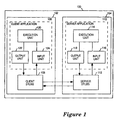
- FIG. 1 illustrates a block diagram of a distributed computer system 100 according to one embodiment of the invention.
- System 100 includes two processors 102 and 104.
- Processor 102 is executing a client application 106 and client stubs 108.
- Processor 104 is executing a server application 110 and server stubs 112.
- system 100 has been illustrated with a one-to-one correspondence between processors and applications.
- a single processor may execute multiple applications, and multiple processors may execute a single application.
- client application 106 and server application 110 may be executed by processor 102, or portions of client application 106 may be executing on both processor 102 and processor 104.
- system 100 has been illustrated with only one client application and one server application. However, in alternative embodiments, multiple client applications and multiple server applications may be present in a distributed system. Therefore, system 100 is to be considered an exemplary distributed system for illustrating the present invention, and does not limit the invention with respect to the number of processors present, number of applications present, or distribution of the applications among the processors.
- Server application 110 generally represents a program capable of executing any one of a plurality of operations responsive to requests from client applications.
- Server application 110 generally includes an execution unit 114 for performing operations, an input unit 116 for receiving requests to perform operations, and an output unit 118 for transmitting the results of operations.
- Client application 106 generally represents a program for executing a task. The execution of a task typically involves the performance of a series of operations. Client application 106 includes an execution unit 120 which may perform some or all of the operations required by the task, an output unit 122 for transmitting requests for the server application 110 to perform some or all of the operations required by the task, and an input unit 124 for receiving the results of operations that client application 106 delegated to server application 110.
- Client stubs 108 and server stubs 112 are agents which assist in the communications between client application 106 and server application 110. Specifically, when client application 106 sends an operation request to server application 110, client stubs 108 package and transmit the operation request and server stubs 112 receive and unpackage the server request. Once the server application 110 has performed the operation identified in the operation request, server stubs 112 package and transmit the results of the operation, and client stubs 108 receive and unpackage the results of the operation.
- the use of stubs to facilitate communication between applications running in different address spaces or on different processors is generally known in the art.
- Each operation supported by server application 110 is preferably identified by a long operation identifier and a short operation identifier.
- Each long operation identifier is unique to the operation it identifies.
- the uniqueness of long operation identifiers preferably results from the universal adoption of certain identifier selection rules of thumb.
- Various sets of rules may achieve the desired unique correspondence and are known to those skilled in the art. The present invention is not limited to any specific set of such rules.
- the short operation identifier of each given operation is derived by performing a hash function on the long operation identifier for the given operation. Since hash functions do not produce a one to one correspondence, each short operation identifier may identify more than one operation. For example, a hash function may map a first long operation identifier "OPEN_FILE_VERSION” identifying a first operation to a short operation identifier "#5", and a second long operation identifier "EDIT-OPEN-FILE” identifying a second operation to the same short operation identifier "#5". As a result, the short operation identifier "#5" will identify both the first and the second operation.
- client application 106 initially transmits operation requests which identify an operation to be performed by the short operation identifier of the operation. Transmission of the short operation identifier rather than the long operation identifier is preferred in order to reduce the size of messages transmitted between client application 106 and server application 110. Transmission of the short operation identifier is also preferred because server application 110 can identify the operation based on the short operation identifier more efficiently than server application 110 can identify the operation based on the long operation identifier.
- a short identifier may identify more than one operation. Therefore, when server application 110 receives an operation request which includes a short identifier which identifies more than one operation (an "ambiguous short identifier"), server application 110 will not be able to determine which of the operations corresponding to the ambiguous short identifier it should execute.
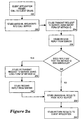
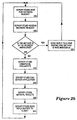
- the mechanism for handling ambiguous short identifiers shall now be explained with reference to Figures 2a and 2b.
- Figure 2a illustrates a flow chart of the operation of the portion of server application 106 which invokes operations on server application 110.
- Figure 2b illustrates a flow chart of the operation the portion of server application 110 which handles operation requests sent by client application 106.
- the client application 106 issues a call to client stubs 108.
- the call identifies an operation (the "requested operation") to be performed by server application 110, and values for any arguments required by the requested operation.
- client application 106 may issue a call requesting the server application 110 to perform the "OPEN_FILE_VERSION" operation.
- client application uses "#5", the short operation identifier derived by performing a hash function on the long operation identifier.
- the client stubs 108 marshal any arguments required by the requested operation into a call buffer (not shown).
- the client stubs 108 transmit the operation request to the server stubs 112.
- the operation request transmitted at step 204 identifies the requested operation by the short operation identifier, "#5".
- server stubs 112 initially wait for incoming operation requests, as shown at step 206.
- Server stubs 112 receive the incoming operation request at step 208.
- Server application 110 determines whether the operation identifier in the operation request is ambiguous at step 220. If the operation identifier is ambiguous, then control passes to step 222. If the operation identifier is not ambiguous, then control passes to step 224.
- the operation identifier in the operation request (the "transmitted operation identifier") is the short operation identifier "#5". If "#5" identifies more than one operation supported by server application 110, then it is ambiguous. In the present example, it shall be assumed that server application 110 supports both the "OPEN_FILE_VERSION” operation and a “EDIT-OPEN-FILE” operation, and that the short operators for both of these operations are "#5". Therefore, "#5" is an ambiguous short operation identifier and control will pass to step 222.
- step 222 server application 110 sends client application 106 a reply which indicates that the transmitted operation identifier was ambiguous and that the requested operation was therefore not performed. Control then passes back to step 206, where the server stubs 112 await the arrival of further operation requests.
- the client stubs 108 receive the reply from the server application 110.
- the client application 106 determines whether the reply indicates that the operation identifier was ambiguous. If the operation identifier was ambiguous, control passes to step 230. If the operation identifier was not ambiguous, control passes to step 232. In the present example, the reply will indicate that the short identifier "#5" was ambiguous. Therefore, control passes to step 230.
- step 230 the client stubs 108 retransmit the operation request to the server application 110, but identify the requested operation by its long operation identifier rather than its short operation identifier.
- client stubs 108 retransmit the operation request and identify the requested operation with the long operation identifier "OPEN_FILE_VERSION".
- server stubs 112 receive the operation request from the client stubs 108.
- Server application 110 determines whether the operation identifier in the operation request is ambiguous at step 220. If the operation identifier is ambiguous, then control passes to step 222. If the operation identifier is not ambiguous, then control passes to step 224.
- the operation request is the long operation identifier "OPEN_FILE_VERSION”. Long operation identifiers identify only one operation. Therefore, the long operation identifier "OPEN_FILE_VERSION" is not ambiguous, and control will pass to step 224.
- server stubs 112 unmarshal any arguments stored in the operation request and pass the arguments to the server application 110.
- server stubs 112 call the server application 110, causing the execution unit 114 of the server application 110 to execute the operation identified in the operation request using the values unmarshaled from the operation request.
- server application 110 executes the "OPEN_FILE_VERSION" operation.
- the server stubs 112 marshal the results of the performed operation in a reply buffer. For example, if the performed operation was a multiplication of two values, then the product of the two values will be placed in the reply buffer by server stubs 112. Once the results of the operation have been marshaled, the server stubs 112 send the reply in the reply buffer to the client stubs 108 in step 240. After the reply has been sent, control passes back to step 206 where the server stubs 112 wait for another operation request.
- the client stubs 108 receive the reply from the server application 110. Since the last transmitted operation request identified the requested operation by its long operation identifier, it may be assumed that the server application 110 performed the operation and that the reply contains the results of the operation. Therefore, at step 232 the client stubs 108 unmarshal the results from the reply. At step 244, the client stubs 108 return the results of the operation to the client application 106.
- One particularly effective hash function is to first encrypt the long operation identifier with a standard encryption function such as DES, and then calculate a 32 bit CRC (cyclic redundancy check) checksum of the encrypted value.
- the presently preferred hash function is a simple 32 bit CRC checksum of the long operation identifier.
- the client application 106 may indicate the presence of a long operation identifier in a operation request by transmitting, along with the operation request, a reserved word in the place of a short operation identifier.
- the server application 110 receives an operation request with the reserved word as its short identifier, the server application 110 knows to extract the long operation identifier from the operation request.
- system 100 is an object oriented system. Therefore, the operations requested in operation requests and performed by server application 110 are methods belonging to objects supported by server application 110.
- the present invention is not limited to object oriented systems.
- the operations requested in operation requests may simply be procedures that the client application 106 desires to invoke on the server application 110.
- a procedure is any operation which is not associated with an object.
- both the server application and the client application are aware of both the long operation identifiers and the hash function used to create short operation identifiers. Therefore, the server and client applications can independently generate identical short operation identifiers from the set of long operation identifiers.
- the server application 110 preferably knows the entire list of long operation identifiers at the time the server application 110 is compiled. Therefore, while the objects in the server application 110 are compiled, all of the short operation identifiers can be determined. As a result, any collisions between any of the shon operation identifiers may be detected. Because the collisions are detected at compile-time, the server application 110 may include code generated to handle the specific short identifier collisions detected.
Landscapes
- Engineering & Computer Science (AREA)
- Software Systems (AREA)
- Theoretical Computer Science (AREA)
- Physics & Mathematics (AREA)
- General Engineering & Computer Science (AREA)
- General Physics & Mathematics (AREA)
- Computer And Data Communications (AREA)
- Multi Processors (AREA)
- Stored Programmes (AREA)
Claims (20)
- Système d'ordinateur réparti (100) comprenant: au moins un processeur (102, 104) exécutant une application client (106) et une application serveur (110), cette application serveur étant couplée à l'application client ;
dans lequel
l'application serveur exécute une pluralité d'opérations, chaque opération de la pluralité d'opérations étant identifiée par au moins un code d'opération parmi une pluralité de codes d'opération, chaque code d'opération de la pluralité de codes d'opération identifiant une ou plusieurs opérations de la pluralité d'opérations ; et
l'application client envoie (204) une première demande à l'application serveur pour que cette application serveur effectue une opération sélectionnée de la pluralité d'opérations, l'application client identifiant l'opération sélectionnée en émettant un premier code d'opération dans la première demande, le premier code d'opération étant un premier code d'opération de la pluralité de codes d'opération, qui identifie l'opération sélectionnée,
caractérisé en ce que
l'application serveur effectue (236) l'opération sélectionnée lorsque le premier code d'opération n'identifie que cette opération sélectionnée ; et l'application serveur transmet (222) une notification à l'application client pour indiquer à cette application client que le premier code d'opération était ambigu du fait de sa courte taille, et que l'opération sélectionnée n'était pas effectuée lorsque le premier code d'opération identifiait plus d'une seule opération parmi la pluralité d'opérations. - Système d'ordinateur réparti selon la revendication 1,
dans lequel
l'application client envoie (230) une seconde demande à l'application serveur pour que cette application serveur effectue l'opération sélectionnée lorsque l'application client reçoit (226) la notification de l'application serveur, cette application client identifiant l'opération sélectionnée en transmettant un second code d'opération dans la seconde demande, ce second code d'opération étant un second code d'opération de la pluralité de codes d'opération, qui identifie l'opération sélectionnée, le second code d'opération étant un code d'opération différent du premier code d'opération. - Système d'ordinateur réparti selon la revendication 2,
dans lequel
la pluralité de codes d'opération comprend une pluralité de codes d'opération courts et une pluralité de codes d'opération longs, chaque opération de la pluralité d'opérations étant Identifiée par un code d'opération court provenant de la pluralité de codes d'opération courts, chaque opération de la pluralité d'opérations étant en outre identifiée par un code d'opération long provenant de la pluralité de codes d'opération longs. - Système d'ordinateur réparti selon la revendication 3,
dans lequel
le premier code d'opération est un code d'opération court de la pluralité de codes d'opération courts, qui identifie l'opération sélectionnée, le second code d'opération étant un code d'opération long de la pluralité de codes d'opération longs, qui identifie l'opération sélectionnée. - Système d'ordinateur réparti selon la revendication 4,
dans lequel
chaque code d'opération court de la pluralité de codes d'opération courts est obtenu en mettant en oeuvre une fonction de hachage sur un code d'opération long, de la pluralité de codes d'opération longs, de sorte qu'un code d'opération court obtenu en mettant en oeuvre la fonction de hachage sur un code d'opération long donné, identifie la même opération que le code d'opération long donné. - Système d'ordinateur réparti selon la revendication 5,
dans lequel
la fonction de hachage est connue à la fois pour l'application client et pour l'application serveur, de sorte que chacune de l'application client et de l'application serveur dérive indépendamment la pluralité de codes d'opération courts, de la pluralité de codes d'opération longs. - Système d'ordinateur réparti selon la revendication 1,
dans lequel
la pluralité d'opérations consiste en une pluralité de procédures. - Système d'ordinateur réparti selon la revendication 1,
dans lequel
la pluralité d'opérations consiste en une pluralité de procédés auxquels on doit faire appel pour au moins un objet supporté par l'application serveur. - Système d'ordinateur réparti selon la revendication 6,
dans lequel
la pluralité d'opérations consiste en une pluralité de procédés auxquels on doit faire appel pour au moins un objet supporté par l'application serveur, cette application serveur ayant connaissance de la pluralité de codes d'opération longs supportés par au moins un objet, et l'application serveur déterminant lesquels des codes d'opération courts de la pluralité de codes d'opération courts, sont ambigus lorsqu'on compile au moins un objet. - Moyen de stockage de données contenant une application serveur destinée à être utilisée dans un système d'ordinateur réparti comprenette au moins un processeur (102, 104) exécutant l'application serveur et au moins une application client, l'application serveur comprenant :un bloc d'exécution (114), un bloc d'entrée couplé opérationnellement au bloc d'exécution et à l'application de serveur ; le bloc d'exécution effectuant une pluralité d'opérations, chaque opération de cette pluralité d'opérations étant identifiée par au moins un code opération d'une pluralité de codes d'opération, chaque code d'opération de cette pluralité de codes d'opération identifiant une ou plusieurs opérations de la pluralité d'opérations ; le bloc d'entrée recevant (208) une première demande d'au moins l'application client ci-dessus, cette première demande demandant à l'application serveur d'effectuer une opération sélectionnée par mi la pluralité d'opérations, la première demande identifiant l'opération sélectionnée par un premier code d'opération, ce premier code d'opération étant un premier code d'opération de la pluralité de codes d'opération, qui identifie l'opération sélectionnée,
caractérisé en ce que
le bloc d'exécution exécute (236) l'opération sélectionnée lorsque le premier code d'opération n'identifie que cette opération sélectionnée ; et le bloc de sortie transmet (222) une notification à l'application client au moins unique ci-dessus pour indiquer à cette application client que le premier code d'opération était ambigu du fait de sa courte taille et que l'opération sélectionnée n'était pas effectuée lorsque le premier code d'opération identifiait plus d'une seule opération parmi la pluralité d'opérations. - Moyen de stockage de données selon la revendication 10,
dans lequel
dans l'application serveur, le bloc d'entrée reçoit une seconde demande de l'application client au moins unique ci-dessus pour que l'application serveur effectue l'opération sélectionnée lorsque l'application client reçoit la notification de l'application serveur, cette opération sélectionnée étant identifiée par un second code d'opération dans la seconde demande, ce second code d'opération étant un second code d'opération de la pluralité de codes d'opérations, qui identifie l'opération sélectionnée, le second code d'opération étant un code d'opération différent du premier code d'opération. - Moyen de stockage de données selon la revendication 11,
dans lequel
dans l'application serveur, la pluralité de codes d'opération comprend une pluralité de codes d'opération longs, chaque opération de la pluralité d'opérations étant identifiée par un code d'opération court parmi la pluralité de codes d'opération courts, chaque opération de la pluralité d'opérations étant en outre identifiée par un code d'opération long parmi la pluralité de codes d'opération longs. - Moyen de stockage de données selon la revendication 12,
dans lequel
dans l'application serveur, le premier code d'opération est un code d'opération court de la pluralité de codes d'opération courts, qui identifie l'opération sélectionnée, le second code d'opération étant un code d'opération long de la pluralité de codes d'opération longs, qui identifie l'opération sélectionnée. - Moyen de stockage de données selon la revendication 13,
dans lequel
dans l'application serveur, cette application serveur dérive chaque code d'opération court de la pluralité de codes d'opération courts en effectuant une fonction de hachage sur un code d'opération long correspondant de la pluralité de codes d'opération longs, de sorte qu'un code d'opération court obtenu en effectuant la fonction de hachage sur un code d'opération long donné, identifie la même opération que le code d'opération long donné. - Moyen de stockage de données selon la revendication 10,
dans lequel
dans l'application serveur, la pluralité d'opérations consiste en une pluralité de procédés auxquels on doit faire appel pour au moins un objet supporté par l'application serveur. - Moyen de stockage de données selon la revendication 14,
dans lequel
dans l'application serveur, la pluralité d'opérations consiste en une pluralité de procédés auxquels on doit faire appel pour au moins un objet supporté par l'application serveur, cette application serveur ayant connaissance de la pluralité de codes d'opération longs supportés par au moins un objet, l'application serveur déterminant lesquels des codes d'opération courts de la pluralité de codes d'opération courts, sont ambigus lorsqu'on compile cet objet au moins unique. - Procédé de traitement de codes ambigus dans un système d'ordinateur réparti, ce système d'ordinateur réparti comprenant au moins un processeur (102, 104) exécutant une application serveur (110) et au moins une application client (106), l'application serveur étant capable d'exécuter une pluralité d'opérations, et le procédé comprenant les étapes consistant à :caractérisée en ce qu'identifier chaque opération de la pluralité d'opérations par au moins un code d'opération d'une pluralité de codes d'opération, chaque code d'opération de la pluralité de codes d'opération identifiant une ou plusieurs opérations de la pluralité d'opérations ; etamener l'application client au moins unique à envoyer (204) une première demande à l'application serveur pour que cette application serveur effectue une opération sélectionnée de la pluralité d'opérations cette application client au moins unique identifiant l'opération sélectionnée en transmettant un premier code d'opération dans la première demande, ce premier code d'opération étant un premier code d'opération de la pluralité de codes d'opération, qui identifie l'opération sélectionnée,
il consiste à :amener l'application serveur à effectuer, (236) l'opération sélectionnée lorsque le premier code d'opération n'identifie que cette opération sélectionnée ; etamener l'application serveur à transmettre (222) une notification à l'application client au moins unique pour notifier à cette application client au moins unique que le premier code d'opération était ambigu du fait de sa courte taille, et que l'opération sélectionnée n'était pas effectuée lorsque le premier code d'opération identifiait plus d'une seule opération de la pluralité d'opérations. - Procédé selon la revendication 17,
comprenant en outre
l'étape consistant à amener l'application client au moins unique à envoyer (230) une seconde demande à l'application serveur pour que cette application serveur effectue l'opération sélectionnée lorsque l'application client au moins unique reçoit la notification de l'application serveur, cette application client au moins unique identifiant l'opération sélectionnée en transmettant un second code d'opération dans la seconde demande, ce second code d'opération étant un second code d'opération de la pluralité de codes d'opération, qui identifie l'opération sélectionnée, ce second code d'opération étant un code d'opération différent du premier code d'opération. - Procédé selon la revendication 18,
dans lequel
la pluralité de codes d'opération comprend une pluralité de codes d'opération courts et une pluralité de codes d'opération longs, l'étape d'identification de chaque opération de la pluralité d'opérations comprenant les étapes consistant à :identifier chaque opération de la pluralité d'opérations par un code d'opération court provenant de la pluralité de codes d'opération courts ; etidentifier chaque opération de la pluralité d'opérations par un code d'opération long provenant de la pluralité de codes d'opération longs ;le premier code d'opération étant un code d'opération court de la pluralité de codes d'opération courts, qui identifie l'opération sélectionnée, le second code d'opération étant un code d'opération long de la pluralité de codes d'opération longs, qui identifie l'opération sélectionnée. - Procédé selon la revendication 19,
comprenant en outre
l'étape consistant à dériver chaque code d'opération court de la pluralité de codes d'opération courts en mettant en oeuvre une fonction de hachage sur un code d'opération long correspondant de la pluralité de codes d'opération longs, un code d'opération court obtenu en mettant en oeuvre la fonction de hachage sur un code d'opération long donné, identifiant la même opération que le code d'opération long donné.
Applications Claiming Priority (2)
| Application Number | Priority Date | Filing Date | Title |
|---|---|---|---|
| US24989094A | 1994-05-26 | 1994-05-26 | |
| US249890 | 1994-05-26 |
Publications (3)
| Publication Number | Publication Date |
|---|---|
| EP0684553A2 EP0684553A2 (fr) | 1995-11-29 |
| EP0684553A3 EP0684553A3 (fr) | 1998-01-07 |
| EP0684553B1 true EP0684553B1 (fr) | 2004-06-16 |
Family
ID=22945442
Family Applications (1)
| Application Number | Title | Priority Date | Filing Date |
|---|---|---|---|
| EP95302695A Expired - Lifetime EP0684553B1 (fr) | 1994-05-26 | 1995-04-21 | Méthode et appareil pour genérer et utiliser des codes d'opération courts dans des systèmes orientés objet |
Country Status (4)
| Country | Link |
|---|---|
| US (1) | US5640564A (fr) |
| EP (1) | EP0684553B1 (fr) |
| JP (1) | JPH07325790A (fr) |
| DE (1) | DE69533148T2 (fr) |
Families Citing this family (100)
| Publication number | Priority date | Publication date | Assignee | Title |
|---|---|---|---|---|
| US6044205A (en) * | 1996-02-29 | 2000-03-28 | Intermind Corporation | Communications system for transferring information between memories according to processes transferred with the information |
| US5694546A (en) | 1994-05-31 | 1997-12-02 | Reisman; Richard R. | System for automatic unattended electronic information transport between a server and a client by a vendor provided transport software with a manifest list |
| DE69628965T2 (de) * | 1995-03-22 | 2004-02-26 | Sun Microsystems, Inc., Mountain View | Verfahren und Gerät zum Verwalten von Beziehungen zwischen Objekten in einer verteilten Objektumgebung |
| AU5386796A (en) * | 1995-04-11 | 1996-10-30 | Kinetech, Inc. | Identifying data in a data processing system |
| US6625617B2 (en) | 1996-01-02 | 2003-09-23 | Timeline, Inc. | Modularized data retrieval method and apparatus with multiple source capability |
| US6374287B1 (en) * | 1996-01-24 | 2002-04-16 | Sun Microsystems, Inc. | Method and system for allowing client processes to run on distributed window server extensions |
| US5862325A (en) * | 1996-02-29 | 1999-01-19 | Intermind Corporation | Computer-based communication system and method using metadata defining a control structure |
| US6446135B1 (en) * | 1996-03-05 | 2002-09-03 | Microsoft Corporation | Method and system for querying and executing commands of an application program |
| US6463446B1 (en) | 1998-02-26 | 2002-10-08 | Sun Microsystems, Inc. | Method and apparatus for transporting behavior in an event-based distributed system |
| US6938263B2 (en) | 1996-04-23 | 2005-08-30 | Sun Microsystems, Inc. | System and method for facilitating dynamic loading of “stub” information to enable a program operating in one address space to invoke processing of a remote method or procedure in another address space |
| US6832223B1 (en) | 1996-04-23 | 2004-12-14 | Sun Microsystems, Inc. | Method and system for facilitating access to a lookup service |
| US6182083B1 (en) | 1997-11-17 | 2001-01-30 | Sun Microsystems, Inc. | Method and system for multi-entry and multi-template matching in a database |
| US6237024B1 (en) | 1998-03-20 | 2001-05-22 | Sun Microsystem, Inc. | Method and apparatus for the suspension and continuation of remote processes |
| US6578044B1 (en) | 1997-11-17 | 2003-06-10 | Sun Microsystems, Inc. | Method and system for typesafe attribute matching |
| US6487607B1 (en) | 1998-02-26 | 2002-11-26 | Sun Microsystems, Inc. | Methods and apparatus for remote method invocation |
| US6560656B1 (en) | 1998-02-26 | 2003-05-06 | Sun Microsystems, Inc. | Apparatus and method for providing downloadable code for use in communicating with a device in a distributed system |
| US6466947B2 (en) | 1998-03-20 | 2002-10-15 | Sun Microsystems, Inc. | Apparatus and method for dynamically verifying information in a distributed system |
| US6138238A (en) | 1997-12-11 | 2000-10-24 | Sun Microsystems, Inc. | Stack-based access control using code and executor identifiers |
| US6438614B2 (en) | 1998-02-26 | 2002-08-20 | Sun Microsystems, Inc. | Polymorphic token based control |
| US6134603A (en) * | 1998-03-20 | 2000-10-17 | Sun Microsystems, Inc. | Method and system for deterministic hashes to identify remote methods |
| US6446070B1 (en) | 1998-02-26 | 2002-09-03 | Sun Microsystems, Inc. | Method and apparatus for dynamic distributed computing over a network |
| US6272559B1 (en) | 1997-10-15 | 2001-08-07 | Sun Microsystems, Inc. | Deferred reconstruction of objects and remote loading for event notification in a distributed system |
| US6282652B1 (en) | 1998-02-26 | 2001-08-28 | Sun Microsystems, Inc. | System for separately designating security requirements for methods invoked on a computer |
| US6421704B1 (en) | 1998-03-20 | 2002-07-16 | Sun Microsystems, Inc. | Method, apparatus, and product for leasing of group membership in a distributed system |
| US6598094B1 (en) | 1998-03-20 | 2003-07-22 | Sun Microsystems, Inc. | Method and apparatus for determining status of remote objects in a distributed system |
| US6247026B1 (en) | 1996-10-11 | 2001-06-12 | Sun Microsystems, Inc. | Method, apparatus, and product for leasing of delegation certificates in a distributed system |
| US6185611B1 (en) | 1998-03-20 | 2001-02-06 | Sun Microsystem, Inc. | Dynamic lookup service in a distributed system |
| US6393497B1 (en) | 1998-03-20 | 2002-05-21 | Sun Microsystems, Inc. | Downloadable smart proxies for performing processing associated with a remote procedure call in a distributed system |
| US6226746B1 (en) | 1998-03-20 | 2001-05-01 | Sun Microsystems, Inc. | Stack-based system and method to combine security requirements of methods |
| US6708171B1 (en) | 1996-04-23 | 2004-03-16 | Sun Microsystems, Inc. | Network proxy |
| US8229844B2 (en) | 1996-06-05 | 2012-07-24 | Fraud Control Systems.Com Corporation | Method of billing a purchase made over a computer network |
| US7555458B1 (en) | 1996-06-05 | 2009-06-30 | Fraud Control System.Com Corporation | Method of billing a purchase made over a computer network |
| US20030195848A1 (en) | 1996-06-05 | 2003-10-16 | David Felger | Method of billing a purchase made over a computer network |
| US5828840A (en) * | 1996-08-06 | 1998-10-27 | Verifone, Inc. | Server for starting client application on client if client is network terminal and initiating client application on server if client is non network terminal |
| US6336148B1 (en) * | 1996-09-25 | 2002-01-01 | Sun Microsystems, Inc. | Automatic checking of public contracts and private constraints on distributed objects |
| US6728737B2 (en) | 1996-10-11 | 2004-04-27 | Sun Microsystems, Inc. | Method and system for leasing storage |
| US5832529A (en) | 1996-10-11 | 1998-11-03 | Sun Microsystems, Inc. | Methods, apparatus, and product for distributed garbage collection |
| US6237009B1 (en) | 1996-10-11 | 2001-05-22 | Sun Microsystems, Inc. | Lease renewal service |
| US6219717B1 (en) * | 1996-11-20 | 2001-04-17 | Merrill Lynch & Co., Inc. | Method and apparatus for implementing object transparent invocation |
| US6157960A (en) * | 1997-05-07 | 2000-12-05 | International Business Machines Corporation | Technique for programmatically creating distributed object programs |
| US6957427B1 (en) | 1997-10-15 | 2005-10-18 | Sun Microsystems, Inc. | Remote object activation in a distributed system |
| US6253256B1 (en) | 1997-10-15 | 2001-06-26 | Sun Microsystems, Inc. | Deferred reconstruction of objects and remote loading in a distributed system |
| US6604127B2 (en) | 1998-03-20 | 2003-08-05 | Brian T. Murphy | Dynamic lookup service in distributed system |
| WO1999044133A2 (fr) * | 1998-02-26 | 1999-09-02 | Sun Microsystems, Inc. | Procede et systeme d'identification de procede a distance au moyen de hachages deterministes |
| JPH11312151A (ja) | 1998-04-28 | 1999-11-09 | Hitachi Ltd | 高速な分散オブジェクトリクエストブローカ |
| DE19835216B4 (de) * | 1998-08-05 | 2005-10-27 | Systemonic Ag | Prozessor und Verfahren zur parallelen Datenverarbeitung |
| US20040154027A1 (en) * | 1998-10-14 | 2004-08-05 | Jean-Jacques Vandewalle | Method and means for managing communications between local and remote objects in an object oriented client server system in which a client application invokes a local object as a proxy for a remote object on the server |
| US6901518B1 (en) | 1999-04-08 | 2005-05-31 | Sun Microsystems, Inc. | Method and system for establishing trust in downloaded proxy code |
| US6877163B1 (en) | 1999-06-14 | 2005-04-05 | Sun Microsystems, Inc. | Method and system for dynamic proxy classes |
| US6973493B1 (en) | 2000-05-09 | 2005-12-06 | Sun Microsystems, Inc. | Mechanism and apparatus for security of newly spawned repository spaces in a distributed computing environment |
| US6789126B1 (en) | 2000-05-09 | 2004-09-07 | Sun Microsystems, Inc. | Addressing message gates in a distributed computing environment |
| US7243356B1 (en) | 2000-05-09 | 2007-07-10 | Sun Microsystems, Inc. | Remote method invocation with secure messaging in a distributed computing environment |
| US6850979B1 (en) | 2000-05-09 | 2005-02-01 | Sun Microsystems, Inc. | Message gates in a distributed computing environment |
| US8001232B1 (en) | 2000-05-09 | 2011-08-16 | Oracle America, Inc. | Event message endpoints in a distributed computing environment |
| US8135796B1 (en) | 2000-05-09 | 2012-03-13 | Oracle America, Inc. | Mechanism and apparatus for accessing and addressing services in a distributed computing environment |
| US6918084B1 (en) | 2000-05-09 | 2005-07-12 | Sun Microsystems, Inc. | Spawning new repository spaces using information provided in advertisement schema messages |
| US7200848B1 (en) | 2000-05-09 | 2007-04-03 | Sun Microsystems, Inc. | Migrating processes using data representation language representations of the processes in a distributed computing environment |
| US7072967B1 (en) | 2000-05-09 | 2006-07-04 | Sun Microsystems, Inc. | Efficient construction of message endpoints |
| US7370091B1 (en) | 2000-05-09 | 2008-05-06 | Sun Microsystems, Inc. | Method and apparatus for obtaining space advertisements |
| US7395333B1 (en) | 2000-05-09 | 2008-07-01 | Sun Microsystems, Inc. | Method and apparatus to obtain negotiated service advertisement |
| US7016966B1 (en) | 2000-05-09 | 2006-03-21 | Sun Microsystems, Inc. | Generating results gates in a distributed computing environment |
| US7080078B1 (en) | 2000-05-09 | 2006-07-18 | Sun Microsystems, Inc. | Mechanism and apparatus for URI-addressable repositories of service advertisements and other content in a distributed computing environment |
| US6792466B1 (en) | 2000-05-09 | 2004-09-14 | Sun Microsystems, Inc. | Trusted construction of message endpoints in a distributed computing environment |
| US7010573B1 (en) | 2000-05-09 | 2006-03-07 | Sun Microsystems, Inc. | Message gates using a shared transport in a distributed computing environment |
| US7260543B1 (en) | 2000-05-09 | 2007-08-21 | Sun Microsystems, Inc. | Automatic lease renewal with message gates in a distributed computing environment |
| US6917976B1 (en) | 2000-05-09 | 2005-07-12 | Sun Microsystems, Inc. | Message-based leasing of resources in a distributed computing environment |
| US7716492B1 (en) | 2000-05-09 | 2010-05-11 | Oracle America, Inc. | Method and apparatus to obtain service capability credentials |
| US6898618B1 (en) | 2000-05-09 | 2005-05-24 | Sun Microsystems, Inc. | Client-specified display services in a distributed computing environment |
| US6862594B1 (en) | 2000-05-09 | 2005-03-01 | Sun Microsystems, Inc. | Method and apparatus to discover services using flexible search criteria |
| US6789077B1 (en) | 2000-05-09 | 2004-09-07 | Sun Microsystems, Inc. | Mechanism and apparatus for web-based searching of URI-addressable repositories in a distributed computing environment |
| US6868447B1 (en) | 2000-05-09 | 2005-03-15 | Sun Microsystems, Inc. | Mechanism and apparatus for returning results of services in a distributed computing environment |
| US6970869B1 (en) | 2000-05-09 | 2005-11-29 | Sun Microsystems, Inc. | Method and apparatus to discover services and negotiate capabilities |
| US7577834B1 (en) | 2000-05-09 | 2009-08-18 | Sun Microsystems, Inc. | Message authentication using message gates in a distributed computing environment |
| US6643650B1 (en) | 2000-05-09 | 2003-11-04 | Sun Microsystems, Inc. | Mechanism and apparatus for using messages to look up documents stored in spaces in a distributed computing environment |
| US7188251B1 (en) | 2000-05-09 | 2007-03-06 | Sun Microsystems, Inc. | System and method for secure message-based leasing of resources in a distributed computing environment |
| US7065574B1 (en) | 2000-05-09 | 2006-06-20 | Sun Microsystems, Inc. | Messaging system using pairs of message gates in a distributed computing environment |
| US8082491B1 (en) | 2000-05-09 | 2011-12-20 | Oracle America, Inc. | Dynamic displays in a distributed computing environment |
| US6950875B1 (en) | 2000-05-09 | 2005-09-27 | Sun Microsystems, Inc. | Message conductors in a distributed computing environment |
| US6865657B1 (en) | 2000-06-02 | 2005-03-08 | Sun Microsystems, Inc. | Garbage collector for a virtual heap |
| US6763440B1 (en) | 2000-06-02 | 2004-07-13 | Sun Microsystems, Inc. | Garbage collection using nursery regions for new objects in a virtual heap |
| US6941410B1 (en) | 2000-06-02 | 2005-09-06 | Sun Microsystems, Inc. | Virtual heap for a virtual machine |
| US6854115B1 (en) | 2000-06-02 | 2005-02-08 | Sun Microsystems, Inc. | Process persistence in a virtual machine |
| US6957237B1 (en) | 2000-06-02 | 2005-10-18 | Sun Microsystems, Inc. | Database store for a virtual heap |
| US6760815B1 (en) | 2000-06-02 | 2004-07-06 | Sun Microsystems, Inc. | Caching mechanism for a virtual heap |
| US7296275B2 (en) | 2001-01-04 | 2007-11-13 | Sun Microsystems, Inc. | Method and system for passing objects in a distributed system using serialization contexts |
| US7756969B1 (en) | 2001-09-07 | 2010-07-13 | Oracle America, Inc. | Dynamic provisioning of identification services in a distributed system |
| US7660887B2 (en) * | 2001-09-07 | 2010-02-09 | Sun Microsystems, Inc. | Systems and methods for providing dynamic quality of service for a distributed system |
| US7181747B2 (en) * | 2001-10-01 | 2007-02-20 | Canon Kabushiki Kaisha | Method and device for executing a function with selection and sending of multiple results in a client-server environment |
| US20040073598A1 (en) * | 2002-09-06 | 2004-04-15 | Eftia Oss Solutions Inc. | System-to-system inter-operation interface |
| US7856624B2 (en) * | 2003-09-15 | 2010-12-21 | Thomas Plum | Automated safe secure techniques for eliminating undefined behavior in computer software |
| US7810080B2 (en) * | 2003-09-15 | 2010-10-05 | Thomas Plum | Automated safe secure techniques for eliminating undefined behavior in computer software |
| US7818729B1 (en) | 2003-09-15 | 2010-10-19 | Thomas Plum | Automated safe secure techniques for eliminating undefined behavior in computer software |
| WO2005029241A2 (fr) * | 2003-09-15 | 2005-03-31 | Plum Thomas S | Techniques automatisees sures et securisees permettant d'eliminer un comportement non defini dans un logiciel informatique |
| US7792874B1 (en) | 2004-01-30 | 2010-09-07 | Oracle America, Inc. | Dynamic provisioning for filtering and consolidating events |
| US7657543B1 (en) * | 2004-10-12 | 2010-02-02 | Sun Microsystems, Inc. | Method and system for creating and using shadow roots |
| US7698703B2 (en) * | 2005-06-29 | 2010-04-13 | Gemalto Inc. | Imparting digital uniqueness to the types of a programming language using a unique digital sequence |
| US8185576B2 (en) | 2006-03-14 | 2012-05-22 | Altnet, Inc. | Filter for a distributed network |
| US8589592B2 (en) * | 2007-12-11 | 2013-11-19 | Red Hat, Inc. | Efficient object distribution |
| US8418164B2 (en) | 2008-05-29 | 2013-04-09 | Red Hat, Inc. | Image install of a network appliance |
| DE102009059939A1 (de) | 2009-12-22 | 2011-06-30 | Giesecke & Devrient GmbH, 81677 | Verfahren zum Komprimieren von Bezeichnern |
Family Cites Families (12)
| Publication number | Priority date | Publication date | Assignee | Title |
|---|---|---|---|---|
| US4882674A (en) * | 1985-03-05 | 1989-11-21 | Wang Laboratories, Inc. | Apparatus and method for control of one computer system by another computer system |
| US5187790A (en) * | 1989-06-29 | 1993-02-16 | Digital Equipment Corporation | Server impersonation of client processes in an object based computer operating system |
| US5218699A (en) * | 1989-08-24 | 1993-06-08 | International Business Machines Corporation | Remote procedure calls in heterogeneous systems |
| AU639802B2 (en) * | 1990-08-14 | 1993-08-05 | Oracle International Corporation | Methods and apparatus for providing dynamic invocation of applications in a distributed heterogeneous environment |
| JP3055970B2 (ja) * | 1991-06-20 | 2000-06-26 | 富士通株式会社 | オブジェクト指向言語間インタフェース実現方法および装置 |
| US5367635A (en) * | 1991-08-29 | 1994-11-22 | Hewlett-Packard Company | Network management agent with user created objects providing additional functionality |
| US5301316A (en) * | 1991-10-30 | 1994-04-05 | Sun Microsystems, Inc. | System for determination of the equivalence of two objects without compromising then done by a third object nominated by one and accetped by the other |
| US5287507A (en) * | 1992-03-27 | 1994-02-15 | Sun Microsystems, Inc. | Method and apparatus for portable object handles that use local caches |
| US5566302A (en) * | 1992-12-21 | 1996-10-15 | Sun Microsystems, Inc. | Method for executing operation call from client application using shared memory region and establishing shared memory region when the shared memory region does not exist |
| US5377350A (en) * | 1993-04-30 | 1994-12-27 | International Business Machines Corporation | System for cooperative communication between local object managers to provide verification for the performance of remote calls by object messages |
| WO1995004968A1 (fr) * | 1993-08-03 | 1995-02-16 | Forte Software, Inc. | Partage flexible multiplate-formes pour applications sur ordinateur |
| US5522071A (en) * | 1994-01-18 | 1996-05-28 | Sybase, Inc. | Run-time message redirection for invoking object oriented methods based on alternate dispatch variable |
-
1995
- 1995-04-21 DE DE69533148T patent/DE69533148T2/de not_active Expired - Fee Related
- 1995-04-21 EP EP95302695A patent/EP0684553B1/fr not_active Expired - Lifetime
- 1995-05-26 JP JP7151132A patent/JPH07325790A/ja active Pending
- 1995-06-06 US US08/467,542 patent/US5640564A/en not_active Expired - Lifetime
Also Published As
| Publication number | Publication date |
|---|---|
| EP0684553A3 (fr) | 1998-01-07 |
| DE69533148D1 (de) | 2004-07-22 |
| JPH07325790A (ja) | 1995-12-12 |
| US5640564A (en) | 1997-06-17 |
| EP0684553A2 (fr) | 1995-11-29 |
| DE69533148T2 (de) | 2005-08-25 |
Similar Documents
| Publication | Publication Date | Title |
|---|---|---|
| EP0684553B1 (fr) | Méthode et appareil pour genérer et utiliser des codes d'opération courts dans des systèmes orientés objet | |
| US6487607B1 (en) | Methods and apparatus for remote method invocation | |
| US6466947B2 (en) | Apparatus and method for dynamically verifying information in a distributed system | |
| US6321275B1 (en) | Interpreted remote procedure calls | |
| JP3853592B2 (ja) | 分散ウェブアプリケーションサーバ | |
| US6393497B1 (en) | Downloadable smart proxies for performing processing associated with a remote procedure call in a distributed system | |
| US6629153B1 (en) | Method and apparatus for providing peer ownership of shared objects | |
| US6684259B1 (en) | Method for providing user global object name space in a multi-user operating system | |
| US6157959A (en) | Method and apparatus for providing portable kernel-mode support for fast interprocess communication | |
| EP1234234B1 (fr) | Appareil et procede de communication entre des domaines de ressources | |
| US6226690B1 (en) | Method and apparatus for utilizing proxy objects to communicate with target objects | |
| US6629154B1 (en) | Method and system for deterministic hashes to identify remote methods | |
| EP0540166B1 (fr) | Détermination de l'équivalence d'objects en respectant la sécurité | |
| WO1998002814A1 (fr) | Procede et systeme permettant une insertion dynamique de messages objets entre des modeles objets | |
| JPH0283627A (ja) | インタプリタ | |
| KR20010034542A (ko) | 네트워크를 통한 동적 분산 컴퓨팅 방법 및 장치 | |
| EP0767428B1 (fr) | Méthode et dispositif pour charger dynamiquement le code d'exception d'un appel à une méthode | |
| US7089263B2 (en) | Apparatus and method for dynamically verifying information in a distributed system | |
| US7607142B2 (en) | Cancellation mechanism for cooperative systems | |
| WO1999044123A1 (fr) | Serveurs mandataires chargeables executant des traitements associes a une procedure de teleappel | |
| US7318229B1 (en) | Method, system, and program for dispatching a method call | |
| JP2002505478A (ja) | 分散形システムにおけるイベント通知のためのオブジェクトの据置き復元及び遠隔ローディング | |
| KR20010064248A (ko) | 분산 객체 시스템에서 병행객체의 멤버함수 호출 방법 |
Legal Events
| Date | Code | Title | Description |
|---|---|---|---|
| PUAI | Public reference made under article 153(3) epc to a published international application that has entered the european phase |
Free format text: ORIGINAL CODE: 0009012 |
|
| AK | Designated contracting states |
Kind code of ref document: A2 Designated state(s): DE FR GB IT SE |
|
| PUAL | Search report despatched |
Free format text: ORIGINAL CODE: 0009013 |
|
| AK | Designated contracting states |
Kind code of ref document: A3 Designated state(s): DE FR GB IT SE |
|
| 17P | Request for examination filed |
Effective date: 19980619 |
|
| 17Q | First examination report despatched |
Effective date: 20000105 |
|
| GRAP | Despatch of communication of intention to grant a patent |
Free format text: ORIGINAL CODE: EPIDOSNIGR1 |
|
| GRAS | Grant fee paid |
Free format text: ORIGINAL CODE: EPIDOSNIGR3 |
|
| GRAA | (expected) grant |
Free format text: ORIGINAL CODE: 0009210 |
|
| RAP1 | Party data changed (applicant data changed or rights of an application transferred) |
Owner name: SUN MICROSYSTEMS, INC. |
|
| AK | Designated contracting states |
Kind code of ref document: B1 Designated state(s): DE FR GB IT SE |
|
| PG25 | Lapsed in a contracting state [announced via postgrant information from national office to epo] |
Ref country code: IT Free format text: LAPSE BECAUSE OF FAILURE TO SUBMIT A TRANSLATION OF THE DESCRIPTION OR TO PAY THE FEE WITHIN THE PRESCRIBED TIME-LIMIT;WARNING: LAPSES OF ITALIAN PATENTS WITH EFFECTIVE DATE BEFORE 2007 MAY HAVE OCCURRED AT ANY TIME BEFORE 2007. THE CORRECT EFFECTIVE DATE MAY BE DIFFERENT FROM THE ONE RECORDED. Effective date: 20040616 |
|
| REG | Reference to a national code |
Ref country code: GB Ref legal event code: FG4D |
|
| REF | Corresponds to: |
Ref document number: 69533148 Country of ref document: DE Date of ref document: 20040722 Kind code of ref document: P |
|
| PG25 | Lapsed in a contracting state [announced via postgrant information from national office to epo] |
Ref country code: SE Free format text: LAPSE BECAUSE OF FAILURE TO SUBMIT A TRANSLATION OF THE DESCRIPTION OR TO PAY THE FEE WITHIN THE PRESCRIBED TIME-LIMIT Effective date: 20040916 |
|
| ET | Fr: translation filed | ||
| PGFP | Annual fee paid to national office [announced via postgrant information from national office to epo] |
Ref country code: FR Payment date: 20050408 Year of fee payment: 11 |
|
| PGFP | Annual fee paid to national office [announced via postgrant information from national office to epo] |
Ref country code: DE Payment date: 20050414 Year of fee payment: 11 |
|
| PLBE | No opposition filed within time limit |
Free format text: ORIGINAL CODE: 0009261 |
|
| 26N | No opposition filed |
Effective date: 20050317 |
|
| PG25 | Lapsed in a contracting state [announced via postgrant information from national office to epo] |
Ref country code: DE Free format text: LAPSE BECAUSE OF NON-PAYMENT OF DUE FEES Effective date: 20061101 |
|
| REG | Reference to a national code |
Ref country code: FR Ref legal event code: ST Effective date: 20061230 |
|
| PG25 | Lapsed in a contracting state [announced via postgrant information from national office to epo] |
Ref country code: FR Free format text: LAPSE BECAUSE OF NON-PAYMENT OF DUE FEES Effective date: 20060502 |
|
| PGFP | Annual fee paid to national office [announced via postgrant information from national office to epo] |
Ref country code: GB Payment date: 20140416 Year of fee payment: 20 |
|
| REG | Reference to a national code |
Ref country code: GB Ref legal event code: PE20 Expiry date: 20150420 |
|
| PG25 | Lapsed in a contracting state [announced via postgrant information from national office to epo] |
Ref country code: GB Free format text: LAPSE BECAUSE OF EXPIRATION OF PROTECTION Effective date: 20150420 |