EP0684725A2 - Modular strukturierter Service-Personalkomputer - Google Patents
Modular strukturierter Service-Personalkomputer Download PDFInfo
- Publication number
- EP0684725A2 EP0684725A2 EP95107479A EP95107479A EP0684725A2 EP 0684725 A2 EP0684725 A2 EP 0684725A2 EP 95107479 A EP95107479 A EP 95107479A EP 95107479 A EP95107479 A EP 95107479A EP 0684725 A2 EP0684725 A2 EP 0684725A2
- Authority
- EP
- European Patent Office
- Prior art keywords
- personal computer
- program module
- communication
- interface
- service personal
- Prior art date
- Legal status (The legal status is an assumption and is not a legal conclusion. Google has not performed a legal analysis and makes no representation as to the accuracy of the status listed.)
- Granted
Links
Images


Classifications
-
- H—ELECTRICITY
- H04—ELECTRIC COMMUNICATION TECHNIQUE
- H04Q—SELECTING
- H04Q3/00—Selecting arrangements
- H04Q3/42—Circuit arrangements for indirect selecting controlled by common circuits, e.g. register controller, marker
- H04Q3/54—Circuit arrangements for indirect selecting controlled by common circuits, e.g. register controller, marker in which the logic circuitry controlling the exchange is centralised
- H04Q3/545—Circuit arrangements for indirect selecting controlled by common circuits, e.g. register controller, marker in which the logic circuitry controlling the exchange is centralised using a stored program
- H04Q3/54508—Configuration, initialisation
- H04Q3/54516—Initialization, software or data downloading
-
- H—ELECTRICITY
- H04—ELECTRIC COMMUNICATION TECHNIQUE
- H04M—TELEPHONIC COMMUNICATION
- H04M3/00—Automatic or semi-automatic exchanges
- H04M3/22—Arrangements for supervision, monitoring or testing
-
- H—ELECTRICITY
- H04—ELECTRIC COMMUNICATION TECHNIQUE
- H04Q—SELECTING
- H04Q3/00—Selecting arrangements
- H04Q3/42—Circuit arrangements for indirect selecting controlled by common circuits, e.g. register controller, marker
- H04Q3/54—Circuit arrangements for indirect selecting controlled by common circuits, e.g. register controller, marker in which the logic circuitry controlling the exchange is centralised
- H04Q3/545—Circuit arrangements for indirect selecting controlled by common circuits, e.g. register controller, marker in which the logic circuitry controlling the exchange is centralised using a stored program
- H04Q3/54541—Circuit arrangements for indirect selecting controlled by common circuits, e.g. register controller, marker in which the logic circuitry controlling the exchange is centralised using a stored program using multi-processor systems
- H04Q3/54566—Intelligent peripherals, adjunct processors
-
- H—ELECTRICITY
- H04—ELECTRIC COMMUNICATION TECHNIQUE
- H04Q—SELECTING
- H04Q2213/00—Indexing scheme relating to selecting arrangements in general and for multiplex systems
- H04Q2213/1305—Software aspects
-
- H—ELECTRICITY
- H04—ELECTRIC COMMUNICATION TECHNIQUE
- H04Q—SELECTING
- H04Q2213/00—Indexing scheme relating to selecting arrangements in general and for multiplex systems
- H04Q2213/13109—Initializing, personal profile
-
- H—ELECTRICITY
- H04—ELECTRIC COMMUNICATION TECHNIQUE
- H04Q—SELECTING
- H04Q2213/00—Indexing scheme relating to selecting arrangements in general and for multiplex systems
- H04Q2213/13376—Information service, downloading of information, 0800/0900 services
Definitions
- Digital communication systems serve to connect communication terminals with a variety of performance features to one another and to connect these terminals to private or public communication networks.
- the communication systems are equipped with extensive switching, operational and security-related program modules.
- Such a communication system is known for example from the publication by Siemens, "ISDN in the office, HICOM", special edition Telcom Report and Siemens magazine COM (1985).
- Siemens Siemens, "ISDN in the office, HICOM", special edition Telcom Report and Siemens magazine COM (1985).
- An operating technology connection is provided to which an operating terminal is connected.
- An operating terminal comprises, for example, a screen device with an alphanumeric keyboard and a printer, and a CCITT human-machine language as the operating language.
- Personal computers are preferably provided for the implementation of comfortable user interfaces for operating technology terminals, for example with mask and window technology.
- the known communication system is operated, administered and maintained with the aid of operational instructions.
- the operating instructions formed or stored in the operating technology terminal reach the communication system via the operating technology connection. This is where the operating instructions are processed, i.e. the displayed operational orders are executed. To perform operator-related procedures, such as Setting up a subscriber line, the necessary operational instructions are combined into a stack and saved in the operational terminal.
- the operating instructions contain user-interface-controlled entries at the operating terminal - e.g. by a keyboard - operational parameters can be inserted, with the help of which a specific administration, operation and administration of a communication system is possible.
- additional HICOM communication systems from Siemens are to be administered, operated and managed by such operating instructions.
- the object on which the invention is based is to design an operating technology terminal for local and remote maintenance and remote administration of different communication systems.
- the object is solved by the features of claim 1.
- the essential aspect of the service personal computer according to the invention can be seen in the program structuring and in the design of the individual program structures, by means of which a considerable increase in the modularity in the program configuration and the portability of the service personal computer for communication systems to be administered and managed differently is achieved.
- the service personal computer according to the invention thus offers a pronounced adaptability in all aspects to different communication systems with the most varied of configurations without objective influencing of the program structures implemented in the service personal computer or the system conception on which this system structure is based.
- the modularity or portability of the service personal computer is essentially brought about by a system concept divided into four program structures.
- the four program structures represent the user program structure, the visualization program structure, the operating technology program structure and the circuit technology program structure.
- the instruction processing program module implemented in the operating technology program structure, the formation and transmission of operational instructions from and functions related to the communication systems. Access to this instruction processing program module by the user program modules is controlled by the access program module. By this access program module additionally activates one of the two operating systems depending on the integration of the respective user program module.
- the access program module By inserting a visualization program structure, the error messages and system messages transmitted by the communication systems are decoupled from the operational instruction traffic. These transmitted error and system messages are visualized in the service personal computer without further processing.
- the service personal computer it is designed in such a way that operational instructions combined into communication system-specific or task-related stacks are successively transmitted to a communication system - claim 2.
- operational instructions combined into communication system-specific or task-related stacks are successively transmitted to a communication system - claim 2.
- a mass memory assigned to the instruction processing program module e.g. a hard disk - task-related batches of operational instructions - for example "setting up a subscriber" - are stored and are automatically transmitted instruction by instruction to a communication system to be administered or managed by the instruction processing program module.
- a confirmation message from the communication system is awaited and evaluated after each transmission of an operational instruction, the evaluation result influencing the further process in such a way that when an execution confirmation of the previously transmitted operational instruction is recognized, a further existing operational instruction is transmitted and at upon detection of a non-execution confirmation of the previously transmitted operational instructions, a reaction corresponding to the respective requirement is initiated.
- the non-confirmation is displayed to a current user program module and, together with this, a further operational instruction enabling the execution of the relevant operational instruction is formed and transmitted to the relevant communication system.
- a further reaction for example, automatic formation of a further additional operational instruction and transmission to the relevant communication system is provided.
- task-related batches of operational instructions can be formed in the user program modules and transferred to the instruction processing program module in the sense of forwarding them to a communication system - claim 3.
- An administration program module, a maintenance program module and a communication program module are particularly advantageously provided in the user program structure.
- These user program modules can be implemented both in the personal computer operating system and in a window-oriented operating system.
- An advantageous personal computer operating system is for example the operating system MS-DOS and an advantageous window-oriented operating system is for example an "MS WINDOWS" operating system.
- a database program module which generates or updates a database of a communication system or collects database data can also be inserted into the user program structure.
- Claim 5 With the aid of this database program module, the database of a communication system to be administered or managed can be created or updated.
- the service personal computer is equipped with a peripheral computer interface - claim 13.
- a computer interface program module is in the operating technology program structure - claim 8 - And in the circuit technology program structure, a computer interface driver - claim 11 - provided.
- the peripheral computer interface is advantageously implemented by the standardized SCSI computer interface (Small Computer System Interface).
- peripheral SCSI computer interface standardized in the ANSI (American National Standard Institute) - X3T9.2 is especially defined for the connection of peripheral devices - eg mass storage devices - to smaller computer systems.
- this peripheral computer interface is equipped with eight data interface connections and a data parity bit interface connection. A further nine control connections are provided to control the peripheral interface.
- extensive database information can be transmitted, for example, extensive database information directly to the mass storage device, for example hard disk, of the communication system when the service personal computer is connected locally to a communication system.
- one or more files can be called up directly from the peripheral memory of the communication system from the database of a communication system and can be transferred to the service personal computer.
- An external communication program module is provided in the user program structure and a synchronous communication interface driver is provided in the circuit technology program structure for the coupling of service personal computers, for example when remote administration or maintenance of a communication system or for the coupling of a service personal computer with a data processing system and claim 10.
- the communication interface driver represents the link to a synchronous communication interface - claim 14.
- mass data can be transmitted from or to a communication system or a data processing system in the sense of a comprehensive database update or database creation.
- Stacks of operational instructions can also be transmitted via this further synchronous communication interface.
- the procedural control of this further synchronous communication interface is implemented by the external communication program module implemented in the user program structure.
- a help program module can be inserted in the user program structure - claim 7.
- an inexperienced service person can visualize information which supports or explains the operation of a service personal computer.
- the database DB of the communication systems KS is stored in connected mass storage devices MSP - for example a hard disk.
- MSP mass storage devices
- these and the mass memories MSP are each equipped with a peripheral computer interface SCSI and connected to one another.
- the peripheral computer interface SCSI is advantageously realized by the standardized, peripheral computer interface "Small Computer System Interface".
- the "Small Computer System Interface” is defined in document X3T9.2 by ANSI (American National Standard Institute) and has eight data interface connections and one data parity bit interface connection for the bidirectional transmission of addresses and data. A further nine control connections are provided to control the peripheral computer interface.
- the latter For the communication of the service personal computer SPC with the mass storage MSP of a communication system, the latter is provided with a computer interface SCSI of the same type.
- the procedural and physical properties of this computer interface SCSI are implemented in a computer interface unit SE.
- the databases DB of the communication systems are modified - i. upgradeable and database information available.
- a data interface V.24A is implemented using an asynchronous transmission method.
- the data interface V.24A is designed in accordance with CCITT recommendation V.24.
- the service personal computer SPC is connected locally to a communication system KS
- the data interface V.24A is connected to a similar operating technology interface BTS of the communication system KS.
- the operational instructions amo or feedback ai are transmitted by the communication system KS via this connection.
- a modem MOD is inserted for the transmission of the operating instructions amo between the operating technology interface BTS or the data interface V.24A and the communication network KN.
- the digital information is converted into analog or digital signals suitable for transmission via the respective communication network KN.
- the connection service-personal computer SPC - remote communication system KS is conducted in the remote communication system KS via subscriber connections (not shown) and the switching matrix in order to avoid a separate connection to the public or private communication network KN for remote administration and administration.
- an additional service personal computer SPC '- indicated by dashed lines - can be inserted into the connection between the modem MOD and the communication system KS.
- the further service personal computer SPC has a further data interface V.24A ', one of the two data interfaces V.24A, V.24A' being connected to the operating technology connection BTS and the other data interface V.24A being connected to the modem MOD.
- the further data interface V.24A of a service personal computer SPC Via the further data interface V.24A of a service personal computer SPC, the latter can also be connected to a remote communication system KS, to which a service personal computer SPC is also assigned in the sense of remote administration and maintenance.
- the service personal computer SPC has a synchronous data interface V.24S realized by an interface unit SE.
- This synchronous data interface V.24S is intended for connection to operating terminal connections BTS with synchronous data transmission, in which, for example, a Unix terminal emulation or a Unix application is provided.
- a service personal computer SPC also has a known input device EE - for example a keyboard -, a microprocessor system MPS - for example a microprocessor system SAB 80 386 from Siemens - and a screen device BE.
- EE input device
- MPS microprocessor system
- FIG. 2 shows the software concept of a service personal computer SPC shown in FIG. 1.
- the link between the software structure and the hardware is a personal computer operating system DOS and a window technology-oriented operating system WIN - not shown.
- the personal computer operating system is implemented, for example, by the operating system MS DOS 6.0 and the window technology-oriented operating system, for example by MS WINDOWS 3.1.
- the software structure is basically structured in four hierarchical levels. These are the user program structure B-PS, the visualization program structure V-PS, the operating technology program structure BT-PS and the circuit technology program structure HW-PS.
- the basic configuration of the user program structure B-PS includes an administration program module A-PM, a communication system program module KS-PM and a maintenance program module W-PM.
- a database program module DB-PM, a further communication module EK-PM and an access time program module ZZ-PM can optionally be arranged.
- the user program modules BPM of this structure level B-PS are user interface controlled, i.e. the initialization and control of these program modules is essentially effected by operator input.
- information and message contents relating to the respective user program module BPM are visualized by a communication system using the respective user program module BPM and the screen device BE.
- Information or parameters for operational instructions AMO which are provided for the administration of communication systems KS, are formed in the administration program module A-PM.
- the respective parameters P or information to be inserted in the operating instructions AMO are queried in a user-interface-controlled manner and are passed on in the sense of insertion in operating instructions amo.
- administrative operational instructions AMO include in particular the updating or changing of the database
- the relevant parameters P or information for the operational instructions amo are controlled by the user interface in a configuration management program module DMS provided for this purpose.
- a support program module SMO is provided for support, with the help of which a database DB stored in a mass storage MSP is updated, changed or read via the computer interface SCSI.
- the communication system program module KS-PM With the help of the communication system program module KS-PM, the communication system KS to be administered or administered is put into operation or installed.
- an installation program module for the installation of the hardware IHW and the software ISW is provided hen.
- Another shell program module SPM represents a graphical personal computer operating technology interface for controlling storage devices for storing data and files. These are in particular functions such as displaying directories of storage devices of the communication systems KS, displaying the content of files and copying files.
- backup program module BPM backup copies of the database DB or database parts of the communication systems KS to be managed or managed are created and stored.
- a system information program module SIP implemented in the communication system program module KS-PM visualizes communication system-specific information or controls its output - e.g. to a printer device. For example, this is information about the version and the registration number of a communication system, the release of the implemented firmware or loadware and information about the hardware software configuration of the respective communication system KS.
- the maintenance program module W-PM comprises an error handling program module FPM and a maintenance program module MPM.
- parameters P and information for operational instructions amo are formed, with the aid of which queries relating to the configuration, queries relating to the switching technology status and the start of test procedures in the communication systems KS to be administered or managed are started.
- Status queries relating to the configuration are, in particular, queries about the number of connectable subscribers, number of available communication connections, etc.
- Switching-technical queries represent inquiries about the assignment and the switching-technical status of communication connections, interfaces and fee records.
- the optional database program module DB-PM has a generation program module GPM provided for forming databases DB, a collection program module KLP effecting the collection of database data and an update program module APM causing a database update of a communication system KS.
- GPM, KLP, APM act on a program module KPM which is arranged in the operating technology program structure BT-PS and controls the synchronous data interface V.24S in a procedural manner, with only database data being transmitted to or from communication systems KS via the synchronous data interface V.24S.
- the external communication program module EK-PM takes over the procedural control of the further asynchronous data interface V.24A.
- terminal connections provided for the communication system KS in particular operating terminal connections, are emulated.
- a program module for emulating a UX-PM Unix terminal is shown.
- further program modules can be integrated into the external communication program module EK-PM without affecting existing program modules.
- An error visualization program module FVPM and a message visualization program module NVPM are provided in the visualization program structure V-PS for the visualization of the error and system messages transmitted by the communication systems KS.
- FVPM, NVPM the error and system status information transmitted by the communication systems KS is visualized directly on the screen device BE of the service personal computer SPC without further processing or influencing, i.e. displayed. This is necessary for an immediate response after such messages occur.
- the program modules that control and coordinate the service personal computer SPC are arranged in the operating technology program structure - BT-PS. These are in particular the instruction processing program module ATR and the access program module HA.
- the instruction processing program module ATR is explained in more detail in FIG. 3 and the access program module HA in FIG. 4.
- the BT-PS operating technology program structure includes a SCSI-PM computer interface program module and a KM-PM communication program module.
- the peripheral computer interface SCSI is procedurally controlled, i.e. the information to the respective interface lines is controlled in a timely manner.
- the information or data to be transmitted or received are transmitted directly from the program modules in the user program structure B-PS or forwarded to them.
- the affected program modules DMS, ISW, BPM, SPM are indicated by connections between the computer program module SCSI-PM and the respective program modules DMS, ISW, BPM, SPM.
- the communication program module KP-PM With the help of the communication program module KP-PM, the information transmitted or to be transmitted from the instruction processing program module ATR is or becomes operational technical instructions amo to the asynchronous data interface V.24A timely controlled or transmitted to it. Furthermore, in this communication program module KM-PM the error information fi and system information syi transmitted by the communication systems KS are recognized and transmitted directly to the error visualization program module FV-PM or the message visualization program module NV-PM - represented by corresponding connections.
- the circuit technology program structure HW-PS comprises a link to the physical lines of the asynchronous data interface V.24, an asynchronous data interface driver V.24-WT implemented in the window technology-oriented operating system WIN.
- an asynchronous data interface V.24A is implemented, with the aid of which a service personal computer SPC can be connected locally directly or via a public or local communication network KN to the operating technology connection BTS of a communication system KS.
- a computer interface driver SCSI-T, an asynchronous data interface driver V.24-DT implemented in the personal computer operating system DOS and a synchronous data interface driver V.24-ST implemented in the personal computer operating program DOS can optionally be inserted into the circuit technology program structure HW-PS.
- the interfaces V.24A ', SCSI, V.24S explained in FIG. 1 are implemented with the aid of these interface drivers T.
- Fig. 3 shows the subroutine structure of the instruction processing program module ATR.
- a coordination program module KOP implemented in the window technology-oriented operating system WIN is provided for the transmission of information ai or operational instructions amo between the individual program modules.
- the functions of the instruction processing program module ATR are implemented by a distribution program module VTP, a parameter program module PAP, an evaluation program module AUP and an interpreter program module INP.
- the distribution program module ATP the information ai or operational instructions amo transmitted by the coordination program module KOP are evaluated or examined to determine whether the information or operational instructions amo transmitted by the coordination program module KOP is sent to one of the three further program modules PAP, AUP, INP or to another program module PM in the service personal computer SPC.
- the evaluation i.e.
- the determination of the target program is achieved in particular by evaluating the message type specified in the corresponding message.
- consistency checks of the transmitted messages are carried out with regard to the states specified in the messages regarding the type of message.
- the parameters p transmitted by the user program modules BPM via the coordination program module KOP are inserted into operational instructions amo or operational parameters p or information ai in the sense of visualization by one of the user program modules BPM from an operational instruction amo or information ai removed and transmitted to the respective user program module BPM via the coordination program module KOP.
- the evaluation program module AUP checks and evaluates information or response information ai transmitted by a communication system KS to be administered or managed.
- This information ai mainly represents a confirmation or a reaction of an operational action or update initialized by a previously sent operating instruction.
- the parameters p or information ai determined in this evaluation program module AUP are determined with the help of an interpreter program module INP converted into user-friendly information. This means that the mostly difficult-to-understand communication system-specific, operational parameters p and instructions amo are converted into user-understandable information and transmitted to the respective user program module BPM via the coordination program module KOP and visualized with the aid thereof.
- FIG. 4 shows the subroutine structure of FIG. 3 shows the subroutine structure of the access program module HA.
- a coordination program module KOP implemented in the window technology-oriented operating system WIN is provided for the transmission of information ai or operational instructions amo between the individual program modules.
- the functions of the access program module HA are implemented by a distribution program module VTP, a connection control program module VAP, a transport program module TSPP and an interface program module SRP.
- the information ai or operational instructions amo transmitted by the coordination program module KOP are evaluated or examined to determine whether the information or operational instructions amo transmitted by the coordination program module KOP is sent to one of the three further program modules VAP, TSP, SRP or to another program module PM in the service personal computer SPC.
- the evaluation ie the determination of the target program, is achieved in particular by evaluating the in the message type specified in the message.
- consistency checks of the transmitted messages are carried out with regard to the states specified in the messages regarding the type of message.
- connection control program module VAP With the help of the connection control program module VAP, a connection to the connected communication system KS is established, monitored and cleared down in the sense of administration and waiting, the switching control program module VAP in particular realizing the switching functions for establishing and clearing the connection. With the help of the transport program module, the switching technology and the further information to be transmitted are inserted or removed in messages provided for the communication exchange with the connected communication system KS and transmitted to or from the interface program module SRP which controls the interface V.24 A receive.
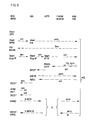
- FIG. 5 shows, in a message flow diagram, an example of the message flow between the program modules arranged in the program structures in a service personal computer SPC, which is connected locally to the operating interface BTS of a communication system KS.
- program modules are specified, to which the column below is assigned.
- the first column is assigned to the user interface BO of the respective user program modules BPM arranged in the user program structure B-PS.
- a column is provided for the access program module HA, the instruction processing program module ATR, the communication program module KM-PM and for the fault visualization program module FV-PM and the message visualization program module NV-PM.
- a window technology-oriented operating system WIN In the graphic user interface of a window technology-oriented operating system WIN, the individual programs or functions are represented graphically by an icon, the functions of the service personal computer SPC being called up by clicking on an icon representing the service personal computer functions. This call is indicated in Fig. 5 by the designation "Start SPC".
- user program modules BPM of the user program structure B-PS which can be called up, are displayed on the graphic surface of the window technology-oriented operating system WIN, for example by icons.
- the start of one of the user program modules BPM is also effected by clicking on the corresponding icon and is shown in FIG. 5 by specifying the information “Start BPM”.
- a start message sm is transmitted to the access program module HA by the respective user program module BPM, whereupon the latter is started - see FIG. 5 "Start HA".
- a connection establishment message vam is automatically formed and transmitted to the connected communication system KS via the activated instruction processing program module ATR and the communication program module KM-PM.
- a confirmation message bm is transmitted by the communication system KS via the two previously specified program modules ATR, KM-PM and is displayed on the surface BO of the currently started user program module BPM. The display is indicated by the indication "KS ready”. This information only confirms the readiness for an information transmission of the communication system KS.
- the operational access to the communication system KS to be administered or administered is started by an appropriate input — see FIG. 5 the “start access” specification.
- a registration message is formed in the respective user program module BPM and transferred to the access program module HA.
- the corresponding access routines are started in this and a start message sm is formed, which is forwarded to the instruction processing program module ATR and to the communication system KS.
- the start message SM causes the instruction processing program module ATR to start - see FIG. 5 "Start ATR".
- any error messages or system messages fm, sym present in the communication system KS are automatically queried and transmitted to the error visualization and message visualization program module FV-PM, NV-PM in the sense of visualization on the user interface BO of the service personal computer SPC.
- the information about the communication language, the type, the type and the degree of expansion are automatically queried, inserted into an acknowledgment message qm and transferred to the instruction processing program module ATR.
- appropriate settings are made in the instruction processing program module ATR - see "ONE ATR" in FIG. 5.
- the settings relate in particular to a communication language to be used, the operating instructions amo that can currently be used, and to the characteristics of the communication system-specific stack of operating instructions amo. Additional information required for setting the instruction processing program module ATR, who which are queried by corresponding query messages and acknowledgment messages qm.
- the formation and evaluation of these messages ABM, QM is indicated in FIG. 4 by the designations ABFR and RES.
- the instruction processing program module HA After the instruction processing program module HA has been set, it forms a confirmation message bm and transmits it to the currently activated user program module BPM and is displayed there - see FIG. 5 "BEST". After this confirmation, which indicates the readiness for access of the communication system KS, the sequence of the user program module BPM - for example of the administration program module A-PM - can be activated by an appropriate input - see FIG. 5 "BPM AKT". As part of the activation, a registration message is formed on and transmitted to the access program module HA.
- the instruction processing program module ATR comprises an evaluation of the received operational instructions amo or response information ai and initiates a visualization - see FIG. 5 "BEST ERG" - as well as corresponding reactions which are dependent on the activated user program module BPM respective user interface BO can be controlled.
- the respective variants of processing operational instructions amo or information in the instruction processing program module ATR are indicated in FIG. 5 by the designation VA.
- an automatic call and, if necessary, the creation of an operational instruction amo is provided for a comfortable operation of the service personal computer SPC, after its transmission and execution in the respective communication system KS, a previously running user interface-controlled operation is continued by the user program modules BPM. Any necessary parameters p which cannot be determined automatically can be called up by means of surface-controlled inputs with the help of the relevant, automatically activated user program module BPM.
- the service personal computer SPC is a mobile operating technology terminal that enables local and remote-controlled administration and maintenance of different communication systems KS with different expansion variants with maximum ease of use. This means a significant reduction in the required operating terminal types and, thanks to its modular system design, ensures flexible adaptation in terms of administration and management for future communication systems KS.
Landscapes
- Engineering & Computer Science (AREA)
- Computer Networks & Wireless Communication (AREA)
- Signal Processing (AREA)
- Computer And Data Communications (AREA)
- Stored Programmes (AREA)
- Road Signs Or Road Markings (AREA)
- Data Exchanges In Wide-Area Networks (AREA)
Abstract
Description
- Digitale Kommunikationssysteme, insbesondere digitale Vermittlunganlagen, dienen zur Verbindung von Kommunikationsendgeräten mit vielfältigen Leistungsmerkmalen untereinander und zur Verbindung dieser Endgeräte mit privaten oder öffentlichen Kommunikationsnetzen. Hierfür sind die Kommunikationssysteme mit umfangreichen vermittlungs-, betriebs- und sicherheitstechnischen Programmodulen ausgestattet. Ein derartiges Kommunikationssystem ist beispielsweise aus der Druckschrift der Fa. Siemens, "ISDN im Büro, HICOM", Sonderausgabe Telcom Report und Siemens-Magazin COM (1985) bekannt. Für den Betrieb, die Wartung und das Administrieren bzw. Verwalten eines derartigen Kommunikationssystems ist ein Betriebstechnikanschluß vorgesehen, an den ein Betriebsterminal angeschlossen wird. Ein Betriebsterminal umfaßt beispielsweise eine Bildschirmeinrichtung mit einer alphanumerischen Tastatur und einen Drucker sowie eine CCITT-Mensch-Maschine-Sprache als Bediensprache. Für die Realisierung von komfortablen Bedieneroberflächen für Betriebstechnikterminals, beispielsweise mit Masken- und Fenstertechnik, sind vorzugsweise Personalcomputer vorgesehen.
- Das bekannte Kommunikationssystem wird mit Hilfe von betriebstechnischen Anweisungen betrieben, administriert und gewartet. Die im Betriebstechnikterminal gebildeten oder gespeicherten betriebstechnischen Anweisungen gelangen über den Betriebstechnikanschluß an das Kommunikationssystem. In diesem werden die betriebstechnischen Anweisungen bearbeitet, d.h. die angezeigten betriebstechnischen Aufträge ausgeführt. Zur Durchführung bedieneraufgabenbezogener Prozeduren, wie z.B. Einrichten eines Teilnehmeranschlusses, werden die hierfür erforderlichen betriebstechnischen Anweisungen zu einem Stapel zusammengefaßt und im Betriebstechnikterminal gespeichert. In die betriebstechnischen Anweisungen sind durch bedieneroberflächengesteuerte Eingaben am Betriebsterminal - z.B. durch eine Tastatur - betriebstechnische Parameter eingefügbar, mit deren Hilfe ein gezieltes Verwalten, Betreiben und Administrieren eines Kommunikationssystems möglich ist. Durch derartige betriebstechnische Anweisungen sind neben dem eingangs beschriebenen ISDN-Kommunikationssystem weitere Kommunikationssysteme HICOM der Fa. Siemens zu administrieren, betreiben und zu verwalten. Für die einzelnen Kommunikationssysteme sind hierbei insbesondere unterschiedliche betriebstechnische Anweisungen bzw. Parameter und unterschiedliche bedieneraufgabenbezogene Stapel von betriebstechnischen Anweisungen, sowie deren Auswirkungen in den jeweiligen Kommunikationssysteme zu berücksichtigen. Folglich wurde für jedes der Kommunikationssysteme ein speziell ausgeprägtes Betriebstechnikterminal realisiert. Dies bedeutet, daß für das Warten und Konfigurieren bzw. Administrieren unterschiedlicher Kommunikationssysteme unterschiedliche Betriebstechnikterminal ausgestaltet sind. Diese unterschiedliche Ausgestaltung von Betriebstechnikterminals trifft auch für das Fernadministrieren und Fernwarten von Kommunikationssystemen zu, wobei für den Anschluß an öffentiche oder private Kommunikationsnetze an den Kommunikationssystemen unterschiedlichste Betriebstechnikschnittstellen ausgebildet sind.
- Die der Erfindung zugrunde liegende Aufgabe besteht darin, ein Betriebstechnikterminal zum lokalen und Fernwarten sowie Fernadministrieren unterschiedlicher Kommunikationssysteme auszugestalten. Die Aufgabe wird durch die Merkmale des Anspruchs 1 gelöst.
- Der wesentliche Aspekt des erfindungsgemäßen Service-Personalcomputers ist in der Programmstrukturierung und in Ausgestaltung der einzelen Programmstrukturen zu sehen, durch die eine erhebliche Steigerung der Modularität bei der Programmkonfiguration und der Portabilität des Service-Personalcomputers für unterschiedlich zu administrierende und zu verwaltende Kommunikationssysteme erreicht wird. Dies bedeutet, daß bei einem späteren Hinzutreten neuer Kommunikationssysteme oder neuer Ausbauvarianten derartiger Kommunikationssysteme oder das Auftreten neuer Kommunikationsdienste sowohl das Administrieren als auch das Warten der Kommunikationssysteme durch Hinzufügen neuer Programmodule, insbesondere von Geräteprogrammodulen und Applikations-Programmodulen beherrscht werden kann. Der erfindungsgemäße Service-Personalcomputer bietet somit in allen Aspekten eine ausgeprägte Anpassungsfähigkeit an unterschiedliche Kommunikationssysteme mit unterschiedlichster Ausgestaltung ohne objektive Beeinflussung der im Service-Personalcomputer realisierten Programmstrukturen bzw. der dieser Systemstruktur zugrundeliegenden Systemkonzeption.
- Die Modularität bzw. Portabilität des Service-Personalcomputers wird im wesentlichen durch eine in vier Programmstrukturen unterteilte Systemkonzeption bewirkt. Die vier Programmstrukturen stellen die Benutzer-Programmstruktur, die Visualisierungs-Programmstruktur, die Betriebstechnik-Programmstruktur und die Schaltungstechnik-Programmstruktur dar. Hierbei werden mit Hilfe des in der Betriebstechnik-Programmstruktur realisierten Anweisungs-Bearbeitungs-Programmoduls die das Bilden und Übermitteln von betriebstechnischen Anweisungen von und zu den Kommunikationssystemen betreffenden Funktionen bewirkt. Der Zugriff auf dieses Anweisungs-Bearbeitungs-Programmodul durch die Benutzer-Programmodule wird durch das Zugriffs-Programmodul gesteuert. Durch dieses Zugriffs-Programmodul erfolgt zusätzlich die Aktivierung eines der beiden Betriebssysteme in Abhängigkeit von der realisierten Einbindung des jeweiligen Benutzer-Programmoduls. Durch das Einfügen einer Visualisierungs-Programmstruktur wird eine Entkoppelung der von den Kommunikationssystemen übermittelten Fehler- und Systemnachrichten von dem betriebstechnischen Anweisungsverkehr bewirkt. Diese übermittelten Fehler-und Systemmeldungen werden im Service-Personalcomputer ohne weitere Verarbeitung visualisiert.
- In die Benutzer-Programmstruktur und die Schaltungstechnik-Programmstruktur sind mit geringfügigem zusätzlichem Aufwand Benutzer-Programmodule oder Schaltungstechnik-Programmodule einfüg- oder entfernbar. Diese Modifikationen sind dem Zugriffs-Programmodul durch entsprechende betriebstechnische Eingaben im Sinne einer zusätzlichen Steuerung zusätzlicher Programmodule oder des Entfernens von Programmodulen anzuzeigen.
- Gemäß einer vorteilhaften Ausgestaltung des erfindungsgemäßen Service-Personalcomputers ist dieser derart ausgestaltet, daß zu kommunikationssystemindividuellen oder aufgabenbezogenen Stapeln zusammengefaßte betriebstechnische Anweisungen sukzessiv zu einem Kommunikationssystem übermittelt werden - Anspruch 2. Dies bedeutet, daß in einem dem Anweisung-Bearbeitung-Programmodul zugeordneten Massenspeicher - z.B. einer Harddisc - aufgabenbezogene Stapel von betriebstechnischen Anweisungen - beispielsweise "Einrichtung eines Teilnehmers" - gespeichert und durch das Anweisung-Bearbeitung-Programmodul selbsttätig Anweisung für Anweisung sukzessiv zu einem zu administrierenden bzw. zu verwaltenden Kommunikationssystem übermittelt werden. Bei der sukzessiven Übermittlung wird nach jedem Übermitteln einer betriebstechnischen Anweisung eine Bestätigungsmeldung vom Kommunikationssystem abgewartet und ausgewertet, wobei das Auswerteergebnis den weiteren Ablauf derart beieinflußt, daß bei nach einem Erkennen einer Ausführungsbestätigung der vorhergehend übermittelten betriebstechnischen Anweisung eine weitere, vorhandene betriebstechnische Anweisung übermittelt wird und bei einem Erkennen einer Nichtausführungsbestätigung der vorhergehend übermittelten betriebstechnischen Anweisung eine dem jeweiligen Erfordernis entsprechende Reaktion eingeleitet wird. Beispielsweise wird einem aktuellen Benutzerprogrmmodul die Nichtbestätigung angezeigt und zusammen mit diesem eine die Ausführung der betreffenden betriebstechnischen Anweisung ermöglichende weitere betriebstechnische Anweisung bebildet und an das betroffene Kommunikationssystem übermittelt. Als eine weitere Reaktion ist beispielsweise eine automatisches Bilden einer weiteren zusätzlichen betriebstechnischen Anweisung und ein Übermitteln an das betroffene Kommunikationssystem vorgesehen.
- Alternativ können in den Benutzer-Programmodulen aufgabenbezogene Stapel von betriebstechnischen Anweisungen gebildet und im Sinne eines Weiterleitens an ein Kommunikationssystem an das Anweisungs-Bearbeitungs-Programmodul übergeben werden - Anspruch 3. Dies bedeutet, daß in den Benutzer-Programmodulen sowohl einzelne betriebstechnische Anweisungen als auch Stapel von betriebstechnischen Anweisungen gebildet werden können, wobei die Basis für das Bilden von Stapeln in Massenspeichern gespeicherte, vorhandene Stapel darstellen, die durch bedieneroberflächengesteuerte Eingabe von Parametern zu aktuellen Stapeln von betriebstechnischen Anweisungen zusammengestellt werden.
- Besonders vorteilhaft ist in der Benutzer-Programmstruktur ein Admininstrations-Programmodul, ein Wartungs-Programmodul und ein Kommunikations-Programmodul vorgesehen - Anspruch 4. Diese Benutzer-Programmodule sind sowohl im Personalcomputer-Betriebssystem als auch in einem fensterorientierten Betriebbssystem realisierbar. Ein vorteilhaftes Personalcomputer-Betriebssystem stellt beispielsweise das Betriebssystem MS-DOS und ein vorteilhaftes fensterorientiertes Betriebssystem beispielsweise ein " MS WINDOWS"-Betriebssystem dar.
- In die Benutzer-Programmstruktur ist zusätzlich ein eine Datenbasis eines Kommunikationssystems generierendes oder aktualisierendes oder Datenbasisdaten sammelndes Datenbasis-Programmodul einfügbar - Anspruch 5. Mit Hilfe dieses Datenbasis-Programmoduls kann die Datenbasis eines zu administrierenden bzw. zu verwaltenden Kommunikationssystems erstellt oder aktualisiert werden. Für das Transferieren der überwiegend umfangreichen Datenbasisdaten von dem Service-Personalcomputer zu einem Kommunikationssystem und umgekehrt ist der Service-Personalcomputer mit einer peripheren Rechnerschnittstelle ausgestattet - Anspruch 13. Für die Realisierung dieser peripheren Rechnerschnittstelle ist in der Betriebstechnik-Programmstruktur ein Rechnerschnittstellen-Programmodul - Anspruch 8 - und in der Schaltungstechnik-Programmstruktur ein Rechnerschnittstellentreiber - Anspruch 11 - vorgesehen. Die periphere Rechnerschnittstelle ist vorteilhaft durch die standardisierte SCSI-Rechnerschnittstelle (Small Computer System Interface) realisiert. Die in dem Standard ANSI (American National Standard Institute) - X3T9.2 standardisierte periphere SCSI-Rechnerschnittstelle ist insbesondere für den Anschluß von peripheren Einrichtungen - z.B. Massenspeichern - an kleinere Rechnersysteme definiert. Für die bidirektionale Übertragung von Adressen und Daten ist diese periphere Rechnerschnittstelle mit acht Daten-Schnittstellenanschlüssen und einem Datenparitybit-Schnittstellenanschluß ausgestattet. Zur Steuerung der Peripherieschnittstelle sind weitere neun Steueranschlüsse vorgesehen. Durch die Realisierung dieser peripheren Rechnerschnittstelle können umfangreiche Datenbasisinformationen bei einem lokalen Anschluß des Service-Personalcomputers an ein Kommunikationssystem beispielsweise umfangreiche Datenbasisinformationen direkt in den Massenspeicher - z.B. Harddisc - des Kommunikationssystems übertragen werden. Analog hierzu sind aus der Datenbasis eines Kommunikationssystems ein oder mehrere Dateien direkt aus dem peripheren Speicher des Kommunikationssystems abrufbar und an den Service-Personalcomputer übertragbar.
- Für die Kopplung von Service-Personalcomputern beispielsweise beim abgesetzten Administrieren oder Warten eines Kommunikationssystems oder für die Kopplung eines Service-Personalcomputers mit einer Datenverarbeitungsanlage ist in der Benutzer-Programmstruktur ein externes Kommunikations-Programmodul und in der Schaltungstechnik-Programmstruktur ein synchroner Kommunikationsschnittstellentreiber vorgesehen - Anspruch 6 und Anspruch 10. Der Kommunikationsschnittstellentreiber stellt das Bindeglied zu einer synchronen Kommunikationsschnittstelle dar - Anspruch 14. Mit Hilfe dieser optional zu realisierenden synchronen Kommunikationsschnittstelle können Massendaten von oder zu einem Kommunikationssystem bzw. einer Datenverarbeitungsanlage im Sinne einer umfangreichen Datenbasisaktualisierung oder Datenbasiserstellung übertragen werden. Auch Stapel von betriebstechnischen Anweisungen sind über diese weitere synchrone Kommunikationsschnittstelle übermittelbar. Die prozedurale Steuerung dieser weiteren synchronen Kommunikationsschnittstelle wird durch das in der Benutzer-Programmstruktur realisierte externe Kommunikations-Programmodul realisiert.
- Gemäß einer weiteren vorteilhaften Ausgestaltung des erfindungsgemäßen Service-Personalcomputers ist in der Benutzer-Programmstruktur ein Hilfe-Programmodul einfügbar - Anspruch 7. Mit Hilfe dieses Hilfe-Programmoduls werden einer ungeübten Serviceperson den Betrieb eines Service-Personalcomputers unterstützende bzw. erläuternde Informationen visualisiert.
- Im folgenden wird der erfindungsgemäße Service-Personalcomputer anhand mehrerer Blockschaltbilder näher erläutert. Dabei zeigen
- Fig. 1 einen Service-Personalcomputer und dessen Anschlußmöglichkeiten an Kommunikationssysteme,
- Fig. 2 die Softwarestruktur des Service-Personalcomputers,
- Fig. 3 die Programmstruktur des Anweisungs-, Bearbeitungs-Programmoduls,
- Fig. 4 die Programmstruktur des Zugriffs-Programmoduls und
- Fig. 5 ein Meldungsablaufdiagramm für eine Kommununkationsbeziehung zwischen einem Kommunikationssystem und einem lokal angeschlossenen Service-Personalcomputer.
- Fig. 1 zeigt einen Service-Personalcomputer SPC und dessen Anschluß an zu administrierende bzw. zu verwaltende Kommunikationssysteme KS. Die Datenbasis DB der Kommunikationssysteme KS ist in angeschlossenen Massenspeichern MSP - beispielsweise einer Harddisc - gespeichert. Für den Anschluß derartiger Massenspeicher MSP an ein Kommunikationssystem KS sind diese und die Massenspeicher MSP jeweils mit einer peripheren Rechnerschnittstelle SCSI ausgestattet und miteinander verbunden. Die periphere Rechnerschnittstelle SCSI ist vorteilhaft durch die standardisierte, periphere Rechnerschnittstelle "Small Computer System Interface" realisiert. Die "Small Computer System Interface" ist im Dokument X3T9.2 von ANSI (American National Standard Institute) definiert und weist für die bidirektionale Übertragung von Adressen und Daten acht Daten-Schnittstellenanschlüsse sowie einen Datenparitybit-Schnittstellenanschluß auf. Zur Steuerung der peripheren Rechnerschnittstelle sind weitere neun Steueranschlüsse vorgesehen. Für die Kommunikation des Service-Personalcomputers SPC mit dem Massenspeicher MSP eines Kommunikationssystems ist dieser mit einer gleichartig realisierten Rechnerschnittstelle SCSI versehen. Die Realisierung der prozeduralen und physikalischen Eigenschaften dieser Rechnerschnittstelle SCSI erfolgt in einer Rechnerschnittstelleneinheit SE. Über diese mit der Rechnerschnittstelle SCSI des Massenspeichers MSP verbundenen Rechnerschnittstelle SCSI des Service-Personalcomputers SPC sind die Datenbasen DB der Kommunikationssysteme modifizier - d.h. aktualisierbar und Datenbasisinformationen abrufbar.
- In einer weiteren Schnittstelleneinheit SE ist eine Datenschnittstelle V.24A mit einem asynchronen Übertragungsverfahren realisiert. Die Datenschnittstelle V.24A ist gemäß der CCITT-Empfehlung V.24 ausgestaltet. Bei einem lokalen Anschluß des Service-Personalcomputers SPC an ein Kommunikationssystem KS ist die Datenschnittstelle V.24A mit einer gleichartigen Betriebstechnikschnittstelle BTS des Kommunikationssystems KS verbunden. Über diese Verbindung werden die betriebstechnischen Anweisungen amo bzw. Rückmeldungen ai vom Kommunikationssystem KS übertragen.
- Bei einem abgesetzten Betrieb des Service-Personalcomputers SPC, d.h. der Service-Personalcomputer SPC ist über ein öffentliches oder privates Kommunikationsnetz KN mit einem Kommunikationssystem KS verbunden, ist für die Übertragung der betriebstechnischen Anweisungen amo zwischen die Betriebstechnikschnittstelle BTS bzw. die Datenschnittstelle V.24A und dem Kommunikationsnetz KN jeweils ein Modem MOD eingefügt. Mit Hilfe dieser Modems MOD werden die digitalen Informationen in für die Übertragung über das jeweilige Kommunikationsnetz KN geeignete analoge oder digitale Signale umgesetzt. Die Verbindung Service-Personalcomputer SPC - abgesetztes Kommunikationssystem KS ist im abgesetzten Kommunikationssystem KS über nicht dargestellte Teilnehmeranschlüsse und das Koppelfeld geführt, um einen separaten Anschluß an das öffentliche oder private Kommunikationsnetz KN für ein abgesetztes Administrieren und Verwalten zu vermeiden.
- Wie in Fig. 1 dargestellt, ist beim abgesetzten Kommunikationssystem KS zusätzlich ein weiterer Service-Personalcomputer SPC' - durch gestrichelte Linien angedeutet - in die Verbindung zwischen dem Modem MOD und dem Kommunikationssystem KS einfügbar. Für diesen Einsatzfall weist der weitere Service-Personalcomputer SPC eine weitere Datenschnittstelle V.24A' auf, wobei eine der beiden Datenschnittstellen V.24A, V.24A' mit dem Betriebstechnikanschluß BTS und die andere Datenschnittstelle V.24A mit dem Modem MOD verbunden ist. Über die weitere Datenschnittstelle V.24A eines Service-Personalcomputers SPC ist dieser darüberhinaus mit einem abgesetzten Kommunikationssystem KS verbindbar, dem ebenfalls im Sinne eines Fernadministrierens und Wartens ein Service-Personalcomputer SPC - zugeordnet ist.
- Für den direkten Anschluß des Service-Personalcomputers SPC an ein Kommunikationssystem weist der Service-Personalcomputer SPC eine synchrone, durch eine Schnittstelleneinheit SE realisierte Datenschnittstelle V.24S auf. Diese synchrone Datenschnittstelle V.24S ist für den Anschluß an Betriebsterminalanschlüsse BTS mit synchroner Datenübertragung vorgesehen, bei denen beispielsweise eine Unixterminalemulation oder eine Unixapplikation vorgesehen ist.
- Ein Service-Personalcomputer SPC weist desweiteren eine bekannte Eingabeeinrichtung EE -, beispielsweise eine Tastatur -, ein Mikroprozessorsystem MPS - beispielsweise ein Mikroprozessorsystem SAB 80 386 der Fa. Siemens - und eine Bildschirmeinrichtung BE auf.
- Fig. 2 zeigt die Softwarekonzeption eines in Fig. 1 dargestellten Service-Personalcomputers SPC. Das Bindeglied der Softwarestruktur zur Hardware stellt ein Personalcomputer-Betriebssystem DOS und ein fenstertechnikorientiertes Betriebssystem WIN dar - nicht dargestellt. Das Personalcomputer-Betriebssystem ist beispielsweise durch das Betriebssystem MS DOS 6.0 und das fenstertechnikforientierte Betriebssystem beispielsweise durch MS WINDOWS 3.1 realisiert.
- Die Softwarestruktur ist prinzipiell in vier hirarchische Ebenen strukturiert. Dies sind im einzelnen die Benutzer-Programmstruktur B-PS, die Visualisierungs-Programmstruktur V-PS, die Betriebstechnik-Programmstruktur BT-PS und die Schaltungstechnik-Programmstruktur HW-PS.
- In der Benutzer-Programmstruktur B-PS ist im Basisausbau ein Administrations-Programmodul A-PM, ein Kommunikationssystem-Programmodul KS-PM und ein Wartungs-Programmodul W-PM angeordnet. Optional ist ein Datenbasis-Programmodul DB-PM, ein weiteres Kommunikationsmodul EK-PM sowie ein Zugriffszeitpunkt-Programmodul ZZ-PM anordenbar. Die Benutzerprogrammodule BPM dieser Strukturebene B-PS sind bedieneroberflächengesteuert, d.h. die Initialisierung und Steuerung dieser Programmodule wird im wesentlichen durch Bedienereingaben bewirkt. Zusätzlich werden von einem Kommunikationssystem übermittelte, daß jeweilige Benutzerprogrammodul BPM betreffende Informationen und Meldungsinhalte mit Hilfe des jeweiligen Benutzerprogrammoduls BPM und der Bildschirmeinrichtung BE visualisiert.
- Im Administrations-Programmodul A-PM werden Informatioenen bzw. Parameter für betriebstechnischen Anweisungen AMO, die für das Administrieren von Kommunikationssystemen KS vorgesehen sind, gebildet. Hierzu werden bedieneroberflächengesteuert die jeweiligen in die betriebstechnischen Anweisungen AMO einzufügenden Parameter P bzw. Informationen abgefragt und im Sinne eines Einfügens in betriebstechnische Anweisungen amo weitergeleitet. Da administrative betriebtechnische Anweisungen AMO insbesondere das Aktualisieren bzw. Ändern der Datenbasis beinhalten, werden in einem hierfür vorgesehenen Konfigurations-Verwaltungs-Programmodul DMS die diesbezüglichen Parameter P bzw. Informationen für die betriebstechnisichen Anweisungen amo bedieneroberlächengesteuert gebildet. Zur Unterstützung ist ein Support-Programmodul SMO vorgesehen, mit dessen Hilfe insbesondere eine in einem Massenspeicher MSP abgelegte Datenbasis DB über die Rechnerschnittstelle SCSI aktualisiert bzw. geändert oder gelesen wird.
- Mit Hilfe des Kommunikationssystem-Programmoduls KS-PM wird das zu administrierende bzw. zu verwaltende Kommunikationssystem KS in Betrieb genommen bzw. installiert. Hierfür ist jeweils ein Installationsprogrammodul für die Installation der Hardware IHW und der Software ISW vorgesehen. Ein weiteres Shell-Programmodul SPM stellt eine graphische Personalcomputer-BetriebstechnikSchnittstelle für das Steuern von Speichereinrichtungen zur Speicherung von Daten und Dateien dar. Dies sind insbesondere Funktionen wie Darstellen von Directories von Speichereinrichtungen der Kommunikationssysteme KS, Anzeigen des Inhalts von Dateien und Kopieren von Dateien.
- Mit Hilfe eines Backup-Programmoduls BPM werden Sicherungskopien der Datenbasen DB oder Datenbasisteile der zu admin)strierenden bzw. zu verwaltenden Kommunikationssysteme KS erstellt und gespeichert.
- Ein im Kommunikationssystem-Programmodul KS-PM implementiertes Systeminformations-Programmodul SIP visualisiert kommunikationssystemindividuelle Informationen oder steuert deren Ausgabe - z.B. an eine Druckereinrichtung. Beispielsweise sind dies Informationen über die Version und die Registriernummer eines Kommunikationssystems, der Release der implementierten Firm- oder Loadware und Angaben über die Hardware-Softwarekonfiguration des jeweiligen Kommunikationssystems KS.
- Das Wartungsprogrammodul W-PM umfaßt ein Fehlerbehandlungsprogrammodul FPM und ein Maintenance-Programmodul MPM. Mit Hilfe des Maintenance-Programmoduls MPM werden Parameter P und Informationen für betriebstechnische Anweisungen amo gebildet, mit deren Hilfe die Konfiguration betreffende Abfragen, den vermittlungstechnischen Zustand betreffende Abfragen und den Start von Testprozeduren in den zu administrierenden bzw. zu verwaltenden Kommunikationssystemen KS gestartet werden. Die Konfiguration betreffende Statusabfragen sind insbesondere Anfragen über die Anzahl anschließbarer Teilnehmer, Anzahl verfügbarer Kommunikationsanschlüsse usw.. Vermittlungstechnische Abfragen stellen Anfragen über die Belegung und den vermittlungstechnischen Zustand von Kommunikationsanschlüssen, Schnittstellen und Gebührenaufzeichnungen dar.
- Das optionale Datenbasis-Programmodul DB-PM weist ein zum Bilden von Datenbasen DB vorgesehenes Generierungs-Programmodul GPM, ein das Aufsammeln von Datenbasisdaten bewirkendes Kollektions-Programmodul KLP und ein eine Datenbasisaktualisierung eines Kommunikationssystems KS bewirkendes Aktualisierungs-Programmodul APM auf. Diese Programmodule GPM,KLP,APM wirken auf ein in der Betriebstechnik-Programmstruktur BT-PS angeordnetes, die synchrone Datenschnittstelle V.24S prozedural steuerndes Programmodul KPM ein, wobei über die synchrone Datenschnittstelle V.24S ausschließlich Datenbasisdaten an oder von Kommunikationssystemen KS übermittelt werden.
- Die prozedurale Steuerung der weiteren asynchronen Datenschnittstelle V.24A übernimmt das externe Kommunikations-Programmoduls EK-PM. Hierfür werden für das Kommunikationssystem KS vorgesehene Terminalanschlüsse, insbesondere Betriebsterminalanschlüsse emuliert. Beispielsweise ist ein Programmodul für die Emulation eines Unixterminals UX-PM dargestellt. Für weitere Emulationen - beispielsweise die Emulation eines weiteren Betriebstechnikterminals oder einer Datenverarbeitungsanlage - sind ohne Auswirkungen auf vorhandene Programmodule weitere Programmodule in das externe Kommunikations-Programmmodul EK-PM einbindbar.
- In der Visualisierungs-Programmstruktur V-PS sind für die Visualisierung der von den Kommunikationssystemen KS übermittelten Fehler - und Systemmeldungen jeweils ein Fehlervisualisierungs-Programmodul FVPM und ein Nachrichtenvisualisierungs-Programmodul NVPM vorgesehen. Mit Hilfe dieser beiden Programmodule FVPM, NVPM werden die von den Kommunikationssystemen KS übermittelten Fehler - und Systemzustandsinformationen ohne weitere Bearbeitung oder Beeinflussung direkt an der Bildschirmeinrichtung BE des Service-Personalcomputers SPC visualisiert, d.h. angezeigt. Dies ist für eine umgehende Reaktion nach einem Auftreten derartiger Meldungen erforderlich.
- In der Betriebstechnik-Programmstruktur - BT-PS sind die den Service-Personalcomputer SPC steuernden und koordinierenden Programmodule angeordnet. Dies sind insbesondere das Anweisungs-Bearbeitungs-Programmodul ATR und das Zugriffs-Programmodul HA. Das Anweisungs-Bearbeitungs-Programmodul ATR wird in Fig. 3 und das Zugriffs-Programmodul HA in von Fig. 4 näher erläutert.
- Darüberhinaus beinhaltet die Betriebstechnik-Programmstruktur BT-PS ein Rechnerschnittstellen-Programmodul SCSI-PM und ein Kommunikations-Programmodul KM-PM. Mit Hilfe des Rechnerschnittstellen-Programmoduls SCSI-PM wird die periphere Rechnerschnittstelle SCSI prozedural gesteuert, d.h. die Informationen an die jeweiligen Schnittstellenleitungen zeitgerecht gesteuert. Hierbei werden die zu übermittelnden oder empfangenen Informationen bzw. Daten von den Programmodulen in der Benutzer-Programmstruktur B-PS direkt übermittelt oder an diese weitergeleitet. Die betroffenen Programmodule DMS, ISW, BPM, SPM sind durch Verbindungen zwischen dem Rechner-Programmodul SCSI-PM und den jeweiligen Programmodulen DMS, ISW, BPM, SPM angedeutet.
- Mit Hilfe des Kommunikations-Programmoduls KP-PM werden die vom Anweisungs-Bearbeitungs-Programmodul ATR übermittelten bzw. an dieses zu übermittelnde Informationen ai bzw. betriebstechnischen Anweisungen amo an die asynchrone Datenschnittstelle V.24A zeitgerecht gesteuert bzw. an diese übermittelt. Desweiteren werden in diesem Kommunikations-Programmodul KM-PM die von den Kommunikationssystemen KS übermittelten Fehlerinformationen fi und Systeminformationen syi erkannt und direkt an das Fehlervisualisierungs-Programmodul FV-PM bzw. das Nachrichtenvisualisierungs-Programmodul NV-PM übermittelt - durch entsprechende Verbindungen dargestellt.
- Die Schaltungstechnik-Programmstruktur HW-PS umfaßt im Basisausbau als Bindeglied zu den physikalischen Leitungen der asynchronen Datenschnittstelle V.24 einen im fenstertechnikorientierten Betriebssystem WIN realisierten asynchroner Datenschnittstellentreiber V.24-WT. Bei diesem Basisausbau ist eine asynchrone Datenschnittstelle V.24A realisiert, mit dessen Hilfe ein Service-Personalcomputer SPC lokal direkt oder über ein öffentliches oder lokales Kommunikationsnetz KN an den Betriebstechnikanschluß BTS eines Kommunikationssystems KS anschließbar ist.
- Optional ist ein Rechnerschnittstellentreiber SCSI-T, ein im Personalcomputer-Betriebssystem DOS realisierter asynchroner Datenschnittstellentreiber V.24-DT und ein im Personalcomputer-Betriebsprogramm DOS realisierter synchroner Datenschnittstellentreiber V.24-ST in die Schaltungstechnik-Programmstruktur HW-PS einfügbar. Mit Hilfe dieser Schnittstellentreiber T werden die in Fig. 1 erläuterten Schnittstellen V.24A', SCSI, V.24S realisiert.
- Fig. 3 zeigt die Subprogrammstruktur des Anweisungs-Bearbeitungs-Prograrnoduls ATR. Für die Übermittlung von Informationen ai bzw. betriebtechnischen Anweisungen amo zwischen den einzelnen Programmodulen ist ein im fenstertechnikorientierten Betriebssystem WIN implementiertes Koordinierungs-Programmodul KOP vorgesehen. Die Funktionen des Anweisungs-Bearbeitungs-Programmoduls ATR realisiert ein Verteil-Programmodul VTP, ein Parameter-Programmodul PAP, ein Auswerte-Programmodul AUP und ein Interpreter-Programmodul INP. Mit Hilfe des Verteil-Programmoduls ATP werden die vom Koordinierungs-Programmodul KOP übermittelten Informationen ai bzw. betriebstechnischen Anweisungen amo dahingehend bewertet bzw. untersucht, ob die vom Koordinierungsprogrammodul KOP übermittelten Informationen bzw. betriebstechnischen Anweisungen amo an eines der drei weiteren Programmodule PAP, AUP, INP oder an ein anderes Programmodul PM im Service-Personalcomputer SPC zu übermitteln sind. Die Bewertung, d.h. die Ermittlung des Zielprogramms, wird insbesondere durch Auswerten der in der entsprechenden Meldung angegebenen Meldungsart bewirkt. Desweiteren finden Konsistenzprüfungen der übermittelten Meldungen bezüglich der in den Meldungen angegebenen Zuständen zu der Art der Meldung statt.
- Mit Hilfe des Parameter-Programmoduls PAP werden die über das Koordinierungs-Programmodul KOP von den Benutzerprogrammodulen BPM übermittelten Parameter p in betriebstechnische Anweisungen amo eingefügt bzw. betriebstechnische Parameter p oder Informationen ai im Sinne einer Visualisierung durch eines der Benutzer-Programmodule BPM aus einer betriebstechnischen Anweisung amo bzw. Informationen ai entfernt und über das Koordinierungs-Programmodul KOP an das jeweilige Benutzerprogrammodul BPM übermittelt.
- Das Auswerte-Programmoduls AUP überprüft und wertet von einem zu administrierenden bzw. zu verwaltenden Kommunikationssystem KS übermittelte Informationen bzw. Antwortinformationen ai aus. Diese Informationen ai stellen überwiegend eine Bestätigung bzw. eine Reaktion einer durch eine vorgehend ausgesandte betriebstechnische Anweisung amo initialisierte betriebstechnische Aktion bzw. Aktualisierung dar. Die gegebenenfalls in diesem Auswerte-Programmodul AUP ermittelten Parameter p bzw. Informatioenen ai werden mit Hilfe eines Interpreter-Programmoduls INP in eine bedienerverständliche Information umgesetzt. Dies bedeutet, daß die meist schwer verständlichen kommunikationssystemspezifischen, betriebstechnischen Parameter p und Anweisungen amo in bedienerverständliche Informationen umgesetzt und über das Koordinierungs-Programmodul KOP an das jeweilige Benutzer-Programmodul BPM übermittelt und mit dessen Hilfe visualisiert werden.
- Fig. 4 zeigt die Subprogrammstruktur des Fig. 3 zeigt die Subprogrammstruktur des Zugriff-Programmoduls HA. Für die Übermittlung von Informationen ai bzw. betriebtechnischen Anweisungen amo zwischen den einzelnen Programmodulen ist ein im fenstertechnikorientierten Betriebssystem WIN implementiertes Koordinierungs-Programmodul KOP vorgesehen. Die Funktionen des Zugriff-Programmoduls HA realisiert ein Verteil-Programmodul VTP, ein Verbindungssteuerungs-Programmodul VAP, ein Transport-Programmodul TSPP und ein Schnittstellen-Programmodul SRP. Mit Hilfe des Verteil-Programmoduls VTP werden die vom Koordinierungs-Programmodul KOP übermittelten Informationen ai bzw. betriebstechnischen Anweisungen amo dahingehend bewertet bzw. untersucht, ob die vom Koordinierungsprogrammodul KOP übermittelten Informationen bzw. betriebstechnischen Anweisungen amo an eines der drei weiteren Programmodule VAP, TSP, SRP oder an ein anderes Programmodul PM im Service-Personalcomputer SPC zu übermitteln sind. Die Bewertung, d.h. die Ermittlung des Zielprogramms, wird insbesondere durch Auswerten der in der entsprechenden Meldung angegebenen Meldungsart bewirkt. Desweiteren finden Konsistenzprüfungen der übermittelten Meldungen bezuglich der in den Meldungen angegebenen Zuständen zu der Art der Meldung statt.
- Mit Hilfe des Verbindungssteuerungs-Programmoduls VAP wird im Sinne des Administrierens und Wartens eine Verbindung zum angeschlossenen Kommunikationssystem KS aufgebaut, überwacht und abgebaut, wobei im Verbindungssteuerungs-Programmodul VAP insbesondere die vermittlungstechnischen Funktionen für den Verbindungsauf- und -abbau realisiert sind. Mit Hilfe des Transport-Programmoduls werden die Vermittlungstechnischen und die weiteren zu übermittelnden Informationen in für den Kommunikationsaustausch mit dem angeschlossenen Kommunikationssystem KS vorgesehenen Meldungen eingefügt bzw. entnommen und an das die Schnittstelle V.24 A prozedural steuernde Schnittstellen-Programmodul SRP übermittelt bzw. von diesem empfangen.
- Fig. 5 zeigt in einem Meldungs-Ablaufdiagramm beispielhaft den Meldungsfluß zwischen den in den Programmstrukturen angeordneten Programmodulen in einem Service-Personalcomputer SPC, der lokal an die Betriebsschnittstelle BTS eines Kommunikationssystems KS angeschlossen ist. Im oberen Bereich von Fig. 5 sind Programmodule angegeben, denen jeweils die darunterliegende Spalte zugeordnet ist. Die erste Spalte ist der Benutzeroberfläche BO der jeweiligen in der Benutzer-Programmstruktur B-PS angeordneten Benutzer-Programmodule BPM zugeordnet. Desweiteren ist jeweils eine Spalte für das Zugriffs-Programmodul HA, das Anweisungs-Bearbeitungs-Programmmodul ATR, das Kommunikations-Programmodul KM-PM und für das Fehlervisualisierungs-Programmodul FV-PM und das Nachrichtenvisualisierungs-Programmodul NV-PM vorgesehen. Nach der Inbetriebnahme eines Service-Personalcomputers SPC wird beispielsweise auf dessen graphischer Oberfläche eine Gruppe von aufrufbaren Programmen bzw. Funktionen angezeigt. Bei der graphischen Oberfläche eines fenstertechnikorientierten Betriebssystem WIN werden die einzelnen Programme bzw. Funktionen durch Icon graphisch dargestellt, wobei die Funktionen des Service-Personalcomputers SPC durch anklicken eines die Service-Personalcomputer-Funktionen repräsentierenden Icon aufgerufen werden. Dieser Aufruf ist in Fig. 5 durch die Bezeichnung "Start SPC" angegeben. Daraufhin werden auf der graphischen Oberfläche des fenstertechnikorientierten Betriebssystems WIN aufrufbare Benutzer-Programmodule BPM der Benutzer-Programmstruktur B-PS beispielsweise durch Icons dargestellt. Der Start eines der Benutzer-Programmodule BPM wird ebenfalls durch Anklicken des entsprechenden Icons bewirkt und ist in Fig. 5 durch Angabe der Information "Start BPM" dargestellt. Durch das jeweilige Benutzerprogrammodul BPM wird eine Startmeldung sm an das Zugriffs-Programmodul HA übermittelt, worauf dieses gestartet wird - siehe Fig. 5 Angabe "Start HA". Mit Hilfe des Zugriffs-Programmoduls HA wird automatisch eine Verbindungsaufbaumeldung vam gebildet und über das aktivierte Anweisungs-Bearbeitungs-Programmodul ATR und das Kommunikations-Programmodul KM-PM an das angeschlossene Kommunikationssystem KS übermittelt. Vom Kommunikationssystem KS wird über die beiden vorhergehend angegebenen Programmodule ATR, KM-PM eine Bestätigungsmeldung bm übermittelt und an der Oberfläche BO des aktuell gestarteten Benutzer-Programmoduls BPM angezeigt. Die Anzeige ist durch die Angabe "KS bereit" angedeutet. Durch diese Angabe ist lediglich die Bereitschaft für eine Informationsübermittlung des Kommunikationssystems KS bestätigt.
- Anschließend wird durch eine entsprechende Eingabe - siehe Fig. 5 die Angabe "Start Zugriff" - der betriebstechnische Zugriff zu dem zu administrierenden bzw. verwaltenden Kommunikationssystem KS gestartet. Hierzu wird im jeweiligen Benutzer-Programmodul BPM eine Anmeldemeldung am gebildet und an das Zugriffs-Programmodul HA transferiert. In diesem werden die entsprechenden Zugriffsroutinen gestartet und eine Startmeldung sm gebildet, die an das Anweisungs-Bearbeitungs-Programmodul ATR und an das Kommunikationssystem KS weitergeleitet wird. Die Startmeldung SM bewirkt das Starten des Anweisungs-Bearbeitungs-Programmodul ATR - siehe Fig. 5 "Start ATR". Analog hierzu werden im Kommunikationssysstem KS gegebenenfalls vorliegende Fehlermeldungen oder Systemmeldungen fm, sym automatisch abgefragt und an das Fehlervisualisierungs-und Nachrichtenvisualisierungs-Programmodul FV-PM, NV-PM im Sinne einer Visualisierung an der Benutzeroberfläche BO des Service-Personalcomputers SPC übermittelt. Parallel hierzu werden die Informationen über die Kommunikationssprache, die Art, den Typ und den Ausbaugrad automatisch abgefragt, in eine Quittierungsmeldung qm eingefügt und an das Anweisungs-Bearbeitungs-Programmodul ATR transferiert. Aufgrund dieser Mitteilung werden im Anweisungs-Bearbeitungs-Programmodul ATR entsprechende Einstellungen - siehe in Fig. 5 "EINS-ATR" - vorgenommen. Die Einstellungen beziehen sich insbesondere auf eine zu verwendende Kommunikationssprache, die aktuell verwendbaren betriebstechnischen Anweisungen amo und auf die Ausprägungen der kommunikationssystemindividuellen Stapel von betriebstechnischen Anweisungen amo. Weitere Informationen, die für die Einstellung des Anweisungs-Bearbeitungs-Programmmoduls ATR erforderlich sind, werden durch entsprechende Abfragemeldungen abm und Quittierungsmeldungen qm abgefragt. Das Bilden und Bewerten dieser Meldungen ABM, QM ist in Fig. 4 durch die Bezeichnungen ABFR und RES angedeutet.
- Nach der Einstellung des Anweisungs-Bearbeitungs-Programmoduls HA bildet dieses eine Bestätigungsmeldung bm und übermittelt diese an das aktuell aktivierte Benutzerprogrammodul BPM und wird dort angezeigt - siehe Fig.5 "BEST". Nach dieser Bestätigung, die die Zugriffsbereitschaft des Kommunikationssystems KS anzeigt, kann durch eine entsprechende Eingabe - siehe Fig. 5 "BPM AKT" - der Ablauf des Benutzerprogrammoduls BPM - beispielsweise des Administration-Programmodul A-PM - aktiviert werden. Im Rahmen der Aktivierung wird eine Anmeldemeldung am gebildet und an das Zugriffs-Programmmodul HA übermittelt. In diesem wird festgestellt, ob eine Bearbeitung des Benutzer-Programmoduls BPM durch das Anweisungs-Bearbeitungs-Programmoduls ATR bzw. das Kommunikations-Programmodul KM-PM möglich ist, und in Abhängigkeit von dem Feststellungsergebnis eine Quittierungsmeldung qm an das Benutzer-Programmodul BPM bzw. dessen Oberfläche BO übermittelt - siehe Fig. 5 "BEST ". Bei positiver Bestätigung werden entsprechend dem aktivierten Benutzer-Programmodul BPM über dessen Bedieneroberfläche BO Parameter p oder betriebstechnische Anweisungen amo eingegeben oder in diesem Benutzer-Programmodul BPM gebildet - siehe Fig. 5 "EING" - oder abgerufen und über das Zugriffs-Programmodul HA an die Anweisungs-Bearbeitungs-Programmodul ATR übermittelt. In diesem Anweisungs-Bearbeitungs-Programmodul ATR findet das Einfügen der im aktualisiertem Benutzer-Programmodul BPM abgefragten bzw. gebildeten Parameter p in betriebstechnische Anweisungen amo statt. Gespeicherte oder gebildete einzelne betriebstechnische Anweisungen amo oder von den Benutzer-Programmodulen BPM übermittelte betriebstechnischen Anweisungen amo oder Stapel derartiger betriebstechnischer Anweisungen amo werden sukzessive abgearbeitet. Dies bedeutet, daß betriebstechnische Anweisung AMO für betriebstechnische Anweisung amo zukzessive an das zu administrierende bzw. zu verwaltende Kommunikationssystem KS ausgesandt wird, dort die entsprechende administrativen oder verwaltungstechnischen Aktion durchgeführt und die Ausführungsergebnisse durch weitere betriebstechnische Anweisungen amo oder durch Antwortinformationen bzw. Informationen ai an den Service-Personalcomputer SPC zurückgesandt werden. Das Anweisungs-Bearbeitungs-Programmodul ATR umfaßt eine Bewertung der empfangenen betriebstechnischen Anweisungen amo bzw. Antwortinformationen ai und leitet eine Visualisierung - siehe Fig. 5 "BEST ERG" - sowie entsprechende Reaktionen ein, die in Abhängigkeit von dem aktivierten Benutzer-Programmodul BPM über die jeweilige Bedieneroberfläche BO gesteuert werden. Die jeweiligen Varianten der Bearbeitung von betriebstechnischen Anweisungen amo bzw. Informationen im Anweisungs-Bearbeitungs-Programmodul ATR sind in Fig. 5 durch die Bezeichnung VA angegeben. Als Reaktion ist für eine komfortable Bedienung des Service-Personalcomputers SPC ein automatisches Aufrufen und ggfs. Bilden einer betriebstechnischen Anweisung amo vorgesehen, nach deren Übermittlung und Ausführung in dem jeweiligen Kommunikationssystem KS ein vorhergehend ablaufender bedieneroberflächengesteuerter Betrieb durch die Benutzerprogrammodule BPM weitergeführt wird. Etwaige erforderliche, nicht automatisch ermittelbare Parameter p sind ggfs. durch oberflächengesteuerte Eingaben mit Hilfe des relevanten, automatisch aktivierten Benutzer- Programmoduls BPM abrufbar.
- Der Service-Personalcomputer SPC stellt ein mobiles Betriebstechnikterminal dar, das bei maximalem Bedienkomfort ein lokales und ferngesteuertes Administrieren und Warten von unterschiedlichen Kommunikationssysteme KS mit unterschiedlichen Ausbauvarianten ermöglicht. Dies bedeutet eine erhebliche Reduzierung der erforderlichen Betriebsterminaltypen und sichert durch seine modulare Systemkonzeption eine flexible Anpassung hinsichtlich der Administrierung bzw. Verwaltung für zukünftige Kommunikationssysteme KS.
Claims (14)
daß das Anweisungs-Bearbeitungs-Programmodul (ATR) derart ausgestaltet ist, daß zu kommunikationssystemindividuellen, aufgabenbezogenen Stapeln zusammengefaßte betriebstechnische Anweisungen (amo) sukzessiv zu einem Kommunikationssystem (KS) übermittelt werden.
dadurch gekennzeichnet,
daß zumindest ein Benutzer-Programmodul (BPM) derart ausgestaltet ist, daß bedieneroberflächengesteuert mit betriebstechnischen Parametern (p) versehene betriebstechnische Anweisungen (amo) oder aufgabenbezogene Stapel von betriebstechnische Anweisungen (amo) gebildet und im Sinne eines Weiterleitens an ein Kommunikationssystem (KS) an das Anweisungs-Bearbeitungs-Programmodul (ATR) übergeben werden.
dadurch gekennzeichnet,
daß in der Benutzer-Programmstruktur (B-PS)
vorgesehen ist.
daß in die Benutzer-Programmstruktur (B-PS) zusätzlich ein eine Datenbasis (DB) eines Kommunikationssystems (KS) generierendes oder aktualisierendes oder Datenbasisdaten sammelndes Datenbasis-Programmodul (DB-PM) eingefügbar ist.
dadurch gekennzeichnet,
daß in die Benutzer-Programmstruktur (B-PS) zusätzlich ein eine weitere externe Kommunikationsschnittstelle (V.24A') für die Kopplung von Service-Personalcomputern (SPC) und für den Anschluß von Datenverarbeitungsanlagen steuerndes externes Kommunikations-Programmodul (EK-PM) eingefügt ist.
dadurch gekennzeichnet,
daß in die Benutzer-Programmstruktur (B-PS) ein Bedienerhilfsinformationen visualisierendes Hilfe-Programmodul (H-PM) eingefügt ist.
dadurch gekennzeichnet,
daß in der Betriebstechnik-Programmstruktur (BT-PS) zusätzlich ein eine zusätzliche periphere Rechnerschnittstelle (SCSI) prozedural steuerndes Rechnerschnittstellen-Programmodul (SCSI-PM) vorgesehen ist.
dadurch gekennzeichnet,
daß in der Betriebstechnik-Programmstruktur (BT-PS) zusätzlich ein im Personalcomputer-Betriebssystem (DOS) realisiertes, eine synchrone Kommunikationsschnittstelle (V.24S) prozedural steuerndes Kommunikations-Programmodul (KPM) vorgesehen ist.
dadurch gekennzeichnet,
daß in der Schaltungstechnik-Programmstruktur (HW-ST) zusätzlich ein im Personalcomputer-Betriebssystem (DOS) realisierter, synchroner Kommunikationsschnittstellentreiber (V.24-ST) vorgesehen ist.
dadurch gekennzeichnet,
daß in der Schaltungstechnik-Programmstruktur (HW-ST) zusätzlich ein im Personalcomputer-Betriebssystem realisierter Rechnerschnittstellentreiber (SCSI-T) vorgesehen ist.
dadurch gekennzeichnet,
daß die zumindest eine asynchrone Kommunikationsschnittstelle (V.24S) im fenstertechnikorientierten Betriebssystem (WIN) und eine weitere asynchrone Kommunikationsschnittstelle (V.24') im Personalcomputer-Betriebssystem (DOS) realisiert ist.
dadurch gekennzeichnet,
daß der Service-Personalcomputer (SPC) mit einer Rechnerschnittstelle (SCSI) für den Anschluß von peripheren Personalcomputer-Einrichtungen (MSP) ausgestattet ist.
dadurch gekennzeichnet,
daß der Service-Personalcomputer (SPC) mit einer weiteren synchronen Kommunikationsschnittstelle (V.24S) für die Übermittlung von Massendaten von und zu den Kommunikationssystemen (KS) ausgestattet ist.
Applications Claiming Priority (2)
| Application Number | Priority Date | Filing Date | Title |
|---|---|---|---|
| DE4418231 | 1994-05-25 | ||
| DE4418231A DE4418231C2 (de) | 1994-05-25 | 1994-05-25 | Modular strukturierter Service-Personalcomputer |
Publications (3)
| Publication Number | Publication Date |
|---|---|
| EP0684725A2 true EP0684725A2 (de) | 1995-11-29 |
| EP0684725A3 EP0684725A3 (de) | 1999-09-15 |
| EP0684725B1 EP0684725B1 (de) | 2002-08-21 |
Family
ID=6518926
Family Applications (1)
| Application Number | Title | Priority Date | Filing Date |
|---|---|---|---|
| EP95107479A Expired - Lifetime EP0684725B1 (de) | 1994-05-25 | 1995-05-16 | Modular strukturierter Service-Personalkomputer |
Country Status (5)
| Country | Link |
|---|---|
| US (1) | US5740365A (de) |
| EP (1) | EP0684725B1 (de) |
| CN (1) | CN1149735A (de) |
| AT (1) | ATE222674T1 (de) |
| DE (2) | DE4418231C2 (de) |
Cited By (2)
| Publication number | Priority date | Publication date | Assignee | Title |
|---|---|---|---|---|
| EP0814621A3 (de) * | 1996-06-17 | 1998-11-11 | Ericsson Invention Ireland Limited | Fernmeldevermittlungssystem |
| EP0797363A3 (de) * | 1996-03-20 | 2001-01-03 | Siemens Aktiengesellschaft | Verfahren zur Änderung von betriebstechnischen Daten, die in einem privatem Kommunikationssystem abgespeichert sind |
Families Citing this family (54)
| Publication number | Priority date | Publication date | Assignee | Title |
|---|---|---|---|---|
| US6151643A (en) * | 1996-06-07 | 2000-11-21 | Networks Associates, Inc. | Automatic updating of diverse software products on multiple client computer systems by downloading scanning application to client computer and generating software list on client computer |
| US6151620A (en) * | 1997-10-22 | 2000-11-21 | Novell, Inc. | Conference messaging system |
| DE19811841C2 (de) | 1998-03-18 | 2002-01-10 | Siemens Ag | Fernadministration eines Telekommunikationssystems |
| DE19835630A1 (de) * | 1998-08-06 | 2000-02-10 | Siemens Ag | Verfahren und Schaltungsanordnung zur Überprüfung von in ein Datenverarbeitungssystem einzubindenden Programmodulen |
| WO2000025529A1 (en) * | 1998-10-23 | 2000-05-04 | British Telecommunications Public Limited Company | Control input apparatus |
| US7765279B1 (en) | 1998-10-28 | 2010-07-27 | Verticalone Corporation | System and method for scheduling harvesting of personal information |
| US7200804B1 (en) * | 1998-12-08 | 2007-04-03 | Yodlee.Com, Inc. | Method and apparatus for providing automation to an internet navigation application |
| US7672879B1 (en) | 1998-12-08 | 2010-03-02 | Yodlee.Com, Inc. | Interactive activity interface for managing personal data and performing transactions over a data packet network |
| US7085997B1 (en) | 1998-12-08 | 2006-08-01 | Yodlee.Com | Network-based bookmark management and web-summary system |
| US8069407B1 (en) | 1998-12-08 | 2011-11-29 | Yodlee.Com, Inc. | Method and apparatus for detecting changes in websites and reporting results to web developers for navigation template repair purposes |
| US7752535B2 (en) | 1999-06-01 | 2010-07-06 | Yodlec.com, Inc. | Categorization of summarized information |
| DE10106209A1 (de) * | 2001-02-10 | 2002-08-29 | Tenovis Gmbh & Co Kg | Verfahren und Vorrichtung zum erstmaligen Einbuchen eines DECT/GAP-Handsets oder eines -Systemterminals in eine DECT-Telekommunikationsanlage |
| CA2504222C (en) | 2002-10-22 | 2012-05-22 | Jason A. Sullivan | Robust customizable computer processing system |
| EP1557075A4 (de) | 2002-10-22 | 2010-01-13 | Sullivan Jason | Nicht-peripheres verarbeitungssteuermodul mit verbesserten wärmeableiteigenschaften |
| CA2503793A1 (en) | 2002-10-22 | 2004-05-06 | Jason A. Sullivan | Systems and methods for providing a dynamically modular processing unit |
| US20050172275A1 (en) * | 2004-01-29 | 2005-08-04 | Thilo Opatemy | Execution of instructions in an automation system |
| US7606752B2 (en) | 2006-09-07 | 2009-10-20 | Yodlee Inc. | Host exchange in bill paying services |
| US8261334B2 (en) | 2008-04-25 | 2012-09-04 | Yodlee Inc. | System for performing web authentication of a user by proxy |
| US8555359B2 (en) | 2009-02-26 | 2013-10-08 | Yodlee, Inc. | System and methods for automatically accessing a web site on behalf of a client |
| CN101944055B (zh) * | 2009-07-08 | 2013-06-05 | 鸿富锦精密工业(深圳)有限公司 | Pci负载卡 |
| JP5099090B2 (ja) * | 2009-08-19 | 2012-12-12 | 日本電気株式会社 | マルチコアシステム、マルチコアシステムの制御方法、及びマルチプロセッサ |
| CN102231127B (zh) * | 2009-10-20 | 2014-02-19 | 鸿富锦精密工业(深圳)有限公司 | Bios错误信息显示的检测系统及检测方法 |
| US8375184B2 (en) * | 2009-11-30 | 2013-02-12 | Intel Corporation | Mirroring data between redundant storage controllers of a storage system |
| US8386849B2 (en) * | 2010-01-29 | 2013-02-26 | Honeywell International Inc. | Noisy monitor detection and intermittent fault isolation |
| US20110307746A1 (en) * | 2010-06-07 | 2011-12-15 | Sullivan Jason A | Systems and Methods for Intelligent and Flexible Management and Monitoring of Computer Systems |
| KR101459867B1 (ko) * | 2010-06-28 | 2014-11-13 | 현대자동차주식회사 | 시스템 테스트 장치 |
| CN102053891A (zh) * | 2010-11-08 | 2011-05-11 | 无敌科技(西安)有限公司 | 一种实时评估便携电子设备脑波性能的装置和方法 |
| CN102591752A (zh) * | 2011-01-10 | 2012-07-18 | 西安龙飞软件有限公司 | 一种基于高通平台外围设备的在线调试方法 |
| WO2012124841A1 (ko) * | 2011-03-15 | 2012-09-20 | 현대자동차 주식회사 | 통신 테스트 장치 및 방법 |
| CN102819472B (zh) * | 2011-06-08 | 2015-03-25 | 深圳市三诺电子有限公司 | 一种笔记本键盘的快速检测方法 |
| CN102819473B (zh) * | 2011-06-08 | 2015-07-29 | 联想(北京)有限公司 | 一种检测计算机故障的方法、计算机和显示装置 |
| CN102314385A (zh) * | 2011-07-21 | 2012-01-11 | 中兴通讯股份有限公司 | 嵌入式浏览器的运行信息的输出、获取方法及其系统 |
| CN102902609A (zh) * | 2011-07-29 | 2013-01-30 | 鸿富锦精密工业(深圳)有限公司 | 主板报警系统测试电路 |
| CN102999404B (zh) * | 2011-09-13 | 2017-05-24 | 百度在线网络技术(北京)有限公司 | 一种用于对计算机系统进行测试的方法、装置和设备 |
| CN102279783B (zh) * | 2011-09-20 | 2013-03-27 | 北京卉峰创派广告有限公司 | 一种电脑整机性能评测方法及系统 |
| CN102521090B (zh) * | 2011-11-29 | 2014-02-19 | 浪潮电子信息产业股份有限公司 | 一种jbod上硬盘应用故障的定位方法 |
| CN102541706B (zh) * | 2011-12-31 | 2014-04-09 | 曙光信息产业股份有限公司 | 服务器主板的测试装置 |
| CN102681922B (zh) * | 2012-05-14 | 2014-08-20 | 于永利 | 基于rms触发的装备基本作战单元运行状态更新方法 |
| CN103473157B (zh) * | 2012-06-06 | 2016-06-15 | 百度在线网络技术(北京)有限公司 | 硬盘故障处理方法及处理装置 |
| CN102789408B (zh) * | 2012-06-27 | 2014-10-22 | 厦门厦华投资有限公司 | 一种基于NAND Flash的系统检测方法及装置 |
| CN102810077B (zh) * | 2012-06-29 | 2015-02-11 | 北京奇虎科技有限公司 | 一种异常硬件的检测方法和装置 |
| CN102855167B (zh) * | 2012-07-26 | 2015-02-25 | 中国航空工业集团公司第六三一研究所 | 可实现100%bit覆盖的双通道计算机ain功能电路 |
| CN102819474B (zh) * | 2012-07-27 | 2015-04-01 | 曙光信息产业(北京)有限公司 | 系统操作的测试方法和装置 |
| TWI465901B (zh) * | 2012-10-23 | 2014-12-21 | Taiwan Memory Qualification Ct Corp | Method and system for verification of computerized systems for cloud testing and remote monitoring of integrated circuit devices |
| CN103810065B (zh) * | 2012-11-15 | 2017-01-25 | 中国移动通信集团公司 | 一种测试磁盘阵列的方法和装置 |
| CN103425558B (zh) * | 2013-07-30 | 2016-03-02 | 福建升腾资讯有限公司 | 一种基于测试配置表实现板卡io口测试的方法 |
| CN103530209B (zh) * | 2013-09-17 | 2016-05-18 | 福建升腾资讯有限公司 | 一种密码键盘自动化测试方法 |
| CN103473159B (zh) * | 2013-10-13 | 2016-03-02 | 西安电子科技大学 | 基于动态重构的fpga配置信息翻转测试平台及测试方法 |
| CN103544084B (zh) * | 2013-10-30 | 2016-05-18 | 深圳雷柏科技股份有限公司 | 一种实现触摸产品自动测试的方法与系统 |
| CN103744756B (zh) * | 2013-11-19 | 2016-12-07 | 广东威灵电机制造有限公司 | 电机控制系统中微处理器的易失性存储模块故障检测方法 |
| CN103744757B (zh) * | 2013-12-19 | 2017-03-22 | 江苏锐天信息科技有限公司 | 一种基于arinc661的df文件验证方法 |
| CN103744758B (zh) * | 2013-12-27 | 2016-08-31 | 哈尔滨工业大学 | 基于高层级症状的硬件故障检测装置及方法 |
| CN103761172B (zh) * | 2013-12-29 | 2016-08-31 | 哈尔滨工业大学 | 基于神经网络的硬件故障诊断系统 |
| CN103744761B (zh) * | 2014-01-22 | 2017-02-08 | 广东欧珀移动通信有限公司 | 一种控制多台移动终端自动执行任务的方法及系统 |
Family Cites Families (7)
| Publication number | Priority date | Publication date | Assignee | Title |
|---|---|---|---|---|
| EP0207255B1 (de) * | 1985-07-05 | 1991-01-16 | Siemens-Albis Aktiengesellschaft | Anordnung zum Bedienen und Warten einer Fernmelde- insbesondere Fernsprechvermittlungsanlage |
| GB2206713B (en) * | 1987-03-23 | 1991-11-27 | Case Group Plc | Expert and database system and method for communications networks |
| CA1331802C (en) * | 1987-08-21 | 1994-08-30 | Klaus Kuhlmann | Modularly structured digital communications system having operations-oriented and security-oriented components |
| US5047923A (en) * | 1987-08-21 | 1991-09-10 | Siemens Aktiengesellschaft | Modularly structured digital communication system for interconnecting terminal equipment and public networks |
| DE4118623C2 (de) * | 1991-06-06 | 1993-12-16 | Siemens Ag | Verfahren zur Pufferaufteilung in Kommunikationssystemen |
| US5454078A (en) * | 1992-08-07 | 1995-09-26 | International Business Machines Corporation | System for sharing name among network adapters by, dynamically linking adapters having same logical name and maintaining linked state of remaining adapters |
| DE4306030C2 (de) * | 1993-02-26 | 1994-03-17 | Siemens Ag | Verfahren zum Transferieren und Protokollieren von bedieneraufgabenbezogenen Administrationsaufträgen von einer Datenverarbeitungsanlage an eine Netzmanagementzentrale |
-
1994
- 1994-05-25 DE DE4418231A patent/DE4418231C2/de not_active Expired - Lifetime
-
1995
- 1995-05-16 EP EP95107479A patent/EP0684725B1/de not_active Expired - Lifetime
- 1995-05-16 AT AT95107479T patent/ATE222674T1/de not_active IP Right Cessation
- 1995-05-16 DE DE59510329T patent/DE59510329D1/de not_active Expired - Lifetime
- 1995-05-23 US US08/447,951 patent/US5740365A/en not_active Expired - Fee Related
- 1995-05-25 CN CN95106370A patent/CN1149735A/zh active Pending
Cited By (2)
| Publication number | Priority date | Publication date | Assignee | Title |
|---|---|---|---|---|
| EP0797363A3 (de) * | 1996-03-20 | 2001-01-03 | Siemens Aktiengesellschaft | Verfahren zur Änderung von betriebstechnischen Daten, die in einem privatem Kommunikationssystem abgespeichert sind |
| EP0814621A3 (de) * | 1996-06-17 | 1998-11-11 | Ericsson Invention Ireland Limited | Fernmeldevermittlungssystem |
Also Published As
| Publication number | Publication date |
|---|---|
| ATE222674T1 (de) | 2002-09-15 |
| DE4418231A1 (de) | 1995-11-30 |
| DE4418231C2 (de) | 1997-02-27 |
| CN1149735A (zh) | 1997-05-14 |
| DE59510329D1 (de) | 2002-09-26 |
| US5740365A (en) | 1998-04-14 |
| EP0684725A3 (de) | 1999-09-15 |
| EP0684725B1 (de) | 2002-08-21 |
Similar Documents
| Publication | Publication Date | Title |
|---|---|---|
| EP0684725A2 (de) | Modular strukturierter Service-Personalkomputer | |
| DE69837010T2 (de) | System und verfahren zum steuern des zugriffs auf eine vermittlungsdatenbank | |
| EP0619684B1 (de) | Verfahren zum ferngesteuerten Administrieren von Kommunikationssystemen | |
| DE4125389C1 (de) | ||
| EP0525432A2 (de) | Verfahren zur Änderung von Systemkonfigurationsdatensätzen in einem Fernmeldevermittlungssystem | |
| DE19810807A1 (de) | Gerät und Verfahren zum Umsetzen von Meldungen | |
| DE69332927T2 (de) | Gerät zur Verwaltung eines Elementverwalters für ein Fernmeldevermittlungssystem | |
| EP0303869B1 (de) | Modular strukturiertes digitales Kommunikationssystem mit betriebstechnischen Kommunikationsmitteln | |
| DE4306030C2 (de) | Verfahren zum Transferieren und Protokollieren von bedieneraufgabenbezogenen Administrationsaufträgen von einer Datenverarbeitungsanlage an eine Netzmanagementzentrale | |
| DE69333086T2 (de) | Zentralisiertes steuersystem für ein fernmeldenetz | |
| EP1002432B1 (de) | Verfahren zur einrichtung und/oder bearbeitung eines dienstes eines intelligenten netzes | |
| DE4418208C2 (de) | Verfahren und Service-Personalcomputer zum Administrieren und Warten von Kommunikationssystemen | |
| DE10245641B4 (de) | Verfahren zur Aktualisierung des lokalen Managementsystems in mindestens einem Netzelement eines Telekommunikationsnetzwerkes | |
| DE19845272A1 (de) | Verfahren, Server und Endgerät zur Modifikation von in einem Server gespeicherten Dienstleistungs-Daten | |
| DE10001417A1 (de) | Verfahren, Vermittlungsstelle, Diensterechner, Programm-Modul und Schnittstelleneinrichtung zur Übermittlung von Telekommunikationsdienst-Daten zwischen einer Vermittlungsstelle und einem Diensterechner | |
| DE2950296A1 (de) | Sichtanzeigevorrichtung | |
| EP1169813B1 (de) | Verfahren zur steuerung von in einem kommunikationsnetz angeordneten einrichtungen | |
| EP0614551B1 (de) | Verfahren zur steuerung der interaktion einer bedieneroberfläche mit einer bedieneranwendung | |
| EP1168858B1 (de) | Verfahren und Vorrichtung zur Konfigurierung einer Telekommunikationsanlage | |
| EP0477414B1 (de) | Modular strukturiertes digitales Kommunikationssystem mit bedieneraufgabenbezogenen betriebstechnischen Kommunikationsmitteln | |
| WO2000054520A1 (de) | Verfahren und netzelement zum betreiben eines telekommunikationsnetzes | |
| DE69621016T2 (de) | Verfahren und vorrichtung für die ermöglichung eines zugriffs auf mehrere computergestützte operationen | |
| EP1043900B1 (de) | Verfahren und Anordnung zum Bereitstellen von landessprachenspezifischen Datensätzen an einer Kommunikationseinrichtung | |
| DE19948090B4 (de) | Verfahren zum Anschliessen eines Endgerätes an eine Telekommunikationsanlage sowie zugehörige elektronische Baueinheiten | |
| DE3113138A1 (de) | Verfahren zum koordinieren einer mehrzahl von prozessen unter verwendung eines mikrorechners |
Legal Events
| Date | Code | Title | Description |
|---|---|---|---|
| PUAI | Public reference made under article 153(3) epc to a published international application that has entered the european phase |
Free format text: ORIGINAL CODE: 0009012 |
|
| AK | Designated contracting states |
Kind code of ref document: A2 Designated state(s): AT BE CH DE DK ES FR GB IT LI PT |
|
| PUAL | Search report despatched |
Free format text: ORIGINAL CODE: 0009013 |
|
| AK | Designated contracting states |
Kind code of ref document: A3 Designated state(s): AT BE CH DE DK ES FR GB IT LI PT |
|
| 17P | Request for examination filed |
Effective date: 20000315 |
|
| 17Q | First examination report despatched |
Effective date: 20001208 |
|
| GRAG | Despatch of communication of intention to grant |
Free format text: ORIGINAL CODE: EPIDOS AGRA |
|
| GRAG | Despatch of communication of intention to grant |
Free format text: ORIGINAL CODE: EPIDOS AGRA |
|
| GRAH | Despatch of communication of intention to grant a patent |
Free format text: ORIGINAL CODE: EPIDOS IGRA |
|
| GRAH | Despatch of communication of intention to grant a patent |
Free format text: ORIGINAL CODE: EPIDOS IGRA |
|
| GRAA | (expected) grant |
Free format text: ORIGINAL CODE: 0009210 |
|
| AK | Designated contracting states |
Kind code of ref document: B1 Designated state(s): AT BE CH DE DK ES FR GB IT LI PT |
|
| REF | Corresponds to: |
Ref document number: 222674 Country of ref document: AT Date of ref document: 20020915 Kind code of ref document: T |
|
| REG | Reference to a national code |
Ref country code: GB Ref legal event code: FG4D Free format text: NOT ENGLISH |
|
| REG | Reference to a national code |
Ref country code: CH Ref legal event code: EP |
|
| REF | Corresponds to: |
Ref document number: 59510329 Country of ref document: DE Date of ref document: 20020926 |
|
| PG25 | Lapsed in a contracting state [announced via postgrant information from national office to epo] |
Ref country code: DK Free format text: LAPSE BECAUSE OF FAILURE TO SUBMIT A TRANSLATION OF THE DESCRIPTION OR TO PAY THE FEE WITHIN THE PRESCRIBED TIME-LIMIT Effective date: 20021121 |
|
| PG25 | Lapsed in a contracting state [announced via postgrant information from national office to epo] |
Ref country code: PT Free format text: LAPSE BECAUSE OF FAILURE TO SUBMIT A TRANSLATION OF THE DESCRIPTION OR TO PAY THE FEE WITHIN THE PRESCRIBED TIME-LIMIT Effective date: 20021204 |
|
| GBT | Gb: translation of ep patent filed (gb section 77(6)(a)/1977) |
Effective date: 20021127 |
|
| ET | Fr: translation filed | ||
| PG25 | Lapsed in a contracting state [announced via postgrant information from national office to epo] |
Ref country code: ES Free format text: LAPSE BECAUSE OF FAILURE TO SUBMIT A TRANSLATION OF THE DESCRIPTION OR TO PAY THE FEE WITHIN THE PRESCRIBED TIME-LIMIT Effective date: 20030228 |
|
| PG25 | Lapsed in a contracting state [announced via postgrant information from national office to epo] |
Ref country code: AT Free format text: LAPSE BECAUSE OF NON-PAYMENT OF DUE FEES Effective date: 20030516 |
|
| PG25 | Lapsed in a contracting state [announced via postgrant information from national office to epo] |
Ref country code: LI Free format text: LAPSE BECAUSE OF NON-PAYMENT OF DUE FEES Effective date: 20030531 Ref country code: CH Free format text: LAPSE BECAUSE OF NON-PAYMENT OF DUE FEES Effective date: 20030531 Ref country code: BE Free format text: LAPSE BECAUSE OF NON-PAYMENT OF DUE FEES Effective date: 20030531 |
|
| PLBE | No opposition filed within time limit |
Free format text: ORIGINAL CODE: 0009261 |
|
| STAA | Information on the status of an ep patent application or granted ep patent |
Free format text: STATUS: NO OPPOSITION FILED WITHIN TIME LIMIT |
|
| 26N | No opposition filed |
Effective date: 20030522 |
|
| BERE | Be: lapsed |
Owner name: *SIEMENS A.G. Effective date: 20030531 |
|
| REG | Reference to a national code |
Ref country code: CH Ref legal event code: PL |
|
| PGFP | Annual fee paid to national office [announced via postgrant information from national office to epo] |
Ref country code: GB Payment date: 20140508 Year of fee payment: 20 |
|
| PGFP | Annual fee paid to national office [announced via postgrant information from national office to epo] |
Ref country code: FR Payment date: 20140513 Year of fee payment: 20 Ref country code: IT Payment date: 20140527 Year of fee payment: 20 |
|
| PGFP | Annual fee paid to national office [announced via postgrant information from national office to epo] |
Ref country code: DE Payment date: 20140718 Year of fee payment: 20 |
|
| REG | Reference to a national code |
Ref country code: DE Ref legal event code: R071 Ref document number: 59510329 Country of ref document: DE |
|
| REG | Reference to a national code |
Ref country code: GB Ref legal event code: PE20 Expiry date: 20150515 |
|
| PG25 | Lapsed in a contracting state [announced via postgrant information from national office to epo] |
Ref country code: GB Free format text: LAPSE BECAUSE OF EXPIRATION OF PROTECTION Effective date: 20150515 |