EP0685740A2 - Abtrennfreies, spezifisches Bindungsassay mit Anti-Inhibitor-Antikörpern - Google Patents
Abtrennfreies, spezifisches Bindungsassay mit Anti-Inhibitor-Antikörpern Download PDFInfo
- Publication number
- EP0685740A2 EP0685740A2 EP95303655A EP95303655A EP0685740A2 EP 0685740 A2 EP0685740 A2 EP 0685740A2 EP 95303655 A EP95303655 A EP 95303655A EP 95303655 A EP95303655 A EP 95303655A EP 0685740 A2 EP0685740 A2 EP 0685740A2
- Authority
- EP
- European Patent Office
- Prior art keywords
- reporter enzyme
- specific binding
- inhibitor antibody
- antibody
- enzyme
- Prior art date
- Legal status (The legal status is an assumption and is not a legal conclusion. Google has not performed a legal analysis and makes no representation as to the accuracy of the status listed.)
- Granted
Links
- 239000003112 inhibitor Substances 0.000 title claims abstract description 95
- 230000009870 specific binding Effects 0.000 title claims abstract description 41
- 238000000159 protein binding assay Methods 0.000 title claims description 7
- 102000004190 Enzymes Human genes 0.000 claims abstract description 158
- 108090000790 Enzymes Proteins 0.000 claims abstract description 158
- 239000003446 ligand Substances 0.000 claims abstract description 84
- 238000003556 assay Methods 0.000 claims abstract description 54
- 230000002255 enzymatic effect Effects 0.000 claims abstract description 31
- 238000009739 binding Methods 0.000 claims abstract description 17
- 230000027455 binding Effects 0.000 claims abstract description 15
- 229940088598 enzyme Drugs 0.000 claims description 154
- 238000000034 method Methods 0.000 claims description 54
- 108010001336 Horseradish Peroxidase Proteins 0.000 claims description 50
- 239000003153 chemical reaction reagent Substances 0.000 claims description 42
- 238000012360 testing method Methods 0.000 claims description 25
- 239000012530 fluid Substances 0.000 claims description 23
- 239000002245 particle Substances 0.000 claims description 22
- 239000000758 substrate Substances 0.000 claims description 19
- 229960002036 phenytoin Drugs 0.000 claims description 18
- 230000007480 spreading Effects 0.000 claims description 18
- 238000003892 spreading Methods 0.000 claims description 18
- CXOFVDLJLONNDW-UHFFFAOYSA-N Phenytoin Chemical compound N1C(=O)NC(=O)C1(C=1C=CC=CC=1)C1=CC=CC=C1 CXOFVDLJLONNDW-UHFFFAOYSA-N 0.000 claims description 15
- 238000006243 chemical reaction Methods 0.000 claims description 14
- 238000010494 dissociation reaction Methods 0.000 claims description 14
- 230000005593 dissociations Effects 0.000 claims description 14
- 229960005156 digoxin Drugs 0.000 claims description 12
- 229960002695 phenobarbital Drugs 0.000 claims description 12
- LTMHDMANZUZIPE-AMTYYWEZSA-N Digoxin Natural products O([C@H]1[C@H](C)O[C@H](O[C@@H]2C[C@@H]3[C@@](C)([C@@H]4[C@H]([C@]5(O)[C@](C)([C@H](O)C4)[C@H](C4=CC(=O)OC4)CC5)CC3)CC2)C[C@@H]1O)[C@H]1O[C@H](C)[C@@H](O[C@H]2O[C@@H](C)[C@H](O)[C@@H](O)C2)[C@@H](O)C1 LTMHDMANZUZIPE-AMTYYWEZSA-N 0.000 claims description 10
- LTMHDMANZUZIPE-PUGKRICDSA-N digoxin Chemical compound C1[C@H](O)[C@H](O)[C@@H](C)O[C@H]1O[C@@H]1[C@@H](C)O[C@@H](O[C@@H]2[C@H](O[C@@H](O[C@@H]3C[C@@H]4[C@]([C@@H]5[C@H]([C@]6(CC[C@@H]([C@@]6(C)[C@H](O)C5)C=5COC(=O)C=5)O)CC4)(C)CC3)C[C@@H]2O)C)C[C@@H]1O LTMHDMANZUZIPE-PUGKRICDSA-N 0.000 claims description 10
- LTMHDMANZUZIPE-UHFFFAOYSA-N digoxine Natural products C1C(O)C(O)C(C)OC1OC1C(C)OC(OC2C(OC(OC3CC4C(C5C(C6(CCC(C6(C)C(O)C5)C=5COC(=O)C=5)O)CC4)(C)CC3)CC2O)C)CC1O LTMHDMANZUZIPE-UHFFFAOYSA-N 0.000 claims description 10
- DDBREPKUVSBGFI-UHFFFAOYSA-N phenobarbital Chemical compound C=1C=CC=CC=1C1(CC)C(=O)NC(=O)NC1=O DDBREPKUVSBGFI-UHFFFAOYSA-N 0.000 claims description 10
- 102000003992 Peroxidases Human genes 0.000 claims description 7
- 108040007629 peroxidase activity proteins Proteins 0.000 claims description 7
- 230000003292 diminished effect Effects 0.000 claims description 6
- 102000002260 Alkaline Phosphatase Human genes 0.000 claims description 5
- 108020004774 Alkaline Phosphatase Proteins 0.000 claims description 5
- 108010005774 beta-Galactosidase Proteins 0.000 claims description 4
- 238000001514 detection method Methods 0.000 claims description 4
- 102100031126 6-phosphogluconolactonase Human genes 0.000 claims description 2
- 108010029731 6-phosphogluconolactonase Proteins 0.000 claims description 2
- 102000004420 Creatine Kinase Human genes 0.000 claims description 2
- 108010042126 Creatine kinase Proteins 0.000 claims description 2
- 108010015776 Glucose oxidase Proteins 0.000 claims description 2
- 239000004366 Glucose oxidase Substances 0.000 claims description 2
- 108010018962 Glucosephosphate Dehydrogenase Proteins 0.000 claims description 2
- 108010046334 Urease Proteins 0.000 claims description 2
- 229940116332 glucose oxidase Drugs 0.000 claims description 2
- 235000019420 glucose oxidase Nutrition 0.000 claims description 2
- 238000004806 packaging method and process Methods 0.000 claims description 2
- 102000005936 beta-Galactosidase Human genes 0.000 claims 1
- 230000000694 effects Effects 0.000 abstract description 29
- 238000000926 separation method Methods 0.000 abstract description 7
- 238000005406 washing Methods 0.000 abstract description 2
- 239000000243 solution Substances 0.000 description 38
- 239000000975 dye Substances 0.000 description 22
- 239000000203 mixture Substances 0.000 description 17
- 230000005764 inhibitory process Effects 0.000 description 16
- 238000002360 preparation method Methods 0.000 description 13
- MHAJPDPJQMAIIY-UHFFFAOYSA-N Hydrogen peroxide Chemical compound OO MHAJPDPJQMAIIY-UHFFFAOYSA-N 0.000 description 10
- 210000004027 cell Anatomy 0.000 description 10
- 238000012216 screening Methods 0.000 description 10
- 239000000126 substance Substances 0.000 description 10
- GEYOCULIXLDCMW-UHFFFAOYSA-N 1,2-phenylenediamine Chemical compound NC1=CC=CC=C1N GEYOCULIXLDCMW-UHFFFAOYSA-N 0.000 description 9
- 241000699666 Mus <mouse, genus> Species 0.000 description 9
- 241000700159 Rattus Species 0.000 description 9
- LOKCTEFSRHRXRJ-UHFFFAOYSA-I dipotassium trisodium dihydrogen phosphate hydrogen phosphate dichloride Chemical compound P(=O)(O)(O)[O-].[K+].P(=O)(O)([O-])[O-].[Na+].[Na+].[Cl-].[K+].[Cl-].[Na+] LOKCTEFSRHRXRJ-UHFFFAOYSA-I 0.000 description 9
- 239000000463 material Substances 0.000 description 9
- 239000002953 phosphate buffered saline Substances 0.000 description 9
- -1 polysaccharides) Natural products 0.000 description 9
- 239000003814 drug Substances 0.000 description 8
- 210000004408 hybridoma Anatomy 0.000 description 8
- 102000004169 proteins and genes Human genes 0.000 description 8
- 108090000623 proteins and genes Proteins 0.000 description 8
- 229940079593 drug Drugs 0.000 description 7
- 239000012634 fragment Substances 0.000 description 7
- 239000011541 reaction mixture Substances 0.000 description 7
- 108010010803 Gelatin Proteins 0.000 description 6
- HEMHJVSKTPXQMS-UHFFFAOYSA-M Sodium hydroxide Chemical compound [OH-].[Na+] HEMHJVSKTPXQMS-UHFFFAOYSA-M 0.000 description 6
- 239000011230 binding agent Substances 0.000 description 6
- 239000000872 buffer Substances 0.000 description 6
- 229920000159 gelatin Polymers 0.000 description 6
- 239000008273 gelatin Substances 0.000 description 6
- 235000019322 gelatine Nutrition 0.000 description 6
- 235000011852 gelatine desserts Nutrition 0.000 description 6
- 238000002156 mixing Methods 0.000 description 6
- 239000000725 suspension Substances 0.000 description 6
- 206010035226 Plasma cell myeloma Diseases 0.000 description 5
- 239000012491 analyte Substances 0.000 description 5
- 230000000295 complement effect Effects 0.000 description 5
- 239000011521 glass Substances 0.000 description 5
- 229940088597 hormone Drugs 0.000 description 5
- 239000005556 hormone Substances 0.000 description 5
- 238000003018 immunoassay Methods 0.000 description 5
- 201000000050 myeloid neoplasm Diseases 0.000 description 5
- 239000000376 reactant Substances 0.000 description 5
- 241000894007 species Species 0.000 description 5
- YBJHBAHKTGYVGT-ZKWXMUAHSA-N (+)-Biotin Chemical compound N1C(=O)N[C@@H]2[C@H](CCCCC(=O)O)SC[C@@H]21 YBJHBAHKTGYVGT-ZKWXMUAHSA-N 0.000 description 4
- IAZDPXIOMUYVGZ-UHFFFAOYSA-N Dimethylsulphoxide Chemical compound CS(C)=O IAZDPXIOMUYVGZ-UHFFFAOYSA-N 0.000 description 4
- 241000699670 Mus sp. Species 0.000 description 4
- 238000002835 absorbance Methods 0.000 description 4
- 239000007979 citrate buffer Substances 0.000 description 4
- 230000002596 correlated effect Effects 0.000 description 4
- 230000000875 corresponding effect Effects 0.000 description 4
- 239000012228 culture supernatant Substances 0.000 description 4
- 239000012467 final product Substances 0.000 description 4
- 230000003053 immunization Effects 0.000 description 4
- 125000005647 linker group Chemical group 0.000 description 4
- 238000004519 manufacturing process Methods 0.000 description 4
- 150000007523 nucleic acids Chemical class 0.000 description 4
- 108020004707 nucleic acids Proteins 0.000 description 4
- 102000039446 nucleic acids Human genes 0.000 description 4
- 102000004196 processed proteins & peptides Human genes 0.000 description 4
- 108090000765 processed proteins & peptides Proteins 0.000 description 4
- JQWHASGSAFIOCM-UHFFFAOYSA-M sodium periodate Chemical compound [Na+].[O-]I(=O)(=O)=O JQWHASGSAFIOCM-UHFFFAOYSA-M 0.000 description 4
- 102100026189 Beta-galactosidase Human genes 0.000 description 3
- KRKNYBCHXYNGOX-UHFFFAOYSA-K Citrate Chemical compound [O-]C(=O)CC(O)(CC([O-])=O)C([O-])=O KRKNYBCHXYNGOX-UHFFFAOYSA-K 0.000 description 3
- ZMXDDKWLCZADIW-UHFFFAOYSA-N N,N-Dimethylformamide Chemical compound CN(C)C=O ZMXDDKWLCZADIW-UHFFFAOYSA-N 0.000 description 3
- 239000000427 antigen Substances 0.000 description 3
- 230000000890 antigenic effect Effects 0.000 description 3
- 238000002820 assay format Methods 0.000 description 3
- 229960002685 biotin Drugs 0.000 description 3
- 239000011616 biotin Substances 0.000 description 3
- 125000003178 carboxy group Chemical group [H]OC(*)=O 0.000 description 3
- 239000011248 coating agent Substances 0.000 description 3
- 238000000576 coating method Methods 0.000 description 3
- 150000001875 compounds Chemical class 0.000 description 3
- 231100000673 dose–response relationship Toxicity 0.000 description 3
- 238000005516 engineering process Methods 0.000 description 3
- RAXXELZNTBOGNW-UHFFFAOYSA-N imidazole Natural products C1=CNC=N1 RAXXELZNTBOGNW-UHFFFAOYSA-N 0.000 description 3
- 238000002649 immunization Methods 0.000 description 3
- 238000011534 incubation Methods 0.000 description 3
- 230000002401 inhibitory effect Effects 0.000 description 3
- 239000002523 lectin Substances 0.000 description 3
- 239000008363 phosphate buffer Substances 0.000 description 3
- 230000008569 process Effects 0.000 description 3
- 210000004988 splenocyte Anatomy 0.000 description 3
- 238000012453 sprague-dawley rat model Methods 0.000 description 3
- 125000000954 2-hydroxyethyl group Chemical group [H]C([*])([H])C([H])([H])O[H] 0.000 description 2
- RZVAJINKPMORJF-UHFFFAOYSA-N Acetaminophen Chemical compound CC(=O)NC1=CC=C(O)C=C1 RZVAJINKPMORJF-UHFFFAOYSA-N 0.000 description 2
- 108090001008 Avidin Proteins 0.000 description 2
- 102000014914 Carrier Proteins Human genes 0.000 description 2
- 238000002965 ELISA Methods 0.000 description 2
- DHMQDGOQFOQNFH-UHFFFAOYSA-N Glycine Chemical compound NCC(O)=O DHMQDGOQFOQNFH-UHFFFAOYSA-N 0.000 description 2
- 108090001090 Lectins Proteins 0.000 description 2
- 102000004856 Lectins Human genes 0.000 description 2
- 241001465754 Metazoa Species 0.000 description 2
- 102000004316 Oxidoreductases Human genes 0.000 description 2
- 108090000854 Oxidoreductases Proteins 0.000 description 2
- 239000002202 Polyethylene glycol Substances 0.000 description 2
- VMHLLURERBWHNL-UHFFFAOYSA-M Sodium acetate Chemical compound [Na+].CC([O-])=O VMHLLURERBWHNL-UHFFFAOYSA-M 0.000 description 2
- 241000700605 Viruses Species 0.000 description 2
- 239000002253 acid Substances 0.000 description 2
- 230000002730 additional effect Effects 0.000 description 2
- 239000002671 adjuvant Substances 0.000 description 2
- 238000013019 agitation Methods 0.000 description 2
- 238000004458 analytical method Methods 0.000 description 2
- 108091007433 antigens Proteins 0.000 description 2
- 102000036639 antigens Human genes 0.000 description 2
- 238000003149 assay kit Methods 0.000 description 2
- 230000008901 benefit Effects 0.000 description 2
- 235000020958 biotin Nutrition 0.000 description 2
- 210000004369 blood Anatomy 0.000 description 2
- 239000008280 blood Substances 0.000 description 2
- 230000003750 conditioning effect Effects 0.000 description 2
- 238000007796 conventional method Methods 0.000 description 2
- 201000010099 disease Diseases 0.000 description 2
- 208000037265 diseases, disorders, signs and symptoms Diseases 0.000 description 2
- 239000000839 emulsion Substances 0.000 description 2
- 238000011156 evaluation Methods 0.000 description 2
- 238000001914 filtration Methods 0.000 description 2
- 239000011888 foil Substances 0.000 description 2
- 230000007274 generation of a signal involved in cell-cell signaling Effects 0.000 description 2
- 125000005843 halogen group Chemical group 0.000 description 2
- HWYHZTIRURJOHG-UHFFFAOYSA-N luminol Chemical compound O=C1NNC(=O)C2=C1C(N)=CC=C2 HWYHZTIRURJOHG-UHFFFAOYSA-N 0.000 description 2
- BQJCRHHNABKAKU-KBQPJGBKSA-N morphine Chemical compound O([C@H]1[C@H](C=C[C@H]23)O)C4=C5[C@@]12CCN(C)[C@@H]3CC5=CC=C4O BQJCRHHNABKAKU-KBQPJGBKSA-N 0.000 description 2
- JULKJDRBSRRBHT-UHFFFAOYSA-N n-(3-chloro-4-hydroxyphenyl)acetamide Chemical compound CC(=O)NC1=CC=C(O)C(Cl)=C1 JULKJDRBSRRBHT-UHFFFAOYSA-N 0.000 description 2
- CTSLXHKWHWQRSH-UHFFFAOYSA-N oxalyl chloride Chemical compound ClC(=O)C(Cl)=O CTSLXHKWHWQRSH-UHFFFAOYSA-N 0.000 description 2
- 229920001223 polyethylene glycol Polymers 0.000 description 2
- 238000011160 research Methods 0.000 description 2
- 239000001632 sodium acetate Substances 0.000 description 2
- 235000017281 sodium acetate Nutrition 0.000 description 2
- 238000001179 sorption measurement Methods 0.000 description 2
- 150000003431 steroids Chemical class 0.000 description 2
- 238000003756 stirring Methods 0.000 description 2
- 238000006467 substitution reaction Methods 0.000 description 2
- ZFXYFBGIUFBOJW-UHFFFAOYSA-N theophylline Chemical compound O=C1N(C)C(=O)N(C)C2=C1NC=N2 ZFXYFBGIUFBOJW-UHFFFAOYSA-N 0.000 description 2
- LENZDBCJOHFCAS-UHFFFAOYSA-N tris Chemical compound OCC(N)(CO)CO LENZDBCJOHFCAS-UHFFFAOYSA-N 0.000 description 2
- XLYOFNOQVPJJNP-UHFFFAOYSA-N water Substances O XLYOFNOQVPJJNP-UHFFFAOYSA-N 0.000 description 2
- QDZOEBFLNHCSSF-PFFBOGFISA-N (2S)-2-[[(2R)-2-[[(2S)-1-[(2S)-6-amino-2-[[(2S)-1-[(2R)-2-amino-5-carbamimidamidopentanoyl]pyrrolidine-2-carbonyl]amino]hexanoyl]pyrrolidine-2-carbonyl]amino]-3-(1H-indol-3-yl)propanoyl]amino]-N-[(2R)-1-[[(2S)-1-[[(2R)-1-[[(2S)-1-[[(2S)-1-amino-4-methyl-1-oxopentan-2-yl]amino]-4-methyl-1-oxopentan-2-yl]amino]-3-(1H-indol-3-yl)-1-oxopropan-2-yl]amino]-1-oxo-3-phenylpropan-2-yl]amino]-3-(1H-indol-3-yl)-1-oxopropan-2-yl]pentanediamide Chemical compound C([C@@H](C(=O)N[C@H](CC=1C2=CC=CC=C2NC=1)C(=O)N[C@@H](CC(C)C)C(=O)N[C@@H](CC(C)C)C(N)=O)NC(=O)[C@@H](CC=1C2=CC=CC=C2NC=1)NC(=O)[C@H](CCC(N)=O)NC(=O)[C@@H](CC=1C2=CC=CC=C2NC=1)NC(=O)[C@H]1N(CCC1)C(=O)[C@H](CCCCN)NC(=O)[C@H]1N(CCC1)C(=O)[C@H](N)CCCNC(N)=N)C1=CC=CC=C1 QDZOEBFLNHCSSF-PFFBOGFISA-N 0.000 description 1
- CBXRMKZFYQISIV-UHFFFAOYSA-N 1-n,1-n,1-n',1-n',2-n,2-n,2-n',2-n'-octamethylethene-1,1,2,2-tetramine Chemical group CN(C)C(N(C)C)=C(N(C)C)N(C)C CBXRMKZFYQISIV-UHFFFAOYSA-N 0.000 description 1
- KGLPWQKSKUVKMJ-UHFFFAOYSA-N 2,3-dihydrophthalazine-1,4-dione Chemical class C1=CC=C2C(=O)NNC(=O)C2=C1 KGLPWQKSKUVKMJ-UHFFFAOYSA-N 0.000 description 1
- DVLFYONBTKHTER-UHFFFAOYSA-N 3-(N-morpholino)propanesulfonic acid Chemical compound OS(=O)(=O)CCCN1CCOCC1 DVLFYONBTKHTER-UHFFFAOYSA-N 0.000 description 1
- PDDRBNDSMILNJH-UHFFFAOYSA-N 4-[4,5-bis[4-(dimethylamino)phenyl]-1H-imidazol-2-yl]-2-methoxyphenol Chemical compound C1=C(O)C(OC)=CC(C=2NC(=C(N=2)C=2C=CC(=CC=2)N(C)C)C=2C=CC(=CC=2)N(C)C)=C1 PDDRBNDSMILNJH-UHFFFAOYSA-N 0.000 description 1
- YRNWIFYIFSBPAU-UHFFFAOYSA-N 4-[4-(dimethylamino)phenyl]-n,n-dimethylaniline Chemical compound C1=CC(N(C)C)=CC=C1C1=CC=C(N(C)C)C=C1 YRNWIFYIFSBPAU-UHFFFAOYSA-N 0.000 description 1
- HUDPLKWXRLNSPC-UHFFFAOYSA-N 4-aminophthalhydrazide Chemical compound O=C1NNC(=O)C=2C1=CC(N)=CC=2 HUDPLKWXRLNSPC-UHFFFAOYSA-N 0.000 description 1
- 229920001817 Agar Polymers 0.000 description 1
- 108010074051 C-Reactive Protein Proteins 0.000 description 1
- 102100032752 C-reactive protein Human genes 0.000 description 1
- 102100032985 CCR4-NOT transcription complex subunit 7 Human genes 0.000 description 1
- 108050006912 CCR4-NOT transcription complex subunit 7 Proteins 0.000 description 1
- 241000283707 Capra Species 0.000 description 1
- 108010078791 Carrier Proteins Proteins 0.000 description 1
- 102000011022 Chorionic Gonadotropin Human genes 0.000 description 1
- 108010062540 Chorionic Gonadotropin Proteins 0.000 description 1
- 239000000055 Corticotropin-Releasing Hormone Substances 0.000 description 1
- IGXWBGJHJZYPQS-SSDOTTSWSA-N D-Luciferin Chemical compound OC(=O)[C@H]1CSC(C=2SC3=CC=C(O)C=C3N=2)=N1 IGXWBGJHJZYPQS-SSDOTTSWSA-N 0.000 description 1
- XUIIKFGFIJCVMT-GFCCVEGCSA-N D-thyroxine Chemical compound IC1=CC(C[C@@H](N)C(O)=O)=CC(I)=C1OC1=CC(I)=C(O)C(I)=C1 XUIIKFGFIJCVMT-GFCCVEGCSA-N 0.000 description 1
- CYCGRDQQIOGCKX-UHFFFAOYSA-N Dehydro-luciferin Natural products OC(=O)C1=CSC(C=2SC3=CC(O)=CC=C3N=2)=N1 CYCGRDQQIOGCKX-UHFFFAOYSA-N 0.000 description 1
- 229920002307 Dextran Polymers 0.000 description 1
- 239000004593 Epoxy Substances 0.000 description 1
- BJGNCJDXODQBOB-UHFFFAOYSA-N Fivefly Luciferin Natural products OC(=O)C1CSC(C=2SC3=CC(O)=CC=C3N=2)=N1 BJGNCJDXODQBOB-UHFFFAOYSA-N 0.000 description 1
- CEAZRRDELHUEMR-URQXQFDESA-N Gentamicin Chemical compound O1[C@H](C(C)NC)CC[C@@H](N)[C@H]1O[C@H]1[C@H](O)[C@@H](O[C@@H]2[C@@H]([C@@H](NC)[C@@](C)(O)CO2)O)[C@H](N)C[C@@H]1N CEAZRRDELHUEMR-URQXQFDESA-N 0.000 description 1
- 229930182566 Gentamicin Natural products 0.000 description 1
- 241001136705 Glechoma hederacea Species 0.000 description 1
- 108010050375 Glucose 1-Dehydrogenase Proteins 0.000 description 1
- SXRSQZLOMIGNAQ-UHFFFAOYSA-N Glutaraldehyde Chemical compound O=CCCCC=O SXRSQZLOMIGNAQ-UHFFFAOYSA-N 0.000 description 1
- 239000004471 Glycine Substances 0.000 description 1
- 229930186217 Glycolipid Natural products 0.000 description 1
- 108090000288 Glycoproteins Proteins 0.000 description 1
- 102000003886 Glycoproteins Human genes 0.000 description 1
- DGAQECJNVWCQMB-PUAWFVPOSA-M Ilexoside XXIX Chemical compound C[C@@H]1CC[C@@]2(CC[C@@]3(C(=CC[C@H]4[C@]3(CC[C@@H]5[C@@]4(CC[C@@H](C5(C)C)OS(=O)(=O)[O-])C)C)[C@@H]2[C@]1(C)O)C)C(=O)O[C@H]6[C@@H]([C@H]([C@@H]([C@H](O6)CO)O)O)O.[Na+] DGAQECJNVWCQMB-PUAWFVPOSA-M 0.000 description 1
- 108060003951 Immunoglobulin Proteins 0.000 description 1
- 102000008394 Immunoglobulin Fragments Human genes 0.000 description 1
- 108010021625 Immunoglobulin Fragments Proteins 0.000 description 1
- 102000000589 Interleukin-1 Human genes 0.000 description 1
- 108010002352 Interleukin-1 Proteins 0.000 description 1
- 108090001005 Interleukin-6 Proteins 0.000 description 1
- 102000004889 Interleukin-6 Human genes 0.000 description 1
- 108010044467 Isoenzymes Proteins 0.000 description 1
- 108090001030 Lipoproteins Proteins 0.000 description 1
- 102000004895 Lipoproteins Human genes 0.000 description 1
- DDWFXDSYGUXRAY-UHFFFAOYSA-N Luciferin Natural products CCc1c(C)c(CC2NC(=O)C(=C2C=C)C)[nH]c1Cc3[nH]c4C(=C5/NC(CC(=O)O)C(C)C5CC(=O)O)CC(=O)c4c3C DDWFXDSYGUXRAY-UHFFFAOYSA-N 0.000 description 1
- 241000124008 Mammalia Species 0.000 description 1
- 241000202240 Morone americana Species 0.000 description 1
- 241000186359 Mycobacterium Species 0.000 description 1
- WHNWPMSKXPGLAX-UHFFFAOYSA-N N-Vinyl-2-pyrrolidone Chemical compound C=CN1CCCC1=O WHNWPMSKXPGLAX-UHFFFAOYSA-N 0.000 description 1
- 108091034117 Oligonucleotide Proteins 0.000 description 1
- 241000276498 Pollachius virens Species 0.000 description 1
- 239000004793 Polystyrene Substances 0.000 description 1
- 241000700584 Simplexvirus Species 0.000 description 1
- 102400000096 Substance P Human genes 0.000 description 1
- 101800003906 Substance P Proteins 0.000 description 1
- AUYYCJSJGJYCDS-LBPRGKRZSA-N Thyrolar Chemical compound IC1=CC(C[C@H](N)C(O)=O)=CC(I)=C1OC1=CC=C(O)C(I)=C1 AUYYCJSJGJYCDS-LBPRGKRZSA-N 0.000 description 1
- 101710120037 Toxin CcdB Proteins 0.000 description 1
- 108060008682 Tumor Necrosis Factor Proteins 0.000 description 1
- 102000000852 Tumor Necrosis Factor-alpha Human genes 0.000 description 1
- 108010092464 Urate Oxidase Proteins 0.000 description 1
- XSQUKJJJFZCRTK-UHFFFAOYSA-N Urea Chemical compound NC(N)=O XSQUKJJJFZCRTK-UHFFFAOYSA-N 0.000 description 1
- 108010093894 Xanthine oxidase Proteins 0.000 description 1
- 102100033220 Xanthine oxidase Human genes 0.000 description 1
- JLCPHMBAVCMARE-UHFFFAOYSA-N [3-[[3-[[3-[[3-[[3-[[3-[[3-[[3-[[3-[[3-[[3-[[5-(2-amino-6-oxo-1H-purin-9-yl)-3-[[3-[[3-[[3-[[3-[[3-[[5-(2-amino-6-oxo-1H-purin-9-yl)-3-[[5-(2-amino-6-oxo-1H-purin-9-yl)-3-hydroxyoxolan-2-yl]methoxy-hydroxyphosphoryl]oxyoxolan-2-yl]methoxy-hydroxyphosphoryl]oxy-5-(5-methyl-2,4-dioxopyrimidin-1-yl)oxolan-2-yl]methoxy-hydroxyphosphoryl]oxy-5-(6-aminopurin-9-yl)oxolan-2-yl]methoxy-hydroxyphosphoryl]oxy-5-(6-aminopurin-9-yl)oxolan-2-yl]methoxy-hydroxyphosphoryl]oxy-5-(6-aminopurin-9-yl)oxolan-2-yl]methoxy-hydroxyphosphoryl]oxy-5-(6-aminopurin-9-yl)oxolan-2-yl]methoxy-hydroxyphosphoryl]oxyoxolan-2-yl]methoxy-hydroxyphosphoryl]oxy-5-(5-methyl-2,4-dioxopyrimidin-1-yl)oxolan-2-yl]methoxy-hydroxyphosphoryl]oxy-5-(4-amino-2-oxopyrimidin-1-yl)oxolan-2-yl]methoxy-hydroxyphosphoryl]oxy-5-(5-methyl-2,4-dioxopyrimidin-1-yl)oxolan-2-yl]methoxy-hydroxyphosphoryl]oxy-5-(5-methyl-2,4-dioxopyrimidin-1-yl)oxolan-2-yl]methoxy-hydroxyphosphoryl]oxy-5-(6-aminopurin-9-yl)oxolan-2-yl]methoxy-hydroxyphosphoryl]oxy-5-(6-aminopurin-9-yl)oxolan-2-yl]methoxy-hydroxyphosphoryl]oxy-5-(4-amino-2-oxopyrimidin-1-yl)oxolan-2-yl]methoxy-hydroxyphosphoryl]oxy-5-(4-amino-2-oxopyrimidin-1-yl)oxolan-2-yl]methoxy-hydroxyphosphoryl]oxy-5-(4-amino-2-oxopyrimidin-1-yl)oxolan-2-yl]methoxy-hydroxyphosphoryl]oxy-5-(6-aminopurin-9-yl)oxolan-2-yl]methoxy-hydroxyphosphoryl]oxy-5-(4-amino-2-oxopyrimidin-1-yl)oxolan-2-yl]methyl [5-(6-aminopurin-9-yl)-2-(hydroxymethyl)oxolan-3-yl] hydrogen phosphate Polymers Cc1cn(C2CC(OP(O)(=O)OCC3OC(CC3OP(O)(=O)OCC3OC(CC3O)n3cnc4c3nc(N)[nH]c4=O)n3cnc4c3nc(N)[nH]c4=O)C(COP(O)(=O)OC3CC(OC3COP(O)(=O)OC3CC(OC3COP(O)(=O)OC3CC(OC3COP(O)(=O)OC3CC(OC3COP(O)(=O)OC3CC(OC3COP(O)(=O)OC3CC(OC3COP(O)(=O)OC3CC(OC3COP(O)(=O)OC3CC(OC3COP(O)(=O)OC3CC(OC3COP(O)(=O)OC3CC(OC3COP(O)(=O)OC3CC(OC3COP(O)(=O)OC3CC(OC3COP(O)(=O)OC3CC(OC3COP(O)(=O)OC3CC(OC3COP(O)(=O)OC3CC(OC3COP(O)(=O)OC3CC(OC3COP(O)(=O)OC3CC(OC3CO)n3cnc4c(N)ncnc34)n3ccc(N)nc3=O)n3cnc4c(N)ncnc34)n3ccc(N)nc3=O)n3ccc(N)nc3=O)n3ccc(N)nc3=O)n3cnc4c(N)ncnc34)n3cnc4c(N)ncnc34)n3cc(C)c(=O)[nH]c3=O)n3cc(C)c(=O)[nH]c3=O)n3ccc(N)nc3=O)n3cc(C)c(=O)[nH]c3=O)n3cnc4c3nc(N)[nH]c4=O)n3cnc4c(N)ncnc34)n3cnc4c(N)ncnc34)n3cnc4c(N)ncnc34)n3cnc4c(N)ncnc34)O2)c(=O)[nH]c1=O JLCPHMBAVCMARE-UHFFFAOYSA-N 0.000 description 1
- 239000002250 absorbent Substances 0.000 description 1
- 230000002745 absorbent Effects 0.000 description 1
- DZBUGLKDJFMEHC-UHFFFAOYSA-N acridine Chemical class C1=CC=CC2=CC3=CC=CC=C3N=C21 DZBUGLKDJFMEHC-UHFFFAOYSA-N 0.000 description 1
- 239000000853 adhesive Substances 0.000 description 1
- 230000001070 adhesive effect Effects 0.000 description 1
- 238000001042 affinity chromatography Methods 0.000 description 1
- 239000008272 agar Substances 0.000 description 1
- 150000001299 aldehydes Chemical class 0.000 description 1
- 239000003242 anti bacterial agent Substances 0.000 description 1
- 229940088710 antibiotic agent Drugs 0.000 description 1
- 239000007864 aqueous solution Substances 0.000 description 1
- 230000001580 bacterial effect Effects 0.000 description 1
- 210000000941 bile Anatomy 0.000 description 1
- 108091008324 binding proteins Proteins 0.000 description 1
- 239000013060 biological fluid Substances 0.000 description 1
- 230000005540 biological transmission Effects 0.000 description 1
- 230000000903 blocking effect Effects 0.000 description 1
- 210000001124 body fluid Anatomy 0.000 description 1
- 239000010839 body fluid Substances 0.000 description 1
- 239000008366 buffered solution Substances 0.000 description 1
- FFGPTBGBLSHEPO-UHFFFAOYSA-N carbamazepine Chemical compound C1=CC2=CC=CC=C2N(C(=O)N)C2=CC=CC=C21 FFGPTBGBLSHEPO-UHFFFAOYSA-N 0.000 description 1
- 229960000623 carbamazepine Drugs 0.000 description 1
- 239000004202 carbamide Substances 0.000 description 1
- 150000001718 carbodiimides Chemical class 0.000 description 1
- 150000001720 carbohydrates Chemical class 0.000 description 1
- 235000014633 carbohydrates Nutrition 0.000 description 1
- 230000003197 catalytic effect Effects 0.000 description 1
- 210000003756 cervix mucus Anatomy 0.000 description 1
- 239000007795 chemical reaction product Substances 0.000 description 1
- 230000009918 complex formation Effects 0.000 description 1
- 230000000536 complexating effect Effects 0.000 description 1
- IDLFZVILOHSSID-OVLDLUHVSA-N corticotropin Chemical compound C([C@@H](C(=O)N[C@@H](CO)C(=O)N[C@@H](CCSC)C(=O)N[C@@H](CCC(O)=O)C(=O)N[C@@H](CC=1NC=NC=1)C(=O)N[C@@H](CC=1C=CC=CC=1)C(=O)N[C@@H](CCCNC(N)=N)C(=O)N[C@@H](CC=1C2=CC=CC=C2NC=1)C(=O)NCC(=O)N[C@@H](CCCCN)C(=O)N1[C@@H](CCC1)C(=O)N[C@@H](C(C)C)C(=O)NCC(=O)N[C@@H](CCCCN)C(=O)N[C@@H](CCCCN)C(=O)N[C@@H](CCCNC(N)=N)C(=O)N[C@@H](CCCNC(N)=N)C(=O)N1[C@@H](CCC1)C(=O)N[C@@H](C(C)C)C(=O)N[C@@H](CCCCN)C(=O)N[C@@H](C(C)C)C(=O)N[C@@H](CC=1C=CC(O)=CC=1)C(=O)N1[C@@H](CCC1)C(=O)N[C@@H](CC(N)=O)C(=O)NCC(=O)N[C@@H](C)C(=O)N[C@@H](CCC(O)=O)C(=O)N[C@@H](CC(O)=O)C(=O)N[C@@H](CCC(O)=O)C(=O)N[C@@H](CO)C(=O)N[C@@H](C)C(=O)N[C@@H](CCC(O)=O)C(=O)N[C@@H](C)C(=O)N[C@@H](CC=1C=CC=CC=1)C(=O)N1[C@@H](CCC1)C(=O)N[C@@H](CC(C)C)C(=O)N[C@@H](CCC(O)=O)C(=O)N[C@@H](CC=1C=CC=CC=1)C(O)=O)NC(=O)[C@@H](N)CO)C1=CC=C(O)C=C1 IDLFZVILOHSSID-OVLDLUHVSA-N 0.000 description 1
- 229960000258 corticotropin Drugs 0.000 description 1
- 230000001419 dependent effect Effects 0.000 description 1
- 238000001212 derivatisation Methods 0.000 description 1
- 238000003745 diagnosis Methods 0.000 description 1
- 238000002405 diagnostic procedure Methods 0.000 description 1
- 238000007865 diluting Methods 0.000 description 1
- BNIILDVGGAEEIG-UHFFFAOYSA-L disodium hydrogen phosphate Chemical compound [Na+].[Na+].OP([O-])([O-])=O BNIILDVGGAEEIG-UHFFFAOYSA-L 0.000 description 1
- 229910000397 disodium phosphate Inorganic materials 0.000 description 1
- 235000019800 disodium phosphate Nutrition 0.000 description 1
- AKJBMINTPVKBGZ-UHFFFAOYSA-L disodium;(2-nitrophenyl) phosphate Chemical compound [Na+].[Na+].[O-][N+](=O)C1=CC=CC=C1OP([O-])([O-])=O AKJBMINTPVKBGZ-UHFFFAOYSA-L 0.000 description 1
- VIYFPAMJCJLZKD-UHFFFAOYSA-L disodium;(4-nitrophenyl) phosphate Chemical compound [Na+].[Na+].[O-][N+](=O)C1=CC=C(OP([O-])([O-])=O)C=C1 VIYFPAMJCJLZKD-UHFFFAOYSA-L 0.000 description 1
- 239000012992 electron transfer agent Substances 0.000 description 1
- 230000008030 elimination Effects 0.000 description 1
- 238000003379 elimination reaction Methods 0.000 description 1
- 150000002148 esters Chemical class 0.000 description 1
- 229940011871 estrogen Drugs 0.000 description 1
- 239000000262 estrogen Substances 0.000 description 1
- 150000002170 ethers Chemical class 0.000 description 1
- 239000011554 ferrofluid Substances 0.000 description 1
- 239000000835 fiber Substances 0.000 description 1
- 230000004927 fusion Effects 0.000 description 1
- 239000000499 gel Substances 0.000 description 1
- 229960002518 gentamicin Drugs 0.000 description 1
- 150000004676 glycans Chemical class 0.000 description 1
- 238000010438 heat treatment Methods 0.000 description 1
- 239000012510 hollow fiber Substances 0.000 description 1
- 229940084986 human chorionic gonadotropin Drugs 0.000 description 1
- 238000009396 hybridization Methods 0.000 description 1
- 125000002883 imidazolyl group Chemical group 0.000 description 1
- 210000000987 immune system Anatomy 0.000 description 1
- 229940127121 immunoconjugate Drugs 0.000 description 1
- 102000018358 immunoglobulin Human genes 0.000 description 1
- 230000016784 immunoglobulin production Effects 0.000 description 1
- 238000010348 incorporation Methods 0.000 description 1
- 238000002347 injection Methods 0.000 description 1
- 239000007924 injection Substances 0.000 description 1
- 229940100601 interleukin-6 Drugs 0.000 description 1
- 238000011835 investigation Methods 0.000 description 1
- KNJDBYZZKAZQNG-UHFFFAOYSA-N lucigenin Chemical compound [O-][N+]([O-])=O.[O-][N+]([O-])=O.C12=CC=CC=C2[N+](C)=C(C=CC=C2)C2=C1C1=C(C=CC=C2)C2=[N+](C)C2=CC=CC=C12 KNJDBYZZKAZQNG-UHFFFAOYSA-N 0.000 description 1
- 210000004880 lymph fluid Anatomy 0.000 description 1
- 230000014759 maintenance of location Effects 0.000 description 1
- 239000012528 membrane Substances 0.000 description 1
- 229910052751 metal Inorganic materials 0.000 description 1
- 239000002184 metal Substances 0.000 description 1
- 244000005700 microbiome Species 0.000 description 1
- 238000012986 modification Methods 0.000 description 1
- 230000004048 modification Effects 0.000 description 1
- 239000000178 monomer Substances 0.000 description 1
- 229960005181 morphine Drugs 0.000 description 1
- 239000004081 narcotic agent Substances 0.000 description 1
- 239000002736 nonionic surfactant Substances 0.000 description 1
- 239000007800 oxidant agent Substances 0.000 description 1
- 230000003647 oxidation Effects 0.000 description 1
- 238000007254 oxidation reaction Methods 0.000 description 1
- 230000001590 oxidative effect Effects 0.000 description 1
- 238000005192 partition Methods 0.000 description 1
- KHIWWQKSHDUIBK-UHFFFAOYSA-N periodic acid Chemical compound OI(=O)(=O)=O KHIWWQKSHDUIBK-UHFFFAOYSA-N 0.000 description 1
- 210000002381 plasma Anatomy 0.000 description 1
- 229920002401 polyacrylamide Polymers 0.000 description 1
- 229920000515 polycarbonate Polymers 0.000 description 1
- 239000004417 polycarbonate Substances 0.000 description 1
- 229920000728 polyester Polymers 0.000 description 1
- 229920000642 polymer Polymers 0.000 description 1
- 229920000098 polyolefin Polymers 0.000 description 1
- 229920001184 polypeptide Polymers 0.000 description 1
- 229920001282 polysaccharide Polymers 0.000 description 1
- 239000005017 polysaccharide Substances 0.000 description 1
- 229920002223 polystyrene Polymers 0.000 description 1
- 229920000036 polyvinylpyrrolidone Polymers 0.000 description 1
- 239000001267 polyvinylpyrrolidone Substances 0.000 description 1
- 235000013855 polyvinylpyrrolidone Nutrition 0.000 description 1
- 239000000047 product Substances 0.000 description 1
- 238000000746 purification Methods 0.000 description 1
- 230000005855 radiation Effects 0.000 description 1
- 238000001055 reflectance spectroscopy Methods 0.000 description 1
- 230000004044 response Effects 0.000 description 1
- 210000003296 saliva Anatomy 0.000 description 1
- 150000003839 salts Chemical class 0.000 description 1
- 239000006152 selective media Substances 0.000 description 1
- 210000000582 semen Anatomy 0.000 description 1
- 210000002966 serum Anatomy 0.000 description 1
- 229910052708 sodium Inorganic materials 0.000 description 1
- 239000011734 sodium Substances 0.000 description 1
- 239000001509 sodium citrate Substances 0.000 description 1
- NLJMYIDDQXHKNR-UHFFFAOYSA-K sodium citrate Chemical compound O.O.[Na+].[Na+].[Na+].[O-]C(=O)CC(O)(CC([O-])=O)C([O-])=O NLJMYIDDQXHKNR-UHFFFAOYSA-K 0.000 description 1
- BEOOHQFXGBMRKU-UHFFFAOYSA-N sodium cyanoborohydride Chemical compound [Na+].[B-]C#N BEOOHQFXGBMRKU-UHFFFAOYSA-N 0.000 description 1
- BBMHARZCALWXSL-UHFFFAOYSA-M sodium dihydrogenphosphate monohydrate Chemical compound O.[Na+].OP(O)([O-])=O BBMHARZCALWXSL-UHFFFAOYSA-M 0.000 description 1
- 239000007787 solid Substances 0.000 description 1
- 239000007790 solid phase Substances 0.000 description 1
- 210000004989 spleen cell Anatomy 0.000 description 1
- 210000001138 tear Anatomy 0.000 description 1
- 229960000278 theophylline Drugs 0.000 description 1
- 229940126585 therapeutic drug Drugs 0.000 description 1
- RTKIYNMVFMVABJ-UHFFFAOYSA-L thimerosal Chemical compound [Na+].CC[Hg]SC1=CC=CC=C1C([O-])=O RTKIYNMVFMVABJ-UHFFFAOYSA-L 0.000 description 1
- 150000003573 thiols Chemical class 0.000 description 1
- 229940034208 thyroxine Drugs 0.000 description 1
- XUIIKFGFIJCVMT-UHFFFAOYSA-N thyroxine-binding globulin Natural products IC1=CC(CC([NH3+])C([O-])=O)=CC(I)=C1OC1=CC(I)=C(O)C(I)=C1 XUIIKFGFIJCVMT-UHFFFAOYSA-N 0.000 description 1
- 239000003053 toxin Substances 0.000 description 1
- 231100000765 toxin Toxicity 0.000 description 1
- 108700012359 toxins Proteins 0.000 description 1
- 230000014723 transformation of host cell by virus Effects 0.000 description 1
- 238000002235 transmission spectroscopy Methods 0.000 description 1
- 238000011282 treatment Methods 0.000 description 1
- PYHOFAHZHOBVGV-UHFFFAOYSA-N triazane Chemical compound NNN PYHOFAHZHOBVGV-UHFFFAOYSA-N 0.000 description 1
- 229940035722 triiodothyronine Drugs 0.000 description 1
- 241000712461 unidentified influenza virus Species 0.000 description 1
- 241001430294 unidentified retrovirus Species 0.000 description 1
- 210000002700 urine Anatomy 0.000 description 1
- 230000000007 visual effect Effects 0.000 description 1
- 239000011782 vitamin Substances 0.000 description 1
- 229940088594 vitamin Drugs 0.000 description 1
- 229930003231 vitamin Natural products 0.000 description 1
- 235000013343 vitamin Nutrition 0.000 description 1
Images
Classifications
-
- G—PHYSICS
- G01—MEASURING; TESTING
- G01N—INVESTIGATING OR ANALYSING MATERIALS BY DETERMINING THEIR CHEMICAL OR PHYSICAL PROPERTIES
- G01N33/00—Investigating or analysing materials by specific methods not covered by groups G01N1/00 - G01N31/00
- G01N33/48—Biological material, e.g. blood, urine; Haemocytometers
- G01N33/50—Chemical analysis of biological material, e.g. blood, urine; Testing involving biospecific ligand binding methods; Immunological testing
- G01N33/53—Immunoassay; Biospecific binding assay; Materials therefor
- G01N33/543—Immunoassay; Biospecific binding assay; Materials therefor with an insoluble carrier for immobilising immunochemicals
- G01N33/54306—Solid-phase reaction mechanisms
-
- G—PHYSICS
- G01—MEASURING; TESTING
- G01N—INVESTIGATING OR ANALYSING MATERIALS BY DETERMINING THEIR CHEMICAL OR PHYSICAL PROPERTIES
- G01N33/00—Investigating or analysing materials by specific methods not covered by groups G01N1/00 - G01N31/00
- G01N33/48—Biological material, e.g. blood, urine; Haemocytometers
- G01N33/50—Chemical analysis of biological material, e.g. blood, urine; Testing involving biospecific ligand binding methods; Immunological testing
- G01N33/58—Chemical analysis of biological material, e.g. blood, urine; Testing involving biospecific ligand binding methods; Immunological testing involving labelled substances
- G01N33/581—Chemical analysis of biological material, e.g. blood, urine; Testing involving biospecific ligand binding methods; Immunological testing involving labelled substances with enzyme label (including co-enzymes, co-factors, enzyme inhibitors or substrates)
-
- Y—GENERAL TAGGING OF NEW TECHNOLOGICAL DEVELOPMENTS; GENERAL TAGGING OF CROSS-SECTIONAL TECHNOLOGIES SPANNING OVER SEVERAL SECTIONS OF THE IPC; TECHNICAL SUBJECTS COVERED BY FORMER USPC CROSS-REFERENCE ART COLLECTIONS [XRACs] AND DIGESTS
- Y10—TECHNICAL SUBJECTS COVERED BY FORMER USPC
- Y10S—TECHNICAL SUBJECTS COVERED BY FORMER USPC CROSS-REFERENCE ART COLLECTIONS [XRACs] AND DIGESTS
- Y10S435/00—Chemistry: molecular biology and microbiology
- Y10S435/962—Prevention or removal of interfering materials or reactants or other treatment to enhance results, e.g. determining or preventing nonspecific binding
-
- Y—GENERAL TAGGING OF NEW TECHNOLOGICAL DEVELOPMENTS; GENERAL TAGGING OF CROSS-SECTIONAL TECHNOLOGIES SPANNING OVER SEVERAL SECTIONS OF THE IPC; TECHNICAL SUBJECTS COVERED BY FORMER USPC CROSS-REFERENCE ART COLLECTIONS [XRACs] AND DIGESTS
- Y10—TECHNICAL SUBJECTS COVERED BY FORMER USPC
- Y10S—TECHNICAL SUBJECTS COVERED BY FORMER USPC CROSS-REFERENCE ART COLLECTIONS [XRACs] AND DIGESTS
- Y10S435/00—Chemistry: molecular biology and microbiology
- Y10S435/969—Multiple layering of reactants
-
- Y—GENERAL TAGGING OF NEW TECHNOLOGICAL DEVELOPMENTS; GENERAL TAGGING OF CROSS-SECTIONAL TECHNOLOGIES SPANNING OVER SEVERAL SECTIONS OF THE IPC; TECHNICAL SUBJECTS COVERED BY FORMER USPC CROSS-REFERENCE ART COLLECTIONS [XRACs] AND DIGESTS
- Y10—TECHNICAL SUBJECTS COVERED BY FORMER USPC
- Y10S—TECHNICAL SUBJECTS COVERED BY FORMER USPC CROSS-REFERENCE ART COLLECTIONS [XRACs] AND DIGESTS
- Y10S435/00—Chemistry: molecular biology and microbiology
- Y10S435/97—Test strip or test slide
-
- Y—GENERAL TAGGING OF NEW TECHNOLOGICAL DEVELOPMENTS; GENERAL TAGGING OF CROSS-SECTIONAL TECHNOLOGIES SPANNING OVER SEVERAL SECTIONS OF THE IPC; TECHNICAL SUBJECTS COVERED BY FORMER USPC CROSS-REFERENCE ART COLLECTIONS [XRACs] AND DIGESTS
- Y10—TECHNICAL SUBJECTS COVERED BY FORMER USPC
- Y10S—TECHNICAL SUBJECTS COVERED BY FORMER USPC CROSS-REFERENCE ART COLLECTIONS [XRACs] AND DIGESTS
- Y10S435/00—Chemistry: molecular biology and microbiology
- Y10S435/975—Kit
-
- Y—GENERAL TAGGING OF NEW TECHNOLOGICAL DEVELOPMENTS; GENERAL TAGGING OF CROSS-SECTIONAL TECHNOLOGIES SPANNING OVER SEVERAL SECTIONS OF THE IPC; TECHNICAL SUBJECTS COVERED BY FORMER USPC CROSS-REFERENCE ART COLLECTIONS [XRACs] AND DIGESTS
- Y10—TECHNICAL SUBJECTS COVERED BY FORMER USPC
- Y10S—TECHNICAL SUBJECTS COVERED BY FORMER USPC CROSS-REFERENCE ART COLLECTIONS [XRACs] AND DIGESTS
- Y10S436/00—Chemistry: analytical and immunological testing
- Y10S436/815—Test for named compound or class of compounds
- Y10S436/816—Alkaloids, amphetamines, and barbiturates
-
- Y—GENERAL TAGGING OF NEW TECHNOLOGICAL DEVELOPMENTS; GENERAL TAGGING OF CROSS-SECTIONAL TECHNOLOGIES SPANNING OVER SEVERAL SECTIONS OF THE IPC; TECHNICAL SUBJECTS COVERED BY FORMER USPC CROSS-REFERENCE ART COLLECTIONS [XRACs] AND DIGESTS
- Y10—TECHNICAL SUBJECTS COVERED BY FORMER USPC
- Y10S—TECHNICAL SUBJECTS COVERED BY FORMER USPC CROSS-REFERENCE ART COLLECTIONS [XRACs] AND DIGESTS
- Y10S436/00—Chemistry: analytical and immunological testing
- Y10S436/822—Identified hapten
Definitions
- This invention relates to a specific binding assay using antibodies specific to enzymes, which antibodies inhibit enzymatic activity.
- the assay also uses anti-inhibitor antibodies which are also specific to the same enzymes.
- This invention also relates to test kits and analytical elements useful in carrying out these assays.
- the invention has utility in diagnostics to detect various specific binding ligands which may be indicators of diseases.
- anti-ligand antibody partitions between free ligand and a conjugate of ligand and enzyme label.
- Anti-ligand antibody which binds to the conjugate reduces the catalytic activity of the enzyme.
- assays have a primary limitation which is in the preparation of the conjugate.
- the enzyme commonly used in such assays (glucose dehydrogenase) has numerous substitution sites that are equally accessible, but only one of those sites is critical for the modulation of enzyme activity by the anti-ligand antibody. Thus, high substitution ratios are required to ensure that the majority of enzyme molecules are susceptible to inhibition.
- Another type of homogeneous assay [Henderson et al, Clin.Chem ., 32 (9), pages 1637-1641, (1986)], uses the assembly of a functional reporter enzyme (for example, ⁇ -galactosidase) from a pair of enzyme fragments, one of which is conjugated with target ligand. Anti-ligand antibody then interferes with assembly of the reporter enzyme by binding to the conjugate in the absence of target ligand. Two features make this assay difficult to carry out. The derivatization of the smaller enzyme fragment with target ligand can alter the assembly of functional enzyme or yield a conjugated fragment whose incorporation into functional enzyme is not blocked by anti-ligand antibody.
- a functional reporter enzyme for example, ⁇ -galactosidase
- the equilibrium in the system of ligand, anti-ligand antibody and enzyme fragment conjugate lies near fully assembled enzyme and the resulting immunoassay is only transiently ligand dependent. That is, at equilibrium, the ⁇ -galactosidase will be fully active, independent of analyte. In other words, the assay is not kinetically robust.
- This invention also provides a test kit useful for a separation-free specific binding assay comprising, in individual packaging: an immobilized receptor for a target specific binding ligand, and at least two additional reagents selected from the group consisting of: a reporter enzyme, an inhibitor antibody having the following characteristics:
- this invention also provides a dry analytical element comprising a porous spreading layer which contains an immobilized reporter enzyme, the element further comprising an immobilized receptor for a target specific binding ligand.
- the assay of this invention is predicated on the mutually exclusive binding of two different antibodies which are both specific to a reporter enzyme which is used as a signal generating reagent in the system.
- One antibody (known herein as an “inhibitor” antibody) inhibits the enzymatic activity when it binds to the reporter enzyme.
- the other antibody (known herein as an “anti-inhibitor” antibody) binds to the reporter enzyme, but does not inhibit enzymatic activity to a significant extent. Yet, the anti-inhibitor antibody prevents the inhibitor antibody from binding to the reporter enzyme.
- the activity of the reporter enzyme is directly proportional to the amount of target specific binding ligand in the assay system.
- a conjugate of anti-inhibitor antibody and the ligand is made to compete with ligand in the test sample for a limited number of receptor sites. In the absence of ligand, the conjugate will preferentially bind to the receptor sites, the inhibitor antibodies will have unrestricted access to the reporter enzyme, and the resulting enzyme activity will be low. In the presence of excess ligand, the conjugate will preferentially bind to the reporter enzyme and prevent the binding of the inhibitor antibody, thus allowing a high signal from the reporter enzyme.
- the present invention generates a fairly broad signal range and is not limited to analytes of 1000 daltons or less, as is common with conventional homogeneous immunoassays.
- concentration of potential target specific binding ligands is generally in the range of nanomolar to millimolar. All of the reagents can be readily prepared using conventional methods.
- the reporter enzyme used to generate signal need not be immobilized or modified in any manner as is the case in homogeneous assays. In addition, this assay format should be useful with a wide variety of reporter enzymes.
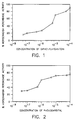
- FIGURE 1 is a graphical plot of observed % horseradish peroxidase activity vs. concentration of diphenylhydantoin, and is described in Example 1 below.
- FIGURE 2 is a graphical plot of observed % horseradish peroxidase activity vs. concentration of phenobarbital, and is described in Example 2 below.
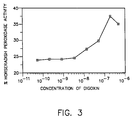
- FIGURE 3 is a graphical plot of observed % horseradish peroxidase activity vs. concentration of digoxin, and is described in Example 3 below.
- the present invention can be used to qualitatively, quantitatively or semi-quantitatively detect any of a wide variety of target specific binding ligands (identified as ligands hereinafter) for which receptor molecules are available or manufacturable.
- ligand-receptor complexes that is, a reaction product of ligand and corresponding receptor
- ligand-receptor complexes include, but are not limited to, antibody-antigen, antibody-hapten, avidin-biotin, sugar-lectin, gelatin-fibronectin and Protein A-IgG complexes.
- complementary nucleic acids that is, hybridized products of complementary strands
- Such complementary nucleic acids need not be complementary at every base pair.
- One strand can be longer than the other, or one strand can have a plurality of shorter complementary strands.
- Ligands include, but are not limited to, peptides, polypeptides, proteins (including enzymes, antibodies, antigenic proteins, glycoproteins, lipoproteins and avidin), hormones (such as human chorionic gonadotropin, thyroxine, triiodothyronine, estrogen, ACTH and substance P), immune system modulators (such as interleukin-1, interleukin-6 and tumor necrosis factor ⁇ ), vitamins, steroids, carbohydrates (such as polysaccharides), glycolipids, therapeutic drugs and drugs of abuse (such as digoxin, diphenylhydantoin, phenobarbital, carbamazepine, morphine and theophylline), antibiotics (such as gentamicin), components of bacterial cells and viruses (such as Streptococcal species, herpes simplex virus, retroviruses, influenza viruses and Mycobacterium species), nucleic acids (including single- and double-stranded oligonucleotides), pharmaceuticals,
- This invention is particularly useful for detecting drugs and hormones which are "low molecular weight", meaning less than about 1500 daltons, and including, but not limited to, those identified above, and most preferably for detecting drugs.
- the specific binding ligands are antigenic substances (such as the drugs noted above or haptenic analogs) or anti-antibodies.
- the separation-free assay protocol of this invention comprises bringing together the following reagents in any order:
- ligand fluid sample
- inhibitor antibody conjugate
- the ligand, inhibitor antibody and conjugate be mixed with either the receptor or reporter enzyme before the remaining reagents are added.
- the ligand, inhibitor antibody and conjugate can be mixed with the immobilized receptor, followed by addition of the reporter enzyme.
- Other sequences of bringing together the various reagents for this method would be readily apparent to one skilled in the art.
- the ligand and water-soluble conjugate compete for available sites on the immobilized receptor. Signal is generated from the presence of the reporter enzyme in direct proportion to the amount of ligand in the fluid sample using appropriate signal generating reagents (described below). If there is no ligand present, the inhibitor antibody will complex with the reporter enzyme and inhibit its enzymatic activity, preventing signal generation. Signal is generated from the presence of active reporter enzyme only. In the presence of ligand which reacts with the immobilized receptor, the water-soluble conjugate will complex with the reporter enzyme and block the inhibitor antibody from reacting therewith, resulting in higher signal production from the reporter enzyme.
- the reagents noted above can be brought together at suitable temperature, generally in the range of from about 4 to about 50°C, and preferably at room temperature.
- the time for mixing can vary from a few seconds to 15 minutes, although typically the mixing step requires about 1 to 5 minutes.
- all of the reagents are mixed together substantially simultaneously in a suitable reaction vessel such as a microtiter plate. It is also preferred that the entire method be carried out within about 10 minutes.
- the assay of this invention can be carried out in both “wet” or “dry” systems. That is, the assay can be carried out in the conventional "wet” system using suitable reaction containers whereby any generated signal is evaluated in the resulting reaction mixture. Alternatively and preferably, the assay is carried out in "dry” analytical elements (described below) in which the fluid sample is applied with or without additional fluids to dry test elements or test strips which may contain one or more additional reagents. Any generated signal is evaluated in the element itself either visually or using appropriate detection equipment.
- the ligand to be detected may be present in any of a wide variety of fluid samples (or aqueous solutions) of animal or human body fluids including, but not limited to, whole blood, serum, plasma, lymph fluid, bile, urine, spinal fluid, lacrimal fluid, swab specimens, stool specimens, semen, vaginal secretions, saliva, tears, crevicular fluid, and others readily apparent to one skilled in the art.
- the size of the fluid sample can vary widely as is known in the art, but typically is at least about 10-100 ⁇ l.
- the receptor is made available for reaction with the ligand or the ligand-anti-inhibitor antibody conjugate. Generally, such receptors are antibodies specific to the ligand.
- the receptor is provided in immobilized form on a suitable water insoluble support.
- suitable supports include, but are not limited to, polymeric, magnetic or glass particles, polymeric or glass filtration membranes, cellulosic filter papers, polymeric films, glass slides, test tubes, magnetic ferrofluids, test wells of test devices or microtiter plates, or other materials readily apparent to one skilled in the art.
- the receptor is immobilized on polymeric particles designed for this purpose, which particles are well known in the art.
- Reactive groups on the surface of particles include, but are not limited to, carboxy, 2-substituted ethylsulfonyl, vinylsulfonyl, epoxy, aldehyde, active halo atoms, amino, hydrazine and active esters such as succinimidoxycarbonyl.
- Particularly useful particulate supports are described, for example in EP-A-0 323 692 (published July 12, 1989) and US-A-4,997,772 (Sutton et al) which are prepared from one or more ethylenically unsaturated polymerizable monomers having active halo atoms, activated 2-substituted ethylsulfonyl or vinylsulfonyl groups.
- Particularly useful carboxy-containing polymeric particles are described in US-A-5,262,297 (Sutton et al), incorporated herein by reference. Other carboxy-containing polymeric particles are described in the art and many are commercially available.
- Attachment of the receptor to the support can be accomplished using any of a variety of conventional procedures, such as coating to adsorb the receptor molecules or incubating to allow covalent reaction with reactive groups on the support. Such procedures are described, for example, in US-A-5,252,457 (Snodgrass et al) and US-A-5,262,297 (Sutton et al), both incorporated herein by reference, and references cited therein.
- the receptor molecules are covalently attached to activated carboxy groups on polymeric particles, as described in the noted Sutton et al patent.
- the receptor can also be bound to supports having linking groups attached thereto, and such linking groups can be chemical moieties extending from the support or biological linking moieties such as peptides or antibodies to which the receptors can be complexed.
- Reporter enzymes useful in this invention are enzymes which are typically used as labels in diagnostic systems. They include, but are not limited to a peroxidase, glucose oxidase, ⁇ -galactosidase, urease, alkaline phosphatase, creatine kinase, uricase, glucose-6-phosphate dehydrogenase and others readily apparent to one skilled in the art.
- a peroxidase (from any of various sources) is preferred, and horseradish peroxidase is most preferred.
- the amount of reporter enzyme used in the assay is generally greater than or equal to about 10 ⁇ 11 molar so that background is negligible and kinetics for complex formation are acceptable. In addition, the amount is generally less than or equal to about 3 x 10 ⁇ 8 molar so that enzyme substrates for producing signal are not reacted too quickly. Moreover, the amount is less than the concentration of either the inhibitor or anti-inhibitor antibodies (described below).
- the reporter enzyme can be used in its "free" water-soluble form, or it can be immobilized on a suitable support, similar to the receptor molecules.
- a suitable support similar to the receptor molecules.
- the teaching above relating to supports for the receptor molecules applies equally for the reporter enzyme.
- the reporter enzyme can be immobilized on suitable polymeric particles using procedures similar to those described above for attaching the receptor molecules to various supports.
- antibody includes whole immunoglobulin molecules having the single specificity as is conventional in the art.
- the term is intended to include chemically prepared fragments [such as Fab, F(ab)', F(ab)'2 fragments] of such molecules and genetically prepared equivalents thereof (such as “single chain antibody fragments” or ScFv fragments).
- Monoclonal antibodies include those molecules generally prepared using conventional hybridoma technology, but they can also be prepared by electrofusion, viral transformation and other procedures known in the art.
- the monoclonal antibodies used in the practice of this invention are prepared by immunizing a suitable mammal (such as a mouse or rat) with the corresponding antigen, such as a reporter enzyme (or the reporter enzyme conjugated to carrier proteins), following the conventional procedures described by Kohler et al, Nature 256 , 495 (1975). Details regarding specific procedures for preparing useful monoclonal antibodies are provided in copending, contemporaneously filed European patent application No. (Attorney's Docket No. P13963EP) claiming priority from USSN 08/251496.
- a population of splenocytes from the immunized animals can be fused with suitable myeloma cell lines in the presence of polyethylene glycol (PEG1450) or another fusogen following the teaching of Lane [ J.Immunol . Methods 81 , pages 223-228 (1985)].
- PEG1450 polyethylene glycol
- the resulting hybridized cells are diluted into selective media, distributed into microtiter plates and cultured for 7 to 21 days before screening to see what type of properties the antibodies possess.
- a specific procedure for preparing the antibodies is illustrated below.
- myeloma cell lines are commercially available for hybridization with the mammalian spleen cells. Sources of such cell lines include the American Type Culture Collection (ATCC) in Rockville, Maryland. Particularly useful myeloma cell lines include Sp2/0-Ag14 and P3x63Ag8.653 myeloma cells, both available from the ATCC. The first cell line is preferred.
- monoclonal antibodies for use in this invention, selected hybridomas were cloned in soft agar and individual clones were plucked, cultured using conventional means and screened using the procedures described above. Monoclonal antibodies can be grown in shaker flasks or hollow fiber bioreactors, and collected and purified using conventional affinity chromatography on either immobilized Protein A or Protein G. Other conventional purification procedures can be used if desired.
- the inhibitor antibodies critical to the practice of this invention are specific to the reporter enzyme used in the assay.
- they have dissociation constants (K d ) less than or equal to about 125 nmolar, and bind to the reporter enzyme in such a manner as to inhibit the enzymatic activity of the reporter enzyme by at least about 80% (preferably by at least about 95%, and more preferably by at least about 99%).
- K d dissociation constants
- the hybridoma culture supernatants described above can be screened by three independent assays.
- the first assay enables one to choose antibodies which are specific to the reporter enzyme, such as horseradish peroxidase.
- the second and third assays determine the inhibitory or anti-inhibitory properties of the specific antibodies determined in the first assay. Screening for horseradish peroxidase specificity is described below as illustrative of how such a screening process would be carried out for a given reporter enzyme, but this invention is not to be construed as so limited. It is believed that antibodies to other reporter enzymes could be similarly prepared and identified. Screening for specificity to the reporter enzyme can be readily accomplished using conventional Enzyme Linked Immunosorbent Assays (ELISA) in polystyrene microtiter plates containing adsorbed horseradish peroxidase conjugate.
- ELISA Enzyme Linked Immunosorbent Assays
- a sample (50 ⁇ l/plate well) of each culture supernate is placed in a microtiter well coated with a conjugate of horseradish peroxidase and an irrelevant antibody which served to mediate the adsorption of horseradish peroxidase to the microtiter plate.
- This antibody can be obtained, for example, from Jackson Immunoresearch.
- a dye signal can be generated by adding the substrate o -nitrophenyl phosphate disodium salt (4 mg/ml) in tris(hydroxymethyl)aminomethane buffer (1.5 molar, pH 8). Other signal producing reagents, or enzyme labels can be similarly used.
- the screened antibodies which provide a dye signal after about 30 minutes which is at least twice as dense as a background signal are considered to be specific for horseradish peroxidase.
- the dye signal can be measured using a conventional microtiter plate reader or spectrophotometer.
- Antibodies specific to horseradish peroxidase can be screened for inhibitory function as follows:
- a sample (50 ⁇ l) of each culture supernate is placed in a microtiter plate well, followed by addition of a solution (50 ⁇ l) of horseradish peroxidase (0.2 nmolar) and gelatin (0.8%) in phosphate buffered saline, and the resulting mixtures are allowed to stand for 10 minutes at room temperature. Residual enzyme activity is then determined by adding 100 ⁇ l of the horseradish peroxidase substrate, o -phenylenediamine (1 mg/ml), in citrate/phosphate buffer (50 mmolar, pH 5.5), and measuring the amount of dye signal at 450 nm using a conventional spectrophotometer (rate of 100 mOD/minute). Other substrates, or dye providing reagents can be similarly used.
- the antibodies evaluated in this manner are subjected to further evaluation to find those which are within the scope of the present invention, namely those that inhibit the reporter enzyme (such as horseradish peroxidase) activity by at least about 80%.
- the amount of inhibition is at least about 95%.
- the evaluation for inhibition was carried out by the procedure described above.
- Antibodies specific to the reporter enzyme are also screened for their ability to inhibit the binding of inhibitor antibodies to the reporter enzyme.
- a representative screening process for antiinhibitor antibodies specific to horseradish peroxidase is described below. This invention is not to be construed as so limited.
- a sample (25 ⁇ l) of horseradish peroxidase (0.4 nmolar) is added to each well of a microtiter plate, followed by addition of a sample (50 ⁇ l) of each culture supernate, incubated 30 minutes, followed by addition of the inhibitor monoclonal antibody 4-22.2 (25 ⁇ l, 15 nmolar, defined below in Table I). After a 10 minute incubation, substrate solution (100 ⁇ l) is added and the dye signal from peroxidase activity is evaluated as described above (that is, using o -phenylenediamine as the substrate).
- Anti-inhibitor antibodies within the scope of this invention are defined as those which block the inhibition of horseradish peroxidase by the inhibitor antibody 4-22.2 described herein. Generally, the inhibitor antibody is added at a level sufficient to inhibit 80-90% of enzymatic activity, and more than 30% of the enzymatic activity is measured upon coincubation with an anti-inhibitor antibody.
- the term “about” refers to a variation of ⁇ 5%.
- the term “about” refers to a variation of ⁇ 50%.
- the dissociation constants (K d ) for inhibitor antibodies were determined by measuring the concentration of the antibody required to inhibit 50% of the reporter enzyme (such as horseradish peroxidase) activity (as compared to enzymatic activity in the absence of antibody).
- the inhibitor antibodies described herein generally have a K d less than or equal to about 125 nmolar, preferably a K d less than or equal to about 50 nmolar, and more preferably a K d less than or equal to about 1 nmolar.
- the K d values for anti-inhibitor antibodies were determined by measuring the concentration of antibody required to prevent 50% of the inhibition of 0.1 nmolar horseradish peroxidase by 10 nmolar of inhibitor antibody 4-22.2 (defined below in Table I) which was determined to inhibit about 99% of the enzymatic activity as defined above.
- These K d values are generally less than or equal to about 50 nmolar, preferably less than or equal to about 25 nmolar and more preferably less than or equal to about 5 nmolar.
- these antibodies diminish the activity of horseradish peroxidase by no more than about 6%.
- K d values are relative measures for the antibodies, and that alternative methods for measuring that parameter may give higher or lower values.
- the inhibitor, anti-inhibitor and binder monoclonal antibodies useful herein can be of any useful class, for example, IgA, IgE, IgM or IgG. Preferably, they are of the IgG class. Determination of isotype of cloned antibody cultures is achieved by using conventional isotyping assays and test kits which are commercially available. Reporter enzymes, such as horseradish peroxidase, can be immobilized on various supports, directly or indirectly, for isotyping assays.
- the 4-22.2 monoclonal antibody is preferred. It is prepared using the novel hybridoma cell line identified herein as HB11603 which has been deposited with the ATCC.
- Table II lists useful anti-inhibitor monoclonal antibodies of this invention by species, isotype, K d and maximum horseradish peroxidase inhibition: TABLE II Antibody Species/Isotype Kd (nmolar) Max. Inhibition (%) 7-32.2 mouse**/IgG2a 3.3 0 6-89.1 rat*/IgG2a 3.5 6 6-82.1 rat*/IgG2a 7.0 10 6-71.2 rat*/IgG2a 10 8 6-55.2 rat*/IgG1 20 6 * Sprague-Dawley rats **CAF1 mice
- the 7-32.2 monoclonal antibody is preferred. It is prepared using the novel hybridoma cell line identified herein as HB11604 which has been deposited with the ATCC under the Budapest Treaty.
- the 6-89.1 antibody is prepared using a novel hybridoma cell line identified herein as HB 11635 which has also been deposited with the ATCC under the Budapest Treaty.
- the amount of inhibitor antibody used in the method of this invention is generally whatever amount is needed to inhibit enzyme activity at least about 80%. Generally, this is from about 10 ⁇ 9 to about 10 ⁇ 6 molar, with an amount of from about 10 ⁇ 9 to about 10 ⁇ 8 molar being preferred.
- the amount of inhibitor antibody will vary depending upon the level of inhibition of enzymatic activity that is desired, and the inhibition properties of a given antibody.
- water-soluble conjugates of the ligand and an anti-inhibitor antibody are also used in the method of this invention.
- the conjugates can be prepared using any conventional technique of the art for covalently binding proteins, hormones, drugs or other chemical or biological compounds having requisite reactive groups.
- the various reactive groups of the antibodies and ligand can be considered in choosing the means for making the conjugate, such groups including, but not limited to, carboxy, amino, hydroxy, thiol and imidazole groups.
- Useful methods of binding include, but are not limited to, binding of peptides, periodate oxidation, use of glutaraldehyde, dication ethers, carbamoylonium salts, carbodiimides or N-hydroxysuccinide, and others readily apparent to one skilled in the art. Details for each of these and other methods are found in voluminous literature, including Williams et al Method in Immunology and Immunochemistry , Academic Press, New York, 1976, and Yoshitake et al, Eur.J.Biochem . 101 , 395 (1979).
- conjugates are often prepared using derivatives or analogs (also known as haptens) of the ligand to be detected, such derivatives having reactive groups or linking moieties which may be desirable for binding the hapten to the reporter enzyme. Specific details of the preparation of several conjugates are provided below prior to the examples.
- the amount of water-soluble conjugate used in the method of this invention is generally that amount needed to inhibit enzymatic activity by no more than about 20%, and to block substantially all reaction of inhibitor antibody with the reporter enzyme. By “substantially all” is meant at least 95%.
- the amount of conjugate is from about 4 x 10 ⁇ 9 to about 2 x 10 ⁇ 7 molar, with amounts of from about 10 ⁇ 8 to about 10 ⁇ 7 molar being preferred. The amount will vary depending upon properties of a given antibody, the amount of enzymatic activity desired and the amount of inhibitor antibody to be blocked.
- Signal generated by the reporter enzyme in the course of the assay of this invention can be a chemiluminescent, electrochemical or colorimetric signal depending upon the particular reporter enzyme and corresponding reagents (such as substrates) used to generate the signal.
- Chemiluminescent signals can be generated in a wide variety of ways in response to a reporter enzyme.
- the reporter enzyme is a peroxidase, and an oxidant such as hydrogen peroxide is present or generated in some fashion (for example, the reaction of an oxidase with its substrate).
- Useful chemiluminescent signals are generated using, for example, acridinium salts, tetrakis(dimethylamino)ethylene, luciferin, lucigenin, oxalyl chloride, certain oxidases (for example, xanthine oxidase) and 2,3-dihydro-1,4-phthalazinediones (such as luminol and isoluminol).
- a colorimetric signal is generated in the method of this invention.
- reporter enzymes and reagents include, but are not limited to, tetramethylbenzidine and derivatives thereof, o -phenylenediamine, triarylmethanes, and imidazole leuco dyes, such as the triarylimidazole leuco dyes described in US-A-4,087,747 (Bruschi) and US-A-5,024,935 (McClune), both incorporated herein by reference.
- Substrate solutions for the various reporter enzymes can be provided at any suitable time in the assay of this invention, or they can be present throughout the entire assay.
- One useful substrate solution for the triarylimidazole leuco dyes includes hydrogen peroxide, and an electron transfer agent such as 4'-hydroxyacetanilide or 3'-chloro-4'-hydroxyacetanilide in a suitable buffer.
- kits contain three or more of the necessary reagents, including an immobilized receptor as described above, and at least two additional reagents.
- the kits can also include suitable containers, equipment and instructions for carrying out the method of the invention, including test devices and filtration devices if needed.
- the test kit includes all of the necessary reagents in individual containers.
- the method of this invention can be carried out in suitable containers, such as microtiter plates, disposable test devices (such as those commercially available as SURCELLTM test devices), glass slides, test tubes and others readily apparent to one skilled in the art.
- suitable containers such as microtiter plates, disposable test devices (such as those commercially available as SURCELLTM test devices), glass slides, test tubes and others readily apparent to one skilled in the art.
- the method can also be carried out using a dry analytical element of this invention which includes at least, an immobilized reporter enzyme, and the immobilized receptor as described above.
- the element comprises at least a porous spreading layer which can accommodate a test sample (generally from 1 to 200 ⁇ l), diluted or undiluted, and can be in the form of filter papers, test slides, dipsticks and other configurations which would be readily apparent to one skilled in the art.
- the porous spreading layer is isotropically porous, which property is provided by interconnected spaces among the particles, fibers or other physical components of the porous spreading layer.
- isotropically porous is meant that fluids are uniformly spread throughout the layer.
- Useful absorbent materials for such zones are water-insoluble and maintain their structural integrity during the assay.
- Conventional materials are described, for example, in US-A-3,992,158 (Przybylowicz et al), US-A-4,258,001 (Pierce et al), US-A-4,292,272 (Kitajima et al) and US-A-4,430,436 (Koyama et al), incorporated herein by reference.
- the preferred porous spreading layers are those prepared from organo-polymeric particles and a polymeric adhesive as described in the Pierce et al patent, and "blush" spreading layers as described in the Przybylowicz et al patent.
- the immobilized reporter enzyme is located in the porous spreading layer, and additional reagents are either added to the element during the assay or incorporated into separated layers, such as hydrophilic reagent layers over or beneath the porous spreading layer.
- All of the layers are preferably disposed on an inert, nonporous support prepared from a suitable material (such as a paper, metal foil, glass slide or polymeric film such as polyester, polycarbonate or polyolefin).
- the support may be transparent or not depending upon the mode of signal detection (for example, transmission or reflectance spectroscopy).
- the additional layers are in "fluid contact" with the porous spreading layer, meaning that fluids and non-immobilized reagents can freely move among the layers.
- the binder materials typically used in such layers are well known in the art (such as gelatin, acrylamide polymers and vinylpyrrolidone polymers), such as the Pierce et al and Przybylowicz et al patents noted above.
- the elements can include one or more radiation blocking, subbing, or water-dissolvable layers as is known in the art.
- the reporter enzyme and receptor used in the assay can generally be immobilized on distinct (or different) polymeric particles in the same or different layers of the element.
- the inhibitor antibody and water-soluble conjugate of ligand and anti-inhibitor antibody are incorporated into the element in suitable locations, provided that the antibodies and conjugate are kept separated from the immobilized receptor and immobilized reporter enzyme, but are available for reaction when a blood sample is added to the element.
- separation can be accomplished by putting the reagents in different layers of the elements, or some of the reagents can be encapsulated with water-dissolvable materials (such as gels, dextran or proteinoids) and kept in the same layer.
- water-dissolvable materials such as gels, dextran or proteinoids
- a multilayer element comprises a nonporous support having thereon, in fluid contact: a first reagent layer, a subbing layer, and a porous spreading layer, the immobilized receptor and immobilized reporter enzyme located in the porous spreading layer, and the inhibitor antibodies and water-soluble conjugate of ligand and anti-inhibitor antibodies being in either the first reagent layer or subbing layer.
- the elements can also include a variety of addenda in appropriate layers as are known in the art to aid in manufacture, fluid spreading, reagent stability and absorbance of unwanted background.
- the elements can be prepared using conventional coating procedures and equipment as are described in considerable art (including gravure, curtain, hopper and other coating techniques).
- the elements can be configured in a variety of forms, including elongated tapes of any desired width, sheets, slides or chips.
- the method of the invention can be manual or automated to detect desired signal generated in the elements, using appropriate equipment and procedures. Generally, a test sample of fluid suspected of containing target specific binding ligand is spotted on the porous spreading layer, and the movement of fluid within the element effectively mixes the reagents for reaction.
- the element may be exposed to suitable conditioning, such as incubation, heating or other procedure, to quicken or facilitate the desired reactions within the element.
- suitable conditioning such as incubation, heating or other procedure, to quicken or facilitate the desired reactions within the element.
- the conditioning can be interrupted to add one or more reagents which are not incorporated into the element.
- the generated signal may be evaluated in a localized area of the element, or over its entire surface.
- the monoclonal antibody identified above as 4-22.2 in Table I above was prepared as follows: Sprague-Dawley rats were injected with a solution of horseradish peroxidase (400 ⁇ g) in commercially available TDM/MPL emulsion adjuvant (RIBI Corporation) four times at four week intervals. A fifth injection was made with horseradish peroxidase (400 ⁇ g) in phosphate buffered saline solution. Three days later, splenocytes from the immunized rats were fused with cells from the Sp2/0-Ag14 myeloma cell line using conventional procedures.
- the bound antibody was detected by adding a conjugate of alkaline phosphatase with goat anti-mouse IgG Fc (Jackson Immunoresearch), following by signal generation using 4 mg/ml of p -nitrophenyl phosphate disodium salt (Sigma Chemical) as substrate for the alkaline phosphatase in tris(hydroxymethyl)aminomethane buffer (1.5 molar, pH 8).
- the dye signal was evaluated after 30 minutes using a conventional microtiter plate reader.
- Residual horseradish peroxidase activity was determined by adding a solution (100 ⁇ l) of o -phenylenediamine (1 mg/ml) in citrate/phosphate buffer (50 ⁇ l, 50 mmolar, pH 5.5), and measuring the amount of dye signal at 450 nm using a conventional microtiter plate reader (100 mOD/minute).
- Those antibodies which inhibited the enzymatic activity by at least 20% were selected by adding equal volumes of the culture supernatant and horseradish peroxidase to microtiter plate wells and using the procedure described above ("Assay for Enzyme Inhibition").
- Antibody 4-22.2 was determined to inhibit horseradish peroxidase activity 99%.
- the monoclonal antibody identified above as 7-32.2 in Table II was prepared as follows: Immunization of mice and fusion of the resulting splenocytes were carried out as described above in the previous preparation. Mice were given four immunizations of a conjugate (100 ⁇ g/ml each) of horseradish peroxidase with C-reactive protein in TDM/MPL emulsion adjuvant over four week intervals. A fifth and final immunization in phosphate buffered saline solution was carried out.
- Residual horseradish peroxidase activity was determined by adding a solution (100 ⁇ l) of o -phenylenediamine (1.2 mg/ml) in citrate/phosphate buffer (0.1 molar, pH 5.5), and measuring the amount of dye signal at 450 nm using a conventional spectrophotometer as described in the previous preparation.
- Antibody 7-32.2 was measured to diminish enzyme activity by less than 1% (essentially 0%).
- the hapten, 5,5-diphenyl-3- ⁇ 4-[4-(3-succinimidoxycarbonylpropionyl)-1-piperazinylcarbonyl]-butyl ⁇ -2,4-imidazolidinedione, was prepared by procedures described in Preparatory Example 2 of EP-A-0 517 327 (published May 5, 1993).
- This hapten was conjugated to the monoclonal antibodies identified as 7-32.2 or 6-89.1 (Table II) in either a 9:1 or 18:1 molar ratio by adding concentrated hapten in dimethyl sulfoxide slowly, dropwise to a solution of either antibody (1 mg/ml) in N-[2-hydroxyethyl]piperizine-N'-[3-propanesulfonic acid] buffer (0.1 molar, pH 8). The resulting mixtures were incubated at room temperature for 4 hours, then dialyzed overnight into phosphate buffered saline solution. The final product conjugates were filtered through a commercially available 0.22 ⁇ meter filter (Nalge Corporation, Rochester, N.Y.). The final protein concentration was determined by absorbance at 280 nm using a commercially available spectrophotometer (Beckman Instruments).
- This hapten was conjugated to the monoclonal antibodies identified as 7-32.2 or 6-89.1 (Table II) in either a 9:1, 18:1 or 27:1 molar ratio by adding concentrated hapten in dimethyl sulfoxide slowly, dropwise to a solution of either antibody (1 mg/ml) in N-[2-hydroxyethyl]piperizine-N'-[3-propanesulfonic acid] buffer (0.1 molar, pH 8). The resulting mixtures were incubated at room temperature for 4 hours, then dialyzed overnight into phosphate buffered saline solution. The final product conjugates were filtered through a commercially available 0.22 ⁇ meter filter (Nalge Corporation, Rochester, N.Y.). The final protein concentration was determined by absorbance at 280 nm using a commercially available spectrophotometer (Beckman Instruments).
- Two water-soluble conjugates of a digoxin hapten and anti-inhibitor monoclonal antibodies was prepared in the following manner. This preparation is representative, as other methods for making such conjugates can be used.
- Hapten was conjugated to the monoclonal antibodies identified as 7-32.2 or 6-89.1 (Table II) by diluting 2 mg of each antibody 1:1 with sodium acetate (0.1 molar, pH 5.5), not to exceed 2 ml.
- Sodium metaperiodate (1 ml) was added at 6.66 mg/ml.
- the reaction mixture was covered with foil and rotated for 20 minutes at room temperature. Excess sodium metaperiodate was removed by passing the reaction mixture over a commercially available PD10 column (Pharmacia, Inc.) and preequilibrated with sodium acetate (0.1 molar, pH 5.5).
- Antibodies to various target specific binding ligands used in the assays of the examples were immobilized on particles of poly[styrene- co -3-( p -vinylbenzylthio)propionic acid] (molar ratio of 95:5, 1 ⁇ m average size) using the procedures described in US-A-5,177,023 (Sutton et al), incorporated herein by reference.
- Antibodies specific to diphenylhydantoin were obtained from Beckman.
- Antibodies specific to horseradish peroxidase which inhibit neither its enzymatic activity, nor the binding of inhibitor antibodies to the enzyme were also prepared and used in the practice of this invention. These antibodies are identified herein as "binder” antibodies because they specifically bind to horseradish peroxidase. However, they do not have the properties of the inhibitor or anti-inhibitor antibodies described herein, to a substantial extent.
- the binder antibodies were prepared and identified using the conventional hybridoma technology described above, and the screening process described above. Such antibodies exhibited high affinity for the enzyme. Once such antibody is identified herein as "5-10” and is an IgG1 antibody derived using the procedures described above using Balb/c. Its K d was determined to be at least 10 ⁇ 8 and its inhibition of horseradish peroxidase was less than 1%.
- Horseradish peroxidase, isoenzyme C was obtained from Servac, Inc. (South Africa). It was immobilized on the same type of polymeric particles described above for the anti-ligand antibodies by complexing it with binder antibody 5-10 which had been immobilized using the procedures described in US-A-5,177,023 (noted above).
- Enzyme substrate solution A contained o -phenylenediamine (30 mg) in a solution (25 ml) of citrate buffer (0.05 molar sodium citrate, 0.1 molar sodium pohsphate dibasic, pH 5.5) containing merthiolate (0.1%). In the final product (per 1.33 liter), a one gram table of urea/hydrogen peroxide was added.
- Enzyme substrate solution B was prepared by adding a solution (5 ml) of 4,5-bis(4-dimethylaminophenyl)-2-(4-hydroxy-3-methoxyphenyl)imidazole leuco dye (1 g) in N,N-dimethylformamide to a solution (500 ml) of polyvinylpyrrolidone (125 g) and stirred for an hour. Diethylenetriamidepentaacetic acid (1 ml, 0.1 molar) was added to a solution (9500 ml) of monobasic sodium phosphate monohydrate (13.8 g) with stirring, followed by addition of 3'-chloro-4'-hydroxyacetanilide (9.4 g).
- the resulting mixture was stirred to dissolve the components, and the pH was adjusted to 6.8 with 50% sodium hydroxide. With vigorous stirring, it was then mixed with the leuco dye solution. Hydrogen peroxide (10 ml, 30%) was added, and the final mixture was stirred another 15 minutes.
- the ligand diphenylhydantoin (phenytoin) was determined according to the present invention as follows: Inhibitor antibody solution (10 ⁇ 9 molar) and anti-inhibitor antibody-diphenylhydantoin conjugate solution (5.3 x 10 ⁇ 8 molar) were mixed (25 ⁇ l total volume). To this mixture was added a test sample (25 ⁇ l) containing diphenylhydantoin (various concentrations of 0 to 10 ⁇ 4 molar) and gelatin (0.8%) in phosphate buffered saline solution.
- This suspension was then mixed with the mixture containing analyte to form a reaction mixture (100 ⁇ l, pH 7), and placed in the well of a conventional microtiter plate.
- the mixture was incubated at room temperature with agitation for 10 minutes, after which the enzyme substrate solution of o -phenylenediamine (100 ⁇ l) was added with further mixing on a plate shaker.
- the dye signal from the enzyme activity was measured using a TITERTEKTM MCC340 Mark II commercially available microtiter plate reader at 450 nm.
- the resulting dose response curve is shown in FIGURE 1 with % horseradish peroxidase activity on the y-axis and molar concentration of diphenylhydantoin on the x-axis. It is apparent that increasing amounts of ligand in the various test samples were directly correlated to the increasing amount of enzyme activity observed in the immunoassay. The rate of enzymatic activity observed was about 10% of the uninhibited rate at the lower ligand concentrations, and was as high as 60% of the uninhibited rate at the higher ligand concentration.
- the ligand phenobarbital was determined according to the present invention as follows: Inhibitor antibody solution (10 ⁇ 9 molar) and anti-inhibitor antibody-phenobarbital conjugate solution (5.3 x 10 ⁇ 8 molar) were mixed (25 ⁇ l total volume). To this mixture was added a test sample (25 ⁇ l) containing phenobarbital (various concentrations of 0 to 10 ⁇ 4 molar) and gelatin (0.8%) in phosphate buffered saline solution.
- This suspension was then mixed with the mixture containing analyte to form a reaction mixture (100 ⁇ l, pH 7), and placed in the well of a conventional microtiter plate.
- the mixture was incubated at room temperature with agitation for 5 minutes, after which the enzyme substrate solution of o -phenylenediamine (100 ⁇ l) was added with further mixing on a plate shaker.
- the dye signal from the enzyme activity was measured using a TITERTEKTM MCC340 Mark II commercially available microtiter plate reader at 450 nm.
- the resulting dose response curve is shown in FIGURE 2 with % horseradish peroxidase activity on the y-axis and molar concentration of phenobarbital on the x-axis. It is apparent that increasing amounts of ligand in the various test samples were directly correlated to the increasing amount of enzyme activity observed in the immunoassay. The rate of enzymatic activity observed was about 28% of the uninhibited rate at the lower ligand concentrations, and was as high as 75% of the uninhibited rate at the higher ligand concentration. The mid-point of the curve was at about 10 ⁇ 6 molar.
- the ligand digoxin was determined according to the present invention as follows: Inhibitor antibody solution (10 ⁇ 9 molar) and anti-inhibitor antibody-digoxin conjugate solution (5.3 x 10 ⁇ 8 molar) were mixed (25 ⁇ l total volume). To this mixture was added a test sample (25 ⁇ l) containing digoxin (various concentrations of 0 to 10 ⁇ 4 molar) and gelatin (0.8%) in phosphate buffered saline solution. A suspension of horseradish peroxidase attached to polymeric particles, as described above (25 ⁇ l, 10 ⁇ 10 molar), and anti-digoxin antibodies attached to polymeric particles, as described above (25 ⁇ l, 3 x 10 ⁇ 6 molar), was prepared.
- This suspension was then mixed with the mixture containing analyte to form a reaction mixture (100 ⁇ l, pH 7), and placed in the well of a conventional microtiter plate.
- the mixture was incubated at room temperature with mixing for 15 minutes, after which the enzyme substrate solution of o -phenylenediamine (100 ⁇ l) was added with further mixing on a plate shaker.
- the dye signal from the enzyme activity was measured using a TITERTEKTM MCC340 Mark II commercially available microtiter plate reader at 450 nm.
- the resulting dose response curve is shown in FIGURE 3 with % enzyme activity on the y-axis and molar concentration of digoxin on the x-axis. It is apparent that increasing amounts of ligand in the various test samples were directly correlated to the increasing amount of enzyme activity observed in the immunoassay. The rate of enzymatic activity observed was about 23% of the uninhibited rate at the low ligand concentrations, and was as high as 36% of the uninhibited rate at the high ligand concentration, which means this assay was not optimized. The midpoint of the curve was at about 3 x 10 ⁇ 7 molar.
- An element of this invention useful for the detection of diphenylhydantoin was prepared having the following layer arrangement and components:
- the assays were carried out by spotting 10 ⁇ l of each of the three solutions noted above onto the element spreading layer and incubating at room temperature for 5 minutes.
- a substrate solution (10 ⁇ l) containing hydrogen peroxide, diethylenetriaminetetrapentaacetic acid (10 ⁇ molar), 4'-hydroxyacetanilide (5 mmolar) in sodium phosphate dibasic (10 mmolar, pH adjusted to 6.8 with sodium hydroxide) was then applied, and after 15 minutes, the dye signals in each element were evaluated by taking a photographic image of each element using conventional KODAK GOLDTM 200 color print film. Dye signal was visually assessed as followed:
Landscapes
- Health & Medical Sciences (AREA)
- Life Sciences & Earth Sciences (AREA)
- Engineering & Computer Science (AREA)
- Immunology (AREA)
- Chemical & Material Sciences (AREA)
- Molecular Biology (AREA)
- Biomedical Technology (AREA)
- Hematology (AREA)
- Urology & Nephrology (AREA)
- Cell Biology (AREA)
- Microbiology (AREA)
- Biotechnology (AREA)
- Food Science & Technology (AREA)
- Medicinal Chemistry (AREA)
- Physics & Mathematics (AREA)
- Analytical Chemistry (AREA)
- Biochemistry (AREA)
- General Health & Medical Sciences (AREA)
- General Physics & Mathematics (AREA)
- Pathology (AREA)
- Chemical Kinetics & Catalysis (AREA)
- Measuring Or Testing Involving Enzymes Or Micro-Organisms (AREA)
Applications Claiming Priority (2)
| Application Number | Priority Date | Filing Date | Title |
|---|---|---|---|
| US250883 | 1994-05-31 | ||
| US08/250,883 US5565326A (en) | 1994-05-31 | 1994-05-31 | Separation-free specific binding assays using anti-inhibitor antibodies |
Publications (3)
| Publication Number | Publication Date |
|---|---|
| EP0685740A2 true EP0685740A2 (de) | 1995-12-06 |
| EP0685740A3 EP0685740A3 (de) | 1996-04-03 |
| EP0685740B1 EP0685740B1 (de) | 2002-04-03 |
Family
ID=22949546
Family Applications (1)
| Application Number | Title | Priority Date | Filing Date |
|---|---|---|---|
| EP95303655A Expired - Lifetime EP0685740B1 (de) | 1994-05-31 | 1995-05-30 | Abtrennfreier, spezifischer Bindungsassay mit Anti-Inhibitor-Antikörpern |
Country Status (6)
| Country | Link |
|---|---|
| US (1) | US5565326A (de) |
| EP (1) | EP0685740B1 (de) |
| JP (1) | JPH0854392A (de) |
| AU (1) | AU2041095A (de) |
| CA (1) | CA2150496A1 (de) |
| DE (1) | DE69526143T2 (de) |
Families Citing this family (5)
| Publication number | Priority date | Publication date | Assignee | Title |
|---|---|---|---|---|
| US5916757A (en) * | 1994-05-31 | 1999-06-29 | Johnson & Johnson Clinical Diagnostics, Inc. | Specific binding assay using enzyme inhibitor and anti-inhibitor antibodies |
| US20040049351A1 (en) * | 2002-08-28 | 2004-03-11 | Matson Robert S. | Immunosorbent assay in microarray format |
| WO2006070790A1 (ja) * | 2004-12-27 | 2006-07-06 | Brother Kogyo Kabushiki Kaisha | ラベル作成装置、マーク及びテープエンド検出装置、ラベル用テープロール及びカートリッジ、マーク付テープ |
| US7910378B2 (en) * | 2007-12-14 | 2011-03-22 | Siemens Healthcare Diagnostics Inc. | Methods for detection of hydrophobic drugs |
| US12188928B2 (en) * | 2018-05-17 | 2025-01-07 | Techno Medica Co., Ltd. | Competitive immunochromatographic analysis method and immunochromatographic sensor |
Citations (17)
| Publication number | Priority date | Publication date | Assignee | Title |
|---|---|---|---|---|
| US3935074A (en) | 1973-12-17 | 1976-01-27 | Syva Company | Antibody steric hindrance immunoassay with two antibodies |
| US3992158A (en) | 1973-08-16 | 1976-11-16 | Eastman Kodak Company | Integral analytical element |
| US4087747A (en) | 1975-12-29 | 1978-05-02 | International Business Machines Corporation | Arrangement for testing electric samples with a plurality of probe contact points |
| US4258001A (en) | 1978-12-27 | 1981-03-24 | Eastman Kodak Company | Element, structure and method for the analysis or transport of liquids |
| US4292272A (en) | 1979-06-08 | 1981-09-29 | Fuji Photo Film Co., Ltd. | Multilayer analysis sheet for analyzing liquid samples |
| US4383031A (en) | 1975-04-28 | 1983-05-10 | Miles Laboratories, Inc. | Homogeneous chemiluminescent specific binding assay |
| US4430436A (en) | 1980-12-17 | 1984-02-07 | Konishiroku Photo Industry Co., Ltd. | Analytical element and method of use |
| US4598044A (en) | 1983-02-11 | 1986-07-01 | National Research Development Corporation | Enhanced luminescent or luminometric assay |
| US4729950A (en) | 1984-08-07 | 1988-03-08 | National Research Development Corporation | Enhanced luminescent or luminometric assay |
| EP0323692A2 (de) | 1987-08-03 | 1989-07-12 | EASTMAN KODAK COMPANY (a New Jersey corporation) | Wasser-unlösliches Reagenz, dieses enthaltende Elemente und Verwendungsverfahren |
| US4997772A (en) | 1987-09-18 | 1991-03-05 | Eastman Kodak Company | Water-insoluble particle and immunoreactive reagent, analytical elements and methods of use |
| US5024935A (en) | 1987-12-18 | 1991-06-18 | Eastman Kodak Company | Dye-providing composition, diagnostic test kit and their use in method for ligand determination using peroxidase labeled-receptor |
| US5108893A (en) | 1986-08-06 | 1992-04-28 | Canberra Industries, Inc. | Use of oxidase enzyme systems in chemiluminescent assays |
| EP0517327A2 (de) | 1991-06-07 | 1992-12-09 | Johnson & Johnson Clinical Diagnostics, Inc. | Immunoassays unter Verwendung von markierten Hapten-Analogen |
| US5177023A (en) | 1987-08-03 | 1993-01-05 | Eastman Kodak Company | Water-insoluble reagent elements containing same and methods of use |
| US5252457A (en) | 1991-10-08 | 1993-10-12 | Eastman Kodak Company | Wash composition containing signal stop reagent, test kit and method of use with peroxidase-labeled specific binding ligand |
| US5262297A (en) | 1990-06-18 | 1993-11-16 | Eastman Kodak Company | Specific binding analytical and separation methods using carboxy containing polymers |
Family Cites Families (12)
| Publication number | Priority date | Publication date | Assignee | Title |
|---|---|---|---|---|
| US4161515A (en) * | 1973-10-02 | 1979-07-17 | Syva Company | Double receptor fluorescent immunoassay |
| US4233401A (en) * | 1977-07-14 | 1980-11-11 | Syva Company | Antienzyme homogeneous competitive binding assay |
| US4430263A (en) * | 1978-09-18 | 1984-02-07 | Abbott Laboratories | Hapten-inhibitor immunoassay |
| JPS5818167A (ja) * | 1981-07-24 | 1983-02-02 | Fuji Photo Film Co Ltd | 分析フイルム及びこれを用いる分析方法 |
| JPS58209994A (ja) * | 1982-05-10 | 1983-12-07 | Fujirebio Inc | 活性蛋白等固定化物を用いた抗原の測定方法 |
| DE3483620D1 (de) * | 1983-03-11 | 1991-01-03 | Fujirebio Kk | Verfahren zur bestimmung von liganden. |
| IT1199088B (it) * | 1984-03-09 | 1988-12-30 | Miles Italiana | Saggio di legame specifico mediante impiego di anti-g6pdh come marcante |
| AU7238087A (en) * | 1986-03-26 | 1987-10-20 | Murex Corp. | Anti-enzyme antibody immunoassay |
| US5104793A (en) * | 1988-02-16 | 1992-04-14 | Boehringer Mannheim Corporation | Method for determining an analyte in a liquid sample using a zoned test device and an inhibitor for a label used in said method |
| US5064755A (en) * | 1988-08-04 | 1991-11-12 | Abbott Laboratories | Two-site confirmatory assay |
| IT1235349B (it) * | 1988-12-23 | 1992-06-30 | Biodata Spa | Saggio immunologico per determinazioni in fase omogenea |
| US5972630A (en) * | 1991-08-19 | 1999-10-26 | Dade Behring Marburg Gmbh | Homogeneous immunoassays using enzyme inhibitors |
-
1994
- 1994-05-31 US US08/250,883 patent/US5565326A/en not_active Expired - Lifetime
-
1995
- 1995-05-30 CA CA002150496A patent/CA2150496A1/en not_active Abandoned
- 1995-05-30 DE DE69526143T patent/DE69526143T2/de not_active Expired - Lifetime
- 1995-05-30 EP EP95303655A patent/EP0685740B1/de not_active Expired - Lifetime
- 1995-05-31 JP JP7133996A patent/JPH0854392A/ja active Pending
- 1995-05-31 AU AU20410/95A patent/AU2041095A/en not_active Abandoned
Patent Citations (17)
| Publication number | Priority date | Publication date | Assignee | Title |
|---|---|---|---|---|
| US3992158A (en) | 1973-08-16 | 1976-11-16 | Eastman Kodak Company | Integral analytical element |
| US3935074A (en) | 1973-12-17 | 1976-01-27 | Syva Company | Antibody steric hindrance immunoassay with two antibodies |
| US4383031A (en) | 1975-04-28 | 1983-05-10 | Miles Laboratories, Inc. | Homogeneous chemiluminescent specific binding assay |
| US4087747A (en) | 1975-12-29 | 1978-05-02 | International Business Machines Corporation | Arrangement for testing electric samples with a plurality of probe contact points |
| US4258001A (en) | 1978-12-27 | 1981-03-24 | Eastman Kodak Company | Element, structure and method for the analysis or transport of liquids |
| US4292272A (en) | 1979-06-08 | 1981-09-29 | Fuji Photo Film Co., Ltd. | Multilayer analysis sheet for analyzing liquid samples |
| US4430436A (en) | 1980-12-17 | 1984-02-07 | Konishiroku Photo Industry Co., Ltd. | Analytical element and method of use |
| US4598044A (en) | 1983-02-11 | 1986-07-01 | National Research Development Corporation | Enhanced luminescent or luminometric assay |
| US4729950A (en) | 1984-08-07 | 1988-03-08 | National Research Development Corporation | Enhanced luminescent or luminometric assay |
| US5108893A (en) | 1986-08-06 | 1992-04-28 | Canberra Industries, Inc. | Use of oxidase enzyme systems in chemiluminescent assays |
| EP0323692A2 (de) | 1987-08-03 | 1989-07-12 | EASTMAN KODAK COMPANY (a New Jersey corporation) | Wasser-unlösliches Reagenz, dieses enthaltende Elemente und Verwendungsverfahren |
| US5177023A (en) | 1987-08-03 | 1993-01-05 | Eastman Kodak Company | Water-insoluble reagent elements containing same and methods of use |
| US4997772A (en) | 1987-09-18 | 1991-03-05 | Eastman Kodak Company | Water-insoluble particle and immunoreactive reagent, analytical elements and methods of use |
| US5024935A (en) | 1987-12-18 | 1991-06-18 | Eastman Kodak Company | Dye-providing composition, diagnostic test kit and their use in method for ligand determination using peroxidase labeled-receptor |
| US5262297A (en) | 1990-06-18 | 1993-11-16 | Eastman Kodak Company | Specific binding analytical and separation methods using carboxy containing polymers |
| EP0517327A2 (de) | 1991-06-07 | 1992-12-09 | Johnson & Johnson Clinical Diagnostics, Inc. | Immunoassays unter Verwendung von markierten Hapten-Analogen |
| US5252457A (en) | 1991-10-08 | 1993-10-12 | Eastman Kodak Company | Wash composition containing signal stop reagent, test kit and method of use with peroxidase-labeled specific binding ligand |
Non-Patent Citations (5)
| Title |
|---|
| GUNDERMANN ET AL.: "Chemiluminescence in Organic Chemistry", 1987, SPRINGER-VERLAG, BERLIN, pages: 204 - 207 |
| HENDERSON ET AL., CLIN. CHEM., vol. 32, no. 9, 1986, pages 1637 - 1641 |
| J. IMMUNOL. METHODS, vol. 81, 1985, pages 223 - 228 |
| WILLIAMS ET AL.: "Method in Immunology and Immunochemistry", 1976, ACADEMIC PRESS, NEW YORK |
| YOSHITAKE ET AL., EUR. J. BIOCHEM., vol. 101, 1979, pages 395 |
Also Published As
| Publication number | Publication date |
|---|---|
| CA2150496A1 (en) | 1995-12-01 |
| EP0685740A3 (de) | 1996-04-03 |
| US5565326A (en) | 1996-10-15 |
| DE69526143T2 (de) | 2002-09-26 |
| JPH0854392A (ja) | 1996-02-27 |
| DE69526143D1 (de) | 2002-05-08 |
| EP0685740B1 (de) | 2002-04-03 |
| AU2041095A (en) | 1995-12-07 |
Similar Documents
| Publication | Publication Date | Title |
|---|---|---|
| Yolken | Enzyme-linked immunosorbent assay (ELISA): a practical tool for rapid diagnosis of viruses and other infectious agents | |
| US4943525A (en) | Simultaneous immunoassay for the determination of antigens and antibodies | |
| US5480792A (en) | Antibodies to complexes of ligand receptors and ligands and their utility in ligand-receptor assays | |
| US4870007A (en) | Immobilized biotinylated receptor in test device, kit and method for determining a ligand | |
| EP0481020B1 (de) | Durch Silber intensiviertes, auf Goldmarkierung beruhendes Immuntestverfahren | |
| IE890683L (en) | Method for determination of a polyvalent substance using an immunoaggregate | |
| EP0462644A1 (de) | Biologisch aktive Reagenzien aus Carboxylgruppenhaltigen Polymerisaten, analytisches Element und Verfahren zur Verwendung | |
| JPH0731197B2 (ja) | 低級アルコールスルフェート洗浄液,試験キットおよび免疫リガンドの測定方法 | |
| EP0687910B1 (de) | Testsatz und Methode für eine Bestimmung durch kompetitive spezifische Bindung | |
| JPH0820446B2 (ja) | アルカリホスファターゼを用いた免疫検定のためのキットおよび方法 | |
| EP0685740B1 (de) | Abtrennfreier, spezifischer Bindungsassay mit Anti-Inhibitor-Antikörpern | |
| JP3715348B2 (ja) | 修飾アポペルオキシダーゼを用いる分析要素、組成物および方法 | |
| JP2579972B2 (ja) | 膜親和濃縮免疫測定方法 | |
| JPH05249113A (ja) | 分離・分析方法及び装置 | |
| EP0233690B1 (de) | Markiertes Hydantoin-Conjugat und seine Verwendung in einem analytischen Element und in Immuntests | |
| CA2028175A1 (en) | Buffered wash composition, insolubilizing composition, test kits and method of use | |
| JP3400507B2 (ja) | 特異的結合パートナーと炭水化物含有蛋白質から構成される複合体の製造方法 | |
| JP4299332B2 (ja) | 酵素免疫検定方法およびこれに用いる展開用組成物 | |
| US5916757A (en) | Specific binding assay using enzyme inhibitor and anti-inhibitor antibodies | |
| EP0152254A2 (de) | Immunotest mit chromogenischer Träger unter Verwendung von markierten Komplementbestandteilen | |
| EP0184701B1 (de) | Verfahren zur Bestimmung eines Liganden | |
| EP0537826B1 (de) | Diagnosetestsatz und spezifischer Bindungstest unter Verwendung eines Peroxidase Markierungsmittels und eines Signalmodulators | |
| JPH01316660A (ja) | 物質の免疫学的検出方法及びこれに使用する組成物及びテストキット | |
| JP2771332B2 (ja) | アシル化タンパク質凝集物、ならびに抗体に対するイムノアッセイ試験での信号増強へのその使用 | |
| EP0376707A2 (de) | Enzym-Quantifizierungstest auf einem Docht |
Legal Events
| Date | Code | Title | Description |
|---|---|---|---|
| PUAI | Public reference made under article 153(3) epc to a published international application that has entered the european phase |
Free format text: ORIGINAL CODE: 0009012 |
|
| AK | Designated contracting states |
Kind code of ref document: A2 Designated state(s): BE CH DE DK ES FR GB GR IE IT LI LU MC NL PT SE |
|
| RAX | Requested extension states of the european patent have changed |
Free format text: SI PAYMENT 950609 |
|
| PUAL | Search report despatched |
Free format text: ORIGINAL CODE: 0009013 |
|
| AK | Designated contracting states |
Kind code of ref document: A3 Designated state(s): BE CH DE DK ES FR GB GR IE IT LI LU MC NL PT SE |
|
| AX | Request for extension of the european patent |
Free format text: SI PAYMENT 950609 |
|
| 17P | Request for examination filed |
Effective date: 19960906 |
|
| 17Q | First examination report despatched |
Effective date: 19990806 |
|
| GRAG | Despatch of communication of intention to grant |
Free format text: ORIGINAL CODE: EPIDOS AGRA |
|
| GRAG | Despatch of communication of intention to grant |
Free format text: ORIGINAL CODE: EPIDOS AGRA |
|
| GRAH | Despatch of communication of intention to grant a patent |
Free format text: ORIGINAL CODE: EPIDOS IGRA |
|
| GRAH | Despatch of communication of intention to grant a patent |
Free format text: ORIGINAL CODE: EPIDOS IGRA |
|
| REG | Reference to a national code |
Ref country code: GB Ref legal event code: IF02 |
|
| GRAA | (expected) grant |
Free format text: ORIGINAL CODE: 0009210 |
|
| AK | Designated contracting states |
Kind code of ref document: B1 Designated state(s): BE CH DE DK ES FR GB GR IE IT LI LU MC NL PT SE |
|
| AX | Request for extension of the european patent |
Free format text: SI PAYMENT 19950609 |
|
| PG25 | Lapsed in a contracting state [announced via postgrant information from national office to epo] |
Ref country code: NL Free format text: LAPSE BECAUSE OF FAILURE TO SUBMIT A TRANSLATION OF THE DESCRIPTION OR TO PAY THE FEE WITHIN THE PRESCRIBED TIME-LIMIT Effective date: 20020403 Ref country code: LI Free format text: LAPSE BECAUSE OF FAILURE TO SUBMIT A TRANSLATION OF THE DESCRIPTION OR TO PAY THE FEE WITHIN THE PRESCRIBED TIME-LIMIT Effective date: 20020403 Ref country code: IT Free format text: LAPSE BECAUSE OF FAILURE TO SUBMIT A TRANSLATION OF THE DESCRIPTION OR TO PAY THE FEE WITHIN THE PRE;WARNING: LAPSES OF ITALIAN PATENTS WITH EFFECTIVE DATE BEFORE 2007 MAY HAVE OCCURRED AT ANY TIME BEFORE 2007. THE CORRECT EFFECTIVE DATE MAY BE DIFFERENT FROM THE ONE RECORDED.SCRIBED TIME-LIMIT Effective date: 20020403 Ref country code: GR Free format text: LAPSE BECAUSE OF FAILURE TO SUBMIT A TRANSLATION OF THE DESCRIPTION OR TO PAY THE FEE WITHIN THE PRESCRIBED TIME-LIMIT Effective date: 20020403 Ref country code: CH Free format text: LAPSE BECAUSE OF FAILURE TO SUBMIT A TRANSLATION OF THE DESCRIPTION OR TO PAY THE FEE WITHIN THE PRESCRIBED TIME-LIMIT Effective date: 20020403 Ref country code: BE Free format text: LAPSE BECAUSE OF FAILURE TO SUBMIT A TRANSLATION OF THE DESCRIPTION OR TO PAY THE FEE WITHIN THE PRESCRIBED TIME-LIMIT Effective date: 20020403 |
|
| REG | Reference to a national code |
Ref country code: CH Ref legal event code: EP |
|
| REF | Corresponds to: |
Ref document number: 69526143 Country of ref document: DE Date of ref document: 20020508 |
|
| REG | Reference to a national code |
Ref country code: IE Ref legal event code: FG4D |
|
| PGFP | Annual fee paid to national office [announced via postgrant information from national office to epo] |
Ref country code: ES Payment date: 20020522 Year of fee payment: 8 |
|
| PG25 | Lapsed in a contracting state [announced via postgrant information from national office to epo] |
Ref country code: LU Free format text: LAPSE BECAUSE OF NON-PAYMENT OF DUE FEES Effective date: 20020530 Ref country code: IE Free format text: LAPSE BECAUSE OF NON-PAYMENT OF DUE FEES Effective date: 20020530 |
|
| PGFP | Annual fee paid to national office [announced via postgrant information from national office to epo] |
Ref country code: MC Payment date: 20020531 Year of fee payment: 8 |
|
| PG25 | Lapsed in a contracting state [announced via postgrant information from national office to epo] |
Ref country code: PT Free format text: LAPSE BECAUSE OF FAILURE TO SUBMIT A TRANSLATION OF THE DESCRIPTION OR TO PAY THE FEE WITHIN THE PRESCRIBED TIME-LIMIT Effective date: 20020703 Ref country code: DK Free format text: LAPSE BECAUSE OF FAILURE TO SUBMIT A TRANSLATION OF THE DESCRIPTION OR TO PAY THE FEE WITHIN THE PRESCRIBED TIME-LIMIT Effective date: 20020703 |
|
| ET | Fr: translation filed | ||
| NLV1 | Nl: lapsed or annulled due to failure to fulfill the requirements of art. 29p and 29m of the patents act | ||
| REG | Reference to a national code |
Ref country code: CH Ref legal event code: PL |
|
| PG25 | Lapsed in a contracting state [announced via postgrant information from national office to epo] |
Ref country code: ES Free format text: LAPSE BECAUSE OF FAILURE TO SUBMIT A TRANSLATION OF THE DESCRIPTION OR TO PAY THE FEE WITHIN THE PRESCRIBED TIME-LIMIT Effective date: 20021030 |
|
| PLBE | No opposition filed within time limit |
Free format text: ORIGINAL CODE: 0009261 |
|
| STAA | Information on the status of an ep patent application or granted ep patent |
Free format text: STATUS: NO OPPOSITION FILED WITHIN TIME LIMIT |
|
| REG | Reference to a national code |
Ref country code: IE Ref legal event code: MM4A |
|
| 26N | No opposition filed |
Effective date: 20030106 |
|
| PG25 | Lapsed in a contracting state [announced via postgrant information from national office to epo] |
Ref country code: MC Free format text: LAPSE BECAUSE OF NON-PAYMENT OF DUE FEES Effective date: 20030531 |
|
| PGFP | Annual fee paid to national office [announced via postgrant information from national office to epo] |
Ref country code: GB Payment date: 20140528 Year of fee payment: 20 |
|
| PGFP | Annual fee paid to national office [announced via postgrant information from national office to epo] |
Ref country code: SE Payment date: 20140513 Year of fee payment: 20 Ref country code: DE Payment date: 20140528 Year of fee payment: 20 Ref country code: FR Payment date: 20140509 Year of fee payment: 20 |
|
| REG | Reference to a national code |
Ref country code: DE Ref legal event code: R071 Ref document number: 69526143 Country of ref document: DE |
|
| REG | Reference to a national code |
Ref country code: GB Ref legal event code: PE20 Expiry date: 20150529 |
|
| REG | Reference to a national code |
Ref country code: SE Ref legal event code: EUG |
|
| PG25 | Lapsed in a contracting state [announced via postgrant information from national office to epo] |
Ref country code: GB Free format text: LAPSE BECAUSE OF EXPIRATION OF PROTECTION Effective date: 20150529 |