EP0686698B1 - Biotechnologisches Verfahren zur Herstellung von cyclischen S-alpha-Aminocarbonsäuren und R-alpha-Aminocarbonsäureamiden - Google Patents
Biotechnologisches Verfahren zur Herstellung von cyclischen S-alpha-Aminocarbonsäuren und R-alpha-Aminocarbonsäureamiden Download PDFInfo
- Publication number
- EP0686698B1 EP0686698B1 EP95108740A EP95108740A EP0686698B1 EP 0686698 B1 EP0686698 B1 EP 0686698B1 EP 95108740 A EP95108740 A EP 95108740A EP 95108740 A EP95108740 A EP 95108740A EP 0686698 B1 EP0686698 B1 EP 0686698B1
- Authority
- EP
- European Patent Office
- Prior art keywords
- dsm
- microorganisms
- aminocarboxamide
- alpha
- general formula
- Prior art date
- Legal status (The legal status is an assumption and is not a legal conclusion. Google has not performed a legal analysis and makes no representation as to the accuracy of the status listed.)
- Expired - Lifetime
Links
Classifications
-
- C—CHEMISTRY; METALLURGY
- C12—BIOCHEMISTRY; BEER; SPIRITS; WINE; VINEGAR; MICROBIOLOGY; ENZYMOLOGY; MUTATION OR GENETIC ENGINEERING
- C12N—MICROORGANISMS OR ENZYMES; COMPOSITIONS THEREOF; PROPAGATING, PRESERVING, OR MAINTAINING MICROORGANISMS; MUTATION OR GENETIC ENGINEERING; CULTURE MEDIA
- C12N1/00—Microorganisms; Compositions thereof; Processes of propagating, maintaining or preserving microorganisms or compositions thereof; Processes of preparing or isolating a composition containing a microorganism; Culture media therefor
- C12N1/20—Bacteria; Culture media therefor
- C12N1/205—Bacterial isolates
-
- C—CHEMISTRY; METALLURGY
- C12—BIOCHEMISTRY; BEER; SPIRITS; WINE; VINEGAR; MICROBIOLOGY; ENZYMOLOGY; MUTATION OR GENETIC ENGINEERING
- C12P—FERMENTATION OR ENZYME-USING PROCESSES TO SYNTHESISE A DESIRED CHEMICAL COMPOUND OR COMPOSITION OR TO SEPARATE OPTICAL ISOMERS FROM A RACEMIC MIXTURE
- C12P17/00—Preparation of heterocyclic carbon compounds with only O, N, S, Se or Te as ring hetero atoms
- C12P17/10—Nitrogen as only ring hetero atom
-
- C—CHEMISTRY; METALLURGY
- C12—BIOCHEMISTRY; BEER; SPIRITS; WINE; VINEGAR; MICROBIOLOGY; ENZYMOLOGY; MUTATION OR GENETIC ENGINEERING
- C12P—FERMENTATION OR ENZYME-USING PROCESSES TO SYNTHESISE A DESIRED CHEMICAL COMPOUND OR COMPOSITION OR TO SEPARATE OPTICAL ISOMERS FROM A RACEMIC MIXTURE
- C12P17/00—Preparation of heterocyclic carbon compounds with only O, N, S, Se or Te as ring hetero atoms
- C12P17/10—Nitrogen as only ring hetero atom
- C12P17/12—Nitrogen as only ring hetero atom containing a six-membered hetero ring
-
- C—CHEMISTRY; METALLURGY
- C12—BIOCHEMISTRY; BEER; SPIRITS; WINE; VINEGAR; MICROBIOLOGY; ENZYMOLOGY; MUTATION OR GENETIC ENGINEERING
- C12P—FERMENTATION OR ENZYME-USING PROCESSES TO SYNTHESISE A DESIRED CHEMICAL COMPOUND OR COMPOSITION OR TO SEPARATE OPTICAL ISOMERS FROM A RACEMIC MIXTURE
- C12P41/00—Processes using enzymes or microorganisms to separate optical isomers from a racemic mixture
- C12P41/006—Processes using enzymes or microorganisms to separate optical isomers from a racemic mixture by reactions involving C-N bonds, e.g. nitriles, amides, hydantoins, carbamates, lactames, transamination reactions, or keto group formation from racemic mixtures
-
- C—CHEMISTRY; METALLURGY
- C12—BIOCHEMISTRY; BEER; SPIRITS; WINE; VINEGAR; MICROBIOLOGY; ENZYMOLOGY; MUTATION OR GENETIC ENGINEERING
- C12R—INDEXING SCHEME ASSOCIATED WITH SUBCLASSES C12C - C12Q, RELATING TO MICROORGANISMS
- C12R2001/00—Microorganisms ; Processes using microorganisms
- C12R2001/01—Bacteria or Actinomycetales ; using bacteria or Actinomycetales
- C12R2001/22—Klebsiella
-
- C—CHEMISTRY; METALLURGY
- C12—BIOCHEMISTRY; BEER; SPIRITS; WINE; VINEGAR; MICROBIOLOGY; ENZYMOLOGY; MUTATION OR GENETIC ENGINEERING
- C12R—INDEXING SCHEME ASSOCIATED WITH SUBCLASSES C12C - C12Q, RELATING TO MICROORGANISMS
- C12R2001/00—Microorganisms ; Processes using microorganisms
- C12R2001/01—Bacteria or Actinomycetales ; using bacteria or Actinomycetales
- C12R2001/38—Pseudomonas
- C12R2001/39—Pseudomonas fluorescens
-
- C—CHEMISTRY; METALLURGY
- C12—BIOCHEMISTRY; BEER; SPIRITS; WINE; VINEGAR; MICROBIOLOGY; ENZYMOLOGY; MUTATION OR GENETIC ENGINEERING
- C12R—INDEXING SCHEME ASSOCIATED WITH SUBCLASSES C12C - C12Q, RELATING TO MICROORGANISMS
- C12R2001/00—Microorganisms ; Processes using microorganisms
- C12R2001/01—Bacteria or Actinomycetales ; using bacteria or Actinomycetales
- C12R2001/38—Pseudomonas
- C12R2001/40—Pseudomonas putida
-
- Y—GENERAL TAGGING OF NEW TECHNOLOGICAL DEVELOPMENTS; GENERAL TAGGING OF CROSS-SECTIONAL TECHNOLOGIES SPANNING OVER SEVERAL SECTIONS OF THE IPC; TECHNICAL SUBJECTS COVERED BY FORMER USPC CROSS-REFERENCE ART COLLECTIONS [XRACs] AND DIGESTS
- Y10—TECHNICAL SUBJECTS COVERED BY FORMER USPC
- Y10S—TECHNICAL SUBJECTS COVERED BY FORMER USPC CROSS-REFERENCE ART COLLECTIONS [XRACs] AND DIGESTS
- Y10S435/00—Chemistry: molecular biology and microbiology
- Y10S435/8215—Microorganisms
- Y10S435/822—Microorganisms using bacteria or actinomycetales
- Y10S435/852—Klebsiella
-
- Y—GENERAL TAGGING OF NEW TECHNOLOGICAL DEVELOPMENTS; GENERAL TAGGING OF CROSS-SECTIONAL TECHNOLOGIES SPANNING OVER SEVERAL SECTIONS OF THE IPC; TECHNICAL SUBJECTS COVERED BY FORMER USPC CROSS-REFERENCE ART COLLECTIONS [XRACs] AND DIGESTS
- Y10—TECHNICAL SUBJECTS COVERED BY FORMER USPC
- Y10S—TECHNICAL SUBJECTS COVERED BY FORMER USPC CROSS-REFERENCE ART COLLECTIONS [XRACs] AND DIGESTS
- Y10S435/00—Chemistry: molecular biology and microbiology
- Y10S435/8215—Microorganisms
- Y10S435/822—Microorganisms using bacteria or actinomycetales
- Y10S435/874—Pseudomonas
-
- Y—GENERAL TAGGING OF NEW TECHNOLOGICAL DEVELOPMENTS; GENERAL TAGGING OF CROSS-SECTIONAL TECHNOLOGIES SPANNING OVER SEVERAL SECTIONS OF THE IPC; TECHNICAL SUBJECTS COVERED BY FORMER USPC CROSS-REFERENCE ART COLLECTIONS [XRACs] AND DIGESTS
- Y10—TECHNICAL SUBJECTS COVERED BY FORMER USPC
- Y10S—TECHNICAL SUBJECTS COVERED BY FORMER USPC CROSS-REFERENCE ART COLLECTIONS [XRACs] AND DIGESTS
- Y10S435/00—Chemistry: molecular biology and microbiology
- Y10S435/8215—Microorganisms
- Y10S435/822—Microorganisms using bacteria or actinomycetales
- Y10S435/874—Pseudomonas
- Y10S435/876—Pseudomonas fluorescens
-
- Y—GENERAL TAGGING OF NEW TECHNOLOGICAL DEVELOPMENTS; GENERAL TAGGING OF CROSS-SECTIONAL TECHNOLOGIES SPANNING OVER SEVERAL SECTIONS OF THE IPC; TECHNICAL SUBJECTS COVERED BY FORMER USPC CROSS-REFERENCE ART COLLECTIONS [XRACs] AND DIGESTS
- Y10—TECHNICAL SUBJECTS COVERED BY FORMER USPC
- Y10S—TECHNICAL SUBJECTS COVERED BY FORMER USPC CROSS-REFERENCE ART COLLECTIONS [XRACs] AND DIGESTS
- Y10S435/00—Chemistry: molecular biology and microbiology
- Y10S435/8215—Microorganisms
- Y10S435/822—Microorganisms using bacteria or actinomycetales
- Y10S435/874—Pseudomonas
- Y10S435/877—Pseudomonas putida
-
- Y—GENERAL TAGGING OF NEW TECHNOLOGICAL DEVELOPMENTS; GENERAL TAGGING OF CROSS-SECTIONAL TECHNOLOGIES SPANNING OVER SEVERAL SECTIONS OF THE IPC; TECHNICAL SUBJECTS COVERED BY FORMER USPC CROSS-REFERENCE ART COLLECTIONS [XRACs] AND DIGESTS
- Y10—TECHNICAL SUBJECTS COVERED BY FORMER USPC
- Y10S—TECHNICAL SUBJECTS COVERED BY FORMER USPC CROSS-REFERENCE ART COLLECTIONS [XRACs] AND DIGESTS
- Y10S435/00—Chemistry: molecular biology and microbiology
- Y10S435/8215—Microorganisms
- Y10S435/822—Microorganisms using bacteria or actinomycetales
- Y10S435/878—Rhizobium
Definitions
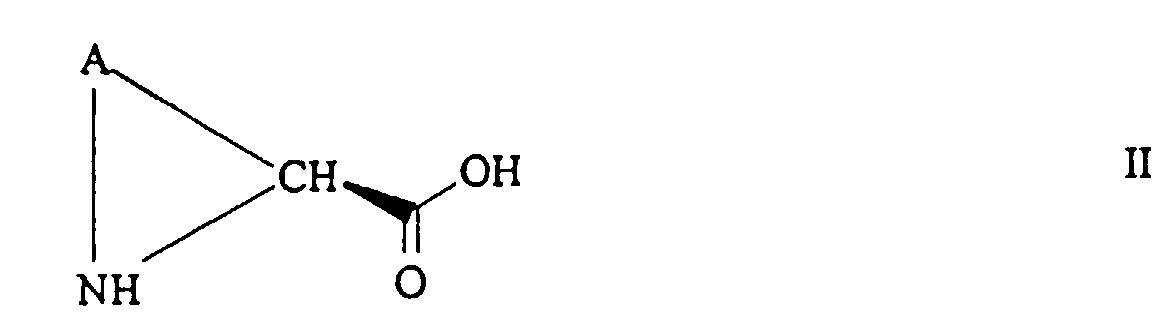
- the invention relates to new microorganisms which are capable of ⁇ -aminocarboxamides, in the form of the racemate or their optically active isomers, of the general formula wherein A together with -NH- and -CH- means an optionally substituted 5- or 6-membered saturated heterocyclic ring, to be used as the sole nitrogen source and (RS) - ⁇ -aminocarboxamides of the formula I already defined in an S- ⁇ -aminocarboxylic acid the general formula where A has the meaning given.
- microorganisms or their cell-free enzymes are used for a new process for the preparation of S- ⁇ -aminocarboxylic acids (formula II) and / or for the production of R- ⁇ -aminocarboxamides of the general formula where A has the meaning given.
- S- ⁇ -aminocarboxylic acids of formula II such as S- ⁇ -pipecolic acid are important Intermediates for the production of numerous bioactive compounds such.
- B. for Thioridazin or Pipradol Ng-Youn-Chen et al., J. Org. Chem., 59 (8), 2075-81, 1994).
- the object of the present invention is a simple and technically feasible biotechnological process for the production of cyclic S- ⁇ -aminocarboxylic acids for To provide, which can be isolated in good enantiomeric purity.
- microorganisms can be used that specifically these S-amino acid amidases contain.
- the selected ones which use S-piperazine carboxamide or S-Pipecolinamide as the only nitrogen source are Piperazine carboxamide or pipecolinamide, in the form of the racemate or the optically active Use isomers as the only nitrogen source.
- the selected ones which use S-piperazine carboxamide or S-Pipecolinamide as the only nitrogen source.
- the microorganisms can, for example, be sugar, sugar alcohols, Use carboxylic acids or alcohols as a growth substrate.
- sugar hexoses like for example glucose or pentoses can be used.
- carboxylic acids di- or Tricarboxylic acids or their salts are used, such as citric acid or Succinate.
- a trihydric alcohol can be used as alcohol, for example Glycerin.
- a trihydric alcohol such as glycerol is preferred as the carbon source used.
- the selection and cultivation medium which can be used are those customary in the professional world, such as the mineral salt medium according to Kulla et al., (Arch. Microbiol., 135, 1-7, 1983) or that described in Table 1. Preferably that described in Table 1 applied.
- the effective enzymes of the Microorganisms induced.
- piperazine carboxamide, Pipecolinamide or acetamide can be used.
- the cultivation and selection takes place at a temperature of 15 to 50 ° C, preferably from 20 to 45 ° C. and at a pH between pH 5 and pH 10, preferably between pH 6 and pH 9.
- Preferred microorganisms with specific S-amino acid amidase activity are piperazine carboxamide-utilizing microorganisms of the genus Klebsiella , in particular of the species Klebsiella pneumoniae with the designations DSM 9175 and DSM 9176 or of the species Klebsiella terrigena with the designation DSM 9174, and their functionally equivalent variants Mutants. These microorganisms were deposited on April 25, 1994 with the German Collection of Microorganisms and Cell Cultures GmbH, Mascheroderweg 1b, D-38124 Braunschweig, in accordance with the Budapest Treaty.
- microorganisms are pipecolinamide-utilizing microorganisms of the genus Pseudomonas , in particular the species Pseudomonas putida with the designation DSM 9923 or the species Pseudomonas fluorescens with the designation DSM 9924, and their functionally equivalent variants and mutants. These microorganisms were deposited on April 20, 1995 with the German Collection of Microorganisms and Cell Cultures GmbH, Mascheroderweg 1b, D-38124 Braunschweig, in accordance with the Budapest Treaty.
- “Functionally equivalent variants and mutants” are understood to mean microorganisms which have essentially the same properties and functions as the original microorganisms have. Such variants and mutants can happen accidentally, e.g. B. formed by UV radiation become.
- microorganism DSM 9175 identified as Klebsiella pneumoniae Characteristics of the tribe Cell shape rod Width ⁇ m 0.8 - 1.0 Length ⁇ m 1.0 - 3.0 agility - Grief reaction - Lysis by 3% KOH + Aminopeptidase (Cerny) + Spores - Oxidase - Catalase + growth anaerobic + Acid off (OF test) Aerobic glucose + Glucose anaerobic + Gas from glucose + Acid from (ASS) glucose + Fructose + Xylose + Erythritol - Adonit + D-mannose + L-rhamnose + Dulcite - Inositol + Sorbitol + ⁇ -methyl-D-glucoside + Cellobiose + Maltose + Lactose + L-sorbose + L-fucose - D-Arabitol + ONPG + ADH - LDC + O
- DSM 9176 identified as Klebsiella pneumoniae Characteristics of the tribe Cell shape rod Width ⁇ m 0.8 - 1.0 Length ⁇ m 1.0 - 3.0 agility - Grief reaction - Lysis by 3% KOH + Aminopeptidase (Cerny) + Spores - Oxidase - Catalase + growth anaerobic + Acid off (OF test) Aerobic glucose + Glucose anaerobic + Gas from glucose + Acid from (ASS) glucose + Fructose + Xylose + Erythritol - Adonit + D-mannose + L-rhamnose + Dulcite - Inositol + Sorbitol + ⁇ -methyl-D-glucoside + Cellobiose + Maltose + Lactose + L-sorbose - L-fucose + D-Arabitol + ONPG + ADH - LDC + ODC
- microorganism DSM 9174 identified as Klebsiella terrigena Characteristics of the tribe Cell shape rod Width ⁇ m 0.8 - 1.0 Length around 1.0 - 2.0 agility - Grief reaction - Lysis by 3% KOH + Aminopeptidase (Cerny) + Spores - Oxidase - Catalase + growth anaerobic + Acid off (OF test) Aerobic glucose + Glucose anaerobic + Gas from glucose + Acid from (ASS) glucose + Fructose + Xylose + Erythritol - Adonit + D-mannose + L-rhamnose + Dulcite - Inositol + Sorbitol + ⁇ -methyl-D-glucoside + Cellobiose + Maltose + Lactose + L-sorbose + L-fucose + D-Arabitol + 5-ketogluconate + ONPG + ADH
- the starting materials can be obtained from the corresponding aromatic amides by hydrogenation which is customary in the art.
- aminocarboxamides of the formula I with a 5-membered saturated heterocyclic Ring can optionally substituted prolinamide, pyrazolidine carboxamide, imidazolidine carboxamide, Oxazolidine carboxamide, isoxazolidine carboxamide, thiazolidine carboxamide or Triazolidine carboxamide can be used.
- a substituted prolinamide for example Indolinamide can be used.
- Piperazinecarboxamide, pipecolinamide, morpholine carboxamide, perhydroquinoline carboxamide (quinolinancarboxamide), perhydroisoquinoline carboxamide (isoquinolinancarboxamide), optionally hydrocarboxamide (quinoline) carboxamide (s), are also used as hydrocarboxamide, quinoxoxaline carboxamide (isoquinolinancarboxamide).
- Representatives of aminocarboxamides with a substituted 6-membered saturated heterocyclic ring can be C 1 -C 4 alkyl-substituted H 2 N-CH 2 -substituted such as.
- B. 4-methylpipecolinamide such as 4-aminomethylpipecolinamide or CN-substituted such as 4-cyanipipecolinamide.
- Piperazine carboxamide, pipecolinamide or 4-methylpipecolinamide is preferably used.
- the enzymes for the cell-free system can be digested in a manner that is customary in the art Microorganisms are obtained. For example, the ultrasonic, French press or lysozyme method can be used. These cell-free enzymes can also be on a suitable carrier material can be immobilized.
- the previously described specific microorganisms of the species Klebsiella terrigena DSM 9174, Klebsiella pneumoniae DSM 9175 and DSM 9176, the species Pseudomonas putida DSM 9923 and Pseudomonas fluorescens DSM 9924 and their cell-free enzymes are particularly suitable for the method.
- the method is carried out with the microorganisms Klebsiella terrigena DSM 9174, Klebsiella pneumoniae DSM 9175 and DSM 9176.
- the functionally equivalent variants and mutants of the microorganisms described are also suitable.
- the biotransformation can also be dormant Cells (non-growing cells that no longer need a carbon and energy source) or be done with growing cells.
- the medium customarily used for the method with resting cells can be such as the previously described mineral salt medium according to Kulla et al., 1983 (ibid), low-molecular phosphate buffer, HEPES buffer, or the medium described in Table 1.
- a medium containing one Carbon and nitrogen source such as commercially available media or the medium applied according to Table 1. The method is preferably carried out in the medium according to Table 1 performed.
- the biotransformation is expedient with the single or continuous addition of (RS) - ⁇ -aminocarboxamide performed so that the concentration of (RS) - ⁇ -aminocarboxamide 20% by weight, preferably 10% by weight, does not exceed.
- the pH of the medium can range from pH 5 to pH 11, preferably from pH 7 to pH 10.
- the biotransformation is expediently preferred at a temperature of 25 to 65 ° C from 30 to 60 ° C.
- the S- ⁇ -aminocarboxamide is the Formula I completely converted to S- ⁇ -aminocarboxylic acid, also R-a-aminocarboxamide is obtained.
- the S- ⁇ -aminocarboxylic acid obtained in this way and / or the R- ⁇ -aminocarboxylic acid amide can by conventional workup methods such. B. by acidification, Chromatography or extraction can be isolated.
- the A medium was used for the isolation of microorganisms which are capable of utilizing racemic piperazinecarboxamide as the sole nitrogen source.
- 100 ml of this medium was placed in a 300 ml Erlenmeyer flask and mixed with various soil samples (2 g) from the LONZA AG plant in Visp, Switzerland.
- the flasks were incubated at 30 ° C for 5 days at rest.
- 1 ml of this A medium was used to inoculate a fresh flask with the same medium. This flask was again incubated under the same conditions. This enrichment cycle was repeated a total of 5 times.
- the enrichments were then spread onto agar medium (A medium with an additional 16 gl -1 agar) to form individual colonies.
- the isolated microorganisms were examined for stereoselective amidases in the following qualitative test system. Single colonies were used to inoculate 100 ml of A medium in 300 ml Erlenmeyer flasks. These flasks were incubated for three days on a shaking machine at 30 ° C., the cultures having grown out after only one day.
- the crude extracts of the strains DSM 9175 and DSM 9176 showed hydrolysis of (RS) -piperazinecarboxamide and (RS) -pipecolinamide under the same conditions.
- a medium For this medium, the minimal medium described below was mixed with an additional 2 gl -1 (RS) -piperazinecarboxamide and 10 gl -1 glycerol.
- B medium For this medium, the minimal medium described below was additionally mixed with 1 gl -1 (RS) -pipecolinamide and 4 gl -1 glucose.
- Minimal medium composition Concentration (mg / l) Yeast extract 500 Na 2 SO 4 100 Na 2 HPO 4 2000 KH 2 PO 4 1000 NaCl 3000 MgCl 2 x 6H 2 O 400 CaCl 2 x 2H 2 O 14.5 FeCl 3 x 6H 2 O 0.8 ZnSO 4 ⁇ 7H 2 O 100 ⁇ 10 -3 MnCl 2 x 4H 2 O 90 ⁇ 10 -3 H 3 BO 3 300 ⁇ 10 -3 CoCl 2 x 6H 2 O 200 ⁇ 10 -3 CuCl 2 ⁇ 2H 2 O 10 ⁇ 10 -3 NiCl 2 x 6H 2 O 20 ⁇ 10 -3 NaMoO 4 ⁇ 2H 2 O 30 ⁇ 10 -3 EDTA Na 2 x 2H 2 O 5 FeSO 4 ⁇ 7H 2 O 2
- the following conditions were chosen for the production of S-piperazinecarboxylic acid with the strains DSM 9174, DSM 9175 and DSM 9176.
- a 1.5 l fermenter, equipped with a pH control, with 1 l working volume was used for the biotransformations.
- the amount of glycerol was increased to 30 gl -1 and the amount (RS) -piperazinecarboxamide to 20 gl -1 in the A medium.
- the cells were grown at pH 7.0, a temperature of 30 ° C and an aeration rate of 0.5 lmin -1 . In one case (Example 4), the cells were first grown for 16 hours under these conditions, then the temperature was raised to 40 ° C and the pH of the medium to 8.0.
- the amount of S-piperazinecarboxylic acid formed was estimated by means of thin layer chromatography and the fermentations were stopped after 36-72 hours as soon as approximately half of the piperazinecarboxamide used had reacted. At this point, the optical densities of the cell suspension at 650 nm were between 6 and 10. To isolate S-piperazinecarboxylic acid, the cell-free solution was concentrated to 100 ml under reduced pressure.
- the solution was acidified to pH 1.0 with concentrated HCl in order to precipitate the acid as dihydrochloride.
- the isolated acid was recrystallized from 0.1 M HCl and dried.
- the acid was first analyzed with 2,3,4,6-tetra-O-acetyl- ⁇ -D-glucopyranosylisothiocyanat derivatized and by capillary electrophoresis (see Table 2 for conditions of capillary electrophoresis). The results are described in Table 3.
- racemic 4-methylpipecolinamide (substrate) was converted using the crude protein extracts from Klebsiella pneumoniae DSM 9175 or Klebsiella terrigena DSM 9174 analogously to Example 1b. After 24 h of incubation, at pH 8.0 and 47 ° C, about 50% of the amide used had been converted from a 0.2% substrate solution (measured using TLC analysis).
- the cultures were spread on nutrient agar and after a few days of growth again spread on the nutrient agar plate on pipecolinamide glucose plates.
- the 2 strains which showed the desired stable property were identified with 20 NE API strips after Gram staining and oxidase test.
- Two Pseudomonas species were identified: Pseudomonas putida , DSM 9923 and, Pseudomonas fluorescens , DSM 9924.
- the cell-free supernatants were then subjected to an HPLC test (isothiocyanate derivatization) in order to check the enantiomeric purity of the pipecolic acid formed.
- HPLC test isothiocyanate derivatization
- the results showed that Pseudomonas putida and Pseudomonas fluorescens produced S-pipecolic acid with an optical purity of over 90%.
- the optimal conditions for the biotransformation with Pseudomonas putida were at pH 8.0 and a temperature of 30 ° C, for Pseudomonas fluorescens pH 8.0 and 50 ° C.
- a 1% piperazine carboxamide biotransformation was carried out at pH 7.0, 30 ° C. and 130 rpm with the 2 isolated strains, as described for pipecolinamide in Example 7.
- the cell-free supernatants were also examined for the content of residual piperazine carboxamide and piperazine carboxylic acid formed using thin layer chromatography.
- An HPLC analysis made it possible to check the optical purity of the piperazinecarboxylic acid formed.
Landscapes
- Chemical & Material Sciences (AREA)
- Organic Chemistry (AREA)
- Engineering & Computer Science (AREA)
- Life Sciences & Earth Sciences (AREA)
- Wood Science & Technology (AREA)
- Zoology (AREA)
- Health & Medical Sciences (AREA)
- Biotechnology (AREA)
- Genetics & Genomics (AREA)
- Bioinformatics & Cheminformatics (AREA)
- General Engineering & Computer Science (AREA)
- General Health & Medical Sciences (AREA)
- Microbiology (AREA)
- Biochemistry (AREA)
- General Chemical & Material Sciences (AREA)
- Chemical Kinetics & Catalysis (AREA)
- Analytical Chemistry (AREA)
- Medicinal Chemistry (AREA)
- Tropical Medicine & Parasitology (AREA)
- Virology (AREA)
- Biomedical Technology (AREA)
- Preparation Of Compounds By Using Micro-Organisms (AREA)
- Micro-Organisms Or Cultivation Processes Thereof (AREA)
- Organic Low-Molecular-Weight Compounds And Preparation Thereof (AREA)
Description


Diese beiden Verfahren haben jedoch den Nachteil, dass sie grosstechnisch nicht gangbar sind. Ein weiterer Nachteil besteht darin, dass gereinigte R-Aminosäureoxidase angewendet werden muss.
Weitere geeignete Mikroorganismen sind Pipecolinamid-verwertende Mikroorganismen der Gattung Pseudomonas, insbesondere der Spezies Pseudomonas putida mit der Bezeichnung DSM 9923 oder der Spezies Pseudomonas fluorescens mit der Bezeichnung DSM 9924, sowie deren funktionell aequivalente Varianten und Mutanten. Diese Mikroorganismen wurden am 20.04.1995 bei der Deutschen Sammlung von Mikroorganismen und Zellkulturen GmbH, Mascheroderweg 1b, D-38124 Braunschweig, gemäss Budapester Vertrag hinterlegt.
| Eigenschaften des Stammes | ||
| Zellform | Stäbchen | |
| Breite µm | 0,8 - 1,0 | |
| Länge µm | 1,0 - 3,0 | |
| Beweglichkeit | - | |
| Gram-Reaktion | - | |
| Lyse durch 3% KOH | + | |
| Aminopeptidase (Cerny) | + | |
| Sporen | - | |
| Oxidase | - | |
| Catalase | + | |
| Wachstum | ||
| anaerob | + | |
| Säure aus (OF-Test) | ||
| Glucose aerob | + | |
| Glucose anaerob | + | |
| Gas aus Glucose | + | |
| Säure aus (ASS) | ||
| Glucose | + | |
| Fructose | + | |
| Xylose | + | |
| Erythrit | - | |
| Adonit | + | |
| D-Mannose | + | |
| L-Rhamnose | + | |
| Dulcit | - | |
| Inosit | + | |
| Sorbit | + | |
| α-Methyl-D-glucosid | + | |
| Cellobiose | + | |
| Maltose | + | |
| Lactose | + | |
| L-Sorbose | + | |
| L-Fucose | - | |
| D-Arabitol | + | |
| ONPG | + | |
| ADH | - | |
| LDC | + | |
| ODC | - | |
| VP | + | |
| Indol | - | |
| H2S-Bildung | - | |
| Simmons Citrat | + | |
| Phenylalanindesaminase | - | Abkürzungen: |
| Urease | - | ASS = Acetylsalicylsäure |
| OF = Oxidation-Fermentation | ||
| Hydrolyse von | ONPG = O-Nitrophenylgalactosidase | |
| Gelatine | - | ADH = Alkoholdehydrogenase |
| DNA | - | VP = Voges Proskauer |
| Eigenschaften des Stammes | |
| Zellform | Stäbchen |
| Breite µm | 0,8 - 1,0 |
| Länge µm | 1,0 - 3,0 |
| Beweglichkeit | - |
| Gram-Reaktion | - |
| Lyse durch 3% KOH | + |
| Aminopeptidase (Cerny) | + |
| Sporen | - |
| Oxidase | - |
| Catalase | + |
| Wachstum | |
| anaerob | + |
| Säure aus (OF-Test) | |
| Glucose aerob | + |
| Glucose anaerob | + |
| Gas aus Glucose | + |
| Säure aus (ASS) | |
| Glucose | + |
| Fructose | + |
| Xylose | + |
| Erythrit | - |
| Adonit | + |
| D-Mannose | + |
| L-Rhamnose | + |
| Dulcit | - |
| Inosit | + |
| Sorbit | + |
| α-Methyl-D-glucosid | + |
| Cellobiose | + |
| Maltose | + |
| Lactose | + |
| L-Sorbose | - |
| L-Fucose | + |
| D-Arabitol | + |
| ONPG | + |
| ADH | - |
| LDC | + |
| ODC | - |
| VP | + |
| Indol | - |
| H2S-Bildung | - |
| Simmons Citrat | + |
| Phenylalanindesaminase | - |
| Urease | - |
| Hydrolyse von | |
| Gelatine | - |
| DNA | - |
| Eigenschaften des Stammes | |
| Zellform | Stäbchen |
| Breite µm | 0,8 - 1,0 |
| Länge um | 1,0 - 2,0 |
| Beweglichkeit | - |
| Gram-Reaktion | - |
| Lyse durch 3% KOH | + |
| Aminopeptidase (Cerny) | + |
| Sporen | - |
| Oxidase | - |
| Catalase | + |
| Wachstum | |
| anaerob | + |
| Säure aus (OF-Test) | |
| Glucose aerob | + |
| Glucose anaerob | + |
| Gas aus Glucose | + |
| Säure aus (ASS) | |
| Glucose | + |
| Fructose | + |
| Xylose | + |
| Erythrit | - |
| Adonit | + |
| D-Mannose | + |
| L-Rhamnose | + |
| Dulcit | - |
| Inosit | + |
| Sorbit | + |
| α-Methyl-D-glucosid | + |
| Cellobiose | + |
| Maltose | + |
| Lactose | + |
| L-Sorbose | + |
| L-Fucose | + |
| D-Arabitol | + |
| 5-Ketogluconat | + |
| ONPG | + |
| ADH | - |
| LDC | + |
| ODC | + |
| VP | + |
| Indol | - |
| H2S-Bildung | - |
| Simmons Citrat | + |
| Phenylalanindesaminase | - |
| Urease | - |
| Hydrolyse von | |
| Gelatine | - |
| DNA | - |


Die isolierten Mikroorganismen wurden im folgenden qualitativen Testsystem auf stereoselektive Amidasen hin untersucht. Einzelkolonien wurden verwendet, um 100 ml A-Medium in 300 ml Erlenmeyerkolben zu beimpfen. Diese Kolben wurden drei Tage auf einer Schüttelmaschine bei 30 °C inkubiert, wobei die Kulturen bereits nach einem Tag ausgewachsen waren. Danach wurden die zellfreien Kulturüberstände mittels Dünnschichtchromatographie (Kieselgel, Laufmittel: 11 Teile Ethanol, 6 Teile CHCl3, 6 Teile NH4OH (25%), Nachweis mittels Ninhydrin) auf den Gehalt an Piperazincarbonsäure und Piperazincarboxamid hin untersucht. Mikroorganismen, die etwa die Hälfte der eingesetzten Menge (RS)-Piperazincarboxamid umgesetzt hatten, wurden für biochemische Untersuchungen verwendet, um Festzustellen, welche Stämme S-spezifische Amidasen enthielten.
30 - 60 °C und einem pH-Wert von 7 - 10 am grössten war.
| A-Medium: Für dieses Medium wurde das unten beschriebene Minimal-Medium mit zusätzlich 2 gl-1 (RS)-Piperazincarboxamid und 10 gl-1 Glycerin versetzt. | |
| B-Medium: Für dieses Medium wurde das unten beschriebene Minimal-Medium mit zusätzlich 1 gl-1 (RS)-Pipecolinamid und 4 gl-1 Glucose versetzt. | |
| Minimal-Medium: | |
| Zusammensetzung | Konzentration (mg/l) |
| Hefeextrakt | 500 |
| Na2SO4 | 100 |
| Na2HPO4 | 2000 |
| KH2PO4 | 1000 |
| NaCl | 3000 |
| MgCl2×6H2O | 400 |
| CaCl2×2H2O | 14,5 |
| FeCl3×6H2O | 0,8 |
| ZnSO4×7H2O | 100×10-3 |
| MnCl2×4H2O | 90×10-3 |
| H3BO3 | 300×10-3 |
| CoCl2×6H2O | 200×10-3 |
| CuCl2×2H2O | 10×10-3 |
| NiCl2×6H2O | 20×10-3 |
| NaMoO4×2H2O | 30×10-3 |
| EDTA Na2×2H2O | 5 |
| FeSO4×7H2O | 2 |
| Kapillar-Elekrophorese Bedingungen | |
| CE Apparatur | Hewlett-Packard HP 3DCE |
| Detektor | Hewlett-Packard Diode-Array-Detektor |
| Puffer | 10 mM Di-Natriumhydrogenphosphat, 10 mM Borsäure, 150 mM Natriumdodecylsulfat, pH 9,0 |
| Elektrolyt | 900 ml Puffer plus 100 ml Methanol |
| Kapillare | HP G1600-61211 |
| Elektrisches Feld | 20 kV |
| Strom | ca. 24 - 30 µA |
| Ofentemperatur | 20 °C |
| Detektoreinstellung | 210 nm (Bandbreite 5 nm) |
| Migrationszeit | ca. 17,1 min (S-Säure) |
| ca. 17,7 min (R-Säure) |
| Beispiel Stamm | Rohprodukt | Umkristallisiert | Ausbeute | ee-Wert |
| Nr. 2 DSM 9175 | 12,82 g | 10,74 g | 68,3 % | 99,6 |
| Nr. 3 DSM 9174 | 15,53 g | 13,1 g | 83,3 % | 99,4 |
| Nr. 4 DSM 9176 | 21,23 g | 11,32 g | 72,0 % | 99,6 |
Wurde die Biotransformation mit Pseudomonas putida durchgeführt, erhielt man S-Pipecolinsäure mit einem ee-Wert von 95,0%; wurde die Biotransformation mit Pseudomonas fluorescens durchgeführt, erhielt man S-Pipecolinsäure mit einem ee-Wert von 97,3%.
Claims (9)
- Mikroorganismen, dadurch gekennzeichnet, dass sie befähigt sind, α-Aminocarbonsäureamide, in Form des Racemats oder ihrer optisch aktiven Isomere, der allgemeinen Formelworin A zusammen mit -NH und -CH einen gegebenenfalls substituierten 5- oder 6-gliedrigen gesättigten heterocyclischen Ring bedeutet, als einzige Stickstoffquelle zu verwerten und (RS)-α-Aminocarbonsäureamide der bereits definierten Formel I in eine S-α-Aminocarbonsäure der allgemeinen Formel
 worin A die genannte Bedeutung hat, zu überführen.
- Mikroorganismen nach Anspruch 1, die befähigt sind, Pipecolinamid oder Piperazincarboxamid in Form des Racemats oder seiner optisch aktiven Isomere als einzige Stickstoffquelle zu verwerten.
- Mikroorganismen nach Anspruch 2 der Gattung Klebsiella oder Pseudomonas.
- Mikroorganismen nach Anspruch 3 der Spezies Pseudomonas putida DSM 9923, der Spezies Pseudomonas fluorescens DSM 9924, der Spezies Klebsiella terrigena DSM 9174, der Spezies Klebsiella pneumoniae DSM 9175 und DSM 9176, sowie deren fünktionell aequivalente Varianten und Mutanten.
- Verfahren zur Herstellung von S-α-Aminocarbonsäuren der allgemeinen Formelworin A die in Anspruch 1 genannte Bedeutung hat und / oder von R-α-Aminocarbonsäureamiden der allgemeinen Formel
 worin A die genannte Bedeutung hat, dadurch gekennzeichnet, dass man im (RS)-α-Aminocarbonsäureamid der allgemeinen Formel
 worin A die genannte Bedeutung hat, das S-α-Aminocarbonsäureamid mittels den Mikroorganismen gemäss Anspruch 1 oder mittels zellfreien Enzymen aus diesen Mikroorganismen zur S-α-Aminocarbonsäure überführt und isoliert, wobei bei der Biotransformation neben der S-α-Aminocarbonsäure das R-α-Aminocarbonsäureamid anfällt, das gegebenenfalls isoliert wird.
- Verfahren nach Patentanspruch 5, dadurch gekennzeichnet, dass man die Biotransformation mittels Mikroorganismen der Spezies Klebsiella terrigena DSM 9174, oder Klebsiella pneumoniae DSM 9175 und DSM 9176 oder mit deren funktionell aequivalente Varianten und Mutanten oder mit zellfreien Enzymen aus diesen Mikroorganismen durchführt.
- Verfahren nach Patentanspruch 5 oder 6, dadurch gekennzeichnet, dass man als (RS)-α-Aminocarbonsäureamid (RS)-Pipecolinamid, (RS)-Piperazincarboxamid, (RS)-4-Methylpipecolinamid oder (RS)-Prolinamid, verwendet.
- Verfahren nach mindestens einem der Patentansprüche 5 bis 7, dadurch gekennzeichnet, dass man die Biotransformation unter einmaliger oder kontinuierlicher Zugabe des (RS)-α-Aminocarbonsäureamids durchführt, so dass die Konzentration an (RS)-α-Aminocarbonsäureamid im Kulturmedium 20 Gew.% nicht übersteigt.
- Verfahren nach mindestens einem der Patentansprüche 5 bis 8, dadurch gekennzeichnet, dass man die Biotransformation bei einem pH-Wert von 7 bis 10 und bei einer Temperatur von 30 bis 60 °C durchführt.
Applications Claiming Priority (6)
| Application Number | Priority Date | Filing Date | Title |
|---|---|---|---|
| CH181394 | 1994-06-09 | ||
| CH1813/94 | 1994-06-09 | ||
| CH181394 | 1994-06-09 | ||
| CH223194 | 1994-07-13 | ||
| CH223194 | 1994-07-13 | ||
| CH2231/94 | 1994-07-13 |
Publications (3)
| Publication Number | Publication Date |
|---|---|
| EP0686698A2 EP0686698A2 (de) | 1995-12-13 |
| EP0686698A3 EP0686698A3 (de) | 1997-05-02 |
| EP0686698B1 true EP0686698B1 (de) | 2001-03-14 |
Family
ID=25688747
Family Applications (1)
| Application Number | Title | Priority Date | Filing Date |
|---|---|---|---|
| EP95108740A Expired - Lifetime EP0686698B1 (de) | 1994-06-09 | 1995-06-07 | Biotechnologisches Verfahren zur Herstellung von cyclischen S-alpha-Aminocarbonsäuren und R-alpha-Aminocarbonsäureamiden |
Country Status (10)
| Country | Link |
|---|---|
| US (2) | US5622846A (de) |
| EP (1) | EP0686698B1 (de) |
| JP (1) | JP3694065B2 (de) |
| AT (1) | ATE199743T1 (de) |
| CA (1) | CA2150526C (de) |
| CZ (2) | CZ282098B6 (de) |
| DE (1) | DE59509085D1 (de) |
| DK (1) | DK0686698T3 (de) |
| ES (1) | ES2155104T3 (de) |
| PT (1) | PT686698E (de) |
Families Citing this family (11)
| Publication number | Priority date | Publication date | Assignee | Title |
|---|---|---|---|---|
| CZ213199A3 (cs) * | 1996-12-16 | 1999-11-17 | Lonza Ag | Mikroorganismy, enzymy a způsob výroby derivátů D-prolinu |
| WO1999007873A1 (de) * | 1997-08-11 | 1999-02-18 | Lonza Ag | VERFAHREN ZUR HERSTELLUNG ENANTIOMERENREINER CYCLISCHER α-AMINOSÄUREN BZW. DEREN N-GESCHÜTZTER DERIVATE MITTELS EINER D-SPEZIFISCHEN AMINOACYLASE |
| CA2341554A1 (en) * | 1998-08-26 | 2000-03-09 | Klaus Heinzmann | Process for the preparation of (2r)-piperidine derivatives |
| US9453251B2 (en) | 2002-10-08 | 2016-09-27 | Pfenex Inc. | Expression of mammalian proteins in Pseudomonas fluorescens |
| EP1709170B1 (de) | 2004-01-16 | 2018-02-21 | Pfenex Inc. | Expression von säugerproteinen in pseudomonas fluorescens |
| BRPI0513826A2 (pt) | 2004-07-26 | 2010-06-22 | Dow Global Technologies Inc | processo para expressão de proteìna melhorada através de engenharia de cepa |
| EP2123769B1 (de) * | 2007-02-19 | 2016-05-18 | Kaneka Corporation | Verfahren zur herstellung von optisch aktivem 3-aminopiperidin oder salz davon |
| JP5484041B2 (ja) * | 2007-02-23 | 2014-05-07 | 学校法人関西学院 | 蛋白質結晶化剤および蛋白質結晶化剤を用いた蛋白質結晶化方法 |
| US9580719B2 (en) | 2007-04-27 | 2017-02-28 | Pfenex, Inc. | Method for rapidly screening microbial hosts to identify certain strains with improved yield and/or quality in the expression of heterologous proteins |
| US9394571B2 (en) | 2007-04-27 | 2016-07-19 | Pfenex Inc. | Method for rapidly screening microbial hosts to identify certain strains with improved yield and/or quality in the expression of heterologous proteins |
| CN104254611A (zh) | 2012-02-28 | 2014-12-31 | 马罗内生物创新公司 | 用假单胞菌属和源于其的物质和组合物防治植物致病微生物 |
Family Cites Families (7)
| Publication number | Priority date | Publication date | Assignee | Title |
|---|---|---|---|---|
| LU74142A1 (de) * | 1976-01-08 | 1977-07-22 | ||
| JPS6387998A (ja) * | 1986-09-30 | 1988-04-19 | Mitsubishi Gas Chem Co Inc | D−α−アミノ酸の製造法 |
| ES2051892T3 (es) * | 1987-08-17 | 1994-07-01 | Novo Industri As | Procedimiento para preparar productos quimicos organicos. |
| JPH01215297A (ja) * | 1988-02-23 | 1989-08-29 | Mitsubishi Gas Chem Co Inc | L−α−アミノ酸の製造法 |
| DK314989A (da) * | 1988-06-27 | 1989-12-28 | Asahi Chemical Ind | Fremgangsmaade til fremstilling af optisk aktive alfa-substituerede organiske syrer, samt mikroorganismer og enzymer anvendelige ved fremgangsmaaden |
| EP0383403A1 (de) * | 1989-02-16 | 1990-08-22 | Stamicarbon B.V. | Verfahren zur Herstellung von organischen chemischen Produkten |
| NL9100038A (nl) * | 1991-01-11 | 1992-08-03 | Stamicarbon | Enzym-gekatalyseerde bereiding van optisch aktieve carbonzuren. |
-
1995
- 1995-05-30 CA CA002150526A patent/CA2150526C/en not_active Expired - Fee Related
- 1995-06-07 JP JP14068495A patent/JP3694065B2/ja not_active Expired - Fee Related
- 1995-06-07 ES ES95108740T patent/ES2155104T3/es not_active Expired - Lifetime
- 1995-06-07 US US08/478,960 patent/US5622846A/en not_active Expired - Lifetime
- 1995-06-07 DE DE59509085T patent/DE59509085D1/de not_active Expired - Lifetime
- 1995-06-07 EP EP95108740A patent/EP0686698B1/de not_active Expired - Lifetime
- 1995-06-07 AT AT95108740T patent/ATE199743T1/de active
- 1995-06-07 PT PT95108740T patent/PT686698E/pt unknown
- 1995-06-07 DK DK95108740T patent/DK0686698T3/da active
- 1995-06-08 CZ CZ951507A patent/CZ282098B6/cs not_active IP Right Cessation
- 1995-06-08 CZ CZ96668A patent/CZ282337B6/cs not_active IP Right Cessation
-
1996
- 1996-03-12 US US08/614,345 patent/US5766893A/en not_active Expired - Lifetime
Also Published As
| Publication number | Publication date |
|---|---|
| JP3694065B2 (ja) | 2005-09-14 |
| US5766893A (en) | 1998-06-16 |
| US5622846A (en) | 1997-04-22 |
| CZ282337B6 (cs) | 1997-06-11 |
| CA2150526C (en) | 2005-11-15 |
| JPH0856652A (ja) | 1996-03-05 |
| CZ150795A3 (en) | 1996-05-15 |
| CZ66896A3 (en) | 1996-12-11 |
| ES2155104T3 (es) | 2001-05-01 |
| DE59509085D1 (de) | 2001-04-19 |
| PT686698E (pt) | 2001-08-30 |
| DK0686698T3 (da) | 2001-04-17 |
| CZ282098B6 (cs) | 1997-05-14 |
| EP0686698A2 (de) | 1995-12-13 |
| EP0686698A3 (de) | 1997-05-02 |
| ATE199743T1 (de) | 2001-03-15 |
| CA2150526A1 (en) | 1995-12-10 |
Similar Documents
| Publication | Publication Date | Title |
|---|---|---|
| DE69519638T2 (de) | Verfahren zur Herstellung von Alpha-Hydroxysäuren oder Alpha-Hydroxyamiden durch Mikroorganismen | |
| DE3424440C2 (de) | ||
| EP0686698B1 (de) | Biotechnologisches Verfahren zur Herstellung von cyclischen S-alpha-Aminocarbonsäuren und R-alpha-Aminocarbonsäureamiden | |
| DE68919184T2 (de) | Verfahren zur Herstellung von optisch aktiven 3-Phenylglycidsäureestern. | |
| EP0625571A2 (de) | Neue Mikroorganismen, deren Verwendung und Verfahren zur Herstellung von L-Alpha-Aminosäuren | |
| DE2631048C3 (de) | Verfahren zur Herstellung von D-Phenylglycin | |
| DE3882453T2 (de) | Verfahren zur Herstellung von Ibuprofen. | |
| EP0164573B1 (de) | Verfahren zur Herstellung von Cyclopropancarbonsäuren | |
| EP0498316B1 (de) | Mikrobielles Verfahren zur Herstellung von 6-Hydroxypicolinsäure | |
| EP0502525B1 (de) | Biotechnologisches Verfahren zur Herstellung von S-(+)-2,2-Dimethylcyclopropancarboxamid und R-(-)-2,2-Dimethylcyclopropancarbonsäure | |
| DE19519717C1 (de) | Neuer Mikroorganismus, dessen Verwendung und Verfahren zur Herstellung von L-alpha-Aminosäuren | |
| EP0233570A2 (de) | Verfahren zur Herstellung von Coniferylaldehyd und Mikroorganismus dafür | |
| DE69738080T2 (de) | Biokatalysatoren mit amin-acylase aktivität | |
| EP0559116B1 (de) | Mikrobiologisches Verfahren zur Hydroxylierung von Stickstoff-Heterocyclus-Carbonsäuren | |
| DE2811303B2 (de) | Enzymatisch* Komplexe, die zur Umwandlung racemischer Hydantoine in optisch aktive Aminosäuren geeignet sind, sowie deren Anwendung | |
| EP0556465B1 (de) | Mikrobiologisches Verfahren zur Herstellung von aromatischen Hydroxy-Heterocyclus-Carbonsäuren | |
| DE69422298T2 (de) | Enzym und dessen verwendung zur herstellung von (s)-pipecolinsäure | |
| EP0896617A1 (de) | Verfahren zur herstellung von n-geschützten d-prolinderivaten | |
| US6214604B1 (en) | Biotechnical production process of piperazine R-α-carboxylic acids and piperazine S-α-carboxylic acid amide | |
| DE69403960T2 (de) | Arylalkansäuretrennung | |
| DE60038513T2 (de) | Levodion-Reduktase | |
| EP0648277B1 (de) | Mikrobielle esterase zur enantioselektiven spaltung von 1-arylalkylestern | |
| DE68912504T2 (de) | Verfahren zur Herstellung von optisch aktiver beta-Halomilchsäure oder Glycidsäure. | |
| DE3019450A1 (de) | Verfahren zur gewinnung von glucosedehydrogenase und hierfuer geeigneter mikroorganismus | |
| EP0912751B1 (de) | Verfahren zur herstellung von d-prolinderivaten mittels mikroorganismen |
Legal Events
| Date | Code | Title | Description |
|---|---|---|---|
| PUAI | Public reference made under article 153(3) epc to a published international application that has entered the european phase |
Free format text: ORIGINAL CODE: 0009012 |
|
| AK | Designated contracting states |
Kind code of ref document: A2 Designated state(s): AT BE CH DE DK ES FR GB IE IT LI NL PT SE |
|
| PUAL | Search report despatched |
Free format text: ORIGINAL CODE: 0009013 |
|
| AK | Designated contracting states |
Kind code of ref document: A3 Designated state(s): AT BE CH DE DK ES FR GB IE IT LI NL PT SE |
|
| 17P | Request for examination filed |
Effective date: 19971029 |
|
| 17Q | First examination report despatched |
Effective date: 19981120 |
|
| GRAG | Despatch of communication of intention to grant |
Free format text: ORIGINAL CODE: EPIDOS AGRA |
|
| GRAG | Despatch of communication of intention to grant |
Free format text: ORIGINAL CODE: EPIDOS AGRA |
|
| GRAH | Despatch of communication of intention to grant a patent |
Free format text: ORIGINAL CODE: EPIDOS IGRA |
|
| GRAH | Despatch of communication of intention to grant a patent |
Free format text: ORIGINAL CODE: EPIDOS IGRA |
|
| GRAA | (expected) grant |
Free format text: ORIGINAL CODE: 0009210 |
|
| AK | Designated contracting states |
Kind code of ref document: B1 Designated state(s): AT BE CH DE DK ES FR GB IE IT LI NL PT SE |
|
| REF | Corresponds to: |
Ref document number: 199743 Country of ref document: AT Date of ref document: 20010315 Kind code of ref document: T |
|
| REG | Reference to a national code |
Ref country code: CH Ref legal event code: EP |
|
| REG | Reference to a national code |
Ref country code: DK Ref legal event code: T3 |
|
| REG | Reference to a national code |
Ref country code: IE Ref legal event code: FG4D Free format text: GERMAN |
|
| REF | Corresponds to: |
Ref document number: 59509085 Country of ref document: DE Date of ref document: 20010419 |
|
| GBT | Gb: translation of ep patent filed (gb section 77(6)(a)/1977) |
Effective date: 20010330 |
|
| REG | Reference to a national code |
Ref country code: ES Ref legal event code: FG2A Ref document number: 2155104 Country of ref document: ES Kind code of ref document: T3 |
|
| ITF | It: translation for a ep patent filed | ||
| ET | Fr: translation filed | ||
| REG | Reference to a national code |
Ref country code: CH Ref legal event code: PFA Free format text: LONZA AG,(GESCHAEFTSLEITUNG: 4002 BASEL),CH-3945 GAMPEL/WALLIS (CH) TRANSFER- LONZA AG,LONZASTRASSE,3930 VISP (CH) |
|
| REG | Reference to a national code |
Ref country code: GB Ref legal event code: IF02 |
|
| PLBE | No opposition filed within time limit |
Free format text: ORIGINAL CODE: 0009261 |
|
| STAA | Information on the status of an ep patent application or granted ep patent |
Free format text: STATUS: NO OPPOSITION FILED WITHIN TIME LIMIT |
|
| 26N | No opposition filed | ||
| PG25 | Lapsed in a contracting state [announced via postgrant information from national office to epo] |
Ref country code: IT Free format text: LAPSE BECAUSE OF NON-PAYMENT OF DUE FEES Effective date: 20090607 |
|
| PGFP | Annual fee paid to national office [announced via postgrant information from national office to epo] |
Ref country code: FR Payment date: 20110517 Year of fee payment: 17 Ref country code: ES Payment date: 20110609 Year of fee payment: 17 Ref country code: IE Payment date: 20110429 Year of fee payment: 17 Ref country code: PT Payment date: 20110502 Year of fee payment: 17 Ref country code: SE Payment date: 20110502 Year of fee payment: 17 Ref country code: CH Payment date: 20110504 Year of fee payment: 17 |
|
| PGRI | Patent reinstated in contracting state [announced from national office to epo] |
Ref country code: IT Effective date: 20110616 |
|
| PGFP | Annual fee paid to national office [announced via postgrant information from national office to epo] |
Ref country code: NL Payment date: 20110516 Year of fee payment: 17 Ref country code: DK Payment date: 20110503 Year of fee payment: 17 Ref country code: GB Payment date: 20110630 Year of fee payment: 17 Ref country code: AT Payment date: 20110502 Year of fee payment: 17 Ref country code: BE Payment date: 20110502 Year of fee payment: 17 |
|
| PGFP | Annual fee paid to national office [announced via postgrant information from national office to epo] |
Ref country code: IT Payment date: 20110609 Year of fee payment: 17 Ref country code: DE Payment date: 20110502 Year of fee payment: 17 |
|
| REG | Reference to a national code |
Ref country code: PT Ref legal event code: MM4A Free format text: LAPSE DUE TO NON-PAYMENT OF FEES Effective date: 20121207 |
|
| BERE | Be: lapsed |
Owner name: *LONZA A.G. Effective date: 20120630 |
|
| REG | Reference to a national code |
Ref country code: NL Ref legal event code: V1 Effective date: 20130101 |
|
| REG | Reference to a national code |
Ref country code: DK Ref legal event code: EBP |
|
| REG | Reference to a national code |
Ref country code: SE Ref legal event code: EUG |
|
| REG | Reference to a national code |
Ref country code: CH Ref legal event code: PL |
|
| REG | Reference to a national code |
Ref country code: CH Ref legal event code: PL Ref country code: AT Ref legal event code: MM01 Ref document number: 199743 Country of ref document: AT Kind code of ref document: T Effective date: 20120607 |
|
| GBPC | Gb: european patent ceased through non-payment of renewal fee |
Effective date: 20120607 |
|
| PG25 | Lapsed in a contracting state [announced via postgrant information from national office to epo] |
Ref country code: PT Free format text: LAPSE BECAUSE OF NON-PAYMENT OF DUE FEES Effective date: 20121207 Ref country code: SE Free format text: LAPSE BECAUSE OF NON-PAYMENT OF DUE FEES Effective date: 20120608 Ref country code: IT Free format text: LAPSE BECAUSE OF NON-PAYMENT OF DUE FEES Effective date: 20120607 |
|
| REG | Reference to a national code |
Ref country code: IE Ref legal event code: MM4A |
|
| REG | Reference to a national code |
Ref country code: FR Ref legal event code: ST Effective date: 20130228 |
|
| REG | Reference to a national code |
Ref country code: DE Ref legal event code: R119 Ref document number: 59509085 Country of ref document: DE Effective date: 20130101 |
|
| PG25 | Lapsed in a contracting state [announced via postgrant information from national office to epo] |
Ref country code: CH Free format text: LAPSE BECAUSE OF NON-PAYMENT OF DUE FEES Effective date: 20120630 Ref country code: DE Free format text: LAPSE BECAUSE OF NON-PAYMENT OF DUE FEES Effective date: 20130101 Ref country code: FR Free format text: LAPSE BECAUSE OF NON-PAYMENT OF DUE FEES Effective date: 20120702 Ref country code: BE Free format text: LAPSE BECAUSE OF NON-PAYMENT OF DUE FEES Effective date: 20120630 Ref country code: IE Free format text: LAPSE BECAUSE OF NON-PAYMENT OF DUE FEES Effective date: 20120607 Ref country code: LI Free format text: LAPSE BECAUSE OF NON-PAYMENT OF DUE FEES Effective date: 20120630 Ref country code: NL Free format text: LAPSE BECAUSE OF NON-PAYMENT OF DUE FEES Effective date: 20130101 Ref country code: GB Free format text: LAPSE BECAUSE OF NON-PAYMENT OF DUE FEES Effective date: 20120607 |
|
| PG25 | Lapsed in a contracting state [announced via postgrant information from national office to epo] |
Ref country code: AT Free format text: LAPSE BECAUSE OF NON-PAYMENT OF DUE FEES Effective date: 20120607 |
|
| PG25 | Lapsed in a contracting state [announced via postgrant information from national office to epo] |
Ref country code: DK Free format text: LAPSE BECAUSE OF NON-PAYMENT OF DUE FEES Effective date: 20120702 |
|
| REG | Reference to a national code |
Ref country code: ES Ref legal event code: FD2A Effective date: 20131021 |
|
| PG25 | Lapsed in a contracting state [announced via postgrant information from national office to epo] |
Ref country code: ES Free format text: LAPSE BECAUSE OF NON-PAYMENT OF DUE FEES Effective date: 20120608 |