EP0686946A2 - Système de paiement d'affranchissement au moyen de jetons digitaux précalculés et avec sécurité améliorée - Google Patents
Système de paiement d'affranchissement au moyen de jetons digitaux précalculés et avec sécurité améliorée Download PDFInfo
- Publication number
- EP0686946A2 EP0686946A2 EP95107216A EP95107216A EP0686946A2 EP 0686946 A2 EP0686946 A2 EP 0686946A2 EP 95107216 A EP95107216 A EP 95107216A EP 95107216 A EP95107216 A EP 95107216A EP 0686946 A2 EP0686946 A2 EP 0686946A2
- Authority
- EP
- European Patent Office
- Prior art keywords
- encrypted data
- value
- stored
- postage
- digital
- Prior art date
- Legal status (The legal status is an assumption and is not a legal conclusion. Google has not performed a legal analysis and makes no representation as to the accuracy of the status listed.)
- Withdrawn
Links
Images






Classifications
-
- G—PHYSICS
- G07—CHECKING-DEVICES
- G07F—COIN-FREED OR LIKE APPARATUS
- G07F17/00—Coin-freed apparatus for hiring articles; Coin-freed facilities or services
- G07F17/26—Coin-freed apparatus for hiring articles; Coin-freed facilities or services for printing, stamping, franking, typing or teleprinting apparatus
-
- G—PHYSICS
- G06—COMPUTING OR CALCULATING; COUNTING
- G06Q—INFORMATION AND COMMUNICATION TECHNOLOGY [ICT] SPECIALLY ADAPTED FOR ADMINISTRATIVE, COMMERCIAL, FINANCIAL, MANAGERIAL OR SUPERVISORY PURPOSES; SYSTEMS OR METHODS SPECIALLY ADAPTED FOR ADMINISTRATIVE, COMMERCIAL, FINANCIAL, MANAGERIAL OR SUPERVISORY PURPOSES, NOT OTHERWISE PROVIDED FOR
- G06Q20/00—Payment architectures, schemes or protocols
- G06Q20/30—Payment architectures, schemes or protocols characterised by the use of specific devices or networks
- G06Q20/36—Payment architectures, schemes or protocols characterised by the use of specific devices or networks using electronic wallets or electronic money safes
- G06Q20/367—Payment architectures, schemes or protocols characterised by the use of specific devices or networks using electronic wallets or electronic money safes involving electronic purses or money safes
-
- G—PHYSICS
- G07—CHECKING-DEVICES
- G07B—TICKET-ISSUING APPARATUS; FARE-REGISTERING APPARATUS; FRANKING APPARATUS
- G07B17/00—Franking apparatus
- G07B17/00016—Relations between apparatus, e.g. franking machine at customer or apparatus at post office, in a franking system
- G07B17/0008—Communication details outside or between apparatus
-
- G—PHYSICS
- G07—CHECKING-DEVICES
- G07B—TICKET-ISSUING APPARATUS; FARE-REGISTERING APPARATUS; FRANKING APPARATUS
- G07B17/00—Franking apparatus
- G07B17/00459—Details relating to mailpieces in a franking system
- G07B17/00508—Printing or attaching on mailpieces
-
- G—PHYSICS
- G07—CHECKING-DEVICES
- G07B—TICKET-ISSUING APPARATUS; FARE-REGISTERING APPARATUS; FRANKING APPARATUS
- G07B17/00—Franking apparatus
- G07B17/00733—Cryptography or similar special procedures in a franking system
-
- G—PHYSICS
- G07—CHECKING-DEVICES
- G07F—COIN-FREED OR LIKE APPARATUS
- G07F7/00—Mechanisms actuated by objects other than coins to free or to actuate vending, hiring, coin or paper currency dispensing or refunding apparatus
- G07F7/08—Mechanisms actuated by objects other than coins to free or to actuate vending, hiring, coin or paper currency dispensing or refunding apparatus by coded identity card or credit card or other personal identification means
- G07F7/0866—Mechanisms actuated by objects other than coins to free or to actuate vending, hiring, coin or paper currency dispensing or refunding apparatus by coded identity card or credit card or other personal identification means by active credit-cards adapted therefor
-
- G—PHYSICS
- G07—CHECKING-DEVICES
- G07B—TICKET-ISSUING APPARATUS; FARE-REGISTERING APPARATUS; FRANKING APPARATUS
- G07B17/00—Franking apparatus
- G07B17/00016—Relations between apparatus, e.g. franking machine at customer or apparatus at post office, in a franking system
- G07B17/0008—Communication details outside or between apparatus
- G07B2017/00153—Communication details outside or between apparatus for sending information
- G07B2017/00177—Communication details outside or between apparatus for sending information from a portable device, e.g. a card or a PCMCIA
-
- G—PHYSICS
- G07—CHECKING-DEVICES
- G07B—TICKET-ISSUING APPARATUS; FARE-REGISTERING APPARATUS; FRANKING APPARATUS
- G07B17/00—Franking apparatus
- G07B17/00459—Details relating to mailpieces in a franking system
- G07B17/00508—Printing or attaching on mailpieces
- G07B2017/00572—Details of printed item
- G07B2017/0058—Printing of code
-
- G—PHYSICS
- G07—CHECKING-DEVICES
- G07B—TICKET-ISSUING APPARATUS; FARE-REGISTERING APPARATUS; FRANKING APPARATUS
- G07B17/00—Franking apparatus
- G07B17/00733—Cryptography or similar special procedures in a franking system
- G07B2017/00741—Cryptography or similar special procedures in a franking system using specific cryptographic algorithms or functions
- G07B2017/0075—Symmetric, secret-key algorithms, e.g. DES, RC2, RC4, IDEA, Skipjack, CAST, AES
-
- G—PHYSICS
- G07—CHECKING-DEVICES
- G07B—TICKET-ISSUING APPARATUS; FARE-REGISTERING APPARATUS; FRANKING APPARATUS
- G07B17/00—Franking apparatus
- G07B17/00733—Cryptography or similar special procedures in a franking system
- G07B2017/0079—Time-dependency
- G07B2017/00806—Limited validity time
-
- G—PHYSICS
- G07—CHECKING-DEVICES
- G07B—TICKET-ISSUING APPARATUS; FARE-REGISTERING APPARATUS; FRANKING APPARATUS
- G07B17/00—Franking apparatus
- G07B17/00733—Cryptography or similar special procedures in a franking system
- G07B2017/00822—Cryptography or similar special procedures in a franking system including unique details
- G07B2017/0083—Postal data, e.g. postage, address, sender, machine ID, vendor
-
- G—PHYSICS
- G07—CHECKING-DEVICES
- G07B—TICKET-ISSUING APPARATUS; FARE-REGISTERING APPARATUS; FRANKING APPARATUS
- G07B17/00—Franking apparatus
- G07B17/00733—Cryptography or similar special procedures in a franking system
- G07B2017/00959—Cryptographic modules, e.g. a PC encryption board
- G07B2017/00967—PSD [Postal Security Device] as defined by the USPS [US Postal Service]
Definitions
- the present invention relates to advanced postage payment systems and, more particularly, to advanced postage payment systems having pre-computed postage payment information.
- Postage metering systems print and account for postage and other unit value printing such as parcel delivery service charges and tax stamps. These systems have been both electronic and mechanical. Some of the varied types of postage metering systems are shown, for example, in US Patent No. 3,978,457 for MICROCOMPUTERIZED ELECTRONIC POSTAGE METER SYSTEM, issued August 31, 1976; US Patent No. 4,301,507 for ELECTRONIC POSTAGE METER HAVING PLURAL COMPUTING SYSTEMS, issued November 17, 1981; and, US Patent No. 4,579,054 for STAND ALONE ELECTRONIC MAILING MACHINE, issued April 1, 1986.
- Card controlled metering systems have also been developed. These systems have employed both magnetic strip type cards and microprocessor based cards. Examples of card controlled metering systems employing magnetic type cards include US Patent No. 4,222,518 for METERING SYSTEM, issued September 16, 1980; US Patent No.4,226,360 for METERING SYSTEM, issued October 7, 1980; and, US Patent No. 4,629,871 for ELECTRONIC POSTAGE METER SYSTEM SETTABLE BY MEANS OF A REMOTELY GENERATED INPUT DEVICE, issued December 16, 1986.
- a microprocessor (“smart card”) based card metering system providing an automated transaction system employing microprocessor bearing user cards issued to respective users is disclosed in US Patent No.
- Postage metering systems have also been developed which employ encrypted information printed on a mail piece.
- the postage value for a mail piece may be encrypted together with other data to generate a digital token.
- a digital token is encrypted information that authenticates the information imprinted on a mail piece including postage values. Examples of postage metering systems which generate and employ digital tokens are described in US Patent No. 4,757,537 for SYSTEM FOR DETECTING UNACCOUNTED FOR PRINTING IN AVALUE PRINTING SYSTEM, issued July 12, 1988; US Patent No. 4,831,555 for SECURE POSTAGE APPLYING SYSTEM, issued May 16, 1989; US Patent No.
- PED postage evidencing device
- Typical information which may be encrypted as part of a digital token includes the value of the imprint, the origination zip code, the recipient addressee information (or zip code), the date and a piece count number.
- These items of information when encrypted with a secret key and imprinted on a mail piece provide a very high level of security which enables the detection of any attempted modification of the postal revenue block, where this information may be imprinted both in encrypted and unencrypted form.
- These digital token systems can be utilized with both a dedicated printer, that is, a printer that is securely coupled to an accounting module such that printing cannot take place without accounting or in systems employing non-dedicated printers and secure accounting system.
- the non-dedicated printer may print the digital token as well as have other utility and be employed to print other information.
- Digital tokens need to be computed and printed in the postal revenue block for each mail piece.
- the digital token transformation (DTT) computation requires a secret key, that has to be protected and updated.
- One of the more difficult problems with encrypted evidence of postage payment is the key management problem. Indeed, the use two digital tokens (postal and vendor) is described in US Patent No. 5,390,251 of Jose Pastor, George M. Brookner, Robert A. Cordery and Hyung-Kun Kim, for MAIL PROCESSING SYSTEM INCLUDING DATA CENTER VERIFICATION FOR MAILPIECES, issued February 14, 1995, and assigned to Pitney Bowes Inc., the entire disclosure of which is hereby incorporated by reference. In such systems, the digital tokens are usually computed for every mail piece processed.
- This computation involves taking input data such as piece count, date, origination postal code and postage amount and encrypting this data with secret keys shared by the postage evidencing device (PED) and postal or courier service and by the postage evidencing device and device manufacturer or vendor.
- PED postage evidencing device
- This sharing requires coordination of key updates, key protection and other measures commonly referred to as a key management system.
- the computation of digital tokens takes place upon request to generate tokens by a mailer. This computation is performed by the postage evidencing device.
- the postage evidencing device needs to have all the information required for computation, and, most significantly encryption keys.
- refilling the postage evidencing device with additional postage funds also requires separate keys and a management process. In these systems, the process of token generation is accomplished with real time token computation and tokens can be computed for any combination of input parameters allowed by the system.
- the present invention allows for enhanced security such that the security requirements may be modified to meet the reduced potential financial exposure from unauthorized activity by employing pre-computed digital tokens which are stored for subsequent use.
- the pre-computed digital tokens may have the value of the token and other data encrypted and thereafter stored for later retrieval and use in a portable storage medium.
- the use of pre-computed digital tokens on a portable storage medium enables the utilization of the digital token technology without the risk of compromise of the encryption algorithm or the encryption key since they are not resident in the portable storage medium. This eliminates a major disadvantage and burden of secret key protection and management.
- Utilization of pre-computed digital tokens stored in a secure portable storage medium may reduce or eliminate the need for physical inspection (either by direct physical access to view and/or test the metering device in question or by means of remote inspection such as over telephone lines).
- postage evidencing devices specifically postage meters
- They have to be leased by mailers.
- the leasing arrangement is required to allow posts and manufacturers to perform regular inspection of meters in order to help prevent and/or detect unauthorized tampering. These inspections are done regularly, usually two times a year, and represent a significant expense to both posts and manufacturers.
- the present invention by limiting the potential risk of loss of postal funds, minimizes and if desired, avoids the need for inspections. This is because tampering with the device does not provide any advantage other than access to the pre-computed digital tokens stored therein.
- the present invention also provides a distinct advantage over postal stamps for both mailers and posts.
- the postage evidencing device system that utilizes pre-computed digital tokens of the present invention is secure against counterfeiting by employing digital tokens produced by encryption, while providing higher flexibility and convenience to mailers and providing the advantages that postage meters provide over stamps.
- a plurality of dispensable discrete items of encrypted data are generated, each of the items of encrypted data having a specific value.
- the generated plurality of discrete items of encrypted data are stored on a portable medium.
- a prepayment value is also stored on the portable medium.
- the stored plurality of discrete items of encrypted data which are dispensable is limited based on the prepayment value stored on the portable medium.
- the portable storage device includes memory means for storing a plurality of dispensable digital tokens. Each of the plurality of digital tokens have a specific value. Means account for digital tokens dispensed from the memory means.
- the portable member or device may have a housing means with a register means within the housing.
- a postage prepayment value is stored in the register.
- a plurality of discrete items of encrypted data is also stored in the housing. Each of the items of encrypted data are adapted to be formatted for printing.
- Each of the encrypted items of data have a specific value.
- Means within the housing are coupled to the plurality of discrete items of encrypted data and to the prepayment register for enabling a selected item of encrypted data to be communicated outside of the housing if the value stored in the register is at least equal to the specific value of the selected item of encrypted data.
- a system for evidencing postal payment utilizing digital tokens where token computation is to be performed off-line. That is, the system pre-computes all the tokens that may be required within a certain pre-specified period of time and stores them in storage media such as a smart card or CD-ROM, or read only NVM or any other suitable device.
- the storage media may be protected against tampering.
- the postage evidencing device that performs printing of the evidence of postage need not have stored therein or have access to any secret keys, with the exception, if desired, of session keys needed for accessing information from protected tokens storage. Session keys, which are not described herein, are used for only one particular communication session.
- the postal exposure is limited to the total amount associated with all the tokens stored.
- the storage device stores 2,000 pairs of tokens for the first class 1 oz mail having a $0.29 value
- the total exposure to the post would be limited to $580 (2,000 X $0.29).
- the alternative arrangement when the postage evidencing device performs calculation of tokens in real time may require a master secret key that is used to generate and update other keys involved. A compromise of such master key could theoretically, absent other protection, expose the post to a potential problem in revenue protection.
- the present invention reduces the storage requirement.
- the system limits the possible combinations of parameters, for example by not allowing certain postage denominations and reducing the number of tokens that can be retrieved on a given date.
- the system can exclude date data from the digital token transformation, but separately encrypt the date with a separate resident key on the portable storage medium that does not have to change. However, this will make the key management process more complicated.
- the system described below utilizes a reduction in the number of parameter combinations while providing great flexibility to the mailer and greater protection to the Postal Service.
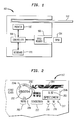
- An advanced postage payment system 102 employs pre-computed digital tokens stored on a secure portable storage medium or device 104.
- the secure portable storage device 104 may be a portab!e device having a microprocessor and non-volatile memory along with various peripheral components. Such portable devices are often termed "smart cards".
- the portable medium is a housing which is secure in the sense that the information stored in the card is protected against unauthorized access.
- the levels of security vary with design and user requirements. The security may involve leaving physical indications of attempts to gain physical access such as by delamination of the card and/or shielding for physical and electromagnetic security.
- Electronic security may be provided by erasure of all or some of the digital tokens stored in the secure portable storage device if attempted electrical penetrations or physical attack is detected and/or altering the digital tokens in a manner to later flag (with or without decryption) of the attempted electronic penetration or physical attack.
- This portable secure device or medium 104 is described in greater detail in connection with FIGURE 3.
- the advanced postage payment system 102 includes a secure portable storage device reader 106 adapted to receive the device 104 and read data from the device.
- a controller 108 is operatively coupled between the reader 106 and a printer 110.
- the secure portable storage device reader 106 retrieves information from the secure portable storage device 104, such as digital tokens to be printed, and passes the data to the printer 110 to be printed on a mail piece 112 as is shown in FIGURE 2.
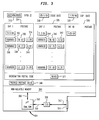
- the information printed on the envelope 112 includes the information obtained by the controller 108 from the secure portable storage device 104 and sent to the printer 110.
- a postage amount 202 here $0.52, is printed along, if desired, with a graphic indicia 204.
- the indicia graphics may be associated with a particular advanced postage payment system manufacturer. The particular indicia shown is an eagle design.
- the indicia graphics may also include the town origin circle 204a, the graphical information around the postage amount 204b and any other graphic information desired to be imprinted on the mail piece.
- the indicia 204 may be either stored in the controller 108 or, if desired, on the secure portable storage device 104. Since the graphical portion of the indicia 204 does not include security information, it can be stored either in the controller 108 or the printer 110 (if it has a memory capability) or the secure portable storage device 104, depending upon the system design.
- An originating Postal Office code 206 for the originating post office is imprinted.
- This Originating Postal Office Code is also stored on the secure portable storage device 104 and is utilized and corresponds to the graphical information printed at 204a. It should be recognized that although it is highly desirable from a security point of view to include an originating postal office code 206 on the secure portable storage device 104, if this level of security is not needed, this information may be stored in the controller 108 or the printer 110. Nonetheless, whether or not obtained from the card for imprinting, this information may be encrypted into the printed information on the mail piece or into the digital tokens.
- Vendor Identification Code 208 is also printed on the mail piece 112 . This information may be the leading digit, of the Secure Portable Storage Device Identification 210.
- the Vendor Identification and Secure Portable Storage Device Identification are stored within the portable device 104.
- the Date of submission 212 is printed and must correspond to the particular digital tokens 214 (Postal Digital Token) and 216 (Vendor Digital Token) which authenticate the Postage Amount 202 and other encrypted information printed on the mail piece. Because of the relationship of the printed information and the encrypted digital tokens the Postage Amount 202 imprinted on the mail piece can be authenticated at a later date by a postal service and also by the manufacturer (vendor).
- the use of postal digital tokens 214 and vendor digital tokens 216 are described in the above identified US patent application.
- the secure portable storage device 104 includes a central processing unit 302 containing a microprocessor and all necessary peripheral devices such as random access memory (RAM) and read only memory (ROM).
- the device 104 is a secure portable storage device which precludes writing into the device after the device has been put in service.
- the secure portable storage device can be implemented via well known technologies such as smart cards, personal computer microcard industry association (PCMCIA) cards or other technology.
- PCMCIA personal computer microcard industry association
- the communication between the advanced postage payment system and the secure portable storage device 104 does not have to be secure. This provides additional cost savings.
- the number of possible digital tokens stored in the secure portable storage device 104 is limited only by the physical limitations of available storage technology.
- the central processing unit 302 is connected to a non-volatile programmable memory shown generally at 304 via a bi-directional address and data bus 306. Additionally, the central processing unit 302 is connected to an input/output device (I/O) 308 through an additional bi-directional address and data bus 310. The I/O device 308 is coupled via another bidirectional address and data bus 312 to a secure portable storage device connector 314. The connector 314 is adapted to cooperate in operative relationship with the connectors, not shown, associated with the secure portable storage device reader 106.
- I/O input/output device
- the non-volatile memory 304 is capable of having data read from it and written into it by the central processing unit 302.
- the central processing unit 302 will not allow any data external from the card 104 to be transferred via the connector 314, the I/O device 308 and the central processing unit 302 to write into any secure postage storage areas of the non-volatile memory 304.
- the non-volatile memory 304 may not have any data whatsoever written into it from an external source since this is not necessary to operation of the present invention and enhances the security of the system.
- the non-volatile memory includes a number of memory locations containing data necessary to account for and store pre-computed digital tokens to be printed by the advanced postage payment system 102.
- the secure portable storage device identification is stored in the non-volatile memory 304 at 316. In the particular configuration shown, the lead digit of this identification, "0", is the Vendor Identification 208 printed on the mail piece 112. The remaining digits of the secure portable storage device identification 316 are printed as on the mail piece 112 as the Secure Portable Storage Device identification 210.
- the date of the secure portable storage device 104 issue or activation, (as desired), is located at 318. A expiration date for the secure portable storage device 104 is stored at 320.
- the non-volatile memory 304 also contains the Originating Postal Office Code 322 which defines a predetermined geographical location in which a mail piece utilizing a pre-computed digital token stored on the secure portable storage device 104 may be deposited into the mail stream.
- a plurality of digital tokens are stored for each of a series of days. From day 1 through 90 shown, respectively, as 324, 326 and 328. On each day, day 1 through day 90, (including those days, day 3 through day 89, not shown) a predetermined number of pre-computed digital tokens are stored. The digital tokens are stored and organized by a piece count number or digital token serial number 330 for each digital token. Since thirty digital tokens are stored for day 1, thirty piece counts are provided; however, it should be noted that these can be a single number which is incremented for each of the tokens. This is because from the data storage point of view, various standard techniques may be employed to considerably compress the data while not losing information.
- Associated with the piece count 330 is a pair of digital tokens 332 having a particular value here shown at 334 as $0.29.
- the next digital token pair is identified by an incremented piece count shown at 336.
- These digital tokens 338 have a value of $0.52 shown at 340.
- a continued series of digital tokens may be stored for the particular day of different values, as desired by the purchaser of the secure portable storage device 104. The number of digital tokens stored for any particular day limit both the number of tokens that may be issued by the device on that day and the total value of postage which may be issued on that day.
- the specific digital token series 342 has been shown as printed on the mail piece 112. This represents a postage value of $0.52 shown at 343 and a piece count of 0000031 shown at 344.
- the prepaid postage value register 346 is decremented to reflect the issuance of the digital token by the secure portable storage device 104.
- the memory location is disabled, for example, by erasing the data at the memory location from where the digital token was retrieved. This precludes dispensing a digital token more than once.
- the process continues until the prepaid postage value stored in register 346 reaches zero or below the value for the minimum postage digital token still available for retrieval. When this occurs, no further digital tokens are retrievable from the secure portable storage device 104, even though additional digital tokens, not used, may remain stored in the non-volatile memory 304.
- the printed postage value register 346 can, of course, be arranged in other ways such as incrementing each time a digital token is retrieved until the initially stored prepayment value is reached.
- a plurality of digital tokens having a predetermined value that is, the sum total value of all of the digital tokens stored in the non-volatile memory for each of the days for which the secure portable storage device 104 is usable.
- This predetermined value may be equal to or less than the prepaid value stored in the prepaid postage value register 346. For example, if the prepaid postage value stored (or remaining after use) in register 346 was $0.81, all or part of this value could be used on day 1 or day 2 to retrieve a digital token having a specific value of $0.29 and another digital token having a specific value of $0.52.
- the stored digital tokens will normally exceed the value of the prepaid postage value stored in register 346. This is to enable a user to issue digital tokens that correspond to the rate table and rate table breaks of the particular postal service.
- the first ounce for a mail piece is $0.29 while the mail pieces over 1 ounce and under 2 ounces are $0.52. Therefore, these represent postage values for digital tokens that a user would find highly desirable. Fewer digital tokens may be stored for a given day for 3 ounce mail pieces, $0.75, since a mailer's usage pattern may involve more mail pieces under the 1 ounce or 2 ounce mail piece weight breaks.
- a given mailer taking into account the mailer's needs, both in terms of the daily postage usage and types of mail being posted, as well as the days in the mailing cycle for the mailer, can specify and tailor the digital tokens stored on the portable storage device 104 to meet the particular unique needs of the mailer.
- the mailer may arrange for the digital tokens on May 4, 1994 for card 104 to have a high volume of postage of particular denominations.
- This ability to selectively store digital tokens of a different denomination usable on particular days in a manner which correlates to the mailer's past experience helps the mailer to avoid misappropriation of postal funds for other than authorized applications, since the anticipated postage needed is available on specified days. If the available digital token postage does not correspond to the required usage, an investigation can be made by the mailer as to the reason for non correspondence.
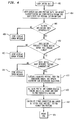
- a user enters a current date at 402.
- the user then enters the desired postage rate denomination at 404.
- the user may enter the rate classification or other rating parameters sufficiently for appropriate postage determination.
- the process is stopped and an error message is displayed at 408.
- the process continues and a determination is made at 410 if the secure removable storage device has sufficient funds in the prepaid postage value register 346. If sufficient funds do not exist, the process is stopped and an error message is displayed at 412. If sufficient funds are available, the process continues and a determination is made at 414 if the secure portable storage device has the required postage denominations requested by the user or determined at 404.
- the process is stopped and an error message is displayed at 416. If the required denominations are available, the required postage is subtracted at 418 from the remaining amount in the prepaid postage value register 346.
- updating of other registers that may be within the prepaid postage value register 346 can be implemented. These may include an ascending and a descending register. In such case the ascending and descending registers are used as a form of double balance lockout system and error checking system as is known in existing postage meter systems.
- the process continues with the retrieval of the postal and vendor digital tokens and piece count data which is sent to a postal revenue block formatting routine, not shown at 420.
- the postal revenue block formatting routine is designed to format the data for appropriate printing on a mailpiece in the form shown in FIGURE 2. Any suitable formatting routine may be used with the present invention.
- An error correction and error detection code is calculated and is sent to the postal revenue formatting routine at 422 to be formatted with other data to be printed.
- the postal revenue block (PRB) is then printed at 424.
- PRB postal revenue block
- the postal revenue block formatting routine desirably resides outside the secure portable storage device 104. It may be part of the software associated with advanced postage payment system controller 108 or printer 110. The same applies to the calculation of the error correction and error detection code.
- the secure portable storage device includes a prepaid postage value register 346 which records the total available postage.
- Two tests must be performed. First, the value of the postage request is compared to the value available in the prepaid postage value register. Second, the postage value and date of submission are compared to the value and date of the available tokens.
- the piece count and digital tokens are retrieved by the microprocessor on the secure portable storage device.
- the area of nonvolatile memory containing the retrieved data is disabled, for example by erasing the data.
- the prepaid value register is decreased by the value of the denomination of postage requested. After these operations are complete the data is provided to the communication port of the secure portable storage device.
- the secure portable storage device 104 is adapted to be connected to a secure portable storage device read/write unit 502.
- the device 104 prior to being processed by unit 502, except as explained below, has no data relating to the digital tokens stored in the non-volatile memory 304 and the memory is clear in the locations where the tokens are to be stored.
- the unit 502 is connected by a bidirectional communications bus 504 to a System Computer 506, which in turn is connected by a bi-directional communications bus 508 to a data entry terminal 510.
- the system computer 506 is connected to a secure co-processor 512 which generates in the present embodiment.
- a secure communications link 514 is provided to a remote data center which may include both the postal data center and the vendor data center for key management purposes to periodically update the encryption key used to generate the postal digital tokens and the vendor encryption, key used to generate the vendor digital tokens.
- a remote data center which may include both the postal data center and the vendor data center for key management purposes to periodically update the encryption key used to generate the postal digital tokens and the vendor encryption, key used to generate the vendor digital tokens.
- Other key management arrangements of these secure co-processor key generations are possible.
- Various arrangements are disclosed in the above identified co-pending patent application as well as in US Patent Application of Hyung-Kun Kim, Robert A. Cordery and Leon A. Pintsov, Serial No.
- the secure co-processor 512 computes postal and vendor digital tokens based on a secret key stored therein.
- the secure co-processor communicates tokens to a system computer 506 which, in turn, passes them for storage in the secure portable storage device 104.
- the secure co-processor 512 is housed in tamper resistant protected housing 513. Key updates can be organized via a secure channel to a Data Center.
- the Data Center generates and updates keys for all secure portable storage device generation systems and all verification devices.
- the described system can generate both standard and custom made secure portable storage devices with ease.
- the standard selection can be $50.00 worth of postage which can be spent in a single denomination ($0.32) for three months up to 20 letters a day, or $60.00 worth of postage which can be spent in two denominations ($0.32 and $0.57) for two months up to 10 letters a day, etc.
- a custom selection can be $96.00 worth of postage which can be spent in a single denomination ($0.32) for three days up to 100 letters a day.
- any postage left in the secure portable storage device can be credited to the customer and loaded into a new secure portable storage device. The process of doing so can be implemented by using smart cards of the type described in the text Contemporary Cryptology, noted below.
- the prepaid postal value the value stored in register 346 on secure portable storage device 104, is entered at 602.
- the total number of days for which the secure portable storage device is valid and the first valid day for the device is then entered at 604.
- the number of postage values that is, the various postage denominations, is entered at 606.
- each postal value of denomination is specified as well as the number of denominations and total number of mail pieces for that day at 608.
- the number of mail pieces corresponds to the secure portable storage device piece count arranged for the particular day.
- the number of mail pieces is thirty with the piece count ranging from a first piece count of 31 and a final piece count of 60.
- the total storage requirement is then computed at 610. If the computed total storage requirements is larger than the storage available in the secure portable storage device non-volatile memory 304, the system loops back and requires a new configuration to be entered. If the storage requirements for the specified configuration is not larger than the secure portable storage device non-volatile memory 304, then at 614 the digital tokens are computed and stored in the secure portable storage device non-volatile memory and the prepaid postage value is stored in register 346. Finally, the data stored in the secure portable storage device with pre-computed digital tokens and its accessibility is verified at 616 to insure an operable device has been created.
- the secure portable storage device 104 may be of that group of devices that is capable of having areas of the non-volatile memory securely protected from having data written therein which secure protection can be selectively enabled and disabled. Examples of such devices are described in Chapter 12, entitled “The Smart card, Standardized Security Device Dedicated To Public Cryptology” of the text Contemporary Cryptology, The Science of Information Integrity, published IEEE Press and edited by Gustavus J. Simmons, Sandia National Laboratories, copyright 1992 by the Institute of Electrical and Electronic Engineer Inc. With devices of this type, the secure portable storage device 104 may be reused to store additional digital tokens on the device.
- the number of write cycles to the non-volatile memory 304 can be limited by hardware incorporated on the device so that the card may be reusable, for example, 2, 3, 4 or any other selected number of times.
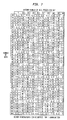
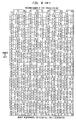
- FIGURES 7-9 The amount of memory required for the secure portable storage devices for various digital token configurations is shown in table form.
- the table shows the memory requirements for periodically loading a secure portable storage device with pre-computed token values to thereafter be selectively retrieved for use with an advanced postage payments system.
- the variable information may be the postage value amount, the piece count, and the date.
- certain restrictions are placed on the variable information.
- the postage value amounts will only be available in a limited number of denominations such as one, two, or three denomination, for example, $0.19, $0.29, and $0.52.
- the digital tokens will be valid for a limited period of time and limitations will be placed on how many indicias may be printed each day (or group of days).
- the postage evidencing device identification in the present described system is replaced by the secure portable storage device serial number and each serial number will be used for one card purchase only. This will necessitate using a wider range of serial numbers because of the larger number of secure portable storage devices. Additionally, using a non-consecutive piece count could cause the piece count to run up very quickly. Since each card identification is used only once, this problem is resolved by initializing the piece count to 1 for every card. Alternatively, upon surrendering a card with a given identification, a new card may be issued with the same identification and higher piece counts. Various arrangements are possible and are within the scope of the present invention.
- the piece count ranges from 1 to C, and the postage can be used over a period of D days.
- a digital token system as shown in connection with FIGURES 1-6 requires 16 bits for each pair of tokens because the present system employs two digital tokens each having two decimal digits, requiring four bits per digit when binary coded.
- each pair of tokens can be represented by 16 bits, a look-up table, the above example, requires about 12K of memory. This is because the secure portable storage device memory can be organized so that very little additional storage is required for indexing the denominations, piece counts, and dates associated with the token information. This size of storage may exceed current standard mass produced smart card memory capabilities, but can, of course, be implemented in a secure vault or cartridge type of arrangement where the memory may be of a much larger size.
- the daily postage use may be limited to N pieces per day and the piece counts to 1 to N on day 1, N+1 to 2N on day 2, etc.
- a unique denomination is assigned to each piece count.
- piece counts are skipped if all N pieces are not used.
- the memory requirements (in kilobytes) for the number of different denominations ranging from 1 to 3, a number of days ranging from 10 to 90 (in increments of 2), and the maximum number of mail pieces per day ranging from 5 to 100 (in increments of 5) are shown in FIGURES 7-9.
- the memory requirement above can be generalized as follows.
- a user will be allowed to purchase a secure portable storage device containing pre-computed tokens that have been tailored to suited needs.
- the tokens will be valid over a period of D days, and on the i th day, the postage use will be restricted to N i pieces (on day i, the available piece counts will range from N1+N2+N3+...+N i-1 +1 to N1+N2+N3+...+N i-1 +N i ).
- the mailer may also elect for different postage denominations (as many as B) but a unique denomination is assigned to each distinct piece count.
- the total number of tokens that must be pre-computed to account for all possibilities is: Additionally, the mailer will purchase an amount of postage value to cover the mailer's anticipated usage. This will be stored in the prepaid postage value registers. At the end of D days, the remaining postage, if any, will either be refunded or transferred to the next secure portable storage device.
- D will range from 30 to 60 days.
- FIGURE 7 displays the memory requirements in kilobytes for a single denomination card, that is, a card containing a single postage value providing the maximum number of mail pieces per day in the top row and the number of days for which the card is valid in the left most column.
- a card which will have a maximum number of 35 mail pieces per day for a period of 40 days will require 2.8 kilobytes of non-volatile storage memory.
- two different denominations of postage value are allowed for each piece count. The number of storage requirements in kilobytes is again shown for various maximum number of mail pieces per day for specified number of day.
- FIGURE 9 a memory requirements table is shown for three different denominations of postage values for various maximum number of mail pieces per day for a specified number of days.
- the card would require 23.04 kilobytes of non-volatile memory.
Landscapes
- General Physics & Mathematics (AREA)
- Physics & Mathematics (AREA)
- Engineering & Computer Science (AREA)
- Business, Economics & Management (AREA)
- Accounting & Taxation (AREA)
- Theoretical Computer Science (AREA)
- Finance (AREA)
- Computer Networks & Wireless Communication (AREA)
- Strategic Management (AREA)
- General Business, Economics & Management (AREA)
- Computer Security & Cryptography (AREA)
- Devices For Checking Fares Or Tickets At Control Points (AREA)
- Management, Administration, Business Operations System, And Electronic Commerce (AREA)
Applications Claiming Priority (2)
| Application Number | Priority Date | Filing Date | Title |
|---|---|---|---|
| US08/242,564 US5655023A (en) | 1994-05-13 | 1994-05-13 | Advanced postage payment system employing pre-computed digital tokens and with enhanced security |
| US242564 | 1994-05-13 |
Publications (2)
| Publication Number | Publication Date |
|---|---|
| EP0686946A2 true EP0686946A2 (fr) | 1995-12-13 |
| EP0686946A3 EP0686946A3 (fr) | 1999-09-29 |
Family
ID=22915303
Family Applications (1)
| Application Number | Title | Priority Date | Filing Date |
|---|---|---|---|
| EP95107216A Withdrawn EP0686946A3 (fr) | 1994-05-13 | 1995-05-12 | Système de paiement d'affranchissement au moyen de jetons digitaux précalculés et avec sécurité améliorée |
Country Status (3)
| Country | Link |
|---|---|
| US (1) | US5655023A (fr) |
| EP (1) | EP0686946A3 (fr) |
| CA (1) | CA2148648C (fr) |
Cited By (12)
| Publication number | Priority date | Publication date | Assignee | Title |
|---|---|---|---|---|
| DE29621439U1 (de) * | 1996-12-10 | 1997-03-20 | Elsdale Ltd., St. Helier, Jersey | Datenerfassungs- und Kartenbearbeitungssystem |
| EP0782109A3 (fr) * | 1995-12-19 | 2000-02-23 | Pitney Bowes Inc. | Procédé pour redélivrer des jetons digitaux dans un système ouvert de dosage |
| EP0825561A3 (fr) * | 1996-08-23 | 2000-03-29 | Pitney Bowes Inc. | Système de machine à affranchir électronique avec système de comptabilisation interne et système de comptabilisation externe amovible |
| EP0814434A3 (fr) * | 1996-06-17 | 2000-03-29 | Pitney Bowes Inc. | Système d'acceptance contrôlée du courrier permettant en sécurité la réutilisation du jeton digital engendré intialement pour un pli postal sur un pli postal différent préparé postérieurement pour authentifier le paiement d'affranchissement |
| EP0782112A3 (fr) * | 1995-12-19 | 2000-04-05 | Pitney Bowes Inc. | Procédé et système de mise en évidence de transactions avec impression ultérieure et traitement d'un lot |
| EP0806746A3 (fr) * | 1996-05-08 | 2000-05-10 | Neopost Limited | Machine à affranchir |
| EP1002302A2 (fr) * | 1997-08-06 | 2000-05-24 | Tresor TV Produktions GmbH | Procede permettant de manier sans danger des moyens de paiement electroniques et d'effectuer sans danger des transactions commerciales, et dispositif permettant d'appliquer ledit procede |
| EP1454259A4 (fr) * | 2001-05-03 | 2007-03-28 | Pitney Bowes Inc | Procede de calcul d'affranchissement de courrier |
| EP1777660A1 (fr) * | 1997-09-22 | 2007-04-25 | Ascom Hasler Mailing Systems, Inc. | Technique permettant de genérer de manière efficace des symboles multidimensionnels représentant des informations postales |
| WO2007124948A1 (fr) * | 2006-04-29 | 2007-11-08 | Siemens Aktiengesellschaft | PROCEDE ET DISPOSTIF POUR LECTURE ET CODAGE BASÉs SUR LES CONTINGENTS D'ETIQUETTES DE DOCUMENTS ET D'EXPEDITION |
| US7496538B2 (en) | 1999-12-06 | 2009-02-24 | Francotyp-Postalia Ag & Co | Franking method and apparatus |
| US7818263B2 (en) | 1997-09-22 | 2010-10-19 | Neopost Technologies | Technique for effectively generating multi-dimensional symbols representing postal information |
Families Citing this family (67)
| Publication number | Priority date | Publication date | Assignee | Title |
|---|---|---|---|---|
| US5826247A (en) * | 1996-04-09 | 1998-10-20 | Pitney Bowes Inc. | Closed loop transaction based mail accounting and payment system with carrier payment through a third party initiated by mailing information release |
| US7343357B1 (en) * | 1995-10-11 | 2008-03-11 | Stamps.Com Inc. | System and method for printing multiple postage indicia |
| US5781438A (en) * | 1995-12-19 | 1998-07-14 | Pitney Bowes Inc. | Token generation process in an open metering system |
| US6157919A (en) * | 1995-12-19 | 2000-12-05 | Pitney Bowes Inc. | PC-based open metering system and method |
| US6151590A (en) * | 1995-12-19 | 2000-11-21 | Pitney Bowes Inc. | Network open metering system |
| US5822739A (en) * | 1996-10-02 | 1998-10-13 | E-Stamp Corporation | System and method for remote postage metering |
| US6889214B1 (en) * | 1996-10-02 | 2005-05-03 | Stamps.Com Inc. | Virtual security device |
| US5983209A (en) * | 1996-10-02 | 1999-11-09 | E-Stamp Corporation | System and method for determination of postal item weight by context |
| US6574000B1 (en) * | 1996-11-22 | 2003-06-03 | Pitney Bowes Inc. | System for the enhancement of information based indicia and postage security devices |
| DE19757653C2 (de) * | 1997-12-15 | 2003-07-17 | Francotyp Postalia Ag | Verfahren und postalisches Gerät mit einer Chipkarten-Schreib/Leseeinheit zum Nachladen von Änderungsdaten per Chipkarte |
| US6246967B1 (en) | 1998-04-22 | 2001-06-12 | Interface Logic Systems, Inc. | Weight verification device |
| US6237098B1 (en) | 1998-04-22 | 2001-05-22 | Interface Logic Systems, Inc. | System for protecting weight verification device private key |
| EP1080454B2 (fr) | 1998-05-18 | 2025-03-26 | Giesecke+Devrient ePayments GmbH | Support de donnees a acces protege |
| GB9823288D0 (en) * | 1998-10-23 | 1998-12-23 | Neopost Ltd | Mail preparation system |
| US7149726B1 (en) | 1999-06-01 | 2006-12-12 | Stamps.Com | Online value bearing item printing |
| US20020023057A1 (en) * | 1999-06-01 | 2002-02-21 | Goodwin Johnathan David | Web-enabled value bearing item printing |
| US7742967B1 (en) * | 1999-10-01 | 2010-06-22 | Cardinalcommerce Corporation | Secure and efficient payment processing system |
| US9430769B2 (en) | 1999-10-01 | 2016-08-30 | Cardinalcommerce Corporation | Secure and efficient payment processing system |
| US6868406B1 (en) | 1999-10-18 | 2005-03-15 | Stamps.Com | Auditing method and system for an on-line value-bearing item printing system |
| EP1232482B1 (fr) | 1999-10-18 | 2016-07-06 | Stamps.Com | Base de donnees sure et recuperable pour systeme en ligne relatif a des articles porteurs de valeur |
| US7236956B1 (en) | 1999-10-18 | 2007-06-26 | Stamps.Com | Role assignments in a cryptographic module for secure processing of value-bearing items |
| EP1224628B1 (fr) | 1999-10-18 | 2017-02-22 | Stamps.Com | Module cryptographique de traitement securise d'articles a valeur affichee |
| US7233929B1 (en) | 1999-10-18 | 2007-06-19 | Stamps.Com | Postal system intranet and commerce processing for on-line value bearing system |
| US7240037B1 (en) | 1999-10-18 | 2007-07-03 | Stamps.Com | Method and apparatus for digitally signing an advertisement area next to a value-bearing item |
| US7216110B1 (en) | 1999-10-18 | 2007-05-08 | Stamps.Com | Cryptographic module for secure processing of value-bearing items |
| US6438530B1 (en) * | 1999-12-29 | 2002-08-20 | Pitney Bowes Inc. | Software based stamp dispenser |
| US7376621B1 (en) | 2000-01-26 | 2008-05-20 | Paybyclick Corporation | Method and apparatus for conducting electronic commerce transactions using electronic tokens |
| US7177838B1 (en) | 2000-01-26 | 2007-02-13 | Paybyclick Corporation | Method and apparatus for conducting electronic commerce transactions using electronic tokens |
| US7328189B2 (en) * | 2000-01-26 | 2008-02-05 | Paybyclick Corporation | Method and apparatus for conducting electronic commerce transactions using electronic tokens |
| US20020111907A1 (en) * | 2000-01-26 | 2002-08-15 | Ling Marvin T. | Systems and methods for conducting electronic commerce transactions requiring micropayment |
| US7299210B2 (en) * | 2000-02-16 | 2007-11-20 | Stamps.Com | On-line value-bearing indicium printing using DSA |
| GB2363887B (en) * | 2000-06-19 | 2004-02-11 | Pitney Bowes Ltd | Mailer-postal service interfaces |
| US6820201B1 (en) | 2000-08-04 | 2004-11-16 | Sri International | System and method using information-based indicia for securing and authenticating transactions |
| US6820064B1 (en) * | 2000-08-31 | 2004-11-16 | Hewlett-Packard Development Company, L.P. | E-commerce consumables |
| US7765168B1 (en) | 2000-09-01 | 2010-07-27 | Stamps.Com | Method and apparatus for the control and distribution of value bearing items in a PC postage system |
| US7152049B2 (en) | 2001-10-05 | 2006-12-19 | Pitney Bowes Inc. | Method and system for dispensing virtual stamps |
| US7822679B1 (en) | 2001-10-29 | 2010-10-26 | Visa U.S.A. Inc. | Method and system for conducting a commercial transaction between a buyer and a seller |
| US20030101143A1 (en) * | 2001-11-20 | 2003-05-29 | Psi Systems, Inc. | Systems and methods for detecting postage fraud using a unique mail piece indicium |
| US8463716B2 (en) * | 2001-11-20 | 2013-06-11 | Psi Systems, Inc. | Auditable and secure systems and methods for issuing refunds for misprints of mail pieces |
| US7831518B2 (en) * | 2001-11-20 | 2010-11-09 | Psi Systems, Inc. | Systems and methods for detecting postage fraud using an indexed lookup procedure |
| US6805289B2 (en) | 2002-05-23 | 2004-10-19 | Eduardo Noriega | Prepaid card payment system and method for electronic commerce |
| US7249060B2 (en) * | 2002-08-12 | 2007-07-24 | Paybyclick Corporation | Systems and methods for distributing on-line content |
| US20040225573A1 (en) * | 2003-05-09 | 2004-11-11 | Ling Marvin T. | Methods and apparatus for anonymously transacting internet shopping and shipping |
| US7676432B2 (en) * | 2003-07-08 | 2010-03-09 | Paybyclick Corporation | Methods and apparatus for transacting electronic commerce using account hierarchy and locking of accounts |
| US7301115B2 (en) * | 2003-08-01 | 2007-11-27 | Lockheed Martin Corporation | System and method of identifying and sorting response services mail pieces in accordance with plural levels of refinement in order to enhance postal service revenue protection |
| US11037151B1 (en) | 2003-08-19 | 2021-06-15 | Stamps.Com Inc. | System and method for dynamically partitioning a postage evidencing system |
| US7516105B2 (en) * | 2003-12-11 | 2009-04-07 | Pitney Bowes Inc. | Method and system for increasing mailing machine throughput by precomputing indicia |
| US8606697B2 (en) | 2004-06-17 | 2013-12-10 | Visa International Service Association | Method and system for providing buyer bank payable discounting services |
| US7711639B2 (en) | 2005-01-12 | 2010-05-04 | Visa International | Pre-funding system and method |
| US8775331B1 (en) | 2006-12-27 | 2014-07-08 | Stamps.Com Inc | Postage metering with accumulated postage |
| US8612361B1 (en) | 2006-12-27 | 2013-12-17 | Stamps.Com Inc. | System and method for handling payment errors with respect to delivery services |
| US8510233B1 (en) | 2006-12-27 | 2013-08-13 | Stamps.Com Inc. | Postage printer |
| US9779556B1 (en) | 2006-12-27 | 2017-10-03 | Stamps.Com Inc. | System and method for identifying and preventing on-line fraud |
| US10373398B1 (en) | 2008-02-13 | 2019-08-06 | Stamps.Com Inc. | Systems and methods for distributed activation of postage |
| US9978185B1 (en) | 2008-04-15 | 2018-05-22 | Stamps.Com Inc. | Systems and methods for activation of postage indicia at point of sale |
| US9911246B1 (en) | 2008-12-24 | 2018-03-06 | Stamps.Com Inc. | Systems and methods utilizing gravity feed for postage metering |
| US10089797B1 (en) | 2010-02-25 | 2018-10-02 | Stamps.Com Inc. | Systems and methods for providing localized functionality in browser based postage transactions |
| US9842308B1 (en) | 2010-02-25 | 2017-12-12 | Stamps.Com Inc. | Systems and methods for rules based shipping |
| US10032239B2 (en) | 2010-06-10 | 2018-07-24 | United Parcel Service Of America, Inc. | Enhanced payments for shipping |
| US10713634B1 (en) | 2011-05-18 | 2020-07-14 | Stamps.Com Inc. | Systems and methods using mobile communication handsets for providing postage |
| US10846650B1 (en) | 2011-11-01 | 2020-11-24 | Stamps.Com Inc. | Perpetual value bearing shipping labels |
| US10922641B1 (en) | 2012-01-24 | 2021-02-16 | Stamps.Com Inc. | Systems and methods providing known shipper information for shipping indicia |
| US9721225B1 (en) | 2013-10-16 | 2017-08-01 | Stamps.Com Inc. | Systems and methods facilitating shipping services rate resale |
| US10417728B1 (en) | 2014-04-17 | 2019-09-17 | Stamps.Com Inc. | Single secure environment session generating multiple indicia |
| US10521754B2 (en) | 2016-03-08 | 2019-12-31 | Auctane, LLC | Concatenated shipping documentation processing spawning intelligent generation subprocesses |
| US11641665B2 (en) | 2020-09-09 | 2023-05-02 | Self Financial, Inc. | Resource utilization retrieval and modification |
| US20220075877A1 (en) | 2020-09-09 | 2022-03-10 | Self Financial, Inc. | Interface and system for updating isolated repositories |
Family Cites Families (23)
| Publication number | Priority date | Publication date | Assignee | Title |
|---|---|---|---|---|
| US3978457A (en) * | 1974-12-23 | 1976-08-31 | Pitney-Bowes, Inc. | Microcomputerized electronic postage meter system |
| US4168533A (en) * | 1976-01-14 | 1979-09-18 | Pitney-Bowes, Inc. | Microcomputerized miniature postage meter |
| FR2386080A1 (fr) * | 1977-03-31 | 1978-10-27 | Cii Honeywell Bull | Systeme de comptabilisation d'unites homogenes predeterminees |
| US4222518A (en) * | 1978-10-19 | 1980-09-16 | Simjian Luther G | Metering system |
| US4226360A (en) * | 1978-12-19 | 1980-10-07 | Simjian Luther G | Metering system |
| US4301507A (en) * | 1979-10-30 | 1981-11-17 | Pitney Bowes Inc. | Electronic postage meter having plural computing systems |
| US4629871A (en) * | 1979-12-28 | 1986-12-16 | Pitney Bowes, Inc. | Electronic postage meter system settable by means of a remotely generated input device |
| US4579054A (en) * | 1982-12-08 | 1986-04-01 | Pitney Bowes Inc. | Stand-alone electronic mailing machine |
| US4493252A (en) * | 1983-03-09 | 1985-01-15 | Pitney Bowes Inc. | Postage printing apparatus having a movable print head in a print drum |
| US4831555A (en) * | 1985-08-06 | 1989-05-16 | Pitney Bowes Inc. | Unsecured postage applying system |
| US4757537A (en) * | 1985-04-17 | 1988-07-12 | Pitney Bowes Inc. | System for detecting unaccounted for printing in a value printing system |
| US4775246A (en) * | 1985-04-17 | 1988-10-04 | Pitney Bowes Inc. | System for detecting unaccounted for printing in a value printing system |
| US4725718A (en) * | 1985-08-06 | 1988-02-16 | Pitney Bowes Inc. | Postage and mailing information applying system |
| GB2173738B (en) * | 1985-04-19 | 1989-07-12 | Roneo Alcatel Ltd | Secure transport of information between electronic stations |
| US4802218A (en) * | 1986-11-26 | 1989-01-31 | Wright Technologies, L.P. | Automated transaction system |
| US4900903A (en) * | 1986-11-26 | 1990-02-13 | Wright Technologies, L.P. | Automated transaction system with insertable cards for transferring account data |
| US4900904A (en) * | 1986-11-26 | 1990-02-13 | Wright Technologies, L.P. | Automated transaction system with insertable cards for downloading rate or program data |
| US4873645A (en) * | 1987-12-18 | 1989-10-10 | Pitney Bowes, Inc. | Secure postage dispensing system |
| US4901241A (en) * | 1988-03-23 | 1990-02-13 | Drexler Technology Corporation | Debit card postage meter |
| JPH01263893A (ja) * | 1988-04-15 | 1989-10-20 | Toshiba Corp | 携帯可能電子装置 |
| DE4033164A1 (de) * | 1990-10-16 | 1992-04-23 | Francotyp Postalia Gmbh | Frankierstreifengeber-system |
| US5272320A (en) * | 1990-10-27 | 1993-12-21 | Ikuhiro Hakamada | Telephone card having calendar and system for issuing and using same |
| US5448641A (en) * | 1993-10-08 | 1995-09-05 | Pitney Bowes Inc. | Postal rating system with verifiable integrity |
-
1994
- 1994-05-13 US US08/242,564 patent/US5655023A/en not_active Expired - Lifetime
-
1995
- 1995-05-04 CA CA002148648A patent/CA2148648C/fr not_active Expired - Fee Related
- 1995-05-12 EP EP95107216A patent/EP0686946A3/fr not_active Withdrawn
Non-Patent Citations (1)
| Title |
|---|
| CHAUM D.: "Achieving Electronic Privacy", SCIENTIFIC AMERICAN, August 1992 (1992-08-01), pages 76 - 81 * |
Cited By (12)
| Publication number | Priority date | Publication date | Assignee | Title |
|---|---|---|---|---|
| EP0782109A3 (fr) * | 1995-12-19 | 2000-02-23 | Pitney Bowes Inc. | Procédé pour redélivrer des jetons digitaux dans un système ouvert de dosage |
| EP0782112A3 (fr) * | 1995-12-19 | 2000-04-05 | Pitney Bowes Inc. | Procédé et système de mise en évidence de transactions avec impression ultérieure et traitement d'un lot |
| EP0806746A3 (fr) * | 1996-05-08 | 2000-05-10 | Neopost Limited | Machine à affranchir |
| EP0814434A3 (fr) * | 1996-06-17 | 2000-03-29 | Pitney Bowes Inc. | Système d'acceptance contrôlée du courrier permettant en sécurité la réutilisation du jeton digital engendré intialement pour un pli postal sur un pli postal différent préparé postérieurement pour authentifier le paiement d'affranchissement |
| EP0825561A3 (fr) * | 1996-08-23 | 2000-03-29 | Pitney Bowes Inc. | Système de machine à affranchir électronique avec système de comptabilisation interne et système de comptabilisation externe amovible |
| DE29621439U1 (de) * | 1996-12-10 | 1997-03-20 | Elsdale Ltd., St. Helier, Jersey | Datenerfassungs- und Kartenbearbeitungssystem |
| EP1002302A2 (fr) * | 1997-08-06 | 2000-05-24 | Tresor TV Produktions GmbH | Procede permettant de manier sans danger des moyens de paiement electroniques et d'effectuer sans danger des transactions commerciales, et dispositif permettant d'appliquer ledit procede |
| EP1777660A1 (fr) * | 1997-09-22 | 2007-04-25 | Ascom Hasler Mailing Systems, Inc. | Technique permettant de genérer de manière efficace des symboles multidimensionnels représentant des informations postales |
| US7818263B2 (en) | 1997-09-22 | 2010-10-19 | Neopost Technologies | Technique for effectively generating multi-dimensional symbols representing postal information |
| US7496538B2 (en) | 1999-12-06 | 2009-02-24 | Francotyp-Postalia Ag & Co | Franking method and apparatus |
| EP1454259A4 (fr) * | 2001-05-03 | 2007-03-28 | Pitney Bowes Inc | Procede de calcul d'affranchissement de courrier |
| WO2007124948A1 (fr) * | 2006-04-29 | 2007-11-08 | Siemens Aktiengesellschaft | PROCEDE ET DISPOSTIF POUR LECTURE ET CODAGE BASÉs SUR LES CONTINGENTS D'ETIQUETTES DE DOCUMENTS ET D'EXPEDITION |
Also Published As
| Publication number | Publication date |
|---|---|
| US5655023A (en) | 1997-08-05 |
| CA2148648C (fr) | 2001-11-20 |
| EP0686946A3 (fr) | 1999-09-29 |
| CA2148648A1 (fr) | 1995-11-14 |
Similar Documents
| Publication | Publication Date | Title |
|---|---|---|
| US5655023A (en) | Advanced postage payment system employing pre-computed digital tokens and with enhanced security | |
| US5390251A (en) | Mail processing system including data center verification for mailpieces | |
| US5825893A (en) | System and method for registgration using indicia | |
| US4775246A (en) | System for detecting unaccounted for printing in a value printing system | |
| US5812991A (en) | System and method for retrieving postage credit contained within a portable memory over a computer network | |
| CA2175121C (fr) | Systeme de reception controlee de virements postaux et d'attestation | |
| AU727477B2 (en) | System and method for retrieving postage credit over a network | |
| US5826247A (en) | Closed loop transaction based mail accounting and payment system with carrier payment through a third party initiated by mailing information release | |
| EP0647925B1 (fr) | Système de tarification postale avec intégrité de vérification | |
| US4821195A (en) | Method and apparatus for sequentially numbering mail pieces | |
| US4999481A (en) | Method and apparatus for sequentially numbering mail pieces | |
| US5835689A (en) | Transaction evidencing system and method including post printing and batch processing | |
| JPS6258388A (ja) | 値印刷装置及びその方法 | |
| JPS62196787A (ja) | 郵便物処理方法及び装置 | |
| US20050071297A1 (en) | System and method for generating personalized postage indicia | |
| WO1997015903A1 (fr) | Systeme et procede de creation de marques d'affranchissement postal personalisees | |
| GB2188880A (en) | Methods and systems for detection of tampering | |
| JPS62254288A (ja) | 複数の郵便物を処理する方法および装置 | |
| US6188997B1 (en) | Postage metering system having currency synchronization | |
| US6427139B1 (en) | Method for requesting and refunding postage utilizing an indicium printed on a mailpiece | |
| US6178412B1 (en) | Postage metering system having separable modules with multiple currency capability and synchronization | |
| CA2175406C (fr) | Systeme en boucle fermee de facturation et de paiement par courrier a base de transactions avec paiement du service de livraison par l'intermediaire d'une tierce partie active parl'envoi d'un avis | |
| CA2325609C (fr) | Systeme de prepaiement postal a securite amelioree utilisant des jetons numeriques precalcules | |
| GB2196899A (en) | System and methods for processing mail |
Legal Events
| Date | Code | Title | Description |
|---|---|---|---|
| PUAI | Public reference made under article 153(3) epc to a published international application that has entered the european phase |
Free format text: ORIGINAL CODE: 0009012 |
|
| AK | Designated contracting states |
Kind code of ref document: A2 Designated state(s): DE FR GB |
|
| PUAL | Search report despatched |
Free format text: ORIGINAL CODE: 0009013 |
|
| AK | Designated contracting states |
Kind code of ref document: A3 Designated state(s): DE FR GB |
|
| 17P | Request for examination filed |
Effective date: 20000315 |
|
| 17Q | First examination report despatched |
Effective date: 20040305 |
|
| STAA | Information on the status of an ep patent application or granted ep patent |
Free format text: STATUS: THE APPLICATION IS DEEMED TO BE WITHDRAWN |
|
| 18D | Application deemed to be withdrawn |
Effective date: 20111201 |