EP0687094B1 - Zugriff auf nicht abonnierte Merkmale - Google Patents
Zugriff auf nicht abonnierte Merkmale Download PDFInfo
- Publication number
- EP0687094B1 EP0687094B1 EP95303628A EP95303628A EP0687094B1 EP 0687094 B1 EP0687094 B1 EP 0687094B1 EP 95303628 A EP95303628 A EP 95303628A EP 95303628 A EP95303628 A EP 95303628A EP 0687094 B1 EP0687094 B1 EP 0687094B1
- Authority
- EP
- European Patent Office
- Prior art keywords
- caller
- region
- feature
- data
- additional services
- Prior art date
- Legal status (The legal status is an assumption and is not a legal conclusion. Google has not performed a legal analysis and makes no representation as to the accuracy of the status listed.)
- Expired - Lifetime
Links
- 238000000034 method Methods 0.000 claims abstract description 62
- 230000004913 activation Effects 0.000 claims abstract description 3
- 230000008569 process Effects 0.000 claims description 45
- 238000003066 decision tree Methods 0.000 claims description 8
- 238000013475 authorization Methods 0.000 claims description 6
- 230000004044 response Effects 0.000 abstract description 6
- 230000003068 static effect Effects 0.000 description 61
- 230000009471 action Effects 0.000 description 30
- 230000008859 change Effects 0.000 description 4
- 238000012986 modification Methods 0.000 description 4
- 230000004048 modification Effects 0.000 description 4
- 238000010586 diagram Methods 0.000 description 3
- 238000010200 validation analysis Methods 0.000 description 3
- 238000005266 casting Methods 0.000 description 2
- 238000012790 confirmation Methods 0.000 description 2
- 230000001343 mnemonic effect Effects 0.000 description 2
- 238000012795 verification Methods 0.000 description 2
- 230000003213 activating effect Effects 0.000 description 1
- 238000013459 approach Methods 0.000 description 1
- 230000008901 benefit Effects 0.000 description 1
- 230000005540 biological transmission Effects 0.000 description 1
- 239000000969 carrier Substances 0.000 description 1
- 230000001413 cellular effect Effects 0.000 description 1
- 238000012217 deletion Methods 0.000 description 1
- 230000037430 deletion Effects 0.000 description 1
- 238000001914 filtration Methods 0.000 description 1
- 239000011159 matrix material Substances 0.000 description 1
- 230000002093 peripheral effect Effects 0.000 description 1
- 238000012545 processing Methods 0.000 description 1
- 230000001052 transient effect Effects 0.000 description 1
Images



Classifications
-
- H—ELECTRICITY
- H04—ELECTRIC COMMUNICATION TECHNIQUE
- H04Q—SELECTING
- H04Q3/00—Selecting arrangements
- H04Q3/0016—Arrangements providing connection between exchanges
- H04Q3/0029—Provisions for intelligent networking
- H04Q3/0033—Provisions for intelligent networking customer-controlled
-
- H—ELECTRICITY
- H04—ELECTRIC COMMUNICATION TECHNIQUE
- H04M—TELEPHONIC COMMUNICATION
- H04M3/00—Automatic or semi-automatic exchanges
- H04M3/42—Systems providing special services or facilities to subscribers
-
- H—ELECTRICITY
- H04—ELECTRIC COMMUNICATION TECHNIQUE
- H04M—TELEPHONIC COMMUNICATION
- H04M3/00—Automatic or semi-automatic exchanges
- H04M3/42—Systems providing special services or facilities to subscribers
- H04M3/42136—Administration or customisation of services
- H04M3/42153—Administration or customisation of services by subscriber
-
- H—ELECTRICITY
- H04—ELECTRIC COMMUNICATION TECHNIQUE
- H04M—TELEPHONIC COMMUNICATION
- H04M3/00—Automatic or semi-automatic exchanges
- H04M3/42—Systems providing special services or facilities to subscribers
- H04M3/56—Arrangements for connecting several subscribers to a common circuit, i.e. affording conference facilities
-
- H—ELECTRICITY
- H04—ELECTRIC COMMUNICATION TECHNIQUE
- H04M—TELEPHONIC COMMUNICATION
- H04M3/00—Automatic or semi-automatic exchanges
- H04M3/42—Systems providing special services or facilities to subscribers
- H04M3/56—Arrangements for connecting several subscribers to a common circuit, i.e. affording conference facilities
- H04M3/563—User guidance or feature selection
-
- H—ELECTRICITY
- H04—ELECTRIC COMMUNICATION TECHNIQUE
- H04Q—SELECTING
- H04Q2213/00—Indexing scheme relating to selecting arrangements in general and for multiplex systems
- H04Q2213/13547—Indexing scheme relating to selecting arrangements in general and for multiplex systems subscriber, e.g. profile, database, database access
Definitions
- This invention relates to the provision of features and capabilities to telecommunications customers on an on-demand or an as-needed basis.
- Custom features such as conference calling, are provided as additional subscription services to telephone customers.
- Feature availability at a customer's terminal port is identified to the telephone system by a block of information residing in the switching system which services that terminal port.
- a problem of the prior art is that features were not directly modifiable by customers; customers were required to contact a phone company representative to pre-register a custom feature. Otherwise, the custom feature would not be available for the customer's use as part of the customer's regular telephone service.
- US-A-4 897 866 discloses a software-controlled method of providing additional services in a telecommunications network.
- the software controlling a terminal must be modified when a caller selects additional features.
- a new terminal software package is generated that includes the additional services selected by the user. The new software package is then loaded into the terminal.
- the present invention provides an automated method of temporarily providing additional services on demand as part of a call process for a caller's terminal port in a telecommunications network, the method comprising the steps of: accessing by a feature processor of a block of data in a first region of the network which defines services then available to the caller's terminal port; accessing by the feature processor a block of data in a second region of the network which defines additional services available for the network; receiving on demand inputs initiated by a caller, populating the second region of the network using the feature processor with data which identifies one or more additional services as selected for the call process; overlaying the data in the first region with the data in the second region while leaving the data in the first region unchanged by the overlaying, whereby at least a portion of the second region data overshadows at least a portion of the first region data thereby to control the call process and provide the caller, from the additional services defined in the second region data, additional services at the port temporarily during the call process; and automatically removing the second region upon satisfaction of the demand.
- the invention also provides an automated apparatus as defined in claim 10.
- the above problems are solved and an advance is made over the prior art in accordance with the invention wherein a telecommunications customer is granted use of a desired feature contemporaneous with request. This is accomplished by the customer modifying feature keys which exist in the configuration of data in a static data block.
- the static data block is a block of information which defines and controls a call process in the telephone network for calls placed from the associated terminal port. While we refer to the block as a static data block, the term also encompasses dynamic data which is more transient in nature but can also define and control, in whole or in part, a call process.
- a static data block may be defined in various ways. For example, it can be an array configuration in which the value of an element being 1 or 0 defines a feature being available or unavailable. It can be a list of items in which the feature of interest appears or does not appear as a member of the list. Further, it may be defined as a data set, such as a matrix, in which the feature is or is not a member of the set. And it can still further be defined as an encrypted group identifier or bit map. In each variation on the form taken by the static data block, the static data block may be resident on the telecommunications network or carried by the subscriber, for example, as an encryption on a credit card or smart card.
- Newly defined feature keys could, as examples, direct the telephone network to permit or deny access to a desired feature; to do so on a one-time basis or on a subscribed basis; and track unit/time charges and apply them to the customer's account.
- custom features are conference calling, call forwarding for incoming calls to the customer's terminal port; call waiting; automatic call back; and access to intelligent peripherals for, for example, voice dialing, abbreviated dialing (speed dialing), special billing, and priority calling.
- this arrangement permits a caller to select on an on-demand or as-needed basis one or more custom features and receive the service without delay, without prior subscription and without operator intervention.
- permission to modify the static data block for the terminal port is only granted if the caller dials an appropriate personal identification number or uses some other authentication procedure; this ensures that the caller is authorized to use the services granted the terminal port and is authorized to extend those services to include additional custom features.
- a customer can modify feature keys by keypad and/or voice entries to activate and use an unsubscribed feature.
- feature key selection results in change of controlling key configuration in the static data block.
- a customer can access features on a one-time basis or activate a subscription for the service.
- a customer can access features from a region of the network which is not part of the region in the central switch for the caller's terminal port which defines subscribed features for the port.
- a custom feature can be terminated either through active request by the customer or automatically, consistent with parameters defined by the customer and/or the service provided.
- Fig. 1 is a block diagram illustrating the basic operation of applicant's invention.
- Station 1 is one of many stations connected to local switching system 5.
- station 1 is connected at terminal port 3 over line 4 to switching system 5 which is part of a larger public switched telephone network 6.
- Line 4 may be a physical wire line or a wireless transmission path or a combination of signal carriers.
- Local switching system 5 is controlled by one or more processors (not shown), each operating under the control of one or more stored programs.
- a call process 32 When a call is originated from a terminal port, for example terminal port 3, that terminal port will be assigned a call process 32, i.e., a block of memory for controlling the call.
- the call process 32 accesses the static data block 9 for terminal port 3 in switch static data block 7 of the local switching system 5.
- the key configuration in static data block 9 defines the available service for terminal port 3, of which a subgroup determines custom feature service availability. If the static data items 9 do not include a key configuration for a certain custom feature, access to the feature will be denied to the caller from port 3. While most of the items in static data block 9 are administered by an operating telephone company and cannot be modified by callers, there are some static data items, which I refer to as dialable static data items 11, which can be modified in response to signals provided from the associated terminal port. Modification is by selection of feature keys which reconfigure the dialable static data items and by creation of a shadow static data block having a desired key configuration cast over the actual static data block key configuration.
- the configurations in dialable static data items 11 are changed, and the menu of custom features is altered allowing the call process to access and provide as part of the service to the terminal port desired custom features, including the addition of new features, modification of existing features, and deletion of features. Access to the change process can be provided to a caller in a variety of ways.
- the customer can subscribe to a calling feature, let us call it the Call Feature (CF), the keys for which form part of the static data items configuration for station 1 and hence its terminal port 3.
- the CF provides a caller from terminal port 3, access to a change process for static data block 7, and affecting specifically sub-block 9 and its dialable static data items 11.
- a telecommunications service provider e.g. the local telephone company or the long distance carrier, has a dialable processor which a caller accesses using a dialed access number. Once dialed, the processor provides a caller access to a change process for dialable static data items 11 for the terminal port in use.
- the caller's terminal port 3 is connected as part of call process 32 through public switched telephone network 5 to static data block 9 and to Feature Processor 51.
- the access request and the feature processor 51 e.g., a processor in the local switching system or, as illustrated, another telephone system processor, connects to a Feature Access Announcement Frame (FAAF) 34.
- the access request is recognized and a control process, the Front-End Authorization Access Process (FEAAP) 36, is assigned to control the FAAF 34.
- the FEAAP 36 performs a verification of the caller's personal identification code to confirm that the caller is authorized to request and use additional custom features.
- an Update Process (UP) 38 is linked with the FAAF 34, the call process 32, and static data block 7.
- UP 38 includes a control process for communicating between call process 32 and the dialable static data items 11.
- the caller inputs at the terminal port 3 dialed or voice signals through a connection to a digit and/or voice receiver (not shown) which are communicated to the UP. Based upon the signal provided through call process 32 to the UP 38, the UP 38 creates new feature keys, that is, a revised configuration for dialable static data items 11, to modify the custom features available to terminal port 3.
- the dialable static data items 11 also include static data items which identify feature parameters, for example, whether the feature must be subscribed for or may be elected on an on-demand basis, whether the feature can be billed as a one-time fee or on a unit/time charge, and the events which may or will cause termination of feature availability, which we refer to as termination triggers.
- the feature processor 51 creates feature modification by either storage in memory 40 of the original feature configuration and updating the feature keys in the configuration of the actual dialable static data items 11; or by creation of a shadow static data block and controller in memory 40 which sits on top of the call process 32 to allocate and manage the telephone network hardware and software as though the shadow static data block were the actual static data block 9 for terminal port 3 by preempting, in whole or in part, the telephone network's system reference to the actual data block 9 and the resident feature key configuration.
- the shadow static data block casts a feature and control shadow over the actual static data block, which covers the actual static data block fully or partially, depending upon the amount of control and the number of features which are to be provided by the shadow static data block.
- the feature processor 51 activates in the phone system the termination triggers associated with the elected feature(s). As mentioned above, termination triggers cause the control process 32 to again access the UP 38 and reset feature keys configuration in actual static data items 11 or remove the shadow static data block from casting its control and feature shadow over the actual static data block 9 so that feature availability and control of subsequent call processes return to the actual static data block 9.
- the trigger can be line 4 ceasing to carry traffic, i.e., the caller completes the call and hangs up.
- the trigger can include a timer which, upon the expiration of a preset period of time or passage of a date, activates the trigger.
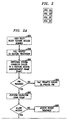
- Fig. 2 is an illustration of on-demand access.
- the caller dials an access number (action block 201).
- the call is routed to a processor in the telephone system (action block 202) which provides access to one or more custom features.
- the processor connects the caller to a Feature Access Announcement Frame (FAAF) and the Front-End Authorization Access Process (FEAAP) (action block 203).
- FAF Feature Access Announcement Frame
- FEAAP Front-End Authorization Access Process
- the access number includes the caller's personal identification number (PIN)
- PIN personal identification number
- the FEAAP performs a validation of the PIN.
- the PIN is requested to verify the authenticity of the request, but verification can also be accomplished by other means, e.g., matching the caller's voice against a prerecorded voice print.
- the FAAF prompts the caller to provide the caller's PIN (action block 204), following which the FEAAP performs validation of the PIN (action block 205). If the FEAAP confirms that the caller is permitted access, the feature processor provides access for the call to proceed (action block 207) as shown in Fig. 2b. If not, a termination process is performed, which may include an announcement to the caller and the switch terminating access (action block 206) as shown in Fig 2a.
- the FAAF responds with a sign-off treatment (action block 208) which may include some type of announcement and the switch terminating access. If the caller confirms custom features access is desired, the FAAF links to both the dialable static data items for the terminal port (action block 209) from which the call originates and an Update Process (UP) (action block 210). With linkage confirmation, the UP accesses the existing feature keys defined by the dialable static data items configuration associated with the port (action block 211).
- UP Update Process
- the UP controls the FAAF to prompt the caller to serially select from a series of options (action block 212) and the UP obtains the signal responses which it manipulates to create interim feature keys (action block 213).
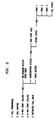
- query/response pattern is: "If you wish to activate call forwarding, press or say 1; if you wish to activate call waiting, press or say 2, -(2)- If you wish call waiting for all phones in your station press or say 1; if you wish call waiting for only the phone from which you are calling, press or say 2. -(2)-.”
- a decision tree example is provided in Fig. 3. Completing the decision tree through to the end of its branch, the FAAF queries the caller whether the new feature selection is accepted. If the caller does not respond or provides a negative response, a reconciliation treatment is performed (action block 214) which may include, among others, any or all of the following: some type of announcement followed by prompted confirmation of each decision in the decision tree; erasure of the selections and the associated interim feature keys and reinitiation of the prompting/response process against the decision tree; the switch terminating the call.
- the UP Upon reaching the termination of the decision tree branch(es), the UP performs a validation on the features and variables selected (action block 215) and the FAAF prompts the caller whether additional features are desired. The process repeats for each custom feature desired (action block 216) as shown in Fig. 2c.
- the UP translates the interim feature keys into new feature keys corresponding to the Custom Feature selections made by the caller and either: (i) creates a shadow static data block and controller on top of and casting a shadow fully or partially over the call process (action block 218) to allocate/manage the system hardware and software as though the shadow static data block items were the part of the actual static data block for the terminal port (action block 219) by filtering the system reference to the actual data block through the static data block; or (ii) stores the original feature keys or static data block items configuration (action block 220) and resets the dialable static data items to the new feature keys configuration (action block 221).
- the FAAF provides the caller with instructions for use of the now available feature(s), including how the feature(s) will be terminated (action block 222) and the feature processor establishes access for the associated hardware and software through the call process for the additional custom features selected and establishes termination triggers in the call process (action block 223).
- the caller then proceeds with conventional call processing (action block 224) and the network posts the system charges to the caller's account (action block 225).
- the call process Upon activation of a termination trigger, illustrated by the decision block so labeled, the call process accesses the UP which either: (i) removes the shadow static data block (action block 227) or (ii) retrieves the original key configuration and resets the key configuration in the static data block to the original settings (action block 228).
- termination triggers include cessation of traffic on the line serving the port, or replacing the handset on the switchhook, or the passage of a period of time. In some instances a termination trigger may not be set permitting the feature to remain active until the caller or the service provider actively modifies feature availability.
- action block 229 the caller's account is accessed and appropriate entries are posted including any one-time charges, subscription charges and unit/time charges incurred as a result of electing any custom feature or its use. Because posting can occur at different times in a call process, it is shown both as action block 225 and action block 229.
- the caller may elect to add a custom feature to his service not as a one-time usage, but as a subscribed feature, as part of the resetting of the dialable static data items or feature keys for the port. It is also possible with our invention to terminate subscribed custom features in the same fashion as they are added, the UP treating the termination of a subscribed feature as an option selected in the decision tree for the feature.
- our invention anticipates that resetting of the feature keys in the static data block may not be desired. Consequently, an alternative is provided in our invention in which a shadow static data block and controller, containing the desired and designated feature keys, is created which controls the call process. We see this most useful with on-demand election of a custom feature. There is no need to place the actual static key configuration in memory nor is there any need to reset the key configuration following call termination. Said another way, the caller's terminal port is bootstrapped by the key features resident in a shadow terminal controller which exist only so long as the on-demand call.
- Feature Processors can be purpose-built to simplify use and access, for example by constructing the access code to be a mnemonic of the feature and having only one feature available from that feature processor.
- a caller can, without reference to a directory because of the caller's easy recall of the mnemonic, dial a desired feature without regard to the location of the feature processor with respect to the local switching system or the features accessible through the actual configuration of the terminal port's static data block; the FEAAP confirms authorization, for example, that a valid calling card number is presented, and the FAAF provides a simple prompt announcement of the calling feature reached and instructions on how to proceed with the call.
- the UP creates a shadow static data block and controller on top of the call process to allocate and manage the public switched telephone network hardware and software as though the actual static data block configuration had provided access to the feature.
Landscapes
- Engineering & Computer Science (AREA)
- Signal Processing (AREA)
- Computer Networks & Wireless Communication (AREA)
- Telephonic Communication Services (AREA)
- Exchange Systems With Centralized Control (AREA)
- Lubricants (AREA)
- Adhesives Or Adhesive Processes (AREA)
- Mobile Radio Communication Systems (AREA)
- Stored Programmes (AREA)
Claims (10)
- Automatisiertes Verfahren zum vorübergehenden Bereitstellen von zusätzlichen Diensten-bei-Bedarf als Teil eines Anrufprozesses (32) für einen Terminalport (3) eines Anrufers in einem Telekommunikationsnetz, wobei das Verfahren die folgenden Schritte umfasst:Zugreifen, durch einen Merkmals-Prozessor (51), auf einen Block von Daten in einem ersten Bereich (9) des Netzes, der Dienste definiert, die dann für die Terminalport (3) des Anrufers verfügbar sind;Zugreifen, durch den Merkmals-prozessor (51), auf einen Block von Daten in einem zweiten Bereich des Netzes, der zusätzliche Dienste definiert, die für das Netz verfügbar sind;Empfangen von Bedarfs-Eingaben, die von einem Anrufer initiiert werden;Versehen des zweiten Bereichs des Netzes unter Verwendung des Merkmalsprozessors (51) mit Daten, die einen oder mehrere zusätzliche Dienste identifizieren, wie für den Anrufprozess gewählt;Überlagern der Daten in dem ersten Bereich (9) mit den Daten in dem zweiten Bereich, während die Daten in dem ersten Bereich durch das Überlagern unverändert gelassen werden, wobei wenigstens ein Abschnitt der Daten des zweiten Bereichs wenigstens einen Bereich der Daten des ersten Bereichs überschattet, um dadurch den Anrufprozess (32) zu steuern und dem Anrufer von den zusätzlichen Diensten, die in den Daten des zweiten Bereichs definiert sind, zusätzliche Dienste an dem Port (3) vorübergehend während des Anrufprozesses bereitzustellen; undautomatisches Entfernen des zweiten Bereichs auf eine Erfüllung des Bedarfs hin.
- Verfahren nach Anspruch 1, wobei ein Zugreifen die folgenden Schritte umfasst:Empfangen von Autorisierungssignalen, die von dem Anrufer bereitgestellt werden, und Verifizieren der Autorisierungssignale an dem Prozessor.
- Verfahren nach Anspruch 1 oder 2, wobei ein Wählen der zusätzlichen Dienste die folgenden Schritte umfasst:Empfangen von Signalen, die eine zusätzliche Kundenmerkmalsdienst-Auswahl des Anrufers umfasst; undHalten jeder Auswahl, die getätigt wird.
- Verfahren nach Anspruch 3, wobei ein Wählen der zusätzlichen Dienste ferner umfasst:Anbieten von Auswahlmöglichkeiten an dem Anrufer über einen Anbietungsprozess.
- Verfahren nach Anspruch 4, wobei der Anbietungsprozess basiert auf und konsistent ist mit einem Verzweigungsentscheidungsbaum, der genommenen Abzweigung von Angeboten und dem nächsten initiierten Angebot bestimmt durch jede vorangehende Auswahl des Anrufers.
- Verfahren nach irgendeinem vorangehenden Anspruch und ferner umfassend:Verifizieren, dass die zusätzlichen Dienste, die gewählt werden, konsistent mit den Diensten sind, die an dem Port (3) verfügbar sind, durch Vergleichen der zusätzlichen Dienste mit Merkmalen, die das Netz als für den Port verfügbar definiert.
- Verfahren nach irgendeinem vorangehenden Anspruch und ferner umfassend die folgenden Schritte:Einrichten wenigstens eines Triggers in dem Telekommunikationsnetz; undEntfernen der Daten in dem zweiten Bereich von über den Daten in dem ersten Bereich (9) einer Aktivierung des Triggers folgend.
- Verfahren nach irgendeinem vorangehenden Anspruch, ferner umfassend:Belasten wenigstens eines definierten Kontos für die Auswahl des einen oder der mehreren zusätzlichen Dienste oder für die Verwendung des einen oder der mehreren zusätzlichen Dienste.
- Verfahren nach irgendeinem vorangehenden Anspruch, bei dem die zusätzlichen Dienste für entweder eine einmalige Verwendung oder eine Verwendung im Rahmen einer Teilnahmeberechtigung gewählt werden.
- Automatisierte Vorrichtung, um bei Bedarf von einem Anrufer einen oder mehrere zusätzliche Dienste für einen Terminalport (3) in einem Telefonnetz bereitzustellen, wobei die Vorrichtung umfasst:einen Block von Daten in einem ersten Bereich (9) des Netzes, der Dienste definiert, die dann für den Anrufer verfügbar sind,einen Merkmalsprozessor (51), der interaktiv ein oder mehrere zusätzliche Dienste mit einer Eingabe von dem Anrufer definiert;einen Datenblock in einem zweiten Bereich des Netzes geschaffen durch den Merkmalsprozessor (51), der die definierten zusätzlichen Dienste darstellt, wobei wenigstens ein Abschnitt des Datenblocks in dem zweiten Bereich wenigstens einen Abschnitt des Datenblocks in dem ersten Bereich (9) überschattet, um dadurch einen Anrufprozess (32) zu steuern; undeinen Controller (40) in dem Netz, der auf den Datenblock in dem zweiten Bereich zugreift, wobei das Netz die gewünschten KundenmerkmaIs-Dienste an dem Port (3) bereitstellt.
Applications Claiming Priority (2)
| Application Number | Priority Date | Filing Date | Title |
|---|---|---|---|
| US08/258,197 US5544236A (en) | 1994-06-10 | 1994-06-10 | Access to unsubscribed features |
| US258197 | 1994-06-10 |
Publications (3)
| Publication Number | Publication Date |
|---|---|
| EP0687094A2 EP0687094A2 (de) | 1995-12-13 |
| EP0687094A3 EP0687094A3 (de) | 1998-12-02 |
| EP0687094B1 true EP0687094B1 (de) | 2004-07-07 |
Family
ID=22979513
Family Applications (1)
| Application Number | Title | Priority Date | Filing Date |
|---|---|---|---|
| EP95303628A Expired - Lifetime EP0687094B1 (de) | 1994-06-10 | 1995-05-30 | Zugriff auf nicht abonnierte Merkmale |
Country Status (7)
| Country | Link |
|---|---|
| US (1) | US5544236A (de) |
| EP (1) | EP0687094B1 (de) |
| JP (1) | JP3315024B2 (de) |
| AT (1) | ATE270806T1 (de) |
| CA (1) | CA2148021C (de) |
| DE (1) | DE69533234T2 (de) |
| PL (1) | PL308950A1 (de) |
Families Citing this family (93)
| Publication number | Priority date | Publication date | Assignee | Title |
|---|---|---|---|---|
| DE4425395A1 (de) * | 1994-07-19 | 1996-01-25 | Philips Patentverwaltung | Kommunikationssystem |
| US5751802A (en) * | 1994-12-27 | 1998-05-12 | At & T Corp | Telecommunications service provisioning |
| US5761288A (en) * | 1995-06-05 | 1998-06-02 | Mitel Corporation | Service context sensitive features and applications |
| KR0154472B1 (ko) * | 1995-11-21 | 1998-11-16 | 유기범 | 전전자 교환기에 있어서 적응적인 특수서비스 사용절차 처리장치 및 방법 |
| US5745553A (en) * | 1996-04-16 | 1998-04-28 | At&T Corp. | On-demand communications services |
| DE19626131A1 (de) * | 1996-06-28 | 1998-01-08 | Sel Alcatel Ag | Verfahren zum Einbringen eines Telekommunikations-Dienstes sowie Dienst-Einheit, Dienstrechner, Endgerät und Kommunikationsnetz |
| US5774531A (en) * | 1996-08-21 | 1998-06-30 | Mci Communications Corporation | Telecommunications system and method for automatic call processing according foregoing inbound and outbound calls to arbitrary delegates |
| US6058167A (en) * | 1996-10-17 | 2000-05-02 | Siemens Information And Communication Networks, Inc. | Apparatus and method to provide a functional and more user-friendly interface for downloaded ISDN telephony features |
| US6031904A (en) * | 1996-10-23 | 2000-02-29 | Nortel Networks Corporation | Service order mechanism for telephone subscriber |
| US5732131A (en) * | 1996-11-19 | 1998-03-24 | Bellsouth Corporation | System and method for implementing local number portability |
| US5933484A (en) * | 1996-12-16 | 1999-08-03 | At&T Corp | Method for providing a menu to a subscriber on a switched communications network |
| US6031903A (en) * | 1996-12-16 | 2000-02-29 | At&T Corp | Method for expediting access to services on a switched communications network |
| FI113823B (fi) | 1997-03-13 | 2004-06-15 | Nokia Corp | Järjestelmä palvelutietojen käsittelemiseksi tietoliikennejärjestelmässä |
| US6061439A (en) * | 1997-03-27 | 2000-05-09 | Nortel Networks Corporation | Method and apparatus for providing subscriber services to a telephone |
| US5898772A (en) * | 1997-05-29 | 1999-04-27 | Lucent Technologies Inc. | Logical PC agent |
| US6173047B1 (en) | 1997-08-11 | 2001-01-09 | Dale W. Malik | System and method for temporary voicemail service |
| US6173048B1 (en) * | 1997-08-11 | 2001-01-09 | Bellsouth Intellectual Property Corporation | System and method for notifying a customer of a call from a particular number |
| US6181787B1 (en) | 1997-08-11 | 2001-01-30 | Bellsouth Intellectual Property Corporation | System and method for automated provision and customer selection of temporary advanced intelligent network services |
| US6173049B1 (en) | 1997-08-11 | 2001-01-09 | Bellsouth Intellectual Property Corporation | System and method for automated provision and customer selection of temporary caller identification services |
| US6188757B1 (en) | 1997-08-11 | 2001-02-13 | Bellsouth Intellectual Property Corporation | System and method for automatic provision customer selection, and deactivation of temporary advance intelligent network services |
| DE69817527T2 (de) | 1998-01-12 | 2004-08-05 | Alcatel | Dienstaktivierung |
| FI108499B (fi) | 1998-02-03 | 2002-01-31 | Nokia Corp | Palvelujen tarjoaminen tietoliikenneverkossa |
| FI108497B (fi) | 1998-02-03 | 2002-01-31 | Nokia Corp | Palvelujen tarjoaminen tietoliikenneverkossa |
| FI108495B (fi) | 1998-02-03 | 2002-01-31 | Nokia Corp | Palvelujen tarjoaminen tietoliikenneverkossa |
| FI108496B (fi) | 1998-02-03 | 2002-01-31 | Nokia Corp | Palvelujen tarjoaminen tietoliikenneverkossa |
| FI108325B (fi) * | 1998-02-03 | 2001-12-31 | Nokia Corp | Palvelujen tarjoaminen tietoliikenneverkossa |
| NO313027B1 (no) * | 1998-03-06 | 2002-07-29 | Ericsson Telefon Ab L M | Fremgangsmåte for å forbedre en nettstruktur, spesielt et intelligent nett |
| US6192242B1 (en) * | 1998-03-16 | 2001-02-20 | Lucent Technologies Inc. | Method for poring a mobile directory number from one wireless service provider to another |
| US6504912B1 (en) | 1998-07-07 | 2003-01-07 | At&T Corp. | Method of initiating a call feature request |
| US6396914B1 (en) * | 1998-11-20 | 2002-05-28 | At&T Corp. | Method and system for transmitting activation codes to a communication device |
| US6385311B1 (en) * | 1999-06-23 | 2002-05-07 | At&T Corp. | Real-time usage-based spontaneous subscription service |
| US6668317B1 (en) | 1999-08-31 | 2003-12-23 | Intel Corporation | Microengine for parallel processor architecture |
| US6427196B1 (en) | 1999-08-31 | 2002-07-30 | Intel Corporation | SRAM controller for parallel processor architecture including address and command queue and arbiter |
| US6983350B1 (en) | 1999-08-31 | 2006-01-03 | Intel Corporation | SDRAM controller for parallel processor architecture |
| US7191309B1 (en) | 1999-09-01 | 2007-03-13 | Intel Corporation | Double shift instruction for micro engine used in multithreaded parallel processor architecture |
| WO2001016702A1 (en) | 1999-09-01 | 2001-03-08 | Intel Corporation | Register set used in multithreaded parallel processor architecture |
| HK1046049A1 (zh) | 1999-09-01 | 2002-12-20 | Intel Corporation | 用於多线程处理器的分支指令 |
| US6532509B1 (en) | 1999-12-22 | 2003-03-11 | Intel Corporation | Arbitrating command requests in a parallel multi-threaded processing system |
| US6694380B1 (en) | 1999-12-27 | 2004-02-17 | Intel Corporation | Mapping requests from a processing unit that uses memory-mapped input-output space |
| US6631430B1 (en) * | 1999-12-28 | 2003-10-07 | Intel Corporation | Optimizations to receive packet status from fifo bus |
| US6625654B1 (en) | 1999-12-28 | 2003-09-23 | Intel Corporation | Thread signaling in multi-threaded network processor |
| US7620702B1 (en) | 1999-12-28 | 2009-11-17 | Intel Corporation | Providing real-time control data for a network processor |
| US6307789B1 (en) * | 1999-12-28 | 2001-10-23 | Intel Corporation | Scratchpad memory |
| US6661794B1 (en) | 1999-12-29 | 2003-12-09 | Intel Corporation | Method and apparatus for gigabit packet assignment for multithreaded packet processing |
| US6952824B1 (en) | 1999-12-30 | 2005-10-04 | Intel Corporation | Multi-threaded sequenced receive for fast network port stream of packets |
| US6584522B1 (en) | 1999-12-30 | 2003-06-24 | Intel Corporation | Communication between processors |
| US6976095B1 (en) * | 1999-12-30 | 2005-12-13 | Intel Corporation | Port blocking technique for maintaining receive packet ordering for a multiple ethernet port switch |
| US7480706B1 (en) | 1999-12-30 | 2009-01-20 | Intel Corporation | Multi-threaded round-robin receive for fast network port |
| US6661881B1 (en) * | 2000-02-15 | 2003-12-09 | Lucent Technologies Inc. | Method and system for controlling functional capabilities of a telephonic switch employing control and status messages |
| US7039175B1 (en) * | 2000-06-02 | 2006-05-02 | Cisco Technology, Inc. | Configurable digit collection for various signaling protocols |
| US7681018B2 (en) * | 2000-08-31 | 2010-03-16 | Intel Corporation | Method and apparatus for providing large register address space while maximizing cycletime performance for a multi-threaded register file set |
| US20020053017A1 (en) * | 2000-09-01 | 2002-05-02 | Adiletta Matthew J. | Register instructions for a multithreaded processor |
| US7020871B2 (en) * | 2000-12-21 | 2006-03-28 | Intel Corporation | Breakpoint method for parallel hardware threads in multithreaded processor |
| US7376225B2 (en) * | 2001-07-27 | 2008-05-20 | Motorola, Inc. | Method for feature transfer in a telecommunication network |
| US6868476B2 (en) * | 2001-08-27 | 2005-03-15 | Intel Corporation | Software controlled content addressable memory in a general purpose execution datapath |
| US7487505B2 (en) | 2001-08-27 | 2009-02-03 | Intel Corporation | Multithreaded microprocessor with register allocation based on number of active threads |
| US7216204B2 (en) | 2001-08-27 | 2007-05-08 | Intel Corporation | Mechanism for providing early coherency detection to enable high performance memory updates in a latency sensitive multithreaded environment |
| US7225281B2 (en) | 2001-08-27 | 2007-05-29 | Intel Corporation | Multiprocessor infrastructure for providing flexible bandwidth allocation via multiple instantiations of separate data buses, control buses and support mechanisms |
| US7126952B2 (en) | 2001-09-28 | 2006-10-24 | Intel Corporation | Multiprotocol decapsulation/encapsulation control structure and packet protocol conversion method |
| US7487233B2 (en) * | 2001-12-05 | 2009-02-03 | Canon Kabushiki Kaisha | Device access based on centralized authentication |
| US7158964B2 (en) * | 2001-12-12 | 2007-01-02 | Intel Corporation | Queue management |
| US7107413B2 (en) * | 2001-12-17 | 2006-09-12 | Intel Corporation | Write queue descriptor count instruction for high speed queuing |
| US7269179B2 (en) * | 2001-12-18 | 2007-09-11 | Intel Corporation | Control mechanisms for enqueue and dequeue operations in a pipelined network processor |
| US7895239B2 (en) | 2002-01-04 | 2011-02-22 | Intel Corporation | Queue arrays in network devices |
| US7181573B2 (en) * | 2002-01-07 | 2007-02-20 | Intel Corporation | Queue array caching in network devices |
| US6934951B2 (en) | 2002-01-17 | 2005-08-23 | Intel Corporation | Parallel processor with functional pipeline providing programming engines by supporting multiple contexts and critical section |
| US7181594B2 (en) * | 2002-01-25 | 2007-02-20 | Intel Corporation | Context pipelines |
| US7610451B2 (en) | 2002-01-25 | 2009-10-27 | Intel Corporation | Data transfer mechanism using unidirectional pull bus and push bus |
| US7149226B2 (en) * | 2002-02-01 | 2006-12-12 | Intel Corporation | Processing data packets |
| US7437724B2 (en) * | 2002-04-03 | 2008-10-14 | Intel Corporation | Registers for data transfers |
| US7471688B2 (en) | 2002-06-18 | 2008-12-30 | Intel Corporation | Scheduling system for transmission of cells to ATM virtual circuits and DSL ports |
| US8472608B2 (en) | 2002-07-10 | 2013-06-25 | Blake Bookstaff | Method and system for providing directory assistance to erroneous telephone calls |
| US8254547B2 (en) * | 2002-07-10 | 2012-08-28 | Blake Bookstaff | Method and system for providing directory assistance to erroneous telephone calls |
| US8693664B2 (en) | 2002-07-10 | 2014-04-08 | Blake Bookstaff | Method and system for providing directory assistance to erroneous telephone calls |
| US7227936B2 (en) * | 2002-07-10 | 2007-06-05 | Blake Bookstaff | Method and system for providing directory assistance to erroneous telephone calls |
| US8472607B2 (en) | 2002-07-10 | 2013-06-25 | Blake Bookstaff | Method and system for providing directory assistance to erroneous telephone calls |
| US8913732B2 (en) | 2002-07-10 | 2014-12-16 | Blake Bookstaff | Method and system for providing directory assistance to erroneous telephone calls via wearable devices |
| US8254548B2 (en) * | 2002-07-10 | 2012-08-28 | Blake Bookstaff | Method and system for providing directory assistance to erroneous telephone calls |
| US7337275B2 (en) | 2002-08-13 | 2008-02-26 | Intel Corporation | Free list and ring data structure management |
| US7352769B2 (en) | 2002-09-12 | 2008-04-01 | Intel Corporation | Multiple calendar schedule reservation structure and method |
| US7433307B2 (en) | 2002-11-05 | 2008-10-07 | Intel Corporation | Flow control in a network environment |
| US8495047B2 (en) | 2004-06-29 | 2013-07-23 | Blake Bookstaff | Method and system for automated intelligent electronic advertising |
| US8913728B2 (en) | 2002-11-07 | 2014-12-16 | Blake Bookstaff | Method and system for automated intellegent advertising on wearable devices |
| US8611517B2 (en) | 2002-11-07 | 2013-12-17 | Blake Bookstaff | Method and system for alphanumeric indexing for advertising with cloud computing |
| US8363806B2 (en) | 2002-11-07 | 2013-01-29 | Blake Bookstaff | Method and system for alphanumeric indexing for advertising via cloud computing |
| US7187761B2 (en) * | 2002-11-07 | 2007-03-06 | Blake Bookstaff | Method and system for providing advertising to telephone callers |
| US8130928B2 (en) * | 2002-11-07 | 2012-03-06 | Blake Bookstaff | Method and system for number indexing for advertising |
| US8542809B2 (en) | 2002-11-07 | 2013-09-24 | Blake Bookstaff | Method and system for alphanumeric indexing for advertising with cloud computing |
| US6941438B2 (en) | 2003-01-10 | 2005-09-06 | Intel Corporation | Memory interleaving |
| US7443836B2 (en) | 2003-06-16 | 2008-10-28 | Intel Corporation | Processing a data packet |
| US7213099B2 (en) | 2003-12-30 | 2007-05-01 | Intel Corporation | Method and apparatus utilizing non-uniformly distributed DRAM configurations and to detect in-range memory address matches |
| US9792633B2 (en) | 2004-06-29 | 2017-10-17 | Blake Bookstaff | Method and system for intelligent processing of electronic information with cloud computing |
| US8078977B2 (en) | 2004-06-29 | 2011-12-13 | Blake Bookstaff | Method and system for intelligent processing of electronic information |
Family Cites Families (8)
| Publication number | Priority date | Publication date | Assignee | Title |
|---|---|---|---|---|
| US4232199A (en) * | 1978-10-18 | 1980-11-04 | Summa Four, Inc. | Special services add-on for dial pulse activated telephone switching office |
| CA1222586A (en) * | 1983-11-11 | 1987-06-02 | Tadahiko Akiyama | Personal-servicing communication system |
| US4747127A (en) * | 1985-12-23 | 1988-05-24 | American Telephone And Telegraph Company, At&T Bell Laboratories | Customer programmable real-time system |
| US4897866A (en) * | 1988-10-19 | 1990-01-30 | American Telephone And Telegraph Company, At&T Bell Laboratories | Telecommunication system with subscriber controlled feature modification |
| US5222120A (en) * | 1990-04-23 | 1993-06-22 | Mci Communications Corporation | Long distance telephone switching system with enhanced subscriber services |
| US5187735A (en) * | 1990-05-01 | 1993-02-16 | Tele Guia Talking Yellow Pages, Inc. | Integrated voice-mail based voice and information processing system |
| US5353339A (en) * | 1992-05-20 | 1994-10-04 | At&T Bell Laboratories | Simplified uniform network provisioning and restoration |
| DE69332632T2 (de) * | 1992-06-30 | 2003-06-26 | Siemens Information And Communication Networks, Inc. | Anrufverarbeitungssystem |
-
1994
- 1994-06-10 US US08/258,197 patent/US5544236A/en not_active Expired - Lifetime
-
1995
- 1995-04-27 CA CA002148021A patent/CA2148021C/en not_active Expired - Fee Related
- 1995-05-30 AT AT95303628T patent/ATE270806T1/de not_active IP Right Cessation
- 1995-05-30 DE DE69533234T patent/DE69533234T2/de not_active Expired - Fee Related
- 1995-05-30 EP EP95303628A patent/EP0687094B1/de not_active Expired - Lifetime
- 1995-06-06 PL PL95308950A patent/PL308950A1/xx unknown
- 1995-06-09 JP JP16707495A patent/JP3315024B2/ja not_active Expired - Fee Related
Also Published As
| Publication number | Publication date |
|---|---|
| CA2148021A1 (en) | 1995-12-11 |
| ATE270806T1 (de) | 2004-07-15 |
| DE69533234T2 (de) | 2005-09-08 |
| PL308950A1 (en) | 1995-12-11 |
| DE69533234D1 (de) | 2004-08-12 |
| JP3315024B2 (ja) | 2002-08-19 |
| EP0687094A3 (de) | 1998-12-02 |
| US5544236A (en) | 1996-08-06 |
| EP0687094A2 (de) | 1995-12-13 |
| CA2148021C (en) | 1999-03-23 |
| JPH0865720A (ja) | 1996-03-08 |
Similar Documents
| Publication | Publication Date | Title |
|---|---|---|
| EP0687094B1 (de) | Zugriff auf nicht abonnierte Merkmale | |
| US5436957A (en) | Subscriber control of access restrictions on a plurality of the subscriber's telephone lines | |
| US5758286A (en) | Method for accomplishing a mobile telecommunications connection using abbreviated dialing | |
| US6324269B1 (en) | Method and system for billing remote calls as if made from a primary line | |
| US5577110A (en) | Access to capabilities of other telephone stations | |
| EP0820207B1 (de) | Verfahren und System für automatische Aktivierung eines schnurlosen Geräts | |
| EP0531048B1 (de) | Verfahren zur Bereitstellung von personalisierten Fernsprechanrufmerkmalen | |
| US5926754A (en) | Directory assistance call processing systems and related methods | |
| JP3038013B2 (ja) | 加入者接続から電話交換機のオペレーションを制御するための方法およびシステム | |
| US6108540A (en) | Multi-profile subscriber | |
| JP2987932B2 (ja) | 情報ネットワーク | |
| EP1771019A1 (de) | Teilnehmeridentitätsvorrichtung der drahtlos angeschlossen an einem Kommunikationsendgerät ist | |
| JPH09503106A (ja) | 加入者がリアルタイムにて呼機能を変更できるようにするための方法 | |
| US6807258B1 (en) | Method and system for billing remote calls as if made from a primary line | |
| CN1149372A (zh) | 对移动用户呼叫分类的方法 | |
| WO1997001253A1 (en) | Communication network having replaceable sim card | |
| US6647106B1 (en) | Privacy screening service with a bypass code | |
| US7916847B2 (en) | Consolidated access and administration of customized telephone calling services | |
| WO1998021900A1 (en) | Method and arrangement for call forwarding in intelligent network | |
| CN1333972A (zh) | 预付储金的方法和装置 | |
| FI100442B (fi) | Menetelmä ja järjestelmä puhelujen ohjaamiseksi televerkossa | |
| US6178238B1 (en) | Speed calling when away from home | |
| WO1999040714A1 (en) | System and method for changing a-number | |
| CA2301341A1 (en) | Prepaid billing method for communication systems | |
| EP0815696B1 (de) | Intelligenter knoten in einem telekommunikationssystem |
Legal Events
| Date | Code | Title | Description |
|---|---|---|---|
| PUAI | Public reference made under article 153(3) epc to a published international application that has entered the european phase |
Free format text: ORIGINAL CODE: 0009012 |
|
| AK | Designated contracting states |
Kind code of ref document: A2 Designated state(s): AT BE CH DE ES FR GB IT LI NL SE |
|
| PUAL | Search report despatched |
Free format text: ORIGINAL CODE: 0009013 |
|
| AK | Designated contracting states |
Kind code of ref document: A3 Designated state(s): AT BE CH DE ES FR GB IT LI NL SE |
|
| 17P | Request for examination filed |
Effective date: 19990601 |
|
| 17Q | First examination report despatched |
Effective date: 20020927 |
|
| GRAP | Despatch of communication of intention to grant a patent |
Free format text: ORIGINAL CODE: EPIDOSNIGR1 |
|
| GRAS | Grant fee paid |
Free format text: ORIGINAL CODE: EPIDOSNIGR3 |
|
| GRAA | (expected) grant |
Free format text: ORIGINAL CODE: 0009210 |
|
| AK | Designated contracting states |
Kind code of ref document: B1 Designated state(s): AT BE CH DE ES FR GB IT LI NL SE |
|
| PG25 | Lapsed in a contracting state [announced via postgrant information from national office to epo] |
Ref country code: NL Free format text: LAPSE BECAUSE OF FAILURE TO SUBMIT A TRANSLATION OF THE DESCRIPTION OR TO PAY THE FEE WITHIN THE PRESCRIBED TIME-LIMIT Effective date: 20040707 Ref country code: LI Free format text: LAPSE BECAUSE OF FAILURE TO SUBMIT A TRANSLATION OF THE DESCRIPTION OR TO PAY THE FEE WITHIN THE PRESCRIBED TIME-LIMIT Effective date: 20040707 Ref country code: IT Free format text: LAPSE BECAUSE OF FAILURE TO SUBMIT A TRANSLATION OF THE DESCRIPTION OR TO PAY THE FEE WITHIN THE PRE;WARNING: LAPSES OF ITALIAN PATENTS WITH EFFECTIVE DATE BEFORE 2007 MAY HAVE OCCURRED AT ANY TIME BEFORE 2007. THE CORRECT EFFECTIVE DATE MAY BE DIFFERENT FROM THE ONE RECORDED.SCRIBED TIME-LIMIT Effective date: 20040707 Ref country code: CH Free format text: LAPSE BECAUSE OF FAILURE TO SUBMIT A TRANSLATION OF THE DESCRIPTION OR TO PAY THE FEE WITHIN THE PRESCRIBED TIME-LIMIT Effective date: 20040707 Ref country code: BE Free format text: LAPSE BECAUSE OF FAILURE TO SUBMIT A TRANSLATION OF THE DESCRIPTION OR TO PAY THE FEE WITHIN THE PRESCRIBED TIME-LIMIT Effective date: 20040707 Ref country code: AT Free format text: LAPSE BECAUSE OF FAILURE TO SUBMIT A TRANSLATION OF THE DESCRIPTION OR TO PAY THE FEE WITHIN THE PRESCRIBED TIME-LIMIT Effective date: 20040707 |
|
| REG | Reference to a national code |
Ref country code: GB Ref legal event code: FG4D |
|
| REG | Reference to a national code |
Ref country code: CH Ref legal event code: EP |
|
| REF | Corresponds to: |
Ref document number: 69533234 Country of ref document: DE Date of ref document: 20040812 Kind code of ref document: P |
|
| PG25 | Lapsed in a contracting state [announced via postgrant information from national office to epo] |
Ref country code: SE Free format text: LAPSE BECAUSE OF FAILURE TO SUBMIT A TRANSLATION OF THE DESCRIPTION OR TO PAY THE FEE WITHIN THE PRESCRIBED TIME-LIMIT Effective date: 20041007 |
|
| PG25 | Lapsed in a contracting state [announced via postgrant information from national office to epo] |
Ref country code: ES Free format text: LAPSE BECAUSE OF FAILURE TO SUBMIT A TRANSLATION OF THE DESCRIPTION OR TO PAY THE FEE WITHIN THE PRESCRIBED TIME-LIMIT Effective date: 20041018 |
|
| NLV1 | Nl: lapsed or annulled due to failure to fulfill the requirements of art. 29p and 29m of the patents act | ||
| REG | Reference to a national code |
Ref country code: CH Ref legal event code: PL |
|
| ET | Fr: translation filed | ||
| PLBE | No opposition filed within time limit |
Free format text: ORIGINAL CODE: 0009261 |
|
| STAA | Information on the status of an ep patent application or granted ep patent |
Free format text: STATUS: NO OPPOSITION FILED WITHIN TIME LIMIT |
|
| 26N | No opposition filed |
Effective date: 20050408 |
|
| PGFP | Annual fee paid to national office [announced via postgrant information from national office to epo] |
Ref country code: FR Payment date: 20090507 Year of fee payment: 15 Ref country code: DE Payment date: 20090529 Year of fee payment: 15 |
|
| PGFP | Annual fee paid to national office [announced via postgrant information from national office to epo] |
Ref country code: GB Payment date: 20090407 Year of fee payment: 15 |
|
| GBPC | Gb: european patent ceased through non-payment of renewal fee |
Effective date: 20100530 |
|
| REG | Reference to a national code |
Ref country code: FR Ref legal event code: ST Effective date: 20110131 |
|
| PG25 | Lapsed in a contracting state [announced via postgrant information from national office to epo] |
Ref country code: DE Free format text: LAPSE BECAUSE OF NON-PAYMENT OF DUE FEES Effective date: 20101201 |
|
| PG25 | Lapsed in a contracting state [announced via postgrant information from national office to epo] |
Ref country code: FR Free format text: LAPSE BECAUSE OF NON-PAYMENT OF DUE FEES Effective date: 20100531 |
|
| PG25 | Lapsed in a contracting state [announced via postgrant information from national office to epo] |
Ref country code: GB Free format text: LAPSE BECAUSE OF NON-PAYMENT OF DUE FEES Effective date: 20100530 |