EP0687186B1 - Verfahren zur herstellung einer schutzsperre gegen virus - Google Patents
Verfahren zur herstellung einer schutzsperre gegen virus Download PDFInfo
- Publication number
- EP0687186B1 EP0687186B1 EP93916872A EP93916872A EP0687186B1 EP 0687186 B1 EP0687186 B1 EP 0687186B1 EP 93916872 A EP93916872 A EP 93916872A EP 93916872 A EP93916872 A EP 93916872A EP 0687186 B1 EP0687186 B1 EP 0687186B1
- Authority
- EP
- European Patent Office
- Prior art keywords
- barrier material
- barrier
- viral
- proofing
- holes
- Prior art date
- Legal status (The legal status is an assumption and is not a legal conclusion. Google has not performed a legal analysis and makes no representation as to the accuracy of the status listed.)
- Expired - Lifetime
Links
Images
Classifications
-
- A—HUMAN NECESSITIES
- A61—MEDICAL OR VETERINARY SCIENCE; HYGIENE
- A61F—FILTERS IMPLANTABLE INTO BLOOD VESSELS; PROSTHESES; DEVICES PROVIDING PATENCY TO, OR PREVENTING COLLAPSING OF, TUBULAR STRUCTURES OF THE BODY, e.g. STENTS; ORTHOPAEDIC, NURSING OR CONTRACEPTIVE DEVICES; FOMENTATION; TREATMENT OR PROTECTION OF EYES OR EARS; BANDAGES, DRESSINGS OR ABSORBENT PADS; FIRST-AID KITS
- A61F6/00—Contraceptive devices; Pessaries; Applicators therefor
- A61F6/02—Contraceptive devices; Pessaries; Applicators therefor for use by males
- A61F6/04—Condoms, sheaths or the like, e.g. combined with devices protecting against contagion
-
- A—HUMAN NECESSITIES
- A61—MEDICAL OR VETERINARY SCIENCE; HYGIENE
- A61B—DIAGNOSIS; SURGERY; IDENTIFICATION
- A61B42/00—Surgical gloves; Finger-stalls specially adapted for surgery; Devices for handling or treatment thereof
-
- A—HUMAN NECESSITIES
- A61—MEDICAL OR VETERINARY SCIENCE; HYGIENE
- A61F—FILTERS IMPLANTABLE INTO BLOOD VESSELS; PROSTHESES; DEVICES PROVIDING PATENCY TO, OR PREVENTING COLLAPSING OF, TUBULAR STRUCTURES OF THE BODY, e.g. STENTS; ORTHOPAEDIC, NURSING OR CONTRACEPTIVE DEVICES; FOMENTATION; TREATMENT OR PROTECTION OF EYES OR EARS; BANDAGES, DRESSINGS OR ABSORBENT PADS; FIRST-AID KITS
- A61F13/00—Bandages or dressings; Absorbent pads
-
- A—HUMAN NECESSITIES
- A61—MEDICAL OR VETERINARY SCIENCE; HYGIENE
- A61L—METHODS OR APPARATUS FOR STERILISING MATERIALS OR OBJECTS IN GENERAL; DISINFECTION, STERILISATION OR DEODORISATION OF AIR; CHEMICAL ASPECTS OF BANDAGES, DRESSINGS, ABSORBENT PADS OR SURGICAL ARTICLES; MATERIALS FOR BANDAGES, DRESSINGS, ABSORBENT PADS OR SURGICAL ARTICLES
- A61L2/00—Disinfection or sterilisation of materials or objects, in general; Accessories therefor
- A61L2/16—Disinfection or sterilisation of materials or objects, in general; Accessories therefor using chemical substances
- A61L2/18—Liquid substances
-
- A—HUMAN NECESSITIES
- A61—MEDICAL OR VETERINARY SCIENCE; HYGIENE
- A61L—METHODS OR APPARATUS FOR STERILISING MATERIALS OR OBJECTS IN GENERAL; DISINFECTION, STERILISATION OR DEODORISATION OF AIR; CHEMICAL ASPECTS OF BANDAGES, DRESSINGS, ABSORBENT PADS OR SURGICAL ARTICLES; MATERIALS FOR BANDAGES, DRESSINGS, ABSORBENT PADS OR SURGICAL ARTICLES
- A61L31/00—Materials for other surgical articles, e.g. stents, stent-grafts, shunts, surgical drapes, guide wires, materials for adhesion prevention, occluding devices, surgical gloves, tissue fixation devices
- A61L31/08—Materials for coatings
- A61L31/10—Macromolecular materials
-
- A—HUMAN NECESSITIES
- A61—MEDICAL OR VETERINARY SCIENCE; HYGIENE
- A61L—METHODS OR APPARATUS FOR STERILISING MATERIALS OR OBJECTS IN GENERAL; DISINFECTION, STERILISATION OR DEODORISATION OF AIR; CHEMICAL ASPECTS OF BANDAGES, DRESSINGS, ABSORBENT PADS OR SURGICAL ARTICLES; MATERIALS FOR BANDAGES, DRESSINGS, ABSORBENT PADS OR SURGICAL ARTICLES
- A61L31/00—Materials for other surgical articles, e.g. stents, stent-grafts, shunts, surgical drapes, guide wires, materials for adhesion prevention, occluding devices, surgical gloves, tissue fixation devices
- A61L31/14—Materials characterised by their function or physical properties, e.g. injectable or lubricating compositions, shape-memory materials, surface modified materials
- A61L31/16—Biologically active materials, e.g. therapeutic substances
-
- A—HUMAN NECESSITIES
- A61—MEDICAL OR VETERINARY SCIENCE; HYGIENE
- A61F—FILTERS IMPLANTABLE INTO BLOOD VESSELS; PROSTHESES; DEVICES PROVIDING PATENCY TO, OR PREVENTING COLLAPSING OF, TUBULAR STRUCTURES OF THE BODY, e.g. STENTS; ORTHOPAEDIC, NURSING OR CONTRACEPTIVE DEVICES; FOMENTATION; TREATMENT OR PROTECTION OF EYES OR EARS; BANDAGES, DRESSINGS OR ABSORBENT PADS; FIRST-AID KITS
- A61F13/00—Bandages or dressings; Absorbent pads
- A61F2013/00361—Plasters
- A61F2013/00902—Plasters containing means
- A61F2013/0091—Plasters containing means with disinfecting or anaesthetics means, e.g. anti-mycrobic
-
- A—HUMAN NECESSITIES
- A61—MEDICAL OR VETERINARY SCIENCE; HYGIENE
- A61L—METHODS OR APPARATUS FOR STERILISING MATERIALS OR OBJECTS IN GENERAL; DISINFECTION, STERILISATION OR DEODORISATION OF AIR; CHEMICAL ASPECTS OF BANDAGES, DRESSINGS, ABSORBENT PADS OR SURGICAL ARTICLES; MATERIALS FOR BANDAGES, DRESSINGS, ABSORBENT PADS OR SURGICAL ARTICLES
- A61L2103/00—Materials or objects being the target of disinfection or sterilisation
- A61L2103/05—Living organisms or biological materials
-
- A—HUMAN NECESSITIES
- A61—MEDICAL OR VETERINARY SCIENCE; HYGIENE
- A61L—METHODS OR APPARATUS FOR STERILISING MATERIALS OR OBJECTS IN GENERAL; DISINFECTION, STERILISATION OR DEODORISATION OF AIR; CHEMICAL ASPECTS OF BANDAGES, DRESSINGS, ABSORBENT PADS OR SURGICAL ARTICLES; MATERIALS FOR BANDAGES, DRESSINGS, ABSORBENT PADS OR SURGICAL ARTICLES
- A61L2300/00—Biologically active materials used in bandages, wound dressings, absorbent pads or medical devices
- A61L2300/40—Biologically active materials used in bandages, wound dressings, absorbent pads or medical devices characterised by a specific therapeutic activity or mode of action
- A61L2300/404—Biocides, antimicrobial agents, antiseptic agents
- A61L2300/408—Virucides, spermicides
-
- A—HUMAN NECESSITIES
- A61—MEDICAL OR VETERINARY SCIENCE; HYGIENE
- A61L—METHODS OR APPARATUS FOR STERILISING MATERIALS OR OBJECTS IN GENERAL; DISINFECTION, STERILISATION OR DEODORISATION OF AIR; CHEMICAL ASPECTS OF BANDAGES, DRESSINGS, ABSORBENT PADS OR SURGICAL ARTICLES; MATERIALS FOR BANDAGES, DRESSINGS, ABSORBENT PADS OR SURGICAL ARTICLES
- A61L2300/00—Biologically active materials used in bandages, wound dressings, absorbent pads or medical devices
- A61L2300/80—Biologically active materials used in bandages, wound dressings, absorbent pads or medical devices characterised by a special chemical form
- A61L2300/802—Additives, excipients, e.g. cyclodextrins, fatty acids, surfactants
-
- Y—GENERAL TAGGING OF NEW TECHNOLOGICAL DEVELOPMENTS; GENERAL TAGGING OF CROSS-SECTIONAL TECHNOLOGIES SPANNING OVER SEVERAL SECTIONS OF THE IPC; TECHNICAL SUBJECTS COVERED BY FORMER USPC CROSS-REFERENCE ART COLLECTIONS [XRACs] AND DIGESTS
- Y10—TECHNICAL SUBJECTS COVERED BY FORMER USPC
- Y10S—TECHNICAL SUBJECTS COVERED BY FORMER USPC CROSS-REFERENCE ART COLLECTIONS [XRACs] AND DIGESTS
- Y10S128/00—Surgery
- Y10S128/917—Body fluid, devices for protection therefrom, e.g. aids, hepatitus
- Y10S128/918—Condoms and shields
Definitions
- the present invention relates to protective barrier materials. More particularly, the present invention relates to methods of treating protective barrier materials so that viruses are prevented from passing through the barrier materials.
- barrier materials including elastic polymers such as latex, the prevalent condom and glove material.
- the failure of barrier materials due to manufacturing defects has been the subject of previous investigations.
- barrier materials such as condoms and gloves, are tested for manufacturing defects.
- barrier materials A new concern regarding barrier materials is their ability to block the passage of pathogenic viruses which may be so small as to pass through holes in barrier materials which cannot be readily detected.
- all tests of barrier integrity have a minimum sensitivity for the detection of holes sizes which are much larger than viruses.
- a method of preventing charged particles from passing through holes in a barrier material which involves:
- the present invention further provides for a method of viral-proofing a protective barrier which involves:
- the present invention also provides an article comprising an ionic surfactant treated barrier material having a surface charge.
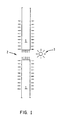
- the invention will be described with reference to the sole figure which is given by way of a non-limiting example.
- the sole figure shows how surface treatment of a barrier material effectively reduces the size of a pore or hole in the barrier material.
- the present invention is directed to methods of chemically treating barrier materials so that the barrier materials effectively block the passage of minute particles therethrough, regardless of the presence of undetected holes or pores in the barrier materials.
- the basic principle of the present invention involves providing the surface of barrier materials with a charge so that individual particles, having a like charge are repelled from the barrier material.
- both the surface of the barrier material and the interior surfaces of any and all holes and pores in the barrier material are likewise treated so as to have a charge.
- the treated barrier materials will function to attract and bind opposite-charged particles which may be present. This feature becomes significant when opposite-charged particles become bound within holes and/or pores and thus reduce the size or diameter of the holes or pores and eventually block the holes or pores.
- the chemical treatment of the barrier materials preferably provides the barrier materials with a permanent or semipermanent charge.
- the barrier materials are used in articles such as condoms and surgical gloves which are discarded after use. In such articles, a semipermanent chemical treatment is sufficient.
- a permanent charge on the surface of the barrier material may be more desirable, especially in situations in which the barrier material is used for an extended period of time or reused.
- barrier materials conventionally utilized to prevent the transmission of viruses and bacteria, including prophylactics such as condoms and diaphragms, gloves, including surgical gloves, surgical masks, respiratory masks and filters, filters, including membrane, wound dressings, including bandages, and the like. From this partial list of articles, it can be appreciated that virtually all types of barrier materials can be treated according to the present invention including natural and synthetic polymers, natural and synthetic rubbers, e.g., latex, woven and/or matted natural and synthetic fabrics, etc.
- While the present invention was primarily developed to ensure that viruses would not pass through undetectable holes or pores in condoms and surgical gloves, charged surfaces on more porous articles, such as surgical and respiratory masks and filters provide similar benefits of repelling like-charged particles, such as bacteria and viruses, and binding opposite-charged particles.
- filters including membrane filters, these treated filter can be used to selectively filter out charged particles from a fluid.
- the present invention is described as being effective for blocking the passage of bacteria and viruses through barrier materials. Nevertheless, it is to be understood that the principles of the present invention are applicable to all particles which bear a charge.
- the method of treating the surface of a barrier material according to the present invention involves contacting the barrier material with an anionic or cationic surfactant which binds strongly to the barrier material surface.
- the barrier material can be contacted with the anionic or cationic surfactant in any convenient manner including spraying, dipping, or the like.
- the anionic or cationic surfactant can be added to the wet testing fluid and thus serve a dual function. As a wetting agent the surfactant would make the acceptance test more sensitive for the detection of holes. At the same time, the product or article would receive the desired surface treatment.
- any ionic surfactant which imparts a charge to the barrier materials can be utilized in the method of the present invention.
- the surfactant should be chosen to impart a charge to the surface of the barrier material which is the see as the charge of particles which are to be blocked by the barrier material.
- anionic surfactants have been found to impart a negative charge to barrier materials and cationic surfactants have been found to impart a positive charge to barrier materials.
- the surfactant should also be chosen to be resistant to removal from the barrier surface in the physiologic environment.
- contacting barrier materials with surfactants and subsequently drying the treated barrier materials provides sufficient adhesion of the surfactants to the barrier materials.
- Surfactants which are known to be biocompatible for skin and mucous membranes such as, for example, dodecylsulfate, are preferred for use on barrier materials used in the manufacture of condoms, diaphragms, wound dressings and surgical gloves. Less biocompatible surfactants, may be used on articles which are not intended to come into contact with skin and mucous membranes.
- a mixture of anionic or cationic surfactants can be utilized.
- Figure 1 shows how the surface treatment of a barrier material effectively reduces the size of a hole or pore in the barrier material.
- the barrier material 1 which has been treated with an anionic surfactant is shown as having a through-hole 2 therein.
- Negative charges on the surface of the barrier material 1, including on the inner surface of hole 2 are depicted as minus signs ("-"). Due to the nature of surfactants and their ability to wet surfaces, the surfactant coats every exposed surface of the barrier material 1 including the inner surfaces of holes 2 and pores.
- the relative size of the particles to the diameter of holes or pores in the barrier material does not appear to have an adverse effect in the desired manner in which the particles are repelled. It was generally accepted that a virus particle may pass through a hole whose diameter is greater than the diameter of the particle measured from electron micrographs. More recently, the effective or hydraulic diameters of several virus particles have been found, this produces a means of determining the size of holes in barrier materials which will allow the viral particles to pass through the barrier materials. Previous investigations in the effective or hydraulic diameters of several virus particles verify that viruses in solution, because of their boundary layers, may require larger diameter holes to pass through than comparable dry viruses.
- Fig. 1 depicts a negative-charged particle and a barrier material which has been chemically treated with an anionic surfactant to produce a negative-charged surface.
- an anionic surfactant to produce a negative-charged surface.
- a similar result or effect could be provided by treating a barrier material with a cationic surfactant to repel positive-charged particles.
- a barrier material with a cationic surfactant to repel positive-charged particles.
- those which have a stronger charge will be more subject to electrostatic forces.
- polycarbonate filters with well-defined holes were surface treated with anionic surfactants and tested to determine how the surfactant treatment effected the transmission of surrogate viruses through the filters.
- bacteriophages were used as surrogate viruses for human pathogenic viruses, e.g., human immunodeficiency virus (HIV), hepatitis B virus, or herpes simplex virus (HSV).
- HSV herpes simplex virus
- the viruses, their host cells and their compositions are listed in Table 1 below.
- the membrane-containing bacteriophages ⁇ 6 and PRD1 were chosen as possible surrogates for HIV-1 and hepatitis B which both have a membrane envelope.
- the virus suspensions were tested at concentrations of 0.4 x 10 4 to 1.5 x 10 4 PFU/ml.
- the viruses in 3 ml of Dulbecco's phosphate-buffered saline were filtered through 25-mm Nuclepore polycarbonate membrane filters with quoted pore diameters of 0.1 ⁇ and 0.2 ⁇ .
- the pore diameters quoted by the manufacturer define the maximum pore diameter, with the median diameter being approximately 10% less than the quoted value.
- the filtration rate was controlled by attaching a hypodermic needle to the downstream side of the filters and pushing the needle into a Vacutainer.
- Virus titers were determined before and after filtration and the fractions which passed through the filters were calculated by conventional virologic methods.
- PVP polyvinylpyrolidone
- the Texapon ASV is a commercially available anionic shampoo concentrate from Henkel Corp. The Texapon ASV was chosen because it meets FDA safety standards for skin and mucous membrane exposure. The filter sizes were chosen to ensure that, absent a charge on the filters, 100% of the virus particles could pass therethrough. As a comparison of the filter sizes, it is noted that current methods of hole detection have a limited lower detection range of about 20-40 ⁇ .
Landscapes
- Health & Medical Sciences (AREA)
- Life Sciences & Earth Sciences (AREA)
- Animal Behavior & Ethology (AREA)
- Veterinary Medicine (AREA)
- Public Health (AREA)
- General Health & Medical Sciences (AREA)
- Heart & Thoracic Surgery (AREA)
- Vascular Medicine (AREA)
- Surgery (AREA)
- Engineering & Computer Science (AREA)
- Biomedical Technology (AREA)
- Epidemiology (AREA)
- Molecular Biology (AREA)
- Chemical & Material Sciences (AREA)
- Medicinal Chemistry (AREA)
- Chemical Kinetics & Catalysis (AREA)
- General Chemical & Material Sciences (AREA)
- Medical Informatics (AREA)
- Reproductive Health (AREA)
- Orthopedics, Nursing, And Contraception (AREA)
- Materials For Medical Uses (AREA)
- Medicines Containing Material From Animals Or Micro-Organisms (AREA)
- Transition And Organic Metals Composition Catalysts For Addition Polymerization (AREA)
- Micro-Organisms Or Cultivation Processes Thereof (AREA)
- Separation Using Semi-Permeable Membranes (AREA)
- Glass Compositions (AREA)
Claims (20)
- Verfahren zum Verhindern des Durchganges geladener Teilchen durch Löcher in einem Sperrmaterial, umfassend:Schaffen eines Sperrmaterials undBehandeln der Oberfläche des Sperrmaterials mit einem ionischen oberflächenaktiven Mittel, um der Oberfläche des Sperrmaterials eine Ladung zu verleihen.
- Verfahren zum Verhindern des Durchganges geladener Teilchen durch Löcher in einem Sperrmaterial gemäß Anspruch 1, worin das ionische oberflächenaktive Mittel ein anionisches oberflächenaktives Mittel umfasst.
- Verfahren zum Verhindern des Durchganges geladener Teilchen durch Löcher in einem Sperrmaterial gemäß Anspruch 1, worin das ionische oberflächenaktive Mittel ein kationisches oberflächenaktives Mittel umfasst.
- Verfahren zum Verhindern des Durchganges geladener Teilchen durch Löcher in einem Sperrmaterial gemäß einem der vorhergehenden Ansprüche, wobei das Sperrmaterial einen Filter umfasst.
- Verfahren zum Verhindern des Durchganges geladener Teilchen durch Löcher in einem Sperrmaterial nach Anspruch 4, worin der Filter eine Membran umfast.
- Verfahren zum Verhindern des Durchganges geladener Teilchen durch Löcher in einem Sperrmaterial nach Anspruch 4, worin der Filter eine Maske umfast.
- Verfahren zum Verhindern des Durchganges geladener Teilchen durch Löcher in einem Sperrmaterial nach einem der vorhergehenden Ansprüche, worin die Behandlung der Oberfläche das Eintauchen des Sperrmaterials in eine Lösung des ionischen oberflächenaktiven Mittels umfasst.
- Verfahren zum Abdichten einer Schutzsperre gegen Viren, umfassend:Schaffen einer Schutzsperre undBehandeln der Oberfläche der Schutzsperre mit einem ionischen oberflächenaktiven Mittel, um der Oberfläche der Schutzsperre eine Ladung zu verleihen, die elektrostatische Kräfte zwischen der Schutzsperre und Virenteilchen bewirkt.
- Verfahren zum Abdichten einer Schutzsperre gegen Viren nach Anspruch 8, worin das Sperrmaterial ein prophylaktisches Material umfasst.
- Verfahren zum Abdichten einer Schutzsperre gegen Viren nach Anspruch 9, worin das Sperrmaterial ein Kondom umfasst.
- Verfahren zum Abdichten einer Schutzsperre gegen Viren nach Anspruch 8, worin das Sperrmaterial einen Handschuh umfasst.
- Verfahren zum Abdichten einer Schutzsperre gegen Viren nach einem der Ansprüche 8 bis 11, worin das ionische oberflächenaktive Mittel ein anionisches oberflächenaktives Mittel umfasst.
- Verfahren zum Abdichten einer Schutzsperre gegen Viren nach Anspruch 12, worin das anionische oberflächenaktive Mittel Natriumdodecylsulfat umfasst.
- Verfahren zum Abdichten einer Schutzsperre gegen Viren nach Anspruch 11, worin das ionische oberflächenaktive Mittel ein anionisches Sulfat umfasst.
- Verfahren zum Abdichten einer Schutzsperre gegen Viren nach einem der Ansprüche 8 bis 14, worin die Virenteilchen menschlichen Immuninsuüffizienz-Virus (HIV) umfassen.
- Verfahren zum Abdichten einer Schutzsperre gegen Viren nach einem der Ansprüche 8 bis 14, worin die Virenteilchen Hepatitis B-Virus umfassen.
- Verfahren zum Abdichten einer Schutzsperre gegen Viren nach einem der Ansprüche 8 bis 14, worin die Virenteilchen Herpes simplex-Virus umfassen.
- Gegenstand, umfassend ein Sperrmaterial und eine direkt aufdem Sperrmaterial gebildete Schicht aus ionischem oberflächenaktivem Mittel, um dem Gegenstand eine Oberflächenladung zu geben, die Viren abstößt, um das Eindringen von Viren durch den Gegenstand zu verhindern.
- Gegenstand nach Anspruch 18, wobei der Gegenstand ein Kondom umfasst.
- Gegenstand nach Anspruch 18, wobei der Gegenstand einen Handschuh umfasst.
Applications Claiming Priority (3)
| Application Number | Priority Date | Filing Date | Title |
|---|---|---|---|
| US90671692A | 1992-06-30 | 1992-06-30 | |
| US906716 | 1992-06-30 | ||
| PCT/US1993/006225 WO1994000166A1 (en) | 1992-06-30 | 1993-06-30 | Method for producing viral protective barrier materials |
Publications (2)
| Publication Number | Publication Date |
|---|---|
| EP0687186A1 EP0687186A1 (de) | 1995-12-20 |
| EP0687186B1 true EP0687186B1 (de) | 2000-01-26 |
Family
ID=25422863
Family Applications (1)
| Application Number | Title | Priority Date | Filing Date |
|---|---|---|---|
| EP93916872A Expired - Lifetime EP0687186B1 (de) | 1992-06-30 | 1993-06-30 | Verfahren zur herstellung einer schutzsperre gegen virus |
Country Status (12)
| Country | Link |
|---|---|
| US (1) | US5671754A (de) |
| EP (1) | EP0687186B1 (de) |
| JP (1) | JPH08510923A (de) |
| AT (1) | ATE189123T1 (de) |
| AU (1) | AU683419B2 (de) |
| CA (1) | CA2139357A1 (de) |
| DE (1) | DE69327731T2 (de) |
| DK (1) | DK0687186T3 (de) |
| ES (1) | ES2141162T3 (de) |
| GR (1) | GR3033244T3 (de) |
| PT (1) | PT687186E (de) |
| WO (1) | WO1994000166A1 (de) |
Families Citing this family (15)
| Publication number | Priority date | Publication date | Assignee | Title |
|---|---|---|---|---|
| US5834386A (en) * | 1994-06-27 | 1998-11-10 | Kimberly-Clark Worldwide, Inc. | Nonwoven barrier |
| US5879620A (en) * | 1997-11-13 | 1999-03-09 | Kimberly-Clark Worldwide, Inc. | Sterilization wrap and procedures |
| US6209541B1 (en) * | 1998-02-25 | 2001-04-03 | Sims Portex Inc. | Hydrophobic electrostatic breathing filters, and methods of manufacturing the same |
| US6192887B1 (en) | 1998-05-19 | 2001-02-27 | The Pennsylvania State University | Broad spectrum microbicidal and spermicidal compositions and methods having activity against sexually transmitted agents including papillomaviruses |
| US6632471B2 (en) | 1999-06-24 | 2003-10-14 | Arthur A. Krause | Sheaths of material having improved surface barriers |
| US6800073B2 (en) * | 1999-10-28 | 2004-10-05 | Scimed Life Systems, Inc. | Biocompatible pharmaceutical articles |
| US6663606B1 (en) | 1999-10-28 | 2003-12-16 | Scimed Life Systems, Inc. | Biocompatible medical devices |
| US8808272B2 (en) * | 1999-10-28 | 2014-08-19 | Boston Scientific Scimed, Inc. | Biocompatible medical devices |
| US6887857B2 (en) | 2001-04-27 | 2005-05-03 | Scimed Life Systems, Inc. | Microparticle protection of therapeutic agents |
| US6699465B2 (en) | 2001-05-18 | 2004-03-02 | Albany Medical College | Covalent attachment of polymer to cell to prevent virus bonding to receptor |
| PT1635661E (pt) * | 2003-06-13 | 2010-11-17 | Torkel Wadstroem | Produto para fins de absorção |
| JP2005095112A (ja) | 2003-08-19 | 2005-04-14 | Mitsubishi Heavy Ind Ltd | ウイルス不活化剤およびウイルス不活化方法、該不活化剤を備えたフィルター、並びに該フィルターを具備する空気調和機 |
| WO2006123955A2 (en) * | 2005-05-19 | 2006-11-23 | Synergenz Bioscience Limited | Methods for the assesssment of risk of developing lung cancer using analysis of genetic polymorphisms |
| US12271057B1 (en) | 2019-12-20 | 2025-04-08 | The Uab Research Foundation | Chromatic aberration tuning ophthalmic corrector lens methods |
| AT522961B1 (de) * | 2020-04-01 | 2021-04-15 | Ess Holding Gmbh | Elektrofilter |
Family Cites Families (21)
| Publication number | Priority date | Publication date | Assignee | Title |
|---|---|---|---|---|
| DE2213604C2 (de) * | 1972-03-21 | 1975-08-14 | Merz & Co, 6000 Frankfurt | Vaginalzäpfchen zur Empfängnisverhütung |
| DE2602297B1 (de) * | 1976-01-22 | 1977-01-13 | Merz & Co | Vaginalzaepfchen zur empfaengnisverhuetung mit einem gehalt an milchalbumin |
| US4393871A (en) * | 1977-06-27 | 1983-07-19 | Vli Corporation | Vaginal device |
| US4200090A (en) * | 1979-01-15 | 1980-04-29 | The Procter & Gamble Company | Vaginal contraceptive and method of using |
| US4499154A (en) * | 1982-09-03 | 1985-02-12 | Howard L. Podell | Dipped rubber article |
| PT77275B (en) * | 1982-09-03 | 1986-02-04 | Lrc Products | Rubber article with a lubricating layer and a process for the production thereof by dipping means |
| US4511558A (en) * | 1983-05-16 | 1985-04-16 | University Patents, Inc. | Alpha-lactalbumin contraceptive |
| NZ209534A (en) * | 1983-09-30 | 1987-01-23 | Surgikos Inc | Antimicrobial fabric for surgical drape |
| US4675347A (en) * | 1983-10-29 | 1987-06-23 | Unitika Ltd. | Antimicrobial latex composition |
| GB8531839D0 (en) * | 1985-12-30 | 1986-02-05 | Wellcome Found | Aryl derivatives |
| US5036157A (en) * | 1986-03-11 | 1991-07-30 | Burroughs Wellcome Co. | Aryl derivatives |
| PL154186B1 (en) * | 1987-07-15 | 1991-07-31 | Wellcome Found | Method for manufacturing arylic derivatives of the hydroxamic acid |
| US5045341A (en) * | 1987-07-17 | 1991-09-03 | Shlenker Robin R T | Covering such as a suit, glove, condom or sheath forming a chemical barrier against harmful agents and methods of making the same |
| US5338565A (en) * | 1987-07-17 | 1994-08-16 | Robin R. T. Shlenker | Method of forming a membrane, especially a latex membrane, having a biocide barrier |
| JPS6446465A (en) * | 1987-08-13 | 1989-02-20 | Masayoshi Oyamada | Condom |
| AU2727588A (en) * | 1987-11-13 | 1989-06-14 | Stillman, Suzanne | Prophylactic articles with biocompatible coatings |
| US4858624A (en) * | 1988-02-24 | 1989-08-22 | Vance Products Incorporated D/B/A/ Cook Urological Incorporated And Cook Ob/Gyn | Device and method for intravaginal, barrier-type prevention of conception and infection |
| US4922928A (en) * | 1988-08-17 | 1990-05-08 | Michael Burnhill | Vaginal device |
| US5149718A (en) * | 1989-01-19 | 1992-09-22 | New York University | Biological fluid purification system |
| US5089205A (en) * | 1989-09-25 | 1992-02-18 | Becton, Dickinson And Company | Process for producing medical devices having antimicrobial properties |
| WO1991012796A1 (en) * | 1990-02-22 | 1991-09-05 | Baxter International Inc. | Method for producing infection resistant materials and infection resistant materials |
-
1993
- 1993-06-30 ES ES93916872T patent/ES2141162T3/es not_active Expired - Lifetime
- 1993-06-30 JP JP6502654A patent/JPH08510923A/ja active Pending
- 1993-06-30 DE DE69327731T patent/DE69327731T2/de not_active Expired - Fee Related
- 1993-06-30 WO PCT/US1993/006225 patent/WO1994000166A1/en not_active Ceased
- 1993-06-30 EP EP93916872A patent/EP0687186B1/de not_active Expired - Lifetime
- 1993-06-30 AT AT93916872T patent/ATE189123T1/de not_active IP Right Cessation
- 1993-06-30 AU AU46583/93A patent/AU683419B2/en not_active Ceased
- 1993-06-30 PT PT93916872T patent/PT687186E/pt unknown
- 1993-06-30 DK DK93916872T patent/DK0687186T3/da active
- 1993-06-30 CA CA002139357A patent/CA2139357A1/en not_active Abandoned
-
1994
- 1994-12-09 US US08/353,164 patent/US5671754A/en not_active Expired - Lifetime
-
2000
- 2000-04-14 GR GR20000400926T patent/GR3033244T3/el unknown
Also Published As
| Publication number | Publication date |
|---|---|
| US5671754A (en) | 1997-09-30 |
| JPH08510923A (ja) | 1996-11-19 |
| ES2141162T3 (es) | 2000-03-16 |
| AU683419B2 (en) | 1997-11-13 |
| ATE189123T1 (de) | 2000-02-15 |
| GR3033244T3 (en) | 2000-09-29 |
| CA2139357A1 (en) | 1994-01-06 |
| DE69327731D1 (de) | 2000-03-02 |
| DK0687186T3 (da) | 2000-04-17 |
| AU4658393A (en) | 1994-01-24 |
| EP0687186A1 (de) | 1995-12-20 |
| WO1994000166A1 (en) | 1994-01-06 |
| DE69327731T2 (de) | 2000-07-20 |
| PT687186E (pt) | 2000-05-31 |
Similar Documents
| Publication | Publication Date | Title |
|---|---|---|
| EP0687186B1 (de) | Verfahren zur herstellung einer schutzsperre gegen virus | |
| CA1218776A (en) | Hyaluronate modified polymeric articles | |
| US5395666A (en) | Flexible elastomeric article with enhanced lubricity | |
| CA2097408C (en) | Flexible rubber article and method of making | |
| CA1323266C (en) | Prophylactic device made of elastomeric material, such as a contraceptive sheath or the like, and process for its manufacture | |
| DE69328523T2 (de) | Immobilisierung eines chemischen spezies in einer vernetzten matrix | |
| DE69631136T2 (de) | Verbesserte oberflächenbehandlung von polymeren | |
| JPH0657220B2 (ja) | 抗ウィルスグローブ | |
| DE69920391T2 (de) | Ion-komplex, beschichtungsmaterial, und beschichtungsverfahren | |
| WO2022003433A1 (en) | Multifunctional filter materials | |
| DE69827229T2 (de) | Verwendung eines neutralen oder kationischen Polymers, das zur Verhinderung der Aktivierung der Blut-oder Plasmakontaktphase in Berührung mit einer teildurchlässigen Membran | |
| CA3174368A1 (en) | Electrospun nanofibrous polymer membrane for use in personal protective equipment | |
| JP2001505483A (ja) | ガス連行微粒子の濾過装置とその製造方法 | |
| AU1455699A (en) | Method for modifying the surface of an object | |
| CA2512613A1 (en) | Glove with an antimicrobial polymer surface | |
| EP0497594A1 (de) | Filtermaterial und Herstellungsverfahren | |
| US20250017294A1 (en) | Coated substrates and articles with anti-viral properties, and fabrication processes | |
| WO1999015261A1 (en) | Technique for testing and coating a microporous membrane | |
| Fagerholm et al. | Corneal endothelial protection by heparin and sodium hyaluronate surface coating of PMMA intraocular lenses | |
| Chmielewska et al. | Effect of electron beam irradiation on filtering facepiece respirators integrity and filtering efficiency | |
| JPH0523391A (ja) | 抗トロンボゲン性表面、その製法及びその材料 | |
| CN113874427A (zh) | 一种用于弹性橡胶手套的聚合物体系涂层 | |
| WO1995012420A1 (en) | Barrier coatings for surfaces | |
| US20220396704A1 (en) | Antimicrobial Coatings | |
| JPH10338639A (ja) | キトサン又は改質キトサンが塗布された白血球除去用フィルタ |
Legal Events
| Date | Code | Title | Description |
|---|---|---|---|
| PUAI | Public reference made under article 153(3) epc to a published international application that has entered the european phase |
Free format text: ORIGINAL CODE: 0009012 |
|
| AK | Designated contracting states |
Kind code of ref document: A1 Designated state(s): AT BE CH DE DK ES FR GB GR IE IT LI LU MC NL PT SE |
|
| 17P | Request for examination filed |
Effective date: 19950117 |
|
| 17Q | First examination report despatched |
Effective date: 19980710 |
|
| GRAG | Despatch of communication of intention to grant |
Free format text: ORIGINAL CODE: EPIDOS AGRA |
|
| GRAG | Despatch of communication of intention to grant |
Free format text: ORIGINAL CODE: EPIDOS AGRA |
|
| GRAG | Despatch of communication of intention to grant |
Free format text: ORIGINAL CODE: EPIDOS AGRA |
|
| GRAH | Despatch of communication of intention to grant a patent |
Free format text: ORIGINAL CODE: EPIDOS IGRA |
|
| GRAH | Despatch of communication of intention to grant a patent |
Free format text: ORIGINAL CODE: EPIDOS IGRA |
|
| GRAA | (expected) grant |
Free format text: ORIGINAL CODE: 0009210 |
|
| RAP1 | Party data changed (applicant data changed or rights of an application transferred) |
Owner name: GOVERNMENT OF THE UNITED STATES OF AMERICA AS REPR |
|
| AK | Designated contracting states |
Kind code of ref document: B1 Designated state(s): AT BE CH DE DK ES FR GB GR IE IT LI LU MC NL PT SE |
|
| REF | Corresponds to: |
Ref document number: 189123 Country of ref document: AT Date of ref document: 20000215 Kind code of ref document: T |
|
| REG | Reference to a national code |
Ref country code: CH Ref legal event code: EP |
|
| REF | Corresponds to: |
Ref document number: 69327731 Country of ref document: DE Date of ref document: 20000302 |
|
| REG | Reference to a national code |
Ref country code: IE Ref legal event code: FG4D |
|
| REG | Reference to a national code |
Ref country code: ES Ref legal event code: FG2A Ref document number: 2141162 Country of ref document: ES Kind code of ref document: T3 |
|
| REG | Reference to a national code |
Ref country code: DK Ref legal event code: T3 |
|
| ITF | It: translation for a ep patent filed | ||
| REG | Reference to a national code |
Ref country code: CH Ref legal event code: NV Representative=s name: R. A. EGLI & CO. PATENTANWAELTE |
|
| REG | Reference to a national code |
Ref country code: PT Ref legal event code: SC4A Free format text: AVAILABILITY OF NATIONAL TRANSLATION Effective date: 20000211 |
|
| ET | Fr: translation filed | ||
| PG25 | Lapsed in a contracting state [announced via postgrant information from national office to epo] |
Ref country code: LU Free format text: LAPSE BECAUSE OF NON-PAYMENT OF DUE FEES Effective date: 20000630 Ref country code: LI Free format text: LAPSE BECAUSE OF NON-PAYMENT OF DUE FEES Effective date: 20000630 Ref country code: IE Free format text: LAPSE BECAUSE OF NON-PAYMENT OF DUE FEES Effective date: 20000630 Ref country code: GR Free format text: LAPSE BECAUSE OF NON-PAYMENT OF DUE FEES Effective date: 20000630 Ref country code: GB Free format text: LAPSE BECAUSE OF NON-PAYMENT OF DUE FEES Effective date: 20000630 Ref country code: DK Free format text: LAPSE BECAUSE OF NON-PAYMENT OF DUE FEES Effective date: 20000630 Ref country code: CH Free format text: LAPSE BECAUSE OF NON-PAYMENT OF DUE FEES Effective date: 20000630 Ref country code: BE Free format text: LAPSE BECAUSE OF NON-PAYMENT OF DUE FEES Effective date: 20000630 Ref country code: AT Free format text: LAPSE BECAUSE OF NON-PAYMENT OF DUE FEES Effective date: 20000630 |
|
| PG25 | Lapsed in a contracting state [announced via postgrant information from national office to epo] |
Ref country code: SE Free format text: LAPSE BECAUSE OF NON-PAYMENT OF DUE FEES Effective date: 20000701 Ref country code: ES Free format text: LAPSE BECAUSE OF NON-PAYMENT OF DUE FEES Effective date: 20000701 |
|
| PGFP | Annual fee paid to national office [announced via postgrant information from national office to epo] |
Ref country code: MC Payment date: 20000711 Year of fee payment: 8 |
|
| PG25 | Lapsed in a contracting state [announced via postgrant information from national office to epo] |
Ref country code: MC Free format text: LAPSE BECAUSE OF NON-PAYMENT OF DUE FEES Effective date: 20000907 |
|
| PLBE | No opposition filed within time limit |
Free format text: ORIGINAL CODE: 0009261 |
|
| STAA | Information on the status of an ep patent application or granted ep patent |
Free format text: STATUS: NO OPPOSITION FILED WITHIN TIME LIMIT |
|
| BERE | Be: lapsed |
Owner name: GOVERNMENT OF THE UNITED STATES OF AMERICA AS REP Effective date: 20000630 |
|
| PG25 | Lapsed in a contracting state [announced via postgrant information from national office to epo] |
Ref country code: NL Free format text: LAPSE BECAUSE OF NON-PAYMENT OF DUE FEES Effective date: 20010101 |
|
| 26N | No opposition filed | ||
| REG | Reference to a national code |
Ref country code: CH Ref legal event code: PL |
|
| GBPC | Gb: european patent ceased through non-payment of renewal fee |
Effective date: 20000630 |
|
| NLV4 | Nl: lapsed or anulled due to non-payment of the annual fee |
Effective date: 20010101 |
|
| REG | Reference to a national code |
Ref country code: DK Ref legal event code: EBP |
|
| EUG | Se: european patent has lapsed |
Ref document number: 93916872.0 |
|
| PG25 | Lapsed in a contracting state [announced via postgrant information from national office to epo] |
Ref country code: DE Free format text: LAPSE BECAUSE OF NON-PAYMENT OF DUE FEES Effective date: 20010403 |
|
| REG | Reference to a national code |
Ref country code: IE Ref legal event code: MM4A |
|
| PG25 | Lapsed in a contracting state [announced via postgrant information from national office to epo] |
Ref country code: FR Free format text: LAPSE BECAUSE OF NON-PAYMENT OF DUE FEES Effective date: 20010831 |
|
| REG | Reference to a national code |
Ref country code: FR Ref legal event code: ST |
|
| PG25 | Lapsed in a contracting state [announced via postgrant information from national office to epo] |
Ref country code: PT Free format text: LAPSE BECAUSE OF NON-PAYMENT OF DUE FEES Effective date: 20011231 |
|
| REG | Reference to a national code |
Ref country code: PT Ref legal event code: MM4A Free format text: LAPSE DUE TO NON-PAYMENT OF FEES Effective date: 20011231 |
|
| REG | Reference to a national code |
Ref country code: ES Ref legal event code: FD2A Effective date: 20010712 |
|
| PG25 | Lapsed in a contracting state [announced via postgrant information from national office to epo] |
Ref country code: IT Free format text: LAPSE BECAUSE OF NON-PAYMENT OF DUE FEES;WARNING: LAPSES OF ITALIAN PATENTS WITH EFFECTIVE DATE BEFORE 2007 MAY HAVE OCCURRED AT ANY TIME BEFORE 2007. THE CORRECT EFFECTIVE DATE MAY BE DIFFERENT FROM THE ONE RECORDED. Effective date: 20050630 |
|
| PG25 | Lapsed in a contracting state [announced via postgrant information from national office to epo] |
Ref country code: PT Free format text: LAPSE BECAUSE OF NON-PAYMENT OF DUE FEES Effective date: 20000630 |
|
| PG25 | Lapsed in a contracting state [announced via postgrant information from national office to epo] |
Ref country code: FR Free format text: LAPSE BECAUSE OF NON-PAYMENT OF DUE FEES Effective date: 20000630 |