EP0689333A2 - Persönliches mobiles Kommunikationssystem - Google Patents
Persönliches mobiles Kommunikationssystem Download PDFInfo
- Publication number
- EP0689333A2 EP0689333A2 EP95304092A EP95304092A EP0689333A2 EP 0689333 A2 EP0689333 A2 EP 0689333A2 EP 95304092 A EP95304092 A EP 95304092A EP 95304092 A EP95304092 A EP 95304092A EP 0689333 A2 EP0689333 A2 EP 0689333A2
- Authority
- EP
- European Patent Office
- Prior art keywords
- telephone call
- caller
- telephone
- called party
- alternate destination
- Prior art date
- Legal status (The legal status is an assumption and is not a legal conclusion. Google has not performed a legal analysis and makes no representation as to the accuracy of the status listed.)
- Withdrawn
Links
Images


Classifications
-
- H—ELECTRICITY
- H04—ELECTRIC COMMUNICATION TECHNIQUE
- H04M—TELEPHONIC COMMUNICATION
- H04M3/00—Automatic or semi-automatic exchanges
- H04M3/42—Systems providing special services or facilities to subscribers
- H04M3/42229—Personal communication services, i.e. services related to one subscriber independent of his terminal and/or location
-
- H—ELECTRICITY
- H04—ELECTRIC COMMUNICATION TECHNIQUE
- H04M—TELEPHONIC COMMUNICATION
- H04M3/00—Automatic or semi-automatic exchanges
- H04M3/20—Automatic or semi-automatic exchanges with means for interrupting existing connections; with means for breaking-in on conversations
-
- H—ELECTRICITY
- H04—ELECTRIC COMMUNICATION TECHNIQUE
- H04M—TELEPHONIC COMMUNICATION
- H04M3/00—Automatic or semi-automatic exchanges
- H04M3/42—Systems providing special services or facilities to subscribers
- H04M3/436—Arrangements for screening incoming calls, i.e. evaluating the characteristics of a call before deciding whether to answer it
-
- H—ELECTRICITY
- H04—ELECTRIC COMMUNICATION TECHNIQUE
- H04M—TELEPHONIC COMMUNICATION
- H04M3/00—Automatic or semi-automatic exchanges
- H04M3/42—Systems providing special services or facilities to subscribers
- H04M3/48—Arrangements for recalling a calling subscriber when the wanted subscriber ceases to be busy
-
- H—ELECTRICITY
- H04—ELECTRIC COMMUNICATION TECHNIQUE
- H04M—TELEPHONIC COMMUNICATION
- H04M3/00—Automatic or semi-automatic exchanges
- H04M3/42—Systems providing special services or facilities to subscribers
- H04M3/54—Arrangements for diverting calls for one subscriber to another predetermined subscriber
-
- H—ELECTRICITY
- H04—ELECTRIC COMMUNICATION TECHNIQUE
- H04Q—SELECTING
- H04Q3/00—Selecting arrangements
- H04Q3/0016—Arrangements providing connection between exchanges
- H04Q3/002—Details
-
- H—ELECTRICITY
- H04—ELECTRIC COMMUNICATION TECHNIQUE
- H04Q—SELECTING
- H04Q3/00—Selecting arrangements
- H04Q3/0016—Arrangements providing connection between exchanges
- H04Q3/0029—Provisions for intelligent networking
- H04Q3/005—Personal communication services, e.g. provisions for portability of subscriber numbers
-
- H—ELECTRICITY
- H04—ELECTRIC COMMUNICATION TECHNIQUE
- H04M—TELEPHONIC COMMUNICATION
- H04M11/00—Telephonic communication systems specially adapted for combination with other electrical systems
- H04M11/02—Telephonic communication systems specially adapted for combination with other electrical systems with bell or annunciator systems
- H04M11/022—Paging systems
-
- H—ELECTRICITY
- H04—ELECTRIC COMMUNICATION TECHNIQUE
- H04M—TELEPHONIC COMMUNICATION
- H04M3/00—Automatic or semi-automatic exchanges
- H04M3/38—Graded-service arrangements, i.e. some subscribers prevented from establishing certain connections
- H04M3/382—Graded-service arrangements, i.e. some subscribers prevented from establishing certain connections using authorisation codes or passwords
-
- H—ELECTRICITY
- H04—ELECTRIC COMMUNICATION TECHNIQUE
- H04M—TELEPHONIC COMMUNICATION
- H04M3/00—Automatic or semi-automatic exchanges
- H04M3/42—Systems providing special services or facilities to subscribers
- H04M3/428—Arrangements for placing incoming calls on hold
- H04M3/4283—Call holding circuits
-
- H—ELECTRICITY
- H04—ELECTRIC COMMUNICATION TECHNIQUE
- H04M—TELEPHONIC COMMUNICATION
- H04M3/00—Automatic or semi-automatic exchanges
- H04M3/42—Systems providing special services or facilities to subscribers
- H04M3/50—Centralised arrangements for answering calls; Centralised arrangements for recording messages for absent or busy subscribers ; Centralised arrangements for recording messages
- H04M3/53—Centralised arrangements for recording incoming messages, i.e. mailbox systems
- H04M3/533—Voice mail systems
-
- H—ELECTRICITY
- H04—ELECTRIC COMMUNICATION TECHNIQUE
- H04M—TELEPHONIC COMMUNICATION
- H04M3/00—Automatic or semi-automatic exchanges
- H04M3/42—Systems providing special services or facilities to subscribers
- H04M3/56—Arrangements for connecting several subscribers to a common circuit, i.e. affording conference facilities
-
- H—ELECTRICITY
- H04—ELECTRIC COMMUNICATION TECHNIQUE
- H04M—TELEPHONIC COMMUNICATION
- H04M3/00—Automatic or semi-automatic exchanges
- H04M3/42—Systems providing special services or facilities to subscribers
- H04M3/58—Arrangements for transferring received calls from one subscriber to another; Arrangements affording interim conversations between either the calling or the called party and a third party
-
- H—ELECTRICITY
- H04—ELECTRIC COMMUNICATION TECHNIQUE
- H04Q—SELECTING
- H04Q2213/00—Indexing scheme relating to selecting arrangements in general and for multiplex systems
- H04Q2213/13097—Numbering, addressing
-
- H—ELECTRICITY
- H04—ELECTRIC COMMUNICATION TECHNIQUE
- H04Q—SELECTING
- H04Q2213/00—Indexing scheme relating to selecting arrangements in general and for multiplex systems
- H04Q2213/13098—Mobile subscriber
-
- H—ELECTRICITY
- H04—ELECTRIC COMMUNICATION TECHNIQUE
- H04Q—SELECTING
- H04Q2213/00—Indexing scheme relating to selecting arrangements in general and for multiplex systems
- H04Q2213/13173—Busy signals
-
- H—ELECTRICITY
- H04—ELECTRIC COMMUNICATION TECHNIQUE
- H04Q—SELECTING
- H04Q2213/00—Indexing scheme relating to selecting arrangements in general and for multiplex systems
- H04Q2213/1324—Conference call
-
- H—ELECTRICITY
- H04—ELECTRIC COMMUNICATION TECHNIQUE
- H04Q—SELECTING
- H04Q2213/00—Indexing scheme relating to selecting arrangements in general and for multiplex systems
- H04Q2213/13256—Call screening
-
- H—ELECTRICITY
- H04—ELECTRIC COMMUNICATION TECHNIQUE
- H04Q—SELECTING
- H04Q2213/00—Indexing scheme relating to selecting arrangements in general and for multiplex systems
- H04Q2213/1328—Call transfer, e.g. in PBX
-
- H—ELECTRICITY
- H04—ELECTRIC COMMUNICATION TECHNIQUE
- H04Q—SELECTING
- H04Q2213/00—Indexing scheme relating to selecting arrangements in general and for multiplex systems
- H04Q2213/13282—Call forward, follow-me, call diversion
-
- H—ELECTRICITY
- H04—ELECTRIC COMMUNICATION TECHNIQUE
- H04Q—SELECTING
- H04Q2213/00—Indexing scheme relating to selecting arrangements in general and for multiplex systems
- H04Q2213/13374—Paging
-
- H—ELECTRICITY
- H04—ELECTRIC COMMUNICATION TECHNIQUE
- H04Q—SELECTING
- H04Q2213/00—Indexing scheme relating to selecting arrangements in general and for multiplex systems
- H04Q2213/13377—Recorded announcement
-
- H—ELECTRICITY
- H04—ELECTRIC COMMUNICATION TECHNIQUE
- H04Q—SELECTING
- H04Q2213/00—Indexing scheme relating to selecting arrangements in general and for multiplex systems
- H04Q2213/13513—UPT - personal as opposed to terminal mobility, inc. number portability
Definitions
- This invention relates to personal communications and, more particularly, to systems for setting up communications between a caller and a called individual using a combination of paging and call bridging.
- a problem with setting up telecommunications connections today is the difficulty of locating called individuals who are highly mobile. This problem is partially alleviated by mobile telephone technology and radio paging systems.
- a return telephone call is automatically placed from a personal communications unit of a called individual to a meet-me bridge at which the caller's telephone call may be held for connection to the return telephone call.
- the called individual is alerted to the existence of the telephone call placed to him only upon an indication that the telephone call from the calling telephone remains in progress.
- This system assures the called individual that he will be connected to a telephone call that continues to exist when the personal communications unit alerts so that he can speak to the calling party.
- the calling party may be connected to an alternate destination, e.g., a secretary, answering service or a voice messaging system, in the event that it is determined that the caller's telephone call cannot presently be connected to the called party, e.g., after a particular time period has passed and a return telephone call has not yet been received.
- an alternate destination e.g., a secretary, answering service or a voice messaging system
- Connections may also be made to the alternate destination if the called party's telephone number is busy. Unfortunately, if the return telephone call is thereafter received, the caller's telephone call is now considered completed, as it is engaged in a connection with the alternate destination, and, therefore, the called party's return telephone call is not connected to the caller's telephone call. Indeed, if the caller's telephone call has been transferred to the alternate location, it might even no longer be available at the meet-me bridge for connection to the return telephone call.
- this problem is overcome by, in response to receipt of an indication that the called party is available for a caller's telephone call, e.g., receipt of a return telephone call, when the caller's telephone call has already been connected to an alternate destination a) disconnecting the caller's telephone call from the alternate destination and, instead, b) connecting it the called party, e.g., to the called party's return telephone call, thus interrupting the connection between the caller and the alternate destination.
- a tone or announcement may be supplied to the caller to indicate that the called party will now be connected "live" to the caller.
- a tone or announcement may be supplied to the alternate destination, e.g., to inform a secretary that the principal, i.e., has picked up the telephone call.
- the alternate destination e.g., to inform a secretary that the principal, i.e., has picked up the telephone call.
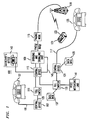
- FIG. 1 shows arrangement 100 for providing telecommunications services, in accordance with the principles of the invention.
- a caller places a telephone call from calling telephone 101 to the personal telephone number of an individual associated with pager 103.
- the caller's telephone call passes over telephone line 105 to central office 107.
- Central office 107 routes the call to bridging and signaling unit 109, which is associated with the called number.
- Pager 103 is also associated with the called personal telephone number, as discussed further below.
- LEC local exchange carrier
- central office 107 routes the caller's telephone call.
- the caller's telephone call may be routed via an inter-exchange carrier, represented by toll switch 111, and another local exchange carrier, represented by central office 113.
- Central offices 107 and 113 may be the same office. If so, the telephone call would not pass through any inter-exchange carrier or any other central offices.
- Other conventional arrangements of telecommunications carriers may be employed to route the callers call to bridging and signaling unit 109.
- Bridging and signaling unit 109 implements a so-called "meet-me bridge" for connecting at least two incoming telephone calls to each other.
- bridging and signaling unit 109 Upon receipt of the caller's telephone call, bridging and signaling unit 109 forwards paging information to paging node 115.
- the paging information includes a predetermined code that uniquely identifies the called individual's pager 103 and, if not predetermined, a telephone number to which a return telephone call must be place in order to connect with, or "meet", the caller's telephone call. A copy of the predetermined code is stored within pager 103. Also, the telephone number for the return telephone call is reserved, in advance, for use by bridging and signaling unit 109. Its selection is described further below.
- Paging node 115 causes a paging signal containing the paging information to be broadcast from paging tower 119. Pagers and paging systems are well known in the art.
- the telephone number of the return telephone call may be a translatable, e.g., 800-type, of telephone number.
- An advantage of using an 800-type of telephone number is that it allows the owner of pager 103 to place the return telephone call without having any information about the area code of the telephone line which he is using. This is because calls to 800-type telephone numbers are unlike calls to conventional telephone numbers.
- Telephone calls to conventional telephone numbers employ the area code for routing purposes. Such calls require the explicit dialing of the area code of the destination location for calls placed from one area code to another and that no area code be dialed for telephone call s placed within a single area code.
- 800-type telephone numbers employ the 800 area code to indicate that the telephone network should translate the telephone number to its corresponding destination location. As such, the 800 area code must always be dialed for such telephone call s to give this indication to the telephone network, even if the destination location is within the same area code as the location of the caller.
- Pager 103 receives paging signals transmitted from paging tower 119. In the event that the code contained within the paging information of a paging signal matches the predetermined code stored in pager 103, pager 103 alerts. In response to the alerting by pager 103, the owner of pager 103 places a telephone call, which is the return telephone call, from telephone 125 to a particular telephone number which, if not predetermined, is specified in the page. As such, central office 121 receives the return telephone call and routes it to bridging and signaling unit 109 for connection to the caller's telephone call. To this end, central office 121 may route the call via an inter-exchange carrier, represented by toll switch 133, and another local exchange carrier, represented by central office 113.
- an inter-exchange carrier represented by toll switch 133
- another local exchange carrier represented by central office 113.
- the combined delay including: a) system delays in transmitting the paging signal; b) the time required by the pager owner to place the return telephone call--which may be exacerbated if the owner of pager 103 screens his pages prior to originating the return telephone call by examining an indication of the caller's identity that appears on display 131--; and c) the time to establish the return telephone call; exceeds a predetermined time period, e.g., 75 seconds, to insure that there is at least some communication between the calling and called parties, the calling party may be connected to an alternate destination, e.g., telephone 143 at the secretary's office, an answering service (not shown) or voice messaging unit 141, a conventional automated voice messaging system.
- a predetermined time period e.g. 75 seconds
- the caller's telephone call is considered complete upon establishment of the connection with the alternate destination. Indeed, if the caller's telephone call has been transferred to the alternate location by central office 113, in response to a command of bridging and signaling unit 109, as opposed to being so-called "hair-pinned" through bridging and signaling unit 109, the caller's telephone call is not even available at the meet-me bridge to be connected to the return telephone call. Such a transfer may be effectuated using optional data link 145 between central office 113 and bridging and signaling unit 113. Such data links, e.g., a signaling system 7 (SS7) connection are well known in the art.
- SS7 signaling system 7
- this problem is overcome by, in response to receipt of a return telephone call for a caller's telephone call that was already connected to an alternate destination, a) disconnecting the caller's telephone call from the alternate destination and, instead, b) connecting it with the return telephone call, thus interrupting the completed connection to the alternate destination.
- the caller's telephone call is transferred back to the meet-me bridge prior to connecting it to the return telephone call.
- the call may be retrieved by having bridging and signaling unit 109 transmitting a command over optional data link 145 to central office 113.
- a tone or announcement may be supplied to the caller who was leaving a message to indicate that the called party has been located and will now be connected "live" to the caller.
- a tone or announcement may be supplied to the alternate destination, e.g., to inform a secretary that the principal, i.e., the owner of pager 103, has picked up the call.
- FIG. 2 shows, in block diagram form, an expanded view of bridging and signaling unit 109.
- Bridging and signaling unit 109 includes: a) trunk interfaces 401, b) dual tone multi-frequency (DTMF) receivers 403, c) bridge control 405, d) voice amplifier and ringback units 407, e) switch fabric 409, f) DTMF generators 411 and g) trunk interfaces 413.
- Bridge control 405 controls and coordinates the operation of bridging and signaling unit 109 by communicating commands and information over control bus 417.
- a call placed by a caller to the personal number of an individual associated with pager 103 is received and terminated at bridging and signaling unit 109 by one of trunk interfaces 401.
- the interface between central office 113 and trunk interfaces 401 is the same type of interface employed to connect a central office to a PBX equipped for direct inward dialing (DID).
- DID direct inward dialing
- central office 113 sends the last four digits of the personal telephone number to bridging and signaling unit 109 over the trunk. These digits are sent as DTMF signals.
- One of DTMF receivers 403 receives the DTMF signals over one of lines 415 and decodes them. It informs bridge control 405 at which of trunk interfaces 401 the telephone call arrived and the decoded four digits.
- bridge control 405 instructs one of voice amplifier and audible ring units 407 to supply ringback tone over the one of trunk interfaces 401 at which the call arrived.
- Answer supervision is supplied so that an optional personal identification number (PIN) may be received from the caller.
- PIN personal identification number
- This optional PIN may be transmitted to pager 103 as part of the calling information. Since answer supervision is supplied, the caller is charged for the call from the time the answer supervision is supplied until the call is disconnected.
- Bridge control 405 contains memory 419. Memory 419 maps the received four digits of the called individual's personal telephone number to the predetermined code stored in the pager 103 associated with the called individual. Bridge control 405 selects an idle one of trunk interfaces 413 at which to receive the return telephone call. The trunks connecting central office 113 to trunk interfaces 413 are dedicated trunks and each has its own telephone number. Thereafter, bridge control 405 supplies to paging node 115 (FIG. 1) both the telephone number of the trunk associated with the selected idle one of trunk interfaces 413, as the number for the return telephone call, and the predetermined code of the called individual.
- paging node 115 FIG. 1
- bridge control 405 Upon receipt of a return telephone call at the selected one of trunk interfaces 413 within a predetermined period, e.g., 75 seconds, bridge control 405 determines at which of trunk interfaces 401 is waiting the call of the caller that corresponds to this return telephone call. If the caller's telephone call is still waiting at trunk interface 402, bridge control 405 commands switch fabric 409 to interconnect the caller's telephone call with its respective return telephone call. Bridge control 405 also commands the respective one of voice amplifier and ringback units 407 to cease supplying ringback tone to the caller and to switch to amplification mode. This is necessary because a back-to-back connection of two separate telephone calls requires amplification to overcome the attendant loss of signal strength. It is noted that calls in which the called party is paged and must place a return telephone call to be connected to the calling party are known as "revertive calls".
- bridge control 405 instructs an idle, and not presently selected to receive a return telephone call, one of trunk interfaces 413 to go off-hook and to seize a line.
- one of DTMF generators 411 is connected to the seized line and commanded to dial the telephone number of a predetermined alternate destination selected in advance by the called party. This telephone number is stored in memory 419 in association with the four digits of the called individual's personal telephone number and predetermined code.
- the one of trunk interfaces 401 at which the caller's telephone call is waiting is then connected, i.e..
- the calling party may converse with a person, or leave a message, at the alternate destination.
- a return telephone call is received at the specified one of trunk interfaces 413 after the predetermined period but while the caller's telephone call is still connected to the alternate destination, the connection to the one of trunk interfaces 413 from which the telephone call to the alternate location was originated is disconnected and, in lieu thereof, the return telephone call is connected to the caller's telephone call as described above.
- the caller and the called party may now converse.
- the return telephone call may be bridged on prior to the disconnecting of the telephone call to the alternate destination.
- a tone may be generated, e.g., by DTMF generators 411, indicating that the called party is now available.
- the tone will be heard at the remote location.
- the telephone call to the alternate location is used for conversation with a person.
- Whether the return telephone call is bridged before or after the telephone call to the alternate location may be predetermined on a per called party basis. Information for effectuating the called party's choice may be stored in memory 419.
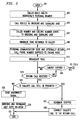
- FIGs. 3 and 4 when connected together, show a flow chart of an exemplary process for completing a telephone call placed to the personal number of a called individual associated with pager 103 (FIG. 1), in accordance with the principles of the invention.
- the process begins in step 501 (FIG. 3) when a caller decides to make a call to the individual associated with pager 103 using his personal number. To this end, in step 503, the caller dials the called individual's personal number at telephone 101 (FIG. 1).
- a telecommunications carrier routes the call to bridging and signaling unit 109 in step 505. Thereafter, in step 507, the telecommunications carrier supplies the called number and, if available, the calling number to bridging and signaling unit 109.
- bridging and signaling unit 109 supplies ringback tone to telephone 101.
- bridging and signaling unit 109 sends to paging node 115 the paging information, i.e., the predetermined code of the called individual that is stored within pager 103 and, optionally, a) the telephone number to which the return telephone call must be made and b) an indication of the identity of the caller, in step 513.
- paging tower 119 broadcasts a paging signal that includes the paging information.
- Control passes to conditional branch point 519, which tests to determine if the return telephone call has been received from pager 103. If the test result in step 519 is YES, control passes to conditional branch point 521, in which bridging and signaling unit 109 tests to determine if the caller's telephone call is still in progress. If the test result in step 521 is YES, control passes to step 527 in which bridging and signaling unit 109 stops sending ringback tone to telephone 101. Next, in step 529, bridging and signaling unit 109 interconnects the caller's telephone call and the return telephone call. This allows the caller to talk with the called individual. The process is then exited in step 531.
- bridging and signaling unit 109 sends a disconnect signal to telephone 125 in step 533.
- a message is supplied to the owner of pager 103.
- bridging and signaling unit 109 goes on-hook, in step 535. Thereafter, the process is exited in step 531.
- test result in step 519 is NO, control passes to conditional branch point 525, which tests to determine if a predetermined time-out period in which to receive the return telephone call has expired. If the test result in step 525 is NO, control passes back to step 519 to await the return telephone call. If the test result in step 525 is YES, control passes to step 537, in which bridging and signaling unit 109 originates a call to an alternate destination. The alternate destination may be specified by the called party. In step 539, bridging and signaling unit 109 bridges the caller's telephone call with the telephone call to the alternate destination.
- conditional branch point 541 tests to determine if a return telephone call is received from the called party. If the test result in step 541 is YES, control passes to optional step 534, in which an indication is give to all the parties that a return telephone call has been received from the called party. In step 545, the telephone call to the alternate destination is disconnected, in accordance with an aspect of the invention. The caller and called parties are then bridged together by bridging and signaling unit 109, in accordance with the principles of the invention. Thereafter, the process is exited in step 531.
- test result in step 541 If the test result in step 541 is NO, control passes to conditional branch point 551, which tests to determine if the caller's telephone call is still in progress. If the test result in step 551 is YES, control passes back to step 541. If the test result in step 551 is NO, control passes to step 553, in which the telephone call to the alternate location is disconnected. Thereafter, the process is exited in step 531.
- trunk interfaces 401 and 413 terminate all digital transmission facilities, e.g., T-1 or ISDN primary rate interfaces (PRI).
- PRI primary rate interfaces
- the design of such trunk interfaces is well known in the art.
- such embodiments of the invention can include the processing of both in-band and out-of-band signals.
- display 131 can display the number of the caller if pager 103 receives the necessary information.
- the paging information may contain the caller's telephone number or other identifying information, e.g., a PIN.
- the caller may be given the opportunity to be connected to the alternate destination at any time during the predetermined period, so that he need not wait the entire period.
- the caller may indicate his desire to be so connected by supplying a predetermined signal, e.g., a dual tone multi-frequency signal generated by pressing one of the keys at his telephone. Alternatively, there need not be any predetermined period. Instead, the connection of the caller to the alternate destination is solely at the discretion of the caller.
- the caller at telephone 101 places a call by directly dialing the telephone number for telephone 125.
- toll switch 133 disconnects the call from central office 121 and, instead, connects the call to voice messaging unit 141, a technique that is well known in the art.
- central office 121 records in data base 135 that a) a call was received for telephone 125, b) the call was not successfully connected, and c) the call was routed to voice messaging unit 141.
- the time the caller's telephone call was routed to voice messaging unit 141 may also be recorded in data base 135.
- central office 121 checks data base 135 to determine if, since the last time the telephone 125 went off-hook, there has been a call placed to telephone 125 that was not successfully completed and instead was routed to voice messaging unit 141.
- Central office 121 may also determine if such a call was received at a time that it is possible that the caller is still connected to voice messaging unit 141.
- central office 121 queries toll switch 133 to determine if the caller's telephone call is still connected to voice messaging unit 141. In accordance with the principles of the invention, if the caller's telephone call is still connected, central office 121 instructs toll switch 133 to disconnect the caller's telephone call from voice messaging unit 133 and to connect it instead through central office 121 to telephone 125. Thus, the called and calling parties may converse. As in the prior embodiment a tone or announcement may be supplied to the caller at telephone 101 indicating that the called party is being connected on the call.
Landscapes
- Engineering & Computer Science (AREA)
- Signal Processing (AREA)
- Computer Networks & Wireless Communication (AREA)
- Mobile Radio Communication Systems (AREA)
- Telephonic Communication Services (AREA)
Applications Claiming Priority (2)
| Application Number | Priority Date | Filing Date | Title |
|---|---|---|---|
| US08/264,651 US5546442A (en) | 1994-06-23 | 1994-06-23 | Method and apparatus for use in completing telephone calls |
| US264651 | 1994-06-23 |
Publications (2)
| Publication Number | Publication Date |
|---|---|
| EP0689333A2 true EP0689333A2 (de) | 1995-12-27 |
| EP0689333A3 EP0689333A3 (de) | 1998-11-25 |
Family
ID=23007019
Family Applications (1)
| Application Number | Title | Priority Date | Filing Date |
|---|---|---|---|
| EP95304092A Withdrawn EP0689333A3 (de) | 1994-06-23 | 1995-06-14 | Persönliches mobiles Kommunikationssystem |
Country Status (5)
| Country | Link |
|---|---|
| US (3) | US5546442A (de) |
| EP (1) | EP0689333A3 (de) |
| JP (1) | JPH0823384A (de) |
| CN (1) | CN1076570C (de) |
| CA (1) | CA2147906C (de) |
Cited By (7)
| Publication number | Priority date | Publication date | Assignee | Title |
|---|---|---|---|---|
| EP0760571A3 (de) * | 1995-08-29 | 2000-01-05 | AT&T Corp. | Anrufabfangverfahren und Vorrichtung zur Herstellung von Fernsprechverbindungen |
| WO2000039990A1 (en) * | 1998-12-23 | 2000-07-06 | Ericsson Inc. | Voice mail intervention |
| WO1999008432A3 (de) * | 1997-08-08 | 2001-03-15 | Ericsson Telefon Ab L M | A method and an apparatus for exchanging information between subscriber stations of a telephone communication network |
| EP1249993A1 (de) * | 2001-04-11 | 2002-10-16 | Lucent Technologies Inc. | Anrufumleitung mit Rückholfunktion bei Umleitung zur Voicemail |
| EP1023802A4 (de) * | 1997-10-17 | 2004-06-30 | Motorola Inc | Verfahren und system zur übertragung von daten zu einer mobilen kommunikationseinheit |
| EP1079588A3 (de) * | 1999-08-26 | 2005-01-12 | Robert Bosch Gmbh | Verfahren zur Durchführung eines automatischen Rückrufs und Telekommunikationsendgerät dafür |
| EP2833610A1 (de) * | 2013-08-02 | 2015-02-04 | Orange | System und Verfahren zur Anrufübernahme nach Umleitung zur Voicemail |
Families Citing this family (50)
| Publication number | Priority date | Publication date | Assignee | Title |
|---|---|---|---|---|
| US6192254B1 (en) * | 1992-02-28 | 2001-02-20 | At&T Corporation | Personal portable apparatus for use in completing a telephone call |
| US7260203B2 (en) | 1992-08-26 | 2007-08-21 | Bellsouth Intellectual Property Corporation | Method and apparatus for routing calls based on identification of the calling party or calling line |
| US5991301A (en) * | 1994-05-05 | 1999-11-23 | Sprint Communications Co. L.P. | Broadband telecommunications system |
| CA2151868C (en) * | 1994-08-01 | 1999-08-03 | Mark Jeffrey Foladare | Personal mobile communication system |
| US5884159A (en) * | 1995-11-27 | 1999-03-16 | Motorola, Inc. | Method of spawning a communication service |
| CA2193014C (en) * | 1995-12-22 | 2000-04-25 | John C. Martinez | Automatic call-back system and method |
| US5854977A (en) * | 1996-01-11 | 1998-12-29 | Nokia Mobile Phones Limited | Call transfer and simplex call capability in a residential system using wireless residential extension handsets |
| US5793858A (en) * | 1996-03-20 | 1998-08-11 | Northen Telecom Limited | Method for improving call completion rates in telephony |
| US5937354A (en) * | 1996-06-25 | 1999-08-10 | At&T Corp | In-building and out-of-building personal reach communications system |
| US5907811A (en) * | 1996-07-25 | 1999-05-25 | At&T Corp | Personal reach service with paging and optional point of entry via cellular network |
| US6493321B1 (en) * | 1996-12-16 | 2002-12-10 | At&T Corp | Systems and methods for providing communications through an alternate communication network |
| US6178170B1 (en) * | 1997-05-13 | 2001-01-23 | Sprint Communications Company, L. P. | System and method for transporting a call |
| US6940962B1 (en) * | 1997-06-11 | 2005-09-06 | Estech Systems, Inc. | Dial on-hold |
| US6233451B1 (en) * | 1997-07-14 | 2001-05-15 | Hughes Electronics Corporation | Spot beam selection in a mobile satellite communication system |
| US5991367A (en) * | 1997-10-15 | 1999-11-23 | Robuck; Greg | Telephone call screener |
| US6026306A (en) * | 1997-10-21 | 2000-02-15 | At&T Corp. | Location sensitive mobility telecommunications method |
| JPH11355439A (ja) * | 1998-06-04 | 1999-12-24 | Fujitsu Ltd | 電話着信通知装置 |
| US6553225B1 (en) | 1999-02-03 | 2003-04-22 | Wei Zhao | Apparatus and method for positioning single-offset zones in a spot beam coverage area to maximize call duration in a satellite-based communications network |
| US6332069B1 (en) | 1999-02-10 | 2001-12-18 | Hughes Electronics Corporation | Apparatus and method for grouping carriers to minimize the occurrence of call blocking in a satellite-based communications network |
| US6937597B1 (en) * | 1999-02-26 | 2005-08-30 | Lucent Technologies Inc. | Signaling method for internet telephony |
| US6895088B1 (en) | 1999-05-21 | 2005-05-17 | Sprint Communications Company L.P. | System and method for controlling a call processing system |
| US6430604B1 (en) * | 1999-08-03 | 2002-08-06 | International Business Machines Corporation | Technique for enabling messaging systems to use alternative message delivery mechanisms |
| EP1210841B1 (de) * | 1999-09-09 | 2011-08-03 | Nokia Siemens Networks GmbH & Co. KG | Verfahren zur realisierung eines rückruf-dienstes in einem mobilfunknetz |
| TW445740B (en) * | 1999-11-05 | 2001-07-11 | Ind Tech Res Inst | Message management system and method roaming mobile communication subscribers in multi-site enterprise environment |
| US6389113B1 (en) | 1999-11-16 | 2002-05-14 | Lucent Technologies Inc. | Dual-alerting paging system and monitoring of return call |
| US6678719B1 (en) * | 1999-12-20 | 2004-01-13 | Mediaone Group, Inc. | Virtual workplace intercommunication tool |
| EP1364491A1 (de) * | 2001-02-05 | 2003-11-26 | Personity Inc. | System und verfahren zum filtern nicht verfügbarer einrichtungen in einem anwesenheits- und verfügbarkeits-verwaltungssystem |
| US20040029257A1 (en) * | 2002-01-28 | 2004-02-12 | Co2 Solution | Process for purifying energetic gases such as biogas and natural gas |
| CA2472953A1 (en) * | 2002-02-14 | 2003-08-21 | Andrew Charles Zmolek | Presence tracking and name space interconnection techniques |
| US7206388B2 (en) * | 2002-03-18 | 2007-04-17 | Openwave Systems Inc. | System and method for providing voice-activated presence information |
| US7657019B2 (en) * | 2002-07-19 | 2010-02-02 | Tortel Usa, Llc | System for and method of hairpinning a remote PBX or KTS or gateway phone call to a local call |
| CN100388842C (zh) * | 2003-01-09 | 2008-05-14 | 华为技术有限公司 | 一种被叫移动终端的通知服务的方法 |
| US7474741B2 (en) * | 2003-01-20 | 2009-01-06 | Avaya Inc. | Messaging advise in presence-aware networks |
| US7386101B2 (en) * | 2003-04-08 | 2008-06-10 | Intervoice Limited Partnership | System and method for call answer determination for automated calling systems |
| US9398152B2 (en) * | 2004-02-25 | 2016-07-19 | Avaya Inc. | Using business rules for determining presence |
| US7680260B2 (en) * | 2005-05-03 | 2010-03-16 | Avaya Inc. | Detecting a voice mail system answering a call |
| US8218748B2 (en) * | 2006-07-24 | 2012-07-10 | Hewlett-Packard Development Company, L.P. | Telephone call chaining |
| US8265238B2 (en) * | 2006-08-11 | 2012-09-11 | Cisco Technology, Inc. | Triggering call-handling events |
| US8218743B2 (en) | 2006-08-22 | 2012-07-10 | At&T Intellectual Property Ii, L.P. | Method and apparatus for connecting a caller previously diverted to voicemail |
| US8150003B1 (en) * | 2007-01-23 | 2012-04-03 | Avaya Inc. | Caller initiated undivert from voicemail |
| EP2247087B1 (de) * | 2009-04-28 | 2011-08-24 | Research In Motion Limited | Verfahren und Vorrichtung zur Anrufsexpansion |
| US20100272250A1 (en) * | 2009-04-28 | 2010-10-28 | Michael Shen-Yuan Yap | Method and System for Pulling a Call |
| US8301581B2 (en) | 2009-09-24 | 2012-10-30 | Avaya Inc. | Group compositing algorithms for presence |
| US20110221666A1 (en) * | 2009-11-24 | 2011-09-15 | Not Yet Assigned | Methods and Apparatus For Gesture Recognition Mode Control |
| US8467515B2 (en) * | 2010-08-06 | 2013-06-18 | Asd Inc. | System and method for providing enhanced answering services in a time-sensitive manner |
| JP5585496B2 (ja) * | 2011-03-02 | 2014-09-10 | 株式会社ナカヨ通信機 | 呼出継続機能を有する電話制御装置 |
| CN102355539B (zh) * | 2011-09-29 | 2017-05-10 | 中兴通讯股份有限公司 | 一种通过综合智能网实现秘书业务的方法及系统 |
| CN104243729A (zh) * | 2013-06-18 | 2014-12-24 | 殷程 | 话务管家 |
| US10165120B2 (en) | 2015-09-14 | 2018-12-25 | Asd Inc., A Pa Corp. | System and method for escalating a call with a client |
| US10334105B1 (en) | 2018-04-27 | 2019-06-25 | Asd Inc., A Pa Corp. | System and method for responding to dire communication at an answering service |
Family Cites Families (16)
| Publication number | Priority date | Publication date | Assignee | Title |
|---|---|---|---|---|
| US5375161A (en) * | 1984-09-14 | 1994-12-20 | Accessline Technologies, Inc. | Telephone control system with branch routing |
| US5151929A (en) * | 1985-09-17 | 1992-09-29 | Sherman Wolf | Computer-controlled radio-paging and telephone communication using recorded voice messages |
| EP0216515A3 (de) * | 1985-09-17 | 1989-04-19 | Voicetek Corporation | Verfahren und Gerät zur Verbindung von entfernten Benutzern einer Fernsprechverbindungsleitungsschnittstelle und ähnlichem |
| US4723273A (en) * | 1985-09-25 | 1988-02-02 | American Telephone And Telegraph Company, At&T Bell Laboratories | Discretionary call forwarding |
| US4811382A (en) * | 1986-09-05 | 1989-03-07 | Sleevi Neil F | Method and apparatus for applying messages in a telecommunications network |
| US5007076A (en) * | 1988-08-08 | 1991-04-09 | At&T Bell Laboratories | Call announcement arrangement |
| US5144648A (en) * | 1989-08-30 | 1992-09-01 | Mobile Telecommunication Technologies | Method and apparatus for processing pages |
| US5243642A (en) * | 1991-07-12 | 1993-09-07 | Bell Atlantic Network Services, Inc. | Telephone call management device |
| US6192254B1 (en) * | 1992-02-28 | 2001-02-20 | At&T Corporation | Personal portable apparatus for use in completing a telephone call |
| US5307399A (en) * | 1992-03-06 | 1994-04-26 | Glenayre Electronics, Inc. | Paging system that allows caller/subscriber interconnection |
| US5309512A (en) * | 1992-07-29 | 1994-05-03 | At&T Bell Laboratories | Call waiting deluxe feature |
| DE69228552T2 (de) * | 1992-12-21 | 1999-06-17 | Stmicroelectronics Pte Ltd., Singapore | Schaltung zur Detektion eines Parallelfernsprechgerät |
| US5327480A (en) * | 1993-02-22 | 1994-07-05 | Motorola, Inc. | Method and apparatus in a communication system for completing an inbound call |
| US5471519A (en) * | 1993-02-26 | 1995-11-28 | Bellsouth Corporation | Communications monitoring and control system |
| US5414750A (en) * | 1993-06-09 | 1995-05-09 | Mobile Telecommunication Technologies | Automated seamless cellular telephone network |
| JPH08506710A (ja) * | 1993-06-11 | 1996-07-16 | ノーザン・テレコム・リミテッド | ユーザ制御呼管理サービス方法および装置 |
-
1994
- 1994-06-23 US US08/264,651 patent/US5546442A/en not_active Expired - Lifetime
-
1995
- 1995-04-26 CA CA002147906A patent/CA2147906C/en not_active Expired - Fee Related
- 1995-06-14 EP EP95304092A patent/EP0689333A3/de not_active Withdrawn
- 1995-06-21 CN CN95107009A patent/CN1076570C/zh not_active Expired - Fee Related
- 1995-06-22 JP JP7177932A patent/JPH0823384A/ja active Pending
- 1995-09-05 US US08/524,360 patent/US5706329A/en not_active Expired - Lifetime
-
1997
- 1997-05-05 US US08/851,315 patent/US5761277A/en not_active Expired - Lifetime
Non-Patent Citations (1)
| Title |
|---|
| None |
Cited By (10)
| Publication number | Priority date | Publication date | Assignee | Title |
|---|---|---|---|---|
| EP0760571A3 (de) * | 1995-08-29 | 2000-01-05 | AT&T Corp. | Anrufabfangverfahren und Vorrichtung zur Herstellung von Fernsprechverbindungen |
| WO1999008432A3 (de) * | 1997-08-08 | 2001-03-15 | Ericsson Telefon Ab L M | A method and an apparatus for exchanging information between subscriber stations of a telephone communication network |
| EP1023802A4 (de) * | 1997-10-17 | 2004-06-30 | Motorola Inc | Verfahren und system zur übertragung von daten zu einer mobilen kommunikationseinheit |
| WO2000039990A1 (en) * | 1998-12-23 | 2000-07-06 | Ericsson Inc. | Voice mail intervention |
| US6453023B1 (en) | 1998-12-23 | 2002-09-17 | Ericsson Inc. | Voice mail intervention |
| EP1079588A3 (de) * | 1999-08-26 | 2005-01-12 | Robert Bosch Gmbh | Verfahren zur Durchführung eines automatischen Rückrufs und Telekommunikationsendgerät dafür |
| EP1249993A1 (de) * | 2001-04-11 | 2002-10-16 | Lucent Technologies Inc. | Anrufumleitung mit Rückholfunktion bei Umleitung zur Voicemail |
| EP2833610A1 (de) * | 2013-08-02 | 2015-02-04 | Orange | System und Verfahren zur Anrufübernahme nach Umleitung zur Voicemail |
| FR3009468A1 (fr) * | 2013-08-02 | 2015-02-06 | Orange | Technique de mise en relation de deux entites clientes |
| US9083807B2 (en) | 2013-08-02 | 2015-07-14 | Orange | System for connecting two client entities |
Also Published As
| Publication number | Publication date |
|---|---|
| CN1076570C (zh) | 2001-12-19 |
| US5546442A (en) | 1996-08-13 |
| CA2147906C (en) | 1999-01-19 |
| US5761277A (en) | 1998-06-02 |
| CN1120786A (zh) | 1996-04-17 |
| US5706329A (en) | 1998-01-06 |
| CA2147906A1 (en) | 1995-12-24 |
| JPH0823384A (ja) | 1996-01-23 |
| EP0689333A3 (de) | 1998-11-25 |
Similar Documents
| Publication | Publication Date | Title |
|---|---|---|
| US5546442A (en) | Method and apparatus for use in completing telephone calls | |
| US5884167A (en) | Method for completing a conference with a personal communications units | |
| CA2181401C (en) | Call screening method and apparatus for use in completing telephone calls | |
| US5894595A (en) | Personal mobile communication system | |
| US5627875A (en) | Method in a telephone system for reaching a subscriber under busy/no answer conditions and ring/no answer conditions | |
| US5598457A (en) | Technique for providing redundant capability in a personal mobile communication system | |
| US5309512A (en) | Call waiting deluxe feature | |
| US5664003A (en) | Personal mobile communication system with two points of entry | |
| US5918179A (en) | Communication system and method using two-way paging to provide call control | |
| JPH07154482A (ja) | 電話呼処理方法 | |
| US6070054A (en) | Communication system and method using two-way paging to provide call control | |
| US6014549A (en) | Communication system and method using two-way paging to provide call control | |
| EP0588510A1 (de) | Schema für Anrufumleitung mit Kontrolle der Anwesenheit des gerufenen Teilnehmers | |
| JPH0311845A (ja) | ファクシミリ呼び出し方法、ファクシミリ呼の設定方法および処理方法、交換システム、特殊化された呼種に対する呼確立方法、ファクシミリ・メッセージの送信方法 | |
| JPH08289371A (ja) | 移動している者との通信を確立するシステムおよび方法 | |
| US6108521A (en) | Communication system and method using two-way paging to provide call control | |
| US5950122A (en) | Technique for providing feature information in a personal mobile communication system | |
| CA2205324C (en) | In-building and out-of-building personal reach communications system | |
| KR100208964B1 (ko) | 국설 전전자교환기에서의 호예약처리방법 | |
| JPH08251297A (ja) | ネットワークを通して通信を確立するシステムと方法 | |
| KR19990058069A (ko) | 교환기에서 아날로그 가입자를 위한 발신번 전송방법 | |
| EP1248451A1 (de) | System und Verfahren um ein Telefongespräch mittels Tastatur an ein Voicemailsystem weiterzuleiten | |
| JPH0295073A (ja) | 話中着信回線呼び返し機能付電話交換機 | |
| JPH0834618B2 (ja) | 通話路設定方式 |
Legal Events
| Date | Code | Title | Description |
|---|---|---|---|
| PUAI | Public reference made under article 153(3) epc to a published international application that has entered the european phase |
Free format text: ORIGINAL CODE: 0009012 |
|
| AK | Designated contracting states |
Kind code of ref document: A2 Designated state(s): DE ES FR GB |
|
| PUAL | Search report despatched |
Free format text: ORIGINAL CODE: 0009013 |
|
| AK | Designated contracting states |
Kind code of ref document: A3 Designated state(s): DE ES FR GB |
|
| 17P | Request for examination filed |
Effective date: 19990525 |
|
| 17Q | First examination report despatched |
Effective date: 20011207 |
|
| GRAH | Despatch of communication of intention to grant a patent |
Free format text: ORIGINAL CODE: EPIDOS IGRA |
|
| STAA | Information on the status of an ep patent application or granted ep patent |
Free format text: STATUS: THE APPLICATION IS DEEMED TO BE WITHDRAWN |
|
| 18D | Application deemed to be withdrawn |
Effective date: 20030524 |