EP0696021A2 - Verfahren zur Bestimmung des aktuellen Geldbetrags in einem Datenträger und System zur Durchführung des Verfahrens - Google Patents
Verfahren zur Bestimmung des aktuellen Geldbetrags in einem Datenträger und System zur Durchführung des Verfahrens Download PDFInfo
- Publication number
- EP0696021A2 EP0696021A2 EP95111920A EP95111920A EP0696021A2 EP 0696021 A2 EP0696021 A2 EP 0696021A2 EP 95111920 A EP95111920 A EP 95111920A EP 95111920 A EP95111920 A EP 95111920A EP 0696021 A2 EP0696021 A2 EP 0696021A2
- Authority
- EP
- European Patent Office
- Prior art keywords
- transaction
- money
- data
- data carrier
- current amount
- Prior art date
- Legal status (The legal status is an assumption and is not a legal conclusion. Google has not performed a legal analysis and makes no representation as to the accuracy of the status listed.)
- Granted
Links
Images

Classifications
-
- G—PHYSICS
- G07—CHECKING-DEVICES
- G07F—COIN-FREED OR LIKE APPARATUS
- G07F7/00—Mechanisms actuated by objects other than coins to free or to actuate vending, hiring, coin or paper currency dispensing or refunding apparatus
- G07F7/08—Mechanisms actuated by objects other than coins to free or to actuate vending, hiring, coin or paper currency dispensing or refunding apparatus by coded identity card or credit card or other personal identification means
- G07F7/0806—Details of the card
- G07F7/0813—Specific details related to card security
- G07F7/082—Features insuring the integrity of the data on or in the card
-
- G—PHYSICS
- G06—COMPUTING OR CALCULATING; COUNTING
- G06Q—INFORMATION AND COMMUNICATION TECHNOLOGY [ICT] SPECIALLY ADAPTED FOR ADMINISTRATIVE, COMMERCIAL, FINANCIAL, MANAGERIAL OR SUPERVISORY PURPOSES; SYSTEMS OR METHODS SPECIALLY ADAPTED FOR ADMINISTRATIVE, COMMERCIAL, FINANCIAL, MANAGERIAL OR SUPERVISORY PURPOSES, NOT OTHERWISE PROVIDED FOR
- G06Q20/00—Payment architectures, schemes or protocols
- G06Q20/04—Payment circuits
- G06Q20/06—Private payment circuits, e.g. involving electronic currency used among participants of a common payment scheme
-
- G—PHYSICS
- G06—COMPUTING OR CALCULATING; COUNTING
- G06Q—INFORMATION AND COMMUNICATION TECHNOLOGY [ICT] SPECIALLY ADAPTED FOR ADMINISTRATIVE, COMMERCIAL, FINANCIAL, MANAGERIAL OR SUPERVISORY PURPOSES; SYSTEMS OR METHODS SPECIALLY ADAPTED FOR ADMINISTRATIVE, COMMERCIAL, FINANCIAL, MANAGERIAL OR SUPERVISORY PURPOSES, NOT OTHERWISE PROVIDED FOR
- G06Q20/00—Payment architectures, schemes or protocols
- G06Q20/30—Payment architectures, schemes or protocols characterised by the use of specific devices or networks
- G06Q20/34—Payment architectures, schemes or protocols characterised by the use of specific devices or networks using cards, e.g. integrated circuit [IC] cards or magnetic cards
- G06Q20/341—Active cards, i.e. cards including their own processing means, e.g. including an IC or chip
-
- G—PHYSICS
- G06—COMPUTING OR CALCULATING; COUNTING
- G06Q—INFORMATION AND COMMUNICATION TECHNOLOGY [ICT] SPECIALLY ADAPTED FOR ADMINISTRATIVE, COMMERCIAL, FINANCIAL, MANAGERIAL OR SUPERVISORY PURPOSES; SYSTEMS OR METHODS SPECIALLY ADAPTED FOR ADMINISTRATIVE, COMMERCIAL, FINANCIAL, MANAGERIAL OR SUPERVISORY PURPOSES, NOT OTHERWISE PROVIDED FOR
- G06Q20/00—Payment architectures, schemes or protocols
- G06Q20/30—Payment architectures, schemes or protocols characterised by the use of specific devices or networks
- G06Q20/36—Payment architectures, schemes or protocols characterised by the use of specific devices or networks using electronic wallets or electronic money safes
- G06Q20/363—Payment architectures, schemes or protocols characterised by the use of specific devices or networks using electronic wallets or electronic money safes with the personal data of a user
-
- G—PHYSICS
- G06—COMPUTING OR CALCULATING; COUNTING
- G06Q—INFORMATION AND COMMUNICATION TECHNOLOGY [ICT] SPECIALLY ADAPTED FOR ADMINISTRATIVE, COMMERCIAL, FINANCIAL, MANAGERIAL OR SUPERVISORY PURPOSES; SYSTEMS OR METHODS SPECIALLY ADAPTED FOR ADMINISTRATIVE, COMMERCIAL, FINANCIAL, MANAGERIAL OR SUPERVISORY PURPOSES, NOT OTHERWISE PROVIDED FOR
- G06Q20/00—Payment architectures, schemes or protocols
- G06Q20/38—Payment protocols; Details thereof
- G06Q20/389—Keeping log of transactions for guaranteeing non-repudiation of a transaction
-
- G—PHYSICS
- G06—COMPUTING OR CALCULATING; COUNTING
- G06Q—INFORMATION AND COMMUNICATION TECHNOLOGY [ICT] SPECIALLY ADAPTED FOR ADMINISTRATIVE, COMMERCIAL, FINANCIAL, MANAGERIAL OR SUPERVISORY PURPOSES; SYSTEMS OR METHODS SPECIALLY ADAPTED FOR ADMINISTRATIVE, COMMERCIAL, FINANCIAL, MANAGERIAL OR SUPERVISORY PURPOSES, NOT OTHERWISE PROVIDED FOR
- G06Q20/00—Payment architectures, schemes or protocols
- G06Q20/38—Payment protocols; Details thereof
- G06Q20/40—Authorisation, e.g. identification of payer or payee, verification of customer or shop credentials; Review and approval of payers, e.g. check credit lines or negative lists
- G06Q20/403—Solvency checks
-
- G—PHYSICS
- G06—COMPUTING OR CALCULATING; COUNTING
- G06Q—INFORMATION AND COMMUNICATION TECHNOLOGY [ICT] SPECIALLY ADAPTED FOR ADMINISTRATIVE, COMMERCIAL, FINANCIAL, MANAGERIAL OR SUPERVISORY PURPOSES; SYSTEMS OR METHODS SPECIALLY ADAPTED FOR ADMINISTRATIVE, COMMERCIAL, FINANCIAL, MANAGERIAL OR SUPERVISORY PURPOSES, NOT OTHERWISE PROVIDED FOR
- G06Q20/00—Payment architectures, schemes or protocols
- G06Q20/38—Payment protocols; Details thereof
- G06Q20/40—Authorisation, e.g. identification of payer or payee, verification of customer or shop credentials; Review and approval of payers, e.g. check credit lines or negative lists
- G06Q20/409—Device specific authentication in transaction processing
- G06Q20/4093—Monitoring of device authentication
-
- G—PHYSICS
- G07—CHECKING-DEVICES
- G07F—COIN-FREED OR LIKE APPARATUS
- G07F7/00—Mechanisms actuated by objects other than coins to free or to actuate vending, hiring, coin or paper currency dispensing or refunding apparatus
- G07F7/08—Mechanisms actuated by objects other than coins to free or to actuate vending, hiring, coin or paper currency dispensing or refunding apparatus by coded identity card or credit card or other personal identification means
- G07F7/0866—Mechanisms actuated by objects other than coins to free or to actuate vending, hiring, coin or paper currency dispensing or refunding apparatus by coded identity card or credit card or other personal identification means by active credit-cards adapted therefor
-
- G—PHYSICS
- G07—CHECKING-DEVICES
- G07F—COIN-FREED OR LIKE APPARATUS
- G07F7/00—Mechanisms actuated by objects other than coins to free or to actuate vending, hiring, coin or paper currency dispensing or refunding apparatus
- G07F7/08—Mechanisms actuated by objects other than coins to free or to actuate vending, hiring, coin or paper currency dispensing or refunding apparatus by coded identity card or credit card or other personal identification means
- G07F7/10—Mechanisms actuated by objects other than coins to free or to actuate vending, hiring, coin or paper currency dispensing or refunding apparatus by coded identity card or credit card or other personal identification means together with a coded signal, e.g. in the form of personal identification information, like personal identification number [PIN] or biometric data
- G07F7/1008—Active credit-cards provided with means to personalise their use, e.g. with PIN-introduction/comparison system
Definitions
- the invention relates to a method for determining the current amount of money in a data carrier assigned to a user, which is used in a system for carrying out cashless transactions.
- the invention further relates to a system for performing the method.
- a prepaid amount of money is stored in the IC card, which is used to debit the cardholder's account when the amount is loaded into the card.
- this amount is stored in a money store at the head office.
- the transaction amount is debited from the IC card and sent to a transaction terminal, where it is stored.
- the amount accrued in the transaction terminal is debited from the central bank's cash store and credited to the terminal holder's account.
- the amount in the terminal is then deleted. This process is commonly referred to as "clearing".
- the transactions with the IC cards are preferably carried out anonymously, i.e. H.
- the transaction data transmitted from the IC card to the transaction terminal do not contain any data that allow conclusions to be drawn about the identity of the cardholder.
- the electronic transaction thus has the character of a cash transaction.
- EP 0 416 916 A2 which consists of a central office, a plurality of transaction terminals and an IC card, by checking which amount of money last entered into the card in a file specially created in the central office was loaded. This is the maximum amount of money that will be refunded to the cardholder. Based on statistical considerations, the current amount of money in the money store at the time the card fails to function is estimated on the basis of this amount and paid out to the customer from the money store at the central office in which the loaded amounts are stored. If the customer claims a larger amount, the difference will be paid from a separate account at headquarters. It is planned to cover the resulting losses with insurance. In this known system, the transactions with the IC card can be carried out anonymously, but the calculation of the current amount of money in the IC card does not lead to an exact result, so that a payment is either at the expense of the customer or the bank.
- the basic idea of the invention can be seen in the fact that one can trust a superior to the central office Introduces an entity that is only able to assign certain transactions to a specific cardholder based on transaction certificates and thus calculate the current amount of money in the card.
- the certificates are previously calculated from the transaction data in a transaction with a card-specific key stored in the card and are transmitted together with this to the trustworthy entity and stored there.
- all card-specific keys in connection with the cardholder identity are in a key store, all transaction data with associated certificates in a transaction store and the amounts loaded into the IC cards when all cards are issued or reloaded in an amount store saved.
- the card-specific key of the cardholder is used to calculate the transaction certificates from all the transaction data and to select those for which the calculated certificate matches the stored one. Exactly these transactions have been carried out by the cardholder and are used to determine the current one Amount is offset against the amount originally loaded into the card.
- the current amount of money can be included in each transaction data record after the last transaction and the certificate can be formed accordingly in order to shorten the calculation time of the current amount of money.
- the certificate can be formed accordingly in order to shorten the calculation time of the current amount of money.
- the device 1 shows an organizational chart of the system, consisting of a device 1, a control center 3, a large number of transaction terminals 5 and a large number of user-specific IC cards 7.
- the device 1 is referred to below as a "higher-level entity".
- the higher-level instance 1 is shown as an independent instance in FIG. 1, but it is also possible to integrate it into the control center. As indicated by the arrows, data can be exchanged between the instance 1 and the control center 3 as well as between the control center 3 and the terminals 5, if necessary, a permanent on-line connection between the components is also possible.
- the card user inserts his IC card 7 into a terminal 5.
- a transaction certificate is calculated from the transaction data with a user-specific key that is stored in the card and is transmitted together with this via the terminal 5 and the control center 3 to the trustworthy entity 1, where it is stored.
- FIG. 2 shows the structure of the superordinate instance 1, which has a key memory 9, a transaction data memory 11, a computer 13 and possibly an amount memory 15.
- All user-specific keys in connection with the identity of the cardholders participating in the system are stored in the key store 9.
- the master key is also stored in the higher level instance 1. The memory requirement in the memory 9 can be considerably reduced by this procedure.
- All transaction data are stored in the transaction data memory 11 together with the certificates which are transmitted to the higher-level entity during a transaction, as described in connection with FIG. 1.
- the number of transactions and certificates stored in the transaction memory 11 can be limited, e.g. B. by issuing new data media to all cardholders at a certain time or reloading the old data media. The old data carriers will then become invalid and the need to determine the current amount of money in one of these data carriers can be excluded. This means that all data records that are before the mentioned point in time can be deleted from the transaction memory.
- the amounts of money stored in the card during a loading process are stored in the amount memory 15 which may be present. It will be explained later when this memory 15 is needed.
- the computer 13 has access to all the available memories 9, 11 and 15 and takes the necessary data from the memories, with which the current amount of money of an inaccessible (e.g. malfunctioning or lost) IC card of a cardholder can be calculated.
- an inaccessible (e.g. malfunctioning or lost) IC card of a cardholder can be calculated.
- FIG. 3 shows schematically how the current monetary amount of an IC card is calculated in the higher-level instance 1 according to a first exemplary embodiment of the invention.
- the cardholder's user-specific key is read out of the key store 9 and the current amount of money is to be calculated.
- a certificate is calculated in an encryption module 17 from the transaction data read out from the transaction memory 11, which certificate is denoted by ZER 'in FIG. 3.
- the encryption module 17 has an algorithm that is identical to the customer's IC cards, for example the DES algorithm.
- the newly calculated certificate ZER ' is checked for agreement with the stored certificate ZER in a comparator 19.
- the certificates will only be identical if the two certificates are created with the same key, that is, if the transaction was carried out by the cardholder.
- the transaction amount TRB is temporarily stored in the memory 21 and the next transaction from the memory 11 is checked. The procedure is repeated until all transactions stored in the transaction memory 11 have been selected which have been carried out by the checked cardholder.
- the invention also includes data in the transaction data records that are transmitted to the trustworthy entity, which enable a reduction in the transaction data records to be examined.
- FIG. 4 shows schematically how the current monetary amount of an IC card can be calculated in the higher-level instance 1 according to a further development of the invention.
- the method for calculating the current amount of money in a card is carried out exactly as described in connection with FIG. 3, i. H. it is based on the comparison of the newly calculated certificate ZER 'with the stored certificate ZER and the assignment of the transaction to a specific person if the certificates are identical.
- the number of transactions, the certificates of which must be checked, is reduced by including the current monetary amount AB in the transaction data record.
- the current amount AB to be paid to the cardholder can be taken directly from this data record.
- the amount originally loaded into the card is not required to calculate the current amount, so that the amount store 15 can be dispensed with entirely in the trustworthy instance 1.
- the bank sort code BLZ of the bank where the cardholder has his account can be included in the transaction record will.
- the transaction data records are then stored in the transaction data memory 11 in order of bank sorting numbers (see FIG. 4) and when calculating the current amount of a card of a certain cardholder, only the data sets with the bank sorting number of the bank with which the cardholder keeps his account need to be checked.
- the transaction time can also be included in the transaction data record, so that the transactions in the memory 11 can also be ordered chronologically.
- the period in which the transaction records must be checked can also be restricted.
- the transaction record nevertheless contain data from which third parties should not gain knowledge, such as B.
- the record and the certificate that is transmitted to the instance can also be encrypted in the card with a key assigned to the instance.
- the card only transmits the data to the transaction terminal in plain text that is absolutely necessary to carry out the transaction.
- the data transmitted to the instance is decrypted and saved there.
- the inventive System can also be taken measures to ensure that the calculation of the current amount of money an IC card by the trustworthy entity can only be carried out when needed or at the request of the cardholder. For example, it is possible not to save the card-specific key at all or only partially in the instance and only to generate it if necessary. In the key formation data can then flow that are known only to the cardholder, e.g. B. the PIN, with which the IC card is also protected against unlawful use.
Landscapes
- Business, Economics & Management (AREA)
- Engineering & Computer Science (AREA)
- Accounting & Taxation (AREA)
- General Physics & Mathematics (AREA)
- Physics & Mathematics (AREA)
- Theoretical Computer Science (AREA)
- Strategic Management (AREA)
- General Business, Economics & Management (AREA)
- Finance (AREA)
- Computer Security & Cryptography (AREA)
- Computer Networks & Wireless Communication (AREA)
- Microelectronics & Electronic Packaging (AREA)
- Financial Or Insurance-Related Operations Such As Payment And Settlement (AREA)
- Control Of Vending Devices And Auxiliary Devices For Vending Devices (AREA)
- Cash Registers Or Receiving Machines (AREA)
- Digital Transmission Methods That Use Modulated Carrier Waves (AREA)
- Near-Field Transmission Systems (AREA)
- Inspection Of Paper Currency And Valuable Securities (AREA)
- Devices For Checking Fares Or Tickets At Control Points (AREA)
Abstract
Description
- Die Erfindung betrifft ein Verfahren zur Bestimmung des aktuellen Geldbetrages in einem einem Benutzer zugeordneten Datenträger, der in einem System zur Durchführung bargeldloser Transaktionen verwendet wird. Die Erfindung betrifft ferner ein System zur Durchführung des Verfahrens.
- In der Vergangenheit sind bereits Systeme bekannt geworden, in denen mit einer benutzerspezifischen IC-Karte bargeldlose Transaktionen getätigt werden können. Dazu ist in der IC-Karte ein vorbezahlter Geldbetrag gespeichert, mit dem das Konto des Karteninhabers beim Laden des Betrages in die Karte belastet wird. Zusätzlich wird dieser Betrag in einem Geldspeicher der Zentrale abgelegt. Bei einer Transaktion wird der Transaktionsbetrag von der IC-Karte abgebucht und an ein Transaktionsterminal übermittelt, wo er gespeichert wird. In gewissen Zeitabständen wird der im Transaktionsterminal aufgelaufene Betrag vom Geldspeicher der Zentrale abgebucht und dem Konto des Terminalinhabers gutgeschrieben. Daraufhin wird der Betrag im Terminal gelöscht. Dieser Vorgang wird allgemein als "Clearing" bezeichnet.
- In den obengenannten Systemen werden die Transaktionen mit den IC-Karten bevorzugt anonym durchgeführt, d. h. die von der IC-Karte an das Transaktionsterminal übermittelten Transaktionsdaten enthalten keinerlei Daten, die Rückschlüsse auf die Identität des Karteninhabers zulassen. Somit hat die elektronische Transaktion den Charakter einer Bargeld-Transaktion.
- Die anonym durchgeführten Transaktionen haben jedoch zur Folge, daß bei Ausfall der IC-Karte eines Karteninhabers, z. B. durch eine Funktionsstörung oder bei Verlust der Karte, der aktuelle Geldbetrag, also derjenige Betrag, der nach der letzten Transaktion noch in der Karte als Guthaben verbleibt, nicht exakt festgestellt werden kann, da, bezogen auf einen Benutzer, nicht zu rekonstruieren ist, wieviel Geld ausgegeben worden ist. Eine solche Bestimmung des aktuellen Geldbetrages ist jedoch wünschenswert, da ansonsten einem Karteninhaber unverschuldet große Geldbeträge verlorengehen können. Aus dem Stand der Technik sind bereits Transaktionssysteme bekannt, bei denen eine Bestimmung des aktuellen Geldbetrages erfolgt.
- Dies erfolgt beispielsweise bei dem aus der EP 0 416 916 A2 bekannten System, das aus einer Zentrale, mehreren Transaktionsterminals und einer IC-Karte besteht, dadurch, daß in einer in der Zentrale eigens dafür angelegten Datei geprüft wird, welcher Geldbetrag zuletzt in die Karte geladen wurde. Dies ist der Geldbetrag, der maximal an den Karteninhaber erstattet wird. Anhand statistischer Betrachtungen wird, ausgehend von diesem Betrag, der aktuelle Geldbetrag im Geldspeicher zum Zeitpunkt des Funktionsausfalls der Karte abgeschätzt und an den Kunden aus dem Geldspeicher der Zentrale, in dem die geladenen Beträge abgelegt sind, ausgezahlt. Beansprucht der Kunde einen größeren Betrag, so wird die Differenz von einem gesonderten Konto in der Zentrale gezahlt. Es ist vorgesehen, die hierbei entstehenden Verluste durch eine Versicherung abzudecken. Bei diesem bekannten System können zwar die Transaktionen mit der IC-Karte anonym durchgeführt werden, jedoch führt die Berechnung des aktuellen Geldbetrages in der IC-Karte zu keinem genauen Ergebnis, so daß eine Auszahlung entweder zu Lasten des Kunden oder der Bank geht.
- Aus der EP 0 172 670 A2 ist hingegen ein System, bestehend aus einer Vielzahl benutzerspezifischer IC-Karten und einer Zentrale bekannt, in dem bei einer Transaktion zwischen zwei Karten neben dem Transaktionsbetrag die Identitäten der Transaktionsteilnehmer ausgetauscht werden. Diese Daten werden in Form von Transaktionsprotokollen in beiden Karten gespeichert. Beim Clearing zwischen einer Karte und der Zentrale werden sämtliche in der Karte gespeicherten Transaktionsprotokolle an die Zentrale übermittelt, dort gespeichert und in der Karte gelöscht. Bei Funktionsausfall bzw. Verlust etc. einer Karte werden in der Zentrale anhand der Identitätsdaten des Karteninhabers aus allen Transaktionsprotokollen diejenigen bestimmt, die mit der zu prüfenden Karte durchgeführt wurden. Anhand dieser kann aus dem ursprünglich in die Karte geladenen Geldbetrag der aktuelle Geldbetrag exakt bestimmt und an den Karteninhaber ausgezahlt werden. Eine falsche Auszahlung zu Lasten der Kunden oder der Bank kann also weitestgehend ausgeschlossen werden.
- Die obigen Ausführungen zeigen, daß bei den bekannten Systemen entweder die Forderung nach anonymen Transaktionen oder nach der Bestimmung des aktuellen Geldbetrages in einer Karte erfüllt werden kann. Keine der bekannten Systeme kann jedoch beide Forderungen gleichzeitig erfüllen.
- Es ist deshalb Aufgabe der Erfindung, ein Verfahren und ein System vorzuschlagen, bei dem die Feststellung des aktuellen Geldbetrages eines Datenträgers unter weitestgehender Erhaltung der Anonymität der Transaktionen im System möglich ist.
- Die Aufgabe wird durch die kennzeichnenden Merkmale der nebengeordneten Ansprüche gelöst.
- Der Grundgedanke der Erfindung ist darin zu sehen, daß man eine der Zentrale übergeordnete vertrauenswürdige Instanz einführt, die einzig und allein anhand von Transaktionszertifikaten dazu in der Lage ist, bestimmte Transaktionen einem bestimmten Karteninhaber zuzuordnen und somit den aktuellen Geldbetrag in der Karte zu berechnen. Die Zertifikate werden zuvor bei einer Transaktion mit einem in der Karte gespeicherten kartenindividuellen Schlüssel aus den Transaktionsdaten berechnet und zusammen mit diesen an die vertrauenswürdige Instanz übermittelt und dort gespeichert.
- Die Vorteile der Erfindung sind insbesondere darin zu sehen, daß eine exakte Berechnung des aktuellen Geldbetrages in der Karte und damit eine exakte Rückerstattung des Betrags bei Bedarf möglich ist. Gleichzeitig bleibt die Anonymität der Transaktionen weitestgehend bewahrt, da die Transaktionsdaten keine Identitätsdaten des Karteninhabers enthalten und eine Zuordnung von Transaktionen zu einem Kartenbenutzer nur der vertrauenswürdigen Instanz durch Neuberechnung der Zertifikate und Vergleich mit den übermittelten Zertifikaten möglich ist.
- In einem ersten Ausführungsbeispiel der Erfindung sind in der vertrauenswürdigen Instanz in einem Schlüsselspeicher sämtliche kartenindividuellen Schlüssel in Verbindung mit der Karteninhaberidentität, in einem Transaktionsspeicher alle Transaktionsdaten mit dazugehörigen Zertifikaten und in einem Betragsspeicher die in die IC-Karten geladenen Beträge bei Ausgabe bzw. Neuladung aller Karten gespeichert. Bei der Berechnung des aktuellen Geldbetrages einer bestimmten Karte werden mit dem kartenindividuellen Schlüssel des Karteninhabers aus allen Transaktionsdaten die Transaktionszertifikate berechnet und diejenigen herausgesucht, bei denen das berechnete Zertifikat mit dem gespeicherten übereinstimmt. Genau diese Transaktionen sind von dem Karteninhaber durchgeführt worden und werden zur Bestimmung des aktuellen Geldbetrages mit dem ursprünglich in die Karte geladenen Betrag verrechnet.
- Gemäß einer Weiterbildung der Erfindung kann zur Verkürzung der Berechnungsdauer des aktuellen Geldbetrages in jeden Transaktionsdatensatz der aktuelle Geldbetrag nach der letzten Transaktion aufgenommen und das Zertifikat entsprechend gebildet werden. Bei der Berechnung des aktuellen Geldbetrages einer bestimmten Karte braucht dann, ausgehend von dem jüngsten in der Instanz gespeicherten Transaktionsdatensatz, lediglich der Transaktionsdatensatz herausgesucht werden, bei dem das neuberechnete Zertifikat mit dem gespeicherten übereinstimmt, da diesem Datensatz bereits der aktuelle Geldbetrag zu entnehmen ist. Zusätzlich zur Verkürzung der Berechnungsdauer erwächst hier der Vorteil, daß auf den Betragsspeicher in der vertrauenswürdigen Instanz gänzlich verzichtet werden kann, da der geladene Betrag der IC-Karte zur Berechnung des aktuellen Betrages nicht benötigt wird.
- Im Zusammmenhang mit den nachstehenden Figuren werden Ausführungsbeispiele und weitere Vorteile der Erfindung näher erläutert. Darin zeigt:
- Fig. 1
- ein Organigramm des Systems,
- Fig. 2
- die übergeordnete Instanz,
- Fig. 3
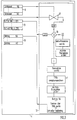
- ein erstes Flußdiagramm zur Überprüfung von Transaktionen in der übergeordneten Instanz,
- Fig. 4
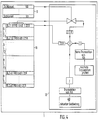
- ein zweites Flußdiagramm zur Überprüfung von Transaktionen in der übergeordneten Instanz.
- Fig. 1 zeigt ein Organigramm des Systems, bestehend aus einer Einrichtung 1, einer Zentrale 3, einer Vielzahl von Transaktionsterminals 5 und einer Vielzahl benutzerspezifischer IC-Karten 7. Die Einrichtung 1 wird im folgenden als "übergeordnete Instanz" bezeichnet. Die übergeordnete Instanz 1 ist in der Fig. 1 beispielhaft als eigenständige Instanz aufgeführt, es ist aber auch möglich, diese in die Zentrale zu integrieren. Wie durch die Pfeile angedeutet, kann sowohl zwischen der Instanz 1 und der Zentrale 3 als auch zwischen der Zentrale 3 und den Terminals 5 im Bedarfsfall ein Datenaustausch stattfinden, eine ständige On-line-Verbindung zwischen den Komponenten ist ebenfalls möglich. Bei einer Transaktion führt der Kartenbenutzer seine IC-Karte 7 in ein Terminal 5 ein. In der IC-Karte 7 wird mit einem benutzerspezifischen Schlüssel, der in der Karte gespeichert ist, ein Transaktionszertifikat aus den Transaktionsdaten berechnet und zusammen mit diesen über das Terminal 5 und die Zentrale 3 an die vertrauenswürdige Instanz 1 übermittelt, wo es gespeichert wird.
- Wie die Transaktion im System darüber hinaus durchgeführt wird, soll an dieser Stelle nicht weiter erläutert werden. Für genauere Ausführungen sei jedoch auf die EP 0 416 916 A2 verwiesen, in der bargeldlose anonyme Transaktionen in einem System der obengenannten Art in aller Ausführlichkeit beschrieben sind.
- Es ist wichtig festzustellen, daß in den Transaktionsdaten keinerlei Daten enthalten sind, die auf die Identität des Karteninhabers Rückschlüsse zulassen. Die Transaktionen werden also anonym, genau wie mit Bargeld ausgeführt. Eine Zuordnung der Transaktionsdaten zu einer bestimmten Person ist im Bedarfsfall ausschließlich der übergeordneten Instanz 1 möglich.
- Wie die Zuordnung im einzelnen geschieht wird im Zusammenhang mit den nachfolgenden Figuren erläutert.
- Fig. 2 zeigt den Aufbau der übergeordneten Instanz 1, die über einen Schlüsselspeicher 9, einen Transaktionsdatenspeicher 11, einen Rechner 13 und gegebenenfalls über einen Betragsspeicher 15 verfügt.
- In dem Schlüsselspeicher 9 sind alle benutzerspezifischen Schlüssel in Verbindung mit der Identität der Karteninhaber, die am System teilnehmen, gespeichert. Alternativ dazu ist es auch möglich, in dem Speicher 9 lediglich Daten bezüglich der Identität der Karteninhaber zu speichern, aus denen dann mit Hilfe eines der Instanz zugeordneten Masterschlüssels im Bedarfsfall der jeweilige benutzerspezifische Schlüssel generiert werden kann. Der Masterschlüssel ist ebenfalls in der übergeordneten Instanz 1 gespeichert. Durch dieses Vorgehen kann der Speicherbedarf im Speicher 9 erheblich reduziert werden.
- In dem Transaktionsdatenspeicher 11 sind alle Transaktionsdaten zusammen mit den Zertifikaten gespeichert, die während einer Transaktion, wie in Zusammenhang mit Fig. 1 beschrieben, an die übergeordnete Instanz übermittelt werden. Die Anzahl der im Transaktionsspeicher 11 gespeicherten Transaktionen und Zertifikate kann begrenzt werden, z. B. dadurch, daß man an alle Karteninhaber zu einem bestimmten Zeitpunkt neue Datenträger ausgibt bzw. die alten Datenträger neu lädt. Die alten Datenträger werden dann ungültig und die Notwendigkeit einer Bestimmung des aktuellen Geldbetrages in einem dieser Datenträger kann ausgeschlossen werden. Somit können alle Datensätze, die vor dem erwähnten Zeitpunkt liegen, aus dem Transaktionsspeicher gelöscht werden.
- Ferner sind für alle Karteninhaber in dem gegebenenfalls vorhandenen Betragsspeicher 15 die bei einem Ladevorgang in die Karte gespeicherten Geldbeträge abgelegt. Es wird an späterer Stelle ausgeführt, wann dieser Speicher 15 benötigt wird.
- Der Rechner 13 hat auf alle vorhandenen Speicher 9, 11 und 15 Zugriff und entnimmt den Speichern die notwendigen Daten, mit denen der aktuelle Geldbetrag einer nicht zugänglichen (z. B. funktionsgestörten oder verlorengegangenen) IC-Karte eines Karteninhabers berechnet werden kann.
- Fig. 3 zeigt schematisch, wie in der übergeordneten Instanz 1 der aktuelle Geldbetrag einer IC-Karte gemäß einem ersten Ausführungsbeispiel der Erfindung berechnet wird. Zunächst wird aus dem Schlüsselspeicher 9 der benutzerspezifische Schlüssel des Karteninhabers ausgelesen, dessen aktueller Geldbetrag berechnet werden soll. Mit diesem Schlüssel wird in einem Verschlüsselungsbaustein 17 aus den Transaktionsdaten, die aus dem Transaktionsspeicher 11 ausgelesen werden, ein Zertifikat berechnet, das in der Fig. 3 mit ZER' bezeichnet ist. Der Verschlüsselungsbaustein 17 weist einen zu den IC-Karten der Kunden identischen Algorithmus, beispielsweise den DES-Algorithmus auf.
- Das neu berechnete Zertifikat ZER' wird mit dem gespeicherten Zertifikat ZER in einem Komperator 19 auf Übereinstimmung geprüft. Eine Gleichheit zwischen den Zertifikaten ergibt sich nur dann, wenn die beiden Zertifikate mit demselben Schlüssel erstellt sind, also dann, wenn die Transaktion von dem Karteninhaber durchgeführt worden ist. In diesem Fall wird der Transaktionsbetrag TRB im Speicher 21 zwischengespeichert und die nächste Transaktion aus dem Speicher 11 überprüft. Das Verfahren wird so lange wiederholt, bis aus allen im Transaktionsspeicher 11 gespeicherten Transaktionen diejenigen herausgesucht sind, die von dem überprüften Karteninhaber durchgeführt worden sind.
- Die Summe sämtlicher Transaktionsbeträge wird schließlich von dem in die IC-Karte des Karteninhabers geladenen Betrag, der aus dem Betragsspeicher 15 ausgelesen wird, abgezogen, so daß sich der genaue aktuelle Geldbetrag der Karte ergibt.
- In der übergeordneten Instanz ist also die Feststellung des exakten aktuellen Geldbetrages der IC-Karte möglich, ohne daß in den Transaktionsdaten Informationen vorhanden sind, die direkt Rückschlüsse auf die Identität des Karteninhabers zulassen. Die Transaktionen bleiben also weitestgehend anonym, eine Zuordnung dieser zu einer Person kann ausschließlich durch die vertrauenswürdige Instanz durchgeführt werden, da nur dieser der benutzerspezifische Schlüssel zugänglich ist. So wird zwar bei jeder Transaktion aus den Transaktionsdaten mit einem benutzerspezifischen Schlüssel ein Zertifikat erzeugt, das Zertifikat ist jedoch für jede Transaktion unterschiedlich, da die Transaktionsdaten auch immer unterschiedlich sind. Dadurch ist es einer nichtautorisierten Instanz nicht möglich, anhand der Zertifikate die im System getätigten Transaktionen einem bestimmten Karteninhaber zuzuordnen, da von einem Karteninhaber bei jeder Transaktion unterschiedliche Zertifikate erzeugt werden.
- Die obigen Ausführungen zeigen, daß die Berechnung des aktuellen Geldbetrages in der IC-Karte eines Karteninhabers relativ aufwendig ist, da alle im Transaktionsspeicher gespeicherten Transaktionen daraufhin überprüft werden müssen, ob sie von einem bestimmten Karteninhaber durchgeführt worden sind. Gemäß einer Weiterbildung der Erfindung werden deshalb in die Transaktionsdatensätze, die an die vertrauenswürdige Instanz übermittelt werden, zusätzlich Daten einbezogen, die eine Reduzierung der zu untersuchenden Transaktionsdatensätze ermöglichen.
- Fig. 4 zeigt schematisch, wie in der übergeordneten Instanz 1 der aktuelle Geldbetrag einer IC-Karte gemäß einer Weiterbildung der Erfindung berechnet werden kann. Grundsätzlich wird das Verfahren zur Berechnung des aktuellen Geldbetrages in einer Karte genau so durchgeführt, wie es in Verbindung mit Fig. 3 beschrieben wurde, d. h. es basiert auf dem Vergleich des neu berechneten Zertifikats ZER' mit dem gespeicherten Zertifikat ZER und der Zuordnung der Transaktion zu einer bestimmten Person bei Gleichheit der Zertifikate.
- Die Anzahl der Transaktionen, deren Zertifikate überprüft werden müssen, wird jedoch durch Aufnahme des aktuellen Geldbetrages AB in den Transaktionsdatensatz reduziert. Ausgehend von dem jüngsten, im Speicher 11 gespeicherten Transaktionsbetrag braucht dann lediglich der Datensatz herausgesucht werden, bei dem das neu berechnete Zertifikat ZER' mit dem gespeicherten Zertifikat ZER übereinstimmt. Diesem Datensatz kann der aktuelle Betrag AB, der dem Karteninhaber auszuzahlen ist, direkt entnommen werden. Der ursprünglich in die Karte geladene Betrag wird zur Berechnung des aktuellen Betrages nicht benötigt, so daß in der vertrauenswürdigen Instanz 1 auf den Betragsspeicher 15 gänzlich verzichtet werden kann.
- Eine Aufnahme weiterer Daten in den Transaktionsdatensatz zur Reduzierung der zu überprüfenden Transaktionen ist selbstverständlich möglich. So kann beispielsweise die Bankleitzahl BLZ der Bank, bei der der Karteninhaber sein Konto führt, in den Transaktionsdatensatz aufgenommen werden. Die Transaktionsdatensätze werden dann im Transaktionsdatenspeicher 11 nach Bankleitzahlen geordnet abgelegt (siehe Fig. 4) und bei der Berechnung des aktuellen Betrages einer Karte eines bestimmten Karteninhabers brauchen nur die Datensätze mit der Bankleitzahl der Bank überprüft werden, bei der der Karteninhaber sein Konto führt.
- Es kann ferner beispielsweise die Transaktionszeit in den Transaktionsdatensatz aufgenommen werden, so daß die Transaktionen im Speicher 11 zusätzlich chronologisch geordnet werden können. In diesem Fall kann zusätzlich der Zeitraum, in dem die Transaktionsdatensätze überprüft werden müssen, eingeschränkt werden.
- Die obige Aufzählung erhebt keinerlei Anspruch auf Vollständigkeit, vielmehr sind für einen Fachmann selbstverständlich auch noch andere, nicht genannte Möglichkeiten denkbar. Diesbezüglich ist nur wichtig, daß auch die zusätzlich in die Transaktionsdatensätze aufgenommenen Daten keine Rückschlüsse auf die Identität des Karteninhabers zulassen.
- Enthält der Transaktionsdatensatz dennoch Daten, von denen Dritte keine Kenntnis erlangen sollen, wie z. B. den aktuellen Geldbetrag einer IC-Karte, so kann der Datensatz und das Zertifikat, das an die Instanz übermittelt wird, in der Karte zusätzlich mit einem der Instanz zugeordneten Schlüssel verschlüsselt werden. In diesem Fall werden von der Karte nur diejenigen Daten an das Transaktionsterminal im Klartext übermittelt, die zur Durchführung der Transaktion unbedingt notwendig sind. Die an die Instanz übermittelten Daten werden dort entschlüsselt und gespeichert.
- Abschließend sei erwähnt, daß bei dem erfindungsgemäßen System auch Maßnahmen getroffen werden können, die sicherstellen, daß die Berechnung des aktuellen Geldbetrages einer IC-Karte von der vertrauenswürdigen Instanz nur im Bedarfsfall bzw. auf Wunsch des Karteninhabers durchgeführt werden kann. So ist es beispielsweise möglich, den kartenindividuellen Schlüssel gar nicht oder nur teilweise in der Instanz zu speichern und erst im Bedarfsfall zu generieren. In die Schlüsselbildung können dann Daten einfließen, die ausschließlich dem Karteninhaber bekannt sind, z. B. die Geheimzahl, mit der auch die IC-Karte vor unrechtmäßigem Gebrauch geschützt wird.
Claims (9)
- Verfahren zur Bestimmung des aktuellen Geldbetrages in einem einem Benutzer zugeordneten Datenträger, der in einem System zur Ausführung bargeldloser Transaktionen verwendet wird, gekennzeichnet durch folgende Verfahrensschritte:a) Speichern eines Transaktionsdatensatzes mit einem dazugehörigen Zertifikat, das bei einer Transaktion mit einem dem Datenträger, mit dem die Transaktion durchgeführt wurde, zugeordneten Schlüssel erzeugt wurde, für im System durchgeführte Transaktionen;b) Berechnen eines Zertifikats aus einem gespeicherten Transaktionsdatensatz mit dem Schlüssel, der dem Datenträger zugeordnet ist, dessen aktueller Geldbetrag bestimmt werden soll;c) Vergleichen des berechneten mit dem gespeicherten Zertifikat, wobei eine Übereinstimmung der Zertifikate anzeigt, daß die Transaktionen mit dem Datenträger durchgeführt worden ist, dessen aktueller Geldbetrag bestimmt werden soll;d) Auswählen des Transaktionsdatensatzes, bei dem sich eine Übereinstimmung der Zertifikate ergeben hat;e) Wiederholen der Verfahrensschritte b) bis d), bis aus den gespeicherten Transaktionsdatensätzen diejenigen ausgewählt worden sind, die eine Bestimmung des aktuellen Geldbetrages in dem Datenträger ermöglichen.
- Verfahren zur Bestimmung des aktuellen Geldbetrages in einem einem Benutzer zugeordneten Datenträger nach Anspruch 1, dadurch gekennzeichnet, daß- die einzelnen gespeicherten Transaktionsdatensätze den Transaktionsbetrag der Transaktion enthalten;- die Verfahrensschritte b) bis d) für alle gespeicherten Transaktionen durchgeführt werden und daß- der aktuelle Geldbetrag durch Verrechnung der in den ausgewählten Transaktionsdatensätzen enthaltenen Transaktionsbeträge mit dem ursprünglichen, in den Datenträger geladenen Geldbetrag bestimmt wird.
- Verfahren zur Bestimmung des aktuellen Geldbetrages in einem einem Benutzer zugeordneten Datenträger nach Anspruch 1, dadurch gekennzeichnet, daß- die einzelnen gespeicherten Transaktionsdatensätze den aktuellen Geldbetrag nach der zuletzt mit einem Datenträger durchgeführten Transaktion enthalten;- die Verfahrensschritte b) bis d), ausgehend von der zuletzt gespeicherten Transaktion so lange durchgeführt werden, bis sich eine Übereinstimmung der Zertifikate ergibt;- der aktuelle Geldbetrag aus dem Transaktionsdatensatz bestimmt wird, bei dem sich eine Übereinstimmung der Zertifikate ergeben hat.
- Verfahren zur Bestimmung des aktuellen Geldbetrages in einem einem Benutzer zugeordneten Datenträger, nach einem der Ansprüche 1 bis 3, dadurch gekennzeichnet, daß- die gespeicherten Transaktionsdatensätze nach bestimmten Kriterien Gruppen zugeordnet werden, wobei das Kriterium in den Transaktionsdatensätzen enthalten ist und jeder Datenträger einer bestimmten Gruppe angehört und- bei der Bestimmung des aktuellen Geldbetrages eines bestimmten Datenträgers nur Transaktionen der Gruppe überprüft werden, der der Datenträger angehört.
- Verfahren zur Bestimmung des aktuellen Geldbetrages in einem einem Benutzer zugeordneten Datenträger nach Anspruch 4, dadurch gekennzeichnet, daß jeder gespeicherte Transaktionsdatensatz eine Nummer, beispielsweise eine Bankleitzahl, enthält, wobei mehrere Datenträger jeweils einer Nummer zugeordnet sind und die Transaktionsdatensätze gemäß der Nummer den Gruppen zugeordnet werden.
- System zur Durchführung des Verfahrens nach Anspruch 1, umfassend eine Zentrale, wenigstens ein Terminal, das mit der Zentrale kommunizieren kann, und den Benutzern zugeordneten Datenträgern, in denen jeweils ein bestimmter Geldbetrag gespeichert ist, dadurch gekennzeichnet, daß eine Einrichtung vorgesehen ist, mit- einem Transaktionsspeicher, in dem Transaktionsdatensätze mit jeweils einem zu den Transaktionsdatensätzen gehörigen Zertifikat, das im Zuge der Transaktion mit einem benutzerspezifischen Schlüssel aus den Transaktionsdaten erstellt worden ist, gespeichert sind;- einem Schlüsselspeicher, in dem Daten gespeichert sind, die die Bestimmung der benutzerspezifischen Schlüssel der Karteninhaber zulassen- Mitteln zum Berechnen der Zertifikate mit einem benutzerspezifischen Schlüssel aus dem Schlüsselspeicher, wenigstens der Transaktionen, die eine Ermittlung des aktuellen Geldbetrages des dem Schlüssel zugeordneten Datenträger ermöglichen.
- System nach Anspruch 6, dadurch gekennzeichnet, daß die Einrichtung ferner einen Betragsspeicher, in dem die ursprünglich in den Datenträgern eingeschriebenen Geldbeträge in Verbindung mit der Benutzeridentität gespeichert sind, enthält.
- System nach Anspruch 6, dadurch gekennzeichnet, daß die Einrichtung Bestandteil der Zentrale ist.
- System nach Anspruch 6, dadurch gekennzeichnet, daß der Datenträger eine IC-Karte ist, die einen Speicher zur Speicherung des kartenindividuellen Schlüssels und einen Schaltkreis zur Berechnung des Transaktionszertifikats aufweist.
Applications Claiming Priority (2)
| Application Number | Priority Date | Filing Date | Title |
|---|---|---|---|
| DE4427039 | 1994-07-29 | ||
| DE4427039A DE4427039C2 (de) | 1994-07-29 | 1994-07-29 | Verfahren zur Bestimmung des aktuellen Geldbetrages in einem Datenträger und System zur Durchführung des Verfahrens |
Publications (3)
| Publication Number | Publication Date |
|---|---|
| EP0696021A2 true EP0696021A2 (de) | 1996-02-07 |
| EP0696021A3 EP0696021A3 (de) | 1999-09-15 |
| EP0696021B1 EP0696021B1 (de) | 2001-11-14 |
Family
ID=6524535
Family Applications (1)
| Application Number | Title | Priority Date | Filing Date |
|---|---|---|---|
| EP95111920A Expired - Lifetime EP0696021B1 (de) | 1994-07-29 | 1995-07-28 | Verfahren zur Bestimmung des aktuellen Geldbetrags in einem Datenträger und System zur Durchführung des Verfahrens |
Country Status (6)
| Country | Link |
|---|---|
| EP (1) | EP0696021B1 (de) |
| AT (1) | ATE208938T1 (de) |
| DE (2) | DE4427039C2 (de) |
| DK (1) | DK0696021T3 (de) |
| ES (1) | ES2166386T3 (de) |
| PT (1) | PT696021E (de) |
Cited By (4)
| Publication number | Priority date | Publication date | Assignee | Title |
|---|---|---|---|---|
| EP0798672A3 (de) * | 1996-03-29 | 2000-05-17 | Hitachi, Ltd. | Einen elektronischen Geldwert mit Identifizierer verwendendes elektronisches Begleichungsverfahren und ein solches Verfahren verwendendes System |
| AU724023B2 (en) * | 1997-04-11 | 2000-09-07 | Gemplus S.C.A. | A secured method for controlling the transfer of value units in a chip card gaming system |
| FR2827448A1 (fr) * | 2001-07-12 | 2003-01-17 | Gemplus Card Int | Procede assurant une garantie de paiement pour le commerce electronique notamment par telephone mobile et systeme de mise en oeuvre |
| US7571139B1 (en) | 1999-02-19 | 2009-08-04 | Giordano Joseph A | System and method for processing financial transactions |
Families Citing this family (5)
| Publication number | Priority date | Publication date | Assignee | Title |
|---|---|---|---|---|
| EP0851396A1 (de) * | 1996-12-23 | 1998-07-01 | Koninklijke KPN N.V. | System zum Erhöhen eines Wertes einer elektronischen Bezahlkarte |
| EP0917119A3 (de) * | 1997-11-12 | 2001-01-10 | Citicorp Development Center, Inc. | Verteilte netzwerkbasierte elektronische Geldbörse |
| US8538801B2 (en) | 1999-02-19 | 2013-09-17 | Exxonmobile Research & Engineering Company | System and method for processing financial transactions |
| CN1327566A (zh) | 1999-08-12 | 2001-12-19 | 松下电器产业株式会社 | 电子信息备份系统 |
| WO2001022373A1 (en) * | 1999-09-22 | 2001-03-29 | Ba Cards And Security B.V. (Bacs) | Method and system for performing a transaction between a client and a server over a network |
Citations (2)
| Publication number | Priority date | Publication date | Assignee | Title |
|---|---|---|---|---|
| EP0172670A2 (de) | 1984-07-27 | 1986-02-26 | Technion Research & Development Foundation | Vorrichtung zum Ausführen und Registrieren von Geldüberweisungen |
| EP0416916A2 (de) | 1989-09-06 | 1991-03-13 | Fujitsu Limited | Bargeldloses elektronisches System |
Family Cites Families (3)
| Publication number | Priority date | Publication date | Assignee | Title |
|---|---|---|---|---|
| JPH02100195A (ja) * | 1988-10-06 | 1990-04-12 | Fuji Electric Co Ltd | カード式自動販売機システム |
| US5453601A (en) * | 1991-11-15 | 1995-09-26 | Citibank, N.A. | Electronic-monetary system |
| US5396558A (en) * | 1992-09-18 | 1995-03-07 | Nippon Telegraph And Telephone Corporation | Method and apparatus for settlement of accounts by IC cards |
-
1994
- 1994-07-29 DE DE4427039A patent/DE4427039C2/de not_active Expired - Fee Related
-
1995
- 1995-07-28 PT PT95111920T patent/PT696021E/pt unknown
- 1995-07-28 ES ES95111920T patent/ES2166386T3/es not_active Expired - Lifetime
- 1995-07-28 DK DK95111920T patent/DK0696021T3/da active
- 1995-07-28 AT AT95111920T patent/ATE208938T1/de not_active IP Right Cessation
- 1995-07-28 DE DE59509826T patent/DE59509826D1/de not_active Expired - Lifetime
- 1995-07-28 EP EP95111920A patent/EP0696021B1/de not_active Expired - Lifetime
Patent Citations (2)
| Publication number | Priority date | Publication date | Assignee | Title |
|---|---|---|---|---|
| EP0172670A2 (de) | 1984-07-27 | 1986-02-26 | Technion Research & Development Foundation | Vorrichtung zum Ausführen und Registrieren von Geldüberweisungen |
| EP0416916A2 (de) | 1989-09-06 | 1991-03-13 | Fujitsu Limited | Bargeldloses elektronisches System |
Cited By (5)
| Publication number | Priority date | Publication date | Assignee | Title |
|---|---|---|---|---|
| EP0798672A3 (de) * | 1996-03-29 | 2000-05-17 | Hitachi, Ltd. | Einen elektronischen Geldwert mit Identifizierer verwendendes elektronisches Begleichungsverfahren und ein solches Verfahren verwendendes System |
| AU724023B2 (en) * | 1997-04-11 | 2000-09-07 | Gemplus S.C.A. | A secured method for controlling the transfer of value units in a chip card gaming system |
| US7571139B1 (en) | 1999-02-19 | 2009-08-04 | Giordano Joseph A | System and method for processing financial transactions |
| FR2827448A1 (fr) * | 2001-07-12 | 2003-01-17 | Gemplus Card Int | Procede assurant une garantie de paiement pour le commerce electronique notamment par telephone mobile et systeme de mise en oeuvre |
| WO2003007251A1 (fr) * | 2001-07-12 | 2003-01-23 | Gemplus | Procede assurant une garantie de paiement pour le commerce electronique notamment par telephone mobile et systeme de mise en oeuvre |
Also Published As
| Publication number | Publication date |
|---|---|
| EP0696021A3 (de) | 1999-09-15 |
| ATE208938T1 (de) | 2001-11-15 |
| DE4427039C2 (de) | 2003-06-12 |
| DK0696021T3 (da) | 2001-12-31 |
| ES2166386T3 (es) | 2002-04-16 |
| DE59509826D1 (de) | 2001-12-20 |
| DE4427039A1 (de) | 1996-02-01 |
| EP0696021B1 (de) | 2001-11-14 |
| PT696021E (pt) | 2002-11-29 |
Similar Documents
| Publication | Publication Date | Title |
|---|---|---|
| DE3103514C2 (de) | Verfahren und Vorrichtung zum Sichern von Transaktionen | |
| DE3044463C2 (de) | ||
| DE69620750T2 (de) | Wertüberweisungssystem | |
| DE19539801C2 (de) | Überwachung von Transaktionen mit Chipkarten | |
| DE2645564C2 (de) | Automatischer Geldausgeber | |
| DE69633308T2 (de) | Elektronisches Zahlungssystem mit billigem Schema zum Ermitteln von illegalen Handlungen | |
| DE4119924C3 (de) | Verfahren zur Sicherung von ladbaren Guthaben in Chipkarten | |
| DE69500561T2 (de) | Transaktionsverfahren mit einer chipkarte | |
| DE69602752T2 (de) | Verfahren zum aufsuchen von bezahldaten in einem anonymen bezahlsystem, sowie ein bezahlsystem in dem dieses verfahren angewendet wird | |
| EP0608197A1 (de) | Verfahren als Sicherheitskonzept gegen unbefugte Verwendung eines Zahlungsmittels beim bargeldlosen Begleichen an Zahlstellen | |
| DE1029311T1 (de) | Kreditkartensystem und verfahren | |
| DE19757501C1 (de) | Verfahren zum Schutz von Transaktionsdaten | |
| EP0128362A1 (de) | Schaltungsanordnung mit einem Speicher und einer Zugriffskontrolleinheit | |
| DE69636153T2 (de) | Tragbarer Speicherträger und Ausgabesystem dafür | |
| DE19727386C1 (de) | Verfahren zur Verarbeitung von Transaktionsdaten | |
| DE69709785T2 (de) | System zum verwalten der übertragung von registrierten werteinheiten | |
| EP0696021B1 (de) | Verfahren zur Bestimmung des aktuellen Geldbetrags in einem Datenträger und System zur Durchführung des Verfahrens | |
| DE69512175T2 (de) | Verfahren und vorrichtung zur erzeugung eines gemeinsamen schlüssels in zwei vorrichtungen für die durchführung einer gemeinsamen verschlüsselungsprozedur | |
| DE3884485T2 (de) | Frankiermaschinensystem. | |
| CH656243A5 (de) | Verfahren zur verarbeitung einer persoenlichen identifikationsnummer im zusammenhang mit einer ausweiskarte. | |
| EP0722154A2 (de) | Verfahren zum Verkaufen von Datensätzen sowie Verkaufsautomat, Speichereinrichtung und Chip-Karte dafür und Verkaufs-System für Telekommunikations-Software damit | |
| DE3318083A1 (de) | Schaltungsanordnung mit einem speicher und einer zugriffskontrolleinheit | |
| EP0784300B1 (de) | Verfahren zum Abrechnen elektronischer Geldbörsensysteme | |
| DE19618471C2 (de) | Verfahren zum Transferieren von Geldbeträgen zwischen überschreibbaren Speichern einer Chipkarte | |
| EP1222563A2 (de) | System zur ausführung einer transaktion |
Legal Events
| Date | Code | Title | Description |
|---|---|---|---|
| PUAI | Public reference made under article 153(3) epc to a published international application that has entered the european phase |
Free format text: ORIGINAL CODE: 0009012 |
|
| AK | Designated contracting states |
Kind code of ref document: A2 Designated state(s): AT BE CH DE DK ES FR GB GR IE IT LI LU MC NL PT SE |
|
| PUAL | Search report despatched |
Free format text: ORIGINAL CODE: 0009013 |
|
| AK | Designated contracting states |
Kind code of ref document: A3 Designated state(s): AT BE CH DE DK ES FR GB GR IE IT LI LU MC NL PT SE |
|
| 17P | Request for examination filed |
Effective date: 20000224 |
|
| GRAG | Despatch of communication of intention to grant |
Free format text: ORIGINAL CODE: EPIDOS AGRA |
|
| 17Q | First examination report despatched |
Effective date: 20010108 |
|
| GRAG | Despatch of communication of intention to grant |
Free format text: ORIGINAL CODE: EPIDOS AGRA |
|
| GRAH | Despatch of communication of intention to grant a patent |
Free format text: ORIGINAL CODE: EPIDOS IGRA |
|
| GRAH | Despatch of communication of intention to grant a patent |
Free format text: ORIGINAL CODE: EPIDOS IGRA |
|
| GRAA | (expected) grant |
Free format text: ORIGINAL CODE: 0009210 |
|
| AK | Designated contracting states |
Kind code of ref document: B1 Designated state(s): AT BE CH DE DK ES FR GB GR IE IT LI LU MC NL PT SE |
|
| REF | Corresponds to: |
Ref document number: 208938 Country of ref document: AT Date of ref document: 20011115 Kind code of ref document: T |
|
| REG | Reference to a national code |
Ref country code: CH Ref legal event code: EP |
|
| REG | Reference to a national code |
Ref country code: CH Ref legal event code: NV Representative=s name: ISLER & PEDRAZZINI AG |
|
| GBT | Gb: translation of ep patent filed (gb section 77(6)(a)/1977) |
Effective date: 20011114 |
|
| REG | Reference to a national code |
Ref country code: IE Ref legal event code: FG4D Free format text: GERMAN |
|
| REF | Corresponds to: |
Ref document number: 59509826 Country of ref document: DE Date of ref document: 20011220 |
|
| REG | Reference to a national code |
Ref country code: DK Ref legal event code: T3 |
|
| REG | Reference to a national code |
Ref country code: GB Ref legal event code: IF02 |
|
| ET | Fr: translation filed | ||
| PG25 | Lapsed in a contracting state [announced via postgrant information from national office to epo] |
Ref country code: PT Free format text: LAPSE BECAUSE OF FAILURE TO SUBMIT A TRANSLATION OF THE DESCRIPTION OR TO PAY THE FEE WITHIN THE PRESCRIBED TIME-LIMIT Effective date: 20020214 |
|
| REG | Reference to a national code |
Ref country code: ES Ref legal event code: FG2A Ref document number: 2166386 Country of ref document: ES Kind code of ref document: T3 |
|
| REG | Reference to a national code |
Ref country code: GR Ref legal event code: EP Ref document number: 20020400590 Country of ref document: GR |
|
| PGFP | Annual fee paid to national office [announced via postgrant information from national office to epo] |
Ref country code: MC Payment date: 20020722 Year of fee payment: 8 Ref country code: DK Payment date: 20020722 Year of fee payment: 8 Ref country code: AT Payment date: 20020722 Year of fee payment: 8 |
|
| PGFP | Annual fee paid to national office [announced via postgrant information from national office to epo] |
Ref country code: SE Payment date: 20020723 Year of fee payment: 8 Ref country code: LU Payment date: 20020723 Year of fee payment: 8 |
|
| PGFP | Annual fee paid to national office [announced via postgrant information from national office to epo] |
Ref country code: ES Payment date: 20020724 Year of fee payment: 8 |
|
| PGFP | Annual fee paid to national office [announced via postgrant information from national office to epo] |
Ref country code: IE Payment date: 20020730 Year of fee payment: 8 Ref country code: GR Payment date: 20020730 Year of fee payment: 8 |
|
| PGFP | Annual fee paid to national office [announced via postgrant information from national office to epo] |
Ref country code: PT Payment date: 20020828 Year of fee payment: 8 |
|
| PLBE | No opposition filed within time limit |
Free format text: ORIGINAL CODE: 0009261 |
|
| STAA | Information on the status of an ep patent application or granted ep patent |
Free format text: STATUS: NO OPPOSITION FILED WITHIN TIME LIMIT |
|
| 26N | No opposition filed | ||
| REG | Reference to a national code |
Ref country code: PT Ref legal event code: SC4A Free format text: AVAILABILITY OF NATIONAL TRANSLATION Effective date: 20020117 |
|
| REG | Reference to a national code |
Ref country code: CH Ref legal event code: NV Representative=s name: PATENTANWAELTE SCHAAD, BALASS, MENZL & PARTNER AG |
|
| PG25 | Lapsed in a contracting state [announced via postgrant information from national office to epo] |
Ref country code: LU Free format text: LAPSE BECAUSE OF NON-PAYMENT OF DUE FEES Effective date: 20030728 Ref country code: IE Free format text: LAPSE BECAUSE OF NON-PAYMENT OF DUE FEES Effective date: 20030728 Ref country code: AT Free format text: LAPSE BECAUSE OF NON-PAYMENT OF DUE FEES Effective date: 20030728 |
|
| PG25 | Lapsed in a contracting state [announced via postgrant information from national office to epo] |
Ref country code: SE Free format text: LAPSE BECAUSE OF NON-PAYMENT OF DUE FEES Effective date: 20030729 Ref country code: ES Free format text: LAPSE BECAUSE OF NON-PAYMENT OF DUE FEES Effective date: 20030729 |
|
| PG25 | Lapsed in a contracting state [announced via postgrant information from national office to epo] |
Ref country code: MC Free format text: LAPSE BECAUSE OF NON-PAYMENT OF DUE FEES Effective date: 20030731 Ref country code: DK Free format text: LAPSE BECAUSE OF NON-PAYMENT OF DUE FEES Effective date: 20030731 |
|
| PG25 | Lapsed in a contracting state [announced via postgrant information from national office to epo] |
Ref country code: GR Free format text: LAPSE BECAUSE OF NON-PAYMENT OF DUE FEES Effective date: 20040205 |
|
| EUG | Se: european patent has lapsed | ||
| REG | Reference to a national code |
Ref country code: DK Ref legal event code: EBP |
|
| REG | Reference to a national code |
Ref country code: PT Ref legal event code: MM4A Free format text: LAPSE DUE TO NON-PAYMENT OF FEES Effective date: 20040131 |
|
| REG | Reference to a national code |
Ref country code: IE Ref legal event code: MM4A |
|
| REG | Reference to a national code |
Ref country code: ES Ref legal event code: FD2A Effective date: 20030729 |
|
| PGFP | Annual fee paid to national office [announced via postgrant information from national office to epo] |
Ref country code: GB Payment date: 20060721 Year of fee payment: 12 |
|
| PGFP | Annual fee paid to national office [announced via postgrant information from national office to epo] |
Ref country code: IT Payment date: 20060731 Year of fee payment: 12 |
|
| PGFP | Annual fee paid to national office [announced via postgrant information from national office to epo] |
Ref country code: CH Payment date: 20070724 Year of fee payment: 13 |
|
| PGFP | Annual fee paid to national office [announced via postgrant information from national office to epo] |
Ref country code: NL Payment date: 20070717 Year of fee payment: 13 Ref country code: BE Payment date: 20070724 Year of fee payment: 13 |
|
| GBPC | Gb: european patent ceased through non-payment of renewal fee |
Effective date: 20070728 |
|
| PG25 | Lapsed in a contracting state [announced via postgrant information from national office to epo] |
Ref country code: GB Free format text: LAPSE BECAUSE OF NON-PAYMENT OF DUE FEES Effective date: 20070728 |
|
| REG | Reference to a national code |
Ref country code: CH Ref legal event code: PL |
|
| NLV4 | Nl: lapsed or anulled due to non-payment of the annual fee |
Effective date: 20090201 |
|
| PG25 | Lapsed in a contracting state [announced via postgrant information from national office to epo] |
Ref country code: NL Free format text: LAPSE BECAUSE OF NON-PAYMENT OF DUE FEES Effective date: 20090201 |
|
| PG25 | Lapsed in a contracting state [announced via postgrant information from national office to epo] |
Ref country code: LI Free format text: LAPSE BECAUSE OF NON-PAYMENT OF DUE FEES Effective date: 20080731 Ref country code: CH Free format text: LAPSE BECAUSE OF NON-PAYMENT OF DUE FEES Effective date: 20080731 |
|
| PG25 | Lapsed in a contracting state [announced via postgrant information from national office to epo] |
Ref country code: IT Free format text: LAPSE BECAUSE OF NON-PAYMENT OF DUE FEES Effective date: 20070728 |
|
| PG25 | Lapsed in a contracting state [announced via postgrant information from national office to epo] |
Ref country code: BE Free format text: LAPSE BECAUSE OF NON-PAYMENT OF DUE FEES Effective date: 20080731 |
|
| PGFP | Annual fee paid to national office [announced via postgrant information from national office to epo] |
Ref country code: DE Payment date: 20120731 Year of fee payment: 18 Ref country code: FR Payment date: 20120803 Year of fee payment: 18 |
|
| REG | Reference to a national code |
Ref country code: DE Ref legal event code: R119 Ref document number: 59509826 Country of ref document: DE Effective date: 20140201 |
|
| REG | Reference to a national code |
Ref country code: FR Ref legal event code: ST Effective date: 20140331 |
|
| PG25 | Lapsed in a contracting state [announced via postgrant information from national office to epo] |
Ref country code: DE Free format text: LAPSE BECAUSE OF NON-PAYMENT OF DUE FEES Effective date: 20140201 |
|
| PG25 | Lapsed in a contracting state [announced via postgrant information from national office to epo] |
Ref country code: FR Free format text: LAPSE BECAUSE OF NON-PAYMENT OF DUE FEES Effective date: 20130731 |