EP0697896B1 - Modification of implant surface with bioactive conjugates for improved integration - Google Patents
Modification of implant surface with bioactive conjugates for improved integration Download PDFInfo
- Publication number
- EP0697896B1 EP0697896B1 EP94915005A EP94915005A EP0697896B1 EP 0697896 B1 EP0697896 B1 EP 0697896B1 EP 94915005 A EP94915005 A EP 94915005A EP 94915005 A EP94915005 A EP 94915005A EP 0697896 B1 EP0697896 B1 EP 0697896B1
- Authority
- EP
- European Patent Office
- Prior art keywords
- implant
- implant surface
- bone
- bioactive
- titanium
- Prior art date
- Legal status (The legal status is an assumption and is not a legal conclusion. Google has not performed a legal analysis and makes no representation as to the accuracy of the status listed.)
- Expired - Lifetime
Links
Images



Classifications
-
- B—PERFORMING OPERATIONS; TRANSPORTING
- B82—NANOTECHNOLOGY
- B82Y—SPECIFIC USES OR APPLICATIONS OF NANOSTRUCTURES; MEASUREMENT OR ANALYSIS OF NANOSTRUCTURES; MANUFACTURE OR TREATMENT OF NANOSTRUCTURES
- B82Y10/00—Nanotechnology for information processing, storage or transmission, e.g. quantum computing or single electron logic
-
- A—HUMAN NECESSITIES
- A61—MEDICAL OR VETERINARY SCIENCE; HYGIENE
- A61L—METHODS OR APPARATUS FOR STERILISING MATERIALS OR OBJECTS IN GENERAL; DISINFECTION, STERILISATION OR DEODORISATION OF AIR; CHEMICAL ASPECTS OF BANDAGES, DRESSINGS, ABSORBENT PADS OR SURGICAL ARTICLES; MATERIALS FOR BANDAGES, DRESSINGS, ABSORBENT PADS OR SURGICAL ARTICLES
- A61L27/00—Materials for grafts or prostheses or for coating grafts or prostheses
- A61L27/28—Materials for coating prostheses
-
- A—HUMAN NECESSITIES
- A61—MEDICAL OR VETERINARY SCIENCE; HYGIENE
- A61L—METHODS OR APPARATUS FOR STERILISING MATERIALS OR OBJECTS IN GENERAL; DISINFECTION, STERILISATION OR DEODORISATION OF AIR; CHEMICAL ASPECTS OF BANDAGES, DRESSINGS, ABSORBENT PADS OR SURGICAL ARTICLES; MATERIALS FOR BANDAGES, DRESSINGS, ABSORBENT PADS OR SURGICAL ARTICLES
- A61L27/00—Materials for grafts or prostheses or for coating grafts or prostheses
- A61L27/50—Materials characterised by their function or physical properties, e.g. injectable or lubricating compositions, shape-memory materials, surface modified materials
- A61L27/54—Biologically active materials, e.g. therapeutic substances
-
- A—HUMAN NECESSITIES
- A61—MEDICAL OR VETERINARY SCIENCE; HYGIENE
- A61L—METHODS OR APPARATUS FOR STERILISING MATERIALS OR OBJECTS IN GENERAL; DISINFECTION, STERILISATION OR DEODORISATION OF AIR; CHEMICAL ASPECTS OF BANDAGES, DRESSINGS, ABSORBENT PADS OR SURGICAL ARTICLES; MATERIALS FOR BANDAGES, DRESSINGS, ABSORBENT PADS OR SURGICAL ARTICLES
- A61L2300/00—Biologically active materials used in bandages, wound dressings, absorbent pads or medical devices
- A61L2300/40—Biologically active materials used in bandages, wound dressings, absorbent pads or medical devices characterised by a specific therapeutic activity or mode of action
- A61L2300/412—Tissue-regenerating or healing or proliferative agents
-
- A—HUMAN NECESSITIES
- A61—MEDICAL OR VETERINARY SCIENCE; HYGIENE
- A61L—METHODS OR APPARATUS FOR STERILISING MATERIALS OR OBJECTS IN GENERAL; DISINFECTION, STERILISATION OR DEODORISATION OF AIR; CHEMICAL ASPECTS OF BANDAGES, DRESSINGS, ABSORBENT PADS OR SURGICAL ARTICLES; MATERIALS FOR BANDAGES, DRESSINGS, ABSORBENT PADS OR SURGICAL ARTICLES
- A61L2300/00—Biologically active materials used in bandages, wound dressings, absorbent pads or medical devices
- A61L2300/60—Biologically active materials used in bandages, wound dressings, absorbent pads or medical devices characterised by a special physical form
- A61L2300/606—Coatings
Definitions
- the invention relates to bioactive conjugates covalently attached on an implant surface for improving its integration into surrounding tissues.
- metal plates have been used which are secured to either side of the bone fracture.
- the plates are commonly secured to the bones by screws. While the plate in time becomes encapsulated in bone and body tissue, no bond is formed between the implant and the tissue. If one of the screws comes loose, the patient may have to undergo additional corrective surgery.
- a prosthetic device consisting of a metal substrate or base having a thin porous coating of metal overlying and bonded to the surface.
- the presence of the pores allows the soft or hard tissue to grow into the porous coating of the device and hence achieve mechanical incorporation into the body.
- the only method of forming the coating which is described in this prior art suggestion is the technique of plasma or flame spraying onto the metal substrate.
- the result of this process is a densely adherent layer of the sprayed metal on the substrate metal with no porosity or practically no porosity at the interface between the coating and the substrate and with gradually increasing porosity, including increasing pore size and decreasing density, from the interface to the surface of the coating.
- Another prior art suggestion involves the provision of a prosthetic device constructed of porous ceramic material.
- This material is structurally weak and attempts to overcome this defect by filling the bulk of the device with resin material, leaving a porous surface area.
- the presence of the resin may increase the strength of the central portion of the device, the surface region remains weak.
- the presence of resin material degradable by body fluids would lead to unsatisfactory use in the human body.
- the maximum pore size for the ceramic is indicated to be 50 microns, and much smaller sizes are preferred. If the pore size were greater than 50 microns, then the structure would become too weak for effective use.
- Implants have also been constructed with a regular arrangement of bosses and/or depressions in order to improve mechanical adhesion within bones.
- increased adhesion between the implants and the tissue has not been achieved. This latter failure has occurred because only an insufficient increase of the surface is obtained.
- an increase in the anchoring surface is a decisive feature which can influence and improve a bond between the tissue and the anchoring part of the implant which acts as a foreign body therein.
- U.S. Patent 3,855,638 in the name of Pilliar (December 24, 1974) describes a surgical prosthesis of a composite structure consisting of a solid metallic material substrate and a porous coating adhered to and extending at least partially over the surface of the substrate.
- the porous coating on the surface of the substrate has several parameters which are essential to the provision of a satisfactory device free from the defects of the prior devices.
- Titanium, titanium-alloy and hydroxyapatite-coated orthopedic and dental implants are widely used in medicine and dentistry for tissue repair, reconstruction and replacement, and as supports for various prostheses. These implants are generally utilized in surgical procedures involving bone, where they are incorporated into this hard, mineralized tissue ('osseointegration'), and in some cases, also traverse soft tissue such as skin or the mucosa of the oral cavity.
- osteopontin and bone sialoprotein may participate by acting as a seed or regulator of mineral crystal growth and/or by directing cells and their associated functions to specific sites within the tissue.
- osteopontin and bone sialoprotein are known to contain the Arg-Gly-Asp (RGD) cell-binding peptide sequence that binds to a plasma membrane integrin receptor and promotes cell attachment (see Telios Pharmaceuticals, Inc ., Manual for Summary :1-10).
- RGD Arg-Gly-Asp
- junctional epithelium in normal conditions, seals the subgingival portion of the tooth from the buccal environment and consists of an epithelial layer, a glycoproteinaceous structure which resembles a basal lamina, and hemidesmosomes (Schroeder, Differentiation of human oral stratified epithelia , S.
- junctional epithelium a common component of basement membranes in general.
- sugar content of the junctional epithelium basal lamina as visualized by lectin-gold cytochemistry (Zalzal et al., J . Dent . Res ., 72 :411, 1993), appears to be unique.
- the basal lamina of the junctional epithelium could play an inductive role in the specialization of the oral epithelium to become bona fide junctional epithelium (reviewed by Timpl, Eur . J . Biochem ., 180 :487-502, 1989).
- One aim of the present invention is to provide a chemical coating for metal implants which would mimic the biological activity of the proteins found at the tissue-implant interface in the healing patient with an integrated implant, based on normally-occurring physiological mechanisms.
- Another aim of the present invention is to provide a bioactive conjugate which would promote a chain of biochemical reactions at the tissue-implant interface, thereby promoting tissue growth, stabilization and integration of the implant.
- Another aim of the present invention is to provide a process for the covalent coating of implants with a bioactive conjugate.
- bioactive conjugate adapted to coat a metal implant outer surface which have the following structural formula I: -R-X-P wherein,
- the X moiety of the bioactive conjugate is selected depending on the desired P moiety which is to be attached to an implant and is chosen according to the desired spacing distance of the P moiety from the implant.
- the preferred X moieties in accordance with the present invention are C 2 -C 12 alkyl, which may be substituted or non-substituted, SiC 3 -SiC 12 , which may be substituted or non-substituted, and 1,3,5-triazine (cyclic C 3 N 3 ), which may be substituted or non-substituted.
- a bioactive conjugate adapted to coat a metal implant outer surface.
- bioactive conjugate of the present invention may be forming a self-assembling monolayer on the implant surface.
- the coating of the metal implant in accordance with the present invention in addition to covalently attaching the bioactive molecule moiety which promotes tissue growth, stabilization and integration onto the implant surface, inhibits the contamination of the metal implant surface.
- P is selected from normal and/or derivatised osteopontin, bone sialoprotein, bone acidic glycoprotein-75, osteocalcin, osteonectin, bone morphogenetic proteins, transforming growth factors, laminin, type IV collagen, type VIII collagen, enamel proteins (amelogenins and non-amelogenins), ⁇ 2 HS-glycoprotein, fibronectin, cell adhesion peptides, prostaglandin, serum proteins, glucocorticosteroids (dexamethasone), phosphate, phosphoserine, pyrophosphates, phosphothreonine, phosvitin, phosphophoryn, biphosphonates, phosphonates, phosphatases, sulfonates, sulfates, carboxy group, bone and epithelial proteoglycans, mineral and cell binding peptide sequences such as Arginine-Glycine-Aspartic acid (Arg-Gly-Asp
- metal implant is intended to mean any surgical implants made of solid metal or of a metal sheet or foil, or an implant having at least one side or one surface coated with metal.
- the metal implant is made of titanium, stainless steel, tantalum, VitalliumTM or any other medically acceptable metallic implant material.
- a process for the covalent coating of implants with a bioactive conjugate which comprises the steps of: a) cleaning a metal implant surface from contaminants; b) deoxidizing the cleaned metal implant surface of step a) in medium; and c)contacting said deoxidized implant surface of step b) with a bioactive conjugate of the present invention in a nitrogen medium.
- a process for the covalent coating of implants with a bioactive conjugate which comprises the steps of: a) cleaning a metal implant surface from contaminants; b) deoxidizing the cleaned metal implant surface of step a) in medium; c) controlled reoxidation of the deoxidized metal implant surface of step b); and d) contacting the implant surface of step c) with a bioactive conjugate of the present invention under conditions causing covalent coating of the implant surface.
- the cleaning step in accordance with the present invention may consist of wiping, mechanical polishing, dipping in ethanol or perchloric acid-butanol-methanol solution or any other laboratory standard cleaning procedures.
- the deoxidation step of the processes in accordance with the present invention is a potentiostatic electrochemical polishing in a perchloric acid-butanol-methanol solution in a 1:12:7 ratio by volume, which may be effected at about 40 V for a titanium implant.
- the deoxidation of the implant surface permits bonding to metal atoms, or re-oxidation of the implant surface in a controlled manner to permit bonding to oxygen.
- the re-oxidation step of the process in accordance with the present invention is effected at about 6 V in a phosphate buffer, such as NaH 2 PO 4 /Na 2 HPO 4 in a 0.1:0.1 M ratio.
- a phosphate buffer such as NaH 2 PO 4 /Na 2 HPO 4 in a 0.1:0.1 M ratio.
- bioactive conjugates of the present invention once coated on an implant, provide the attachment through a bridge of biologically active molecules which promote tissue growth, stabilization and integration at the tissue-implant interface, and also provide a protection against oxidation of the implant.
- bioactive conjugates of the present invention also provide for a flexible and resilient coating on the implant which serves to absorb the forces applied on the implant and which may help prevent lesions and fractures of the tissue at the tissue-implant interface.
- the bioactive conjugates also provide for a better attachment of the implant at soft tissue (epithelial cells) or hard tissue (bone) site.
- Fig. 1 illustrates the tissue-implant interface of a non-coated implant in situ in bone.
- a line at the bone-implant interface can be observed at higher magnification by electron microscopy in Fig. 2, which was identified as containing a naturally occurring bone protein known as "osteopontin". Thereafter, in accordance with the present invention the preferred protein for coating an implant is osteopontin.
- Fig. 9A illustrates immunoblot with an antibody against osteopontin raised in chickens and purified from egg yolk.
- the polyclonal anti-osteopontin antibody was raised against osteopontin purified from rat bone.
- Lane 1 rat serum albumin; Lane 2, total HCl/guanidine bone extract; Lane 3, purified rat bone osteopontin; Lane 4, purified rat bone osteopontin and donated by Drs. M.C. Farach-Carson and W.T. Butler (University of Texas, Houston).
- Fig. 9B illustrates immunocyochemical labeling for rat osteopontin in the rat tibia using the anti-osteopontin antibody and demonstrating the concentration of this protein, as visualized by the accumulation of gold particles over an organic layer, referred to as the "cement line” or "lamina limitans", at a natural, matrix-matrix (calcified cartilage-bone) interface as found in normal tissues (McKee et al., Anat . Rec ., 234 :479-492, 1992; McKee et al., J . Bone Miner . Res ., 8 :485-496, 1992).
- This interface represents the junction between two spatio-temporally distinct matrices created during normal long bone growth where bone is deposited by osteoblasts onto a "scaffolding" of calcified cartilage. During bone remodeling, this same layer of protein is also found at bone-bone interfaces ("cement lines"). It is thus proposed that osteoblasts behave similarly when encountering a titanium "substrate” and secrete an osteopontin-containing, organic layer at the bone-titanium interface (Fig. 10);
- Maturation stage ameloblasts are post-secretory cells which produce little or no enamel proteins, and indeed, the basal lamina separating them from enamel does not seem to contain much of these proteins.
- epithelial pearls; intermediate cementum epithelial cells related to tooth formation can be reactivated to produce enamel proteins.
- Enamel proteins consist essentially of two classes of proteins, amelogenins and non-amelogenins (enamelins) both of which undergo substantial extracellular processing (reviewed in Nanci and Smith, Calcification in Biological Systems , Chapter 13 : 313-343, 1992).
- Enamel proteins are immunodetected in the organic layer (internal basal lamina) between the tooth surface and the junctional epithelium of rat molars (Fig. 10B). Since so far it has not been possible to clearly demonstrate the presence of typical basement membrane constituents in the internal basal lamina of the junctional epithelium, or as a matter of fact of in that related to maturation stage ameloblasts, the possibility exists that these basal laminae represent extracellular matrices related to basement membranes but with a distinct composition reflecting their specialized function, such as mediating cell differentiation and/or promoting soft tissue-hard tissue adhesion.
- the surface concentration of titanium (Ti) is about 1.6 x 10 15 atoms/cm 2 and the diameter of sulfur (S) is about 2 x diameter of Ti, thus the surface concentration of sulfur atoms is about 0.8 x 10 15 atoms/cm 2 and each sulfur atom is attached to a chain of 18 carbon atoms of about 15 ⁇ long.
- the surface concentration of carbon atoms is about 1.4 x 10 16 atoms/cm 2 , that is about 18 times the surface concentration of sulfur atoms).
- titanium (Ti) is a reactive metal, it is difficult to clean same and it gets contaminated easily.
- Table 1 above provides a comparison of chemically-treated reduced titanium surfaces before and after aqueous exposure.
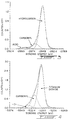
- Fig. 11 demonstrates sulfur peaks indicating thiol binding to titanium.
- Fig. 12 shows no major change in the sulfur (thiol) peaks after aqueous treatment.
- the titanium metal substrate is cleaned by mechanical polishing with alumina 0.1 um followed by an ultrasonic chemical cleaning in pur acetone for about 15 min.
- the substrate is electrochemically polished in a perchloric acid-butanol-methanol solution in a 1:12:7 ratio by volume for 30 min. at about 40 V.
- This technique establishes the electrochemical conditions at which the surface contaminants are unstable, and are removed. While we have not attempted to optimize the experimental conditions, the technique, as used, causes a measurable cleaning of the titanium surface.
- the depth probed at the titanium emission energy is about 45 Angstroms; for a perfectly flat titanium crystal covered with a monolayer of thiol, the depth probed into the titanium is, then, about 30 Angstroms. For a rougher surface, modeled on a 45° saw-tooth, this depth is closer to 20 Angstroms although the full thiolate monolayer is probed in both cases.
- Fig. 3 is the carbon spectrum
- Fig. 4 is the oxygen spectrum
- Fig. 5 is the sulfur spectrum
- Fig. 6 is the titanium spectrum.
- the peaks for carbon and oxygen arise from electrons emitted from s-type orbitals, meaning that each peak indicates another environment. Their probable attributions are indicated on the Figs. 3 and 4.
- a cleaned titanium implant was coated with 16-aminohexadecanethiol by the general procedure described in Example I.
- the implant was then stirred for 60 min. at 25°C under N 2 with a solution of glutaraldehyde in 0.1 M phosphate buffer.
- the implant was then rinsed with buffer and stirred for 12 h at 25°C with a solution of 3 mg alkaline phosphatase (from bovine intestinal mucosa, 5 units/mg) in 3 mL phosphate buffer.
- the implant was then rinsed with buffer. Enzymatic activity was measured by the method of Lowry et al. ( J . Biol . Chem ., 164 :321, 1946).
- a titanium implant was cleaned by the general procedure of Example I and subjected to controlled re-oxidation.
- the implant was then stirred for 2 h under N 2 with a 10% solution of 3-aminopropyltriethoxysilane in refluxing toluene.
- the modified implant was then covalently coupled with alkaline phosphatase by the glutaraldehyde procedure described in Example II. Enzymatic activity was measured by the method of Lowry et al. ( J . Biol . Chem ., 164 :321, 1946).
- Fig. 8 shows the appearance of a peak at 405 nm which provides clear evidence the alkaline phosphatase covalently-attached to the implant surface has retained its biological activity after 14 hours of incubation.
- the peak at 405 nm is essentially absent from Fig. 7 which is taken near the beginning of the reaction, weak absorbance at 405 nm indicates initial stages of formation of p-nitrophenol by enzyme-catalysed hydrolysis.
- a sample of powdered TiO 2 equivalent in weight to that of a standard titanium implant was stirred for 2 h under N 2 with a 10% solution of 3-aminopropyltriethoxysilane in refluxing toluene. After centrifugation, rinsing with toluene, and drying, the modified TiO 2 was stirred for 60 min. at 25°C under N 2 with a 2.5% solution of glutaraldehyde in 0.1 M phosphate buffer.
- the modified TiO 2 was stirred for 12 h. at 25°C with a solution of 3 mg alkaline phosphatase (from bovine intestinal mucosa, 5 units/mg) in 3 mL phosphate buffer. The modified TiO 2 was then rinsed thoroughly with buffer, and its enzymatic activity was measured by the method of Lowry et al. ( J . Biol . Chem ., 164 :321, 1946).
- junctional epithelium is surgically detached (reflected) from the tooth surface and the palatal root of rat molars is exposed and the cementum and outermost dentin is removed from the root surface with a dental bur.
- Tissue healing occurs soon thereafter and comprises both a soft and hard tissue response in which two principal events occur. Firstly, junctional epithelium migrates down the tooth and over the damaged root surface and re-establishes an epithelial attachment.
- enamel proteins are secreted and accumulate as an organic layer at the root surface (Fig.14A) adjacent to junctional epithelial cells.
- This class of protein is generally not believed to be expressed after completion of the enamel layer in unerupted teeth yet have here been shown to be part of the normal epithelial attachment (see Fig. 10B) and to be produced during reparation of this epithelial structure.
- Fig. 15 is a scheme of a titanium surface implant coated in accordance with the present invention shown in epithelial attachment.
Landscapes
- Health & Medical Sciences (AREA)
- Chemical & Material Sciences (AREA)
- Engineering & Computer Science (AREA)
- Medicinal Chemistry (AREA)
- Life Sciences & Earth Sciences (AREA)
- Epidemiology (AREA)
- Veterinary Medicine (AREA)
- Dermatology (AREA)
- Oral & Maxillofacial Surgery (AREA)
- Transplantation (AREA)
- Nanotechnology (AREA)
- Animal Behavior & Ethology (AREA)
- General Health & Medical Sciences (AREA)
- Public Health (AREA)
- Biomedical Technology (AREA)
- Physics & Mathematics (AREA)
- Mathematical Physics (AREA)
- Theoretical Computer Science (AREA)
- Crystallography & Structural Chemistry (AREA)
- Molecular Biology (AREA)
- Materials For Medical Uses (AREA)
- Prostheses (AREA)
Applications Claiming Priority (5)
| Application Number | Priority Date | Filing Date | Title |
|---|---|---|---|
| US226345 | 1981-01-19 | ||
| US5875393A | 1993-05-10 | 1993-05-10 | |
| US58753 | 1993-05-10 | ||
| US22634594A | 1994-04-12 | 1994-04-12 | |
| PCT/CA1994/000257 WO1994026321A1 (en) | 1993-05-10 | 1994-05-09 | Modification of implant surface with bioactive conjugates for improved integration |
Publications (2)
| Publication Number | Publication Date |
|---|---|
| EP0697896A1 EP0697896A1 (en) | 1996-02-28 |
| EP0697896B1 true EP0697896B1 (en) | 1999-01-13 |
Family
ID=26737995
Family Applications (1)
| Application Number | Title | Priority Date | Filing Date |
|---|---|---|---|
| EP94915005A Expired - Lifetime EP0697896B1 (en) | 1993-05-10 | 1994-05-09 | Modification of implant surface with bioactive conjugates for improved integration |
Country Status (12)
| Country | Link |
|---|---|
| EP (1) | EP0697896B1 (da) |
| JP (2) | JP3548175B2 (da) |
| KR (1) | KR100302545B1 (da) |
| AT (1) | ATE175581T1 (da) |
| AU (1) | AU690113B2 (da) |
| BR (1) | BR9406647A (da) |
| CA (1) | CA2162114A1 (da) |
| DE (1) | DE69415974T2 (da) |
| DK (1) | DK0697896T3 (da) |
| ES (1) | ES2131684T3 (da) |
| GR (1) | GR3029949T3 (da) |
| WO (1) | WO1994026321A1 (da) |
Families Citing this family (17)
| Publication number | Priority date | Publication date | Assignee | Title |
|---|---|---|---|---|
| US5861032A (en) * | 1996-01-31 | 1999-01-19 | Surface Genesis, Inc. | Medical device having a biocompatible coating and oxidation method of coupling therefor |
| KR0176334B1 (ko) * | 1996-08-19 | 1999-04-01 | 박원훈 | 내인체 감염성 삽입금속표면의 코팅방법 및 그 치료기술 |
| AU8783798A (en) | 1997-08-15 | 1999-03-08 | Children's Medical Center Corporation | Osteopontin coated surfaces and methods of use |
| AU2002324011B2 (en) * | 1997-08-15 | 2006-06-01 | Children's Medical Center Corporation | Osteopontin coated surfaces and methods of use |
| CH694935A5 (de) * | 2000-07-26 | 2005-09-30 | Straumann Holding Ag | Oberflaechenmodifizierte Implantate. |
| DE10037850A1 (de) | 2000-08-01 | 2002-02-21 | Herbert P Jennissen | Verfahren zur Herstellung bioaktiver Implantatoberflächen |
| AU2001221607A1 (en) * | 2000-11-20 | 2002-05-27 | Ecole Polytechnique Federale De Lausanne (Epfl) | Endosseous implant |
| CH695985A5 (de) * | 2002-01-21 | 2006-11-15 | Straumann Holding Ag | Oberflächenmodifizierte Implantate. |
| KR101013999B1 (ko) | 2004-03-19 | 2011-02-14 | 재단법인서울대학교산학협력재단 | 표면에 골조직 형성 증진 펩타이드가 고정된 차폐막 및임플란트 |
| JP2009512508A (ja) * | 2005-10-19 | 2009-03-26 | グレゴリー,ケントン・ダブリュー | トロポエラスチンの使用および生産方法、およびトロポエラスチン生体材料 |
| WO2007087718A1 (en) * | 2006-02-01 | 2007-08-09 | Bonegrafix Inc. | Bioimplants for use in tissue growth |
| CN102268713B (zh) * | 2011-06-29 | 2013-10-23 | 武汉科技大学 | 一种不锈钢表面纳米孔阵列薄膜及其制备方法 |
| JP6148487B2 (ja) * | 2012-05-31 | 2017-06-14 | 久保木 芳徳 | チタン−タンパク質複合体の製造方法 |
| CA2891048A1 (en) | 2012-11-19 | 2014-05-22 | Institut Curie | Method for grafting polymers on metallic substrates |
| CN103882442B (zh) * | 2014-04-16 | 2015-09-30 | 武汉科技大学 | 一种不锈钢表面三维纳米碳薄膜及其制备方法 |
| KR101544357B1 (ko) | 2014-04-23 | 2015-08-13 | 주식회사 비앤메디 | 표면처리된 티타늄 임플란트의 전해연마를 이용한 표면개질 방법 |
| KR102921957B1 (ko) * | 2022-09-13 | 2026-02-05 | 한국생산기술연구원 | 티타늄 임플란트 표면 처리 방법 |
Family Cites Families (3)
| Publication number | Priority date | Publication date | Assignee | Title |
|---|---|---|---|---|
| DE3241589A1 (de) * | 1982-11-10 | 1984-05-17 | Pfaudler-Werke Ag, 6830 Schwetzingen | Implantate und verfahren zu deren herstellung |
| EP0425485B1 (en) * | 1988-07-22 | 2000-10-04 | SurModics, Inc. | Preparation of polymeric surfaces |
| JPH07505900A (ja) * | 1992-04-24 | 1995-06-29 | バイオコンパテイブルズ・リミテツド | 金属皮膜 |
-
1994
- 1994-05-09 DK DK94915005T patent/DK0697896T3/da active
- 1994-05-09 DE DE69415974T patent/DE69415974T2/de not_active Expired - Fee Related
- 1994-05-09 CA CA002162114A patent/CA2162114A1/en not_active Abandoned
- 1994-05-09 AT AT94915005T patent/ATE175581T1/de not_active IP Right Cessation
- 1994-05-09 BR BR9406647A patent/BR9406647A/pt not_active Application Discontinuation
- 1994-05-09 AU AU66434/94A patent/AU690113B2/en not_active Ceased
- 1994-05-09 JP JP52476394A patent/JP3548175B2/ja not_active Expired - Fee Related
- 1994-05-09 KR KR1019950705019A patent/KR100302545B1/ko not_active Expired - Fee Related
- 1994-05-09 ES ES94915005T patent/ES2131684T3/es not_active Expired - Lifetime
- 1994-05-09 WO PCT/CA1994/000257 patent/WO1994026321A1/en not_active Ceased
- 1994-05-09 EP EP94915005A patent/EP0697896B1/en not_active Expired - Lifetime
-
1999
- 1999-04-14 GR GR990401039T patent/GR3029949T3/el unknown
-
2003
- 2003-12-26 JP JP2003432701A patent/JP2004154586A/ja active Pending
Also Published As
| Publication number | Publication date |
|---|---|
| EP0697896A1 (en) | 1996-02-28 |
| JPH08511696A (ja) | 1996-12-10 |
| WO1994026321A1 (en) | 1994-11-24 |
| ES2131684T3 (es) | 1999-08-01 |
| ATE175581T1 (de) | 1999-01-15 |
| BR9406647A (pt) | 1996-03-12 |
| DE69415974D1 (de) | 1999-02-25 |
| JP2004154586A (ja) | 2004-06-03 |
| AU690113B2 (en) | 1998-04-23 |
| GR3029949T3 (en) | 1999-07-30 |
| CA2162114A1 (en) | 1994-11-24 |
| DE69415974T2 (de) | 1999-08-19 |
| JP3548175B2 (ja) | 2004-07-28 |
| KR100302545B1 (ko) | 2001-11-22 |
| AU6643494A (en) | 1994-12-12 |
| KR960702326A (ko) | 1996-04-27 |
| DK0697896T3 (da) | 1999-09-06 |
Similar Documents
| Publication | Publication Date | Title |
|---|---|---|
| US5824651A (en) | Process for modification of implant surface with bioactive conjugates for improved integration | |
| US5876454A (en) | Modified implant with bioactive conjugates on its surface for improved integration | |
| AU690113B2 (en) | Modification of implant surface with bioactive conjugates for improved integration | |
| Brunski et al. | Biomaterials and biomechanics of oral and maxillofacial implants: current status and future developments. | |
| de Jonge et al. | Organic–inorganic surface modifications for titanium implant surfaces | |
| Xue et al. | In vivo evaluation of plasma-sprayed titanium coating after alkali modification | |
| Simske et al. | Porous materials for bone engineering | |
| von Wilmowsky et al. | Implants in bone: Part I. A current overview about tissue response, surface modifications and future perspectives | |
| Stanford et al. | The concept of osseointegration and bone matrix expression | |
| Al-Sanabani et al. | Application of calcium phosphate materials in dentistry | |
| Junker et al. | Effects of implant surface coatings and composition on bone integration: a systematic review | |
| Oshida et al. | Dental implant systems | |
| US5700289A (en) | Tissue-engineered bone repair using cultured periosteal cells | |
| Viornery et al. | Osteoblast culture on polished titanium disks modified with phosphonic acids | |
| US9744263B2 (en) | Bone tissue implant comprising strontium ions | |
| Takeshita et al. | Study of bone formation around dense hydroxyapatite implants using light microscopy, image processing and confocal laser scanning microscopy | |
| Zhao et al. | Modification of Ti implant surface for cell proliferation and cell alignment | |
| WO2014024171A1 (en) | Process for preparation of a biocompatible coating for bone grafts as well as coating and implant obtained therewith | |
| Padial-Molina et al. | Biomimetic ceramics in implant dentistry | |
| Toledo | Dental implant surface modifications and osteointegration | |
| Larsson et al. | 18 The Titanium-Bone Interface In Vivo | |
| Zhao | Interaction of surface energy and microarchitecture in determining cell and tissue response to biomaterials | |
| Lyngstadaas et al. | Inducing bone growth using extracellular matrix proteins | |
| Al-Sabri | Application of calcium phosphate materials in dentistry: a review | |
| Reinhardt | Investigations of Bone Titanium Interface In Vitro |
Legal Events
| Date | Code | Title | Description |
|---|---|---|---|
| PUAI | Public reference made under article 153(3) epc to a published international application that has entered the european phase |
Free format text: ORIGINAL CODE: 0009012 |
|
| 17P | Request for examination filed |
Effective date: 19951106 |
|
| AK | Designated contracting states |
Kind code of ref document: A1 Designated state(s): AT BE CH DE DK ES FR GB GR IE IT LI LU MC NL PT SE |
|
| GRAG | Despatch of communication of intention to grant |
Free format text: ORIGINAL CODE: EPIDOS AGRA |
|
| 17Q | First examination report despatched |
Effective date: 19980122 |
|
| GRAG | Despatch of communication of intention to grant |
Free format text: ORIGINAL CODE: EPIDOS AGRA |
|
| GRAH | Despatch of communication of intention to grant a patent |
Free format text: ORIGINAL CODE: EPIDOS IGRA |
|
| GRAH | Despatch of communication of intention to grant a patent |
Free format text: ORIGINAL CODE: EPIDOS IGRA |
|
| GRAH | Despatch of communication of intention to grant a patent |
Free format text: ORIGINAL CODE: EPIDOS IGRA |
|
| GRAA | (expected) grant |
Free format text: ORIGINAL CODE: 0009210 |
|
| AK | Designated contracting states |
Kind code of ref document: B1 Designated state(s): AT BE CH DE DK ES FR GB GR IE IT LI LU MC NL PT SE |
|
| REF | Corresponds to: |
Ref document number: 175581 Country of ref document: AT Date of ref document: 19990115 Kind code of ref document: T |
|
| REG | Reference to a national code |
Ref country code: CH Ref legal event code: EP |
|
| REG | Reference to a national code |
Ref country code: IE Ref legal event code: FG4D |
|
| REF | Corresponds to: |
Ref document number: 69415974 Country of ref document: DE Date of ref document: 19990225 |
|
| ITF | It: translation for a ep patent filed | ||
| ET | Fr: translation filed | ||
| REG | Reference to a national code |
Ref country code: CH Ref legal event code: NV Representative=s name: A. BRAUN, BRAUN, HERITIER, ESCHMANN AG PATENTANWAE |
|
| REG | Reference to a national code |
Ref country code: ES Ref legal event code: FG2A Ref document number: 2131684 Country of ref document: ES Kind code of ref document: T3 |
|
| REG | Reference to a national code |
Ref country code: DK Ref legal event code: T3 |
|
| PLBE | No opposition filed within time limit |
Free format text: ORIGINAL CODE: 0009261 |
|
| STAA | Information on the status of an ep patent application or granted ep patent |
Free format text: STATUS: NO OPPOSITION FILED WITHIN TIME LIMIT |
|
| 26N | No opposition filed | ||
| REG | Reference to a national code |
Ref country code: GB Ref legal event code: IF02 |
|
| PGFP | Annual fee paid to national office [announced via postgrant information from national office to epo] |
Ref country code: MC Payment date: 20030422 Year of fee payment: 10 |
|
| PGFP | Annual fee paid to national office [announced via postgrant information from national office to epo] |
Ref country code: PT Payment date: 20030428 Year of fee payment: 10 Ref country code: LU Payment date: 20030428 Year of fee payment: 10 |
|
| PGFP | Annual fee paid to national office [announced via postgrant information from national office to epo] |
Ref country code: GR Payment date: 20030429 Year of fee payment: 10 |
|
| PGFP | Annual fee paid to national office [announced via postgrant information from national office to epo] |
Ref country code: AT Payment date: 20040422 Year of fee payment: 11 |
|
| PGFP | Annual fee paid to national office [announced via postgrant information from national office to epo] |
Ref country code: DE Payment date: 20040423 Year of fee payment: 11 |
|
| PGFP | Annual fee paid to national office [announced via postgrant information from national office to epo] |
Ref country code: SE Payment date: 20040426 Year of fee payment: 11 Ref country code: DK Payment date: 20040426 Year of fee payment: 11 |
|
| PGFP | Annual fee paid to national office [announced via postgrant information from national office to epo] |
Ref country code: NL Payment date: 20040427 Year of fee payment: 11 Ref country code: CH Payment date: 20040427 Year of fee payment: 11 |
|
| PGFP | Annual fee paid to national office [announced via postgrant information from national office to epo] |
Ref country code: IE Payment date: 20040428 Year of fee payment: 11 Ref country code: GB Payment date: 20040428 Year of fee payment: 11 |
|
| PGFP | Annual fee paid to national office [announced via postgrant information from national office to epo] |
Ref country code: BE Payment date: 20040503 Year of fee payment: 11 |
|
| PG25 | Lapsed in a contracting state [announced via postgrant information from national office to epo] |
Ref country code: LU Free format text: LAPSE BECAUSE OF NON-PAYMENT OF DUE FEES Effective date: 20040509 |
|
| PGFP | Annual fee paid to national office [announced via postgrant information from national office to epo] |
Ref country code: ES Payment date: 20040514 Year of fee payment: 11 |
|
| PGFP | Annual fee paid to national office [announced via postgrant information from national office to epo] |
Ref country code: FR Payment date: 20040527 Year of fee payment: 11 |
|
| PG25 | Lapsed in a contracting state [announced via postgrant information from national office to epo] |
Ref country code: MC Free format text: LAPSE BECAUSE OF NON-PAYMENT OF DUE FEES Effective date: 20040531 |
|
| PG25 | Lapsed in a contracting state [announced via postgrant information from national office to epo] |
Ref country code: PT Free format text: LAPSE BECAUSE OF NON-PAYMENT OF DUE FEES Effective date: 20041109 |
|
| PG25 | Lapsed in a contracting state [announced via postgrant information from national office to epo] |
Ref country code: GR Free format text: LAPSE BECAUSE OF NON-PAYMENT OF DUE FEES Effective date: 20041203 |
|
| REG | Reference to a national code |
Ref country code: PT Ref legal event code: MM4A Effective date: 20041109 |
|
| PG25 | Lapsed in a contracting state [announced via postgrant information from national office to epo] |
Ref country code: IT Free format text: LAPSE BECAUSE OF NON-PAYMENT OF DUE FEES Effective date: 20050509 Ref country code: GB Free format text: LAPSE BECAUSE OF NON-PAYMENT OF DUE FEES Effective date: 20050509 Ref country code: AT Free format text: LAPSE BECAUSE OF NON-PAYMENT OF DUE FEES Effective date: 20050509 |
|
| PG25 | Lapsed in a contracting state [announced via postgrant information from national office to epo] |
Ref country code: SE Free format text: LAPSE BECAUSE OF NON-PAYMENT OF DUE FEES Effective date: 20050510 Ref country code: ES Free format text: LAPSE BECAUSE OF NON-PAYMENT OF DUE FEES Effective date: 20050510 |
|
| PG25 | Lapsed in a contracting state [announced via postgrant information from national office to epo] |
Ref country code: LI Free format text: LAPSE BECAUSE OF NON-PAYMENT OF DUE FEES Effective date: 20050531 Ref country code: DK Free format text: LAPSE BECAUSE OF NON-PAYMENT OF DUE FEES Effective date: 20050531 Ref country code: CH Free format text: LAPSE BECAUSE OF NON-PAYMENT OF DUE FEES Effective date: 20050531 Ref country code: BE Free format text: LAPSE BECAUSE OF NON-PAYMENT OF DUE FEES Effective date: 20050531 |
|
| BERE | Be: lapsed |
Owner name: *UNIVERSITE DE MONTREAL Effective date: 20050531 |
|
| PG25 | Lapsed in a contracting state [announced via postgrant information from national office to epo] |
Ref country code: NL Free format text: LAPSE BECAUSE OF NON-PAYMENT OF DUE FEES Effective date: 20051201 Ref country code: DE Free format text: LAPSE BECAUSE OF NON-PAYMENT OF DUE FEES Effective date: 20051201 |
|
| REG | Reference to a national code |
Ref country code: CH Ref legal event code: PL |
|
| EUG | Se: european patent has lapsed | ||
| GBPC | Gb: european patent ceased through non-payment of renewal fee |
Effective date: 20050509 |
|
| PG25 | Lapsed in a contracting state [announced via postgrant information from national office to epo] |
Ref country code: FR Free format text: LAPSE BECAUSE OF NON-PAYMENT OF DUE FEES Effective date: 20060131 |
|
| NLV4 | Nl: lapsed or anulled due to non-payment of the annual fee |
Effective date: 20051201 |
|
| REG | Reference to a national code |
Ref country code: IE Ref legal event code: MM4A |
|
| REG | Reference to a national code |
Ref country code: DK Ref legal event code: EBP |
|
| REG | Reference to a national code |
Ref country code: FR Ref legal event code: ST Effective date: 20060131 |
|
| REG | Reference to a national code |
Ref country code: ES Ref legal event code: FD2A Effective date: 20050510 |
|
| BERE | Be: lapsed |
Owner name: *UNIVERSITE DE MONTREAL Effective date: 20050531 |