EP0698974A1 - Systeme de communication a diversite dans le temps - Google Patents
Systeme de communication a diversite dans le temps Download PDFInfo
- Publication number
- EP0698974A1 EP0698974A1 EP95910784A EP95910784A EP0698974A1 EP 0698974 A1 EP0698974 A1 EP 0698974A1 EP 95910784 A EP95910784 A EP 95910784A EP 95910784 A EP95910784 A EP 95910784A EP 0698974 A1 EP0698974 A1 EP 0698974A1
- Authority
- EP
- European Patent Office
- Prior art keywords
- code words
- signal
- paging
- transmitted
- address
- Prior art date
- Legal status (The legal status is an assumption and is not a legal conclusion. Google has not performed a legal analysis and makes no representation as to the accuracy of the status listed.)
- Granted
Links
Images







Classifications
-
- H—ELECTRICITY
- H04—ELECTRIC COMMUNICATION TECHNIQUE
- H04L—TRANSMISSION OF DIGITAL INFORMATION, e.g. TELEGRAPHIC COMMUNICATION
- H04L1/00—Arrangements for detecting or preventing errors in the information received
- H04L1/004—Arrangements for detecting or preventing errors in the information received by using forward error control
- H04L1/0056—Systems characterized by the type of code used
- H04L1/0064—Concatenated codes
- H04L1/0065—Serial concatenated codes
-
- H—ELECTRICITY
- H04—ELECTRIC COMMUNICATION TECHNIQUE
- H04B—TRANSMISSION
- H04B7/00—Radio transmission systems, i.e. using radiation field
- H04B7/02—Diversity systems; Multi-antenna system, i.e. transmission or reception using multiple antennas
-
- H—ELECTRICITY
- H04—ELECTRIC COMMUNICATION TECHNIQUE
- H04L—TRANSMISSION OF DIGITAL INFORMATION, e.g. TELEGRAPHIC COMMUNICATION
- H04L1/00—Arrangements for detecting or preventing errors in the information received
- H04L1/004—Arrangements for detecting or preventing errors in the information received by using forward error control
- H04L1/0056—Systems characterized by the type of code used
- H04L1/0061—Error detection codes
-
- H—ELECTRICITY
- H04—ELECTRIC COMMUNICATION TECHNIQUE
- H04L—TRANSMISSION OF DIGITAL INFORMATION, e.g. TELEGRAPHIC COMMUNICATION
- H04L1/00—Arrangements for detecting or preventing errors in the information received
- H04L1/02—Arrangements for detecting or preventing errors in the information received by diversity reception
-
- H—ELECTRICITY
- H04—ELECTRIC COMMUNICATION TECHNIQUE
- H04L—TRANSMISSION OF DIGITAL INFORMATION, e.g. TELEGRAPHIC COMMUNICATION
- H04L1/00—Arrangements for detecting or preventing errors in the information received
- H04L1/08—Arrangements for detecting or preventing errors in the information received by repeating transmission, e.g. Verdan system
-
- Y—GENERAL TAGGING OF NEW TECHNOLOGICAL DEVELOPMENTS; GENERAL TAGGING OF CROSS-SECTIONAL TECHNOLOGIES SPANNING OVER SEVERAL SECTIONS OF THE IPC; TECHNICAL SUBJECTS COVERED BY FORMER USPC CROSS-REFERENCE ART COLLECTIONS [XRACs] AND DIGESTS
- Y02—TECHNOLOGIES OR APPLICATIONS FOR MITIGATION OR ADAPTATION AGAINST CLIMATE CHANGE
- Y02D—CLIMATE CHANGE MITIGATION TECHNOLOGIES IN INFORMATION AND COMMUNICATION TECHNOLOGIES [ICT], I.E. INFORMATION AND COMMUNICATION TECHNOLOGIES AIMING AT THE REDUCTION OF THEIR OWN ENERGY USE
- Y02D30/00—Reducing energy consumption in communication networks
- Y02D30/70—Reducing energy consumption in communication networks in wireless communication networks
Definitions
- This invention is utilized in mobile radio communications systems, and relates to the use of time diversity techniques. It relates to time diversity techniques in which a radio base station repeatedly transmits the same signal comprising error detecting code or error correcting code, until the receiver is able to decode this signal correctly.
- This invention is applicable to selective radio paging systems, and relates in particular to techniques for increasing the probability of receiving correctly under poor channel conditions.
- a selective radio paging system is an example of using receivers that receive the same signal transmitted a plurality of times, and such a system will now be explained.
- a selective radio paging system the same signal is transmitted a plurality of times, and when a selective radio paging receiver receives any of these identical signals, if its own address is contained in the received signal, it confirms that a call has been made to itself and emits a ringing tone and displays a message.
- the signal comprises code words of error correcting code or error detecting code.
- FIG.9 shows code words that are transmitted repeatedly. In order to make the configuration of an actual paging signal sequence easier to understand, its is shown conceptually.
- FIG.10 is a flowchart showing a conventional receiving procedure. A signal is transmitted repeatedly n times as shown in FIG.9(1), and in each of these there are k code words as shown in FIG.9(2). The information content is identical each of the n times.
- a conventional receiving procedure is as follows: when the number of times receiving has been carried out does not exceed n (S21), it is decided whether or not all the k code words in one signal have been correctly decoded (S22). If this has been impossible, receiving is repeated until the number of receptions equals n. If, as a result of this repeated receiving, all the k code words in one signal can be correctly decoded, one signal is deemed to have been decoded (S23) and the receiving procedure is terminated.
- No.5-036963 filed by the present applicant (not yet published as a Kokai patent at the date of filing of the present application), as soon as decoding in a selective radio paging receiver (hereinafter, referred to simply as a "pager") has been successfully completed before the number of repetitions of receiving has reached n, battery consumption can be reduced by prohibiting reception, and thereby stopping part of the pager from working, until the predetermined arrival time of the next different paging signal, which is also repeated n times.
- a pager selective radio paging receiver
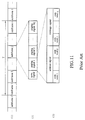
- FIG.11 shows a paging signal sequence
- FIG.12 is a block diagram of a prior art device
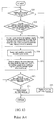
- FIG.13 is a flowchart showing the procedure employed in a prior art time diversity reception scheme.
- the paging signal sequence shown in FIG.11(1) comprises frames of time length T, each frame comprising r subframes connected together.
- Each subframe signal comprises a plurality of paging signals: for example, subframe j comprises mj paging signals as shown in FIG.11(2).
- Each paging signal comprises an address signal consisting of p code words of error correcting code, and a message signal consisting of q code words of error correcting code.
- the pagers are divided into r groups, and a pager belonging to group j enters the receiving mode only during the receiving time for the single subframe j.
- Time diversity reception processing is carried out in this selective radio paging system in order to increase the probability of receiving a paging signal correctly. Namely, when a paging signal is transmitted a plurality of times, a comparison is made, in respect of the code words that comprise the message signal, between (a) the error detection decoding result for each code word of the message signal received by retransmission, and (b) the error detection decoding result for each code word in the case of the message signal received up to and including the previous time, said result having been stored in memory. As a result of this comparison, correctly decoded code words are selected and combined.
- the signal received by antenna 1 is input to receiving part 2 and after being demodulated is input to decoder 3. Error correction or error detection is carried out on each code word by means of decoding circuit 4 in this decoder 3.
- the output of decoding circuit 4 is supplied to address signal detection circuit 10, and when the address signal of the pager is detected by this, the processing procedure illustrated in FIG.13 is executed in processor circuit 5.
- processor circuit 5 compares the result of error detection decoding of the code word received the present time with the result of error detection decoding of the code word received the previous time, which is stored in memory 6 (S33), and selects and combines correctly decoded code words (S34).
- the error detection decoding result for each code word in the message signal after this selecting and combining is also stored in memory 6 together with the message signal after the selected code words have been combined (S35), and it is decided whether or not all the code words in one paging signal have been correctly decoded (S36). If the address signal cannot be correctly decoded, the pager is held on stand-by until the time for reception of the next retransmitted paging signal. If all the code words in one paging signal have been correctly decoded, reception of the paging signal is deemed to have been successful (S37), whereupon a signal for implementing paging operations is output to driver 7, said paging operations being the emission of a ringing tone from speaker 9 and the display of the message signal on display 8.
- this processing is repeated in the next signal reception period. If the number of receptions reaches n+1, this paging signal is abandoned as one that cannot be correctly decoded and is deemed not to have been received (S38).
- This time diversity reception scheme is an excellent method, being capable of correctly decoding message signals even in poor quality mobile radio channels. However, it will perform time diversity processing only when the address signal has been correctly decoded at each retransmission and it has been recognized that the same message signal is being transmitted to the same address. Because the probability of receiving an address signal correctly in a poor quality mobile radio channel is low, time diversity processing will sometimes be impossible, which means that it will sometimes be impossible to increase the probability of receiving a paging signal correctly. As mentioned above, according to the proposal made in Jap. Pat. Appl.
- the present invention has been devised in the light of this situation, and its object is to provide a time diversity communications system which can further improve the probability of correct reception by a receiving device. It is a further object of this invention to provide a time diversity communications system which, when applied to a selective radio paging system, gives a pager whereby the probability of receiving correctly can be further improved. It is yet another object of this invention to provide a time diversity communications system which gives a pager with reduced battery consumption.
- this invention is a time diversity communications system, the distinguishing feature of which is that it has: a transmitting device which, as time elapses, transmits code words with the same content a plurality of times as radio signals, said code words having been encoded in accordance with error correcting or error detecting logic; and a receiving device which receives the aforementioned code words and decodes them in accordance with error correcting or error detecting logic; this receiving device having a means which, from among code words with the same content that have been received over a plurality of times, selects as the received information those code words that are judged to have been correctly decoded in accordance with error correcting or error detecting logic.
- the aforementioned selecting means should select, from among code words with the same content that have been received over a plurality of times, and from among code words that are judged to have been correctly decoded in accordance with the aforementioned error correcting logic, those with the smallest number of error-corrected bits. This makes it possible to select, from among corrected code words with the same content that have been received over a plurality of times, those which have the least likelihood of miscorrection.
- the aforementioned receiving device can also have a means which prohibits the reception of subsequent code words with the same content when, from among code words with the same content that have been received over a plurality of times, code words that are judged to have been correctly decoded in accordance with error correcting or error detecting logic have been obtained.
- a code word can be part of the address signal or part of the message signal.
- the radio signal that is transmitted from the aforementioned transmitting device comprises frames which are transmitted repeatedly n times, each frame containing a plurality of subframes.
- Each subframe contains a plurality of paging signals, and each paging signal contains an address signal and a message signal.
- the address signal and the message signal both contain a plurality of code words.
- the aforementioned receiving device can be used as a pager which receives this radio signal and detects when an address signal matches the address which has been set in itself.
- the radio signal transmitted from the aforementioned transmitting device can have the following configuration. Namely, it can comprise frames which are transmitted n times, each frame containing a plurality of subframes of equal time length, and each subframe containing n paging signal groups each of which differs in respect of the number of times it has been transmitted.
- a paging signal group which was transmitted for the nth time in a subframe that was transmitted in the previous transmission period is deleted from the subframe that is transmitted in the present transmission period, and instead, a paging signal group which is being transmitted for the first time is inserted in that subframe, said paging signal group containing new paging signals.
- Each of this plurality of paging signal groups contains a plurality of paging signals, and each paging signal contains an address signal and a message signal.
- the address signal and the message signal both contain a plurality of code words.
- the aforementioned receiving device can be used as a pager which receives the aforementioned radio signal and detects when an address signal matches the address which has been set in itself.
- this invention is a receiving device or selective radio paging receiver which is used in this time diversity communications system.
- the selective radio paging receiver receives a repeatedly transmitted signal.
- this signal is internally divided into address signal regions and message signal regions, both of these regions comprise a collection of code words.
- This invention is characterised in that the signal is regarded simply as a collection of code words and that time diversity reception is performed on each code word without distinguishing between address signals and message signals.
- code words are decoded without distinguishing between address signal regions and message signal regions.
- Code words that have been received a plurality of times include not only those that have been decoded correctly, but also those that contain errors.
- Correctly decoded code words include those that did contain errors, but which have been corrected (e.g., those in which one bit has been corrected, those in which two bits have been corrected, and so on). All these results are stored in memory. This procedure is repeated for the following n transmissions. After the nth reception is finished, if all the code words are correctly decoded, reception is deemed to have been successful.
- code words with the least likelihood of miscorrection can be selected.
- a code word that has already been correctly decoded on the jth occasion does not have to be received on the (j+1)th and subsequent occasions (where j+1 ⁇ n). It follows that battery consumption of the pager can be decreased if some of the functions of the pager pertaining to receiving are stopped during times when correctly decoded code words would be received, and if other code words are received during their (j+1)th and subsequent receptions.
- the radio signal transmitted from a base station in its capacity as a transmitting device may for example have the following configuration. Namely, it may comprise frames of period T that are transmitted n times, each frame containing a plural number r of subframes.
- the jth subframe of a frame (j ⁇ r) contains mj paging signals, and each of these paging signals contains an address signal and a message signal.
- the address signal contains p code words and the message signal contains q code words.
- the contents of the paging signals are updated after every time interval nT. A new paging signal will therefore be transmitted after a maximum delay time of nT.
- frames may be transmitted n times, each frame containing a plural number r of subframes of time length ⁇ , and the jth of these subframes (j ⁇ r) containing n paging signal groups each of which differs in respect of the number of times it has been transmitted.
- Each of these n paging signal groups contains mj paging signals, and each of these paging signals contains an address signal and a message signal.
- This address signal contains p code words (p ⁇ 1) and this message signal contains q code words (q ⁇ 1).
- the yth paging signal group (1 ⁇ y ⁇ n-1) in subframe j transmitted at time t0+(j-1) ⁇ is transmitted as the (y+1)th paging signal group in subframe j transmitted at time t0+T+(j-1) ⁇ .
- a paging signal group which was transmitted for the nth time in the previous transmission period is deleted in the present transmission period, and instead, a paging signal group which is being transmitted for the first time is inserted, said paging signal group containing new paging signals.
- a new paging request will therefore be transmitted as paging signals after a maximum delay time of T, which means that the time interval between a caller who wishes to page the user of a pager making his call and the pager actually paging its user can be shortened.
- this invention can further improve the probability of correct reception by a receiving device.
- This invention can therefore, for example, further improve the probability of correct reception of paging signals in a pager. Consequently, it can provide a pager with low battery consumption.
- FIG.1 is a block diagram of a first embodiment of this invention.
- FIG.2 serves to explain the principles of the first embodiment.
- FIG.3 serves to explain the principles of the first embodiment.
- FIG.4 is a flowchart showing the operation of the first embodiment.
- FIG.5 shows a more specific paging signal sequence according to the first embodiment.
- FIG.6 is a flowchart showing the operation of the processor circuit when using the more specific paging signal sequence according to the first embodiment.
- FIG.7 shows a specific paging signal sequence according to a second embodiment of this invention.
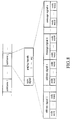
- FIG.8 shows another paging signal sequence.
- FIG.9 shows a repeatedly transmitted signal.
- FIG.10 is a flowchart showing a prior art receiving procedure.
- FIG.11 shows a paging signal sequence
- FIG.12 is a block diagram of a prior art device.
- FIG.13 is a flowchart showing a prior art time diversity reception procedure.
- FIG.1 is a block diagram of said first embodiment.
- This invention is a time diversity communications system characterised in that it has base station 20 as a transmitting device which, as time elapses, transmits code words with the same content a plurality of times as radio signals, said code words being obtained by encoding an address signal or a message signal in accordance with error correcting or error detecting logic; and selective radio paging receiver 11 as a receiving device which receives the aforementioned code words and decodes them in accordance with error correcting or error detecting logic; said selective radio paging receiver 11 having, in decoder 3, a means which, from among code words with the same content that have been received over a plurality of times, selects as the received information those code words that are judged to have been correctly decoded in accordance with error correcting or error detecting logic.
- Selective radio paging receiver (hereinafter, referred to simply as "pager") 11 also has, in decoder 3, a means which prohibits the reception of subsequent code words with the same content when the address signal or message signal obtained, which comprises code words with the same content that have been received over a plurality of times, comprises code words which are judged to have been correctly decoded in accordance with error correcting or error detecting logic. This enables part of pager 11 to be stopped from working, whereby battery consumption can be decreased.
- the radio signal transmitted from base station 20 comprises frames that are transmitted n times, each frame containing a plural number r of subframes.
- the jth subframe of a frame (j ⁇ r) contains mj paging signals, and each of these paging signals contains an address signal and a message signal.
- the address signal contains p code words and the message signal contains q code words.
- Pager 11 receives this transmitted signal and when it detects that an address signal matches the address which has been set in itself, it employs speaker 9 and/or display 8 to indicate to the user that a call has been made.
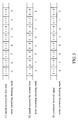
- FIG.2(1) shows the signal that is received the first time
- FIG.2(2) shows the signal received the second time
- An "x" as the result of the error detecting decoding indicates a code word in which an error has been detected
- an "o" indicates a correctly decoded code word (including code words where, although an error was detected, said error has been corrected).
- the signal received the first time is compared with the signal received the second time, and the correctly decoded code words in these are selected and combined.
- the result of this operation is shown in FIG.2(3). Because code word "1-6" has had an error detected in it both the first time and the second time, the combined result also contains an error. It is therefore necessary to receive code word "1-6" at the third and subsequent reception times until it can be correctly decoded.
- FIG.3(1) shows the signal that is received the first time
- FIG.3(2) shows the signal received the second time
- An "x" as the result of the error correcting decoding indicates a code word in which an error has been detected but cannot be corrected
- a code word with the numeral "0", “1” or “2” below it indicates a code word in which an error has been detected and corrected (i.e., a correctly decoded code word), with the numeral showing the number of corrected bits in the indicated code word.
- a "0" indicates that no correction is required.
- time diversity reception is performed on the basis of whether or not a code word has been correctly decoded, whereas in FIG.3 it is performed using the number of error-corrected bits in correctly decoded code words as well.
- the method illustrated in FIG.3 is therefore applicable when the signal comprises code words of error correcting code, but is not applicable when the signal comprises code words of error detecting code.
- the signal received the first time and the signal received the second time are compared, and the more correctly decoded code words in these are chosen and combined.
- the result of this operation is shown in FIG.3(3). Because the probability of miscorrection occurring is lower when there are fewer corrected bits, the code word with fewer corrected bits is selected. An error has been detected in code word "1-6" both the first time the second time, but it has been impossible to correct this, and so the combined result will also contain an error. It is therefore necessary to receive code word "1-6" at the third and subsequent reception times until it can be correctly decoded.
- FIG.4 is a flowchart showing said operation.
- This flowchart shows the operation suited to the repeatedly transmitted signals depicted in FIG.9 in respect of the prior art.
- the signal received by antenna 1 shown in FIG.1 is input to receiving part 2 and the demodulated received signal from this receiving part 2 is input to decoder 3.
- Error correction or error detection is carried out on each code word by means of decoding circuit 4 of decoder 3.
- the code words after error correction or error detection are input to processor circuit 5, together with the results of the error correcting or error detecting decoding.
- processor circuit 5 when the number of times receiving has been carried out does not exceed n (S1), the result of the error correcting or error detecting decoding of each code word received this time is compared with the corresponding result for each code word stored in memory (S2), and time diversity reception processing is performed, wherein correctly decoded code words are selected and combined (S3).
- the error correcting or error detecting decoding results for code words after this selecting and combining are stored in memory 6 together with the signal after this combining (S4).
- S5 reception of one paging signal is deemed to have been successful
- the signal after this combining, or its decoded version, is output to driver 7 and processing is terminated. However, if there are one or more incorrectly decoded code words among the k code words, this processing is repeated in the next signal reception period. On the other hand, if the number of receptions has reached n+1, receiving of this paging signal is abandoned, it is deemed not to have been received, and the processing is terminated (S7). Matters may be controlled so that when all the code words in one signal have been correctly decoded, part of pager 11 is stopped from working until the following n receptions. Alternatively, a finer degree of control may be applied so that part of pager 11 is stopped from working, in units of correctly decoded code words, until the following n receptions. In this first embodiment of the invention, the operation of receiving part 2 is stopped by a control signal from processor circuit 5.
- This first embodiment of the invention is characterised in that time diversity reception is performed on all code words without distinguishing between the address signal and the message signal. In this respect it differs from the prior art, in which time diversity reception is not carried out if the address signal is not decoded correctly.
- FIG.5 shows a more specific paging signal sequence according to the first embodiment
- FIG.6 is a flowchart showing the operation of processor circuit 5 in respect of this more specific paging signal sequence.
- each subframe comprises paging signals transmitted the same number of times, which means that a frame comprising subframes of paging signals transmitted the same number of times is transmitted n times.
- the position of a retransmitted paging signal is known at pager 11.
- the paging signal is deemed not to have been received, and processing is terminated (S19).
- part of pager 11 can be stopped from working until the following n receptions.
- a finer degree of control may be applied so that part of pager 11 is stopped from working, in units of correctly decoded code words, until the following n receptions.
- the operation of receiving part 2 is stopped by a control signal from processor circuit 5.
- FIG.7 shows a specific paging signal sequence according to this second embodiment.
- the configuration a device according to this second embodiment of the invention can be explained in similar manner to a device according to the first embodiment.
- This second embodiment differs from the first embodiment in respect of the configuration of the paging signal sequence.
- each frame of time length T is divided into r subframes of time length ⁇ , and these are transmitted n times in order, starting from subframe 1.
- Each subframe contains n paging signal groups, each of which differs in respect of the number of times it has been transmitted.
- This paging signal sequence is one which the present applicant has proposed in Jap. Pat. Appl.
- a paging request that has been newly made during the transmission of the first paging signal frame shown in FIG.5(1) will be delayed until n repetitions have been completed.
- the maximum delay time is approximately nT, and only alter this will this paging request at last be transmitted as a paging signal.
- part of pager 11 when all the code words in one subframe have been decoded without error, part of pager 11 can be stopped from working until the following n receptions.
- a finer degree of control may be applied so that part of pager 11 is stopped from working, in units of correctly decoded code words, until the following n receptions.
- the operation of receiving part 2 is stopped by a control signal from processor circuit 5, just as in the first embodiment.
- the paging signals are collectively configured as two separate fields, one field being for address signals and the other for message signals. Because this invention performs time diversity reception on each code word, the address signals and message signals can be accommodated in any positions.
- time diversity reception processing can be carried out on both the address signals and the message signals, the probability of receiving a paging signal correctly can be increased.
Landscapes
- Engineering & Computer Science (AREA)
- Computer Networks & Wireless Communication (AREA)
- Signal Processing (AREA)
- Mobile Radio Communication Systems (AREA)
- Detection And Prevention Of Errors In Transmission (AREA)
- Radio Transmission System (AREA)
- Circuits Of Receivers In General (AREA)
Applications Claiming Priority (4)
| Application Number | Priority Date | Filing Date | Title |
|---|---|---|---|
| JP41399/94 | 1994-03-11 | ||
| JP4139994 | 1994-03-11 | ||
| JP4139994 | 1994-03-11 | ||
| PCT/JP1995/000395 WO1995024786A1 (fr) | 1994-03-11 | 1995-03-10 | Systeme de communication a diversite dans le temps |
Publications (3)
| Publication Number | Publication Date |
|---|---|
| EP0698974A1 true EP0698974A1 (fr) | 1996-02-28 |
| EP0698974A4 EP0698974A4 (fr) | 2000-03-15 |
| EP0698974B1 EP0698974B1 (fr) | 2004-02-18 |
Family
ID=12607308
Family Applications (1)
| Application Number | Title | Priority Date | Filing Date |
|---|---|---|---|
| EP95910784A Expired - Lifetime EP0698974B1 (fr) | 1994-03-11 | 1995-03-10 | Systeme de communication a diversite dans le temps |
Country Status (7)
| Country | Link |
|---|---|
| US (1) | US5794124A (fr) |
| EP (1) | EP0698974B1 (fr) |
| KR (1) | KR100382815B1 (fr) |
| CN (1) | CN1094275C (fr) |
| CA (1) | CA2162929C (fr) |
| DE (1) | DE69532572T2 (fr) |
| WO (1) | WO1995024786A1 (fr) |
Cited By (1)
| Publication number | Priority date | Publication date | Assignee | Title |
|---|---|---|---|---|
| WO2001043350A3 (fr) * | 1999-12-09 | 2002-10-31 | Iar Systems Ag | Ligne hertzienne et procede d'utilisation |
Families Citing this family (20)
| Publication number | Priority date | Publication date | Assignee | Title |
|---|---|---|---|---|
| US6690681B1 (en) | 1997-05-19 | 2004-02-10 | Airbiquity Inc. | In-band signaling for data communications over digital wireless telecommunications network |
| US6493338B1 (en) | 1997-05-19 | 2002-12-10 | Airbiquity Inc. | Multichannel in-band signaling for data communications over digital wireless telecommunications networks |
| US5883581A (en) * | 1997-12-22 | 1999-03-16 | Motorola, Inc. | Time diversity radio system using transparent address vector and message repeats |
| US6378099B1 (en) * | 1999-01-29 | 2002-04-23 | Qualcomm Incorporated | Blind frame identification in a communication system |
| US6985495B2 (en) * | 2000-05-27 | 2006-01-10 | Takeshi Hoshiko | Packet communication monitor |
| US7043259B1 (en) * | 2000-09-29 | 2006-05-09 | Arraycomm, Inc. | Repetitive paging from a wireless data base station having a smart antenna system |
| FI111421B (fi) * | 2000-12-20 | 2003-07-15 | Nokia Corp | Tiedonsiirtomenetelmä ja radiojärjestelmä |
| US7215965B2 (en) | 2001-11-01 | 2007-05-08 | Airbiquity Inc. | Facility and method for wireless transmission of location data in a voice channel of a digital wireless telecommunications network |
| JP4166480B2 (ja) * | 2002-01-30 | 2008-10-15 | 松下電器産業株式会社 | 非対称型フレーム双方向デジタルワイヤレスシステム |
| US7508810B2 (en) | 2005-01-31 | 2009-03-24 | Airbiquity Inc. | Voice channel control of wireless packet data communications |
| US7924934B2 (en) * | 2006-04-07 | 2011-04-12 | Airbiquity, Inc. | Time diversity voice channel data communications |
| MX2010003700A (es) | 2007-10-20 | 2010-04-21 | Airbiquity Inc | Se?alizacion en banda inalambrica con sistemas instalados en un vehiculo. |
| CN101926097B (zh) | 2007-11-27 | 2016-10-05 | 普罗透斯数字保健公司 | 采用通信信道的穿体通信系统 |
| US8594138B2 (en) | 2008-09-15 | 2013-11-26 | Airbiquity Inc. | Methods for in-band signaling through enhanced variable-rate codecs |
| US7983310B2 (en) * | 2008-09-15 | 2011-07-19 | Airbiquity Inc. | Methods for in-band signaling through enhanced variable-rate codecs |
| US8036600B2 (en) | 2009-04-27 | 2011-10-11 | Airbiquity, Inc. | Using a bluetooth capable mobile phone to access a remote network |
| US8418039B2 (en) | 2009-08-03 | 2013-04-09 | Airbiquity Inc. | Efficient error correction scheme for data transmission in a wireless in-band signaling system |
| US8249865B2 (en) | 2009-11-23 | 2012-08-21 | Airbiquity Inc. | Adaptive data transmission for a digital in-band modem operating over a voice channel |
| US8848825B2 (en) | 2011-09-22 | 2014-09-30 | Airbiquity Inc. | Echo cancellation in wireless inband signaling modem |
| US20230269062A1 (en) * | 2022-02-18 | 2023-08-24 | Sony Semiconductor Solutions Corporation | Communication apparatus and communication system |
Family Cites Families (11)
| Publication number | Priority date | Publication date | Assignee | Title |
|---|---|---|---|---|
| NL8200560A (nl) * | 1982-02-15 | 1983-09-01 | Philips Nv | Stelsel voor kommunikatie middels herhaald uitgezonden berichten alsmede stations voor gebruik in zo een stelsel. |
| SE445686B (sv) * | 1984-11-26 | 1986-07-07 | Ericsson Telefon Ab L M | Forfarande for mottagning av radiosenda meddelanden samt mottagare for endamalet |
| GB8501276D0 (en) * | 1985-01-18 | 1985-02-20 | Multitone Electronics Plc | Radio pager |
| JPS61270935A (ja) * | 1985-05-25 | 1986-12-01 | Matsushita Electric Works Ltd | ワイヤレス伝送システム |
| JPH0683132B2 (ja) * | 1987-05-22 | 1994-10-19 | 日本電信電話株式会社 | 無線呼出方式 |
| JPH0722280B2 (ja) * | 1988-01-13 | 1995-03-08 | 日本ビクター株式会社 | 無線ページングシステム |
| US5175874A (en) * | 1991-04-10 | 1992-12-29 | Motorola, Inc. | Radiotelephone message processing for low power operation |
| JPH04341020A (ja) * | 1991-05-17 | 1992-11-27 | Nec Corp | ダイバーシチ方式 |
| US5493282A (en) * | 1992-05-29 | 1996-02-20 | Motorola, Inc. | Addressing method for conserving power in distributed information receivers |
| JP3187190B2 (ja) * | 1993-02-18 | 2001-07-11 | 株式会社東芝 | 移動無線通信システムとその基地局 |
| US5396660A (en) * | 1993-03-26 | 1995-03-07 | Motorola, Inc. | Method and apparatus for improving battery life in a portable communication receiver |
-
1995
- 1995-03-10 DE DE69532572T patent/DE69532572T2/de not_active Expired - Lifetime
- 1995-03-10 EP EP95910784A patent/EP0698974B1/fr not_active Expired - Lifetime
- 1995-03-10 WO PCT/JP1995/000395 patent/WO1995024786A1/fr not_active Ceased
- 1995-03-10 CA CA002162929A patent/CA2162929C/fr not_active Expired - Fee Related
- 1995-03-10 CN CN951901834A patent/CN1094275C/zh not_active Expired - Fee Related
- 1995-03-10 KR KR1019950704687A patent/KR100382815B1/ko not_active Expired - Fee Related
- 1995-11-13 US US08/558,136 patent/US5794124A/en not_active Expired - Lifetime
Cited By (3)
| Publication number | Priority date | Publication date | Assignee | Title |
|---|---|---|---|---|
| WO2001043350A3 (fr) * | 1999-12-09 | 2002-10-31 | Iar Systems Ag | Ligne hertzienne et procede d'utilisation |
| CN1299465C (zh) * | 1999-12-09 | 2007-02-07 | Bm无线有限公司 | 具有发射机和接收机的无线电链路和操作它的方法 |
| US7590121B2 (en) | 1999-12-09 | 2009-09-15 | Bm Wireless Ltd. & Co. Kg | Transmitter, receiver, combined transceiver, and radio link for communicating a data stream of data packets, method for receiving a data stream of data packets, method for operating a radio link, and bicycle and fitness computers utilizing the transmitter and receiver |
Also Published As
| Publication number | Publication date |
|---|---|
| KR100382815B1 (ko) | 2003-08-02 |
| CN1094275C (zh) | 2002-11-13 |
| CN1124553A (zh) | 1996-06-12 |
| DE69532572T2 (de) | 2004-08-05 |
| CA2162929A1 (fr) | 1995-09-14 |
| KR960702226A (ko) | 1996-03-28 |
| DE69532572D1 (de) | 2004-03-25 |
| CA2162929C (fr) | 2005-08-02 |
| EP0698974A4 (fr) | 2000-03-15 |
| WO1995024786A1 (fr) | 1995-09-14 |
| US5794124A (en) | 1998-08-11 |
| EP0698974B1 (fr) | 2004-02-18 |
Similar Documents
| Publication | Publication Date | Title |
|---|---|---|
| US5794124A (en) | Time diversity communications system | |
| EP0721714B1 (fr) | Procede et systeme de transmission de messages | |
| US5793756A (en) | Method and apparatus for organizing and recovering information communicated in a radio communication system | |
| US5546394A (en) | Message fragmenting in a time diversity radio system | |
| EP0507778B1 (fr) | Systeme de recherche de personne utilisant une transmission d'un message de donnees provenant d'un service d'information appartenant a un lot specifique | |
| KR100247315B1 (ko) | 전력 시프트 송신기를 이용한 페이징 방법 | |
| US4776037A (en) | Method and apparatus for providing priority channel scan in a radio | |
| US5826172A (en) | Mobile communications system for repeatedly transmitting paging signals | |
| US5736934A (en) | Radio paging system | |
| US5805980A (en) | Communication receiver for controlling a receive operation in response to a control value | |
| EP0695101B1 (fr) | Systeme mobile de radiocommunication et recepteur radio | |
| KR19980703700A (ko) | 무선 통신 시스템에서 전역 사건 정보를 전달하기 위한 방법 및장치 | |
| US5657357A (en) | Method and apparatus for providing duplicate messages in a radio communication system | |
| JP3044064B2 (ja) | 時間ダイバーシチー通信方式 | |
| US6301235B1 (en) | Terminal for digital mobile radio and method for evaluating data received in such a terminal | |
| JPH0244821A (ja) | 選択無線呼出方式 | |
| JPWO1995024786A1 (ja) | 時間ダイバーシチー通信方式 | |
| EP0726684B1 (fr) | Dispositif de commande de réception intermittente d'un récepteur d'appels sélectifs et procédé correspondant | |
| JP2802405B2 (ja) | 無線呼出方式 | |
| JPS63290027A (ja) | 無線呼出用受信機 | |
| USRE38535E1 (en) | Terminal for digital mobile radio and method for evaluating data received in such a terminal | |
| JPH07154838A (ja) | 選択呼出受信機 | |
| JPS63290026A (ja) | 無線呼出方式 | |
| JPWO1994017607A1 (ja) | 無線呼出方式 |
Legal Events
| Date | Code | Title | Description |
|---|---|---|---|
| PUAI | Public reference made under article 153(3) epc to a published international application that has entered the european phase |
Free format text: ORIGINAL CODE: 0009012 |
|
| 17P | Request for examination filed |
Effective date: 19951110 |
|
| AK | Designated contracting states |
Kind code of ref document: A1 Designated state(s): DE FR GB IT SE |
|
| A4 | Supplementary search report drawn up and despatched |
Effective date: 20000202 |
|
| AK | Designated contracting states |
Kind code of ref document: A4 Designated state(s): DE FR GB IT SE |
|
| 17Q | First examination report despatched |
Effective date: 20010620 |
|
| RAP1 | Party data changed (applicant data changed or rights of an application transferred) |
Owner name: NTT DOCOMO, INC. |
|
| GRAP | Despatch of communication of intention to grant a patent |
Free format text: ORIGINAL CODE: EPIDOSNIGR1 |
|
| GRAS | Grant fee paid |
Free format text: ORIGINAL CODE: EPIDOSNIGR3 |
|
| GRAA | (expected) grant |
Free format text: ORIGINAL CODE: 0009210 |
|
| AK | Designated contracting states |
Kind code of ref document: B1 Designated state(s): DE FR GB IT SE |
|
| REG | Reference to a national code |
Ref country code: GB Ref legal event code: FG4D |
|
| REF | Corresponds to: |
Ref document number: 69532572 Country of ref document: DE Date of ref document: 20040325 Kind code of ref document: P |
|
| REG | Reference to a national code |
Ref country code: SE Ref legal event code: TRGR |
|
| ET | Fr: translation filed | ||
| PLBE | No opposition filed within time limit |
Free format text: ORIGINAL CODE: 0009261 |
|
| STAA | Information on the status of an ep patent application or granted ep patent |
Free format text: STATUS: NO OPPOSITION FILED WITHIN TIME LIMIT |
|
| 26N | No opposition filed |
Effective date: 20041119 |
|
| PGFP | Annual fee paid to national office [announced via postgrant information from national office to epo] |
Ref country code: IT Payment date: 20120323 Year of fee payment: 18 |
|
| PGFP | Annual fee paid to national office [announced via postgrant information from national office to epo] |
Ref country code: SE Payment date: 20130312 Year of fee payment: 19 Ref country code: GB Payment date: 20130306 Year of fee payment: 19 Ref country code: FR Payment date: 20130325 Year of fee payment: 19 Ref country code: DE Payment date: 20130306 Year of fee payment: 19 |
|
| REG | Reference to a national code |
Ref country code: DE Ref legal event code: R119 Ref document number: 69532572 Country of ref document: DE |
|
| REG | Reference to a national code |
Ref country code: SE Ref legal event code: EUG |
|
| GBPC | Gb: european patent ceased through non-payment of renewal fee |
Effective date: 20140310 |
|
| PG25 | Lapsed in a contracting state [announced via postgrant information from national office to epo] |
Ref country code: SE Free format text: LAPSE BECAUSE OF NON-PAYMENT OF DUE FEES Effective date: 20140311 |
|
| REG | Reference to a national code |
Ref country code: FR Ref legal event code: ST Effective date: 20141128 |
|
| REG | Reference to a national code |
Ref country code: DE Ref legal event code: R119 Ref document number: 69532572 Country of ref document: DE Effective date: 20141001 |
|
| PG25 | Lapsed in a contracting state [announced via postgrant information from national office to epo] |
Ref country code: DE Free format text: LAPSE BECAUSE OF NON-PAYMENT OF DUE FEES Effective date: 20141001 Ref country code: GB Free format text: LAPSE BECAUSE OF NON-PAYMENT OF DUE FEES Effective date: 20140310 Ref country code: FR Free format text: LAPSE BECAUSE OF NON-PAYMENT OF DUE FEES Effective date: 20140331 |
|
| PG25 | Lapsed in a contracting state [announced via postgrant information from national office to epo] |
Ref country code: IT Free format text: LAPSE BECAUSE OF NON-PAYMENT OF DUE FEES Effective date: 20140310 |