EP0701005A1 - Poudre pour pulvérisation thermique - Google Patents
Poudre pour pulvérisation thermique Download PDFInfo
- Publication number
- EP0701005A1 EP0701005A1 EP95114129A EP95114129A EP0701005A1 EP 0701005 A1 EP0701005 A1 EP 0701005A1 EP 95114129 A EP95114129 A EP 95114129A EP 95114129 A EP95114129 A EP 95114129A EP 0701005 A1 EP0701005 A1 EP 0701005A1
- Authority
- EP
- European Patent Office
- Prior art keywords
- powder
- thermal spray
- molybdenum
- agglomerated
- nicrfebsi
- Prior art date
- Legal status (The legal status is an assumption and is not a legal conclusion. Google has not performed a legal analysis and makes no representation as to the accuracy of the status listed.)
- Granted
Links
- 239000000843 powder Substances 0.000 title claims abstract description 98
- 239000007921 spray Substances 0.000 title claims abstract description 38
- 238000000576 coating method Methods 0.000 claims abstract description 73
- ZOKXTWBITQBERF-UHFFFAOYSA-N Molybdenum Chemical compound [Mo] ZOKXTWBITQBERF-UHFFFAOYSA-N 0.000 claims abstract description 48
- 229910052750 molybdenum Inorganic materials 0.000 claims abstract description 42
- 239000011733 molybdenum Substances 0.000 claims abstract description 40
- 229910045601 alloy Inorganic materials 0.000 claims abstract description 34
- 239000000956 alloy Substances 0.000 claims abstract description 34
- JAGQSESDQXCFCH-UHFFFAOYSA-N methane;molybdenum Chemical compound C.[Mo].[Mo] JAGQSESDQXCFCH-UHFFFAOYSA-N 0.000 claims abstract description 30
- 239000000203 mixture Substances 0.000 claims abstract description 20
- 239000011248 coating agent Substances 0.000 claims description 43
- 229910052799 carbon Inorganic materials 0.000 claims description 9
- 239000002245 particle Substances 0.000 claims description 5
- 239000002244 precipitate Substances 0.000 claims description 5
- 229910052804 chromium Inorganic materials 0.000 claims description 4
- 229910052742 iron Inorganic materials 0.000 claims description 4
- 238000007751 thermal spraying Methods 0.000 claims description 3
- 229910003178 Mo2C Inorganic materials 0.000 description 31
- 230000003647 oxidation Effects 0.000 description 10
- 238000007254 oxidation reaction Methods 0.000 description 10
- 238000007750 plasma spraying Methods 0.000 description 10
- VNNRSPGTAMTISX-UHFFFAOYSA-N chromium nickel Chemical compound [Cr].[Ni] VNNRSPGTAMTISX-UHFFFAOYSA-N 0.000 description 9
- 229910001120 nichrome Inorganic materials 0.000 description 9
- 238000000034 method Methods 0.000 description 7
- 238000005507 spraying Methods 0.000 description 6
- 238000012360 testing method Methods 0.000 description 6
- 230000032798 delamination Effects 0.000 description 5
- 239000002131 composite material Substances 0.000 description 4
- OKTJSMMVPCPJKN-UHFFFAOYSA-N Carbon Chemical compound [C] OKTJSMMVPCPJKN-UHFFFAOYSA-N 0.000 description 3
- 230000008901 benefit Effects 0.000 description 3
- 230000009977 dual effect Effects 0.000 description 3
- 238000011065 in-situ storage Methods 0.000 description 3
- 239000000463 material Substances 0.000 description 3
- 239000002002 slurry Substances 0.000 description 3
- QIJNJJZPYXGIQM-UHFFFAOYSA-N 1lambda4,2lambda4-dimolybdacyclopropa-1,2,3-triene Chemical compound [Mo]=C=[Mo] QIJNJJZPYXGIQM-UHFFFAOYSA-N 0.000 description 2
- 229910039444 MoC Inorganic materials 0.000 description 2
- 229910000831 Steel Inorganic materials 0.000 description 2
- 230000015556 catabolic process Effects 0.000 description 2
- 230000007423 decrease Effects 0.000 description 2
- 238000006731 degradation reaction Methods 0.000 description 2
- 229910052759 nickel Inorganic materials 0.000 description 2
- 239000006104 solid solution Substances 0.000 description 2
- 239000010959 steel Substances 0.000 description 2
- 229910019878 Cr3Si Inorganic materials 0.000 description 1
- 229910019918 CrB2 Inorganic materials 0.000 description 1
- 235000010624 Medicago sativa Nutrition 0.000 description 1
- 240000004658 Medicago sativa Species 0.000 description 1
- QVGXLLKOCUKJST-UHFFFAOYSA-N atomic oxygen Chemical compound [O] QVGXLLKOCUKJST-UHFFFAOYSA-N 0.000 description 1
- 239000011230 binding agent Substances 0.000 description 1
- 239000011247 coating layer Substances 0.000 description 1
- 238000002485 combustion reaction Methods 0.000 description 1
- 238000000280 densification Methods 0.000 description 1
- 239000006185 dispersion Substances 0.000 description 1
- 230000000694 effects Effects 0.000 description 1
- 238000005516 engineering process Methods 0.000 description 1
- 238000010304 firing Methods 0.000 description 1
- 238000009689 gas atomisation Methods 0.000 description 1
- 238000000227 grinding Methods 0.000 description 1
- 239000010410 layer Substances 0.000 description 1
- 238000005259 measurement Methods 0.000 description 1
- 238000002844 melting Methods 0.000 description 1
- 230000008018 melting Effects 0.000 description 1
- 229910052751 metal Inorganic materials 0.000 description 1
- 239000002184 metal Substances 0.000 description 1
- 238000012986 modification Methods 0.000 description 1
- 230000004048 modification Effects 0.000 description 1
- 229910000476 molybdenum oxide Inorganic materials 0.000 description 1
- PQQKPALAQIIWST-UHFFFAOYSA-N oxomolybdenum Chemical compound [Mo]=O PQQKPALAQIIWST-UHFFFAOYSA-N 0.000 description 1
- 229910052760 oxygen Inorganic materials 0.000 description 1
- 239000001301 oxygen Substances 0.000 description 1
- 230000000717 retained effect Effects 0.000 description 1
- 238000005245 sintering Methods 0.000 description 1
- 238000001694 spray drying Methods 0.000 description 1
- 238000010998 test method Methods 0.000 description 1
Images


Classifications
-
- C—CHEMISTRY; METALLURGY
- C23—COATING METALLIC MATERIAL; COATING MATERIAL WITH METALLIC MATERIAL; CHEMICAL SURFACE TREATMENT; DIFFUSION TREATMENT OF METALLIC MATERIAL; COATING BY VACUUM EVAPORATION, BY SPUTTERING, BY ION IMPLANTATION OR BY CHEMICAL VAPOUR DEPOSITION, IN GENERAL; INHIBITING CORROSION OF METALLIC MATERIAL OR INCRUSTATION IN GENERAL
- C23C—COATING METALLIC MATERIAL; COATING MATERIAL WITH METALLIC MATERIAL; SURFACE TREATMENT OF METALLIC MATERIAL BY DIFFUSION INTO THE SURFACE, BY CHEMICAL CONVERSION OR SUBSTITUTION; COATING BY VACUUM EVAPORATION, BY SPUTTERING, BY ION IMPLANTATION OR BY CHEMICAL VAPOUR DEPOSITION, IN GENERAL
- C23C4/00—Coating by spraying the coating material in the molten state, e.g. by flame, plasma or electric discharge
- C23C4/04—Coating by spraying the coating material in the molten state, e.g. by flame, plasma or electric discharge characterised by the coating material
- C23C4/06—Metallic material
-
- Y—GENERAL TAGGING OF NEW TECHNOLOGICAL DEVELOPMENTS; GENERAL TAGGING OF CROSS-SECTIONAL TECHNOLOGIES SPANNING OVER SEVERAL SECTIONS OF THE IPC; TECHNICAL SUBJECTS COVERED BY FORMER USPC CROSS-REFERENCE ART COLLECTIONS [XRACs] AND DIGESTS
- Y10—TECHNICAL SUBJECTS COVERED BY FORMER USPC
- Y10T—TECHNICAL SUBJECTS COVERED BY FORMER US CLASSIFICATION
- Y10T428/00—Stock material or miscellaneous articles
- Y10T428/12—All metal or with adjacent metals
- Y10T428/12014—All metal or with adjacent metals having metal particles
- Y10T428/12028—Composite; i.e., plural, adjacent, spatially distinct metal components [e.g., layers, etc.]
-
- Y—GENERAL TAGGING OF NEW TECHNOLOGICAL DEVELOPMENTS; GENERAL TAGGING OF CROSS-SECTIONAL TECHNOLOGIES SPANNING OVER SEVERAL SECTIONS OF THE IPC; TECHNICAL SUBJECTS COVERED BY FORMER USPC CROSS-REFERENCE ART COLLECTIONS [XRACs] AND DIGESTS
- Y10—TECHNICAL SUBJECTS COVERED BY FORMER USPC
- Y10T—TECHNICAL SUBJECTS COVERED BY FORMER US CLASSIFICATION
- Y10T428/00—Stock material or miscellaneous articles
- Y10T428/12—All metal or with adjacent metals
- Y10T428/12014—All metal or with adjacent metals having metal particles
- Y10T428/12028—Composite; i.e., plural, adjacent, spatially distinct metal components [e.g., layers, etc.]
- Y10T428/12049—Nonmetal component
- Y10T428/12056—Entirely inorganic
-
- Y—GENERAL TAGGING OF NEW TECHNOLOGICAL DEVELOPMENTS; GENERAL TAGGING OF CROSS-SECTIONAL TECHNOLOGIES SPANNING OVER SEVERAL SECTIONS OF THE IPC; TECHNICAL SUBJECTS COVERED BY FORMER USPC CROSS-REFERENCE ART COLLECTIONS [XRACs] AND DIGESTS
- Y10—TECHNICAL SUBJECTS COVERED BY FORMER USPC
- Y10T—TECHNICAL SUBJECTS COVERED BY FORMER US CLASSIFICATION
- Y10T428/00—Stock material or miscellaneous articles
- Y10T428/12—All metal or with adjacent metals
- Y10T428/12014—All metal or with adjacent metals having metal particles
- Y10T428/12028—Composite; i.e., plural, adjacent, spatially distinct metal components [e.g., layers, etc.]
- Y10T428/12063—Nonparticulate metal component
- Y10T428/12139—Nonmetal particles in particulate component
-
- Y—GENERAL TAGGING OF NEW TECHNOLOGICAL DEVELOPMENTS; GENERAL TAGGING OF CROSS-SECTIONAL TECHNOLOGIES SPANNING OVER SEVERAL SECTIONS OF THE IPC; TECHNICAL SUBJECTS COVERED BY FORMER USPC CROSS-REFERENCE ART COLLECTIONS [XRACs] AND DIGESTS
- Y10—TECHNICAL SUBJECTS COVERED BY FORMER USPC
- Y10T—TECHNICAL SUBJECTS COVERED BY FORMER US CLASSIFICATION
- Y10T428/00—Stock material or miscellaneous articles
- Y10T428/12—All metal or with adjacent metals
- Y10T428/12014—All metal or with adjacent metals having metal particles
- Y10T428/12153—Interconnected void structure [e.g., permeable, etc.]
-
- Y—GENERAL TAGGING OF NEW TECHNOLOGICAL DEVELOPMENTS; GENERAL TAGGING OF CROSS-SECTIONAL TECHNOLOGIES SPANNING OVER SEVERAL SECTIONS OF THE IPC; TECHNICAL SUBJECTS COVERED BY FORMER USPC CROSS-REFERENCE ART COLLECTIONS [XRACs] AND DIGESTS
- Y10—TECHNICAL SUBJECTS COVERED BY FORMER USPC
- Y10T—TECHNICAL SUBJECTS COVERED BY FORMER US CLASSIFICATION
- Y10T428/00—Stock material or miscellaneous articles
- Y10T428/12—All metal or with adjacent metals
- Y10T428/12014—All metal or with adjacent metals having metal particles
- Y10T428/1216—Continuous interengaged phases of plural metals, or oriented fiber containing
- Y10T428/12174—Mo or W containing
Definitions
- This invention relates to thermal spray powders. More particularly, this invention relates to thermal spray powders which are used to produce wear resistant coatings on sliding contact friction surfaces such as piston rings, cylinder liners, paper mill rolls, and gear boxes.
- Blended powders of molybdenum and self-fluxing NiCrFeBSi alloys are plasma sprayed onto metal surfaces to produce wear resistant coatings.
- Typical applications include mechanical parts subject to contact sliding conditions such as the piston rings and cylinder liners of internal combustion engines.
- these blends consist of spray dried or densified molybdenum powder and atomized NiCrFeBSi alloys.
- An example of this type of thermal spray powder is described in U.S. Pat. No. 3,313,633.
- coatings made from these powders exhibit rapid degradation and increased friction coefficients once the wear process is initiated.
- the degradation of these coatings is accelerated by coating break out failures, e.g. coating particle pull out and delamination of coating layers.
- Oxidation of the molybdenum during spraying is believed to be a principal cause of these types of failures.
- U.S. Patent No. 4,597,939 to Neuhauser et al. describes using a thermal spray powder containing a blend of molybdenum, molybdenum carbide and 80/20 NiCr alloy powders to produce a tougher plasma sprayed coating which is less prone to coating break out.
- the NiCr alloy component is employed to increase the toughness of the coating and the molybdenum carbide to provide the wear resistance.
- these powders produce coatings having low hardness values and consequently less wear resistance than the coatings made with the self fluxing NiCrFeBSi alloys.
- U.S. Patent No. 5,063,021 describes a method for preparing a thermal spray powder in which a blend of molybdenum and self-fluxing alloy powders is pre-alloyed through sintering and plasma densification prior to plasma spraying.
- the thermal spray powders prepared by this method exhibit poor sprayability in piston ring applications, producing coatings which have considerable porosity and poor adhesion.
- thermal spray powder which would increase the resistance of thermal spray coatings to coating break out, while providing high wear resistance and retaining sprayability.
- a thermal spray powder comprising a blend of an agglomerated molybdenum/dimolybdenum carbide powder and a self-fluxing NiCrFeBSi alloy powder.
- a thermal spray powder comprising a blend of an agglomerated molybdenum/dimolybdenum carbide powder and a self-fluxing NiCrFeBSi alloy powder wherein the agglomerated molybdenum/dimolybdenum carbide powder has particles containing a uniformly distributed dimolybdenum carbide phase.
- a coating comprising lamellae of molybdenum containing dimolybdenum carbide precipitates and lamellae of a self-fluxing NiCrFeBSi alloy, said lamellae being bonded together, said coating having a hardness of about 900 and containing less than about 10 vol. % dimolybdenum carbide.
- Fig 1. is a Scanning Electron Microscope (SEM) photomicrograph of a cross-section of a coating produced by an embodiment of the thermal spray powder of this invention.
- Fig. 2 is a graph comparing the friction characteristics of plasma sprayed coatings made from molybdenum powder and agglomerated molybdenum/dimolybdenum carbide powders having different amounts of Mo2C.
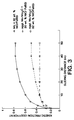
- Fig. 3 is a graph comparing the friction characteristics of coatings made from various thermal spray powders.
- Fig. 4 is a schematic of the ball-on-disk tester used to measure the frictional characteristics of the thermal spray coatings.
- the present invention is a thermal spray powder consisting of a blend of an agglomerated molybdenum/dimolybdenum carbide powder and a self-fluxing NiCrFeBSi alloy powder.
- Thermal spraying of the powder produces high hardness, wear resistant coatings which maintain a low coefficient of friction under continuous sliding contact, are less susceptible to coating break out failures, and exhibit good sprayability.
- the coatings produced by plasma spraying these blended powders exhibit a microstructure which consists of thin layers, or lamellae, of molybdenum and NiCrFeBSi.
- the dual phase structure of these coatings results in the coating having a low friction coefficient, which is provided by the molybdenum lamellae, and good wear resistance, which is provided by the hard NiCrFeBSi lamellae.
- the molybdenum lamellae further contain dimolybdenum carbide precipitates which were not consumed during the plasma spraying.
- the amount of carbide in the resultant coating is less than 10 percent by volume.
- Fig. 1 is an SEM photomicrograph of a cross section of a coating formed by plasma spraying the thermal spray powder of this invention.
- the photomicrograph clearly shows the two-phase structure which consists of molybdenum 5 (light phase) and NiCrFeBSi 7 (dark phase) lamellae .
- the interfacial boundaries 8 between the molybdenum lamellae 5 and the NiCrFeBSi lamellae 7 are thought to be where delamination occurs due to oxidation of the molybdenum during plasma spraying.
- the present invention reduces the amount of oxidation which occurs during spraying through sarcifical oxidation of the carbide in the agglomerated molybdenum/dimolybdenum carbide powder.
- the thermal spray powder of this invention is a blend of two component powders.
- the first powder is an agglomerated molybdenum/dimolybdenum carbide powder in which the carbon exists preferably in the form of dimolybdenum carbide (Mo2C) precipitates uniformly dispersed in a molybdenum lattice.
- Mo2C dimolybdenum carbide
- Such an agglomerated molybdenum/dimolybdenum carbide powder can be formed by an in situ process such as the one described in U.S. Patent No. 4,716,019, the disclosure of which is incorporated herein by reference.
- the in situ process involves forming a slurry of molybdenum and carbon powders and an organic binder, spray drying the slurry to form agglomerates and then firing the agglomerates in a non-oxidising atmosphere at a temperature high enough to form dimolybdenum carbide.
- the amount of dimolybdenum carbide in the agglomerated powder can be varied by changing the amount of carbon added to the slurry to make the composite powder.
- the preferred amount of dimolybdenum carbide in the powder ranges from about 20 to about 60 volume percent (vol. %) in the agglomerated composite powder.
- the in situ process yields composite powders wherein the molybdenum and dimolybdenum carbide phases are uniformly distributed in each particle.
- the uniform dispersion of the dimolybdenum carbide phase in the agglomerated powder promotes uniform sacrificial oxidation of the carbide phase during plasma spraying which protects the molybdenum from oxidation.
- the sacrificial oxidation of the carbide phase leads to oxide-free molybdenum surfaces which improve the interlamellae bonding in the coating and thereby act to inhibit delamination during sliding contact. This in turn gives rise to stable frictional behavior for extended periods of sliding contact.
- the strength of the molybdenum lamellae is increased because the molybdenum lamellae contain residual dimolybdenum carbide precipitates not consumed during plasma spraying.
- Table 1 compares molybdenum powder with the agglomerated molybdenum/dimolybdenum carbide powder and coatings made therefrom. From the table, it can be seen that there is a substantial increase in the oxgen content of the molybdenum coating as a result of oxidation during plasma spraying, from 0.1 wt % to 1.1 wt. % O2. However, for the coatings made from the agglomerated Mo/Mo2C powder, the increase in the oxygen content of the coating is substantially smaller, from 0.1 wt. % to 0.4 wt. % O2. Furthermore, the applied coating made from the agglomerated Mo/Mo2C powder has less than 10 vol.
- Friction and wear tests were performed on a series of coatings made from agglomerated Mo/Mo2C powders and compared with the coating made from molybdenum powder.
- the test were performed using the ball-on-flat configuration and procedures described in H.Czichos, S.Becker and J.Lexow, "Multi-laboratory Tribotesting: Results from the Why Advanced Materials and Standards (VAMAS) Program on Wear Test Methods," Wear , vol. 114, pp. 109-130 (1987), the disclosure of which is herein incorporated by reference.
- a schematic of the ball-on-disk tester used is shown in Fig. 4. The coatings were polished prior to testing to achieve flat surfaces.
- the measurements were carried out in air with a stationary AISI 440-C steel ball (9.5 mm diameter) 20 mated against the rotating plasma coated disk 25 with a force of 10 N.
- the steel ball 20 had a minimum hardness of R c 58.
- the disk 25 was rotated about its axis at a velocity of 0.01 m/s to produce a 10 mm wear track diameter.
- the results of the friction tests on the Mo and Mo/Mo2C coatings are shown in Fig. 2.
- Fig. 2 shows that plasma sprayed coatings made from the agglomerated Mo/Mo2C composite powders exhibit lower coefficients of friction than the coating made from molybdenum powder.
- the kinetic friction coefficient of the coating made from only molybdenum powder stabilizes at about 0.9 whereas the kinetic friction coefficents for the coatings made from the agglomerated Mo/Mo2C powder are less than 0.4.
- the higher the Mo2C content of the agglomerated powder the lower the kinetic friction coefficient of the coating.
- the kinetic friction coefficients decrease from about 0.4 to about 0.2 when the Mo2C content of the agglomerated powder is increased from 15 to 55 volume percent. It is important to note that the amount of Mo2C in the coating is less than 10 vol. %.
- the second component of the thermal spray powder of this invention is a self-fluxing NiCrFeBSi alloy powder.
- These alloys typically contain from about 5 to 15 wt. % Cr, from about 3 to 6 wt. % Fe, from about 2 to 5 wt. % B, from about 3 to 6 wt. % Si, from about 0.3 to 2 wt. % C and balance Ni.
- the B and Si components of the self fluxing alloy act as deoxidizers imparting the self fluxing properties to the alloy. Powders of this alloy are produced by gas atomization and are available from Culox Technologies of Naugatuck, Connecticut and Sulzer Plasma-Technik of Troy, Michigan.
- NiCrFeBSi self fluxing alloy used in invention is a high hardness material having relatively low ductility whereas the 80/20 NiCr alloy used in other spray powders is a relatively low hardness material having a high ductility.
- the high hardness of the NiCrFeBSi self-fluxing alloy is a significant factor in producing a coating having a high wear resistance.
- the blend ratio between the agglomerated Mo/Mo2C and NiCrFeBSi powders is adjusted to meet the hardness and wear resistance requirements of the particular application.
- the NiCrFeBSi component is increased up to 50 wt. %.
- the preferred composition range of the thermal spray powder is from about 10 wt. % to about 50 wt. % NiCrFeBSi and from about 90 wt. % to about 50 wt. % agglomerated Mo/Mo2C.
- a more preferred range is between about 20 wt. % to about 32 wt. % NiCrFeBSi and from about 80 wt. % to about 68 wt. % agglomerated Mo/Mo2C.
- a self fluxing NiCrFeBSi allow powder having the composition 73.5 wt. % Ni, 13.6 wt. % Cr, 4.4 wt. % Fe, 3.3 wt. % B, 4.4 wt. % Si, and 0.8 wt. % C was combined in the following proportions with an agglomerated Mo/Mo2C powder having 55 vol. % Mo2C.
- the composition in Example 3 is typical of the thermal spray powders currently in use in the industry.
- Example 2 Same as Example 2, except 68 weight percent of a molybdenum powder was used in place of the agglomerated Mo/Mo2C powder.
- Table 3 shows the results of hardness tests conducted on the coatings made with the thermal spray powders of examples 1-3. These results are compared with reported data on a coating made from a Mo/Mo2C/NiCr thermal spray powder. With respect to cross section hardness, the tests show that coatings 1 and 2 made with the thermal spray powders of this invention are at least 55% harder than coating 3 and at least 140% harder than coating 4 which contains NiCr. The data also shows that, for the powders of this invention, the higher the percentage of the self-fluxing alloy, the higher the hardness of the coating. Coatings 1 and 2 also exhibited greater wear resistance than the typical industry coating 3 and further exhibited the characteristics associated good sprayability and resistance to coating break out failures, including delamination.
- Fig. 3 is a graph of the friction behavior of the coatings made with the thermal spray powders of examples 1-3 as measured using the ball-on-disk tester previously described.
- Fig. 3 shows that the coatings made with the thermal spray powders of this invention containing the agglomerated Mo/Mo2C powder exhibit relatively low coefficients of friction in comparison to the typical industry coating which is made from thermal spray powders containing molybdenum powder.
- the kinetic friction coefficient for the Mo/NiCrFeBSi coating is about 0.8 whereas the kinetic friction coefficients for the agglomerated Mo/Mo2C plus NiCrFeBSi coatings are less than about 0.5.
- the data further shows that lower kinetic friction coefficients are obtained at higher percentages of the self-fluxing alloy in the powders containing agglomerated Mo/Mo2C.
- the kinetic coefficient decreases from about 0.5 to about 0.35 when the amount of NiCrFeBSi alloy is increased from 20 to 32 wt. %.
- thermal spray powders of this invention can be used to produce high hardness, low friction, wear resistant coatings which are resistant to coating breakout failures and exhibit the requisite characteristics of sprayability needed for applications such as piston ring coatings.
Landscapes
- Chemical & Material Sciences (AREA)
- Engineering & Computer Science (AREA)
- Physics & Mathematics (AREA)
- Plasma & Fusion (AREA)
- Chemical Kinetics & Catalysis (AREA)
- Materials Engineering (AREA)
- Mechanical Engineering (AREA)
- Metallurgy (AREA)
- Organic Chemistry (AREA)
- Coating By Spraying Or Casting (AREA)
Applications Claiming Priority (2)
| Application Number | Priority Date | Filing Date | Title |
|---|---|---|---|
| US30411094A | 1994-09-09 | 1994-09-09 | |
| US304110 | 1994-09-09 |
Publications (2)
| Publication Number | Publication Date |
|---|---|
| EP0701005A1 true EP0701005A1 (fr) | 1996-03-13 |
| EP0701005B1 EP0701005B1 (fr) | 1999-03-03 |
Family
ID=23175090
Family Applications (1)
| Application Number | Title | Priority Date | Filing Date |
|---|---|---|---|
| EP95114129A Expired - Lifetime EP0701005B1 (fr) | 1994-09-09 | 1995-09-08 | Poudre pour pulvérisation thermique |
Country Status (3)
| Country | Link |
|---|---|
| US (2) | US5690716A (fr) |
| EP (1) | EP0701005B1 (fr) |
| DE (1) | DE69508010T2 (fr) |
Cited By (3)
| Publication number | Priority date | Publication date | Assignee | Title |
|---|---|---|---|---|
| EP0769568A1 (fr) * | 1995-10-03 | 1997-04-23 | Osram Sylvania Inc. | Poudres composites à base de molybdène pour revêtements de métallisation à chaud |
| GB2402401A (en) * | 2003-06-05 | 2004-12-08 | Halco Drilling Internat Ltd | Coated pistons |
| US9919358B2 (en) | 2013-10-02 | 2018-03-20 | H.C. Starck Gmbh | Sintered molybdenum carbide-based spray powder |
Families Citing this family (12)
| Publication number | Priority date | Publication date | Assignee | Title |
|---|---|---|---|---|
| DE19955485C2 (de) * | 1999-11-17 | 2001-11-22 | Krauss Maffei Kunststofftech | Schnecke für Kunststoffverarbeitungsmaschinen und Verfahren zu deren Regenerierung |
| EP1587502B2 (fr) * | 2002-12-31 | 2025-05-21 | BSN medical GmbH | Pansement pour blessure |
| US7094474B2 (en) * | 2004-06-17 | 2006-08-22 | Caterpillar, Inc. | Composite powder and gall-resistant coating |
| US7186092B2 (en) * | 2004-07-26 | 2007-03-06 | General Electric Company | Airfoil having improved impact and erosion resistance and method for preparing same |
| FI20095212A0 (fi) * | 2009-03-03 | 2009-03-03 | Valtion Teknillinen | Menetelmä metallien hapettumisen estämiseksi termisessä ruiskutuksessa |
| US8906130B2 (en) | 2010-04-19 | 2014-12-09 | Praxair S.T. Technology, Inc. | Coatings and powders, methods of making same, and uses thereof |
| FI123710B (fi) * | 2011-03-28 | 2013-09-30 | Teknologian Tutkimuskeskus Vtt | Termisesti ruiskutettu pinnoite |
| CN103781934B (zh) * | 2011-10-20 | 2017-12-15 | 株式会社东芝 | 喷涂用Mo粉末及采用它的Mo喷涂膜以及Mo喷涂膜部件 |
| US20130337215A1 (en) * | 2012-06-19 | 2013-12-19 | Caterpillar, Inc. | Remanufactured Component And FeA1SiC Thermal Spray Wire For Same |
| CN103205667B (zh) * | 2013-04-03 | 2015-07-01 | 北京工业大学 | 一种活塞环用热喷涂复合涂层材料及其制备方法 |
| CN103291755B (zh) * | 2013-06-28 | 2016-04-13 | 汪清明 | 一种耐磨轴瓦 |
| CN103307109B (zh) * | 2013-06-28 | 2016-03-16 | 余丽君 | 一种耐磨轴瓦的制备方法 |
Citations (8)
| Publication number | Priority date | Publication date | Assignee | Title |
|---|---|---|---|---|
| US3313633A (en) | 1963-07-24 | 1967-04-11 | Metco Inc | High temperature flame spray powder |
| GB1099957A (en) * | 1964-09-29 | 1968-01-17 | Metco Inc | Composite carbide flame spray wire or powder |
| US3837817A (en) * | 1972-10-18 | 1974-09-24 | Nippon Piston Ring Co Ltd | Sliding member having a spray-coated layer |
| US4597939A (en) | 1982-12-20 | 1986-07-01 | Goetze Ag | Spray powder for producing wear resistant coatings |
| DE3515107C1 (de) * | 1985-04-26 | 1986-07-31 | Goetze Ag, 5093 Burscheid | Spritzpulver fuer die Herstellung verschleissfester und ausbruchsicherer Beschichtungen |
| DE3802920C1 (fr) * | 1988-02-02 | 1989-05-03 | Goetze Ag, 5093 Burscheid, De | |
| US5063021A (en) | 1990-05-23 | 1991-11-05 | Gte Products Corporation | Method for preparing powders of nickel alloy and molybdenum for thermal spray coatings |
| EP0605175A2 (fr) * | 1992-12-30 | 1994-07-06 | Praxair S.T. Technology, Inc. | Article revêtu et procédé de revêtement de cet article |
Family Cites Families (13)
| Publication number | Priority date | Publication date | Assignee | Title |
|---|---|---|---|---|
| US3819384A (en) * | 1973-01-18 | 1974-06-25 | Metco Inc | Flame spraying with powder blend of ferromolybdenum alloy and self-fluxing alloys |
| US4066451A (en) * | 1976-02-17 | 1978-01-03 | Erwin Rudy | Carbide compositions for wear-resistant facings and method of fabrication |
| US4401724A (en) * | 1978-01-18 | 1983-08-30 | Scm Corporation | Spray-and-fuse self-fluxing alloy powder coating |
| US4173685A (en) * | 1978-05-23 | 1979-11-06 | Union Carbide Corporation | Coating material and method of applying same for producing wear and corrosion resistant coated articles |
| US4230749A (en) * | 1979-08-15 | 1980-10-28 | Eutectic Corporation | Flame spray powder mix |
| DE3315556C1 (de) * | 1983-04-29 | 1984-11-29 | Goetze Ag, 5093 Burscheid | Verschleissfeste Beschichtung |
| DE3421569C1 (de) * | 1984-06-09 | 1985-06-27 | Goetze Ag, 5093 Burscheid | Verschleissfeste Beschichtung |
| US4713685A (en) * | 1984-10-05 | 1987-12-15 | Matsushita Electric Industrial Co., Ltd. | Video monitoring apparatus |
| US4915905A (en) * | 1984-10-19 | 1990-04-10 | Martin Marietta Corporation | Process for rapid solidification of intermetallic-second phase composites |
| US4716019A (en) * | 1987-06-04 | 1987-12-29 | Gte Products Corporation | Process for producing composite agglomerates of molybdenum and molybdenum carbide |
| ATE173030T1 (de) * | 1991-09-02 | 1998-11-15 | Sumitomo Electric Industries | Hartlegierung und deren herstellung |
| JP3305357B2 (ja) * | 1992-05-21 | 2002-07-22 | 東芝機械株式会社 | 耐食・耐摩耗性に優れた合金およびその製造方法ならびにその合金製造用材料 |
| US5419976A (en) * | 1993-12-08 | 1995-05-30 | Dulin; Bruce E. | Thermal spray powder of tungsten carbide and chromium carbide |
-
1995
- 1995-02-17 US US08/390,732 patent/US5690716A/en not_active Expired - Lifetime
- 1995-09-08 DE DE69508010T patent/DE69508010T2/de not_active Expired - Lifetime
- 1995-09-08 EP EP95114129A patent/EP0701005B1/fr not_active Expired - Lifetime
-
1996
- 1996-04-04 US US08/628,222 patent/US5603076A/en not_active Expired - Lifetime
Patent Citations (8)
| Publication number | Priority date | Publication date | Assignee | Title |
|---|---|---|---|---|
| US3313633A (en) | 1963-07-24 | 1967-04-11 | Metco Inc | High temperature flame spray powder |
| GB1099957A (en) * | 1964-09-29 | 1968-01-17 | Metco Inc | Composite carbide flame spray wire or powder |
| US3837817A (en) * | 1972-10-18 | 1974-09-24 | Nippon Piston Ring Co Ltd | Sliding member having a spray-coated layer |
| US4597939A (en) | 1982-12-20 | 1986-07-01 | Goetze Ag | Spray powder for producing wear resistant coatings |
| DE3515107C1 (de) * | 1985-04-26 | 1986-07-31 | Goetze Ag, 5093 Burscheid | Spritzpulver fuer die Herstellung verschleissfester und ausbruchsicherer Beschichtungen |
| DE3802920C1 (fr) * | 1988-02-02 | 1989-05-03 | Goetze Ag, 5093 Burscheid, De | |
| US5063021A (en) | 1990-05-23 | 1991-11-05 | Gte Products Corporation | Method for preparing powders of nickel alloy and molybdenum for thermal spray coatings |
| EP0605175A2 (fr) * | 1992-12-30 | 1994-07-06 | Praxair S.T. Technology, Inc. | Article revêtu et procédé de revêtement de cet article |
Non-Patent Citations (2)
| Title |
|---|
| "1st Plasma-Technik-Symposium, Lucerne, Switzerland, May 18-20 1988", 1988, article U. BURAN, M. FISCHER: "Properties of Plasma Spray Coatings for Piston Ring Running Surfaces" |
| H. CZICHOS, S. BECKER, J. LEXOW: "Multi-laboratory Tribotesting: Results from the Versailles Advanced Materials and Standards (VAMAS) Program on Wear Test Methods", WEAR, vol. 114, 1987, pages 109 - 130 |
Cited By (3)
| Publication number | Priority date | Publication date | Assignee | Title |
|---|---|---|---|---|
| EP0769568A1 (fr) * | 1995-10-03 | 1997-04-23 | Osram Sylvania Inc. | Poudres composites à base de molybdène pour revêtements de métallisation à chaud |
| GB2402401A (en) * | 2003-06-05 | 2004-12-08 | Halco Drilling Internat Ltd | Coated pistons |
| US9919358B2 (en) | 2013-10-02 | 2018-03-20 | H.C. Starck Gmbh | Sintered molybdenum carbide-based spray powder |
Also Published As
| Publication number | Publication date |
|---|---|
| US5690716A (en) | 1997-11-25 |
| DE69508010T2 (de) | 1999-06-24 |
| US5603076A (en) | 1997-02-11 |
| DE69508010D1 (de) | 1999-04-08 |
| EP0701005B1 (fr) | 1999-03-03 |
Similar Documents
| Publication | Publication Date | Title |
|---|---|---|
| EP0701005B1 (fr) | Poudre pour pulvérisation thermique | |
| DE10046956C2 (de) | Thermisch aufgetragene Beschichtung für Kolbenringe aus mechanisch legierten Pulvern | |
| EP0769568B1 (fr) | Poudres composites à base de molybdène pour revêtements de métallisation à chaud | |
| US3313633A (en) | High temperature flame spray powder | |
| EP0960954B9 (fr) | Poudre de carbure de chrome et de nickel-chrome | |
| US4626365A (en) | Polytetrafluorethylene-containing coating composition for sliding parts | |
| US5126104A (en) | Method of making powder for thermal spray application | |
| US6840978B2 (en) | Porous metal article, metal composite material using the article and method for production thereof | |
| US3378392A (en) | High temperature flame spray powder and process | |
| US3841901A (en) | Aluminum-and molybdenum-coated nickel, copper or iron core flame spray materials | |
| EP2413006B1 (fr) | Segment de piston | |
| CA1177283A (fr) | Couche d'usure deposee a la flamme | |
| KR100501985B1 (ko) | 미끄럼 부재용 내마모성 용사피막 | |
| EP2402474B1 (fr) | Garniture de piston | |
| GB2137660A (en) | Composite material for a sliding member | |
| EP0931172B1 (fr) | Segments de piston revetus resistants a l'usure pour moteurs a combustion interne et procede de production correspondant | |
| JP2614732B2 (ja) | 低摩擦構造及びその製造方法 | |
| DE102018107412A1 (de) | Sprühpulver und verfahren zur ablagerungeiner sprühbeschichtung unter verwendungdesselben | |
| US4678511A (en) | Spray micropellets | |
| US5837327A (en) | Method for producing a TiB2 -based coating | |
| GB2272029A (en) | Bearings | |
| JP2000309807A (ja) | 摺動部材 | |
| JPS604254B2 (ja) | 炭素繊維強化金属複合材料 | |
| KR102923768B1 (ko) | 용사 피막, 슬라이딩 부재 및 피스톤 링 | |
| JPS63227757A (ja) | 耐摩耗性セラミツクスの溶射方法 |
Legal Events
| Date | Code | Title | Description |
|---|---|---|---|
| PUAI | Public reference made under article 153(3) epc to a published international application that has entered the european phase |
Free format text: ORIGINAL CODE: 0009012 |
|
| AK | Designated contracting states |
Kind code of ref document: A1 Designated state(s): DE FR GB |
|
| 17P | Request for examination filed |
Effective date: 19960626 |
|
| 17Q | First examination report despatched |
Effective date: 19970619 |
|
| GRAG | Despatch of communication of intention to grant |
Free format text: ORIGINAL CODE: EPIDOS AGRA |
|
| GRAG | Despatch of communication of intention to grant |
Free format text: ORIGINAL CODE: EPIDOS AGRA |
|
| GRAH | Despatch of communication of intention to grant a patent |
Free format text: ORIGINAL CODE: EPIDOS IGRA |
|
| GRAH | Despatch of communication of intention to grant a patent |
Free format text: ORIGINAL CODE: EPIDOS IGRA |
|
| GRAA | (expected) grant |
Free format text: ORIGINAL CODE: 0009210 |
|
| AK | Designated contracting states |
Kind code of ref document: B1 Designated state(s): DE FR GB |
|
| REF | Corresponds to: |
Ref document number: 69508010 Country of ref document: DE Date of ref document: 19990408 |
|
| ET | Fr: translation filed | ||
| PLBQ | Unpublished change to opponent data |
Free format text: ORIGINAL CODE: EPIDOS OPPO |
|
| PLBI | Opposition filed |
Free format text: ORIGINAL CODE: 0009260 |
|
| PLBF | Reply of patent proprietor to notice(s) of opposition |
Free format text: ORIGINAL CODE: EPIDOS OBSO |
|
| 26 | Opposition filed |
Opponent name: H.C. STARCK GMBH & CO. KG Effective date: 19991130 |
|
| PLBF | Reply of patent proprietor to notice(s) of opposition |
Free format text: ORIGINAL CODE: EPIDOS OBSO |
|
| PLBF | Reply of patent proprietor to notice(s) of opposition |
Free format text: ORIGINAL CODE: EPIDOS OBSO |
|
| REG | Reference to a national code |
Ref country code: GB Ref legal event code: IF02 |
|
| PLAB | Opposition data, opponent's data or that of the opponent's representative modified |
Free format text: ORIGINAL CODE: 0009299OPPO |
|
| R26 | Opposition filed (corrected) |
Opponent name: H.C. STARCK GMBH & CO. KG Effective date: 19991130 |
|
| REG | Reference to a national code |
Ref country code: GB Ref legal event code: 732E Free format text: REGISTERED BETWEEN 20090924 AND 20090930 |
|
| PGFP | Annual fee paid to national office [announced via postgrant information from national office to epo] |
Ref country code: DE Payment date: 20130919 Year of fee payment: 19 |
|
| PGFP | Annual fee paid to national office [announced via postgrant information from national office to epo] |
Ref country code: FR Payment date: 20130919 Year of fee payment: 19 Ref country code: GB Payment date: 20130919 Year of fee payment: 19 |
|
| REG | Reference to a national code |
Ref country code: DE Ref legal event code: R119 Ref document number: 69508010 Country of ref document: DE |
|
| GBPC | Gb: european patent ceased through non-payment of renewal fee |
Effective date: 20140908 |
|
| REG | Reference to a national code |
Ref country code: DE Ref legal event code: R119 Ref document number: 69508010 Country of ref document: DE Effective date: 20150401 |
|
| REG | Reference to a national code |
Ref country code: FR Ref legal event code: ST Effective date: 20150529 |
|
| PG25 | Lapsed in a contracting state [announced via postgrant information from national office to epo] |
Ref country code: DE Free format text: LAPSE BECAUSE OF NON-PAYMENT OF DUE FEES Effective date: 20150401 Ref country code: GB Free format text: LAPSE BECAUSE OF NON-PAYMENT OF DUE FEES Effective date: 20140908 |
|
| PG25 | Lapsed in a contracting state [announced via postgrant information from national office to epo] |
Ref country code: FR Free format text: LAPSE BECAUSE OF NON-PAYMENT OF DUE FEES Effective date: 20140930 |
|
| PLBD | Termination of opposition procedure: decision despatched |
Free format text: ORIGINAL CODE: EPIDOSNOPC1 |
|
| PLBM | Termination of opposition procedure: date of legal effect published |
Free format text: ORIGINAL CODE: 0009276 |
|
| STAA | Information on the status of an ep patent application or granted ep patent |
Free format text: STATUS: OPPOSITION PROCEDURE CLOSED |
|
| 27C | Opposition proceedings terminated |
Effective date: 20151121 |