EP0701990B1 - Hydrocarbonylierung von Dimethyläther - Google Patents
Hydrocarbonylierung von Dimethyläther Download PDFInfo
- Publication number
- EP0701990B1 EP0701990B1 EP95306384A EP95306384A EP0701990B1 EP 0701990 B1 EP0701990 B1 EP 0701990B1 EP 95306384 A EP95306384 A EP 95306384A EP 95306384 A EP95306384 A EP 95306384A EP 0701990 B1 EP0701990 B1 EP 0701990B1
- Authority
- EP
- European Patent Office
- Prior art keywords
- feed
- methanol
- dimethyl ether
- carbon dioxide
- acetic acid
- Prior art date
- Legal status (The legal status is an assumption and is not a legal conclusion. Google has not performed a legal analysis and makes no representation as to the accuracy of the status listed.)
- Expired - Lifetime
Links
- LCGLNKUTAGEVQW-UHFFFAOYSA-N Dimethyl ether Chemical compound COC LCGLNKUTAGEVQW-UHFFFAOYSA-N 0.000 title claims description 127
- OKKJLVBELUTLKV-UHFFFAOYSA-N Methanol Chemical compound OC OKKJLVBELUTLKV-UHFFFAOYSA-N 0.000 claims description 162
- CURLTUGMZLYLDI-UHFFFAOYSA-N Carbon dioxide Chemical compound O=C=O CURLTUGMZLYLDI-UHFFFAOYSA-N 0.000 claims description 120
- QTBSBXVTEAMEQO-UHFFFAOYSA-N Acetic acid Chemical compound CC(O)=O QTBSBXVTEAMEQO-UHFFFAOYSA-N 0.000 claims description 97
- 229910002092 carbon dioxide Inorganic materials 0.000 claims description 80
- 125000000218 acetic acid group Chemical group C(C)(=O)* 0.000 claims description 61
- WFDIJRYMOXRFFG-UHFFFAOYSA-N acetic acid anhydride Natural products CC(=O)OC(C)=O WFDIJRYMOXRFFG-UHFFFAOYSA-N 0.000 claims description 58
- GOKCJCODOLGYQD-UHFFFAOYSA-N 4,6-dichloro-2-imidazol-1-ylpyrimidine Chemical compound ClC1=CC(Cl)=NC(N2C=NC=C2)=N1 GOKCJCODOLGYQD-UHFFFAOYSA-N 0.000 claims description 42
- 239000001569 carbon dioxide Substances 0.000 claims description 40
- 239000003054 catalyst Substances 0.000 claims description 39
- 238000000034 method Methods 0.000 claims description 31
- 230000015572 biosynthetic process Effects 0.000 claims description 29
- 239000007791 liquid phase Substances 0.000 claims description 29
- 238000003786 synthesis reaction Methods 0.000 claims description 28
- XIXADJRWDQXREU-UHFFFAOYSA-M lithium acetate Chemical compound [Li+].CC([O-])=O XIXADJRWDQXREU-UHFFFAOYSA-M 0.000 claims description 26
- HSZCZNFXUDYRKD-UHFFFAOYSA-M lithium iodide Chemical compound [Li+].[I-] HSZCZNFXUDYRKD-UHFFFAOYSA-M 0.000 claims description 26
- 239000007789 gas Substances 0.000 claims description 25
- KXKVLQRXCPHEJC-UHFFFAOYSA-N acetic acid trimethyl ester Natural products COC(C)=O KXKVLQRXCPHEJC-UHFFFAOYSA-N 0.000 claims description 23
- 239000001257 hydrogen Substances 0.000 claims description 23
- 229910052739 hydrogen Inorganic materials 0.000 claims description 23
- XBDQKXXYIPTUBI-UHFFFAOYSA-M Propionate Chemical compound CCC([O-])=O XBDQKXXYIPTUBI-UHFFFAOYSA-M 0.000 claims description 21
- 229910002091 carbon monoxide Inorganic materials 0.000 claims description 21
- UGFAIRIUMAVXCW-UHFFFAOYSA-N Carbon monoxide Chemical compound [O+]#[C-] UGFAIRIUMAVXCW-UHFFFAOYSA-N 0.000 claims description 19
- 150000002431 hydrogen Chemical class 0.000 claims description 14
- 229910052751 metal Inorganic materials 0.000 claims description 14
- 239000002184 metal Substances 0.000 claims description 14
- INQOMBQAUSQDDS-UHFFFAOYSA-N iodomethane Chemical compound IC INQOMBQAUSQDDS-UHFFFAOYSA-N 0.000 claims description 13
- IKHGUXGNUITLKF-XPULMUKRSA-N acetaldehyde Chemical compound [14CH]([14CH3])=O IKHGUXGNUITLKF-XPULMUKRSA-N 0.000 claims description 11
- UFHFLCQGNIYNRP-UHFFFAOYSA-N Hydrogen Chemical compound [H][H] UFHFLCQGNIYNRP-UHFFFAOYSA-N 0.000 claims description 9
- 230000018044 dehydration Effects 0.000 claims description 5
- 238000006297 dehydration reaction Methods 0.000 claims description 5
- 239000007788 liquid Substances 0.000 claims description 5
- 230000002194 synthesizing effect Effects 0.000 claims description 5
- TYLYVJBCMQFRCB-UHFFFAOYSA-K trichlororhodium;trihydrate Chemical compound O.O.O.[Cl-].[Cl-].[Cl-].[Rh+3] TYLYVJBCMQFRCB-UHFFFAOYSA-K 0.000 claims 1
- 239000000047 product Substances 0.000 description 26
- 238000002474 experimental method Methods 0.000 description 22
- 239000000203 mixture Substances 0.000 description 10
- 238000004519 manufacturing process Methods 0.000 description 9
- IKHGUXGNUITLKF-UHFFFAOYSA-N Acetaldehyde Chemical compound CC=O IKHGUXGNUITLKF-UHFFFAOYSA-N 0.000 description 8
- 230000000694 effects Effects 0.000 description 8
- VNWKTOKETHGBQD-UHFFFAOYSA-N methane Chemical compound C VNWKTOKETHGBQD-UHFFFAOYSA-N 0.000 description 8
- XTXRWKRVRITETP-UHFFFAOYSA-N Vinyl acetate Chemical compound CC(=O)OC=C XTXRWKRVRITETP-UHFFFAOYSA-N 0.000 description 6
- 230000003647 oxidation Effects 0.000 description 6
- 238000007254 oxidation reaction Methods 0.000 description 6
- 239000000376 reactant Substances 0.000 description 6
- XEKOWRVHYACXOJ-UHFFFAOYSA-N Ethyl acetate Chemical compound CCOC(C)=O XEKOWRVHYACXOJ-UHFFFAOYSA-N 0.000 description 5
- 238000006243 chemical reaction Methods 0.000 description 5
- 238000010586 diagram Methods 0.000 description 4
- XLYOFNOQVPJJNP-UHFFFAOYSA-N water Substances O XLYOFNOQVPJJNP-UHFFFAOYSA-N 0.000 description 4
- PNEYBMLMFCGWSK-UHFFFAOYSA-N aluminium oxide Inorganic materials [O-2].[O-2].[O-2].[Al+3].[Al+3] PNEYBMLMFCGWSK-UHFFFAOYSA-N 0.000 description 3
- 230000007423 decrease Effects 0.000 description 3
- 230000003247 decreasing effect Effects 0.000 description 3
- 229930195733 hydrocarbon Natural products 0.000 description 3
- 150000002430 hydrocarbons Chemical class 0.000 description 3
- 239000000543 intermediate Substances 0.000 description 3
- 239000003345 natural gas Substances 0.000 description 3
- IJGRMHOSHXDMSA-UHFFFAOYSA-N Atomic nitrogen Chemical compound N#N IJGRMHOSHXDMSA-UHFFFAOYSA-N 0.000 description 2
- 239000004215 Carbon black (E152) Substances 0.000 description 2
- 239000012295 chemical reaction liquid Substances 0.000 description 2
- 238000009833 condensation Methods 0.000 description 2
- 230000005494 condensation Effects 0.000 description 2
- 239000013067 intermediate product Substances 0.000 description 2
- HVTICUPFWKNHNG-UHFFFAOYSA-N iodoethane Chemical compound CCI HVTICUPFWKNHNG-UHFFFAOYSA-N 0.000 description 2
- 238000000197 pyrolysis Methods 0.000 description 2
- 238000000926 separation method Methods 0.000 description 2
- RYGMFSIKBFXOCR-UHFFFAOYSA-N Copper Chemical compound [Cu] RYGMFSIKBFXOCR-UHFFFAOYSA-N 0.000 description 1
- 229910013594 LiOAc Inorganic materials 0.000 description 1
- 239000003245 coal Substances 0.000 description 1
- 230000002301 combined effect Effects 0.000 description 1
- -1 compound dimethyl ether Chemical class 0.000 description 1
- 229910052802 copper Inorganic materials 0.000 description 1
- 239000010949 copper Substances 0.000 description 1
- 239000003085 diluting agent Substances 0.000 description 1
- 238000004817 gas chromatography Methods 0.000 description 1
- 239000003701 inert diluent Substances 0.000 description 1
- 239000003456 ion exchange resin Substances 0.000 description 1
- 229920003303 ion-exchange polymer Polymers 0.000 description 1
- 229910052757 nitrogen Inorganic materials 0.000 description 1
- 239000002006 petroleum coke Substances 0.000 description 1
- 239000010454 slate Substances 0.000 description 1
- 239000007787 solid Substances 0.000 description 1
- 239000011973 solid acid Substances 0.000 description 1
- 239000010457 zeolite Substances 0.000 description 1
Images

Classifications
-
- C—CHEMISTRY; METALLURGY
- C07—ORGANIC CHEMISTRY
- C07C—ACYCLIC OR CARBOCYCLIC COMPOUNDS
- C07C67/00—Preparation of carboxylic acid esters
- C07C67/36—Preparation of carboxylic acid esters by reaction with carbon monoxide or formates
- C07C67/37—Preparation of carboxylic acid esters by reaction with carbon monoxide or formates by reaction of ethers with carbon monoxide
-
- C—CHEMISTRY; METALLURGY
- C07—ORGANIC CHEMISTRY
- C07C—ACYCLIC OR CARBOCYCLIC COMPOUNDS
- C07C27/00—Processes involving the simultaneous production of more than one class of oxygen-containing compounds
- C07C27/04—Processes involving the simultaneous production of more than one class of oxygen-containing compounds by reduction of oxygen-containing compounds
- C07C27/06—Processes involving the simultaneous production of more than one class of oxygen-containing compounds by reduction of oxygen-containing compounds by hydrogenation of oxides of carbon
-
- C—CHEMISTRY; METALLURGY
- C07—ORGANIC CHEMISTRY
- C07C—ACYCLIC OR CARBOCYCLIC COMPOUNDS
- C07C29/00—Preparation of compounds having hydroxy or O-metal groups bound to a carbon atom not belonging to a six-membered aromatic ring
- C07C29/15—Preparation of compounds having hydroxy or O-metal groups bound to a carbon atom not belonging to a six-membered aromatic ring by reduction of oxides of carbon exclusively
- C07C29/151—Preparation of compounds having hydroxy or O-metal groups bound to a carbon atom not belonging to a six-membered aromatic ring by reduction of oxides of carbon exclusively with hydrogen or hydrogen-containing gases
- C07C29/1516—Multisteps
-
- C—CHEMISTRY; METALLURGY
- C07—ORGANIC CHEMISTRY
- C07C—ACYCLIC OR CARBOCYCLIC COMPOUNDS
- C07C41/00—Preparation of ethers; Preparation of compounds having groups, groups or groups
- C07C41/01—Preparation of ethers
-
- C—CHEMISTRY; METALLURGY
- C07—ORGANIC CHEMISTRY
- C07C—ACYCLIC OR CARBOCYCLIC COMPOUNDS
- C07C51/00—Preparation of carboxylic acids or their salts, halides or anhydrides
- C07C51/10—Preparation of carboxylic acids or their salts, halides or anhydrides by reaction with carbon monoxide
- C07C51/12—Preparation of carboxylic acids or their salts, halides or anhydrides by reaction with carbon monoxide on an oxygen-containing group in organic compounds, e.g. alcohols
-
- C—CHEMISTRY; METALLURGY
- C07—ORGANIC CHEMISTRY
- C07C—ACYCLIC OR CARBOCYCLIC COMPOUNDS
- C07C51/00—Preparation of carboxylic acids or their salts, halides or anhydrides
- C07C51/54—Preparation of carboxylic acid anhydrides
- C07C51/56—Preparation of carboxylic acid anhydrides from organic acids, their salts, their esters or their halides, e.g. by carboxylation
-
- C—CHEMISTRY; METALLURGY
- C07—ORGANIC CHEMISTRY
- C07C—ACYCLIC OR CARBOCYCLIC COMPOUNDS
- C07C67/00—Preparation of carboxylic acid esters
- C07C67/28—Preparation of carboxylic acid esters by modifying the hydroxylic moiety of the ester, such modification not being an introduction of an ester group
- C07C67/293—Preparation of carboxylic acid esters by modifying the hydroxylic moiety of the ester, such modification not being an introduction of an ester group by isomerisation; by change of size of the carbon skeleton
-
- Y—GENERAL TAGGING OF NEW TECHNOLOGICAL DEVELOPMENTS; GENERAL TAGGING OF CROSS-SECTIONAL TECHNOLOGIES SPANNING OVER SEVERAL SECTIONS OF THE IPC; TECHNICAL SUBJECTS COVERED BY FORMER USPC CROSS-REFERENCE ART COLLECTIONS [XRACs] AND DIGESTS
- Y02—TECHNOLOGIES OR APPLICATIONS FOR MITIGATION OR ADAPTATION AGAINST CLIMATE CHANGE
- Y02P—CLIMATE CHANGE MITIGATION TECHNOLOGIES IN THE PRODUCTION OR PROCESSING OF GOODS
- Y02P20/00—Technologies relating to chemical industry
- Y02P20/50—Improvements relating to the production of bulk chemicals
- Y02P20/52—Improvements relating to the production of bulk chemicals using catalysts, e.g. selective catalysts
Definitions
- This invention relates to an integrated process for synthesizing ethylidene diacetate, acetic anhydride, acetaldehyde, methyl acetate, and acetic acid, and in particular the production of these oxygenated acetyl compounds from synthesis gas (syngas) via the intermediate compound dimethyl ether.
- synthesis gas syngas
- Ethylidene diacetate is a valuable intermediate in the production of vinyl acetate (VAc), and considerable interest has been focused on developing improved processes for producing ethylidene diacetate.
- the commercial success of these improved processes requires a market for the acetic acid (HOAc) which is a coproduct of vinyl acetate production.
- the acetic acid can be sold, esterified with methanol to methyl acetate (MeOAc or MA), or alkylated with dimethyl ether (DME) to methyl acetate and methanol (MeOH).
- Methyl acetate (MeOAc), acetaldehyde (AcH), and acetic anhydride (Ac 2 O) are also important as intermediates for the production of other valuable products.
- EP-A-0566370 discloses the production of oxygenated acetyl compounds selected from ethylidene diacetate, acetic acid, acetic anhydride, and methyl acetate from synthesis gas (comprising hydrogen and carbon monoxide) via an intermediate product stream containing dimethyl ether.
- Dimethyl ether is produced from synthesis gas in a first liquid phase reactor and the reactor effluent comprising dimethyl ether, methanol, and unreacted synthesis gas flows to a second liquid phase reactor containing acetic acid in which the oxygenated acetyl compounds are synthesized catalytically.
- Vinyl acetate and additional acetic acid optionally are produced by pyrolysis of ethylidene diacetate in a separate reactor system.
- the synthesis gas is preferably obtained by partial oxidation of a hydrocarbon feedstock such as natural gas.
- a portion of the acetic coproduct is recycled to the partial oxidation reactor for conversion into additional synthesis gas.
- raw synthesis gas (containing 0.5 to 12 vol% carbon dioxide) is produced by partial oxidation of a hydrocarbon feed, preferably natural gas, and carbon dioxide-rich unreacted synthesis gas (containing 60-70 vol%) recycled from the oxygenated acetyl reactor.
- the carbon dioxide acts as both a reactant and temperature moderant during the partial oxidation and in certain circumstances can eliminate the need for steam.
- at least a portion of the carbon dioxide is removed from the intermediate product stream prior to feeding to the oxygenated acetyl reactor.
- EP-A-0566371 discloses the production of ethylidene diacetate by reacting dimethyl ether, hydrogen, carbon monoxide and acetic acid in the presence of a catalyst system consisting essentially of a Group VIII metal, methyl iodide, lithium iodide and, optionally, lithium acetate.
- the process is reported to be highly selective toward producing ethylidene diacetate.
- the hydrogen and carbon monoxide reactants can be provided as synthesis gas but no reference is made to the presence of carbon dioxide in said gas.
- the presence of carbon dioxide in the feed to the oxygenated acetyl reactor can improve the yield or selectivity of the oxygenated acetyl product.
- the selectivity to ethylidene diacetate is markedly improved if said feed contains carbon dioxide and methanol in a molar ratio of carbon dioxide to methanol of 5 to 12 and, when the catalyst does not contain lithium acetate, the yield of oxygenated acetyl compounds is markedly improved by the presence of carbon dioxide in an amount providing a carbon dioxide to dimethyl ether molar ratio of 0.3 to 1.3.
- the present invention provides a process for synthesizing one or more oxygenated acetyl compounds selected from ethylidene diacetate, acetaldehyde, acetic acid, acetic anhydride, and methyl acetate from a feed containing dimethyl ether, hydrogen, carbon monoxide, carbon dioxide and optionally methanol in a liquid phase reactor containing at least acetic acid in the presence of a catalyst system comprising a Group VIII metal, methyl iodide, lithium iodide, and optionally lithium acetate, characterized in that (a) lithium acetate is not present in the catalyst system and the molar ratio of carbon dioxide to dimethyl ether in said feed is between 0.3 and 1.3 or (b) lithium acetate is present in said catalyst, the molar ratio of carbon dioxide to methanol in said feed is between 5 and 12, and the molar ratio of dimethyl ether to methanol in said feed is between 3 and 11.
- the invention also provides the use of carbon dioxide to improve the yield or selectivity of oxygenated acetyl compounds selected from ethylidene diacetate, acetaldehyde, acetic acid, acetic anhydride, and methyl acetate in an oxygenated acetyl process in which a feed containing dimethyl ether, hydrogen, carbon monoxide, and optionally methanol is reacted with acetic acid in a liquid phase reactor in the presence of a catalyst system comprising a Group VIII metal, methyl iodide, lithium iodide, and optionally lithium acetate.
- the present invention includes a process for the synthesis of ethylidene diacetate which comprises reacting a feed containing dimethyl ether, methanol, and synthesis gas which contains hydrogen, carbon monoxide, and carbon dioxide in a liquid phase reactor containing at least acetic acid and a catalyst system comprising a Group VIII metal, methyl iodide, lithium iodide, and lithium acetate to produce ethylidene diacetate and one or more additional oxygenated acetyl compounds, wherein the molar ratio of carbon dioxide to methanol in the feed is between 5 and 12 and the molar ratio of dimethyl ether to methanol in the feed is between 3 and 11.
- the one or more additional oxygenated acetyl compounds can include acetaldehyde, acetic acid, acetic anhydride, and methyl acetate.
- the invention also includes the use of carbon dioxide to improve the selectivity to ethylidene diacetate in an oxygenated acetyl process in which a feed containing dimethyl ether, methanol, hydrogen, and carbon monoxide is reacted with acetic acid in a liquid phase reactor in the presence of a catalyst comprising a Group VIII metal, methyl iodide, lithium iodide and lithium acetate.
- the invention also provides a process for synthesizing one or more oxygenated acetyl compounds selected from ethylidene diacetate, acetaldehyde, acetic acid, acetic anhydride, and methyl acetate from a feed containing dimethyl ether, hydrogen, carbon monoxide, carbon dioxide and optionally methanol in a liquid phase reactor containing at least acetic acid and a catalyst system comprising a Group VIII metal, methyl iodide, and lithium iodide but not lithium acetate, wherein carbon dioxide is present in said feed such that the molar ratio of carbon dioxide to dimethyl ether is between 0.3 and 1.3.
- the invention also provides the use of carbon dioxide to improve the yield of oxygenated acetyl compounds selected from ethylidene diacetate, acetaldehyde, acetic acid, acetic anhydride, and methyl acetate in an oxygenated acetyl process in which a feed containing dimethyl ether, hydrogen, carbon monoxide, and optionally methanol is reacted with acetic acid in a liquid phase reactor in the presence of a catalyst system comprising a Group VIII metal, methyl iodide, and lithium iodide but not lithium acetate.
- the molar ratio of dimethyl ether to methanol in said feed is between 3 and 11 and/or that the molar ratio of carbon monoxide to hydrogen in said feed is between 0.6 and 4.0.
- the liquid in said liquid phase reactor usually will comprise one or more of oxygenated acetyl compounds.
- the synthesis gas suitably is produced in a partial oxidation reactor system by the partial oxidation of a carbonaceous feedstock, for example methane, natural gas, C 2 + gaseous hydrocarbons, naphtha, gas oil, vacuum residuum, petroleum coke, or coal.
- a carbonaceous feedstock for example methane, natural gas, C 2 + gaseous hydrocarbons, naphtha, gas oil, vacuum residuum, petroleum coke, or coal.
- the feed to the liquid phase oxygenated acetyl reactor comprises a product stream obtained by reacting synthesis gas comprising hydrogen, carbon monoxide, and carbon dioxide in a liquid phase dimethyl ether reactor in the presence of a methanol synthesis catalyst and a methanol dehydration catalyst suspended in an inert liquid, said product stream comprising dimethyl ether, methanol, and unreacted synthesis gas.
- said methanol dehydration catalyst is selected from alumina, silica-alumina, zeolites, solid acids, solid ion exchange resins, and mixtures thereof.
- said methanol synthesis catalyst comprises copper and said methanol dehydration catalyst comprises alumina, wherein the methanol synthesis catalyst is between 75 and 90% of the methanol synthesis catalyst plus methanol dehydration catalyst on a weight basis.
- the liquid phase dimethyl ether reactor is operated at a temperature between 440 and 520°F (225 - 270°C), a pressure between 750 and 2,000 psig (5 - 14 MPa), and a gas hourly space velocity of between 3,000 and 15,000 standard liters/(kg catalyst-h).
- Unreacted synthesis gas preferably is recycled from the oxygenated acetyl reactor as feedstock to synthesis gas production.
- acetic acid in the pyrolysis product can be recycled as feedstock to synthesis gas production.
- FIG. 1 A process block flow diagram for an overall integrated process is shown in Figure 1. This figure differs from Figure 1 of EP-A-0566370 in that the options of (a) direct feed of stream 19 from the liquid phase dimethyl ether (LP DME) reactor system 201 to the LP OA reactor 301 mentioned in EP-A-0566370 and (b) the addition of a carbon dioxide stream 28 are shown. Accordingly, reference should be made to EP-A-0566370 for a description of those parts of present Figure 1 which are common with Figure 1 of EP-A-0566370 and for process details.
- LP DME liquid phase dimethyl ether
- the stream 28 allows carbon dioxide 28 to be imported and added to stream 25 to increase the carbon dioxide content.
- the preferred range of the DME/MeOH molar ratio for improved EDDA selectivity is 3 to 11, although higher ratios are expected to give still higher EDDA selectivity.
- the range of the molar ratio CO 2 /MeOH is 5 to 12, preferably 6.0 to 12, more preferably 7 to 12, and especially 8 to 12.
- the higher ratios in said ranges provide for maximum EDDA selectivity.
- This preferred mode of operation requires no additional treatment of effluent stream 19 of reactor system 201 as long as the water content is below 2 mol% Water optionally can be removed by condensation if present at higher concentrations. Feed composition, catalyst composition, and operating conditions in DME reactor system 201 can be controlled to yield the preferred composition range in feed 25 to reactor system 301.
- CO 2 28 can be added if required.
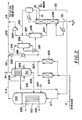
- DME reactor system 201 is illustrated in more detail in Fig. 2 and in US-A-5,218,003. This figure differs from Figure 2 of EP-A-0566370 in that it shows the preferred option of feeding LP DME reactor product (19) directly to the LP OA reactor. Accordingly, reference should be made to EP-A-0566370 for a description of those parts of present Figure 2 which are common with Figure 2 of EP-A-0566370
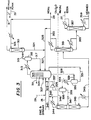
- OA reactor system is illustrated in more detail in Fig. 3. This figure differs from Figure 3 of EP-A-0566370 in that it shows the option of feeding additional carbon dioxide 28 to the LP OA reactor discussed above in connection with Figure 1. Accordingly, reference should be made to EP-A-0566370 for a description of those parts of present Figure 3 which are common with Figure 3 of EP-A-0566370.
- Acetyl yield is defined on a molar basis as the sum of all the observed acetyl products divided by the charged DME.
- the acetyl products include primarily acetaldehyde (denoted as AcH), methyl acetate (MA), ethyl iodide (EtI), ethyl acetate (EtOAc), acetic anhydride (Ac 2 O), and ethylidene diacetate (EDDA). Formation of EDDA requires two moles of DME.
- Example 2 The experiments of Example 1 were repeated except that a syngas containing 50 mol% CO and 50 mol% hydrogen was used. Results are given in Table 2. Without lithium acetate as a catalyst, overall acetyl yield increased significantly as CO 2 was added in experiments 7-9, reaching 96.5% in experiment 9. Decreases in selectivity for acetic anhydride and EDDA were minimal compared with experiments 1-3. When lithium acetate is used as a catalyst component in experiments 10-12, acetyl yield changed only slightly, while EDDA selectivity decreased significantly and methyl acetate selectivity increased significantly.
- the results of experiments 7-12 confirm the unexpected findings of experiments 1-6, namely, that the addition of CO 2 to a reaction system containing dimethyl ether, CO, and hydrogen has a significant effect on product yield and selectivity.
- the selection of catalyst components and the amount of CO 2 added can be used to improve overall product yield and change the selectivity of specific product components.
- acetyl yield is increased over that obtained from syngas containing no CO 2 by adding CO 2 such that the molar ratio of CO 2 to DME in the reactor feed is between 0.3 and 1.3.
- acetyl reactor feed is provided directly from the LP DME reactor and EDDA is a desired product
- the inclusion of CO 2 in the reactor feed is a preferred mode of operation.
- the preferred range of the DME/MeOH molar ratio for improved EDDA selectivity is 3 to 11, although higher ratios are expected to give still higher EDDA selectivity.
- the range of the molar ratio CO 2 /MeOH is 5 to 12, and more preferably 8 to 12. These preferred ranges can be realized when the feed to LP oxygenated acetyl reactor system 301 of Fig. 1 is provided directly from liquid phase dimethyl ether reactor system 201.
- This preferred mode of operation requires no additional treatment of effluent stream 19 of reactor system 201 as long as the water content is below 2 mol%. Water optionally can be removed by condensation if present at higher concentrations.
- Feed composition, catalyst composition, and operating conditions in DME reactor system 103 can be controlled to yield the preferred composition range in feed 25 to reactor system 301.
- the present invention thus allows the production of oxygenated acetyl compounds directly from synthesis gas via the liquid phase dimethyl ether process followed directly by a liquid phase acetyl reactor system.
- the product slate can include one or more of the oxygenated acetyl compounds vinyl acetate, acetaldehyde, ethylidene diacetate, acetic acid, methyl acetate, and acetic anhydride.
Landscapes
- Chemical & Material Sciences (AREA)
- Organic Chemistry (AREA)
- Chemical Kinetics & Catalysis (AREA)
- Engineering & Computer Science (AREA)
- Oil, Petroleum & Natural Gas (AREA)
- Organic Low-Molecular-Weight Compounds And Preparation Thereof (AREA)
- Low-Molecular Organic Synthesis Reactions Using Catalysts (AREA)
Claims (12)
- Verfahren zur Synthese einer oder mehrerer oxygenierter, aus Ethylidendiacetat, Acetaldehyd, Essigsäure, Essigsäureanhydrid und Methylacetat ausgewählter Acetylverbindungen aus einer Beschikkung, die Dimethylether, Wasserstoff, Kohlenmonoxid, Kohlendioxid und gegebenenfalls Methanol enthält, in einem Flüssigphasenreaktor, der mindestens Essigsäure enthält, in Gegenwart eines Katalysatorsystems, das ein Metall der Gruppe VIII, Methyliodid, Lithiumiodid und gegebenenfalls Lithiumacetat umfaßt, dadurch gekennzeichnet, daß (a) Lithiumacetat im Katalysatorsystem nicht vorhanden ist und das Molverhältnis von Kohlendioxid zu Dimethylether in der Beschickung zwischen 0,3 und 1,3 liegt oder (b) Lithiumacetat im Katalysator vorhanden ist, das Molverhältnis von Kohlendioxid zu Methanol in der Beschickung zwischen 5 und 12 liegt und das Molverhältnis von Dimethylether zu Methanol in der Beschickung zwischen 3 und 11 liegt.
- Verwendung von Kohlendioxid zur Steigerung der Ausbeute oder Selektivität oxygenierter, aus Ethylidendiacetat, Acetaldehyd, Essigsäure, Essigsäureanhydrid und Methylacetat ausgewählter Acetylverbindungen in einem Verfahren für oxygeniertes Acetyl, bei dem eine Beschickung, die Dimethylether, Wasserstoff, Kohlenmonoxid und gegebenenfalls Methanol enthält, in einem Flüssigphasenreaktor in Gegenwart eines ein Metall der Gruppe VIII, Methyliodid, Lithiumiodid sowie gegebenenfalls Lithiumacetat enthaltenden Katalysatorsystems mit Essigsäure zur Umsetzung gebracht wird.
- Verfahren nach Anspruch 1 zur Synthese von Ethylidendiacetat, bei dem eine Beschickung, die Dimethylether, Methanol und ein Wasserstoff, Kohlenmonoxid und Kohlendioxid enthaltendes Synthesegas enthält, in einem Flüssigphasenreaktor für oxygeniertes Acetyl, der mindestens Essigsäure und ein ein Metall der Gruppe VIII, Methyliodid, Lithiumiodid und Lithiumacetat enthaltendes Katalysatorsystem enthält, zur Umsetzung gebracht wird, um die Komponenten in der Beschickung mit Essigsäure umzusetzen, um das Ethylidendiacetat und eine oder mehrere zusätzliche oxygenierte Acetylverbindungen herzustellen, wobei das Molverhältnis von Kohlendioxid zu Methanol in der Beschickung zwischen 5 und 12 liegt und das Molverhältnis von Dimethylether zu Methanol in der Beschickung zwischen 3 und 11 liegt.
- Verwendung von Kohlendioxid nach Anspruch 2, um die Selektivität für Ethylidendiacetat in einem Verfahren für oxygeniertes Acetyl zu verbessern, bei der eine Dimethylether, Methanol, Wasserstoff und Kohlenmonoxid enthaltende Beschickung in einem Flüssigphasenreaktor in Gegenwart eines ein Metall der Gruppe VIII, Methyliodid, Lithiumiodid und Lithiumacetat umfassenden Katalysators mit Essigsäure zum Umsetzung gebracht wird.
- Verfahren nach Anspruch 1 zur Synthese einer oder mehrerer oxygenierter, aus Ethylidendiacetat, Acetaldehyd, Essigsäure, Essigsäureanhydrid und Methylacetat ausgewählter Acetylverbindungen aus einer Beschickung, die Dimethylether, Wasserstoff, Kohlenmonoxid, Kohlendioxid und gegebenenfalls Methanol enthält, in einem Flüssigphasenreaktor, der mindestens Essigsäure und ein ein Metall der Gruppe VIII, Methyliodid und Lithiumoxid, aber kein Lithiumacetat enthaltendes Katalysatorsystem umfaßt, wobei Kohlendioxid in einer solchen Menge in der Beschickung vorhanden ist, daß das Molverhältnis von Kohlendioxid zu Dimethylether zwischen 0,3 und 1,3 liegt.
- Verwendung von Kohlendioxid nach Anspruch 2 zur Steigerung der Ausbeute oder Selektivität oxygenierter, aus Ethylidendiacetat, Acetaldehyd, Essigsäure, Essigsäureanhydrid und Methylacetat ausgewählter Acetylverbindungen in einem Verfahren für oxygeniertes Acetyl, bei dem eine Beschickung, die Dimethylether, Wasserstoff, Kohlenmonoxid und gegebenenfalls Methanol enthält, in einem Flüssigphasenreaktor in Gegenwart eines ein Metall der Gruppe VIII, Methyliodid und Lithiumiodid, aber kein Lithiumacetat enthaltenden Katalysatorsystems mit Essigsäure zur Umsetzung gebracht wird.
- Verfahren oder Verwendung nach einem der Ansprüche 1, 2 und 4 bis 6, bei dem die Beschickung Methanol enthält und das Molverhältnis von Dimethylether zu Methanol in der Beschickung zwischen 3 und 11 liegt.
- Verfahren oder Verwendung nach einem der vorstehenden Ansprüche, bei dem das Molverhältnis von Kohlenmonoxid zu Wasserstoff in der Beschickung zwischen 0,6 und 4,0 liegt.
- Verfahren oder Verwendung nach einem der vorstehenden Ansprüche, bei dem das Metall der Gruppe VIII Rhodium(III)-chloridtrihydrat ist.
- Verfahren oder Verwendung nach einem der vorstehenden Ansprüche, bei dem die Flüssigkeit im Flüssigphasenreaktor eine oder mehrere zusätzliche oxygenierte Acetylverbindungen umfaßt.
- Verfahren oder Verwendung nach einem der vorstehenden Ansprüche, bei dem die Beschickung zum Flüssigphasenreaktor für oxygeniertes Acetyl einen Produktstrom umfaßt, der durch Umsetzung von Wasserstoff, Kohlenmonoxid und Kohlendioxid enthaltendem Synthesegas in einem Flüssigphasenreaktor für Dimethylether in Gegenwart eines Methanolsynthesekatalysators und eines Methanoldehydratisierungskatalysators, die in einer inerten Flüssigkeit suspendiert sind, erhalten wird, wobei der Produktstrom Dimethylether, Methanol und nicht umgesetztes Synthesegas umfaßt.
- Verfahren oder Verwendung nach Anspruch 11, bei dem dem Synthesegasproduktstrom zusätzliches Kohlendioxid zugesetzt wird.
Applications Claiming Priority (2)
| Application Number | Priority Date | Filing Date | Title |
|---|---|---|---|
| US08/308,018 US5502243A (en) | 1992-04-15 | 1994-09-16 | Hydrocarbonylation of dimethyl ether |
| US308018 | 1994-09-16 |
Publications (2)
| Publication Number | Publication Date |
|---|---|
| EP0701990A1 EP0701990A1 (de) | 1996-03-20 |
| EP0701990B1 true EP0701990B1 (de) | 1999-03-10 |
Family
ID=23192185
Family Applications (1)
| Application Number | Title | Priority Date | Filing Date |
|---|---|---|---|
| EP95306384A Expired - Lifetime EP0701990B1 (de) | 1994-09-16 | 1995-09-12 | Hydrocarbonylierung von Dimethyläther |
Country Status (5)
| Country | Link |
|---|---|
| US (1) | US5502243A (de) |
| EP (1) | EP0701990B1 (de) |
| CA (1) | CA2158006C (de) |
| DE (1) | DE69508168T2 (de) |
| DK (1) | DK0701990T3 (de) |
Families Citing this family (14)
| Publication number | Priority date | Publication date | Assignee | Title |
|---|---|---|---|---|
| US5744637A (en) * | 1996-12-13 | 1998-04-28 | Eastman Chemical Company | Carboxylic acid accelerated formation of diesters |
| ATE261426T1 (de) * | 1998-08-06 | 2004-03-15 | Haldor Topsoe As | Reaktiv distillierungsverfahren zur herstellung von essigsäure auf der basis von dme/methanol carbonylierung |
| US6205957B1 (en) * | 1999-09-16 | 2001-03-27 | Eaton Corporation | Natural gas engine with in situ generation of an autoignition product |
| US20040122267A1 (en) * | 2002-12-23 | 2004-06-24 | Jaimes Sher | Integrated gas to olefins process with recovery and conversion of by-products |
| BRPI0910840B1 (pt) | 2008-04-29 | 2018-05-08 | Celanese International Corporation | aparelho para produção de ácido acético, método de operação de uma torre absorvedora em uma unidade de carbonilação e método aperfeiçoado para operação de um aparelho para fabricação de ácido acético |
| US8519181B2 (en) * | 2010-04-07 | 2013-08-27 | Lyondell Chemical Technology, L.P. | Preparation of acetic acid |
| EP2935173A1 (de) * | 2012-12-21 | 2015-10-28 | BP Chemicals Limited | Integriertes verfahren zur herstellung von methanol und methylacetat |
| CN104995159B (zh) * | 2012-12-21 | 2017-12-05 | 英国石油化学品有限公司 | 用于生产甲醇和乙酸甲酯的集成方法 |
| CA2894283A1 (en) * | 2012-12-21 | 2014-06-26 | Bp Chemicals Limited | Integrated process for the production of methyl acetate and methanol from synthesis gas and dimethyl ether |
| WO2018004992A1 (en) | 2016-07-01 | 2018-01-04 | Res Usa, Llc | Conversion of methane to dimethyl ether |
| US9938217B2 (en) | 2016-07-01 | 2018-04-10 | Res Usa, Llc | Fluidized bed membrane reactor |
| WO2018004993A1 (en) | 2016-07-01 | 2018-01-04 | Res Usa, Llc | Reduction of greenhouse gas emission |
| US10901635B2 (en) | 2018-12-04 | 2021-01-26 | EMC IP Holding Company LLC | Mapped redundant array of independent nodes for data storage with high performance using logical columns of the nodes with different widths and different positioning patterns |
| US10942827B2 (en) | 2019-01-22 | 2021-03-09 | EMC IP Holding Company LLC | Replication of data in a geographically distributed storage environment |
Family Cites Families (18)
| Publication number | Priority date | Publication date | Assignee | Title |
|---|---|---|---|---|
| SE426583B (sv) * | 1975-03-10 | 1983-01-31 | Halcon Res & Dev | Sett att framstella etylidenacetat |
| US5138093A (en) * | 1975-03-10 | 1992-08-11 | Eastman Kodak Company | Process for preparing ethylidene diacetate |
| US5117046A (en) * | 1975-06-30 | 1992-05-26 | Monsanto Company | Preparation of alkylidene diesters |
| DE2822862C2 (de) * | 1978-05-26 | 1984-01-05 | Ruhrchemie Ag, 4200 Oberhausen | Verfahren zur Gewinnung wasserstoff- und kohlenmonoxidhaltiger Gasgemische durch Vergasung kohlenstoffhaltiger, aschebildender Brennstoffe |
| DE2941232A1 (de) * | 1979-10-11 | 1981-04-23 | Hoechst Ag, 6000 Frankfurt | Verfahren zur herstellung von 1,1-diacetoxiethan |
| JPS5657735A (en) * | 1979-10-18 | 1981-05-20 | Mitsubishi Gas Chem Co Inc | Preparation of vinyl acetate |
| JPS5934164B2 (ja) * | 1980-03-06 | 1984-08-21 | 三菱瓦斯化学株式会社 | エチリデンジアセテ−トの製造法 |
| US4429150A (en) * | 1980-09-15 | 1984-01-31 | Shell Oil Company | Manufacture of ethylidene diacetate |
| US4323697A (en) * | 1980-12-24 | 1982-04-06 | The Halcon Sd Group, Inc. | Process for preparing ethylidene diacetate |
| EP0058442B1 (de) * | 1981-02-09 | 1985-01-02 | Shell Internationale Researchmaatschappij B.V. | Verfahren zur Coproduktion von einem Alkylidendicarbonsäureester und einer Carbonsäure |
| US4810821A (en) * | 1981-10-09 | 1989-03-07 | Monsanto Company | Preparation of alkylidene diesters |
| YU43520B (en) * | 1981-10-09 | 1989-08-31 | Monsanto Co | Preparation of ethylidene diacetates |
| DE3578164D1 (de) * | 1984-06-15 | 1990-07-19 | Sumitomo Chemical Co | Verfahren zur razemisierung von chrysanthemumsaeure oder ihrer ester. |
| US5003104A (en) * | 1987-03-03 | 1991-03-26 | Bp Chemicals Limited | Carbonylation process and catalyst |
| EP0324475B1 (de) * | 1988-01-14 | 1993-01-07 | Air Products And Chemicals, Inc. | Einstufiges Verfahren zur Synthese von Dimethyläther unter Verwendung eines Flüssigphasen-Reaktorsystems |
| US5218003A (en) * | 1988-01-14 | 1993-06-08 | Air Products And Chemicals, Inc. | Liquid phase process for dimethyl ether synthesis |
| CA2093752C (en) | 1992-04-15 | 1999-06-15 | David W. Studer | Integrated process for oxygenated acetyl compounds from synthesis gas via dimethyl ether |
| CA2093747C (en) | 1992-04-15 | 1999-06-15 | Francis J. Waller | Process for converting dimethyl ether to ethylidene diacetate |
-
1994
- 1994-09-16 US US08/308,018 patent/US5502243A/en not_active Expired - Lifetime
-
1995
- 1995-09-11 CA CA002158006A patent/CA2158006C/en not_active Expired - Fee Related
- 1995-09-12 DK DK95306384T patent/DK0701990T3/da active
- 1995-09-12 EP EP95306384A patent/EP0701990B1/de not_active Expired - Lifetime
- 1995-09-12 DE DE69508168T patent/DE69508168T2/de not_active Expired - Fee Related
Also Published As
| Publication number | Publication date |
|---|---|
| CA2158006A1 (en) | 1996-03-17 |
| US5502243A (en) | 1996-03-26 |
| CA2158006C (en) | 1999-08-31 |
| DE69508168D1 (de) | 1999-04-15 |
| EP0701990A1 (de) | 1996-03-20 |
| DE69508168T2 (de) | 1999-07-29 |
| DK0701990T3 (da) | 1999-09-27 |
Similar Documents
| Publication | Publication Date | Title |
|---|---|---|
| US5189203A (en) | Process for preparing acetic acid, methyl acetate, acetic anhydride or mixtures thereof | |
| US5728871A (en) | Process for the preparation of acetic acid | |
| US6521783B1 (en) | Processes for preparing oxygenates | |
| EP0701990A1 (de) | Hydrocarbonylierung von Dimethyläther | |
| US5840969A (en) | Process for the preparation of acetic acid from a synthesis gas of hydrogen and carbon monoxide | |
| CA2093752C (en) | Integrated process for oxygenated acetyl compounds from synthesis gas via dimethyl ether | |
| WO2009077720A1 (en) | Process for the production of alcohol from a carbonaceous feedstock | |
| US20170022129A1 (en) | Ethanol Production via Dimethylether Recycle | |
| CN101952232B (zh) | 将醇转化为具有增加的碳链的醇的方法 | |
| JP2016500378A (ja) | 合成ガスおよびジメチルエーテルから酢酸メチルおよびメタノールを生産するための統合方法 | |
| EP2070896A1 (de) | Verfahren zur Umwandlung von n-Butanol in Di-Isobuten und Propen | |
| EP0679620B1 (de) | Mehrfach-Kohlenwasserstoff-Syntheseverfahren | |
| KR20150096523A (ko) | 메탄올 및 메틸 아세테이트를 제조하기 위한 통합 프로세스 | |
| CA2249310C (en) | Production of acetic acid from methane | |
| US5183920A (en) | Integrated process for the production of dimethyl carbonate | |
| AU783766B2 (en) | Process for the preparation of lower olefins | |
| US9926245B2 (en) | Fuels and chemicals from lower alkanes | |
| EP0566371B1 (de) | Verfahren zur Umwandlung von Dimethyläther in Äthylidendiacetat | |
| EP2070894A1 (de) | Verfahren zur Umwandlung von n-Butanol in Di-Isobuten und Penten | |
| WO2001007393A1 (en) | Processes for preparing oxygenates | |
| US4914136A (en) | Process for the production of methanol and catalyst composition for said process | |
| US5364979A (en) | Catalyzed vapor phase process for making alcohols | |
| EP2105428A1 (de) | Verfahren zur Umwandlung von n-Butanol in Isobuten | |
| US7939571B2 (en) | Process for the conversion of synthesis gas to oxygenate | |
| GB2139224A (en) | Producing alcohols from lower hydrocarbons |
Legal Events
| Date | Code | Title | Description |
|---|---|---|---|
| PUAI | Public reference made under article 153(3) epc to a published international application that has entered the european phase |
Free format text: ORIGINAL CODE: 0009012 |
|
| AK | Designated contracting states |
Kind code of ref document: A1 Designated state(s): DE DK FR GB IT NL |
|
| 17P | Request for examination filed |
Effective date: 19960307 |
|
| RIN1 | Information on inventor provided before grant (corrected) |
Inventor name: STUDER, DAVID WILLIAM Inventor name: WALLER, FRANCIS JOSEPH |
|
| 17Q | First examination report despatched |
Effective date: 19970206 |
|
| GRAG | Despatch of communication of intention to grant |
Free format text: ORIGINAL CODE: EPIDOS AGRA |
|
| GRAG | Despatch of communication of intention to grant |
Free format text: ORIGINAL CODE: EPIDOS AGRA |
|
| GRAH | Despatch of communication of intention to grant a patent |
Free format text: ORIGINAL CODE: EPIDOS IGRA |
|
| GRAH | Despatch of communication of intention to grant a patent |
Free format text: ORIGINAL CODE: EPIDOS IGRA |
|
| GRAA | (expected) grant |
Free format text: ORIGINAL CODE: 0009210 |
|
| AK | Designated contracting states |
Kind code of ref document: B1 Designated state(s): DE DK FR GB IT NL |
|
| REF | Corresponds to: |
Ref document number: 69508168 Country of ref document: DE Date of ref document: 19990415 |
|
| ET | Fr: translation filed | ||
| ITF | It: translation for a ep patent filed | ||
| PGFP | Annual fee paid to national office [announced via postgrant information from national office to epo] |
Ref country code: DK Payment date: 19990614 Year of fee payment: 5 |
|
| PGFP | Annual fee paid to national office [announced via postgrant information from national office to epo] |
Ref country code: NL Payment date: 19990630 Year of fee payment: 5 |
|
| PGFP | Annual fee paid to national office [announced via postgrant information from national office to epo] |
Ref country code: GB Payment date: 19990806 Year of fee payment: 5 |
|
| PGFP | Annual fee paid to national office [announced via postgrant information from national office to epo] |
Ref country code: FR Payment date: 19990901 Year of fee payment: 5 |
|
| PGFP | Annual fee paid to national office [announced via postgrant information from national office to epo] |
Ref country code: DE Payment date: 19990927 Year of fee payment: 5 |
|
| REG | Reference to a national code |
Ref country code: DK Ref legal event code: T3 |
|
| PLBE | No opposition filed within time limit |
Free format text: ORIGINAL CODE: 0009261 |
|
| STAA | Information on the status of an ep patent application or granted ep patent |
Free format text: STATUS: NO OPPOSITION FILED WITHIN TIME LIMIT |
|
| 26N | No opposition filed | ||
| PG25 | Lapsed in a contracting state [announced via postgrant information from national office to epo] |
Ref country code: GB Free format text: LAPSE BECAUSE OF NON-PAYMENT OF DUE FEES Effective date: 20000912 Ref country code: DK Free format text: LAPSE BECAUSE OF NON-PAYMENT OF DUE FEES Effective date: 20000912 |
|
| PG25 | Lapsed in a contracting state [announced via postgrant information from national office to epo] |
Ref country code: NL Free format text: LAPSE BECAUSE OF NON-PAYMENT OF DUE FEES Effective date: 20010401 |
|
| GBPC | Gb: european patent ceased through non-payment of renewal fee |
Effective date: 20000912 |
|
| REG | Reference to a national code |
Ref country code: DK Ref legal event code: EBP |
|
| PG25 | Lapsed in a contracting state [announced via postgrant information from national office to epo] |
Ref country code: FR Free format text: LAPSE BECAUSE OF NON-PAYMENT OF DUE FEES Effective date: 20010531 |
|
| NLV4 | Nl: lapsed or anulled due to non-payment of the annual fee |
Effective date: 20010401 |
|
| PG25 | Lapsed in a contracting state [announced via postgrant information from national office to epo] |
Ref country code: DE Free format text: LAPSE BECAUSE OF NON-PAYMENT OF DUE FEES Effective date: 20010601 |
|
| REG | Reference to a national code |
Ref country code: FR Ref legal event code: ST |
|
| PG25 | Lapsed in a contracting state [announced via postgrant information from national office to epo] |
Ref country code: IT Free format text: LAPSE BECAUSE OF NON-PAYMENT OF DUE FEES;WARNING: LAPSES OF ITALIAN PATENTS WITH EFFECTIVE DATE BEFORE 2007 MAY HAVE OCCURRED AT ANY TIME BEFORE 2007. THE CORRECT EFFECTIVE DATE MAY BE DIFFERENT FROM THE ONE RECORDED. Effective date: 20050912 |