EP0702714B1 - Waschmittelzusammensetzung - Google Patents
Waschmittelzusammensetzung Download PDFInfo
- Publication number
- EP0702714B1 EP0702714B1 EP94917684A EP94917684A EP0702714B1 EP 0702714 B1 EP0702714 B1 EP 0702714B1 EP 94917684 A EP94917684 A EP 94917684A EP 94917684 A EP94917684 A EP 94917684A EP 0702714 B1 EP0702714 B1 EP 0702714B1
- Authority
- EP
- European Patent Office
- Prior art keywords
- weight
- aqueous liquid
- composition
- droplets
- viscosity
- Prior art date
- Legal status (The legal status is an assumption and is not a legal conclusion. Google has not performed a legal analysis and makes no representation as to the accuracy of the status listed.)
- Expired - Lifetime
Links
- 239000000203 mixture Substances 0.000 title claims description 80
- 239000003599 detergent Substances 0.000 title claims description 20
- 239000002245 particle Substances 0.000 claims abstract description 39
- 239000007788 liquid Substances 0.000 claims abstract description 36
- 239000007791 liquid phase Substances 0.000 claims abstract description 24
- 230000002209 hydrophobic effect Effects 0.000 claims abstract description 22
- 239000007787 solid Substances 0.000 claims abstract description 19
- 229920005573 silicon-containing polymer Polymers 0.000 claims abstract description 18
- 238000004140 cleaning Methods 0.000 claims abstract description 9
- -1 polydimethylsiloxane Polymers 0.000 claims description 15
- VYPSYNLAJGMNEJ-UHFFFAOYSA-N Silicium dioxide Chemical compound O=[Si]=O VYPSYNLAJGMNEJ-UHFFFAOYSA-N 0.000 claims description 11
- 229920000642 polymer Polymers 0.000 claims description 10
- 238000000034 method Methods 0.000 claims description 9
- 239000004205 dimethyl polysiloxane Substances 0.000 claims description 6
- 238000002156 mixing Methods 0.000 claims description 6
- 229920000435 poly(dimethylsiloxane) Polymers 0.000 claims description 6
- 239000000377 silicon dioxide Substances 0.000 claims description 5
- 239000007844 bleaching agent Substances 0.000 description 19
- 239000004094 surface-active agent Substances 0.000 description 19
- 239000000463 material Substances 0.000 description 16
- 102000004190 Enzymes Human genes 0.000 description 13
- 108090000790 Enzymes Proteins 0.000 description 13
- 229940088598 enzyme Drugs 0.000 description 13
- 239000004615 ingredient Substances 0.000 description 12
- 239000012190 activator Substances 0.000 description 9
- 239000004744 fabric Substances 0.000 description 9
- 239000000047 product Substances 0.000 description 9
- 239000003795 chemical substances by application Substances 0.000 description 8
- 125000004432 carbon atom Chemical group C* 0.000 description 7
- 239000012530 fluid Substances 0.000 description 7
- 239000002736 nonionic surfactant Substances 0.000 description 7
- 150000003839 salts Chemical class 0.000 description 7
- 229910052783 alkali metal Inorganic materials 0.000 description 6
- 239000002243 precursor Substances 0.000 description 6
- 239000003381 stabilizer Substances 0.000 description 6
- 150000001340 alkali metals Chemical class 0.000 description 5
- 230000015572 biosynthetic process Effects 0.000 description 5
- 238000004062 sedimentation Methods 0.000 description 5
- 239000011734 sodium Substances 0.000 description 5
- 238000005406 washing Methods 0.000 description 5
- IAYPIBMASNFSPL-UHFFFAOYSA-N Ethylene oxide Chemical compound C1CO1 IAYPIBMASNFSPL-UHFFFAOYSA-N 0.000 description 4
- 239000002253 acid Substances 0.000 description 4
- 125000000217 alkyl group Chemical group 0.000 description 4
- 150000001875 compounds Chemical class 0.000 description 4
- 239000002304 perfume Substances 0.000 description 4
- 229920001296 polysiloxane Polymers 0.000 description 4
- 238000000926 separation method Methods 0.000 description 4
- 239000007790 solid phase Substances 0.000 description 4
- 239000002904 solvent Substances 0.000 description 4
- XLYOFNOQVPJJNP-UHFFFAOYSA-N water Substances O XLYOFNOQVPJJNP-UHFFFAOYSA-N 0.000 description 4
- QGZKDVFQNNGYKY-UHFFFAOYSA-O Ammonium Chemical compound [NH4+] QGZKDVFQNNGYKY-UHFFFAOYSA-O 0.000 description 3
- UHOVQNZJYSORNB-UHFFFAOYSA-N Benzene Chemical compound C1=CC=CC=C1 UHOVQNZJYSORNB-UHFFFAOYSA-N 0.000 description 3
- DGAQECJNVWCQMB-PUAWFVPOSA-M Ilexoside XXIX Chemical compound C[C@@H]1CC[C@@]2(CC[C@@]3(C(=CC[C@H]4[C@]3(CC[C@@H]5[C@@]4(CC[C@@H](C5(C)C)OS(=O)(=O)[O-])C)C)[C@@H]2[C@]1(C)O)C)C(=O)O[C@H]6[C@@H]([C@H]([C@@H]([C@H](O6)CO)O)O)O.[Na+] DGAQECJNVWCQMB-PUAWFVPOSA-M 0.000 description 3
- PWHULOQIROXLJO-UHFFFAOYSA-N Manganese Chemical compound [Mn] PWHULOQIROXLJO-UHFFFAOYSA-N 0.000 description 3
- 108091005804 Peptidases Proteins 0.000 description 3
- ABLZXFCXXLZCGV-UHFFFAOYSA-N Phosphorous acid Chemical class OP(O)=O ABLZXFCXXLZCGV-UHFFFAOYSA-N 0.000 description 3
- OAICVXFJPJFONN-UHFFFAOYSA-N Phosphorus Chemical compound [P] OAICVXFJPJFONN-UHFFFAOYSA-N 0.000 description 3
- 229920002125 Sokalan® Polymers 0.000 description 3
- 238000005273 aeration Methods 0.000 description 3
- 150000001298 alcohols Chemical class 0.000 description 3
- 125000000129 anionic group Chemical group 0.000 description 3
- 239000011575 calcium Substances 0.000 description 3
- 239000003054 catalyst Substances 0.000 description 3
- KRKNYBCHXYNGOX-UHFFFAOYSA-N citric acid Chemical compound OC(=O)CC(O)(C(O)=O)CC(O)=O KRKNYBCHXYNGOX-UHFFFAOYSA-N 0.000 description 3
- 235000014113 dietary fatty acids Nutrition 0.000 description 3
- 239000000194 fatty acid Substances 0.000 description 3
- 229930195729 fatty acid Natural products 0.000 description 3
- 239000011344 liquid material Substances 0.000 description 3
- 239000011572 manganese Substances 0.000 description 3
- 229910052748 manganese Inorganic materials 0.000 description 3
- 238000003801 milling Methods 0.000 description 3
- 239000011574 phosphorus Substances 0.000 description 3
- 229910052698 phosphorus Inorganic materials 0.000 description 3
- 239000002861 polymer material Substances 0.000 description 3
- 229910052708 sodium Inorganic materials 0.000 description 3
- 239000002689 soil Substances 0.000 description 3
- 229910021532 Calcite Inorganic materials 0.000 description 2
- OYPRJOBELJOOCE-UHFFFAOYSA-N Calcium Chemical compound [Ca] OYPRJOBELJOOCE-UHFFFAOYSA-N 0.000 description 2
- BVKZGUZCCUSVTD-UHFFFAOYSA-L Carbonate Chemical compound [O-]C([O-])=O BVKZGUZCCUSVTD-UHFFFAOYSA-L 0.000 description 2
- LFQSCWFLJHTTHZ-UHFFFAOYSA-N Ethanol Chemical compound CCO LFQSCWFLJHTTHZ-UHFFFAOYSA-N 0.000 description 2
- FYYHWMGAXLPEAU-UHFFFAOYSA-N Magnesium Chemical compound [Mg] FYYHWMGAXLPEAU-UHFFFAOYSA-N 0.000 description 2
- 229910019142 PO4 Inorganic materials 0.000 description 2
- 102000035195 Peptidases Human genes 0.000 description 2
- ZLMJMSJWJFRBEC-UHFFFAOYSA-N Potassium Chemical compound [K] ZLMJMSJWJFRBEC-UHFFFAOYSA-N 0.000 description 2
- CDBYLPFSWZWCQE-UHFFFAOYSA-L Sodium Carbonate Chemical compound [Na+].[Na+].[O-]C([O-])=O CDBYLPFSWZWCQE-UHFFFAOYSA-L 0.000 description 2
- 150000003863 ammonium salts Chemical class 0.000 description 2
- 230000003625 amylolytic effect Effects 0.000 description 2
- 239000003945 anionic surfactant Substances 0.000 description 2
- 239000008346 aqueous phase Substances 0.000 description 2
- QVGXLLKOCUKJST-UHFFFAOYSA-N atomic oxygen Chemical compound [O] QVGXLLKOCUKJST-UHFFFAOYSA-N 0.000 description 2
- 238000004061 bleaching Methods 0.000 description 2
- 229910052791 calcium Inorganic materials 0.000 description 2
- 150000007942 carboxylates Chemical class 0.000 description 2
- 125000002091 cationic group Chemical group 0.000 description 2
- 239000000084 colloidal system Substances 0.000 description 2
- 239000007859 condensation product Substances 0.000 description 2
- 230000003750 conditioning effect Effects 0.000 description 2
- 238000001816 cooling Methods 0.000 description 2
- 125000000118 dimethyl group Chemical group [H]C([H])([H])* 0.000 description 2
- LQZZUXJYWNFBMV-UHFFFAOYSA-N dodecan-1-ol Chemical compound CCCCCCCCCCCCO LQZZUXJYWNFBMV-UHFFFAOYSA-N 0.000 description 2
- 230000000694 effects Effects 0.000 description 2
- 125000001301 ethoxy group Chemical group [H]C([H])([H])C([H])([H])O* 0.000 description 2
- 238000009472 formulation Methods 0.000 description 2
- 150000002500 ions Chemical class 0.000 description 2
- 239000011777 magnesium Substances 0.000 description 2
- 229910052749 magnesium Inorganic materials 0.000 description 2
- 238000004519 manufacturing process Methods 0.000 description 2
- 229910052751 metal Inorganic materials 0.000 description 2
- 239000002184 metal Substances 0.000 description 2
- 150000004682 monohydrates Chemical class 0.000 description 2
- 229910052760 oxygen Inorganic materials 0.000 description 2
- 239000001301 oxygen Substances 0.000 description 2
- 150000004965 peroxy acids Chemical class 0.000 description 2
- 235000021317 phosphate Nutrition 0.000 description 2
- UEZVMMHDMIWARA-UHFFFAOYSA-M phosphonate Chemical compound [O-]P(=O)=O UEZVMMHDMIWARA-UHFFFAOYSA-M 0.000 description 2
- NBIIXXVUZAFLBC-UHFFFAOYSA-N phosphoric acid Substances OP(O)(O)=O NBIIXXVUZAFLBC-UHFFFAOYSA-N 0.000 description 2
- 229920001444 polymaleic acid Polymers 0.000 description 2
- 229910052700 potassium Inorganic materials 0.000 description 2
- 239000011591 potassium Substances 0.000 description 2
- BWHMMNNQKKPAPP-UHFFFAOYSA-L potassium carbonate Chemical compound [K+].[K+].[O-]C([O-])=O BWHMMNNQKKPAPP-UHFFFAOYSA-L 0.000 description 2
- 238000002360 preparation method Methods 0.000 description 2
- 229940024999 proteolytic enzymes for treatment of wounds and ulcers Drugs 0.000 description 2
- 150000004760 silicates Chemical class 0.000 description 2
- 229960001922 sodium perborate Drugs 0.000 description 2
- YKLJGMBLPUQQOI-UHFFFAOYSA-M sodium;oxidooxy(oxo)borane Chemical compound [Na+].[O-]OB=O YKLJGMBLPUQQOI-UHFFFAOYSA-M 0.000 description 2
- 239000000725 suspension Substances 0.000 description 2
- 150000004685 tetrahydrates Chemical class 0.000 description 2
- URAYPUMNDPQOKB-UHFFFAOYSA-N triacetin Chemical compound CC(=O)OCC(OC(C)=O)COC(C)=O URAYPUMNDPQOKB-UHFFFAOYSA-N 0.000 description 2
- BPSYZMLXRKCSJY-UHFFFAOYSA-N 1,3,2-dioxaphosphepan-2-ium 2-oxide Chemical compound O=[P+]1OCCCCO1 BPSYZMLXRKCSJY-UHFFFAOYSA-N 0.000 description 1
- CFPOJWPDQWJEMO-UHFFFAOYSA-N 2-(1,2-dicarboxyethoxy)butanedioic acid Chemical class OC(=O)CC(C(O)=O)OC(C(O)=O)CC(O)=O CFPOJWPDQWJEMO-UHFFFAOYSA-N 0.000 description 1
- JBNHKYQZNSPSOR-UHFFFAOYSA-N 4-(carboxymethylperoxy)-4-oxobutanoic acid Chemical class OC(=O)CCC(=O)OOCC(O)=O JBNHKYQZNSPSOR-UHFFFAOYSA-N 0.000 description 1
- XSVSPKKXQGNHMD-UHFFFAOYSA-N 5-bromo-3-methyl-1,2-thiazole Chemical compound CC=1C=C(Br)SN=1 XSVSPKKXQGNHMD-UHFFFAOYSA-N 0.000 description 1
- 239000004382 Amylase Substances 0.000 description 1
- 102000013142 Amylases Human genes 0.000 description 1
- 108010065511 Amylases Proteins 0.000 description 1
- BVKZGUZCCUSVTD-UHFFFAOYSA-M Bicarbonate Chemical class OC([O-])=O BVKZGUZCCUSVTD-UHFFFAOYSA-M 0.000 description 1
- 239000007848 Bronsted acid Substances 0.000 description 1
- OKTJSMMVPCPJKN-UHFFFAOYSA-N Carbon Chemical compound [C] OKTJSMMVPCPJKN-UHFFFAOYSA-N 0.000 description 1
- 108010059892 Cellulase Proteins 0.000 description 1
- 108010084185 Cellulases Proteins 0.000 description 1
- 102000005575 Cellulases Human genes 0.000 description 1
- ZAMOUSCENKQFHK-UHFFFAOYSA-N Chlorine atom Chemical compound [Cl] ZAMOUSCENKQFHK-UHFFFAOYSA-N 0.000 description 1
- RPNUMPOLZDHAAY-UHFFFAOYSA-N Diethylenetriamine Chemical compound NCCNCCN RPNUMPOLZDHAAY-UHFFFAOYSA-N 0.000 description 1
- KCXVZYZYPLLWCC-UHFFFAOYSA-N EDTA Chemical class OC(=O)CN(CC(O)=O)CCN(CC(O)=O)CC(O)=O KCXVZYZYPLLWCC-UHFFFAOYSA-N 0.000 description 1
- 239000004150 EU approved colour Substances 0.000 description 1
- PIICEJLVQHRZGT-UHFFFAOYSA-N Ethylenediamine Chemical compound NCCN PIICEJLVQHRZGT-UHFFFAOYSA-N 0.000 description 1
- DBVJJBKOTRCVKF-UHFFFAOYSA-N Etidronic acid Chemical compound OP(=O)(O)C(O)(C)P(O)(O)=O DBVJJBKOTRCVKF-UHFFFAOYSA-N 0.000 description 1
- 239000002841 Lewis acid Substances 0.000 description 1
- 239000004367 Lipase Substances 0.000 description 1
- 102000004882 Lipase Human genes 0.000 description 1
- 108090001060 Lipase Proteins 0.000 description 1
- WHXSMMKQMYFTQS-UHFFFAOYSA-N Lithium Chemical compound [Li] WHXSMMKQMYFTQS-UHFFFAOYSA-N 0.000 description 1
- 229910016887 MnIV Inorganic materials 0.000 description 1
- RXTCWPTWYYNTOA-UHFFFAOYSA-N O=P1OCCCCCO1 Chemical compound O=P1OCCCCCO1 RXTCWPTWYYNTOA-UHFFFAOYSA-N 0.000 description 1
- 229920000388 Polyphosphate Polymers 0.000 description 1
- GOOHAUXETOMSMM-UHFFFAOYSA-N Propylene oxide Chemical group CC1CO1 GOOHAUXETOMSMM-UHFFFAOYSA-N 0.000 description 1
- 239000004365 Protease Substances 0.000 description 1
- 102100037486 Reverse transcriptase/ribonuclease H Human genes 0.000 description 1
- GBFLZEXEOZUWRN-VKHMYHEASA-N S-carboxymethyl-L-cysteine Chemical compound OC(=O)[C@@H](N)CSCC(O)=O GBFLZEXEOZUWRN-VKHMYHEASA-N 0.000 description 1
- 239000004115 Sodium Silicate Substances 0.000 description 1
- BGRWYDHXPHLNKA-UHFFFAOYSA-N Tetraacetylethylenediamine Chemical group CC(=O)N(C(C)=O)CCN(C(C)=O)C(C)=O BGRWYDHXPHLNKA-UHFFFAOYSA-N 0.000 description 1
- RTAQQCXQSZGOHL-UHFFFAOYSA-N Titanium Chemical compound [Ti] RTAQQCXQSZGOHL-UHFFFAOYSA-N 0.000 description 1
- HCHKCACWOHOZIP-UHFFFAOYSA-N Zinc Chemical compound [Zn] HCHKCACWOHOZIP-UHFFFAOYSA-N 0.000 description 1
- 239000003082 abrasive agent Substances 0.000 description 1
- DPXJVFZANSGRMM-UHFFFAOYSA-N acetic acid;2,3,4,5,6-pentahydroxyhexanal;sodium Chemical compound [Na].CC(O)=O.OCC(O)C(O)C(O)C(O)C=O DPXJVFZANSGRMM-UHFFFAOYSA-N 0.000 description 1
- 150000007513 acids Chemical class 0.000 description 1
- 125000002252 acyl group Chemical group 0.000 description 1
- 238000004026 adhesive bonding Methods 0.000 description 1
- 150000001335 aliphatic alkanes Chemical class 0.000 description 1
- 229910000288 alkali metal carbonate Inorganic materials 0.000 description 1
- 150000008041 alkali metal carbonates Chemical class 0.000 description 1
- 239000004411 aluminium Substances 0.000 description 1
- 229910052782 aluminium Inorganic materials 0.000 description 1
- XAGFODPZIPBFFR-UHFFFAOYSA-N aluminium Chemical compound [Al] XAGFODPZIPBFFR-UHFFFAOYSA-N 0.000 description 1
- 229910000147 aluminium phosphate Inorganic materials 0.000 description 1
- 159000000013 aluminium salts Chemical group 0.000 description 1
- 229910000323 aluminium silicate Inorganic materials 0.000 description 1
- 150000001412 amines Chemical class 0.000 description 1
- 239000002280 amphoteric surfactant Substances 0.000 description 1
- 235000019418 amylase Nutrition 0.000 description 1
- 238000004380 ashing Methods 0.000 description 1
- 229920001222 biopolymer Polymers 0.000 description 1
- 150000001642 boronic acid derivatives Chemical class 0.000 description 1
- BVKZGUZCCUSVTD-UHFFFAOYSA-N carbonic acid Chemical compound OC(O)=O BVKZGUZCCUSVTD-UHFFFAOYSA-N 0.000 description 1
- 125000003178 carboxy group Chemical group [H]OC(*)=O 0.000 description 1
- 239000001768 carboxy methyl cellulose Substances 0.000 description 1
- 239000012876 carrier material Substances 0.000 description 1
- 239000003093 cationic surfactant Substances 0.000 description 1
- 229940106157 cellulase Drugs 0.000 description 1
- 229920002678 cellulose Polymers 0.000 description 1
- 235000010980 cellulose Nutrition 0.000 description 1
- 239000000460 chlorine Substances 0.000 description 1
- 229910052801 chlorine Inorganic materials 0.000 description 1
- 150000001860 citric acid derivatives Chemical class 0.000 description 1
- 239000004927 clay Substances 0.000 description 1
- 230000000052 comparative effect Effects 0.000 description 1
- 150000004696 coordination complex Chemical class 0.000 description 1
- 229920001577 copolymer Polymers 0.000 description 1
- 230000007797 corrosion Effects 0.000 description 1
- 238000005260 corrosion Methods 0.000 description 1
- 229910052593 corundum Inorganic materials 0.000 description 1
- 239000010431 corundum Substances 0.000 description 1
- 230000001461 cytolytic effect Effects 0.000 description 1
- 235000011180 diphosphates Nutrition 0.000 description 1
- VTIIJXUACCWYHX-UHFFFAOYSA-L disodium;carboxylatooxy carbonate Chemical compound [Na+].[Na+].[O-]C(=O)OOC([O-])=O VTIIJXUACCWYHX-UHFFFAOYSA-L 0.000 description 1
- 239000006185 dispersion Substances 0.000 description 1
- 238000009826 distribution Methods 0.000 description 1
- 239000003792 electrolyte Substances 0.000 description 1
- 239000003995 emulsifying agent Substances 0.000 description 1
- 230000007613 environmental effect Effects 0.000 description 1
- 238000002474 experimental method Methods 0.000 description 1
- 150000004665 fatty acids Chemical class 0.000 description 1
- 150000002191 fatty alcohols Chemical class 0.000 description 1
- 239000012467 final product Substances 0.000 description 1
- 239000011521 glass Substances 0.000 description 1
- 235000013773 glyceryl triacetate Nutrition 0.000 description 1
- 238000000227 grinding Methods 0.000 description 1
- 229910052736 halogen Inorganic materials 0.000 description 1
- 150000002367 halogens Chemical class 0.000 description 1
- 230000036571 hydration Effects 0.000 description 1
- 238000006703 hydration reaction Methods 0.000 description 1
- 125000001165 hydrophobic group Chemical group 0.000 description 1
- WQYVRQLZKVEZGA-UHFFFAOYSA-N hypochlorite Chemical class Cl[O-] WQYVRQLZKVEZGA-UHFFFAOYSA-N 0.000 description 1
- 238000010191 image analysis Methods 0.000 description 1
- MTNDZQHUAFNZQY-UHFFFAOYSA-N imidazoline Chemical class C1CN=CN1 MTNDZQHUAFNZQY-UHFFFAOYSA-N 0.000 description 1
- 239000003112 inhibitor Substances 0.000 description 1
- 229910052816 inorganic phosphate Inorganic materials 0.000 description 1
- 238000005304 joining Methods 0.000 description 1
- 150000007517 lewis acids Chemical class 0.000 description 1
- 239000003446 ligand Substances 0.000 description 1
- 235000019421 lipase Nutrition 0.000 description 1
- 230000002366 lipolytic effect Effects 0.000 description 1
- 229910052744 lithium Inorganic materials 0.000 description 1
- 230000014759 maintenance of location Effects 0.000 description 1
- 150000002690 malonic acid derivatives Chemical class 0.000 description 1
- 230000005499 meniscus Effects 0.000 description 1
- 229910044991 metal oxide Inorganic materials 0.000 description 1
- 150000004706 metal oxides Chemical class 0.000 description 1
- 230000003641 microbiacidal effect Effects 0.000 description 1
- 150000002763 monocarboxylic acids Chemical class 0.000 description 1
- MGFYIUFZLHCRTH-UHFFFAOYSA-N nitrilotriacetic acid Chemical class OC(=O)CN(CC(O)=O)CC(O)=O MGFYIUFZLHCRTH-UHFFFAOYSA-N 0.000 description 1
- 229920001542 oligosaccharide Polymers 0.000 description 1
- 150000002482 oligosaccharides Chemical class 0.000 description 1
- 229940006093 opthalmologic coloring agent diagnostic Drugs 0.000 description 1
- 150000002894 organic compounds Chemical class 0.000 description 1
- 125000005375 organosiloxane group Chemical group 0.000 description 1
- 238000012856 packing Methods 0.000 description 1
- 239000011236 particulate material Substances 0.000 description 1
- 125000005342 perphosphate group Chemical group 0.000 description 1
- 235000020030 perry Nutrition 0.000 description 1
- 239000012071 phase Substances 0.000 description 1
- RRCSSMRVSNZOFR-UHFFFAOYSA-N phenyl 3,5,5-trimethylhexanoate;sodium Chemical compound [Na].CC(C)(C)CC(C)CC(=O)OC1=CC=CC=C1 RRCSSMRVSNZOFR-UHFFFAOYSA-N 0.000 description 1
- NBIIXXVUZAFLBC-UHFFFAOYSA-K phosphate Chemical compound [O-]P([O-])([O-])=O NBIIXXVUZAFLBC-UHFFFAOYSA-K 0.000 description 1
- 239000010452 phosphate Substances 0.000 description 1
- 150000003013 phosphoric acid derivatives Chemical class 0.000 description 1
- 125000003703 phosphorus containing inorganic group Chemical group 0.000 description 1
- 229920000058 polyacrylate Polymers 0.000 description 1
- 239000004584 polyacrylic acid Substances 0.000 description 1
- 229920005646 polycarboxylate Polymers 0.000 description 1
- 239000001205 polyphosphate Substances 0.000 description 1
- 235000011176 polyphosphates Nutrition 0.000 description 1
- 229920001451 polypropylene glycol Polymers 0.000 description 1
- 229920001282 polysaccharide Polymers 0.000 description 1
- 239000005017 polysaccharide Substances 0.000 description 1
- 235000015497 potassium bicarbonate Nutrition 0.000 description 1
- 229910000027 potassium carbonate Inorganic materials 0.000 description 1
- 235000011181 potassium carbonates Nutrition 0.000 description 1
- TYJJADVDDVDEDZ-UHFFFAOYSA-M potassium hydrogencarbonate Chemical class [K+].OC([O-])=O TYJJADVDDVDEDZ-UHFFFAOYSA-M 0.000 description 1
- 238000001556 precipitation Methods 0.000 description 1
- 150000003242 quaternary ammonium salts Chemical class 0.000 description 1
- 239000002994 raw material Substances 0.000 description 1
- 210000002374 sebum Anatomy 0.000 description 1
- 239000003352 sequestering agent Substances 0.000 description 1
- 239000000344 soap Substances 0.000 description 1
- 235000017557 sodium bicarbonate Nutrition 0.000 description 1
- 229910000029 sodium carbonate Inorganic materials 0.000 description 1
- 235000019812 sodium carboxymethyl cellulose Nutrition 0.000 description 1
- 229920001027 sodium carboxymethylcellulose Polymers 0.000 description 1
- 235000019795 sodium metasilicate Nutrition 0.000 description 1
- QSKQNALVHFTOQX-UHFFFAOYSA-M sodium nonanoyloxybenzenesulfonate Chemical compound [Na+].CCCCCCCCC(=O)OC1=CC=CC=C1S([O-])(=O)=O QSKQNALVHFTOQX-UHFFFAOYSA-M 0.000 description 1
- 229940045872 sodium percarbonate Drugs 0.000 description 1
- NTHWMYGWWRZVTN-UHFFFAOYSA-N sodium silicate Chemical compound [Na+].[Na+].[O-][Si]([O-])=O NTHWMYGWWRZVTN-UHFFFAOYSA-N 0.000 description 1
- 229910052911 sodium silicate Inorganic materials 0.000 description 1
- 235000019832 sodium triphosphate Nutrition 0.000 description 1
- 238000003860 storage Methods 0.000 description 1
- 239000000126 substance Substances 0.000 description 1
- 150000003890 succinate salts Chemical class 0.000 description 1
- 235000000346 sugar Nutrition 0.000 description 1
- 150000008163 sugars Chemical class 0.000 description 1
- 239000000375 suspending agent Substances 0.000 description 1
- 239000010936 titanium Substances 0.000 description 1
- 229910052719 titanium Inorganic materials 0.000 description 1
- 150000003623 transition metal compounds Chemical class 0.000 description 1
- 229960002622 triacetin Drugs 0.000 description 1
- 239000010457 zeolite Substances 0.000 description 1
- 239000011701 zinc Substances 0.000 description 1
- 229910052725 zinc Inorganic materials 0.000 description 1
- 239000002888 zwitterionic surfactant Substances 0.000 description 1
Images
Classifications
-
- C—CHEMISTRY; METALLURGY
- C11—ANIMAL OR VEGETABLE OILS, FATS, FATTY SUBSTANCES OR WAXES; FATTY ACIDS THEREFROM; DETERGENTS; CANDLES
- C11D—DETERGENT COMPOSITIONS; USE OF SINGLE SUBSTANCES AS DETERGENTS; SOAP OR SOAP-MAKING; RESIN SOAPS; RECOVERY OF GLYCEROL
- C11D3/00—Other compounding ingredients of detergent compositions covered in group C11D1/00
- C11D3/02—Inorganic compounds ; Elemental compounds
- C11D3/12—Water-insoluble compounds
- C11D3/124—Silicon containing, e.g. silica, silex, quartz or glass beads
-
- C—CHEMISTRY; METALLURGY
- C11—ANIMAL OR VEGETABLE OILS, FATS, FATTY SUBSTANCES OR WAXES; FATTY ACIDS THEREFROM; DETERGENTS; CANDLES
- C11D—DETERGENT COMPOSITIONS; USE OF SINGLE SUBSTANCES AS DETERGENTS; SOAP OR SOAP-MAKING; RESIN SOAPS; RECOVERY OF GLYCEROL
- C11D17/00—Detergent materials or soaps characterised by their shape or physical properties
- C11D17/0004—Non aqueous liquid compositions comprising insoluble particles
-
- C—CHEMISTRY; METALLURGY
- C11—ANIMAL OR VEGETABLE OILS, FATS, FATTY SUBSTANCES OR WAXES; FATTY ACIDS THEREFROM; DETERGENTS; CANDLES
- C11D—DETERGENT COMPOSITIONS; USE OF SINGLE SUBSTANCES AS DETERGENTS; SOAP OR SOAP-MAKING; RESIN SOAPS; RECOVERY OF GLYCEROL
- C11D3/00—Other compounding ingredients of detergent compositions covered in group C11D1/00
- C11D3/16—Organic compounds
- C11D3/37—Polymers
- C11D3/3703—Macromolecular compounds obtained otherwise than by reactions only involving carbon-to-carbon unsaturated bonds
- C11D3/373—Macromolecular compounds obtained otherwise than by reactions only involving carbon-to-carbon unsaturated bonds containing silicones
Definitions
- the present invention relates to substantially non-aqueous liquid cleaning products, especially detergent compositions and to a method of preparing a non-aqueous liquid.
- Non-aqueous liquids are those containing little or no water, usually less than 5% by weight, preferably less than 3% by weight, more preferably less than 1% by weight of the composition.
- Non-aqueous liquid detergent compositions are known in the art and have been described in quite a number of patent publications, e.g. in US-A-4,316,812, US-A-4,874,537 and EP-A-0,484,095.
- Non-aqueous liquids provide a way of concentrating liquid detergents without giving in on washing performance.
- Non-aqueous liquid detergent compositions normally comprise a non-aqueous liquid phase having incorporated therein as dispersion, solution or combination thereof, the usual detergent components and adjuncts depending on the purpose of use, primarily surfactants and builders.
- the liquid phase often comprises a nonionic surfactant as major component, which apart from acting as carrier liquid for the detergent components, usually and preferably also has detergent-active properties, thereby acting wholly or in part as the surfactant ingredient.
- the liquid phase may comprise a nonionic surfactant and/or surfactant mixtures, such as mixtures of C13-C15 alcohols with an average of 3 ethoxy groups and C13-C15 alcohols with an average of 7 ethoxy groups and liquid phases as described in GB-A-1,462,134, WO 91/12313, WO 91/14765 and EP-A-0,510,762.
- EP-A-510,762 discloses non-aqueous liquids comprising solid dispersed particles and a polymer material to overcome physical stability.
- WO 93/24603, WO 94/01525 and WO 94/01524 disclose non-aqueous liquids with DB100® a low viscosity silicone polymer material having a viscosity of 3,000 mPa.s at 21s -1 at 25°C.
- EP-A-515,418 and EP-A-515,435 disclose the use of silicone material in non-aqueous liquids.
- Non-aqueous liquids of the prior art comprising silicone polymer material may suffer from sedimentation, clear layer formation or poor dispersibility. Surprisingly we have found that one or more of these disadvantages can be overcome.
- the invention provides a non-aqueous liquid cleaning composition
- a non-aqueous liquid cleaning composition comprising a non-aqueous liquid phase, from 1 to 90% by weight of solid particles and dispersed droplets comprising silicone polymer and hydrophobic particles, said droplets having a high viscosity.
- the viscosity of the droplets is of from 5,000 to 60,000 mPa.s at 21s -1 at 25°C.
- the dispersed droplets according to the invention comprise silicone polymer and hydrophobic particles and have a viscosity of at least 5,000 mPa.s at 21s -1 at 25°C, preferably at least 10,000, more preferably at least 15,000, most preferably at least 20,000.
- the viscosity of the dispersed droplets is at most 60,000 mPa.s at 21s -1 at 25°C, preferably at most 50,000 mPa.s at 21s -1 at 25°C, more preferably at most 40,000 mPa.s, most preferably at most 35,000 mPa.s.
- the droplets may be of a viscosity of more than 3,000 mPa.s at 21s -1 at 25°C.
- the dispersed droplets also comprise alkoxypoly-dimethyl stabilising agents, e.g. DC-198 (ex Dow Corning), which is believed to be able to further improve the properties of the non-aqueous liquids as to sedimentation, clear layer formation and/or poor dispersibility.
- alkoxypoly-dimethyl stabilising agents e.g. DC-198 (ex Dow Corning)
- DC-198 Ex Dow Corning
- the weight ratio of the silicone polymer to the hydrophobic particles is from 70:30 to 99:1, preferably from 80:20 to 98:2, more preferably from 90:10 to 95:5.
- the dispersed droplets are present in amounts of from 0.1 to 5.0% by weight of the composition, preferably 0.3 to 3.0% by weight, preferably from 0.5 to 2.0% by weight.
- the particle size of the droplets is from 0.5-50 ⁇ m (in terms of D(1.0), being the number mean diameter as described by M. Alderliesten, Anal. Proc. Vol. 21, May, 1984, 167-172, as can be microscopically determined using a fluorescence imagin technique; images can be digitised so that droplet areas and diameters can be measured and counted using image analysis), preferably from 1-30 ⁇ m.
- the silicone polymer comprises an organosiloxane polymer, more preferably a polydimethylsiloxane.
- the polymer may also consist of a mixture of polymers, e.g. a mixture of a polymer that has a high viscosity (due to branching or to a high molecular weight) per se, e.g. more than 5.000 mPa.s at 21s-1 at 25°C, and a polymer that has a low viscosity per se, e.g. say lower than 5.000 mPa.s at 21 s-1 at 25°C.
- An example of a high viscosity polymer is polydimethylsilixone of a weight average molecular weight of 137,000 that has a viscosity of 60,000 mPa.s at 21 s-1 at 25°C.
- DB100® (ex Dow Corning) comprises a polydimethylsiloxane with a weight average molecular weight of 37,000. These two polymers could for example be mixed in a 50/50 w/w ratio.
- the hydrophobic particles are selected from hydrophobic silica, hydrophobed metal oxide (e.g. aluminium, titanium and magnesium), ⁇ -w dialkylamide alkane, polyvalent metal salt of an alkyl phosphoric acid and polyvalent metal salt of an alkyl carboxylic acid.
- hydrophobic silica hydrophobed metal oxide (e.g. aluminium, titanium and magnesium), ⁇ -w dialkylamide alkane, polyvalent metal salt of an alkyl phosphoric acid and polyvalent metal salt of an alkyl carboxylic acid.
- hydrophobic silica hydrophobic silica
- the particle size of the hydrophobic particles is smaller than 10 ⁇ m, more preferably smaller than 1 ⁇ m.
- the non-aqueous liquid phase of the compositions according to the present invention may comprise surfactant and other liquid materials, such as liquid bleach precursors solvents and deflocculant material.
- the non-aqueous liquid phase will generally be present in amounts of at least 10%, preferably 20%, more preferably 30% most prefereably 35% by weight of the non-aqueous liquid composition and generally at most 90%, preferably 70%, more preferably 60% and most preferably 50% by weight of the composition.
- non-aqueous liquid detergent products have a free water content of less than 5% by weight, preferably less than 2% by weight, more preferably substantially nil.
- liquid phase of non-aqueous liquid detergent compositions often and preferably comprises a liquid nonionic surfactant as major component.
- Nonionic detergent surfactants are well-known in the art. They normally consist of a water-solubilizing polyalkoxylene or a mono- or di-alkanolamide group in chemical combination with an organic hydrophobic group derived, for example, from alkylphenols in which the alkyl group contains from about 6 to about 12 carbon atoms, dialkylphenols in which each alkyl group contains from 6 to 12 carbon atoms, primary, secondary or tertiary aliphatic alcohols (or alkyl-capped derivatives thereof), preferably having from 8 to 20 carbon atoms, monocarboxylic acids having from 10 to about 24 carbon atoms in the alkyl group and polyoxypropylenes.
- alkylphenols in which the alkyl group contains from about 6 to about 12 carbon atoms
- dialkylphenols in which each alkyl group contains from 6 to 12 carbon atoms
- primary, secondary or tertiary aliphatic alcohols or alkyl-capped derivatives thereof
- fatty acid mono- and dialkanolamides in which the alkyl group of the fatty acid radical contains from 10 to about 20 carbon atoms and the alkyloyl group having from 1 to 3 carbon atoms.
- the alkyl group of the fatty acid radical contains from 10 to about 20 carbon atoms and the alkyloyl group having from 1 to 3 carbon atoms.
- the polyalkoxylene moiety preferably consists of from 2 to 20 groups of ethylene oxide or of ethylene oxide and propylene oxide groups.
- particularly preferred are those described in EP-A-225,654, especially for use as all or part of the liquid phase.
- ethoxylated nonionics which are the condensation products of fatty alcohols with from 9 to 15 carbon atoms condensed with from 3 to 11 moles of ethylene oxide.
- condensation products of C 11-13 alcohols with (say) 3 or 7 moles of ethylene oxide may be used as the sole nonionic surfactants or in combination with those of the described in the last-mentioned European specification, especially as all or part of the liquid phase.
- Suitable nonionics comprise the alkyl polysaccharides (polyglycosides/oligosaccharides) such as described in any of specifications US 3,640,998; US 3,346,558; US 4,223,129; EP-A-92,355; EP-A-99,183; EP 70,074, '75, '76, '77; EP 75,994, '95, '96.
- nonionic surfactants are quite effective at oily and greasy soil removal (e.g. sebum), particulate soils, such as clay soils and the like, may be more effectively removed by anionic surfactants.
- anionic surfactants may be more effectively removed by anionic surfactants.
- composition within the invention normally comprise blends of different surfactant types.
- Typical blends include those where the primary surfactants comprise a nonionic and/or non-alkoxylated anionic and/or alkoxylated anionic surfactant.
- Cationic, zwitterionic and amphoteric surfactants may also be present usually in minor amounts as desirable.
- liquid bleach precursors such as for example glyceroltriacetate, solvent materials for example ethanol and dodecanol and deflocculant material, as described in EP-A-266199 (Unilever), e.g. deflocculants selected from Bronsted acids and Lewis acids.
- the level of liquid bleach precursors is preferably 0-20% by weight, more preferably 1-25%, most preferably 2-10%.
- the level of solvents other than nonionic surfactants is preferably from 0-20%, most preferably 0-15%, more preferably 0-10% by weight.
- compositions may comprise a solid dispersed phase.
- the solid phase may be present in amounts as low as 1% by weight, however at least 10% is preferred and more preferably 20%, most preferably 30% by weight of the composition and preferably at most 90%, more preferably 80% and most preferably 70% and particularly preferred 60% by weight of the composition.
- the solid phase may comprise one or more ingredients selected from bleach materials, solid bleach activators, builders, abrasives, fabric softening material, enzymes and minor ingredients such as fluorescers, which particles size may not necessarily be the same as that of the biopolymer material.
- the particle size of the solid phase defined in terms of D(3,2) will be less than 100 ⁇ m, preferably not more than 30 ⁇ m, more preferably up to 10 ⁇ m.
- the D(3,2) of the solid phase is more than 0.1 ⁇ m, preferably at least 1 ⁇ m and more preferably at least 2.5 ⁇ m.
- references to the D(3,2) average particle diameter refer to the D(3,2) particle size, which is the average surface weighted, volume/weight mean diameter calculated as described by M. Alderliesten, Anal. Proc. Vol. 21, May, 1984, 167-172.
- the particle size can for example be determined by using a Malvern Mastersizer or a Coulter LS 130, as appropriate.
- Bleaches include the halogen, particularly chlorine bleaches such as are provided in the form of alkalimetal hypohalites, e.g. hypochlorites.
- the oxygen bleaches are preferred, for example in the form of an inorganic persalt, preferably with a bleach precursor or as a peroxy acid compound.
- the ratio by weight of the peroxybleach compound to the activator is from about 20:1 to about 1:1, preferably from about 10:1 to about 1.5:1.
- the preferred level of the peroxybleach compound in the composition is from 0-30% by weight, more preferably 2-20%, most preferably 4-15%, while the preferred level of the activator is from 0-20% by weight, more preferably 1-10%, most preferably 2-8%.
- Suitable peroxybleach compounds are alkalimetal perborates, both tetrahydrates and monohydrates, alkali metal percarbonates, persilicates and perphosphates, of which sodium perborate and sodium percarbonate are preferred.
- a preferred bleach activator is TAED.
- a further preferred class of bleach activators is that of hydrophobic peroxy acid bleach precursors, such as sodium nonanoyloxy benzene sulphonate and sodium -3,5,5- trimethyl hexanoyloxy benzene sulphonate. These activators are deemed to cause less (local) dye damage.
- a bleach catalyst such as a transition metal compound or complex and the sulphonimines as described in US Patents 5,041,232 and 5,047,163, which may be used instead of or together with said bleach activators.
- a specifically preferred bleach catalyst for use herein is a manganese complex of formula [Mn IV 2 ( ⁇ -O) 3 (Me-MeTACN) 2 ](PF 6 ) 2 as described in EP-A-0,458,397 and EP-A-0,458,398.
- Another preferred bleach catalyst is a manganese complex as described in EP-A-549,272 (co-pending GB patent application 9127060.3).
- the ligand and a manganese source can be separately added such as is described in EP-A-549,271 (co-pending GB application 9204706.7).
- a stabiliser for the bleach or bleach system for example hydroxyethylidene-1,1-diphosphonic acid, ethylene diamine tetramethylene phosphonate and diethylene triamine pentamethylene phosphonate or other appropriate organic phosphonate or salt thereof, such as the Dequest@ range hereinbefore described.
- These stabilisers can be used in acid or salt form, such as the calcium, magnesium, zinc or aluminium salt form.
- the stabiliser may be present at a level of up to about 1% by weight, preferably between about 0.1% and about 0.5% by weight.
- the inorganic builders comprise the various phosphate-, carbonate-, silicate-, borate- and aluminosilicates-type materials, particularly the alkali-metal salt forms. Mixtures of these may also be used.
- Examples of phosphorus-containing builders when present, include the water-soluble salts, especially alkali metal pyrophosphates, orthophosphates, polyphosphates and phosphonates.
- Specific examples of inorganic phosphate builders include sodium and potassium tripolyphosphates, phosphates and hexametaphosphates.
- non-phosphorus-containing inorganic builders when present, include water-soluble alkali metal carbonates, bicarbonates, borates, silicates, metasilicates, and crystalline and amorphous aluminosilicates.
- specific examples include sodium carbonate (with or without calcite seeds), potassium carbonate, sodium and potassium bicarbonates, silicates such as sodiummetasilicate and zeolites.
- suitable organic builders include the higher molecular weight polymers and co-polymers known to have builder properties, for example appropriate polyacrylic acid, polymaleic acid and polyacrylic/polymaleic acid co-polymers and their salts, such as those sold by BASF under the Sokalan® Trade Mark. Polyacrylates or their derivatives may also be useful for their anti-ashing properties.
- the level of builder materials is from 5-50% by weight of the composition, more preferably 10-40%, most preferably 15-35%.
- ingredients comprise those remaining ingredients which may be used in liquid cleaning products, such as fabric conditioning agents, enzymes, perfumes (including deoperfumes), fluorescent agent, micro-biocides, colouring agents, soil-suspending agents (anti-redeposition agent), corrosion inhibitors, enzyme stabilising agents, and lather depressants.
- fabric conditioning agents such as fabric conditioning agents, enzymes, perfumes (including deoperfumes), fluorescent agent, micro-biocides, colouring agents, soil-suspending agents (anti-redeposition agent), corrosion inhibitors, enzyme stabilising agents, and lather depressants.
- fabric conditioning agents which may be used, either in fabric washing liquids or in rinse conditioners, are fabric softening materials such as fabric softening clays, quaternary ammonium salts, imidazolinium salts, fatty amines and cellulases.
- the total amount of the fluorescent agent or agents used in a detergent composition is generally from 0.02-2% by weight.
- anti-redepostion agents When it is desired to include anti-redepostion agents in the liquid cleaning products, the amount thereof is normally from about 0.1% to about 5% by weight, preferably from about 0.2% to about 2.5% by weight of the total liquid composition.
- Preferred anti-redeposition agents include carboxy derivatives of sugars and celluloses, e.g. sodium carboxymethyl cellulose, anionic poly-electrolytes, especially polymeric aliphatic carboxylates, or organic phosphonates.
- Composition in accordance with the present invention may be used for several detergency purposes, for example the cleaning of surfaces and the washing of fabrics.
- an aqueous liquor containing 0.1 to 10 %, more preferably 0.2 to 2%, of the non-aqueous detergent composition of the invention is used.
- the non-aqueous liquid During manufacture of the non-aqueous liquid, it is preferred that all raw materials should be dry and (in the case of hydratable salts) in a low hydration state, e.g. anhydrous phosphate builder, sodium perborate monohydrate and dry calcite abrasive, where these are employed in the composition.
- a low hydration state e.g. anhydrous phosphate builder, sodium perborate monohydrate and dry calcite abrasive, where these are employed in the composition.
- the dry, substantially anhydrous solids are blended with the liquid phase in a dry vessel. If deflocculant materials are used, these should preferably -at least partly- be mixed with the liquid phase, prior to the addition of the solids. In order to minimise the rate of sedimentation of the solids, this blend is passed through a grinding mill or a combination of mills, e.g.
- a colloid mill a corundum disc mill, a horizontal or vertical agitated ball mill.
- a preferred combination of such mills is a colloid mill followed by a horizontal ball mill since these can be operated under the conditions required to provide a narrow size distribution in the final product.
- particulate material already having the desired particle size need not be subjected to this procedure and if desired, can be incorporated during a later stage of processing.
- the particles comprising carrier material and dye material associated thereto, according to the invention can be prepared separately, as discussed above, whereafter they are dispersed in the non-aqueous phase of the non-aqueous cleaning product, e.g. by mixing using high shear or using a mill.
- the D(3,2) particle size is of from 0.1 ⁇ m to 2000 ⁇ m in the non-aqueous phase.
- the non-aqueous liquid of the Example showed good properties with regard to sedimentation and dispersibility.
- Example 1 The formulation of Example 1 (without enzymes and perfume) was prepared with the following chances:
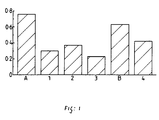
- compositions were compared in a model experiment in which clear layer formation was measured with stoppered glass 100 cm 3 measuring cylinders containing 80cm 3 of the product. These were suspended vertically in a glass-sided water bath and thermostatted at 37°C. Compositions A, 1, 2 and 3 were stored for 12 weeks and compositions B and 4 were stored for 4 weeks. The height in centimeters of the liquid meniscus and the clear layer separation layer was measured in dulpo using a cathetometer (clear layer separation of Composition 2 was only determined once).
- compositions 1, 2, 4 and in particular 3 have a lower clear layer separation than of the comparative compositions A and B.
- a high viscosity silicone polymer composition can be made by blending a conventional silicone polymer with a high viscosity fluid.
- the solid content of the composition e.g. hydrophobic particles, can be adjusted.
Landscapes
- Chemical & Material Sciences (AREA)
- Life Sciences & Earth Sciences (AREA)
- Engineering & Computer Science (AREA)
- Chemical Kinetics & Catalysis (AREA)
- Oil, Petroleum & Natural Gas (AREA)
- Wood Science & Technology (AREA)
- Organic Chemistry (AREA)
- Inorganic Chemistry (AREA)
- Detergent Compositions (AREA)
- Liquid Crystal (AREA)
Claims (8)
- Nichtwässeriges flüssiges Reinigungsmittel, umfassend eine nichtwässerige flüssige Phase, 1 bis 90 Gewichtsprozent Feststoffteilchen und dispergierte Tröpfchen, umfassend Siliconpolymer und hydrophobe Teilchen, wobei die Tröpfchen eine Viskosität von mehr als 3000 mPa·s bei 21 s-1 bei 25°C aufweisen.
- Mittel nach Anspruch 1, wobei die Tröpfchen eine Viskosität von 5000 bis 60000 mPa·s bei 21 s-1 bei 25°C aufweisen.
- Mittel nach Ansprüchen 1-2, wobei die hydrophoben Teilchen hydrophobes Siliciumdioxid sind.
- Mittel nach Ansprüchen 1-3, wobei das Siliconpolymer Polydimethylsiloxan ist.
- Mittel nach Ansprüchen 1-4, wobei die Tröpfchen in einer Menge von 0,1 bis 5,0 Gewichtsprozent des Mittels vorliegen.
- Mittel nach Ansprüchen 1-5, wobei das Gewichtsverhältnis des Siliconpolymers zu den hydrophoben Teilchen 70:30 bis 99:1 ist.
- Mittel nach Ansprüchen 1-6, wobei das Polymer ein Gemisch von Polydimethylsiloxan hoher Viskosität und Polydimethylsiloxan geringer Viskosität umfaßt.
- Verfahren zur Herstellung eines nichtwässerigen flüssigen Reinigungsmittels, umfassend eine nichtwässerige flüssige Phase, 1 bis 90 Gewichtsprozent Feststoffteilchen und dispergierte Tröpfchen, wobei die Tröpfchen Siliconpolymer und hydrophobe Teilchen umfassen und eine Viskosität von mehr als 3000 mPa·s bei 21 s-1 bei 25°C aufweisen, wobei die Feststoffteilchen mit der nichtwässerigen flüssigen Phase vermischt werden und gegebenenfalls vorher, während oder nach dem Mischen mit der nichtwässerigen flüssigen Phase vermahlen werden, wonach die Tröpfchen in der nichtwässerigen flüssigen Phase dispergiert werden.
Priority Applications (1)
| Application Number | Priority Date | Filing Date | Title |
|---|---|---|---|
| EP94917684A EP0702714B2 (de) | 1993-06-11 | 1994-06-01 | Waschmittelzusammensetzung |
Applications Claiming Priority (4)
| Application Number | Priority Date | Filing Date | Title |
|---|---|---|---|
| EP93304581 | 1993-06-11 | ||
| EP93304581 | 1993-06-11 | ||
| EP94917684A EP0702714B2 (de) | 1993-06-11 | 1994-06-01 | Waschmittelzusammensetzung |
| PCT/EP1994/001791 WO1994029427A1 (en) | 1993-06-11 | 1994-06-01 | Detergent composition |
Publications (3)
| Publication Number | Publication Date |
|---|---|
| EP0702714A1 EP0702714A1 (de) | 1996-03-27 |
| EP0702714B1 true EP0702714B1 (de) | 1997-08-13 |
| EP0702714B2 EP0702714B2 (de) | 2001-02-21 |
Family
ID=8214433
Family Applications (1)
| Application Number | Title | Priority Date | Filing Date |
|---|---|---|---|
| EP94917684A Expired - Lifetime EP0702714B2 (de) | 1993-06-11 | 1994-06-01 | Waschmittelzusammensetzung |
Country Status (8)
| Country | Link |
|---|---|
| EP (1) | EP0702714B2 (de) |
| JP (1) | JPH08511048A (de) |
| AU (1) | AU682044B2 (de) |
| BR (1) | BR9406773A (de) |
| DE (1) | DE69404988T3 (de) |
| ES (1) | ES2106546T5 (de) |
| WO (1) | WO1994029427A1 (de) |
| ZA (1) | ZA944063B (de) |
Families Citing this family (4)
| Publication number | Priority date | Publication date | Assignee | Title |
|---|---|---|---|---|
| EP1595939B1 (de) * | 2004-05-11 | 2007-06-13 | The Procter & Gamble Company | Portionierte Wasch- und Reinigungsmittelzubereitung enthaltend Silikonöl |
| ATE364678T1 (de) * | 2004-05-11 | 2007-07-15 | Procter & Gamble | Portionierte wasch- und reinigungsmittelzubereitung enthaltend silikonöl |
| US8635732B2 (en) * | 2006-09-15 | 2014-01-28 | Reckitt Benckiser Llc | Cleaning article comprising melamine foam sponge |
| US9376648B2 (en) * | 2008-04-07 | 2016-06-28 | The Procter & Gamble Company | Foam manipulation compositions containing fine particles |
Family Cites Families (7)
| Publication number | Priority date | Publication date | Assignee | Title |
|---|---|---|---|---|
| US4075118A (en) † | 1975-10-14 | 1978-02-21 | The Procter & Gamble Company | Liquid detergent compositions containing a self-emulsified silicone suds controlling agent |
| US4395352A (en) † | 1978-06-29 | 1983-07-26 | Union Carbide Corporation | High efficiency antifoam compositions and process for reducing foaming |
| GB2237813A (en) * | 1989-10-31 | 1991-05-15 | Unilever Plc | Liquid detergent |
| WO1991012312A1 (en) * | 1990-02-16 | 1991-08-22 | Unilever N.V. | Liquid cleaning products |
| FI924296A7 (fi) * | 1990-03-28 | 1992-09-25 | Unilever Nv | Nestemäiset puhdistustuotteet |
| GB9108665D0 (en) * | 1991-04-23 | 1991-06-12 | Unilever Plc | Liquid cleaning products |
| GB9127178D0 (en) † | 1991-12-21 | 1992-02-19 | Dow Corning Sa | Suds-controlling composition for aqueous compositions |
-
1994
- 1994-06-01 JP JP7501273A patent/JPH08511048A/ja active Pending
- 1994-06-01 EP EP94917684A patent/EP0702714B2/de not_active Expired - Lifetime
- 1994-06-01 WO PCT/EP1994/001791 patent/WO1994029427A1/en not_active Ceased
- 1994-06-01 AU AU69309/94A patent/AU682044B2/en not_active Ceased
- 1994-06-01 BR BR9406773A patent/BR9406773A/pt not_active IP Right Cessation
- 1994-06-01 DE DE69404988T patent/DE69404988T3/de not_active Expired - Fee Related
- 1994-06-01 ES ES94917684T patent/ES2106546T5/es not_active Expired - Lifetime
- 1994-06-09 ZA ZA944063A patent/ZA944063B/xx unknown
Also Published As
| Publication number | Publication date |
|---|---|
| ZA944063B (en) | 1995-12-11 |
| DE69404988T3 (de) | 2001-05-23 |
| ES2106546T5 (es) | 2001-05-16 |
| DE69404988D1 (de) | 1997-09-18 |
| AU682044B2 (en) | 1997-09-18 |
| ES2106546T3 (es) | 1997-11-01 |
| BR9406773A (pt) | 1996-02-27 |
| JPH08511048A (ja) | 1996-11-19 |
| EP0702714A1 (de) | 1996-03-27 |
| DE69404988T2 (de) | 1998-01-22 |
| EP0702714B2 (de) | 2001-02-21 |
| AU6930994A (en) | 1995-01-03 |
| WO1994029427A1 (en) | 1994-12-22 |
Similar Documents
| Publication | Publication Date | Title |
|---|---|---|
| EP0510762B1 (de) | Flüssige Reinigungsmittel | |
| EP0339995B1 (de) | Flüssige Reinigungsmittelzusammensetzungen | |
| EP0540089B1 (de) | Flüssige Reinigungsmittel | |
| AU633849B2 (en) | Liquid cleaning products and method for their preparation | |
| EP0543443B1 (de) | Flüssige Reinigungsmittel | |
| EP0340965B1 (de) | Flüssige Reinigungsmittel | |
| EP0797656B1 (de) | Waschmittelzusammensetzung | |
| CA2075802C (en) | Liquid cleaning products | |
| CA2075195C (en) | Liquid cleaning products | |
| AU682044B2 (en) | Detergent composition | |
| EP0692018B1 (de) | Flüssige reinigungsprodukte | |
| EP0339998B1 (de) | Flüssige Reinigungsmittel | |
| EP0340001B1 (de) | Flüssige Reinigungsmittel | |
| EP0521863B1 (de) | Flüssige reinigungsmittel | |
| GB2217727A (en) | Liquid cleaning products | |
| EP0339999A2 (de) | Flüssige Reinigungsmittel | |
| WO1993022412A1 (en) | Liquid cleaning products |
Legal Events
| Date | Code | Title | Description |
|---|---|---|---|
| PUAI | Public reference made under article 153(3) epc to a published international application that has entered the european phase |
Free format text: ORIGINAL CODE: 0009012 |
|
| 17P | Request for examination filed |
Effective date: 19951115 |
|
| AK | Designated contracting states |
Kind code of ref document: A1 Designated state(s): CH DE ES FR GB IT LI NL SE |
|
| 17Q | First examination report despatched |
Effective date: 19960403 |
|
| GRAG | Despatch of communication of intention to grant |
Free format text: ORIGINAL CODE: EPIDOS AGRA |
|
| GRAH | Despatch of communication of intention to grant a patent |
Free format text: ORIGINAL CODE: EPIDOS IGRA |
|
| GRAH | Despatch of communication of intention to grant a patent |
Free format text: ORIGINAL CODE: EPIDOS IGRA |
|
| GRAA | (expected) grant |
Free format text: ORIGINAL CODE: 0009210 |
|
| AK | Designated contracting states |
Kind code of ref document: B1 Designated state(s): CH DE ES FR GB IT LI NL SE |
|
| PG25 | Lapsed in a contracting state [announced via postgrant information from national office to epo] |
Ref country code: NL Free format text: LAPSE BECAUSE OF FAILURE TO SUBMIT A TRANSLATION OF THE DESCRIPTION OR TO PAY THE FEE WITHIN THE PRESCRIBED TIME-LIMIT Effective date: 19970813 Ref country code: LI Free format text: LAPSE BECAUSE OF FAILURE TO SUBMIT A TRANSLATION OF THE DESCRIPTION OR TO PAY THE FEE WITHIN THE PRESCRIBED TIME-LIMIT Effective date: 19970813 Ref country code: CH Free format text: LAPSE BECAUSE OF FAILURE TO SUBMIT A TRANSLATION OF THE DESCRIPTION OR TO PAY THE FEE WITHIN THE PRESCRIBED TIME-LIMIT Effective date: 19970813 |
|
| REG | Reference to a national code |
Ref country code: CH Ref legal event code: EP |
|
| REF | Corresponds to: |
Ref document number: 69404988 Country of ref document: DE Date of ref document: 19970918 |
|
| RAP2 | Party data changed (patent owner data changed or rights of a patent transferred) |
Owner name: UNILEVER PLC Owner name: UNILEVER N.V. |
|
| ITF | It: translation for a ep patent filed | ||
| ET | Fr: translation filed | ||
| REG | Reference to a national code |
Ref country code: ES Ref legal event code: FG2A Ref document number: 2106546 Country of ref document: ES Kind code of ref document: T3 |
|
| PG25 | Lapsed in a contracting state [announced via postgrant information from national office to epo] |
Ref country code: SE Effective date: 19971113 |
|
| NLT2 | Nl: modifications (of names), taken from the european patent patent bulletin |
Owner name: UNILEVER N.V. |
|
| NLV1 | Nl: lapsed or annulled due to failure to fulfill the requirements of art. 29p and 29m of the patents act | ||
| REG | Reference to a national code |
Ref country code: CH Ref legal event code: PL |
|
| PLBQ | Unpublished change to opponent data |
Free format text: ORIGINAL CODE: EPIDOS OPPO |
|
| PLBI | Opposition filed |
Free format text: ORIGINAL CODE: 0009260 |
|
| PLBF | Reply of patent proprietor to notice(s) of opposition |
Free format text: ORIGINAL CODE: EPIDOS OBSO |
|
| 26 | Opposition filed |
Opponent name: THE PROCTER & GAMBLE COMPANY Effective date: 19980513 |
|
| PLBF | Reply of patent proprietor to notice(s) of opposition |
Free format text: ORIGINAL CODE: EPIDOS OBSO |
|
| PLBF | Reply of patent proprietor to notice(s) of opposition |
Free format text: ORIGINAL CODE: EPIDOS OBSO |
|
| PLAW | Interlocutory decision in opposition |
Free format text: ORIGINAL CODE: EPIDOS IDOP |
|
| APAC | Appeal dossier modified |
Free format text: ORIGINAL CODE: EPIDOS NOAPO |
|
| APAE | Appeal reference modified |
Free format text: ORIGINAL CODE: EPIDOS REFNO |
|
| APAC | Appeal dossier modified |
Free format text: ORIGINAL CODE: EPIDOS NOAPO |
|
| PLAW | Interlocutory decision in opposition |
Free format text: ORIGINAL CODE: EPIDOS IDOP |
|
| PUAH | Patent maintained in amended form |
Free format text: ORIGINAL CODE: 0009272 |
|
| STAA | Information on the status of an ep patent application or granted ep patent |
Free format text: STATUS: PATENT MAINTAINED AS AMENDED |
|
| 27A | Patent maintained in amended form |
Effective date: 20010221 |
|
| AK | Designated contracting states |
Kind code of ref document: B2 Designated state(s): CH DE ES FR GB IT LI NL SE |
|
| ITF | It: translation for a ep patent filed | ||
| ET3 | Fr: translation filed ** decision concerning opposition | ||
| REG | Reference to a national code |
Ref country code: ES Ref legal event code: DC2A Kind code of ref document: T5 Effective date: 20010417 |
|
| PGFP | Annual fee paid to national office [announced via postgrant information from national office to epo] |
Ref country code: ES Payment date: 20010612 Year of fee payment: 8 |
|
| REG | Reference to a national code |
Ref country code: GB Ref legal event code: IF02 |
|
| PGFP | Annual fee paid to national office [announced via postgrant information from national office to epo] |
Ref country code: FR Payment date: 20020517 Year of fee payment: 9 |
|
| PGFP | Annual fee paid to national office [announced via postgrant information from national office to epo] |
Ref country code: GB Payment date: 20020529 Year of fee payment: 9 |
|
| PGFP | Annual fee paid to national office [announced via postgrant information from national office to epo] |
Ref country code: DE Payment date: 20020620 Year of fee payment: 9 |
|
| PG25 | Lapsed in a contracting state [announced via postgrant information from national office to epo] |
Ref country code: GB Free format text: LAPSE BECAUSE OF NON-PAYMENT OF DUE FEES Effective date: 20030601 |
|
| PG25 | Lapsed in a contracting state [announced via postgrant information from national office to epo] |
Ref country code: ES Free format text: LAPSE BECAUSE OF NON-PAYMENT OF DUE FEES Effective date: 20030602 |
|
| PG25 | Lapsed in a contracting state [announced via postgrant information from national office to epo] |
Ref country code: DE Free format text: LAPSE BECAUSE OF NON-PAYMENT OF DUE FEES Effective date: 20040101 |
|
| GBPC | Gb: european patent ceased through non-payment of renewal fee |
Effective date: 20030601 |
|
| PG25 | Lapsed in a contracting state [announced via postgrant information from national office to epo] |
Ref country code: FR Free format text: LAPSE BECAUSE OF NON-PAYMENT OF DUE FEES Effective date: 20040227 |
|
| REG | Reference to a national code |
Ref country code: FR Ref legal event code: ST |
|
| REG | Reference to a national code |
Ref country code: ES Ref legal event code: FD2A Effective date: 20030602 |
|
| PG25 | Lapsed in a contracting state [announced via postgrant information from national office to epo] |
Ref country code: IT Free format text: LAPSE BECAUSE OF NON-PAYMENT OF DUE FEES;WARNING: LAPSES OF ITALIAN PATENTS WITH EFFECTIVE DATE BEFORE 2007 MAY HAVE OCCURRED AT ANY TIME BEFORE 2007. THE CORRECT EFFECTIVE DATE MAY BE DIFFERENT FROM THE ONE RECORDED. Effective date: 20050601 |
|
| APAH | Appeal reference modified |
Free format text: ORIGINAL CODE: EPIDOSCREFNO |