EP0704477A1 - Siegelfähige, peelbare Kunststoffolie mit alpha-Tocopherol stabilisiertem Styrol/Butadien-Blockcopolymerem - Google Patents
Siegelfähige, peelbare Kunststoffolie mit alpha-Tocopherol stabilisiertem Styrol/Butadien-Blockcopolymerem Download PDFInfo
- Publication number
- EP0704477A1 EP0704477A1 EP95114694A EP95114694A EP0704477A1 EP 0704477 A1 EP0704477 A1 EP 0704477A1 EP 95114694 A EP95114694 A EP 95114694A EP 95114694 A EP95114694 A EP 95114694A EP 0704477 A1 EP0704477 A1 EP 0704477A1
- Authority
- EP
- European Patent Office
- Prior art keywords
- weight
- polystyrene
- block copolymer
- block
- styrene
- Prior art date
- Legal status (The legal status is an assumption and is not a legal conclusion. Google has not performed a legal analysis and makes no representation as to the accuracy of the status listed.)
- Withdrawn
Links
- GVJHHUAWPYXKBD-IEOSBIPESA-N α-tocopherol Chemical compound OC1=C(C)C(C)=C2O[C@@](CCC[C@H](C)CCC[C@H](C)CCCC(C)C)(C)CCC2=C1C GVJHHUAWPYXKBD-IEOSBIPESA-N 0.000 title claims abstract description 20
- 229920001400 block copolymer Polymers 0.000 title claims abstract description 17
- 229940087168 alpha tocopherol Drugs 0.000 title claims abstract description 10
- 229960000984 tocofersolan Drugs 0.000 title claims abstract description 10
- 239000002076 α-tocopherol Substances 0.000 title claims abstract description 10
- 235000004835 α-tocopherol Nutrition 0.000 title claims abstract description 10
- 239000002985 plastic film Substances 0.000 title claims abstract description 5
- 229920006255 plastic film Polymers 0.000 title claims abstract description 5
- PPBRXRYQALVLMV-UHFFFAOYSA-N Styrene Chemical compound C=CC1=CC=CC=C1 PPBRXRYQALVLMV-UHFFFAOYSA-N 0.000 title description 10
- 239000004793 Polystyrene Substances 0.000 claims abstract description 25
- 229920002223 polystyrene Polymers 0.000 claims abstract description 21
- 229920003048 styrene butadiene rubber Polymers 0.000 claims abstract description 17
- GVJHHUAWPYXKBD-UHFFFAOYSA-N (±)-α-Tocopherol Chemical compound OC1=C(C)C(C)=C2OC(CCCC(C)CCCC(C)CCCC(C)C)(C)CCC2=C1C GVJHHUAWPYXKBD-UHFFFAOYSA-N 0.000 claims abstract description 16
- 239000005062 Polybutadiene Substances 0.000 claims abstract description 11
- 229920002857 polybutadiene Polymers 0.000 claims abstract description 11
- 229930003427 Vitamin E Natural products 0.000 claims abstract description 8
- WIGCFUFOHFEKBI-UHFFFAOYSA-N gamma-tocopherol Natural products CC(C)CCCC(C)CCCC(C)CCCC1CCC2C(C)C(O)C(C)C(C)C2O1 WIGCFUFOHFEKBI-UHFFFAOYSA-N 0.000 claims abstract description 8
- 239000011709 vitamin E Substances 0.000 claims abstract description 8
- 235000019165 vitamin E Nutrition 0.000 claims abstract description 8
- 229940046009 vitamin E Drugs 0.000 claims abstract description 8
- 238000000465 moulding Methods 0.000 claims abstract description 5
- 239000007822 coupling agent Substances 0.000 claims abstract description 3
- 230000007704 transition Effects 0.000 claims abstract description 3
- 229920000642 polymer Polymers 0.000 claims description 25
- 239000000203 mixture Substances 0.000 claims description 10
- OJMIONKXNSYLSR-UHFFFAOYSA-N phosphorous acid Chemical compound OP(O)O OJMIONKXNSYLSR-UHFFFAOYSA-N 0.000 claims description 8
- WGKLOLBTFWFKOD-UHFFFAOYSA-N tris(2-nonylphenyl) phosphite Chemical compound CCCCCCCCCC1=CC=CC=C1OP(OC=1C(=CC=CC=1)CCCCCCCCC)OC1=CC=CC=C1CCCCCCCCC WGKLOLBTFWFKOD-UHFFFAOYSA-N 0.000 claims description 4
- 238000010539 anionic addition polymerization reaction Methods 0.000 claims description 3
- 239000002318 adhesion promoter Substances 0.000 claims 3
- 230000004888 barrier function Effects 0.000 claims 2
- 239000004952 Polyamide Substances 0.000 claims 1
- 230000008018 melting Effects 0.000 claims 1
- 238000002844 melting Methods 0.000 claims 1
- 229920002647 polyamide Polymers 0.000 claims 1
- 229920000728 polyester Polymers 0.000 claims 1
- 238000007789 sealing Methods 0.000 claims 1
- MTAZNLWOLGHBHU-UHFFFAOYSA-N butadiene-styrene rubber Chemical compound C=CC=C.C=CC1=CC=CC=C1 MTAZNLWOLGHBHU-UHFFFAOYSA-N 0.000 abstract description 3
- 239000011115 styrene butadiene Substances 0.000 abstract 3
- 239000002174 Styrene-butadiene Substances 0.000 abstract 2
- 125000000129 anionic group Chemical group 0.000 abstract 1
- 239000000463 material Substances 0.000 abstract 1
- 239000003963 antioxidant agent Substances 0.000 description 11
- 235000006708 antioxidants Nutrition 0.000 description 11
- 238000012545 processing Methods 0.000 description 7
- MGMXGCZJYUCMGY-UHFFFAOYSA-N tris(4-nonylphenyl) phosphite Chemical compound C1=CC(CCCCCCCCC)=CC=C1OP(OC=1C=CC(CCCCCCCCC)=CC=1)OC1=CC=C(CCCCCCCCC)C=C1 MGMXGCZJYUCMGY-UHFFFAOYSA-N 0.000 description 7
- 239000003381 stabilizer Substances 0.000 description 6
- 238000004132 cross linking Methods 0.000 description 5
- 238000001125 extrusion Methods 0.000 description 5
- KAKZBPTYRLMSJV-UHFFFAOYSA-N Butadiene Chemical compound C=CC=C KAKZBPTYRLMSJV-UHFFFAOYSA-N 0.000 description 4
- 238000000034 method Methods 0.000 description 4
- 239000002245 particle Substances 0.000 description 4
- OKKJLVBELUTLKV-UHFFFAOYSA-N Methanol Chemical compound OC OKKJLVBELUTLKV-UHFFFAOYSA-N 0.000 description 3
- 230000003078 antioxidant effect Effects 0.000 description 3
- 150000001875 compounds Chemical class 0.000 description 3
- NFORZJQPTUSMRL-UHFFFAOYSA-N dipropan-2-yl hydrogen phosphite Chemical compound CC(C)OP(O)OC(C)C NFORZJQPTUSMRL-UHFFFAOYSA-N 0.000 description 3
- 229920001971 elastomer Polymers 0.000 description 3
- 150000002989 phenols Chemical class 0.000 description 3
- 230000008569 process Effects 0.000 description 3
- 239000005060 rubber Substances 0.000 description 3
- 239000000523 sample Substances 0.000 description 3
- IJGRMHOSHXDMSA-UHFFFAOYSA-N Atomic nitrogen Chemical compound N#N IJGRMHOSHXDMSA-UHFFFAOYSA-N 0.000 description 2
- 241000446313 Lamella Species 0.000 description 2
- 238000006243 chemical reaction Methods 0.000 description 2
- 238000007872 degassing Methods 0.000 description 2
- 235000013305 food Nutrition 0.000 description 2
- 238000001746 injection moulding Methods 0.000 description 2
- 239000000155 melt Substances 0.000 description 2
- 230000003647 oxidation Effects 0.000 description 2
- 238000007254 oxidation reaction Methods 0.000 description 2
- 238000007639 printing Methods 0.000 description 2
- 239000000243 solution Substances 0.000 description 2
- 238000012360 testing method Methods 0.000 description 2
- HVLLSGMXQDNUAL-UHFFFAOYSA-N triphenyl phosphite Chemical compound C=1C=CC=CC=1OP(OC=1C=CC=CC=1)OC1=CC=CC=C1 HVLLSGMXQDNUAL-UHFFFAOYSA-N 0.000 description 2
- YIKVZDICBNEEOZ-UHFFFAOYSA-N 2-ethylhexyl dihydrogen phosphite Chemical compound CCCCC(CC)COP(O)O YIKVZDICBNEEOZ-UHFFFAOYSA-N 0.000 description 1
- CRNGVNZNNLRZOP-UHFFFAOYSA-N 3-cyclopentylpropyl dihexyl phosphite Chemical compound CCCCCCOP(OCCCCCC)OCCCC1CCCC1 CRNGVNZNNLRZOP-UHFFFAOYSA-N 0.000 description 1
- 229930185605 Bisphenol Natural products 0.000 description 1
- 239000004594 Masterbatch (MB) Substances 0.000 description 1
- SLINHMUFWFWBMU-UHFFFAOYSA-N Triisopropanolamine Chemical compound CC(O)CN(CC(C)O)CC(C)O SLINHMUFWFWBMU-UHFFFAOYSA-N 0.000 description 1
- XECAHXYUAAWDEL-UHFFFAOYSA-N acrylonitrile butadiene styrene Chemical compound C=CC=C.C=CC#N.C=CC1=CC=CC=C1 XECAHXYUAAWDEL-UHFFFAOYSA-N 0.000 description 1
- 229920000122 acrylonitrile butadiene styrene Polymers 0.000 description 1
- 239000004676 acrylonitrile butadiene styrene Substances 0.000 description 1
- 239000000654 additive Substances 0.000 description 1
- 230000032683 aging Effects 0.000 description 1
- 125000000217 alkyl group Chemical group 0.000 description 1
- -1 alkylidene bisphenols Chemical class 0.000 description 1
- 125000003118 aryl group Chemical group 0.000 description 1
- NWCHELUCVWSRRS-UHFFFAOYSA-N atrolactic acid Chemical class OC(=O)C(O)(C)C1=CC=CC=C1 NWCHELUCVWSRRS-UHFFFAOYSA-N 0.000 description 1
- 230000033228 biological regulation Effects 0.000 description 1
- OOSPDKSZPPFOBR-UHFFFAOYSA-N butyl dihydrogen phosphite Chemical compound CCCCOP(O)O OOSPDKSZPPFOBR-UHFFFAOYSA-N 0.000 description 1
- 239000002775 capsule Substances 0.000 description 1
- 230000000052 comparative effect Effects 0.000 description 1
- 239000012141 concentrate Substances 0.000 description 1
- 239000000470 constituent Substances 0.000 description 1
- 125000000753 cycloalkyl group Chemical group 0.000 description 1
- YXKYNFAJEZSBIQ-UHFFFAOYSA-N cyclohexyl-trihydroxy-(1-phenylcyclohexyl)-lambda5-phosphane Chemical compound C1CCCCC1(C=1C=CC=CC=1)P(O)(O)(O)C1CCCCC1 YXKYNFAJEZSBIQ-UHFFFAOYSA-N 0.000 description 1
- GLOQRSIADGSLRX-UHFFFAOYSA-N decyl diphenyl phosphite Chemical compound C=1C=CC=CC=1OP(OCCCCCCCCCC)OC1=CC=CC=C1 GLOQRSIADGSLRX-UHFFFAOYSA-N 0.000 description 1
- 230000003111 delayed effect Effects 0.000 description 1
- NMAKPIATXQEXBT-UHFFFAOYSA-N didecyl phenyl phosphite Chemical compound CCCCCCCCCCOP(OCCCCCCCCCC)OC1=CC=CC=C1 NMAKPIATXQEXBT-UHFFFAOYSA-N 0.000 description 1
- 230000000694 effects Effects 0.000 description 1
- 238000002474 experimental method Methods 0.000 description 1
- 239000008187 granular material Substances 0.000 description 1
- 238000007646 gravure printing Methods 0.000 description 1
- 150000002432 hydroperoxides Chemical class 0.000 description 1
- 125000006289 hydroxybenzyl group Chemical group 0.000 description 1
- 238000004898 kneading Methods 0.000 description 1
- 239000004611 light stabiliser Substances 0.000 description 1
- 238000004519 manufacturing process Methods 0.000 description 1
- 230000010534 mechanism of action Effects 0.000 description 1
- NYCZNDFWFCCTPA-UHFFFAOYSA-N methyl diphenyl phosphite Chemical compound C=1C=CC=CC=1OP(OC)OC1=CC=CC=C1 NYCZNDFWFCCTPA-UHFFFAOYSA-N 0.000 description 1
- 229910052757 nitrogen Inorganic materials 0.000 description 1
- 235000016046 other dairy product Nutrition 0.000 description 1
- 239000005022 packaging material Substances 0.000 description 1
- 238000004806 packaging method and process Methods 0.000 description 1
- ISWSIDIOOBJBQZ-UHFFFAOYSA-N phenol group Chemical group C1(=CC=CC=C1)O ISWSIDIOOBJBQZ-UHFFFAOYSA-N 0.000 description 1
- AQSJGOWTSHOLKH-UHFFFAOYSA-N phosphite(3-) Chemical class [O-]P([O-])[O-] AQSJGOWTSHOLKH-UHFFFAOYSA-N 0.000 description 1
- 239000002516 radical scavenger Substances 0.000 description 1
- 230000027756 respiratory electron transport chain Effects 0.000 description 1
- 150000003336 secondary aromatic amines Chemical class 0.000 description 1
- 239000002904 solvent Substances 0.000 description 1
- 230000006641 stabilisation Effects 0.000 description 1
- 238000011105 stabilization Methods 0.000 description 1
- 230000000087 stabilizing effect Effects 0.000 description 1
- 239000000126 substance Substances 0.000 description 1
- 230000002195 synergetic effect Effects 0.000 description 1
- 229920001169 thermoplastic Polymers 0.000 description 1
- 239000004416 thermosoftening plastic Substances 0.000 description 1
- 150000003568 thioethers Chemical class 0.000 description 1
- 150000003626 triacylglycerols Chemical class 0.000 description 1
- HABWCPIKWOZMSN-UHFFFAOYSA-N tris(2,4-dimethylphenyl) phosphite Chemical compound CC1=CC(C)=CC=C1OP(OC=1C(=CC(C)=CC=1)C)OC1=CC=C(C)C=C1C HABWCPIKWOZMSN-UHFFFAOYSA-N 0.000 description 1
- 235000013618 yogurt Nutrition 0.000 description 1
Images

Classifications
-
- B—PERFORMING OPERATIONS; TRANSPORTING
- B32—LAYERED PRODUCTS
- B32B—LAYERED PRODUCTS, i.e. PRODUCTS BUILT-UP OF STRATA OF FLAT OR NON-FLAT, e.g. CELLULAR OR HONEYCOMB, FORM
- B32B27/00—Layered products comprising a layer of synthetic resin
- B32B27/06—Layered products comprising a layer of synthetic resin as the main or only constituent of a layer, which is next to another layer of the same or of a different material
- B32B27/08—Layered products comprising a layer of synthetic resin as the main or only constituent of a layer, which is next to another layer of the same or of a different material of synthetic resin
-
- B—PERFORMING OPERATIONS; TRANSPORTING
- B32—LAYERED PRODUCTS
- B32B—LAYERED PRODUCTS, i.e. PRODUCTS BUILT-UP OF STRATA OF FLAT OR NON-FLAT, e.g. CELLULAR OR HONEYCOMB, FORM
- B32B27/00—Layered products comprising a layer of synthetic resin
- B32B27/30—Layered products comprising a layer of synthetic resin comprising vinyl (co)polymers; comprising acrylic (co)polymers
- B32B27/302—Layered products comprising a layer of synthetic resin comprising vinyl (co)polymers; comprising acrylic (co)polymers comprising aromatic vinyl (co)polymers, e.g. styrenic (co)polymers
-
- B—PERFORMING OPERATIONS; TRANSPORTING
- B32—LAYERED PRODUCTS
- B32B—LAYERED PRODUCTS, i.e. PRODUCTS BUILT-UP OF STRATA OF FLAT OR NON-FLAT, e.g. CELLULAR OR HONEYCOMB, FORM
- B32B27/00—Layered products comprising a layer of synthetic resin
- B32B27/34—Layered products comprising a layer of synthetic resin comprising polyamides
-
- B—PERFORMING OPERATIONS; TRANSPORTING
- B32—LAYERED PRODUCTS
- B32B—LAYERED PRODUCTS, i.e. PRODUCTS BUILT-UP OF STRATA OF FLAT OR NON-FLAT, e.g. CELLULAR OR HONEYCOMB, FORM
- B32B27/00—Layered products comprising a layer of synthetic resin
- B32B27/36—Layered products comprising a layer of synthetic resin comprising polyesters
-
- C—CHEMISTRY; METALLURGY
- C08—ORGANIC MACROMOLECULAR COMPOUNDS; THEIR PREPARATION OR CHEMICAL WORKING-UP; COMPOSITIONS BASED THEREON
- C08K—Use of inorganic or non-macromolecular organic substances as compounding ingredients
- C08K5/00—Use of organic ingredients
- C08K5/04—Oxygen-containing compounds
- C08K5/15—Heterocyclic compounds having oxygen in the ring
- C08K5/151—Heterocyclic compounds having oxygen in the ring having one oxygen atom in the ring
- C08K5/1545—Six-membered rings
-
- C—CHEMISTRY; METALLURGY
- C08—ORGANIC MACROMOLECULAR COMPOUNDS; THEIR PREPARATION OR CHEMICAL WORKING-UP; COMPOSITIONS BASED THEREON
- C08L—COMPOSITIONS OF MACROMOLECULAR COMPOUNDS
- C08L53/00—Compositions of block copolymers containing at least one sequence of a polymer obtained by reactions only involving carbon-to-carbon unsaturated bonds; Compositions of derivatives of such polymers
- C08L53/02—Compositions of block copolymers containing at least one sequence of a polymer obtained by reactions only involving carbon-to-carbon unsaturated bonds; Compositions of derivatives of such polymers of vinyl-aromatic monomers and conjugated dienes
-
- B—PERFORMING OPERATIONS; TRANSPORTING
- B32—LAYERED PRODUCTS
- B32B—LAYERED PRODUCTS, i.e. PRODUCTS BUILT-UP OF STRATA OF FLAT OR NON-FLAT, e.g. CELLULAR OR HONEYCOMB, FORM
- B32B2307/00—Properties of the layers or laminate
- B32B2307/30—Properties of the layers or laminate having particular thermal properties
- B32B2307/306—Resistant to heat
-
- B—PERFORMING OPERATIONS; TRANSPORTING
- B32—LAYERED PRODUCTS
- B32B—LAYERED PRODUCTS, i.e. PRODUCTS BUILT-UP OF STRATA OF FLAT OR NON-FLAT, e.g. CELLULAR OR HONEYCOMB, FORM
- B32B2307/00—Properties of the layers or laminate
- B32B2307/70—Other properties
- B32B2307/718—Weight, e.g. weight per square meter
Definitions
- Sealable peelable plastic films are known from EP-A-0 524 488.
- Styrene-butadiene block copolymers with the usual antioxidants are used as one of the constituents for the layers B, C, D and E.
- antioxidants are chemical compounds that can delay the oxidation and the resulting signs of aging of a polymer .
- antioxidants based on their mechanism of action between primary and secondary antioxidants.
- the most important primary antioxidants are primarily sterically hindered phenols, as well as secondary aromatic amines. The latter only play a subordinate role, especially in the case of thermoplastics, because of their tendency to discolour products.
- Primary antioxidants act as radical scavengers, while the secondary (phosphites, thioethers) decompose hydroperoxides. In practice, synergistic mixtures of primary and secondary antioxidants are often used.
- thiobisphenols alkylidene bisphenols, alkylphenols, hydroxybenzyl compounds, acylaminophenols, hydroxyphenylpropionates (R. Gumbleter and H. Müller, op. Cit. P. 9f.)
- Sealable, peelable plastic films according to EP-A-0 524 488 are used for packaging food.
- a typical application is the use as a sealable, peelable lid for cups that e.g. filled with yogurt, quark or other dairy products and sealed hygienically.
- Such lids are printed with elaborate motifs that almost achieve photo quality for advertising reasons.
- Such high quality printing is done using the gravure printing process.
- Styrene-butadiene block copolymers are sensitive to crosslinking and can lead to so-called specks in the production of the films according to the invention due to crosslinking reactions, which manifest themselves as elevations in the film and thereby in particular in the case of Rotogravure process to lift the printing roller with subsequent disturbances in the print image. Therefore, the task is to find stabilizers which are both safe under food law and suitable as highly effective stabilizers against oxidation and related crosslinking reactions.
- Vitamin E also called ⁇ -tocopherol
- ⁇ -tocopherol which is one of the sterically hindered phenols
- EP-A-384 472 describes the use of vitamin E for packaging material made of polystyrene, in connection with light stabilizers.
- EP-A-408 693 describes stabilizer mixtures for styrene polymers from vitamin E and mono / di / triglycerides.
- vitamin E in particular a mixture of the secondary antioxidant phosphite with vitamin E, shows an excellent stabilizing action in styrene / butadiene block copolymers.
- an organic phosphite is additionally contained.
- this is tris (nonylphenyl) phosphite, TNPP.
- Styrene-butadiene block copolymers are easily accessible by anionic polymerization and have been known for a long time (see, for example, in M. Szwarc: "Carbanions, Living Polymers and Electron Transfer Processes, John Wiley Publ. 1968).
- Styrene-butadiene block copolymers generally have a so-called cylinder and lamella morphology.
- the rubber phase in block copolymers is subjected to a considerably higher load during processing.
- tensions in the rubber phase are reduced less and the thermal-oxidative damage is greatly facilitated. It is therefore particularly difficult to find stabilization against such damage.
- these block copolymers include star-branched styrene-butadiene block copolymers with a predominant styrene content, as described, for example in US 3,639,517 (70 to 95% styrene, 5 to 30% butadiene), DE-PS 25 50 227 and DE-OS 25 50 226 (60 to 95% styrene, 5 to 40% butadiene).
- ⁇ -tocopherol is used in a concentration of 0.01 to 1% by weight, preferably 0.1 to 0.5% by weight. It can be added to the polymers in any known or customary manner, e.g. in pure form directly during processing, by premixing antioxidant and unstabilized polymer granules, by premixing antioxidant and polymer in solution and joint degassing or in the form of a concentrate ( Masterbatch).
- thermoplastically processable polymers are melted and shaped, e.g. via extruders, injection molding machines, kneaders, etc.
- the organic phosphite is added in an amount of 0.1 to 2% by weight, preferably 0.2 to 1% by weight.
- R alkyl, aryl, cycloalkyl or combinations thereof.
- Examples are: tris (nonylphenyl) phosphite, diphenyldecylphosphite, didecylphenylphosphite, phenyl-di (2-ethylhexyl) phosphite, methyldiphenylphosphite, triphenylphosphite, tris (2,4-dimethylphenyl) phosphite, phenyldicyclohexylphosphite, trimethylphosphyl (phylphosphyl), diisopropylphosphite (2) -cyclohexyl) n-butyl phosphite, 3-cyclopentylpropyldihexyl phosphite.
- Tris (nonylphenyl) phosphite, TNPP is preferably used.
- the organic phosphite itself is stabilized with an alkanolamine compound, in particular triisopropanolamine in an amount of 0.1 to 5% by weight, based on 100% by weight of organic phosphite.
- an alkanolamine compound in particular triisopropanolamine in an amount of 0.1 to 5% by weight, based on 100% by weight of organic phosphite.
- the processing stability can be checked in the case of styrene-butadiene block copolymers with cylinder and lamella morphology, e.g. with the aid of the measuring device from Göttfert, Buchen known as Rheograph 2000.
- the polymer is pressed as a melt through a nozzle, similarly to extruder or injection molding processing.
- the extrusion pressure in the die is measured at constant melt temperature and constant shear rate.
- the crosslinking of the rubber phase begins due to the thermal-oxidative damage to the polymer. This increases the melt viscosity and thus the extrusion pressure.
- the effect of a stabilizer can be recognized by a more or less delayed increase in the extrusion pressure compared to the non-stabilized polymer.
- the extrusion pressure p is measured during the measuring time of 24 min.
- the pressure difference between the start and end of the measuring time, the so-called cross-linking pressure p v - is used as a measure of processing stability.
- example 1 a star-branched styrene-butadiene block copolymer was prepared.
- the viscosity number (VZ) was 83.5 ml / g.
- VZ viscosity number
- the polymer was not precipitated with methanol, however, but first divided as a solution into 3 equal portions, taking care to strictly exclude air by blanketing with nitrogen.
- the 3 samples were stabilized according to the list below by adding antioxidants and then extruded and granulated by gentle degassing of the solvent on a ZSK 25 twin-screw kneading machine from Werner & Pfleiderer.
- TNPP trisnonylphenyl phosphite, 2-tert.butyl-6- (3-tert.butyl-2-hydroxy-5-methylbenzyl) -4-methylphenyl acrylate is commercially available as Irganox® 3052 (manufacturer Ciba-Geigy AG).
Landscapes
- Chemical & Material Sciences (AREA)
- Health & Medical Sciences (AREA)
- Chemical Kinetics & Catalysis (AREA)
- Medicinal Chemistry (AREA)
- Polymers & Plastics (AREA)
- Organic Chemistry (AREA)
- Compositions Of Macromolecular Compounds (AREA)
Abstract
Formmasse aus mindestens einem durch anionische Polymerisation zugänglichen Styrol-Butadien-Blockcopolymeren der allgemeinen Struktur (S1B1-)m-X-(-S2B2)n in der S1B1 einen Blockcopolymerabschnitt aus wenigstens je einem Polystyrolblock der Molmasse 3000 bis 230 000 [g/mol] und einem Polybutadienblock der Molmasse 2000 bis 30 000 [g/mol] und S2B2 einen von S1B1 verschiedenen Blockcopolymerabschnitt aus wenigstens je einem Polystyrolblock der Molmasse 2000 bis 60 000 [g/mol] und einem Polybutadienblock der Molmasse 2000 bis 30 000 [g/mol] bedeutet, wobei die Gesamtmolmasse von S1B1 : 50 000 bis 250 000 [g/mol] und die von S2B2 : 5000 bis 75 000 [g/mol] ist, die Blockübergänge scharf oder verschmiert sind und die Sternastzahl m + n insgesamt 3 bis 15 ist, mit der Maßgabe, daß m <= n ist und/oder mindestens einem linearen Styrol-Butadien-Blockcopolymeren mit mindestens zwei Polystyrolblöcken und mindestens einem Polybutadienblock vergleichbarer Gesamtmolmasse und 0,01 bis 1 Gew.-%, bezogen auf die Masse oder der Blockcopolymeren, α-Tocopherol (Vitamin E).
Description
- Aus der EP-A-0 524 488 sind siegelfähige peelbare Kunststoffolien bekannt. Eingesetzt werden als einer der Bestandteile für die Schichten B, C, D und E Styrol-Butadien-Blockcopolymere mit den üblichen Antioxidantien. Nach einer Definition in R. Gächter und H. Müller, Taschenbuch der Kunststoff-Additive, 2. Aufl., 1983, S. 2, Carl Hanser Verlag München sind Antioxidantien chemische Verbindungen, welche die Oxidation und die daraus resultierenden Alterungserscheinungen eines Polymeren verzögern können.
- Man unterscheidet bei den Antioxidantien auf Grund ihres Wirkmechanismus zwischen primären und sekundären Antioxidantien. Die wichtigsten primären Antioxidantien sind vor allem sterisch gehinderte Phenole, daneben sekundäre aromatische Amine. Letztere spielen speziell bei Thermoplasten wegen ihrer produktverfärbenden Tendenz nur eine untergeordnete Rolle.
- Primäre Antioxidantien wirken als Radikalfänger, während die sekundären (Phosphite, Thioether) Hydroperoxide zersetzen. In der Praxis werden häufig synergistische Mischungen aus primären und sekundären Antioxidantien angewendet.
- Die im Handel befindlichen sterisch gehinderten Phenole weisen eine große strukturelle Vielfalt auf: Thiobisphenole, Alkyliden-Bisphenole, Alkylphenole, Hydroxybenzylverbindungen, Acylaminophenole, Hydroxy-phenylpropionate (R. Gächter und H. Müller, a.a.O. S. 9f.)
- Siegelfähige, peelbare Kunststoffolien nach der EP-A- 0 524 488 werden zum Verpacken von Lebensmitteln eingesetzt. Ein typischer Einsatzzweck ist die Anwendung als siegelfähiger, peelbarer Deckel für Becher, die z.B. mit Joghurt, Quark oder anderen Molkereiprodukten befüllt und hygienisch dicht verschlossen werden müssen.
- Derartige Deckel werden aus Werbegründen mit aufwendigen, fast Photoqualität erreichenden Motiven bedruckt. Solch eine hochwertige Bedruckung erfolgt im Tiefdruckverfahren. Styrol-Butadien-Blockcopolymere sind vernetzungsempfindlich und können bei der Herstellung der erfindungsgemäßen Folien aufgrund von Vernetzungsreaktionen zu sogenannten Stippen führen, die sich als Erhebungen in der Folie manifestieren und dadurch insbesondere beim Tiefdruckverfahren zum Abheben der Druckwalze mit anschließenden Störungen des Druckbildes führen. Daher besteht die Aufgabe darin, Stabilisatoren zu finden, welche sowohl lebensmittelrechtlich unbedenklich als auch als hochwirksame Stabilisatoren gegen Oxidations- und damit verbundene Vernetzungsreaktionen geeignet sind.
- Vitamin E (auch α-Tocopherol genannt), das zu den sterisch gehinderten Phenolen gehört, ist als Stabilisator bekannt. EP-A-384 472 beschreibt die Verwendung von Vitamin E für Verpackungsmaterial aus Polystyrol, in Verbindung mit Lichtschutzmitteln.
- EP-A-408 693 beschreibt Stabilisatormischungen für Styrol-Polymere aus Vitamin E und Mono/Di/Triglyceriden.
- Es wurde gefunden, daß die Verwendung von Vitamin E, insbesondere eine Mischung des sekundären Antioxidans Phosphit mit Vitamin E eine hervorragende Stabilisatorwirkung in Styrol/Butadien-Blockcopolymeren zeigt.
- Unmittelbarer Erfindungsgegenstand sind daher Formmassen aus mindestens einem durch anionische Polymerisation zugänglichen Styrol-Butadien-Blockcopolymeren der allgemeinen Struktur
(S₁B₁-)m-X-(-S₂B₂)n
in der S₁B₁ einen Blockcopolymerabschnitt aus wenigstens je einem Polystyrolblock der Molmasse 3000 bis 230 000 [g/mol] und einem Polybutadienblock der Molmasse 2000 bis 30 000 [g/mol] und S₂B₂ einen von S₁B₁ verschiedenen Blockcopolymerabschnitt aus wenigstens je einem Polystyrolblock der Molmasse 2000 bis 60 000 [g/mol] und einem Polybutadienblock der Molmasse 2000 bis 30 000 [g/mol] bedeutet, wobei die Gesamtmolmasse von S₁B₁ : 50 000 bis 250 000 [g/mol] und die von S₂B₂ : 5000 bis 75 000 [g/mol] ist, die Blockübergänge scharf oder verschmiert sind, die Sternastzahl m + n insgesamt 3 bis 15 ist und X den Rest eines (m+n)-funktionellen Kopplungsmittels bedeutet, mit der Maßgabe, daß m ≦ n ist und/oder mindestens einem linearen Styrol-Butadien-Blockcopolymeren mit mindestens zwei Polystyrolblöcken und mindestens einem Polybutadienblock vergleichbarer Gesamtmolmasse und 0,01 bis 1 Gew.-%, bezogen auf die Masse oder der Blockcopolymeren, α-Tocopherol (Vitamin E)
und/oder eines linearen Styrol-Butadien-Blockcopolymeren mit mindestens 2 Polystyrolblöcken und mindestens 1 Polybutadienblock, wobei 0.g. Molgewichtsangaben gelten, und 0,01 bis 1 Gew.-%, bezogen auf das Polymere, α-Tocopherol. - In einer bevorzugten Ausführungsform sind noch zusätzlich 0,1 bis 2 Gew.-%, bezogen auf das Polymere, eines organischen Phosphits enthalten. Insbesondere handelt es sich hierbei um Tris(nonylphenyl)phosphit, TNPP.
- Styrol-Butadien-Blockcopolymere sind durch anionische Polymerisation leicht zugänglich und seit langem bekannt (siehe beispielsweise in M. Szwarc: "Carbanions, Living Polymers and Electron Transfer Processes, John Wiley Publ. 1968).
- Styrol-Butadien-Blockcopolymere besitzen i.a. eine sog. Zylinder- und Lamellenmorphologie. Verglichen mit den sich von der Kugelform ableitenden Morphologien (Zellenteilchen-, Kapselteilchen-, Tropfenteilchen- oder Fadenteilchenmorphologien bei gewöhnlichem schlagzähem Polystyrol oder Acrylnitril-Butadien-Styrol-Polymeren) wird bei Blockcopolymeren die Kautschukphase bei der Verarbeitung einer wesentlich höheren Belastung ausgesetzt. Durch die unmittelbare chemische Verknüpfung mit der Hartphase werden Spannungen in der Kautschukphase schlechter abgebaut und damit die thermisch-oxidative Schädigung stark erleichtert. Es ist daher besonders schwierig, eine Stabilisierung gegen solche Schädigungen zu finden.
- Zu diesen Blockcopolymeren gehören erfindungsgemäß sternförmig verzweigte Styrol-Butadien-Blockcopolymerisate mit überwiegendem Styrolanteil, wie sie z.B. in US 3 639 517 (70 bis 95 % Styrol, 5 bis 30 % Butadien), DE-PS 25 50 227 und DE-OS 25 50 226 (60 bis 95 % Styrol, 5 bis 40 % Butadien) beschrieben werden.
- Auch Mischungen solcher Blockcopolymeren mit anderen thermoplastisch verarbeitbaren Polymeren, wie z.B. die in DE-PS 26 10 068 beschriebenen Mischungen mit Polystyrol werden bei der Verarbeitung durch Zusatz von α-Tocopherol wirksam geschützt.
- α-Tocopherol wird in einer Konzentration von 0,01 bis 1 Gew.-%, vorzugsweise von 0,1 bis 0,5 Gew.-% angewandt. Es kann den Polymeren in jeder bekannten bzw. üblichen Art und Weise beigemengt werden, z.B. in reiner Form direkt bei der Verarbeitung, durch Vormischen von Antioxidans und unstabilisiertem Polymergranulat, durch Vormischen von Antioxidans und Polymer in Lösung und gemeinsame Entgasung oder in Form eines Konzentrats (Masterbatch).
- Unter Verarbeitung werden dabei alle üblichen Methoden verstanden, mit denen thermoplastisch verarbeitbare Polymere aufgeschmolzen und umgeformt werden, z.B. über Extruder, Spritzgußmaschine, Kneter, usw.
- Das organische Phosphit wird in der bevorzugten Ausführungsform in einer Menge von 0,1 bis 2 Gew.-%, vorzugsweise von 0,2 - 1 Gew.-% zugesetzt. Es handelt sich hierbei um Verbindungen der allgemeinen Formel (RO)₃P, wobei R = Alkyl, Aryl, Cycloalkyl oder Kombinationen daraus sein können. Beispiele sind: Tris(nonylphenyl)phosphit, Diphenyldecylphosphit, Didecylphenylphosphit, Phenyl-di(2-ethylhexyl)phosphit, Methyldiphenylphosphit, Triphenylphosphit, Tris(2,4-dimethylphenyl)phosphit, Phenyldicyclohexylphosphit, Trimethylphosphit, Diisopropylphenylphosphit, Diethylphenylphosphit, Di(2-ethyl-cyclohexyl)n-butylphosphit, 3-Cyclopentylpropyldihexylphosphit. Bevorzugt wird Tris(nonylphenyl)phosphit, TNPP eingesetzt.
- In einer besonders bevorzugten Ausführungsform ist das organische Phosphit selbst mit einer Alkanolaminverbindung stabilisiert, insbesondere Triisopropanolamin in einer Menge von 0,1 bis 5 Gew.-%, bezogen auf 100 Gew.-% organisches Phosphit.
- Die Prüfung der Verarbeitungsstabilität kann im Falle der Styrol-Butadien-Blockcopolymeren mit Zylinder- und Lamellenmorphologie, z.B. mit Hilfe des als Rheograph 2000 bekannten Meßgeräts der Fa. Göttfert, Buchen, durchgeführt werden. Dabei wird das Polymerisat ähnlich wie bei der Extruder- oder bei der Spritzgußverarbeitung als Schmelze durch eine Düse gedrückt.
- Bei konstanter Schmelzetemperatur und konstanter Schergeschwindigkeit wird der Extrusionsdruck in der Düse gemessen. Im Verlauf der Meßzeit setzt infolge der thermisch-oxidativer Schädigung des Polymerisats die Vernetzung der Kautschukphase ein. Dadurch steigt die Schmelzeviskosität und damit auch der Extrusionsdruck an.
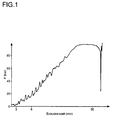
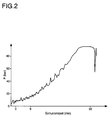
- Die Wirkung eines Stabilisators kann an einem mehr oder weniger stark verzögerten Anstieg des Extrusionsdrucks im Vergleich zum nicht stabilisierten Polymer erkannt werden. Nach einer Vorlaufzeit von 6 min ab Extrusionsbeginn wird während der Meßzeit von 24 min der Extrusionsdruck p gemessen. Als Maß für die Verarbeitungsstabilität gilt die Druckdifferenz zwischen Beginn und Ende der Meßzeit, der sogenannte Vernetzungsdruck pv - vgl. Fig. 1-3.
- Nach der DE-PS 25 50 227, Beispiel 1 wurde ein sternförmig verzweigtes Styrol-Butadien-Blockcopolymerisat hergestellt. Die Viskositätszahl (VZ) lag bei 83,5 ml/g. Abweichend von dieser Vorschrift wurde das Polymerisat jedoch nicht mit Methanol ausgefällt, sondern zunächst als Lösung in 3 gleich große Portionen aufgeteilt, wobei auf strengen Ausschluß von Luft durch Überlagerung mit Stickstoff geachtet wurde. Die 3 Proben wurden entsprechend der nachfolgenden Liste durch Zusatz von Antioxidantien stabilisiert und danach durch schonendes Entgasen des Lösungsmittels auf einer Zweiwellenschneckenknetmaschine ZSK 25 der Fa. Werner & Pfleiderer bei 200°C extrudiert und granuliert. Die verwendeten Bezeichnung TNPP bedeutet Trisnonylphenylphosphit, 2-tert.butyl-6-(3-tert.butyl-2-hydroxy-5-methylbenzyl)-4-methylphenylacrylat ist als Irganox® 3052 handelsüblich (Hersteller Ciba-Geigy AG).
-
- 0,4 Gew.-%,
- bezogen auf das Polymere, an α-Tocopherol und
- 0,85 Gew.-%,
- bezogen auf das Polymere, an TNPP
-
- 0,05 Gew.-%,
- bezogen auf das Polymere, an α-Tocopherol und
- 0,55 Gew.-%,
- bezogen auf das Polymere, an TNPP
-
- 0,35 Gew.-%,
- bezogen auf das Polymere, an Irganox 3052 und
- 0,85 Gew.-%,
- bezogen auf das Polymere, an TNPP
- Der zeitliche Verlauf der Scherkurven ist in den Abbildungen 1 bis 3 wiedergegeben.
| Probe: | 1 | 2 | Vergleichsversuch |
| Konzentration des phenolischen Stabilisators | 0,4 | 0,055 | 0,35 |
| Pv [bar] | 87 | 85 | 82 |
Claims (6)
- Formmasse aus mindestens einem durch anionische Polymerisation zugänglichen Styrol-Butadien-Blockcopolymeren der allgemeinen Struktur
(S₁B₁-)m-X-(-S₂B₂)n
in der S₁B₁ einen Blockcopolymerabschnitt aus wenigstens je einem Polystyrolblock der Molmasse 3000 bis 230 000 [g/mol] und einem Polybutadienblock der Molmasse 2000 bis 30 000 [g/mol] und S₂B₂ einen von S₁B₁ verschiedenen Blockcopolymerabschnitt aus wenigstens je einem Polystyrolblock der Molmasse 2000 bis 60 000 [g/mol] und einem Polybutadienblock der Molmasse 2000 bis 30 000 [g/mol] bedeutet, wobei die Gesamtmolmasse von S₁B₁ : 50 000 bis 250 000 [g/mol] und die von S₂B₂ : 5000 bis 75 000 [g/mol] ist, die Blockübergänge scharf oder verschmiert sind, die Sternastzahl m + n insgesamt 3 bis 15 ist und X den Rest eines (m+n)-funktionellen Kopplungsmittels bedeutet, mit der Maßgabe, daß m ≦ n ist und/oder mindestens einem linearen Styrol-Butadien-Blockcopolymeren mit mindestens zwei Polystyrolblöcken und mindestens einem Polybutadienblock vergleichbarer Gesamtmolmasse und 0,01 bis 1 Gew.-%, bezogen auf die Masse oder der Blockcopolymeren, α-Tocopherol (Vitamin E). - Formmasse nach Anspruch 1, enthaltend 0,1 bis 2 Gew.-%, bezogen auf das Polymere, eines organischen Phosphits.
- Formmasse nach Anspruch 2, enthaltend als organisches Phosphit Tris(nonylphenyl)phosphit.
- Mehrschichtige, siegelfähige Kunststoffolie, im wesentlichen ausA: einer Deckschicht A aus einem wärmeformbeständigen Polymeren mit einem Schmelzpunkt oberhalb von 200°C,B: einem Haftvermittler B aus, bezogen auf B, 30 bis 95 Gew.-% eines Styrol-Butadien-Blockcopolymeren, bis 95 Gew.-% Polystyrol und/oder schlagzähem Polystyrol sowie 5 bis 70 Gew.-% eines mit Polystyrol unverträglichen Polymeren, das polare Gruppen enthält,C: einer Trägerschicht C aus 5 bis 100 Gew.-% eines Styrol-Butadien-Blockcopolymeren und bis zu 95 Gew.-% Polystyrol und/oder schlagzähem Polystyrol,D: im Bedarfsfall einer Barriereschicht D, die der Deckschicht A entsprechen kann,E: einer Siegelschicht E, die nach ihrer Zusammensetzung im wesentlichen dem Haftvermittler B entspricht,dadurch gekennzeichnet, daß sie ein Styrol-Butadien-Blockcopolymer nach Anspruch 1 enthält.
- Folie nach Anspruch 4, enthaltend einen Haftvermittler B aus 50 bis 90 Gew.-% Blockcopolymer, bis 80 Gew.-% Polystyrol bzw. schlagzähem Polystyrol und 10 bis 50 Gew.-% polare Gruppen enthaltendem Polymer sowie eine Trägerschicht C aus 20 bis 95 Gew.-% Blockcopolymer und 5 bis 80 Gew.-% Polystyrol bzw. schlagzähes Polystyrol.
- Folie nach Anspruch 4, enthaltend eine Deckschicht A und/oder eine Barriereschicht D aus Polyamid oder Polyester.
Applications Claiming Priority (2)
| Application Number | Priority Date | Filing Date | Title |
|---|---|---|---|
| DE4434602A DE4434602A1 (de) | 1994-09-28 | 1994-09-28 | Siegelfähige, peelbare Kunststoffolie mit alpha-Tocopherol stabilisiertem Styrol/Butadien-Blockcopolymerem |
| DE4434602 | 1994-09-28 |
Publications (1)
| Publication Number | Publication Date |
|---|---|
| EP0704477A1 true EP0704477A1 (de) | 1996-04-03 |
Family
ID=6529375
Family Applications (1)
| Application Number | Title | Priority Date | Filing Date |
|---|---|---|---|
| EP95114694A Withdrawn EP0704477A1 (de) | 1994-09-28 | 1995-09-19 | Siegelfähige, peelbare Kunststoffolie mit alpha-Tocopherol stabilisiertem Styrol/Butadien-Blockcopolymerem |
Country Status (2)
| Country | Link |
|---|---|
| EP (1) | EP0704477A1 (de) |
| DE (1) | DE4434602A1 (de) |
Cited By (6)
| Publication number | Priority date | Publication date | Assignee | Title |
|---|---|---|---|---|
| EP0984038A1 (de) * | 1998-09-04 | 2000-03-08 | Enichem S.p.A. | Hydrierte Blockcopolymere mit einer partiellen Zweigstruktur |
| US6476124B1 (en) | 1999-04-06 | 2002-11-05 | L'oreal | Composition comprising polymers having a star structure, the polymers, and their use |
| US6552146B1 (en) | 1999-04-06 | 2003-04-22 | L'oreal S.A. | Composition comprising polymers having a star structure, the polymers, and their use |
| US6737071B2 (en) | 1999-04-06 | 2004-05-18 | L'oreal, S.A. | Composition comprising polymers having a star structure, the polymers, and their use |
| US6946525B2 (en) | 1999-04-06 | 2005-09-20 | L'oreal S.A. | Composition comprising polymers having a star structure, the polymers, and their use |
| WO2006045521A1 (de) * | 2004-10-25 | 2006-05-04 | Basf Aktiengesellschaft | Nanokomposit aus sternförmigen styrol-butadien-blockcopolymeren und schichtsilikaten |
Citations (4)
| Publication number | Priority date | Publication date | Assignee | Title |
|---|---|---|---|---|
| JPS53134574A (en) * | 1977-01-13 | 1978-11-24 | Toyo Seikan Kaisha Ltd | Laminated bag for packaging food |
| EP0263524A2 (de) * | 1986-10-10 | 1988-04-13 | BASF Aktiengesellschaft | Stabilisatorgemische für Kunststoffe |
| EP0524488A1 (de) * | 1991-07-17 | 1993-01-27 | BASF Aktiengesellschaft | Siegelfähige, peelbare Kunststoffolie |
| US5384349A (en) * | 1993-12-06 | 1995-01-24 | Phillips Petroleum Company | Conjugated diene/monovinylarene copolymers and preparation thereof |
-
1994
- 1994-09-28 DE DE4434602A patent/DE4434602A1/de not_active Withdrawn
-
1995
- 1995-09-19 EP EP95114694A patent/EP0704477A1/de not_active Withdrawn
Patent Citations (4)
| Publication number | Priority date | Publication date | Assignee | Title |
|---|---|---|---|---|
| JPS53134574A (en) * | 1977-01-13 | 1978-11-24 | Toyo Seikan Kaisha Ltd | Laminated bag for packaging food |
| EP0263524A2 (de) * | 1986-10-10 | 1988-04-13 | BASF Aktiengesellschaft | Stabilisatorgemische für Kunststoffe |
| EP0524488A1 (de) * | 1991-07-17 | 1993-01-27 | BASF Aktiengesellschaft | Siegelfähige, peelbare Kunststoffolie |
| US5384349A (en) * | 1993-12-06 | 1995-01-24 | Phillips Petroleum Company | Conjugated diene/monovinylarene copolymers and preparation thereof |
Non-Patent Citations (1)
| Title |
|---|
| DATABASE WPI Section Ch Week 7902, Derwent World Patents Index; Class A92, AN 79-02551B * |
Cited By (7)
| Publication number | Priority date | Publication date | Assignee | Title |
|---|---|---|---|---|
| EP0984038A1 (de) * | 1998-09-04 | 2000-03-08 | Enichem S.p.A. | Hydrierte Blockcopolymere mit einer partiellen Zweigstruktur |
| US6476124B1 (en) | 1999-04-06 | 2002-11-05 | L'oreal | Composition comprising polymers having a star structure, the polymers, and their use |
| US6552146B1 (en) | 1999-04-06 | 2003-04-22 | L'oreal S.A. | Composition comprising polymers having a star structure, the polymers, and their use |
| US6723789B2 (en) | 1999-04-06 | 2004-04-20 | L'oreal, S.A. | Composition comprising polymers having a star structure, the polymers, and their use |
| US6737071B2 (en) | 1999-04-06 | 2004-05-18 | L'oreal, S.A. | Composition comprising polymers having a star structure, the polymers, and their use |
| US6946525B2 (en) | 1999-04-06 | 2005-09-20 | L'oreal S.A. | Composition comprising polymers having a star structure, the polymers, and their use |
| WO2006045521A1 (de) * | 2004-10-25 | 2006-05-04 | Basf Aktiengesellschaft | Nanokomposit aus sternförmigen styrol-butadien-blockcopolymeren und schichtsilikaten |
Also Published As
| Publication number | Publication date |
|---|---|
| DE4434602A1 (de) | 1996-04-04 |
Similar Documents
| Publication | Publication Date | Title |
|---|---|---|
| DE69629971T2 (de) | Hammhemmende thermoplastische Harzzusammensetzung | |
| DE69311223T2 (de) | Formbare kristalline Polyesterzusammensetzung | |
| EP0246358B1 (de) | Verfahren zur Herstellung thermoplastischer, PPE enthaltender Formmassen | |
| DE2641190C2 (de) | Verpackungsverbundfilm und seine Verwendung | |
| EP0545181B1 (de) | Thermoplastische Formmasse | |
| DE3050459C2 (de) | Thermoplastische Polymermasse und deren Verwendung | |
| EP0263524A2 (de) | Stabilisatorgemische für Kunststoffe | |
| DE60131363T2 (de) | Blockcopolymer und zusammensetzung daraus | |
| DE2709419A1 (de) | Farbstabilisierte halogenbisphenolaethylen-polycarbonate | |
| WO2017202751A1 (de) | Polycarbonat-zusammensetzungen enthaltend füllstoffe, eine carbonsäure und deren glycerol- oder diglycerolester | |
| EP0310051B1 (de) | Thermoplastische Formmasse, deren Herstellung und ihre Verwendung | |
| EP0796292B1 (de) | Stabilisierte styrol/butadien-blockcopolymere | |
| DE4434602A1 (de) | Siegelfähige, peelbare Kunststoffolie mit alpha-Tocopherol stabilisiertem Styrol/Butadien-Blockcopolymerem | |
| EP0103106A1 (de) | Verwendung eines Aminogruppen tragenden, niedermolekularen 1,3-Butadienpolymerisates als Stabilisierungsmittel für Kunststoffe | |
| DE69118956T2 (de) | Mischungen auf Basis von vinylaromatischen Polymeren mit guten mechanischen Eigenschaften | |
| DE2550393A1 (de) | Verfahren zum kristallisieren von polycarbonaten | |
| EP0765362A1 (de) | MIT $g(a)-TOCOPHEROL STABILISIERTE STYROL/BUTADIEN-BLOCKCOPOLYMERE | |
| EP0240887A2 (de) | Fliessfähige Formmassen auf Polyamidbasis | |
| DE3730886A1 (de) | Transparente, schlagfeste thermoplastische formmasse, verfahren zur herstellung derselben und ihre verwendung | |
| EP0546356A1 (de) | Thermoplastische Formmasse | |
| DE1569025A1 (de) | Verbesserungen an oder Bezug auf Brueckenbindungen enthaltende Polymere | |
| DE4443153C2 (de) | Verfahren zur Herstellung von Formkörpern aus Kunststofflegierungen | |
| DE1953132A1 (de) | Hexahydro-1,3,5-tris-(4-hydroxyaryl)-s-triazine und damit stabilisierte organische Materialien | |
| DE2009657B2 (de) | Stabilisierte Formmasse auf der Basis eines Polymerisat eines 1 -Olefin mit 2 bis 8 Kohlenstoffatomen im Molekül | |
| DE1266491B (de) | Elastisch-thermoplastische Formmassen mit verbesserter Hitze- und Lichtstabilitaet |
Legal Events
| Date | Code | Title | Description |
|---|---|---|---|
| PUAI | Public reference made under article 153(3) epc to a published international application that has entered the european phase |
Free format text: ORIGINAL CODE: 0009012 |
|
| 17P | Request for examination filed |
Effective date: 19960120 |
|
| AK | Designated contracting states |
Kind code of ref document: A1 Designated state(s): BE DE FR GB IT NL |
|
| 17Q | First examination report despatched |
Effective date: 19970127 |
|
| STAA | Information on the status of an ep patent application or granted ep patent |
Free format text: STATUS: THE APPLICATION HAS BEEN WITHDRAWN |
|
| 18W | Application withdrawn |
Withdrawal date: 19980321 |