EP0706079B1 - Procédé de croissance des grains pour la préparation d'émulsions à grains tabulaires très fins et à haute teneur en bromure - Google Patents
Procédé de croissance des grains pour la préparation d'émulsions à grains tabulaires très fins et à haute teneur en bromure Download PDFInfo
- Publication number
- EP0706079B1 EP0706079B1 EP95202432A EP95202432A EP0706079B1 EP 0706079 B1 EP0706079 B1 EP 0706079B1 EP 95202432 A EP95202432 A EP 95202432A EP 95202432 A EP95202432 A EP 95202432A EP 0706079 B1 EP0706079 B1 EP 0706079B1
- Authority
- EP
- European Patent Office
- Prior art keywords
- grain
- grain growth
- grains
- growth process
- tabular
- Prior art date
- Legal status (The legal status is an assumption and is not a legal conclusion. Google has not performed a legal analysis and makes no representation as to the accuracy of the status listed.)
- Expired - Lifetime
Links
- 239000000839 emulsion Substances 0.000 title claims description 110
- 238000000034 method Methods 0.000 title claims description 53
- 230000008569 process Effects 0.000 title claims description 48
- CPELXLSAUQHCOX-UHFFFAOYSA-M Bromide Chemical compound [Br-] CPELXLSAUQHCOX-UHFFFAOYSA-M 0.000 title claims description 47
- 238000002360 preparation method Methods 0.000 title description 10
- 239000003607 modifier Substances 0.000 claims description 32
- 229910052709 silver Inorganic materials 0.000 claims description 28
- 239000004332 silver Substances 0.000 claims description 28
- -1 halide ions Chemical class 0.000 claims description 22
- BQCADISMDOOEFD-UHFFFAOYSA-N Silver Chemical compound [Ag] BQCADISMDOOEFD-UHFFFAOYSA-N 0.000 claims description 21
- 239000006185 dispersion Substances 0.000 claims description 21
- VEXZGXHMUGYJMC-UHFFFAOYSA-M Chloride anion Chemical compound [Cl-] VEXZGXHMUGYJMC-UHFFFAOYSA-M 0.000 claims description 19
- 125000002346 iodo group Chemical group I* 0.000 claims description 9
- 125000001424 substituent group Chemical group 0.000 claims description 9
- XMBWDFGMSWQBCA-UHFFFAOYSA-N hydrogen iodide Chemical compound I XMBWDFGMSWQBCA-UHFFFAOYSA-N 0.000 claims description 6
- MCJGNVYPOGVAJF-UHFFFAOYSA-N quinolin-8-ol Chemical compound C1=CN=C2C(O)=CC=CC2=C1 MCJGNVYPOGVAJF-UHFFFAOYSA-N 0.000 claims description 5
- 239000005725 8-Hydroxyquinoline Substances 0.000 claims description 4
- 125000003178 carboxy group Chemical group [H]OC(*)=O 0.000 claims description 4
- 229960003540 oxyquinoline Drugs 0.000 claims description 4
- ISWSIDIOOBJBQZ-UHFFFAOYSA-N Phenol Chemical compound OC1=CC=CC=C1 ISWSIDIOOBJBQZ-UHFFFAOYSA-N 0.000 claims 1
- SQGYOTSLMSWVJD-UHFFFAOYSA-N silver(1+) nitrate Chemical compound [Ag+].[O-]N(=O)=O SQGYOTSLMSWVJD-UHFFFAOYSA-N 0.000 description 23
- 238000001556 precipitation Methods 0.000 description 16
- JHJLBTNAGRQEKS-UHFFFAOYSA-M sodium bromide Chemical compound [Na+].[Br-] JHJLBTNAGRQEKS-UHFFFAOYSA-M 0.000 description 16
- 239000000243 solution Substances 0.000 description 16
- ADZWSOLPGZMUMY-UHFFFAOYSA-M silver bromide Chemical compound [Ag]Br ADZWSOLPGZMUMY-UHFFFAOYSA-M 0.000 description 12
- 238000006243 chemical reaction Methods 0.000 description 10
- 229940006460 bromide ion Drugs 0.000 description 9
- 108010010803 Gelatin Proteins 0.000 description 7
- 229920000159 gelatin Polymers 0.000 description 7
- 239000008273 gelatin Substances 0.000 description 7
- 235000019322 gelatine Nutrition 0.000 description 7
- 235000011852 gelatine desserts Nutrition 0.000 description 7
- 150000004820 halides Chemical class 0.000 description 7
- GFFGJBXGBJISGV-UHFFFAOYSA-N Adenine Chemical compound NC1=NC=NC2=C1N=CN2 GFFGJBXGBJISGV-UHFFFAOYSA-N 0.000 description 6
- 229930024421 Adenine Natural products 0.000 description 6
- 238000007792 addition Methods 0.000 description 6
- 229960000643 adenine Drugs 0.000 description 6
- XLYOFNOQVPJJNP-UHFFFAOYSA-N water Substances O XLYOFNOQVPJJNP-UHFFFAOYSA-N 0.000 description 6
- 230000000694 effects Effects 0.000 description 5
- 239000000203 mixture Substances 0.000 description 5
- 238000003359 percent control normalization Methods 0.000 description 5
- 230000005070 ripening Effects 0.000 description 5
- 125000003277 amino group Chemical group 0.000 description 4
- UXZFQZANDVDGMM-UHFFFAOYSA-N iodoquinol Chemical compound C1=CN=C2C(O)=C(I)C=C(I)C2=C1 UXZFQZANDVDGMM-UHFFFAOYSA-N 0.000 description 4
- IHWDSEPNZDYMNF-UHFFFAOYSA-N 1H-indol-2-amine Chemical compound C1=CC=C2NC(N)=CC2=C1 IHWDSEPNZDYMNF-UHFFFAOYSA-N 0.000 description 3
- DYCJFJRCWPVDHY-UHFFFAOYSA-N 2-(hydroxymethyl)-5-[6-[(4-nitrophenyl)methylsulfanyl]purin-9-yl]oxolane-3,4-diol Chemical compound OC1C(O)C(CO)OC1N1C2=NC=NC(SCC=3C=CC(=CC=3)[N+]([O-])=O)=C2N=C1 DYCJFJRCWPVDHY-UHFFFAOYSA-N 0.000 description 3
- QTBSBXVTEAMEQO-UHFFFAOYSA-N Acetic acid Chemical compound CC(O)=O QTBSBXVTEAMEQO-UHFFFAOYSA-N 0.000 description 3
- ZMXDDKWLCZADIW-UHFFFAOYSA-N N,N-Dimethylformamide Chemical compound CN(C)C=O ZMXDDKWLCZADIW-UHFFFAOYSA-N 0.000 description 3
- 239000002253 acid Substances 0.000 description 3
- 239000003795 chemical substances by application Substances 0.000 description 3
- 150000001875 compounds Chemical class 0.000 description 3
- 239000013078 crystal Substances 0.000 description 3
- 230000007423 decrease Effects 0.000 description 3
- 239000012153 distilled water Substances 0.000 description 3
- 230000006911 nucleation Effects 0.000 description 3
- 238000010899 nucleation Methods 0.000 description 3
- 239000000047 product Substances 0.000 description 3
- MPNBXFXEMHPGTK-UHFFFAOYSA-N pyrimidine-4,5,6-triamine Chemical compound NC1=NC=NC(N)=C1N MPNBXFXEMHPGTK-UHFFFAOYSA-N 0.000 description 3
- 230000035945 sensitivity Effects 0.000 description 3
- 238000003756 stirring Methods 0.000 description 3
- 238000006467 substitution reaction Methods 0.000 description 3
- FXDUXBIZVCPXPZ-UHFFFAOYSA-N 2-iodoquinolin-8-ol Chemical compound C1=C(I)N=C2C(O)=CC=CC2=C1 FXDUXBIZVCPXPZ-UHFFFAOYSA-N 0.000 description 2
- LHCPRYRLDOSKHK-UHFFFAOYSA-N 7-deaza-8-aza-adenine Chemical compound NC1=NC=NC2=C1C=NN2 LHCPRYRLDOSKHK-UHFFFAOYSA-N 0.000 description 2
- 150000004325 8-hydroxyquinolines Chemical group 0.000 description 2
- LRFVTYWOQMYALW-UHFFFAOYSA-N 9H-xanthine Chemical compound O=C1NC(=O)NC2=C1NC=N2 LRFVTYWOQMYALW-UHFFFAOYSA-N 0.000 description 2
- MHAJPDPJQMAIIY-UHFFFAOYSA-N Hydrogen peroxide Chemical compound OO MHAJPDPJQMAIIY-UHFFFAOYSA-N 0.000 description 2
- FFEARJCKVFRZRR-BYPYZUCNSA-N L-methionine Chemical compound CSCC[C@H](N)C(O)=O FFEARJCKVFRZRR-BYPYZUCNSA-N 0.000 description 2
- FOIXSVOLVBLSDH-UHFFFAOYSA-N Silver ion Chemical compound [Ag+] FOIXSVOLVBLSDH-UHFFFAOYSA-N 0.000 description 2
- QAOWNCQODCNURD-UHFFFAOYSA-N Sulfuric acid Chemical compound OS(O)(=O)=O QAOWNCQODCNURD-UHFFFAOYSA-N 0.000 description 2
- 238000013459 approach Methods 0.000 description 2
- 230000008901 benefit Effects 0.000 description 2
- 150000003842 bromide salts Chemical class 0.000 description 2
- 150000002148 esters Chemical class 0.000 description 2
- 229910052739 hydrogen Inorganic materials 0.000 description 2
- 239000001257 hydrogen Substances 0.000 description 2
- 229910052500 inorganic mineral Inorganic materials 0.000 description 2
- 238000004519 manufacturing process Methods 0.000 description 2
- 229930182817 methionine Natural products 0.000 description 2
- 239000011707 mineral Substances 0.000 description 2
- 238000012986 modification Methods 0.000 description 2
- 230000004048 modification Effects 0.000 description 2
- 238000012545 processing Methods 0.000 description 2
- CSNFMBGHUOSBFU-UHFFFAOYSA-N pyrimidine-2,4,5-triamine Chemical compound NC1=NC=C(N)C(N)=N1 CSNFMBGHUOSBFU-UHFFFAOYSA-N 0.000 description 2
- 238000011160 research Methods 0.000 description 2
- 150000003839 salts Chemical class 0.000 description 2
- 125000000020 sulfo group Chemical group O=S(=O)([*])O[H] 0.000 description 2
- 150000003568 thioethers Chemical class 0.000 description 2
- JKFYKCYQEWQPTM-UHFFFAOYSA-N 2-azaniumyl-2-(4-fluorophenyl)acetate Chemical compound OC(=O)C(N)C1=CC=C(F)C=C1 JKFYKCYQEWQPTM-UHFFFAOYSA-N 0.000 description 1
- OEGIBISFQWZONZ-UHFFFAOYSA-N 4-ethyl-7-iodoquinolin-8-ol Chemical compound IC1=CC=C2C(CC)=CC=NC2=C1O OEGIBISFQWZONZ-UHFFFAOYSA-N 0.000 description 1
- IMYWOQVNTHOMNH-UHFFFAOYSA-N 5-bromo-7-iodoquinolin-8-ol Chemical compound C1=CN=C2C(O)=C(I)C=C(Br)C2=C1 IMYWOQVNTHOMNH-UHFFFAOYSA-N 0.000 description 1
- OFOBCDMFTWNACR-UHFFFAOYSA-N 7,8-dihydropteridin-4-amine Chemical compound N1CC=NC2=C1N=CN=C2N OFOBCDMFTWNACR-UHFFFAOYSA-N 0.000 description 1
- ZLUMCQZPYADRED-UHFFFAOYSA-N 7-iodo-2-methylquinolin-8-ol Chemical compound C1=CC(I)=C(O)C2=NC(C)=CC=C21 ZLUMCQZPYADRED-UHFFFAOYSA-N 0.000 description 1
- FMAUNSJBBWBZPW-UHFFFAOYSA-N 7-iodo-5-(iodomethyl)quinolin-8-ol Chemical compound C1=CN=C2C(O)=C(I)C=C(CI)C2=C1 FMAUNSJBBWBZPW-UHFFFAOYSA-N 0.000 description 1
- DAPSHAUPXOZZIJ-UHFFFAOYSA-N 7-iodo-5-(trichloromethyl)quinolin-8-ol Chemical compound C1=CN=C2C(O)=C(I)C=C(C(Cl)(Cl)Cl)C2=C1 DAPSHAUPXOZZIJ-UHFFFAOYSA-N 0.000 description 1
- VNMVGIWFMJUETH-UHFFFAOYSA-N 7-iodo-5-isocyanatoquinolin-8-ol Chemical compound C1=CN=C2C(O)=C(I)C=C(N=C=O)C2=C1 VNMVGIWFMJUETH-UHFFFAOYSA-N 0.000 description 1
- HRYKDUPGBWLLHO-UHFFFAOYSA-N 8-azaadenine Chemical compound NC1=NC=NC2=NNN=C12 HRYKDUPGBWLLHO-UHFFFAOYSA-N 0.000 description 1
- XTQXZOARRUFRPK-UHFFFAOYSA-N 8-hydroxy-5-iodoquinoline-7-carbonitrile Chemical compound C1=CN=C2C(O)=C(C#N)C=C(I)C2=C1 XTQXZOARRUFRPK-UHFFFAOYSA-N 0.000 description 1
- MSFMEFWXJSHPOS-UHFFFAOYSA-N 8-hydroxy-7-iodoquinoline-5-carboxylic acid Chemical compound C1=CC=C2C(C(=O)O)=CC(I)=C(O)C2=N1 MSFMEFWXJSHPOS-UHFFFAOYSA-N 0.000 description 1
- QGZKDVFQNNGYKY-UHFFFAOYSA-O Ammonium Chemical compound [NH4+] QGZKDVFQNNGYKY-UHFFFAOYSA-O 0.000 description 1
- VHUUQVKOLVNVRT-UHFFFAOYSA-N Ammonium hydroxide Chemical compound [NH4+].[OH-] VHUUQVKOLVNVRT-UHFFFAOYSA-N 0.000 description 1
- GRYLNZFGIOXLOG-UHFFFAOYSA-N Nitric acid Chemical compound O[N+]([O-])=O GRYLNZFGIOXLOG-UHFFFAOYSA-N 0.000 description 1
- 229910021607 Silver chloride Inorganic materials 0.000 description 1
- 229910021612 Silver iodide Inorganic materials 0.000 description 1
- ZMZDMBWJUHKJPS-UHFFFAOYSA-M Thiocyanate anion Chemical compound [S-]C#N ZMZDMBWJUHKJPS-UHFFFAOYSA-M 0.000 description 1
- SJOOOZPMQAWAOP-UHFFFAOYSA-N [Ag].BrCl Chemical compound [Ag].BrCl SJOOOZPMQAWAOP-UHFFFAOYSA-N 0.000 description 1
- XCFIVNQHHFZRNR-UHFFFAOYSA-N [Ag].Cl[IH]Br Chemical compound [Ag].Cl[IH]Br XCFIVNQHHFZRNR-UHFFFAOYSA-N 0.000 description 1
- 238000010521 absorption reaction Methods 0.000 description 1
- 230000002411 adverse Effects 0.000 description 1
- 239000003513 alkali Substances 0.000 description 1
- 229910001854 alkali hydroxide Inorganic materials 0.000 description 1
- 150000008044 alkali metal hydroxides Chemical class 0.000 description 1
- 125000003545 alkoxy group Chemical group 0.000 description 1
- 125000000217 alkyl group Chemical group 0.000 description 1
- 230000001668 ameliorated effect Effects 0.000 description 1
- 239000000908 ammonium hydroxide Substances 0.000 description 1
- 239000007864 aqueous solution Substances 0.000 description 1
- 125000003118 aryl group Chemical group 0.000 description 1
- 230000001174 ascending effect Effects 0.000 description 1
- 239000002585 base Substances 0.000 description 1
- 230000015572 biosynthetic process Effects 0.000 description 1
- 239000007795 chemical reaction product Substances 0.000 description 1
- 238000000576 coating method Methods 0.000 description 1
- 230000000052 comparative effect Effects 0.000 description 1
- 238000007796 conventional method Methods 0.000 description 1
- 230000008021 deposition Effects 0.000 description 1
- 238000011161 development Methods 0.000 description 1
- 238000010790 dilution Methods 0.000 description 1
- 239000012895 dilution Substances 0.000 description 1
- 238000001493 electron microscopy Methods 0.000 description 1
- 125000005843 halogen group Chemical group 0.000 description 1
- 238000010438 heat treatment Methods 0.000 description 1
- 150000002431 hydrogen Chemical class 0.000 description 1
- 125000004435 hydrogen atom Chemical group [H]* 0.000 description 1
- ZMZDMBWJUHKJPS-UHFFFAOYSA-N hydrogen thiocyanate Natural products SC#N ZMZDMBWJUHKJPS-UHFFFAOYSA-N 0.000 description 1
- GPRLSGONYQIRFK-UHFFFAOYSA-N hydron Chemical compound [H+] GPRLSGONYQIRFK-UHFFFAOYSA-N 0.000 description 1
- 238000010348 incorporation Methods 0.000 description 1
- 230000000977 initiatory effect Effects 0.000 description 1
- 230000003993 interaction Effects 0.000 description 1
- 125000001261 isocyanato group Chemical group *N=C=O 0.000 description 1
- 238000012423 maintenance Methods 0.000 description 1
- 239000000463 material Substances 0.000 description 1
- 238000005259 measurement Methods 0.000 description 1
- 238000012544 monitoring process Methods 0.000 description 1
- 229910017604 nitric acid Inorganic materials 0.000 description 1
- 230000003287 optical effect Effects 0.000 description 1
- 238000000399 optical microscopy Methods 0.000 description 1
- 239000007800 oxidant agent Substances 0.000 description 1
- 238000010979 pH adjustment Methods 0.000 description 1
- 230000001376 precipitating effect Effects 0.000 description 1
- 125000002924 primary amino group Chemical group [H]N([H])* 0.000 description 1
- 125000002577 pseudohalo group Chemical group 0.000 description 1
- 230000009467 reduction Effects 0.000 description 1
- 238000001878 scanning electron micrograph Methods 0.000 description 1
- 125000000467 secondary amino group Chemical group [H]N([*:1])[*:2] 0.000 description 1
- ZUNKMNLKJXRCDM-UHFFFAOYSA-N silver bromoiodide Chemical compound [Ag].IBr ZUNKMNLKJXRCDM-UHFFFAOYSA-N 0.000 description 1
- 229940045105 silver iodide Drugs 0.000 description 1
- HKZLPVFGJNLROG-UHFFFAOYSA-M silver monochloride Chemical compound [Cl-].[Ag+] HKZLPVFGJNLROG-UHFFFAOYSA-M 0.000 description 1
- 229910001961 silver nitrate Inorganic materials 0.000 description 1
- 238000004513 sizing Methods 0.000 description 1
- GGCZERPQGJTIQP-UHFFFAOYSA-N sodium;9,10-dioxoanthracene-2-sulfonic acid Chemical compound [Na+].C1=CC=C2C(=O)C3=CC(S(=O)(=O)O)=CC=C3C(=O)C2=C1 GGCZERPQGJTIQP-UHFFFAOYSA-N 0.000 description 1
- 239000007858 starting material Substances 0.000 description 1
- 238000012360 testing method Methods 0.000 description 1
- 230000008719 thickening Effects 0.000 description 1
- 238000005406 washing Methods 0.000 description 1
- 239000002699 waste material Substances 0.000 description 1
- 229940075420 xanthine Drugs 0.000 description 1
Images
Classifications
-
- G—PHYSICS
- G03—PHOTOGRAPHY; CINEMATOGRAPHY; ANALOGOUS TECHNIQUES USING WAVES OTHER THAN OPTICAL WAVES; ELECTROGRAPHY; HOLOGRAPHY
- G03C—PHOTOSENSITIVE MATERIALS FOR PHOTOGRAPHIC PURPOSES; PHOTOGRAPHIC PROCESSES, e.g. CINE, X-RAY, COLOUR, STEREO-PHOTOGRAPHIC PROCESSES; AUXILIARY PROCESSES IN PHOTOGRAPHY
- G03C1/00—Photosensitive materials
- G03C1/005—Silver halide emulsions; Preparation thereof; Physical treatment thereof; Incorporation of additives therein
- G03C1/0051—Tabular grain emulsions
-
- G—PHYSICS
- G03—PHOTOGRAPHY; CINEMATOGRAPHY; ANALOGOUS TECHNIQUES USING WAVES OTHER THAN OPTICAL WAVES; ELECTROGRAPHY; HOLOGRAPHY
- G03C—PHOTOSENSITIVE MATERIALS FOR PHOTOGRAPHIC PURPOSES; PHOTOGRAPHIC PROCESSES, e.g. CINE, X-RAY, COLOUR, STEREO-PHOTOGRAPHIC PROCESSES; AUXILIARY PROCESSES IN PHOTOGRAPHY
- G03C1/00—Photosensitive materials
- G03C1/005—Silver halide emulsions; Preparation thereof; Physical treatment thereof; Incorporation of additives therein
- G03C1/06—Silver halide emulsions; Preparation thereof; Physical treatment thereof; Incorporation of additives therein with non-macromolecular additives
- G03C1/07—Substances influencing grain growth during silver salt formation
-
- G—PHYSICS
- G03—PHOTOGRAPHY; CINEMATOGRAPHY; ANALOGOUS TECHNIQUES USING WAVES OTHER THAN OPTICAL WAVES; ELECTROGRAPHY; HOLOGRAPHY
- G03C—PHOTOSENSITIVE MATERIALS FOR PHOTOGRAPHIC PURPOSES; PHOTOGRAPHIC PROCESSES, e.g. CINE, X-RAY, COLOUR, STEREO-PHOTOGRAPHIC PROCESSES; AUXILIARY PROCESSES IN PHOTOGRAPHY
- G03C1/00—Photosensitive materials
- G03C1/005—Silver halide emulsions; Preparation thereof; Physical treatment thereof; Incorporation of additives therein
- G03C1/0051—Tabular grain emulsions
- G03C2001/0055—Aspect ratio of tabular grains in general; High aspect ratio; Intermediate aspect ratio; Low aspect ratio
-
- G—PHYSICS
- G03—PHOTOGRAPHY; CINEMATOGRAPHY; ANALOGOUS TECHNIQUES USING WAVES OTHER THAN OPTICAL WAVES; ELECTROGRAPHY; HOLOGRAPHY
- G03C—PHOTOSENSITIVE MATERIALS FOR PHOTOGRAPHIC PURPOSES; PHOTOGRAPHIC PROCESSES, e.g. CINE, X-RAY, COLOUR, STEREO-PHOTOGRAPHIC PROCESSES; AUXILIARY PROCESSES IN PHOTOGRAPHY
- G03C1/00—Photosensitive materials
- G03C1/005—Silver halide emulsions; Preparation thereof; Physical treatment thereof; Incorporation of additives therein
- G03C1/015—Apparatus or processes for the preparation of emulsions
- G03C2001/0153—Fine grain feeding method
-
- G—PHYSICS
- G03—PHOTOGRAPHY; CINEMATOGRAPHY; ANALOGOUS TECHNIQUES USING WAVES OTHER THAN OPTICAL WAVES; ELECTROGRAPHY; HOLOGRAPHY
- G03C—PHOTOSENSITIVE MATERIALS FOR PHOTOGRAPHIC PURPOSES; PHOTOGRAPHIC PROCESSES, e.g. CINE, X-RAY, COLOUR, STEREO-PHOTOGRAPHIC PROCESSES; AUXILIARY PROCESSES IN PHOTOGRAPHY
- G03C1/00—Photosensitive materials
- G03C1/005—Silver halide emulsions; Preparation thereof; Physical treatment thereof; Incorporation of additives therein
- G03C1/015—Apparatus or processes for the preparation of emulsions
- G03C2001/0156—Apparatus or processes for the preparation of emulsions pAg value; pBr value; pCl value; pI value
-
- G—PHYSICS
- G03—PHOTOGRAPHY; CINEMATOGRAPHY; ANALOGOUS TECHNIQUES USING WAVES OTHER THAN OPTICAL WAVES; ELECTROGRAPHY; HOLOGRAPHY
- G03C—PHOTOSENSITIVE MATERIALS FOR PHOTOGRAPHIC PURPOSES; PHOTOGRAPHIC PROCESSES, e.g. CINE, X-RAY, COLOUR, STEREO-PHOTOGRAPHIC PROCESSES; AUXILIARY PROCESSES IN PHOTOGRAPHY
- G03C1/00—Photosensitive materials
- G03C1/005—Silver halide emulsions; Preparation thereof; Physical treatment thereof; Incorporation of additives therein
- G03C1/035—Silver halide emulsions; Preparation thereof; Physical treatment thereof; Incorporation of additives therein characterised by the crystal form or composition, e.g. mixed grain
- G03C2001/03594—Size of the grains
-
- G—PHYSICS
- G03—PHOTOGRAPHY; CINEMATOGRAPHY; ANALOGOUS TECHNIQUES USING WAVES OTHER THAN OPTICAL WAVES; ELECTROGRAPHY; HOLOGRAPHY
- G03C—PHOTOSENSITIVE MATERIALS FOR PHOTOGRAPHIC PURPOSES; PHOTOGRAPHIC PROCESSES, e.g. CINE, X-RAY, COLOUR, STEREO-PHOTOGRAPHIC PROCESSES; AUXILIARY PROCESSES IN PHOTOGRAPHY
- G03C2200/00—Details
- G03C2200/03—111 crystal face
-
- G—PHYSICS
- G03—PHOTOGRAPHY; CINEMATOGRAPHY; ANALOGOUS TECHNIQUES USING WAVES OTHER THAN OPTICAL WAVES; ELECTROGRAPHY; HOLOGRAPHY
- G03C—PHOTOSENSITIVE MATERIALS FOR PHOTOGRAPHIC PURPOSES; PHOTOGRAPHIC PROCESSES, e.g. CINE, X-RAY, COLOUR, STEREO-PHOTOGRAPHIC PROCESSES; AUXILIARY PROCESSES IN PHOTOGRAPHY
- G03C2200/00—Details
- G03C2200/44—Details pH value
Definitions
- the invention relates to a grain growth process for preparing ultrathin high bromide tabular grain emulsions for photographic use.
- tabular grain is employed to indicate a silver halide grain having an aspect ratio of at least 2, where "aspect ratio" is ECD/t, ECD being the equivalent circular diameter of the grain (the diameter of a circle having the same projected area as the grain) and t is the thickness of the grain.
- ultrathin tabular grain is employed to indicate a tabular grain of a thickness less than 0.07 ⁇ m.
- tabular grain emulsion is employed to indicate an emulsion in which tabular grains account for at least 50 percent of total grain projected area.
- high chloride or "high bromide” as applied to a grain or emulsion is employed to indicate that the grain or the grains of the emulsions contain at least 50 mole percent chloride or bromide, respectively, based on total silver present in the grain or the grains of the emulsion.
- ⁇ 111 ⁇ tabular grain is employed to indicate an emulsion in which the parallel major faces of the tabular grain lie in ⁇ 111 ⁇ crystal planes.
- the first high chloride high aspect ratio (ECD/t>8) ⁇ 111 ⁇ tabular grain emulsion is disclosed in Wey U.S. Patent 4,399,215.
- the grains were relatively thick.
- Maskasky U.S. Patent 4,400,463 (hereinafter designated Maskasky I) obtained thinner high chloride ⁇ 111 ⁇ tabular grains by employing an aminoazaindene (e.g., adenine) in combination with a synthetic peptizer having a thioether linkage.
- Patent 4,713,323 produced thinner high chloride ⁇ 111 ⁇ tabular grains by employing the aminoazaindene grain growth modifier in combination with low methionine ( ⁇ 30 micromole per gram) gelatin, also referred to as "oxidized" gelatin, since the methionine concentration is reduced by employing a strong oxidizing agent, such as hydrogen peroxide.
- Maskasky III discloses to be effective in preparing high chloride ultrathin ⁇ 111 ⁇ tabular grain emulsions triaminopyrimidine grain growth modifiers containing 4, 5 and 6 ring position amino substituents, with the 4 and 6 position substituents being hydroamino substituents.
- the term "hydroamino" designates an amino group containing at least one hydrogen substituent--i.e., a primary or secondary amino group.
- the triaminopyrimidine grain growth modifiers of Maskasky III include both those in which the three amino groups are independent (e.g., 4,5,6-triaminopyrimidine) and those in which the 5 position amino group shares a substituent with 4 or 6 position amino group to produce a bicyclic compound (e.g., adenine, 8-azaadenine, or 4-amino-7,8-dihydro-pteridine).
- the process which Maskasky III employs to prepare high chloride ultrathin ⁇ 111 ⁇ tabular grain emulsions is a double jet process in which silver and chloride ions are concurrently run into a dispersing medium containing the grain growth modifier.
- the first function of the grain growth modifier is to promote twinning while grain nucleation is occurring, so that ultrathin grains can form. Thereafter the same grain growth modifier or another conventional grain growth modifier can be used to stabilize the ⁇ 111 ⁇ major faces of the high chloride tabular grains.
- a common feature of the Maskasky high chloride ⁇ 111 ⁇ tabular grain emulsion precipitations is the presence of a grain growth modifier.
- the reason for this is that high chloride ⁇ 111 ⁇ tabular grains, unlike high bromide ⁇ 111 ⁇ tabular grains, cannot be formed or maintained in the absence of a grain growth modifier, but rather take nontabular forms, since ⁇ 100 ⁇ crystal faces are more stable in high chloride grains.
- Daubendiek et al U.S. Patent 4,914,014, Antoniades et al U.S. Patent 5,250,403 and Zola et al EPO 0 362 699 illustrate the preparation of high bromide ultrathin ⁇ 111 ⁇ tabular grain emulsions.
- Each of the Examples resulting in the formation of ultrathin tabular grain emulsions are replete with adjustments undertaken during precipitation.
- Typical complexities include (a) different pBr conditions for grain nucleation and growth, (b) interruptions of the silver and/or halide salt additions, (c) frequent modifications of the rate of silver and/or halide salt additions, (d) the use of separate reaction vessels for grain nucleation and growth, thereby at least doubling the complexity of reaction vessel and control equipment, (e) the variance in dispersing medium volume as precipitation progresses, which makes optimized reaction vessel sizing for all phases of precipitation impossible, (f) dilution of emulsion silver content as precipitation progresses toward completion, thereby creating a water removal burden and increasing the required capacity of the reaction vessel, and (g) when pBr is maintained at customary low (e.g., pBr ⁇ 1.5) values employed for precipitating high bromide ⁇ 111 ⁇ tabular grain emulsions, large excess amounts of soluble bromide salts must be discarded.
- customary low e.g., pBr ⁇ 1.5
- Verbeeck EPO 0 503 700 discloses reduction of the coefficient of variation (COV) of high bromide high aspect ratio ⁇ 111 ⁇ tabular grain emulsions through the presence of an aminoazaindene, such as adenine, 4-aminopyrazolopyrimidine and substitutional derivatives, prior to the precipitation of 50 percent of the silver. Double jet precipitation techniques are employed. The minimum disclosed thickness of a tabular grain population is 0.15 ⁇ m.
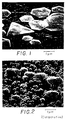
- Figures 1 and 2 are scanning electron micrographs of grain structures viewed as a 60° angle.
- Figure 1 shows the ultrathin ⁇ 111 ⁇ tabular grains of the emulsion of Example 1 prepared according to the process of the invention.
- Figure 2 shows the nontabular grains produced by Emulsion 4B prepared by a process differing from the invention in substituting adenine as a grain growth modifier for an iodo-substituted 8-hydroxyquinoline.
- the invention is directed to a grain growth process for providing a tabular grain emulsion in which the average equivalent circular diameter of tabular grains is increased while maintaining their average thickness at less than 0.07 ⁇ m comprising introducing silver and halide ions into a dispersing medium in the presence of a grain growth modifier characterized in that tabular grains having an average thickness of less than 0.07 ⁇ m and a bromide content of greater than 50 mole percent are formed by (1) providing an aqueous dispersion containing at least 0.1 percent by weight silver in the form of silver halide grains containing at least 50 mole percent bromide having an average thickness of less than 0.06 ⁇ m, the dispersion having a pH in the range of from 2 to 8 and a stoichiometric excess of bromide ions to silver ions limited to a pBr of at least 1.5, (2) introducing into the dispersing medium as the grain growth modifier an iodo-substituted 8-hydroxyquinoline, and (3) holding the aque
- the high bromide ultrathin ⁇ 111 ⁇ tabular grain emulsions prepared by the process of the invention produce high bromide ultrathin ⁇ 111 ⁇ tabular grain emulsions in which the tabular grains, as demonstrated in the Examples below, can account for >95 percent of total grain projected area.
- the process itself offers significant advantages over the double jet processes heretofore reported for preparing high bromide ultrathin ⁇ 111 ⁇ tabular grain emulsions.
- All of the silver, halide and growth modifier can be present in the dispersing medium from the outset of grain growth.
- the volume of the reaction vessel can be constant and is almost always near constant throughout the growth process.
- the silver concentration levels can be relatively high.
- the grain growth process of the invention can be practiced starting with any conventional high bromide silver halide emulsion in which the average grain thickness is less than 0.06 ⁇ m.
- the starting emulsion can be either a tabular grain emulsion or a nontabular grain emulsion.
- a high bromide ⁇ 111 ⁇ tabular grain emulsion having a mean grain thickness of less than 0.06 ⁇ m is chosen as a starting material.
- One practical incentive for discontinuing whatever conventional precipitation process that was employed to originate the starting tabular grain emulsion is that there are numerous conventional techniques for producing ultrathin tabular grains while the mean ECD of the grain population remains quite small, but, unfortunately, if grain growth is continued, the discrimination between surface and edge growth is insufficient to prevent tabular grain thickening beyond the ultrathin region.
- the grain growth process of the invention offers the advantage, demonstrated in the Examples below, that tabular grain ECD can be increased at a much higher rate than the thickness of the tabular grains.
- an incremental increase in the ECD of the tabular grains at least 10 times greater than the incremental increase of their thickness can be realized. That is, at least a 0.1 ⁇ m increase in ECD can be realized by the growth process of the invention before a 0.01 ⁇ m increase in tabular grain thickness occurs.
- extremely large increases in mean ECD in starting tabular grains can be realized while maintaining thickness increases well below 0.01 ⁇ m. From these demonstrations it is apparent that, if the starting tabular grains have an average thickness of less than 0.06 ⁇ m, it is possible to increase their mean ECD to any useful size.
- mean ECD can be increased to 5 ⁇ m or even to the 10 ⁇ m commonly accepted maximum mean ECD useful limit for photographic purposes without exceeding the ultrathin average thickness limit of ⁇ 0.07 ⁇ m. Since the grain growth process of the invention has the effect of increasing the percentage of total grain projected area accounted for by tabular grains, any high bromide tabular grain starting emulsion can be employed that satisfies the minimum projected area to satisfy the tabular grain emulsion definition (i.e., tabular grains accounting for at least 50 percent of total grain projected area).
- Tsaur et al U.S. Patent 5,210,013, which discloses the preparation of high bromide ⁇ 111 ⁇ tabular grain emulsions in which the COV is less than 10 percent and substantially all of the grain projected area is accounted for by tabular grains.
- the process of preparation employed by Tsaur et al thickens the tabular grains.
- a minimum mean tabular grain thickness of 0.08 ⁇ m is disclosed.
- Another preferred approach that, together with the approach above, illustrates the breadth of the invention is to choose as a starting emulsion for the grain growth process a high bromide Lippmann emulsion.
- the term "Lippmann emulsion" has historically been applied to emulsions in which the grain sizes are too small to scatter visible light. Thus, the emulsions are visually identifiable in coatings as being nonturbid.
- a typical Lippmann emulsion grain size is around 500 ⁇ or less. The grain population is, of course, entirely nontabular.
- the Examples below demonstrate the practice of the invention starting with the precipitation of a Lippmann emulsion.
- the grain growth process of the invention can also be practiced with intermediate starting emulsions. That is, so long as mean grain thickness remains less than 0.06 ⁇ m, it is immaterial whether the grains in the starting emulsion are entirely nontabular (all grains having aspect ratios of less than 2), entirely tabular or a mixture of both.
- Conventional emulsion preparation processes that produce fine nontabular grains or ultrathin tabular grains can be employed without modification while precipitation processes that would otherwise produce grains exceeding the 0.06 ⁇ m grain mean thickness parameter can simply be brought to an earlier termination to stay within this grain size limit.
- the grains provided by the starting emulsion can be pure bromide or can contain minor amounts of chloride and/or iodide.
- Silver chloride can be present in the high bromide starting grains in any concentration up to, but less than 50 mole percent.
- the incorporation of chloride in high bromide starting grains can be used to reduce native blue sensitivity and to increase photographic development rates.
- Preferred chloride ion concentration levels in the starting grains are less than 25 mole percent.
- the solubility limit of iodide ions in silver bromide varies, depending upon precipitation conditions, but is rarely greater than 40 mole percent, while typical iodide concentrations in photographic emulsions are less than 20 mole percent.
- iodide in silver bromide can produce detectable increases in photographic sensitivity. Since iodide slows photographic processing rates and is not required in high concentrations to enhance photographic sensitivity, it is usually preferred to limit the iodide content of the starting grains to less than 10 mole percent and, for rapid processing applications, to less than 5 mole percent.
- the starting grains can be silver bromide, silver iodobromide, silver chlorobromide, silver iodochlorobromide or silver chloroiodobromide grains, where halides are named in order of ascending concentrations. It is also possible to introduce each different halide in a separate grain population.
- the iodide ions can be supplied by introducing with silver bromide grains a separate silver iodide Lippmann emulsion. As grain growth occurs grains emerge that contain the desired mixture of halides. By timing the addition of a separate halide it is also possible to control the profile of that halide within the grains being grown.
- the starting grains, apart from the required features described above, can take any convenient conventional form.
- an aqueous dispersion is prepared containing at least 0.1 percent by weight silver, based on total weight, supplied by the starting emulsion.
- the weight of silver in the dispersing medium can range up to 20 percent by weight, based on total weight, but is preferably in the range of from 0.5 to 10 percent by weight, based on the total weight of the dispersion.
- the aqueous dispersion also receives the water and peptizer that are present with the grains in the starting emulsion.
- the peptizer typically constitutes from about 1 to 6 percent by weight, based on the total weight of the aqueous dispersion.
- the grain growth process of the invention is undertaken promptly upon completing precipitation of the starting grain emulsion, and only minimum required adjustments of the dispersing medium of the starting grain emulsion are undertaken to satisfy the aqueous dispersion requirements of the grain growth process. This is particularly advantageous where the starting grains are susceptible to ripening, as in a Lippmann emulsion. Where the stability of the precipitated starting grain population permits, intermediate steps, such as washing, prior to commencing the grain growth process are not precluded.
- the pH of the aqueous dispersion employed in the grain growth process is in the range of from 2 to 8, preferably 3 to 7. Adjustment of pH, if required, can be undertaken using a strong mineral base, such as an alkali hydroxide, or a strong mineral acid, such as nitric acid or sulfuric acid. If the pH is adjusted to the basic side of neutrality, the use of ammonium hydroxide should be avoided, since under alkaline conditions the ammonium ion acts as a ripening agent and will increase grain thickness.
- a strong mineral base such as an alkali hydroxide
- a strong mineral acid such as nitric acid or sulfuric acid.
- an 8-hydroxyquinoline containing at least one iodo substituent hereinafter also referred to as iodo-substituted 8 hydroxyquiline or iodo-8-hydroxyquinoline.
- the required iodo substituent can occupy any synthetically convenient ring position of the 8-hydroxyquinolines.
- the most active sites for introduction of a single iodo substituent are the 5 and 7 ring positions, with the 7 ring position being the preferred substitution site.
- the 8-hydroxyquinoline contains two iodo substituents, they are typically located at the 5 and 7 ring positions.
- iodo substitution can take place at other ring positions.
- Polar substituents such as the carboxy and sulfo groups, can perform the advantageous function of increasing the solubility of the iodo-substituted 8-hydroxyquinoline in the aqueous dispersing media employed for emulsion precipitation.
- the iodo-8-hydroxyquinolines satisfy the following formula: (I) where R 1 and R 2 are chosen from among hydrogen, polar substituents, particularly carboxy and sulfo substituents, and strongly electron withdrawing substituents, particularly halo and pseudohalo substituents, with the proviso that at least one of R 1 and R 2 is iodo.
- Contemplated concentrations of the grain growth modifier for use in the grain growth process of the invention range from 0.1 to 500 millimoles per silver mole.
- a preferred grain growth modifier concentration is from 0.4 to 200 millimoles per silver mole, and an optimum grain growth modifier concentration is from 4 to 100 millimoles per silver mole.
- a high bromide ultrathin ⁇ 111 ⁇ tabular grain emulsion having an average tabular grain aspect ratio of at least 5 is produced by holding the aqueous dispersion at any convenient temperature known to be compatible with grain ripening. This can range from about 40°C up to the highest temperatures conveniently employed in silver halide emulsion preparation, typically up to about 90°C. A preferred holding temperature is in the range of from about 40 to 80°C.
- the holding period will vary widely, depending upon the starting grain population, the temperature of holding and the objective sought to be maintained. For example, starting with a high bromide ultrathin ⁇ 111 ⁇ tabular grain emulsion to provide the starting grain population with the objective of increasing mean ECD by a minimum 0.1 ⁇ m, a holding period of no more than a few minutes may be necessary in the 50 to 60°C temperature range, with even shorter holding times being feasible at increased holding temperatures. In this instance virtually all of the tabular grains present in the starting emulsion act as seed grains for further grain growth and survive the holding period.
- holding periods can range from few minutes at the highest contemplated holding temperatures to overnight (16 to 24 hours) at 40°C.
- a small fraction of the fine grains present in the starting emulsion act as seed grains for the growth of tabular grains while the remainder of the grains are ripened out onto the seed grains.
- the holding period is generally comparable to run times employed in preparing high bromide ultrathin ⁇ 111 ⁇ tabular grain emulsions by double jet precipitation techniques when the temperatures employed are similar.
- the holding period can be shortened by the introduction into the aqueous dispersion of a ripening agent of a type known to be compatible with obtaining thin (less than 0.2 ⁇ m mean grain thickness) tabular grain emulsions, such as thiocyanate or thioether ripening agents.
- a ripening agent of a type known to be compatible with obtaining thin (less than 0.2 ⁇ m mean grain thickness) tabular grain emulsions, such as thiocyanate or thioether ripening agents.
- the grain growth process of the present invention is capable of providing high bromide ultrathin ⁇ 111 ⁇ tabular grain emulsions having precisely selected mean ECD's and average tabular grain aspect ratios.
- the emulsions produced by the process of the invention typically have average aspect ratios of greater than 8 and, in specifically preferred forms, at least 12.
- the emulsions can also exhibit high levels of grain uniformity. Attaining emulsions in which the tabular grains account for greater than 70 percent of total grain projected area can be readily realized and, with typical starting grain populations, tabular grain projected areas accounting for greater than 90 percent of total grain projected area have been realized.
- the resulting emulsion contained tabular grains having an average ECD of 2.5 ⁇ m, an average thickness of 0.05 ⁇ m, and an average aspect ratio of 50.
- the tabular grains accounted for greater than 95% of the total projected area of the emulsion grains.
- the emulsion is shown in Figure 1. The emulsion is listed in Table I for ease of comparison.
- Example 2 This example was made similar to that of Example 1, except that the pH of the heated fine grains was maintained at 4.0.
- the resulting emulsion contained tabular grains having an average ECD of 1.8 ⁇ m, an average thickness of 0.045 ⁇ m, and an average aspect ratio of 40. Tabular grains accounted for approximately 90% of the total grain projected area.
- the emulsion is listed in Table I for ease of comparison.
- the resulting emulsion consisted of tabular grains having an average diameter of 2.0 ⁇ m, an average thickness of 0.05 ⁇ m, and an average aspect ratio of 40. The tabular grains accounted for 90 percent of total grain projected area. The emulsion is listed in Table I for ease of comparison.
- Emulsion A Fine Grain AgBr Emulsion
- Emulsion B AgBr Tabular Seed Grain Emulsion
- Emulsion A At 40°C to 0.021 mole Emulsion A was added with stirring 0.0032 mole Emulsion B. The pBr was adjusted to 3.55. A solution of the potential tabular grain growth modifier was added in the amount of 7.0 mmole/mole Ag. The mixture was adjusted to a pH of 6.0 then heated to 70°C and the pH was again adjusted to 6.0. After heating for 17 hr at 70°C, the resulting emulsions were examined for ultrathin tabular grains by optical and electron microscopy to determine mean grain diameter and thickness. The compounds tested for utility as grain growth modifiers in the production of ultrathin grains and the results are provided in Table I.
- Example emulsions 1, 2 and 3 and Control Emulsion 4C 4,5,6-triaminopyrimidine yielded an ultrathin tabular grain emulsion.
- Control Emulsion 4A with no added tabular grain growth modifier, resulting in only minor lateral growth and significant thickness growth.
- Control 4B (adenine) yielded nontabular grains, including large grains lacking ⁇ 111 ⁇ major faces, shown in Figure 2.
Landscapes
- Chemical & Material Sciences (AREA)
- Chemical Kinetics & Catalysis (AREA)
- Engineering & Computer Science (AREA)
- Materials Engineering (AREA)
- Physics & Mathematics (AREA)
- General Physics & Mathematics (AREA)
- Silver Salt Photography Or Processing Solution Therefor (AREA)
Claims (10)
- Procédé de croissance de grains permettant d'obtenir une émulsion à grains tabulaires dans laquelle le diamètre circulaire équivalent moyen des grains tabulaires est accru tout en maintenant leur épaisseur moyenne à moins de 0,07 µm, ledit procédé consistant à introduire des ions argent et halogénures dans un milieu de dispersion en présence d'un modificateur de croissance des grains, ledit procédé étant caractérisé en ce que les grains tabulaires ayant une épaisseur moyenne de moins de 0,07 µm et une teneur en bromure supérieure à 50 % en moles sont formés :(1) en formant une dispersion aqueuse contenant au moins 0,1 % en poids d'argent sous la forme de grains d'halogénures d'argent contenant au moins 50 % en moles de bromure ayant une épaisseur moyenne de moins de 0,06 µm, la dispersion ayant un pH compris entre 2 et 8 et un excès stoechiométrique d'ions bromure par rapport aux ions argent limité à un pBr d'au moins 1,5,(2) en introduisant dans le milieu de dispersion comme modificateur de croissance des grains une 8-hydroxy-quinoléine contenant au moins un substituant iodo, et(3) en maintenant la dispersion aqueuse contenant le modificateur de croissance des grains phénol à une température d'au moins 40°C, jusqu'à ce que le diamètre circulaire équivalent moyen des grains dans le milieu de dispersion soit supérieur d'au moins 0,1 µm au diamètre circulaire équivalent moyen des grains formés dans l'étape (1) et que plus de 50 % de la surface totale projetée des grains soit représentée par des grains tabulaires ayant des faces principales {111}, un indice de forme moyen d'au moins 5 et une épaisseur moyenne de moins de 0,07 µm.
- Procédé de croissance des grains selon la revendication 1, caractérisé en outre en ce que plus de 50 % de la surface totale projetée des grains formés dans l'étape (1) est représentée par des grains tabulaires ayant des faces principales {111}.
- Procédé de croissance des grains selon les revendications 1 ou 2, caractérisé en outre en ce que l'épaisseur des grains tabulaires est augmentée de moins de 0,01 µm dans l'étape (3).
- Procédé de croissance des grains selon l'une quelconque des revendications 1 à 3 incluse, caractérisé en outre en ce que les grains formés dans l'étape (1) contiennent en outre de l'iodure.
- Procédé de croissance des grains selon l'une quelconque des revendications 1 à 4 incluse, caractérisé en outre en ce que les grains formés dans l'étape (1) contiennent en outre du chlorure.
- Procédé de croissance des grains selon l'une quelconque des revendications 1 à 5 incluse, caractérisé en outre en ce que le pH est compris entre 3 et 7.
- Procédé de croissance des grains selon la revendication 1, caractérisé en outre en ce que la 8-hydroxyquinoléine répond à la formule :

R1 et R2 sont choisis parmi les substituants polaires et halogène, à la condition qu'au moins un des groupes R1 et R2 soit un groupe iodo. - Procédé de croissance des grains selon la revendication 7, caractérisé en outre en ce que le substituant polaire est un substituant sulfo ou carboxy.
- Procédé de croissance des grains selon la revendication 7, caractérisé en outre en ce que chaque groupe R1 et R2 est un substituant halogène.
- Procédé de croissance des grains selon la revendication 7, caractérisé en outre en ce que les groupes R1 et R2 sont chacun un substituant iodo.
Applications Claiming Priority (2)
| Application Number | Priority Date | Filing Date | Title |
|---|---|---|---|
| US303843 | 1994-09-08 | ||
| US08/303,843 US5418125A (en) | 1994-09-08 | 1994-09-08 | Grain growth process for the preparation of high bromide ultrathin tabular grain emulsions |
Publications (2)
| Publication Number | Publication Date |
|---|---|
| EP0706079A1 EP0706079A1 (fr) | 1996-04-10 |
| EP0706079B1 true EP0706079B1 (fr) | 1997-07-30 |
Family
ID=23173952
Family Applications (1)
| Application Number | Title | Priority Date | Filing Date |
|---|---|---|---|
| EP95202432A Expired - Lifetime EP0706079B1 (fr) | 1994-09-08 | 1995-09-07 | Procédé de croissance des grains pour la préparation d'émulsions à grains tabulaires très fins et à haute teneur en bromure |
Country Status (4)
| Country | Link |
|---|---|
| US (1) | US5418125A (fr) |
| EP (1) | EP0706079B1 (fr) |
| JP (1) | JPH0887087A (fr) |
| DE (1) | DE69500488T2 (fr) |
Families Citing this family (14)
| Publication number | Priority date | Publication date | Assignee | Title |
|---|---|---|---|---|
| US5576168A (en) * | 1994-08-26 | 1996-11-19 | Eastman Kodak Company | Ultrathin tabular grain emulsions with sensitization enhancements |
| US5573902A (en) * | 1995-05-15 | 1996-11-12 | Eastman Kodak Company | Tabular grain emulsions with sensitization enhancements |
| US5629144A (en) * | 1994-12-23 | 1997-05-13 | Eastman Kodak Company | Epitaxially sensitized tabular grain emulsions containing speed/fog mercaptotetrazole enhancing addenda |
| US5631126A (en) * | 1994-12-23 | 1997-05-20 | Eastman Kodak Company | Epitaxially sensitized tabular grain emulsions containing speed/fog sulfodihydroxy aryl enhancing addenda |
| US5508160A (en) * | 1995-02-27 | 1996-04-16 | Eastman Kodak Company | Tabularly banded emulsions with high chloride central grain portions |
| US5641618A (en) * | 1995-05-15 | 1997-06-24 | Eastman Kodak Company | Epitaxially sensitized ultrathin dump iodide tabular grain emulsions |
| US5614359A (en) * | 1996-01-26 | 1997-03-25 | Eastman Kodak Company | High speed emulsions exhibiting superior contrast and speed-granularity relationships |
| US5612176A (en) * | 1996-01-26 | 1997-03-18 | Eastman Kodak Company | High speed emulsions exhibiting superior speed-granularity relationships |
| US5716774A (en) * | 1996-09-30 | 1998-02-10 | Eastman Kodak Company | Radiographic elements containing ultrathin tabular grain emulsions |
| JP3705461B2 (ja) * | 1996-12-26 | 2005-10-12 | 富士写真フイルム株式会社 | ハロゲン化銀乳剤の製造方法及びハロゲン化銀写真乳剤 |
| US6630292B2 (en) | 2000-04-25 | 2003-10-07 | Fuji Photo Film B.V. | Method for producing a silver halide photographic emulsion |
| US20120064464A1 (en) | 2009-03-27 | 2012-03-15 | Fitterman Alan S | Radiographic silver halide films having incorporated developer |
| EP2259136A1 (fr) | 2009-06-03 | 2010-12-08 | Carestream Health, Inc. | Pellicule avec colorant bleu |
| US8617801B2 (en) * | 2009-06-03 | 2013-12-31 | Carestream Health, Inc. | Film with blue dye |
Family Cites Families (10)
| Publication number | Priority date | Publication date | Assignee | Title |
|---|---|---|---|---|
| US4400463A (en) * | 1981-11-12 | 1983-08-23 | Eastman Kodak Company | Silver chloride emulsions of modified crystal habit and processes for their preparation |
| US4399215A (en) * | 1981-11-12 | 1983-08-16 | Eastman Kodak Company | Double-jet precipitation processes and products thereof |
| JPS5942535A (ja) * | 1982-09-02 | 1984-03-09 | Fuji Photo Film Co Ltd | ハロゲン化銀写真感光材料 |
| CA1284051C (fr) * | 1985-12-19 | 1991-05-14 | Joe E. Maskasky | Emulsion a teneur de chlorure, et methode de preparation de ladite emulsion |
| US4914014A (en) * | 1988-06-30 | 1990-04-03 | Eastman Kodak Company | Nucleation of tabular grain emulsions at high pBr |
| EP0362699A3 (fr) * | 1988-10-03 | 1991-03-13 | Eastman Kodak Company | Emulsions à grains tabulaires à haut indice de forme présentant une répartition granulométrique plus étroite |
| EP0503700B1 (fr) * | 1991-03-08 | 1996-10-16 | Agfa-Gevaert N.V. | Méthode pour la préparation d'émulsions d'iodobromure contenant des grains tabulaires monodispersés |
| US5250403A (en) * | 1991-04-03 | 1993-10-05 | Eastman Kodak Company | Photographic elements including highly uniform silver bromoiodide tabular grain emulsions |
| US5217858A (en) * | 1991-09-20 | 1993-06-08 | Eastman Kodak Company | Ultrathin high chloride tabular grain emulsions |
| JPH0675327A (ja) * | 1992-08-25 | 1994-03-18 | Fuji Photo Film Co Ltd | ハロゲン化銀写真感光材料 |
-
1994
- 1994-09-08 US US08/303,843 patent/US5418125A/en not_active Expired - Fee Related
-
1995
- 1995-09-07 EP EP95202432A patent/EP0706079B1/fr not_active Expired - Lifetime
- 1995-09-07 DE DE69500488T patent/DE69500488T2/de not_active Expired - Fee Related
- 1995-09-08 JP JP7255720A patent/JPH0887087A/ja active Pending
Also Published As
| Publication number | Publication date |
|---|---|
| DE69500488D1 (de) | 1997-09-04 |
| DE69500488T2 (de) | 1998-03-05 |
| US5418125A (en) | 1995-05-23 |
| JPH0887087A (ja) | 1996-04-02 |
| EP0706079A1 (fr) | 1996-04-10 |
Similar Documents
| Publication | Publication Date | Title |
|---|---|---|
| EP0706079B1 (fr) | Procédé de croissance des grains pour la préparation d'émulsions à grains tabulaires très fins et à haute teneur en bromure | |
| US4914014A (en) | Nucleation of tabular grain emulsions at high pBr | |
| EP0534325B1 (fr) | Emulsions à grains tabulaires ultra-minces ayant une haute teneur en chlorure | |
| EP0534323B1 (fr) | Procédé pour la préparation des émulsions à grains tabulaires ayant une haute teneur en chlorure | |
| US5178998A (en) | Process for the preparation of high chloride tabular grain emulsions (III) | |
| DE69218173T2 (de) | Verfahren zur herstellung von emulsionen mit tafelförmigen körnern von hohem chloridgehalt | |
| US5183732A (en) | Process for the preparation of high chloride tabular grain emulsions (V) | |
| EP0667557B1 (fr) | Procédé de croissance des grains pour la préparation d'émulsions à grains tabulaires trés fins et à haute teneur en bromure | |
| EP0701166B1 (fr) | Procédé de croissance des grains pour la préparation d'émulsions à grain tabulaire ultramince à haute teneur en bromure | |
| US5663041A (en) | High chloride (100) tabular grain emulsions containing large, thin tabular grains and a process for their preparation | |
| US5252452A (en) | Process for the preparation of high chloride tabular grain emulsions | |
| US5763151A (en) | Robust process for preparing high Br low COV tabular grain emulsions | |
| US5310644A (en) | Process for preparing a photographic emulsion using excess halide during nucleation | |
| EP0694809A1 (fr) | Une classe nouvelle de modificateurs de croissance des grains pour la préparation d'émulsions de grains tabulaires à haut chlorure (III) | |
| EP0732617A1 (fr) | Emulsions photographiques contenant des grains tabulaires avec une structure de bande et une région centrale du grain avec une haute concentration de chlorure | |
| EP0919860B1 (fr) | Peptisant modifié pour la préparation d'émulsions aux grains tabulaires (100) à haut chlorure | |
| US5399478A (en) | Class of grain growth modifiers for the preparation of high chloride {111}t | |
| US5908740A (en) | Process for preparing high chloride (100) tabular grain emulsions | |
| US6228573B1 (en) | Process for the preparation of high bromide ultrathin tabular grain emulsions | |
| EP0731379A1 (fr) | Emulsions photographiques contenant des grains tabulaires avec une structure de bande et une région centrale du grain avec une haute concentration de bromure |
Legal Events
| Date | Code | Title | Description |
|---|---|---|---|
| PUAI | Public reference made under article 153(3) epc to a published international application that has entered the european phase |
Free format text: ORIGINAL CODE: 0009012 |
|
| AK | Designated contracting states |
Kind code of ref document: A1 Designated state(s): DE FR GB |
|
| 17P | Request for examination filed |
Effective date: 19960814 |
|
| GRAG | Despatch of communication of intention to grant |
Free format text: ORIGINAL CODE: EPIDOS AGRA |
|
| GRAH | Despatch of communication of intention to grant a patent |
Free format text: ORIGINAL CODE: EPIDOS IGRA |
|
| 17Q | First examination report despatched |
Effective date: 19961211 |
|
| GRAH | Despatch of communication of intention to grant a patent |
Free format text: ORIGINAL CODE: EPIDOS IGRA |
|
| GRAA | (expected) grant |
Free format text: ORIGINAL CODE: 0009210 |
|
| AK | Designated contracting states |
Kind code of ref document: B1 Designated state(s): DE FR GB |
|
| REF | Corresponds to: |
Ref document number: 69500488 Country of ref document: DE Date of ref document: 19970904 |
|
| ET | Fr: translation filed | ||
| PLBE | No opposition filed within time limit |
Free format text: ORIGINAL CODE: 0009261 |
|
| STAA | Information on the status of an ep patent application or granted ep patent |
Free format text: STATUS: NO OPPOSITION FILED WITHIN TIME LIMIT |
|
| 26N | No opposition filed | ||
| PGFP | Annual fee paid to national office [announced via postgrant information from national office to epo] |
Ref country code: FR Payment date: 20010831 Year of fee payment: 7 |
|
| REG | Reference to a national code |
Ref country code: GB Ref legal event code: IF02 |
|
| PGFP | Annual fee paid to national office [announced via postgrant information from national office to epo] |
Ref country code: GB Payment date: 20020808 Year of fee payment: 8 |
|
| PGFP | Annual fee paid to national office [announced via postgrant information from national office to epo] |
Ref country code: DE Payment date: 20020930 Year of fee payment: 8 |
|
| PG25 | Lapsed in a contracting state [announced via postgrant information from national office to epo] |
Ref country code: FR Free format text: LAPSE BECAUSE OF NON-PAYMENT OF DUE FEES Effective date: 20030603 |
|
| REG | Reference to a national code |
Ref country code: FR Ref legal event code: ST |
|
| PG25 | Lapsed in a contracting state [announced via postgrant information from national office to epo] |
Ref country code: GB Free format text: LAPSE BECAUSE OF NON-PAYMENT OF DUE FEES Effective date: 20030907 |
|
| PG25 | Lapsed in a contracting state [announced via postgrant information from national office to epo] |
Ref country code: DE Free format text: LAPSE BECAUSE OF NON-PAYMENT OF DUE FEES Effective date: 20040401 |
|
| GBPC | Gb: european patent ceased through non-payment of renewal fee |
Effective date: 20030907 |