EP0707588B2 - Nouveau procede d'obtention d'alkyllithium - Google Patents
Nouveau procede d'obtention d'alkyllithium Download PDFInfo
- Publication number
- EP0707588B2 EP0707588B2 EP94921311A EP94921311A EP0707588B2 EP 0707588 B2 EP0707588 B2 EP 0707588B2 EP 94921311 A EP94921311 A EP 94921311A EP 94921311 A EP94921311 A EP 94921311A EP 0707588 B2 EP0707588 B2 EP 0707588B2
- Authority
- EP
- European Patent Office
- Prior art keywords
- reflux
- alkyl halide
- reaction
- reaction temperature
- hexane
- Prior art date
- Legal status (The legal status is an assumption and is not a legal conclusion. Google has not performed a legal analysis and makes no representation as to the accuracy of the status listed.)
- Expired - Lifetime
Links
- 238000000034 method Methods 0.000 title claims abstract description 24
- 230000008569 process Effects 0.000 title claims abstract description 22
- 229910052744 lithium Inorganic materials 0.000 claims abstract description 39
- 150000001350 alkyl halides Chemical class 0.000 claims abstract description 24
- 239000002904 solvent Substances 0.000 claims abstract description 22
- 125000004432 carbon atom Chemical group C* 0.000 claims abstract description 16
- 150000001875 compounds Chemical class 0.000 claims abstract description 13
- 229930195733 hydrocarbon Natural products 0.000 claims abstract description 13
- 150000002430 hydrocarbons Chemical class 0.000 claims abstract description 13
- 239000000203 mixture Substances 0.000 claims abstract description 10
- 239000004215 Carbon black (E152) Substances 0.000 claims abstract description 9
- 239000007788 liquid Substances 0.000 claims abstract description 9
- 239000002923 metal particle Substances 0.000 claims abstract description 3
- 238000010992 reflux Methods 0.000 claims description 79
- 238000006243 chemical reaction Methods 0.000 claims description 63
- 150000001348 alkyl chlorides Chemical class 0.000 claims description 12
- VFWCMGCRMGJXDK-UHFFFAOYSA-N 1-chlorobutane Chemical group CCCCCl VFWCMGCRMGJXDK-UHFFFAOYSA-N 0.000 claims description 8
- CNDHHGUSRIZDSL-UHFFFAOYSA-N 1-chlorooctane Chemical group CCCCCCCCCl CNDHHGUSRIZDSL-UHFFFAOYSA-N 0.000 claims description 6
- -1 lithium halide Chemical class 0.000 claims description 5
- MLRVZFYXUZQSRU-UHFFFAOYSA-N 1-chlorohexane Chemical group CCCCCCCl MLRVZFYXUZQSRU-UHFFFAOYSA-N 0.000 claims description 4
- WLVCBAMXYMWGLJ-UHFFFAOYSA-N 3-(chloromethyl)heptane Chemical group CCCCC(CC)CCl WLVCBAMXYMWGLJ-UHFFFAOYSA-N 0.000 claims description 3
- 150000004945 aromatic hydrocarbons Chemical class 0.000 claims description 3
- IWAKWOFEHSYKSI-UHFFFAOYSA-N 1-chloro-2-methylbutane Chemical group CCC(C)CCl IWAKWOFEHSYKSI-UHFFFAOYSA-N 0.000 claims description 2
- ZTEHOZMYMCEYRM-UHFFFAOYSA-N 1-chlorodecane Chemical group CCCCCCCCCCCl ZTEHOZMYMCEYRM-UHFFFAOYSA-N 0.000 claims description 2
- YAYNEUUHHLGGAH-UHFFFAOYSA-N 1-chlorododecane Chemical group CCCCCCCCCCCCCl YAYNEUUHHLGGAH-UHFFFAOYSA-N 0.000 claims description 2
- DZMDPHNGKBEVRE-UHFFFAOYSA-N 1-chloroheptane Chemical group CCCCCCCCl DZMDPHNGKBEVRE-UHFFFAOYSA-N 0.000 claims description 2
- 150000001338 aliphatic hydrocarbons Chemical class 0.000 claims description 2
- 229920006395 saturated elastomer Polymers 0.000 claims description 2
- 239000011555 saturated liquid Substances 0.000 claims description 2
- VLKZOEOYAKHREP-UHFFFAOYSA-N n-Hexane Chemical compound CCCCCC VLKZOEOYAKHREP-UHFFFAOYSA-N 0.000 description 89
- XKRFYHLGVUSROY-UHFFFAOYSA-N Argon Chemical compound [Ar] XKRFYHLGVUSROY-UHFFFAOYSA-N 0.000 description 44
- 229910052786 argon Inorganic materials 0.000 description 22
- YXFVVABEGXRONW-UHFFFAOYSA-N Toluene Chemical compound CC1=CC=CC=C1 YXFVVABEGXRONW-UHFFFAOYSA-N 0.000 description 21
- MZRVEZGGRBJDDB-UHFFFAOYSA-N N-Butyllithium Chemical compound [Li]CCCC MZRVEZGGRBJDDB-UHFFFAOYSA-N 0.000 description 20
- WHXSMMKQMYFTQS-UHFFFAOYSA-N Lithium Chemical compound [Li] WHXSMMKQMYFTQS-UHFFFAOYSA-N 0.000 description 19
- OFBQJSOFQDEBGM-UHFFFAOYSA-N Pentane Chemical compound CCCCC OFBQJSOFQDEBGM-UHFFFAOYSA-N 0.000 description 16
- IMNFDUFMRHMDMM-UHFFFAOYSA-N N-Heptane Chemical compound CCCCCCC IMNFDUFMRHMDMM-UHFFFAOYSA-N 0.000 description 15
- 238000007792 addition Methods 0.000 description 14
- NHUNLDQEFDSCBB-UHFFFAOYSA-N 1-chlorobutane;hexane Chemical compound CCCCCl.CCCCCC NHUNLDQEFDSCBB-UHFFFAOYSA-N 0.000 description 12
- 150000004820 halides Chemical class 0.000 description 12
- 239000006185 dispersion Substances 0.000 description 11
- VEXZGXHMUGYJMC-UHFFFAOYSA-M Chloride anion Chemical compound [Cl-] VEXZGXHMUGYJMC-UHFFFAOYSA-M 0.000 description 10
- RGSFGYAAUTVSQA-UHFFFAOYSA-N Cyclopentane Chemical compound C1CCCC1 RGSFGYAAUTVSQA-UHFFFAOYSA-N 0.000 description 10
- 230000007423 decrease Effects 0.000 description 10
- 239000000706 filtrate Substances 0.000 description 10
- 239000000047 product Substances 0.000 description 9
- 239000011541 reaction mixture Substances 0.000 description 9
- OOOWENJQTCPWRH-UHFFFAOYSA-N 1-chlorobutane;toluene Chemical compound CCCCCl.CC1=CC=CC=C1 OOOWENJQTCPWRH-UHFFFAOYSA-N 0.000 description 7
- 229910052708 sodium Inorganic materials 0.000 description 7
- 239000011734 sodium Substances 0.000 description 7
- DGAQECJNVWCQMB-PUAWFVPOSA-M Ilexoside XXIX Chemical compound C[C@@H]1CC[C@@]2(CC[C@@]3(C(=CC[C@H]4[C@]3(CC[C@@H]5[C@@]4(CC[C@@H](C5(C)C)OS(=O)(=O)[O-])C)C)[C@@H]2[C@]1(C)O)C)C(=O)O[C@H]6[C@@H]([C@H]([C@@H]([C@H](O6)CO)O)O)O.[Na+] DGAQECJNVWCQMB-PUAWFVPOSA-M 0.000 description 6
- 238000004458 analytical method Methods 0.000 description 6
- TVMXDCGIABBOFY-UHFFFAOYSA-N octane Chemical compound CCCCCCCC TVMXDCGIABBOFY-UHFFFAOYSA-N 0.000 description 6
- ZJUDKWDYGQNIMH-UHFFFAOYSA-N 1-chlorooctane;hexane Chemical compound CCCCCC.CCCCCCCCCl ZJUDKWDYGQNIMH-UHFFFAOYSA-N 0.000 description 5
- 238000001816 cooling Methods 0.000 description 5
- 239000011521 glass Substances 0.000 description 5
- DMEGYFMYUHOHGS-UHFFFAOYSA-N heptamethylene Natural products C1CCCCCC1 DMEGYFMYUHOHGS-UHFFFAOYSA-N 0.000 description 5
- 229910052751 metal Inorganic materials 0.000 description 5
- 239000002184 metal Substances 0.000 description 5
- 239000002002 slurry Substances 0.000 description 5
- 239000007787 solid Substances 0.000 description 5
- POUQZWNNMOVKCY-UHFFFAOYSA-N 1-chlorohexane;hexane Chemical compound CCCCCC.CCCCCCCl POUQZWNNMOVKCY-UHFFFAOYSA-N 0.000 description 4
- CURLTUGMZLYLDI-UHFFFAOYSA-N Carbon dioxide Chemical compound O=C=O CURLTUGMZLYLDI-UHFFFAOYSA-N 0.000 description 4
- 235000011089 carbon dioxide Nutrition 0.000 description 4
- 238000010438 heat treatment Methods 0.000 description 4
- 239000002480 mineral oil Substances 0.000 description 4
- 235000010446 mineral oil Nutrition 0.000 description 4
- 239000000523 sample Substances 0.000 description 4
- ZJUBSULDVQJSKF-UHFFFAOYSA-N 1-chlorododecane;toluene Chemical compound CC1=CC=CC=C1.CCCCCCCCCCCCCl ZJUBSULDVQJSKF-UHFFFAOYSA-N 0.000 description 3
- QKPSWFFFFGTHRP-UHFFFAOYSA-N 3-(chloromethyl)heptane;heptane Chemical compound CCCCCCC.CCCCC(CC)CCl QKPSWFFFFGTHRP-UHFFFAOYSA-N 0.000 description 3
- UHOVQNZJYSORNB-UHFFFAOYSA-N Benzene Chemical compound C1=CC=CC=C1 UHOVQNZJYSORNB-UHFFFAOYSA-N 0.000 description 3
- XDTMQSROBMDMFD-UHFFFAOYSA-N Cyclohexane Chemical compound C1CCCCC1 XDTMQSROBMDMFD-UHFFFAOYSA-N 0.000 description 3
- YZSKZXUDGLALTQ-UHFFFAOYSA-N [Li][C] Chemical compound [Li][C] YZSKZXUDGLALTQ-UHFFFAOYSA-N 0.000 description 3
- 150000001336 alkenes Chemical class 0.000 description 3
- 230000008878 coupling Effects 0.000 description 3
- 238000005859 coupling reaction Methods 0.000 description 3
- 238000007323 disproportionation reaction Methods 0.000 description 3
- 238000002474 experimental method Methods 0.000 description 3
- 229910001504 inorganic chloride Inorganic materials 0.000 description 3
- KWGKDLIKAYFUFQ-UHFFFAOYSA-M lithium chloride Chemical compound [Li+].[Cl-] KWGKDLIKAYFUFQ-UHFFFAOYSA-M 0.000 description 3
- 239000002245 particle Substances 0.000 description 3
- 238000003756 stirring Methods 0.000 description 3
- HBALNITYPSUYKF-UHFFFAOYSA-N 1-chlorododecane;cyclopentane Chemical compound C1CCCC1.CCCCCCCCCCCCCl HBALNITYPSUYKF-UHFFFAOYSA-N 0.000 description 2
- SQFQRVKOBTULND-UHFFFAOYSA-N 1-chlorohexane;heptane Chemical compound CCCCCCC.CCCCCCCl SQFQRVKOBTULND-UHFFFAOYSA-N 0.000 description 2
- LAIUFBWHERIJIH-UHFFFAOYSA-N 3-Methylheptane Chemical compound CCCCC(C)CC LAIUFBWHERIJIH-UHFFFAOYSA-N 0.000 description 2
- 241000220317 Rosa Species 0.000 description 2
- CPNOVDWZRIYWQV-UHFFFAOYSA-N [Li]CCCCCCCC Chemical compound [Li]CCCCCCCC CPNOVDWZRIYWQV-UHFFFAOYSA-N 0.000 description 2
- 239000012298 atmosphere Substances 0.000 description 2
- 229940038926 butyl chloride Drugs 0.000 description 2
- 239000007795 chemical reaction product Substances 0.000 description 2
- 125000001309 chloro group Chemical group Cl* 0.000 description 2
- 238000010168 coupling process Methods 0.000 description 2
- RWGFKTVRMDUZSP-UHFFFAOYSA-N cumene Chemical compound CC(C)C1=CC=CC=C1 RWGFKTVRMDUZSP-UHFFFAOYSA-N 0.000 description 2
- DIOQZVSQGTUSAI-UHFFFAOYSA-N decane Chemical compound CCCCCCCCCC DIOQZVSQGTUSAI-UHFFFAOYSA-N 0.000 description 2
- SNRUBQQJIBEYMU-UHFFFAOYSA-N dodecane Chemical compound CCCCCCCCCCCC SNRUBQQJIBEYMU-UHFFFAOYSA-N 0.000 description 2
- 238000010828 elution Methods 0.000 description 2
- 238000001914 filtration Methods 0.000 description 2
- 238000004817 gas chromatography Methods 0.000 description 2
- 230000000977 initiatory effect Effects 0.000 description 2
- QWTDNUCVQCZILF-UHFFFAOYSA-N isopentane Chemical compound CCC(C)C QWTDNUCVQCZILF-UHFFFAOYSA-N 0.000 description 2
- WDDLHZXDSVMNRK-UHFFFAOYSA-N lithium;3-methanidylheptane Chemical compound [Li+].CCCCC([CH2-])CC WDDLHZXDSVMNRK-UHFFFAOYSA-N 0.000 description 2
- CETVQRFGPOGIQJ-UHFFFAOYSA-N lithium;hexane Chemical compound [Li+].CCCCC[CH2-] CETVQRFGPOGIQJ-UHFFFAOYSA-N 0.000 description 2
- UAEPNZWRGJTJPN-UHFFFAOYSA-N methylcyclohexane Chemical compound CC1CCCCC1 UAEPNZWRGJTJPN-UHFFFAOYSA-N 0.000 description 2
- 239000003921 oil Substances 0.000 description 2
- 239000012044 organic layer Substances 0.000 description 2
- 238000002360 preparation method Methods 0.000 description 2
- ODLMAHJVESYWTB-UHFFFAOYSA-N propylbenzene Chemical compound CCCC1=CC=CC=C1 ODLMAHJVESYWTB-UHFFFAOYSA-N 0.000 description 2
- 238000007086 side reaction Methods 0.000 description 2
- 238000005406 washing Methods 0.000 description 2
- XLYOFNOQVPJJNP-UHFFFAOYSA-N water Substances O XLYOFNOQVPJJNP-UHFFFAOYSA-N 0.000 description 2
- XKZCLILFAXLDBA-UHFFFAOYSA-N 1-chloro-2-methylbutane;hexane Chemical compound CCCCCC.CCC(C)CCl XKZCLILFAXLDBA-UHFFFAOYSA-N 0.000 description 1
- ZYZACPJLEPDDQS-UHFFFAOYSA-N 1-chlorobutane;cyclopentane Chemical compound CCCCCl.C1CCCC1 ZYZACPJLEPDDQS-UHFFFAOYSA-N 0.000 description 1
- CLSIJPPBJHVYML-UHFFFAOYSA-N 1-chlorobutane;pentane Chemical compound CCCCC.CCCCCl CLSIJPPBJHVYML-UHFFFAOYSA-N 0.000 description 1
- LQGIOJAWYLBHEY-UHFFFAOYSA-N 1-chlorodecane;hexane Chemical compound CCCCCC.CCCCCCCCCCCl LQGIOJAWYLBHEY-UHFFFAOYSA-N 0.000 description 1
- NMAKIUAAWUUYGH-UHFFFAOYSA-N 1-chlorododecane;hexane Chemical compound CCCCCC.CCCCCCCCCCCCCl NMAKIUAAWUUYGH-UHFFFAOYSA-N 0.000 description 1
- XHDACOKUVBUDAD-UHFFFAOYSA-N 1-chloroheptane;hexane Chemical compound CCCCCC.CCCCCCCCl XHDACOKUVBUDAD-UHFFFAOYSA-N 0.000 description 1
- JZAADPFMQYDGBP-UHFFFAOYSA-N 1-chlorohexane;cyclohexane Chemical compound C1CCCCC1.CCCCCCCl JZAADPFMQYDGBP-UHFFFAOYSA-N 0.000 description 1
- ICCZPSJKLJHBOE-UHFFFAOYSA-N 1-chlorohexane;cyclopentane Chemical compound C1CCCC1.CCCCCCCl ICCZPSJKLJHBOE-UHFFFAOYSA-N 0.000 description 1
- URRMLKVZENGCTL-UHFFFAOYSA-N 1-chlorohexane;toluene Chemical compound CCCCCCCl.CC1=CC=CC=C1 URRMLKVZENGCTL-UHFFFAOYSA-N 0.000 description 1
- XAHHPNRMZYXXQU-UHFFFAOYSA-N 1-chlorooctane;cyclohexane Chemical compound C1CCCCC1.CCCCCCCCCl XAHHPNRMZYXXQU-UHFFFAOYSA-N 0.000 description 1
- VDGLJQRQRFKXAL-UHFFFAOYSA-N 1-chlorooctane;cyclopentane Chemical compound C1CCCC1.CCCCCCCCCl VDGLJQRQRFKXAL-UHFFFAOYSA-N 0.000 description 1
- BMOFZXWDJWYROU-UHFFFAOYSA-N 1-chlorooctane;heptane Chemical compound CCCCCCC.CCCCCCCCCl BMOFZXWDJWYROU-UHFFFAOYSA-N 0.000 description 1
- WNSTYTCONSFVNS-UHFFFAOYSA-N 3-(chloromethyl)heptane;cyclohexane Chemical compound C1CCCCC1.CCCCC(CC)CCl WNSTYTCONSFVNS-UHFFFAOYSA-N 0.000 description 1
- MFOZJHHHDAQMRN-UHFFFAOYSA-N 3-(chloromethyl)heptane;cyclopentane Chemical compound C1CCCC1.CCCCC(CC)CCl MFOZJHHHDAQMRN-UHFFFAOYSA-N 0.000 description 1
- WEKHAIHMRMGQMA-UHFFFAOYSA-N 3-(chloromethyl)heptane;octane Chemical compound CCCCCCCC.CCCCC(CC)CCl WEKHAIHMRMGQMA-UHFFFAOYSA-N 0.000 description 1
- BUNGQNWVJHZOEL-UHFFFAOYSA-N CCCCCC.[Li]CCCCCC Chemical compound CCCCCC.[Li]CCCCCC BUNGQNWVJHZOEL-UHFFFAOYSA-N 0.000 description 1
- LFQSCWFLJHTTHZ-UHFFFAOYSA-N Ethanol Chemical compound CCO LFQSCWFLJHTTHZ-UHFFFAOYSA-N 0.000 description 1
- NHTMVDHEPJAVLT-UHFFFAOYSA-N Isooctane Chemical compound CC(C)CC(C)(C)C NHTMVDHEPJAVLT-UHFFFAOYSA-N 0.000 description 1
- 239000004809 Teflon Substances 0.000 description 1
- 229920006362 Teflon® Polymers 0.000 description 1
- HNEFYRHLOCBCSB-UHFFFAOYSA-N [Li].CCCCCl Chemical class [Li].CCCCCl HNEFYRHLOCBCSB-UHFFFAOYSA-N 0.000 description 1
- 150000001298 alcohols Chemical class 0.000 description 1
- 125000001931 aliphatic group Chemical group 0.000 description 1
- 239000012300 argon atmosphere Substances 0.000 description 1
- 238000009835 boiling Methods 0.000 description 1
- 125000001246 bromo group Chemical group Br* 0.000 description 1
- 125000000484 butyl group Chemical group [H]C([*])([H])C([H])([H])C([H])([H])C([H])([H])[H] 0.000 description 1
- 239000006227 byproduct Substances 0.000 description 1
- 230000003197 catalytic effect Effects 0.000 description 1
- 230000008859 change Effects 0.000 description 1
- 239000013078 crystal Substances 0.000 description 1
- 125000000753 cycloalkyl group Chemical group 0.000 description 1
- 230000003247 decreasing effect Effects 0.000 description 1
- 125000002704 decyl group Chemical group [H]C([H])([H])C([H])([H])C([H])([H])C([H])([H])C([H])([H])C([H])([H])C([H])([H])C([H])([H])C([H])([H])C([H])([H])* 0.000 description 1
- 238000001514 detection method Methods 0.000 description 1
- AFABGHUZZDYHJO-UHFFFAOYSA-N dimethyl butane Natural products CCCC(C)C AFABGHUZZDYHJO-UHFFFAOYSA-N 0.000 description 1
- JVSWJIKNEAIKJW-UHFFFAOYSA-N dimethyl-hexane Natural products CCCCCC(C)C JVSWJIKNEAIKJW-UHFFFAOYSA-N 0.000 description 1
- 238000004821 distillation Methods 0.000 description 1
- 230000000694 effects Effects 0.000 description 1
- RMKNFFPDYCVCDI-UHFFFAOYSA-N hexane;lithium Chemical compound [Li]CCCCCC RMKNFFPDYCVCDI-UHFFFAOYSA-N 0.000 description 1
- UQWQCMSYGMAGKF-UHFFFAOYSA-N hexane;lithium Chemical compound [Li].CCCCCC UQWQCMSYGMAGKF-UHFFFAOYSA-N 0.000 description 1
- 125000004051 hexyl group Chemical group [H]C([H])([H])C([H])([H])C([H])([H])C([H])([H])C([H])([H])C([H])([H])* 0.000 description 1
- 230000006872 improvement Effects 0.000 description 1
- 239000012535 impurity Substances 0.000 description 1
- 229910001502 inorganic halide Inorganic materials 0.000 description 1
- 125000002346 iodo group Chemical group I* 0.000 description 1
- FVLCOZJIIRIOQU-UHFFFAOYSA-N lithium;dodecane Chemical compound [Li+].CCCCCCCCCCC[CH2-] FVLCOZJIIRIOQU-UHFFFAOYSA-N 0.000 description 1
- 238000004519 manufacturing process Methods 0.000 description 1
- GYNNXHKOJHMOHS-UHFFFAOYSA-N methyl-cycloheptane Natural products CC1CCCCCC1 GYNNXHKOJHMOHS-UHFFFAOYSA-N 0.000 description 1
- 125000002347 octyl group Chemical group [H]C([*])([H])C([H])([H])C([H])([H])C([H])([H])C([H])([H])C([H])([H])C([H])([H])C([H])([H])[H] 0.000 description 1
- JRZJOMJEPLMPRA-UHFFFAOYSA-N olefin Natural products CCCCCCCC=C JRZJOMJEPLMPRA-UHFFFAOYSA-N 0.000 description 1
- 239000002244 precipitate Substances 0.000 description 1
- 150000005375 primary alkyl halides Chemical class 0.000 description 1
- 239000012429 reaction media Substances 0.000 description 1
- 230000035484 reaction time Effects 0.000 description 1
- 238000000926 separation method Methods 0.000 description 1
- 239000011877 solvent mixture Substances 0.000 description 1
- CXWXQJXEFPUFDZ-UHFFFAOYSA-N tetralin Chemical compound C1=CC=C2CCCCC2=C1 CXWXQJXEFPUFDZ-UHFFFAOYSA-N 0.000 description 1
- 239000008096 xylene Substances 0.000 description 1
- 150000003738 xylenes Chemical class 0.000 description 1
Images



Classifications
-
- C—CHEMISTRY; METALLURGY
- C07—ORGANIC CHEMISTRY
- C07F—ACYCLIC, CARBOCYCLIC OR HETEROCYCLIC COMPOUNDS CONTAINING ELEMENTS OTHER THAN CARBON, HYDROGEN, HALOGEN, OXYGEN, NITROGEN, SULFUR, SELENIUM OR TELLURIUM
- C07F1/00—Compounds containing elements of Groups 1 or 11 of the Periodic Table
- C07F1/02—Lithium compounds
Definitions
- the present invention concerns a high temperature process for preparing alkyllithium compounds containing 2 to 16 carbon atoms by reacting lithium metal with alkyl halides.
- High purity concentrated alkyllithiums are highly desired as it is important that the alkyllithium product be free from or at least low in olefin content as olefins lead to the development of deep yellow colored alkyllithium products.
- the level of chloride ion impurities is important as high chloride values of 300 ppm and above generally occur in hazy alkyllithium products.
- concentrated, clear solutions of alkyllithiums in hydrocarbon solvents are clearly desirable, they are difficult to obtain.
- concentrated solutions of alkyllithium compounds are highly viscous so that unreacted excess lithium generally employed in the reaction is very difficult to remove by filtration or other conventional particle separation means.
- alkyllithium compounds containing over 300 parts per million of dissolved inorganic halides, generally lithium chloride, which is not removed by filtration.
- these dilute solutions are concentrated by distillation or other solvent solvent removal means, the lithium halide forms fine crystals in the product solution which gives the product a hazy rather than clear appearance and in some instances, the halide precipitates.
- High yields of alkyllithium, 90% or greater, is highly desirable economically.
- a process for producing alkyllithium compounds in yields of at least 90% and further containing less than 300 ppm dissolved lithium halide which comprises reacting in a liquid hydrocarbon solvent selected from liquid saturated aliphatic hydrocarbons containing 5 to 12 carbon atoms, saturated liquid cycloaliphatic hydrocarbons containing 5 to 12 carbon atoms and liquid aromatic hydrocarbons containing 6 to 12 carbon atoms and mixtures thereof, an alkyl halide containing 2 to 16 carbon atoms with lithium metal particles of less than 300 microns in size wherein the reaction is conducted under conditions selected from: conducting the reaction under reflux conditions in hydrocarbon solvents which reflux at temperatures between 50°C and 100°C; and conducting the reaction under non-reflux conditions at temperatures between 50°C and 125°C; and recovering the alkyllithium compound.
- a liquid hydrocarbon solvent selected from liquid saturated aliphatic hydrocarbons containing 5 to 12 carbon atoms, saturated liquid cycloaliphatic hydrocarbons containing 5 to 12 carbon atoms and liquid
- the preferred reaction temperatures vary from compound to compound, with each compound having its own preferred conditions. Surprisingly, within a preferred temperature range for an alkyl halide/lithium metal reaction, the most preferred reaction condition occurs at reflux conditions. For example, the reaction that produces butyllithium conducted at 35°C and 50°C under reflux conditions results in higher yields and higher purity than are achieved when conducting the same reaction at 35°C or 50°C under non-reflux conditions. This can be seen in the Table by comparing Run 7742 with Run 7743 and Run 7746 with Run 7747. Comparison of Run 7742 with 7743 illustrates that in the lower temperature range, reacting at reflux (35°C), improves the yield and slightly decreases the soluble chloride level.
- Exemplary reaction temperature ranges for various alkyl chlorides include: between 50 and 80°C for 1-chloro-2-methylbutane; between 60 and 80°C for 1-chloroheptane; between 55 and 85°C for 1-chlorooctane; between 50 and 90 °C for 1-chloro-2-ethylhexane; and between 50 and 90°C for 1-chlorodecane; and between 50 and 85°C for 1-chlorododecane.
- the lithium metal used in this process can be any clean lithium metal and preferably containing 0.4 to 0.76% sodium. Excess lithium metal in amounts of up to 10% by weight above stoichiometric amounts are used to insure reaction of all the alkyl chloride used in a reaction. To best achieve the benefits of this process the lithium metal is used in particulate form, preferably less than 300 microns in size, most preferably 10 to 300 microns in size. Typically commercially available lithium dispersions containing 0.5 to 0.76% sodium are used but pure lithium metal dispersions can also be successfully employed.
- the alkyl halides used in this process are preferably primary alkylhalides and are typically made from alcohols so the alkyl halides may contain some residual alcohol which may be catalytic. All examples in this application were conducted with commercially available alkyl halides.
- the useful alkyl halides contain 2 to 16 carbon atoms and the halide ion may be bromo, chloro or iodo with chloro being preferred as being less expensive and more generally available.
- Solvents suitable for use in the process of this invention include liquid saturated aliphatic and cycloaliphatic hydrocarbons containing 5 to 12 carbon atoms such as isopentane, n -pentane, n -hexane, n -heptane, 2-ethylhexane, iso-octane, n-octane, decane, dodecane and the like or saturated cyclic hydrocarbons containing 5 to 12 carbon atoms such as cyclopentane or methylcyclohexane and the like and mixtures thereof.
- Aromatic hydrocarbons containing 6 to 12 carbon atoms such as benzene, toluene, n-propyl benzene, isopropylbenzene, xylenes 1,2,3,4,tetrahydro naphthalene and the like may also be used. Since reflux conditions and optimum reaction temperatures are related hydrocarbon mixtures are quite useful. Nevertheless, a single liquid hydrocarbon may be more desirable than mixed hydrocarbons.
- reaction temperatures of 50 to 125°C can be employed and while each alkyl halide has its own preferred reaction temperature curve and specific best reaction temperature the best results are obtained under reflux conditions. Long reaction times can be used at lower temperatures but give poor results than are achieved under reflux conditions.
- the alkyl halide feed rate can be varied. Slow alkyl halide feed rates with external heat may be used; heat may be applied to help initiate the reaction and the feed rate adjusted to control the exothermic reaction. Reaction initiation is faster if the lithium metal/hydrocarbon mixture is at the reflux temperature of the solvent when the alkyl halide feed is started but no major increases in yields occur from this procedure.
- the reaction media should be cooled or allowed to cool to ambient conditions once the reaction is completed. The post reaction heating taught by Meals, J. Org. Chem., 9 , pp 211-218 (1944) should be avoided.
- the lithium-solvent mixture was stirred and heated to the selected reaction temperature, often the reflux temperature of the solvent, and the alkyl chloride feed was started. Thereafter, the temperature was controlled by the rate of alkyl chloride addition.
- Process variables such as reaction temperatures, halide feed rate, excess lithium, percent sodium in the lithium, washing the lithium and the effect these variables have on yield and purity were extensively studied.
- the reactions are conducted in an inert atmosphere.
- the results are contained in the various figures and the Table which summarizes a wide variety of compounds and conditions. In general the table shows yields and optimal temperature for each alkyl halide. Optimal temperatures for each alkyl chloride produces minimal soluble chloride levels.
- the chloride analytical technique used had a lower detection limit of ⁇ 13 ppm.
- Figure 1 This plot shows the % yield of n-butyl lithium (0) prepared in hexane using 10% excess lithium containing 0.48% sodium at several temperatures increases in yield with increasing temperature.
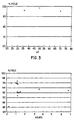
- Figure 3 shows a series of n-butyl lithium experiments using 10% excess lithium (0.48% Na) in refluxing solvents: pentane boiling point (BP) 36.1°C ( ⁇ ), cyclopentane BP 49.3°C (+) and hexane BP 68.7°C (*).
- Figure 3 clearly shows the yield increasing with temperature but then starting to decrease with further increasing temperature.
- Figure 4 shows the results of varying the feed rate of n-butyl chloride dispersion in hexane. At 35°C (*) the yield gradually increased although very slightly. At reflux ( ⁇ ) there is no change in yield at short feed times, 0.5 to 1.5 hours, but the yield drops at longer feed times.
- Figure 5 This plot shows results of varying the amount of lithium metal in producing n-butyllithium. Yield drop off is only slightly less sensitive to reaction temperature at reflux ( ⁇ ) compared to reaction at 35°C (*), about a 1 % decrease at reflux versus a 2% drop off at 35°C. Greater than 10 mole % excess lithium results in same yield improvement.
- Figure 9 This plot shows an optimum hexyllithium yield in refluxing solvents at about 70°C. Cyclopentane (+), hexane (o), cyclohexane ( ⁇ ) and heptane (x).
- Figure 10 - This plot shows octyllithium yields in refluxing solvents are highest between 70 and 80°C. Solvents employed: cyclopentane (0), hexane (+), cyclohexane (*) and heptane ( ⁇ ).
- FIG 11 This plot shows the yields of 2-ethylhexyllithium in various refluxing solvents. Solvents employed were cyclohexane (o), heptane (+), cyclopentane (*) and octane (o).
- Figure 12 - This plot further emphasizes the excellent yields of various alkyllithiums obtained in refluxing hexane.
- the alkyllithiums tested were butyl, hexyl, octyl, decyl and dodecyllithium.
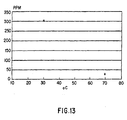
- Figure 13 shows that n-hexyllithium chloride values are lower when the reaction is done at a higher temperature.
- the reactor and apparatus consisted of a 500 ml Morton Cleaved 3 necked flask equipped with a reflux condensor, y tube for additions, 125 ml pressure-equalizing addition (dropping) funnel, stirring shaft with teflon blade, stirring motor, a thermometer probe with an electronic read out and means for maintaining an inert atmosphere in the reactor.
- a commercially available lithium metal dispersion having a particle size of less than 300 microns was hexane washed twice and pentane washed once and dried with Argon. The metal was then weighed, 12.10g (1.743 moles).
- Hexane 310 milliliters, was used to transfer the lithium through a transfer tube to the reactor.
- the hexane-lithium mixture was heated to reflux (Dry Ice/hexane in condensor) and dropwise feed of n -butyl chloride begun.
- the reaction proceeded instantaneously (heavy refluxing) and the source of heat was removed.
- the 73.4g of n-butylchloride (0.7924 moles) was fed in over a 40 minute period, the reaction heat controlled strictly by the rate of reflux.
- the reaction mixture was allowed to cool to ambient, with stirring, over a 2.5 hour period.
- a 500 ml, three-necked Morton flask was fitted with a mechanical stirrer, a 250 ml, pressure-equalizing addition funnel, and a Claisen adapter equipped with a reflux condenser, a thermocouple, and an argon inlet. This apparatus was dried in an oven overnight at 125°C, assembled hot, and allowed to cool to room temperature in a stream of argon.
- Lithium dispersion 22.00 g (3.17 mole, 20 % excess Li, 2.40 equivalents) was washed free of mineral oil with hexane (2 x 100 ml), pentane (1 x 100 ml), dried in a stream of argon, then transferred to the flask with 210 ml of hexane.
- the resultant slurry was stirred at 470 RPMs and heated to 66°C. After reflux was established, the heat source was removed.
- 1-Hexyl chloride 159.32 g (1.32 mole, 1.00 equivalent) was added dropwise through the addition funnel. The reaction temperature rose rapidly to reflux. The reaction mixture was maintained at reflux by adjustment of the halide feed rate.
- a one liter, three-necked Morton flask was fitted with a mechanical stirrer, a 250 ml, pressure-equalizing addition funnel, and a Claisen adapter equipped with a reflux condenser, a thermocouple, and an argon inlet.
- This apparatus was dried in an oven overnight at 125°C, assembled hot, and allowed to cool to room temperature in a stream of argon.
- Lithium dispersion, 18.50 g (2.67 mole, 20% excess Li, 2.40 equivalents) was washed free of mineral oil with pentane three times (3 x 100 ml), dried in a stream of argon, then transferred to the flask with 400 ml of heptane.
- the resultant slurry was stirred at 470 RPMs, then heated to 70°C with a heating mantle. The mantle was then removed, and 2-ethylhexyl chloride, 165.03 g (1.11 mole, 1.00 equivalent), was added dropwise through the addition funnel. The reaction temperature slowly rose, after approximately 3% of the feed had been added. The temperature was maintained between 70°C and 75°C with intermittent cooling from an hexane / dry ice cooling bath. The total halide feed time was 2.25 hours. At the end of the feed, the reaction temperature rapidly declined. The reaction mixture was stirred for one hour at 470 RPMs, one hour at 300 RPMs, then transferred to a scintered glass filter.
- a one liter, three-necked Morton flask was fitted with a mechanical stirrer, a 250 ml pressure-equalizing addition funnel, and a Claisen adapter equipped with a thermocouple, a reflux condenser, and an argon inlet. This apparatus was dried in an oven overnight at 125°C, assembled hot, and allowed to cool to room temperature in a stream of argon.
- Lithium dispersion 20.50 g (2.953 mole, 20% excess Li, 2.40 equivalents) was washed free of mineral oil with hexane 2 x 100 ml) pentane (1 x 100 ml), dried in a stream of argon, then transferred to the reaction flask with 450 ml of hexane.
- the resultant slurry was stirred at 450 RPMs, and heated to 67°C with a heating mantle controlled with a variac. After reflux was established, the heat source was removed.
- 1-Chlorooctane 182.97 g (1.231 mole, 1.00 equivalent) was added dropwise through the addition funnel. An immediate exotherm was observed. The reaction temperature rose rapidly to reflux.
- the reaction mixture was maintained at reflux by adjustment of the halide feed rate.
- the total halide feed time was 100 minutes.
- the reaction temperature declined rapidly at the end of the halide feed.
- the reaction mixture was stirred for one hour at 450 RPMs, 1.25 hours at 300 RPMs, then transferred to a dry, scintered glass filter with argon pressure.
- the solution filtered very rapidly, as 550 ml of filtrate was collected in 2.167 minutes at 3 psi argon.
- a 500 ml, three-necked Morton flask was fitted with a mechanical stirrer, a 250 ml, pressure-equalizing addition funnel, and a Claisen adapter equipped with a reflux condenser, a thermocouple, and an argon inlet.
- This apparatus was dried in an oven overnight at 125°C, assembled hot, and allowed to cool to room temperature in a stream of argon.
- the resultant slurry was stirred at 470 RPMs.
- a one liter, three-necked Morton flask was fitted with a mechanical stirrer, a 250 ml pressure-equalizing addition funnel, and a Claisen adapter equipped with a thermocouple, a reflux condenser, and an argon inlet. This apparatus was dried in an oven overnight at 125°C, assembled hot, and allowed to cool to room temperature in a stream of argon.
- Lithium dispersion 21.50 g (3.098 mole, 20% excess Li, 2.40 equivalents) was washed free of mineral oil with hexane (3 x 100 ml), pentane (1 x 100 ml), dried in a stream of argon, then transferred to the reaction flask with 480 ml of hexane.
- the resultant slurry was stirred at 450 RPMs, and heated to 35°C with a heat gun. The heat source was removed.
- 1-Chlorooctane 191.95 g (1.291 mole, 1.00 equivalent) was added dropwise through the addition funnel. An exotherm was noted after 2% of the feed had been added.
- the reaction mixture was maintained at 30-35°C by a dry ice/hexane cooling bath.
- the total halide feed time was 108 minutes.
- the reaction temperature declined rapidly at the end of the halide feed.
- the reaction mixture was stirred for one hour at 450 RPMs, 1.25 hours at 300 RPMs, then transferred to a dry, scintered glass filter with argon pressure.
- the solution filtered very slowly, as 550 ml of filtrate was collected in 15 minutes at 3 psi argon.
Landscapes
- Chemical & Material Sciences (AREA)
- Organic Chemistry (AREA)
- Engineering & Computer Science (AREA)
- Materials Engineering (AREA)
- Transition And Organic Metals Composition Catalysts For Addition Polymerization (AREA)
- Organic Low-Molecular-Weight Compounds And Preparation Thereof (AREA)
- Pharmaceuticals Containing Other Organic And Inorganic Compounds (AREA)
Claims (11)
- Procédé pour produire des composés d'alkyl-lithium en des rendements d'au moins 90% et contenant en outre moins de 300 ppm d'halogénure de lithium dissous qui comprend mettre à réagir dans un solvant d'hydrocarbures liquides sélectionné d'hydrocarbures aliphatiques saturés liquides contenant de 5 à 12 atomes de carbone, d'hydrocarbures cyclo-aliphatiques liquides contenant de 5 à 12 atomes de carbone et d'hydrocarbures aromatiques liquides contenant de 6 à 12 atomes de carbone et de mélanges de ceux-ci, un halogénure d'alkyle contenant de 2 à 16 atomes de carbone avec des particules de métal de lithium de moins de 300 microns en taille dans lequel la réaction est conduite dans des conditions sélectionnées de: conduire la réaction dans des conditions de reflux dans des solvants d'hydrocarbures avec reflux à des températures d'entre 50°C et 100°C; et conduire la réaction dans des conditions de non reflux à des températures d'entre 50°C et 125°C; et récupérer le composé d'alkyl-lithium.
- Procédé tel que revendiqué dans la revendication 1, dans lequel l'halogénure d'alkyle est un chlorure d'alkyle contenant de 3 à 16 atomes de carbone.
- Procédé tel que revendiqué dans la revendication 1, dans lequel l'halogénure d'alkyle est du chlorure de butyle et la température de réaction est d'entre 50 et 70°C.
- Procédé tel que revendiqué dans la revendication 1, dans lequel l'halogénure d'alkyle est du 1-chloro-2-méthyl-butane et la température de réaction est d'entre 50 et 80°C.
- Procédé tel que revendiqué dans la revendication 1, dans lequel l'halogénure d'alkyle est du 1-chlorohexane et la température de réaction est d'entre 50 et 80°C.
- Procédé tel que revendiqué dans la revendication 1, dans lequel l'halogénure d'alkyle est du 1-chlorohexane et la température de réaction est d'entre 60 et 80°C.
- Procédé tel que revendiqué dans la revendication 1, dans lequel l'halogénure d'alkyle est du 1-chloroheptane et la température de réaction est d'entre 60 et 80°C.
- Procédé tel que revendiqué dans la revendication 1, dans lequel l'halogénure d'alkyle est du 1-chloro-octane et la température de réaction est d'entre 55 et 85°C.
- Procédé tel que revendiqué dans la revendication 1, dans lequel l'halogénure d'alkyle est du 1-chloro-2-éthylhexane et la température de réaction est d'entre 50 et 90°C.
- Procédé tel que revendiqué dans la revendication 1, dans lequel l'halogénure d'alkyle est du 1-chlorodécane et la température de réaction est d'entre 50 et 90°C.
- Procédé tel que revendiqué dans la revendication 1, dans lequel l'halogénure d'alkyle est du 1-chlorododécane et la température de réaction est d'entre 50 et 85°C.
Applications Claiming Priority (3)
| Application Number | Priority Date | Filing Date | Title |
|---|---|---|---|
| US08/087,582 US5332533A (en) | 1993-07-06 | 1993-07-06 | Alkyllithium process |
| US87582 | 1993-07-06 | ||
| PCT/US1994/006831 WO1995001982A1 (fr) | 1993-07-06 | 1994-06-16 | Nouveau procede d'obtention d'alkyllithium |
Publications (4)
| Publication Number | Publication Date |
|---|---|
| EP0707588A1 EP0707588A1 (fr) | 1996-04-24 |
| EP0707588A4 EP0707588A4 (fr) | 1999-06-09 |
| EP0707588B1 EP0707588B1 (fr) | 2001-09-26 |
| EP0707588B2 true EP0707588B2 (fr) | 2005-04-27 |
Family
ID=22206050
Family Applications (1)
| Application Number | Title | Priority Date | Filing Date |
|---|---|---|---|
| EP94921311A Expired - Lifetime EP0707588B2 (fr) | 1993-07-06 | 1994-06-16 | Nouveau procede d'obtention d'alkyllithium |
Country Status (11)
| Country | Link |
|---|---|
| US (1) | US5332533A (fr) |
| EP (1) | EP0707588B2 (fr) |
| JP (1) | JPH08511026A (fr) |
| KR (1) | KR960703929A (fr) |
| CN (1) | CN1130383A (fr) |
| AT (1) | ATE206126T1 (fr) |
| AU (1) | AU7208594A (fr) |
| BR (1) | BR9406930A (fr) |
| CA (1) | CA2166770A1 (fr) |
| DE (1) | DE69428443T2 (fr) |
| WO (1) | WO1995001982A1 (fr) |
Families Citing this family (13)
| Publication number | Priority date | Publication date | Assignee | Title |
|---|---|---|---|---|
| US5776369A (en) * | 1993-02-18 | 1998-07-07 | Fmc Corporation | Alkali metal dispersions |
| US5523447A (en) * | 1995-06-07 | 1996-06-04 | Fmc Corporation | Organolithium process |
| AU6723896A (en) * | 1995-08-15 | 1997-03-12 | Fmc Corporation | Alkali metal dispersions |
| DE1309526T1 (de) * | 2000-08-08 | 2003-11-27 | Sociedad Quimica Y Minera De Chile, S.A. | Verfahren zur herstellung von alkyllithium-verbindungen |
| DE10162332A1 (de) * | 2001-12-18 | 2003-07-03 | Chemetall Gmbh | Verfahren zur Herstellung von Alkyllithiumverbindungen unter vermindertem Druck |
| DE10204680A1 (de) * | 2002-02-06 | 2003-08-07 | Chemetall Gmbh | Verfahren zur Herstellung von Alkyllithiumverbindungen mittels Verdüsung von Lithiummetall |
| US20030199649A1 (en) * | 2002-03-26 | 2003-10-23 | Orbison David Robert | Method and apparatus for the controlled dilution of organometallic compounds |
| US6861011B1 (en) * | 2003-11-07 | 2005-03-01 | Chemetall Foote Corporation | Process for preparing methyllithium |
| CN101805360B (zh) * | 2010-05-06 | 2012-08-22 | 江西赣锋锂业股份有限公司 | 一种烷基锂的合成工艺 |
| CN103435634B (zh) * | 2013-07-30 | 2015-09-30 | 上虞华伦化工有限公司 | 一种正己基锂的制备方法 |
| KR20250108587A (ko) * | 2022-11-16 | 2025-07-15 | 퍼블릭 조인트 스탁 컴퍼니"시부르 홀딩" | 알킬리튬 용액의 제조방법 |
| CN116574114A (zh) * | 2023-04-04 | 2023-08-11 | 合肥山河锂盐新能源科技有限公司 | 一种烷基锂的制备方法 |
| CN116284060B (zh) * | 2023-05-22 | 2023-08-01 | 研峰科技(北京)有限公司 | 一种有机锂试剂丁基锂的安全生产工艺 |
Citations (1)
| Publication number | Priority date | Publication date | Assignee | Title |
|---|---|---|---|---|
| DE1146885B (de) † | 1961-01-10 | 1963-04-11 | Metallgesellschaft Ag | Verfahren zur Herstellung von Lithiumkohlenwasserstoffen |
Family Cites Families (5)
| Publication number | Priority date | Publication date | Assignee | Title |
|---|---|---|---|---|
| CA878291A (en) * | 1971-08-17 | Lithium Corporation Of America | Preparation of concentrated alkyllithium solutions | |
| US3122592A (en) * | 1960-07-05 | 1964-02-25 | Firestone Tire & Rubber Co | Preparation of alkyllithium compounds |
| US3452112A (en) * | 1963-12-27 | 1969-06-24 | Lithium Corp | Preparation of solutions of lithiumhydrocarbon compounds |
| US4460515A (en) * | 1982-07-06 | 1984-07-17 | Lithium Corporation Of America | Hydrocarbon solvent solutions of complexes of sec-butyllithium and ethyllithium |
| US5211887A (en) * | 1990-11-29 | 1993-05-18 | Fmc Corporation | High purity alkyllithium compounds and process of preparation |
-
1993
- 1993-07-06 US US08/087,582 patent/US5332533A/en not_active Expired - Lifetime
-
1994
- 1994-06-16 KR KR1019960700046A patent/KR960703929A/ko not_active Abandoned
- 1994-06-16 JP JP7504032A patent/JPH08511026A/ja active Pending
- 1994-06-16 AU AU72085/94A patent/AU7208594A/en not_active Abandoned
- 1994-06-16 EP EP94921311A patent/EP0707588B2/fr not_active Expired - Lifetime
- 1994-06-16 CA CA002166770A patent/CA2166770A1/fr not_active Abandoned
- 1994-06-16 BR BR9406930A patent/BR9406930A/pt not_active Application Discontinuation
- 1994-06-16 WO PCT/US1994/006831 patent/WO1995001982A1/fr not_active Ceased
- 1994-06-16 CN CN94193265A patent/CN1130383A/zh active Pending
- 1994-06-16 DE DE69428443T patent/DE69428443T2/de not_active Expired - Fee Related
- 1994-06-16 AT AT94921311T patent/ATE206126T1/de not_active IP Right Cessation
Patent Citations (1)
| Publication number | Priority date | Publication date | Assignee | Title |
|---|---|---|---|---|
| DE1146885B (de) † | 1961-01-10 | 1963-04-11 | Metallgesellschaft Ag | Verfahren zur Herstellung von Lithiumkohlenwasserstoffen |
Non-Patent Citations (5)
| Title |
|---|
| D.L. Esmay, "Manufacture, Properties and Uses of Organolithium Compounds" in Advances in Chemistry Series, 23, pp. 46-57 † |
| Datasheet of Chemetall GmbH, "Lithium Metal, Technical Grade" † |
| Guo et al., J.Am.Chem.Soc. 1985, 107, 6028-6030 † |
| I. Fatt, M. Tashima, "Alkali Metal Dispersions", D. van Nostrand Company Inc. † |
| Ziegler et al., Liebigs Annalen der Chemie, 479, 135-149 † |
Also Published As
| Publication number | Publication date |
|---|---|
| JPH08511026A (ja) | 1996-11-19 |
| DE69428443T2 (de) | 2002-05-02 |
| US5332533A (en) | 1994-07-26 |
| AU7208594A (en) | 1995-02-06 |
| EP0707588B1 (fr) | 2001-09-26 |
| ATE206126T1 (de) | 2001-10-15 |
| EP0707588A1 (fr) | 1996-04-24 |
| BR9406930A (pt) | 1996-09-10 |
| DE69428443D1 (de) | 2001-10-31 |
| KR960703929A (ko) | 1996-08-31 |
| CA2166770A1 (fr) | 1995-01-19 |
| EP0707588A4 (fr) | 1999-06-09 |
| CN1130383A (zh) | 1996-09-04 |
| WO1995001982A1 (fr) | 1995-01-19 |
Similar Documents
| Publication | Publication Date | Title |
|---|---|---|
| EP0707588B2 (fr) | Nouveau procede d'obtention d'alkyllithium | |
| CA1099455A (fr) | Substances de type di-(alkyle a chaine courte) magnesium a chaine droite, solubles dans des hydrocarbures | |
| US4046815A (en) | Process for the preparation of triarylborane | |
| US4045495A (en) | Process for the preparation of triarylboranes | |
| CA1280873C (fr) | Methode pour la synthese de composes amorphes du groupe iiia-va | |
| Gade et al. | Trisilylmethane as a structural backbone in multifunctional lithium amides: syntheses and structures of HC {(CH3) 2SiN (Li)-tert-Bu} 3 and its solvate HC {(CH3) 2SiN (Li)-tert-Bu} 3. cntdot. 2THF | |
| Tamborski et al. | Pentafluorophenyl organometallic compounds of group IV elements | |
| Larock et al. | Organoboranes: XIII. The mercuration of vinylboranes. A convenient stereospecific procedure for the conversion of acetylenes into vinylmercury salts via hydroboration-mercuration | |
| US4222969A (en) | Hydrocarbon soluble magnesium compositions of high magnesium content | |
| Gade et al. | Metallation of multifunctional secondary amines: the structural characterisation of the tripodal lithium amides {H 3 CC [CH 2 N (Li) R] 3} 3 | |
| US5340507A (en) | Catalyzed hydrocarbyllithium process | |
| WO1996040692A1 (fr) | Procede de preparation d'organolithium | |
| EP0525881B1 (fr) | Procédé catalytique pour la préparation des composés organiques du lithium | |
| JPH06166691A (ja) | ゲルマニウム二ハロゲン化物−エーテル付加物の製造方法 | |
| US5211887A (en) | High purity alkyllithium compounds and process of preparation | |
| US3060241A (en) | Preparation of alkyl cycloalkyl and aromatic phosphines | |
| EP1309526B1 (fr) | Procede de preparation de composes d'alkyllithium | |
| US3155736A (en) | Method of making organolithium compounds | |
| JP2856655B2 (ja) | トリアリールホウ素の製造方法 | |
| CA1123460A (fr) | Procede d'obtention de triphenylphosphine | |
| CN109232385B (zh) | 一种二氯化镁(2,2,6,6-四甲基哌啶)锂盐的制备方法 | |
| JP4416322B2 (ja) | アルカリ金属アルコラートの製造 | |
| Schwan et al. | Reactions of gallium (III) chloride with Li [E (SiMe3) 3](E= Si or Ge): crystal structure of (R3Ge) ClGa (µ-OEt) 2GaCl (GeR3)(R= SiMe3) | |
| TWI302150B (en) | Process for the preparation of alkyllithium compounds | |
| Leung et al. | Synthesis and structural characterisation of low-valent Group 14 metal complexes containing tridentate 2, 6-pyridyl-bridged bis (1-azaallyl) ligands |
Legal Events
| Date | Code | Title | Description |
|---|---|---|---|
| PUAI | Public reference made under article 153(3) epc to a published international application that has entered the european phase |
Free format text: ORIGINAL CODE: 0009012 |
|
| 17P | Request for examination filed |
Effective date: 19960108 |
|
| AK | Designated contracting states |
Kind code of ref document: A1 Designated state(s): AT BE CH DE DK ES FR GB GR IE IT LI LU MC NL PT SE |
|
| AX | Request for extension of the european patent |
Free format text: SI |
|
| RAX | Requested extension states of the european patent have changed |
Free format text: SI |
|
| A4 | Supplementary search report drawn up and despatched |
Effective date: 19990426 |
|
| AK | Designated contracting states |
Kind code of ref document: A4 Designated state(s): AT BE CH DE DK ES FR GB GR IE IT LI LU MC NL PT SE |
|
| 17Q | First examination report despatched |
Effective date: 20000615 |
|
| GRAG | Despatch of communication of intention to grant |
Free format text: ORIGINAL CODE: EPIDOS AGRA |
|
| GRAG | Despatch of communication of intention to grant |
Free format text: ORIGINAL CODE: EPIDOS AGRA |
|
| GRAH | Despatch of communication of intention to grant a patent |
Free format text: ORIGINAL CODE: EPIDOS IGRA |
|
| GRAH | Despatch of communication of intention to grant a patent |
Free format text: ORIGINAL CODE: EPIDOS IGRA |
|
| GRAA | (expected) grant |
Free format text: ORIGINAL CODE: 0009210 |
|
| AK | Designated contracting states |
Kind code of ref document: B1 Designated state(s): AT BE CH DE DK ES FR GB GR IE IT LI LU MC NL PT SE |
|
| PG25 | Lapsed in a contracting state [announced via postgrant information from national office to epo] |
Ref country code: NL Free format text: LAPSE BECAUSE OF FAILURE TO SUBMIT A TRANSLATION OF THE DESCRIPTION OR TO PAY THE FEE WITHIN THE PRESCRIBED TIME-LIMIT Effective date: 20010926 Ref country code: LI Free format text: LAPSE BECAUSE OF FAILURE TO SUBMIT A TRANSLATION OF THE DESCRIPTION OR TO PAY THE FEE WITHIN THE PRESCRIBED TIME-LIMIT Effective date: 20010926 Ref country code: IT Free format text: LAPSE BECAUSE OF FAILURE TO SUBMIT A TRANSLATION OF THE DESCRIPTION OR TO PAY THE FEE WITHIN THE PRE;WARNING: LAPSES OF ITALIAN PATENTS WITH EFFECTIVE DATE BEFORE 2007 MAY HAVE OCCURRED AT ANY TIME BEFORE 2007. THE CORRECT EFFECTIVE DATE MAY BE DIFFERENT FROM THE ONE RECORDED.SCRIBED TIME-LIMIT Effective date: 20010926 Ref country code: FR Free format text: LAPSE BECAUSE OF FAILURE TO SUBMIT A TRANSLATION OF THE DESCRIPTION OR TO PAY THE FEE WITHIN THE PRESCRIBED TIME-LIMIT Effective date: 20010926 Ref country code: CH Free format text: LAPSE BECAUSE OF FAILURE TO SUBMIT A TRANSLATION OF THE DESCRIPTION OR TO PAY THE FEE WITHIN THE PRESCRIBED TIME-LIMIT Effective date: 20010926 Ref country code: BE Free format text: LAPSE BECAUSE OF FAILURE TO SUBMIT A TRANSLATION OF THE DESCRIPTION OR TO PAY THE FEE WITHIN THE PRESCRIBED TIME-LIMIT Effective date: 20010926 Ref country code: AT Free format text: LAPSE BECAUSE OF FAILURE TO SUBMIT A TRANSLATION OF THE DESCRIPTION OR TO PAY THE FEE WITHIN THE PRESCRIBED TIME-LIMIT Effective date: 20010926 |
|
| REF | Corresponds to: |
Ref document number: 206126 Country of ref document: AT Date of ref document: 20011015 Kind code of ref document: T |
|
| REG | Reference to a national code |
Ref country code: CH Ref legal event code: EP |
|
| REF | Corresponds to: |
Ref document number: 69428443 Country of ref document: DE Date of ref document: 20011031 |
|
| REG | Reference to a national code |
Ref country code: IE Ref legal event code: FG4D |
|
| PG25 | Lapsed in a contracting state [announced via postgrant information from national office to epo] |
Ref country code: SE Free format text: LAPSE BECAUSE OF FAILURE TO SUBMIT A TRANSLATION OF THE DESCRIPTION OR TO PAY THE FEE WITHIN THE PRESCRIBED TIME-LIMIT Effective date: 20011226 Ref country code: PT Free format text: LAPSE BECAUSE OF FAILURE TO SUBMIT A TRANSLATION OF THE DESCRIPTION OR TO PAY THE FEE WITHIN THE PRESCRIBED TIME-LIMIT Effective date: 20011226 Ref country code: DK Free format text: LAPSE BECAUSE OF FAILURE TO SUBMIT A TRANSLATION OF THE DESCRIPTION OR TO PAY THE FEE WITHIN THE PRESCRIBED TIME-LIMIT Effective date: 20011226 |
|
| PG25 | Lapsed in a contracting state [announced via postgrant information from national office to epo] |
Ref country code: GR Free format text: LAPSE BECAUSE OF FAILURE TO SUBMIT A TRANSLATION OF THE DESCRIPTION OR TO PAY THE FEE WITHIN THE PRESCRIBED TIME-LIMIT Effective date: 20011228 |
|
| REG | Reference to a national code |
Ref country code: GB Ref legal event code: IF02 |
|
| NLV1 | Nl: lapsed or annulled due to failure to fulfill the requirements of art. 29p and 29m of the patents act | ||
| PG25 | Lapsed in a contracting state [announced via postgrant information from national office to epo] |
Ref country code: ES Free format text: LAPSE BECAUSE OF FAILURE TO SUBMIT A TRANSLATION OF THE DESCRIPTION OR TO PAY THE FEE WITHIN THE PRESCRIBED TIME-LIMIT Effective date: 20020326 |
|
| REG | Reference to a national code |
Ref country code: CH Ref legal event code: PL |
|
| PG25 | Lapsed in a contracting state [announced via postgrant information from national office to epo] |
Ref country code: MC Free format text: LAPSE BECAUSE OF NON-PAYMENT OF DUE FEES Effective date: 20020616 Ref country code: LU Free format text: LAPSE BECAUSE OF NON-PAYMENT OF DUE FEES Effective date: 20020616 |
|
| PLBQ | Unpublished change to opponent data |
Free format text: ORIGINAL CODE: EPIDOS OPPO |
|
| PLBI | Opposition filed |
Free format text: ORIGINAL CODE: 0009260 |
|
| EN | Fr: translation not filed | ||
| PLBF | Reply of patent proprietor to notice(s) of opposition |
Free format text: ORIGINAL CODE: EPIDOS OBSO |
|
| 26 | Opposition filed |
Opponent name: CHEMETALL GMBH Effective date: 20020626 |
|
| PLBF | Reply of patent proprietor to notice(s) of opposition |
Free format text: ORIGINAL CODE: EPIDOS OBSO |
|
| PLBF | Reply of patent proprietor to notice(s) of opposition |
Free format text: ORIGINAL CODE: EPIDOS OBSO |
|
| PLBF | Reply of patent proprietor to notice(s) of opposition |
Free format text: ORIGINAL CODE: EPIDOS OBSO |
|
| PGFP | Annual fee paid to national office [announced via postgrant information from national office to epo] |
Ref country code: GB Payment date: 20030611 Year of fee payment: 10 |
|
| PGFP | Annual fee paid to national office [announced via postgrant information from national office to epo] |
Ref country code: IE Payment date: 20030626 Year of fee payment: 10 Ref country code: DE Payment date: 20030626 Year of fee payment: 10 |
|
| PG25 | Lapsed in a contracting state [announced via postgrant information from national office to epo] |
Ref country code: IE Free format text: LAPSE BECAUSE OF NON-PAYMENT OF DUE FEES Effective date: 20040616 Ref country code: GB Free format text: LAPSE BECAUSE OF NON-PAYMENT OF DUE FEES Effective date: 20040616 |
|
| PG25 | Lapsed in a contracting state [announced via postgrant information from national office to epo] |
Ref country code: DE Free format text: LAPSE BECAUSE OF NON-PAYMENT OF DUE FEES Effective date: 20050101 |
|
| GBPC | Gb: european patent ceased through non-payment of renewal fee |
Effective date: 20040616 |
|
| PUAH | Patent maintained in amended form |
Free format text: ORIGINAL CODE: 0009272 |
|
| STAA | Information on the status of an ep patent application or granted ep patent |
Free format text: STATUS: PATENT MAINTAINED AS AMENDED |
|
| REG | Reference to a national code |
Ref country code: IE Ref legal event code: MM4A |
|
| 27A | Patent maintained in amended form |
Effective date: 20050427 |
|
| AK | Designated contracting states |
Kind code of ref document: B2 Designated state(s): AT BE CH DE DK ES FR GB GR IE IT LI LU MC NL PT SE |
|
| REG | Reference to a national code |
Ref country code: ES Ref legal event code: FD2A Effective date: 20020617 |
|
| EN | Fr: translation not filed | ||
| PLAB | Opposition data, opponent's data or that of the opponent's representative modified |
Free format text: ORIGINAL CODE: 0009299OPPO |