EP0708332A2 - Combustion decomposition accelerators - Google Patents
Combustion decomposition accelerators Download PDFInfo
- Publication number
- EP0708332A2 EP0708332A2 EP95305088A EP95305088A EP0708332A2 EP 0708332 A2 EP0708332 A2 EP 0708332A2 EP 95305088 A EP95305088 A EP 95305088A EP 95305088 A EP95305088 A EP 95305088A EP 0708332 A2 EP0708332 A2 EP 0708332A2
- Authority
- EP
- European Patent Office
- Prior art keywords
- sulfur
- tobacco
- accelerator
- grams
- mixture
- Prior art date
- Legal status (The legal status is an assumption and is not a legal conclusion. Google has not performed a legal analysis and makes no representation as to the accuracy of the status listed.)
- Granted
Links
- 238000002485 combustion reaction Methods 0.000 title claims abstract description 50
- 238000000354 decomposition reaction Methods 0.000 title claims abstract description 11
- 239000000203 mixture Substances 0.000 claims abstract description 78
- 239000011521 glass Substances 0.000 claims abstract description 31
- 238000000034 method Methods 0.000 claims abstract description 31
- 231100000252 nontoxic Toxicity 0.000 claims abstract description 30
- 230000003000 nontoxic effect Effects 0.000 claims abstract description 30
- ZKATWMILCYLAPD-UHFFFAOYSA-N niobium pentoxide Inorganic materials O=[Nb](=O)O[Nb](=O)=O ZKATWMILCYLAPD-UHFFFAOYSA-N 0.000 claims abstract description 23
- URLJKFSTXLNXLG-UHFFFAOYSA-N niobium(5+);oxygen(2-) Chemical class [O-2].[O-2].[O-2].[O-2].[O-2].[Nb+5].[Nb+5] URLJKFSTXLNXLG-UHFFFAOYSA-N 0.000 claims abstract description 23
- 229910052816 inorganic phosphate Chemical class 0.000 claims abstract description 17
- QGLKJKCYBOYXKC-UHFFFAOYSA-N nonaoxidotritungsten Chemical compound O=[W]1(=O)O[W](=O)(=O)O[W](=O)(=O)O1 QGLKJKCYBOYXKC-UHFFFAOYSA-N 0.000 claims abstract description 8
- 229910001930 tungsten oxide Inorganic materials 0.000 claims abstract description 8
- 238000000921 elemental analysis Methods 0.000 claims abstract description 5
- MRVHOJHOBHYHQL-UHFFFAOYSA-M lithium metaphosphate Chemical compound [Li+].[O-]P(=O)=O MRVHOJHOBHYHQL-UHFFFAOYSA-M 0.000 claims description 83
- 150000001875 compounds Chemical class 0.000 claims description 25
- 238000002156 mixing Methods 0.000 claims description 23
- 239000000126 substance Substances 0.000 claims description 21
- 229910000402 monopotassium phosphate Inorganic materials 0.000 claims description 7
- 235000019796 monopotassium phosphate Nutrition 0.000 claims description 7
- 239000002904 solvent Substances 0.000 claims description 7
- XLYOFNOQVPJJNP-UHFFFAOYSA-N water Substances O XLYOFNOQVPJJNP-UHFFFAOYSA-N 0.000 claims description 7
- 239000002245 particle Substances 0.000 claims description 6
- 238000007580 dry-mixing Methods 0.000 claims description 5
- 238000010438 heat treatment Methods 0.000 claims description 5
- PJNZPQUBCPKICU-UHFFFAOYSA-N phosphoric acid;potassium Chemical compound [K].OP(O)(O)=O PJNZPQUBCPKICU-UHFFFAOYSA-N 0.000 claims description 4
- 238000004519 manufacturing process Methods 0.000 abstract description 3
- 125000002467 phosphate group Chemical class [H]OP(=O)(O[H])O[*] 0.000 abstract 2
- NINIDFKCEFEMDL-UHFFFAOYSA-N Sulfur Chemical group [S] NINIDFKCEFEMDL-UHFFFAOYSA-N 0.000 description 133
- 239000011593 sulfur Substances 0.000 description 133
- 229910052717 sulfur Inorganic materials 0.000 description 133
- 241000208125 Nicotiana Species 0.000 description 93
- 235000002637 Nicotiana tabacum Nutrition 0.000 description 93
- 239000000919 ceramic Substances 0.000 description 62
- 238000004458 analytical method Methods 0.000 description 35
- OSGAYBCDTDRGGQ-UHFFFAOYSA-L calcium sulfate Chemical compound [Ca+2].[O-]S([O-])(=O)=O OSGAYBCDTDRGGQ-UHFFFAOYSA-L 0.000 description 35
- ZNOKGRXACCSDPY-UHFFFAOYSA-N tungsten trioxide Chemical compound O=[W](=O)=O ZNOKGRXACCSDPY-UHFFFAOYSA-N 0.000 description 35
- TZCXTZWJZNENPQ-UHFFFAOYSA-L barium sulfate Chemical compound [Ba+2].[O-]S([O-])(=O)=O TZCXTZWJZNENPQ-UHFFFAOYSA-L 0.000 description 27
- 239000000843 powder Substances 0.000 description 17
- 239000004570 mortar (masonry) Substances 0.000 description 16
- GNTDGMZSJNCJKK-UHFFFAOYSA-N divanadium pentaoxide Chemical compound O=[V](=O)O[V](=O)=O GNTDGMZSJNCJKK-UHFFFAOYSA-N 0.000 description 13
- KFZMGEQAYNKOFK-UHFFFAOYSA-N Isopropanol Chemical compound CC(C)O KFZMGEQAYNKOFK-UHFFFAOYSA-N 0.000 description 12
- TWNQGVIAIRXVLR-UHFFFAOYSA-N oxo(oxoalumanyloxy)alumane Chemical compound O=[Al]O[Al]=O TWNQGVIAIRXVLR-UHFFFAOYSA-N 0.000 description 10
- 230000000052 comparative effect Effects 0.000 description 8
- RVTZCBVAJQQJTK-UHFFFAOYSA-N oxygen(2-);zirconium(4+) Chemical compound [O-2].[O-2].[Zr+4] RVTZCBVAJQQJTK-UHFFFAOYSA-N 0.000 description 8
- 229910001928 zirconium oxide Inorganic materials 0.000 description 8
- 239000000523 sample Substances 0.000 description 5
- OKTJSMMVPCPJKN-UHFFFAOYSA-N Carbon Chemical compound [C] OKTJSMMVPCPJKN-UHFFFAOYSA-N 0.000 description 4
- VYPSYNLAJGMNEJ-UHFFFAOYSA-N Silicium dioxide Chemical compound O=[Si]=O VYPSYNLAJGMNEJ-UHFFFAOYSA-N 0.000 description 4
- PNEYBMLMFCGWSK-UHFFFAOYSA-N aluminium oxide Inorganic materials [O-2].[O-2].[O-2].[Al+3].[Al+3] PNEYBMLMFCGWSK-UHFFFAOYSA-N 0.000 description 4
- 229910052799 carbon Inorganic materials 0.000 description 4
- JKWMSGQKBLHBQQ-UHFFFAOYSA-N diboron trioxide Chemical compound O=BOB=O JKWMSGQKBLHBQQ-UHFFFAOYSA-N 0.000 description 4
- 238000012360 testing method Methods 0.000 description 4
- 239000007836 KH2PO4 Substances 0.000 description 3
- 238000009838 combustion analysis Methods 0.000 description 3
- 239000000463 material Substances 0.000 description 3
- GNSKLFRGEWLPPA-UHFFFAOYSA-M potassium dihydrogen phosphate Chemical compound [K+].OP(O)([O-])=O GNSKLFRGEWLPPA-UHFFFAOYSA-M 0.000 description 3
- WKBOTKDWSSQWDR-UHFFFAOYSA-N Bromine atom Chemical compound [Br] WKBOTKDWSSQWDR-UHFFFAOYSA-N 0.000 description 2
- ZAMOUSCENKQFHK-UHFFFAOYSA-N Chlorine atom Chemical compound [Cl] ZAMOUSCENKQFHK-UHFFFAOYSA-N 0.000 description 2
- PXGOKWXKJXAPGV-UHFFFAOYSA-N Fluorine Chemical compound FF PXGOKWXKJXAPGV-UHFFFAOYSA-N 0.000 description 2
- 229910021538 borax Inorganic materials 0.000 description 2
- GDTBXPJZTBHREO-UHFFFAOYSA-N bromine Substances BrBr GDTBXPJZTBHREO-UHFFFAOYSA-N 0.000 description 2
- 229910052794 bromium Inorganic materials 0.000 description 2
- 238000006243 chemical reaction Methods 0.000 description 2
- 239000000460 chlorine Substances 0.000 description 2
- 229910052801 chlorine Inorganic materials 0.000 description 2
- UQGFMSUEHSUPRD-UHFFFAOYSA-N disodium;3,7-dioxido-2,4,6,8,9-pentaoxa-1,3,5,7-tetraborabicyclo[3.3.1]nonane Chemical compound [Na+].[Na+].O1B([O-])OB2OB([O-])OB1O2 UQGFMSUEHSUPRD-UHFFFAOYSA-N 0.000 description 2
- 229910052731 fluorine Inorganic materials 0.000 description 2
- 239000011737 fluorine Substances 0.000 description 2
- 229920001903 high density polyethylene Polymers 0.000 description 2
- 239000004700 high-density polyethylene Substances 0.000 description 2
- BHEPBYXIRTUNPN-UHFFFAOYSA-N hydridophosphorus(.) (triplet) Chemical compound [PH] BHEPBYXIRTUNPN-UHFFFAOYSA-N 0.000 description 2
- 239000012535 impurity Substances 0.000 description 2
- 150000002484 inorganic compounds Chemical class 0.000 description 2
- 229910010272 inorganic material Inorganic materials 0.000 description 2
- 239000000395 magnesium oxide Substances 0.000 description 2
- CPLXHLVBOLITMK-UHFFFAOYSA-N magnesium oxide Inorganic materials [Mg]=O CPLXHLVBOLITMK-UHFFFAOYSA-N 0.000 description 2
- AXZKOIWUVFPNLO-UHFFFAOYSA-N magnesium;oxygen(2-) Chemical compound [O-2].[Mg+2] AXZKOIWUVFPNLO-UHFFFAOYSA-N 0.000 description 2
- 150000002894 organic compounds Chemical class 0.000 description 2
- 239000000377 silicon dioxide Substances 0.000 description 2
- 235000012239 silicon dioxide Nutrition 0.000 description 2
- 239000002002 slurry Substances 0.000 description 2
- 235000010339 sodium tetraborate Nutrition 0.000 description 2
- 239000004328 sodium tetraborate Substances 0.000 description 2
- ZCYVEMRRCGMTRW-UHFFFAOYSA-N 7553-56-2 Chemical compound [I] ZCYVEMRRCGMTRW-UHFFFAOYSA-N 0.000 description 1
- ODINCKMPIJJUCX-UHFFFAOYSA-N Calcium oxide Chemical compound [Ca]=O ODINCKMPIJJUCX-UHFFFAOYSA-N 0.000 description 1
- 229910019142 PO4 Inorganic materials 0.000 description 1
- 229910000831 Steel Inorganic materials 0.000 description 1
- QVGXLLKOCUKJST-UHFFFAOYSA-N atomic oxygen Chemical compound [O] QVGXLLKOCUKJST-UHFFFAOYSA-N 0.000 description 1
- 238000000498 ball milling Methods 0.000 description 1
- 230000009286 beneficial effect Effects 0.000 description 1
- 239000003245 coal Substances 0.000 description 1
- 239000000571 coke Substances 0.000 description 1
- 239000003814 drug Substances 0.000 description 1
- 238000001035 drying Methods 0.000 description 1
- 235000013305 food Nutrition 0.000 description 1
- 230000004927 fusion Effects 0.000 description 1
- 230000005484 gravity Effects 0.000 description 1
- 238000000227 grinding Methods 0.000 description 1
- 239000004615 ingredient Substances 0.000 description 1
- PNDPGZBMCMUPRI-UHFFFAOYSA-N iodine Chemical compound II PNDPGZBMCMUPRI-UHFFFAOYSA-N 0.000 description 1
- 239000011630 iodine Substances 0.000 description 1
- 229910052740 iodine Inorganic materials 0.000 description 1
- 238000010902 jet-milling Methods 0.000 description 1
- 239000007788 liquid Substances 0.000 description 1
- 239000000155 melt Substances 0.000 description 1
- 238000003801 milling Methods 0.000 description 1
- 230000003647 oxidation Effects 0.000 description 1
- 238000007254 oxidation reaction Methods 0.000 description 1
- 229910052760 oxygen Inorganic materials 0.000 description 1
- 239000001301 oxygen Substances 0.000 description 1
- NBIIXXVUZAFLBC-UHFFFAOYSA-K phosphate Chemical compound [O-]P([O-])([O-])=O NBIIXXVUZAFLBC-UHFFFAOYSA-K 0.000 description 1
- 239000010452 phosphate Substances 0.000 description 1
- 235000021317 phosphate Nutrition 0.000 description 1
- 239000004033 plastic Substances 0.000 description 1
- 229920003023 plastic Polymers 0.000 description 1
- 239000010959 steel Substances 0.000 description 1
- 238000006467 substitution reaction Methods 0.000 description 1
- 238000012956 testing procedure Methods 0.000 description 1
- 231100000419 toxicity Toxicity 0.000 description 1
- 230000001988 toxicity Effects 0.000 description 1
- 229910001935 vanadium oxide Inorganic materials 0.000 description 1
Images









Classifications
-
- B—PERFORMING OPERATIONS; TRANSPORTING
- B01—PHYSICAL OR CHEMICAL PROCESSES OR APPARATUS IN GENERAL
- B01J—CHEMICAL OR PHYSICAL PROCESSES, e.g. CATALYSIS OR COLLOID CHEMISTRY; THEIR RELEVANT APPARATUS
- B01J23/00—Catalysts comprising metals or metal oxides or hydroxides, not provided for in group B01J21/00
- B01J23/16—Catalysts comprising metals or metal oxides or hydroxides, not provided for in group B01J21/00 of arsenic, antimony, bismuth, vanadium, niobium, tantalum, polonium, chromium, molybdenum, tungsten, manganese, technetium or rhenium
- B01J23/20—Vanadium, niobium or tantalum
-
- B—PERFORMING OPERATIONS; TRANSPORTING
- B01—PHYSICAL OR CHEMICAL PROCESSES OR APPARATUS IN GENERAL
- B01J—CHEMICAL OR PHYSICAL PROCESSES, e.g. CATALYSIS OR COLLOID CHEMISTRY; THEIR RELEVANT APPARATUS
- B01J27/00—Catalysts comprising the elements or compounds of halogens, sulfur, selenium, tellurium, phosphorus or nitrogen; Catalysts comprising carbon compounds
- B01J27/14—Phosphorus; Compounds thereof
- B01J27/16—Phosphorus; Compounds thereof containing oxygen, i.e. acids, anhydrides and their derivates with N, S, B or halogens without carriers or on carriers based on C, Si, Al or Zr; also salts of Si, Al and Zr
- B01J27/18—Phosphorus; Compounds thereof containing oxygen, i.e. acids, anhydrides and their derivates with N, S, B or halogens without carriers or on carriers based on C, Si, Al or Zr; also salts of Si, Al and Zr with metals other than Al or Zr
- B01J27/1802—Salts or mixtures of anhydrides with compounds of other metals than V, Nb, Ta, Cr, Mo, W, Mn, Tc, Re, e.g. phosphates, thiophosphates
- B01J27/1806—Salts or mixtures of anhydrides with compounds of other metals than V, Nb, Ta, Cr, Mo, W, Mn, Tc, Re, e.g. phosphates, thiophosphates with alkaline or alkaline earth metals
-
- G—PHYSICS
- G01—MEASURING; TESTING
- G01N—INVESTIGATING OR ANALYSING MATERIALS BY DETERMINING THEIR CHEMICAL OR PHYSICAL PROPERTIES
- G01N31/00—Investigating or analysing non-biological materials by the use of the chemical methods specified in the subgroup; Apparatus specially adapted for such methods
- G01N31/12—Investigating or analysing non-biological materials by the use of the chemical methods specified in the subgroup; Apparatus specially adapted for such methods using combustion
-
- Y—GENERAL TAGGING OF NEW TECHNOLOGICAL DEVELOPMENTS; GENERAL TAGGING OF CROSS-SECTIONAL TECHNOLOGIES SPANNING OVER SEVERAL SECTIONS OF THE IPC; TECHNICAL SUBJECTS COVERED BY FORMER USPC CROSS-REFERENCE ART COLLECTIONS [XRACs] AND DIGESTS
- Y10—TECHNICAL SUBJECTS COVERED BY FORMER USPC
- Y10T—TECHNICAL SUBJECTS COVERED BY FORMER US CLASSIFICATION
- Y10T436/00—Chemistry: analytical and immunological testing
- Y10T436/18—Sulfur containing
-
- Y—GENERAL TAGGING OF NEW TECHNOLOGICAL DEVELOPMENTS; GENERAL TAGGING OF CROSS-SECTIONAL TECHNOLOGIES SPANNING OVER SEVERAL SECTIONS OF THE IPC; TECHNICAL SUBJECTS COVERED BY FORMER USPC CROSS-REFERENCE ART COLLECTIONS [XRACs] AND DIGESTS
- Y10—TECHNICAL SUBJECTS COVERED BY FORMER USPC
- Y10T—TECHNICAL SUBJECTS COVERED BY FORMER US CLASSIFICATION
- Y10T436/00—Chemistry: analytical and immunological testing
- Y10T436/18—Sulfur containing
- Y10T436/182—Organic or sulfhydryl containing [e.g., mercaptan, hydrogen, sulfide, etc.]
-
- Y—GENERAL TAGGING OF NEW TECHNOLOGICAL DEVELOPMENTS; GENERAL TAGGING OF CROSS-SECTIONAL TECHNOLOGIES SPANNING OVER SEVERAL SECTIONS OF THE IPC; TECHNICAL SUBJECTS COVERED BY FORMER USPC CROSS-REFERENCE ART COLLECTIONS [XRACs] AND DIGESTS
- Y10—TECHNICAL SUBJECTS COVERED BY FORMER USPC
- Y10T—TECHNICAL SUBJECTS COVERED BY FORMER US CLASSIFICATION
- Y10T436/00—Chemistry: analytical and immunological testing
- Y10T436/18—Sulfur containing
- Y10T436/182—Organic or sulfhydryl containing [e.g., mercaptan, hydrogen, sulfide, etc.]
- Y10T436/184—Only hydrogen sulfide
-
- Y—GENERAL TAGGING OF NEW TECHNOLOGICAL DEVELOPMENTS; GENERAL TAGGING OF CROSS-SECTIONAL TECHNOLOGIES SPANNING OVER SEVERAL SECTIONS OF THE IPC; TECHNICAL SUBJECTS COVERED BY FORMER USPC CROSS-REFERENCE ART COLLECTIONS [XRACs] AND DIGESTS
- Y10—TECHNICAL SUBJECTS COVERED BY FORMER USPC
- Y10T—TECHNICAL SUBJECTS COVERED BY FORMER US CLASSIFICATION
- Y10T436/00—Chemistry: analytical and immunological testing
- Y10T436/18—Sulfur containing
- Y10T436/186—Sulfur dioxide
-
- Y—GENERAL TAGGING OF NEW TECHNOLOGICAL DEVELOPMENTS; GENERAL TAGGING OF CROSS-SECTIONAL TECHNOLOGIES SPANNING OVER SEVERAL SECTIONS OF THE IPC; TECHNICAL SUBJECTS COVERED BY FORMER USPC CROSS-REFERENCE ART COLLECTIONS [XRACs] AND DIGESTS
- Y10—TECHNICAL SUBJECTS COVERED BY FORMER USPC
- Y10T—TECHNICAL SUBJECTS COVERED BY FORMER US CLASSIFICATION
- Y10T436/00—Chemistry: analytical and immunological testing
- Y10T436/18—Sulfur containing
- Y10T436/188—Total or elemental sulfur
-
- Y—GENERAL TAGGING OF NEW TECHNOLOGICAL DEVELOPMENTS; GENERAL TAGGING OF CROSS-SECTIONAL TECHNOLOGIES SPANNING OVER SEVERAL SECTIONS OF THE IPC; TECHNICAL SUBJECTS COVERED BY FORMER USPC CROSS-REFERENCE ART COLLECTIONS [XRACs] AND DIGESTS
- Y10—TECHNICAL SUBJECTS COVERED BY FORMER USPC
- Y10T—TECHNICAL SUBJECTS COVERED BY FORMER US CLASSIFICATION
- Y10T436/00—Chemistry: analytical and immunological testing
- Y10T436/20—Oxygen containing
- Y10T436/204998—Inorganic carbon compounds
-
- Y—GENERAL TAGGING OF NEW TECHNOLOGICAL DEVELOPMENTS; GENERAL TAGGING OF CROSS-SECTIONAL TECHNOLOGIES SPANNING OVER SEVERAL SECTIONS OF THE IPC; TECHNICAL SUBJECTS COVERED BY FORMER USPC CROSS-REFERENCE ART COLLECTIONS [XRACs] AND DIGESTS
- Y10—TECHNICAL SUBJECTS COVERED BY FORMER USPC
- Y10T—TECHNICAL SUBJECTS COVERED BY FORMER US CLASSIFICATION
- Y10T436/00—Chemistry: analytical and immunological testing
- Y10T436/25—Chemistry: analytical and immunological testing including sample preparation
- Y10T436/25875—Gaseous sample or with change of physical state
Definitions
- the sample material is combusted in an oxygen environment to release the various forms of elements as oxides.
- different types of elements with different strength of bonding may exist in a material, each of which may dissociate at a varying rate, creating a low analyzed result or a very long analysis time.
- V2O5 vanadium pentoxide
- SO2O5 vanadium pentoxide
- recent concern over the toxicity of vanadium pentoxide has created a need for a new, non-toxic "accelerator" which can be used for elemental composition analysis.
- tungsten oxide (WO3) is useful for its ability to assist in elemental oxidation during the combustion analysis process.
- tungsten oxide (WO3) is useful for its ability to assist in elemental oxidation during the combustion analysis process.
- the results obtained by using tungsten oxide (WO3) as the sole accelerator are not as beneficial as those obtained by vanadium oxide (V2O5).
- a non-toxic accelerator comprising one or a mixture of glass frit, an inorganic phosphate compound, or niobium pentoxide (Nb2O5), is mixed with a substance to be analyzed in a ratio of from about two grams (2.0 gm) to about 0.15 grams accelerator to substance, and placed in a combustion container.
- This ratio is merely a preferred ratio; the ratio of accelerator to substance can vary within usual ranges used in the art.
- the container is placed in a combustion analyzer, and the mixture heated from about 450°C to about 1450°C, depending on the substance to be analyzed and the specific test protocol used.
- the combustion gasses are analyzed for the desired elements.
- the accelerator may be a single component compound comprising glass frit, an inorganic phosphate compound, or niobium pentoxide, or the accelerator may be a multicomponent compound formed by mixing at least one of glass frit and/or an inorganic phosphate compound with niobium pentoxide (Nb2O5).
- the accelerator may include other ingredients, with some advantage being afforded by the addition of tungsten oxide (WO3) to glass frit and/or an inorganic phosphate.
- WO3 tungsten oxide
- the accelerators of the preferred embodiment reduce the time required for elemental decomposition in an organic or inorganic compound to at least one half of the analysis time when no accelerator is used.
- the accelerator has a particle size of no more than about 2 mm, with the preferred particle size being from about 0.1 to about 20 ⁇ m.
- the only restriction on the amount of impurities is that the accelerator should not contain as a significant impurity the element being tested for.
- the glass frit utilized can be a commercially available powder or a special formulated glass frit. Additionally, the glass frit can be either a leaded glass frit or a leadless glass frit.
- the most preferred inorganic phosphate compound is lithium metaphosphate (LiPO3).
- Another example of an inorganic phosphate compound that can be used is potassium dihydrogen phosphate (KH2PO4).
- the components can be processed by any known dry mixing technique, which includes ball milling, jet milling, attrition milling, V-blending, etc. Another method of mixing the components is to process them by using any known wet mixing procedure.
- Wet mixing in water involves placing the components in water, mixing the solution, drying the mixture, and then grinding the mixture into a fine powder.
- the components can be processed by wet mixing in a solvent solution. This entails placing the components in a solvent, for example, mixing in isopropyl alcohol as a dispersing medium using a high density polyethylene jar and alumina balls, although there is no particular restriction on the liquid dispersing medium that can be used.
- Tungsten oxide can be beneficially mixed with one or both of glass frit and/or an inorganic phosphate compound, as opposed to merely using tungsten oxide (WO3) as the sole accelerator.
- Tungsten oxide (WO3) has been used as a substitute for the traditional accelerator, vanadium oxide (V2O5), in cases where objections to the use of vanadium oxide (V2O5) powder existed, and/or vanadium oxide (V2O5) was unavailable.
- Substitution of tungsten oxide (WO3) for vanadium oxide (V2O5) yielded adequate results, as tungsten oxide (WO3) possesses similar decomposition capabilities.
- tungsten oxide (WO3) performed beneficially only at higher temperatures and for a smaller range of samples.
- tungsten oxide WO3
- glass frit and/or an inorganic phosphate compound By combining tungsten oxide (WO3) with one of glass frit and/or an inorganic phosphate compound, a multicomponent accelerator is produced that is both non-toxic and is useful for application at a broader range of temperatures, thus covering a broader range of samples.
- the weight ratio of accelerators to each other when a multicomponent non-toxic accelerator is formed is not critical.
- the multicomponent accelerator can have any ratio in weight among the components.
- a more preferred range of accelerator components in a multicomponent accelerator comprises, for example, tungsten oxide or niobium pentoxide and lithium metaphosphate or glass frit, in a weight ratio from 40:1 to 10:1. In the most preferred embodiment, the ratio by weight of tungsten oxide and lithium metaphosphate is 20:1.
- Tungsten oxide can be combined with one or both of the phosphate and glass frit components using any of the previously described mixing techniques (dry mixing; wet mixing in water; wet mixing in solvent; mixing followed by heat treatment).
- the accelerator is then mixed with the substance to be analyzed. Any suitable mixing technique can be utilized. In the examples discussed below, Tobacco, the sample to be analyzed, is mixed with the chosen accelerator by hand blending the mixture of substance and accelerator using a spatula.
- the ratio of accelerator to the substance to be analyzed is not critical, and can vary within usual ranges used in the art. Preferably, about 2 grams of accelerator is mixed with approximately 0.15 grams of the substance to be analyzed.
- the general testing procedure is as follows. First, an appropriate amount of non-toxic accelerator (either single component or multicomponent) of the preferred embodiment would be mixed with a desired amount of the substance to be tested. The mixture is then placed in a suitable combustion container. The combustion container with its contents is then placed in the combustion analyzer and heated to a temperature of about 450°C to about 1450°C. Certain photo-organic analyzing equipment exists that employs a combustion temperature of about 750°C. The SC-444 used in the examples discussed below has a combustion range of about 450°C to about 1450°C, with the most preferred combustion temperature being about 1450°C. Once the sample is combusted, the gasses released are then analyzed for their elemental composition.
- a suitable amount of the non-toxic accelerator of the preferred embodiment was weighed into a ceramic boat with 0.15 grams of Tobacco (or barium sulfate, or calcium sulfate).
- the accelerator and the Tobacco (or barium sulfate, or calcium sulfate) were then hand blended using a spatula.
- the ceramic boat with blended Tobacco and accelerator was pushed into a combustion tube of the SC-444 carbon and sulfur analyzer (made by LECO Corporation) and tested at a desired combustion range (in the examples the temperatures used are 1250°C, 1350°C, and 1450°C) for sulfur determination.
- the non-toxic accelerators of the preferred embodiment are useful for analyzing a broad range of elements, including, but not limited to, phosphorous, carbon, fluorine, chlorine, bromine, and iodine. This procedure was employed to demonstrate that use of the non-toxic accelerators of the preferred embodiment would produce both (a) a large sulfur signal, indicating a completely analyzed result, and (b) a sulfur signal that came off in a relatively short period of time, indicating that addition of the non-toxic accelerators of the preferred embodiment enhances the analysis.
- LiPO3 lithium metaphosphate
- Tobacco and lithium metaphosphate were blended by hand using a spatula.
- the ceramic boat with blended Tobacco and lithium metaphosphate was pushed into the combustion tube of the SC-444 at 1450°C for sulfur determination. All of the sulfur signal came off within approximately 70 seconds.
- Figure 2 shows the result of the sulfur signal as a function of analysis time.
- LiPO3 lithium metaphosphate
- Tobacco and lithium metaphosphate were blended by hand using a spatula.
- the ceramic boat with blended Tobacco and lithium metaphosphate was pushed into the combustion tube of the SC-444 at 1350°C for sulfur determination. All of the sulfur signal came off within approximately 90 seconds.
- Figure 24 shows the result of the sulfur signal as a function of analysis time.
- LiPO3 lithium metaphosphate
- Tobacco and lithium metaphosphate were blended by hand using a spatula.
- the ceramic boat with blended Tobacco and lithium metaphosphate was pushed into the combustion tube of the SC-444 at 1250°C for sulfur determination. All of the sulfur signal came off within approximately 125 seconds.
- Figure 27 shows the result of the sulfur signal as a function of analysis time.
Landscapes
- Chemical & Material Sciences (AREA)
- Engineering & Computer Science (AREA)
- Life Sciences & Earth Sciences (AREA)
- Materials Engineering (AREA)
- Organic Chemistry (AREA)
- Chemical Kinetics & Catalysis (AREA)
- Health & Medical Sciences (AREA)
- Molecular Biology (AREA)
- Combustion & Propulsion (AREA)
- Physics & Mathematics (AREA)
- Analytical Chemistry (AREA)
- Biochemistry (AREA)
- General Health & Medical Sciences (AREA)
- General Physics & Mathematics (AREA)
- Immunology (AREA)
- Pathology (AREA)
- Glass Compositions (AREA)
- Manufacture Of Tobacco Products (AREA)
Abstract
Description
- This invention relates to combustion accelerators for use in elemental combustion analysis, the compositions thereof and to processes for their production.
- Elemental combustion analysis is important in many major industries, including food, pharmaceuticals, chemicals, plastics, coal, coke, ceramics, steel, etc. The total quantity of an element or elements in a material is most often used to justify quality of a product. In many cases the element determination must be accurate and performed on a timely basis in order to allow production control to make appropriate adjustments in processing and allow for a timely product delivery.
- In many combustion analyzers the sample material is combusted in an oxygen environment to release the various forms of elements as oxides. However, different types of elements with different strength of bonding may exist in a material, each of which may dissociate at a varying rate, creating a low analyzed result or a very long analysis time.
- A typical example is sulfur in various organic and inorganic compounds. To avoid the problems of a low analyzed result or a very long analysis time, vanadium pentoxide (V₂O₅) has traditionally been mixed with the sample to be analyzed, in order to accelerate sulfur release as SO₂. However, recent concern over the toxicity of vanadium pentoxide has created a need for a new, non-toxic "accelerator" which can be used for elemental composition analysis.
- In cases where objections to the use of vanadium oxide (V₂O₅) exist, or no vanadium oxide (V₂O₅) is available, high purity tungsten oxide (WO₃) has been substituted for vanadium oxide (V₂O₅) as a combustion aid. See LECO Corporation Application Bulletin, Form No. 203-601-229, August, 1992. Like vanadium oxide (V₂O₅), tungsten oxide (WO₃) is useful for its ability to assist in elemental oxidation during the combustion analysis process. However, the results obtained by using tungsten oxide (WO₃) as the sole accelerator are not as beneficial as those obtained by vanadium oxide (V₂O₅).
- According to the present invention there is provided a method for accelerating the combustion decomposition of a substance to be analyzed by heating the substance to at least its decomposition temperature in the presence of a non-toxic accelerator comprising a compound selected from the group consisting of glass frit, niobium pentoxide, inorganic phosphates and mixtures thereof.
- According to the present invention there is further provided a non-toxic combustion decomposition accelerator for elemental analysis comprising (a) a component selected from the group consisting of tungsten oxide, niobium pentoxide and mixtures thereof, and (b) a component selected from the group consisting of glass frit, inorganic phosphates and mixtures thereof.
- Glass frit, niobium pentoxide, and inorganic phosphates used individually or in combination as combustion decomposition accelerators in the elemental analysis of substances have been discovered to be excellent non-toxic accelerators.
- Embodiments of the invention will now be described by way of example with reference to the drawings of which:
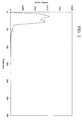
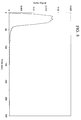
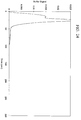
- Fig. 1 shows the sulfur signal as a function of time for tobacco with Ferro 3249 glass frit as the accelerator;
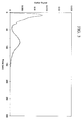
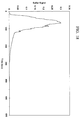
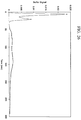
- Fig. 2 shows the sulfur signal as a function of time for tobacco with lithium metaphosphate (LiPO₃) as the accelerator;
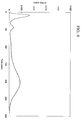
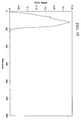
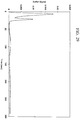
- Fig. 3 shows the sulfur signal as a function of time for tobacco with niobium pentoxide (Nb₂O₅) as the accelerator;
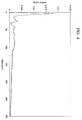
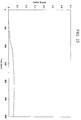
- Fig. 4 shows the sulfur signal as a function of time for tobacco without any accelerator;
- Fig. 5 shows the sulfur signal as a function of time for tobacco with zirconium oxide (ZrO₂) as the accelerator;
- Fig. 6 shows the sulfur signal as a function of time for tobacco with aluminum oxide (Al₂O₃) as the accelerator;
- Fig. 7 shows the sulfur signal as a function of time for tobacco with a mixture of compound comprising niobium pentoxide (Nb₂O₅) and lithium metaphosphate (LiPO₃) with 2:1 weight ratio as the accelerator;
- Fig. 8 shows the sulfur signal as a function of time for tobacco with a mixture of compound comprising tungsten oxide (WO₃) and lithium metaphosphate (LiPO₃) with 5:6 weight ratio as the accelerator;
- Fig. 9 shows the sulfur signal as a function of time for tobacco with a mixture of compound comprising tungsten oxide (WO₃) and lithium metaphosphate (LiPO₃) with 5:2 weight ratio as the accelerator;
- Fig. 10 shows the sulfur signal as a function of time for tobacco with a mixture of compound comprising tungsten oxide (WO₃) and lithium metaphosphate (LiPO₃) with 5:1 weight ratio as the accelerator;
- Fig. 11 shows the sulfur signal as a function of time for tobacco with a mixture of compound comprising tungsten oxide (WO₃) and lithium metaphosphate (LiPO₃) with 20:1 weight ratio as the accelerator;
- Fig. 12 shows the sulfur signal as a function of time for tobacco with a mixture of compound comprising tungsten oxide (WO₃) and potassium dihydrogen phosphate (KH₂PO₄) with 10:1 weight ratio as the accelerator;
- Fig. 13 shows the sulfur signal as a function of time for tobacco with a mixture of compound comprising tungsten oxide (WO₃), lithium metaphosphate (LiPO₃), and sodium tetraborate (NaBO₄) with 4:2:1 weight ratio as the accelerator;
- Fig. 14 shows the sulfur signal as a function of time for tobacco with zirconium oxide (ZrO₂) and aluminum oxide (Al₂O₃) with 1:1 weight ratio as the accelerator;
- Fig. 15 shows the sulfur signal as a function of time for tobacco with a mixture of compound comprising tungsten oxide (WO₃) and lithium metaphosphate (LiPO₃) with 20:1 weight ratio wet-mixed in isopropyl alcohol as the accelerator;
- Fig. 16 shows the sulfur signal as a function of time for tobacco with a mixture of compound comprising tungsten oxide (WO₃) and lithium metaphosphate (LiPO₃) with 5:6 weight ratio and followed by a reaction at 650°C for 20 minutes as the accelerator;
- Fig. 17 shows the sulfur signal as a function of time for tobacco with a mixture of compound comprising tungsten oxide (WO₃) and lithium metaphosphate (LiPO₃) with 20:1 weight ratio wet-mixed in isopropyl alcohol and followed by a reaction at 700°C for 5 minutes as the accelerator;
- Fig. 18 shows the sulfur signal as a function of time for barium sulfate (BaSO₄) with lithium metaphosphate (LiPO₃) as the accelerator;
- Fig. 19 shows the sulfur signal as a function of time for barium sulfate (BaSO₄) with a mixture of compound comprising tungsten oxide (WO₃) and lithium metaphosphate (LiPO₃) with 20:1 weight ratio as the accelerator;
- Fig. 20 shows the sulfur signal as a function of time for barium sulfate (BaSO₄) without any accelerator;
- Fig. 21 shows the sulfur signal as a function of time for calcium sulfate (CaSO₄) with lithium metaphosphate (LiPO₃) as the accelerator;
- Fig. 22 shows the sulfur signal as a function of time for calcium sulfate (CaSO₄) with a mixture of compound comprising tungsten oxide (WO₃) and lithium metaphosphate (LiPO₃) with 20:1 weight ratio as the accelerator;
- Fig. 23 shows the sulfur signal as a function of time for calcium sulfate (CaSO₄) without any accelerator;
- Fig. 24 shows the sulfur signal as a function of time for tobacco with lithium metaphosphate (LiPO₃) as the accelerator tested at 1350°C;
- Fig. 25 shows the sulfur signal as a function of time for tobacco with a mixture of compound comprising tungsten oxide (WO₃) and lithium metaphosphate (LiPO₃) with 20:1 weight ratio as the accelerator tested at 1350°C;
- Fig. 26 shows the sulfur signal as a function of time for tobacco without any accelerator tested at 1350°C;
- Fig. 27 shows the sulfur signal as a function of time for tobacco with lithium metaphosphate (LiPO₃) as the accelerator tested at 1250°C;
- Fig. 28 shows the sulfur signal as a function of time for tobacco with a mixture of compound comprising tungsten oxide (WO₃) and lithium metaphosphate (LiPO₃) with 20:1 weight ratio as the accelerator tested at 1250°C; and
- Fig. 29 shows the sulfur signal as a function of time for tobacco without any accelerator tested at 1250°C.
- In the preferred embodiment a non-toxic accelerator, comprising one or a mixture of glass frit, an inorganic phosphate compound, or niobium pentoxide (Nb₂O₅), is mixed with a substance to be analyzed in a ratio of from about two grams (2.0 gm) to about 0.15 grams accelerator to substance, and placed in a combustion container. This ratio is merely a preferred ratio; the ratio of accelerator to substance can vary within usual ranges used in the art. The container is placed in a combustion analyzer, and the mixture heated from about 450°C to about 1450°C, depending on the substance to be analyzed and the specific test protocol used. The combustion gasses are analyzed for the desired elements. The accelerator may be a single component compound comprising glass frit, an inorganic phosphate compound, or niobium pentoxide, or the accelerator may be a multicomponent compound formed by mixing at least one of glass frit and/or an inorganic phosphate compound with niobium pentoxide (Nb₂O₅). The accelerator may include other ingredients, with some advantage being afforded by the addition of tungsten oxide (WO₃) to glass frit and/or an inorganic phosphate. In addition to being non-toxic, the accelerators of the preferred embodiment reduce the time required for elemental decomposition in an organic or inorganic compound to at least one half of the analysis time when no accelerator is used.
- Preferably, the accelerator has a particle size of no more than about 2 mm, with the preferred particle size being from about 0.1 to about 20 µm. The only restriction on the amount of impurities is that the accelerator should not contain as a significant impurity the element being tested for.
- The glass frit utilized can be a commercially available powder or a special formulated glass frit. Additionally, the glass frit can be either a leaded glass frit or a leadless glass frit.
- A more preferred glass frit is Ferro 3249, which comprises less than about 5% by weight calcium oxide (CaO), from about 5% to about 15% by weight magnesium oxide (MgO), from about 5% to about 15% by weight aluminum oxide (Al₂O₃), from about 25% to about 50% by weight boron trioxide (B₂O₃), and from about 25% to about 50% by weight silicon dioxide (SiO₂). Ferro 3249 glass frit has a frit fusion point of 1024°C; a frit flow point of 1246°C; a specific gravity of 2.40 g/cm³; and a particle size of -325 mesh.
- The most preferred inorganic phosphate compound is lithium metaphosphate (LiPO₃). Another example of an inorganic phosphate compound that can be used is potassium dihydrogen phosphate (KH₂PO₄).
- There are several different methods of combining the components of the preferred embodiment to form a multicomponent non-toxic accelerator. The components can be processed by any known dry mixing technique, which includes ball milling, jet milling, attrition milling, V-blending, etc. Another method of mixing the components is to process them by using any known wet mixing procedure. Wet mixing in water involves placing the components in water, mixing the solution, drying the mixture, and then grinding the mixture into a fine powder. Alternatively, the components can be processed by wet mixing in a solvent solution. This entails placing the components in a solvent, for example, mixing in isopropyl alcohol as a dispersing medium using a high density polyethylene jar and alumina balls, although there is no particular restriction on the liquid dispersing medium that can be used. The wet slurry produced is then dried and ground into a fine powder. Finally, the components can be dry mixed, wet mixed in a water solution, or wet mixed in a solvent solution, and then heated to a high temperature of between about 300°C to about 1700°C, preferably between about 500°C to about 700°C, thereby melt-mixing the components. The resulting powder melts into a chunk of glass-like material, which is then ground into a fine powder using, for example, a mortar and pestal, of no more than about 2 mm, with the preferred particle size being from about 0.1 to about 20 µm.
- Tungsten oxide (WO₃), can be beneficially mixed with one or both of glass frit and/or an inorganic phosphate compound, as opposed to merely using tungsten oxide (WO₃) as the sole accelerator. Tungsten oxide (WO₃) has been used as a substitute for the traditional accelerator, vanadium oxide (V₂O₅), in cases where objections to the use of vanadium oxide (V₂O₅) powder existed, and/or vanadium oxide (V₂O₅) was unavailable. Substitution of tungsten oxide (WO₃) for vanadium oxide (V₂O₅) yielded adequate results, as tungsten oxide (WO₃) possesses similar decomposition capabilities. However, tungsten oxide (WO₃) performed beneficially only at higher temperatures and for a smaller range of samples. By combining tungsten oxide (WO₃) with one of glass frit and/or an inorganic phosphate compound, a multicomponent accelerator is produced that is both non-toxic and is useful for application at a broader range of temperatures, thus covering a broader range of samples.
- The weight ratio of accelerators to each other when a multicomponent non-toxic accelerator is formed is not critical. The multicomponent accelerator can have any ratio in weight among the components. A more preferred range of accelerator components in a multicomponent accelerator comprises, for example, tungsten oxide or niobium pentoxide and lithium metaphosphate or glass frit, in a weight ratio from 40:1 to 10:1. In the most preferred embodiment, the ratio by weight of tungsten oxide and lithium metaphosphate is 20:1.
- Tungsten oxide can be combined with one or both of the phosphate and glass frit components using any of the previously described mixing techniques (dry mixing; wet mixing in water; wet mixing in solvent; mixing followed by heat treatment).
- Once it is determined which accelerator (either single component or multicomponent) is to be used for a particular analysis, the accelerator is then mixed with the substance to be analyzed. Any suitable mixing technique can be utilized. In the examples discussed below, Tobacco, the sample to be analyzed, is mixed with the chosen accelerator by hand blending the mixture of substance and accelerator using a spatula.
- The ratio of accelerator to the substance to be analyzed is not critical, and can vary within usual ranges used in the art. Preferably, about 2 grams of accelerator is mixed with approximately 0.15 grams of the substance to be analyzed.
- The non-toxic accelerators of the preferred embodiment are useful in testing for a broad range of particular elements in the elemental analysis of whatever substance is chosen for examination. The examples discussed below employ the non-toxic accelerators of the preferred embodiment in testing for sulfur content in samples of tobacco, barium sulfate (BaSO₄), and calcium sulfate (CaSO₄). The non-toxic accelerators of the preferred embodiment are also useful in testing for phosphorous, carbon, fluorine, chlorine, bromine, iodine, as well as other elements.
- The non-toxic accelerators of the preferred embodiment are useful in a wide range of analytical instrumentation applications. The examples discussed below utilize the SC-444 carbon and sulfur analyzer (made by LECO Corporation), although any suitable instrumentation may be employed.
- The general testing procedure is as follows. First, an appropriate amount of non-toxic accelerator (either single component or multicomponent) of the preferred embodiment would be mixed with a desired amount of the substance to be tested. The mixture is then placed in a suitable combustion container. The combustion container with its contents is then placed in the combustion analyzer and heated to a temperature of about 450°C to about 1450°C. Certain photo-organic analyzing equipment exists that employs a combustion temperature of about 750°C. The SC-444 used in the examples discussed below has a combustion range of about 450°C to about 1450°C, with the most preferred combustion temperature being about 1450°C. Once the sample is combusted, the gasses released are then analyzed for their elemental composition.
- In the examples below, a suitable amount of the non-toxic accelerator of the preferred embodiment (either single component or multicomponent) was weighed into a ceramic boat with 0.15 grams of Tobacco (or barium sulfate, or calcium sulfate). The accelerator and the Tobacco (or barium sulfate, or calcium sulfate) were then hand blended using a spatula. Next, the ceramic boat with blended Tobacco and accelerator was pushed into a combustion tube of the SC-444 carbon and sulfur analyzer (made by LECO Corporation) and tested at a desired combustion range (in the examples the temperatures used are 1250°C, 1350°C, and 1450°C) for sulfur determination. Although sulfur is used in the examples as the element being tested for, the non-toxic accelerators of the preferred embodiment are useful for analyzing a broad range of elements, including, but not limited to, phosphorous, carbon, fluorine, chlorine, bromine, and iodine. This procedure was employed to demonstrate that use of the non-toxic accelerators of the preferred embodiment would produce both (a) a large sulfur signal, indicating a completely analyzed result, and (b) a sulfur signal that came off in a relatively short period of time, indicating that addition of the non-toxic accelerators of the preferred embodiment enhances the analysis.
- Two grams of Ferro 3249 glass frit was weighed in a ceramic boat followed by 0.15 grams of Tobacco. Tobacco and glass frit were blended by hand using a spatula. The ceramic boat with blended Tobacco and glass frit was pushed into the combustion tube of the SC-444 at 1450°C for sulfur determination. Most of the sulfur signal came off within approximately 90 seconds while a small amount of residual lasted until approximately 120 seconds. Figure 1 shows the result of the sulfur signal as a function of analysis time.
- Two grams of lithium metaphosphate (LiPO₃) was weighed into a ceramic boat followed by 0.15 grams of Tobacco. Tobacco and lithium metaphosphate were blended by hand using a spatula. The ceramic boat with blended Tobacco and lithium metaphosphate was pushed into the combustion tube of the SC-444 at 1450°C for sulfur determination. All of the sulfur signal came off within approximately 70 seconds. Figure 2 shows the result of the sulfur signal as a function of analysis time.
- Two grams of niobium pentoxide (Nb₂O₅) was weighed in the ceramic boat followed by 0.15 grams of tobacco. The ceramic boat with blended Tobacco and niobium pentoxide was pushed into the combustion tube of the SC-444 at 1450°C for sulfur determination. All of the sulfur signal came off within approximately 150 seconds. Figure 3 shows the result of the sulfur signal as a function of analysis time.
- 0.15 grams of Tobacco was weighed in the ceramic boat without any accelerator. The ceramic boat with Tobacco was pushed into the combustion tube of the SC-444 at 1450°C for sulfur determination as in example 1. The sulfur signal extends to approximately 300 seconds. Figure 4 shows the result of the sulfur signal as a function of analysis time.
- Two grams of zirconium oxide (ZrO₂) was weighed in the ceramic boat followed by 0.15 grams of Tobacco. The mixture and ceramic boat were prepared and analyzed for sulfur determination as in example 1. The primary sulfur peaks within 50 seconds were suppressed and the sulfur signal extended beyond 300 seconds. Figure 5 shows the result of the sulfur signal as a function of analysis time.
- Two grams of aluminum oxide (Al₂O₃) was weighed in the ceramic boat followed by 0.15 grams of tobacco. The mixture and ceramic boat were prepared and analyzed for sulfur determination as in example 1. The primary sulfur peaks within 50 seconds were suppressed and the sulfur signal extended beyond 300 seconds. Figure 6 shows the result of the sulfur signal as a function of analysis time.
- 1.5 grams of the same lithium metaphosphate (LiPO₃) as used in example 2 and 1.5 grams of the same niobium pentoxide (Nb₂O₅) as used in example 3 were uniformly dry mixed in a mortar and pestal. The mixture was added in a ceramic boat followed by 0.15 grams of Tobacco. Tobacco and the mixture were blended by hand using a spatula. The ceramic boat with blended Tobacco and mixture was pushed into the combustion tube of the SC-444 at 1450°C for sulfur determination. All of the sulfur signal came off within approximately 75 seconds. Figure 7 shows the result of the sulfur signal as a function of analysis time.
- 1.5 grams of tungsten oxide (WO₃) and 1.8 grams of the same lithium metaphosphate (LiPO₃) used in example 2 were uniformly dry mixed in a mortar and pestal. The mixture was added in a ceramic boat followed by 0.15 grams of Tobacco. Tobacco and the mixture were blended by hand using a spatula. The ceramic boat with blended Tobacco and mixture was pushed into the combustion tube of the SC-444 at 1450°C for sulfur determination. All of the sulfur signal came off within approximately 100 seconds. Figure 8 shows the result of the sulfur signal as a function of analysis time.
- Two grams of tungsten oxide (WO₃) and 0.8 grams of the same lithium metaphosphate (LiPO₃) used in example 2 were uniformly dry mixed in a mortar and pestal. The mixture was added in a ceramic boat followed by 0.15 grams of Tobacco. Tobacco and the mixture were blended by hand using a spatula. The ceramic boat with blended Tobacco and mixture was pushed into the combustion tube of the SC-444 at 1450°C for sulfur determination. All of the sulfur signal came off within approximately 110 seconds. Figure 9 shows the result of the sulfur signal as a function of analysis time.
- Four grams of tungsten oxide (WO₃) and 0.8 grams of the same lithium metaphosphate (LiPO₃) used in example 2 were uniformly dry mixed in a mortar and pestal. The mixture was added in a ceramic boat followed by 0.15 grams of Tobacco. Tobacco and the mixture were blended by hand using a spatula. The ceramic boat with blended Tobacco and mixture was pushed into the combustion tube of the SC-444 at 1450°C for sulfur determination. All of the sulfur signal came off within approximately 75 seconds. Figure 10 shows the result of the sulfur signal as a function of analysis time.
- Five grams of tungsten oxide (WO₃) and 0.25 grams of the same lithium metaphosphate (LiPO₃) used in example 2 were uniformly dry mixed in a mortar and pestal. The mixture was added in a ceramic boat followed by 0.15 grams of Tobacco. Tobacco and the mixture were blended by hand using a spatula. The ceramic boat with blended Tobacco and mixture was pushed into the combustion tube of the SC-444 at 1450°C for sulfur determination. All of the sulfur signal came off within approximately 75 seconds. Figure 11 shows the result of the sulfur signal as a function of analysis time.
- Five grams of tungsten oxide (WO₃) as used in example 2 and 0.5 grams of potassium dihydrogen phosphate (KH₂PO₄) were uniformly dry mixed in a mortar and pestal. The mixture was added in a ceramic boat followed by 0.15 grams of Tobacco. Tobacco and the mixture were blended by hand using a spatula. The ceramic boat with blended Tobacco and mixture was pushed into the combustion tube of the SC-444 at 1450°C for sulfur determination. All of the sulfur signal came off within approximately 75 seconds. Figure 12 shows the result of the sulfur signal as a function of analysis time.
- Two grams of tungsten oxide (WO₃) and one gram of the same lithium metaphosphate (LiPO₃) used in example 2, and 0.5 grams of sodium tetraborate (NaBO₄) were uniformly dry mixed in a mortar and pestal. The mixture was added in a ceramic boat followed by 0.15 grams of Tobacco. Tobacco and the mixture were blended by hand using a spatula. The ceramic boat with blended Tobacco and mixture was pushed into the combustion tube of the SC-444 at 1450°C for sulfur determination. All of the sulfur signal came off within approximately 80 seconds. Figure 13 shows the result of the sulfur signal as a function of analysis time.
- One gram of the same zirconium oxide (ZrO₂) as used in example 5 and one gram of the same aluminum oxide (Al₂O₃) as used in example 6 were uniformly dry mixed in a mortar and pestal. The mixture was added in a ceramic boat followed by 0.15 grams of Tobacco. Tobacco and the mixture were blended by hand using a spatula. The ceramic boat with blended Tobacco and mixture was pushed into the combustion tube of the SC-444 at 1450°C for sulfur determination. Not only was the first major peak suppressed, the sulfur signal was also extended to beyond 300 seconds. Figure 14 shows the result of the sulfur signal as a function of analysis time.
- Ninety grams of tungsten oxide (WO₃) and 4.5 grams of the same lithium metaphosphate (LiPO₃) used in example 2 were uniformly mixed in isopropyl alcohol as a dispersing medium using a high density polyethylene jar and alumina balls. The wet slurry was dried at 70°C for 24 hours before using a mortar and pestal to grind to a fine powder. Five grams of the ground fine powder was weighed into a ceramic boat followed by 0.15 grams of Tobacco. Tobacco and the mixture were blended by hand using a spatula. The ceramic boat with blended Tobacco and ground fine mixture was pushed into the combustion tube of the SC-444 at 1450°C for sulfur determination. All of the sulfur signal came off within approximately 70 seconds. Figure 15 shows the result of the sulfur signal as a function of analysis time.
- Thirty grams of mixture from example 8 was loaded into an alumina crucible and covered by a lid. The crucible was then heated to 650°C for 20 minutes in an air atmosphere at a heating rate of approximately 40°C/minute. The resulting powder melted into a greenish chunk of glass which was then ground into a fine powder by using the mortar and pestal. Four grams of this ground fine powder was weighed into a ceramic boat followed by 0.15 grams of Tobacco. Tobacco and the greenish glass powder were blended by hand using a spatula. The ceramic boat with blended Tobacco and ground fine mixture was pushed into the combustion tube of the SC-444 at 1450°C for sulfur determination. All of the sulfur signal came off within approximately 75 seconds. Figure 16 shows the result of the sulfur signal as a function of analysis time.
- Thirty grams of the same mixture used in example 15 was loaded into an alumina crucible and covered by a lid. The crucible was then heated to 700°C for 5 minutes in an air atmosphere at a heating rate of approximately 40°C/minute. The resulting powder melted into a greenish chunk of glass which was then ground into a fine powder by using the mortar and pestal. Five grams of this ground fine powder was weighed into a ceramic boat followed by 0.15 grams of Tobacco. Tobacco and the greenish glass powder were blended by hand using a spatula. The ceramic boat with blended Tobacco and ground fine mixture was pushed into the combustion tube of the SC-444 at 1450°C for sulfur determination. All of the sulfur signal came off within approximately 75 seconds. Figure 17 shows the result of the sulfur signal as a function of analysis time.
- Five grams of the same lithium metaphosphate (LiPO₃) used in example 2 was weighed into a ceramic boat followed by 0.15 grams of barium sulfate (BaSO₄). The chemical bonds of sulfur in barium sulfate are much stronger than those in tobacco, and therefore harder to dissociate. Barium sulfate was substituted for tobacco as the sample to be tested to demonstrate that the non-toxic accelerators of the preferred embodiment would function sufficiently even in substances that are more difficult to analyze. Barium sulfate and lithium metaphosphate were blended by hand using a spatula. The ceramic boat with blended barium sulfate and lithium metaphosphate was pushed into the combustion tube of the SC-444 at 1450°C for sulfur determination. All of the sulfur signal came off within approximately 300 seconds. Figure 18 shows the result of the sulfur signal as a function of analysis time.
- Five grams of tungsten oxide (WO₃) and 0.25 grams of the same lithium metaphosphate (LiPO₃) used in example 2 were uniformly dry mixed in a mortar and pestal. The mixture was added in a ceramic boat followed by 0.15 grams of barium sulfate (BaSO₄). Barium sulfate was ground to fine powder before adding into the ceramic boat. Barium sulfate and the mixture were blended by hand using a spatula. The ceramic boat with blended Tobacco and mixture was pushed into the combustion tube of the SC-444 at 1450°C for sulfur determination. All of the sulfur signal came off within approximately 120 seconds. Figure 19 shows the result of the sulfur signal as a function of analysis time.
- 0.15 grams of barium sulfate (BaSO₄) was weighed into a ceramic boat. The ceramic boat with barium sulfate was pushed into the combustion tube of the SC-444 at 1450°C for sulfur determination. No sulfur signal was detected until approximately 200 seconds and only a small amount of sulfur signal came off even after 600 seconds. Figure 20 shows the result of the sulfur signal as a function of analysis time.
- Five grams of the same lithium metaphosphate (LiPO₃) used in example 2 was weighed into a ceramic boat followed by 0.15 grams of calcium sulfate (CaSO₄). Again, the chemical bonds of sulfur are much stronger in calcium sulfate than they are in Tobacco. Calcium sulfate and lithium metaphosphate were blended by hand using a spatula. The ceramic boat with blended barium sulfate and lithium metaphosphate was pushed into the combustion tube of the SC-444 at 1450°C for sulfur determination. All of the sulfur signal came off within approximately 270 seconds. Figure 21 shows the result of the sulfur signal as a function of analysis time.
- Five grams of tungsten oxide (WO₃) and 0.25 grams of the same lithium metaphosphate (LiPO₃) used in example 2 were uniformly dry mixed in a mortar and pestal. The mixture was added in a ceramic boat followed by 0.15 grams of calcium sulfate (CaSO₄). Calcium sulfate and the mixture were blended by hand using a spatula. The ceramic boat with blended calcium sulfate and mixture was pushed into the combustion tube of the SC-444 at 1450°C for sulfur determination. All of the sulfur signal came off within approximately 120 seconds. Figure 22 shows the result of the sulfur signal as a function of analysis time.
- 0.15 grams of calcium sulfate (CaSO₄) was weighed into a ceramic boat. The ceramic boat with calcium sulfate was pushed into the combustion tube of the SC-444 at 1450°C for sulfur determination. No sulfur signal was detected until approximately 100 seconds and the sulfur signal was extended to even after 600 seconds. Figure 23 shows the result of the sulfur signal as a function of analysis time.
- Two grams of the same lithium metaphosphate (LiPO₃) used in example 2 was weighed into a ceramic boat followed by 0.15 grams of Tobacco. Tobacco and lithium metaphosphate were blended by hand using a spatula. The ceramic boat with blended Tobacco and lithium metaphosphate was pushed into the combustion tube of the SC-444 at 1350°C for sulfur determination. All of the sulfur signal came off within approximately 90 seconds. Figure 24 shows the result of the sulfur signal as a function of analysis time.
- Five grams of tungsten oxide (WO₃) and 0.25 grams of the same lithium metaphosphate (LiPO₃) used in example 2 were uniformly dry mixed in a mortar and pestal. The mixture was added in a ceramic boat followed by 0.15 grams of Tobacco. Tobacco and the mixture were blended by hand using a spatula. The ceramic boat with blended Tobacco and mixture was pushed into the combustion tube of the SC-444 at 1350°C for sulfur determination. All of the sulfur signal came off within approximately 90 seconds. Figure 25 shows the result of the sulfur signal as a function of analysis time.
- 0.15 grams of Tobacco was weighed into a ceramic boat. The ceramic boat with Tobacco was pushed into the combustion tube of the SC-444 at 1350°C for sulfur determination. The sulfur signal extends to approximately 300 seconds. Also, the total amount of sulfur released was reduced to approximately 80% compared to that of example 11. Figure 26 shows the result of the sulfur signal as a function of analysis time.
- Two grams of the same lithium metaphosphate (LiPO₃) used in example 2 was weighed into a ceramic boat followed by 0.15 grams of Tobacco. Tobacco and lithium metaphosphate were blended by hand using a spatula. The ceramic boat with blended Tobacco and lithium metaphosphate was pushed into the combustion tube of the SC-444 at 1250°C for sulfur determination. All of the sulfur signal came off within approximately 125 seconds. Figure 27 shows the result of the sulfur signal as a function of analysis time.
- Five grams of tungsten oxide (WO₃) and 0.25 grams of the same lithium metaphosphate (LiPO₃) used in example 2 were uniformly dry mixed in a mortar and pestal. The mixture was added in a ceramic boat followed by 0.15 grams of Tobacco. Tobacco and the mixture were blended by hand using a spatula. The ceramic boat with blended Tobacco and mixture was pushed into the combustion tube of the SC-444 at 1250°C for sulfur determination. All of the sulfur signal came off within approximately 120 seconds. Figure 28 shows the result of the sulfur signal as a function of analysis time.
- 0.15 grams of Tobacco was weighed in the ceramic boat. The ceramic boat with Tobacco was pushed into the combustion tube of the SC-444 at 1250°C for sulfur determination. The sulfur signal extends to approximately 300 seconds. Also, the total amount of sulfur released was reduced to approximately 60% compared to that of example 11. Figure 29 shows the result of the sulfur signal as a function of analysis time.
Claims (20)
- A method for accelerating the combustion decomposition of a substance to be analyzed by heating the substance to at least its decomposition temperature in the presence of a non-toxic accelerator comprising a compound selected from the group consisting of glass frit, niobium pentoxide, inorganic phosphates and mixtures thereof.
- A method as claimed in claim 1 wherein the non-toxic accelerator has a particle size of less than 2 mm.
- A method as claimed in claim 2 wherein the non-toxic accelerator has a particle size of from 0.1 to 20 µm.
- A method as claimed in any preceding claim wherein the substance is heated to a combustion temperature of from 450°C to 1450°C.
- A method as claimed in claim 4 wherein the substance is heated to a combustion temperature of from 1250°C to 1450°C.
- A method as claimed in any preceding claim wherein the inorganic phosphate is one of lithium metaphosphate or potassium dihydrogen phosphate.
- A method as claimed in any preceding claim in which tungsten oxide is also added to said non-toxic accelerator.
- A method as claimed in any preceding claim wherein the non-toxic accelerator comprises a mixture of (a) a component selected from the group consisting of tungsten oxide, niobium pentoxide and mixtures thereof; and (b) a component selected from the group consisting of glass frit, inorganic phosphates and mixtures thereof.
- A method as claimed in claim 8 wherein the non-toxic accelerator has a weight ratio of component (a) to component (b) of from 40:1 to 10:1.
- A method as claimed in claim 9 wherein the non-toxic accelerator has a weight ratio of component (a) to component (b) in the region of 20:1.
- A method as claimed in any preceding claim wherein all components are combined by dry mixing.
- A method as claimed in claim 11 wherein the dry mixing is followed by melt-mixing at a temperature of from 300°C to 1700°C.
- A method as claimed in claim 12 wherein the dry mixing is followed by melt-mixing at a temperature of from 500°C to 700°C.
- A method as claimed in any of claims 1 to 10 wherein all components are combined by wet mixing in a water solution.
- A method as claimed in claim 13 wherein the wet-mixing in a water solution is followed by heat treating at a temperature of from 300°C to 1700°C.
- A method as claimed in claim 15 wherein the wet-mixing in a water solution is followed by heat treating at a temperature of from 500°C to 700°C.
- A method as claimed in any of claims 1 to 10 wherein all components are combined by wet mixing in a solvent solution.
- A method as claimed in claim 17 wherein the wet mixing in a solvent solution is followed by heat treating at a temperature of from 300°C to 1700°C.
- A method as claimed in claim 18 wherein the wet mixing in a solvent solution is followed by heat treating at temperature of from 500°C to 700°C.
- A non-toxic combustion decomposition accelerator for elemental analysis comprising (a) a component selected from the group consisting of tungsten oxide, niobium pentoxide and mixtures thereof, and (b) a component selected from the group consisting of glass frit, inorganic phosphates and mixtures thereof.
Applications Claiming Priority (2)
| Application Number | Priority Date | Filing Date | Title |
|---|---|---|---|
| US08/313,018 US5547876A (en) | 1994-09-27 | 1994-09-27 | Combustion accelerators, processes for their production and processes for their use in elemental analysis |
| US313018 | 1994-09-27 |
Publications (3)
| Publication Number | Publication Date |
|---|---|
| EP0708332A2 true EP0708332A2 (en) | 1996-04-24 |
| EP0708332A3 EP0708332A3 (en) | 1997-08-06 |
| EP0708332B1 EP0708332B1 (en) | 2005-06-01 |
Family
ID=23214033
Family Applications (1)
| Application Number | Title | Priority Date | Filing Date |
|---|---|---|---|
| EP95305088A Expired - Lifetime EP0708332B1 (en) | 1994-09-27 | 1995-07-20 | Combustion decomposition accelerators |
Country Status (4)
| Country | Link |
|---|---|
| US (1) | US5547876A (en) |
| EP (1) | EP0708332B1 (en) |
| JP (1) | JPH0891866A (en) |
| DE (1) | DE69534243T2 (en) |
Families Citing this family (5)
| Publication number | Priority date | Publication date | Assignee | Title |
|---|---|---|---|---|
| JPH09289630A (en) * | 1996-04-22 | 1997-11-04 | Sony Corp | Information processing apparatus and method, and information receiving system |
| US9188577B2 (en) * | 2011-03-03 | 2015-11-17 | Phillips 66 Company | Measuring coking propensity |
| WO2015184102A1 (en) * | 2014-05-30 | 2015-12-03 | Corning Incorporated | Method of ball milling aluminum metaphosphate |
| KR102155406B1 (en) * | 2017-08-18 | 2020-09-11 | 주식회사 엘지화학 | Quantitative Analysis Method of Residual Chlorine in Zinc Ferrite |
| CN114460028A (en) * | 2020-11-09 | 2022-05-10 | 上海梅山钢铁股份有限公司 | Method for detecting content of calcium sulfate in sintering desulfurization and denitrification ash |
Family Cites Families (12)
| Publication number | Priority date | Publication date | Assignee | Title |
|---|---|---|---|---|
| US3278318A (en) * | 1963-03-28 | 1966-10-11 | Bausch & Lomb | Tungsten oxide-metal metaphosphate glasses |
| US4041217A (en) * | 1964-06-23 | 1977-08-09 | Catalyst Research Corporation | Thermal battery with metal-metal oxide heating composition |
| US3642583A (en) * | 1970-08-03 | 1972-02-15 | Anti Pollution Systems | Treatment of sewage and other contaminated liquids with recovery of water by distillation and oxidation |
| JPS55155249A (en) * | 1979-05-23 | 1980-12-03 | Sumitomo Chem Co Ltd | Method and apparatus of analysis of total nitrogen |
| US4537862A (en) * | 1982-06-28 | 1985-08-27 | Owens-Illinois, Inc. | Lead-free and cadmium-free glass frit compositions for glazing, enameling and decorating |
| JPS59168352A (en) * | 1983-03-15 | 1984-09-22 | Hitachi Ltd | Gas detection element and gas leak alarm |
| US4743302A (en) * | 1986-06-06 | 1988-05-10 | Vlsi Packaging Materials, Inc. | Low melting glass composition |
| CA1290507C (en) * | 1986-07-26 | 1991-10-15 | Kurasawa Optical Industry Co. Ltd. | Anti-fogging material |
| US5262363A (en) * | 1989-06-19 | 1993-11-16 | Saga Prefecture | Overglaze colors for pottery |
| US5204270A (en) * | 1991-04-29 | 1993-04-20 | Lacount Robert B | Multiple sample characterization of coals and other substances by controlled-atmosphere programmed temperature oxidation |
| US5206355A (en) * | 1991-09-30 | 1993-04-27 | The University Of Montana | Preparation of trisaccharides (kestoses) and polymers by pyrolysis of amorphous sucrose |
| IT1262947B (en) * | 1992-06-17 | 1996-07-22 | Bayer Italia Spa | GRANULATES, PROCESS FOR THEIR PREPARATION AND USE |
-
1994
- 1994-09-27 US US08/313,018 patent/US5547876A/en not_active Expired - Fee Related
-
1995
- 1995-07-20 DE DE69534243T patent/DE69534243T2/en not_active Expired - Lifetime
- 1995-07-20 EP EP95305088A patent/EP0708332B1/en not_active Expired - Lifetime
- 1995-07-25 JP JP7219406A patent/JPH0891866A/en active Pending
Non-Patent Citations (1)
| Title |
|---|
| None |
Also Published As
| Publication number | Publication date |
|---|---|
| EP0708332A3 (en) | 1997-08-06 |
| EP0708332B1 (en) | 2005-06-01 |
| US5547876A (en) | 1996-08-20 |
| DE69534243D1 (en) | 2005-07-07 |
| DE69534243T2 (en) | 2006-05-04 |
| JPH0891866A (en) | 1996-04-09 |
Similar Documents
| Publication | Publication Date | Title |
|---|---|---|
| Prowatke et al. | Trace element partitioning between apatite and silicate melts | |
| Poole | Low‐temperature viscosity of alkali silicate glasses | |
| Atlas | Effect of some lithium compounds on sintering of MgO | |
| EP0778816B1 (en) | Method of making high strength porcelain | |
| Mutluer et al. | Phase equilibria in the system MgO‐B2O3 | |
| Chan et al. | The sulfur partition ratio and the sulfide capacity of Na2O-SiO2 slags at 1200 C | |
| US5547876A (en) | Combustion accelerators, processes for their production and processes for their use in elemental analysis | |
| US4147759A (en) | Method of manufacturing β'SiAlON compounds | |
| Hodge | Phase Relations in the System Na2O‐Li2O‐Al2O3 | |
| BRlSl | Role of cuspidine (3CaO. 2SiO2. CaF2) in the system CaO–SiO2–CaF2 | |
| Jacob et al. | Reduction of Tricalcium Phosphate by Carbon1 | |
| Bettinelli et al. | Rapid analysis of coal fly ash by x‐ray fluorescence spectrometry | |
| Morgan et al. | Reactions of BeO and SiO2; Synthesis and Decomposition of Phenacite | |
| Jabeen et al. | Oxygen isotope study of Tsukuba chondrite, some HED meteorites and Allende chondrules | |
| Borisov et al. | Laser ablation inductively coupled plasma mass spectrometry of pressed pellet surrogates for Pu materials disposition | |
| JP2695310B2 (en) | Inorganic substance processing method | |
| Petkov et al. | Phase analysis and crystallographic properties of the phosphate systems MO-ZrO2-P2O5 (M= Mg, Ca, Sr or Ba) | |
| SU1712825A1 (en) | Method of preparing specimens for x-ray spectral analysis | |
| KR102924854B1 (en) | Standard sample for analysis and manufacturing method thereof | |
| Dietzel | The (AIP) O4⇌ Al (PO4) transformation | |
| Shinohara | Application of the Microwave Acid Digestion Technique to the Pyrophosphoric AcidMethod for Quantitative Analysis of Free Silica in Dust. | |
| Plowman | X-ray spectrometric determination of rare earth elements by using a fusion technique | |
| Haskin et al. | Major and trace element concentrations in samples from 72275 and 72255 | |
| SU1091055A1 (en) | Method of preparting standard specimens | |
| King et al. | Sample preparation method for major‐element analyses of carbonate rocks by X‐ray spectrometry |
Legal Events
| Date | Code | Title | Description |
|---|---|---|---|
| PUAI | Public reference made under article 153(3) epc to a published international application that has entered the european phase |
Free format text: ORIGINAL CODE: 0009012 |
|
| AK | Designated contracting states |
Kind code of ref document: A2 Designated state(s): DE FR GB |
|
| PUAL | Search report despatched |
Free format text: ORIGINAL CODE: 0009013 |
|
| AK | Designated contracting states |
Kind code of ref document: A3 Designated state(s): DE FR GB |
|
| 17P | Request for examination filed |
Effective date: 19980127 |
|
| 17Q | First examination report despatched |
Effective date: 20011012 |
|
| GRAP | Despatch of communication of intention to grant a patent |
Free format text: ORIGINAL CODE: EPIDOSNIGR1 |
|
| GRAS | Grant fee paid |
Free format text: ORIGINAL CODE: EPIDOSNIGR3 |
|
| GRAA | (expected) grant |
Free format text: ORIGINAL CODE: 0009210 |
|
| AK | Designated contracting states |
Kind code of ref document: B1 Designated state(s): DE FR GB |
|
| REG | Reference to a national code |
Ref country code: GB Ref legal event code: FG4D |
|
| REF | Corresponds to: |
Ref document number: 69534243 Country of ref document: DE Date of ref document: 20050707 Kind code of ref document: P |
|
| ET | Fr: translation filed | ||
| PLBE | No opposition filed within time limit |
Free format text: ORIGINAL CODE: 0009261 |
|
| STAA | Information on the status of an ep patent application or granted ep patent |
Free format text: STATUS: NO OPPOSITION FILED WITHIN TIME LIMIT |
|
| 26N | No opposition filed |
Effective date: 20060302 |
|
| PGFP | Annual fee paid to national office [announced via postgrant information from national office to epo] |
Ref country code: FR Payment date: 20080707 Year of fee payment: 14 |
|
| PGFP | Annual fee paid to national office [announced via postgrant information from national office to epo] |
Ref country code: GB Payment date: 20080616 Year of fee payment: 14 |
|
| GBPC | Gb: european patent ceased through non-payment of renewal fee |
Effective date: 20090720 |
|
| REG | Reference to a national code |
Ref country code: FR Ref legal event code: ST Effective date: 20100331 |
|
| PG25 | Lapsed in a contracting state [announced via postgrant information from national office to epo] |
Ref country code: FR Free format text: LAPSE BECAUSE OF NON-PAYMENT OF DUE FEES Effective date: 20090731 |
|
| PG25 | Lapsed in a contracting state [announced via postgrant information from national office to epo] |
Ref country code: GB Free format text: LAPSE BECAUSE OF NON-PAYMENT OF DUE FEES Effective date: 20090720 |
|
| PGFP | Annual fee paid to national office [announced via postgrant information from national office to epo] |
Ref country code: DE Payment date: 20140731 Year of fee payment: 20 |
|
| REG | Reference to a national code |
Ref country code: DE Ref legal event code: R071 Ref document number: 69534243 Country of ref document: DE |