EP0708603B1 - Nahrungsmittel mit erhoehter festigkeit - Google Patents
Nahrungsmittel mit erhoehter festigkeit Download PDFInfo
- Publication number
- EP0708603B1 EP0708603B1 EP94923429A EP94923429A EP0708603B1 EP 0708603 B1 EP0708603 B1 EP 0708603B1 EP 94923429 A EP94923429 A EP 94923429A EP 94923429 A EP94923429 A EP 94923429A EP 0708603 B1 EP0708603 B1 EP 0708603B1
- Authority
- EP
- European Patent Office
- Prior art keywords
- fiber
- food product
- strands
- foods
- product
- Prior art date
- Legal status (The legal status is an assumption and is not a legal conclusion. Google has not performed a legal analysis and makes no representation as to the accuracy of the status listed.)
- Expired - Lifetime
Links
- 235000013305 food Nutrition 0.000 title claims abstract description 104
- 239000000835 fiber Substances 0.000 claims abstract description 134
- 235000012495 crackers Nutrition 0.000 claims abstract description 29
- 235000011888 snacks Nutrition 0.000 claims abstract description 17
- 235000013339 cereals Nutrition 0.000 claims abstract description 14
- 235000014510 cooky Nutrition 0.000 claims abstract description 11
- 239000004464 cereal grain Substances 0.000 claims abstract description 8
- 235000011850 desserts Nutrition 0.000 claims abstract description 8
- 235000012184 tortilla Nutrition 0.000 claims abstract description 8
- 230000000813 microbial effect Effects 0.000 claims abstract description 7
- 235000019895 oat fiber Nutrition 0.000 claims description 66
- 238000000034 method Methods 0.000 claims description 18
- 230000001953 sensory effect Effects 0.000 claims description 14
- 240000008042 Zea mays Species 0.000 claims description 11
- 235000005824 Zea mays ssp. parviglumis Nutrition 0.000 claims description 11
- 235000002017 Zea mays subsp mays Nutrition 0.000 claims description 11
- 235000005822 corn Nutrition 0.000 claims description 11
- 230000002411 adverse Effects 0.000 claims description 8
- 229940095676 wafer product Drugs 0.000 claims description 8
- 241000209140 Triticum Species 0.000 claims description 7
- 235000021307 Triticum Nutrition 0.000 claims description 7
- 239000000463 material Substances 0.000 claims description 7
- 241000196324 Embryophyta Species 0.000 claims description 6
- 235000007164 Oryza sativa Nutrition 0.000 claims description 6
- 235000009566 rice Nutrition 0.000 claims description 6
- 241000219310 Beta vulgaris subsp. vulgaris Species 0.000 claims description 5
- 240000004808 Saccharomyces cerevisiae Species 0.000 claims description 5
- 235000021536 Sugar beet Nutrition 0.000 claims description 5
- 229920002522 Wood fibre Polymers 0.000 claims description 5
- 239000002025 wood fiber Substances 0.000 claims description 5
- 241000209094 Oryza Species 0.000 claims 4
- 235000015243 ice cream Nutrition 0.000 abstract description 20
- 235000012431 wafers Nutrition 0.000 abstract description 14
- 235000013325 dietary fiber Nutrition 0.000 abstract description 6
- 235000014105 formulated food Nutrition 0.000 abstract description 4
- 239000000047 product Substances 0.000 description 27
- 239000000203 mixture Substances 0.000 description 23
- 235000000346 sugar Nutrition 0.000 description 19
- XLYOFNOQVPJJNP-UHFFFAOYSA-N water Substances O XLYOFNOQVPJJNP-UHFFFAOYSA-N 0.000 description 18
- 239000004615 ingredient Substances 0.000 description 13
- 238000007906 compression Methods 0.000 description 10
- 230000006835 compression Effects 0.000 description 10
- 239000000523 sample Substances 0.000 description 9
- 238000009472 formulation Methods 0.000 description 7
- 208000030757 autosomal dominant osteopetrosis Diseases 0.000 description 6
- 235000012054 meals Nutrition 0.000 description 6
- 238000005259 measurement Methods 0.000 description 6
- ZWLUXSQADUDCSB-UHFFFAOYSA-N phthalaldehyde Chemical compound O=CC1=CC=CC=C1C=O ZWLUXSQADUDCSB-UHFFFAOYSA-N 0.000 description 6
- 238000012360 testing method Methods 0.000 description 6
- 229920002472 Starch Polymers 0.000 description 5
- 235000013312 flour Nutrition 0.000 description 5
- 238000004519 manufacturing process Methods 0.000 description 5
- 238000013001 point bending Methods 0.000 description 5
- 229940100445 wheat starch Drugs 0.000 description 5
- 239000002245 particle Substances 0.000 description 4
- GEHJYWRUCIMESM-UHFFFAOYSA-L sodium sulfite Chemical compound [Na+].[Na+].[O-]S([O-])=O GEHJYWRUCIMESM-UHFFFAOYSA-L 0.000 description 4
- 235000007319 Avena orientalis Nutrition 0.000 description 3
- 235000007558 Avena sp Nutrition 0.000 description 3
- 235000010469 Glycine max Nutrition 0.000 description 3
- 229920002678 cellulose Polymers 0.000 description 3
- 239000001913 cellulose Substances 0.000 description 3
- 230000003534 oscillatory effect Effects 0.000 description 3
- 238000002360 preparation method Methods 0.000 description 3
- 150000003839 salts Chemical class 0.000 description 3
- 238000004904 shortening Methods 0.000 description 3
- ATRRKUHOCOJYRX-UHFFFAOYSA-N Ammonium bicarbonate Chemical compound [NH4+].OC([O-])=O ATRRKUHOCOJYRX-UHFFFAOYSA-N 0.000 description 2
- 229910000013 Ammonium bicarbonate Inorganic materials 0.000 description 2
- 240000005979 Hordeum vulgare Species 0.000 description 2
- 235000007340 Hordeum vulgare Nutrition 0.000 description 2
- MHAJPDPJQMAIIY-UHFFFAOYSA-N Hydrogen peroxide Chemical compound OO MHAJPDPJQMAIIY-UHFFFAOYSA-N 0.000 description 2
- 235000019894 OptaTM Nutrition 0.000 description 2
- 240000007594 Oryza sativa Species 0.000 description 2
- UIIMBOGNXHQVGW-UHFFFAOYSA-M Sodium bicarbonate Chemical compound [Na+].OC([O-])=O UIIMBOGNXHQVGW-UHFFFAOYSA-M 0.000 description 2
- 235000012538 ammonium bicarbonate Nutrition 0.000 description 2
- 239000001099 ammonium carbonate Substances 0.000 description 2
- 238000004458 analytical method Methods 0.000 description 2
- 238000005520 cutting process Methods 0.000 description 2
- 238000011156 evaluation Methods 0.000 description 2
- 238000002474 experimental method Methods 0.000 description 2
- -1 for example Substances 0.000 description 2
- 238000010348 incorporation Methods 0.000 description 2
- 230000003763 resistance to breakage Effects 0.000 description 2
- 235000010265 sodium sulphite Nutrition 0.000 description 2
- 238000003860 storage Methods 0.000 description 2
- 238000005728 strengthening Methods 0.000 description 2
- 235000008371 tortilla/corn chips Nutrition 0.000 description 2
- 235000011844 whole wheat flour Nutrition 0.000 description 2
- CHHHXKFHOYLYRE-UHFFFAOYSA-M 2,4-Hexadienoic acid, potassium salt (1:1), (2E,4E)- Chemical compound [K+].CC=CC=CC([O-])=O CHHHXKFHOYLYRE-UHFFFAOYSA-M 0.000 description 1
- 241000209763 Avena sativa Species 0.000 description 1
- 229920002261 Corn starch Polymers 0.000 description 1
- 239000000940 FEMA 2235 Substances 0.000 description 1
- 241000462195 Hamadryas glauconome Species 0.000 description 1
- 229920002488 Hemicellulose Polymers 0.000 description 1
- 241001158961 Melba Species 0.000 description 1
- DWAQJAXMDSEUJJ-UHFFFAOYSA-M Sodium bisulfite Chemical compound [Na+].OS([O-])=O DWAQJAXMDSEUJJ-UHFFFAOYSA-M 0.000 description 1
- 239000000654 additive Substances 0.000 description 1
- 230000000996 additive effect Effects 0.000 description 1
- 235000015173 baked goods and baking mixes Nutrition 0.000 description 1
- 239000000919 ceramic Substances 0.000 description 1
- 239000008120 corn starch Substances 0.000 description 1
- 235000013861 fat-free Nutrition 0.000 description 1
- 238000000855 fermentation Methods 0.000 description 1
- 230000004151 fermentation Effects 0.000 description 1
- 239000012467 final product Substances 0.000 description 1
- 239000000796 flavoring agent Substances 0.000 description 1
- 235000019634 flavors Nutrition 0.000 description 1
- 235000021552 granulated sugar Nutrition 0.000 description 1
- 238000000227 grinding Methods 0.000 description 1
- 238000010191 image analysis Methods 0.000 description 1
- 229920005610 lignin Polymers 0.000 description 1
- 230000013190 lipid storage Effects 0.000 description 1
- 239000011159 matrix material Substances 0.000 description 1
- 235000013336 milk Nutrition 0.000 description 1
- 239000008267 milk Substances 0.000 description 1
- 210000004080 milk Anatomy 0.000 description 1
- 238000002156 mixing Methods 0.000 description 1
- 238000003032 molecular docking Methods 0.000 description 1
- 238000004806 packaging method and process Methods 0.000 description 1
- 235000010241 potassium sorbate Nutrition 0.000 description 1
- 239000004302 potassium sorbate Substances 0.000 description 1
- 229940069338 potassium sorbate Drugs 0.000 description 1
- 238000012545 processing Methods 0.000 description 1
- 102000004169 proteins and genes Human genes 0.000 description 1
- 108090000623 proteins and genes Proteins 0.000 description 1
- 230000003014 reinforcing effect Effects 0.000 description 1
- 229910000030 sodium bicarbonate Inorganic materials 0.000 description 1
- 235000017557 sodium bicarbonate Nutrition 0.000 description 1
- 235000010267 sodium hydrogen sulphite Nutrition 0.000 description 1
- 239000007787 solid Substances 0.000 description 1
- 238000010025 steaming Methods 0.000 description 1
- 238000010998 test method Methods 0.000 description 1
- 238000005406 washing Methods 0.000 description 1
Images
Classifications
-
- A—HUMAN NECESSITIES
- A23—FOODS OR FOODSTUFFS; TREATMENT THEREOF, NOT COVERED BY OTHER CLASSES
- A23G—COCOA; COCOA PRODUCTS, e.g. CHOCOLATE; SUBSTITUTES FOR COCOA OR COCOA PRODUCTS; CONFECTIONERY; CHEWING GUM; ICE-CREAM; PREPARATION THEREOF
- A23G9/00—Frozen sweets, e.g. ice confectionery, ice-cream; Mixtures therefor
- A23G9/04—Production of frozen sweets, e.g. ice-cream
- A23G9/22—Details, component parts or accessories of apparatus insofar as not peculiar to a single one of the preceding groups
- A23G9/28—Details, component parts or accessories of apparatus insofar as not peculiar to a single one of the preceding groups for portioning or dispensing
- A23G9/288—Details, component parts or accessories of apparatus insofar as not peculiar to a single one of the preceding groups for portioning or dispensing for finishing or filling ice-cream cones or other edible containers; Manipulating methods therefor
-
- A—HUMAN NECESSITIES
- A21—BAKING; EDIBLE DOUGHS
- A21D—TREATMENT OF FLOUR OR DOUGH FOR BAKING, e.g. BY ADDITION OF MATERIALS; BAKING; BAKERY PRODUCTS
- A21D13/00—Finished or partly finished bakery products
- A21D13/02—Products made from whole meal; Products containing bran or rough-ground grain
-
- A—HUMAN NECESSITIES
- A23—FOODS OR FOODSTUFFS; TREATMENT THEREOF, NOT COVERED BY OTHER CLASSES
- A23L—FOODS, FOODSTUFFS OR NON-ALCOHOLIC BEVERAGES, NOT OTHERWISE PROVIDED FOR; PREPARATION OR TREATMENT THEREOF
- A23L7/00—Cereal-derived products; Malt products; Preparation or treatment thereof
- A23L7/10—Cereal-derived products
- A23L7/115—Cereal fibre products, e.g. bran, husk
-
- A—HUMAN NECESSITIES
- A23—FOODS OR FOODSTUFFS; TREATMENT THEREOF, NOT COVERED BY OTHER CLASSES
- A23L—FOODS, FOODSTUFFS OR NON-ALCOHOLIC BEVERAGES, NOT OTHERWISE PROVIDED FOR; PREPARATION OR TREATMENT THEREOF
- A23L7/00—Cereal-derived products; Malt products; Preparation or treatment thereof
- A23L7/10—Cereal-derived products
- A23L7/117—Flakes or other shapes of ready-to-eat type; Semi-finished or partly-finished products therefor
-
- A—HUMAN NECESSITIES
- A23—FOODS OR FOODSTUFFS; TREATMENT THEREOF, NOT COVERED BY OTHER CLASSES
- A23L—FOODS, FOODSTUFFS OR NON-ALCOHOLIC BEVERAGES, NOT OTHERWISE PROVIDED FOR; PREPARATION OR TREATMENT THEREOF
- A23L7/00—Cereal-derived products; Malt products; Preparation or treatment thereof
- A23L7/10—Cereal-derived products
- A23L7/117—Flakes or other shapes of ready-to-eat type; Semi-finished or partly-finished products therefor
- A23L7/135—Individual or non-extruded flakes, granules or shapes having similar size, e.g. breakfast cereals
-
- A—HUMAN NECESSITIES
- A23—FOODS OR FOODSTUFFS; TREATMENT THEREOF, NOT COVERED BY OTHER CLASSES
- A23L—FOODS, FOODSTUFFS OR NON-ALCOHOLIC BEVERAGES, NOT OTHERWISE PROVIDED FOR; PREPARATION OR TREATMENT THEREOF
- A23L7/00—Cereal-derived products; Malt products; Preparation or treatment thereof
- A23L7/10—Cereal-derived products
- A23L7/161—Puffed cereals, e.g. popcorn or puffed rice
- A23L7/165—Preparation of puffed cereals involving preparation of meal or dough as an intermediate step
Definitions
- Food products derived from cereal grains such as wafers, (e.g. ice cream cones), crackers, cookies and cereals represent a fragile, crisp food system prone to breakage during manufacture, shipping and handling. This results in economic losses to the manufacturer and reduced product. It would greatly benefit the food industry to provide a means for improving the structural integrity of food products prone to breakage, without compromising the taste and sensory profile of the resultant food product.
- wafers e.g. ice cream cones
- crackers e.g. ice cream cones
- cookies and cereals represent a fragile, crisp food system prone to breakage during manufacture, shipping and handling. This results in economic losses to the manufacturer and reduced product. It would greatly benefit the food industry to provide a means for improving the structural integrity of food products prone to breakage, without compromising the taste and sensory profile of the resultant food product.
- US-A-5 019 406 discloses a farinaceous fiber-containing batter for producing a healthier, battered and fried food having reduced lipid retention and increased moisture content after frying.
- the fibrous additive is preferably present in the batter in an amount of 0.3-3.0% by weight of the batter, and the fiber has an average fiber length of 50-500 ⁇ m. It is said the fiber-containing batter is stronger than conventional frying batters, which allows the batter to more readily stay intact during and after frying.
- a manufactured food product derived from cereal grains which, in final manufactured form consists of a crisp article of food that is fragile and susceptible to breakage, said product being selected from the group consisting of: non-yeast leavened baked foods, snack foods and extruded foods such as crackers, cookies, cereal or tortillas and comprised of about 0.2% to 25% by weight insoluble fiber strands, said fiber strand shaving an average length of about 100 to 800 microns, and when present in the food product, the fiber strands improve the overall strength, reduce the number of fines and do not adversely affect sensory or textual properties of the food product compared to a food product which does not contain said fiber strands.
- a method of improving the structural integrity of a manufactured food product derived from cereal grains which, in final manufactured form consists of a crisp article of food that is fragile and susceptible to breakage, said product being selected from the group consisting of: non-yeast leavened baked foods, snack foods and extruded foods such as crackers, cookies, cereal or tortillas the method comprising adding to said product about 0.2% to 25% by weight long, insoluble fiber strands, said fiber strands having an average length of about 100 to 800 microns, and the fiber strands being effective to improve the overall strength, reduce the number of fines and not adversely affect sensory or textual properties of the food product, compared to an otherwise identical food product which does not contain said fiber strands.
- the invention provides an edible wafer for frozen desserts and refrigerated novelties which is prone to breakage comprised of about 0.2% to 25% by weight long, insoluble fiber strands said fiber strands having an average length of about 100 to 800 microns, and when present in the food product, the fiber strands improve the overall strength, reduce the number of fines and do not adversely affect sensory or textural properties of the food product compared to a food product which does not contain said fiber strands.
- the invention provides a method of improving the structural integrity of an edible wafer for frozen desserts and refrigerated novelties which is prone to breakage comprising addition of about 0.2% to about 25% by weight long, insoluble fiber strands to the wafer product, said fiber strands having an average length of about 100 to 800 microns, and when present in the wafer product the fiber strands improve the overall strength, reduce the number of fines and do not adversely affect sensory or textural properties of the wafer product compared to a wafer product which does not contain said fiber strands.
- the present invention relates to food products derived from cereal grains, comprising a fiber with long, insoluble fiber strands which when present in the food product improves the overall strength of the product and its textural attributes compared to a food which does not contain said fiber.
- Foods that can be strengthened with the insoluble fibers include edible wafers for frozen desserts and refrigerated novelties (e.g. ice cream cones), and formulated foods which include extruded foods, baked foods, puffed foods and snack foods (e.g. crackers, cookies, cereals and tortillas).
- the fiber functions to strengthen the food product regardless of its final molded, extruded or puffed shape.
- the fiber can be any fiber derived from a plant or microbial source which has a high content of insoluble dietary fiber. Only a small amount of fiber is required to strengthen the structural integrity of the final food product.
- the food product of the present invention can be used in the food industry, such as the ice cream novelty industry, baked goods industry or snack food industry to strengthen the structural and textural integrity as well as the overall quality of the food product, compared to similar food products which do not contain the fiber.
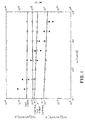
- Figure 1 is a graphic illustration comparing the results for the storage modulus (G') and the loss modulus (G") for the strips from the control ice cream cones and the ice cream cones prepared with OPTATM oat fiber 770.
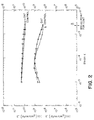
- Figure 2 is a graphic illustration comparing the break force required for the control ice cream cones and the ice cream cones prepared with OPTATM oat fiber 770.
- the present invention is based on the discovery that incorporation of fiber into the matrix of a food product derived from cereal grains strengthens the structural integrity of the food product due to the large amorphous structure of the fiber particles.
- the addition of the fiber in the food product results in a food product with more rigidity and structural integrity. Consequently, breakage of the food products of the present invention occurs to a lesser extent than the food products currently available on the market.
- Foods that can be strengthened by incorporation of the fibers into their formulations are those which are fragile and are susceptible to breakage, in the absence of the fiber, during normal manufacturing and handling conditions.
- Preferred foods of the present invention are edible wafers for frozen desserts and refrigerated novelties (e.g., ice cream cones) and formulated food systems which include baked foods (e.g., cookies), snack foods (e.g., corn chips) and extruded foods, such as cereals (e.g., puffed, flaked or extruded) products.
- baked foods e.g., cookies
- snack foods e.g., corn chips
- extruded foods such as cereals (e.g., puffed, flaked or extruded) products.
- Normal breakage due to lack of structural integrity can be minimized in food supplies, other than yeast leavened products, such as Melba Toast, using the fibers as a means of reinforcing the food product.
- the amount necessary can be readily ascertained as being that amount which is suitable to strengthen but does not compromise sensory properties of the product.
- the amount of fiber will be from 0.2 to 10% by weight, with from 1 to 2% being most preferred, to yield a product that is structurally superior to like product which does not contain the fiber.
- some food products such as those prepared from wheat or corn meal extrudates (e.g. tortillas), require larger amounts of fiber to strengthen and reinforce the food product.
- the preferred amount of fiber will be from 1 to 25% by weight, with from 2 to 10% being most preferred, to yield a product structurally superior to like product which does not contain the fiber.
- the strengthening amount of fiber may be slightly higher or lower than the preferred range depending upon the type of fiber used and the type of food product being strengthened, but determination of the strengthening amount would not require undue experimentation.
- the uniqueness of the food product of the present invention is related to the presence of relatively long, insoluble fiber strands that reinforce the food product and enhance the firmness/crispness of the initial product.
- the long, insoluble fiber strands range from about 100 to 800 ⁇ m.
- the length of the insoluble fiber strands used in the food product of the present invention is about 450 microns.
- the particle size of the insoluble fiber strands of the present invention is important.
- One method of determining the correct length and particle size of the fiber strands is by screen analysis using US Standard (USS) mesh screens. For example, the criteria for determining acceptable fiber length and size for the present invention using screen analysis is given below: USS mesh screen % fiber through screen 50 (course mesh) 98 100 (medium mesh) 85 200 (fine mesh) 75
- Mesh sizes 50, 100 and 200 have mesh opening sizes of 0.297 mm, 0.149 mm and 0.074 mm, respectively.
- This method is a crude determination.
- Other techniques such as image analysis or microscopic examinations for fiber length can be used.
- the fiber used in the food product of the present invention can be obtained from any plant source which has a high content of insoluble dietary fiber.
- fibers can be obtained from microbial sources such as fermentation products, for example, cellulose.
- Fiber is intended herein to mean a material which is predominately cellulose in nature. Examples of some preferred fibers are cellulose, hemicellulose and lignin.
- a high content of insoluble dietary fiber is described herein as greater than 75% of the fiber used in the food product of the present invention.
- the fiber can be obtained from sources such as, but not limited to, oat fiber, corn fiber, wheat fiber, sugar beet fiber, rice fiber and wood fiber.
- soy fiber and pea fiber are not suitable for use in the present invention because the fiber lengths are too short, i.e., less than 100 ⁇ m, and cannot adequately strengthen the material. Techniques which would lengthen pea or soy fibers would render these fiber sources usable in the present invention.
- a structurally reinforced food product can be made by admixing the fiber to traditional ingredients used to make the food products. As shown in Example 1, both sugar cone and wafer cone formulations can be used and require little if any changes in the ingredients and processing steps that are commercially in practice. Depending upon the formulation, it may be necessary to add more water to the fiber fortified recipe. A like amount of flour can be removed from the formulation to compensate for the addition of the fiber.
- the food product of the present invention includes, but is not limited to, edible wafers for frozen desserts and refrigerated novelties, such as ice cream cones; formulated foods derived from grains which include baked foods, (e.g., crackers and cookies) snack foods, (e.g., corn chips) puffed foods (e.g., cereals) and extruded foods (e.g., tortillas).
- the food products of this invention are those which are derived from grains derived from wheat, oat, barley, rice and soy.
- the long insoluble fiber strands are added to an edible wafer mixture (e.g., sugar ice cream cone) which can be shaped in wafer form, cone form or tubular form.
- the long insoluble fiber strands of Example 1 are in the form of oat fiber as described in U.S. Patent No. 5,023,103, and is referred to herein as OPTATM oat fiber 770.
- OPTATM oat fiber 770 is a delignified, unbleached fiber product which is prepared by alkaline treatment of oat hulls under high temperature, followed by washing and grinding.
- the OPTATM oat fiber 770 has a high dietary fiber content in excess of approximately 90%.
- Example 1 the OPTATM oat fiber 770 is added at 1-2% by weight of the total ingredients of a sugar ice cream cone mixture (oat fiber).
- the ingredient typically removed from the standard sugar ice cream cone mixture (control) is flour.
- other adjustments to the wafer mixture of the present invention may be necessary, such as addition of water to maintain the taste and sensory profile of the final product.
- Those skilled in the art will be able to determine other suitable wafer mixtures which contain the fibers of the present invention using no more than routine experimentation.
- Example 2 describes the sensory texture profile of the sugar cones containing the oat fiber versus the control sugar cones using a panel of five unskilled judges. The results demonstrate the superior hardness and firmness of the sugar cones containing the oat fiber as compared to the control cones.
- Example 3 demonstrates the experiments in Example 3 which demonstrate the ability of each sugar cone (oat fiber sugar cone and control sugar cone) to regain its shape after compression (G') and the ability of each sugar cone to deform after compression (G"). In both instances, the sugar cones containing the oat fiber proved superior in their ability to regain their shape after compression and to deform after compression.
- Example 4 demonstrates the three point bending test which measures the force required to break the sugar cones. The break force for the control cones was 75 g, while the cones containing the oat fiber remained intact at a force of 100 g, which is the limit of the instrument.
- the long, insoluble fiber strands are added to a snack cracker mixture in the form of oat fiber as described in U.S. Patent No. 5,023,103, and is referred to as OPTATM oat fiber 780.
- OPTATM oat fiber 780 is a delignified, bleached oat fiber.
- the OPTATM oat fiber 780 has a high dietary fiber content in excess of 90% by weight and is produced using the same process for OPTATM oat fiber 770, but hydrogen peroxide treatment is added after the alkaline treatment.
- two types of rotary cut snack crackers were prepared.
- both mixtures contained 1-2% OPTATM oat fiber 780, but one mixture contained 19% by weight water (A) of the total ingredients and the other mixture contained 21% by weight water (C) of the total ingredients.
- A the total ingredients
- C the total ingredients.
- the relative strength of each snack cracker was superior to their respective control snack crackers (i.e., like snack crackers which did not contain the oat fiber) indicating that even in the presence of higher amounts of water, the addition of oat fiber to the product improves its overall strength.
- Other adjustments to the cracker mixture using the fibers of the present invention and resulting in structurally superior crackers can be made by those skilled in the art using no more than routine experimentation.
- extrudates containing wheat starch or corn meal with varying amounts of OPTATM oat fiber 780 were prepared and tested for their relative strengths as compared to a like product which did not contain the fibers of the present invention.
- the strength of the wheat starch extrudates containing 2-10% OPTA oat fiber were structurally superior to the controls.
- corn meal extrudates containing 2% OPTATM oat fiber were structurally superior compared to a like product which did not contain the fibers of the present invention, as shown in Example 9.
- Example 10 describes another embodiment which demonstrates the ability of OPTATM oat fiber to reduce the fines or small particles in a flaked, ready to eat (RTE) cereal.
- varying amounts of OPTATM oat fiber were added to a bran flake mixture; the integrity of the flakes were tested and compared to a control (like bran flakes which did not contain the OPTATM oat fiber).
- OPTATM oat fiber in the bran flake mixture resulted in measurable decrease in fines (3%) and addition of 3.5% by weight OPTATM oat fiber to the bran flake mixture resulted in a significant decrease in fines (29%).
- Food products containing the fibers can enhance the shelf life and eating quality of the product.
- This invention will result in reduced breakage (hence product loss) of food products such as ice cream cones and cookies, during manufacture, packaging and shipment of the food product, thus resulting in the consumer receiving a superior product.
- the presence of fibers of the present invention allows for a greater water content in some food products while still maintaining a structurally superior product, thus reducing production costs.
- Example 1 Preparation of Ice Cream Cones Containing the OPTATM Oat Fiber 770 and a Control
- Sugar ice cream cones which contained the OPTATM oat fiber 770 (Oat Fiber) and sugar ice cream cones (control) which did not contain the OPTATM oat fiber 770 were prepared using the following formulation and procedure: Ingredient Control Grams (%) Oat Fiber Grams (%) Soft flour 100 (40.48) 100 (39.88) Granulated Sugar 25 (10.12) 25 (9.97) All-purpose shortening 1 (0.40) 1 (0.40) Opta oat fiber 770 0 3.7 (1.48) Salt 0.5 (0.20) 0.5 (0.20) Water 120 (48.58) 120 (47.87) Flavor, color, potassium sorbate 0.5 (0.20) 0.5 (0.20)
- the specifications for the flour used are as follows: protein 9.5 - 10.5%; ash 0.41 - .44%; pH 4.7 - 4.85. Any equipment which can produce a smooth, lump-free batter is suitable. The dry ingredients were first blended then the water is added slowly and mixed for 15 minutes. The melted shortening was then blended followed by mixing for an additional minute. The batter was placed in the molds and was baked.
- Low - High 1 2 3 4 5 Crispness Bite with front teeth and chew at least once between molars.
- Sample strips were prepared by steaming the cones, opening them out and cutting them to the required size of 41.8 x 8 x 2.2 mm. The strips were air dried at 50°C to the characteristic moisture content and then used for the small amplitude oscillatory measurements.
- the measurements were conducted on a Rheometrics Solids Analyzer-II (RSA-II).
- the strips used were prepared as described in Example 3. The only difference was the dimension of strips which were 50 x 9 x 2.2 mm.
- the small amplitude strain sweeps were conducted in the range of 0.00001% to 0.01% at 6.28 rad./s.
- the results are plotted in Figure 2.
- the break force for the control strip is 75 g while the oat fiber containing strip remained intact to 100 g which is the limit of the instrument. The results indicate that the cones prepared with the oat fiber show greater resistance to breakage.
- the ammonium bicarbonate and sodium sulfite were dissolved in water.
- the rest of the ingredients were added and then mixed in a Hobart mixer with a 37.8l (40 quart) bowl and paddle agitator for 10 minute on low speed.
- Each dough was passed through a three roll dough sheeter and two sets of reducing rolls to a dough thickness of approximately 2 mm.
- the dough sheet was docked and cut into round pieces using a two roll docking and cutting system.
- the crackers were then baked in a 9.14 m (30 foot) indirect fired traveling band on a heavy duty Ashworth mesh band.
- the baking time was 6 minutes at an average baking temperature of 238°C (460°F).
- the % finished moisture of the final products were as reported above.
- Extrudates containing wheat starch or corn meal and varying amounts of OPTATM oat fiber 780 were prepared on a Wenger TX-52 single screw extruder.
- the feed rate of the product into the extruder was 0.95 m/min (2.1 lb/min) with a shaft speed of 315 rpm.
- the temperature of the barrel jackets is as indicated below: Barrel Jacket Temperature °C 2nd head 30 3rd head 30 4th head 50 5th head 90 6th head 90
- the product was extruded through a die with 3 openings of 4.8mm (3/6") diameter and 15 degree taper at a pressure of 51.7 bar (750 psi).
- Example 8 Measurement of strength of wheat starch extrudates containing OPTA Oat fiber
- the wheat starch extrudates containing varying amounts of OPTATM oat fiber 780 were prepared as described in Example 7. The strength of the extrudates were measured on a TA.XT2 texture analyzer. The diameter change and amount of force required to break the extrudates are tabulated below: OPTA Oat Fiber (%) Moisture (%) Bulk Density (g/l) Diameter (cm) (Change %) Peak Force (kg) (Change %) 0 8.9 217 9.23 4.80 (0) 1 7.5 210 9.22 (-0.1) 4.97 (3.5) 2 7.3 219 8.93 (-3.3) 6.41 (33.5) 4 6.9 200 8.25 (-10.6) 5.93 (12.3) 10 6.2 178 7.75 (-16.0) 6.59 (37.3)
- Example 9 Measurement of strength of corn meal extrudates containing OPTA Oat fiber
- the corn meal extrudates containing varying amounts of OPTATM oat fiber 780 were prepared as described in Example 7. The strength of the extrudates were measured on a TA.XT2 texture analyzer. The diameter change and amount of force required to break the extrudates are tabulated below: OPTA Oat Fiber (%) Moisture (%) Bulk Density (g/l) Diameter (cm) (Change %) Peak Force (kg) (Change %) 0 4.8 93 12.26 (0) 1.42 (0) 2 4.5 86 11.74 (-4.2) 1.79 (26.1)
- OptaTM Oat Fiber to reduce the fines in a flaked RTE cereal was tested in bran flakes produced at Wenger Manufacturing, Inc.
- the fines were measured by placing 100 g of the flaked cereal on a 35 mesh screen (having a mesh opening size of 0.5 mm) with four 2.54 cm (1 inch) ceramic balls. The flakes and the balls were shaken for 10 minutes and the weight of flakes remaining on the screen was determined. The fines were calculated by difference.
Landscapes
- Life Sciences & Earth Sciences (AREA)
- Engineering & Computer Science (AREA)
- Food Science & Technology (AREA)
- Chemical & Material Sciences (AREA)
- Polymers & Plastics (AREA)
- Health & Medical Sciences (AREA)
- Nutrition Science (AREA)
- Confectionery (AREA)
- Bakery Products And Manufacturing Methods Therefor (AREA)
- Coloring Foods And Improving Nutritive Qualities (AREA)
- General Preparation And Processing Of Foods (AREA)
- Food Preservation Except Freezing, Refrigeration, And Drying (AREA)
Claims (14)
- Lebensmittelprodukt hergestellt aus Getreidekörnern, das in der fertigen Endform aus einem knusprigen Lebensmittelartikel besteht, der fragil und leicht zerbrechlich ist, wobei das Produkt aus der Gruppe, bestehend aus nicht mit Hefe getriebenen Backwaren, Snacks und extrudierten Lebensmitteln, wie Cracker, Plätzchen, Zerealien oder Maiskuchen, ausgewählt ist und aus etwa 0,2 bis 25 Gew.-% unlöslichen Fasersträngen besteht, wobei die Faserstränge eine mittlere Länge von etwa 100 bis 800 micron aufweisen, und die Faserstränge, wenn sie in dem Lebensmittelprodukt vorhanden sind, im Vergleich zu einem Lebensmittelprodukt, das die Faserstränge nicht enthält, die Gesamtfestigkeit verbessern, die Anzahl an Feinteilchen herabsetzen und die sensorischen und texturellen Eigenschaften des Lebensmittelproduktes nicht beeinträchtigen.
- Lebensmittelprodukt nach Anspruch 1, wobei die Faserstränge pflanzlichen oder mikrobiellen Ursprungs sind.
- Lebensmittelprodukt nach Anspruch 1, wobei die Faser aus der Gruppe, bestehend aus Haferfaser, Maisfaser, Weizenfaser, Zuckerrübenfaser, Reisfaser und Holzfaser, ausgewählt ist und vorzugsweise Haferfaser ist.
- Verfahren zur Verbesserung der Strukturintegrität eines Lebensmittelproduktes hergestellt aus Getreidekörnern, das in der fertigen Endform aus einem knusprigen Lebensmittelartikel besteht, der fragil und leicht zerbrechlich ist, wobei das Produkt aus der Gruppe, bestehend aus nicht mit Hefe getriebenen Backwaren, Snacks und extrudierten Lebensmitteln, wie Cracker, Plätzchen, Zerealien oder Maiskuchen, ausgewählt ist, wobei das Verfahren die Zugabe von etwa 0,2 bis 25 Gew.-% langen, unlöslichen Fasersträngen umfaßt, wobei die Faserstränge eine mittlere Länge von etwa 100 bis 800 micron aufweisen und im Vergleich zu einem anderweitig identischen Lebensmittelprodukt, das die Faserstränge nicht enthält, zur Verbesserung der Gesamtfestigkeit, Verminderung der Anzahl an Feinteilchen wirksam sind und die sensorischen und texturellen Eigenschaften des Lebensmittelproduktes nicht beeinträchtigen.
- Verfahren nach Anspruch 4, wobei die Faserstränge pflanzlichen oder mikrobiellen Ursprungs sind.
- Verfahren nach Anspruch 4, wobei die Faser aus der Gruppe, bestehend aus Haferfaser, Maisfaser, Weizenfaser, Zuckerrübenfaser, Reisfaser und Holzfaser, ausgewählt ist und vorzugsweise Haferfaser ist.
- Eßbare Waffel für gefrorene Desserts und neuarige Tiefkühl-Produkte, die leicht bricht und aus etwa 0,2 bis 25 Gew.-% langen, unlöslichen Fasersträngen besteht, wobei die Faserstränge eine mittlere Länge von etwa 100 bis 800 micron aufweisen, und die Faserstränge, wenn sie in dem Lebensmittelprodukt vorhanden sind, im Vergleich zu einem Lebensmittelprodukt, das die Faserstränge nicht enthält, die Gesamtfestigkeit verbessern, die Anzahl an Feinteilchen herabsetzen und die sensorischen und texturellen Eigenschaften des Lebensmittelproduktes nicht beeinträchtigen.
- Eßbare Waffel nach Anspruch 7, wobei die Faserstränge pflanzlichen oder mikrobiellen Ursprungs sind.
- Eßbares Waffelmaterial nach Anspruch 7, wobei die Faser aus der Gruppe, bestehend aus Haferfaser, Maisfaser, Weizenfaser, Zuckerrübenfaser, Reisfaser und Holzfaser, ausgewählt ist und vorzugsweise Haferfaser ist.
- Eßbare Waffel nach Anspruch 9, wobei die eßbare Waffel waffelförmig, kegelförmig oder röhrenförmig geformt ist.
- Verfahren zur Verbesserung der Strukturintegrität einer eßbaren Waffel für gefrorene Desserts und neuartige Tiefkühl-Produkte, die leicht bricht, umfassend die Zugabe von etwa 0,2 bis 25 Gew.-% langen, unlöslichen Fasersträngen, wobei die Faserstränge eine mittlere Länge von etwa 100 bis 800 micron aufweisen, und die Faserstränge, wenn sie in dem Lebensmittelprodukt vorhanden sind, im Vergleich zu einem Lebensmittelprodukt, das die Faserstränge nicht enthält, die Gesamtfestigkeit verbessern, die Anzahl an Feinteilchen herabsetzen und die sensorischen und texturellen Eigenschaften des Lebensmittelproduktes nicht beeinträchtigen.
- Verfahren nach Anspruch 7, wobei die Faser aus der Gruppe, bestehend aus Haferfaser, Maisfaser, Weizenfaser, Zuckerrübenfaser, Reisfaser und Holzfaser, ausgewählt ist und vorzugsweise Haferfaser ist.
- Verfahren nach Anspruch 7, wobei die eßbare Waffel waffelförmig, kegelförmig oder röhrenförmig geformt ist.
- Verfahren nach Anspruch 7, wobei die Faserstränge pflanzlichen oder mikrobiellen Ursprungs sind.
Applications Claiming Priority (5)
| Application Number | Priority Date | Filing Date | Title |
|---|---|---|---|
| US8972793A | 1993-07-09 | 1993-07-09 | |
| US89727 | 1993-07-09 | ||
| US16845293A | 1993-12-16 | 1993-12-16 | |
| US168452 | 1993-12-16 | ||
| PCT/US1994/007789 WO1995001732A1 (en) | 1993-07-09 | 1994-07-11 | Food products with improved strength |
Related Child Applications (1)
| Application Number | Title | Priority Date | Filing Date |
|---|---|---|---|
| EP00200311 Division | 2000-01-31 |
Publications (2)
| Publication Number | Publication Date |
|---|---|
| EP0708603A1 EP0708603A1 (de) | 1996-05-01 |
| EP0708603B1 true EP0708603B1 (de) | 2001-05-30 |
Family
ID=26780890
Family Applications (1)
| Application Number | Title | Priority Date | Filing Date |
|---|---|---|---|
| EP94923429A Expired - Lifetime EP0708603B1 (de) | 1993-07-09 | 1994-07-11 | Nahrungsmittel mit erhoehter festigkeit |
Country Status (6)
| Country | Link |
|---|---|
| EP (1) | EP0708603B1 (de) |
| AT (1) | ATE201564T1 (de) |
| AU (1) | AU7329594A (de) |
| CA (1) | CA2166778C (de) |
| DE (1) | DE69427351T2 (de) |
| WO (1) | WO1995001732A1 (de) |
Families Citing this family (3)
| Publication number | Priority date | Publication date | Assignee | Title |
|---|---|---|---|---|
| DE69834251T2 (de) * | 1997-07-05 | 2007-01-04 | Société des Produits Nestlé S.A. | gefrorenes Dessert, welches Milchsäurebakterien und fermentierbare Ballaststoffe enthält |
| WO1999003361A1 (es) * | 1997-07-15 | 1999-01-28 | Celorio Garrido Sergio Alejand | Composicion mejorada de masa de maiz nixtamalizado para hacer tortillas |
| US11998023B2 (en) | 2021-03-18 | 2024-06-04 | Ilola Inc. | Moulded tea composition incorporating microbial cellulose as a binder |
Family Cites Families (13)
| Publication number | Priority date | Publication date | Assignee | Title |
|---|---|---|---|---|
| FR2353286A1 (fr) * | 1976-06-03 | 1977-12-30 | Arcas Victor | Produit destine a faciliter l'absorption des medications a base de son |
| FR2406391A1 (fr) * | 1977-10-21 | 1979-05-18 | Joulin Gerard | Pain au son et son procede de fabrication |
| US4341805A (en) * | 1979-09-10 | 1982-07-27 | Miller Brewing Company | High dietary fiber product |
| FR2477844A2 (fr) * | 1980-03-13 | 1981-09-18 | Guitard Laurent | Produit alimentaire a base de cacao, ameliore |
| EP0117044A1 (de) * | 1983-01-14 | 1984-08-29 | General Foods Corporation | Mikrovermahlung von Kleie und Produkt |
| DE3614465A1 (de) * | 1986-04-29 | 1987-11-05 | Hans Hofmeir | Fertigmehlmischung und deren verwendung |
| NL8601594A (nl) * | 1986-06-19 | 1988-01-18 | Unilever Nv | Werkwijze ter bereiding van een bladerdeeg, vetsamenstelling alsmede bladerdeeg en bladerdeegprodukten. |
| DK165217C (da) * | 1986-06-25 | 1993-03-22 | Danisco | Fiberholdigt produkt, fremgangsmaade til fremstilling heraf samt anvendelse heraf |
| JPS6332455A (ja) * | 1986-07-25 | 1988-02-12 | Nitto Seifun Kk | 小麦ふすま加工食品の製造方法 |
| US5019406A (en) * | 1989-07-13 | 1991-05-28 | James River Corporation Of Virginia | Fiber additives for frying batters |
| CH680104A5 (en) * | 1990-07-19 | 1992-06-30 | Tricum Ab | High absorbing additive for fibrous dietetic prods. - comprising abraded cereal husks, free from starch, with low phytic acid content and high fibre content |
| ATE141231T1 (de) * | 1991-07-16 | 1996-08-15 | Unilever Nv | Suszeptor und keksteig |
| DE4203211A1 (de) * | 1992-02-05 | 1993-08-12 | Karl Rinderle | Verfahren zur herstellung von biologisch abbaubaren behaeltern |
-
1994
- 1994-07-11 EP EP94923429A patent/EP0708603B1/de not_active Expired - Lifetime
- 1994-07-11 DE DE69427351T patent/DE69427351T2/de not_active Expired - Fee Related
- 1994-07-11 WO PCT/US1994/007789 patent/WO1995001732A1/en not_active Ceased
- 1994-07-11 AU AU73295/94A patent/AU7329594A/en not_active Abandoned
- 1994-07-11 CA CA002166778A patent/CA2166778C/en not_active Expired - Lifetime
- 1994-07-11 AT AT94923429T patent/ATE201564T1/de not_active IP Right Cessation
Also Published As
| Publication number | Publication date |
|---|---|
| CA2166778C (en) | 1999-08-24 |
| EP0708603A1 (de) | 1996-05-01 |
| DE69427351T2 (de) | 2002-04-25 |
| AU7329594A (en) | 1995-02-06 |
| DE69427351D1 (de) | 2001-07-05 |
| CA2166778A1 (en) | 1995-01-19 |
| WO1995001732A1 (en) | 1995-01-19 |
| ATE201564T1 (de) | 2001-06-15 |
Similar Documents
| Publication | Publication Date | Title |
|---|---|---|
| RU2337550C1 (ru) | Состав для приготовления мучного кондитерского изделия для диетического питания | |
| AU2009208102B2 (en) | Production of extruded cheese crackers and snacks | |
| US4517204A (en) | Reduced calorie puffed snack food products | |
| US6056990A (en) | Milled cereal by-product which is an additive for flour and dough | |
| US5340598A (en) | Method for producing spherical shaped baked goods | |
| US4824683A (en) | Low calorie high fiber bread | |
| US6291008B1 (en) | R-T-E cereal and method of preparation | |
| US6610349B1 (en) | Milled cereal by-product which is an additive for increasing total dietary fiber | |
| AU723031B2 (en) | Processes for the production of noodles by machines | |
| US6638558B2 (en) | Masa flavored cereal germ and a process for making same | |
| US20040219271A1 (en) | Molded bread products and process for making | |
| US20070259090A1 (en) | Low-calorie foods and process of making the same | |
| WO1996004799A1 (en) | Low fat, low density multigrain biscuit | |
| US20080138484A1 (en) | Starchy Food Material or Starchy Food | |
| Faridi et al. | Soft wheat products | |
| EP0708603B1 (de) | Nahrungsmittel mit erhoehter festigkeit | |
| Brennan | Mixing, emulsification and size reduction | |
| US6383547B1 (en) | Process for preparing aspirated bran as a flour additive | |
| US20030035863A1 (en) | Food products with improved strength | |
| RU2702862C1 (ru) | Хлебцы рисовые хрустящие для питания детей и способ их производства | |
| Oke et al. | Development and quality assessment of biscuits made from mixture of wheat, soybean, and sorghum flour | |
| Barndt et al. | Fat and calorie-modified bakery products | |
| CN119156143A (zh) | 具有改善的坚实度的质构化豆类蛋白质 | |
| JPH1042815A (ja) | アメリカンドッグの製造方法 | |
| MXPA00008030A (en) | R-t-e cereal and method of preparation |
Legal Events
| Date | Code | Title | Description |
|---|---|---|---|
| PUAI | Public reference made under article 153(3) epc to a published international application that has entered the european phase |
Free format text: ORIGINAL CODE: 0009012 |
|
| 17P | Request for examination filed |
Effective date: 19960126 |
|
| AK | Designated contracting states |
Kind code of ref document: A1 Designated state(s): AT BE CH DE DK ES FR GB GR IE IT LI LU MC NL PT SE |
|
| 17Q | First examination report despatched |
Effective date: 19981118 |
|
| GRAG | Despatch of communication of intention to grant |
Free format text: ORIGINAL CODE: EPIDOS AGRA |
|
| GRAG | Despatch of communication of intention to grant |
Free format text: ORIGINAL CODE: EPIDOS AGRA |
|
| GRAH | Despatch of communication of intention to grant a patent |
Free format text: ORIGINAL CODE: EPIDOS IGRA |
|
| GRAH | Despatch of communication of intention to grant a patent |
Free format text: ORIGINAL CODE: EPIDOS IGRA |
|
| GRAA | (expected) grant |
Free format text: ORIGINAL CODE: 0009210 |
|
| AK | Designated contracting states |
Kind code of ref document: B1 Designated state(s): AT BE CH DE DK ES FR GB GR IE IT LI LU MC NL PT SE |
|
| PG25 | Lapsed in a contracting state [announced via postgrant information from national office to epo] |
Ref country code: LI Free format text: LAPSE BECAUSE OF FAILURE TO SUBMIT A TRANSLATION OF THE DESCRIPTION OR TO PAY THE FEE WITHIN THE PRESCRIBED TIME-LIMIT Effective date: 20010530 Ref country code: IT Free format text: LAPSE BECAUSE OF FAILURE TO SUBMIT A TRANSLATION OF THE DESCRIPTION OR TO PAY THE FEE WITHIN THE PRE;WARNING: LAPSES OF ITALIAN PATENTS WITH EFFECTIVE DATE BEFORE 2007 MAY HAVE OCCURRED AT ANY TIME BEFORE 2007. THE CORRECT EFFECTIVE DATE MAY BE DIFFERENT FROM THE ONE RECORDED.SCRIBED TIME-LIMIT Effective date: 20010530 Ref country code: GR Free format text: LAPSE BECAUSE OF NON-PAYMENT OF DUE FEES Effective date: 20010530 Ref country code: CH Free format text: LAPSE BECAUSE OF FAILURE TO SUBMIT A TRANSLATION OF THE DESCRIPTION OR TO PAY THE FEE WITHIN THE PRESCRIBED TIME-LIMIT Effective date: 20010530 Ref country code: AT Free format text: LAPSE BECAUSE OF FAILURE TO SUBMIT A TRANSLATION OF THE DESCRIPTION OR TO PAY THE FEE WITHIN THE PRESCRIBED TIME-LIMIT Effective date: 20010530 |
|
| REF | Corresponds to: |
Ref document number: 201564 Country of ref document: AT Date of ref document: 20010615 Kind code of ref document: T |
|
| REG | Reference to a national code |
Ref country code: CH Ref legal event code: EP |
|
| REF | Corresponds to: |
Ref document number: 69427351 Country of ref document: DE Date of ref document: 20010705 |
|
| PG25 | Lapsed in a contracting state [announced via postgrant information from national office to epo] |
Ref country code: LU Free format text: LAPSE BECAUSE OF NON-PAYMENT OF DUE FEES Effective date: 20010711 Ref country code: IE Free format text: LAPSE BECAUSE OF NON-PAYMENT OF DUE FEES Effective date: 20010711 |
|
| REG | Reference to a national code |
Ref country code: IE Ref legal event code: FG4D |
|
| PG25 | Lapsed in a contracting state [announced via postgrant information from national office to epo] |
Ref country code: SE Free format text: LAPSE BECAUSE OF FAILURE TO SUBMIT A TRANSLATION OF THE DESCRIPTION OR TO PAY THE FEE WITHIN THE PRESCRIBED TIME-LIMIT Effective date: 20010830 Ref country code: PT Free format text: LAPSE BECAUSE OF FAILURE TO SUBMIT A TRANSLATION OF THE DESCRIPTION OR TO PAY THE FEE WITHIN THE PRESCRIBED TIME-LIMIT Effective date: 20010830 Ref country code: DK Free format text: LAPSE BECAUSE OF FAILURE TO SUBMIT A TRANSLATION OF THE DESCRIPTION OR TO PAY THE FEE WITHIN THE PRESCRIBED TIME-LIMIT Effective date: 20010830 |
|
| ET | Fr: translation filed | ||
| PG25 | Lapsed in a contracting state [announced via postgrant information from national office to epo] |
Ref country code: ES Free format text: LAPSE BECAUSE OF FAILURE TO SUBMIT A TRANSLATION OF THE DESCRIPTION OR TO PAY THE FEE WITHIN THE PRESCRIBED TIME-LIMIT Effective date: 20011130 |
|
| REG | Reference to a national code |
Ref country code: CH Ref legal event code: PL |
|
| REG | Reference to a national code |
Ref country code: GB Ref legal event code: IF02 |
|
| PG25 | Lapsed in a contracting state [announced via postgrant information from national office to epo] |
Ref country code: MC Free format text: LAPSE BECAUSE OF NON-PAYMENT OF DUE FEES Effective date: 20020201 |
|
| PLBE | No opposition filed within time limit |
Free format text: ORIGINAL CODE: 0009261 |
|
| STAA | Information on the status of an ep patent application or granted ep patent |
Free format text: STATUS: NO OPPOSITION FILED WITHIN TIME LIMIT |
|
| REG | Reference to a national code |
Ref country code: IE Ref legal event code: MM4A |
|
| 26N | No opposition filed | ||
| PGFP | Annual fee paid to national office [announced via postgrant information from national office to epo] |
Ref country code: FR Payment date: 20060717 Year of fee payment: 13 |
|
| PGFP | Annual fee paid to national office [announced via postgrant information from national office to epo] |
Ref country code: NL Payment date: 20060724 Year of fee payment: 13 |
|
| PGFP | Annual fee paid to national office [announced via postgrant information from national office to epo] |
Ref country code: GB Payment date: 20060726 Year of fee payment: 13 |
|
| PGFP | Annual fee paid to national office [announced via postgrant information from national office to epo] |
Ref country code: BE Payment date: 20060828 Year of fee payment: 13 |
|
| PGFP | Annual fee paid to national office [announced via postgrant information from national office to epo] |
Ref country code: DE Payment date: 20060831 Year of fee payment: 13 |
|
| BERE | Be: lapsed |
Owner name: *OPTA FOOD INGREDIENTS INC. Effective date: 20070731 |
|
| GBPC | Gb: european patent ceased through non-payment of renewal fee |
Effective date: 20070711 |
|
| NLV4 | Nl: lapsed or anulled due to non-payment of the annual fee |
Effective date: 20080201 |
|
| PG25 | Lapsed in a contracting state [announced via postgrant information from national office to epo] |
Ref country code: NL Free format text: LAPSE BECAUSE OF NON-PAYMENT OF DUE FEES Effective date: 20080201 Ref country code: DE Free format text: LAPSE BECAUSE OF NON-PAYMENT OF DUE FEES Effective date: 20080201 |
|
| PG25 | Lapsed in a contracting state [announced via postgrant information from national office to epo] |
Ref country code: GB Free format text: LAPSE BECAUSE OF NON-PAYMENT OF DUE FEES Effective date: 20070711 |
|
| REG | Reference to a national code |
Ref country code: FR Ref legal event code: ST Effective date: 20080331 |
|
| PG25 | Lapsed in a contracting state [announced via postgrant information from national office to epo] |
Ref country code: BE Free format text: LAPSE BECAUSE OF NON-PAYMENT OF DUE FEES Effective date: 20070731 |
|
| PG25 | Lapsed in a contracting state [announced via postgrant information from national office to epo] |
Ref country code: FR Free format text: LAPSE BECAUSE OF NON-PAYMENT OF DUE FEES Effective date: 20070731 |