EP0708770B1 - Derives d'amides de macrolides antibiotiques a noyau de 16 elements - Google Patents
Derives d'amides de macrolides antibiotiques a noyau de 16 elements Download PDFInfo
- Publication number
- EP0708770B1 EP0708770B1 EP94918498A EP94918498A EP0708770B1 EP 0708770 B1 EP0708770 B1 EP 0708770B1 EP 94918498 A EP94918498 A EP 94918498A EP 94918498 A EP94918498 A EP 94918498A EP 0708770 B1 EP0708770 B1 EP 0708770B1
- Authority
- EP
- European Patent Office
- Prior art keywords
- carbons
- group
- alkyl
- optionally substituted
- alanyl
- Prior art date
- Legal status (The legal status is an assumption and is not a legal conclusion. Google has not performed a legal analysis and makes no representation as to the accuracy of the status listed.)
- Expired - Lifetime
Links
- 0 CC[C@]([C@](C)C=C(C)CCC([C@](C)C[C@](C)[C@@]([C@@](C)[C@](*)C1)O[C@@]2O[C@](C)C[C@](*)[C@@]2O)=O)OC1=O Chemical compound CC[C@]([C@](C)C=C(C)CCC([C@](C)C[C@](C)[C@@]([C@@](C)[C@](*)C1)O[C@@]2O[C@](C)C[C@](*)[C@@]2O)=O)OC1=O 0.000 description 3
Classifications
-
- C—CHEMISTRY; METALLURGY
- C07—ORGANIC CHEMISTRY
- C07H—SUGARS; DERIVATIVES THEREOF; NUCLEOSIDES; NUCLEOTIDES; NUCLEIC ACIDS
- C07H17/00—Compounds containing heterocyclic radicals directly attached to hetero atoms of saccharide radicals
- C07H17/04—Heterocyclic radicals containing only oxygen as ring hetero atoms
- C07H17/08—Hetero rings containing eight or more ring members, e.g. erythromycins
-
- A—HUMAN NECESSITIES
- A61—MEDICAL OR VETERINARY SCIENCE; HYGIENE
- A61P—SPECIFIC THERAPEUTIC ACTIVITY OF CHEMICAL COMPOUNDS OR MEDICINAL PREPARATIONS
- A61P31/00—Antiinfectives, i.e. antibiotics, antiseptics, chemotherapeutics
- A61P31/04—Antibacterial agents
Definitions
- This invention is concerned with new antibiotics.
- this invention relates to compounds which are amide derivatives of the macrolide antibiotics rosaramicin, repromicin, tylosin, 5-O-mycaminosyltylonolide, 4'-deoxy-5-O-mycaminosyltylonolide, desmycosin, lactenocin, O-demethyllactenocin, cirramycin A 1 , and 23-deoxymycaminosyltylonolide; to the pharmaceutically-acceptable acid addition salts of such derivatives; to a method of using such derivatives in the treatment of illnesses in animals caused by bacterial and mycoplasmic pathogens; and to pharmaceutical compositions useful therefor.
- the term "animals" includes mammals, fish and birds.
- agents known to combat bacterial infectious diseases in animals There are numerous agents known to combat bacterial infectious diseases in animals, but for many specific diseases the current agents of choice leave much to be desired. In some instances the agents may not persist long enough in the host and, therefore, require frequent dosing to maintain therapeutically effective blood and/or tissue levels. For meat producing animals (cattle, poultry, sheep and swine) this will require considerable labor intensive animal handling which is costly to the producer. In other cases, the agent may be poorly tolerated or even toxic to the host at therapeutically effective doses. Agents with increased potency, a longer half-life, an increased therapeutic index and a broader spectrum of antibacterial activity as well as agents with greater oral absorption would improve the scope of animal diseases that could be more effectively treated. Thus, the need for new antibacterial and antimycoplasmic agents with improved properties endures.
- bovine respiratory disease the principal causative bacterial pathogens of which are Pasteurella haemolytica , P. multocida and Haemophilus somnus ; pasteurellosis in swine, goats, sheep and poultry ( P. multocida ); swine pleuropneumonia ( Actinobacillus pleuropneumoniae ); swine streptococcus infections ( Streptococcus suis ); and for all of the above mentioned hosts, infections by Mycoplasma spp .
- This invention is concemed with new antibiotics which are amide derivatives of the macrolides repromicin, rosaramicin, tylosin, 5-O-mycaminosyltylonolide, 4'-deoxy-5-O-mycaminosyltylonolide, desmycosin, lactenocin, O-demethyllactenocin, cirramycin A and 23-deoxymycaminosyltylonolide and to the acid addition salts of such derivatives.
- These new antibiotics have enhanced potency against bacterial pathogens over the parent compounds and are active against mycoplasmic pathogens.
- the compounds of the present invention and their pharmaceutically-acceptable salts are of the formula I or II or and the pharmaceutically acceptable salts thereof wherein m is 1 or 2; Z 1 is H, OH or mycarosyloxy; T is
- loweralkyl denotes an alkyl having 1 to 4 carbons.
- alkyl is meant to encompass both straight chain and branched alkyls.
- the aminoacyl groups are derivatives of the corresponding amino acids and are well known in the art.
- the following D- or L- amino acids, where applicable, are used to derive the aminoacyl groups of this invention: alanine, arginine, asparagine, aspartic acid, cysteine, cystine, glutamic acid, glutamine, glycine, histidine, hydroxylysine, hydroxyproline, isoleucine, leucine, lysine, methionine, phenylalanine, proline, serine, threonine, tryptophane, tyrosine, valine, ⁇ -alanine, ⁇ -lysine, N,N-dimethylglycine, ⁇ , ⁇ -dimethylglycine, ⁇ -aminobutyric acid, 4-hydroxyphenylglycine, phenylglycine, ⁇ , ⁇ -diaminobutyric acid, ornithine, homoserine, bicine
- the dipeptidyl groups comprise derivatives of any possible combination of two of the amino acids listed hereinabove which can be coupled by conventional peptide synthesis methods well known to those skilled in the art.
- N,N-dimethylglycine, bicine, N,N-diethyl- ⁇ -alanine or N,N-dimethyl- ⁇ -aminobutyric acid can only be the terminal aminoacyl when in a dipeptidyl group.
- a preferred group of compounds is the group having the formula (I) or (II) wherein m is 1; Z 1 is H and Q is H or OH.
- Another preferred group of compounds is the group having the formula (I) wherein m is 1; Z 1 is H and Q is H.
- a more preferred group of compounds is the group having the formula (I) wherein m is 1; Z 1 is H; Q is H; T is wherein Z 3 is -N(R 1 R 2 ), wherein R 1 and R 2 are as defined above for formula (I).
- An even more group of preferred compounds is the group having the formula (I) wherein m is 1; Z 1 is H; Q is H; T is wherein Z 3 is -N(R 1 R 2 ) wherein R 1 is H, methyl or optionally substituted alkyl having 2 to 6 carbons; R 2 is aminoalkyl having 2 to 6 carbons, N-alkylaminoalkyl having 1 to 4 carbons in the alkylamino portion and 2 to 4 carbons in the alkyl portion, N, N-dialkylaminoalkyl having a total of 2 to 6 carbons in the dialkylamino portion and 2 to 4 carbons in the alkyl portion or optionally substituted alkyl having 2 to 6 carbons;
- optionally substituted alkyl is optionally substituted with or or R 1 and R 2 are taken together with the nitrogen to which they are attached and form wherein B 1 , B 2 , B 3 , j, A, Y 2 , R 8 and b are as defined above for formula (I).
- a more preferred group of compounds within the immediately above group of preferred compounds is the group wherein R 1 and R 2 are taken together with the nitrogen to which they are attached and form wherein b is 0 and Y 2 is NH or b is 1 and Y 2 is N, NH, CH or CH 2 .
- Another preferred group of compounds is the group having the formula (I) wherein m is 2; Z 1 is H; Q is H; T is wherein B, a and Z 3 are as defined above for formula (I).
- Another more preferred group of compounds is the group having the formula (I) wherein m is 2; Z 1 is H; Q is H; T is wherein B is H or methyl; a is as defined above for formula (I) and Z 3 is -N(R 1 R 2 ), wherein R 1 and R 2 are as defined above for formula (I).
- a most preferred group of compounds is the group having the formula (I) wherein m is 2; Z 1 is H; Q is H; T is wherein B is H or methyl; a is 1; and Z 3 is -N(R 1 R 2 ) wherein R 1 is H, alkyl or aminoalkyl; and R 2 is aminoalkyl, N-alkylamino-alkyl having 1 to 4 carbons in the aminoalkyl portion and 2 to 4 carbons in the alkyl portion or N,N-dialkylaminoalkyl having a total of 2 to 6 carbons in the dialkylamino portion and 2 to 4 carbons in the alkyl portion; or R 1 and R 2 are taken together with the nitrogen to which they are attached and is piperazinyl.
- the compounds of the present invention having the formula I or II, as defined above, are according to this invention readily and generally prepared by conversion of the appropriate macrolide, rosaramicin, repromicin, tylosin, 5-O-mycaminosyltylonolide, 4'-deoxy-5-O-mycaminosyltylonolide, desmycosin, lactenocin, O-demethyllactenosin, cirramycin A 1 , or 23-deoxymycaminosyltylonolide to the derived carboxylic acid followed by reaction with an amine, and optionally followed by conversion to the acid addition salt as detailed below.
- Derivatization of the parent macrolide at the C-23 position is carried out according to the method well known to those skilled in the art and as described in J. Antibiotics, 40(6), pp. 823-842, 1987, the contents of which are incorporated herein by reference.
- the starting macrolide rosaramicin is produced and isolated according to the method described by Wagman et al. in Journal of Antibiotics, Vol. XXV, No. 11, pp. 641 - 646, November 1972.
- Repromicin is synthesized from rosaramicin using the method taught by Ganguly et al. in U.S. Patent 3,975,372.
- Desmycosin, lactenocin, O-demethyllactenocin and 23-deoxymycaminosyltylonolide are produced and isolated according to the method described in Journal of Antibiotics, 35(12), pp. 1675-1682, 1982.
- Cirramycin A 1 is produced and isolated according to the method described in Journal of Antibiotics, 22, p. 61, 1969.
- All other starting materials and reagents required for the synthesis of the compounds of the present invention are readily available commercially or can be prepared according methods known in the literature.
- the compounds of this invention wherein T is are synthesized according to the following procedure.
- the C-20 aldehyde of a series of tylosin-type macrolides is oxidized to the carboxylic acid.
- the intermediate carboxylic acid derivative of the macrolides are then coupled with a variety of amines to form amide derivatives.
- repromicin suitably protected as the 2'-acetate, is treated with approximately 1.3 equivalents of sodium chlorite in the presence of approximately 1.3 equivalents of sodium phosphate monobasic and an excess of 2-methyl-2-butene, about 7.0 equivalents.
- This oxidation step is usually carried out at ambient room temperature (20-25°C) using a 3:1 mixture of acetone/butanol as the solvent (0.3 to 0.5 molar concentration).
- the carboxylic acid is coupled with primary or secondary amines in the presence of about 1.1 equivalents of diethyl cyanophosphate and about 1.1 equivalents of triethylamine at about 0°C using anhydrous DMF as the solvent (0.1 molar concentration).
- the reaction is worked up by pouring it into saturated aqueous NaHCO 3 and extracting with EtOAc.
- the isolated product is purified by flash chromatography (89% CHCl 3 , 10% MeOH, 1% Et 3 N) to afford the C-20 amide derivative.
- the 2'-acetate group can be removed by dissolving the above product in methanol (MeOH). The resulting solution is then stirred at room temperature (20-25°C) for about 18-24 hours. The reaction mixture is concentrated under reduced pressure to afford the C-20 amide derivative of repromicin.
- compounds of this invention wherein T is are synthesized from the C-20 carboxylic acid of the 2'-acetate of the tylosin-type macrolides according to the following method.
- a polar aprotic solvent such as CH 2 Cl 2
- CH 2 Cl 2 a polar aprotic solvent
- Propylphosphonic anhydride 1.4 equivalents is added as a 50% solution in CH 2 Cl 2 and the reaction is allowed to warm to ambient temperature. After stirring for about 1-5 hours the reaction mixture is concentrated in vacuo and then redissolved in MeOH to cleave the 2'-acetate. The reaction mixture is concentrated after stirring overnight and extracted from a basic aqueous solution to provide the C-20 repromicin amide.
- the compounds of this invention wherein T is are readily prepared by the following method.
- the desired macrolide is reductively aminated with an amine in the presence of sodium triacetoxyborohydride as described hereinabove.
- the resulting aminated macrolide is then coupled with the desired carboxylic acid according to one of the coupling methods described hereinabove.
- the amino amide compounds of this invention wherein T is can be synthesized by the following two general methods.
- Certain amino amide fragments are available commercially or can be prepared from an amino acid such as glycine, sarcosine or ⁇ -alanine and a variety of amines by the same methods described hereinabove for the carboxylic acid derivatives of the macrolides described in this invention.
- the amine moiety of the amino acid portion can then be coupled with the C-20 macrolide aldehyde by reductive amination methods known to those skilled in the art.
- the following method can be employed.
- the desired macrolide, an amine, usually about 1.5 equivalents, and acetic acid are stirred in a reaction-inert solvent such as methylene chloride for about 30 to 60 minutes.
- the pharmaceutically acceptable acid addition salts of the C-20 amide macrolide derivatives can be obtained by the following general procedure.
- the HCI salts can be isolated by dissolving the C-20 amide macrolide derivative in a methanolic HCI solution and then evaporating the volatile components to yield the desired salt.
- the methanolic HCI solution can be prepared by mixing acetyl chloride with methanol.
- other preferred pharmaceutically acceptable acid addition salts include citrate, phosphate, sulfate, methanesulfonate, benzenesulfonate, palmitate, succinate, lactate, malate, tartrate, fumerate and stearate salts. All of such salts are prepared in a method analogous to the method used to form the HCI salt.
- the antibacterial activity of the compounds of the present invention against bacterial pathogens is demonstrated by the compound's ability to inhibit growth of Pasteurella multocida and Pasteurella haemolytica .
- the following procedures are typical assays. Assay I is utilized to test for activity against Pasteurella multocida and Assay II is utilized to test for activity against Pasteurella haemolytica .
- This assay is based on the liquid dilution method in microliter format.
- a single colony of P. multocida (strain 59A067) is inoculated into 5 mL of brain heart infusion (BHI) broth.
- the test compounds are prepared by solubilizing 1 mg of the compound in 125 ⁇ l of dimethylsulfoxide (DMSO). Dilutions of the test compound are prepared using uninoculated BHI broth. The concentrations of the test compound used range from 200 ⁇ g/mL to 0.098 ⁇ g/mL by two-fold serial dilutions.
- the P. multocida inoculated BHI is diluted with uninoculated BHI broth to make a 10 4 cell suspension per 200 ⁇ l.
- the BHI cell suspensions are mixed with respective serial dilutions of the test compound, and incubated at 37°C for 18 hours.
- the minimum inhibitory concentration (MIC) is equal to the concentration of the compound exhibiting 100% inhibition of growth of P. multocida as determined by comparison with an uninoculated control.
- This assay is based on the agar dilution method using a Steers Replicator. Two to five colonies isolated from an agar plate are inoculated into BHI broth and incubated overnight at 37°C with shaking (200 rpm). The next morning, 300 ⁇ l of the fully grown P. haemolytica preculture is inoculated into 3 mL of fresh BHI broth and is incubated at 37°C with shaking (200 rpm). The appropriate amounts of the test compounds are dissolved in ethanol and a series of two-fold serial dilutions are prepared. Two mL of the respective serial dilution is mixed with 18 mL of molten BHI agar and solidified. When the inoculated P.
- haemolytica culture reaches 0.5 McFarland standard density, about 5 ⁇ l of the P. haemolytica culture is inoculated onto BHI agar plates containing the various concentrations of the test compound using a Steers Replicator and incubated for 18 hours at 37°C. Initial concentrations of the test compound range from 100-200 ⁇ g/mL. The MIC is equal to the concentration of the test compound exhibiting 100% inhibition of growth of P. haemolytica as determined by comparison with an uninoculated control.
- the in vivo activity of the compounds of formula I or II can be determined by conventional animal protection studies well known to those skilled in the art, usually carried out in mice.
- mice are allotted to cages (10 per cage) upon their arrival, and allowed to acclimate for a minimum of 48 hours before being used.
- Animals are inoculated with 0.5 mL of a 3 x 10 3 CFU/mL bacterial suspension ( P. multocida strain 59A006) intraperitoneally.
- Each experiment has at least 3 non-medicated control groups including one infected with 0.1X challenge dose and two infected with 1X challenge dose; a 10X challenge data group may also be used.
- all mice in a given study can be challenged within 30-90 minutes, especially if a repeating syringe (such as a Cornwall® syringe) is used to administer the challenge.
- a repeating syringe such as a Cornwall® syringe
- the first compound treatment is given. It may be necessary for a second person to begin compound dosing if all of the animals have not been challenged at the end of 30 minutes.
- the routes of administration are subcutaneous or per os. Subcutaneous doses are administered into the loose skin in the back of the neck whereas oral doses are given by means of a feeding needle. In both cases, a volume of 0.2 mL is used per mouse. Compounds are administered 30 minutes, 4 hours, and 24 hours after challenge. A control compound of known efficacy administered by the same route is included in each test. Animals are observed daily, and the number of survivors in each group is recorded on the form provided. The P. multocida model monitoring continues for 96 hours (four days) post challenge. Surviving mice are asphyxiated with carbon dioxide at the end of the study.
- the PD 50 is a calculated dose at which the compound tested protects 50% of a group of mice from mortality due to the bacterial infection which would be lethal in the absence of drug treatment.
- an effective dose of a compound of formula I or II is administered to a susceptible or infected animal by parenteral (i.v., i.m. or s.c.), oral or topical route.
- the effective dose will vary with the severity of the disease, and the age, weight and condition of the animal. However, the dose will usually range from about 0.25 to about 150 mg/kg per day, preferably from about 0.25 to about 25 mg/kg per day.
- a suitable vehicle for administering the dose parenterally is a solution of the compound in sterile water, or a solution of the compound in a solvent comprising at least 50% water and a pharmaceutically acceptable cosolvent or cosolvents such as methanol, ethanol, isopropyl alcohol, propylene glycol, glycerol, carbonate esters like diethyl carbonate, dimethyl sulfoxide, N,N-dimethylformamide, N,N-dimethylacetamide, 1-methyl-2-pyrrolidinone, and the like.
- Suspensions are also suitable vehicles for administering the compounds of this invention.
- the suspending medium can be, for example, aqueous carboxymethyl cellulose, inert oils such as peanut oil, highly refined mineral oils, aqueous polyvinylpyrrolidone and so forth.
- Suitable physiologically acceptable adjuvants may be necessary to maintain the compound in suspension. These adjuvants may be chosen from among thickeners such as carboxymethyl cellulose, polyvinylpyrrolidone, gelatin, and the alginates.
- Surfactants are also useful as suspending agents. These surfactants include: lethicin, alkylphenol polyethylene oxide adducts, naphthalenesulfonates, alkylbenzenesulfonates and polyoxyethylene sorbitan esters. Agents affecting surface tension can also help in making useful suspensions. Such agents include silicone antifoams, sorbitol, and sugars. For intravenous use the total concentration of solutes should be controlled to render the preparation isotonic.
- the invention provides pharmaceutical compositions comprising a compound of the formula (I) or (II) or a pharmaceutically acceptable salt thereof together with a pharmaceutically acceptable carrier or diluent.
- High Performance Liquid Chromatography (HPLC) retention times of the products of this invention are determined on a YMC 5 micron C-8 column (4.6 mm ID x 250 mm length ) from Eicon Scientific ( P. O. Box 70, Medway, Massachusetts 508-533-7697).
- a 35:65 (vol:vol) mixture of acetonitrile to aqueous 50 millimolar ammonium acetate is used as the eluent.
- the column temperature is maintained at room temperature and the flow rate is 1.0 mL per minute.
- Samples are dissolved in the premixed eluent (1 mg/mL) and are injected (20 ⁇ l) into a LDC CM 4000 pump and detected with an LDC SM 3100 detector. Peaks corresponding to the sample input are detected by ultraviolet spectroscopy at either 254 or 280 nm.
- the C-20 carboxylic acid of repromicin-2'-acetate was prepared according to the procedure outlined in Example 1.
- the C-20 carboxylic acid, 870 mg, was dissolved in 5 mL of anhydrous DMF along with 260 mg of t-butyl-1-piperazinyl carboxylate.
- the resulting solution was cooled to about 0°C and 230 ⁇ l of diethyl cyanophosphate was added, followed by 210 ⁇ l of triethylamine.
- the resulting reaction mixture was stirred at about 0°C for about 1 hour. It was then poured into 20 mL of saturated aqueous NaHCO 3 and extracted with chloroform.
- the C-20 carboxylic acid of OMT 500 mg was dissolved in 3 mL of anhydrous DMF along with 87 mg of N-(3-aminopropyl)-pyrrolidine. The resulting solution was cooled to about 0°C. Diethyl cyanophosphate (110 ⁇ L) was added, followed by triethylamine (100 ⁇ L). The resulting reaction mixture was stirred at about 0°C for about 1 hour. The reaction mixture was then poured into 20 mL of saturated aqueous NaHCO 3 and extracted with CHCl 3 . The combined organic layers were washed with brine, dried (Na 2 SO 4 ), and concentrated.
Landscapes
- Chemical & Material Sciences (AREA)
- Organic Chemistry (AREA)
- Health & Medical Sciences (AREA)
- General Health & Medical Sciences (AREA)
- Life Sciences & Earth Sciences (AREA)
- Genetics & Genomics (AREA)
- Engineering & Computer Science (AREA)
- Molecular Biology (AREA)
- Biotechnology (AREA)
- Biochemistry (AREA)
- Veterinary Medicine (AREA)
- General Chemical & Material Sciences (AREA)
- Oncology (AREA)
- Public Health (AREA)
- Medicinal Chemistry (AREA)
- Chemical Kinetics & Catalysis (AREA)
- Pharmacology & Pharmacy (AREA)
- Animal Behavior & Ethology (AREA)
- Communicable Diseases (AREA)
- Nuclear Medicine, Radiotherapy & Molecular Imaging (AREA)
- Pharmaceuticals Containing Other Organic And Inorganic Compounds (AREA)
- Saccharide Compounds (AREA)
- Cephalosporin Compounds (AREA)
- Plural Heterocyclic Compounds (AREA)
Claims (13)
- Composé de formule I ou II


Z1 représente H, un groupe OH ou mycarosyloxy ;
T représente
 où a a la valeur 1 ou 2 ;g a la valeur 2, 3 ou 4 ;B, chaque fois qu'il apparaît, est choisi, indépendamment, dans le groupe consistant en l'hydrogène, un groupe alkyle en C1 à C4, un groupe amino-acyle et un groupe dipeptidyle ;
le groupe amino-acyle et les groupes amino-acyle du groupe dipeptidyle étant choisis, indépendamment, dans le groupe consistant en la forme D ou la forme L, lorsque c'est applicable, des groupes alanyle, arginyle, asparagyle, aspartyle acide, cystéinyle, cystyle, glutamyle acide, glutamyle, glycyle, histidyle, hydroxylysyle, hydroxyprolyle, isoleucyle, leucyle, lysyle, méthionyle, phénylalanyle, prolyle, séryle, thréonyle, tryptophyle, tyrosyle, valyle, β-alanyle, β-lysyle, N,N-diméthylglycyle, α,α-diméthylglycyle, α-aminobutyryle, 4-hydroxyphénylglycyle, phénylglycyle, α,γ-diaminobutyryle, ornithyle, homoséryle, bicyle, N,N-diéthyl-β-alanyle, N,N-diméthyl-γ-aminobutyryle et sarcosyle, sous réserve que le groupe N,N-diméthylglycyle, bicyle, N,N-diéthyl-β-alanyle ou N,N-diméthyl-γ-aminobutyryle ne puisse être que le groupe amino-acyle terminal lorsqu'il se trouve dans un groupe dipeptidyle ;Z2 représente l'hydrogène ou un groupe alkyle en C1 à C4 ; etZ3 est un groupe -N(R1R2), R1 et R2 sont tous deux choisis, indépendamment, dans le groupe consistant en l'hydrogène, le groupe méthyle, un groupe alkyle de 2 à 6 atomes de carbone éventuellement substitué, un groupe cycloalkyle de 3 à 8 atomes de carbone éventuellement substitué, un groupe amino-alkyle ayant 2 à 6 atomes de carbone, un groupe hydroxyalkyle ayant 2 à 6 atomes de carbone, un groupe N-alkylaminoalkyle ayant 1 à 4 atomes de carbone dans la partie alkylamino et 2 à 4 atomes de carbone dans la partie alkyle, un groupe benzyle, un groupe alkoxyalkyle ayant 2 à 4 atomes de carbone dans la partie alkyle et 1 à 4 atomes de carbone dans la partie alkoxy, un groupe N,N-dialkylaminoalkyle ayant au total 2 à 6 atomes de carbone dans la partie dialkylamino et 2 à 4 atomes de carbone dans la partie alkyle, un groupe morpholino-(alkyle en C2 à C4), pipéridino-(alkyle en C2 à C4), pyrrolidino-(alkyle en C2 à C4), azétidine-1-yl-(alkyle en C2 à C4) et hexahydroazépine-1-yl-(alkyle en C2 à C4) ;ou bien R1 et R2 sont considérés conjointement avec l'azote auquel ils sont attachés et forment un groupele groupe alkyle facultativement substitué portant facultativement un ou deux substituants choisis, indépendamment, dans le groupe consistant en hydroxy, cyano, fluoro, trifluorométhyle, amino facultativement substitué, N-alkylamino facultativement substitué ayant 1 à 4 atomes de carbone, N,N-dialkylamino ayant au total 2 à 6 atomes de carbone, N-(hydroxyalkyl)amino ayant 2 à 4 atomes de carbone, N,N-bis(hydroxyalkyl)-amino dont chaque partie alkyle à 2 à 4 atomes de carbone, alkoxy ayant 1 à 4 atomes de carbone, alkoxycarbonyle ayant 1 à 4 atomes de carbone dans la partie alkoxy, N,N-dialkylaminoalkoxy ayant au total 2 à 6 atomes de carbone dans la partie dialkylamino et 2 à 4 atomes de carbone dans la partie alkoxy, alkoxyalkoxy ayant 1 à 4 atomes de carbone dans chacune des parties alkoxy, alkoxyalkoxyalkoxy ayant 1 à 4 atomes de carbone dans chacune des parties alkoxy,
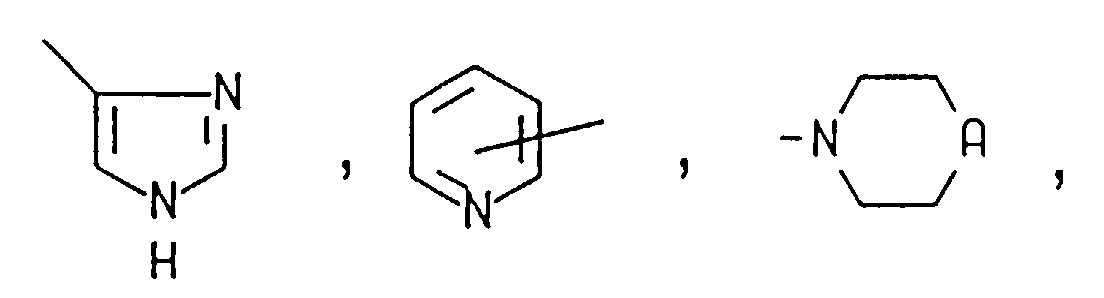


le groupe amino-acyle et les groupes amino-acyle du groupe dipeptidyle étant choisis, indépendamment, dans le groupe consistant en la forme D ou la forme L, lorsque c'est applicable, du groupe alanyle, arginyle, asparagyle, aspartyle acide, cystéinyle, cystyle, glutamyle acide, glutamyle, glycyle, histidyle, hydroxylysyle, hydroxyprolyle, isoleucyle, leucyle, lysyle, méthionyle, phénylalanyle, prolyle, séryle, thréonyle, tryptophyle, tyrosyle, valyle, β-alanyle, β-lysyle, N,N-diméthylglycyle, α,α-diméthylglycyle, α-aminobutyryle, 4-hydroxyphénylglycyle, phénylglycyle, α,γ-diaminobutyryle, ornithyle, homoséryle, bicyle, N,N-diéthyl-β-alanyle, N,N-diméthyl-γ-aminobutyryle et sarcosyle, sous réserve que le groupe N,N-diméthylglycyle, bicyle, N,N-diéthyl-β-alanyle ou N,N-diméthyl-γ-aminobutyryle ne puisse être que le groupe amino-acyle terminal lorsqu'il se trouve dans un groupe dipeptidyle ;j a la valeur 2, 3 ou 4 ;R3 et R4 sont choisis, indépendamment, entre l'hydrogène et un groupe alkyle ayant 1 à 4 atomes de carbone ;ou bien R3 et R4 sont pris conjointement avec l'atome d'azote auquel ils sont liés et forment un noyau saturé ou non saturé ayant 4 à 6 atomes de carbone, morpholino ou pipérazino ;A représente NH, S, N-(alkyle en C1 à C4), N-(groupe amino-acyle) ou N- (groupe dipeptidyle) ;
où le groupe amino-acyle et les groupes amino-acyle du groupe dipeptidyle sont choisis, indépendamment, entre le groupe consistant en la forme D ou L, lorsque c'est applicable, des groupes alanyle, arginyle, asparagyle, aspartyle acide, cystéinyle, cystyle, glutamyle acide, glutamyle, glycyle, histidyle, hydroxylysyle, hydroxyprolyle, isoleucyle, leucyle, lysyle, méthionyle, phénylalanyle, prolyle, séryle, thréonyle, tryptophyle, tyrosyle, valyle, β-alanyle, β-lysyle, N,N-diméthylglycyle, α,α-diméthylglycyle, α-aminobutyryle, 4-hydroxyphénylglycyle, phénylglycyle, α,γ-diaminobutyryle, ornithyle, homoséryle, bicyle, N,N-diéthyl-β-alanyle, N,N-diméthyl-γ-aminobutyryle et sarcosyle, sous réserve que le groupe N,N-diméthylglycyle, bicyle, N,N-diéthyl-β-alanyle ou N,N-diméthyl-γ-aminobutyryle puisse seulement être le groupe amino-acyle terminal lorsqu'il est présent dans un groupe dipeptidyle ;B1, B2 et B3 sont choisis chacun, indépendamment, dans le groupe consistant en l'hydrogène, un groupe alkyle en C1 à C4, un groupe amino-acyle et un groupe dipeptidyle ;
où le groupe amino-acyle et les groupes amino-acyle du groupe dipeptidyle sont choisis, indépendamment, dans le groupe consistant en la forme D ou la forme L, lorsque c'est applicable, des groupes alanyle, arginyle, asparagyle, aspartyle acide, cystéinyle, cystyle, glutamyle acide, glutamyle, glycyle, histidyle, hydroxylysyle, hydroxyprolyle, isoleucyle, leucyle, lysyle, méthionyle, phénylalanyle, prolyle, séryle, thréonyle, tryptophyle, tyrosyle, valyle, β-alanyle, β-lysyle, N,N-diméthylglycyle, α,α-diméthylglycyle, α-aminobutyryle, 4-hydroxyphénylglycyle, phénylglycyle, α,γ-diaminobutyryle, ornithyle, homoséryle, bicyle, N,N-diéthyl-β-alanyle, N,N-diméthyl-γ-aminobutyryle et sarcosyle, sous réserve que le groupe N,N-diméthylglycyle, bicyle, N,N-diéthyl-β-alanyle ou N,N-diméthyl-γ-aminobutyryle puisse seulement être le groupe amino-acyle terminal lorsqu'il est présent dans un groupe dipeptidyle ;Y1 est choisi dans le groupe consistant en C, CH, CH2, N et NH ;n a la valeur 0, 1 ou 2 ;R5 est un groupe alkyle ayant 1 à 4 atomes de carbone
ou R6 est un groupe alkyle ayant 1 à 4 atomes de carbone ;R7 est choisi dans le groupe consistant en H, un groupe alkyle ayant 1 à 4 atomes de carbone, hydroxy, alkoxy ayant 1 à 3 atomes de carbone, amino, N-alkylamino ayant 1 à 4 atomes de carbone et N,N-dialkylamino ayant un total de 2 à 6 atomes de carbone ;ou bien R6 et R7 sont considérés ensemble et forment un groupe oxo ;le groupe cycloalkyle facultativement substitué porte facultativement 1 à 5 substituants choisis, indépendamment, dans le groupe consistant en hydroxy, fluoro, chloro, alkoxy ayant 1 à 4 atomes de carbone, hydroxyalkyle ayant 1 à 4 atomes de carbone, alkoxyalkyle ayant 1 à 4 atomes de carbone dans chacune des parties alkoxy et alkyle, amino, N-alkylamino ayant 1 à 4 atomes de carbone et N,N-dialkylamino ayant un total de 2 à 6 atomes de carbone ;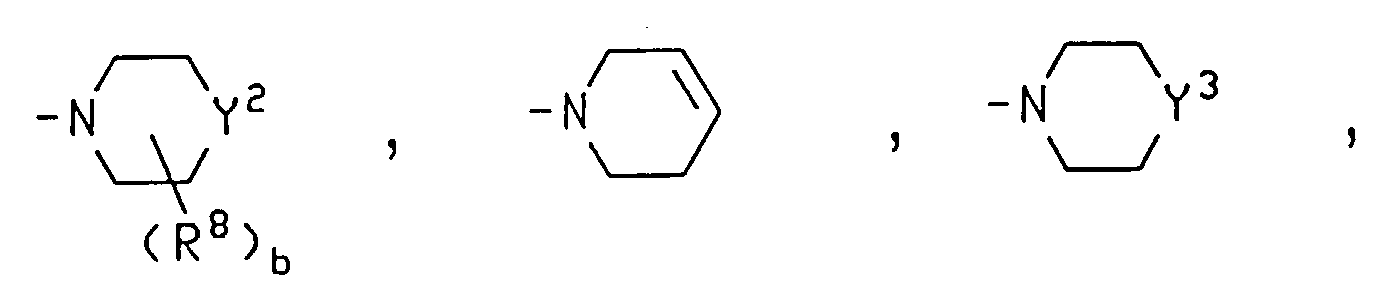
 où Y2 est choisi dans le groupe consistant en C, CH, CH2, N, NH, N-(groupe amino-acyle) et N-(groupe dipeptidyle) ;
où le groupe amino-acyle et les groupes amino-acyle du groupe dipeptidyle sont choisis, indépendamment, dans le groupe consistant en la forme D ou la forme L, lorsque c'est applicable, des groupes alanyle, arginyle, asparagyle, aspartyle acide, cystéinyle, cystyle, glutamyle acide, glutamyle, glycyle, histidyle, hydroxylysyle, hydroxyprolyle, isoleucyle, leucyle, lysyle, méthionyle, phénylalanyle, prolyle, séryle, thréonyle, tryptophyle, tyrosyle, valyle, β-alanyle, β-lysyle, N,N-diméthylglycyle, α,α-diméthylglycyle, α-aminobutyryle, 4-hydroxyphénylglycyle, phénylglycyle, α,γ-diaminobutyryle, ornithyle, homoséryle, bicyle, N,N-diéthyl-β-alanyle, N,N-diméthyl-γ-aminobutyryle et sarcosyle, sous réserve que le groupe N,N-diméthylglycyle, bicyle, N,N-diéthyl-β-alanyle ou N,N-diméthyl-γ-aminobutyryle puisse seulement être le groupe amino-acyle terminal lorsqu'il se trouve dans un groupe dipeptidyle ;Y3 représente O ou S ;b a la valeur 0, 1 ou 2 ;R8 est un groupe alkyle ayant 1 à 4 atomes de carbone
ou R9 représente H ou un groupe alkyle ayant 1 à 4 atomes de carbone ; etR10 est choisi dans le groupe consistant en H, un groupe alkyle ayant 1 à 4 atomes de carbone, hydroxy, alkoxy ayant 1 à 3 atomes de carbone, amino, N-alkylamino ayant 1 à 4 atomes de carbone et N,N-dialkylamino ayant au total 2 à 6 atomes de carbone ;ou bien R9 et R10 sont considérés ensemble et forment un groupe oxo ; etX1 correspondant précisément à la partie en chaîne latérale d'amino-acides et, chaque fois qu'il apparaît, il est choisi, indépendamment, parmi les chaînes latérales du groupe des amino-acides consistant en la forme D ou la forme L, lorsque c'est applicable, de l'alanine, l'arginine, l'asparagine, l'acide aspartique, la cystéine, la cystine, l'acide glutamique, la glutamine, la glycine, l'histidine, l'hydroxylysine, l'hydroxyproline, l'isoleucine, la leucine, la lysine, la méthionine, la phénylalanine, la proline, la sérine, la thréonine, le tryptophane, la tyrosine, la valine, la β-alanine, la β-lysine, l'α,α-diméthylglycine, l'acide α-aminobutyrique, la 4-hydroxyphénylglycine, la phénylglycine, l'acide α,γ-diaminobutyrique, l'ornithine et l'homosérine ;
e a la valeur 0 ou 1, sous réserve que lorsque e est égal à 1, X1 correspond alors à la chaîne latérale de la β-lysine ou de la β-alanine ;
f a la valeur 0 ou 1, sous réserve que lorsque f est égal à 1, X1 correspond alors alors à la chaîne latérale de la β-lysine ou de la β-alanine ;
X2 représente H, un groupe alkyle ayant 1 à 4 atomes de carbone ou le groupe benzyle ;
Q est choisi dans le groupe consistant en H, OH, fluoro, chloro, bromo, iodo, OX3,
 où R11 et R12 sont choisis, indépendamment dans le groupe consistant en H, un groupe alkyle ayant 1 à 4 atomes de carbone, hydroxyalkyle ayant 2 à 4 atomes de carbone, cycloalkyle ayant 3 à 8 atomes de carbone, alcényle ayant 3 ou 4 atomes de carbone, alkoxyalkyle ayant 1 à 4 atomes de carbone dans la partie alkoxy et 2 à 4 atomes de carbone dans la partie alkyle et alkoxyalkoxyalkyle ayant 1 à 4 atomes de carbone dans chacune des parties alkoxy et 2 à 4 atomes de carbone dans la partie alkyle ; etX3 est choisi dans le groupe consistant en un groupe alkyle de 1 à 4 atomes de carbone éventuellement substitué, un groupe cycloalkyle de 4 à 8 atomes de carbone éventuellement substitué et un groupe aryle, aralkyle ou hétéroaryle éventuellement substitué choisi parmi les groupes phényle, benzyle, pyridinyle, quinolinyle, isoquinolinyle, quinazolinyle, pyrimidinyle, imidazolyle, oxazolyle, thiazolyle, benzimidazolyle, indolyle, benzoxazolyle et benzothiazolyle ;sous réserve que lorsque R1 ou R2 est un groupe alkyle substitué ou un groue cycloalkyle substitué, les substituants hydroxy, alkoxy, fluoro, chloro, N-alkylamino, N,N-dialkylamino et amino ne puissent pas être attachés à la position 1 de ce groupe alkyle substitué ou de ce groupe cycloalkyle substitué.
où le groupe alkyle facultativement substitué et le groupe cycloalkyle facultativement substitué peuvent porter 1 ou 2 substituants choisis, indépendamment, dans le groupe consistant en hydroxy, amino, N-alkylamino ayant 1 à 4 atomes de carbone, N,N-dialkylamino ayant un total de 2 à 6 atomes de carbone et alkoxy ayant 1 à 4 atomes de carbone ; et où les groupes aryle, aralkyle et hétéroaryle facultativement substitués portent facultativement 1 ou 2 substituants choisis, indépendamment, dans le groupe des substituants alkyle ayant 1 à 4 atomes de carbone, fluoro, chloro, bromo, acétyle, amino, nitro, cyano, trifluorométhyle, N-alkylamino ayant 1 à 4 atomes de carbone, N,N-dialkylamino ayant un total de 2 à 6 atomes de carbone, carboxyle, carbalkoxy ayant 1 à 4 atomes de carbone, carboxamido, sulfonamido, hydroxyalkyle ayant 1 à 4 atomes de carbone, aminoalkyle ayant 1 à 4 atomes de carbone, N-alkylaminoalkyle ayant 1 à 4 atomes de carbone dans chacune des parties alkyle et N,N-dialkylaminoalkyle ayant un total de 2 à 6 atomes de carbone dans la partie dialkylamino et de 1 à 4 atomes de carbone dans la partie alkyle ; - Composé suivant la revendication 1, ou un sel pharmaceutiquement acceptable de ce composé, dans lequel m est égal à 1 ; Z1 représente H et Q représente H ou OH.
- Composé suivant la revendication 2 de formule I, ou un sel pharmaceutiquement acceptable de ce composé, dans lequel Q représente H.
- Composé suivant la revendication 3 ou un sel pharmaceutiquement acceptable de ce composé, dans lequel T représente

- Composé suivant la revendication 4 ou un sel pharmaceutiquement acceptable de ce composé, dans lequel R1 représente H, un groupe méthyle ou un groupe alkyle de 2 à 6 atomes de carbone facultativement substitué et R2 est un groupe aminoalkyle ayant 2 à 6 atomes de carbone, un groupe N-alkylaminoalkyle ayant 1 à 4 atomes de carbone dans la partie alkylamino et 2 à 4 atomes de carbone dans la partie alkyle, un groupe N,N-dialkylaminoalkyle ayant au total 2 à 6 atomes de carbone dans la partie dialkylamino et 2 à 4 atomes de carbone dans la partie alkyle ou un groupe alkyle de 2 à 6 atomes de carbone facultativement substitué ;
où le groupe alkyle facultativement substitué porte facultativement un substituant
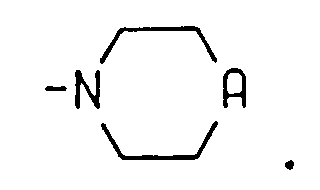
- Composé suivant la revendication 4 ou un sel pharmaceutiquement acceptable de ce composé, dans lequel R1 et R2 sont considérés conjointement avec l'atome d'azote auquel ils sont attachés et forment un groupe

- Composé suivant la revendication 6 ou un sel pharmaceutiquement acceptable de ce composé, dans lequel b est égal à 0 et Y2 est un groupe NH.
- Composé suivant la revendication 6 ou un sel pharmaceutiquement acceptable de ce composé, dans lequel b est égal à 1 et Y2 représente N, NH, CH ou CH2.
- Composé suivant la revendication 1 ou un sel pharmaceutiquement acceptable de ce composé, dans lequel m est égal à 2 ; Z1 représente H, Q représente H et T est un groupe

- Composé suivant la revendication 9 ou un sel pharmaceutiquement acceptable de ce composé, dans lequel B représente H ou le groupe méthyle et Z3 est un groupe -N(R1R2).
- Composé suivant la revendication 10 ou un sel pharmaceutiquement acceptable de ce composé, dans lequel a est égal à 1 ; R1 représente H, un groupe alkyle ou aminoalkyle ; et R2 est un groupe aminoalkyle, N-alkylaminoalkyle ayant 1 à 4 atomes de carbone dans la partie aminoalkyle et 2 à 4 atomes de carbone dans la partie alkyle ou un groupe N,N-dialkylaminoalkyle ayant au total 2 à 6 atomes de carbone dans la partie dialkylamino et 2 à 4 atomes de carbone dans la partie alkyle.
- Composé suivant la revendication 10 ou un sel pharmaceutiquement acceptable de ce composé, dans lequel a est égal à 1 et R1 et R2 sont considérés conjointement avec l'atome d'azote auquel ils sont attachés et forment un groupe pipérazinyle.
- Composition pharmaceutique, comprenant une quantité efficace d'un composé suivant la revendication 1 et un support ou diluant acceptable du point de vue pharmaceutique.
Applications Claiming Priority (5)
| Application Number | Priority Date | Filing Date | Title |
|---|---|---|---|
| US9218193A | 1993-07-15 | 1993-07-15 | |
| US92181 | 1993-07-15 | ||
| US19331694A | 1994-02-08 | 1994-02-08 | |
| US193316 | 1994-02-08 | ||
| PCT/IB1994/000199 WO1995002594A1 (fr) | 1993-07-15 | 1994-07-04 | Derives d'amides de macrolides antibiotiques a noyau de 16 elements |
Publications (2)
| Publication Number | Publication Date |
|---|---|
| EP0708770A1 EP0708770A1 (fr) | 1996-05-01 |
| EP0708770B1 true EP0708770B1 (fr) | 1997-04-16 |
Family
ID=26785371
Family Applications (1)
| Application Number | Title | Priority Date | Filing Date |
|---|---|---|---|
| EP94918498A Expired - Lifetime EP0708770B1 (fr) | 1993-07-15 | 1994-07-04 | Derives d'amides de macrolides antibiotiques a noyau de 16 elements |
Country Status (10)
| Country | Link |
|---|---|
| US (1) | US5716939A (fr) |
| EP (1) | EP0708770B1 (fr) |
| JP (1) | JPH08508038A (fr) |
| AT (1) | ATE151767T1 (fr) |
| AU (1) | AU6980094A (fr) |
| CA (1) | CA2167201A1 (fr) |
| DE (1) | DE69402714T2 (fr) |
| FI (1) | FI943358A7 (fr) |
| IL (1) | IL110240A0 (fr) |
| WO (1) | WO1995002594A1 (fr) |
Families Citing this family (15)
| Publication number | Priority date | Publication date | Assignee | Title |
|---|---|---|---|---|
| AU3121095A (en) * | 1994-09-22 | 1996-04-09 | Pfizer Inc. | Antibiotic macrolides |
| EP0778283A3 (fr) * | 1995-12-05 | 1998-01-28 | Pfizer Inc. | Macrolides antibiotiques |
| US6605599B1 (en) | 1997-07-08 | 2003-08-12 | Bristol-Myers Squibb Company | Epothilone derivatives |
| FR2775187B1 (fr) * | 1998-02-25 | 2003-02-21 | Novartis Ag | Utilisation de l'epothilone b pour la fabrication d'une preparation pharmaceutique antiproliferative et d'une composition comprenant l'epothilone b comme agent antiproliferatif in vivo |
| US6440942B1 (en) | 2000-12-22 | 2002-08-27 | Enanta Pharmaceuticals, Inc. | 14-membered macrolides derived from leucomycins |
| US6462026B1 (en) | 2001-02-16 | 2002-10-08 | Enanta Pharmaceuticals, Inc. | Bicyclic leucomycins |
| US6436906B1 (en) | 2001-04-02 | 2002-08-20 | Enanta Pharmaceuticals, Inc. | 9-amino-14-membered macrolides derived from leucomycins |
| US6680299B2 (en) | 2001-07-27 | 2004-01-20 | Enanta Pharmaceuticals, Inc. | 4'-substituted leucomycins |
| DK1483251T3 (da) | 2002-03-12 | 2010-04-12 | Bristol Myers Squibb Co | C3-cyano-epothilon-derivater |
| US6710034B2 (en) | 2002-04-19 | 2004-03-23 | Enanta Pharmaceuticals, Inc. | 5-O-mycaminosyltylonide derivatives |
| US6753415B2 (en) | 2002-04-19 | 2004-06-22 | Enanta Pharmaceuticals, Inc. | 23-O-substituted 5-O-mycaminosyltylonide derivatives |
| CA2595211C (fr) * | 2005-01-24 | 2012-08-21 | Microbial Chemistry Research Foundation | Agent anti-pneumococci resistantes a la penicilline et nouveau derive de macrolide cyclique a 16 chainons |
| AU2007278195B2 (en) | 2006-07-28 | 2012-09-13 | Intervet International B.V. | Macrolide synthesis process |
| US8463852B2 (en) * | 2006-10-06 | 2013-06-11 | Oracle International Corporation | Groupware portlets for integrating a portal with groupware systems |
| CN109557216B (zh) * | 2019-01-22 | 2020-02-18 | 中国农业科学院农业质量标准与检测技术研究所 | 菜籽粕中掺加泰乐菌素滤渣的鉴别方法 |
Family Cites Families (22)
| Publication number | Priority date | Publication date | Assignee | Title |
|---|---|---|---|---|
| FR394135A (fr) * | 1908-07-23 | 1909-01-15 | Paul Jean Baptiste Francois | Tambour laveur continu |
| US3975372A (en) * | 1975-02-28 | 1976-08-17 | Schering Corporation | Preparation of 12,13-desepoxy-12,13-dehydrorosamicin |
| US4056616A (en) * | 1976-03-05 | 1977-11-01 | Schering Corporation | Rosamicin derivatives and method of using same |
| US4279896A (en) * | 1980-06-23 | 1981-07-21 | Schering Corporation | Novel 20-imino macrolide antibacterial agents |
| US4304856A (en) * | 1980-11-10 | 1981-12-08 | Eli Lilly And Company | Process for producing 20-dihydro-20-deoxy-23-demycinosyltylosin |
| CA1196915A (fr) * | 1982-01-22 | 1985-11-19 | Hideo Sakakibara | 23-0-acyl-23-demycinosyldesmycosine |
| US4515941A (en) * | 1982-04-07 | 1985-05-07 | Toyo Jozo Kabushiki Kaisha | 23-Demycinosyldesmycosin derivatives |
| US4629786A (en) * | 1983-02-28 | 1986-12-16 | Eli Lilly And Company | C-20- and C-23 modified macrolide derivatives |
| IL71032A0 (en) * | 1983-02-28 | 1984-05-31 | Lilly Co Eli | C-20 and c-23-modified macrolide derivatives |
| DE3444006A1 (de) * | 1983-11-30 | 1985-06-05 | Toyo Jozo K.K., Tagata, Shizuoka | 14-de(hydroxymethyl)-mycaminosyltylonolid-derivate |
| US4604380A (en) * | 1985-01-18 | 1986-08-05 | Eli Lilly And Company | C-23-substituted mycaminosyltylonolide compounds, pharmaceutical compositions and methods of use |
| JPS62103098A (ja) * | 1985-05-13 | 1987-05-13 | Microbial Chem Res Found | タイロシン誘導体 |
| US4921947A (en) * | 1986-03-31 | 1990-05-01 | Eli Lilly And Company | Process for preparing macrolide derivatives |
| JPS62242694A (ja) * | 1986-04-15 | 1987-10-23 | Toyo Jozo Co Ltd | 20−0−アシル−19,20−エノ−ルマクロライド系抗生物質誘導体 |
| US4920103A (en) * | 1986-09-29 | 1990-04-24 | Eli Lilly And Company | Modifications of mycinose and 3-O-demethylmycinose in tylosin-type macrolides |
| US4962146A (en) * | 1987-04-29 | 1990-10-09 | Schering Corporation | 3-O-glycosyl 16-membered macrolide antibacterials and related derivatives |
| FR2638458A1 (fr) * | 1988-10-27 | 1990-05-04 | Adir | Nouveaux derives de la tylosine, leur procede de preparation et les compositions pharmaceutiques qui les contiennent |
| US5026832A (en) * | 1988-12-26 | 1991-06-25 | Toyo Jozo Co., Ltd. | 9-dihydro-9-O-alkyldesmycosin derivatives |
| FR2646081A1 (fr) * | 1989-04-20 | 1990-10-26 | Adir | |
| US5140014A (en) * | 1989-11-13 | 1992-08-18 | Abbott Laboratories | Rosaramicin derivatives and method of treating bacterial infections |
| JPH05117292A (ja) * | 1991-10-24 | 1993-05-14 | Meiji Seika Kaisha Ltd | 新規16員環マクロリド誘導体及びその製造法 |
| TW226373B (fr) * | 1992-07-15 | 1994-07-11 | Pfizer |
-
1994
- 1994-07-04 EP EP94918498A patent/EP0708770B1/fr not_active Expired - Lifetime
- 1994-07-04 CA CA002167201A patent/CA2167201A1/fr not_active Abandoned
- 1994-07-04 AU AU69800/94A patent/AU6980094A/en not_active Abandoned
- 1994-07-04 JP JP7504440A patent/JPH08508038A/ja not_active Ceased
- 1994-07-04 US US08/557,170 patent/US5716939A/en not_active Expired - Fee Related
- 1994-07-04 DE DE69402714T patent/DE69402714T2/de not_active Expired - Fee Related
- 1994-07-04 WO PCT/IB1994/000199 patent/WO1995002594A1/fr not_active Ceased
- 1994-07-04 AT AT94918498T patent/ATE151767T1/de not_active IP Right Cessation
- 1994-07-07 IL IL11024094A patent/IL110240A0/xx unknown
- 1994-07-14 FI FI943358A patent/FI943358A7/fi not_active Application Discontinuation
Also Published As
| Publication number | Publication date |
|---|---|
| ATE151767T1 (de) | 1997-05-15 |
| AU6980094A (en) | 1995-02-13 |
| JPH08508038A (ja) | 1996-08-27 |
| EP0708770A1 (fr) | 1996-05-01 |
| FI943358L (fi) | 1995-01-16 |
| US5716939A (en) | 1998-02-10 |
| IL110240A0 (en) | 1994-10-21 |
| FI943358A7 (fi) | 1995-01-16 |
| FI943358A0 (fi) | 1994-07-14 |
| DE69402714D1 (de) | 1997-05-22 |
| CA2167201A1 (fr) | 1995-01-26 |
| WO1995002594A1 (fr) | 1995-01-26 |
| DE69402714T2 (de) | 1997-07-31 |
Similar Documents
| Publication | Publication Date | Title |
|---|---|---|
| EP0649430B1 (fr) | Derives de macrolides antibiotiques a noyau a 16 elements | |
| US5716939A (en) | Amide derivatives of 16-membered ring antibiotic macrolides | |
| KR100486053B1 (ko) | 신규에리트로마이신유도체,그의제조방법및약제로서의그의용도 | |
| EP0216169A2 (fr) | Dérivés d'érythromycine | |
| BG65107B1 (bg) | 13-членни азалиди и тяхното използване като антибиотични средства | |
| EP0103465B1 (fr) | 20-Amino-macrolides | |
| US4440759A (en) | 20-Amino tylosin derivatives and pharmaceutical compositions containing same | |
| EP0104028B1 (fr) | Dérivés de macrolides modifiés en C-20 | |
| US5677287A (en) | Antibacterial 16-membered ring macrolides containing olefins at C-20 | |
| EP0124216B1 (fr) | Dérivés de macrolides modifiés en C-20 et C-23 | |
| US4468511A (en) | C-20- And C-23-Modified macrolide derivatives | |
| CA2191920C (fr) | Derives d'antibiotiques macrolides a anneaux composes de 16 membres de 3-deoxy | |
| HK1047940A1 (en) | 9A-azalides with antibacterial activity | |
| WO1996009312A1 (fr) | Macrolides antibiotiques | |
| EP0099746B1 (fr) | Dérivés d'antibiotiques macrolides modifiés en position C-23 | |
| MXPA96006111A (en) | Macroli antibiotics | |
| EP0262903A2 (fr) | Dérivés acylés des composés tylosine et desmycosine modifiés en position 20 | |
| CS235343B2 (cs) | Způsob výroby derivátů 20-aminotylosinu |
Legal Events
| Date | Code | Title | Description |
|---|---|---|---|
| PUAI | Public reference made under article 153(3) epc to a published international application that has entered the european phase |
Free format text: ORIGINAL CODE: 0009012 |
|
| 17P | Request for examination filed |
Effective date: 19951219 |
|
| AK | Designated contracting states |
Kind code of ref document: A1 Designated state(s): AT BE CH DE DK ES FR GB GR IE IT LI LU NL PT SE |
|
| 17Q | First examination report despatched |
Effective date: 19960610 |
|
| GRAG | Despatch of communication of intention to grant |
Free format text: ORIGINAL CODE: EPIDOS AGRA |
|
| GRAH | Despatch of communication of intention to grant a patent |
Free format text: ORIGINAL CODE: EPIDOS IGRA |
|
| GRAH | Despatch of communication of intention to grant a patent |
Free format text: ORIGINAL CODE: EPIDOS IGRA |
|
| GRAA | (expected) grant |
Free format text: ORIGINAL CODE: 0009210 |
|
| AK | Designated contracting states |
Kind code of ref document: B1 Designated state(s): AT BE CH DE DK ES FR GB GR IE IT LI LU NL PT SE |
|
| PG25 | Lapsed in a contracting state [announced via postgrant information from national office to epo] |
Ref country code: IT Free format text: LAPSE BECAUSE OF FAILURE TO SUBMIT A TRANSLATION OF THE DESCRIPTION OR TO PAY THE FEE WITHIN THE PRE;WARNING: LAPSES OF ITALIAN PATENTS WITH EFFECTIVE DATE BEFORE 2007 MAY HAVE OCCURRED AT ANY TIME BEFORE 2007. THE CORRECT EFFECTIVE DATE MAY BE DIFFERENT FROM THE ONE RECORDED.SCRIBED TIME-LIMIT Effective date: 19970416 Ref country code: GR Free format text: LAPSE BECAUSE OF FAILURE TO SUBMIT A TRANSLATION OF THE DESCRIPTION OR TO PAY THE FEE WITHIN THE PRESCRIBED TIME-LIMIT Effective date: 19970416 Ref country code: FR Effective date: 19970416 Ref country code: ES Free format text: THE PATENT HAS BEEN ANNULLED BY A DECISION OF A NATIONAL AUTHORITY Effective date: 19970416 Ref country code: DK Effective date: 19970416 Ref country code: BE Effective date: 19970416 Ref country code: AT Effective date: 19970416 |
|
| REF | Corresponds to: |
Ref document number: 151767 Country of ref document: AT Date of ref document: 19970515 Kind code of ref document: T |
|
| REG | Reference to a national code |
Ref country code: CH Ref legal event code: EP |
|
| REG | Reference to a national code |
Ref country code: CH Ref legal event code: NV Representative=s name: E. BLUM & CO. PATENTANWAELTE |
|
| REF | Corresponds to: |
Ref document number: 69402714 Country of ref document: DE Date of ref document: 19970522 |
|
| PGFP | Annual fee paid to national office [announced via postgrant information from national office to epo] |
Ref country code: CH Payment date: 19970623 Year of fee payment: 4 |
|
| PG25 | Lapsed in a contracting state [announced via postgrant information from national office to epo] |
Ref country code: LU Free format text: LAPSE BECAUSE OF NON-PAYMENT OF DUE FEES Effective date: 19970704 Ref country code: IE Free format text: LAPSE BECAUSE OF NON-PAYMENT OF DUE FEES Effective date: 19970704 |
|
| PG25 | Lapsed in a contracting state [announced via postgrant information from national office to epo] |
Ref country code: SE Effective date: 19970716 Ref country code: PT Effective date: 19970716 |
|
| REG | Reference to a national code |
Ref country code: IE Ref legal event code: FG4D Free format text: 73415 |
|
| EN | Fr: translation not filed | ||
| PLBE | No opposition filed within time limit |
Free format text: ORIGINAL CODE: 0009261 |
|
| STAA | Information on the status of an ep patent application or granted ep patent |
Free format text: STATUS: NO OPPOSITION FILED WITHIN TIME LIMIT |
|
| PG25 | Lapsed in a contracting state [announced via postgrant information from national office to epo] |
Ref country code: DE Free format text: LAPSE BECAUSE OF NON-PAYMENT OF DUE FEES Effective date: 19980401 |
|
| 26N | No opposition filed | ||
| PG25 | Lapsed in a contracting state [announced via postgrant information from national office to epo] |
Ref country code: GB Free format text: LAPSE BECAUSE OF NON-PAYMENT OF DUE FEES Effective date: 19980704 |
|
| PG25 | Lapsed in a contracting state [announced via postgrant information from national office to epo] |
Ref country code: LI Free format text: LAPSE BECAUSE OF NON-PAYMENT OF DUE FEES Effective date: 19980731 Ref country code: CH Free format text: LAPSE BECAUSE OF NON-PAYMENT OF DUE FEES Effective date: 19980731 |
|
| PG25 | Lapsed in a contracting state [announced via postgrant information from national office to epo] |
Ref country code: NL Free format text: LAPSE BECAUSE OF NON-PAYMENT OF DUE FEES Effective date: 19990201 |
|
| GBPC | Gb: european patent ceased through non-payment of renewal fee |
Effective date: 19980704 |
|
| REG | Reference to a national code |
Ref country code: CH Ref legal event code: PL |
|
| NLV4 | Nl: lapsed or anulled due to non-payment of the annual fee |
Effective date: 19990201 |