EP0708917B1 - Procede de mesure de l'ecaillage d'une surface de protection - Google Patents
Procede de mesure de l'ecaillage d'une surface de protection Download PDFInfo
- Publication number
- EP0708917B1 EP0708917B1 EP94923731A EP94923731A EP0708917B1 EP 0708917 B1 EP0708917 B1 EP 0708917B1 EP 94923731 A EP94923731 A EP 94923731A EP 94923731 A EP94923731 A EP 94923731A EP 0708917 B1 EP0708917 B1 EP 0708917B1
- Authority
- EP
- European Patent Office
- Prior art keywords
- article
- heating
- coating
- cooling
- particles
- Prior art date
- Legal status (The legal status is an assumption and is not a legal conclusion. Google has not performed a legal analysis and makes no representation as to the accuracy of the status listed.)
- Expired - Lifetime
Links
- 238000000034 method Methods 0.000 title claims abstract description 32
- 230000001681 protective effect Effects 0.000 title claims abstract description 17
- 238000004901 spalling Methods 0.000 title claims abstract description 16
- 238000010438 heat treatment Methods 0.000 claims abstract description 44
- 238000000576 coating method Methods 0.000 claims abstract description 38
- 239000002245 particle Substances 0.000 claims abstract description 34
- 238000001816 cooling Methods 0.000 claims abstract description 33
- 239000011248 coating agent Substances 0.000 claims abstract description 31
- 230000003100 immobilizing effect Effects 0.000 claims abstract description 10
- 239000011253 protective coating Substances 0.000 claims abstract description 8
- 230000003252 repetitive effect Effects 0.000 claims abstract description 7
- 239000000463 material Substances 0.000 claims description 24
- MCMNRKCIXSYSNV-UHFFFAOYSA-N Zirconium dioxide Chemical compound O=[Zr]=O MCMNRKCIXSYSNV-UHFFFAOYSA-N 0.000 claims description 20
- 239000000126 substance Substances 0.000 claims description 9
- 238000012360 testing method Methods 0.000 claims description 9
- 229910052751 metal Inorganic materials 0.000 claims description 8
- 239000002184 metal Substances 0.000 claims description 7
- 239000007787 solid Substances 0.000 claims description 7
- 239000012188 paraffin wax Substances 0.000 claims description 6
- VYPSYNLAJGMNEJ-UHFFFAOYSA-N Silicium dioxide Chemical compound O=[Si]=O VYPSYNLAJGMNEJ-UHFFFAOYSA-N 0.000 claims description 5
- 239000011651 chromium Substances 0.000 claims description 5
- 239000012720 thermal barrier coating Substances 0.000 claims description 5
- 229910000951 Aluminide Inorganic materials 0.000 claims description 4
- VYZAMTAEIAYCRO-UHFFFAOYSA-N Chromium Chemical compound [Cr] VYZAMTAEIAYCRO-UHFFFAOYSA-N 0.000 claims description 4
- KDLHZDBZIXYQEI-UHFFFAOYSA-N Palladium Chemical compound [Pd] KDLHZDBZIXYQEI-UHFFFAOYSA-N 0.000 claims description 4
- 229910052804 chromium Inorganic materials 0.000 claims description 4
- QDOXWKRWXJOMAK-UHFFFAOYSA-N dichromium trioxide Chemical compound O=[Cr]O[Cr]=O QDOXWKRWXJOMAK-UHFFFAOYSA-N 0.000 claims description 4
- 150000002739 metals Chemical class 0.000 claims description 4
- BASFCYQUMIYNBI-UHFFFAOYSA-N platinum Chemical compound [Pt] BASFCYQUMIYNBI-UHFFFAOYSA-N 0.000 claims description 4
- 239000004411 aluminium Substances 0.000 claims description 3
- 229910052782 aluminium Inorganic materials 0.000 claims description 3
- XAGFODPZIPBFFR-UHFFFAOYSA-N aluminium Chemical compound [Al] XAGFODPZIPBFFR-UHFFFAOYSA-N 0.000 claims description 3
- 238000005524 ceramic coating Methods 0.000 claims description 3
- 230000002285 radioactive effect Effects 0.000 claims description 3
- PNEYBMLMFCGWSK-UHFFFAOYSA-N aluminium oxide Inorganic materials [O-2].[O-2].[O-2].[Al+3].[Al+3] PNEYBMLMFCGWSK-UHFFFAOYSA-N 0.000 claims description 2
- 239000000919 ceramic Substances 0.000 claims description 2
- 229910052681 coesite Inorganic materials 0.000 claims description 2
- 229910052593 corundum Inorganic materials 0.000 claims description 2
- 229910052906 cristobalite Inorganic materials 0.000 claims description 2
- 238000010894 electron beam technology Methods 0.000 claims description 2
- 239000003925 fat Substances 0.000 claims description 2
- 239000000499 gel Substances 0.000 claims description 2
- 238000002844 melting Methods 0.000 claims description 2
- 230000008018 melting Effects 0.000 claims description 2
- 229910052763 palladium Inorganic materials 0.000 claims description 2
- 229910052697 platinum Inorganic materials 0.000 claims description 2
- 239000000377 silicon dioxide Substances 0.000 claims description 2
- 229910052682 stishovite Inorganic materials 0.000 claims description 2
- 229910052905 tridymite Inorganic materials 0.000 claims description 2
- 229910001845 yogo sapphire Inorganic materials 0.000 claims description 2
- 238000010884 ion-beam technique Methods 0.000 claims 1
- 238000010301 surface-oxidation reaction Methods 0.000 claims 1
- 239000010410 layer Substances 0.000 description 9
- 238000005382 thermal cycling Methods 0.000 description 9
- 230000008859 change Effects 0.000 description 8
- 230000004913 activation Effects 0.000 description 7
- 230000000694 effects Effects 0.000 description 7
- 238000005259 measurement Methods 0.000 description 5
- 230000035945 sensitivity Effects 0.000 description 4
- 230000007797 corrosion Effects 0.000 description 3
- 238000005260 corrosion Methods 0.000 description 3
- 230000005855 radiation Effects 0.000 description 3
- 239000000758 substrate Substances 0.000 description 3
- IJGRMHOSHXDMSA-UHFFFAOYSA-N Atomic nitrogen Chemical compound N#N IJGRMHOSHXDMSA-UHFFFAOYSA-N 0.000 description 2
- 238000002474 experimental method Methods 0.000 description 2
- 238000011065 in-situ storage Methods 0.000 description 2
- 150000002500 ions Chemical class 0.000 description 2
- 229910001092 metal group alloy Inorganic materials 0.000 description 2
- 238000012544 monitoring process Methods 0.000 description 2
- 230000003287 optical effect Effects 0.000 description 2
- 230000001105 regulatory effect Effects 0.000 description 2
- 239000002344 surface layer Substances 0.000 description 2
- OKTJSMMVPCPJKN-UHFFFAOYSA-N Carbon Chemical compound [C] OKTJSMMVPCPJKN-UHFFFAOYSA-N 0.000 description 1
- DGAQECJNVWCQMB-PUAWFVPOSA-M Ilexoside XXIX Chemical compound C[C@@H]1CC[C@@]2(CC[C@@]3(C(=CC[C@H]4[C@]3(CC[C@@H]5[C@@]4(CC[C@@H](C5(C)C)OS(=O)(=O)[O-])C)C)[C@@H]2[C@]1(C)O)C)C(=O)O[C@H]6[C@@H]([C@H]([C@@H]([C@H](O6)CO)O)O)O.[Na+] DGAQECJNVWCQMB-PUAWFVPOSA-M 0.000 description 1
- NINIDFKCEFEMDL-UHFFFAOYSA-N Sulfur Chemical compound [S] NINIDFKCEFEMDL-UHFFFAOYSA-N 0.000 description 1
- 239000005864 Sulphur Substances 0.000 description 1
- 229910045601 alloy Inorganic materials 0.000 description 1
- 239000000956 alloy Substances 0.000 description 1
- 238000005269 aluminizing Methods 0.000 description 1
- QVGXLLKOCUKJST-UHFFFAOYSA-N atomic oxygen Chemical compound [O] QVGXLLKOCUKJST-UHFFFAOYSA-N 0.000 description 1
- 230000008901 benefit Effects 0.000 description 1
- 230000015572 biosynthetic process Effects 0.000 description 1
- 229910052799 carbon Inorganic materials 0.000 description 1
- 229910010293 ceramic material Inorganic materials 0.000 description 1
- 238000006243 chemical reaction Methods 0.000 description 1
- 239000011247 coating layer Substances 0.000 description 1
- 125000004122 cyclic group Chemical group 0.000 description 1
- 239000011521 glass Substances 0.000 description 1
- 229910052736 halogen Inorganic materials 0.000 description 1
- 150000002367 halogens Chemical class 0.000 description 1
- 230000006872 improvement Effects 0.000 description 1
- 238000005461 lubrication Methods 0.000 description 1
- 229910052757 nitrogen Inorganic materials 0.000 description 1
- 230000003647 oxidation Effects 0.000 description 1
- 238000007254 oxidation reaction Methods 0.000 description 1
- 229910052760 oxygen Inorganic materials 0.000 description 1
- 239000001301 oxygen Substances 0.000 description 1
- 239000000843 powder Substances 0.000 description 1
- 230000008569 process Effects 0.000 description 1
- 239000011241 protective layer Substances 0.000 description 1
- 239000010453 quartz Substances 0.000 description 1
- 239000012857 radioactive material Substances 0.000 description 1
- 230000004044 response Effects 0.000 description 1
- 229910052708 sodium Inorganic materials 0.000 description 1
- 239000011734 sodium Substances 0.000 description 1
- 239000001993 wax Substances 0.000 description 1
- 230000004584 weight gain Effects 0.000 description 1
- 235000019786 weight gain Nutrition 0.000 description 1
- 230000004580 weight loss Effects 0.000 description 1
Images

Classifications
-
- G—PHYSICS
- G01—MEASURING; TESTING
- G01N—INVESTIGATING OR ANALYSING MATERIALS BY DETERMINING THEIR CHEMICAL OR PHYSICAL PROPERTIES
- G01N3/00—Investigating strength properties of solid materials by application of mechanical stress
- G01N3/60—Investigating resistance of materials, e.g. refractory materials, to rapid heat changes
-
- G—PHYSICS
- G01—MEASURING; TESTING
- G01N—INVESTIGATING OR ANALYSING MATERIALS BY DETERMINING THEIR CHEMICAL OR PHYSICAL PROPERTIES
- G01N3/00—Investigating strength properties of solid materials by application of mechanical stress
- G01N3/56—Investigating resistance to wear or abrasion
- G01N3/562—Investigating resistance to wear or abrasion using radioactive tracers
-
- G—PHYSICS
- G01—MEASURING; TESTING
- G01N—INVESTIGATING OR ANALYSING MATERIALS BY DETERMINING THEIR CHEMICAL OR PHYSICAL PROPERTIES
- G01N1/00—Sampling; Preparing specimens for investigation
- G01N1/28—Preparing specimens for investigation including physical details of (bio-)chemical methods covered elsewhere, e.g. G01N33/50, C12Q
- G01N1/2813—Producing thin layers of samples on a substrate, e.g. smearing, spinning-on
- G01N2001/2833—Collecting samples on a sticky, tacky, adhesive surface
-
- G—PHYSICS
- G01—MEASURING; TESTING
- G01N—INVESTIGATING OR ANALYSING MATERIALS BY DETERMINING THEIR CHEMICAL OR PHYSICAL PROPERTIES
- G01N2203/00—Investigating strength properties of solid materials by application of mechanical stress
- G01N2203/02—Details not specific for a particular testing method
- G01N2203/022—Environment of the test
- G01N2203/0222—Temperature
- G01N2203/0224—Thermal cycling
-
- G—PHYSICS
- G01—MEASURING; TESTING
- G01N—INVESTIGATING OR ANALYSING MATERIALS BY DETERMINING THEIR CHEMICAL OR PHYSICAL PROPERTIES
- G01N33/00—Investigating or analysing materials by specific methods not covered by groups G01N1/00 - G01N31/00
- G01N33/38—Concrete; Lime; Mortar; Gypsum; Bricks; Ceramics; Glass
- G01N33/388—Ceramics
-
- Y—GENERAL TAGGING OF NEW TECHNOLOGICAL DEVELOPMENTS; GENERAL TAGGING OF CROSS-SECTIONAL TECHNOLOGIES SPANNING OVER SEVERAL SECTIONS OF THE IPC; TECHNICAL SUBJECTS COVERED BY FORMER USPC CROSS-REFERENCE ART COLLECTIONS [XRACs] AND DIGESTS
- Y10—TECHNICAL SUBJECTS COVERED BY FORMER USPC
- Y10T—TECHNICAL SUBJECTS COVERED BY FORMER US CLASSIFICATION
- Y10T436/00—Chemistry: analytical and immunological testing
- Y10T436/13—Tracers or tags
Definitions
- the invention relates to a method of determining the level of spallation of protective surface layers or coatings from an article, such as an engine component for example, as a result of repetitive heating and cooling.
- the invention also relates to an apparatus suitable for use in the above-mentioned method.
- protective coating is an oxide scale which naturally forms on many metal alloys as a result of exposure to air or other oxidising media especially at high temperatures.
- a scale such as Cr 2 O 3 , Al 2 O 3 or SiO 2 isolates the bare alloy from the environment and thereby slows down further corrosive attack.
- Other known coatings include those based on aluminium, in particular a simple aluminide applied by an aluminizing process or a modified aluminide in which the aluminium is combined with another element such as chromium, platinum or palladium or a more complex metal overlay coating of the general formula MCrAlY where M is another metallic element.
- Protective coatings based on ceramic materials have also been developed, based particularly on zirconia.
- thermal barrier coatings which consist of an MCrAlY underlay or "bond" coat and a zirconia overlay.
- protective surfaces can also be generated on a substrate by exposure of the surface to a high energy beam such as high energy ions, an electron beam or a laser beam.
- a high energy beam such as high energy ions, an electron beam or a laser beam.
- protective layers have, to a variable degree, the tendancy to flake off or spall from the coated article over time when the article is subjected to high temperatures and particularly when subjected to repeated temperature cycles, as would normally be the case with an engine component for example.
- the amount of spalling is evaluated by determining the weight change (generally the specific weight change defined as weight change per unit of surface area) at various time intervals during the test e.g. after 10, 20 or 50 thermal cycles.
- weight change generally the specific weight change defined as weight change per unit of surface area
- Such weight change values can be compared with weight change in tests of similar duration at constant temperature without temperature cycles which give an indication of the effect due to high temperature exposure e.g. corrosion.
- results obtained in this way can be misleading.
- spalling might result in weight loss
- corrosion will usually result in weight gain due to the uptake of species from the environment. Therefore the relationship between weight change and material loss, the actual variable one wants to measure, can be very complicated.
- the response to exposure of a spalled area may be different to that of an intact area and the effect of exposure at low temperature during the temperature cycle may not be negligible.
- the amount of spalled material can be roughly estimated by optical determination of the spalled area, as described in the article by Wortman et al mentioned above, or by cross-sectional determination.
- Such methods are highly inaccurate and/or laborious and lead only to a rough quantitative ranking of materials performance.
- the present inventors have developed a new technique for determining material loss of protective surface due to spalling which involves the use of radionuclides.
- the method allows easy assessment of the performance of any particular protective coating during thermal cycling.
- Thin layer activation has been used to determine the rate of wear of engine components such as piston rings.
- radionuclides are induced within a very thin surface layer of the component by bombarding with energetic particles. Thereafter the level of radioactivity of the component may be measured in situ and its change with time recorded as an indicator of surface wear.
- MATERIALS SCIENCE AND ENGINEERING vol. 88, 1987, pages 143-150 discloses monitoring the amount of material lost from a sample surface due to formation and spallation of an oxide scale caused by heating, in which the spalled particles are collected in a glass tube surrounding the sample.
- a method for quantative determination of the level of spalling of a protective surface coating as a result of repetitive heating and cooling of a coated or partially coated article comprises the steps of:-
- a preferred method of creating the radionuclide or radionuclides in a protective surface coating is to expose a coated article to a beam of charged particles e.g. 1 H, 2 H, 3 He, 4 He, or heavy ions from for example, a cyclotron or linear accelerator.
- the radionuclide can be generated by applying a neutron beam to the article.
- the introduction of the radionuclide into the coating may be achieved by exposing the bare surface of the article to a beam of charged particles or neutrons and as the coating forms it will automatically include the radionuclide.
- One way in which such immobilization can be effected is to include in the spall collector a substance such as paraffin wax which can be melted by slight heating and then solidifies when cooled so embedding and immobilizing the spalled radioactive particles.
- a substance such as paraffin wax which can be melted by slight heating and then solidifies when cooled so embedding and immobilizing the spalled radioactive particles.
- the wax there may be used certain low melting point metals, fats or materials capable for forming gels for immobilizing the particles.
- a typical thermal cycle might comprise heating the coated article to 1000°C, maintaining it at 1000°C for 1 hour, cooling the article to 50°C and maintaining at 50°C for 10 minutes.
- the method of the invention may be used for the assessment of any sort of special protective coating such as those described in the introduction and further can be applied whether the substrate under the coating is a metal or metal alloy or is another material such as a ceramic.
- a ⁇ -spectrometer is a suitable instrument for measuring the radioactivity in the spalled particles.
- a particular advantage of the method of the present invention is that much greater sensitivity can be achieved in measuring the radioactivity of spalled debris as opposed to measuring loss of radioactivity from an article.
- the maximum accuracy of any measurement will be 10 -3 of the total measured activity.
- the sensitivity will be 0.1 ⁇ m in the case of a 100 ⁇ m thick activated layer.
- the sensitivity is significantly higher and is limited essentially by the natural background radiation. The sensitivity may be increased even more if the detector and measurement sample are placed in a lead shield so reducing the background radiation.
- the apparatus comprises a chamber for receipt of the coated article, a means for heating said chamber and/or said article and a spall collector disposed at the bottom of said chamber and detachable therefrom and is characterised in that the heating means is adapted to heat said chamber and/or said article independently of said spall collector, in that the spall collector comprises means for immobilizing any spalled coating particles in a thin layer of a solid substance and in that said collector is so adapted that the level of radioactivity of any spalled particles can be measured by a ⁇ -spectrometer.
- the means provided in the spall collector for immobilizing the spalled particles may comprise an independent heating system and optionally a cooling system.
- said collector includes a material such as paraffin wax as aforesaid, the spall collector heating means can melt the paraffin and then subsequently cool it to solidify it, so embedding and immobilizing the spalled particles.
- the chamber of the apparatus preferably has two zones, one for heating the coated article and one for cooling the article.
- the cooling zone may have a separate cooling means.
- the coated article may then be moved, by suitable means provided, between one zone and the other in a succession of heating and cooling cycles. During these cycles any radioactive spalled material falls down into the spall collector at the bottom of the chamber.
- the heating means may move to different positions in the chamber or the heating means may simply be switched on and off or its heating capacity regulated. In such a case the coated article remains in situ during the thermal cycling.
- Figure 1 shows one possible embodiment of the apparatus of the invention which comprises a chamber which is an elongate quartz tube 2.
- the tube 2 is surrounded on its upper part by a furnace in the form of a circular jacket 4 for heating the tube.
- the temperature of the tube is measured by a thermocouple 5 and subsequently regulated by a control system.
- the lower end of the tube 2 is surrounded by cooling coils 6.
- the bottom of tube 2 is open and engages with the spall collector 8.
- the spall collector 8 includes an area for receiving the spalled particles 10 as well as a cooling jacket 12 and a peltier element 14.
- the specimen 16 is introduced into the tube 2 and is attached to a pull-cord 18.
- the furnace 4 heats the upper part of the tube 2 with the specimen 16 in the upper position.
- the specimen has been held at a constant temperature for an appropriate period it is lowered into the cooling zone of the tube 2, cooled and held at a lower constant temperature. Thereafter it is raised to the heating zone of the tube 2 and the cycle is started again and repeated for as many thermal cycles as are required.
- the peltier element 14 heats the collector to melt the paraffin wax or other meltable substance and the cooling jacket 12 and the peltier element 14 then cool the collector to solidify the paraffin and embed the spalled particles.
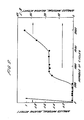
- Activation of samples was performed on a specific area of one side only by exposure of the specimens to a beam of protons with an energy of 18 MeV coming from a cylotron.
- the total coating thicknesses were about 300 ⁇ m.
- the depth of activation was about 500 ⁇ m.
- Each thermal cycle consisted of heating to 1000°C and maintaining this temperature for 10 minutes and then cooling to about 30°C and maintaining at this temperature for 10 minutes.
- Various radioisotopes were used as an indication of material loss e.g. 89 Zr and 92 Nb.
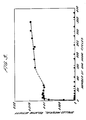
- Activation of the samples was performed on a specific area of one side only. The depth of activation was about 100 ⁇ m. The isotope 51 Cr was used as an indication of the material lost.
- the thermal cycle carried out consisted of heating to 1000°C or 800°C and maintaining at this temperature for 1 hour and then cooling to about 30°C and maintaing at this temperature for 12 minutes.
- the method and apparatus of the invention can be used to determine the level of spalling of any coating as a result of exposure to thermal cycling with much greater accuracy that has hitherto been possible. It represents a significant improvement over the known methods based on measurement of weight change, optical determination or cross-sectional determination.
Landscapes
- General Health & Medical Sciences (AREA)
- Health & Medical Sciences (AREA)
- Life Sciences & Earth Sciences (AREA)
- Chemical & Material Sciences (AREA)
- Analytical Chemistry (AREA)
- Biochemistry (AREA)
- Physics & Mathematics (AREA)
- General Physics & Mathematics (AREA)
- Immunology (AREA)
- Pathology (AREA)
- Analysing Materials By The Use Of Radiation (AREA)
- Sampling And Sample Adjustment (AREA)
- Measurement Of Radiation (AREA)
Claims (18)
- Procédé de détermination quantitative du niveau d'écaillage d'un revêtement protecteur de surface à la suite d'un chauffage et d'un refroidissement répétés d'un article revêtu ou partiellement revêtu, le précédé comprenant les étapes suivantes :(a) l'introduction d'au moins un radionucléïde dans la totalité ou une partie du revêtement protecteur de la surface de l'article revêtu,(b) le chauffage et le refroidissement en alternance de l'article ou d'une partie de celui-ci pendant un nombre prédéterminé de cycles de chauffage et de refroidissement,(c) la collecte des particules séparées par écaillage dans un dispositif collecteur, et(d) la mesure de la radioactivité émise par les particules écaillées et collectées,le procédé étant caractérisé en ce que, avant l'étape (d), les particules écaillées et collectées sont immobilisées dans une mince couche d'une substance solide.
- Procédé selon la revendication 1, dans lequel la substance solide est une substance qui peut fondre lorsqu'elle est légèrement chauffée et qui se solidifie lorsqu'elle est refroidie, si bien qu'elle enrobe et immobilise les particules radioactives écaillées.
- Procédé selon la revendication 2, dans lequel la substance solide est choisie parmi la cire de paraffine, les graisses, les métaux à faible température de fusion et les matériaux capables de former des gels.
- Procédé selon l'une quelconque des revendications précédentes, dans lequel le radionucléïde au moins est créé dans le revêtement protecteur de la surface par exposition du revêtement à un faisceau de particules chargées d'un cyclotron ou d'un accélérateur linéaire ou par exposition à un faisceau de neutrons.
- Procédé selon l'une quelconque des revendications 1 à 3, dans lequel le radionucléïde au moins est créé dans le revêtement protecteur de la surface par exposition de la surface nue de l'article à un faisceau de particules chargées ou de neutrons, puis par formation du revêtement protecteur par oxydation de la surface de l'article.
- Procédé selon l'une quelconque des revendications précédentes, dans lequel l'articule revêtu subit au moins deux cycles de chauffage et de refroidissement.
- Procédé selon la revendication 6, dans lequel l'article revêtu subit au moins cinquante cycles de chauffage et de refroidissement.
- Procédé selon l'une quelconque des revendications précédentes, dans lequel un cycle unique de chauffage et de refroidissement comprend le chauffage de l'articule revêtu à 1 000 °C, le maintien de l'article à 1 000 °C pendant 1 h, le refroidissement de l'article à 50 °C, et le maintien de l'article à 50 °C pendant 10 min.
- Procédé selon l'une quelconque des revendications précédentes, dans lequel l'article est formé d'un matériau métallique, céramique ou polymère.
- Procédé selon l'une quelconque des revendications précédentes, dans lequel le revêtement protecteur de la surface est un aluminiure modifié ou non constitué d'aluminium combiné à un ou plusieurs éléments choisis parmi le platine, le chrome et le palladium, un revêtement métallique externe du type MCrAlY, dans lequel M désigne un autre métal, un oxyde tel que Cr2O3, Al2O3 ou SiO2, un revêtement céramique à base de zircone ou un revêtement formant un barrage thermique, contenant une couche liée d'un matériau MCrAlY et une couche supérieure de zircone.
- Procédé selon l'une quelconque des revendications 1 à 9, dans lequel le revêtement protecteur de surface est du type créé par exposition d'une surface non revêtue de l'article à un faisceau d'ions d'énergie élevée, un faisceau d'électrons ou un faisceau laser.
- Appareil de détermination du niveau d'écaillage d'un revêtement protecteur de surface à la suite de chauffages et refroidissements répétés d'un article revêtu ou partiellement revêtu, dans lequel le revêtement a subi l'introduction d'au moins un radionucléïde, l'appareil comprenant une chambre de logement de l'articule revêtu, un dispositif de chauffage de la chambre et/ou de l'article, et un collecteur d'écailles disposé à la partie inférieure de la chambre et séparable de celle-ci, dans lequel le dispositif de chauffage est destiné à chauffer la chambre et/ou l'article indépendamment du collecteur d'écailles, et le collecteur d'écailles comporte un dispositif destiné à immobiliser les particules écaillées éventuelles de revêtement dans une mince couche d'une substance solide et est réalisé afin que le niveau de radioactivité des particules écaillées éventuelles puisse être mesuré par un spectromètre γ.
- Appareil selon la revendication 12, dans lequel le dispositif d'immobilisation des particules dans le collecteur d'écailles dans une mince couche d'une substance solide comprend un système de chauffage indépendant du dispositif de chauffage de la chambre.
- Appareil selon la revendication 13, dans lequel le dispositif d'immobilisation des particules dans le collecteur d'écailles comprend un système de chauffage et de refroidissement indépendant du dispositif de chauffage de la chambre.
- Appareil selon l'une quelconque des revendications 2 à 14, dans lequel la chambre comporte une première zone de chauffage de l'article et une seconde zone de refroidissement de l'article.
- Appareil selon la revendication 15, dans lequel la seconde zone comporte un dispositif de refroidissement.
- Appareil selon la revendication 15 ou 16, comprenant un dispositif destiné à déplacer l'article entre la première et la seconde zone.
- Appareil selon l'une quelconque des revendications 12 à 14, dans lequel le dispositif de chauffage de la chambre est destiné à être déplacé afin qu'il chauffe différentes régions de la chambre.
Applications Claiming Priority (3)
| Application Number | Priority Date | Filing Date | Title |
|---|---|---|---|
| GB939314596A GB9314596D0 (en) | 1993-07-14 | 1993-07-14 | A method of measuring spalling of a protective surface |
| GB9314596 | 1993-07-14 | ||
| PCT/EP1994/002302 WO1995002811A1 (fr) | 1993-07-14 | 1994-07-12 | Procede de mesure de l'ecaillage d'une surface de protection |
Publications (2)
| Publication Number | Publication Date |
|---|---|
| EP0708917A1 EP0708917A1 (fr) | 1996-05-01 |
| EP0708917B1 true EP0708917B1 (fr) | 1997-08-20 |
Family
ID=10738833
Family Applications (1)
| Application Number | Title | Priority Date | Filing Date |
|---|---|---|---|
| EP94923731A Expired - Lifetime EP0708917B1 (fr) | 1993-07-14 | 1994-07-12 | Procede de mesure de l'ecaillage d'une surface de protection |
Country Status (9)
| Country | Link |
|---|---|
| US (1) | US5916811A (fr) |
| EP (1) | EP0708917B1 (fr) |
| AT (1) | ATE157164T1 (fr) |
| DE (1) | DE69405107T2 (fr) |
| DK (1) | DK0708917T3 (fr) |
| ES (1) | ES2107241T3 (fr) |
| GB (2) | GB9314596D0 (fr) |
| GR (1) | GR3024714T3 (fr) |
| WO (1) | WO1995002811A1 (fr) |
Families Citing this family (3)
| Publication number | Priority date | Publication date | Assignee | Title |
|---|---|---|---|---|
| US7861573B1 (en) * | 2007-11-28 | 2011-01-04 | Lsp Technologies, Inc. | Laser shock induced spallation |
| JP7068134B2 (ja) * | 2018-10-22 | 2022-05-16 | 東芝エネルギーシステムズ株式会社 | 遮熱コーティングの寿命推定方法 |
| CN115109897B (zh) * | 2022-05-19 | 2024-03-08 | 华东理工大学 | 一种防护涂层的真空热循环方法 |
Family Cites Families (4)
| Publication number | Priority date | Publication date | Assignee | Title |
|---|---|---|---|---|
| GB1088913A (en) * | 1965-02-17 | 1967-10-25 | Foseco Technik Ltd | Testing of foundry sands |
| US4984381A (en) * | 1989-03-17 | 1991-01-15 | Institute Guilfoyle | Firearm wear analysis |
| CA2060729A1 (fr) * | 1991-03-20 | 1992-09-21 | Stephen E. O'brien | Methode de verification de surfaces pour deceler des composes specifiques |
| CA2116061C (fr) * | 1993-03-02 | 1998-12-22 | George H. Geisinger | Methode et trousse d'analyse et d'identification de matieres suspectes |
-
1993
- 1993-07-14 GB GB939314596A patent/GB9314596D0/en active Pending
-
1994
- 1994-07-12 DE DE69405107T patent/DE69405107T2/de not_active Expired - Fee Related
- 1994-07-12 US US08/591,478 patent/US5916811A/en not_active Expired - Fee Related
- 1994-07-12 EP EP94923731A patent/EP0708917B1/fr not_active Expired - Lifetime
- 1994-07-12 ES ES94923731T patent/ES2107241T3/es not_active Expired - Lifetime
- 1994-07-12 DK DK94923731.7T patent/DK0708917T3/da active
- 1994-07-12 AT AT94923731T patent/ATE157164T1/de not_active IP Right Cessation
- 1994-07-12 WO PCT/EP1994/002302 patent/WO1995002811A1/fr not_active Ceased
- 1994-07-12 GB GB9413983A patent/GB2280263A/en not_active Withdrawn
-
1997
- 1997-09-11 GR GR970402358T patent/GR3024714T3/el unknown
Also Published As
| Publication number | Publication date |
|---|---|
| GB9314596D0 (en) | 1993-08-25 |
| DE69405107T2 (de) | 1998-02-12 |
| DE69405107D1 (de) | 1997-09-25 |
| EP0708917A1 (fr) | 1996-05-01 |
| ATE157164T1 (de) | 1997-09-15 |
| GB2280263A (en) | 1995-01-25 |
| GR3024714T3 (en) | 1997-12-31 |
| US5916811A (en) | 1999-06-29 |
| DK0708917T3 (da) | 1998-02-16 |
| ES2107241T3 (es) | 1997-11-16 |
| WO1995002811A1 (fr) | 1995-01-26 |
| GB9413983D0 (en) | 1994-08-31 |
Similar Documents
| Publication | Publication Date | Title |
|---|---|---|
| Tushinsky | Coated metal: structure and properties of metal-coating compositions | |
| EP0708917B1 (fr) | Procede de mesure de l'ecaillage d'une surface de protection | |
| Papazian et al. | Lithium depletion during heat treatment of aluminum-lithium alloys | |
| Hughes | Probing materials with positrons | |
| Anderson et al. | Carburization of austenitic stainless steel in liquid sodium | |
| Holcomb | Carburization of type 304 stainless steel in liquid sodium | |
| Murris et al. | High-temperature oxidation behavior of chromium: effect of different batches | |
| Cook | In-situ identification of iron--zinc intermetallics in galvannealed steel coatings and iron oxides on exposed steel | |
| Stroosnijder et al. | A nuclear method to measure spallation by thermal cycling of protective surface layers | |
| Lacroix et al. | Metrology conditions for thin layer activation in wear and corrosion studies | |
| Cucchiara et al. | Kryptonates: A New Technique for the Study of Wear Parameters | |
| Pawel | Type 304L stainless steel corrosion in molten lithium hydride as a function of temperature | |
| RU2776247C1 (ru) | Способ определения жаростойкости функциональных покрытий на инструментальных и конструкционных материалах с использованием синхротронного излучения | |
| Watrous et al. | Materials behavior in a plutonia-238/iridium/graphite radioisotope heat source mockup test configuration | |
| Joshi | Auger electron spectroscopy | |
| JP3004484B2 (ja) | 低合金鋼の蒸気中寿命予測方法 | |
| Stroosnijder et al. | The use of thin layer activation in cyclic high temperature corrosion studies | |
| Popa-Simil et al. | Corrosion control of steel components exposed to thermal cycling using radioactive tracers | |
| Mapper et al. | The use of solid-state nuclear track detection for the study of boron and fissile nuclide distributions in steel samples | |
| Watson | Evaluation of tantalum-alloy-clad uranium mononitride fuel specimens from 7500-hour, 1040 C pumped-lithium-loop test | |
| Cook et al. | Iron-zinc intermetallics in commercial galvanneal steel coatings | |
| Wisbey | Preliminary Studies of the Morphology of Thermal Gradient Tube Seposits from Fission Product Release Experiments | |
| Tushinsky et al. | Investigation of Protective Properties | |
| Stroosnijder et al. | THIN LA YER ACTIVATION FOR MATERIALS RESEARCH & DEVELOPMENT AT lAM OF THE EUROPEAN COMMISSION | |
| Jacob et al. | A pre-normative study on the cyclic oxidation behaviour of PM chromium: The effect of experimental parameters |
Legal Events
| Date | Code | Title | Description |
|---|---|---|---|
| PUAI | Public reference made under article 153(3) epc to a published international application that has entered the european phase |
Free format text: ORIGINAL CODE: 0009012 |
|
| 17P | Request for examination filed |
Effective date: 19951220 |
|
| AK | Designated contracting states |
Kind code of ref document: A1 Designated state(s): AT BE CH DE DK ES FR GB GR IE IT LI LU MC NL PT SE |
|
| 17Q | First examination report despatched |
Effective date: 19960610 |
|
| GRAG | Despatch of communication of intention to grant |
Free format text: ORIGINAL CODE: EPIDOS AGRA |
|
| GRAH | Despatch of communication of intention to grant a patent |
Free format text: ORIGINAL CODE: EPIDOS IGRA |
|
| GRAH | Despatch of communication of intention to grant a patent |
Free format text: ORIGINAL CODE: EPIDOS IGRA |
|
| GRAA | (expected) grant |
Free format text: ORIGINAL CODE: 0009210 |
|
| AK | Designated contracting states |
Kind code of ref document: B1 Designated state(s): AT BE CH DE DK ES FR GB GR IE IT LI LU MC NL PT SE |
|
| REF | Corresponds to: |
Ref document number: 157164 Country of ref document: AT Date of ref document: 19970915 Kind code of ref document: T |
|
| REG | Reference to a national code |
Ref country code: CH Ref legal event code: EP |
|
| REF | Corresponds to: |
Ref document number: 69405107 Country of ref document: DE Date of ref document: 19970925 |
|
| ET | Fr: translation filed | ||
| REG | Reference to a national code |
Ref country code: CH Ref legal event code: NV Representative=s name: BOVARD AG PATENTANWAELTE |
|
| REG | Reference to a national code |
Ref country code: ES Ref legal event code: FG2A Ref document number: 2107241 Country of ref document: ES Kind code of ref document: T3 |
|
| REG | Reference to a national code |
Ref country code: GR Ref legal event code: FG4A Free format text: 3024714 |
|
| REG | Reference to a national code |
Ref country code: DK Ref legal event code: T3 |
|
| REG | Reference to a national code |
Ref country code: PT Ref legal event code: SC4A Free format text: AVAILABILITY OF NATIONAL TRANSLATION Effective date: 19971107 |
|
| PLBE | No opposition filed within time limit |
Free format text: ORIGINAL CODE: 0009261 |
|
| STAA | Information on the status of an ep patent application or granted ep patent |
Free format text: STATUS: NO OPPOSITION FILED WITHIN TIME LIMIT |
|
| 26N | No opposition filed | ||
| PGFP | Annual fee paid to national office [announced via postgrant information from national office to epo] |
Ref country code: PT Payment date: 19990301 Year of fee payment: 6 |
|
| PGFP | Annual fee paid to national office [announced via postgrant information from national office to epo] |
Ref country code: MC Payment date: 19990730 Year of fee payment: 6 |
|
| PGFP | Annual fee paid to national office [announced via postgrant information from national office to epo] |
Ref country code: GR Payment date: 20000412 Year of fee payment: 7 |
|
| PGFP | Annual fee paid to national office [announced via postgrant information from national office to epo] |
Ref country code: GB Payment date: 20000602 Year of fee payment: 7 |
|
| PGFP | Annual fee paid to national office [announced via postgrant information from national office to epo] |
Ref country code: IE Payment date: 20000608 Year of fee payment: 7 |
|
| PGFP | Annual fee paid to national office [announced via postgrant information from national office to epo] |
Ref country code: DK Payment date: 20000613 Year of fee payment: 7 |
|
| PGFP | Annual fee paid to national office [announced via postgrant information from national office to epo] |
Ref country code: CH Payment date: 20000704 Year of fee payment: 7 |
|
| PGFP | Annual fee paid to national office [announced via postgrant information from national office to epo] |
Ref country code: SE Payment date: 20000717 Year of fee payment: 7 Ref country code: ES Payment date: 20000717 Year of fee payment: 7 |
|
| PGFP | Annual fee paid to national office [announced via postgrant information from national office to epo] |
Ref country code: AT Payment date: 20000726 Year of fee payment: 7 |
|
| PGFP | Annual fee paid to national office [announced via postgrant information from national office to epo] |
Ref country code: FR Payment date: 20000727 Year of fee payment: 7 |
|
| PG25 | Lapsed in a contracting state [announced via postgrant information from national office to epo] |
Ref country code: MC Free format text: THE PATENT HAS BEEN ANNULLED BY A DECISION OF A NATIONAL AUTHORITY Effective date: 20000731 |
|
| PGFP | Annual fee paid to national office [announced via postgrant information from national office to epo] |
Ref country code: NL Payment date: 20000731 Year of fee payment: 7 |
|
| PGFP | Annual fee paid to national office [announced via postgrant information from national office to epo] |
Ref country code: BE Payment date: 20000801 Year of fee payment: 7 |
|
| PGFP | Annual fee paid to national office [announced via postgrant information from national office to epo] |
Ref country code: DE Payment date: 20000922 Year of fee payment: 7 |
|
| PGFP | Annual fee paid to national office [announced via postgrant information from national office to epo] |
Ref country code: LU Payment date: 20000928 Year of fee payment: 7 |
|
| PG25 | Lapsed in a contracting state [announced via postgrant information from national office to epo] |
Ref country code: PT Free format text: LAPSE BECAUSE OF NON-PAYMENT OF DUE FEES Effective date: 20010131 |
|
| REG | Reference to a national code |
Ref country code: PT Ref legal event code: MM4A Free format text: LAPSE DUE TO NON-PAYMENT OF FEES Effective date: 20010131 |
|
| PG25 | Lapsed in a contracting state [announced via postgrant information from national office to epo] |
Ref country code: LU Free format text: LAPSE BECAUSE OF NON-PAYMENT OF DUE FEES Effective date: 20010712 Ref country code: IE Free format text: LAPSE BECAUSE OF NON-PAYMENT OF DUE FEES Effective date: 20010712 Ref country code: GB Free format text: LAPSE BECAUSE OF NON-PAYMENT OF DUE FEES Effective date: 20010712 Ref country code: DK Free format text: LAPSE BECAUSE OF NON-PAYMENT OF DUE FEES Effective date: 20010712 Ref country code: AT Free format text: LAPSE BECAUSE OF NON-PAYMENT OF DUE FEES Effective date: 20010712 |
|
| PG25 | Lapsed in a contracting state [announced via postgrant information from national office to epo] |
Ref country code: SE Free format text: LAPSE BECAUSE OF NON-PAYMENT OF DUE FEES Effective date: 20010713 Ref country code: ES Free format text: LAPSE BECAUSE OF NON-PAYMENT OF DUE FEES Effective date: 20010713 |
|
| PG25 | Lapsed in a contracting state [announced via postgrant information from national office to epo] |
Ref country code: LI Free format text: LAPSE BECAUSE OF NON-PAYMENT OF DUE FEES Effective date: 20010731 Ref country code: GR Free format text: LAPSE BECAUSE OF NON-PAYMENT OF DUE FEES Effective date: 20010731 Ref country code: CH Free format text: LAPSE BECAUSE OF NON-PAYMENT OF DUE FEES Effective date: 20010731 Ref country code: BE Free format text: LAPSE BECAUSE OF NON-PAYMENT OF DUE FEES Effective date: 20010731 |
|
| BERE | Be: lapsed |
Owner name: EUROPEAN ECONOMIC COMMUNITY REPRESENTED BY THE CO Effective date: 20010731 |
|
| PG25 | Lapsed in a contracting state [announced via postgrant information from national office to epo] |
Ref country code: NL Free format text: LAPSE BECAUSE OF NON-PAYMENT OF DUE FEES Effective date: 20020201 |
|
| EUG | Se: european patent has lapsed |
Ref document number: 94923731.7 |
|
| GBPC | Gb: european patent ceased through non-payment of renewal fee |
Effective date: 20010712 |
|
| REG | Reference to a national code |
Ref country code: CH Ref legal event code: PL |
|
| REG | Reference to a national code |
Ref country code: DK Ref legal event code: EBP |
|
| PG25 | Lapsed in a contracting state [announced via postgrant information from national office to epo] |
Ref country code: FR Free format text: LAPSE BECAUSE OF NON-PAYMENT OF DUE FEES Effective date: 20020329 |
|
| NLV4 | Nl: lapsed or anulled due to non-payment of the annual fee |
Effective date: 20020201 |
|
| PG25 | Lapsed in a contracting state [announced via postgrant information from national office to epo] |
Ref country code: DE Free format text: LAPSE BECAUSE OF NON-PAYMENT OF DUE FEES Effective date: 20020501 |
|
| REG | Reference to a national code |
Ref country code: IE Ref legal event code: MM4A |
|
| REG | Reference to a national code |
Ref country code: FR Ref legal event code: ST |
|
| REG | Reference to a national code |
Ref country code: ES Ref legal event code: FD2A Effective date: 20020810 |
|
| PG25 | Lapsed in a contracting state [announced via postgrant information from national office to epo] |
Ref country code: IT Free format text: LAPSE BECAUSE OF NON-PAYMENT OF DUE FEES;WARNING: LAPSES OF ITALIAN PATENTS WITH EFFECTIVE DATE BEFORE 2007 MAY HAVE OCCURRED AT ANY TIME BEFORE 2007. THE CORRECT EFFECTIVE DATE MAY BE DIFFERENT FROM THE ONE RECORDED. Effective date: 20050712 |