EP0716546B1 - Procédé d'adressage d'usagers dans un système de télévision à accès réservé - Google Patents
Procédé d'adressage d'usagers dans un système de télévision à accès réservé Download PDFInfo
- Publication number
- EP0716546B1 EP0716546B1 EP95203281A EP95203281A EP0716546B1 EP 0716546 B1 EP0716546 B1 EP 0716546B1 EP 95203281 A EP95203281 A EP 95203281A EP 95203281 A EP95203281 A EP 95203281A EP 0716546 B1 EP0716546 B1 EP 0716546B1
- Authority
- EP
- European Patent Office
- Prior art keywords
- address
- collective
- word
- length
- bits
- Prior art date
- Legal status (The legal status is an assumption and is not a legal conclusion. Google has not performed a legal analysis and makes no representation as to the accuracy of the status listed.)
- Expired - Lifetime
Links
Images
Classifications
-
- H—ELECTRICITY
- H04—ELECTRIC COMMUNICATION TECHNIQUE
- H04N—PICTORIAL COMMUNICATION, e.g. TELEVISION
- H04N21/00—Selective content distribution, e.g. interactive television or video on demand [VOD]
- H04N21/40—Client devices specifically adapted for the reception of or interaction with content, e.g. set-top-box [STB]; Operations thereof
- H04N21/43—Processing of content or additional data, e.g. demultiplexing additional data from a digital video stream; Elementary client operations, e.g. monitoring of home network or synchronising decoder's clock; Client middleware
- H04N21/44—Processing of video elementary streams, e.g. splicing a video clip retrieved from local storage with an incoming video stream or rendering scenes according to encoded video stream scene graphs
- H04N21/4405—Processing of video elementary streams, e.g. splicing a video clip retrieved from local storage with an incoming video stream or rendering scenes according to encoded video stream scene graphs involving video stream decryption
-
- H—ELECTRICITY
- H04—ELECTRIC COMMUNICATION TECHNIQUE
- H04N—PICTORIAL COMMUNICATION, e.g. TELEVISION
- H04N21/00—Selective content distribution, e.g. interactive television or video on demand [VOD]
- H04N21/40—Client devices specifically adapted for the reception of or interaction with content, e.g. set-top-box [STB]; Operations thereof
- H04N21/45—Management operations performed by the client for facilitating the reception of or the interaction with the content or administrating data related to the end-user or to the client device itself, e.g. learning user preferences for recommending movies, resolving scheduling conflicts
- H04N21/462—Content or additional data management e.g. creating a master electronic programme guide from data received from the Internet and a Head-end or controlling the complexity of a video stream by scaling the resolution or bit-rate based on the client capabilities
- H04N21/4623—Processing of entitlement messages, e.g. ECM [Entitlement Control Message] or EMM [Entitlement Management Message]
-
- H—ELECTRICITY
- H04—ELECTRIC COMMUNICATION TECHNIQUE
- H04N—PICTORIAL COMMUNICATION, e.g. TELEVISION
- H04N7/00—Television systems
- H04N7/16—Analogue secrecy systems; Analogue subscription systems
- H04N7/162—Authorising the user terminal, e.g. by paying; Registering the use of a subscription channel, e.g. billing
- H04N7/165—Centralised control of user terminal ; Registering at central
-
- H—ELECTRICITY
- H04—ELECTRIC COMMUNICATION TECHNIQUE
- H04N—PICTORIAL COMMUNICATION, e.g. TELEVISION
- H04N7/00—Television systems
- H04N7/16—Analogue secrecy systems; Analogue subscription systems
- H04N7/167—Systems rendering the television signal unintelligible and subsequently intelligible
- H04N7/1675—Providing digital key or authorisation information for generation or regeneration of the scrambling sequence
Definitions
- the present invention relates to an addressing method users in a reserved access television system, system in which a transmitter sends address words said collective, allowing to select for each of these words a group comprising a plurality of users individuals.
- An object of the invention is to provide a method for group addressing which allows the use of addresses differentiated by operator, while having at the end of has only one filtering criteria on reception.
- the invention is therefore based on the idea of defining a address not only by its actual content, but by its position in a word larger than it. This allows to distinguish one from the other from more numerous addresses large than that which would be allowed by the number of bits of the field, processing multiple addresses at the same time using of a device normally provided for a longer word.
- the length of the collective address can advantageously be of four bits.
- Each of the information defining an address collective concerning said user is advantageously stored in the form of two variables, one of which defines the said obligatory position, and the other the content of the says bit field.
- a receiving device intended to allow the processing of collective address words such as defined above, is advantageously provided with means to generate multiple corresponding bit fields each to the said content of an address taken from the said plurality of collective addresses available to the device reception of the user, and to place these end-to-end fields, each in the required position defined for the address, so as to constitute a word of length equal to said total length, and means for, when it receives a message, search separately for each of the fields concordance between the word constituted and the collective address conveyed by the message received.
- An addressing method according to the invention is defined in claim 1 and a reception apparatus according to the invention is defined in claim 5.
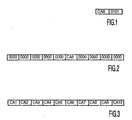
- Figure 1 shows a recording area in a memory of a receiving device, for data defining a collective address.
- FIG. 2 represents a collective address word sent by the transmitter.
- FIG. 3 represents a filtering field on reception.
- the filtering system for title management messages access defined by MPEG standardization ("Moving Picture Expert Group ”) and DVB (" Digital Video Broadcasting ”) plans an address filtering length of at least 40 bits.
- MPEG standardization Moving Picture Expert Group
- DVB Digital Video Broadcasting
- FIG. 1 An example of a collective address is presented on the figure 1. It includes a field of four bits having a value called CA6, for "Collective Address n ° 6", associated with an index value expressed here by 0101, signifying a forced position in position five (possible positions ranging from 0 to 9).
- a message transmitted by a transmitter, to specify the collective address of figure 1, includes a word address shown in Figure 2.
- This word has ten fields of four bits each. All fields are filled zeros, except the field in position five, which contains the value CA6.
- the non-significant fields are filled with 1.
- no useful address field should have a value of 0000 or 1111.
- Receiving a message using this type of addressing is then conditioned by recognition, by group of four bits, a match between the address word transmitted and the position of the address and its value.
- a forty bit word that is to say a length equal to the said total length, is built by the end-to-end of several fields each corresponding to said content an address, taken from among said plurality of addresses of the reception apparatus of the user, each of these contents being placed in its required position.
- Such a word is represented by FIG. 3.
- Each address value CA1, CA2, etc., represented by a four-bit field, is placed in its forced position, for example the content field "CA6" is placed in position five.
- This word built in the user's device ( Figure 3) is compared with the collective address word received from the transmitter (figure 2), a concordance between the two words being searched separately for each of the positions obliged.
- the message will be recognized since a concordance will be found between field CA6 in figure 2 and the field CA6 in FIG. 3.
- This mechanism therefore allows the use of a single buffer memory in the the user to process a set of addresses at once collective.
- the number of different collective addresses which relate to one device is likely to exceed ten.
- several words like the one in Figure 3 are constructed, and each of them is compared to the word in the figure 2. This may also be necessary if two addresses have the same position required: they must therefore be introduced in two separate words, each of the type of that of figure 3.
- the comparison of several words of the type of that of figure 3 can be done at the same time by means of several identical circuits: the circuits which are integrated in the demultiplexing circuits mentioned more top having between four and five buffers for the acquisition of messages, each of these buffers can be used to compare a different word, word from type of that of figure 3, with the same word received from the transmitter (of the type of that of FIG. 2).
Landscapes
- Engineering & Computer Science (AREA)
- Multimedia (AREA)
- Signal Processing (AREA)
- Databases & Information Systems (AREA)
- Computer Security & Cryptography (AREA)
- Television Systems (AREA)
- Communication Control (AREA)
- Two-Way Televisions, Distribution Of Moving Picture Or The Like (AREA)
- Circuits Of Receivers In General (AREA)
Description
- l'adresse unique, qui spécifie un usager et un seul,
- l'adresse partagée, spécifiant par exemple l'ensemble des clients d'un opérateur de programmes déterminé,
- l'adresse collective, qui spécifie un groupe d'usagers possédant quelque chose en commun, par exemple: "les joueurs de pétanque de Tokyo".
- un mot d'adresse collective ayant une longueur totale donnée, il est divisé en plusieurs parties de longueurs égales, placées bout-à-bout,
- une adresse collective est définie par :
- une donnée exprimée par un champ de bits de longueur égale à la longueur d'une des dites parties, et
- une position obligée correspondant à une des dites parties dans le mot d'adresse collective.
- un mot d'adresse collective est émis par l'émetteur sous forme d'un mot ayant la dite longueur totale, dont la partie correspondant à la position obligée pour cette adresse contient le champ de bits de l'adresse et qui est fait, pour le reste, de bits tous identiques.
- un mot de longueur égale à la dite longueur totale est construit par la mise bout-à-bout de plusieurs champs, correspondant chacun au dit contenu d'une adresse prise parmi la dite pluralité d'adresses collectives dont dispose l'appareil de réception de l'usager, chacun de ces champs étant placé dans la position obligée définie pour l'adresse,
- ce mot est comparé avec le mot d'adresse collective du message reçu, une concordance entre les deux mots étant recherchée séparément pour chacun des champs.
- le message est reconnu si une concordance est trouvée.
Claims (6)
- Procédé d'adressage d'usagers dans un système de télévision à accès réservé, système dans lequel un émetteur envoie des mots d'adresses dites collectives, permettant de sélectionner pour chacun de ces mots un groupe comprenant une pluralité d'usagers particuliers,
caractérisé en ce que :un mot d'adresse collective ayant une longueur totale donnée, il est divisé en plusieurs parties de longueurs égales, placées bout-à-bout,une adresse collective est définie par :une donnée exprimée par un champ de bits de longueur égale à la longueur d'une des dites parties, etune position obligée correspondant à une des dites parties dans le mot d'adresse collective;un mot d'adresse collective est émis par l'émetteur sous forme d'un mot ayant la dite longueur totale, dont la partie correspondant à la position obligée pour cette adresse contient le champ de bits de l'adresse et qui est fait, pour le reste, de bits tous identiques. - Procédé d'adressage selon la revendication 1,
caractérisé en ce que, un appareil de réception d'un usager ayant en mémoire des informations définissant une pluralité d'adresses collectives différentes les unes des autres, concernant toutes le dit usager, chacune d'elles est mémorisée sous la forme de deux variables, dont l'une définit la dite position obligée, et l'autre le contenu du dit champ de bits. - Procédé d'adressage selon la revendication 2,
caractérisé en ce que, du côté d'un usager, pour reconnaítre si un message reçu de l'émetteur concerne cet usager :un mot de longueur égale à la dite longueur totale est construit par la mise bout-à-bout de plusieurs champs, correspondant chacun au dit contenu d'une adresse prise parmi la dite pluralité d'adresses collectives dont dispose l'appareil de réception de l'usager, chacun de ces champs étant placé dans la position obligée définie pour l'adresse,ce mot est comparé avec le mot d'adresse collective du message reçu, une concordance entre les deux mots étant recherchée séparément pour chacun des champs,le message est reconnu si une concordance est trouvée. - Procédé d'adressage selon la revendication 1,
caractérisé en ce que, la dite longueur totale étant de quarante bits, la longueur de l'adresse collective est de quatre bits. - Appareil de réception caractérisé en ce que, l'appareil étant destiné à permettre à un usager la réception d'émissions dans lesquelles sont utilisés des adresses collectives sous forme de mots ayant une longueur totale donnée, divisés en plusieurs parties de longueurs égales, placées bout-à-bout, l'appareil est muni d'une mémoire qui contient des informations définissant une pluralité d'adresses collectives définies chacune par :adresses collectives différentes les unes des autres mais concernant toutes le dit usager,une donnée exprimée par un champ de bits de longueur égale à la longueur d'une des dites parties, etune position obligée correspondant à une des dites parties dans le mot d'adresse collective,
et en ce que l'appareil est muni en outre :de moyens pour générer plusieurs champs de bits correspondant chacun au dit contenu d'une adresse prise parmi la dite pluralité d'adresses collectives dont dispose l'appareil de réception de l'usager, et pour placer bout-à-bout ces champs, chacun dans la position obligée définie pour l'adresse, de façon à constituer un mot de longueur égale à la dite longueur totale,de moyens pour, lorsqu'il reçoit un message, rechercher séparément pour chacun des champs une concordance entre le mot constitué et l'adresse collective véhiculée par le message reçu. - Appareil de réception selon la revendication 5,
caractérisé en ce qu'il comporte, pour chacune des dites adresses collectives différentes, une première position de mémoire pour une variable qui définit la dite position obligée, et une seconde position de mémoire pour une variable qui définit le contenu du dit champ de bits.
Applications Claiming Priority (2)
| Application Number | Priority Date | Filing Date | Title |
|---|---|---|---|
| FR9414728 | 1994-12-07 | ||
| FR9414728 | 1994-12-07 |
Publications (2)
| Publication Number | Publication Date |
|---|---|
| EP0716546A1 EP0716546A1 (fr) | 1996-06-12 |
| EP0716546B1 true EP0716546B1 (fr) | 1999-08-25 |
Family
ID=9469577
Family Applications (1)
| Application Number | Title | Priority Date | Filing Date |
|---|---|---|---|
| EP95203281A Expired - Lifetime EP0716546B1 (fr) | 1994-12-07 | 1995-11-29 | Procédé d'adressage d'usagers dans un système de télévision à accès réservé |
Country Status (5)
| Country | Link |
|---|---|
| US (1) | US5912971A (fr) |
| EP (1) | EP0716546B1 (fr) |
| JP (1) | JPH08237631A (fr) |
| CN (1) | CN1132448A (fr) |
| DE (1) | DE69511665D1 (fr) |
Families Citing this family (2)
| Publication number | Priority date | Publication date | Assignee | Title |
|---|---|---|---|---|
| DE19710972A1 (de) * | 1997-03-17 | 1998-10-01 | Ulrich Kretzschmar | Verfahren und Vorrichtung zur Datenübertragung |
| FR2765441B1 (fr) * | 1997-06-27 | 2002-12-13 | Sagem | Procede de transmission de donnees en paquets entre un emetteur de television numerique et des recepteurs de television |
Family Cites Families (4)
| Publication number | Priority date | Publication date | Assignee | Title |
|---|---|---|---|---|
| US3230302A (en) * | 1959-02-13 | 1966-01-18 | Avco Mfg Corp | Television program distribution and metering system |
| US4268859A (en) * | 1977-05-19 | 1981-05-19 | Ost Clarence S | High-security cable television access system |
| US4292650A (en) * | 1979-10-29 | 1981-09-29 | Zenith Radio Corporation | Stv Subscriber address system |
| CA1337214C (fr) * | 1988-04-29 | 1995-10-03 | Robert O. Banker | Controleur intrabande |
-
1995
- 1995-11-29 EP EP95203281A patent/EP0716546B1/fr not_active Expired - Lifetime
- 1995-11-29 DE DE69511665T patent/DE69511665D1/de not_active Expired - Lifetime
- 1995-12-04 JP JP7315353A patent/JPH08237631A/ja active Pending
- 1995-12-05 US US08/567,251 patent/US5912971A/en not_active Expired - Fee Related
- 1995-12-07 CN CN95121313A patent/CN1132448A/zh active Pending
Also Published As
| Publication number | Publication date |
|---|---|
| DE69511665D1 (de) | 1999-09-30 |
| JPH08237631A (ja) | 1996-09-13 |
| US5912971A (en) | 1999-06-15 |
| EP0716546A1 (fr) | 1996-06-12 |
| CN1132448A (zh) | 1996-10-02 |
Similar Documents
| Publication | Publication Date | Title |
|---|---|---|
| EP0014653B1 (fr) | Système de transmission d'information entre un centre d'émission et des postes récepteurs, ce système étant muni d'un moyen de contrôle de l'accès à l'information transmise | |
| FR2752350A1 (fr) | Procede d'extraction de donnees dans un systeme de transmission cyclique et dispositif de mise en oeuvre | |
| FR2730372A1 (fr) | Procede de television payante | |
| FR2590099A1 (fr) | Procede pour transmettre une image de haute definition par un canal de communication a bande etroite | |
| EP1454489A1 (fr) | Protocole de controle du mode d acces a des donnees transmises en mode point a point ou point multi-point | |
| EP0416985B1 (fr) | Procédé de multiplexage d'un signal sonore avec un signal vidéo analogique et système correspondant de distribution d'images fixes sonorisées | |
| EP0618736A1 (fr) | Procédé et dispositif pour l'embrouillage et le désembrouillage d'une émission déterminée de télévision | |
| EP1473904A1 (fr) | Procédé et système d'accès à un réseau poste à poste | |
| EP1072024A1 (fr) | Procede de commutation d'applications sur une carte a puce multi-applicative | |
| WO1980001634A1 (fr) | Carte d'abonnement pour recepteur de videotex et poste de chargement de ladite carte | |
| FR2842057A1 (fr) | Procede et dispositif de traitement de donnees dans un reseau de communication | |
| FR2749464A1 (fr) | Telephone comprenant un dispositif d'insertion d'une carte telephonique a puce et procede pour transferer des donnees d'une carte telephonique a puce | |
| EP1217831B1 (fr) | Procédé et dispositif de filtrage des données relatives au guide électronique de programmes d'un téléviseur | |
| EP0716546B1 (fr) | Procédé d'adressage d'usagers dans un système de télévision à accès réservé | |
| EP1517552B1 (fr) | Procédé et système de programmation d'enregistrements par transmission SMS-CB et équipement terminal de programmation | |
| EP1286550A2 (fr) | Dispositif de traitement et d'acheminement de données | |
| EP1290817A2 (fr) | Procede de diffusion d'elements d'information multimedia | |
| FR3069996B1 (fr) | Procede de lecture d'un flux multimedia chiffre avec acces rapide au contenu en clair et dispositif d'utilisation | |
| CA2067890A1 (fr) | Procede et dispositif de selection d'informations utilisables par une unite locale reliee a un systeme de transmission numerique | |
| EP2397962A1 (fr) | Dispositif et procédé de stockage sécurisé de données biométriques | |
| EP1964404A1 (fr) | Procede de transmission d'un contenu a acces conditionnel | |
| EP1221115B1 (fr) | Procede et systeme de transmission de messages pour base de donnees | |
| EP1590960B1 (fr) | Methode de stockage et de transmission d'informations generees par un module de securite | |
| BE1005873A6 (fr) | Appareil de stockage et de consultation de donnees. | |
| FR2805640A1 (fr) | Procede et dispositif de generation d'une image reduite a partir d'une image stockee sous forme compressee dans une base de donnees |
Legal Events
| Date | Code | Title | Description |
|---|---|---|---|
| PUAI | Public reference made under article 153(3) epc to a published international application that has entered the european phase |
Free format text: ORIGINAL CODE: 0009012 |
|
| AK | Designated contracting states |
Kind code of ref document: A1 Designated state(s): DE ES FR GB IT SE |
|
| 17P | Request for examination filed |
Effective date: 19961212 |
|
| RAP1 | Party data changed (applicant data changed or rights of an application transferred) |
Owner name: PHILIPS ELECTRONICS N.V. Owner name: PHILIPS ELECTRONIQUE GRAND PUBLIC |
|
| 17Q | First examination report despatched |
Effective date: 19980813 |
|
| GRAG | Despatch of communication of intention to grant |
Free format text: ORIGINAL CODE: EPIDOS AGRA |
|
| GRAG | Despatch of communication of intention to grant |
Free format text: ORIGINAL CODE: EPIDOS AGRA |
|
| GRAH | Despatch of communication of intention to grant a patent |
Free format text: ORIGINAL CODE: EPIDOS IGRA |
|
| GRAH | Despatch of communication of intention to grant a patent |
Free format text: ORIGINAL CODE: EPIDOS IGRA |
|
| GRAA | (expected) grant |
Free format text: ORIGINAL CODE: 0009210 |
|
| AK | Designated contracting states |
Kind code of ref document: B1 Designated state(s): DE ES FR GB IT SE |
|
| PG25 | Lapsed in a contracting state [announced via postgrant information from national office to epo] |
Ref country code: SE Free format text: THE PATENT HAS BEEN ANNULLED BY A DECISION OF A NATIONAL AUTHORITY Effective date: 19990825 Ref country code: IT Free format text: LAPSE BECAUSE OF FAILURE TO SUBMIT A TRANSLATION OF THE DESCRIPTION OR TO PAY THE FEE WITHIN THE PRE;WARNING: LAPSES OF ITALIAN PATENTS WITH EFFECTIVE DATE BEFORE 2007 MAY HAVE OCCURRED AT ANY TIME BEFORE 2007. THE CORRECT EFFECTIVE DATE MAY BE DIFFERENT FROM THE ONE RECORDED.SCRIBED TIME-LIMIT Effective date: 19990825 Ref country code: GB Free format text: LAPSE BECAUSE OF FAILURE TO SUBMIT A TRANSLATION OF THE DESCRIPTION OR TO PAY THE FEE WITHIN THE PRESCRIBED TIME-LIMIT Effective date: 19990825 Ref country code: ES Free format text: THE PATENT HAS BEEN ANNULLED BY A DECISION OF A NATIONAL AUTHORITY Effective date: 19990825 |
|
| REF | Corresponds to: |
Ref document number: 69511665 Country of ref document: DE Date of ref document: 19990930 |
|
| PG25 | Lapsed in a contracting state [announced via postgrant information from national office to epo] |
Ref country code: DE Free format text: LAPSE BECAUSE OF FAILURE TO SUBMIT A TRANSLATION OF THE DESCRIPTION OR TO PAY THE FEE WITHIN THE PRESCRIBED TIME-LIMIT Effective date: 19991126 |
|
| GBV | Gb: ep patent (uk) treated as always having been void in accordance with gb section 77(7)/1977 [no translation filed] |
Effective date: 19990825 |
|
| PLBE | No opposition filed within time limit |
Free format text: ORIGINAL CODE: 0009261 |
|
| STAA | Information on the status of an ep patent application or granted ep patent |
Free format text: STATUS: NO OPPOSITION FILED WITHIN TIME LIMIT |
|
| PG25 | Lapsed in a contracting state [announced via postgrant information from national office to epo] |
Ref country code: FR Free format text: LAPSE BECAUSE OF NON-PAYMENT OF DUE FEES Effective date: 20000731 |
|
| 26N | No opposition filed | ||
| REG | Reference to a national code |
Ref country code: FR Ref legal event code: ST |