EP0718420B1 - Revêtement de barrière thermique et méthode pour l'appliquer sur un article en superalliage - Google Patents
Revêtement de barrière thermique et méthode pour l'appliquer sur un article en superalliage Download PDFInfo
- Publication number
- EP0718420B1 EP0718420B1 EP95309222A EP95309222A EP0718420B1 EP 0718420 B1 EP0718420 B1 EP 0718420B1 EP 95309222 A EP95309222 A EP 95309222A EP 95309222 A EP95309222 A EP 95309222A EP 0718420 B1 EP0718420 B1 EP 0718420B1
- Authority
- EP
- European Patent Office
- Prior art keywords
- platinum
- layer
- group metal
- superalloy article
- phase
- Prior art date
- Legal status (The legal status is an assumption and is not a legal conclusion. Google has not performed a legal analysis and makes no representation as to the accuracy of the status listed.)
- Expired - Lifetime
Links
- 229910000601 superalloy Inorganic materials 0.000 title claims description 245
- 238000000034 method Methods 0.000 title claims description 72
- 239000012720 thermal barrier coating Substances 0.000 title claims description 49
- BASFCYQUMIYNBI-UHFFFAOYSA-N platinum Chemical group [Pt] BASFCYQUMIYNBI-UHFFFAOYSA-N 0.000 claims description 725
- 229910052697 platinum Inorganic materials 0.000 claims description 366
- 229910052751 metal Inorganic materials 0.000 claims description 125
- 239000002184 metal Substances 0.000 claims description 124
- 229910052782 aluminium Inorganic materials 0.000 claims description 80
- 238000000576 coating method Methods 0.000 claims description 78
- 239000011248 coating agent Substances 0.000 claims description 71
- 238000010438 heat treatment Methods 0.000 claims description 68
- 239000004411 aluminium Substances 0.000 claims description 66
- XAGFODPZIPBFFR-UHFFFAOYSA-N aluminium Chemical compound [Al] XAGFODPZIPBFFR-UHFFFAOYSA-N 0.000 claims description 65
- PXHVJJICTQNCMI-UHFFFAOYSA-N nickel Substances [Ni] PXHVJJICTQNCMI-UHFFFAOYSA-N 0.000 claims description 63
- 239000010936 titanium Substances 0.000 claims description 53
- 229910052719 titanium Inorganic materials 0.000 claims description 51
- 229910052735 hafnium Inorganic materials 0.000 claims description 42
- VBJZVLUMGGDVMO-UHFFFAOYSA-N hafnium atom Chemical compound [Hf] VBJZVLUMGGDVMO-UHFFFAOYSA-N 0.000 claims description 41
- RTAQQCXQSZGOHL-UHFFFAOYSA-N Titanium Chemical compound [Ti] RTAQQCXQSZGOHL-UHFFFAOYSA-N 0.000 claims description 39
- 229910052759 nickel Inorganic materials 0.000 claims description 39
- PNEYBMLMFCGWSK-UHFFFAOYSA-N aluminium oxide Inorganic materials [O-2].[O-2].[O-2].[Al+3].[Al+3] PNEYBMLMFCGWSK-UHFFFAOYSA-N 0.000 claims description 36
- 229910052804 chromium Inorganic materials 0.000 claims description 35
- 239000011651 chromium Substances 0.000 claims description 35
- 229910017052 cobalt Inorganic materials 0.000 claims description 33
- 239000010941 cobalt Substances 0.000 claims description 33
- GUTLYIVDDKVIGB-UHFFFAOYSA-N cobalt atom Chemical compound [Co] GUTLYIVDDKVIGB-UHFFFAOYSA-N 0.000 claims description 33
- 238000005524 ceramic coating Methods 0.000 claims description 29
- 229910052723 transition metal Inorganic materials 0.000 claims description 25
- 230000001464 adherent effect Effects 0.000 claims description 24
- 230000008569 process Effects 0.000 claims description 24
- 229910045601 alloy Inorganic materials 0.000 claims description 23
- 239000000956 alloy Substances 0.000 claims description 23
- 229910052715 tantalum Inorganic materials 0.000 claims description 22
- VYZAMTAEIAYCRO-UHFFFAOYSA-N Chromium Chemical compound [Cr] VYZAMTAEIAYCRO-UHFFFAOYSA-N 0.000 claims description 21
- 238000005328 electron beam physical vapour deposition Methods 0.000 claims description 18
- QVGXLLKOCUKJST-UHFFFAOYSA-N atomic oxygen Chemical compound [O] QVGXLLKOCUKJST-UHFFFAOYSA-N 0.000 claims description 15
- 239000001301 oxygen Substances 0.000 claims description 15
- 229910052760 oxygen Inorganic materials 0.000 claims description 15
- MCMNRKCIXSYSNV-UHFFFAOYSA-N Zirconium dioxide Chemical compound O=[Zr]=O MCMNRKCIXSYSNV-UHFFFAOYSA-N 0.000 claims description 14
- 229910052727 yttrium Inorganic materials 0.000 claims description 14
- VWQVUPCCIRVNHF-UHFFFAOYSA-N yttrium atom Chemical compound [Y] VWQVUPCCIRVNHF-UHFFFAOYSA-N 0.000 claims description 14
- 230000005012 migration Effects 0.000 claims description 11
- 238000013508 migration Methods 0.000 claims description 11
- 238000005229 chemical vapour deposition Methods 0.000 claims description 9
- 238000009713 electroplating Methods 0.000 claims description 9
- 238000005240 physical vapour deposition Methods 0.000 claims description 8
- XEEYBQQBJWHFJM-UHFFFAOYSA-N iron Substances [Fe] XEEYBQQBJWHFJM-UHFFFAOYSA-N 0.000 claims description 4
- RUDFQVOCFDJEEF-UHFFFAOYSA-N yttrium(III) oxide Inorganic materials [O-2].[O-2].[O-2].[Y+3].[Y+3] RUDFQVOCFDJEEF-UHFFFAOYSA-N 0.000 claims description 4
- 230000001419 dependent effect Effects 0.000 claims description 2
- 229910052742 iron Inorganic materials 0.000 claims description 2
- GUBSQCSIIDQXLB-UHFFFAOYSA-N cobalt platinum Chemical compound [Co].[Pt].[Pt].[Pt] GUBSQCSIIDQXLB-UHFFFAOYSA-N 0.000 claims 1
- 239000010410 layer Substances 0.000 description 263
- 239000000758 substrate Substances 0.000 description 73
- 239000000919 ceramic Substances 0.000 description 69
- 230000032683 aging Effects 0.000 description 34
- 239000000203 mixture Substances 0.000 description 34
- 238000009792 diffusion process Methods 0.000 description 24
- 229910000951 Aluminide Inorganic materials 0.000 description 18
- 238000012360 testing method Methods 0.000 description 17
- 230000015572 biosynthetic process Effects 0.000 description 16
- 239000007789 gas Substances 0.000 description 14
- 239000002344 surface layer Substances 0.000 description 12
- 229910001011 CMSX-4 Inorganic materials 0.000 description 10
- 238000004458 analytical method Methods 0.000 description 10
- GUVRBAGPIYLISA-UHFFFAOYSA-N tantalum atom Chemical compound [Ta] GUVRBAGPIYLISA-UHFFFAOYSA-N 0.000 description 10
- 239000011159 matrix material Substances 0.000 description 9
- 229910052702 rhenium Inorganic materials 0.000 description 8
- 229910052721 tungsten Inorganic materials 0.000 description 8
- 229910052799 carbon Inorganic materials 0.000 description 7
- 230000000694 effects Effects 0.000 description 7
- 238000001000 micrograph Methods 0.000 description 7
- XKRFYHLGVUSROY-UHFFFAOYSA-N Argon Chemical compound [Ar] XKRFYHLGVUSROY-UHFFFAOYSA-N 0.000 description 6
- 230000008901 benefit Effects 0.000 description 6
- 229910052750 molybdenum Inorganic materials 0.000 description 6
- 239000013078 crystal Substances 0.000 description 5
- 125000004122 cyclic group Chemical group 0.000 description 5
- 239000000843 powder Substances 0.000 description 5
- OKTJSMMVPCPJKN-UHFFFAOYSA-N Carbon Chemical compound [C] OKTJSMMVPCPJKN-UHFFFAOYSA-N 0.000 description 4
- 230000009286 beneficial effect Effects 0.000 description 4
- 238000005422 blasting Methods 0.000 description 4
- AVMBSRQXOWNFTR-UHFFFAOYSA-N cobalt platinum Chemical compound [Pt][Co][Pt] AVMBSRQXOWNFTR-UHFFFAOYSA-N 0.000 description 4
- 238000005238 degreasing Methods 0.000 description 4
- 238000004519 manufacturing process Methods 0.000 description 4
- 239000000463 material Substances 0.000 description 4
- 239000000243 solution Substances 0.000 description 4
- 238000002441 X-ray diffraction Methods 0.000 description 3
- 229910052786 argon Inorganic materials 0.000 description 3
- 230000008859 change Effects 0.000 description 3
- 150000001875 compounds Chemical class 0.000 description 3
- 238000011161 development Methods 0.000 description 3
- 230000018109 developmental process Effects 0.000 description 3
- 238000010894 electron beam technology Methods 0.000 description 3
- 238000007747 plating Methods 0.000 description 3
- 230000002787 reinforcement Effects 0.000 description 3
- 239000002356 single layer Substances 0.000 description 3
- 238000004544 sputter deposition Methods 0.000 description 3
- WFKWXMTUELFFGS-UHFFFAOYSA-N tungsten Chemical compound [W] WFKWXMTUELFFGS-UHFFFAOYSA-N 0.000 description 3
- 239000010937 tungsten Substances 0.000 description 3
- IJGRMHOSHXDMSA-UHFFFAOYSA-N Atomic nitrogen Chemical compound N#N IJGRMHOSHXDMSA-UHFFFAOYSA-N 0.000 description 2
- 229910000995 CMSX-10 Inorganic materials 0.000 description 2
- ZOKXTWBITQBERF-UHFFFAOYSA-N Molybdenum Chemical compound [Mo] ZOKXTWBITQBERF-UHFFFAOYSA-N 0.000 description 2
- KDLHZDBZIXYQEI-UHFFFAOYSA-N Palladium Chemical compound [Pd] KDLHZDBZIXYQEI-UHFFFAOYSA-N 0.000 description 2
- 229910001260 Pt alloy Inorganic materials 0.000 description 2
- HLFWJMSINGUMDQ-UHFFFAOYSA-N [Ge].[Pt].[Ni] Chemical compound [Ge].[Pt].[Ni] HLFWJMSINGUMDQ-UHFFFAOYSA-N 0.000 description 2
- 230000004888 barrier function Effects 0.000 description 2
- 238000004140 cleaning Methods 0.000 description 2
- 239000000470 constituent Substances 0.000 description 2
- 239000011733 molybdenum Substances 0.000 description 2
- 239000002245 particle Substances 0.000 description 2
- 238000002360 preparation method Methods 0.000 description 2
- 230000006798 recombination Effects 0.000 description 2
- 238000005215 recombination Methods 0.000 description 2
- WUAPFZMCVAUBPE-UHFFFAOYSA-N rhenium atom Chemical compound [Re] WUAPFZMCVAUBPE-UHFFFAOYSA-N 0.000 description 2
- 229910052566 spinel group Inorganic materials 0.000 description 2
- 239000000126 substance Substances 0.000 description 2
- 238000011282 treatment Methods 0.000 description 2
- 229910002543 FeCrAlY Inorganic materials 0.000 description 1
- GWEVSGVZZGPLCZ-UHFFFAOYSA-N Titan oxide Chemical compound O=[Ti]=O GWEVSGVZZGPLCZ-UHFFFAOYSA-N 0.000 description 1
- QCWXUUIWCKQGHC-UHFFFAOYSA-N Zirconium Chemical compound [Zr] QCWXUUIWCKQGHC-UHFFFAOYSA-N 0.000 description 1
- RZJQYRCNDBMIAG-UHFFFAOYSA-N [Cu].[Cu].[Cu].[Cu].[Cu].[Cu].[Cu].[Cu].[Cu].[Cu].[Cu].[Cu].[Cu].[Cu].[Cu].[Cu].[Cu].[Cu].[Zn].[Ag].[Ag].[Ag].[Ag].[Ag].[Ag].[Ag].[Ag].[Ag].[Ag].[Ag].[Ag].[Ag].[Ag].[Ag].[Ag].[Ag].[Ag].[Ag].[Ag].[Ag].[Ag].[Ag].[Ag].[Ag].[Ag].[Ag].[Ag].[Ag].[Ag].[Ag].[Ag].[Ag].[Ag].[Ag].[Ag].[Ag].[Ag].[Ag].[Ag].[Ag].[Ag].[Ag].[Ag].[Ag].[Ag].[Ag].[Ag].[Ag].[Ag].[Ag].[Ag].[Ag].[Ag].[Ag].[Ag].[Ag].[Ag].[Ag].[Ag].[Ag].[Ag].[Sn].[Sn].[Sn].[Sn].[Sn].[Sn].[Sn].[Sn].[Sn].[Sn].[Sn].[Sn].[Sn].[Sn].[Sn].[Sn].[Sn].[Sn] Chemical class [Cu].[Cu].[Cu].[Cu].[Cu].[Cu].[Cu].[Cu].[Cu].[Cu].[Cu].[Cu].[Cu].[Cu].[Cu].[Cu].[Cu].[Cu].[Zn].[Ag].[Ag].[Ag].[Ag].[Ag].[Ag].[Ag].[Ag].[Ag].[Ag].[Ag].[Ag].[Ag].[Ag].[Ag].[Ag].[Ag].[Ag].[Ag].[Ag].[Ag].[Ag].[Ag].[Ag].[Ag].[Ag].[Ag].[Ag].[Ag].[Ag].[Ag].[Ag].[Ag].[Ag].[Ag].[Ag].[Ag].[Ag].[Ag].[Ag].[Ag].[Ag].[Ag].[Ag].[Ag].[Ag].[Ag].[Ag].[Ag].[Ag].[Ag].[Ag].[Ag].[Ag].[Ag].[Ag].[Ag].[Ag].[Ag].[Ag].[Ag].[Ag].[Sn].[Sn].[Sn].[Sn].[Sn].[Sn].[Sn].[Sn].[Sn].[Sn].[Sn].[Sn].[Sn].[Sn].[Sn].[Sn].[Sn].[Sn] RZJQYRCNDBMIAG-UHFFFAOYSA-N 0.000 description 1
- -1 aluminium halide Chemical class 0.000 description 1
- 238000010420 art technique Methods 0.000 description 1
- 238000004364 calculation method Methods 0.000 description 1
- 239000003518 caustics Substances 0.000 description 1
- 239000000567 combustion gas Substances 0.000 description 1
- 238000002485 combustion reaction Methods 0.000 description 1
- 230000000052 comparative effect Effects 0.000 description 1
- 238000001816 cooling Methods 0.000 description 1
- 230000007812 deficiency Effects 0.000 description 1
- 238000000151 deposition Methods 0.000 description 1
- QDOXWKRWXJOMAK-UHFFFAOYSA-N dichromium trioxide Chemical compound O=[Cr]O[Cr]=O QDOXWKRWXJOMAK-UHFFFAOYSA-N 0.000 description 1
- 238000010494 dissociation reaction Methods 0.000 description 1
- 230000005593 dissociations Effects 0.000 description 1
- 238000001962 electrophoresis Methods 0.000 description 1
- 238000005516 engineering process Methods 0.000 description 1
- 238000002474 experimental method Methods 0.000 description 1
- 230000002349 favourable effect Effects 0.000 description 1
- 229910052732 germanium Inorganic materials 0.000 description 1
- 239000001257 hydrogen Substances 0.000 description 1
- 229910052739 hydrogen Inorganic materials 0.000 description 1
- 125000004435 hydrogen atom Chemical class [H]* 0.000 description 1
- 230000006872 improvement Effects 0.000 description 1
- 239000012535 impurity Substances 0.000 description 1
- 238000005259 measurement Methods 0.000 description 1
- 150000001247 metal acetylides Chemical class 0.000 description 1
- 150000002739 metals Chemical class 0.000 description 1
- NFFIWVVINABMKP-UHFFFAOYSA-N methylidynetantalum Chemical compound [Ta]#C NFFIWVVINABMKP-UHFFFAOYSA-N 0.000 description 1
- 229910052758 niobium Inorganic materials 0.000 description 1
- 239000010955 niobium Substances 0.000 description 1
- GUCVJGMIXFAOAE-UHFFFAOYSA-N niobium atom Chemical compound [Nb] GUCVJGMIXFAOAE-UHFFFAOYSA-N 0.000 description 1
- 229910052757 nitrogen Inorganic materials 0.000 description 1
- 230000003647 oxidation Effects 0.000 description 1
- 238000007254 oxidation reaction Methods 0.000 description 1
- BPUBBGLMJRNUCC-UHFFFAOYSA-N oxygen(2-);tantalum(5+) Chemical compound [O-2].[O-2].[O-2].[O-2].[O-2].[Ta+5].[Ta+5] BPUBBGLMJRNUCC-UHFFFAOYSA-N 0.000 description 1
- 229910052763 palladium Inorganic materials 0.000 description 1
- 230000002028 premature Effects 0.000 description 1
- 230000001681 protective effect Effects 0.000 description 1
- 230000009467 reduction Effects 0.000 description 1
- 229910052703 rhodium Inorganic materials 0.000 description 1
- 239000010948 rhodium Substances 0.000 description 1
- MHOVAHRLVXNVSD-UHFFFAOYSA-N rhodium atom Chemical compound [Rh] MHOVAHRLVXNVSD-UHFFFAOYSA-N 0.000 description 1
- 239000006104 solid solution Substances 0.000 description 1
- 238000000638 solvent extraction Methods 0.000 description 1
- 229910003468 tantalcarbide Inorganic materials 0.000 description 1
- 229910001936 tantalum oxide Inorganic materials 0.000 description 1
- OGIDPMRJRNCKJF-UHFFFAOYSA-N titanium oxide Inorganic materials [Ti]=O OGIDPMRJRNCKJF-UHFFFAOYSA-N 0.000 description 1
- 229910000314 transition metal oxide Inorganic materials 0.000 description 1
- MTPVUVINMAGMJL-UHFFFAOYSA-N trimethyl(1,1,2,2,2-pentafluoroethyl)silane Chemical compound C[Si](C)(C)C(F)(F)C(F)(F)F MTPVUVINMAGMJL-UHFFFAOYSA-N 0.000 description 1
- 229910052726 zirconium Inorganic materials 0.000 description 1
Images


Classifications
-
- C—CHEMISTRY; METALLURGY
- C23—COATING METALLIC MATERIAL; COATING MATERIAL WITH METALLIC MATERIAL; CHEMICAL SURFACE TREATMENT; DIFFUSION TREATMENT OF METALLIC MATERIAL; COATING BY VACUUM EVAPORATION, BY SPUTTERING, BY ION IMPLANTATION OR BY CHEMICAL VAPOUR DEPOSITION, IN GENERAL; INHIBITING CORROSION OF METALLIC MATERIAL OR INCRUSTATION IN GENERAL
- C23C—COATING METALLIC MATERIAL; COATING MATERIAL WITH METALLIC MATERIAL; SURFACE TREATMENT OF METALLIC MATERIAL BY DIFFUSION INTO THE SURFACE, BY CHEMICAL CONVERSION OR SUBSTITUTION; COATING BY VACUUM EVAPORATION, BY SPUTTERING, BY ION IMPLANTATION OR BY CHEMICAL VAPOUR DEPOSITION, IN GENERAL
- C23C28/00—Coating for obtaining at least two superposed coatings either by methods not provided for in a single one of groups C23C2/00 - C23C26/00 or by combinations of methods provided for in subclasses C23C and C25C or C25D
- C23C28/30—Coatings combining at least one metallic layer and at least one inorganic non-metallic layer
- C23C28/32—Coatings combining at least one metallic layer and at least one inorganic non-metallic layer including at least one pure metallic layer
- C23C28/321—Coatings combining at least one metallic layer and at least one inorganic non-metallic layer including at least one pure metallic layer with at least one metal alloy layer
-
- C—CHEMISTRY; METALLURGY
- C23—COATING METALLIC MATERIAL; COATING MATERIAL WITH METALLIC MATERIAL; CHEMICAL SURFACE TREATMENT; DIFFUSION TREATMENT OF METALLIC MATERIAL; COATING BY VACUUM EVAPORATION, BY SPUTTERING, BY ION IMPLANTATION OR BY CHEMICAL VAPOUR DEPOSITION, IN GENERAL; INHIBITING CORROSION OF METALLIC MATERIAL OR INCRUSTATION IN GENERAL
- C23C—COATING METALLIC MATERIAL; COATING MATERIAL WITH METALLIC MATERIAL; SURFACE TREATMENT OF METALLIC MATERIAL BY DIFFUSION INTO THE SURFACE, BY CHEMICAL CONVERSION OR SUBSTITUTION; COATING BY VACUUM EVAPORATION, BY SPUTTERING, BY ION IMPLANTATION OR BY CHEMICAL VAPOUR DEPOSITION, IN GENERAL
- C23C10/00—Solid state diffusion of only metal elements or silicon into metallic material surfaces
- C23C10/28—Solid state diffusion of only metal elements or silicon into metallic material surfaces using solids, e.g. powders, pastes
-
- C—CHEMISTRY; METALLURGY
- C23—COATING METALLIC MATERIAL; COATING MATERIAL WITH METALLIC MATERIAL; CHEMICAL SURFACE TREATMENT; DIFFUSION TREATMENT OF METALLIC MATERIAL; COATING BY VACUUM EVAPORATION, BY SPUTTERING, BY ION IMPLANTATION OR BY CHEMICAL VAPOUR DEPOSITION, IN GENERAL; INHIBITING CORROSION OF METALLIC MATERIAL OR INCRUSTATION IN GENERAL
- C23C—COATING METALLIC MATERIAL; COATING MATERIAL WITH METALLIC MATERIAL; SURFACE TREATMENT OF METALLIC MATERIAL BY DIFFUSION INTO THE SURFACE, BY CHEMICAL CONVERSION OR SUBSTITUTION; COATING BY VACUUM EVAPORATION, BY SPUTTERING, BY ION IMPLANTATION OR BY CHEMICAL VAPOUR DEPOSITION, IN GENERAL
- C23C14/00—Coating by vacuum evaporation, by sputtering or by ion implantation of the coating forming material
- C23C14/06—Coating by vacuum evaporation, by sputtering or by ion implantation of the coating forming material characterised by the coating material
- C23C14/08—Oxides
- C23C14/083—Oxides of refractory metals or yttrium
-
- C—CHEMISTRY; METALLURGY
- C23—COATING METALLIC MATERIAL; COATING MATERIAL WITH METALLIC MATERIAL; CHEMICAL SURFACE TREATMENT; DIFFUSION TREATMENT OF METALLIC MATERIAL; COATING BY VACUUM EVAPORATION, BY SPUTTERING, BY ION IMPLANTATION OR BY CHEMICAL VAPOUR DEPOSITION, IN GENERAL; INHIBITING CORROSION OF METALLIC MATERIAL OR INCRUSTATION IN GENERAL
- C23C—COATING METALLIC MATERIAL; COATING MATERIAL WITH METALLIC MATERIAL; SURFACE TREATMENT OF METALLIC MATERIAL BY DIFFUSION INTO THE SURFACE, BY CHEMICAL CONVERSION OR SUBSTITUTION; COATING BY VACUUM EVAPORATION, BY SPUTTERING, BY ION IMPLANTATION OR BY CHEMICAL VAPOUR DEPOSITION, IN GENERAL
- C23C28/00—Coating for obtaining at least two superposed coatings either by methods not provided for in a single one of groups C23C2/00 - C23C26/00 or by combinations of methods provided for in subclasses C23C and C25C or C25D
- C23C28/30—Coatings combining at least one metallic layer and at least one inorganic non-metallic layer
- C23C28/32—Coatings combining at least one metallic layer and at least one inorganic non-metallic layer including at least one pure metallic layer
- C23C28/321—Coatings combining at least one metallic layer and at least one inorganic non-metallic layer including at least one pure metallic layer with at least one metal alloy layer
- C23C28/3215—Coatings combining at least one metallic layer and at least one inorganic non-metallic layer including at least one pure metallic layer with at least one metal alloy layer at least one MCrAlX layer
-
- C—CHEMISTRY; METALLURGY
- C23—COATING METALLIC MATERIAL; COATING MATERIAL WITH METALLIC MATERIAL; CHEMICAL SURFACE TREATMENT; DIFFUSION TREATMENT OF METALLIC MATERIAL; COATING BY VACUUM EVAPORATION, BY SPUTTERING, BY ION IMPLANTATION OR BY CHEMICAL VAPOUR DEPOSITION, IN GENERAL; INHIBITING CORROSION OF METALLIC MATERIAL OR INCRUSTATION IN GENERAL
- C23C—COATING METALLIC MATERIAL; COATING MATERIAL WITH METALLIC MATERIAL; SURFACE TREATMENT OF METALLIC MATERIAL BY DIFFUSION INTO THE SURFACE, BY CHEMICAL CONVERSION OR SUBSTITUTION; COATING BY VACUUM EVAPORATION, BY SPUTTERING, BY ION IMPLANTATION OR BY CHEMICAL VAPOUR DEPOSITION, IN GENERAL
- C23C28/00—Coating for obtaining at least two superposed coatings either by methods not provided for in a single one of groups C23C2/00 - C23C26/00 or by combinations of methods provided for in subclasses C23C and C25C or C25D
- C23C28/30—Coatings combining at least one metallic layer and at least one inorganic non-metallic layer
- C23C28/32—Coatings combining at least one metallic layer and at least one inorganic non-metallic layer including at least one pure metallic layer
- C23C28/325—Coatings combining at least one metallic layer and at least one inorganic non-metallic layer including at least one pure metallic layer with layers graded in composition or in physical properties
-
- C—CHEMISTRY; METALLURGY
- C23—COATING METALLIC MATERIAL; COATING MATERIAL WITH METALLIC MATERIAL; CHEMICAL SURFACE TREATMENT; DIFFUSION TREATMENT OF METALLIC MATERIAL; COATING BY VACUUM EVAPORATION, BY SPUTTERING, BY ION IMPLANTATION OR BY CHEMICAL VAPOUR DEPOSITION, IN GENERAL; INHIBITING CORROSION OF METALLIC MATERIAL OR INCRUSTATION IN GENERAL
- C23C—COATING METALLIC MATERIAL; COATING MATERIAL WITH METALLIC MATERIAL; SURFACE TREATMENT OF METALLIC MATERIAL BY DIFFUSION INTO THE SURFACE, BY CHEMICAL CONVERSION OR SUBSTITUTION; COATING BY VACUUM EVAPORATION, BY SPUTTERING, BY ION IMPLANTATION OR BY CHEMICAL VAPOUR DEPOSITION, IN GENERAL
- C23C28/00—Coating for obtaining at least two superposed coatings either by methods not provided for in a single one of groups C23C2/00 - C23C26/00 or by combinations of methods provided for in subclasses C23C and C25C or C25D
- C23C28/30—Coatings combining at least one metallic layer and at least one inorganic non-metallic layer
- C23C28/34—Coatings combining at least one metallic layer and at least one inorganic non-metallic layer including at least one inorganic non-metallic material layer, e.g. metal carbide, nitride, boride, silicide layer and their mixtures, enamels, phosphates and sulphates
- C23C28/345—Coatings combining at least one metallic layer and at least one inorganic non-metallic layer including at least one inorganic non-metallic material layer, e.g. metal carbide, nitride, boride, silicide layer and their mixtures, enamels, phosphates and sulphates with at least one oxide layer
-
- C—CHEMISTRY; METALLURGY
- C23—COATING METALLIC MATERIAL; COATING MATERIAL WITH METALLIC MATERIAL; CHEMICAL SURFACE TREATMENT; DIFFUSION TREATMENT OF METALLIC MATERIAL; COATING BY VACUUM EVAPORATION, BY SPUTTERING, BY ION IMPLANTATION OR BY CHEMICAL VAPOUR DEPOSITION, IN GENERAL; INHIBITING CORROSION OF METALLIC MATERIAL OR INCRUSTATION IN GENERAL
- C23C—COATING METALLIC MATERIAL; COATING MATERIAL WITH METALLIC MATERIAL; SURFACE TREATMENT OF METALLIC MATERIAL BY DIFFUSION INTO THE SURFACE, BY CHEMICAL CONVERSION OR SUBSTITUTION; COATING BY VACUUM EVAPORATION, BY SPUTTERING, BY ION IMPLANTATION OR BY CHEMICAL VAPOUR DEPOSITION, IN GENERAL
- C23C28/00—Coating for obtaining at least two superposed coatings either by methods not provided for in a single one of groups C23C2/00 - C23C26/00 or by combinations of methods provided for in subclasses C23C and C25C or C25D
- C23C28/30—Coatings combining at least one metallic layer and at least one inorganic non-metallic layer
- C23C28/34—Coatings combining at least one metallic layer and at least one inorganic non-metallic layer including at least one inorganic non-metallic material layer, e.g. metal carbide, nitride, boride, silicide layer and their mixtures, enamels, phosphates and sulphates
- C23C28/345—Coatings combining at least one metallic layer and at least one inorganic non-metallic layer including at least one inorganic non-metallic material layer, e.g. metal carbide, nitride, boride, silicide layer and their mixtures, enamels, phosphates and sulphates with at least one oxide layer
- C23C28/3455—Coatings combining at least one metallic layer and at least one inorganic non-metallic layer including at least one inorganic non-metallic material layer, e.g. metal carbide, nitride, boride, silicide layer and their mixtures, enamels, phosphates and sulphates with at least one oxide layer with a refractory ceramic layer, e.g. refractory metal oxide, ZrO2, rare earth oxides or a thermal barrier system comprising at least one refractory oxide layer
-
- Y—GENERAL TAGGING OF NEW TECHNOLOGICAL DEVELOPMENTS; GENERAL TAGGING OF CROSS-SECTIONAL TECHNOLOGIES SPANNING OVER SEVERAL SECTIONS OF THE IPC; TECHNICAL SUBJECTS COVERED BY FORMER USPC CROSS-REFERENCE ART COLLECTIONS [XRACs] AND DIGESTS
- Y02—TECHNOLOGIES OR APPLICATIONS FOR MITIGATION OR ADAPTATION AGAINST CLIMATE CHANGE
- Y02T—CLIMATE CHANGE MITIGATION TECHNOLOGIES RELATED TO TRANSPORTATION
- Y02T50/00—Aeronautics or air transport
- Y02T50/60—Efficient propulsion technologies, e.g. for aircraft
-
- Y—GENERAL TAGGING OF NEW TECHNOLOGICAL DEVELOPMENTS; GENERAL TAGGING OF CROSS-SECTIONAL TECHNOLOGIES SPANNING OVER SEVERAL SECTIONS OF THE IPC; TECHNICAL SUBJECTS COVERED BY FORMER USPC CROSS-REFERENCE ART COLLECTIONS [XRACs] AND DIGESTS
- Y10—TECHNICAL SUBJECTS COVERED BY FORMER USPC
- Y10T—TECHNICAL SUBJECTS COVERED BY FORMER US CLASSIFICATION
- Y10T428/00—Stock material or miscellaneous articles
- Y10T428/12—All metal or with adjacent metals
- Y10T428/12014—All metal or with adjacent metals having metal particles
- Y10T428/12028—Composite; i.e., plural, adjacent, spatially distinct metal components [e.g., layers, etc.]
-
- Y—GENERAL TAGGING OF NEW TECHNOLOGICAL DEVELOPMENTS; GENERAL TAGGING OF CROSS-SECTIONAL TECHNOLOGIES SPANNING OVER SEVERAL SECTIONS OF THE IPC; TECHNICAL SUBJECTS COVERED BY FORMER USPC CROSS-REFERENCE ART COLLECTIONS [XRACs] AND DIGESTS
- Y10—TECHNICAL SUBJECTS COVERED BY FORMER USPC
- Y10T—TECHNICAL SUBJECTS COVERED BY FORMER US CLASSIFICATION
- Y10T428/00—Stock material or miscellaneous articles
- Y10T428/12—All metal or with adjacent metals
- Y10T428/12014—All metal or with adjacent metals having metal particles
- Y10T428/12028—Composite; i.e., plural, adjacent, spatially distinct metal components [e.g., layers, etc.]
- Y10T428/12063—Nonparticulate metal component
- Y10T428/1209—Plural particulate metal components
-
- Y—GENERAL TAGGING OF NEW TECHNOLOGICAL DEVELOPMENTS; GENERAL TAGGING OF CROSS-SECTIONAL TECHNOLOGIES SPANNING OVER SEVERAL SECTIONS OF THE IPC; TECHNICAL SUBJECTS COVERED BY FORMER USPC CROSS-REFERENCE ART COLLECTIONS [XRACs] AND DIGESTS
- Y10—TECHNICAL SUBJECTS COVERED BY FORMER USPC
- Y10T—TECHNICAL SUBJECTS COVERED BY FORMER US CLASSIFICATION
- Y10T428/00—Stock material or miscellaneous articles
- Y10T428/12—All metal or with adjacent metals
- Y10T428/12493—Composite; i.e., plural, adjacent, spatially distinct metal components [e.g., layers, joint, etc.]
- Y10T428/125—Deflectable by temperature change [e.g., thermostat element]
- Y10T428/12507—More than two components
-
- Y—GENERAL TAGGING OF NEW TECHNOLOGICAL DEVELOPMENTS; GENERAL TAGGING OF CROSS-SECTIONAL TECHNOLOGIES SPANNING OVER SEVERAL SECTIONS OF THE IPC; TECHNICAL SUBJECTS COVERED BY FORMER USPC CROSS-REFERENCE ART COLLECTIONS [XRACs] AND DIGESTS
- Y10—TECHNICAL SUBJECTS COVERED BY FORMER USPC
- Y10T—TECHNICAL SUBJECTS COVERED BY FORMER US CLASSIFICATION
- Y10T428/00—Stock material or miscellaneous articles
- Y10T428/12—All metal or with adjacent metals
- Y10T428/12493—Composite; i.e., plural, adjacent, spatially distinct metal components [e.g., layers, joint, etc.]
- Y10T428/12771—Transition metal-base component
- Y10T428/12861—Group VIII or IB metal-base component
- Y10T428/12875—Platinum group metal-base component
Definitions
- the present invention relates to a method of applying a thermal barrier coating to the surface of a superalloy article, e.g. a gas turbine engine turbine blade.
- Coating adhesion was improved by the development of various types of aluminium-containing alloy bond coats which were thermally sprayed or otherwise applied to the superalloy substrate before the application of the ceramic coating.
- Such bond coats are typically of the so-called aluminide (diffusion) or "MCrAlY" types, where M signifies one or more of cobalt, nickel and iron.
- the bond coats of the aluminide (diffusion) type are disclosed for example in US patents 4880614, 4916022, 5015502 and US5238752.
- This type of bond coat is produced by reacting aluminium with the superalloy substrate to produce a diffusion aluminide bond coat.
- the aluminium is reacted with the superalloy substrate by any of the commercially available aluminising processes using aluminium vapours or aluminium rich alloy powder, for example pack aluminising, chemical vapour deposition, sputtering, electrophoresis etc and is followed by diffusion heat treatment.
- These patents also disclose the use of platinum aluminide bond coats on the superalloy substrate.
- US5238752 in particular discloses platinum aluminide intermetallic bond coats on the superalloy substrate.
- the platinum aluminide intermetallic bond coats are produced by plating platinum onto the superalloy substrate and then reacting aluminium with the platinum and superalloy substrate by pack aluminising at a temperature of 1875°F (1080°C) for 4 hours.
- the platinum aluminide intermetallic comprise 50 at % platinum and 50 at % aluminium in the case of PtAl or 40 at% platinum and 60 at% aluminium in the case of PT 2 Al 3 .
- the bond coats of the MCrAlY type are disclosed in the US patents 4321311, 4401697 and 4405659. This type of bond coat is produced by depositing a MCrAlY alloy onto the superalloy substrate.
- a problem associated with the production of the platinum aluminide on the superalloy substrate is that the use of the conventional aluminising process, e.g. pack aluminising, uses a pack containing aluminium oxide powder and aluminium halide which produces aluminium vapours to react with platinum deposited on the superalloy substrate.
- This pack also contains undesirable elements, or impurities, which also react with the platinum on the superalloy substrate leading to poor adhesion between the platinum aluminide and the ceramic coating.
- a problem associated with the production of the interdiffusion region of platinum aluminide between the platinum and the superalloy substrate is that the bond coating is unstable leading to poor adhesion between the ceramic coating and the bond coating.
- one object of the present invention is to provide a method of applying a thermal barrier coating to a superalloy substrate so as to achieve improved adhesion thereto.
- the heat treatment time is sufficient such that the platinum-group metal enriched outer layer of the superalloy article comprises a platinum enriched gamma phase and a platinum enriched gamma prime phase.
- the method includes creating a thin adherent layer of oxide on the platinum-group metal enriched outer layer of the superalloy article, and applying the ceramic coating to the oxide layer.
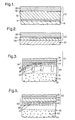
- the microstructure of the superalloy substrate generally comprises two phases, these being a gamma phase and a gamma prime phase.
- the gamma prime phase forming a reinforcement in the gamma phase matrix.
- the heat treatment of the platinum layer on the superalloy substrate causes aluminium in the superalloy substrate to be diffused outwards towards the platinum layer on the surface of the superalloy substrate. This results in the formation of a platinum enriched gamma phase and a platinum enriched gamma prime phase in the outer surface layer of the superalloy article. After heat treatment the surface was grit blasted with dry alumina powder of a 120 - 220 micrometer particle size to remove any diffusion residues.
- the platinum enriched layer 24 is not sufficient to prevent relatively large amounts of titanium and hafnium migrating from the superalloy article 20 to the base of the ceramic layer 28. This is because the platinum enriched layer 24 comprises the platinum enriched gamma phase and platinum enriched gamma prime phase, and hence there isn't a continuous gamma prime phase barrier to the migration of hafnium and titanium. It is possible for the titanium and hafnium to migrate through the platinum enriched gamma phase matrix. We have found that if the proportion of hafnium in the superalloy article is below about 1.5 wt% the platinum enriched layer 24 prevents the hafnium from migrating to the ceramic layer. We have also found that if the proportion of titanium in the superalloy article is below about 1.5 wt% the platinum enriched layer 24 prevents the titanium and migrating to the ceramic layer.
- the level of aluminium in the superalloy article is below about 4.5 wt% there is insufficient aluminium in the superalloy article to be diffused into the platinum enriched layer 24 to form a continuous layer of alumina.
- the attributes of a good bond coating for good adhesion of a thermal barrier coating are that the bond coating should have the ability to prevent, or reduce, the migration of transition metal elements to the ceramic thermal barrier coating.
- the migration of transition metal elements is preferably blocked by a continuous layer in the bond coating or slowed by formation of stable compounds by a layer in the bond coating. This attribute enables the resulting thermally grown oxide formed on the bond coating to be very pure alumina.
- the bond coating should be stable to ageing at high temperatures so that it still prevents, or reduces, the migration of the transition metal elements to ensure they any further growth of the oxide on the bond coating is by formation of alumina. These attributes are facilitated by the formation of a stable layer close to the thermally grown oxide interface between the bond coating and the ceramic thermal barrier coating.
- the X-ray diffraction analysis of the outer surface layer is able to penetrate to a depth of 3-5 micrometers from the surface of the superalloy article.
- the unknown phase has reduced levels of aluminium, only 3.3 wt%, compared to the platinum enriched gamma and platinum enriched gamma prime phases. It is believed that this unknown phase will not have enough aluminium to form essentially pure alumina to bond the ceramic onto the superalloy substrate.
- the unknown phase is believed to be some form of ordered phase of platinum, nickel and aluminium.
- the composition of the unknown phase has been determined to be 79 wt% Pt, 12.6 wt% Ni, 3.0 wt% Al, 0.11 wt% Ti, 2.3 wt% Co, 2.7 wt% Cr and trace levels of Re, W, Mo and Ta.
- the remaining specimens were then subjected to an ageing process to simulate a period of service in the turbine of a gas turbine engine.
- the ageing processes were 25 hours at 1100°C, 25 hours at 1150°C, 25 hours at 1170°C, 25 hours at 1190°C and 25 hours at 1210°C and then the relative adhesion strengths of the different bond coats were determined. If the coating failed in the mount of the adhesion strength tester, then it was assigned a strength of 5 Newtons.
- the elements hafnium, titanium and tantalum tend to favour the platinum enriched gamma prime phase. It is postulated that when the levels of these transition metal elements in the platinum enriched gamma prime phase reaches a critical level there is a reduction in the adhesion of the thermal barrier coating. It is theorised that this may be due to the lowering of the gamma prime solvus temperature or any benefits due to the platinum enrichment are reduced when large concentrations of these transition metal elements are present, i.e. the platinum enriched gamma prime phase releases more of the transition metal elements with increases in concentration of the transition metal elements and these released transition metal elements may effect the oxide layer.
- the transition metal elements are favoured in the platinum enriched gamma prime phase, then the titanium, tantalum, hafnium etc are fixed in these phases.
- the platinum enriched gamma phase the stability of the titanium, tantalum, hafnium etc is reduced and therefore these transition metal elements are more mobile in these phases.
- the outer surface layer is platinum enriched gamma phase
- the titanium levels are about the same as for the "O” phase although the tantalum levels are higher than for the "O” phase.
- the level of aluminium in the platinum enriched gamma phase is less than that in the "O” phase, but it is postulated that the additional chromium present relative to the "O" phase will aid formation of alumina.
- the platinum suppresses the formation of lesser protective oxide scales by either making the formation of alumina more favourable by increasing the alumina activity or by reducing the movement of transition metal elements through the bond coating by forming strong compounds or by some chemical influence on the transition metal elements.
- a batch of specimens as illustrated in figure 2 were produced using a nickel based superalloy called CMSX-4, a trade name of the Cannon-Muskegon Corporation, of 2875 Lincoln Street, Muskegon, Michigan, MI 49443-0506 U.S.A. Its nominal composition is given in Table 3 above.
- CMSX-4 nickel based superalloy
- the superalloy article specimens were coated with 5 micrometers thickness of platinum alloy containing hafnium by sputtering.
- the hafnium was present up to about 0.8 wt%, preferably up to 0.5 wt%.
- the specimen having 5 micrometer thickness of platinum containing hafnium had a critical load of 25 Newtons in the as processed, without ageing, condition.
- the specimen having only 5 micrometer thickness of platinum had a critical load of 15 Newtons in the as processed condition.
- the remaining specimens were then subjected to an ageing process to simulate a period of service in the turbine of a gas turbine engine.
- the ageing processes were 25 hours at 1100°C, 25 hours at 1150°C and 25 hours at 1170°C, and then the relative adhesion strengths of the different bond coats were determined.
- the additional layers are generally up to 8 micrometer in thickness typically 5 to 8 micrometer in thickness.
- the additional layers may be applied by PVD, CVD or by an electroplating process.
- an additional cobalt layer would be beneficial because cobalt improves the adhesion of the oxide scale on the platinum enriched gamma and platinum enriched gamma prime containing layer.
- the use of an additional chromium layer would be beneficial because it aids oxide bonding by increasing the aluminium activity and will also improve the oxidation behaviour of the platinum enriched gamma and platinum enriched gamma prime phases.
- a batch of specimens as illustrated in figure 2 were produced using a nickel based superalloy called CMSX-4, a trade name of the Cannon-Muskegon Corporation, of 2875 Lincoln Street, Muskegon, Michigan, MI49442-0506, USA. It's composition is given in Table 3 above.
- CMSX-4 nickel based superalloy
- Some of the superalloy article specimens were coated with 10 micrometers thickness of platinum, were then heat treated at 1100°C for one hour, were then coated with 7 micrometer thickness of cobalt and heat treated at 1150°C for one hour. These specimens were then coated with ceramic by electron beam physical vapour deposition.
- the outer layer of the bond coating contains a top layer of platinum enriched gamma phase and/or a cobalt platinum phase, while an under layer of the bond coating contains platinum enriched gamma and platinum enriched gamma prime phases, with the transition metal elements being maintained in the platinum enriched gamma prime phases.
- the X-ray analysis of the under layer to identify the phases is not possible due to the depth of this layer form the surface.
- the composition of the phases for the top and under layers of the bond coating for the 7 micrometer thickness of cobalt diffused at 1100°C and 10 micrometer thickness of platinum diffused at 1150°C are as follows.
- the top layer has a first phase with a composition of 76.9wt% Pt, 10.3wt% Ni, 7wt% Co, 3.4wt% Al, 2.3wt% Cr, 0.12wt% Ti, and 0.03wt% Re.
- the top layer has a second phase with a composition of 71.4wt% Pt, 13.1wt% Ni, 11wt% Co, 3.3wt% Cr, 1.06wt% Al, and 0.09wt% Ti.
- the under layer platinum enriched gamma prime phase has a composition of 72.4wt% Pt, 12.7wt% Ni, 5.1wt% Ta, 3.9wt% Co, 3wt% Al, 1.1wt% Cr, 0.9wt% Ti, 0.77wt% W and 0.07wt% Re.
- the under layer platinum enriched gamma phase has a composition of 65wt% Pt, 16.7wt% Ni, 11.9wt% Co, 3.6wt% Cr, 1.44wt% Al, 0.5wt% Ta, 0.45wt% W, 0.27wt% Ti, 0.15wt% Re and 0.07wt% Mo.
- Figure 9 shows the testing for the 7 micrometer thickness of cobalt heat treated at 1100°C and 10 micrometer thickness of platinum heat treated at 1150°C. It is apparent from figure 9 that this combination of cobalt and platinum layers produced a bond coating which has a better cyclic life at 1135°C than a single platinum layer, a double platinum layer or a prior art platinum aluminide bond coating produced by platinum plating and aluminising at 800°C to 950°C.
- a batch of specimens were produced using a nickel superalloy called CMSX-4, which has a composition given in Table 3 above. All of the superalloy article specimens were coated with 7 micrometer thickness of platinum and were heat treated at 1150°C for one hour. Some of the superalloy article specimens were then coated with 5 micrometer thickness of platinum and were heat treated at 900°C for one hour. Some of the superalloy article specimens were coated with 5 micrometer thickness of platinum and were heat treated at 1000°C for one hour. Finally some of the superalloy article specimens were then coated with 5 micrometer thickness of platinum and were heat treated at 1100°C for one hour. To all of these superalloy article specimens a ceramic thermal barrier coating was deposited by electron beam physical vapour deposition.
- the intention of these examples was to produce a stable platinum enriched gamma prime phase and platinum enriched gamma phase under layer with the first application of platinum and its heat treatment at 1150°C so as to maintain any titanium or other transition metal elements in this under layer, and to produce a top layer with lower transition metal element levels with the second application of platinum and its heat treatment at the different temperatures of 900°C, 1000°C and 1100°C.
- the titanium and any other transition metal elements would be maintained in the platinum enriched gamma prime and platinum enriched gamma phases which are more stable than the gamma prime phase in the CMSX-4 superalloy article.
- the analysis of the superalloy article specimens with the second platinum layer heat treated a 900°C showed a top layer containing platinum enriched gamma phases and "O" phases.
- the "O" phase is a phase which is isostructural with germanium nickel platinum (Ge Ni Pt 2 ), this has an orthorhombic structure distorted cubic.
- the composition of germanium nickel platinum (Ge Ni Pt 2 ) in atomic percentage is 50at% Pt, 25at% Ni and 25at% Ge, and this compares to a 15 micrometer thickness of platinum diffused at 1150°C to form an "O" phase composition in atomic percentage of 49at% Pt, 26at% Ni, 14at% Al, 6at% Cr, 5at% Co.
- the analysis of the specimens with a second platinum layer heat treated at 1000°C and 1100°C indicates that the amount of titanium in the top layer increases with increasing heat treatment temperature.
- the phases formed in the top layer are platinum enriched gamma prime and "O" phases for heat treatment at 1000°C and platinum enriched gamma and platinum enriched gamma prime phases for heat treatment at 1100°C.
- Example 8 Isothermal testing of the specimens in Example 8 and those produced in Example 5 showed that the double layer of platinum with the top layer heat treated at 900°C out performed the single layer of platinum in Example 5, although cyclic testing showed that both had approximately the same number of cycles to failure, 100 to 150 cycles, as shown in figure 9.
- the oxide formed on the bond coating is very pure alumina, and has very little or no damaging transition metal oxides such as rutile (TiO 2 ) or (Ti,Ta)O 2 .
- the resulting single outer layer comprises platinum enriched gamma and platinum enriched gamma prime phases.
- the resulting outer layer comprises a platinum enriched gamma, a platinum enriched gamma prime or an "O" phase top layer on an under layer which comprises platinum enriched gamma and platinum enriched gamma prime phases.
- the resulting outer layer comprises a top layer comprising a combination of two or more of platinum enriched gamma, platinum enriched gamma prime or "O" phase on an under layer which comprises platinum enriched gamma and platinum enriched gamma prime phases.
- the resulting outer layer comprises a top layer comprising either a combination of platinum enriched gamma and cobalt platinum phases or platinum enriched gamma prime in a platinum enriched gamma phase or a cobalt platinum phase on an under layer which comprises platinum enriched gamma and platinum enriched gamma prime phases.
- the heat treatment may be carried out either in hard vacuum conditions at a pressure in the range of 1.335 x 10 -2 to 1.335 x 10 -3 Nm -2 (10 -4 to 10 -5 Torr) or in partial pressure of argon for example at 1.335Nm -2 (10 -2 Torr).
- the heat treatment range enables full diffusion to occur between the platinum-group metal and the superalloy substrate to form the platinum enriched gamma and platinum enriched gamma prime phases.
- These phases are very similar in composition and any changes of phase between the two does not disturb the overlying ceramic thermal barrier coating because any changes of phase, in operation, do not result in large volume changes, compared to the prior art in which there is no, or only partial diffusion.
- platinum-group metals may be substituted, such as palladium or rhodium.
- a further advantage of the present invention is that the heat treatment above 1100°C improves the yield of successfully coated superalloy articles compared to those heat treated at 1000°C.
- the precise thickness of the ceramic layer will be decided upon by experiment and/or calculation and will depend upon the temperature and corrosive agents to be experienced by the components during operation.
- the ceramic layer will have a thickness up to 300 micrometers (300 x 10 -6 m).
Landscapes
- Chemical & Material Sciences (AREA)
- Engineering & Computer Science (AREA)
- Metallurgy (AREA)
- Chemical Kinetics & Catalysis (AREA)
- Materials Engineering (AREA)
- Mechanical Engineering (AREA)
- Inorganic Chemistry (AREA)
- Organic Chemistry (AREA)
- Ceramic Engineering (AREA)
- Other Surface Treatments For Metallic Materials (AREA)
- Turbine Rotor Nozzle Sealing (AREA)
- Solid-Phase Diffusion Into Metallic Material Surfaces (AREA)
- Application Of Or Painting With Fluid Materials (AREA)
Claims (43)
- Procédé pour appliquer une couche de barrière thermique multi-couche (22) sur un objet en superalliage (20) comprenant les étapes :caractérisé en ce que l'objet (20) est traité thermiquement pour faire diffuser le métal du groupe du platine dans l'objet en superalliage (20) et ainsi créer une couche externe enrichie en métal du groupe du platine (24) sur l'objet en superalliage (20), le traitement thermique étant effectué à une température dans le domaine de 1 100°C à 1 200°C en fonction de la température de traitement thermique de solution appropriée pour l'objet en superalliage (20).appliquer une couche d'un métal du groupe du platine sur l'objet en superalliage (20),traiter thermiquement l'objet en superalliage revêtu de métal du groupe du platine (20),appliquer un revêtement céramique (28) sur l'objet en superalliage (20),
- Procédé selon la revendication 1, dans lequel le traitement thermique est effectué pendant un temps allant jusqu'à six heures.
- Procédé selon la revendication 1 ou la revendication 2, qui comprend de créer une fine couche adhérente (26) d'oxyde sur la couche externe enrichie en métal du groupe du platine (24) de l'objet en superalliage (20), et d'appliquer le revêtement céramique (28) sur la couche d'oxyde (26).
- Procédé selon la revendication 1 ou la revendication 2, qui comprend d'appliquer un revêtement d'alliage contenant de l'aluminium (16) sur la couche externe enrichie en métal du groupe du platine (14) de l'objet en superalliage (10), créer une fine couche adhérente d'oxyde (18) sur le revêtement d'alliage contenant de l'aluminium (16) et appliquer le revêtement céramique (20) sur la couche d'oxyde (18);
- Procédé selon la revendication 4, dans lequel le revêtement d'alliage contenant de l'aluminium (16) comprend un alliage de MCrAlY, où M est au moins un parmi le Ni, Co et Fe.
- Procédé selon l'une quelconque des revendications 1 à 5, dans lequel le métal du groupe du platine est appliqué par un procédé d'électro-plaquage.
- Procédé selon l'une quelconque des revendications 1 à 6, dans lequel le métal du groupe du platine est du platine.
- Procédé selon la revendication 7, dans lequel l'épaisseur de la coche de platine telle qu'appliquée avant traitement thermique, est supérieure à 3 µm et inférieure à 12,5 µm.
- Procédé selon la revendication 8, dans lequel l'épaisseur de la couche de platine telle qu'appliquée avant traitement thermique est au moins 5 µm.
- Procédé selon l'une quelconque des revendications 1 à 9, dans lequel le traitent thermique est réalisé pendant une heure.
- Procédé selon la revendication 3, dans lequel la fine couche adhérente d'oxyde (26) est créée en chauffant la couche externe enrichie en métal du groupe du platine (24) dans une atmosphère contenant de l'oxygène.
- Procédé selon la revendication 4, dans lequel la fine couche adhérente d'oxyde (18) est créée en chauffant le revêtement d'alliage contenant de l'aluminium (16) dans une atmosphère contenant de l'oxygène.
- Procédé selon l'une quelconque des revendications 1 à 12, dans lequel le revêtement de céramique (28) est appliqué par déposition en phase gazeuse par procédé physique par faisceau d'électrons.
- Procédé selon la revendication 13, dans lequel la fine couche adhérente d'oxyde (26) est créée pendant le procédé de déposition en phase gazeuse par procédé physique par faisceau d'électrons.
- Procédé selon l'une quelconque des revendications 1 à 14, dans lequel une quantité contrôlée d'hafnium, ou d'yttrium, est appliquée avec, ou sur, la couche de métal du groupe du platine.
- Procédé selon la revendication 15, dans lequel l'hafnium ou l'yttrium est appliqué par déposition en phase gazeuse par procédé physique ou déposition en phase gazeuse par procédé chimique.
- Procédé selon la revendication 16, dans lequel on ajoute de l'hafnium jusqu'à 0,8% en poids ou de l'yttrium jusqu'à 0,8% en poids.
- Procédé selon la revendication 3, dans lequel l'objet en superalliage comprend plus de 4,5% en poids d'aluminium, moins de 1,5% en poids d'hafnium et moins de 1,5% en poids de titane.
- Procédé selon l'une quelconque des revendications 1 à 18, comprenant d'appliquer une couche additionnelle sur le l'objet en superalliage (20) avant d'appliquer le métal du groupe du platine sur l'objet en superalliage (20).
- Procédé selon l'une quelconque des revendications 1 à 18, comprenant d'appliquer une couche additionnelle sur la couche de métal du groupe du platine avant traitement thermique de l'objet en superalliage (20) pour faire diffuser le métal du groupe du platine dans l'objet en superalliage (20).
- Procédé selon la revendication 19, comprenant de traiter thermiquement l'objet en superalliage (20) à une température dans le domaine de 1 000°C à 1 100°C pour faire diffuser la couche additionnelle dans l'objet en superalliage (20) avant d'appliquer la couche de métal du groupe du platine sur l'objet en superalliage (20).
- Procédé selon la revendication 1, comprenant d'appliquer une couche additionnelle sur la couche externe enrichie en métal du groupe du platine (24) de l'objet en superalliage (20), de traiter thermiquement l'objet en superalliage (20) pour faire diffuser la couche additionnelle dans la couche externe enrichie au platine (24) de l'objet en superalliage (20).
- Procédé selon l'une quelconque des revendications 19 à 22, dans lequel la couche additionnelle comprend du cobalt ou du chrome.
- Procédé selon l'une quelconque des revendications 19 à 23, dans lequel la couche additionnelle est appliquée par déposition en phase gazeuse par procédé physique, déposition en phase gazeuse par procédé chimique ou par un procédé d'électro-plaquage.
- Procédé selon l'une quelconque des revendications 19 à 24, dans lequel l'épaisseur de la couche additionnelle telle qu'appliquée avant traitement thermique va jusqu'à 8 µm.
- Procédé selon l'une quelconque des revendications 1 à 25, dans lequel le temps du traitement thermique est suffisant de telle sorte que la couche externe enrichie en métal du groupe du platine (24) de l'objet en superalliage (20) comprend une phase gamma enrichie en platine (36) et une phase gamma prime enrichie en platine (38).
- Procédé selon la revendication 26, comprenant d'appliquer une couche additionnelle de métal du groupe du platine sur la couche externe enrichie en métal du groupe du platine (24) de l'objet en superalliage (20), de traiter thermiquement l'objet en superalliage (20) pour faire diffuser la couche additionnelle de métal du groupe du platine dans l'objet en superalliage (20), le traitement thermique étant réalisé dans le domaine de 900°C à 1 100°c et pendant un temps suffisant de telle sorte que la couche externe enrichie en métal du groupe du platine (24) de l'objet en superalliage (20) comprend une couche supérieure comprenant au moins une phase gamma enrichie en métal du groupe du platine et une phase ordonnée de métal du groupe du platine, du nickel et de l'aluminium sur une couche inférieure comprenant une phase gamma enrichie en métal du groupe du platine (36) et une phase gamma prime enrichie en métal du groupe du platine (38), de créer une fine couche adhérente d'oxyde (26) sur la couche externe enrichie en métal du groupe du platine (24) de l'objet en superalliage et d'appliquer le revêtement céramique (28) sur la fine couche adhérente d'oxyde (26).
- Procédé selon la revendication 27, dans lequel l'épaisseur de la couche de métal du groupe du platine telle qu'appliquée avant traitement thermique est supérieure à 3 µm et inférieure à 12,5 µm, et l'épaisseur de la couche additionnelle de métal du groupe du platine telle qu'appliquée avant traitement thermique est supérieure à 3 µm et inférieure à 8 µm.
- Procédé selon la revendication 28, dans lequel l'épaisseur de la couche de métal du groupe du platine telle qu'appliquée est de 7 µm et l'épaisseur de la couche additionnelle de métal du groupe du platine telle qu'appliquée est de 5 µm.
- Revêtement de barrière thermique multi-couche (22) pour un objet en superalliage (20) comprenant :caractérisé en ce que la couche externe enrichie en métal du groupe du platine (24) de l'objet en superalliage (20) comprend une phase gamma enrichie en métal du groupe du platine (36) et une phase gamma prime enrichie en métal du groupe du platine (38) qui ont été formées en chauffant une couche de métal du groupe du platine sur l'objet en superalliage (20) à une température dans le domaine de 1 100°c à 1 200°C, une fine couche adhérente (26) d'oxyde sur la couche externe enrichie en métal du groupe du platine (24) de l'objet en superalliage (20), la fine couche adhérente d'oxyde (26) comprenant de l'oxyde d'aluminium et le revêtement céramique 28 est sur la couche d'oxyde (26).une couche externe enrichie en métal du groupe du platine (24) sur l'objet en superalliage (20),un revêtement céramique (28) sur la couche externe enrichie au platine (24) de l'objet en superalliage (20),
- Revêtement de barrière thermique multi-couche (12) pour un objet en superalliage (10) comprenant :caractérisé en ce que la couche externe enrichie en métal du groupe du platine (14) de l'objet en superalliage (10) comprend une phase gamma enrichie en métal du groupe du platine et une phase gamma prime enrichie en métal du groupe du platine stable qui ont été formées en traitant thermiquement la couche de métal du groupe du platine sur l'objet en superalliage (20) à une température dans le domaine de 1 100°C à 1 200°C, un revêtement d'alliage contenant de l'aluminium (16) sur la couche externe enrichie en métal du groupe du platine (14) de l'objet en superalliage (10), une fine couche adhérente d'oxyde (18) sur le revêtement d'alliage contenant du platine (16), et le revêtement céramique (20) est sur la couche d'oxyde (18).une couche externe enrichie en métal du groupe du platine (14) sur l'objet en superalliage (10),un revêtement céramique (20) sur la couche externe enrichie en platine (14) de l'objet en superalliage (10),
- Revêtement de barrière thermique selon la revendication 31, dans lequel la couche externe enrichie en métal du groupe du platine (24) de l'objet en superalliage (20) comprend une couche supérieure et une couche inférieure, la couche supérieure comprenant au moins une phase gamma enrichie en métal du groupe du platine, une phase gamma prime enrichie en métal du groupe du platine et une phase ordonnée de métal du groupe de platine, du nickel et de l'aluminium, la couche inférieure comprenant une phase gamma enrichie en métal du groupe du platine (36) et une phase gamma prime enrichie en métal du groupe du platine (38), la fine couche adhérente d'oxyde (26) étant sur la couche supérieure.
- Revêtement de barrière thermique selon la revendication 31, dans lequel la couche externe enrichie en métal du groupe du platine (24) de l'objet en superalliage (20) comprend une couche supérieure et une couche inférieure, la couche supérieure comprenant au moins une phase gamma enrichie en métal du groupe du platine ou une phase cobalt/platine, la couche inférieure comprenant une phase gamma enrichie en métal du groupe du platine (36) et une phase gamma prime enrichie en métal du groupe du platine (38), la fine couche adhérente d'oxyde (26) étant sur la couche supérieure.
- Revêtement de barrière thermique selon la revendication 33, dans lequel la couche supérieure comprend de la phase gamma enrichie au platine.
- Revêtement de barrière thermique selon la revendication 33 ou 34, dans lequel la phase ordonnée de métal du groupe du platine, de nickel et d'aluminium comprend 44-50% atomique de Pt, 25-28% atomique de Ni, 13-17% atomique de Al, 6-8% atomique de Cr, 4-5% atomique de Co, 0,3-0,5% atomique de Ti et 0-0,1% atomique de Ta.
- Revêtement de barrière thermique selon l'une quelconque des revendications 30 à 35, dans lequel le revêtement céramique (28) comprend du zircone stabilisé à l'yttria.
- Revêtement de barrière thermique selon l'une quelconque des revendications 30 à 36, dans lequel le revêtement céramique (28) a une structure colonaire.
- Revêtement de barrière thermique selon l'une quelconque des revendications 30 à 37, dans lequel l'objet en superalliage (20) comprend un superalliage à base de nickel.
- Revêtement de barrière thermique selon l'une quelconque des revendications 30 à 38, dans lequel l'objet en superalliage (20) comprend plus de 4,5% en poids d'aluminium, moins de 1,5% en poids d'hafnium et moins de 1,5% en poids de titane.
- Revêtement de barrière thermique selon la revendication 39, dans lequel la couche externe enrichie en métal du groupe du platine (24) comprend jusqu'à 0,8% en poids d'hafnium, ou jusqu'à 0,8% en poids d'yttrium.
- Revêtement de barrière thermique selon l'une quelconque des revendications 30 à 40, dans lequel la couche externe enrichie en métal du groupe du platine (24) est enrichie en cobalt ou en chrome.
- Revêtement de barrière thermique selon l'une quelconque des revendications 30 à 41, dans lequel le métal du groupe du platine est le platine.
- Revêtement de barrière thermique selon l'une quelconque des revendications 30 à 42, dans lequel la phase gamma prime enrichie en métal du groupe du platine (38) et la phase gamma enrichie en métal du groupe du platine (36) empêchent ou réduisent la migration d'éléments de métal de transition à partir de l'objet en superalliage (20) vers le revêtement en céramique (28).
Applications Claiming Priority (4)
| Application Number | Priority Date | Filing Date | Title |
|---|---|---|---|
| GBGB9426257.3A GB9426257D0 (en) | 1994-12-24 | 1994-12-24 | Thermal barrier coating for a superalloy article and method of application |
| GB9426257 | 1994-12-24 | ||
| GB9516422 | 1995-08-10 | ||
| GBGB9516422.4A GB9516422D0 (en) | 1995-08-10 | 1995-08-10 | A method of applying a thermal barrier coating to a superalloy article and a thermal barrier coating |
Publications (2)
| Publication Number | Publication Date |
|---|---|
| EP0718420A1 EP0718420A1 (fr) | 1996-06-26 |
| EP0718420B1 true EP0718420B1 (fr) | 1999-04-21 |
Family
ID=26306273
Family Applications (1)
| Application Number | Title | Priority Date | Filing Date |
|---|---|---|---|
| EP95309222A Expired - Lifetime EP0718420B1 (fr) | 1994-12-24 | 1995-12-19 | Revêtement de barrière thermique et méthode pour l'appliquer sur un article en superalliage |
Country Status (8)
| Country | Link |
|---|---|
| US (2) | US5667663A (fr) |
| EP (1) | EP0718420B1 (fr) |
| JP (1) | JP3862774B2 (fr) |
| AU (1) | AU695087B2 (fr) |
| CA (1) | CA2165641C (fr) |
| DE (1) | DE69509202T2 (fr) |
| NO (1) | NO314044B1 (fr) |
| UA (1) | UA35620C2 (fr) |
Cited By (3)
| Publication number | Priority date | Publication date | Assignee | Title |
|---|---|---|---|---|
| US8636890B2 (en) | 2011-09-23 | 2014-01-28 | General Electric Company | Method for refurbishing PtAl coating to turbine hardware removed from service |
| RU2727469C2 (ru) * | 2016-06-10 | 2020-07-21 | Сафран | Способ изготовления детали из суперсплава на основе никеля с содержанием гафния |
| US11814702B2 (en) | 2017-04-21 | 2023-11-14 | Oerlikon Surface Solutions Ag, Pfaffikon | PVD bond coat |
Families Citing this family (103)
| Publication number | Priority date | Publication date | Assignee | Title |
|---|---|---|---|---|
| US6551423B1 (en) * | 1998-09-08 | 2003-04-22 | General Electric Co. | Preparation of low-sulfur platinum and platinum aluminide layers in thermal barrier coatings |
| US6333121B1 (en) * | 1992-10-13 | 2001-12-25 | General Electric Company | Low-sulfur article having a platinum-aluminide protective layer and its preparation |
| US5716720A (en) * | 1995-03-21 | 1998-02-10 | Howmet Corporation | Thermal barrier coating system with intermediate phase bondcoat |
| US6066405A (en) * | 1995-12-22 | 2000-05-23 | General Electric Company | Nickel-base superalloy having an optimized platinum-aluminide coating |
| FR2745590B1 (fr) * | 1996-02-29 | 1998-05-15 | Snecma | Revetement de barriere thermique a sous-couche amelioree et pieces revetues par une telle barriere thermique |
| GB9612811D0 (en) * | 1996-06-19 | 1996-08-21 | Rolls Royce Plc | A thermal barrier coating for a superalloy article and a method of application thereof |
| GB2319783B (en) | 1996-11-30 | 2001-08-29 | Chromalloy Uk Ltd | A thermal barrier coating for a superalloy article and a method of application thereof |
| US5817371A (en) * | 1996-12-23 | 1998-10-06 | General Electric Company | Thermal barrier coating system having an air plasma sprayed bond coat incorporating a metal diffusion, and method therefor |
| US6458473B1 (en) * | 1997-01-21 | 2002-10-01 | General Electric Company | Diffusion aluminide bond coat for a thermal barrier coating system and method therefor |
| US5891317A (en) * | 1997-02-04 | 1999-04-06 | Avon Products, Inc. | Electroformed hollow jewelry |
| GB2322869A (en) * | 1997-03-04 | 1998-09-09 | Rolls Royce Plc | A coated superalloy article |
| US5975852A (en) * | 1997-03-31 | 1999-11-02 | General Electric Company | Thermal barrier coating system and method therefor |
| US6027564A (en) * | 1997-09-23 | 2000-02-22 | American Superconductor Corporation | Low vacuum vapor process for producing epitaxial layers |
| US6022832A (en) | 1997-09-23 | 2000-02-08 | American Superconductor Corporation | Low vacuum vapor process for producing superconductor articles with epitaxial layers |
| FR2768750B1 (fr) | 1997-09-25 | 1999-11-05 | Snecma | Procede pour ameliorer la resistance a l'oxydation et a la corrosion d'une piece en superalliage et piece en superalliage obtenue par ce procede |
| US6458223B1 (en) | 1997-10-01 | 2002-10-01 | American Superconductor Corporation | Alloy materials |
| US6428635B1 (en) | 1997-10-01 | 2002-08-06 | American Superconductor Corporation | Substrates for superconductors |
| GB9723762D0 (en) * | 1997-11-12 | 1998-01-07 | Rolls Royce Plc | A method of coating a component |
| GB9724844D0 (en) | 1997-11-26 | 1998-01-21 | Rolls Royce Plc | A coated superalloy article and a method of coating a superalloy article |
| DE19753876A1 (de) * | 1997-12-05 | 1999-06-10 | Asea Brown Boveri | Eisenaluminidbeschichtung und Verfahren zum Aufbringen einer Eisenaluminidbeschichtung |
| US6478888B1 (en) * | 1997-12-23 | 2002-11-12 | United Technologies Corporation | Preheat method for EBPVD coating |
| GB9800511D0 (en) | 1998-01-13 | 1998-03-11 | Rolls Royce Plc | A metallic article having a thermal barrier coating and a method of application thereof |
| CA2229124C (fr) * | 1998-02-09 | 2001-08-14 | Pyrogenesis Inc. | Systeme de revetement a isolant thermique comprenant une couche superieure avec interface graduelle |
| DE59900691D1 (de) * | 1998-04-29 | 2002-02-21 | Siemens Ag | Erzeugnis mit einer schutzschicht gegen korrosion sowie verfahren zur herstellung einer schutzschicht gegen korrosion |
| GB9811456D0 (en) * | 1998-05-29 | 1998-07-29 | Rolls Royce Plc | A metallic article having a thermal barrier coating and a method of application thereof |
| EP1016735A1 (fr) * | 1998-12-28 | 2000-07-05 | Siemens Aktiengesellschaft | Procédé pour revêtir un objet |
| US6071628A (en) * | 1999-03-31 | 2000-06-06 | Lockheed Martin Energy Systems, Inc. | Thermal barrier coating for alloy systems |
| US6475311B1 (en) | 1999-03-31 | 2002-11-05 | American Superconductor Corporation | Alloy materials |
| US6231998B1 (en) | 1999-05-04 | 2001-05-15 | Siemens Westinghouse Power Corporation | Thermal barrier coating |
| US6406561B1 (en) | 1999-07-16 | 2002-06-18 | Rolls-Royce Corporation | One-step noble metal-aluminide coatings |
| US6165628A (en) * | 1999-08-30 | 2000-12-26 | General Electric Company | Protective coatings for metal-based substrates and related processes |
| US6234755B1 (en) * | 1999-10-04 | 2001-05-22 | General Electric Company | Method for improving the cooling effectiveness of a gaseous coolant stream, and related articles of manufacture |
| EP1094131B1 (fr) | 1999-10-23 | 2004-05-06 | ROLLS-ROYCE plc | Revêtement de protection contre la corrosion sur un article métallique et procédé pour produire un revêtement de protection contre la corrosion sur un article métallique |
| US6435835B1 (en) * | 1999-12-20 | 2002-08-20 | United Technologies Corporation | Article having corrosion resistant coating |
| US6383306B1 (en) * | 2000-02-28 | 2002-05-07 | General Electric Company | Preparation of a nickel-base superalloy article having a decarburized coating containing aluminum and a reactive element |
| US6485844B1 (en) * | 2000-04-04 | 2002-11-26 | Honeywell International, Inc. | Thermal barrier coating having a thin, high strength bond coat |
| US6589668B1 (en) | 2000-06-21 | 2003-07-08 | Howmet Research Corporation | Graded platinum diffusion aluminide coating |
| US6602356B1 (en) | 2000-09-20 | 2003-08-05 | General Electric Company | CVD aluminiding process for producing a modified platinum aluminide bond coat for improved high temperature performance |
| US6454992B1 (en) | 2000-09-29 | 2002-09-24 | Ohio Aerospace Institute | Oxidation resistant and low coefficient of thermal expansion NiA1-CoCrAly alloy |
| US6444259B1 (en) | 2001-01-30 | 2002-09-03 | Siemens Westinghouse Power Corporation | Thermal barrier coating applied with cold spray technique |
| US6589602B2 (en) * | 2001-04-17 | 2003-07-08 | Toshiba Tungaloy Co., Ltd. | Highly adhesive surface-coated cemented carbide and method for producing the same |
| WO2002097162A1 (fr) * | 2001-05-29 | 2002-12-05 | Mcgill University | Revetements barrieres thermiques et leur realisation grace a des procedes electrochimiques |
| US6780458B2 (en) | 2001-08-01 | 2004-08-24 | Siemens Westinghouse Power Corporation | Wear and erosion resistant alloys applied by cold spray technique |
| US6933062B2 (en) | 2001-08-16 | 2005-08-23 | General Electric Company | Article having an improved platinum-aluminum-hafnium protective coating |
| DE10159056A1 (de) * | 2001-11-28 | 2003-06-26 | Alstom Switzerland Ltd | Thermisch hoch belastetes Bauteil sowie Verfahren zu seiner Herstellung |
| US6706319B2 (en) | 2001-12-05 | 2004-03-16 | Siemens Westinghouse Power Corporation | Mixed powder deposition of components for wear, erosion and abrasion resistant applications |
| US6682827B2 (en) * | 2001-12-20 | 2004-01-27 | General Electric Company | Nickel aluminide coating and coating systems formed therewith |
| EP1365044A1 (fr) | 2002-05-24 | 2003-11-26 | Siemens Aktiengesellschaft | Couche à base de MCrAl |
| US7157151B2 (en) * | 2002-09-11 | 2007-01-02 | Rolls-Royce Corporation | Corrosion-resistant layered coatings |
| US6884515B2 (en) | 2002-12-20 | 2005-04-26 | General Electric Company | Afterburner seals with heat rejection coats |
| US6884461B2 (en) | 2002-12-20 | 2005-04-26 | General Electric Company | Turbine nozzle with heat rejection coats |
| US6884460B2 (en) | 2002-12-20 | 2005-04-26 | General Electric Company | Combustion liner with heat rejection coats |
| US7273662B2 (en) | 2003-05-16 | 2007-09-25 | Iowa State University Research Foundation, Inc. | High-temperature coatings with Pt metal modified γ-Ni+γ′-Ni3Al alloy compositions |
| DE10332420A1 (de) * | 2003-07-16 | 2005-02-10 | Alstom Technology Ltd | Aluminiumbasierte multinäre Legierungen und deren Verwendung als wärme- und korrosionsschützende Beschichtungen |
| US20050123783A1 (en) * | 2003-07-31 | 2005-06-09 | Gregory Otto J. | Composite used for thermal spray instrumentation and method for making the same |
| DE10350882A1 (de) * | 2003-10-31 | 2005-06-02 | Mtu Aero Engines Gmbh | Bauteil, Oxidationsschutzbeschichtung für ein solches Bauteil und Herstellverfahren |
| DE102004021926A1 (de) | 2004-05-04 | 2005-12-01 | Mtu Aero Engines Gmbh | Verfahren zur Herstellung einer Beschichtung sowie Anode zur Verwendung in einem solchen Verfahren |
| DE602005014877D1 (de) * | 2004-08-18 | 2009-07-23 | Univ Iowa State Res Found Inc | aus -Ni+ '-Ni3Al-LEGIERUNGEN, DIE MIT EINER AUS DER PT GRUPPE MODIFIZIERT SIND, UND DIE EINER HOCHTEMPERATURKORROSIONSBESTÄNDIGKEIT AUFWEISEN |
| US20060037865A1 (en) * | 2004-08-19 | 2006-02-23 | Rucker Michael H | Methods and apparatus for fabricating gas turbine engines |
| US20060040129A1 (en) * | 2004-08-20 | 2006-02-23 | General Electric Company | Article protected by a strong local coating |
| US7531217B2 (en) | 2004-12-15 | 2009-05-12 | Iowa State University Research Foundation, Inc. | Methods for making high-temperature coatings having Pt metal modified γ-Ni +γ′-Ni3Al alloy compositions and a reactive element |
| EP1681374B1 (fr) * | 2005-01-14 | 2009-08-26 | Siemens Aktiengesellschaft | Système de revêtement comprenant une couche barrière et procédé de fabrication |
| US20060275624A1 (en) * | 2005-06-07 | 2006-12-07 | General Electric Company | Method and apparatus for airfoil electroplating, and airfoil |
| US7250225B2 (en) * | 2005-09-26 | 2007-07-31 | General Electric Company | Gamma prime phase-containing nickel aluminide coating |
| US7247393B2 (en) * | 2005-09-26 | 2007-07-24 | General Electric Company | Gamma prime phase-containing nickel aluminide coating |
| EP1795623A1 (fr) * | 2005-11-14 | 2007-06-13 | Sulzer Metco AG | Procédé de fabrication d'un revêtement modifié d'aluminure de platine sur un objet et objet |
| US7910225B2 (en) * | 2006-02-13 | 2011-03-22 | Praxair S.T. Technology, Inc. | Low thermal expansion bondcoats for thermal barrier coatings |
| US20070190354A1 (en) * | 2006-02-13 | 2007-08-16 | Taylor Thomas A | Low thermal expansion bondcoats for thermal barrier coatings |
| US20070187005A1 (en) * | 2006-02-13 | 2007-08-16 | Taylor Thomas A | Alloy powders and coating compositions containing same |
| US7842402B2 (en) * | 2006-03-31 | 2010-11-30 | General Electric Company | Machine components and methods of fabricating |
| GB0610578D0 (en) * | 2006-05-27 | 2006-07-05 | Rolls Royce Plc | Method of removing deposits |
| US7740948B1 (en) | 2006-05-31 | 2010-06-22 | The United States Of America As Represented By The United States Department Of Energy | Thermal barrier coatings |
| WO2008049080A1 (fr) * | 2006-10-18 | 2008-04-24 | Inframat Corporation | Fils à noyau nanostructuré/à base de particules superfines pour des applications de pulvérisation thermique et leurs procédés de fabrication |
| US7527877B2 (en) | 2006-10-27 | 2009-05-05 | General Electric Company | Platinum group bond coat modified for diffusion control |
| US7767072B2 (en) * | 2006-12-15 | 2010-08-03 | Honeywell International Inc. | Method of forming yttrium-modified platinum aluminide diffusion coating |
| US20090035485A1 (en) * | 2007-08-02 | 2009-02-05 | United Technologies Corporation | Method for forming active-element aluminide diffusion coatings |
| US8821654B2 (en) | 2008-07-15 | 2014-09-02 | Iowa State University Research Foundation, Inc. | Pt metal modified γ-Ni+γ′-Ni3Al alloy compositions for high temperature degradation resistant structural alloys |
| US20100028712A1 (en) * | 2008-07-31 | 2010-02-04 | Iowa State University Research Foundation, Inc. | y'-Ni3Al MATRIX PHASE Ni-BASED ALLOY AND COATING COMPOSITIONS MODIFIED BY REACTIVE ELEMENT CO-ADDITIONS AND Si |
| US8124246B2 (en) * | 2008-11-19 | 2012-02-28 | Honeywell International Inc. | Coated components and methods of fabricating coated components and coated turbine disks |
| US20100159136A1 (en) * | 2008-12-19 | 2010-06-24 | Rolls-Royce Corporation | STATIC CHEMICAL VAPOR DEPOSITION OF y-Ni + y'-Ni3AI COATINGS |
| FR2941967B1 (fr) * | 2009-02-11 | 2011-05-13 | Snecma | Methode de fabrication d'une barriere thermique recouvrant une piece realisee dans un substrat metallique en superalliage et piece thermomecanique resultant de cette methode de traitement |
| US20100266772A1 (en) * | 2009-04-20 | 2010-10-21 | Honeywell International Inc. | Methods of forming coating systems on superalloy turbine airfoils |
| US20110086163A1 (en) | 2009-10-13 | 2011-04-14 | Walbar Inc. | Method for producing a crack-free abradable coating with enhanced adhesion |
| US20110086177A1 (en) | 2009-10-14 | 2011-04-14 | WALBAR INC. Peabody Industrial Center | Thermal spray method for producing vertically segmented thermal barrier coatings |
| JP5660428B2 (ja) | 2010-04-20 | 2015-01-28 | 独立行政法人物質・材料研究機構 | 耐熱コーティング材 |
| US20130202913A1 (en) | 2010-10-19 | 2013-08-08 | Kyoko Kawagishi | Ni-BASED SUPERALLOY COMPONENT HAVING HEAT-RESISTANT BOND COAT LAYER FORMED THEREIN |
| US8460760B2 (en) | 2010-11-30 | 2013-06-11 | United Technologies Corporation | Coating a perforated surface |
| US8642140B2 (en) | 2011-03-09 | 2014-02-04 | United Technologies Corporation | Ceramic coating deposition |
| KR101993684B1 (ko) | 2011-10-31 | 2019-06-27 | 테네코 인코퍼레이티드 | 코팅처리된 피스톤 및 코팅처리된 피스톤을 제조하는 방법 |
| US20160214350A1 (en) | 2012-08-20 | 2016-07-28 | Pratt & Whitney Canada Corp. | Oxidation-Resistant Coated Superalloy |
| GB2511768A (en) * | 2013-03-12 | 2014-09-17 | Rolls Royce Plc | Erosion Resistant Coating |
| US20150003997A1 (en) * | 2013-07-01 | 2015-01-01 | United Technologies Corporation | Method of forming hybrid metal ceramic components |
| JP6226231B2 (ja) * | 2013-09-18 | 2017-11-08 | 株式会社Ihi | 熱遮蔽コーティングしたNi合金部品及びその製造方法 |
| GB201416585D0 (en) * | 2014-09-19 | 2014-11-05 | Rolls Royce Plc | A method of applying a thermal barrier coating to a metallic article and a thermal barrier coated metallic article |
| US10590800B2 (en) | 2014-09-25 | 2020-03-17 | General Electric Company | Method for selective aluminide diffusion coating removal |
| JP6798098B2 (ja) * | 2014-11-19 | 2020-12-09 | 株式会社リコー | エレクトロクロミック装置及びその製造方法 |
| US11952828B1 (en) * | 2015-08-13 | 2024-04-09 | National Technology & Engineering Solutions Of Sandia, Llc | Thermal barrier systems and methods for access delay |
| GB201517333D0 (en) * | 2015-10-01 | 2015-11-18 | Rolls Royce Plc | A method of applying a thermal barrier coating to a metallic article and a thermal barrier coated metallic article |
| FR3052464B1 (fr) * | 2016-06-10 | 2018-05-18 | Safran | Procede de protection contre la corrosion et l'oxydation d'une piece en superalliage monocristallin a base de nickel exempt d'hafnium |
| FR3090696B1 (fr) * | 2018-12-21 | 2020-12-04 | Safran | Piece de turbine en superalliage comprenant du rhenium et/ou du ruthenium et procede de fabrication associe |
| US11142818B1 (en) | 2020-09-14 | 2021-10-12 | Honeywell International Inc. | Grit-blasted and densified bond coat for thermal barrier coating and method of manufacturing the same |
| CN114214685A (zh) * | 2021-09-22 | 2022-03-22 | 湘潭大学 | 高温防护涂层及其制备方法与应用 |
| CN115896675A (zh) * | 2022-12-05 | 2023-04-04 | 无锡凌风表面技术有限公司 | 一种低成本高效率的低红外发射率涂层制备方法 |
Family Cites Families (51)
| Publication number | Priority date | Publication date | Assignee | Title |
|---|---|---|---|---|
| US3819338A (en) * | 1968-09-14 | 1974-06-25 | Deutsche Edelstahlwerke Ag | Protective diffusion layer on nickel and/or cobalt-based alloys |
| DE1796175C2 (de) * | 1968-09-14 | 1974-05-30 | Deutsche Edelstahlwerke Gmbh, 4150 Krefeld | Hochtemperaturkorrosions- und zunderbeständige Diffusionsschutzschicht auf Gegenständen aus hochwarmfesten Legierungen auf Nickel- und/oder Kobaltbasis |
| BE757636A (fr) * | 1969-11-03 | 1971-04-01 | Deutsche Edelstahlwerke Ag | Procede de protection en surface pour objets metalliques |
| BE759275A (fr) * | 1969-12-05 | 1971-04-30 | Deutsche Edelstahlwerke Ag | Procede d'application de couches protectrices diffusees sur despieces en alliage a base de cobalt |
| US3961910A (en) * | 1973-05-25 | 1976-06-08 | Chromalloy American Corporation | Rhodium-containing superalloy coatings and methods of making same |
| US3999956A (en) * | 1975-02-21 | 1976-12-28 | Chromalloy American Corporation | Platinum-rhodium-containing high temperature alloy coating |
| US3979273A (en) * | 1975-05-27 | 1976-09-07 | United Technologies Corporation | Method of forming aluminide coatings on nickel-, cobalt-, and iron-base alloys |
| US4137370A (en) * | 1977-08-16 | 1979-01-30 | The United States Of America As Represented By The Secretary Of The Air Force | Titanium and titanium alloys ion plated with noble metals and their alloys |
| US4123594A (en) * | 1977-09-22 | 1978-10-31 | General Electric Company | Metallic coated article of improved environmental resistance |
| US4123595A (en) * | 1977-09-22 | 1978-10-31 | General Electric Company | Metallic coated article |
| GB2041246B (en) * | 1979-02-01 | 1982-12-01 | Johnson Matthey Co Ltd | Protective layer |
| SE8000480L (sv) * | 1979-02-01 | 1980-08-02 | Johnson Matthey Co Ltd | Artikel lemplig for anvendning vid hoga temperaturer |
| JPS55113880A (en) * | 1979-02-26 | 1980-09-02 | Toshiba Corp | Production of gas turbine blade |
| JPS55115972A (en) * | 1979-02-27 | 1980-09-06 | Toshiba Corp | Production of high-temperature gas turbine blade |
| GB2046369A (en) * | 1979-04-04 | 1980-11-12 | Rolls Royce | Gas turbine blade |
| DE3064929D1 (en) * | 1979-07-25 | 1983-10-27 | Secr Defence Brit | Nickel and/or cobalt base alloys for gas turbine engine components |
| US4401697A (en) * | 1980-01-07 | 1983-08-30 | United Technologies Corporation | Method for producing columnar grain ceramic thermal barrier coatings |
| US4405660A (en) * | 1980-01-07 | 1983-09-20 | United Technologies Corporation | Method for producing metallic articles having durable ceramic thermal barrier coatings |
| US4405659A (en) * | 1980-01-07 | 1983-09-20 | United Technologies Corporation | Method for producing columnar grain ceramic thermal barrier coatings |
| US4321310A (en) * | 1980-01-07 | 1982-03-23 | United Technologies Corporation | Columnar grain ceramic thermal barrier coatings on polished substrates |
| US4321311A (en) * | 1980-01-07 | 1982-03-23 | United Technologies Corporation | Columnar grain ceramic thermal barrier coatings |
| US4414249A (en) * | 1980-01-07 | 1983-11-08 | United Technologies Corporation | Method for producing metallic articles having durable ceramic thermal barrier coatings |
| US4477538A (en) * | 1981-02-17 | 1984-10-16 | The United States Of America As Represented By The Secretary Of The Navy | Platinum underlayers and overlayers for coatings |
| JPS57140876A (en) * | 1981-02-23 | 1982-08-31 | Toshiba Corp | Heat resistant ceramic coating |
| GB2117269B (en) * | 1982-03-11 | 1985-08-29 | Rolls Royce | Thermal barrier coating |
| US4676994A (en) * | 1983-06-15 | 1987-06-30 | The Boc Group, Inc. | Adherent ceramic coatings |
| JPS6052581A (ja) * | 1983-09-02 | 1985-03-25 | Hitachi Ltd | 耐水蒸気酸化性に優れた金属部材 |
| US5514482A (en) * | 1984-04-25 | 1996-05-07 | Alliedsignal Inc. | Thermal barrier coating system for superalloy components |
| US4643951A (en) * | 1984-07-02 | 1987-02-17 | Ovonic Synthetic Materials Company, Inc. | Multilayer protective coating and method |
| JPH07101495B2 (ja) * | 1985-07-03 | 1995-11-01 | 株式会社日立製作所 | 磁気記録媒体 |
| GB2285632B (en) * | 1985-08-19 | 1996-02-14 | Garrett Corp | Thermal barrier coating system for superalloy components |
| US4880614A (en) * | 1988-11-03 | 1989-11-14 | Allied-Signal Inc. | Ceramic thermal barrier coating with alumina interlayer |
| US5015502A (en) * | 1988-11-03 | 1991-05-14 | Allied-Signal Inc. | Ceramic thermal barrier coating with alumina interlayer |
| US4916022A (en) * | 1988-11-03 | 1990-04-10 | Allied-Signal Inc. | Titania doped ceramic thermal barrier coatings |
| DE3843834A1 (de) * | 1988-12-24 | 1990-07-05 | Asea Brown Boveri | Hochtemperatur-schutzschicht |
| US5238752A (en) * | 1990-05-07 | 1993-08-24 | General Electric Company | Thermal barrier coating system with intermetallic overlay bond coat |
| IL99473A0 (en) * | 1990-09-20 | 1992-08-18 | United Technologies Corp | Columnar ceramic thermal barrier coating with improved adherence |
| US5180285A (en) * | 1991-01-07 | 1993-01-19 | Westinghouse Electric Corp. | Corrosion resistant magnesium titanate coatings for gas turbines |
| US5236745A (en) * | 1991-09-13 | 1993-08-17 | General Electric Company | Method for increasing the cyclic spallation life of a thermal barrier coating |
| GB9204791D0 (en) * | 1992-03-05 | 1992-04-22 | Rolls Royce Plc | A coated article |
| US5500252A (en) * | 1992-09-05 | 1996-03-19 | Rolls-Royce Plc | High temperature corrosion resistant composite coatings |
| WO1994015000A1 (fr) * | 1992-12-22 | 1994-07-07 | United Technologies Corporation | Revetement ceramique colonnaire formant une barriere thermique et a adherence amelioree |
| JPH06306640A (ja) * | 1993-04-26 | 1994-11-01 | Mitsubishi Heavy Ind Ltd | 高温被曝材料 |
| US5427866A (en) * | 1994-03-28 | 1995-06-27 | General Electric Company | Platinum, rhodium, or palladium protective coatings in thermal barrier coating systems |
| GB9426257D0 (en) * | 1994-12-24 | 1995-03-01 | Rolls Royce Plc | Thermal barrier coating for a superalloy article and method of application |
| US5716720A (en) * | 1995-03-21 | 1998-02-10 | Howmet Corporation | Thermal barrier coating system with intermediate phase bondcoat |
| DE69615517T2 (de) * | 1995-12-22 | 2002-05-16 | General Electric Co., Schenectady | Körper mit Hochtemperatur-Schutzschicht und Verfahren zum Beschichten |
| US5824423A (en) * | 1996-02-07 | 1998-10-20 | N.V. Interturbine | Thermal barrier coating system and methods |
| US5792521A (en) * | 1996-04-18 | 1998-08-11 | General Electric Company | Method for forming a multilayer thermal barrier coating |
| US5759932A (en) * | 1996-11-08 | 1998-06-02 | General Electric Company | Coating composition for metal-based substrates, and related processes |
| US5759640A (en) * | 1996-12-27 | 1998-06-02 | General Electric Company | Method for forming a thermal barrier coating system having enhanced spallation resistance |
-
1995
- 1995-12-19 EP EP95309222A patent/EP0718420B1/fr not_active Expired - Lifetime
- 1995-12-19 US US08/574,900 patent/US5667663A/en not_active Expired - Lifetime
- 1995-12-19 CA CA002165641A patent/CA2165641C/fr not_active Expired - Lifetime
- 1995-12-19 DE DE69509202T patent/DE69509202T2/de not_active Expired - Lifetime
- 1995-12-20 NO NO19955188A patent/NO314044B1/no not_active IP Right Cessation
- 1995-12-22 UA UA95125448A patent/UA35620C2/uk unknown
- 1995-12-22 AU AU40686/95A patent/AU695087B2/en not_active Expired
- 1995-12-25 JP JP33742495A patent/JP3862774B2/ja not_active Expired - Lifetime
-
1997
- 1997-04-22 US US08/837,219 patent/US5981091A/en not_active Expired - Lifetime
Cited By (3)
| Publication number | Priority date | Publication date | Assignee | Title |
|---|---|---|---|---|
| US8636890B2 (en) | 2011-09-23 | 2014-01-28 | General Electric Company | Method for refurbishing PtAl coating to turbine hardware removed from service |
| RU2727469C2 (ru) * | 2016-06-10 | 2020-07-21 | Сафран | Способ изготовления детали из суперсплава на основе никеля с содержанием гафния |
| US11814702B2 (en) | 2017-04-21 | 2023-11-14 | Oerlikon Surface Solutions Ag, Pfaffikon | PVD bond coat |
Also Published As
| Publication number | Publication date |
|---|---|
| JP3862774B2 (ja) | 2006-12-27 |
| DE69509202D1 (de) | 1999-05-27 |
| NO955188L (no) | 1996-06-25 |
| CA2165641A1 (fr) | 1996-06-25 |
| AU695087B2 (en) | 1998-08-06 |
| CA2165641C (fr) | 2007-02-06 |
| UA35620C2 (uk) | 2001-04-16 |
| DE69509202T2 (de) | 1999-09-09 |
| NO955188D0 (no) | 1995-12-20 |
| JPH08225959A (ja) | 1996-09-03 |
| EP0718420A1 (fr) | 1996-06-26 |
| US5981091A (en) | 1999-11-09 |
| US5667663A (en) | 1997-09-16 |
| AU4068695A (en) | 1996-07-04 |
| NO314044B1 (no) | 2003-01-20 |
Similar Documents
| Publication | Publication Date | Title |
|---|---|---|
| CA2165641C (fr) | Methode pour appliquer un revetement thermique protecteur sur un article en superalliage; revetement thermique protecteur ainsi obtenu | |
| US5645893A (en) | Thermal barrier coating for a superalloy article and method of application | |
| EP0824606B1 (fr) | Revetement poreux formant une barriere thermique | |
| US6933052B2 (en) | Diffusion barrier and protective coating for turbine engine component and method for forming | |
| US7531217B2 (en) | Methods for making high-temperature coatings having Pt metal modified γ-Ni +γ′-Ni3Al alloy compositions and a reactive element | |
| US6344282B1 (en) | Graded reactive element containing aluminide coatings for improved high temperature performance and method for producing | |
| RU2355891C2 (ru) | Деталь газовой турбины, снабженная защитным покрытием, и способ нанесения защитного покрытия на металлическую подложку из суперсплава | |
| US20050003227A1 (en) | MCrAIY bond coating and method of depositing said MCrAIY bond coating | |
| EP1321541A2 (fr) | Revêtement et systèmes de revêtement à base d'aluminure de nickel | |
| EP0992612A2 (fr) | Systèmes de revêtement à base d'aluminure de nickel | |
| US8084094B2 (en) | Process of applying a coating system | |
| US6391475B1 (en) | Modified aluminum-containing protective coating and its preparation | |
| GB2444611A (en) | Coating systems containing rhodium aluminide based layers | |
| US7378159B2 (en) | Protected article having a layered protective structure overlying a substrate | |
| EP1726685B1 (fr) | Procédé de fabrication d'un revêtement de barrière thermique |
Legal Events
| Date | Code | Title | Description |
|---|---|---|---|
| PUAI | Public reference made under article 153(3) epc to a published international application that has entered the european phase |
Free format text: ORIGINAL CODE: 0009012 |
|
| AK | Designated contracting states |
Kind code of ref document: A1 Designated state(s): BE CH DE FR GB IT LI NL SE |
|
| 17P | Request for examination filed |
Effective date: 19960528 |
|
| 17Q | First examination report despatched |
Effective date: 19970422 |
|
| GRAG | Despatch of communication of intention to grant |
Free format text: ORIGINAL CODE: EPIDOS AGRA |
|
| GRAG | Despatch of communication of intention to grant |
Free format text: ORIGINAL CODE: EPIDOS AGRA |
|
| GRAH | Despatch of communication of intention to grant a patent |
Free format text: ORIGINAL CODE: EPIDOS IGRA |
|
| GRAH | Despatch of communication of intention to grant a patent |
Free format text: ORIGINAL CODE: EPIDOS IGRA |
|
| GRAA | (expected) grant |
Free format text: ORIGINAL CODE: 0009210 |
|
| ITF | It: translation for a ep patent filed | ||
| AK | Designated contracting states |
Kind code of ref document: B1 Designated state(s): BE CH DE FR GB IT LI NL SE |
|
| REG | Reference to a national code |
Ref country code: CH Ref legal event code: NV Representative=s name: KIRKER & CIE SA Ref country code: CH Ref legal event code: EP |
|
| REF | Corresponds to: |
Ref document number: 69509202 Country of ref document: DE Date of ref document: 19990527 |
|
| ET | Fr: translation filed | ||
| PLBE | No opposition filed within time limit |
Free format text: ORIGINAL CODE: 0009261 |
|
| STAA | Information on the status of an ep patent application or granted ep patent |
Free format text: STATUS: NO OPPOSITION FILED WITHIN TIME LIMIT |
|
| 26N | No opposition filed | ||
| REG | Reference to a national code |
Ref country code: GB Ref legal event code: IF02 |
|
| PGFP | Annual fee paid to national office [announced via postgrant information from national office to epo] |
Ref country code: GB Payment date: 20141229 Year of fee payment: 20 Ref country code: SE Payment date: 20141210 Year of fee payment: 20 Ref country code: CH Payment date: 20141210 Year of fee payment: 20 |
|
| PGFP | Annual fee paid to national office [announced via postgrant information from national office to epo] |
Ref country code: NL Payment date: 20141226 Year of fee payment: 20 Ref country code: FR Payment date: 20141217 Year of fee payment: 20 |
|
| PGFP | Annual fee paid to national office [announced via postgrant information from national office to epo] |
Ref country code: IT Payment date: 20141222 Year of fee payment: 20 |
|
| PGFP | Annual fee paid to national office [announced via postgrant information from national office to epo] |
Ref country code: DE Payment date: 20141230 Year of fee payment: 20 |
|
| PGFP | Annual fee paid to national office [announced via postgrant information from national office to epo] |
Ref country code: BE Payment date: 20141229 Year of fee payment: 20 |
|
| REG | Reference to a national code |
Ref country code: DE Ref legal event code: R071 Ref document number: 69509202 Country of ref document: DE |
|
| REG | Reference to a national code |
Ref country code: NL Ref legal event code: MK Effective date: 20151218 |
|
| REG | Reference to a national code |
Ref country code: CH Ref legal event code: PL |
|
| REG | Reference to a national code |
Ref country code: GB Ref legal event code: PE20 Expiry date: 20151218 |
|
| PG25 | Lapsed in a contracting state [announced via postgrant information from national office to epo] |
Ref country code: GB Free format text: LAPSE BECAUSE OF EXPIRATION OF PROTECTION Effective date: 20151218 |
|
| REG | Reference to a national code |
Ref country code: SE Ref legal event code: EUG |