EP0719068A2 - Architecture de réseau ATM avec réseau de signalisation hors bande - Google Patents
Architecture de réseau ATM avec réseau de signalisation hors bande Download PDFInfo
- Publication number
- EP0719068A2 EP0719068A2 EP95308753A EP95308753A EP0719068A2 EP 0719068 A2 EP0719068 A2 EP 0719068A2 EP 95308753 A EP95308753 A EP 95308753A EP 95308753 A EP95308753 A EP 95308753A EP 0719068 A2 EP0719068 A2 EP 0719068A2
- Authority
- EP
- European Patent Office
- Prior art keywords
- trunk
- call
- switch
- atm
- identity
- Prior art date
- Legal status (The legal status is an assumption and is not a legal conclusion. Google has not performed a legal analysis and makes no representation as to the accuracy of the status listed.)
- Withdrawn
Links
Images



Classifications
-
- H—ELECTRICITY
- H04—ELECTRIC COMMUNICATION TECHNIQUE
- H04L—TRANSMISSION OF DIGITAL INFORMATION, e.g. TELEGRAPHIC COMMUNICATION
- H04L49/00—Packet switching elements
- H04L49/10—Packet switching elements characterised by the switching fabric construction
- H04L49/104—Asynchronous transfer mode [ATM] switching fabrics
- H04L49/105—ATM switching elements
-
- H—ELECTRICITY
- H04—ELECTRIC COMMUNICATION TECHNIQUE
- H04L—TRANSMISSION OF DIGITAL INFORMATION, e.g. TELEGRAPHIC COMMUNICATION
- H04L12/00—Data switching networks
- H04L12/64—Hybrid switching systems
- H04L12/6402—Hybrid switching fabrics
-
- H—ELECTRICITY
- H04—ELECTRIC COMMUNICATION TECHNIQUE
- H04L—TRANSMISSION OF DIGITAL INFORMATION, e.g. TELEGRAPHIC COMMUNICATION
- H04L49/00—Packet switching elements
- H04L49/15—Interconnection of switching modules
-
- H—ELECTRICITY
- H04—ELECTRIC COMMUNICATION TECHNIQUE
- H04L—TRANSMISSION OF DIGITAL INFORMATION, e.g. TELEGRAPHIC COMMUNICATION
- H04L49/00—Packet switching elements
- H04L49/25—Routing or path finding in a switch fabric
- H04L49/253—Routing or path finding in a switch fabric using establishment or release of connections between ports
-
- H—ELECTRICITY
- H04—ELECTRIC COMMUNICATION TECHNIQUE
- H04L—TRANSMISSION OF DIGITAL INFORMATION, e.g. TELEGRAPHIC COMMUNICATION
- H04L49/00—Packet switching elements
- H04L49/30—Peripheral units, e.g. input or output ports
- H04L49/3081—ATM peripheral units, e.g. policing, insertion or extraction
-
- H—ELECTRICITY
- H04—ELECTRIC COMMUNICATION TECHNIQUE
- H04Q—SELECTING
- H04Q11/00—Selecting arrangements for multiplex systems
- H04Q11/04—Selecting arrangements for multiplex systems for time-division multiplexing
- H04Q11/0428—Integrated services digital network, i.e. systems for transmission of different types of digitised signals, e.g. speech, data, telecentral, television signals
- H04Q11/0478—Provisions for broadband connections
-
- H—ELECTRICITY
- H04—ELECTRIC COMMUNICATION TECHNIQUE
- H04J—MULTIPLEX COMMUNICATION
- H04J2203/00—Aspects of optical multiplex systems other than those covered by H04J14/05 and H04J14/07
- H04J2203/0001—Provisions for broadband connections in integrated services digital network using frames of the Optical Transport Network [OTN] or using synchronous transfer mode [STM], e.g. SONET, SDH
- H04J2203/0003—Switching fabrics, e.g. transport network, control network
- H04J2203/0012—Switching modules and their interconnections
-
- H—ELECTRICITY
- H04—ELECTRIC COMMUNICATION TECHNIQUE
- H04J—MULTIPLEX COMMUNICATION
- H04J2203/00—Aspects of optical multiplex systems other than those covered by H04J14/05 and H04J14/07
- H04J2203/0001—Provisions for broadband connections in integrated services digital network using frames of the Optical Transport Network [OTN] or using synchronous transfer mode [STM], e.g. SONET, SDH
- H04J2203/0064—Admission Control
- H04J2203/0066—Signalling, e.g. protocols, reference model
-
- H—ELECTRICITY
- H04—ELECTRIC COMMUNICATION TECHNIQUE
- H04L—TRANSMISSION OF DIGITAL INFORMATION, e.g. TELEGRAPHIC COMMUNICATION
- H04L12/00—Data switching networks
- H04L12/54—Store-and-forward switching systems
- H04L12/56—Packet switching systems
- H04L12/5601—Transfer mode dependent, e.g. ATM
- H04L2012/5629—Admission control
- H04L2012/563—Signalling, e.g. protocols, reference model
-
- H—ELECTRICITY
- H04—ELECTRIC COMMUNICATION TECHNIQUE
- H04L—TRANSMISSION OF DIGITAL INFORMATION, e.g. TELEGRAPHIC COMMUNICATION
- H04L49/00—Packet switching elements
- H04L49/30—Peripheral units, e.g. input or output ports
Definitions
- the invention relates to an architecture for a telecommunications network comprising Asynchronous Transfer Mode switches interfacing with existing out-of-band signaling networks, such as the SS7 signaling network, as well as Synchronous Transfer Mode transport networks.
- Asynchronous Transfer Mode A protocol that will most likely be used for offering a wide range of different high-bandwidth services. e.g., multimedia services, will most likely be based on Asynchronous Transfer Mode (ATM) protocols. These protocols define a particular data structure called a "cell", which is a data packet of a fixed size (53 octets, each octet comprising eight bits). A cell is formed by a header (five octets) and payload (48 octets) for transporting routing and user information.
- ATM Asynchronous Transfer Mode
- VCI Virtual Path Identifier
- VCI Virtual Channel Identifier
- VCI Virtual Path Identifier
- VCI Virtual Channel Identifier
- the VCI and VPI pair have only local significance on the link between ATM switches (nodes).
- ATM switches as well as so-called cross-connect apparatus use routing tables to map VCI and VPI values received via an incoming link to outgoing values and an outgoing link as a way of routing the associated cell through the ATM switch (or cross-connect apparatus).
- a virtual Circuit Link (VCL) is a logical link between two switches (or a cross-connect nodes) and is identified by a VCI value.
- VPL Virtual Path Link
- VCC virtual Circuit Connection
- VPC Virtual Path Connection
- routing and cross-connection devices are digital circuit switched facilities, in which the routing of user information, e.g., voice and voice band-data services, from a source to a destination is via an end-to-end switched connection, which is dedicated for the duration of an associated call using the connection. That is, the call is set-up by assigning it to an idle time slot (one for each link) of a frame of time slots that are transported over a digital link(s) interconnecting origination and destination switches. As such, the connection is semi-permanent -- lasting only for the duration of the associated call.
- an ATM network does not use dedicated time slots. Instead, VCCs and VPCs share the network resources asynchronously. An ATM network thus has to ensure that it has sufficient resources to handle the traffic that is transported via the VCCs and/or VPCs that it has established (set up).
- MF in-band signaling is still used in some of the switches associated with Local Exchange Carriers (LEC) to set up a call connection, but such signaling is being replaced by out-of-band packet signaling, for example, the packet signaling provided by the well-known Signaling System 7 (SS7).
- SS7 signaling is used by Interexchange Carrier (IXC) networks (e.g., AT&T) to establish call connections over their associated intertoll digital networks and to access network databases.
- IXC Interexchange Carrier
- AT&T Interexchange Carrier
- Network switches perform other functions in addition to signaling. These other functions include, for example, Digital Signal Processing (DSP) functions such as detecting special tones, playing recorded announcements, canceling echoes, etc.
- DSP Digital Signal Processing
- TA Terminal Adapter
- AAL ATM Adaptation Layer
- ATM network 200 includes a plurality of interconnected ATM switches. For the sake of clarity and simplicity only two ATM switches are shown in the FIG., namely ATM switches 215 and 220. ATM switches 215 and 220 are connected to one another via an ATM intertoll network 213 and are respectively connected to Local Exchange Carrier (LEC ) networks 100 and 300. Network 200 also includes a Signal System 7 (SS7) network connected to the network 200 switches via respective signaling links, e.g., links 154 and 155, and associated Signal Transfer Points (STP), e.g., STPs 250-1 and 250-2.
- SS7 Signal System 7
- the network 200 ATM switches use the SS7 network to communicate signaling information to each other for the purpose of establishing respective virtual circuits, as will be discussed below in detail.
- the ATM switches use the SS7 network to establish a virtual circuit connection rather than a circuit switched connection.
- the signaling between the LEC CO switch and the IXC ATM switch may be in-band or out-of-band using the SS7 signaling network.
- a LEC CO switch may also use out-of-band signaling.
- a LEC network comprises a plurality of so-called local Central Offices (CO) each of which may be, for example, the No. 5ESS switch available from AT&T and described in the AT&T Technical Journal , Vol. 64, No. 6, July/August 1985, pages 1303-1564. For the sake of clarity and simplicity only one CO is shown in each LEC network 100 and 300.
- CO switch operates in a Synchronous Transfer Mode (STM) to transport speech signals associated with a particular call over a circuit-switched connection in digital form.
- STM Synchronous Transfer Mode
- a CO samples analog speech signals that it receives from a telephone station set at an 8 khz rate and supplies the resulting digital signals (samples) synchronously at a 64 kbs rate over the associated connection, in which each such sample is formed by, for example, eight bits (8-bit byte).
- a CO converts digital signals that it receives over a circuit switched connection into analog signals and then supplies the resulting signals to a telephone line connected to a respective telephone station set engaged in the call.
- a CO responsive to receipt of a telephone call originated by an associated telephone station set, e.g., station set S1, and responsive to a user thereat dialing a telephone number identifying a called telephone station set, e.g., station set S2, collects the digits as they are dialed by user.
- CO 25 receives the last of the dialed digits, it then routes the call towards its destination via a trunk selected as a function of the dialed telephone number. The selected trunk, in turn, connects CO 25 to a next switch that will form part of the connection from the calling station to the called station set.
- a CO alerts the next switch, i.e., ATM switch 215, by sending a call set-up message thereto via a signaling path.
- signaling may be inband signaling, out-of-band signaling, etc.
- the CO uses out-of-band signaling which is sent over an associated SS7 network.
- a call set-up message contains, inter alia, (a) the dialed telephone number, (b) ANI identifying the calling station, (c) identifiers respectively identifying the trunk and associated trunk subgroup that will be used to route the call to switch 215, (d) a request for an end-to-end connection and (e) the address of switch 215. It will be assumed at this point that CO 25 transmits the message via link 26 and STP 28 of the LEC 100 SS7 network. (The transmitted call set-up message will also be referred to herein as an Initial Address Message (IAM).)
- IAM Initial Address Message
- STP 28 forwards the message to a destination STP -- STP 250-1 -- identified as a function of the address contained in the received message.
- STP 250-1 forwards the message to switch 215 via data link 154, which supplies the message to signal processor 215-1 interfacing ATM switch 215 with the SS7 network.
- Signal processor 215-1 presents the received IAM to call processor 215-2.
- Call processor 215-2 stores the IAM in associated memory and, identifies, as a function of the dialed number, the next, or destination, switch that may be used to establish the next or last segment of the connection to the destination CO. e.g., CO 50.
- call processor 215-2 identifies ATM switch 220 as the destination IXC switch and identifies an idle one of its outgoing trunks and associated trunk subgroup that may be used to forward the incoming call to switch 220 via transmission path 213.
- Call processor 215-2 does this by first translating the dialed number into the Network Switch Number (NSN) assigned to switch 220.
- NSN Network Switch Number
- Call processor 215-2 selects an idle outgoing trunk that may be used to forward the call to switch 220.
- Call processor 215-2 selects such a trunk by translating the determined NSN into one or more trunk subgroups.
- Call processor 215-2 then consults a trunk subgroup status map which it maintains in its associated memory to identify an outgoing trunk in one of the latter subgroups that is idle and may be used to forward the call to the destination switch. (An example of such status map is shown in FIG. 2, which is self explanatory.)
- controller 215-2 forms its own IAM message containing the call information and identities (i.e.. 213-1 and 60) of the trunk and subgroup that will be used to forward the call to switch 220.
- Call processor 215-2 then sends the latter IAM to STP 250-1 via signal processor 215-2 and data link 154 for forwarding to switch 220.
- STP 250-1 in turn and in a conventional manner, sends the message to STP 250-2 for delivery to ATM switch 220 vial link 155.
- the switch 220 call processor (not shown) locates an idle outgoing trunk that may be used to connect the call to CO 50 and similarly creates its own IAM message for transmission to CO 50 via link 155, STP 250-2, LEC 300 STP 53 and data link 51.
- CO 50 responsive to receipt of the IAM determines if the telephone connection 70 to station S2 is busy. If so, then CO 50 returns a busy message indicative thereof to switch 220 via the LEC 300 SS7 network. In response to receipt of the message, the call processor of switch 220 releases its outgoing trunk to CO 50 and forwards the busy message to switch 215 via the network 200 SS7 network. Similarly, call processor 215-2 releases outgoing trunk 213-1 of subgroup 60 and forwards the message to CO 25 via the SS7 networks of network 200 and LEC 100. CO 25, in turn, supplies busy tone to station S1 and releases its outgoing trunk to switch 215.
- CO 50 returns a call complete message indicative thereof to switch 220 via the aforementioned SS7 network, and supplies ringing voltage to telephone line 70.
- Switch 220 responsive to receipt of the call complete message passes the message to its associated call processor.
- the switch 220 call processor then (a) forwards the call complete message to switch 215 via its associated signal processor and the SS7 network of network 200, (b) changes the status of its incoming trunk and outgoing trunk that will be involved in routing the call through its associated switching fabric to busy and (c) advises its associated translator circuit (not shown) of the connection involving the switch 220 incoming and outgoing trunks.
- switch 220 (Since the architecture and operation of switch 220 is similar to that of switch 215, any discussion relating to switch 215 equally pertains to switch 220. Therefore, the following discussion of the operation of controller 215-3 equally pertains to the switch 220 controller, translator, etc., (not shown).)
- signal processor 215-1 upon receipt of the call complete message via data link 154 passes the message to call processor 215-2.
- processor 215-2 (a) forwards the call complete message to CO 25 via processor 215-1, STP 250-1 and the LEC 100 SS7 network.
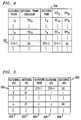
- Translator 215-3 more particularly translates the incoming trunk and trunk subgroup identifiers received from call processor 215-2 into a form that is "understood" by conventional ATM switch controller 215-5. That is, in accord with an aspect of the invention, translator 215-3 translates the identifiers -- 1, and 27-1 -- associated with the incoming trunk into (a) respective predetermined VC and VP identifiers and (b) an incoming port circuit, e.g., port 27-1. Translator 215-3 does this using translation Table 400 shown in FIG. 3. Briefly, Table 400 comprises a plurality of entries in which each entry comprises five fields 411 through 415 containing associated translation data.
- a data entry includes a trunk identifier (Tk) and associated trunk subgroup identifier (TSGi) in fields 411 and 412, respectively, which are translated into a predetermined incoming port (Pi), and VCIi and VPIi contained in fields 413 through 415, respectively.
- Tk trunk identifier
- TSGi trunk subgroup identifier
- Pi predetermined incoming port
- VCIi and VPIi contained in fields 413 through 415 respectively.
- such a translation is done on a one-to-one basis as shown for entry 402, which translator 215-3 accesses to translate the trunk and trunk subgroup identifiers that it receives from call processor 215-2.
- trunk and trunk subgroup identifiers 1 and 27-1 are translated on a one-to-one basis into a VCI of 1 and VPI of 27-1, respectively, as shown by the data inserted in fields 414 and 415 of entry 402.
- the trunk and TSG are also mapped into an identifier identifying an incoming port, i.e., incoming port 27, as shown by the contents of field 413 of entry 402.
- Translator 215-3 uses a similar table to translate the outgoing trunk and outgoing trunk subgroup identifiers (213-1 and 60, respectively) into an outgoing port identifier, VCIo and VPIo. An illustrative example of such a table is shown in FIG. 4, in which entry 501 is used to do the latter translation.)
- Translator 215-3 then supplies the results of the translation to controller 215-5.
- Controller 215-5 activates the virtual circuit connection from input port 1 to output port 213-1 so that speech signals originating at station set S1 and destined for station S2 may be transported over switch fabric 215-4 during the associated virtual connection. Controller 215-5 does this by supplying the input VCI/VPI (1/27) to output VCI/VPI (213-1/60) mapping to input port 27. Port 27, in turn, enters the output VCI/VPI mapping data in a routing map. An example of the latter map is shown in FIG. 5. In particular, each of the switch 215 (220) port circuits stores a routing map 600 in its associated port memory (not shown).
- fields 602 and 603 of each entry in the table respectively contain a virtual channel and virtual path identifiers. That is, the virtual channels associated with a particular virtual path are entered in field 602 of sequential entries in the table, as shown for entry 601 and the following entries.
- a port receives routing information from its associated controller 215-5, it enters the routing information in an appropriate one of the table 600 entries. For example, it is seen that routing information has been entered in fields 604 through 606 of entry 601.
- input port 1 receives an ATM cell bearing a VCI and VPI of 1 and 27, respectively, then it processes the cell in accord with the contents of entry 601 of routing table 600, as will be explained below in detail.
- Controller 215-5 also activates another, but opposite, virtual connection from port 213-1 to port 27 to transport speech or data signals that originate at station S2 and received via switch 220 and destined for station S1. Accordingly, an opposite virtual connection may be so activated when a cell carrying samples of station S2 speech samples (or voice-band data) are received via switch 220. (It is noted that switch 220 performs similar routing functions in response to receipt of the call complete message.)
- CO 25 When CO 25 receives the call complete message, it supplies an alerting tone to telephone line 26 to notify the user thereat that the call connection has been completed and that a ringing signal is being supplied to station S2.
- the user at station S2 answers the call, then he/she may communicate with the station S1 user in which the ensuing speech (or voice-band data) will be transported via ATM network 200. Specifically; first considering speech signals received at CO 25 from station S1, CO 25 digitizes such signals in the manner described above and outputs the result to its associated trunk 1 of TSG 27.
- trunk and TSG respectively correspond to a channel (channel 1) and group of channels (group 27) of a time frame during which CO transmits a digital sample of a station S1 speech signal over path 27-1.
- Echo Canceler 205 receives the digital sample and, in a conventional manner, cancels the sample if it represents an echo of a digital speech sample originating at station S2. If not, then the sample is presented to STM/ATM Terminal Adapter 210.
- TA 210 is arranged to pack samples of voice signals as they are received from STM switch 25 via trunk (channel) 1 of trunk group 27 into an ATM cell.
- TA 210 maintains a predetermined table which it uses to map between trunks and VCIs and between trunk subgroups and VPIs transported over link 211.
- TA 210 in accord with an aspect of the invention, translates the trunk address and trunk group address over which the samples were received into a VCI, VPI and incoming port address.
- such a translation is done at TA 210 (similarly so at TA 225) on a one-to-one basis. Accordingly, TA 210 translates a trunk address of 1 and a TSG address of 27 into a VCI of 1 and VPI of 27, respectively. TA 210 then forms a cell header of five octets including the translated VCI and VPI values and prepends (prefixes) the header to the 48 octet payload to form an ATM cell. TA 210 then supplies the resulting ATM cell to originating port 27-1 of switch 215.
- Port 27-1 responsive to receipt of the cell, checks its associated routing table 600 to determine if routing translation information has been stored therein for the VCI and VPI contained in the received cell. If not, port 27-1 discards the cell. Otherwise, port 27-1 translates the VCI and VPI contained in the cell into an outgoing address. In the instant case, port 27-1 translates the VCI and VPI of 1 and 27, respectively, into an outgoing port address of 213-1, VCI of 213-1 and VPI of 60 based on the contents of entry 601 of table 600 (FIG. 5). Port 27-1 then substitutes the latter VC and VP identifiers for the VCI and VPI identifiers contained in the received cell and presents the result to switch fabric 215-4 for routing, in a conventional manner.
- switch fabric 215-4 routes the cell to port 213-1 via a virtual circuit connection identified by the VC and VP identifiers attached to the routed cell.
- output port 213-1 Upon receipt of the cell from switch fabric 215-4, output port 213-1 stores the cell in a queue (e.g., a First-In, First-Out memory) associated with high-speed transmission path 213.
- a queue e.g., a First-In, First-Out memory
- ATM switch 220 then, using its own table 500, similarly translates the VC and VP identifiers in the received cell into output VC and VP identifiers and then routes the cell via its associated switch fabric and virtual circuit identified as a function of the latter identifiers.
- the switch 220 output port Upon receipt of the cell via the associated switch fabric, the switch 220 output port stores the cell in an associated queue. When the cell is thereafter unloaded from the queue it is transmitted over path 226 connected to TA 225.
- TA 225 in turn, translates the VC and VP identifiers contained in the received cell into trunk and trunk subgroup identifiers, in accord with an aspect of the invention. In accord with above mentioned aspect of the invention, such translation is done on a one-to-one basis.
- TA 225 then unpacks the payload of 48 octets of the received cell and supplies them to the so-called ATM Adaptation Layer (AAL) implemented in TA 225.
- AAL ATM Adaptation Layer
- the AAL (a) buffers the received octets, (b) removes the AAL header, if any, (c) performs AAL functions with respect to the received octets, and (d) then sends each octet in sequence to CO 50 via EC 230 and translated trunk and subgroup of path 52.
- the latter trunk and trunk subgroup may be a time slot of a group of time slots, in which the transmission of octets over path 231-1 occurs during the identified time slot.
- an STM switch may employ in-band MF signaling to communicate signaling information to an IXC.
- ATM network 200 may be readily adapted to receive such information via in-band signaling and then, in accord with an aspect of the invention, present such information to the originating ATM switch. e.g., switch 215, via another signaling network, e.g., the SS7 network.
- the architecture of network 200 does not have to change to interface with a signaling technique different from the signaling technique employed by the SS7 network.
- ATM network 200 may interface with central offices using different signaling techniques to communicate signaling information to a next switch, wherein the next switch may be an ATM switch rather than an STM switch.
- CO 175 When CO 175 has collected the last of the dialed digits and has determined that the call is to be routed via network 200, it selects an idle trunk connecting to network 200 and transmits an off-hook signal thereto over the selected trunk and path 176.
- Signal processor 240 of module 245 monitors the signals received via the selected trunk of port 241 and returns a signal over the trunk to CO 175 if the call can be accepted by TA 255 (referred to as TA 210 in FIG. 1).
- CO 175 begins to transmit the dialed telephone number and caller's ANI via the selected trunk (digital channel of path 176).
- Interface port 241 of module 245 multiplexes the contents (eight bit byte) of each trunk (channel) to a respective signal path 242 extending to an associated EC 244, which then presents the byte to Terminal Adapter (TA) 255.
- TA 255 accumulates such bytes as they are received from the source trunk to form a cell and then presents the cell to an associated input port of switch 215, as described above. However, the input port discards the cell since a virtual circuit connection for the call has not yet been activated.
- the data byte contains signaling information (e.g., dialed digits)
- port 241 extracts the signaling information and sends it to signal processor 240 via path 242.
- Signal processor 240 responsive to data indicative of a MF signal appearing on path 242, collects the data and succeeding such data until it has accumulated the signals indicative of at least the called telephone number.
- Signal processor 240 then, as described above, forms an SS7 IAM message containing, inter alia, (a) the dialed telephone number, (b) ANI identifying the calling station, if acquired (c) identifiers respectively identifying the trunk and associated trunk subgroup over which the calling information was received, (d) a request for an end-to-end connection and (e) the address of switch 215.
- Signal processor 245 then transmits the message via data link 157 and STP 250-4. Switch 215 and then switch 220 process the IAM message in the manner discussed above.
- the switch 220 call processor locates an idle outgoing trunk that may be used to route the call to the destination CO and then creates its own IAM message for transmission via link 155 and STP 250-2 to the network 200 signal transfer point that interfaces with that CO.
- the latter STP in turn, retransmits the message to STP 250-3 for delivery to signal processor 240 of module 235.
- signal processor 240 of module 235 selects the idle trunk to CO 180 (associated with the trunk from switch 250 to TA 225) and sends an off-hook signal thereto via port 241 of module 235 and the selected trunk. If CO 180 can accept the call, then it returns an off-hook signal via the latter trunk.
- Signal processor 240 of module 235 responds to the off-hook by transmitting the called number contained in the received IAM message over the selected trunk to CO 180.
- signal processor 240 of module 235 returns a call complete message to switch 220 via the network 200 SS7 network, in which the latter message contains the trunk and TSG of the trunk selected by the latter signals processor.
- ATM switch 220 processes the call complete message in the manner described above and transmits a call complete message to switch 215, which similarly processes the message in the manner described above.
- switch 215 returns an SS7 call complete message to the originating CO. However, in the instance case, the latter message is sent via signal processor 240 of module 245.
- Signal processor sends an off-hook (wink) signal to CO 175 via the trunk that CO 175 selected to route the station set S3 call to network 200.
- wink an off-hook
- the latter wink signal is a functional equivalent of the SS7 call complete message.
- the station S3 user may begin to communicate with the station S4 user via the virtual connections that are respectively established by switches 215 and 220 as they are needed.
- CO 175 or 180 When either the station set S3 or S4 user terminates the call --"hangs up", then CO 175 or 180, as the case may be, sends an on-hook signal to network 200. Assuming that the on-hook signal is sent by CO 175 over the selected trunk connecting to module 245, then signal processor 240 of module 245, responsive to receipt of the on-hook signal (sent by port 241 of module 245), forms an SS7 network call termination message containing, inter alia, the identity of the latter trunk and its associated TSG and then sends the message to switch 215 via data link 157 and the SS7 network.
- the switch 215 call processor Upon receipt of the termination message, the switch 215 call processor (a) directs the input port associated with the call to clear the entry that it made in its translation Table 600 for the call, (FIG. 5), (b) sets the status of the trunk to idle in the status table (FIG. 2) associated with switch 215 and (c) sends a call termination message to switch 220, in which the latter message identifies the trunk and TSG identifiers that translate to VCI and VPI that are used to route the call from switch 215 to switch 220.
- the switch 220 call processor responds similarly to the receipt of the latter message and sends a call termination message to the destination CO via link 155 and STP 250-2 such that the message is instead delivered to signal processor 240 of module 135 via STP 250-3 and link 156.
- the latter signal processor transmits an on-hook signal to CO 180.
- CO 180 sets the status of the return path of the trunk connecting to module 235 to idle and then waits for the station set S4 user to "hang-up".
- an incoming port of an ATM switch discards a data cell if a virtual circuit connection for the associated call has not been activated.
- such discarding may be done at the Terminal Adapter. e.g., TA 255, 210. etc., at the direction of the call processor of the associated ATM switch. e.g., switch 215.
- TA 255 (210, etc.,) may be arranged so that it receives control instructions from the associated call processor via a communications path connecting the TA to the call processor.
- Such a path may comprise a virtual circuit connection from the call processor through the switch fabric to a control port connection connecting to the TA via path 216.
- the call processor may instruct the TA not to accumulate data received via a particular trunk, i.e., an idle trunk. Thereafter, when the trunk become busy and a virtual circuit has been assigned thereto, then the call processor instructs the TA to begin forming data cells from the data received via the trunk.
- ATM network 200 may thus interface with central offices, or other entities, that use different signaling techniques, as discussed above in connection with in-band signaling.
- a nodal for example, a Private Branch Exchange (PBX)
- PBX Private Branch Exchange
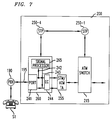
- FIG. 7 there is shown nodal (PBX) 190 connected to network 200 via communications path 195, in which the latter path 195 may be a so-called T1 carrier transmission line.
- the transmission protocol that is used in a T1 carrier system is a 125 microsecond frame composed of 24 channels in which each channel comprises eight bits.
- a telephone call is routed via the T1 carrier system via a channel assigned to the call.
- PBX 190 routes long distance calls originating at PBX 190 to network (or IXC ) 200 by assigning each such call to a respective one of the aforementioned channels for the duration of the call.
- a channel is either busy (off-hook) or idle (on-hook).
- Signaling information indicative of whether a channel is off-hook or on-hook is transmitted over the channel by "borrowing" one bit (i.e., the least significant bit) from the channel every sixth and twelfth frames, in which the latter frames correspond to A and B signaling messages.
- Each signaling bit of each of the 24 channels relates only to the associated channel.
- the borrowed signaling bit of a channel is available more than 1300 times each second, which suffices to transmit supervisory signals (e.g., off-hook and on-hook) and other signaling information.
- PBX 190 responsive to the off-hook accumulates the dialed digits and then determines that the call is to be routed over path 195, and therefor, assigns the call to an idle channel of path 195.
- T1 carrier equipment (not shown) located and interfacing with PBX 190 changes the state of the signaling bit of the assigned channel in the sixth and twelfth frames to a one.
- PBX 190 then outputs each of the dialed digits to path 195 via the latter equipment and assigned channel.
- Interface port circuit 241 of module 260 multiplexes the contents (eight bit byte) of each of the twenty four channels to respective signaling paths 242 extending to an associated EC 244, which then sends the signaling bits to a respective input port of switch 215 and to the associated signal processor 265.
- Signal processor 265 of module 260 monitors the contents of the aforementioned assigned channel and responds upon receipt of signaling information via the borrowed bits. That is, signal processor 240 associates the assigned channel with a trunk identifier and associates the 24 channels with a TSG identifier. Signal processor 240 then begins to accumulate the digits that will be transmitted via succeeding ones of the assigned channel.
- signal processor When signal processor receives the last of the dialed digits it then forms an IAM message addressed to switch 215, in which the message also contains, inter alia (a) the trunk and TSG identifiers that have been associated with the assigned channel, (b) calling station ANI and (c)dialed digits.
- Signal processor 240 of module 260 then transmits the message to switch 215 via STP 250-4 and network 200 SS7 network. Switch 215 similarly responds to the receipt of the message in the manner discussed above.
- Signal processor 240 performs an opposite function with respect to signaling information (e.g., call complete message, termination message, etc.,) that it receives from switch 215. For example, responsive to receipt of a call complete message, signal processor 240 of module 260 converts the messages into the T1 carrier protocol and then transmits the message to nodal 190 one bit at a time using the borrowed signaling bit of a return channel assigned to the call.
- signaling information e.g., call complete message, termination message, etc.
- one or more of the analog type telephone stations sets shown in the FIGs. may be ISDN type station sets.
- a CO switch may be an ATM based switch and one or more IXC switches may be a STM based switch.
Landscapes
- Engineering & Computer Science (AREA)
- Computer Networks & Wireless Communication (AREA)
- Signal Processing (AREA)
- Data Exchanges In Wide-Area Networks (AREA)
- Exchange Systems With Centralized Control (AREA)
- Telephonic Communication Services (AREA)
Applications Claiming Priority (2)
| Application Number | Priority Date | Filing Date | Title |
|---|---|---|---|
| US08/360,897 US5568475A (en) | 1994-12-21 | 1994-12-21 | ATM network architecture employing an out-of-band signaling network |
| US360897 | 1994-12-21 |
Publications (2)
| Publication Number | Publication Date |
|---|---|
| EP0719068A2 true EP0719068A2 (fr) | 1996-06-26 |
| EP0719068A3 EP0719068A3 (fr) | 1998-12-16 |
Family
ID=23419844
Family Applications (1)
| Application Number | Title | Priority Date | Filing Date |
|---|---|---|---|
| EP95308753A Withdrawn EP0719068A3 (fr) | 1994-12-21 | 1995-12-05 | Architecture de réseau ATM avec réseau de signalisation hors bande |
Country Status (4)
| Country | Link |
|---|---|
| US (1) | US5568475A (fr) |
| EP (1) | EP0719068A3 (fr) |
| JP (1) | JPH08242288A (fr) |
| CA (1) | CA2161473C (fr) |
Cited By (8)
| Publication number | Priority date | Publication date | Assignee | Title |
|---|---|---|---|---|
| WO1998035527A1 (fr) * | 1997-02-10 | 1998-08-13 | At & T Corp. | Procede pour interfacer un reseau de telephonie et un reseau mta aux fins d'etablissement de communications vocales |
| EP0931398A4 (fr) * | 1996-11-22 | 1999-12-29 | Sprint Communications Co | Systeme de telecommunications en tandem pour trafic commande par circuits |
| EP0920234A3 (fr) * | 1997-11-19 | 2004-01-21 | Nortel Networks Limited | Système de téléphonie et procédé de signalisation |
| EP1009194A3 (fr) * | 1998-12-07 | 2004-02-04 | Nortel Networks Limited | Centrale téléphonique pour voix en mode hybride ATM et TDM et procédé pour compléter des appels entre des commutateurs utilisant cette centrale |
| EP1152635A3 (fr) * | 2000-03-11 | 2004-06-02 | Lucent Technologies Inc. | Appareil et méthode pour découverte automatique d' identité de porte dans des systèmes hétérogènes |
| EP0951197B1 (fr) * | 1998-04-16 | 2005-06-15 | Deutsche Telekom AG | Dispositif et procédé pour transmettre des reportages vocaux et video enregistrés |
| US6931008B2 (en) | 1996-11-22 | 2005-08-16 | Sprint Communications Company L.P. | Broadband telecommunications system |
| EP0953240A4 (fr) * | 1996-11-22 | 2005-11-16 | Sprint Communications Co | Systeme de telecommunication |
Families Citing this family (113)
| Publication number | Priority date | Publication date | Assignee | Title |
|---|---|---|---|---|
| US6470009B1 (en) | 1990-11-22 | 2002-10-22 | Sprint Communications Company L.P. | Broadband telecommunications system interface |
| US6430195B1 (en) * | 1994-05-05 | 2002-08-06 | Sprint Communications Company L.P. | Broadband telecommunications system interface |
| US5920562A (en) | 1996-11-22 | 1999-07-06 | Sprint Communications Co. L.P. | Systems and methods for providing enhanced services for telecommunication call |
| US6314103B1 (en) | 1994-05-05 | 2001-11-06 | Sprint Communications Company, L.P. | System and method for allocating bandwidth for a call |
| US6631133B1 (en) | 1994-05-05 | 2003-10-07 | Sprint Communications Company L.P. | Broadband telecommunications system |
| RU2138919C1 (ru) | 1994-05-05 | 1999-09-27 | Спринт Комьюникейшнз Компани Л.П. | Способ, система и устройство управления телефонной связью |
| US6633561B2 (en) | 1994-05-05 | 2003-10-14 | Sprint Communications Company, L.P. | Method, system and apparatus for telecommunications control |
| US5926482A (en) | 1994-05-05 | 1999-07-20 | Sprint Communications Co. L.P. | Telecommunications apparatus, system, and method with an enhanced signal transfer point |
| US6172977B1 (en) | 1994-05-05 | 2001-01-09 | Sprint Communications Company, L. P. | ATM direct access line system |
| US6023474A (en) * | 1996-11-22 | 2000-02-08 | Sprint Communications C.O.L.P. | Broadband telecommunications system interface |
| US6181703B1 (en) * | 1995-09-08 | 2001-01-30 | Sprint Communications Company L. P. | System for managing telecommunications |
| US5991301A (en) | 1994-05-05 | 1999-11-23 | Sprint Communications Co. L.P. | Broadband telecommunications system |
| US5642396A (en) * | 1995-05-10 | 1997-06-24 | Mci Corporation | Release cause table for failed calls in SS7/ISDN Networks |
| US5787086A (en) * | 1995-07-19 | 1998-07-28 | Fujitsu Network Communications, Inc. | Method and apparatus for emulating a circuit connection in a cell based communications network |
| DE19534754C1 (de) * | 1995-09-19 | 1996-11-07 | Siemens Ag | Verfahren zum Vermitteln von Schmalband-Teil-Leitungsbündeln zwischen Kommunikationssystemen über ein ATM-Kommunikationsnetz |
| US6081529A (en) * | 1995-11-22 | 2000-06-27 | Sprint Communications Company, L. P. | ATM transport system |
| AU2257097A (en) * | 1996-02-02 | 1997-08-22 | Sprint Communications Company, L.P. | Atm gateway system |
| US5826014A (en) | 1996-02-06 | 1998-10-20 | Network Engineering Software | Firewall system for protecting network elements connected to a public network |
| US5898830A (en) | 1996-10-17 | 1999-04-27 | Network Engineering Software | Firewall providing enhanced network security and user transparency |
| US5870550A (en) | 1996-02-26 | 1999-02-09 | Network Engineering Software | Web server employing multi-homed, moldular framework |
| US8117298B1 (en) | 1996-02-26 | 2012-02-14 | Graphon Corporation | Multi-homed web server |
| JPH09284344A (ja) * | 1996-04-11 | 1997-10-31 | Fujitsu Ltd | Atm/stm混在ネットワークシステム |
| US5940393A (en) | 1996-05-28 | 1999-08-17 | Sprint Communications Co. L.P. | Telecommunications system with a connection processing system |
| US6128301A (en) * | 1996-11-07 | 2000-10-03 | Nortel Networks Limited | Architecture for distribution of voice over ATM networks |
| US6667982B2 (en) * | 1996-11-22 | 2003-12-23 | Sprint Communications Company, L.P. | Broadband telecommunications system interface |
| US6002689A (en) | 1996-11-22 | 1999-12-14 | Sprint Communications Co. L.P. | System and method for interfacing a local communication device |
| KR100459306B1 (ko) | 1996-11-22 | 2004-12-03 | 스프린트 커뮤니케이숀스 컴파니 리미티드 파트너쉽 | 원격통신 네트워크에서 호출을 전송하기 위한 시스템 및 방법 |
| SE511581C2 (sv) * | 1996-12-20 | 1999-10-25 | Ericsson Telefon Ab L M | System och förfarande för ATM-koppling av en telefonförbindelse |
| US6731625B1 (en) * | 1997-02-10 | 2004-05-04 | Mci Communications Corporation | System, method and article of manufacture for a call back architecture in a hybrid network with support for internet telephony |
| US6067299A (en) | 1997-04-16 | 2000-05-23 | Sprint Communications Company, L.P. | Communications system for providing ATM connections and echo cancellation |
| US5953316A (en) * | 1997-04-17 | 1999-09-14 | The Trustees Of Columbia University In The City Of New York | Reservation method and system for asynchronous transfer mode communications |
| JP2002513535A (ja) * | 1997-04-25 | 2002-05-08 | ノーテル・ネットワークス・リミテッド | Atmアドレス決定のための方法および装置 |
| US6243383B1 (en) * | 1997-12-01 | 2001-06-05 | Nortel Networks Limited | Method and apparatus for ATM address resolution |
| US6137800A (en) | 1997-05-09 | 2000-10-24 | Sprint Communications Company, L. P. | System and method for connecting a call |
| US6704327B1 (en) | 1997-05-09 | 2004-03-09 | Sprint Communications Company, L.P. | System and method for connecting a call |
| US6178170B1 (en) | 1997-05-13 | 2001-01-23 | Sprint Communications Company, L. P. | System and method for transporting a call |
| KR100290999B1 (ko) | 1997-06-11 | 2001-07-12 | 윤종용 | 음성 통화서비스가 가능한 에이티엠 스위치장치 및 방법 |
| GB2328111A (en) * | 1997-08-08 | 1999-02-10 | Northern Telecom Ltd | ATM/narrowband interworking |
| US6097726A (en) * | 1997-09-18 | 2000-08-01 | Ascend Communications, Inc. | Virtual path merging in a multipoint-to-point network tunneling protocol |
| US6157657A (en) | 1997-10-02 | 2000-12-05 | Alcatel Usa Sourcing, L.P. | System and method for data bus interface |
| JP3663040B2 (ja) * | 1997-10-17 | 2005-06-22 | 富士通株式会社 | パス合流型通信装置、方法、および記憶媒体 |
| US6697353B2 (en) | 1997-12-31 | 2004-02-24 | At&T Corp. | Voice-over-ATM switch architecture allowing congestion-dependent transport of silence cells |
| US6324174B2 (en) | 1997-12-31 | 2001-11-27 | At&T Corporation | Telecommunications network architecture for transporting fax, voice and data via an ATM switch including a STM to ATM terminal adapter |
| US6563918B1 (en) | 1998-02-20 | 2003-05-13 | Sprint Communications Company, LP | Telecommunications system architecture for connecting a call |
| US6470019B1 (en) | 1998-02-20 | 2002-10-22 | Sprint Communications Company L.P. | System and method for treating a call for call processing |
| US6483837B1 (en) | 1998-02-20 | 2002-11-19 | Sprint Communications Company L.P. | System and method for connecting a call with an interworking system |
| US6546022B1 (en) | 1998-04-03 | 2003-04-08 | Sprint Communications Company, L.P. | Method, system and apparatus for processing information in a telecommunications system |
| US6160871A (en) | 1998-04-10 | 2000-12-12 | Sprint Communications Company, L.P. | Communications test system |
| US7227837B1 (en) | 1998-04-30 | 2007-06-05 | At&T Labs, Inc. | Fault tolerant virtual tandem switch |
| US6169735B1 (en) * | 1998-04-30 | 2001-01-02 | Sbc Technology Resources, Inc. | ATM-based distributed virtual tandem switching system |
| US6195714B1 (en) | 1998-06-08 | 2001-02-27 | Nortel Networks Limited | System for transferring STM calls through ATM network by converting the STM calls to ATM and vice versa at the edge nodes of ATM network |
| US6535507B1 (en) | 1998-07-06 | 2003-03-18 | Nortel Networks Limited | Method of address resolution for the transfer of synchronous transfer mode calls through multiple domains in a broadband data network |
| DE19843626B4 (de) | 1998-09-23 | 2005-02-03 | Siemens Ag | Verfahren zum Ermitteln einer Netzzugangsadresse |
| US6282194B1 (en) | 1998-09-23 | 2001-08-28 | Nortel Networks Limited | Transit trunk subnetwork system |
| US6658022B1 (en) * | 1998-09-30 | 2003-12-02 | Cisco Technology, Inc. | Signaling protocol for controlling voice calls in a packet switching network |
| US6757285B1 (en) | 1998-12-17 | 2004-06-29 | Nortel Networks Limited | Method and apparatus for completing telephone calls between subnetworks |
| US6442169B1 (en) | 1998-11-20 | 2002-08-27 | Level 3 Communications, Inc. | System and method for bypassing data from egress facilities |
| US6614781B1 (en) | 1998-11-20 | 2003-09-02 | Level 3 Communications, Inc. | Voice over data telecommunications network architecture |
| US6141342A (en) * | 1998-12-02 | 2000-10-31 | Nortel Networks Corporation | Apparatus and method for completing inter-switch calls using large trunk groups |
| US6714217B2 (en) | 1998-12-18 | 2004-03-30 | Sprint Communication Company, L.P. | System and method for providing a graphical user interface to, for building, and/or for monitoring a telecommunication network |
| US6327267B1 (en) * | 1998-12-21 | 2001-12-04 | Ericssoninc | Systems and methods for routing a message through a signaling network associated with a public switched telephone network (PSTN), including a method for performing global title routing on an internet protocol (IP) address |
| US6982950B1 (en) * | 1998-12-22 | 2006-01-03 | Sprint Communications Company L.P. | System and method for connecting a call in a tandem architecture |
| US6724765B1 (en) | 1998-12-22 | 2004-04-20 | Sprint Communications Company, L.P. | Telecommunication call processing and connection system architecture |
| US6496512B1 (en) * | 1998-12-22 | 2002-12-17 | Sprint Communications Company L.P. | System and method for connecting calls with a time division multiplex matrix |
| US6888833B1 (en) | 1998-12-22 | 2005-05-03 | Sprint Communications Company L.P. | System and method for processing call signaling |
| US6785282B1 (en) * | 1998-12-22 | 2004-08-31 | Sprint Communications Company L.P. | System and method for connecting a call with a gateway system |
| CA2290304C (fr) * | 1998-12-23 | 2009-03-17 | Nortel Networks Corporation | Jonction directe mta-central local |
| RU2140132C1 (ru) * | 1999-01-13 | 1999-10-20 | Валов Сергей Геннадьевич | Способ двухтактной ассоциативной маршрутизации |
| US6532229B1 (en) * | 1999-01-15 | 2003-03-11 | Brian Weatherred Johnson | Low cost link aggregation method and system |
| US7079530B1 (en) | 1999-02-25 | 2006-07-18 | Sprint Communications Company L.P. | System and method for caching toll free number information |
| AU4006400A (en) * | 1999-03-06 | 2000-09-28 | Dti Networks, Inc. | System and method for administrating call and call feature set-up in a telecommunications network |
| US7103068B1 (en) | 1999-05-04 | 2006-09-05 | Sprint Communication Company L.P. | System and method for configuring bandwidth transmission rates for call connections |
| US6614791B1 (en) * | 1999-05-11 | 2003-09-02 | Nortel Networks Limited | System, device, and method for supporting virtual private networks |
| US6895088B1 (en) | 1999-05-21 | 2005-05-17 | Sprint Communications Company L.P. | System and method for controlling a call processing system |
| FR2795896B1 (fr) * | 1999-07-01 | 2001-09-14 | Cit Alcatel | Procede de controle de l'exploitation d'un acces, a signalisation dynamique payante, relatif a une artere reliant des autocommutateurs |
| US7263092B2 (en) * | 1999-07-14 | 2007-08-28 | Ericsson Inc. | Combining narrowband applications with broadband transport |
| US7457280B2 (en) * | 1999-07-14 | 2008-11-25 | Telefonaktiebolaget L M Ericsson (Publ) | Combining narrowband applications with broadband transport |
| US7212519B2 (en) * | 1999-07-14 | 2007-05-01 | Ericsson Inc. | Combining narrowband applications with broadband transport |
| US6980544B2 (en) * | 1999-07-14 | 2005-12-27 | Telefonaktiebolaget Lm Ericsson (Publ) | Combining narrowband applications with broadband transport |
| US7075920B2 (en) * | 1999-07-14 | 2006-07-11 | Telefonaktiebolaget Lm Ericsson (Publ) | Combining narrowband applications with broadband transport |
| US6914911B2 (en) | 1999-07-14 | 2005-07-05 | Telefonaktiebolaget Lm Ericsson | Combining narrowband applications with broadband transport |
| US7212518B2 (en) | 1999-07-14 | 2007-05-01 | Ericsson Inc. | Combining narrowband applications with broadband transport |
| US6775266B1 (en) * | 1999-07-14 | 2004-08-10 | Telefonaktiebolaget Lm Ericsson | Narrowband applications using ATM switching and transport |
| US20020003794A1 (en) * | 1999-07-14 | 2002-01-10 | Magnus Hallenstal | Combining narrowband applications with broadband transport |
| US7009982B2 (en) * | 1999-07-14 | 2006-03-07 | Ericsson Inc. | Combining narrowband applications with broadband transport |
| US6744768B2 (en) | 1999-07-14 | 2004-06-01 | Telefonaktiebolaget Lm Ericsson | Combining narrowband applications with broadband transport |
| JP3543698B2 (ja) * | 1999-09-29 | 2004-07-14 | 日本電気株式会社 | 伝送方法およびネットワーク・システム |
| US6553111B1 (en) | 1999-10-13 | 2003-04-22 | 3C Ltd. | Synchronous digital hierarchy switch system |
| US6816497B1 (en) | 1999-11-05 | 2004-11-09 | Sprint Communications Company, L.P. | System and method for processing a call |
| US6704314B1 (en) * | 1999-12-15 | 2004-03-09 | Sprint Communications Company, L.P. | Method and apparatus to control cell substitution |
| US6388991B1 (en) | 1999-12-23 | 2002-05-14 | West Communications International Inc. | Method and system for interfacing between circuit network switches and ATM edge switches |
| US6785377B1 (en) | 2000-01-19 | 2004-08-31 | Sprint Communications Company L.P. | Data calls using both constant bit rate and variable bit rate connections |
| US6343065B1 (en) * | 2000-01-20 | 2002-01-29 | Sbc Technology Resources, Inc. | System and method of measurement-based adaptive caching of virtual connections |
| AU2001231039A1 (en) * | 2000-01-20 | 2001-07-31 | Mci Worldcom, Inc. | Intelligent network and method for providing voice telephony over atm and alias addressing |
| KR100682736B1 (ko) | 2000-01-28 | 2007-02-15 | 엠 디솔루션 코포레이션 | 구성가능한 확산 스펙트럼 통신 장치를 위한 구성 발생 방법 |
| AU2001253043A1 (en) * | 2000-03-31 | 2001-10-15 | Coppercom, Inc. | Telecommunications system and methods |
| US6785725B1 (en) * | 2000-04-28 | 2004-08-31 | Ciena Corporation | Signaling address resolution in a communication network |
| US7324635B2 (en) | 2000-05-04 | 2008-01-29 | Telemaze Llc | Branch calling and caller ID based call routing telephone features |
| GB2376157B (en) * | 2001-01-29 | 2003-12-10 | Morphics Tech Inc | A method of generating a configuration for a configurable spread spectrum communication device |
| US6925082B2 (en) * | 2001-02-15 | 2005-08-02 | Lucent Technologies Inc. | ATM packet access gateway |
| US7177305B2 (en) * | 2002-04-25 | 2007-02-13 | Lucent Technologies Inc. | Inter-switch telecommunications system for interconnecting packet-capable Time Division Multiplexed switches with non-packet-capable Time Division Multiplexed switches via an asynchronous transfer mode network |
| US20030227904A1 (en) * | 2002-06-06 | 2003-12-11 | Adc Telecommunications Israel Ltd. | Associating virtual channel identifier to a user phone number at an access node in a VoATM telecommunication system |
| US9131040B2 (en) | 2002-06-20 | 2015-09-08 | Numerex Corp. | Alarm system for use over satellite broadband |
| US9054893B2 (en) | 2002-06-20 | 2015-06-09 | Numerex Corp. | Alarm system IP network with PSTN output |
| US8509391B2 (en) | 2002-06-20 | 2013-08-13 | Numerex Corp. | Wireless VoIP network for security system monitoring |
| US7835266B2 (en) * | 2002-10-29 | 2010-11-16 | Fujitsu Limited | Node apparatus and maintenance and operation supporting device |
| ATE555575T1 (de) * | 2006-03-06 | 2012-05-15 | Nokia Corp | Aggregation von vci-routing-tabellen |
| EP2695370A4 (fr) | 2011-04-04 | 2015-03-11 | Numerex Corp | Emission de données et de signaux audio d'événement de système d'alarme |
| CA2831996C (fr) | 2011-04-04 | 2015-01-06 | Numerex Corp. | Distribution de donnees et de signaux audio d'evenement de systeme d'alarme sur des reseaux hybrides |
| US8705716B2 (en) | 2011-04-27 | 2014-04-22 | Numerex Corp. | Interactive control of alarm systems by telephone interface using an intermediate gateway |
| EP2915150A2 (fr) | 2012-09-28 | 2015-09-09 | Numerex Corp. | Procédé et système de communication vocale bidirectionnelle non fixe pour un système d'alarme |
| US9183730B1 (en) | 2014-07-16 | 2015-11-10 | Numerex Corp. | Method and system for mitigating invasion risk associated with stranger interactions in a security system environment |
| US9449497B2 (en) | 2014-10-24 | 2016-09-20 | Numerex Corp. | Method and system for detecting alarm system tampering |
Family Cites Families (11)
| Publication number | Priority date | Publication date | Assignee | Title |
|---|---|---|---|---|
| US5086461A (en) * | 1990-01-23 | 1992-02-04 | Network Access Corporation | Apparatus and method for providing existing 1ESS and 1AESS telephone switching equipment with the capability of using the SS7 protocol |
| JP2878805B2 (ja) * | 1990-08-20 | 1999-04-05 | 株式会社東芝 | Atm交換機 |
| FR2670974A1 (fr) * | 1990-12-20 | 1992-06-26 | Lmt Radio Professionelle | Dispositif pour la transmission par un reseau asynchrone, notamment un reseau de type atm, de donnees de signalisation voie par voie regroupees dans une multitrame emise de maniere synchrone en mode hors bande. |
| JPH05122391A (ja) * | 1991-05-08 | 1993-05-18 | Fujitsu Ltd | 情報収集サービス方式 |
| US5282244A (en) * | 1991-06-24 | 1994-01-25 | At&T Bell Laboratories | Virtual signaling network method |
| JPH05122240A (ja) * | 1991-10-24 | 1993-05-18 | Fujitsu Ltd | Atm伝送におけるvpi,vci割り当て方式 |
| US5400339A (en) * | 1992-03-18 | 1995-03-21 | Fujitsu Limited | Bidirectional communication apparatus for reducing transmitted data |
| US5384840A (en) * | 1992-10-09 | 1995-01-24 | At&T Corp. | Telecommunications system SS7 signaling interface with signal transfer capability |
| US5345445A (en) * | 1992-11-06 | 1994-09-06 | At&T Bell Laboratories | Establishing telecommunications calls in a broadband network |
| US5345558A (en) * | 1992-11-23 | 1994-09-06 | Synoptics Communications, Inc. | Topology independent broadcast of cells in an ATM network or the like |
| US5422882A (en) * | 1993-12-20 | 1995-06-06 | At&T Corp. | ATM networks for narrow band communications |
-
1994
- 1994-12-21 US US08/360,897 patent/US5568475A/en not_active Expired - Lifetime
-
1995
- 1995-10-26 CA CA002161473A patent/CA2161473C/fr not_active Expired - Fee Related
- 1995-12-05 EP EP95308753A patent/EP0719068A3/fr not_active Withdrawn
- 1995-12-20 JP JP33157595A patent/JPH08242288A/ja active Pending
Cited By (9)
| Publication number | Priority date | Publication date | Assignee | Title |
|---|---|---|---|---|
| EP0931398A4 (fr) * | 1996-11-22 | 1999-12-29 | Sprint Communications Co | Systeme de telecommunications en tandem pour trafic commande par circuits |
| US6931008B2 (en) | 1996-11-22 | 2005-08-16 | Sprint Communications Company L.P. | Broadband telecommunications system |
| EP0953240A4 (fr) * | 1996-11-22 | 2005-11-16 | Sprint Communications Co | Systeme de telecommunication |
| WO1998035527A1 (fr) * | 1997-02-10 | 1998-08-13 | At & T Corp. | Procede pour interfacer un reseau de telephonie et un reseau mta aux fins d'etablissement de communications vocales |
| EP0920234A3 (fr) * | 1997-11-19 | 2004-01-21 | Nortel Networks Limited | Système de téléphonie et procédé de signalisation |
| EP0951197B1 (fr) * | 1998-04-16 | 2005-06-15 | Deutsche Telekom AG | Dispositif et procédé pour transmettre des reportages vocaux et video enregistrés |
| EP1009194A3 (fr) * | 1998-12-07 | 2004-02-04 | Nortel Networks Limited | Centrale téléphonique pour voix en mode hybride ATM et TDM et procédé pour compléter des appels entre des commutateurs utilisant cette centrale |
| US6930998B1 (en) | 1998-12-07 | 2005-08-16 | Nortel Networks Limited | Hybrid TDM and ATM voice switching central office and method of completing inter-office calls using same |
| EP1152635A3 (fr) * | 2000-03-11 | 2004-06-02 | Lucent Technologies Inc. | Appareil et méthode pour découverte automatique d' identité de porte dans des systèmes hétérogènes |
Also Published As
| Publication number | Publication date |
|---|---|
| JPH08242288A (ja) | 1996-09-17 |
| US5568475A (en) | 1996-10-22 |
| EP0719068A3 (fr) | 1998-12-16 |
| CA2161473A1 (fr) | 1996-06-22 |
| CA2161473C (fr) | 2001-04-10 |
Similar Documents
| Publication | Publication Date | Title |
|---|---|---|
| US5568475A (en) | ATM network architecture employing an out-of-band signaling network | |
| US5483527A (en) | Terminal adapter for interfacing an ATM network with a STM network | |
| US6324179B1 (en) | ATM network arranged to interface with STM in-band signaling | |
| US6081525A (en) | Broadband telecommunications system | |
| US6389130B1 (en) | Public switched telephone network call routing using dyamic asynchronous mode transfer bearer voice trunking | |
| US5940393A (en) | Telecommunications system with a connection processing system | |
| US6449280B1 (en) | Broadband telecommunications system | |
| KR100317863B1 (ko) | 광대역통신망을위한시그널링시스템 | |
| CA2271763C (fr) | Systeme de telecommunications en tandem pour trafic commande par circuits | |
| US6483842B1 (en) | Multimedia switching system | |
| US20070263644A1 (en) | Gateway system to interface different communication networks | |
| US6496508B1 (en) | Communication system architecture and method of establishing a communication connection therein | |
| US6501759B1 (en) | Broadband telecommunications system | |
| US7327728B2 (en) | Broadband telecommunications system | |
| JPH11136291A (ja) | 音声インターワーク機能を有するセル伝送装置 | |
| CA2379437A1 (fr) | Communications utilisant des reseaux hybrides a commutation de circuits et a commutation de paquets | |
| KR100222223B1 (ko) | Atm 망을 통해 접속부를 결합시키는 방법 및 시스템 | |
| AU670662B2 (en) | A telecommunications system and a method of transmitting data in a telecommunications system | |
| US7006493B1 (en) | Virtual voice port configured to connect a switched voice call to a permanent voice call | |
| Park et al. | An implementation of voice message connection control for PSTN subscribers in ATM switching system | |
| WO2001075547A2 (fr) | Commutateur de concordance de services multiples utilisant une ligne support a mode de transfert asynchrone dynamique | |
| Eng | ATM Objectives and Requirements For Next-Generation Networks | |
| WO2001076215A1 (fr) | Commutateur evolutif de la classe multiplex et son application a l'acheminement d'appels dans un reseau telephonique publique commute intra-domaine |
Legal Events
| Date | Code | Title | Description |
|---|---|---|---|
| PUAI | Public reference made under article 153(3) epc to a published international application that has entered the european phase |
Free format text: ORIGINAL CODE: 0009012 |
|
| AK | Designated contracting states |
Kind code of ref document: A2 Designated state(s): DE ES FR GB IT NL SE |
|
| PUAL | Search report despatched |
Free format text: ORIGINAL CODE: 0009013 |
|
| AK | Designated contracting states |
Kind code of ref document: A3 Designated state(s): DE ES FR GB IT NL SE |
|
| 17P | Request for examination filed |
Effective date: 19990604 |
|
| 17Q | First examination report despatched |
Effective date: 20030904 |
|
| STAA | Information on the status of an ep patent application or granted ep patent |
Free format text: STATUS: THE APPLICATION IS DEEMED TO BE WITHDRAWN |
|
| 18D | Application deemed to be withdrawn |
Effective date: 20100701 |