EP0720107A1 - Wörterbuch-Wiederauffindungsapparat - Google Patents
Wörterbuch-Wiederauffindungsapparat Download PDFInfo
- Publication number
- EP0720107A1 EP0720107A1 EP95120459A EP95120459A EP0720107A1 EP 0720107 A1 EP0720107 A1 EP 0720107A1 EP 95120459 A EP95120459 A EP 95120459A EP 95120459 A EP95120459 A EP 95120459A EP 0720107 A1 EP0720107 A1 EP 0720107A1
- Authority
- EP
- European Patent Office
- Prior art keywords
- character train
- index
- heading
- character
- differential
- Prior art date
- Legal status (The legal status is an assumption and is not a legal conclusion. Google has not performed a legal analysis and makes no representation as to the accuracy of the status listed.)
- Granted
Links
Images





Classifications
-
- G—PHYSICS
- G06—COMPUTING OR CALCULATING; COUNTING
- G06F—ELECTRIC DIGITAL DATA PROCESSING
- G06F16/00—Information retrieval; Database structures therefor; File system structures therefor
- G06F16/90—Details of database functions independent of the retrieved data types
- G06F16/901—Indexing; Data structures therefor; Storage structures
- G06F16/9017—Indexing; Data structures therefor; Storage structures using directory or table look-up
Definitions
- the present invention relates to dictionary retrieval apparatuses, and more particularly, to a dictionary retrieval apparatus used in devices incorporating a language processing function such as a word processor.
- An electronic dictionary generally requires a retrieval index of great capacity corresponding to the number of items in the dictionary. Since the heading index has different length of the character train for respective heading, a variable length index structure is often employed. Such a variable length index structure is disadvantageous in that the access to the required index is time consuming. Furthermore, size information to access the preceding and succeeding indexes is required, which will further increase the overall capacity. This will be described hereinafter.
- Figs. 11A and 11B show a general structure of a conventional variable length heading index.
- the variable length heading index includes a first-3-character index 200 and a heading main index 300.
- Index 200 is constituted of an offset 20a corresponding to main index 300 (position from the start of the main index) of each of a plurality of headings extracted from the dictionary for every change in the first three characters of all the headings.
- Index 300 includes the list of all the headings arranged in the order in the dictionary such as in an alphabetical order. For the sake of simplification, only the heading portion is shown in the drawing.
- Index 300 is formed of an item 301 including an item size 30a for each heading, a character train 30b from the fourth character onward of the character train of a heading, and a back-scroll item size 30c.
- Fourth character and et seq. character train 30b is data of a variable length since the length of the character train of respective headings is variable.
- the size of each item 301 must be provided in advance as item size 30a and back-scroll item size 30c therein in order to scroll up/down each item 301 in index 300.
- Fig. 11B shows a specific structure of indexes 200 and 300 of Fig. 11A.
- the time required for access can be shortened by employing an index structure of a fixed length for index 300 by means of providing the variable length data portion of each heading outside main index 300.
- extra information will be required to access that variable length data portion, resulting in an amount of capacity greater than that of the variable length index structure. This will be described hereinafter.
- Figs. 12A and 12B show a heading index structure in which the conventional heading main index includes only pointer data of a fixed length.
- This index includes a first-3-character index 400, a heading main index 500, and a character train buffer 600.
- Index 400 includes an offset 40a with respect to main index 500 for each of a plurality of headings derived from the dictionary for every change in the first three characters of the heading.
- Data corresponding to the fourth character and et seq. heading character train 30b of Fig. 11A for each heading with a delimiter code ( ⁇ 0) is stored in character train buffer 600.
- Index 500 includes an item 501 for each heading.
- Item 501 includes a pointer 50b indicating the character train of the fourth character and onward of a heading in buffer 600 for each corresponding heading.
- Index 500 includes only pointer data 50b of a fixed length for each heading to solve the problem of a variable structure which is one disadvantage of the index structure of Figs. 11A and 11B.
- a specific example of an index structure of Fig. 12A is shown in Fig. 12B.
- Figs. 12A and 12B can have the heading managed by a serial number, only 2 bits is required for offset 40a of heading main index 500 for a dictionary that has a capacity of not more than 64K of heading terms. Furthermore, the access time can be shortened since the scroll of main index 500 can be carried out by imcrementing/decrementing (increment of 1/decrement of 1) of the pointer. However, this structure will still have a great memory capacity due to main index 500 and character train buffer 600 in contrast to that of a variable length structure.
- Japanese Patent Laying-Open Nos. 61-285573 and 3-127254 discloses a technique of compressing a partial character train excluding the first N characters common to those of an adjacent heading for respective headings.
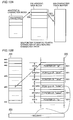
- Fig. 13 schematically shows an index structure in which a derivative retrieval function is supplemented to a conventional heading retrieval function.
- An index as shown in Fig. 13 is prepared when a derivative retrieval function to allow retrieval from a conjugation/inflection of a heading is additionally provided to a heading retrieval function.
- index data of a structure similar to that of a heading retrieval index is prepared for a derivative heading with respect to each derivative. This is added to the original index data for heading retrieval with no sharing of the index data.
- the capacity of the entire index data when a derivative retrieval function is added is AZ + BZ
- AZ is the capacity of the original heading index data (the total capacity of index 601 of a lower order, heading main index 602, and heading character train buffer 603)
- BZ is the capacity of the additional derivative index data (index 701 of a lower order, derivative index 702, and derivative character train buffer 703).
- An object of the present invention is to provide a dictionary retrieval apparatus that can suppress increase of the capacity of a memory occupied by an index unit while effecting high speed dictionary retrieval using the index unit.
- Another object of the present invention is to provide a dictionary retrieval apparatus that can suppress increase in capacity of a memory occupied by an index unit employed for dictionary retrieval in a retrieval function extension due to supplement of a retrieval dictionary.
- a dictionary retrieval apparatus includes an index unit for retrieving dictionary data in which at least a plurality of headings are registered in its dictionary order. A specified heading is retrieved from the dictionary data via the index unit, and a result thereof is output.
- the index unit includes a character train buffer, a main index and a subindex.
- a differential character train which is a partial character train that does not match the character train of a heading registered right before a certain heading in the dictionary data of that character train is stored in the character train buffer.
- the differential character train is connected to the end of relevant character train without overlapping any partial character train in the existing character train already stored in the character train buffer.
- the main index includes an item of a fixed length in the dictionary order corresponding to each of the plurality of headings in the dictionary data.
- Each item includes matching length information indicating the length of a partial character train identical to the character train of a heading registered right before a certain heading in the dictionary data of the character train of the corresponding heading, differential length information indicating the length of the differential character train, and position information indicating the stored position of the differential character train in the character train buffer.
- the subindex is provided to access respective contents of the plurality of items in the main index according to the character train of a specified heading.
- the main index is formed so as to have a fixed length of each item therein, and a differential character train is stored in the character train buffer with no redundancy and without using a delimiter code. Therefore, increase in the memory capacity associated with the main index and the character train buffer, as well as the memory capacity of the index unit is suppressed. Thus, the amount of memory capacity required for the apparatus can be reduced to lower the cost of the apparatus.
- the apparatus further includes an extended index unit which is an extension of the index unit when another dictionary data different from the already existing dictionary data is added.
- This extended index unit includes an extended character train buffer substituted for the above-described character train buffer, a main index having the position information in the above-described item updated with information indicating the stored position of a corresponding differential character train in the extended character train buffer, a subindex, a supplemental main index which is the main index corresponding to the additional dictionary data, and a supplemental subindex which is the subindex corresponding to the supplemental dictionary data.
- the extended character train buffer Similar to the above-described character train buffer, since a plurality of differential character trains obtained corresponding to the existing dictionary data and a plurality of differential character trains obtained corresponding to the supplemental dictionary data are stored in the extended character train buffer.
- the differential character train is concatenated to the end of the character train without using a delimiter code and with no duplication of any partial character train in the existing character train already stored in the buffer.
- the extended character train buffer has data stored with no redundancy, so that the memory capacity of that buffer can be suppressed.
- the supplement main index is formed of items of a fixed length similar to the above-described main index, increase of the memory capacity used by the supplement main index is suppressed.
- the extended character train buffer is formed so as to be commonly shared in the retrieval of the existing dictionary data and the retrieval of the supplement dictionary data with no redundancy of data. Furthermore, the extended index unit is formed so as to allow this share. Therefore, increase in the memory capacity of the index unit associated with the addition of the dictionary data for retrieval can be suppressed.
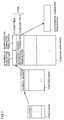
- Fig. 1 shows a schematic structure of an index according to an embodiment of the present invention.
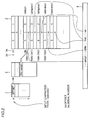
- Fig. 2 shows a specific structure of an index according to an embodiment of the present invention.
- Fig. 3 shows a functional block structure of a word dictionary retrieval apparatus according to an embodiment of the present invention.
- Fig. 4 shows a hardware structure of a word dictionary retrieval apparatus according to an embodiment of the present invention.
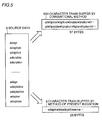
- Fig. 5 is a diagram for describing the effect of a differential character train buffer for reducing the capacity of index data according to an embodiment of the present invention.
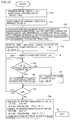
- Fig. 6 is a flow chart of an index data generation process according to an embodiment of the present invention.
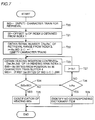
- Fig. 7 is a flow chart of a retrieval process using an index according to an embodiment of the present invention.
- Fig. 8 is a diagram for describing the effect of a differential character train buffer in supplementing a retrieval function according to an embodiment of the present invention.
- Fig. 9 schematically shows an index structure of the case where a derivative retrieval function is added to a heading retrieval function according to an embodiment of the present invention.
- Fig. 10 is a flow chart of a supplemental process of index data due to a share of a differential character train buffer according to an embodiment of the present invention.
- Figs. 11A and 11B show general structures of a conventional variable length heading index.
- Figs. 12A and 12B show structures of a heading index in which a conventional heading main body includes only a pointer data of a fixed length.
- Fig. 13 schematically shows an index structure of the case where a derivative retrieval function is supplemented to a conventional heading retrieval function.
- the apparatus functionally includes a control unit 110, an input unit 111, a memory unit 112, a display unit 113, an index data generation unit 114, and an index data supplement unit 115, and a retrieval unit 116.
- Input unit 111 includes an input device 104 such as a key board, an OCR (Optical Character Reader), or a pen, and an input I/F (interface) 102 for data transfer with an external apparatus such as a computer to enter a character train for retrieval and source data of a dictionary.
- an input device 104 such as a key board, an OCR (Optical Character Reader), or a pen
- an input I/F (interface) 102 for data transfer with an external apparatus such as a computer to enter a character train for retrieval and source data of a dictionary.
- Memory unit 112 includes a general memory device 101 of a computer or the like formed of an ROM (Read Only Memory) and an RAM (Random Access Memory) to store various data such as index data for retrieval, object data for execution associated with retrieval unit 116 and retrieval resultant data, and source data of a dictionary.
- Display unit 113 includes an output device 106 such as a liquid crystal display or a CRT (cathode ray tube) and an output I/F 105 for data transfer with a computer to display a train of input characters and retrieval result data.
- Index data generation unit 114 includes logic for generating index data of small capacity according to a method that will be described afterward, and storing the same in memory device 101. A portion of memory device 101 corresponds to index data generation unit 114.
- Index data supplement unit 115 includes logic for generating index data of small capacity having the additional capacity suppressed to a minimum and storing the same in memory device 101. A portion of memory device 101 corresponds to index data supplement unit 115.
- Retrieval unit 116 includes logic for scrolling the retrieval index stored in memory device 101 while carrying out a comparing process of a character train associated with an input character train to access the source data of the dictionary meeting the retrieval requirement for extracting the required data.
- a portion of memory device 101 corresponds to retrieval unit 116.
- the dictionary source data and retrieval unit 116 are illustrated only as the heading main index data in which only headings are stored and a heading retrieval function, respectively.
- Control unit 110 calls up data generation unit 114 or data supplement unit 115 in memory device 101 to interpret and execute the logic therein while controlling the above-described various elements. Control unit 110 also calls up retrieval unit 116 in memory device 101 to interpret and execute a series of retrieval logics.
- CPU (Central Processing Unit) 100 corresponds to control unit 110.
- Figs. 1 and 2 show structures of a heading index data that allows the memory capacity associated with the retrieval index suppressed to a minimum.
- the index structure of the present embodiment allows access of a differential character train buffer 4 and a heading main index 3 in which information of each heading is arranged and stored in dictionary order via a first index 1 of the first character of a heading and a second index 2 for every m headings.
- Heading main index 3 includes an item I for each heading in the dictionary.
- the size of item I is a fixed length of K bytes.
- Item I includes a first field F1 and a second field F2.
- Field F1 includes data of a number of overlapping characters 3a indicating the number of characters in a corresponding heading that overlaps with one preceding heading registered in the dictionary, and a differential character train length 3b indicating the number of different characters between a corresponding heading and one preceding heading registered in the dictionary.
- the second field F2 includes data of a pointer 3c toward differential character train buffer 4.
- the first byte of item I is allocated for the first field F1, and the remaining K-1 bytes of item I are allocated for the second field F2.
- field F1 several bits of higher significance are allocated for the number of the overlapping characters 3a, and the less significant remaining bits are allocated for differential character train length 3b.
- the specific number of bits to be allocated depends upon the class of the dictionary. In the case of an English-Japanese dictionary of a middle class with approximately 40000 headings, 3 bits are sufficient for number of overlapping characters 3a (that is, up to 7 overlapping characters), and 5 bits are sufficient for differential character train length 3b (that is, up to 31 characters). Pointer 3c indicating the offset position from the beginning of differential character train buffer 4 is written in second field F2. 2 bytes are sufficient for the second field F2 (in contrast to the 3 bytes in a general method) in an English-Japanese dictionary of a middle class of approximately 40000 headings.
- First index 1 stores offset 1a of the first item (heading) I in the dictionary with a different first character on second index 2.
- First index 1 has a structure as shown in Fig. 2 in the case of an English-Japanese dictionary.
- Second index 2 stores a serial number 2a of a heading for every different first character of a heading in the dictionary, or for every m headings.
- Serial number 2a indicates the order of registration of a corresponding heading in the dictionary.
- Serial number 2a is obtained when the source data of a dictionary is entered into the apparatus.
- Serial number 2a starts from 0.
- a heading "adopt" is extracted from the dictionary as one of the fortieth heading.
- Serial number 2a is shown to be 360.
- differential character train buffer 4 a partial character train (differential character train) starting from the first character that does not match between a character train of a certain heading and a character train of one preceding heading registered in the dictionary up to the last character is registered with no overlapping of any partial character train already registered in buffer 4 by comparing each character train of the certain heading with that of the preceding heading from the first character.
- a heading can be accessed by a "serial number" since the data for a heading (item I) has a fixed length. Therefore, proceeding and succeeding items I can be easily accessed. Furthermore, when a heading (item I) is to be referred to from another index, the index capacity can be reduced than the case where the description by offset data is provided. For example, if the length is not fixed, second index 2 will require 3 bytes for each serial number 3e (for example, in the case of first-3-character index 400 of Fig. 12). In contrast, only a 2-byte structure is required if the length is fixed in the case of a dictionary of a level that has less than 64K terms.
- differential character train buffer 4 can be formed having a capacity of approximately a fraction of a general one (character train buffer 600 in Fig. 12) by means of a generation method that is described afterwards.
- Fig. 5 shows source data 6 associated with a dictionary, character train buffer 600 associated with source data 6 according to a conventional method described with reference to Fig. 12, and differential character train buffer 4 associated with source data according to a method of the present embodiment shown in Fig. 1.
- character train buffer 600 formed by the conventional method of Fig. 12 has each differential character train entirely registered with a delimiter ( ⁇ 0), a plurality of the same character trains or partial character trains will be provided in different locations in buffer 600.
- the data in buffer 600 is redundant.
- differential character train buffer 4 formed by the procedure shown in Fig. 1 has differential character trains sorted in a descending order of the differential character train length concatenated to the end of the character train of buffer 4 only when not matching the partial character train of the already-registered character train in Fig. 4. Therefore, there is no redundancy in data in buffer 4. It is appreciated from Fig. 5 that the method of the present embodiment is effective in the structure of a differential character train buffer since many analogous character trains are present in the differential character train.
- Set M includes a plurality of elements (headings) Mi, where i is a serial number.
- the contents of the headings in the dictionary are written into a file in memory device 101 via input unit 111 of Fig. 3 in a format in which each heading can be easily identified.
- a serial number for each heading is also obtained.
- a serial number 2a is sequentially registered counting from the 0th heading extracted for every change in the first character of a heading or for every m headings. This registration of serial numbers is stored in second index 2 (T2).
- second index 2 (T2)
- generation of first index 1 is implemented by sequentially registering each position where dictionary serial number 2a is written of the different first character in second index 2 (offset 1a from the beginning of second index 2).
- the element Mi has a serial number i that is registered in second index 2, 0 is set in the number of overlapping characters Di (number of overlapping characters 3a), the length of the character train of the heading of element Mi is set in differential character train length Si (differential character train length 3b), and the actual heading character train of element Mi is set in differential character train MSi of heading main index 3 corresponding to serial number i (T4). If serial number i of the element Mi is not registered in second index 2, number of overlapping characters 3a, the differential character train, and differential character train length 3b for element Mi - 1 and element Mi are obtained. The obtained values are appropriately set in the number of overlapping character Di, differential character train Si, and differential character train length MSi (T3). A set S of a differential character train MSi extracted for all headings is sorted in a descending order of a length of the character train to generate a length descending order differential character train set S' (T5).
- pointer Pi pointer 3c
- -1 is set in pointer Pi (pointer 3c) when the differential character train is an empty character train (T8).
- element S'i does not match any of the partial character trains already registered in buffer mjb
- that differential character train is newly registered by adding the character train of element S'i to the end of the registered character train in buffer mjb. Since the registered position is the end of the registered character train in buffer mjb, the character train length of buffer mjb prior to the addition of a character train of element Si is to be set in pointer Pi (pointer 3c) (T9).
- suffix (i) of pointer Pi indicates the number of the differential character train in the order of the length, it is assumed that suffix (i) of pointer Pi is associated with a serial number of the corresponding heading in advance in obtaining a differential character train in order to identify the stored position of pointer Pi in heading main index 3.
- Fig. 7 is a flow chart showing a retrieval procedure for confirming whether a character train of a heading matching an input character train is present in heading main index 3 generated according to the flow chart of Fig. 6 by scrolling through first index 1 and second index 2.
- each item in second index 2 has a fixed length of K' bytes.
- Serial number 2a of a heading obtained by accessing an item of offset x (offset 1a) of second index 2 is represented by R(x).
- a heading character train obtained by accessing the item of offset x of second index 2 is represented by M(x).
- a character train input via input device 104 is extracted and set into a character train INS for retrieval (T20).
- the item of first index 1 determined by the code of the first character in character train INS is accessed to obtain a value of first index 1, i.e. offset 1a to second index 2, which is set in offset o2 (T21).
- the dictionary order of the obtained heading character train M(o2 + K') and input character train INS is compared. If the dictionary order of input character train INS is ahead of heading character train M(o2 + K'), character train INS is equal to or subsequent to character train M(o2). Therefore, it is identified that the range of the presence of a heading that matches input character train INS is within the serial number range of [R(o2), R(o2 + K')]. In contrast, if input character train INS is not ahead of heading character train M(o2 + K') and character M(o2 + K') > character train M(o2), the heading that matches input character train INS is not present in the range of [R(o2), R(o2 + K')].
- the next item succeeding the current accessed item of second index 2, i.e. the (o2 + 2K')th byte is accessed to obtain serial number R(o2 + 2K') and heading character train M(o2 + 2K').
- serial numbers [Rs, Re] of the retrieval range determined as described above the data in a corresponding heading main index 3 is sequentially accessed from serial number Rs to obtain a corresponding heading character train.
- the input character train INS and each obtained heading character train is compared according to the dictionary order.
- the procedure (T23) of obtaining a heading character train corresponding to subsequent serial number from serial number Rs obtained by second index 2 will be described hereinafter.
- variable i is a serial number directly obtained from second index 2. Therefore, difference with one proceeding heading is not be taken for the heading corresponding to this serial number (refer to T4 of Fig. 6).
- this read out character train will be the heading character train WDi.
- the obtained i-th heading character train WDi and input character train INS are compared according to the dictionary order. If they match each other, the relevant heading of interest is identified as heading character train WDi (T24, T25). If the comparison does not match, serial number i is incremented by 1 (T27) within the range of serial number i ⁇ serial number Re ("N" in T26) to sequentially carry out a comparison with the next heading. If there is no matching heading in the serial number range of [Rs, Re], it is identified that the heading of interest corresponding to input character train INS is not registered in that index 3, i.e. in the corresponding dictionary (T28).
- Differential character train buffer 4 is generally of a great capacity depending upon the dictionary used for retrieval. There is a high possibility that the additional registration of a differential character train of an average length of the same language matches a differential character train already registered in character train buffer 4. In the present embodiment, increase in the capacity of buffer 4 is suppressed by avoiding the presence of a duplicated partial character train in differential character train buffer 4.
- a differential character train buffer according to the present embodiment is formed solely for the additional headings, a further 15 bytes are required as the differential character train buffer as shown in buffer 8 of Fig. 8.
- the already-formed differential character train buffer 7 can be used, only 7 bytes has to be added to buffer 7 as shown in buffer 9. This means that the approach of adding a new differential character train into the already-formed differential character buffer is effective from the standpoint of reducing the required memory capacity in contrast to the case where a buffer of entirely new differential character trains is generated.
- differential character train buffer 4 having data redundancy eliminated can be shared by the supplemental differential character train and currently existing differential character train.
- Fig. 9 shows an index structure of the case where a derivative retrieval function is added to a heading retrieval function according to an embodiment of the present invention.
- a differential character train buffer (14) is commonly shared by the heading retrieval function (10, 11) and the derivative retrieval function (12, 13),
- the number of overlapping characters ADi, a differential character train length ASi and a differential character train AASi are obtained with respect to each element in set A (T32).
- Heading main indexes 3 formed according to the flow chart of Fig. 10 have an index structure of a fixed length. They are formed so that the access time with respect to a preceding or succeeding item (item I) is reduced.
- the differential character train buffer reconstructed according to this flow chart so as to have no redundant data and to be shared with the differential character train buffer of the original heading index.
- the reconstructed character train buffer has a capacity smaller than the general one in which a differential character train is arranged with a delimiter ( ⁇ 0).
- the memory capacity can be reduced to approximately 1/10 the normal capacity with respect to a dictionary having a plurality of headings of several 10K.
- the required memory capacity can be reduced in comparison to the case where another character train buffer is generated independently with no common usage (approximately 1/2 the capacity of the buffer generated independently with respect to the addition of a plurality of headings of several 10K).
- improvement of a retrieval function by adding another heading index data to the existing index data will not degrade the effect of suppressing increase in the memory capacity due to the supplemental data.
- Heading retrieval via the index unit of the supplement dictionary data is carried out in a manner similar to that of the flow chart of Fig. 7, and will otherwise not be repeated.
Landscapes
- Engineering & Computer Science (AREA)
- Databases & Information Systems (AREA)
- Theoretical Computer Science (AREA)
- Software Systems (AREA)
- Data Mining & Analysis (AREA)
- Physics & Mathematics (AREA)
- General Engineering & Computer Science (AREA)
- General Physics & Mathematics (AREA)
- Information Retrieval, Db Structures And Fs Structures Therefor (AREA)
- Machine Translation (AREA)
- Document Processing Apparatus (AREA)
Applications Claiming Priority (3)
| Application Number | Priority Date | Filing Date | Title |
|---|---|---|---|
| JP322764/94 | 1994-12-26 | ||
| JP6322764A JP3003915B2 (ja) | 1994-12-26 | 1994-12-26 | 単語辞書検索装置 |
| JP32276494 | 1994-12-26 |
Publications (2)
| Publication Number | Publication Date |
|---|---|
| EP0720107A1 true EP0720107A1 (de) | 1996-07-03 |
| EP0720107B1 EP0720107B1 (de) | 2001-08-29 |
Family
ID=18147388
Family Applications (1)
| Application Number | Title | Priority Date | Filing Date |
|---|---|---|---|
| EP95120459A Expired - Lifetime EP0720107B1 (de) | 1994-12-26 | 1995-12-22 | Wort-Wiederauffindungsapparat für ein Wörterbuch |
Country Status (4)
| Country | Link |
|---|---|
| US (1) | US5761688A (de) |
| EP (1) | EP0720107B1 (de) |
| JP (1) | JP3003915B2 (de) |
| DE (1) | DE69522426T2 (de) |
Families Citing this family (20)
| Publication number | Priority date | Publication date | Assignee | Title |
|---|---|---|---|---|
| JPH1040247A (ja) * | 1996-07-26 | 1998-02-13 | Sharp Corp | データ処理装置 |
| JP3466857B2 (ja) * | 1997-03-06 | 2003-11-17 | 株式会社東芝 | 辞書更新方法および辞書更新システム |
| US5999949A (en) * | 1997-03-14 | 1999-12-07 | Crandall; Gary E. | Text file compression system utilizing word terminators |
| JP3143079B2 (ja) * | 1997-05-30 | 2001-03-07 | 松下電器産業株式会社 | 辞書索引作成装置と文書検索装置 |
| US6081774A (en) * | 1997-08-22 | 2000-06-27 | Novell, Inc. | Natural language information retrieval system and method |
| KR100285265B1 (ko) * | 1998-02-25 | 2001-04-02 | 윤덕용 | 데이터 베이스 관리 시스템과 정보 검색의 밀결합을 위하여 서브 인덱스와 대용량 객체를 이용한 역 인덱스 저장 구조 |
| WO2001006407A1 (fr) * | 1999-07-19 | 2001-01-25 | Iliya Alexandrovich Boldov | Procede de conversion d'informations texte |
| JP2004501424A (ja) * | 2000-04-18 | 2004-01-15 | コリア・テレコム | 中心用語辞典を利用した表題語の中心用語抽出方法及びそれを利用した情報検索システム及びその方法 |
| US6411227B1 (en) * | 2000-08-15 | 2002-06-25 | Seagate Technology Llc | Dual mode data compression for operating code |
| US6941294B2 (en) * | 2000-08-28 | 2005-09-06 | Emotion, Inc. | Method and apparatus for digital media management, retrieval, and collaboration |
| US7490034B2 (en) * | 2002-04-30 | 2009-02-10 | Microsoft Corporation | Lexicon with sectionalized data and method of using the same |
| US7174346B1 (en) * | 2003-07-31 | 2007-02-06 | Google, Inc. | System and method for searching an extended database |
| US7421386B2 (en) * | 2003-10-23 | 2008-09-02 | Microsoft Corporation | Full-form lexicon with tagged data and methods of constructing and using the same |
| US7447627B2 (en) * | 2003-10-23 | 2008-11-04 | Microsoft Corporation | Compound word breaker and spell checker |
| US7398210B2 (en) * | 2003-10-23 | 2008-07-08 | Microsoft Corporation | System and method for performing analysis on word variants |
| TWI273450B (en) * | 2005-07-12 | 2007-02-11 | Asustek Comp Inc | Method and apparatus for searching data |
| JP4510041B2 (ja) * | 2007-03-06 | 2010-07-21 | 株式会社東芝 | 文書検索システム及びプログラム |
| US7917516B2 (en) * | 2007-06-08 | 2011-03-29 | Apple Inc. | Updating an inverted index |
| JP2009264186A (ja) | 2008-04-23 | 2009-11-12 | Ibiden Co Ltd | 保持シール材、保持シール材の製造方法及び排ガス浄化装置 |
| WO2013136418A1 (ja) * | 2012-03-12 | 2013-09-19 | 株式会社日立製作所 | ログ管理計算機、及びログ管理方法 |
Citations (4)
| Publication number | Priority date | Publication date | Assignee | Title |
|---|---|---|---|---|
| JPS61285573A (ja) * | 1985-06-12 | 1986-12-16 | Ricoh Co Ltd | 仮名漢字変換装置 |
| EP0369829A2 (de) * | 1988-11-18 | 1990-05-23 | Sharp Kabushiki Kaisha | Informationssuchvorrichtung |
| JPH03127254A (ja) * | 1989-10-13 | 1991-05-30 | Matsushita Electric Ind Co Ltd | 単語検索装置 |
| JPH0554077A (ja) * | 1991-08-29 | 1993-03-05 | Nec Corp | 単語辞書検索装置 |
Family Cites Families (6)
| Publication number | Priority date | Publication date | Assignee | Title |
|---|---|---|---|---|
| JPS61235977A (ja) * | 1985-04-12 | 1986-10-21 | Hitachi Ltd | カナ漢字変換装置 |
| JPS62128332A (ja) * | 1985-11-30 | 1987-06-10 | Toshiba Corp | デ−タ処理装置 |
| JPS63198154A (ja) * | 1987-02-05 | 1988-08-16 | インタ−ナショナル・ビジネス・マシ−ンズ・コ−ポレ−ション | つづり誤り訂正装置 |
| JPH0682370B2 (ja) * | 1987-05-26 | 1994-10-19 | シャープ株式会社 | 文字処理装置 |
| US5254990A (en) * | 1990-02-26 | 1993-10-19 | Fujitsu Limited | Method and apparatus for compression and decompression of data |
| US5499359A (en) * | 1994-01-18 | 1996-03-12 | Borland International, Inc. | Methods for improved referential integrity in a relational database management system |
-
1994
- 1994-12-26 JP JP6322764A patent/JP3003915B2/ja not_active Expired - Lifetime
-
1995
- 1995-12-21 US US08/576,611 patent/US5761688A/en not_active Expired - Lifetime
- 1995-12-22 DE DE69522426T patent/DE69522426T2/de not_active Expired - Lifetime
- 1995-12-22 EP EP95120459A patent/EP0720107B1/de not_active Expired - Lifetime
Patent Citations (4)
| Publication number | Priority date | Publication date | Assignee | Title |
|---|---|---|---|---|
| JPS61285573A (ja) * | 1985-06-12 | 1986-12-16 | Ricoh Co Ltd | 仮名漢字変換装置 |
| EP0369829A2 (de) * | 1988-11-18 | 1990-05-23 | Sharp Kabushiki Kaisha | Informationssuchvorrichtung |
| JPH03127254A (ja) * | 1989-10-13 | 1991-05-30 | Matsushita Electric Ind Co Ltd | 単語検索装置 |
| JPH0554077A (ja) * | 1991-08-29 | 1993-03-05 | Nec Corp | 単語辞書検索装置 |
Non-Patent Citations (3)
| Title |
|---|
| PATENT ABSTRACTS OF JAPAN vol. 011, no. 151 (P - 576) 16 May 1987 (1987-05-16) * |
| PATENT ABSTRACTS OF JAPAN vol. 015, no. 342 (P - 1244) 29 August 1991 (1991-08-29) * |
| PATENT ABSTRACTS OF JAPAN vol. 017, no. 366 (P - 1571) 9 July 1993 (1993-07-09) * |
Also Published As
| Publication number | Publication date |
|---|---|
| DE69522426T2 (de) | 2002-05-23 |
| US5761688A (en) | 1998-06-02 |
| EP0720107B1 (de) | 2001-08-29 |
| JPH08180069A (ja) | 1996-07-12 |
| JP3003915B2 (ja) | 2000-01-31 |
| DE69522426D1 (de) | 2001-10-04 |
Similar Documents
| Publication | Publication Date | Title |
|---|---|---|
| US5761688A (en) | Dictionary retrieval apparatus | |
| US5099426A (en) | Method for use of morphological information to cross reference keywords used for information retrieval | |
| US5548751A (en) | Dynamic data storage system allowing variable size records and fields by using linked record segments | |
| US7647355B2 (en) | Method and apparatus for increasing efficiency of data storage in a file system | |
| EP0638188B1 (de) | Rechnervorrichtung und -verfahren fuer einen tabellengesteuerten datei-parser | |
| US5488719A (en) | System for categorizing character strings using acceptability and category information contained in ending substrings | |
| US5251316A (en) | Method and apparatus for integrating a dynamic lexicon into a full-text information retrieval system | |
| US5664184A (en) | Method and apparatus for implementing Q-trees | |
| KR20010022028A (ko) | 데이터-베이스 구조 | |
| EP0741360A1 (de) | Datenbanksystem mit mehreren geteilten benutzergeräten, datenaktualisierungsverfahren und anwendung eines zeichenprozessors | |
| EP0121126A2 (de) | Zeichengenerator | |
| US4592013A (en) | Method and device for addressing a memory | |
| US6742018B1 (en) | System and method for storing and retrieving data by keywords converted into divided long integers | |
| US7979438B2 (en) | Document management method and apparatus and document search method and apparatus | |
| CN115034176A (zh) | 文本处理方法、装置、电子设备和计算机可读存储介质 | |
| US8577861B2 (en) | Apparatus and method for searching information | |
| JP2675958B2 (ja) | 情報検索用計算機システム及びその記憶装置の動作方法 | |
| EP0638187B1 (de) | Kategorisierende zeichenketten in der zeichenerkennung. | |
| EP0539965A2 (de) | Elektronisches Wörterbuch mit einer Zeiger- und Wortkorrektionsdatei | |
| US6449610B1 (en) | Memory media and method of processing date data using pseudo zoned decimal format | |
| JP2975529B2 (ja) | 電子化辞書検索装置 | |
| JP2615046B2 (ja) | レコード追加処理方法 | |
| JP3722231B2 (ja) | コンパクトにエンコードされて記憶されたストリングの組を有する製品 | |
| CN117291172A (zh) | 基于事件来解析信息的方法、装置和计算机可读介质 | |
| JP2588522B2 (ja) | 機械翻訳辞書アクセス方法 |
Legal Events
| Date | Code | Title | Description |
|---|---|---|---|
| PUAI | Public reference made under article 153(3) epc to a published international application that has entered the european phase |
Free format text: ORIGINAL CODE: 0009012 |
|
| AK | Designated contracting states |
Kind code of ref document: A1 Designated state(s): DE FR GB |
|
| 17P | Request for examination filed |
Effective date: 19961004 |
|
| 17Q | First examination report despatched |
Effective date: 19991011 |
|
| GRAG | Despatch of communication of intention to grant |
Free format text: ORIGINAL CODE: EPIDOS AGRA |
|
| RTI1 | Title (correction) |
Free format text: WORD RETRIEVAL APPARATUS FOR A DICTIONNARY |
|
| RTI1 | Title (correction) |
Free format text: WORD RETRIEVAL APPARATUS FOR A DICTIONNARY |
|
| GRAG | Despatch of communication of intention to grant |
Free format text: ORIGINAL CODE: EPIDOS AGRA |
|
| GRAH | Despatch of communication of intention to grant a patent |
Free format text: ORIGINAL CODE: EPIDOS IGRA |
|
| GRAH | Despatch of communication of intention to grant a patent |
Free format text: ORIGINAL CODE: EPIDOS IGRA |
|
| GRAA | (expected) grant |
Free format text: ORIGINAL CODE: 0009210 |
|
| AK | Designated contracting states |
Kind code of ref document: B1 Designated state(s): DE FR GB |
|
| REF | Corresponds to: |
Ref document number: 69522426 Country of ref document: DE Date of ref document: 20011004 |
|
| ET | Fr: translation filed | ||
| REG | Reference to a national code |
Ref country code: GB Ref legal event code: IF02 |
|
| PLBE | No opposition filed within time limit |
Free format text: ORIGINAL CODE: 0009261 |
|
| STAA | Information on the status of an ep patent application or granted ep patent |
Free format text: STATUS: NO OPPOSITION FILED WITHIN TIME LIMIT |
|
| 26N | No opposition filed | ||
| PGFP | Annual fee paid to national office [announced via postgrant information from national office to epo] |
Ref country code: GB Payment date: 20091216 Year of fee payment: 15 Ref country code: FR Payment date: 20091221 Year of fee payment: 15 |
|
| PGFP | Annual fee paid to national office [announced via postgrant information from national office to epo] |
Ref country code: DE Payment date: 20091217 Year of fee payment: 15 |
|
| GBPC | Gb: european patent ceased through non-payment of renewal fee |
Effective date: 20101222 |
|
| REG | Reference to a national code |
Ref country code: FR Ref legal event code: ST Effective date: 20110831 |
|
| PG25 | Lapsed in a contracting state [announced via postgrant information from national office to epo] |
Ref country code: FR Free format text: LAPSE BECAUSE OF NON-PAYMENT OF DUE FEES Effective date: 20110103 |
|
| REG | Reference to a national code |
Ref country code: DE Ref legal event code: R119 Ref document number: 69522426 Country of ref document: DE Effective date: 20110701 |
|
| PG25 | Lapsed in a contracting state [announced via postgrant information from national office to epo] |
Ref country code: GB Free format text: LAPSE BECAUSE OF NON-PAYMENT OF DUE FEES Effective date: 20101222 Ref country code: DE Free format text: LAPSE BECAUSE OF NON-PAYMENT OF DUE FEES Effective date: 20110701 |