EP0720144A1 - Gerauschverringerungsverfahren hervorgerufen durch Kraftfahrzeug Schwingungen - Google Patents
Gerauschverringerungsverfahren hervorgerufen durch Kraftfahrzeug Schwingungen Download PDFInfo
- Publication number
- EP0720144A1 EP0720144A1 EP95120083A EP95120083A EP0720144A1 EP 0720144 A1 EP0720144 A1 EP 0720144A1 EP 95120083 A EP95120083 A EP 95120083A EP 95120083 A EP95120083 A EP 95120083A EP 0720144 A1 EP0720144 A1 EP 0720144A1
- Authority
- EP
- European Patent Office
- Prior art keywords
- ccr
- laminar element
- actuator means
- noise
- signal
- Prior art date
- Legal status (The legal status is an assumption and is not a legal conclusion. Google has not performed a legal analysis and makes no representation as to the accuracy of the status listed.)
- Withdrawn
Links
- 238000002485 combustion reaction Methods 0.000 claims abstract description 7
- 230000000737 periodic effect Effects 0.000 claims description 4
- 239000000463 material Substances 0.000 claims description 3
- 239000000919 ceramic Substances 0.000 claims description 2
- 230000005534 acoustic noise Effects 0.000 claims 1
- 238000013016 damping Methods 0.000 abstract description 3
- 238000010586 diagram Methods 0.000 description 4
- 230000006870 function Effects 0.000 description 4
- 238000004519 manufacturing process Methods 0.000 description 4
- 230000000694 effects Effects 0.000 description 3
- 238000000034 method Methods 0.000 description 3
- 239000002184 metal Substances 0.000 description 2
- 238000010276 construction Methods 0.000 description 1
- 230000001276 controlling effect Effects 0.000 description 1
- 238000001514 detection method Methods 0.000 description 1
- 230000004048 modification Effects 0.000 description 1
- 238000012986 modification Methods 0.000 description 1
- 230000001105 regulatory effect Effects 0.000 description 1
- 239000007787 solid Substances 0.000 description 1
Images


Classifications
-
- G—PHYSICS
- G10—MUSICAL INSTRUMENTS; ACOUSTICS
- G10K—SOUND-PRODUCING DEVICES; METHODS OR DEVICES FOR PROTECTING AGAINST, OR FOR DAMPING, NOISE OR OTHER ACOUSTIC WAVES IN GENERAL; ACOUSTICS NOT OTHERWISE PROVIDED FOR
- G10K11/00—Methods or devices for transmitting, conducting or directing sound in general; Methods or devices for protecting against, or for damping, noise or other acoustic waves in general
- G10K11/16—Methods or devices for protecting against, or for damping, noise or other acoustic waves in general
- G10K11/175—Methods or devices for protecting against, or for damping, noise or other acoustic waves in general using interference effects; Masking sound
- G10K11/178—Methods or devices for protecting against, or for damping, noise or other acoustic waves in general using interference effects; Masking sound by electro-acoustically regenerating the original acoustic waves in anti-phase
- G10K11/1787—General system configurations
- G10K11/17879—General system configurations using both a reference signal and an error signal
- G10K11/17883—General system configurations using both a reference signal and an error signal the reference signal being derived from a machine operating condition, e.g. engine RPM or vehicle speed
-
- G—PHYSICS
- G10—MUSICAL INSTRUMENTS; ACOUSTICS
- G10K—SOUND-PRODUCING DEVICES; METHODS OR DEVICES FOR PROTECTING AGAINST, OR FOR DAMPING, NOISE OR OTHER ACOUSTIC WAVES IN GENERAL; ACOUSTICS NOT OTHERWISE PROVIDED FOR
- G10K11/00—Methods or devices for transmitting, conducting or directing sound in general; Methods or devices for protecting against, or for damping, noise or other acoustic waves in general
- G10K11/16—Methods or devices for protecting against, or for damping, noise or other acoustic waves in general
- G10K11/175—Methods or devices for protecting against, or for damping, noise or other acoustic waves in general using interference effects; Masking sound
- G10K11/178—Methods or devices for protecting against, or for damping, noise or other acoustic waves in general using interference effects; Masking sound by electro-acoustically regenerating the original acoustic waves in anti-phase
- G10K11/1781—Methods or devices for protecting against, or for damping, noise or other acoustic waves in general using interference effects; Masking sound by electro-acoustically regenerating the original acoustic waves in anti-phase characterised by the analysis of input or output signals, e.g. frequency range, modes, transfer functions
- G10K11/17821—Methods or devices for protecting against, or for damping, noise or other acoustic waves in general using interference effects; Masking sound by electro-acoustically regenerating the original acoustic waves in anti-phase characterised by the analysis of input or output signals, e.g. frequency range, modes, transfer functions characterised by the analysis of the input signals only
- G10K11/17825—Error signals
-
- G—PHYSICS
- G10—MUSICAL INSTRUMENTS; ACOUSTICS
- G10K—SOUND-PRODUCING DEVICES; METHODS OR DEVICES FOR PROTECTING AGAINST, OR FOR DAMPING, NOISE OR OTHER ACOUSTIC WAVES IN GENERAL; ACOUSTICS NOT OTHERWISE PROVIDED FOR
- G10K11/00—Methods or devices for transmitting, conducting or directing sound in general; Methods or devices for protecting against, or for damping, noise or other acoustic waves in general
- G10K11/16—Methods or devices for protecting against, or for damping, noise or other acoustic waves in general
- G10K11/175—Methods or devices for protecting against, or for damping, noise or other acoustic waves in general using interference effects; Masking sound
- G10K11/178—Methods or devices for protecting against, or for damping, noise or other acoustic waves in general using interference effects; Masking sound by electro-acoustically regenerating the original acoustic waves in anti-phase
- G10K11/1785—Methods, e.g. algorithms; Devices
-
- G—PHYSICS
- G10—MUSICAL INSTRUMENTS; ACOUSTICS
- G10K—SOUND-PRODUCING DEVICES; METHODS OR DEVICES FOR PROTECTING AGAINST, OR FOR DAMPING, NOISE OR OTHER ACOUSTIC WAVES IN GENERAL; ACOUSTICS NOT OTHERWISE PROVIDED FOR
- G10K11/00—Methods or devices for transmitting, conducting or directing sound in general; Methods or devices for protecting against, or for damping, noise or other acoustic waves in general
- G10K11/16—Methods or devices for protecting against, or for damping, noise or other acoustic waves in general
- G10K11/175—Methods or devices for protecting against, or for damping, noise or other acoustic waves in general using interference effects; Masking sound
- G10K11/178—Methods or devices for protecting against, or for damping, noise or other acoustic waves in general using interference effects; Masking sound by electro-acoustically regenerating the original acoustic waves in anti-phase
- G10K11/1785—Methods, e.g. algorithms; Devices
- G10K11/17857—Geometric disposition, e.g. placement of microphones
-
- G—PHYSICS
- G10—MUSICAL INSTRUMENTS; ACOUSTICS
- G10K—SOUND-PRODUCING DEVICES; METHODS OR DEVICES FOR PROTECTING AGAINST, OR FOR DAMPING, NOISE OR OTHER ACOUSTIC WAVES IN GENERAL; ACOUSTICS NOT OTHERWISE PROVIDED FOR
- G10K2210/00—Details of active noise control [ANC] covered by G10K11/178 but not provided for in any of its subgroups
- G10K2210/10—Applications
- G10K2210/128—Vehicles
- G10K2210/1282—Automobiles
-
- G—PHYSICS
- G10—MUSICAL INSTRUMENTS; ACOUSTICS
- G10K—SOUND-PRODUCING DEVICES; METHODS OR DEVICES FOR PROTECTING AGAINST, OR FOR DAMPING, NOISE OR OTHER ACOUSTIC WAVES IN GENERAL; ACOUSTICS NOT OTHERWISE PROVIDED FOR
- G10K2210/00—Details of active noise control [ANC] covered by G10K11/178 but not provided for in any of its subgroups
- G10K2210/30—Means
- G10K2210/301—Computational
- G10K2210/3033—Information contained in memory, e.g. stored signals or transfer functions
-
- G—PHYSICS
- G10—MUSICAL INSTRUMENTS; ACOUSTICS
- G10K—SOUND-PRODUCING DEVICES; METHODS OR DEVICES FOR PROTECTING AGAINST, OR FOR DAMPING, NOISE OR OTHER ACOUSTIC WAVES IN GENERAL; ACOUSTICS NOT OTHERWISE PROVIDED FOR
- G10K2210/00—Details of active noise control [ANC] covered by G10K11/178 but not provided for in any of its subgroups
- G10K2210/30—Means
- G10K2210/301—Computational
- G10K2210/3041—Offline
-
- G—PHYSICS
- G10—MUSICAL INSTRUMENTS; ACOUSTICS
- G10K—SOUND-PRODUCING DEVICES; METHODS OR DEVICES FOR PROTECTING AGAINST, OR FOR DAMPING, NOISE OR OTHER ACOUSTIC WAVES IN GENERAL; ACOUSTICS NOT OTHERWISE PROVIDED FOR
- G10K2210/00—Details of active noise control [ANC] covered by G10K11/178 but not provided for in any of its subgroups
- G10K2210/30—Means
- G10K2210/321—Physical
- G10K2210/3212—Actuator details, e.g. composition or microstructure
-
- G—PHYSICS
- G10—MUSICAL INSTRUMENTS; ACOUSTICS
- G10K—SOUND-PRODUCING DEVICES; METHODS OR DEVICES FOR PROTECTING AGAINST, OR FOR DAMPING, NOISE OR OTHER ACOUSTIC WAVES IN GENERAL; ACOUSTICS NOT OTHERWISE PROVIDED FOR
- G10K2210/00—Details of active noise control [ANC] covered by G10K11/178 but not provided for in any of its subgroups
- G10K2210/30—Means
- G10K2210/321—Physical
- G10K2210/3217—Collocated sensor and cancelling actuator, e.g. "virtual earth" designs
-
- G—PHYSICS
- G10—MUSICAL INSTRUMENTS; ACOUSTICS
- G10K—SOUND-PRODUCING DEVICES; METHODS OR DEVICES FOR PROTECTING AGAINST, OR FOR DAMPING, NOISE OR OTHER ACOUSTIC WAVES IN GENERAL; ACOUSTICS NOT OTHERWISE PROVIDED FOR
- G10K2210/00—Details of active noise control [ANC] covered by G10K11/178 but not provided for in any of its subgroups
- G10K2210/30—Means
- G10K2210/321—Physical
- G10K2210/3229—Transducers
-
- G—PHYSICS
- G10—MUSICAL INSTRUMENTS; ACOUSTICS
- G10K—SOUND-PRODUCING DEVICES; METHODS OR DEVICES FOR PROTECTING AGAINST, OR FOR DAMPING, NOISE OR OTHER ACOUSTIC WAVES IN GENERAL; ACOUSTICS NOT OTHERWISE PROVIDED FOR
- G10K2210/00—Details of active noise control [ANC] covered by G10K11/178 but not provided for in any of its subgroups
- G10K2210/30—Means
- G10K2210/321—Physical
- G10K2210/3229—Transducers
- G10K2210/32291—Plates or thin films, e.g. PVDF
Definitions
- the present invention relates in general to active vibration-reduction systems and, more specifically, relates to active systems for reducing vibrations in motor-vehicle bodywork panels.
- the object of the present invention is to provide a vibration-reduction system which solves the problem indicated above in a satisfactory manner.
- the present invention consists essentially of an active electronic system for controlling vibrations in laminar elements such as, for example, metal sheets or bodywork panels.
- a motor-vehicle bodywork panel typically of sheet metal, is indicated L.
- At least one actuator A normally of the piezoelectric type, is fitted on the panel L.
- Typically, several actuators A are fitted on the panel L.
- actuators A are controlled or driven by an electronic control unit CCR for the active control of vibrations or noise.
- the actuators A are driven by means of voltage-raising circuits EV.
- the control unit CCR is also connected to a control unit CCM which manages the internal combustion engine of the motor vehicle.
- the engine-management unit CCM transmits a signal RPM indicative of the speed of rotation of the engine to the vibration-control unit CCR by means of this connection.
- a signal of this type is now available in almost all motor vehicles currently in production.
- the system according to the present invention is in fact based on the fact that most vibrations which may be encountered in bodywork panels L are induced, directly or indirectly, by the internal combustion engine of the motor vehicle and therefore have frequencies which depend on the speed of rotation or the number of revolutions per minute, RPM, of the engine. It is thus possible to achieve a substantial reduction in the vibrations and hence in the noise induced by the engine in the bodywork panels L, even in the absence of sensors for detecting the vibrations as in systems according to the prior art.
- the system according to the present invention comprises a noise appraiser which generates one or more signals for driving the actuators A on the basis of the signal RPM indicative of the speed of rotation of the engine.
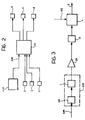
- the noise appraiser forms part of the vibration-control unit CCR and will now be described in greater detail with reference to Figure 3.
- Figure 3 shows the system according to the present invention schematically, by means of functional blocks.
- parts and elements already described with reference to Figure 1 have again been attributed the same alphanumeric references.
- the vibration-control unit CCR comprises a noise appraiser SR, mentioned above, and a processing unit C, for example, a microprocessor.
- the noise appraiser SR as stated above, generates signals for driving the actuators A on the basis of the signal RPM which it receives as an input.
- the actuators A in turn act on the bodywork L so as to minimize the vibrations induced by disturbances DIS, for example, the internal combustion engine, and hence the noise R, generated by the bodywork L.
- the vibrations induced in the bodywork L by the engine must be analyzed beforehand.
- the vibrations induced in the various bodywork panels L are therefore recorded and analyzed for all of the speeds of rotation of the engine.
- a body of data is thus collected which provides a complete picture of the vibrations induced.
- Signals suitable for reducing vibrations typically one signal for each actuator A, can be produced on the basis of these data.
- the production of these signals typically consists of the generation of a waveform corresponding to that detected, but in phase opposition, and is within the capabilities of a person in the art.
- corrective parameters may also be introduced or the waveform may be modified on the basis of experimental findings in order to optimize the noise-reduction effect.
- the waveforms may be frequency-filtered.
- the waveforms are stored in the noise appraiser SR, associated with the respective speeds of rotation of the engine.
- the noise appraiser SR has a memory area for this purpose, for example, a read-only digital memory or ROM, of a size sufficient for storing all the waveforms used by the noise appraiser SR.
- the noise appraiser SR thus outputs the waveforms corresponding to the speed of rotation of the engine derived from the signal RPM. These waveforms are transmitted to a subsequent processing unit C which generates the signals for driving the actuators A, in their final form, on the basis of these waveforms.
- the processing unit C generates the periodic signals for the actuators A on the basis of the waveforms transmitted by the noise appraiser SR and passes these periodic signals to the outputs of the control unit CCR.
- the processing unit C thus comprises digital-analog converter circuits and amplifier circuits so that it can generate analog signals which can be used directly, possibly by means of the voltage-raising circuits EV, to drive the actuators A.
- the processing unit C is also configured in a manner such that the frequency and phase of the driving signals are matched with the frequency and phase of the signal RPM in order to maximize the vibration-reduction effect.
- the processing unit C also has to receive the signal RPM, or a corresponding synchronizing signal transmitted by the noise appraiser SR.
- a signal from a phonic-wheel of the internal combustion engine may be used as the signal RPM.
- the bodywork panels L of motor vehicles of the same model are identical only in theory, it is possible to provide for a detection step for each vehicle upon completion of manufacturing operations so as to characterize the waveforms or determine their parameters individually. These individually characterized waveforms can then be stored in the read-only memory of the estimator SR. This further improves the performance of the system.
- the noise appraiser SR uses a dynamic model of the bodywork L which enables the waveforms to be produced.
- the system that is, essentially the noise appraiser SR disposed in the control unit CCR, may also be configured so as to implement the active noise-control function in addition to or instead of the vibration-control function. In fact, it should not be forgotten that the purpose of reducing vibrations is essentially to reduce the noise inside the passenger compartment of the vehicle.
- the system according to the invention which may involve some of the panels L and the actuators A, requires no modification with respect to the foregoing description.
- the only difference is in the final objective of the preliminary data-recording and analysis step which, in this case, has the purpose of reducing noise in addition to or instead of vibrations.
- the system according to the invention may also have sensors S, as shown in Figure 2, as in systems according to the prior art.
- the system thus has a feedback signal which enables the effects of the driving signals to be checked and corrected.
- Figure 4 which is similar to Figure 3 and shows the system of Figure 2 at the functional level, the feedback signal detected by the sensors S is indicative of the noise R generated by the bodywork L and is sent to the processing unit C.
- both the actuators A and the sensors S are formed of ceramic or polymeric piezoelectric material. They are generally flat in shape and in fact have very little thickness and hence little bulk and are glued to the panel L so as to be fixed firmly thereto.
- the sensors S and the actuators A will be applied to a limited number of bodywork panels L which are the primary sources of noise in the passenger compartment of a motor vehicle.
- bodywork panels L which are the primary sources of noise in the passenger compartment of a motor vehicle.
- the sensors S and the actuators A may advantageously be fitted at the same points.
- the sensor S and the actuator A may, for example, be fitted on two opposite surfaces of a panel L.
- the sensor S may be fitted on one surface of the panel L and the actuator A may be fitted on the sensor S, that is, superimposed thereon.
- the system comprises a device (not shown) for regulating gain.
- This gain-regulator operates by means of one or more suitable sensors (not shown) fitted on the bodywork L and has the function of limiting the gain of the system when it detects vibrations of very large amplitude, that is, such as to endanger the actuators A.
- the regulator may operate automatically or manually or may even switch selectively between one operating mode and the other.
- the system according to the present invention considerably reduces vibrations and noise inside a motor vehicle whilst being of very low cost.
- the noise induced by the road in the passenger compartment of a motor vehicle and transmitted from the engine by solid means can thus be reduced and at the same time the damping elements which are used at the moment can be reduced.
- the weight of the vehicle can be reduced whilst its comfort is at the same time improved.
Landscapes
- Physics & Mathematics (AREA)
- Engineering & Computer Science (AREA)
- Acoustics & Sound (AREA)
- Multimedia (AREA)
- Soundproofing, Sound Blocking, And Sound Damping (AREA)
- Vibration Prevention Devices (AREA)
- Fittings On The Vehicle Exterior For Carrying Loads, And Devices For Holding Or Mounting Articles (AREA)
Applications Claiming Priority (2)
| Application Number | Priority Date | Filing Date | Title |
|---|---|---|---|
| ITTO941083 | 1994-12-28 | ||
| IT94TO001083A IT1268204B1 (it) | 1994-12-28 | 1994-12-28 | Sistema per la riduzione del rumore dovuto a vibrazioni di un veicolo. |
Publications (1)
| Publication Number | Publication Date |
|---|---|
| EP0720144A1 true EP0720144A1 (de) | 1996-07-03 |
Family
ID=11413015
Family Applications (1)
| Application Number | Title | Priority Date | Filing Date |
|---|---|---|---|
| EP95120083A Withdrawn EP0720144A1 (de) | 1994-12-28 | 1995-12-19 | Gerauschverringerungsverfahren hervorgerufen durch Kraftfahrzeug Schwingungen |
Country Status (2)
| Country | Link |
|---|---|
| EP (1) | EP0720144A1 (de) |
| IT (1) | IT1268204B1 (de) |
Cited By (6)
| Publication number | Priority date | Publication date | Assignee | Title |
|---|---|---|---|---|
| EP1055841A2 (de) | 1999-05-22 | 2000-11-29 | Volkswagen Aktiengesellschaft | Verfahren und Einrichtung zur Unterdrückung oder Dämpfung von Karosseriezittern bei Kraftfahrzeugen |
| DE102004030935B3 (de) * | 2004-06-25 | 2005-09-15 | Benteler Automobiltechnik Gmbh | Vorrichtung zur Schwingungsdämpfung in einem Kraftfahrzeug |
| DE102005024412A1 (de) * | 2005-05-27 | 2006-11-30 | Volkswagen Ag | Platine als flächiges Bauteil, insbesondere für ein Kraftfahrzeug |
| DE102008051288A1 (de) * | 2008-10-10 | 2010-04-15 | Wilhelm Karmann Gmbh | Kraftfahrzeug mit einer Einrichtung zur Schwingungsreduktion |
| WO2010094786A2 (de) | 2009-02-19 | 2010-08-26 | Magna Steyr Fahrzeugtechnik Ag & Co Kg | Flächiges bauelement mit vibrationsdämpfung |
| CN108877761A (zh) * | 2017-05-10 | 2018-11-23 | Fca意大利股份公司 | 机动车辆乘客厢中的声学舒适性的改进 |
Citations (6)
| Publication number | Priority date | Publication date | Assignee | Title |
|---|---|---|---|---|
| FR2531023A1 (fr) * | 1982-08-02 | 1984-02-03 | Peugeot | Dispositif d'attenuation du bruit dans l'habitacle d'un vehicule automobile |
| EP0385713A2 (de) * | 1989-03-01 | 1990-09-05 | Sony Corporation | Empfangsvorrichtung zur Reduzierung von Rauschen |
| JPH03292219A (ja) * | 1990-04-09 | 1991-12-24 | Nissan Motor Co Ltd | 車両の振動制御装置 |
| EP0479367A2 (de) * | 1990-10-04 | 1992-04-08 | General Motors Corporation | Verfahren und Gerät zur Dampfung von maschinenerregten Rauschen |
| WO1992017936A1 (en) * | 1991-04-05 | 1992-10-15 | Applied Acoustic Research | Active noise control |
| GB2260874A (en) * | 1991-10-21 | 1993-04-28 | Marconi Gec Ltd | A sound control device |
-
1994
- 1994-12-28 IT IT94TO001083A patent/IT1268204B1/it active IP Right Grant
-
1995
- 1995-12-19 EP EP95120083A patent/EP0720144A1/de not_active Withdrawn
Patent Citations (6)
| Publication number | Priority date | Publication date | Assignee | Title |
|---|---|---|---|---|
| FR2531023A1 (fr) * | 1982-08-02 | 1984-02-03 | Peugeot | Dispositif d'attenuation du bruit dans l'habitacle d'un vehicule automobile |
| EP0385713A2 (de) * | 1989-03-01 | 1990-09-05 | Sony Corporation | Empfangsvorrichtung zur Reduzierung von Rauschen |
| JPH03292219A (ja) * | 1990-04-09 | 1991-12-24 | Nissan Motor Co Ltd | 車両の振動制御装置 |
| EP0479367A2 (de) * | 1990-10-04 | 1992-04-08 | General Motors Corporation | Verfahren und Gerät zur Dampfung von maschinenerregten Rauschen |
| WO1992017936A1 (en) * | 1991-04-05 | 1992-10-15 | Applied Acoustic Research | Active noise control |
| GB2260874A (en) * | 1991-10-21 | 1993-04-28 | Marconi Gec Ltd | A sound control device |
Non-Patent Citations (2)
| Title |
|---|
| PATENT ABSTRACTS OF JAPAN vol. 016, no. 129 (M - 1228) 2 April 1992 (1992-04-02) * |
| S. M. YANG ET AL.: "Vibration suppression with optimal sensor/actuator location and feedback gain", SMART MATERIALS AND STRUCTURES, vol. 2, no. 4, BRISTOL GB, pages 2332 - 239, XP000415226 * |
Cited By (9)
| Publication number | Priority date | Publication date | Assignee | Title |
|---|---|---|---|---|
| EP1055841A2 (de) | 1999-05-22 | 2000-11-29 | Volkswagen Aktiengesellschaft | Verfahren und Einrichtung zur Unterdrückung oder Dämpfung von Karosseriezittern bei Kraftfahrzeugen |
| DE102004030935B3 (de) * | 2004-06-25 | 2005-09-15 | Benteler Automobiltechnik Gmbh | Vorrichtung zur Schwingungsdämpfung in einem Kraftfahrzeug |
| US7475761B2 (en) | 2004-06-25 | 2009-01-13 | Benteler Automobiltechnik Gmbh | Apparatus for vibration damping in a motor vehicle |
| DE102005024412A1 (de) * | 2005-05-27 | 2006-11-30 | Volkswagen Ag | Platine als flächiges Bauteil, insbesondere für ein Kraftfahrzeug |
| DE102008051288A1 (de) * | 2008-10-10 | 2010-04-15 | Wilhelm Karmann Gmbh | Kraftfahrzeug mit einer Einrichtung zur Schwingungsreduktion |
| WO2010094786A2 (de) | 2009-02-19 | 2010-08-26 | Magna Steyr Fahrzeugtechnik Ag & Co Kg | Flächiges bauelement mit vibrationsdämpfung |
| US9366310B2 (en) | 2009-02-19 | 2016-06-14 | Magna Steyr Fahrzeugtechnik Ag & Co. Kg | Planar component with vibration damping |
| DE112010000734B4 (de) * | 2009-02-19 | 2019-03-28 | Magna Steyr Fahrzeugtechnik Ag & Co. Kg | Flächiges Bauelement mit Vibrationsdämpfung |
| CN108877761A (zh) * | 2017-05-10 | 2018-11-23 | Fca意大利股份公司 | 机动车辆乘客厢中的声学舒适性的改进 |
Also Published As
| Publication number | Publication date |
|---|---|
| IT1268204B1 (it) | 1997-02-21 |
| ITTO941083A1 (it) | 1996-06-28 |
| ITTO941083A0 (it) | 1994-12-28 |
Similar Documents
| Publication | Publication Date | Title |
|---|---|---|
| US4506380A (en) | Method and apparatus for controlling the sound field in a vehicle cabin or the like | |
| JP2533695B2 (ja) | こもり音低減装置 | |
| US7379802B2 (en) | Method of damping the parasitic vibrations coming from the front axle assembly of a motor vehicle | |
| EP0901933B1 (de) | Schwingungsdämpfung für einen Fahrzeugantrieb | |
| ITTO941083A1 (it) | Sistema per la riduzione del rumore dovuto a vibrazioni di un veicolo. | |
| US20210356012A1 (en) | Automotive active vibration control using circular force generators | |
| KR20220109845A (ko) | 차량의 사운드 출력 장치 및 방법 | |
| JPH07311578A (ja) | 車両騒音低減装置及び制御信号設定方法 | |
| JP7287152B2 (ja) | 乗物用防音装置 | |
| JPH05173581A (ja) | 車両用騒音制御装置 | |
| JP2841585B2 (ja) | 車室内騒音の低減装置 | |
| JP3154744B2 (ja) | 車両用騒音制御装置 | |
| JPH089758Y2 (ja) | 車室内騒音の低減装置 | |
| JP3499574B2 (ja) | 能動型騒音制御装置 | |
| JP2010078852A (ja) | 騒音制御装置及び騒音制御方法 | |
| JP3403209B2 (ja) | 車室内騒音の低減装置 | |
| JPH06109067A (ja) | 車両の振動低減装置 | |
| JP2010032713A (ja) | 騒音制御装置および騒音制御方法 | |
| JPH06110473A (ja) | 車両用振動低減装置 | |
| JPS60263740A (ja) | 車体振動低減装置 | |
| JPH0642579A (ja) | 車両の振動低減装置 | |
| KR0133229B1 (ko) | 자동차용 능동 소음제어장치 | |
| JP2864531B2 (ja) | 車室内騒音の低減装置 | |
| JPS611749U (ja) | 車体振動低減装置 | |
| KR20250136581A (ko) | 차량의 능동 소음 제어를 위한 가속도계의 설치위치 결정 장치 및 방법 |
Legal Events
| Date | Code | Title | Description |
|---|---|---|---|
| PUAI | Public reference made under article 153(3) epc to a published international application that has entered the european phase |
Free format text: ORIGINAL CODE: 0009012 |
|
| AK | Designated contracting states |
Kind code of ref document: A1 Designated state(s): DE ES FR GB SE |
|
| 17P | Request for examination filed |
Effective date: 19961109 |
|
| 17Q | First examination report despatched |
Effective date: 19990415 |
|
| STAA | Information on the status of an ep patent application or granted ep patent |
Free format text: STATUS: THE APPLICATION IS DEEMED TO BE WITHDRAWN |
|
| 18D | Application deemed to be withdrawn |
Effective date: 19991026 |