EP0723238A1 - Système de base de données relationnel et procédé avec grande disponibilité de données pendant la restructuration de tables - Google Patents
Système de base de données relationnel et procédé avec grande disponibilité de données pendant la restructuration de tables Download PDFInfo
- Publication number
- EP0723238A1 EP0723238A1 EP96300429A EP96300429A EP0723238A1 EP 0723238 A1 EP0723238 A1 EP 0723238A1 EP 96300429 A EP96300429 A EP 96300429A EP 96300429 A EP96300429 A EP 96300429A EP 0723238 A1 EP0723238 A1 EP 0723238A1
- Authority
- EP
- European Patent Office
- Prior art keywords
- records
- database
- phase
- partition
- audit
- Prior art date
- Legal status (The legal status is an assumption and is not a legal conclusion. Google has not performed a legal analysis and makes no representation as to the accuracy of the status listed.)
- Granted
Links
Images




Classifications
-
- G—PHYSICS
- G06—COMPUTING OR CALCULATING; COUNTING
- G06F—ELECTRIC DIGITAL DATA PROCESSING
- G06F16/00—Information retrieval; Database structures therefor; File system structures therefor
- G06F16/20—Information retrieval; Database structures therefor; File system structures therefor of structured data, e.g. relational data
- G06F16/28—Databases characterised by their database models, e.g. relational or object models
- G06F16/284—Relational databases
-
- Y—GENERAL TAGGING OF NEW TECHNOLOGICAL DEVELOPMENTS; GENERAL TAGGING OF CROSS-SECTIONAL TECHNOLOGIES SPANNING OVER SEVERAL SECTIONS OF THE IPC; TECHNICAL SUBJECTS COVERED BY FORMER USPC CROSS-REFERENCE ART COLLECTIONS [XRACs] AND DIGESTS
- Y10—TECHNICAL SUBJECTS COVERED BY FORMER USPC
- Y10S—TECHNICAL SUBJECTS COVERED BY FORMER USPC CROSS-REFERENCE ART COLLECTIONS [XRACs] AND DIGESTS
- Y10S707/00—Data processing: database and file management or data structures
- Y10S707/99931—Database or file accessing
- Y10S707/99938—Concurrency, e.g. lock management in shared database
Definitions
- the present invention relates generally to database management systems, and particularly to a database management system in which database table availability is maintained, with minimal or no user availability outages during table restructuring operations such as splitting a table or index partition, moving an existing table or index partition, creating a new index and moving a table or index partition boundary.
- Database configuration and reconfiguration operations can have a significant effect on the availability of user applications that need access to databases undergoing structural changes.
- the TandemTM NonStopTM SQL/MP relational database management system (DBMS) prior to the present invention, allowed read access, but not write access, to the portions of the database table undergong the restructuring operation.
- the present invention eliminates most of the downtime associated with four database reconfiguration operations: Move Partition, Split Partition, Move Partition Boundary, and Create Index.
- the Move Partition procedure moves a partition that resides on one disk to another disk.
- the Split Partition procedure splits one partition into two.
- the Move Partition Boundary procedure moves rows of a base table between adjacent partitions, typically shifting rows from a large partition to a less large partition.
- the Create Index procedure creates an efficient alternate access path to a database table by ordering data according to the value specified in the key columns.
- the Create Unique Index variant of this procedure ensures that there is exactly one altemate access path to each record in tile database table.
- Another object of the present invention is to enable Move Partition, Split Partition, Move Partition Boundary, and Create Index operations to be performed on a database table while enabling user transactions to continue to be performed on the table, except during a short final phase of those operations.
- Another object of the present invention is to avoid the use of "side files" for the above mentioned database reconfiguration operations, so as to reduce the overhead disk space requirements associated with these operations to almost zero.
- Another object of the present invention is to implement the above mentioned database reconfiguration operations using procedures that directly read from the transaction audit log, thereby making these database reconfiguration operations similar to a database recovery process.
- Another object of the present invention is to implement the database reconfiguration operations using well established, optimized, database recovery process procedures thereby making the database reconfiguration operations efficient in terms of computation time and in terms of the computer resources used.
- Yet another object of the present invention is to utilize substantially similar database reconfiguration procedures for four distinct database reconfiguration operations, thereby improving the reliability of those procedures and simplifying maintenance of and updates to those procedures.
- the present invention is a set of procedures for modifying the structure of a database table or index "online,” while the database table or index remains available for execution of transactions, with minimal impact on the availability of the database table for transaction execution.
- the present invention operates in a database computer system having memory, residing in a plurality of interconnected computer nodes, for storing database tables.
- Each database table or index has a plurality of columns, a primary key index based on a specified subset of the columns, and an associated table schema.
- at least some of the database tables or indexes are partitioned into a plurality of partitions, each partition storing records having primary key values in a primary key range distinct from the other partitions.
- a transaction manager generates and stores an audit trail, each audit entry denoting a database table or index record event, such as an addition, deletion or alteration of a specified database table or index record in a specified one of the database tables or indexes.
- the four online data definition procedures allow the structure of a database table or index to be altered while the database table or index remains available for execution of transactions, with minimal impact of the availability of the database table or index for transaction execution.
- the four online data definition procedures are a Move Partition procedure, a Split Partition procedure, a Move Partition Boundary procedure, and a Create Index procedure.
- Each of these online procedures has several phases of execution. In a first phase, the definitions of existing objects are read and any new objects that are needed to perform the requested procedure are created. Then, records of a table or index partition or the entire table are accessed, using "browse" access, so as to generate a new partition, to move records between two partitions, or to create a new index.
- Browse access is a form of read access that allows database records to be read through any record locks that may be in place. Thus, browse access will sometimes result in the reading of records that are in the midst of being modified.
- audit trail entries are accessed and the equivalent database table or index operations denoted in those audit trail entries are redone on the target objects, whenever necessary, to bring the data records created during the first phase up-to-date.
- access to the database table is briefly locked (A) while audit trail entries created after the second phase are used to make final changes to the previously created data records, and then (B) while the database table or index schema is updated to reflect the changes to the database table or index produced.
- Figure 1 is a block diagram of a computer system having a database management system in accordance with the present invention.
- Figure 2A is a block diagram of a database table.
- Figure 2B is a block diagram of an alternate index.
- Figure 2C is a block diagram of the data structure of an Audit Trail.
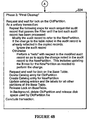
- Figure 3 is a conceptual diagram of the three primary phases of the database restructuring procedures in the present invention.
- Figure 4 is a flowchart of the Move Partition procedure used in a preferred embodiment of the present invention.
- Figure 5 is a flowchart of the Split Partition procedure used in a preferred embodiment of the present invention.
- Figure 6 is a flowchart of the Move Partition Boundary procedure used in a preferred embodiment of the present invention.
- Figure 7 is a flowchart of the Create Index procedure used in a preferred embodiment of the present invention.
- the system 100 is a distributed computer system having multiple computers 102, 104, 106 interconnected by local area and wide area network communication media 108.
- the system 100 generally includes at least one database server 102 and many user workstation computers or terminals 104, 106.
- the database tables When very large databases are stored in a system, the database tables will be partitioned, and different partitions of the database tables will often be stored in different database servers. However, from the viewpoint of user workstation computers 104, 106, the database server 102 appears to be a single entity. The partitioning of databases and the use of multiple database servers is well known to those skilled in the art.
- the database server 102 includes a central processing unit (CPU) 110, primary memory 112, a communications interface 114 for communicating with user workstations 104, 106 as well as other system resources not relevant here.
- Secondary memory 116-1, 116-2 typically magnetic disc storage, in the database server 102 stores database tables 120, database indices 122, a database management system (DBMS) 124 for management of the database tables and associated data structures and resources, and one or more catalogs 126 for storing schema information about the database tables 120 as well directory information for programs used to access the database tables.
- the DBMS 124 includes an SQL executor 128 for executing SQL statements (i.e., database queries) and an SQL catalog manager 130 for maintenance of the catalogs 126 and for performing database definition and restructuring operations.
- the SQL catalog manager includes the "online DDL procedures" 132 of the present invention for restructuring database tables while providing improved user transaction access to the affected tables.
- the database server 102 further includes a transaction manager 134 for managing transactions, and application programs 136 that are utilized by users to perform transactions that utilize the database tables 120.
- the transaction manager creates audit entries for each transaction, which are durably stored in an audit trail file 138 in secondary memory.
- End user workstations 104, 106 typically include a central processing unit (CPU) 140, primary memory 142, a communications interface 144 for communicating with the database server 102 and other system resources, secondary memory 146, and a user interface 148.
- the user interface 148 typically includes a keyboard and display device, and may include additional resources such as a pointing device and printer.
- Secondary memory 146 is used for storing computer programs, such as communications software used to access the database server 102.
- Some end user workstations 106 may be "dumb" terminals that do not include any secondary memory 146, and thus execute only software downloaded into primary memory 142 from a server computer, such as the database server 102 or a file server (not shown).
- SQL stands for "Structured Query Language.” Most commercial database servers utilize SQL. Any program for accessing data in a database that utilizes SQL is herein called an "SQL Program.” Each statement in an SQL program used to access data in a database is called an "SQL statement.”
- An object is a file, database table or other encapsulated computer resource accessed by a program as a unitary structure.
- objects are database tables or indexes.
- objects may be other encapsulated computer resources that the end user accesses indirectly through validated methods (i.e., programs) designed specifically to access those computer resources.
- DDL Statement a data definition language statement. DDL statements are used to create and modify database tables.
- End user a person using a workstation to access database information in a database server. End users typically do not have the authority to modify the structure of database tables.
- FIG. 2A shows the data structure of a typical database table 120-1.
- the table 120-1 includes a file label 160, which is essentially a compactly stored copy of the catalog information for the database table, which represents the table's schema as well as other information not relevant here.
- the table includes a primary key B-tree 162. The use of B-trees in database files is well known to those of ordinary skill in the art of database management systems.
- the table has a data array 163 organized in rows and columns. The rows of the table are often called "records" 164.
- every database table has a primary index.
- the value of the primary index for a particular record is called the primary key, and the primary key is typically equal to either (A) the value in one field (i.e., column), (B) the concatenation of the values in a plurality of columns, or (C) a computed function of the values in one or more columns.
- the set of columns used to generate the primary key are represented by a vector herein called the PrimaryKeyColumns vector.
- a Create Index procedure can be used to create an efficient alternate access path to the database table by ordering data according to the values in any specified set of columns. That ordering is represented by an "Alternate Index,” which is typically implemented as a separate data structure from the associated database table.
- Figure 2B shows the data structure of an alternate index 170.
- the alternate index 170 includes a file label 172, which includes a compactly stored copy of the catalog information for the index.
- the alternative index also includes an alternate key B-tree 174 and then a data array 176 organized in rows and columns.
- the data array has two sets of columns herein called the AltKey columns and the PrimaryKey columns.
- each row of the Altemate Index corresponds to one record of the associated database table. Furthermore, each row of the Altemate Index has two fields: one represents the alternate key value for the corresponding database table record, and one represents the Primary Key value for the same database table record.
- AltKey Create_AltKey(BaseTable(RecPtr), PrimaryKeyColumns) where RecPtr is a pointer to a database table record.
- a database index may be viewed in the same way as a database table.
- FIG. 2C shows the data structure of an Audit Trail 138-1.
- the Audit Trail includes a file label 182 and a set of sequentially generated and stored audit entries 184.
- Each audit entry 184 denotes a database table or index record event such as the addition, deletion or alteration of a specified database table or index record in a specified database table or index.
- Figure 3 is a conceptual representation of the procedure for modifying a database table or index.
- the commands for making database table or index alterations are called data definition language (DDL) statements.
- DDL data definition language
- the DDL statements used are not changed, except for the use of an "ONLINE" option in the DDL statements to indicate that the DDL operation is to be performed while minimizing the impact of the DDL operation on user transactions.
- the ONLINE option is specified, the preferred embodiment of the present invention changes how the SQL catalog manager 130 executes the Move Partition, Split Partition, Move Partition Boundary and Create Index commands.
- the procedure for modifying a database table's structure begins with a user or operator entering a DDL statement, specifying an alteration in the schema of a specified object 200, which is typically either a database table, an index, or a partition of a database table or index.
- the specified object is accessed to read its file label, and if the command requires generating a new object 202, the new object is created. If the command involves movement of data between the first object 200 and a second object 202 that already exists, the file label of the second object is also accessed.
- a "dirty copy” of data from the first object 200 into the second object 202 is made while user transactions against the first object (and against the second object if it existed prior to the command) are allowed to continue unimpeded by the execution of the DDL command.
- a "dirty copy” is made by accessing all the data records of the first object that are the subject of the DDL command, using "browse” access, and generating corresponding records in the second object 202 until the last of the relevant data records in the first object 200 have been accessed.
- Browse access is a form of read access that allows database records to be read through any record locks that may be in place. Thus, browse access will sometimes result in the reading of records which are in the midst of being modified. Also, user transactions against the first object may delete or modify records in the first object while or after they are accessed by the first phase of the DDL command execution. As a result, the records created in the second object 202 may require a certain amount of correction.
- a partial clean-up of the records in the second object is performed by accessing records in the audit trail 204 associated with the first object 200 and performing corresponding "redo" operations against the second object.
- user transactions against the first object (and against the second object if it existed prior to the command) are allowed to continue unimpeded by the execution of the DDL command.
- a pointer called AuditPtr is set to the end of the audit trail 204.
- each audit record beginning with the one referenced by the AuditPtr is inspected. If the audit record is relevant to operations performed on the first object 200, or relevant to the subset of records of the first object that are the subject of the DDL command, then a redo operation is performed against the second object 202 based on the information in the audit record.
- the redo operation uses new audit records that are generated based on the audit entries found in the audit trail because the second object has a very different structure than the first object; in the case of the other three online DDL commands, the redo operation uses the audit record as found in the audit trail except that the audit record is modified prior to the redo operation so as to reference the second object instead of the first object, and the redo operation is performed against the second object.
- the second phase continues until the end of the audit trail is reached.
- a lock is requested against the first object and second object (if it existed prior to the DDL command), and when that lock (or those locks) is (are) granted all user transactions other than browse access transactions are blocked until the third phase is completed.
- any new audit records in the audit trail 204 associated with the first object 200 are accessed and corresponding "redo" operations are performed against the second object 202.
- the first object is a portion of a larger database table or index
- a lock against the entire associated database table associated with the first object is obtained while catalog and file labels are updated.
- the catalog entries and the file labels associated with the first and second objects are updated to reflect the results of the DDL operation.
- the catalog entries and file labels of all objects which incorporate schema information made invalid by the DDL operation are also updated. Then the lock on the first and second objects (and the lock, if any, on the associated database table or index) is released, enabling user transactions against the first and second objects to resume.
- Appendix 1 lists a pseudocode representation of the Move Partition procedure used by the SQL catalog manager to move a database table partition from one disk to another.
- Appendix 2 lists a pseudocode representation of the Split Partition procedure used by the SQL executor to split a database table partition into two partitions.
- Appendix 3 lists a pseudocode representation of the Move Partition Boundary procedure used by the SQL catalog manager to move rows (i.e., records) of a database table between adjacent partitions (i.e., partitions with adjacent ranges of the table's primary index).
- Appendix 4 lists a pseudocode representation of the Create Index procedure used by the SQL catalog manager to create a new "altemate" index for a database table.
- Appendix 5 lists a pseudocode representation of an alternate embodiment of the Create Index procedure.
- Appendices 6 7 and 8 lists pseudocode representations of procedures used by the Create Index procedure.
- the pseudocode used in Appendices 1 through 8 is, essentially, a computer language using universal computer language conventions. While the pseudocode employed here has been invented solely for the purposes of this description, it is designed to be easily understandable by any computer programmer skilled in the art.
- the function of the Move Partition procedure is to move a database table or index, or a specified partition of the table or index, from a first disk location to a second disk location.
- the procedure is executed in response to a Move Partition command.
- the second disk location is typically located on a different disk from the first, and often will be located on a different computer node from the first.
- a partition of a database table is being moved, with the understanding that the same steps would be performed for moving an entire unpartitioned database file or for moving an index file or a partition of an index file.
- the steps of the Move Partition procedure are as follows.
- the database partition to be moved herein called the Old Partition
- a new file for the new database partition herein called the New Partition
- AuditPtr an audit trail pointer, AuditPtr, is set to point to where the next record in the audit trail for transactions against the database table associated with the Old Partition will be located.
- the records in the Old Partition are accessed using Browse access (i.e., read through locks), and records are copied from the Old Partition to the New Partition. While records are created in the New Partition, an up-to-date primary index B-tree is maintained for the New Partition. To prevent further repetition, it is noted that for all records created and updated by the online DDL procedures, a corresponding B-tree is updated.
- an AuditTrail filter is established such that only Audit Trail records that pertain to the Old Partition are received for processing (by an Audit Fixup Process started by the SQL catalog manager).
- the processing of each audit record that passes the filter is called an "audit fixup".
- Each received audit record that passes the filter is initially processed by modifying the audit record to refer to the NewPartition.
- the modified audit record is inspected to determine whether the change to the table noted in the audit record is already reflected in the copied records. If so, the audit record is ignored. Otherwise, a "redo" with respect to the modified audit record is performed so as to apply the change noted in the modified audit record to the NewPartition. This process is repeated for each received audit record that passes the filter until the end of the audit trail is reached.
- a transaction request is made for a file lock on the Old Partition. This is a transaction request that goes in the lock queue. User transactions initiated before the third phase are not affected, but the lock request prevents users from committing transactions initiated after the lock request is made. When the requested lock is granted the remainder of the third phase is performed as a unitary transaction.
- the first part of the third phase transaction is performing the audit fixup process described above for all audit records referencing the Old Partition (i.e., that pass the filter) that were created after completion of the second phase.
- the third phase transaction requests a lock on the entire database table associated with the Old Partition. This prevents all user transactions on the entire database table until the lock is released.
- the full table lock is granted, the catalog entry for the Old Partition is deleted and a new catalog entry for the New Partition is created.
- the file labels and catalog entries for all partitions of the database table are also updated so as to reference the New Partition.
- the function of the Split Partition procedure is to move a portion of a database table, or a portion of specified partition of a database table, from a first disk location to a second disk location.
- the procedure is executed in response to a Split Partition command.
- the second disk location is typically located on a different disk from the first, and often will be located on a different computer node from the first.
- a partition of a database file is being split into two partitions, with the understanding that the same steps would be performed for splitting a previously unpartitioned database file or for splitting an index file or a partition of an index file.
- the steps of the Split Partition procedure are as follows.
- the database partition to be split herein called the Old Partition
- a new file for the new database partition herein called the New Partition
- AuditPtr an audit trail pointer, AuditPtr, is set to point to where the next record in the audit trail for transactions against the database table associated with the Old Partition will be located.
- the primary key ranges associated with the Old Partition and New Partition are as follows.
- the Old Partition's initial primary key range is called OldRange, and its new, reduced primary key range is called NewRange1.
- the primary key range for the New Partition is called NewRange2.
- the records in the Old Partition having a primary key in NewRange2 are accessed using Browse access (i.e., read through locks), and are copied from the Old Partition to the New Partition.
- an AuditTrail filter is established such that only Audit Trail records that pertain to the Old Partition with a primary key value in NewRange2 are received for processing.
- Each remaining received audit record is initially processed by modifying the audit record to refer to the NewPartition.
- the modified audit record is inspected to determine whether the change to the table noted in the audit record is already reflected in the copied records. If so, the audit record is ignored. Otherwise, a "redo" with respect to the modified audit record is performed so as to apply the change noted in the modified audit record to the NewPartition. This process is repeated for each received audit record that passes the filter until the end of the audit trail is reached.
- a transaction request is made for a lock on the Old Partition. This is a transaction request that goes in the lock queue. User transactions initiated before the third phase are not affected, but the lock request prevents users from committing transactions initiated after the lock request is made. When the requested lock is granted the remainder of the third phase is performed as a unitary transaction.
- the first part of the third phase transaction is performing the audit fixup process described above for all audit records referencing the Old Partition that were created after completion of the second phase and for which either the old record image or new record image has a primary key value in NewRange2 (i.e., that pass the filter).
- the B-tree for Old Partition is split into two B-trees, or e for records having a primary key in NewRangel and the other for records having a primary key in NewRange2.
- the third phase transaction requests a lock on the entire database table associated with the Old Partition. This permits existing user transactions that work on the table to complete, but suspends all new user transactions on the entire database table until the lock is released.
- the catalog entry for the Old Partition is deleted and a catalog entry for the New Partition is created.
- the file labels and catalog entries for all partitions of the database table are also updated so as to reference the New Partition.
- the function of the Move Partition Boundary procedure is to move records in a specified range of primary key values from a first specified partition of a database table to a second adjacent partition of that database table.
- the second partition is typically located on a different disk from the first, and often will be Iccated on a different computer node from the first.
- the procedure is executed in response to a Move Partition Boundary command.
- For the purposes of explaining the Move Partition Boundary procedure it will be assumed that records are being moved between adjacent database file partitions, with the understanding that the same steps would be performed for moving records between adjacent index file partitions.
- the steps of the Move Partition Boundary procedure are as follows.
- the database partition from which records are to be moved is herein called Partition1 and the database partition to which those records are to be moved is called Partition2.
- An audit trail pointer, AuditPtr is set to point to where the next record in the audit trail for transactions against the database table will be located.
- the primary key ranges associated with Partitionl and Partition2 are as follows. Partition1's initial primary key range is called OldRange1, and its new, reduced primary key range is called NewRange1. The initial primary key range for the Partition2 is called OldRange2 and its new expanded key range is called NewRange2. The primary key range of the records to be moved, called MoveRange, is equal to the range of primary key values in NewRange2 that are not in OldRange2.
- the records in the Old Partition having a primary key in the MoveRange are accessed using Browse access (i.e., read through locks), and are copied from Partition1 to Partition2.
- an AuditTrail filter is established such that only Audit Trail records that pertain to the Partitionl are received for processing by the SQL catalog manager. Furthermore, those audit records for which neither the old record image (if any) nor the new record image (if any) have a primary key value in the MoveRange are also ignored.
- Each remaining received audit record is initially processed by modifying the audit record to refer to the Partition2.
- the modified audit record is inspected to determine whether the change to the table noted in the audit record is already reflected in the copied records. If so, the audit record is ignored. Otherwise, a "redo" with respect to the modified audit record is performed so as to apply the change noted in the modified audit record to Partition2. This process is repeated for each received audit record that passes the filter until the end of the audit trail is reached.
- a transaction request is made for a lock on the Old Partition. This is a transaction request that goes in the lock queue. User transactions initiated before the third phase are not affected, but the lock request prevents users from committing transactions initiated after the lock request is made. When the requested lock is granted the remainder of the third phase is performed as a unitary transaction.
- the first part of the third phase transaction is performing the audit fixup process described above for all audit records referencing Partitionl that were created after completion of the second phase and for which either the old record image or new record image has a primary key value in the MoveRange (i.e., that pass the filter).
- the B-tree for Partition1 is split into two B-trees, one for records having a primary key in NewRange1 and the other for records having a primary key in the MoveRange.
- the third phase transaction requests a lock on the entire database table associated with Partition1 and Partition2. This permits existing user transactions that work on the table to complete, but suspends all new user transactions on the entire database table until the lock is released.
- the catalog entries and file labels for Partition1 and Partition2 are updated to reflect their new primary key ranges.
- the catalog entries for all partitions of the database table are also updated so as to reference the key ranges of Partition1 and Partition2.
- the function of the Create Index procedure is to create an altemate index for a database table, where the altemate index is generally a different function of the database table columns than the primary index for the database table.
- the steps of the Create Index procedure are as follows.
- the database object from which records are to be indexed is herein called the Base Table and the altemate index being created is called the Newindex.
- the set of columns used to generate the alternate key for the Newlndex are represented by a vector called the AltemateKeyColumns vector.
- a flag called UniquelndexFlag is set to True if the NewIndex is to be a unique index, which means that every record in the Base Table must have a unique altemate index value, and is set to False if multiple records in the Base Table are allowed to have the same alternate index value.
- AuditPtr An audit trail pointer, AuditPtr, is set to point to where the next record in the audit trail for transactions against the database table will be located.
- the records in the Base Table are accessed using Browse access (i.e., read through locks), and for each such record a "create new index record” procedure 251 is performed.
- the NewIndex is searched to see if NewIndex already has a record with an altemate index value of AltKey1. If such a record is found in the NewIndex, a potential duplicate index problem exists. To resolve whether a duplicate index problem has been encountered, two tests are perfonned. First, a repeatable read transaction is performed on the Base Table to see if the Base Table still stores a record with primary and alternate key values of PrimaryKey1 and AltKey1. If such a record is found in the Base Table, the second test is performed.
- the existing NewIndex record with an alternate key value of AltKey1 is read (with a repeatable read operation) to determine the primary key value, PrimaryKey2, stored with it. If this NewIndex record still exists, a second repeatable read transaction is performed on the Base Table to see if the Base Table stores a record with a primary key value of PrimaryKey2 and an altemate key value of AltKey1. If both tests produce positive results, the Create Index procedure is aborted because two database records with identical alternate key values have been encountered. Otherwise, if either test retums a negative result, an index record with AltKey1 and PrimaryKey1 as its two fields is stored in the NewIndex, and the index record with AltKey1 and PrimaryKey2 (if any) is deleted from the NewIndex.
- an AuditTrail filter is established such that only Audit Trail records that pertain to the Base Table are received for processing by the SQL catalog manager.
- Each received audit record is processed by an "audit fixup for create index" procedure 253 specially designed for use as part of the Create Index procedure.
- the "audit fixup for create index" procedure 253 progresses an audit record as follows. If the audit record denotes a change to a Base Table record that does not alter either the primary key or the alternate key of the record, or the change is already reflected in the NewIndex, the audit record is ignored.
- the audit reword denotes deletion of a Base Table record
- an audit record representing deletion of the associated NewIndex record is constructed and a "redo" of the newly created audit record against the NewIndex is performed.
- the associated NewIndex record is deleted, if one exists.
- the audit record denotes addition of a Base Table record
- an audit record representing insertion of a corresponding NewIndex record is constructed and a "redo" of the newly created audit record against the NewIndex is performed. If a unique alternate index is being created and a duplicate NewIndex record with the same primary and altemate key values is found during this procedure, the index creation procedure is aborted. Otherwise, the aforementioned steps result in a new index record being stored in the NewIndex for the inserted Base Table record.
- the audit record indicates that either the primary index or altemate index of a record have been altered, then a first audit record representing deletion of the NewIndex record associated with the record's old value is constructed, and a second audit record representing insertion of a new NewIndex record corresponding to the record's new value is constructed. Redo's of both constructed audit records are then performed against the NewIndex. If a unique altemate index is being created and a duplicate NewIndex record with the same primary and alternate key values is found during this procedure, the index creation procedure is aborted. Otherwise, the aforementioned steps result in a new index recoded being stored in the NewIndex for the altered Base Table record, and deletion of the prior NewIndex record for that Base Table record.
- a transaction request is made for a lock on the Base Table. This is a transaction request that goes in the lock queue. User transactions initiated before the third phase are not affected, but the lock request prevents users from committing transactions initiated after the lock request is made. When the requested lock is granted the remainder of the third phase is performed as a unitary transaction.
- the first part of the third phase transaction is performing the "audit fixup for create index" process 253 described above for all audit records referencing the Base Table that were created after completion of the second phase (i.e., that pass the filter).
- the first phase of the Create Index procedure utilizes an indexing procedure that processes the entire Base Table, even if records that potentially have duplicate altemate key values are encountered. All such potential duplicate records are copied to a scratch pad memory area, and then are processed by the "create new index record" procedure 251 to determine if records with duplicate alternate key values in fact exist, and to add additional records to the NewIndex if no duplicate alternate key values are found.
Landscapes
- Engineering & Computer Science (AREA)
- Databases & Information Systems (AREA)
- Theoretical Computer Science (AREA)
- Data Mining & Analysis (AREA)
- Physics & Mathematics (AREA)
- General Engineering & Computer Science (AREA)
- General Physics & Mathematics (AREA)
- Information Retrieval, Db Structures And Fs Structures Therefor (AREA)
Applications Claiming Priority (2)
| Application Number | Priority Date | Filing Date | Title |
|---|---|---|---|
| US377758 | 1982-05-13 | ||
| US37775895A | 1995-01-23 | 1995-01-23 |
Publications (2)
| Publication Number | Publication Date |
|---|---|
| EP0723238A1 true EP0723238A1 (fr) | 1996-07-24 |
| EP0723238B1 EP0723238B1 (fr) | 2001-09-19 |
Family
ID=23490407
Family Applications (1)
| Application Number | Title | Priority Date | Filing Date |
|---|---|---|---|
| EP96300429A Expired - Lifetime EP0723238B1 (fr) | 1995-01-23 | 1996-01-23 | Système de gestion de base de données relationnelle et procédé avec grande disponibilité de données pendant la restructuration de tables |
Country Status (4)
| Country | Link |
|---|---|
| US (1) | US5625815A (fr) |
| EP (1) | EP0723238B1 (fr) |
| CA (1) | CA2167790A1 (fr) |
| DE (1) | DE69615230T2 (fr) |
Cited By (7)
| Publication number | Priority date | Publication date | Assignee | Title |
|---|---|---|---|---|
| US5794241A (en) * | 1996-04-08 | 1998-08-11 | Oracle Corporation | Method and apparatus for dynamically disabling and enabling table locking for a database |
| WO2001082118A3 (fr) * | 2000-04-26 | 2004-03-25 | Oracle Corp | Verification selective d'acces a des rangees dans une base de donnees relationnelle |
| WO2004057494A1 (fr) * | 2002-12-19 | 2004-07-08 | International Business Machines Corporation | Construction d'un ou plusieurs index de donnees et manipulation de donnees simultanee |
| EP1530136A1 (fr) * | 2003-11-03 | 2005-05-11 | Infoshare Ltd. | Aggrégation de données |
| EP1234258A4 (fr) * | 1999-11-04 | 2005-08-10 | Informix Software Inc | Procede et systeme d'attribution dynamique de zone en fonction de localite pour un reseau de communication sans fil |
| US7127448B1 (en) | 2000-04-26 | 2006-10-24 | Oracle International Corporation | Reforming queries to selectively audit accesses to rows within a relational database |
| US7975179B2 (en) | 2004-09-24 | 2011-07-05 | Oracle International Corporation | Techniques for automatic software error diagnostics |
Families Citing this family (207)
| Publication number | Priority date | Publication date | Assignee | Title |
|---|---|---|---|---|
| US6101495A (en) * | 1994-11-16 | 2000-08-08 | Hitachi, Ltd. | Method of executing partition operations in a parallel database system |
| US7599910B1 (en) | 1993-11-16 | 2009-10-06 | Hitachi, Ltd. | Method and system of database divisional management for parallel database system |
| US5499610A (en) * | 1994-12-16 | 1996-03-19 | Bruner; Dennis R. | Plural receptacle filtering litter box system |
| US5918224A (en) * | 1995-07-26 | 1999-06-29 | Borland International, Inc. | Client/server database system with methods for providing clients with server-based bi-directional scrolling at the server |
| US5761652A (en) * | 1996-03-20 | 1998-06-02 | International Business Machines Corporation | Constructing balanced multidimensional range-based bitmap indices |
| US5761500A (en) * | 1996-04-18 | 1998-06-02 | Mci Communications Corp. | Multi-site data communications network database partitioned by network elements |
| JP3524270B2 (ja) * | 1996-06-24 | 2004-05-10 | 株式会社日立製作所 | 並列処理システム |
| US5870747A (en) * | 1996-07-09 | 1999-02-09 | Informix Software, Inc. | Generalized key indexes |
| US6167393A (en) * | 1996-09-20 | 2000-12-26 | Novell, Inc. | Heterogeneous record search apparatus and method |
| US6754656B1 (en) * | 1996-10-22 | 2004-06-22 | International Business Machines Corporation | System and method for selective partition locking |
| US7480653B2 (en) * | 1996-10-22 | 2009-01-20 | International Business Machines Corporation | System and method for selective partition locking |
| US5960425A (en) * | 1997-05-28 | 1999-09-28 | At&T Corp. | Database access system with optimizable expressions |
| US5978790A (en) * | 1997-05-28 | 1999-11-02 | At&T Corp. | Method and apparatus for restructuring data in semi-structured databases |
| US6092061A (en) * | 1997-08-15 | 2000-07-18 | International Business Machines Corporation | Data partitioning by co-locating referenced and referencing records |
| US6269375B1 (en) * | 1998-04-01 | 2001-07-31 | International Business Machines Corporation | Rebalancing partitioned data |
| US6018780A (en) * | 1998-05-19 | 2000-01-25 | Lucent Technologies Inc. | Method and apparatus for downloading a file to a remote unit |
| US6263345B1 (en) * | 1998-09-28 | 2001-07-17 | Compaq Computers, Corporation | Histogram synthesis modeler for a database query optimizer |
| US6886012B1 (en) | 1998-11-18 | 2005-04-26 | International Business Machines Corporation | Providing traditional update semantics when updates change the location of data records |
| US7366708B2 (en) * | 1999-02-18 | 2008-04-29 | Oracle Corporation | Mechanism to efficiently index structured data that provides hierarchical access in a relational database system |
| US6336117B1 (en) * | 1999-04-30 | 2002-01-01 | International Business Machines Corporation | Content-indexing search system and method providing search results consistent with content filtering and blocking policies implemented in a blocking engine |
| US6360228B1 (en) * | 1999-06-02 | 2002-03-19 | Oracle Corporation | Transactional framework for executing statements involving non-native code |
| US6453313B1 (en) | 1999-07-06 | 2002-09-17 | Compaq Information Technologies Group, L.P. | Database management system and method for dequeuing rows published to a database table |
| US6349310B1 (en) * | 1999-07-06 | 2002-02-19 | Compaq Computer Corporation | Database management system and method for accessing rows in a partitioned table |
| US6339772B1 (en) | 1999-07-06 | 2002-01-15 | Compaq Computer Corporation | System and method for performing database operations on a continuous stream of tuples |
| CA2279028C (fr) | 1999-07-29 | 2002-09-10 | Ibm Canada Limited-Ibm Canada Limitee | Recuperation de table de base de donnees eliminee |
| ATE390788T1 (de) * | 1999-10-14 | 2008-04-15 | Bluearc Uk Ltd | Vorrichtung und verfahren zur hardware-ausführung oder hardware-beschleunigung von betriebssystemfunktionen |
| US6944614B1 (en) * | 1999-11-24 | 2005-09-13 | Ncr Corporation | Query monitor playback mechanism for post-mortem performance analysis |
| US6539402B1 (en) * | 2000-02-22 | 2003-03-25 | Unisys Corporation | Using periodic spaces of block ID to improve additional recovery |
| US6725240B1 (en) * | 2000-08-08 | 2004-04-20 | International Business Machines Corporation | Apparatus and method for protecting against data tampering in an audit subsystem |
| US7058648B1 (en) | 2000-12-01 | 2006-06-06 | Oracle International Corporation | Hierarchy-based secured document repository |
| US7016897B2 (en) * | 2000-12-29 | 2006-03-21 | International Business Machines Corporation | Authentication referral search for LDAP |
| US6879981B2 (en) * | 2001-01-16 | 2005-04-12 | Corigin Ltd. | Sharing live data with a non cooperative DBMS |
| ATE277380T1 (de) * | 2001-06-12 | 2004-10-15 | Sap Ag | Verfahren, system und computerprogrammprodukt zum ändern der datenstruktur mit der in einem computersystem ein anwendungsprogramm auf datenbanksysteme zugreift |
| EP1417595A1 (fr) * | 2001-06-28 | 2004-05-12 | MySQL AB | Procede de controle de concurrence pour index secondaire |
| EP1271349A1 (fr) * | 2001-06-28 | 2003-01-02 | Siemens Aktiengesellschaft | Méthode pour fusionner des bases de données distribuées |
| US8640136B2 (en) * | 2001-09-26 | 2014-01-28 | Emc Corporation | Sharing objects between computer systems |
| US7047250B1 (en) * | 2001-09-28 | 2006-05-16 | Oracle International Corporation | Indexing to efficiently manage versioned data in a database system |
| AU2002334721B2 (en) | 2001-09-28 | 2008-10-23 | Oracle International Corporation | An index structure to access hierarchical data in a relational database system |
| US6801903B2 (en) * | 2001-10-12 | 2004-10-05 | Ncr Corporation | Collecting statistics in a database system |
| US7139775B2 (en) * | 2001-11-01 | 2006-11-21 | Solid Information Technology Oy | Method and arrangement for providing an audit of a replica database |
| JP4162184B2 (ja) | 2001-11-14 | 2008-10-08 | 株式会社日立製作所 | データベース管理システムの実行情報を取得する手段を有する記憶装置 |
| US7523142B2 (en) * | 2001-12-17 | 2009-04-21 | Sap Ag | Systems, methods and articles of manufacture for upgrading a database with a shadow system |
| EP3401794A1 (fr) | 2002-01-08 | 2018-11-14 | Seven Networks, LLC | Architecture de connexion pour un réseau mobile |
| US20030154197A1 (en) * | 2002-02-13 | 2003-08-14 | Permutta Technologies | Flexible relational data storage method and apparatus |
| US7113938B2 (en) * | 2002-02-14 | 2006-09-26 | Gravic, Inc. | Method of increasing system availability by splitting a system |
| JP3991760B2 (ja) | 2002-04-26 | 2007-10-17 | 株式会社日立製作所 | データベース管理方法および装置およびその処理プログラム |
| US6807546B2 (en) * | 2002-08-12 | 2004-10-19 | Sybase, Inc. | Database system with methodology for distributing query optimization effort over large search spaces |
| US7461067B2 (en) * | 2002-09-13 | 2008-12-02 | Motricity, Inc. | System for supporting production, management and delivery of media content for wireless devices |
| US7778996B2 (en) * | 2002-09-25 | 2010-08-17 | Teradata Us, Inc. | Sampling statistics in a database system |
| US7457822B1 (en) | 2002-11-01 | 2008-11-25 | Bluearc Uk Limited | Apparatus and method for hardware-based file system |
| US8041735B1 (en) | 2002-11-01 | 2011-10-18 | Bluearc Uk Limited | Distributed file system and method |
| US7917468B2 (en) | 2005-08-01 | 2011-03-29 | Seven Networks, Inc. | Linking of personal information management data |
| US7853563B2 (en) | 2005-08-01 | 2010-12-14 | Seven Networks, Inc. | Universal data aggregation |
| US8468126B2 (en) | 2005-08-01 | 2013-06-18 | Seven Networks, Inc. | Publishing data in an information community |
| US7469253B2 (en) * | 2003-04-01 | 2008-12-23 | Microsoft Corporation | Associative hash partitioning using pseudo-random number generator |
| CA2425045C (fr) * | 2003-04-08 | 2013-01-15 | Ibm Canada Limited - Ibm Canada Limitee | Methode et systeme d'execution d'interrogations de base de donnees |
| JP2004318552A (ja) * | 2003-04-17 | 2004-11-11 | Kddi Corp | Idsログ分析支援装置、idsログ分析支援方法及びidsログ分析支援プログラム |
| US8239343B2 (en) * | 2003-05-23 | 2012-08-07 | Bmc Software, Inc. | Database reorganization technique |
| US20050039001A1 (en) * | 2003-07-30 | 2005-02-17 | Microsoft Corporation | Zoned based security administration for data items |
| US6885930B2 (en) * | 2003-07-31 | 2005-04-26 | Siemens Energy & Automation, Inc. | System and method for slip slide control |
| US8694510B2 (en) * | 2003-09-04 | 2014-04-08 | Oracle International Corporation | Indexing XML documents efficiently |
| US8229932B2 (en) | 2003-09-04 | 2012-07-24 | Oracle International Corporation | Storing XML documents efficiently in an RDBMS |
| US7149736B2 (en) * | 2003-09-26 | 2006-12-12 | Microsoft Corporation | Maintaining time-sorted aggregation records representing aggregations of values from multiple database records using multiple partitions |
| US7174353B2 (en) * | 2003-10-24 | 2007-02-06 | International Business Machines Corporation | Method and system for preserving an original table schema |
| US20050097177A1 (en) * | 2003-10-31 | 2005-05-05 | Mcumber William E. | Business process for improving electronic mail |
| US7624120B2 (en) * | 2004-02-11 | 2009-11-24 | Microsoft Corporation | System and method for switching a data partition |
| JPWO2005086003A1 (ja) * | 2004-03-08 | 2008-01-24 | アネックスシステムズ株式会社 | データベース・システム |
| US7398265B2 (en) | 2004-04-09 | 2008-07-08 | Oracle International Corporation | Efficient query processing of XML data using XML index |
| US7440954B2 (en) | 2004-04-09 | 2008-10-21 | Oracle International Corporation | Index maintenance for operations involving indexed XML data |
| US7930277B2 (en) * | 2004-04-21 | 2011-04-19 | Oracle International Corporation | Cost-based optimizer for an XML data repository within a database |
| US8583657B2 (en) * | 2004-05-06 | 2013-11-12 | Oracle International Corporation | Method and apparatus for using a hash-partitioned index to access a table that is not partitioned or partitioned independently of the hash partitioned index |
| US7707194B2 (en) * | 2004-06-08 | 2010-04-27 | Sap Ag | Interface to lock a database row through a logical locking interface |
| JP4709213B2 (ja) | 2004-06-23 | 2011-06-22 | オラクル・インターナショナル・コーポレイション | 変換を使用したクエリの効率的な評価 |
| US20070208946A1 (en) * | 2004-07-06 | 2007-09-06 | Oracle International Corporation | High performance secure caching in the mid-tier |
| US20060088027A1 (en) * | 2004-07-07 | 2006-04-27 | Wolfgang Becker | Dynamic log for computer systems of server and services |
| US7447717B2 (en) * | 2004-10-07 | 2008-11-04 | International Business Machines Corporation | Method of changing the page size of a DB2 table space while keeping the object available |
| US8010082B2 (en) | 2004-10-20 | 2011-08-30 | Seven Networks, Inc. | Flexible billing architecture |
| WO2006045102A2 (fr) | 2004-10-20 | 2006-04-27 | Seven Networks, Inc. | Procede et appareil d'interception d'evenements dans un systeme de communication |
| US7706781B2 (en) | 2004-11-22 | 2010-04-27 | Seven Networks International Oy | Data security in a mobile e-mail service |
| FI117152B (fi) | 2004-12-03 | 2006-06-30 | Seven Networks Internat Oy | Sähköpostiasetusten käyttöönotto matkaviestimelle |
| US7523131B2 (en) * | 2005-02-10 | 2009-04-21 | Oracle International Corporation | Techniques for efficiently storing and querying in a relational database, XML documents conforming to schemas that contain cyclic constructs |
| US7752633B1 (en) | 2005-03-14 | 2010-07-06 | Seven Networks, Inc. | Cross-platform event engine |
| US7796742B1 (en) | 2005-04-21 | 2010-09-14 | Seven Networks, Inc. | Systems and methods for simplified provisioning |
| US8438633B1 (en) | 2005-04-21 | 2013-05-07 | Seven Networks, Inc. | Flexible real-time inbox access |
| WO2006136660A1 (fr) | 2005-06-21 | 2006-12-28 | Seven Networks International Oy | Maintien d'une connexion ip dans un reseau mobile |
| US8069166B2 (en) | 2005-08-01 | 2011-11-29 | Seven Networks, Inc. | Managing user-to-user contact with inferred presence information |
| US7258599B2 (en) * | 2005-09-15 | 2007-08-21 | Fujitsu Limited | Polishing machine, workpiece supporting table pad, polishing method and manufacturing method of semiconductor device |
| US8073841B2 (en) * | 2005-10-07 | 2011-12-06 | Oracle International Corporation | Optimizing correlated XML extracts |
| US8949455B2 (en) | 2005-11-21 | 2015-02-03 | Oracle International Corporation | Path-caching mechanism to improve performance of path-related operations in a repository |
| US8554758B1 (en) * | 2005-12-29 | 2013-10-08 | Amazon Technologies, Inc. | Method and apparatus for monitoring and maintaining health in a searchable data service |
| US7917607B2 (en) * | 2005-12-30 | 2011-03-29 | Sap Ag | Software management systems and methods, including use of such systems and methods in a provider-tenant environment |
| US20070162969A1 (en) * | 2005-12-30 | 2007-07-12 | Becker Wolfgang A | Provider-tenant systems, and methods for using the same |
| US7680825B2 (en) * | 2005-12-30 | 2010-03-16 | Sap Ag | Systems and methods for generating tenant-specific properties for use in a provider-tenant environment |
| US20070162451A1 (en) * | 2005-12-30 | 2007-07-12 | Becker Wolfgang A | Systems and methods for linking a tenant to a provider |
| US7689593B2 (en) | 2005-12-30 | 2010-03-30 | Sap Ag | Systems and methods for accessing a shared space in a provider-tenant environment |
| US20070156902A1 (en) * | 2005-12-30 | 2007-07-05 | Becker Wolfgang A | Systems and methods for implementing a tenant space in a provider-tenant environment |
| US20070156849A1 (en) * | 2005-12-30 | 2007-07-05 | Wolfgang Becker | Systems and methods for delivering software upgrades in a provider-tenant environment |
| US20070156901A1 (en) * | 2005-12-30 | 2007-07-05 | Wolfgang Becker | Generation and use of table links in a provider-tenant environment |
| US20070156714A1 (en) * | 2005-12-30 | 2007-07-05 | Wolfgang Becker | Systems and methods for analyzing tenant-specific properties for use in a provider-tenant environment |
| US7698284B2 (en) | 2005-12-30 | 2010-04-13 | Sap Ag | Systems and methods for deploying a tenant in a provider-tenant environment |
| US7693851B2 (en) | 2005-12-30 | 2010-04-06 | Sap Ag | Systems and methods for implementing a shared space in a provider-tenant environment |
| US7769395B2 (en) | 2006-06-20 | 2010-08-03 | Seven Networks, Inc. | Location-based operations and messaging |
| US8126874B2 (en) * | 2006-05-09 | 2012-02-28 | Google Inc. | Systems and methods for generating statistics from search engine query logs |
| US7613734B2 (en) * | 2006-05-15 | 2009-11-03 | Xsprada Corporation | Systems and methods for providing data sets using a store of albegraic relations |
| US7720806B2 (en) * | 2006-05-15 | 2010-05-18 | Algebraix Data Corporation | Systems and methods for data manipulation using multiple storage formats |
| US7877370B2 (en) * | 2006-05-15 | 2011-01-25 | Algebraix Data Corporation | Systems and methods for data storage and retrieval using algebraic relations composed from query language statements |
| US7865503B2 (en) * | 2006-05-15 | 2011-01-04 | Algebraix Data Corporation | Systems and methods for data storage and retrieval using virtual data sets |
| US7769754B2 (en) * | 2006-05-15 | 2010-08-03 | Algebraix Data Corporation | Systems and methods for data storage and retrieval using algebraic optimization |
| US7797319B2 (en) * | 2006-05-15 | 2010-09-14 | Algebraix Data Corporation | Systems and methods for data model mapping |
| US7797310B2 (en) * | 2006-10-16 | 2010-09-14 | Oracle International Corporation | Technique to estimate the cost of streaming evaluation of XPaths |
| US7929455B2 (en) * | 2006-12-20 | 2011-04-19 | Alcatel Lucent | Bridge and method for optimization of memory for Ethernet OAM multicast frames |
| US20080162587A1 (en) * | 2006-12-29 | 2008-07-03 | Ulrich Auer | Server synchronization for maintenance activities |
| US7933869B2 (en) * | 2006-12-29 | 2011-04-26 | Sap Ag | Method and system for cloning a tenant database in a multi-tenant system |
| US7739348B2 (en) * | 2006-12-29 | 2010-06-15 | Sap Ag | Systems and methods for accessing a shared space in a provider-tenant environment by using middleware |
| US20080162490A1 (en) * | 2006-12-29 | 2008-07-03 | Becker Wolfgang A | Methods and systems for automatic registration during deployment of a tenant |
| US8069184B2 (en) * | 2006-12-29 | 2011-11-29 | Sap Ag | Systems and methods to implement extensibility of tenant content in a provider-tenant environment |
| US20080162536A1 (en) * | 2006-12-29 | 2008-07-03 | Becker Wolfgang A | Systems and methods for extending shared data structures with tenant content in a provider-tenant environment |
| US7792822B2 (en) * | 2007-03-02 | 2010-09-07 | Microsoft Corporation | Systems and methods for modeling partitioned tables as logical indexes |
| US8027955B2 (en) * | 2007-03-19 | 2011-09-27 | Microsoft Corporation | Database management using a file to accumulate changes |
| US8693494B2 (en) | 2007-06-01 | 2014-04-08 | Seven Networks, Inc. | Polling |
| US8805425B2 (en) | 2007-06-01 | 2014-08-12 | Seven Networks, Inc. | Integrated messaging |
| US9626421B2 (en) * | 2007-09-21 | 2017-04-18 | Hasso-Plattner-Institut Fur Softwaresystemtechnik Gmbh | ETL-less zero-redundancy system and method for reporting OLTP data |
| EP2040180B1 (fr) * | 2007-09-24 | 2019-01-16 | Hasso-Plattner-Institut für Digital Engineering gGmbH | Système à zéro redondance sans constitution/extraction et procédé de report de données de traitement transactionnel en ligne |
| US8364181B2 (en) | 2007-12-10 | 2013-01-29 | Seven Networks, Inc. | Electronic-mail filtering for mobile devices |
| US8793305B2 (en) * | 2007-12-13 | 2014-07-29 | Seven Networks, Inc. | Content delivery to a mobile device from a content service |
| US9002828B2 (en) | 2007-12-13 | 2015-04-07 | Seven Networks, Inc. | Predictive content delivery |
| US8107921B2 (en) | 2008-01-11 | 2012-01-31 | Seven Networks, Inc. | Mobile virtual network operator |
| US8862657B2 (en) | 2008-01-25 | 2014-10-14 | Seven Networks, Inc. | Policy based content service |
| US20090193338A1 (en) | 2008-01-28 | 2009-07-30 | Trevor Fiatal | Reducing network and battery consumption during content delivery and playback |
| US7908299B2 (en) * | 2008-01-31 | 2011-03-15 | Computer Associates Think, Inc. | Method and apparatus for pseudo-conversion of table objects |
| JP2009193271A (ja) * | 2008-02-13 | 2009-08-27 | Hitachi Ltd | ストレージシステム |
| US8787947B2 (en) | 2008-06-18 | 2014-07-22 | Seven Networks, Inc. | Application discovery on mobile devices |
| US8078158B2 (en) | 2008-06-26 | 2011-12-13 | Seven Networks, Inc. | Provisioning applications for a mobile device |
| US8364677B2 (en) * | 2008-08-01 | 2013-01-29 | International Business Machines Corporation | Method and apparatus for generating partitioning keys for a range-partitioned database |
| US7958112B2 (en) * | 2008-08-08 | 2011-06-07 | Oracle International Corporation | Interleaving query transformations for XML indexes |
| US8909759B2 (en) | 2008-10-10 | 2014-12-09 | Seven Networks, Inc. | Bandwidth measurement |
| US9244793B1 (en) | 2008-11-04 | 2016-01-26 | Teradata Us, Inc. | Using target database system statistics in emulation |
| US20100153463A1 (en) * | 2008-12-15 | 2010-06-17 | Honeywell International Inc. | run-time database redirection system |
| US20110029480A1 (en) * | 2009-08-03 | 2011-02-03 | IntelliCubes, Inc. | Method of Compiling Multiple Data Sources into One Dataset |
| US8224828B2 (en) * | 2009-12-22 | 2012-07-17 | Sap Ag | Multi-client generic persistence for extension fields |
| WO2011126889A2 (fr) | 2010-03-30 | 2011-10-13 | Seven Networks, Inc. | Interface utilisateur mobile 3d avec espace de travail configurable |
| WO2012018430A1 (fr) | 2010-07-26 | 2012-02-09 | Seven Networks, Inc. | Coordination du trafic de réseau mobile entre plusieurs applications |
| US8838783B2 (en) | 2010-07-26 | 2014-09-16 | Seven Networks, Inc. | Distributed caching for resource and mobile network traffic management |
| GB2500333B (en) | 2010-07-26 | 2014-10-08 | Seven Networks Inc | Mobile application traffic optimization |
| EP2599345B1 (fr) | 2010-07-26 | 2017-09-06 | Seven Networks, LLC | Mise en oeuvre distribuée d'une politique dynamique de trafic sans fil |
| US8805784B2 (en) | 2010-10-28 | 2014-08-12 | Microsoft Corporation | Partitioning online databases |
| US8818963B2 (en) | 2010-10-29 | 2014-08-26 | Microsoft Corporation | Halloween protection in a multi-version database system |
| WO2012060995A2 (fr) | 2010-11-01 | 2012-05-10 | Michael Luna | Mise en cache distribuée dans un réseau sans fil d'un contenu fourni par une application mobile sur une requête de longue durée |
| US8843153B2 (en) | 2010-11-01 | 2014-09-23 | Seven Networks, Inc. | Mobile traffic categorization and policy for network use optimization while preserving user experience |
| US8484314B2 (en) | 2010-11-01 | 2013-07-09 | Seven Networks, Inc. | Distributed caching in a wireless network of content delivered for a mobile application over a long-held request |
| US8326985B2 (en) | 2010-11-01 | 2012-12-04 | Seven Networks, Inc. | Distributed management of keep-alive message signaling for mobile network resource conservation and optimization |
| US9330196B2 (en) | 2010-11-01 | 2016-05-03 | Seven Networks, Llc | Wireless traffic management system cache optimization using http headers |
| US8204953B2 (en) | 2010-11-01 | 2012-06-19 | Seven Networks, Inc. | Distributed system for cache defeat detection and caching of content addressed by identifiers intended to defeat cache |
| US9060032B2 (en) | 2010-11-01 | 2015-06-16 | Seven Networks, Inc. | Selective data compression by a distributed traffic management system to reduce mobile data traffic and signaling traffic |
| US8166164B1 (en) | 2010-11-01 | 2012-04-24 | Seven Networks, Inc. | Application and network-based long poll request detection and cacheability assessment therefor |
| GB2499534B (en) | 2010-11-01 | 2018-09-19 | Seven Networks Llc | Caching adapted for mobile application behavior and network conditions |
| GB2495463B (en) | 2010-11-22 | 2013-10-09 | Seven Networks Inc | Aligning data transfer to optimize connections established for transmission over a wireless network |
| EP2636268B1 (fr) | 2010-11-22 | 2019-02-27 | Seven Networks, LLC | Optimisation d'intervalles d'interrogation de ressources pour satisfaire des demandes de dispositif mobile |
| EP2661697B1 (fr) | 2011-01-07 | 2018-11-21 | Seven Networks, LLC | Système et procédé de réduction du trafic sur les réseaux de mobiles utilisé pour les requêtes aux systèmes de noms de domaine (dns) |
| GB2504411A (en) | 2011-04-19 | 2014-01-29 | Seven Networks Inc | Shared resource and virtual resource management in a networked environment |
| WO2012149221A2 (fr) | 2011-04-27 | 2012-11-01 | Seven Networks, Inc. | Système et procédé permettant d'effectuer des demandes au nom d'un dispositif mobile sur la base de processus atomiques pour alléger le trafic d'un réseau mobile |
| US8621075B2 (en) | 2011-04-27 | 2013-12-31 | Seven Metworks, Inc. | Detecting and preserving state for satisfying application requests in a distributed proxy and cache system |
| EP2737741A4 (fr) | 2011-07-27 | 2015-01-21 | Seven Networks Inc | Surveillance des activités des applications mobiles à la recherche d'un trafic malveillant sur un dispositif mobile |
| US8918503B2 (en) | 2011-12-06 | 2014-12-23 | Seven Networks, Inc. | Optimization of mobile traffic directed to private networks and operator configurability thereof |
| US8977755B2 (en) | 2011-12-06 | 2015-03-10 | Seven Networks, Inc. | Mobile device and method to utilize the failover mechanism for fault tolerance provided for mobile traffic management and network/device resource conservation |
| EP2788889A4 (fr) | 2011-12-07 | 2015-08-12 | Seven Networks Inc | Schémas d'intégration flexibles et dynamiques d'un système de gestion de trafic avec divers opérateurs de réseau permettant d'alléger le trafic du réseau |
| US9277443B2 (en) | 2011-12-07 | 2016-03-01 | Seven Networks, Llc | Radio-awareness of mobile device for sending server-side control signals using a wireless network optimized transport protocol |
| WO2013090834A1 (fr) | 2011-12-14 | 2013-06-20 | Seven Networks, Inc. | Modes de fonctionnement pour une optimisation de trafic mobile et une gestion simultanée d'un trafic optimisé et non optimisé |
| WO2013090821A1 (fr) | 2011-12-14 | 2013-06-20 | Seven Networks, Inc. | Hiérarchies et catégories pour la gestion et le déploiement de politiques pour une optimisation de trafic sans fil distribué |
| EP2792188B1 (fr) | 2011-12-14 | 2019-03-20 | Seven Networks, LLC | Système et procédé de rapport et d'analyse d'utilisation de réseau mobile utilisant une agrégation de données dans un système d'optimisation de trafic distribué |
| EP2801236A4 (fr) | 2012-01-05 | 2015-10-21 | Seven Networks Inc | Détection et gestion d'interactions d'utilisateur à l'aide d'applications d'avant-plan sur un dispositif mobile dans une mise en cache distribuée |
| WO2013116856A1 (fr) | 2012-02-02 | 2013-08-08 | Seven Networks, Inc. | Catégorisation dynamique d'applications d'accès au réseau dans un réseau mobile |
| US9326189B2 (en) | 2012-02-03 | 2016-04-26 | Seven Networks, Llc | User as an end point for profiling and optimizing the delivery of content and data in a wireless network |
| US8812695B2 (en) | 2012-04-09 | 2014-08-19 | Seven Networks, Inc. | Method and system for management of a virtual network connection without heartbeat messages |
| WO2013155208A1 (fr) | 2012-04-10 | 2013-10-17 | Seven Networks, Inc. | Service client/services de centre d'appels intelligents améliorés au moyen d'une application mobile en temps réel et historique et des statistiques relatives au trafic collectées par un système de mémoire cache distribué dans un réseau mobile |
| RU2531876C2 (ru) * | 2012-05-15 | 2014-10-27 | Общество с ограниченной ответственностью "Синезис" | Способ индексирования видеоданных при помощи карты |
| US8583687B1 (en) | 2012-05-15 | 2013-11-12 | Algebraix Data Corporation | Systems and methods for indirect algebraic partitioning |
| US8775631B2 (en) | 2012-07-13 | 2014-07-08 | Seven Networks, Inc. | Dynamic bandwidth adjustment for browsing or streaming activity in a wireless network based on prediction of user behavior when interacting with mobile applications |
| US9836353B2 (en) | 2012-09-12 | 2017-12-05 | International Business Machines Corporation | Reconstruction of system definitional and state information |
| GB2505881A (en) | 2012-09-12 | 2014-03-19 | Ibm | Determining common table definitions in distributed databases |
| US9547672B2 (en) | 2012-09-24 | 2017-01-17 | Bmc Software, Inc. | Zero-outage database reorganization |
| US9161258B2 (en) | 2012-10-24 | 2015-10-13 | Seven Networks, Llc | Optimized and selective management of policy deployment to mobile clients in a congested network to prevent further aggravation of network congestion |
| US9307493B2 (en) | 2012-12-20 | 2016-04-05 | Seven Networks, Llc | Systems and methods for application management of mobile device radio state promotion and demotion |
| US9164793B2 (en) | 2012-12-21 | 2015-10-20 | Microsoft Technology Licensing, Llc | Prioritized lock requests to reduce blocking |
| AU2012398262C1 (en) * | 2012-12-27 | 2016-10-13 | Xfusion Digital Technologies Co., Ltd. | Partition extension method and apparatus |
| US9271238B2 (en) | 2013-01-23 | 2016-02-23 | Seven Networks, Llc | Application or context aware fast dormancy |
| US8874761B2 (en) | 2013-01-25 | 2014-10-28 | Seven Networks, Inc. | Signaling optimization in a wireless network for traffic utilizing proprietary and non-proprietary protocols |
| US8750123B1 (en) | 2013-03-11 | 2014-06-10 | Seven Networks, Inc. | Mobile device equipped with mobile network congestion recognition to make intelligent decisions regarding connecting to an operator network |
| US9195712B2 (en) | 2013-03-12 | 2015-11-24 | Microsoft Technology Licensing, Llc | Method of converting query plans to native code |
| US11176111B2 (en) * | 2013-03-15 | 2021-11-16 | Nuodb, Inc. | Distributed database management system with dynamically split B-tree indexes |
| US10740323B1 (en) | 2013-03-15 | 2020-08-11 | Nuodb, Inc. | Global uniqueness checking in distributed databases |
| US9065765B2 (en) | 2013-07-22 | 2015-06-23 | Seven Networks, Inc. | Proxy server associated with a mobile carrier for enhancing mobile traffic management in a mobile network |
| US10474645B2 (en) * | 2014-02-24 | 2019-11-12 | Microsoft Technology Licensing, Llc | Automatically retrying transactions with split procedure execution |
| US10360233B2 (en) * | 2015-11-19 | 2019-07-23 | Oracle International Corporation | In-memory key-value store for a multi-model database |
| US9934287B1 (en) * | 2017-07-25 | 2018-04-03 | Capital One Services, Llc | Systems and methods for expedited large file processing |
| US11573940B2 (en) | 2017-08-15 | 2023-02-07 | Nuodb, Inc. | Index splitting in distributed databases |
| US10936570B2 (en) * | 2017-12-22 | 2021-03-02 | Teradata Us, Inc. | Online and dynamic table reconfiguration |
| CN108763296B (zh) * | 2018-04-18 | 2021-06-18 | 贝壳找房(北京)科技有限公司 | 一种在线查看和编辑的数据库结构生成方法及装置 |
| US11086840B2 (en) | 2018-12-07 | 2021-08-10 | Snowflake Inc. | Transactional streaming of change tracking data |
| US11048692B2 (en) * | 2019-04-02 | 2021-06-29 | Sap Se | Partition move in case of table update |
| CN110287183B (zh) * | 2019-05-23 | 2024-02-02 | 中国平安人寿保险股份有限公司 | 数据库表水位的处理方法、装置、计算机设备及存储介质 |
| CN111881210B (zh) * | 2020-06-29 | 2022-08-26 | 平安国际智慧城市科技股份有限公司 | 数据同步方法、装置、内网服务器及介质 |
| CN111897490B (zh) * | 2020-07-08 | 2024-06-11 | 阿里巴巴集团控股有限公司 | 删除数据的方法以及装置 |
| US11494356B2 (en) * | 2020-09-23 | 2022-11-08 | Salesforce.Com, Inc. | Key permission distribution |
| US12423284B2 (en) * | 2022-03-31 | 2025-09-23 | Unisys Corporation | Updating a secondary index from an audit trail |
| CN115481107A (zh) * | 2022-09-15 | 2022-12-16 | 苏州赛美科基因科技有限公司 | 基于ClickHouse数据库的纯新增式拉链实现方法及系统 |
| CN121889781A (zh) * | 2023-09-22 | 2026-04-17 | 华为技术有限公司 | 支持分布式在线事务处理数据库可扩展性的系统和方法 |
Citations (2)
| Publication number | Priority date | Publication date | Assignee | Title |
|---|---|---|---|---|
| EP0306197A2 (fr) * | 1987-08-31 | 1989-03-08 | AT&T Corp. | Méthode de calcul de fermeture transitive |
| EP0560543A2 (fr) * | 1992-03-09 | 1993-09-15 | International Business Machines Corporation | Interface utilisateur d'ordinateur pour associer des propriétés pointeurs et index à des colonnes dans des tables de bases de données |
Family Cites Families (4)
| Publication number | Priority date | Publication date | Assignee | Title |
|---|---|---|---|---|
| US4853843A (en) * | 1987-12-18 | 1989-08-01 | Tektronix, Inc. | System for merging virtual partitions of a distributed database |
| US5333303A (en) * | 1991-03-28 | 1994-07-26 | International Business Machines Corporation | Method for providing data availability in a transaction-oriented system during restart after a failure |
| US5430869A (en) * | 1991-05-29 | 1995-07-04 | Hewlett-Packard Company | System and method for restructuring a B-Tree |
| US5404508A (en) * | 1992-12-03 | 1995-04-04 | Unisys Corporation | Data base backup and recovery system and method |
-
1996
- 1996-01-22 CA CA002167790A patent/CA2167790A1/fr not_active Abandoned
- 1996-01-23 EP EP96300429A patent/EP0723238B1/fr not_active Expired - Lifetime
- 1996-01-23 DE DE69615230T patent/DE69615230T2/de not_active Expired - Lifetime
- 1996-04-12 US US08/629,000 patent/US5625815A/en not_active Expired - Lifetime
Patent Citations (2)
| Publication number | Priority date | Publication date | Assignee | Title |
|---|---|---|---|---|
| EP0306197A2 (fr) * | 1987-08-31 | 1989-03-08 | AT&T Corp. | Méthode de calcul de fermeture transitive |
| EP0560543A2 (fr) * | 1992-03-09 | 1993-09-15 | International Business Machines Corporation | Interface utilisateur d'ordinateur pour associer des propriétés pointeurs et index à des colonnes dans des tables de bases de données |
Non-Patent Citations (1)
| Title |
|---|
| LESLIE H: "OPTIMIZING PARALLEL QUERY PLANS AND EXECUTION", INTELLECTUAL LEVERAGE, SAN FRANCISCO, FEB. 25 - MAR. 1, 1991, no. CONF. 36, 25 February 1991 (1991-02-25), INSTITUTE OF ELECTRICAL AND ELECTRONICS ENGINEERS, pages 105 - 109, XP000293859 * |
Cited By (11)
| Publication number | Priority date | Publication date | Assignee | Title |
|---|---|---|---|---|
| US5794241A (en) * | 1996-04-08 | 1998-08-11 | Oracle Corporation | Method and apparatus for dynamically disabling and enabling table locking for a database |
| EP1234258A4 (fr) * | 1999-11-04 | 2005-08-10 | Informix Software Inc | Procede et systeme d'attribution dynamique de zone en fonction de localite pour un reseau de communication sans fil |
| WO2001082118A3 (fr) * | 2000-04-26 | 2004-03-25 | Oracle Corp | Verification selective d'acces a des rangees dans une base de donnees relationnelle |
| JP2004514193A (ja) * | 2000-04-26 | 2004-05-13 | オラクル コーポレーション | データベースサーバにおけるリレーショナルデータベース内の行へのアクセスの選択的な監査 |
| AU2001236686B2 (en) * | 2000-04-26 | 2005-12-08 | Oracle International Corporation | Selectively auditing accesses to rows within a relational database at a database server |
| US7127448B1 (en) | 2000-04-26 | 2006-10-24 | Oracle International Corporation | Reforming queries to selectively audit accesses to rows within a relational database |
| WO2004057494A1 (fr) * | 2002-12-19 | 2004-07-08 | International Business Machines Corporation | Construction d'un ou plusieurs index de donnees et manipulation de donnees simultanee |
| US7308456B2 (en) | 2002-12-19 | 2007-12-11 | International Business Machines Corporation | Method and apparatus for building one or more indexes on data concurrent with manipulation of data |
| EP1530136A1 (fr) * | 2003-11-03 | 2005-05-11 | Infoshare Ltd. | Aggrégation de données |
| US7975179B2 (en) | 2004-09-24 | 2011-07-05 | Oracle International Corporation | Techniques for automatic software error diagnostics |
| US7987390B2 (en) | 2004-09-24 | 2011-07-26 | Oracle International Corporation | Techniques for automatically tracking software errors |
Also Published As
| Publication number | Publication date |
|---|---|
| DE69615230T2 (de) | 2002-04-18 |
| DE69615230D1 (de) | 2001-10-25 |
| US5625815A (en) | 1997-04-29 |
| EP0723238B1 (fr) | 2001-09-19 |
| CA2167790A1 (fr) | 1996-07-24 |
Similar Documents
| Publication | Publication Date | Title |
|---|---|---|
| EP0723238B1 (fr) | Système de gestion de base de données relationnelle et procédé avec grande disponibilité de données pendant la restructuration de tables | |
| US6161109A (en) | Accumulating changes in a database management system by copying the data object to the image copy if the data object identifier of the data object is greater than the image identifier of the image copy | |
| US6119128A (en) | Recovering different types of objects with one pass of the log | |
| US7672926B2 (en) | Method and system for updating value correlation optimizations | |
| US5613113A (en) | Consistent recreation of events from activity logs | |
| Blasgen et al. | System R: An architectural overview | |
| US6446062B1 (en) | Method and apparatus for improving the performance of a generated code cache search operation through the use of static key values | |
| US5734884A (en) | Database execution cost and system performance estimator | |
| US9547685B2 (en) | Halloween protection in a multi-version database system | |
| US7809759B1 (en) | Dynamic preconditioning of A B+tree | |
| US10042910B2 (en) | Database table re-partitioning using two active partition specifications | |
| US6581205B1 (en) | Intelligent compilation of materialized view maintenance for query processing systems | |
| US6480848B1 (en) | Extension of data definition language (DDL) capabilities for relational databases for applications issuing DML and DDL statements | |
| US20140040199A1 (en) | Data Management Using Writeable Snapshots in Multi-Versioned Distributed B-Trees | |
| US12326845B2 (en) | Pageable hash index for document store | |
| US20090182709A1 (en) | Dynamic preconditioning of a b+ tree | |
| US6775676B1 (en) | Defer dataset creation to improve system manageability for a database system | |
| US6453322B1 (en) | Extension of data definition language (DDL) capabilities for relational databases for applications issuing multiple units of work | |
| US6421677B1 (en) | Extension of data definition language (DDL) capabilities for relational databases for applications issuing DDL statements | |
| US10459810B2 (en) | Technique for higher availability in a multi-node system using replicated lock information to determine a set of data blocks for recovery | |
| Pupezescu et al. | Optimizations of database management systems for real time IoT edge applications | |
| EP0100821B1 (fr) | Méthode et appareil de gestion de base de données | |
| US11106698B2 (en) | Multi-master with ownership transfer | |
| Neumann | CAD data base requirements and architectures | |
| Gavin | SAS/ACCESS Techniques for large DB2 databases |
Legal Events
| Date | Code | Title | Description |
|---|---|---|---|
| PUAI | Public reference made under article 153(3) epc to a published international application that has entered the european phase |
Free format text: ORIGINAL CODE: 0009012 |
|
| AK | Designated contracting states |
Kind code of ref document: A1 Designated state(s): DE FR GB IT SE |
|
| 17P | Request for examination filed |
Effective date: 19970108 |
|
| 17Q | First examination report despatched |
Effective date: 19991129 |
|
| GRAG | Despatch of communication of intention to grant |
Free format text: ORIGINAL CODE: EPIDOS AGRA |
|
| RAP1 | Party data changed (applicant data changed or rights of an application transferred) |
Owner name: COMPAQ COMPUTER CORPORATION |
|
| GRAG | Despatch of communication of intention to grant |
Free format text: ORIGINAL CODE: EPIDOS AGRA |
|
| GRAH | Despatch of communication of intention to grant a patent |
Free format text: ORIGINAL CODE: EPIDOS IGRA |
|
| GRAH | Despatch of communication of intention to grant a patent |
Free format text: ORIGINAL CODE: EPIDOS IGRA |
|
| GRAA | (expected) grant |
Free format text: ORIGINAL CODE: 0009210 |
|
| AK | Designated contracting states |
Kind code of ref document: B1 Designated state(s): DE FR GB IT SE |
|
| PG25 | Lapsed in a contracting state [announced via postgrant information from national office to epo] |
Ref country code: IT Free format text: LAPSE BECAUSE OF FAILURE TO SUBMIT A TRANSLATION OF THE DESCRIPTION OR TO PAY THE FEE WITHIN THE PRESCRIBED TIME-LIMIT;WARNING: LAPSES OF ITALIAN PATENTS WITH EFFECTIVE DATE BEFORE 2007 MAY HAVE OCCURRED AT ANY TIME BEFORE 2007. THE CORRECT EFFECTIVE DATE MAY BE DIFFERENT FROM THE ONE RECORDED. Effective date: 20010919 |
|
| REF | Corresponds to: |
Ref document number: 69615230 Country of ref document: DE Date of ref document: 20011025 |
|
| PG25 | Lapsed in a contracting state [announced via postgrant information from national office to epo] |
Ref country code: SE Free format text: LAPSE BECAUSE OF FAILURE TO SUBMIT A TRANSLATION OF THE DESCRIPTION OR TO PAY THE FEE WITHIN THE PRESCRIBED TIME-LIMIT Effective date: 20011219 |
|
| REG | Reference to a national code |
Ref country code: GB Ref legal event code: IF02 |
|
| ET | Fr: translation filed | ||
| PLBE | No opposition filed within time limit |
Free format text: ORIGINAL CODE: 0009261 |
|
| STAA | Information on the status of an ep patent application or granted ep patent |
Free format text: STATUS: NO OPPOSITION FILED WITHIN TIME LIMIT |
|
| 26N | No opposition filed | ||
| REG | Reference to a national code |
Ref country code: DE Ref legal event code: R082 Ref document number: 69615230 Country of ref document: DE |
|
| REG | Reference to a national code |
Ref country code: DE Ref legal event code: R081 Ref document number: 69615230 Country of ref document: DE Owner name: HEWLETT-PACKARD DEVELOPMENT COMPANY, L.P., US Free format text: FORMER OWNER: COMPAQ COMPUTER CORP., HOUSTON, US Effective date: 20110921 Ref country code: DE Ref legal event code: R081 Ref document number: 69615230 Country of ref document: DE Owner name: HEWLETT-PACKARD DEVELOPMENT COMPANY, L.P., HOU, US Free format text: FORMER OWNER: COMPAQ COMPUTER CORP., HOUSTON, TEX., US Effective date: 20110921 |
|
| REG | Reference to a national code |
Ref country code: FR Ref legal event code: TP Owner name: HEWLETT PACKARD DEVELOPMENT COMPANY LP, US Effective date: 20130225 |
|
| REG | Reference to a national code |
Ref country code: FR Ref legal event code: PLFP Year of fee payment: 20 |
|
| PGFP | Annual fee paid to national office [announced via postgrant information from national office to epo] |
Ref country code: GB Payment date: 20141219 Year of fee payment: 20 |
|
| PGFP | Annual fee paid to national office [announced via postgrant information from national office to epo] |
Ref country code: DE Payment date: 20141218 Year of fee payment: 20 |
|
| PGFP | Annual fee paid to national office [announced via postgrant information from national office to epo] |
Ref country code: FR Payment date: 20150121 Year of fee payment: 20 |
|
| REG | Reference to a national code |
Ref country code: DE Ref legal event code: R071 Ref document number: 69615230 Country of ref document: DE |
|
| REG | Reference to a national code |
Ref country code: GB Ref legal event code: PE20 Expiry date: 20160122 |
|
| PG25 | Lapsed in a contracting state [announced via postgrant information from national office to epo] |
Ref country code: GB Free format text: LAPSE BECAUSE OF EXPIRATION OF PROTECTION Effective date: 20160122 |
|
| REG | Reference to a national code |
Ref country code: GB Ref legal event code: 732E Free format text: REGISTERED BETWEEN 20160825 AND 20160831 |