EP0723372A2 - Appareil et méthode de réception et de traitement des données et procédé de diffusion - Google Patents
Appareil et méthode de réception et de traitement des données et procédé de diffusion Download PDFInfo
- Publication number
- EP0723372A2 EP0723372A2 EP96300263A EP96300263A EP0723372A2 EP 0723372 A2 EP0723372 A2 EP 0723372A2 EP 96300263 A EP96300263 A EP 96300263A EP 96300263 A EP96300263 A EP 96300263A EP 0723372 A2 EP0723372 A2 EP 0723372A2
- Authority
- EP
- European Patent Office
- Prior art keywords
- extended function
- storage means
- function program
- program
- data
- Prior art date
- Legal status (The legal status is an assumption and is not a legal conclusion. Google has not performed a legal analysis and makes no representation as to the accuracy of the status listed.)
- Granted
Links
Images


Classifications
-
- H—ELECTRICITY
- H04—ELECTRIC COMMUNICATION TECHNIQUE
- H04N—PICTORIAL COMMUNICATION, e.g. TELEVISION
- H04N7/00—Television systems
- H04N7/20—Adaptations for transmission via a GHz frequency band, e.g. via satellite
-
- H—ELECTRICITY
- H04—ELECTRIC COMMUNICATION TECHNIQUE
- H04H—BROADCAST COMMUNICATION
- H04H20/00—Arrangements for broadcast or for distribution combined with broadcast
- H04H20/86—Arrangements characterised by the broadcast information itself
- H04H20/91—Arrangements characterised by the broadcast information itself broadcasting computer programmes
-
- H—ELECTRICITY
- H04—ELECTRIC COMMUNICATION TECHNIQUE
- H04H—BROADCAST COMMUNICATION
- H04H60/00—Arrangements for broadcast applications with a direct linking to broadcast information or broadcast space-time; Broadcast-related systems
- H04H60/25—Arrangements for updating broadcast information or broadcast-related information
-
- H—ELECTRICITY
- H04—ELECTRIC COMMUNICATION TECHNIQUE
- H04N—PICTORIAL COMMUNICATION, e.g. TELEVISION
- H04N21/00—Selective content distribution, e.g. interactive television or video on demand [VOD]
- H04N21/20—Servers specifically adapted for the distribution of content, e.g. VOD servers; Operations thereof
- H04N21/23—Processing of content or additional data; Elementary server operations; Server middleware
- H04N21/235—Processing of additional data, e.g. scrambling of additional data or processing content descriptors
-
- H—ELECTRICITY
- H04—ELECTRIC COMMUNICATION TECHNIQUE
- H04N—PICTORIAL COMMUNICATION, e.g. TELEVISION
- H04N21/00—Selective content distribution, e.g. interactive television or video on demand [VOD]
- H04N21/40—Client devices specifically adapted for the reception of or interaction with content, e.g. set-top-box [STB]; Operations thereof
- H04N21/41—Structure of client; Structure of client peripherals
- H04N21/414—Specialised client platforms, e.g. receiver in car or embedded in a mobile appliance
- H04N21/4147—PVR [Personal Video Recorder]
-
- H—ELECTRICITY
- H04—ELECTRIC COMMUNICATION TECHNIQUE
- H04N—PICTORIAL COMMUNICATION, e.g. TELEVISION
- H04N21/00—Selective content distribution, e.g. interactive television or video on demand [VOD]
- H04N21/40—Client devices specifically adapted for the reception of or interaction with content, e.g. set-top-box [STB]; Operations thereof
- H04N21/41—Structure of client; Structure of client peripherals
- H04N21/418—External card to be used in combination with the client device, e.g. for conditional access
- H04N21/4181—External card to be used in combination with the client device, e.g. for conditional access for conditional access
-
- H—ELECTRICITY
- H04—ELECTRIC COMMUNICATION TECHNIQUE
- H04N—PICTORIAL COMMUNICATION, e.g. TELEVISION
- H04N21/00—Selective content distribution, e.g. interactive television or video on demand [VOD]
- H04N21/40—Client devices specifically adapted for the reception of or interaction with content, e.g. set-top-box [STB]; Operations thereof
- H04N21/41—Structure of client; Structure of client peripherals
- H04N21/426—Internal components of the client ; Characteristics thereof
-
- H—ELECTRICITY
- H04—ELECTRIC COMMUNICATION TECHNIQUE
- H04N—PICTORIAL COMMUNICATION, e.g. TELEVISION
- H04N21/00—Selective content distribution, e.g. interactive television or video on demand [VOD]
- H04N21/40—Client devices specifically adapted for the reception of or interaction with content, e.g. set-top-box [STB]; Operations thereof
- H04N21/43—Processing of content or additional data, e.g. demultiplexing additional data from a digital video stream; Elementary client operations, e.g. monitoring of home network or synchronising decoder's clock; Client middleware
- H04N21/433—Content storage operation, e.g. storage operation in response to a pause request, caching operations
-
- H—ELECTRICITY
- H04—ELECTRIC COMMUNICATION TECHNIQUE
- H04N—PICTORIAL COMMUNICATION, e.g. TELEVISION
- H04N21/00—Selective content distribution, e.g. interactive television or video on demand [VOD]
- H04N21/40—Client devices specifically adapted for the reception of or interaction with content, e.g. set-top-box [STB]; Operations thereof
- H04N21/43—Processing of content or additional data, e.g. demultiplexing additional data from a digital video stream; Elementary client operations, e.g. monitoring of home network or synchronising decoder's clock; Client middleware
- H04N21/433—Content storage operation, e.g. storage operation in response to a pause request, caching operations
- H04N21/4335—Housekeeping operations, e.g. prioritizing content for deletion because of storage space restrictions
-
- H—ELECTRICITY
- H04—ELECTRIC COMMUNICATION TECHNIQUE
- H04N—PICTORIAL COMMUNICATION, e.g. TELEVISION
- H04N21/00—Selective content distribution, e.g. interactive television or video on demand [VOD]
- H04N21/40—Client devices specifically adapted for the reception of or interaction with content, e.g. set-top-box [STB]; Operations thereof
- H04N21/43—Processing of content or additional data, e.g. demultiplexing additional data from a digital video stream; Elementary client operations, e.g. monitoring of home network or synchronising decoder's clock; Client middleware
- H04N21/434—Disassembling of a multiplex stream, e.g. demultiplexing audio and video streams, extraction of additional data from a video stream; Remultiplexing of multiplex streams; Extraction or processing of SI; Disassembling of packetised elementary stream
- H04N21/4348—Demultiplexing of additional data and video streams
-
- H—ELECTRICITY
- H04—ELECTRIC COMMUNICATION TECHNIQUE
- H04N—PICTORIAL COMMUNICATION, e.g. TELEVISION
- H04N21/00—Selective content distribution, e.g. interactive television or video on demand [VOD]
- H04N21/40—Client devices specifically adapted for the reception of or interaction with content, e.g. set-top-box [STB]; Operations thereof
- H04N21/43—Processing of content or additional data, e.g. demultiplexing additional data from a digital video stream; Elementary client operations, e.g. monitoring of home network or synchronising decoder's clock; Client middleware
- H04N21/435—Processing of additional data, e.g. decrypting of additional data, reconstructing software from modules extracted from the transport stream
-
- H—ELECTRICITY
- H04—ELECTRIC COMMUNICATION TECHNIQUE
- H04N—PICTORIAL COMMUNICATION, e.g. TELEVISION
- H04N21/00—Selective content distribution, e.g. interactive television or video on demand [VOD]
- H04N21/40—Client devices specifically adapted for the reception of or interaction with content, e.g. set-top-box [STB]; Operations thereof
- H04N21/43—Processing of content or additional data, e.g. demultiplexing additional data from a digital video stream; Elementary client operations, e.g. monitoring of home network or synchronising decoder's clock; Client middleware
- H04N21/44—Processing of video elementary streams, e.g. splicing a video clip retrieved from local storage with an incoming video stream or rendering scenes according to encoded video stream scene graphs
- H04N21/4405—Processing of video elementary streams, e.g. splicing a video clip retrieved from local storage with an incoming video stream or rendering scenes according to encoded video stream scene graphs involving video stream decryption
-
- H—ELECTRICITY
- H04—ELECTRIC COMMUNICATION TECHNIQUE
- H04N—PICTORIAL COMMUNICATION, e.g. TELEVISION
- H04N21/00—Selective content distribution, e.g. interactive television or video on demand [VOD]
- H04N21/40—Client devices specifically adapted for the reception of or interaction with content, e.g. set-top-box [STB]; Operations thereof
- H04N21/43—Processing of content or additional data, e.g. demultiplexing additional data from a digital video stream; Elementary client operations, e.g. monitoring of home network or synchronising decoder's clock; Client middleware
- H04N21/443—OS processes, e.g. booting an STB, implementing a Java virtual machine in an STB or power management in an STB
-
- H—ELECTRICITY
- H04—ELECTRIC COMMUNICATION TECHNIQUE
- H04N—PICTORIAL COMMUNICATION, e.g. TELEVISION
- H04N21/00—Selective content distribution, e.g. interactive television or video on demand [VOD]
- H04N21/40—Client devices specifically adapted for the reception of or interaction with content, e.g. set-top-box [STB]; Operations thereof
- H04N21/43—Processing of content or additional data, e.g. demultiplexing additional data from a digital video stream; Elementary client operations, e.g. monitoring of home network or synchronising decoder's clock; Client middleware
- H04N21/443—OS processes, e.g. booting an STB, implementing a Java virtual machine in an STB or power management in an STB
- H04N21/4431—OS processes, e.g. booting an STB, implementing a Java virtual machine in an STB or power management in an STB characterized by the use of Application Program Interface [API] libraries
-
- H—ELECTRICITY
- H04—ELECTRIC COMMUNICATION TECHNIQUE
- H04N—PICTORIAL COMMUNICATION, e.g. TELEVISION
- H04N21/00—Selective content distribution, e.g. interactive television or video on demand [VOD]
- H04N21/40—Client devices specifically adapted for the reception of or interaction with content, e.g. set-top-box [STB]; Operations thereof
- H04N21/43—Processing of content or additional data, e.g. demultiplexing additional data from a digital video stream; Elementary client operations, e.g. monitoring of home network or synchronising decoder's clock; Client middleware
- H04N21/443—OS processes, e.g. booting an STB, implementing a Java virtual machine in an STB or power management in an STB
- H04N21/4435—Memory management
-
- H—ELECTRICITY
- H04—ELECTRIC COMMUNICATION TECHNIQUE
- H04N—PICTORIAL COMMUNICATION, e.g. TELEVISION
- H04N21/00—Selective content distribution, e.g. interactive television or video on demand [VOD]
- H04N21/40—Client devices specifically adapted for the reception of or interaction with content, e.g. set-top-box [STB]; Operations thereof
- H04N21/45—Management operations performed by the client for facilitating the reception of or the interaction with the content or administrating data related to the end-user or to the client device itself, e.g. learning user preferences for recommending movies, resolving scheduling conflicts
- H04N21/458—Scheduling content for creating a personalised stream, e.g. by combining a locally stored advertisement with an incoming stream; Updating operations, e.g. for OS modules ; time-related management operations
- H04N21/4586—Content update operation triggered locally, e.g. by comparing the version of software modules in a DVB carousel to the version stored locally
-
- H—ELECTRICITY
- H04—ELECTRIC COMMUNICATION TECHNIQUE
- H04N—PICTORIAL COMMUNICATION, e.g. TELEVISION
- H04N21/00—Selective content distribution, e.g. interactive television or video on demand [VOD]
- H04N21/40—Client devices specifically adapted for the reception of or interaction with content, e.g. set-top-box [STB]; Operations thereof
- H04N21/45—Management operations performed by the client for facilitating the reception of or the interaction with the content or administrating data related to the end-user or to the client device itself, e.g. learning user preferences for recommending movies, resolving scheduling conflicts
- H04N21/462—Content or additional data management e.g. creating a master electronic programme guide from data received from the Internet and a Head-end or controlling the complexity of a video stream by scaling the resolution or bit-rate based on the client capabilities
- H04N21/4623—Processing of entitlement messages, e.g. ECM [Entitlement Control Message] or EMM [Entitlement Management Message]
-
- H—ELECTRICITY
- H04—ELECTRIC COMMUNICATION TECHNIQUE
- H04N—PICTORIAL COMMUNICATION, e.g. TELEVISION
- H04N21/00—Selective content distribution, e.g. interactive television or video on demand [VOD]
- H04N21/80—Generation or processing of content or additional data by content creator independently of the distribution process; Content per se
- H04N21/81—Monomedia components thereof
- H04N21/8166—Monomedia components thereof involving executable data, e.g. software
- H04N21/8173—End-user applications, e.g. Web browser, game
-
- H—ELECTRICITY
- H04—ELECTRIC COMMUNICATION TECHNIQUE
- H04N—PICTORIAL COMMUNICATION, e.g. TELEVISION
- H04N21/00—Selective content distribution, e.g. interactive television or video on demand [VOD]
- H04N21/80—Generation or processing of content or additional data by content creator independently of the distribution process; Content per se
- H04N21/81—Monomedia components thereof
- H04N21/8166—Monomedia components thereof involving executable data, e.g. software
- H04N21/818—OS software
-
- H—ELECTRICITY
- H04—ELECTRIC COMMUNICATION TECHNIQUE
- H04N—PICTORIAL COMMUNICATION, e.g. TELEVISION
- H04N7/00—Television systems
- H04N7/16—Analogue secrecy systems; Analogue subscription systems
- H04N7/167—Systems rendering the television signal unintelligible and subsequently intelligible
- H04N7/1675—Providing digital key or authorisation information for generation or regeneration of the scrambling sequence
Definitions
- the present invention relates generally to a data receiving-processing apparatus, a data receiving-processing method and a broadcasting method, and more particularly to those adapted for use in transmitting and receiving digitized video data via a broadcast satellite or a communication satellite for example.
- a broadcast can be received by the use of an exclusive data receiving-processing apparatus (decoder).
- decoder ID an exclusive data receiving-processing apparatus
- each decoder be previously so constituted as to be capable of receiving any new service upon start thereof, that is to say that the decoders are "forward compatible".
- the decoders are "forward compatible".
- a data receiving-processing apparatus for receiving data transmitted thereto and processing the data through predetermined steps, comprising: a receiving means for receiving an extended function program or data transmitted thereto; a processing means for processing the data received by said receiving means; a first storage means for storing a first program which is used to execute the data processing by said processing means and which first program has an execution branch to said extended function program; and a second storage means for storing said extended function program received by said receiving means; wherein said processing means processes the data received by said receiving means in accordance with the first program stored in said first storage means and, after the extended function program is stored in said second storage means, reads out the extended function program from said second storage means at the branch in the first program and then processes the data in accordance with the extended function program thus read out.
- a broadcasting method which encodes a video signal and broadcasts the same as video data from a transmitter, then receives and decodes the video data by a receiver, said method comprising the steps of: previously storing, in said receiver, a first program to execute a process of decoding the video data, said first program having a branch for an extended function program; receiving the broadcasted video data by said receiver; decoding, in said receiver, the received video data in accordance with the first program previously stored; operating said transmitter to broadcast the extended function program when a specific decoding process is to be executed in said receiver, and operating said receiver to receive and store the broadcasted extended function program; and reading the extended function program at said branch after the extended function program is stored in said receiver, and decoding the video data in accordance with the extended function program.
- a digital telecast receiver supplied with compressed video and audio signals transmitted thereto, comprising: a receiving means for receiving at least a video signal, an audio signal and an extended function program transmitted thereto; a processing means for processing the video signal and the audio signal received by said receiving means; a first storage means for storing a first program which controls the processing of the video and audio signals by said processing means, said first program having an execution branch to the extended function program; and a second storage means for storing the extended function program received by said receiving means; wherein said processing means processes the video and audio signals, which have been received by said receiving means, in accordance with the first program stored in said first storage means and, after the extended function program is stored in said second storage means, reads out the extended function program from said second storage means at the branch in the first program, and processes the video and audio signals in accordance with the extended function program thus read out.
- the program is transmitted and stored on the receiving side.
- a branch for the extended function program is prepared in the basic program, so that when the extended function program has been stored, the extended function program can be read out at the branch in the basic program, whereby the data can be processed in accordance with the extended function program thus read out. Consequently, it becomes possible to transmit and add a new extended function program at any time in compliance with requirement.
- Fig. 1 shows an exemplary constitution of a digital telecast decoder constructed by applying the data receiving-processing apparatus of the present invention.
- An antenna 1 receives broadcast waves from an unshown satellite and outputs the same as an electric signal to a converter 2. Then the converter 2 down-converts the signal received at the antenna 1 into a signal of a predetermined frequency and outputs the converted signal to a front end 3.
- the front end 3 demodulates the signal obtained from the converter 2 and, after error correction, outputs the corrected signal to a transport block 4. Subsequently the transport block 4 separates the input data of unitary packets from the front end 3 into a video data packet, an audio data packet and other data packets (e.g., packet of conditional access data which include an extended function program mentioned later).
- a transport block 4 separates the input data of unitary packets from the front end 3 into a video data packet, an audio data packet and other data packets (e.g., packet of conditional access data which include an extended function program mentioned later).
- conditional access data is sent via an IC card interface 5 to an IC card 5A, where a decision is made as to whether the relevant decoder has an access right or not to the input signal. If the result of this decision signifies that the decoder has an access right, a decipher key (control word) is outputted to the transport block 4, which then executes a deciphering process by the use of this control word.
- a decipher key control word
- the data of a video packet separated in the transport block 4 is supplied to a video decoder 10, while the data of an audio packet is supplied to an audio decoder 11.
- the video decoder 10 decodes the input video data and outputs the decoded data to an NTSC encoder 12.
- the NTSC encoder 12 encodes the input video data into a video signal of the NTSC system and outputs the same therefrom.
- the audio decoder 11 decodes the input audio data and then outputs the decoded data as an audio signal.
- a CPU 6 executes a variety of processes in accordance with a program stored previously in a ROM 7, and stores in a RAM 8 any data and so forth required for each process.
- the EEPROM 9 In case the EEPROM 9 is used to store any data necessary to be retained even after switch-off of the power supply, its required capacity may be at most several hundred bytes or so. In this embodiment, however, an extended function program is written in the EEPROM 9. Therefore, the required capacity of the EEPROM 9 employed in this embodiment amounts to 32 kilobytes for example.
- the CPU 6 controls each block in accordance with the program stored in the ROM 7 and starts a receiving operation, so that the signal received at the antenna 1 is supplied via the converter 2 to the front end 3 to be thereby demodulated. And after error correction, the demodulated signal is supplied to the transport block 4. Then the transport block 4 separates the input packet data from the packet ID and supplies the video data to the video decoder 10 while supplying the audio data to the audio decoder 11.
- the video decoder 10 decodes the input video data and outputs the decoded data to the NTSC encoder 12. Subsequently the NTSC encoder 12 converts the input video data into a video signal of the NTSC system and outputs the converted signal. Meanwhile the audio decoder 11 decodes the input audio data and outputs the decoded data as an audio signal.
- both pictures and sounds corresponding respectively to the video data and the audio data broadcasted via the satellite can be watched and listened on an unshown monitor unit.
- the transport block 4 supplies the same to the IC card 5A via the IC card interface 5.
- a CPU incorporated in the IC card 5A requests the CPU 6, via the transport block 4, to read out the decoder ID allocated to the relevant decoder.
- the CPU 6 reads out the decoder ID stored in the ROM 7 (or EEPROM 9) and then supplies the decoder ID via the transport block 4 to the IC card 5A.
- the CPU incorporated in the IC card 5A makes a decision as to whether the decoder ID has an access right to the conditional access data or not. And if the result of this decision signifies that the decoder ID has an access right, a control word is supplied to the transport block 4. Subsequently in the transport block 4, there is executed a process of deciphering or descrambling the conditional access data by the use of such a control word.
- An extended function program is also included in the conditional access data.
- the extended function program ciphered similarly is transmitted, via the satellite, as a plurality of packets inclusive of predetermined decoder ID. Consequently, only the decoder including specific decoder ID has an access right to these packets and is enabled to decipher the same, whereby it is rendered possible merely for a user, who paid a predetermined additional fee already, to add the required extended function.
- the CPU 6 transfers the extended function program, which has been deciphered in the transport block 4, to the EEPROM 9 and then stores the program therein.
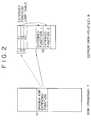
- Fig. 2 typically shows a basic program stored in the ROM 7 and extended function programs stored in the EEPROM 9.
- the basic program stored in the ROM 7 includes, in its address a1 for example, a branch step for the extended function program.
- This branch step is so programmed that an address stored at each of, e.g., entries t1 to t3 of the EEPROM 9 is read and, when the address is 0, it is regarded as no storage of any extended function program therein, and an error process is executed. Meanwhile, when a predetermined address is written therein, the corresponding address of the EEPROM 9 is accessed so that the extended function program stored in that address is read out therefrom.
- an address f1 is described at an entry t1 of the EEPROM 9, and an address f2 is described at an entry t2.
- an extended function program 1 is written in the address f1 of the EEPROM 9, while an extended function program 2 is written in the address f2. Therefore, either the extended function program 1 or 2 is executed.
- the EEPROM 9 In comparison with the RAM 8, the EEPROM 9 is generally slower in access speed, smaller in capacity and more expensive. Therefore the production cost of the EEPROM 9 is extremely increased if its capacity is set to be so great. In order to eliminate such a disadvantage, there may be contrived a technique of compressing and storing an extended function program in the EEPROM 9 and, at the time of switching on the power supply or starting the program, unwinding (expanding) the compressed extended function program stored in the EEPROM 9 and then writing the unwound program in the RAM 8.
- Fig. 3 shows an embodiment representing the above case.
- an extended function program transmitted via a satellite is written in the EEPROM 9.
- the extended function program is sent in a compressed state from the transmitter side and then is stored in the EEPROM 9 while being retained in such a compressed state. Consequently it becomes possible to hold even a relatively long program in the EEPROM 9 without the necessity of increasing the storage capacity thereof so much.
- the extended function program from the transmitter side may be sent as uncompressed data and may be stored in the EEPROM 9 after being compressed by the CPU 6 on the receiver side.
- a lossless data compression method based on reversible encoding which is capable of completely resuming the former original data by unwinding (expanding) the compressed data.
- Some known codes adequate for such data compression are, e.g., run length code, Huffman code, arithmetic code, and Lempel-Ziv code.
- Entries T1 to T3 of the RAM 8 are described at the branch step for the extended function program in the address a1 of the ROM 7. Therefore, similarly to the foregoing example of Fig. 2, it is possible to execute the extended function program 1 stored in the address F1 of the RAM 8 written at the entry T1, and also the extended function program 2 stored in the address F2 written at the entry T2.
- the extended function programs unwound in the RAM 8 are erased when the power supply for the decoder is switched off. Therefore the program unwinding process is necessary every time the power supply is switched on. However, the programs once unwound are continuously utilizable until switch-off of the power supply.
- the extended function programs can be erased, whenever not required, in response to a command from a user. It is also possible to modify the configuration in such a manner that the CPU 6 detects probable insufficiency of the storage area of the RAM 8 and erases any unrequired program.
- the present invention enables only a specified decoder to utilize, e.g., game software or an electronic program guide (EPG) for selecting a desired one of many broadcast channels, or to monitor pay-per-view picture.
- EPG electronic program guide
- an EEPROM is employed as a memory for holding the data even in an off-state of the power supply.
- any other memory is usable as well if it is nonvolatile and reprogrammable.
- the timing for unwinding (expanding) the compressed program may be set to coincide with the use thereof.
- an extended function program is transmitted and stored whenever necessary.
- a branch for the extended function program is previously prepared in a basic program and, when the extended function program has been stored, it can be read out at the branch in the basic program, so that data can be processed in accordance with the extended function program thus read out. Therefore, it becomes possible to transmit and add a new extended function program in compliance with the requirement.
Landscapes
- Engineering & Computer Science (AREA)
- Signal Processing (AREA)
- Multimedia (AREA)
- Software Systems (AREA)
- Databases & Information Systems (AREA)
- General Engineering & Computer Science (AREA)
- Astronomy & Astrophysics (AREA)
- General Physics & Mathematics (AREA)
- Physics & Mathematics (AREA)
- Library & Information Science (AREA)
- Computer Security & Cryptography (AREA)
- Circuits Of Receivers In General (AREA)
- Stored Programmes (AREA)
- Two-Way Televisions, Distribution Of Moving Picture Or The Like (AREA)
- Television Systems (AREA)
- Compression Or Coding Systems Of Tv Signals (AREA)
- Compression, Expansion, Code Conversion, And Decoders (AREA)
Priority Applications (2)
| Application Number | Priority Date | Filing Date | Title |
|---|---|---|---|
| EP20010112318 EP1133186B1 (fr) | 1995-01-19 | 1996-01-15 | Réception de télédiffusion numérique et méthode de transmission |
| EP20030017628 EP1361755A3 (fr) | 1995-01-19 | 1996-01-15 | Appareil de décodage et méthode de dédodage de données |
Applications Claiming Priority (3)
| Application Number | Priority Date | Filing Date | Title |
|---|---|---|---|
| JP6092/95 | 1995-01-19 | ||
| JP00609295A JP3393318B2 (ja) | 1995-01-19 | 1995-01-19 | データ受信処理装置およびデータ受信処理方法並びに放送受信処理方法 |
| JP609295 | 1995-01-19 |
Related Child Applications (1)
| Application Number | Title | Priority Date | Filing Date |
|---|---|---|---|
| EP20010112318 Division EP1133186B1 (fr) | 1995-01-19 | 1996-01-15 | Réception de télédiffusion numérique et méthode de transmission |
Publications (3)
| Publication Number | Publication Date |
|---|---|
| EP0723372A2 true EP0723372A2 (fr) | 1996-07-24 |
| EP0723372A3 EP0723372A3 (fr) | 1996-07-31 |
| EP0723372B1 EP0723372B1 (fr) | 2001-12-12 |
Family
ID=11628883
Family Applications (3)
| Application Number | Title | Priority Date | Filing Date |
|---|---|---|---|
| EP20030017628 Withdrawn EP1361755A3 (fr) | 1995-01-19 | 1996-01-15 | Appareil de décodage et méthode de dédodage de données |
| EP19960300263 Expired - Lifetime EP0723372B1 (fr) | 1995-01-19 | 1996-01-15 | Appareil de réception et de traitement des données et procédé de diffusion |
| EP20010112318 Expired - Lifetime EP1133186B1 (fr) | 1995-01-19 | 1996-01-15 | Réception de télédiffusion numérique et méthode de transmission |
Family Applications Before (1)
| Application Number | Title | Priority Date | Filing Date |
|---|---|---|---|
| EP20030017628 Withdrawn EP1361755A3 (fr) | 1995-01-19 | 1996-01-15 | Appareil de décodage et méthode de dédodage de données |
Family Applications After (1)
| Application Number | Title | Priority Date | Filing Date |
|---|---|---|---|
| EP20010112318 Expired - Lifetime EP1133186B1 (fr) | 1995-01-19 | 1996-01-15 | Réception de télédiffusion numérique et méthode de transmission |
Country Status (7)
| Country | Link |
|---|---|
| US (2) | US5978012A (fr) |
| EP (3) | EP1361755A3 (fr) |
| JP (1) | JP3393318B2 (fr) |
| KR (1) | KR100388006B1 (fr) |
| CN (2) | CN1156158C (fr) |
| DE (2) | DE69617760T2 (fr) |
| MY (1) | MY118321A (fr) |
Cited By (4)
| Publication number | Priority date | Publication date | Assignee | Title |
|---|---|---|---|---|
| SG85603A1 (en) * | 1997-09-24 | 2002-01-15 | Matsushita Electric Industrial Co Ltd | System of downloading computer software with broadcasting program |
| US6539474B2 (en) | 1997-01-31 | 2003-03-25 | Sony Corporation | System and method for selectively executing different boot routines depending on whether an error is detected |
| DE10212298A1 (de) * | 2002-03-20 | 2003-10-02 | Grundig Ag I Ins | Verfahren für die Verwaltung von Software für ein Fernsehgerät |
| DE19816280B4 (de) * | 1997-04-14 | 2006-11-02 | Lg Electronics Inc. | Vorrichtung zum Herunterladen und Verfahren dazu für einen digitalen Fernsehempfänger |
Families Citing this family (21)
| Publication number | Priority date | Publication date | Assignee | Title |
|---|---|---|---|---|
| JP3393318B2 (ja) * | 1995-01-19 | 2003-04-07 | ソニー株式会社 | データ受信処理装置およびデータ受信処理方法並びに放送受信処理方法 |
| GB9603263D0 (en) * | 1996-02-16 | 1996-04-17 | British Telecomm | Receiver control |
| JP3389843B2 (ja) * | 1997-10-17 | 2003-03-24 | 日本電気株式会社 | 情報処理装置におけるデジタル放送受信システム |
| EP0914001A1 (fr) | 1997-10-28 | 1999-05-06 | CANAL+ Société Anonyme | Téléchargement d'applications dans un décodeur numérique |
| JPH11205767A (ja) | 1998-01-16 | 1999-07-30 | Sony Corp | 受信装置及びデータ書換え方法 |
| JPH11239305A (ja) * | 1998-02-24 | 1999-08-31 | Sony Corp | デジタルテレビ放送受信装置 |
| US6298481B1 (en) * | 1998-10-30 | 2001-10-02 | Segasoft, Inc. | System for modifying the functionality of compiled computer code at run-time |
| JP2001056760A (ja) | 1999-08-19 | 2001-02-27 | Murata Mfg Co Ltd | データ処理装置 |
| US6611902B2 (en) | 2000-11-13 | 2003-08-26 | Matsushita Electric Industrial Co., Ltd. | Information processor and information processing method |
| JP2002335223A (ja) * | 2001-05-08 | 2002-11-22 | Dainippon Printing Co Ltd | データ放送を利用した電子掲示板システム |
| JP4288893B2 (ja) * | 2001-09-26 | 2009-07-01 | ソニー株式会社 | 情報処理装置、プログラムロード方法、記録媒体、プログラム更新方法及び回路素子 |
| SE520674C2 (sv) * | 2001-12-14 | 2003-08-12 | Television And Wireless Applic | Metod och system för villkorad access |
| JP2005086562A (ja) * | 2003-09-09 | 2005-03-31 | Sony Corp | 情報処理システム、情報受信処理装置及び情報処理方法 |
| KR100548207B1 (ko) * | 2003-11-18 | 2006-02-02 | 삼성전자주식회사 | 디지털 방송 수신기 및 그의 안정화된 업그레이드 방법 |
| JP4626221B2 (ja) * | 2004-06-24 | 2011-02-02 | ソニー株式会社 | 情報処理装置、情報記録媒体、および情報処理方法、並びにコンピュータ・プログラム |
| KR101085717B1 (ko) * | 2004-12-08 | 2011-11-21 | 삼성전자주식회사 | 컨텐츠 외부 녹화 방지 장치 및 방법 |
| JP2008236031A (ja) * | 2007-03-16 | 2008-10-02 | Sharp Corp | 放送波ダウンロードシステム |
| CN101695106B (zh) * | 2007-11-01 | 2012-05-30 | 晨星半导体股份有限公司 | 数字电视设定信息处理装置与数字电视信息存取方法 |
| JP4508243B2 (ja) * | 2008-01-15 | 2010-07-21 | ソニー株式会社 | 受信装置および受信方法 |
| JP4508249B2 (ja) * | 2008-03-04 | 2010-07-21 | ソニー株式会社 | 受信装置および受信方法 |
| JP4399020B1 (ja) * | 2008-08-26 | 2010-01-13 | 株式会社東芝 | 情報処理装置およびメモリ管理方法 |
Family Cites Families (12)
| Publication number | Priority date | Publication date | Assignee | Title |
|---|---|---|---|---|
| US4709137A (en) * | 1984-04-16 | 1987-11-24 | Omron Tateisi Electronics Co. | IC card and financial transaction processing system using IC card |
| JPH01246934A (ja) * | 1988-03-29 | 1989-10-02 | Toshiba Corp | 有料放送受信システム |
| US5181107A (en) * | 1989-10-19 | 1993-01-19 | Interactive Television Systems, Inc. | Telephone access information service distribution system |
| US5237610A (en) * | 1990-02-01 | 1993-08-17 | Scientific-Atlanta, Inc. | Independent external security module for a digitally upgradeable television signal decoder |
| EP0477388B1 (fr) * | 1990-04-17 | 1998-07-01 | Seiko Epson Corporation | Dispositif de production d'image |
| US5565999A (en) * | 1990-12-21 | 1996-10-15 | Canon Kabushiki Kaisha | Image data communication processing method, and apparatus therefor |
| JPH05233267A (ja) * | 1992-02-24 | 1993-09-10 | Nec Home Electron Ltd | プログラムrom内蔵装置 |
| US5367571A (en) * | 1992-12-02 | 1994-11-22 | Scientific-Atlanta, Inc. | Subscriber terminal with plug in expansion card |
| US5440632A (en) * | 1992-12-02 | 1995-08-08 | Scientific-Atlanta, Inc. | Reprogrammable subscriber terminal |
| US5524272A (en) * | 1993-12-22 | 1996-06-04 | Gte Airfone Incorporated | Method and apparatus for distributing program material |
| US5541662A (en) * | 1994-09-30 | 1996-07-30 | Intel Corporation | Content programmer control of video and data display using associated data |
| JP3393318B2 (ja) * | 1995-01-19 | 2003-04-07 | ソニー株式会社 | データ受信処理装置およびデータ受信処理方法並びに放送受信処理方法 |
-
1995
- 1995-01-19 JP JP00609295A patent/JP3393318B2/ja not_active Expired - Lifetime
-
1996
- 1996-01-15 DE DE69617760T patent/DE69617760T2/de not_active Expired - Lifetime
- 1996-01-15 DE DE1996630408 patent/DE69630408T2/de not_active Expired - Lifetime
- 1996-01-15 EP EP20030017628 patent/EP1361755A3/fr not_active Withdrawn
- 1996-01-15 EP EP19960300263 patent/EP0723372B1/fr not_active Expired - Lifetime
- 1996-01-15 EP EP20010112318 patent/EP1133186B1/fr not_active Expired - Lifetime
- 1996-01-16 US US08/585,900 patent/US5978012A/en not_active Expired - Lifetime
- 1996-01-18 KR KR1019960000998A patent/KR100388006B1/ko not_active Expired - Lifetime
- 1996-01-19 CN CNB961018011A patent/CN1156158C/zh not_active Expired - Lifetime
- 1996-01-19 CN CNB2003101199334A patent/CN1240222C/zh not_active Expired - Lifetime
- 1996-01-19 MY MYPI9600218 patent/MY118321A/en unknown
-
1999
- 1999-10-12 US US09/416,241 patent/US6321385B1/en not_active Expired - Lifetime
Cited By (9)
| Publication number | Priority date | Publication date | Assignee | Title |
|---|---|---|---|---|
| US6539474B2 (en) | 1997-01-31 | 2003-03-25 | Sony Corporation | System and method for selectively executing different boot routines depending on whether an error is detected |
| DE19816280B4 (de) * | 1997-04-14 | 2006-11-02 | Lg Electronics Inc. | Vorrichtung zum Herunterladen und Verfahren dazu für einen digitalen Fernsehempfänger |
| US7571456B1 (en) | 1997-04-14 | 2009-08-04 | Lg Electronics Inc. | Downloading apparatus and method therof for digital broadcast receiver |
| SG85603A1 (en) * | 1997-09-24 | 2002-01-15 | Matsushita Electric Industrial Co Ltd | System of downloading computer software with broadcasting program |
| US6532591B1 (en) | 1997-09-24 | 2003-03-11 | Matsushita Electric Industrial Co., Ltd. | System for downloading computer software with broadcasting program |
| DE10212298A1 (de) * | 2002-03-20 | 2003-10-02 | Grundig Ag I Ins | Verfahren für die Verwaltung von Software für ein Fernsehgerät |
| EP1349384A3 (fr) * | 2002-03-20 | 2004-01-07 | Grundig AG | Procédé de gestion de logitielle dans un récepteur de télévision |
| DE10212298B4 (de) * | 2002-03-20 | 2013-04-25 | Grundig Multimedia B.V. | Verfahren für die Verwaltung von Software für ein Fernsehgerät |
| EP1349384B1 (fr) * | 2002-03-20 | 2013-06-12 | Grundig Multimedia AG | Procédé de gestion de logiciel dans un récepteur de télévision |
Also Published As
| Publication number | Publication date |
|---|---|
| CN1514648A (zh) | 2004-07-21 |
| DE69617760T2 (de) | 2002-08-08 |
| EP1361755A3 (fr) | 2010-03-24 |
| US6321385B1 (en) | 2001-11-20 |
| KR960030700A (ko) | 1996-08-17 |
| US5978012A (en) | 1999-11-02 |
| MY118321A (en) | 2004-10-30 |
| DE69617760D1 (de) | 2002-01-24 |
| EP1361755A2 (fr) | 2003-11-12 |
| KR100388006B1 (ko) | 2003-09-22 |
| EP1133186B1 (fr) | 2003-10-15 |
| DE69630408D1 (de) | 2003-11-20 |
| CN1156158C (zh) | 2004-06-30 |
| CN1240222C (zh) | 2006-02-01 |
| DE69630408T2 (de) | 2004-08-19 |
| JPH08195952A (ja) | 1996-07-30 |
| EP0723372B1 (fr) | 2001-12-12 |
| EP1133186A1 (fr) | 2001-09-12 |
| JP3393318B2 (ja) | 2003-04-07 |
| EP0723372A3 (fr) | 1996-07-31 |
| CN1138802A (zh) | 1996-12-25 |
Similar Documents
| Publication | Publication Date | Title |
|---|---|---|
| EP1133186B1 (fr) | Réception de télédiffusion numérique et méthode de transmission | |
| KR100495779B1 (ko) | 전송된 데이터 스트림으로부터 데이터 섹션들을 추출 및 저장하는 방법 및 그의 장치 | |
| KR100343821B1 (ko) | 음성/영상 신호 트랜스포트 프로세서 장치 | |
| KR20000011787A (ko) | 데이터송신장치및방법,데이터수신장치및방법및데이터송수신시스템및방법 | |
| JP2001518256A5 (fr) | ||
| JP3755697B2 (ja) | 放送受信装置及びその方法 | |
| KR20040094836A (ko) | 수신기, 송신 스테이션, 다운로드 방법, 컴퓨터 프로그램제품 및 신호 | |
| JPH07131373A (ja) | データ配信システム | |
| EP1220536A1 (fr) | Téléviseur numérique | |
| KR100229035B1 (ko) | 스마트카드를 이용한 페이퍼뷰 프로그램 시청내역 저장방법 | |
| JP2000216735A (ja) | デ―タ受信処理装置およびデ―タ受信処理方法並びに放送方法 | |
| EP1087617A2 (fr) | Système permettant la visualisation non-linéaire de segments de programmes télévisés | |
| KR100213382B1 (ko) | 개별가입자에게 메세지 전달이 가능한 위성방송수신장치 및 방법 | |
| KR0166754B1 (ko) | 스마트카드를 이용한 위성방송수신기 및 케이블 tv수신기의 고유번호부여방법 | |
| KR100858391B1 (ko) | 메시지 통지 서비스 위한 디지털 방송 시스템 및 그 방법 | |
| JP2000216736A (ja) | 放送システム | |
| KR0185948B1 (ko) | 디지탈 위성방송수신기의 rsms메세지 처리방법 | |
| MXPA99008546A (es) | Extraccion de secciones de datos desde una corriente de datos transmitida | |
| JPH10108147A (ja) | 放送受信装置 | |
| KR19980057460A (ko) | 프로그램 지정정보와 부가정보 처리방법 | |
| KR19980040837A (ko) | 비화채널 수신방법 |
Legal Events
| Date | Code | Title | Description |
|---|---|---|---|
| PUAI | Public reference made under article 153(3) epc to a published international application that has entered the european phase |
Free format text: ORIGINAL CODE: 0009012 |
|
| PUAL | Search report despatched |
Free format text: ORIGINAL CODE: 0009013 |
|
| AK | Designated contracting states |
Kind code of ref document: A2 Designated state(s): DE FR GB |
|
| AK | Designated contracting states |
Kind code of ref document: A3 Designated state(s): DE FR GB |
|
| 17P | Request for examination filed |
Effective date: 19961227 |
|
| 17Q | First examination report despatched |
Effective date: 19990218 |
|
| RTI1 | Title (correction) |
Free format text: DATA RECEIVING-PROCESSING APPARATUS AND BROADCASTING METHOD |
|
| GRAG | Despatch of communication of intention to grant |
Free format text: ORIGINAL CODE: EPIDOS AGRA |
|
| GRAG | Despatch of communication of intention to grant |
Free format text: ORIGINAL CODE: EPIDOS AGRA |
|
| GRAH | Despatch of communication of intention to grant a patent |
Free format text: ORIGINAL CODE: EPIDOS IGRA |
|
| GRAH | Despatch of communication of intention to grant a patent |
Free format text: ORIGINAL CODE: EPIDOS IGRA |
|
| GRAA | (expected) grant |
Free format text: ORIGINAL CODE: 0009210 |
|
| AK | Designated contracting states |
Kind code of ref document: B1 Designated state(s): DE FR GB |
|
| REG | Reference to a national code |
Ref country code: GB Ref legal event code: IF02 |
|
| REF | Corresponds to: |
Ref document number: 69617760 Country of ref document: DE Date of ref document: 20020124 |
|
| ET | Fr: translation filed | ||
| PLBE | No opposition filed within time limit |
Free format text: ORIGINAL CODE: 0009261 |
|
| STAA | Information on the status of an ep patent application or granted ep patent |
Free format text: STATUS: NO OPPOSITION FILED WITHIN TIME LIMIT |
|
| 26N | No opposition filed | ||
| REG | Reference to a national code |
Ref country code: FR Ref legal event code: PLFP Year of fee payment: 20 |
|
| PGFP | Annual fee paid to national office [announced via postgrant information from national office to epo] |
Ref country code: DE Payment date: 20150121 Year of fee payment: 20 |
|
| PGFP | Annual fee paid to national office [announced via postgrant information from national office to epo] |
Ref country code: FR Payment date: 20150122 Year of fee payment: 20 Ref country code: GB Payment date: 20150121 Year of fee payment: 20 |
|
| REG | Reference to a national code |
Ref country code: DE Ref legal event code: R071 Ref document number: 69617760 Country of ref document: DE |
|
| REG | Reference to a national code |
Ref country code: GB Ref legal event code: PE20 Expiry date: 20160114 |
|
| PG25 | Lapsed in a contracting state [announced via postgrant information from national office to epo] |
Ref country code: GB Free format text: LAPSE BECAUSE OF EXPIRATION OF PROTECTION Effective date: 20160114 |