EP0724190A2 - Verfahren zum Entwickeln von photographischen Elementen, die Emulsionen und tafelförmigen Körnern enthalten - Google Patents
Verfahren zum Entwickeln von photographischen Elementen, die Emulsionen und tafelförmigen Körnern enthalten Download PDFInfo
- Publication number
- EP0724190A2 EP0724190A2 EP96200180A EP96200180A EP0724190A2 EP 0724190 A2 EP0724190 A2 EP 0724190A2 EP 96200180 A EP96200180 A EP 96200180A EP 96200180 A EP96200180 A EP 96200180A EP 0724190 A2 EP0724190 A2 EP 0724190A2
- Authority
- EP
- European Patent Office
- Prior art keywords
- silver
- grain
- emulsion
- tabular
- molar
- Prior art date
- Legal status (The legal status is an assumption and is not a legal conclusion. Google has not performed a legal analysis and makes no representation as to the accuracy of the status listed.)
- Withdrawn
Links
Images
Classifications
-
- G—PHYSICS
- G03—PHOTOGRAPHY; CINEMATOGRAPHY; ANALOGOUS TECHNIQUES USING WAVES OTHER THAN OPTICAL WAVES; ELECTROGRAPHY; HOLOGRAPHY
- G03C—PHOTOSENSITIVE MATERIALS FOR PHOTOGRAPHIC PURPOSES; PHOTOGRAPHIC PROCESSES, e.g. CINE, X-RAY, COLOUR, STEREO-PHOTOGRAPHIC PROCESSES; AUXILIARY PROCESSES IN PHOTOGRAPHY
- G03C7/00—Multicolour photographic processes or agents therefor; Regeneration of such processing agents; Photosensitive materials for multicolour processes
- G03C7/30—Colour processes using colour-coupling substances; Materials therefor; Preparing or processing such materials
- G03C7/407—Development processes or agents therefor
- G03C7/413—Developers
-
- G—PHYSICS
- G03—PHOTOGRAPHY; CINEMATOGRAPHY; ANALOGOUS TECHNIQUES USING WAVES OTHER THAN OPTICAL WAVES; ELECTROGRAPHY; HOLOGRAPHY
- G03C—PHOTOSENSITIVE MATERIALS FOR PHOTOGRAPHIC PURPOSES; PHOTOGRAPHIC PROCESSES, e.g. CINE, X-RAY, COLOUR, STEREO-PHOTOGRAPHIC PROCESSES; AUXILIARY PROCESSES IN PHOTOGRAPHY
- G03C1/00—Photosensitive materials
- G03C1/005—Silver halide emulsions; Preparation thereof; Physical treatment thereof; Incorporation of additives therein
- G03C1/0051—Tabular grain emulsions
- G03C1/0053—Tabular grain emulsions with high content of silver chloride
-
- G—PHYSICS
- G03—PHOTOGRAPHY; CINEMATOGRAPHY; ANALOGOUS TECHNIQUES USING WAVES OTHER THAN OPTICAL WAVES; ELECTROGRAPHY; HOLOGRAPHY
- G03C—PHOTOSENSITIVE MATERIALS FOR PHOTOGRAPHIC PURPOSES; PHOTOGRAPHIC PROCESSES, e.g. CINE, X-RAY, COLOUR, STEREO-PHOTOGRAPHIC PROCESSES; AUXILIARY PROCESSES IN PHOTOGRAPHY
- G03C1/00—Photosensitive materials
- G03C1/005—Silver halide emulsions; Preparation thereof; Physical treatment thereof; Incorporation of additives therein
- G03C1/035—Silver halide emulsions; Preparation thereof; Physical treatment thereof; Incorporation of additives therein characterised by the crystal form or composition, e.g. mixed grain
- G03C2001/03535—Core-shell grains
-
- G—PHYSICS
- G03—PHOTOGRAPHY; CINEMATOGRAPHY; ANALOGOUS TECHNIQUES USING WAVES OTHER THAN OPTICAL WAVES; ELECTROGRAPHY; HOLOGRAPHY
- G03C—PHOTOSENSITIVE MATERIALS FOR PHOTOGRAPHIC PURPOSES; PHOTOGRAPHIC PROCESSES, e.g. CINE, X-RAY, COLOUR, STEREO-PHOTOGRAPHIC PROCESSES; AUXILIARY PROCESSES IN PHOTOGRAPHY
- G03C1/00—Photosensitive materials
- G03C1/005—Silver halide emulsions; Preparation thereof; Physical treatment thereof; Incorporation of additives therein
- G03C1/035—Silver halide emulsions; Preparation thereof; Physical treatment thereof; Incorporation of additives therein characterised by the crystal form or composition, e.g. mixed grain
- G03C2001/03558—Iodide content
-
- G—PHYSICS
- G03—PHOTOGRAPHY; CINEMATOGRAPHY; ANALOGOUS TECHNIQUES USING WAVES OTHER THAN OPTICAL WAVES; ELECTROGRAPHY; HOLOGRAPHY
- G03C—PHOTOSENSITIVE MATERIALS FOR PHOTOGRAPHIC PURPOSES; PHOTOGRAPHIC PROCESSES, e.g. CINE, X-RAY, COLOUR, STEREO-PHOTOGRAPHIC PROCESSES; AUXILIARY PROCESSES IN PHOTOGRAPHY
- G03C2200/00—Details
- G03C2200/01—100 crystal face
Definitions
- This invention relates to an improved processing method for developing originating silver halide photographic elements.
- the basic image-forming process of color photography comprises exposing a silver halide photographic recording material to light, and chemically processing the material to reveal a usable image.
- the fundamental steps of this processing typically entail: (1) treating the exposed silver halide with a color developer wherein some or all of the silver halide is reduced to metallic silver while an organic dye is formed from the oxidized color developer; and (2) removing the silver metal thus formed and any residual silver halide by the desilvering steps of bleaching, wherein the developed silver is oxidized to silver salts, and fixing, wherein the silver salts are dissolved and removed from the photographic material.
- the bleaching and fixing steps may be performed sequentially or as a single step, that is discussed herein as blixing. In some methods of color image formation, additional color or black & white development steps, chemical fogging steps and ancillary stopping, washing, accelerating and stabilizing steps may be employed.
- the usable image is provided to a customer by a multi-stage method that involves exposing a light sensitive originating element to a scene, and developing and desilvering that originating element to form a color image.
- the originating element may, for example, be a color negative film or a motion picture negative film.
- the resultant color image is then used to modulate the exposure of a light sensitive display element, with optional enlargement, in a printer.
- the display element may, for example, be a color paper, an intermediate film, or a motion picture projection film.
- the exposed display element is then developed and desilvered to form a useful color image that duplicates the original scene.
- Originating elements are typically designed to allow good exposure with available light under a wide variety of lighting conditions, that is, good sensitivity (speed/grain) and dynamic range (long latitude and low gamma) are desired.
- display elements are typically designed so as to allow a full range of density formation after well defined exposure and process conditions in a printer, that is, good image discrimination (high density and low fog), low dynamic range (short latitude and high gamma) and easy and consistent processing are desired.
- compositions One major difference in composition is evidenced in the use of silver iodobromide emulsions in the originating element, a color negative film for example, for their high sensitivity and desirable image structure properties and the use of silver chloride or silver chlorobromide emulsions in the display element, a color paper for example, for their low sensitivity, short latitude and good developability, as well as their ease of reproducible desilvering.
- EP-A-0 468 780 describes low bromide ion developer formulations said to be useful with color negative films employing cubic silver bromochloride emulsions. Although rapid development using a low bromide developer is described, the overall light sensitivity of these films is deficient. DE 4,227,075 teaches that the quantity of bromide in these emulsions leads to rapid deactivation of the developer solution as bromide ion washes out of the film and into the developer solution during a development step.
- US-A-4,952,490 describes a color negative film employing large, optimally sensitized regular shaped silver chloride emulsions featuring ⁇ 111 ⁇ crystallographic faces.
- Organic grain surface stabilizers and sensitizing dyes are added at precipitation to stabilize the grain surface and shape. While somewhat improved sensitivity is obtained, high sensitivity and adequate image characteristics are not simultaneously available with these emulsions since the large, regularly shaped grains provide only limited useful sensitivity.
- Cubic shaped silver chloride emulsion grains specifically precipitated with organic grain growth directors and described as corner development grains (CDGs) are disclosed at US-A-4,820,624 and US-A-4,865,962.
- CDGs corner development grains
- US-A-5,344,750 describes the use of highly light sensitive silver iodobromide emulsions in a camera speed film that is then processed at elevated temperatures in developer solutions containing highly concentrated developing agent and bromide ion.
- the higher temperatures and otherwise tightly controlled developer solution composition required by this approach are difficult to provide especially since continuous processing leads to a steady decrease in developing agent and developer bromide ion concentration that results in unwanted degrees of fog growth.
- the higher levels of iodide ion in the emulsions remove the possibility of ready and rapid desilvering.
- This invention provides a rapid access image forming process for high sensitivity color photographic elements comprising the step of contacting an imagewise exposed camera speed color photographic element with a developing solution wherein:
- This invention provides for a highly light sensitive color film that can be employed in a hand-held camera and is rapidly and evenly developable so as to provide a pleasingly balanced image. Further, the developed color film exhibits improved granularity and signal-to-noise characteristics that further contribute to the pleasing quality of the formed image. Additionally, the film can be rapidly and completely desilvered using a variety of environmentally preferred desilvering agents thereby enabling the production of a colorful image in an ecologically friendly manner.
- the originating silver halide photographic elements described herein allow good exposure with available light under a wide variety of lighting conditions. They provide good speed with low graininess. At a minimum these originating elements have an ISO speed rating of 25 or greater, with greater than 50 being preferred.
- the speed or sensitivity of color negative photographic materials is inversely related to the exposure required to enable the attainment of a specified density above fog after processing.
- Photographic speed for color negative films with a gamma of about 0.65 has been specifically defined by the American National Standards Institute (ANSI) as ANSI Standard Number PH 2.27 - 1979 (ASA speed) and relates to the exposure levels required to enable a density of 0.15 above fog in the green light sensitive and least sensitive recording unit of a multicolor negative film. This definition conforms to the International Standards Organization (ISO) film speed rating.
- ISO International Standards Organization
- speed depends on film gamma.
- Color negative films intended for other than direct optical printing may be formulated or processed to achieve a gamma greater or less than 0.65.
- the speeds of such films are determined by first linearly amplifying or deamplifying the achieved density vs log exposure relationship (that is the gamma) to a value of 0.65 and then determining the speed according to the above definitions.
- the photographic emulsions used in the originating element may include, among others, silver chloride, silver bromochloride, silver bromide, silver iodobromochloride, silver iodochloride or silver iodobromide. Silver chloride and silver bromochloride emulsions are preferred. Whatever the emulsion mix, the originating photographic element must contain at least 50 mol % silver chloride, with 70 mol % being preferred and over 98 mol % being most preferred. The total amount of silver iodide in the photographic element must be less than 2 mol %, and preferably less than 1 mol %. The total amount of coated silver may be from about 1 to 10 grams per square meter, with less than 7 grams per square meter preferred, and less than 4 grams per square meter being most preferred.
- the originating photographic elements of this invention contain at least one radiation sensitive silver halide emulsion containing a dispersing agent and a high silver chloride grain population. At least 50 percent of total grain projected area of the high silver chloride grain population is accounted for by tabular grains that (1) are bounded by ⁇ 100 ⁇ major faces having adjacent edge ratios of less than 10 and (2) each have an aspect ratio of at least 2.
- the tabular grains are intrinsically stable and do not require the use of stabilizers such as thiirane, thiepine, thiophene, thiazole and other such cyclic sulfides; mercaptoacetic acids, cysteine, penicillamine and other thiols; and acetylthiophenol and related thioesters and thiocarbanimides to maintain their shape.
- stabilizers such as thiirane, thiepine, thiophene, thiazole and other such cyclic sulfides; mercaptoacetic acids, cysteine, penicillamine and other thiols; and acetylthiophenol and related thioesters and thiocarbanimides to maintain their shape.
- stabilizers such as thiirane, thiepine, thiophene, thiazole and other such cyclic sulfides; mercaptoacetic acids, cysteine,
- development inhibitors typically comprise a silver halide binding group having a sulfur, selenium, tellurium or heterocyclic nitrogen or carbon with a free valence that can form a bond to silver atoms, as well as a ballast moiety.
- Originating photographic elements that contain development inhibitor releasing (DIR) compounds that enable release of development inhibitors having a sulfur with a free valence that can form a bond to a silver atom appear to desilver more slowly than those containing other classes of development inhibitors or no development inhibitor.
- DIR development inhibitor releasing
- DIR compounds that enable release of development inhibitors with a heterocyclic nitrogen as a silver binding group, such as oxazoles, thiazoles, diazoles, triazoles, oxadiazoles, thiadiazoles, oxathiazoles, thiatriazoles, benzotriazoles, tetrazoles, benzimidazoles, indazoles, isoindazoles, benzodiazoles or benzisodiazoles.
- Development inhibitors having a sulfur with a free valence can, however, have other advantages and may be utilized in limited quantities that do not greatly effect desilvering.
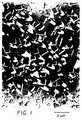
- Figure 1 is a shadowed photomicrograph of carbon grain replicas of a representative emulsion, described in detail in Example 1 below. It is immediately apparent that most of the grains have orthogonal tetragonal (square or rectangular) faces. The orthogonal tetragonal shape of the grain faces indicates that they are ⁇ 100 ⁇ crystal faces.
- rods acicular or rod-like grains
- These grains are more than 10 times longer in one dimension than in any other dimension and can be excluded from the desired tabular grain population based on their high ratio of edge lengths.
- the projected area accounted for by the rods is low, but, when rods are present, their projected area is noted for determining total grain projected area.
- ECD ECD/t.
- ECD is determined by measuring the projected area (the product of edge lengths) of the upper surface of each grain. From the grain projected area the ECD of the grain is calculated. Grain thickness is commonly determined by oblique illumination of the grain population resulting in the individual grains casting shadows.
- the grains having square or rectangular faces and each having a ratio of ECD/t of at least 2 are tabular grains having ⁇ 100 ⁇ major faces.
- the emulsion is a tabular grain emulsion.
- tabular grains account for more than 50 percent of total grain projected area. From the definition of a tabular grain above, it is apparent that the average aspect ratio of the tabular grains can only approach 2 a minimum limit. In fact, tabular grain emulsions of the invention typically exhibit average aspect ratios of 5 or more, with high average aspect ratios (>8) being preferred. That is, preferred emulsions according to the invention are high aspect ratio tabular grain emulsions. In specifically preferred emulsions according to the invention, average aspect ratios of the tabular grain population are at least 12 and optimally at least 20. Typically the average aspect ratio of the tabular grain population ranges up to 50, but higher aspect ratios of 100, 200 or more can be realized. Emulsions within the contemplation of the invention in which the average aspect ratio approaches the minimum average aspect ratio limit of 2 still provide a surface to volume ratio that is 200 percent that of cubic grains.
- the tabular grain population can exhibit any grain thickness that is compatible with the average aspect ratios noted above. However, particularly when the selected tabular grain population exhibits a high average aspect ratio, it is preferred to additionally limit the grains included in the selected tabular grain population to those that exhibit a thickness of less than 0.3 mm and, optimally, less than 0.2 mm. It is appreciated that the aspect ratio of a tabular grain can be limited either by limiting its equivalent circular diameter or increasing its thickness. Thus, when the average aspect ratio of the tabular grain population is in the range of from 2 to 8, the tabular grains accounting for at least 50 percent of total grain projected area can also each exhibit a grain thickness of less than 0.3 mm or less than 0.2 mm.
- tabular grain thicknesses that are on average 1 mm or even larger can be tolerated. This is because the eye is least sensitive to the blue record and hence higher levels of image granularity (noise) can be tolerated without objection.
- image granularity noise
- a source of this difficulty resides in the blue photon deficiency of sunlight. While sunlight on an energy basis exhibits equal parts of blue, green and red light, at shorter wavelengths the photons have higher energy. Hence, on a photon distribution basis, daylight is slightly blue deficient.
- the tabular grain population preferably exhibits major face edge length ratios of less than 5 and optimally less than 2.
- tabular grains with lower edge ratios are less susceptible to pressure desensitization.
- the tabular grain population accounting for at least 50 percent of total grain projected area is provided by tabular grains also exhibiting 0.2 mm.
- the emulsions are in this instance thin tabular grain emulsions.
- ultrathin tabular grain emulsions have been prepared satisfying the requirements of the invention.
- Ultrathin tabular grain emulsions are those in which the selected tabular grain population is made up of tabular grains having an average thickness of less than 0.06 mm.
- the only ultrathin tabular grain emulsions of a halide content exhibiting a cubic crystal lattice structure known in the art contained tabular grains bounded by ⁇ 111 ⁇ major faces. In other words, it was thought essential to form tabular grains by the mechanism of parallel twin plane incorporation to achieve ultrathin dimensions.
- Emulsions according to the invention can be prepared in which the tabular grain population has a mean thickness down to 0.02 mm and even 0.01 mm.
- Ultrathin tabular grains have extremely high surface to volume ratios. This permits ultrathin grains to be photographically processed at accelerated rates. Further, when spectrally sensitized, ultrathin tabular grains exhibit very high ratios of speed in the spectral region of sensitization as compared to the spectral region of native sensitivity: For example, ultrathin tabular grain emulsions according to the invention can have entirely negligible levels of blue sensitivity, and are therefore capable of providing a green or red record in a photographic product that exhibits minimal blue contamination even when located to receive blue light.
- the high chloride tabular grain population accounting for 50 percent of total grain projected area preferably exhibits a tabularity of greater than 25 and most preferably greater than 100. Since the tabular grain population can be ultrathin, it is apparent that extremely high tabularities, ranging to 1000 and above are within the contemplation of the invention.
- the tabular grain population can exhibit an average ECD of any photographically useful magnitude.
- average ECD's of less than 10 mm are contemplated, although average ECD's in most photographic applications rarely exceed 6 mm.
- intermediate aspect ratios with ECD's of the tabular grain population of 0.10 mm and less.
- emulsions with selected tabular grain populations having higher ECD's are advantageous for achieving relatively high levels of photographic sensitivity while selected tabular grain populations with lower ECD's are advantageous in achieving low levels of granularity.
- the advantageous properties of the emulsions of the invention are increased as the proportion of tabular grains having ⁇ 100 ⁇ major faces is increased.
- the preferred emulsions according to the invention are those in which at least 70 percent and optimally at least 90 percent of total grain projected area is accounted for by tabular grains having ⁇ 100 ⁇ major faces. It is specifically contemplated to provide emulsions satisfying the grain descriptions above in which the selection of the rank ordered tabular grains extends to sufficient tabular grains to account for 70 percent or even 90 percent of total grain projected area.
- the emulsion does not satisfy the requirements of the invention and is, in general, a photographically inferior emulsion.
- emulsions are photographically inferior in which many or all of the tabular grains are relatively thick--for example, emulsions containing high proportions of tabular grains with thicknesses in excess of 0.3 mm.
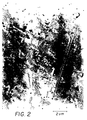
- inferior emulsions failing to satisfy the requirements of the invention have an excessive proportion of total grain projected area accounted for by cubes, twinned nontabular grains, and rods. Such an emulsion is shown in Figure 2. Most of the grain projected area is accounted for by cubic grains. Also the rod population is much more pronounced than in Figure 1. A few tabular grains are present, but they account for only a minor portion of total grain projected area.
- the tabular grain emulsion of Figure 1 satisfying the requirements of the invention and the predominantly cubic grain emulsion of Figure 2 were prepared under conditions that were identical, except for iodide management during nucleation.
- the Figure 2 emulsion is a silver chloride emulsion while the emulsion of Figure 1 additionally includes a small amount of silver iodide.
- emulsions satisfying the requirements of the invention has been achieved by the discovery of a novel precipitation process.
- grain nucleation occurs in a high chloride environment in the presence of iodide ion under conditions that favor the emergence of ⁇ 100 ⁇ crystal faces.
- iodide ion the inclusion of iodide into the cubic crystal lattice being formed by silver ions and the remaining halide ions is disruptive because of the much larger diameter of iodide ion as compared to chloride ion.
- the incorporated iodide ions introduce crystal irregularities that in the course of further grain growth result in tabular grains rather than regular (cubic) grains.
- cubic grain nuclei being formed having one or more screw dislocations in one or more of the cubic crystal faces.
- the cubic crystal faces that contain at least one screw dislocation thereafter accept silver halide at an accelerated rate as compared to the regular cubic crystal faces (that is, those lacking a screw dislocation).
- grain growth on only one face is accelerated, and the resulting grain structure on continued growth is a rod.
- the same result occurs when only two opposite parallel faces of the cubic crystal structure contain screw dislocations.
- any two contiguous cubic crystal faces contain a screw dislocation
- continued growth accelerates growth on both faces and produces a tabular grain structure.
- the tabular grains of the emulsions of this invention are produced by those grain nuclei having two, three or four faces containing screw dislocations.
- a reaction vessel containing a dispersing medium and conventional silver and reference electrodes for monitoring halide ion concentrations within the dispersing medium.
- Halide ion is introduced into the dispersing medium that is at least 50 mol % silver chloride--that is, at least half by number of the halide ions in the dispersing medium are chloride ions.
- the pCl of the dispersing medium is adjusted to favor the formation of ⁇ 100 ⁇ grain faces on nucleation--that is, within the range of from 0.5 to 3.5, preferably within the range of from 1.0 to 3.0 and, optimally, within the range of from 1.5 to 2.5.
- the grain nucleation step is initiated when a silver jet is opened to introduce silver ion into the dispersing medium.
- Iodide ion is preferably introduced into the dispersing medium concurrently with or, optimally, before opening the silver jet.
- Effective tabular grain formation can occur over a wide range of iodide ion concentrations ranging up to the saturation limit of iodide in silver chloride.
- the saturation limit of iodide in silver chloride is reported by H. Hirsch, "Photographic Emulsion Grains with Cores: Part I. Evidence for the Presence of Cores", J. of Photog. Science , Vol. 10 (1962), pp. 129-134, to be 13 mol %.
- iodide in which equal molar proportions of chloride and bromide ion are present up to 27 mol % iodide, based on silver, can be incorporated in the grains. It is preferred to undertake grain nucleation and growth below the iodide saturation limit to avoid the precipitation of a separate silver iodide phase and thereby avoid creating an additional category of unwanted grains. It is generally preferred to maintain the iodide ion concentration in the dispersing medium at the outset of nucleation at less than 10 mol %. In fact, only minute amounts of iodide at nucleation are required to achieve the desired tabular grain population. Initial iodide ion concentrations of down to 0.001 mol % are contemplated. However, for convenience in replication of results, it is preferred to maintain initial iodide concentrations of at least 0.01 mol % and, optimally, at least 0.05 mol %.
- silver iodochloride grain nuclei are formed during the nucleation step. Minor amounts of bromide ion can be present in the dispersing medium during nucleation. Any amount of bromide ion can be present in the dispersing medium during nucleation that is compatible with at least 50 mol % of the halide in the grain nuclei being chloride ions.
- the grain nuclei preferably contain at least 70 mol % and optimally at least 90 mol % chloride ion, based on silver.
- Grain nuclei formation occurs instantaneously upon introducing silver ion into the dispersing medium.
- silver ion introduction during the nucleation step is preferably extended for a convenient period, typically from 5 seconds to less than a minute. So long as the pCl remains within the ranges set forth above no additional chloride ion need be added to the dispersing medium during the nucleation step. It is, however, preferred to introduce both silver and halide salts concurrently during the nucleation step.
- the advantage of adding halide salts concurrently with silver salt throughout the nucleation step is that this permits assurance that any grain nuclei formed after the outset of silver ion addition are of essentially similar halide content as those grain nuclei initially formed.
- Iodide ion addition during the nucleation step is particularly preferred. Since the deposition rate of iodide ion far exceeds that of the other halides, iodide will be depleted from the dispersing medium unless replenished.
- Silver ion is preferably introduced as an aqueous silver salt solution, such as a silver nitrate solution.
- Halide ion is preferably introduced as alkali or alkaline earth halide, such as lithium, sodium and/or potassium chloride, bromide and/or iodide.
- the dispersing medium contained in the reaction vessel prior to the nucleation step is comprised of water, the dissolved halide ions discussed above and a peptizer.
- the dispersing medium can exhibit a pH within any convenient conventional range for silver halide precipitation, typically from 2 to 8. It is preferred, but not required, to maintain the pH of the dispersing medium on the acid side of neutrality (that is, ⁇ 7.0). To minimize fog a preferred pH range for precipitation is from 2.0 to 5.0.
- Mineral acids such as nitric acid or hydrochloride acid, and bases, such as alkali hydroxides, can be used to adjust the pH of the dispersing medium. It is also possible to incorporate pH buffers.
- the peptizer can take any convenient conventional form known to be useful in the precipitation of photographic silver halide emulsions and particularly tabular grain silver halide emulsions.
- a summary of conventional peptizers is provided in Research Disclosure , Vol. 308, December 1989, Item 308119, Section IX. Research Disclosure is published by Kenneth Mason Publications, Ltd., Emsworth, Hampshire P010 7DD, England.
- gelatino peptizers for example, gelatin and gelatin derivatives
- gelatino peptizers typically contain significant concentrations of calcium ion, although the use of deionized gelatino peptizers is a known practice. In the latter instance it is preferred to compensate for calcium ion removal by adding divalent or trivalent metal ions, such as alkaline earth or earth metal ions, preferably magnesium, calcium, barium or aluminum ions.
- peptizers are low methionine gelatino peptizers (that is, those containing less than 30 micromoles of methionine per gram of peptizer), optimally less than 12 micromoles of methionine per gram of peptizer.
- the grain growth modifiers of the type taught for inclusion in these emulsions for example, adenine
- these grain growth modifiers promote twinning and the formation of tabular grains having ⁇ 111 ⁇ major faces.
- at least about 10 percent and typically from 20 to 80 percent of the dispersing medium forming the completed emulsion is present in the reaction vessel at the outset of the nucleation step. It is conventional practice to maintain relatively low levels of peptizer, typically from 10 to 20 percent of the peptizer present in the completed emulsion, in the reaction vessel at the start of precipitation.
- the concentration of the peptizer in the dispersing medium be in the range of from 0.5 to 6 percent by weight of the total weight of the dispersing medium at the outset of the nucleation step. It is conventional practice to add gelatin, gelatin derivatives and other vehicles and vehicle extenders to prepare emulsions for coating after precipitation. Any naturally occurring level of methionine can be present in gelatin and gelatin derivatives added after precipitation is complete.
- the nucleation step can be performed at any convenient conventional temperature for the precipitation of silver halide emulsions. Temperatures ranging from near ambient--for example, 30 o C up to 90 o C are contemplated, with nucleation temperatures in the range of from 35 to 70 o C being preferred.
- a grain growth step follows the nucleation step in which the grain nuclei are grown until tabular grains having ⁇ 100 ⁇ major faces of a desired average ECD are obtained.
- the objective of the nucleation step is to form a grain population having the desired incorporated crystal structure irregularities
- the objective of the growth step is to deposit additional silver halide onto (grow) the existing grain population while avoiding or minimizing the formation of additional grains. If additional grains are formed during the growth step, the polydispersity of the emulsion is increased and, unless conditions in the reaction vessel are maintained as described above for the nucleation step, the additional grain population formed in the growth step will not have the desired tabular grain properties described above.
- the process of preparing emulsions according to the invention can be performed as a single jet precipitation without interrupting silver ion introduction from start to finish.
- a spontaneous transition from grain formation to grain growth occurs even with an invariant rate of silver ion introduction, since the increasing size of the grain nuclei increases the rate at which they can accept silver and halide ion from the dispersing medium until a point is reached at which they are accepting silver and halide ions at a sufficiently rapid rate that no new grains can form.
- single jet precipitation limits halide content and profiles and generally results in more polydisperse grain populations.
- emulsions In the preparation of emulsions for the invention it is preferred to interrupt silver and halide salt introductions at the conclusion of the nucleation step and before proceeding to the growth step that brings the emulsions to their desired final size and shape.
- the emulsions are held within the temperature ranges described above for nucleation for a period sufficient to allow reduction in grain dispersity.
- a holding period can range from a minute to several hours, with typical holding periods ranging from 5 minutes to an hour.
- relatively smaller grain nuclei are Ostwald ripened onto surviving, relatively larger grain nuclei, and the overall result is a reduction in grain dispersity.
- the rate of ripening can be increased by the presence of a ripening agent in the emulsion during the holding period.
- a conventional simple approach to accelerating ripening is to increase the halide ion concentration in the dispersing medium. When this approach is employed, it is preferred to increase the chloride ion concentration in the dispersing medium. That is, it is preferred to lower the pCl of the dispersing medium into a range in which increased silver chloride solubility is observed.
- ripening can be accelerated and the percentage of total grain projected area accounted for by ⁇ 100 ⁇ tabular grains can be increased by employing conventional ripening agents, such as thioethers and thiocyanates as disclosed by US-A-2,222,264, US-A-2,448,534, US-A-3,320,069, US-A-3,271,157, US-A-3,574,628 and US-A-3,737,313. More recently crown thioethers have been suggested for use as ripening agents. Sodium sulfite has also been demonstrated to be effective in increasing the percentage of total grain projected accounted by the ⁇ 100 ⁇ tabular grains.
- grain growth to obtain the emulsions for the invention can proceed according to any convenient conventional precipitation technique for the precipitation of silver halide grains bounded by ⁇ 100 ⁇ grain faces.
- any halide or combination of halides known to form a cubic crystal lattice structure can be employed during the growth step.
- iodide nor chloride ions need be incorporated in the grains during the growth step, since the irregular grain nuclei faces that result in tabular grain growth, once introduced, persist during subsequent grain growth independently of the halide being precipitated, provided the halide or halide combination is one that forms a cubic crystal lattice. This excludes only iodide levels above 13 mol % (preferably 6 mol %) in precipitating silver iodochloride, levels of iodide above 40 mol % (preferably 30 mol %) in precipitating silver iodobromide, and proportionally intermediate levels of iodide in precipitating silver iodohalides containing bromide and chloride.
- silver bromide or silver iodobromide When silver bromide or silver iodobromide is being deposited during the growth step, it is preferred to maintain a pBr within the dispersing medium in the range of from 1.0 to 4.2, preferably 1.6 to 3.4.
- a pBr When silver chloride, silver iodochloride, silver bromochloride or silver iodobromochloride is being deposited during the growth step, it is preferred to maintain the pCl within the dispersing medium within the ranges noted above in describing the nucleation step.
- both silver and halide salts are preferably introduced into the dispersing medium.
- double jet precipitation is contemplated, with added iodide salt, if any, being introduced with the remaining halide salt or through an independent jet.
- the rate at which silver and halide salts are introduced is controlled to avoid renucleation--that is, the formation of a new grain population--using known techniques.
- nucleation and growth stages of grain precipitation occur in the same reaction vessel. It is, however, recognized that grain precipitation can be interrupted, particularly after completion of the nucleation stage. Further, two separate reaction vessels can be substituted for the single reaction vessel described above.
- US-A-4,334,012 that also discloses the useful feature of ultrafiltration during grain growth
- the high silver chloride tabular grains useful in the practice of this invention are further characterized in that such grains are comprised of a core and a surrounding band containing a higher level of iodide ions and containing up to about 30 percent of the silver in the tabular grain.
- Such grains are described in US-A-5,314,798.
- peptizers that exhibit reduced adhesion to grain surfaces.
- low methionine gelatin is less tightly absorbed to grain surfaces than gelatin containing higher levels of methionine.
- Further moderated levels of grain adsorption can be achieved with so-called “synthetic peptizers"--that is, peptizers formed from synthetic polymers.
- the maximum quantity of peptizer compatible with limited coalescence of grain nuclei is, of course, related to the strength of adsorption to the grain surfaces.
- the emulsions for this invention include silver chloride, silver iodochloride emulsions, silver iodobromochloride emulsions and silver iodochlorobromide emulsions.
- Dopants in concentrations of up to 10 -2 mol per silver mol and typically less than 10 -4 mol per silver mol, can be present in the grains.
- Compounds of metals such as copper, thallium, lead, mercury, bismuth, zinc, cadmium , rhenium, and Group VIII metals (for example, iron, ruthenium, rhodium, palladium, osmium, iridium, and platinum) can be present during grain precipitation, preferably during the growth stage of precipitation.
- Coordination ligands such as halo, aquo, cyano cyanate, thiocyanate, nitrosyl, thionitrosyl, oxo and carbonyl ligands are contemplated and can be relied upon to modify photographic properties.
- the invention is particularly advantageous in providing high silver chloride (greater than 50 mol % silver chloride) tabular grain emulsions, since conventional high silver chloride tabular grain emulsions having tabular grains bounded by ⁇ 111 ⁇ are inherently unstable and require the presence of a morphological stabilizer to prevent the grains from regressing to nontabular forms.
- Particularly preferred high silver chloride emulsions are those that contain more than 70 mol % (optimally more than 90 mol %) silver chloride.
- a further procedure that can be employed to maximize the population of tabular grains having ⁇ 100 ⁇ major faces is to incorporate an agent capable of restraining the emergence of non- ⁇ 100 ⁇ grain crystal faces in the emulsion during its preparation.
- the restraining agent when employed, can be active during grain nucleation, during grain growth or throughout precipitation.
- Useful restraining agents under the contemplated conditions of precipitation are organic compounds containing a nitrogen atom with a resonance stabilized p electron pair. Resonance stabilization prevents protonation of the nitrogen atom under the relatively acid conditions of precipitation.
- the restraining agent can satisfy the following formula: where Z represents the atoms necessary to complete a five or six membered aromatic ring structure, preferably formed by carbon and nitrogen ring atoms.
- Preferred aromatic rings are those that contain one, two or three nitrogen atoms.
- Specifically contemplated ring structures include 2H-pyrrole, pyrrole, imidazole, pyrazole, 1,2,3-triazole, 1,2,4-triazole, 1,3,5-triazole, pyridine, pyrazine, pyrimidine, and pyridazine.
- Ar is an aromatic ring structure containing from 5 to 14 carbon atoms and R 1 and R 2 are independently hydrogen, Ar, or any convenient aliphatic group or together complete a five or six membered ring.
- Ar is preferably a carbocyclic aromatic ring, such as phenyl or naphthyl.
- any of the nitrogen and carbon containing aromatic rings noted above can be attached to the nitrogen atom of formula II through a ring carbon atom. In this instance, the resulting compound satisfies both formulae I and II. Any of a wide variety of aliphatic groups can be selected.
- the simplest contemplated aliphatic groups are alkyl groups, preferably those containing from 1 to 10 carbon atoms and most preferably from 1 to 6 carbon atoms. Any functional substituent of the alkyl group known to be compatible with silver halide precipitation can be present. It is also contemplated to employ cyclic aliphatic substituents exhibiting 5 or 6 membered rings, such as cycloalkane, cycloalkene and aliphatic heterocyclic rings, such as those containing oxygen and/or nitrogen hetero atoms. Cyclopentyl, cyclohexyl, pyrrolidinyl, piperidinyl, furanyl and similar heterocyclic rings are specifically contemplated.
- Selection of preferred restraining agents and their useful concentrations can be accomplished by the following selection procedure:
- the compound being considered for use as a restraining agent is added to a silver chloride emulsion consisting essentially of cubic grains with a mean grain edge length of 0.3 mm.
- the emulsion is 0.2 molar in sodium acetate, has a pCl of 2.1, and has a pH that is at least one unit greater than the pKa of the compound being considered.
- the emulsion is held at 75 o C with the restraining agent present for 24 hours.
- the compound introduced is performing the function of a restraining agent.
- the significance of sharper edges of intersection of the ⁇ 100 ⁇ crystal faces lies in the fact that grain edges are the most active sites on the grains in terms of ions reentering the dispersing medium.
- the restraining agent is acting to restrain the emergence of non- ⁇ 100 ⁇ crystal faces, such as are present, for example, at rounded edges and corners.
- Optimum restraining agent activity occurs when the new grain population is a tabular grain population in which the tabular grains are bounded by ⁇ 100 ⁇ major crystal faces.
- any color developing agent that is suitable for use with low silver iodide, silver chloride containing elements may be utilized with this invention.
- These color developing agents are well known and widely used in a variety of color photographic processes. They include aminophenols and p-phenylenediamines.
- concentration of developing agent to be employed in the practice of this invention can be any concentration known in the art, it is preferred that the concentration be between about 1.0 and 200 mmol/liter, with a concentration range between about 5 and 100 mmol/liter being preferred, a range between about 10 and 80 mmol/liter being more preferred and a concentration range between about 10 and 60 mmol/liter being most preferred.
- paraphenylene diamine developing agent is typically added to the developing solution directly, it may also provided by incorporation in a blocked form directly in the light sensitive color element as described in US-A-5,256,525.
- the blocked form of the developer may be employed in a replenisher element as described in US-A-5,302,498.
- the color developing solutions used with this invention may contain a variety of other agents such as alkalies to control pH, bromides, iodides, benzyl alcohol, anti-oxidants, anti-foggants, solubilizing agents (such as para-toluene sulfonic acid), brightening agents, competing couplers and so forth.
- alkalies to control pH bromides, iodides, benzyl alcohol, anti-oxidants, anti-foggants, solubilizing agents (such as para-toluene sulfonic acid), brightening agents, competing couplers and so forth.
- the photographic color developing compositions may be employed in the form of aqueous alkaline working solutions having a pH of above 7 and preferably in the range of from 9 to 13.
- the developer solution is more preferably maintained at a pH between 9 and 12 and most preferably maintained at a pH between 9.5 and 11.5.
- they may contain one or more of the well known and widely used pH buffering agents, such ash the alkali metal carbonates or phosphates. Potassium carbonate is especially preferred.
- the contact time of the photographic element with the developer solution is between 5 and 150 seconds.
- the contact time is between 10 and 120 seconds and most preferably the contact time is between 15 and 105 seconds.
- the temperature of the development solution is typically regulated using means well known in the art at between 25 °C and 65 °C.
- the temperature is maintained at between 30 °C and 60 °C. and most preferably the temperature is maintained at between 35 °C and 60 °C.
- the developer solution useful in the practice of this invention comprises bromide ion that can be provided as any of the known bromide salts including but not limited to potassium bromide, sodium bromide, lithium bromide and ammonium bromide.
- the bromide ion concentration is maintained at a level greater than 0.18 mmol/liter. While a bromide ion concentration between 0.25 and 50 mmol/liter may be employed, a bromide ion concentration between 1 and 28 mmol/liter is preferred, and a bromide ion concentration between 2 mmol/liter and 20 mmol/liter is even more preferred.
- the ratio of the concentration of developing agent to bromide ion should be between 60:1 and 0.5:1. It is preferable that the ratio of developing agent to bromide ion concentration be between 50:1 and 0.8:1 and more preferable that this ratio be between 40:1 and 0.9:1. It is most preferred that the ratio of developing agent concentration to bromide ion concentration in the developing solution be between 30:1 and 1:1.
- the contact time of an element with a process solution is the time elapsed from when the element first contacts the process solution to when the element is withdrawn from contact with the same process solution.
- the developer solutions useful in the practice of this invention may additionally contain chloride ion. Chloride ion concentrations of between 0 and 300 mmol/liter are useful, with chloride ion concentrations between 0 and 100 mmol/liter being preferred. On extended use of the developer solution to develop high chloride emulsions, chloride levels of between 15 and 80 mmol/liter may be typically encountered. Additionally, the developer solutions useful in the practice of this invention may include iodide ion as known in the art. Trace quantities of iodide ion at concentrations between 0 and 0.1 mmol/liter are contemplated with iodide concentrations less than 0.01 mmol/liter being preferred.
- Antioxidants such as hydroxylamine, dialkyl hydroxylamines, alkylsulfonate hydroxylamines, amidoalkylhydroxylamines, alkoxyalkylhydroxylamines, alkanolamines, hydrazines and aminocarboxylic acids are additionally useful in the developer solutions at any concentration known in the art. While hydroxylamine is believed to behave as a mild developer for silver chloride emulsions, the halide ion incorporated in the developer solutions may generally be adequate to ameliorate such activity.
- the dialkyl hydroxylamines, alkanolamines and aminocarboxylic acids can be employed when such activity is objectionable.
- dialkyl hydroxylamines (substituted and unsubstituted), alkanolamines, hydrazines and aminocarboxylic acids are well know in the art and include diethyl hydroxylamine, ethanolamine and glycine as well as those illustrated at US-A-3,287,125; US-A-3,362,961; US-A-4,892,804; US-A-5,071,734; US-A-4,923,786; US-A-4,800,153; US-A-4,801,516; US-A-4,814,260; US-A-4,876,174; US-A-4,965,176; US-A-4,966,834; US-A-5,153,111; and US-A-5,354,646.
- a useful antioxidant is bis(ethylsulfonato) hydroxylamine.
- the total quantity of amine antioxidants is preferably between 0.5 and 10 moles of antioxidant per mol of paraphenylene diamine developing agent.
- Inorganic antioxidants as known in the art such as sulfite ion, bisulfite ion and the like are also useful. Typically these inorganic antioxidants are employed at art known useful concentrations. For example, less than 50 mmol/liter of sulfite or sulfite equivalent is generally found to be useful, with concentrations of less than 16 mmol/liter being preferred. It may additionally be useful to incorporate sequestering agents for iron, calcium and the like, examples being aromatic polyhydroxy compounds, aminopolyphosphonic acids and aminopolycarboxylic acids. Additional compounds to improve clarity of the developer solution such as sulfonated polystyrenes as well as antistaining agents and wetting agents, all as disclosed in US-A-4,892,804 are also recommended.
- a typical developer solution useful in the practice of this invention may be formulated from 800 ml of water, 34.3 g of anhydrous potassium carbonate, 2.32 g of potassium bicarbonate, 0.38 g of anhydrous sodium sulfite, 2.96 g of sodium metabisulfite, 1.2 mg of potassium iodide, 1.31 g of sodium bromide, 8.43 g of diethylenetriaminepentaacetic acid pentasodium salt supplied as a 40% solution, 2.41 g of hydroxylamine sulfate, 4.52 g of N-(4-amino-3-methylphenyl)-N-ethyl-2-aminoethanol) as its sulfuric acid salt, and sufficient additional water and acid or base to make 1 liter of solution at a pH of 10.00 +/-0.05 at 26.7 °C.
- Another typical developer useful in the practice of this invention may be formulated from 800 ml of water, 11 ml of 100% triethanolamine, 0.25 ml of 30% lithium polystyrene sulfonate, 0.24 g of anhydrous potassium sulfite, 2.3 g of Blankophor REU, 2.7 g of lithium sulfate, 0.8 ml of 60% 1-hydroxyethyl-1,1-diphosphonic acid, 1.8 g of potassium chloride, 0.3 g of potassium bromide, 25 g of potassium carbonate, 6 ml of 85% N,N-diethylhydroxylamine, 4.85 g of N-(4-amino-3-methylphenyl)-N-ethyl-2-aminoethyl-methanesulfonamide as its sesquisulfate hydrate salt, and sufficient additional water and acid or base to make 1 liter of solution at a pH of 10.12 +/- 0.05 at 25 °C.
- Yet another typical developer useful in the practice of this invention may be formulated from 800 ml of water, 5.5 ml of 100% triethanolamine, 0.25 ml of 30% lithium polystyrene sulfonate, 0.5 ml of 45% potassium sulfite, 1 g of Blankophor REU, 2 g of lithium sulfate, 0.6 ml of 60% 1-hydroxyethyl-1,1-diphosphonic acid, 0.6 ml of 40% diethylenetriaminepentaacetic acid pentasodium salt, 6 g of potassium chloride, 0.8 g of potassium bromide, 25 g of potassium carbonate, 3 ml of 85% N,N-diethylhydroxylamine, 3.8 g of N-(4-amino-3-methylphenyl)-N-ethyl-2-aminoethyl-methanesulfonamide as its sesquisulfate hydrate salt, and sufficient additional water and acid or base to make 1 liter
- Another useful developer may be formulated from 800 ml of water, 1 ml of 40% aminotris(methylenephosphonic acid) pentasodium salt, 4.35 g of anhydrous sodium sulfite, 1.72 g of anhydrous sodium bromide, 17.1 g of sodium carbonate monohydrate, 2.95 g of 4-N,N-diethyl-2-methylphenylenediamine as its hydrochloric acid salt, and sufficient additional water and acid or base to make 1 liter of solution at a pH of 10.53 +/- 0.05 at 26.7 °C.
- An additional useful developer may be formulated from 600 ml of water, 2 ml of 40% aminotris(methylenephosphonic acid) pentasodium salt, 2 g of anhydrous sodium sulfite, 1.2 g of anhydrous sodium bromide, 30 g of sodium carbonate monohydrate, 0.22 g of 3,5-dinitrobenzoic acid, 4 g of N-(4-amino-3-methylphenyl)-N-ethyl-2-aminoethyl-methanesulfonamide as its sesquisulfate hydrate salt, 0.17 ml of sulfuric acid, and sufficient additional water and acid or base to make 1 liter of solution at a pH of 10.20 +/- 0.05 at 26.7 °C.
- Desilvering can be performed by one of the following methods (i) a method using a bleaching solution bath and fixing solution bath; (ii) a method using a bleaching solution bath and a blixing solution bath; (iii) a method using a blixing solution and a fixing solution bath ; and (iv) a method using a single blixing bath. Blixing may be preferred in order to shorten the process time.
- bleaching agents that may be used in the bleach solutions or blix solutions of the current invention are ferric salts, persulfate, dichromate, bromate, red prussiate, and salts of aminopolycarboxylic acid ferric complexes, with salts of aminopolycarboxylic acid ferric complexes being preferred.
- Preferred aminopolycarboxylic acid ferric complexes are listed below:
- These complexes can be used alone or in mixture as known in the art.
- These aminopolycarboxylic acid ferric complexes are used in the form of a sodium salt, potassium salt, or ammonium salt.
- An ammonium salt may be preferred for speed, with alkali salts being preferred for environmental reasons.
- the content of the salt of an aminopolycarboxylic acid ferric complex in the bleaching solutions and blixing solutions of this invention is 0.05 to 1 mol/liter.
- the pH range of the bleaching solution is 2.5 to 7, and preferably 4.0 to 7.
- the bleaching solution or the blixing solution can contain rehalogenating agents, one or more inorganic and organic acids or alkali metal or ammonium salts thereof, a pH buffer, or corrosion inhibitors.
- fixing agents examples include water-soluble solvents for silver halide such as: a thiosulfate, a thiocyanate, a thioether compound and a thiourea. These fixing agents can be used singly or in a combination of at least two agents. Thiosulfate is preferably used in the present invention.
- the content of the fixing agent per liter is preferably 0.1 to 2 mol.
- the pH range of the blixing or fixing solution is preferably 3 to 10 and more preferably 5 to 9.
- hydrochloric acid sulfuric acid, nitric acid, acetic acid, bicarbonate, ammonia, potassium hydroxide, sodium hydroxide, sodium carbonate, potassium carbonate, may be added.
- the blixing and the fixing solution may also contain a preservative such as a sulfite or a metabisulfite.
- a preservative such as a sulfite or a metabisulfite.
- the content of these compounds is from 0 to 0.50 mol/liter, and more preferably 0.02 to 0.40 mol/liter as an amount of sulfite ion.
- Ascorbic acid, a carbonyl bisulfite, acid adduct, or a carbonyl compound may also be used as a preservative.
- the photographic elements described herein may be bleached or blixed with a solution comprising, as the bleaching agent, a ferric complex of an alkyliminodiacetic acid, the alkyl group of which contains from 1 to 6 carbon atoms. Methyliminodiacetic acid is among the preferred ligands.
- Blixing solutions comprising ternary ferric-complex salts can also be employed.
- the photographic elements described herein may be blixed in a solution in which the bleaching agent is an iron(III) complex with beta-alaninediacetic acid (HOOCCH 2 CH 2 N(CH 2 COOH) 2 )(ADA).
- the blixing solution is pH adjusted between 4.5 and 7.0 and contains thiosulfate.
- the blixing solution further contains at least about 50 mol % ADA per mol ferric ion, preferably at least 80 mol % ADA, and more preferably 1 to 120 mol % excess free ADA.
- a bleach bath may contain a Fe(III) complex, the complexing agent of which represents at least 20 mol % of ADA or glycinedipropionic acid (HOOCCH 2 N (CH 2 CH 2 COOH) 2 )(GDPA) or closely related complexing agents.
- a Fe(III) complex the complexing agent of which represents at least 20 mol % of ADA or glycinedipropionic acid (HOOCCH 2 N (CH 2 CH 2 COOH) 2 )(GDPA) or closely related complexing agents.
- the photographic elements described herein may be bleached in a bleaching solution consisting essentially of an aqueous solution having a pH of at least 7, that contains a peroxy compound, a buffering agent, and a polyacetic acid that contains at least three carboxyl groups and is selected from the group consisting of aminopolyacetic acids and thiopolyacetic acids.
- the preferred pH range is from 8 to 10.
- the preferred peroxy compound is hydrogen peroxide.
- the preferred buffering agents are selected from the group consisting of hydroxides, borates, phosphates, carbonates and acetates.
- the polyacetic acid is preferably selected from the group consisting of 2-hydroxy-trimethylenedinitrilo tetraacetic acid, 1,2-propanediaminetetraacetic acid, ethanediylidenetetrathio tetraacetic acid, ethylenedinitrilotetraacetic acid, cyclohexylenedinitrilo tetraacetic acid, nitrilotriacetic acid, and diethylenetriamine pentaacetic acid; and more preferably 2-hydroxy-trimethylenedinitrilo tetraacetic acid.
- the photographic elements described herein may be blixed in a blixing solution containing an aqueous alkaline solution of a peroxy compound and an ammonium or amine salt of a weak acid selected from the group consisting of carbonic acid, phosphoric acid, sulfurous acid, boric acid, formic acid, acetic acid, propionic acid and succinic acid.
- a pH range from 8 to 12 is preferred, with a pH from 9 to 11 being more preferred.
- Preferred peroxy compounds are hydrogen peroxide, an alkali metal perborate or an alkali metal percarbonate.
- the preferred salt of a weak acid is ammonium carbonate.
- the photographic elements described herein may be bleached or blixed with bleaching or bleach-fixing solutions containing at least one of hydrogen peroxide and a compound capable of releasing hydrogen peroxide, and at least one water-soluble chloride.
- the water soluble chloride is preferably an alkali metal salt or a quaternary ammonium salt and preferably is present at 0.005 to 0.3 moles per liter.
- the bleaching or blixing solutions also preferably contain an organic phosphonic acid or a salt thereof, more preferably of the type R 1 N(CH 2 PO 3 M 2 ) 2 , wherein M represents a hydrogen atom or a cation imparting water solubility (for example, alkali metal such as sodium and potassium; ammonium, pyridinium, triethanolammonium or triethylammonium ion); and R 1 represents an alkyl group having from 1 to 4 carbon atoms, an aryl group, an araalkyl group, an alicyclic group, or a heterocyclic group each of which may be substituted with a hydroxyl group, an alkoxy group, a halogen atom, -PO 3 M 2 , -CH 2 PO 3 M 2 or -N(CH 2 PO 3 M 2 ) 2 ; or of the type (R 2 R 3 C(PO 3 M 2 ) 2 ), where R 2 represents a hydrogen atom, an alkyl group, an
- the photographic elements described herein may be developed and bleached by a method of processing that includes a redox-amplification dye image-forming step and a bleach step using an aqueous solution of hydrogen peroxide or a compound capable of releasing hydrogen peroxide.
- the preferred pH of the bleach solution is from 1 to 6, more preferably from 3 to 5.5.
- the photographic elements may further be fixed in a sulfite fixer with or without a low level of thiosulfate (for example, 60 g Na 2 SO 3 /liter and 2 g Na 2 S 2 O 3 /liter). This processing method is further described in WO 92/01972.
- the photographic elements described herein may be bleached in a bleaching solution containing hydrogen peroxide, or a compound that releases hydrogen peroxide, and halide ions and that has a pH in the range of 5 to 11.
- Chloride ion is the preferred halide and is preferably present at 0.52 to 1 g /liter.
- the photographic elements described herein may be fixed in an aqueous fixing solution containing a concentration of from 5 to 200 g/liter of an alkali metal sulfite as the sole silver halide solvent.
- the alkali metal sulfite is preferably 10 to 150 g/liter of anhydrous sodium sulfite.
- the fixer bath pH is preferably greater than 6. It is preferred to use a silver chloride forming bleaching step prior to the fixing step.
- the photographic elements described herein may be fixed in a fixing solution that has a thiosulfate concentration from 0.05 to 3.0 molar and an ammonium concentration of 0.0 to 1.2 molar, preferably less than 0.9 molar, and more preferably essentially absent.
- the photographic elements preferably have a silver halide content of less than 7.0 g/m 2 based on silver and an iodide content of less than about 0.35 g/m 2 .
- they preferably contain an emulsion containing from about 0.2 to 3.0 g/m 2 , based on silver, of a silver halide emulsion in which greater than 50% of the projected surface area is provided by tabular grains having a tabularity between 50 and 25,000.
- the photographic elements described herein may be bleached by contacting them with a persulfate bleach solution in the presence of an accelerating amount of a complex of ferric ion and a 2-pyridinecarboxylic acid or a 2,6-pyridinedicarboxylic acid.
- the complex of ferric ion and a 2-pyridinecarboxylic acid or a 2,6-pyridinedicarboxylic acid may be contained in the bleach itself, a prebleach or in the photographic element.
- the persulfate is preferably sodium persulfate.
- the 2-pyridinecarboxylic acid or 2,6-pyridinedicarboxylic acid is of the formula: wherein X 1 , X 2 , X 3 and X 4 are independently H, OH, CO 2 M, SO 3 M, or PO 3 M, and M is H or an alkali metal cation. Most preferably X 1 , X 2 , X 3 and X 4 are H.
- the concentration of the ferric ion is preferably 0.001 to 0.100 molar and the concentration of the 2-pyridinecarboxylic acid or 2,6-pyridinedicarboxylic acid is 0.001 to 0.500 molar.
- Peracid bleaches may be especially useful with the originating photographic elements of this invention when the color silver halide photographic element has a speed greater than ISO 180 or contains at least one spectrally sensitized silver halide emulsion with a tabularity greater than 100, and when the photographic element comprises a total amount of incorporated silver and incorporated vehicle of 20 g/m 2 film or less.
- the developed photographic element should be bleached in the presence of a bleach accelerator.
- the peracid is a sodium, potassium, or ammonium persulfate bleach and the amount of silver in the photographic element is less than 10 g/m 2 of film.
- the photographic elements may also be desilvered by bleaching the photographic element with a peracid bleach, and subsequently contacting the photographic element with a fixer solution comprising thiosulfate anion and sodium cation. This is particularly useful in the following embodiments:
- the photographic elements may also be processed in KODAK Process ECN and ECP, that are described in Kodak H-24.07 “Manual for Processing Eastman Motion Picture Films, Module 7"(ECN) and Kodak H-24.09 “Manual for Processing Eastman Color Films, Module 9” (ECP), available from Eastman Kodak Company, Department 412-L, Rochester, New York.
- the photographic elements may additionally be employed with rapid acting bleaches and fixes known in the art and often commercially employed in minilabs.
- the rapid bleaching and fixing solutions, their regeneration, replenishment and use described at "Fujicolor Negative Films, Process CN-16FA", publication AF3-699E, available from the Fuji Photo Company, and the rapid bleaching and fixer solutions, and their regeneration, replenishment and use described at "Using KODAK Chemicals in Minilabs", publication Z-100 available from the Eastman Kodak Company are specifically contemplated.
- the contact time of the exposed and developed element with a bleach, fixer, bleach-fix, wash, accelerator or stabilizer solution can be any time known in the art.
- the purposes of the invention are best served by limiting this contact time.
- the contact time of the element with any of these solutions will generally not individually exceed 240 seconds.
- these individual contact times will be less than 120 or 90 seconds, and more preferably, these individual contact times will be less than 60, 30, 20 or even 10 seconds.
- any total contact time useful to enable desilvering is contemplated. It is preferred that this total contact time not exceed 240 seconds, more preferred that it not exceed 120 or 90 seconds and most preferred that it not exceed 60 or even 30 seconds.
- Desilvering of the exposed and developed element can be aided by any of the bleach, fixer or bleach-fix catalysts or accelerants known in the art. These catalysts or accelerants may be employed in a blocked or unblocked form and may be initially present in the element itself, or in any of the solutions that the element contacts during the course of development or desilvering.
- replenishment solutions are supplied at a rate of less than about 450 ml per square meter of processed film. It is even more preferred that the replenishment solutions be supplied at a rate of between 10 and 300 ml per square meter of processed film and most preferred that the replenisher solution be supplied at a rate of between 30 and 200 ml per square meter of processed film.
- the bleach-fix replenisher it is preferred that the bleach-fix replenisher not contain 1,2,4-triazole-3-thiol or a derivative as an accelerant.
- the emulsions used in this invention can be chemically sensitized with active gelatin as illustrated by T. H. James, The Theory of the Photographic Process , 4th Ed., Macmillan, 1977, pp. 67-76, or with sulfur, selenium, tellurium, gold, platinum, palladium, iridium, osmium, rhenium or phosphorus sensitizers or combinations of these sensitizers, such as at pAg levels of from 5 to l0, pH levels of from 5 to 8 and temperatures of from 30 to 80 o C, as illustrated by Research Disclosure , Vol. l20, April, 1974, Item l2008, Research Disclosure , Vol.
- the emulsions can be spectrally sensitized with dyes from a variety of classes, including the polymethine dye class, that includes the cyanines, merocyanines, complex cyanines and merocyanines (that is, tri-, tetra- and polynuclear cyanines and merocyanines), styryls, merostyryls, streptocyanines, hemicyanines, arylidenes, allopolar cyanines and enamine cyanines.
- the polymethine dye class that includes the cyanines, merocyanines, complex cyanines and merocyanines (that is, tri-, tetra- and polynuclear cyanines and merocyanines), styryls, merostyryls, streptocyanines, hemicyanines, arylidenes, allopolar cyanines and enamine cyanines.
- stabilizers and antifoggants can be employed, as is known in the art.
- the emulsions can be protected from fog and desensitization caused by trace amounts of metals such as copper, lead, tin, iron and the like by incorporating known addenda.
- pressure desensitization and/or increased fog can be controlled by selected combinations of addenda, vehicles, hardeners and/or processing conditions as illustrated by US-A-3,295,976, US-A-3,545,97l, US-A-3,708,303, US-A-3,6l5,619, US-A-3,623,873, US-A-3,67l,258, US-A-3,79l,830, Research Disclosure , Vol. 99, July, 1972, Item 9930, US-A-3,843,364, US-A-3,867,l52, US-A-3,967,965 and US-A-3,947,274 and US-A-3,954,474.
- the low levels of native blue sensitivity of the high silver chloride ⁇ 100 ⁇ tabular grain emulsions allows the emulsions to be employed in any desired layer order arrangement in multicolor photographic elements, including any of the layer order arrangements disclosed by US-A-4,439,520, both for layer order arrangements and for other conventional features of photographic elements containing tabular grain emulsions.
- a dye image-forming compound is typically a coupler compound, a dye redox releaser compound, a dye developer compound, an oxichromic developer compound, or a bleachable dye or dye precursor compound.
- Dye redox releaser, dye developer, and oxichromic developer compounds useful in color photographic elements that can be employed in image transfer processes are described in The Theory of the Photographic Process , 4th edition, T.H. James, editor, Macmillan, New York, 1977, Chapter 12, Section V, and in Section XXIII of Research Disclosure , December 1989, Item 308119, published by Kenneth Mason Publications, Ltd., Dudley Annex, 12a North Street, Emsworth, Hampshire, PO1O 7DQ, United Kingdom.
- Dye compounds useful in color photographic elements employed in dye bleach processes are described in Chapter 12, Section IV, of The Theory of the Photographic Process , 4th edition.
- Preferred dye image-forming compounds are coupler compounds that react with oxidized color developing agents to form colored products or dyes.
- a coupler compound contains a coupler moiety COUP, that is combined with the oxidized developer species in the coupling reaction to form the dye structure.
- a coupler compound can additionally contain a group, called a coupling-off group, that is attached to the coupler moiety by a bond that is cleaved upon reaction of the coupler compound with oxidized color developing agent.
- Coupling-off groups can be halogen, such as chloro, bromo, fluoro, and iodo, or organic radicals that are attached to the coupler moieties by atoms such as oxygen, sulfur, nitrogen, phosphorus, and the like.
- a PUG-releasing compound is a compound that contains a photographically useful group and is capable of reacting with an oxidized developing agent to release said group.
- a PUG-releasing compound comprises a carrier moiety and a leaving group, that are linked by a bond that is cleaved upon reaction with oxidized developing agent.
- the leaving group contains the PUG, that can be present either as a preformed species, or as a blocked or precursor species that undergoes further reaction after cleavage of the leaving group from the carrier to produce the PUG.
- the reaction of an oxidized developing agent with a PUG-releasing compound can produce either colored or colorless products.
- Carrier moieties include hydroquinones, catechols, aminophenols, sulfonamidophenols, sulfonamidonaphthols, hydrazides, and the like that undergo cross-oxidation by oxidized developing agents.
- a preferred carrier moiety in a PUG-releasing compound is a coupler moiety COUP, that can combine with an oxidized color developer in the cleavage reaction to form a colored species, or dye.
- the carrier moiety is a COUP
- the leaving group is referred to as a coupling-off group.
- the coupling-off group contains the PUG, either as a preformed species or as a blocked or precursor species.
- the coupler moiety can be ballasted or unballasted. It can be monomeric, or it can be part of a dimeric, oligomeric or polymeric coupler, in which case more than one group containing PUG can be contained in the coupler, or it can form part of a bis compound in which the PUG forms part of a link between two coupler moieties.
- the PUG can be any group that is typically made available in a photographic element in an imagewise fashion.
- the PUG can be a photographic reagent or a photographic dye.
- a photographic reagent, that upon release further reacts with components in the photographic element as described herein, is a moiety such as a development inhibitor, a development accelerator, a bleach inhibitor, a bleach accelerator, an electron transfer agent, a coupler (for example, a competing coupler, a dye-forming coupler, or a development inhibitor releasing coupler, a dye precursor, a dye, a developing agent (for example, a competing developing agent, a dye-forming developing agent, or a silver halide developing agent), a silver complexing agent, a fixing agent, an image toner, a stabilizer, a hardener, a tanning agent, a fogging agent, an ultraviolet radiation absorber, an antifoggant, a nucleator, a chemical or spectral sensitizer, or a desensitizer.
- the PUG can be present in the coupling-off group as a preformed species or it can be present in a blocked form or as a precursor.
- the PUG can be, for example, a preformed development inhibitor, or the development inhibiting function can be blocked by being the point of attachment to the carbonyl group bonded to PUG in the coupling-off group.
- Other examples are a preformed dye, a dye that is blocked to shift its absorption, and a leuco dye.
- a PUG-releasing compound can be described by the formula CAR-(TIME) n -PUG, wherein (TIME) is a linking or timing group, n is 0, 1, or 2, and CAR is a carrier moiety from which is released imagewise a PUG (when n is 0) or a PUG precursor (TIME) 1 -PUG or (TIME) 2 -PUG (when n is 1 or 2) upon reacting with oxidized developing agent. Subsequent reaction of (TIME) 1 -PUG or (TIME) 2 -PUG produces PUG.
- Linking groups when present, are groups such as esters, carbamates, and the like that undergo base-catalyzed cleavage, including intramolecular nucleophilic displacement, thereby releasing PUG. Where n is 2, the (TIME) groups can be the same or different. Suitable linking groups, that are also known as timing groups, are shown in US-A-Nos. 5,151,343; 5,051,345; 5,006,448; 4,409,323; 4,248,962; 4,847,185; 4,857,440; 4,857,447; 4,861,701; 5,021,322; 5,026,628, and 5,021,555.
- linking groups are p-hydroxphenylmethylene moieties, as illustrated in the previously mentioned US-A-Nos. 4,409,323; 5,151,343 and 5,006,448, and o-hydroxyphenyl substituted carbamate groups, disclosed in US-A-Nos. 5,151,343 and 5,021,555, that undergo intramolecular cyclization in releasing PUG.
- TIME When TIME is joined to a COUP, it can be bonded at any of the positions from which groups are released from couplers by reaction with oxidized color developing agent.
- TIME is attached at the coupling position of the coupler moiety so that, upon reaction of the coupler with oxidized color developing agent, TIME, with attached groups, will be released from COUP.
- TIME can also be in a non-coupling position of the coupler moiety from which it can be displaced as a result of reaction of the coupler with oxidized color developing agent.
- other groups can be in the coupling position, including conventional coupling off groups.
- the same or different inhibitor moieties from those described in this invention can be used.
- COUP can have TIME and PUG in each of a coupling position and a non-coupling position. Accordingly, compounds useful in this invention can release more than one mol of PUG per mol of coupler.
- TIME can be any organic group that will serve to connect CAR to the PUG moiety and which, after cleavage from CAR, will in turn be cleaved from the PUG moiety.
- This cleavage is preferably by an intramolecular nucleophilic displacement reaction of the type described in, for example, US-A-4,248,962, or by electron transfer along a conjugated chain as described in, for example, US-A-4,409,323.
- the term "intramolecular nucleophilic displacement reaction” refers to a reaction in which a nucleophilic center of a compound reacts directly, or indirectly through an intervening molecule, at another site on the compound, that is an electrophilic center, to effect displacement of a group or atom attached to the electrophilic center.
- Such compounds have both a nucleophilic group and an electrophilic group spatially related by the configuration of the molecule to promote reactive proximity.
- the nucleophilic group and the electrophilic group are located in the compound so that a cyclic organic ring, or a transient cyclic organic ring, can be easily formed by an intramolecular reaction involving the nucleophilic center and the electrophilic center.
- Useful timing groups are represented by the structure: ( ⁇ Nu ⁇ LINK) ⁇ E wherein: Nu is a nucleophilic group attached to a position on CAR from which it will be displaced upon reaction of CAR with oxidized developing agent; E is an electrophilic group attached to an inhibitor moiety as described and is displaceable therefrom by Nu after Nu is displaced from CAR; and LINK is a linking group for spatially relating Nu and E, upon displacement of Nu from CAR, to undergo an intramolecular nucleophilic displacement reaction with the formation of a 3- to 7-membered ring and thereby release the PUG moiety.
- a nucleophilic group (Nu) is defined herein as a group of atoms one of which is electron rich. Such an atom is referred to as a nucleophilic center.
- An electrophilic group (E) is defined herein as a group of atoms, one of which is electron deficient. Such an atom is referred to as an electrophilic center.
- the timing group can contain a nucleophilic group and an electrophilic group, which groups are spatially related with respect to one another by a linking group so that, upon release from CAR, the nucleophilic center and the electrophilic center will react to effect displacement of the PUG moiety from the timing group.
- the nucleophilic center should be prevented from reacting with the electrophilic center until release from the CAR moiety, and the electrophilic center should be resistant to external attack, such as hydrolysis.
- Premature reaction can be prevented by attaching the CAR moiety to the timing group at the nucleophilic center or an atom in conjunction with a nucleophilic center, so that cleavage of the timing group and the PUG moiety from CAR unblocks the nucleophilic center and permits it to react with the electrophilic center, or by positioning the nucleophilic group and the electrophilic group so that they are prevented from coming into reactive proximity until release.
- the timing group can contain additional substituents, such as additional photographically useful groups (PUGs), or precursors thereof, that may remain attached to the timing group or be released.
- the groups should be spatially related after cleavage from CAR so that they can react with one another.
- the nucleophilic group and the electrophilic group are spatially related within the timing group so that the intramolecular nucleophilic displacement reaction involves the formation of a 3- to 7-membered ring, most preferably a 5- or 6-membered ring.
- thermodynamics should be such and the groups be so selected that an overall free energy decrease results upon ring closure, forming the bond between the nucleophilic group and the electrophilic group, and breaking the bond between the electrophilic group and the PUG.
- nucleophilic group, linking group, and electrophilic group will yield a thermodynamic relationship favorable to breaking of the bond between the electrophilic group and the PUG moiety.
- Representative Nu groups contain electron rich oxygen, sulfur and nitrogen atoms.
- Representative E groups contain electron deficient carbonyl, thiocarbonyl, phosphonyl and thiophosphonyl moieties. Other useful Nu and E groups will be apparent to those skilled in the art.
- the linking group can be an acyclic group such as alkylene, for example, methylene, ethylene or propylene, or a cyclic group such as an aromatic group, such as phenylene or naphthylene, or a heterocyclic group, such as furan, thophene, pyridine, quinoline or benzoxazine.
- LINK is alkylene or arylene.
- the groups Nu and E are attached to LINK to provide, upon release of Nu from CAR, a favorable spatial relationship for nucleophilic attack of the nucleophilic center in Nu on the electrophilic center in E.
- Nu and E can be attached to the same or adjacent rings.
- Aromatic groups in which Nu and E are attached to adjacent ring positions are particularly preferred LINK groups.
- TIME can be unsubstituted or substituted.
- the substituents can be those that will modify the rate of reaction, diffusion, or displacement, such as halogen, including fluoro, chloro, bromo, or iodo, nitro, alkyl of 1 to 20 carbon atoms, acyl, such as carboxy, carboxyalkyl, alkoxycarbonyl, alkoxycarbonamido, sulfoalkyl, alkanesulfonamido, and alkylsulfonyl, solubilizing groups, ballast groups and the like, or they can be substituents that are separately useful in the photographic element, such as a stabilizer, an antifoggant, a dye (such as a filter dye or a solubilized masking dye) and the like.
- solubilizing groups will increase the rate of diffusion
- ballast groups will decrease the rate of diffusion
- electron withdrawing groups will decrease the rate of displacement of the PUG.
- electron transfer down a conjugated chain is understood to refer to transfer of an electron along a chain of atoms in which alternate single bonds and double bonds occur.
- a conjugated chain is understood to have the same meaning as commonly used in organic chemistry. This further includes TIME groups capable of undergoing fragmentation reactions where the number of double bonds is zero. Electron transfer down a conjugated chain is described in, for example, US-A-4,409,323.
- TIME moieties can have a finite half-life or an extremely short half-life. The half-life is controlled by the specific structure of the TIME moiety, and may be chosen so as to best optimize the photographic function intended. TIME moiety half-lives of from less than 0.001 second to over 10 minutes are known in the art. TIME moieties having a half-life of over 0.1 second are often preferred for use in PUG-releasing compounds that yield development inhibitor moieties, although use of TIME moieties with shorter half-lives to produce development inhibitor moieties is known in the art. The TIME moiety may either spontaneously liberate a PUG after being released from CAR, or may liberate PUG only after a further reaction with another species present in a process solution, or may liberate PUG during contact of the photographic element with a process solution.
- the dye image-forming compounds and PUG-releasing compounds can be incorporated in photographic elements of the present invention by means and processes known in the photographic art.
- a photographic element in which the dye image-forming and PUG-releasing compounds are incorporated can be a monocolor element comprising a support and a single silver halide emulsion layer, or it can be a multicolor, multilayer element comprising a support and multiple silver halide emulsion layers.
- the above described compounds can be incorporated in at least one of the silver halide emulsion layers and/or in at least one other layer, such as an adjacent layer, where they are in reactive association with the silver halide emulsion layer and are thereby able to react with the oxidized developing agent produced by development of silver halide in the emulsion layer.
- the silver halide emulsion layers and other layers of the photographic element can contain addenda conventionally contained in such layers.
- a typical multicolor, multilayer photographic element can comprise a support having thereon a red-sensitized silver halide emulsion unit having associated therewith a cyan dye image-forming compound, a green-sensitized silver halide emulsion unit having associated therewith a magenta dye image-forming compound, and a blue-sensitized silver halide emulsion unit having associated therewith a yellow dye image-forming compound.
- Each silver halide emulsion unit can be composed of one or more layers, and the various units and layers can be arranged in different locations with respect to one another, as known in the prior art and as illustrated by layer order formats hereinafter described.
- a layer or unit affected by PUG can be controlled by incorporating in appropriate locations in the element a layer that confines the action of PUG to the desired layer or unit.
- at least one of the layers of the photographic element can be, for example, a scavenger layer, a mordant layer, or a barrier layer. Examples of such layers are described in, for example, US-A-Nos. 4,055,429; 4,317,892; 4,504,569; 4,865,946; and 5,006,451.
- the element can also contain additional layers such as antihalation layers, filter layers and the like. It is generally preferred to minimize the thickness of the element above the support so as to improve sharpness and improve access of processing solutions to the components of the element.
- thicknesses of less than 30 micrometers are generally useful while thicknesses of between 5 and 25 micrometers are preferred and thicknesses of between 7 and 20 micrometers are even more preferred.
- These lowered thicknesses can be enabled at manufacture by use of surfactants and coatings aids as known in the art so as to control viscosity and shear.
- Both sharpness and ease of processing may be further improved by minimizing the quantity of incorporated silver in the element. While any useful quantity of light sensitive silver may be employed in the elements of this invention, total silver quantities of between 1 and 10 grams per square meter are contemplated and total silver of less than 7 grams per square meter are preferred. Total silver of between 1 and 5 grams per square meter are even more preferred. Sharpness and color rendition in color images is further improved by complete removal of silver and silver halide from the element on processing. Since more swellable elements enable better access of components of processing solutions to the elements of this invention, swell ratios above 1.25 are preferred, with swell ratios of between 1.4 and 6 being more preferred and swell ratios of between 1.7 and 3 being most preferred.
- Suitable dispersing media for the emulsion layers and other layers of elements of this invention are described in Section IX of Research Disclosure , December 1989, Item 308119, and publications therein.
- the elements of this invention can include additional dye image-forming compounds, as described in Sections VII A-E and H, and additional PUG-releasing compounds, as described in Sections VII F and G of Research Disclosure , December 1989, Item 308119, and the publications cited therein.
- the elements of this invention can contain brighteners (Section V), antifoggants and stabilizers (Section VI), antistain agents and image dye stabilizers (Section VII I and J), light absorbing and scattering materials (Section VIII), hardeners (Section X), coating aids (Section XI), plasticizers and lubricants (Section XII), antistatic agents (Section XIII), matting agents (Section XVI), and development modifiers (Section XXI), all in Research Disclosure , December 1989, Item 308119.
- the elements of the invention can be coated on a variety of supports, as described in Section XVII of Research Disclosure , December 1989, Item 308119, and references cited therein.
- the supports employed in this invention are flexible supports.
- Typical flexible supports include films of cellulose nitrate, cellulose acetate, polyvinylacetal, polyethylene terephthalate, polycarbonate and related resinous and polymeric materials. These supports can be of any suitable thickness and will preferably be less than 150 micrometers thick, more preferably between 50 and 130 micrometers thick and most preferably between 60 and 110 micrometers thick.
- the light sensitive elements of this invention are color originating or color display materials, it is generally intended that they be supplied on spools or in cartridge form generally as known in the art.
- the element When the element is supplied in spool form it may be wrapped about a core and enclosed in a removable housing with an exposed film leader as known in the art.
- the cartridge When the element is supplied in cartridge form, the cartridge may enclose a light sensitive photographic element in roll form and a housing surrounding the film to form a cartridge receptacle for protecting the film from exposure and an opening for withdrawing the film from the cartridge receptacle.
- Such materials be supplied in a length that results in the element being forced to assume a radius of curvature of less than 12,000 micrometers, and preferably a radius of curvature less than 9,000 or 6,500 or even 6,000 micrometers or even less.
- the element may be supplied on similar or even less demanding spools and forced by a camera mechanism or the like through a constricted radius of curvature as small as 1,400 or even 1,000 micrometers. This severe curvature may occur in a consumer loadable camera or in a preloaded camera as known in the art.
- These cameras can provide specific features as known in the art such as shutter means, film advance means, waterproof housings, single or multiple lenses, lens selection means, variable aperture, focus or focal length lenses, means for monitoring lighting conditions, means for altering shutter times or lens characteristics based on lighting conditions or user provided instructions, and means for recording use conditions directly on the film.
- the camera may comprise a lens, a shutter, the element in roll form, means for holding the element in roll form prior to exposure, means for mounting a portion of the element for exposure through the lens, means for receiving portions of the element from the mounting means, and a housing for mounting the lens and shutter and for restricting light access to the film to that entering the camera through the lens.
- the elements of this invention can be exposed to actinic radiation, typically in the visible region of the spectrum as described in greater detail hereinafter, to form a latent image and then processed to form a visible dye image, as described in Sections XVIII and XIX of Research Disclosure , December 1989, Item 308119.
- color photographic elements useful in this invention can contain any of the optional additional layers and components known to be useful in color photographic elements in general, such as, for example, subbing layers, overcoat layers, surfactants and plasticizers, some of which are discussed in detail hereinbefore. They can be coated onto appropriate supports using any suitable technique, including, for example, those described in Research Disclosure , December 1989, Item 308117, Section XV Coating and Drying Procedures, published by Industrial Opportunities Ltd., Homewell Havant, Hampshire, PO9 1EF, U.K..
- the photographic elements containing radiation sensitive ⁇ 100 ⁇ tabular grain emulsion layers that are processed according to this invention can be imagewise-exposed with various forms of energy that encompass the ultraviolet and visible (for example, actinic) and infrared regions of the electromagnetic spectrum, as well as electron-beam and beta radiation, gamma ray, X-ray, alpha particle, neutron radiation and other forms of corpuscular and wave-like radiant energy in either noncoherent (random phase) forms or coherent (in phase) forms as produced by lasers.
- Exposures can be monochromatic, orthochromatic or panchromatic.
- Imagewise exposures at ambient, elevated or reduced temperatures and/or pressures including high-or low-intensity exposures, continuous or intermittent exposures, exposure times ranging from minutes to relatively short durations in the millisecond to microsecond range and solarizing exposures, can be employed within the useful response ranges determined by conventional sensitometric techniques, as illustrated by T. H. James, The Theory of the Photographic Process , 4th Ed., Macmillan, 1977, Chapters 4, 6, 17, 18 and 23.
- the invention can be better appreciated by reference to the following examples.
- APMT is employed to designate 1-(3-acetamidophenyl)-5-mercaptotetrazole.
- low methionine gelatin is employed, except as otherwise indicated, to designate gelatin that has been treated with an oxidizing agent to reduce its methionine content to less than 30 micromoles per gram.
- DW is employed to indicate distilled water.
- mppm is employed to indicate molar parts per million.
- This example demonstrates the preparation of an ultrathin tabular grain silver iodochloride emulsion satisfying the requirements of this invention.
- a 2030 ml solution containing 1.75% by weight low methionine gelatin, 0.011 molar sodium chloride and 1.48 x 10 -4 molar potassium iodide was provided in a stirred reaction vessel.
- the contents of the reaction vessel were maintained at 40 o C and the pCl was 1.95.
- the mixture was then held 10 minutes with the temperature remaining at 40 o C. Following the hold, a 1.0 molar silver nitrate solution and a 1.0 molar NaCl solution were then added simultaneously at 2 ml/min for 40 minutes with the pCl being maintained at 1.95.
- the resulting emulsion was a tabular grain silver iodochloride emulsion containing 0.5 mol % iodide, based on silver.
- Fifty percent of total grain projected area was provided by tabular grains having ⁇ 100 ⁇ major faces having an average ECD of 0.84 mm and an average thickness of 0.037 mm, selected on the basis of an aspect ratio rank ordering of all ⁇ 100 ⁇ tabular grains having a thickness of less than 0.3 mm and a major face edge length ratio of less than 10.
- the selected tabular grain population had an average aspect ratio (ECD/t) of 23 and an average tabularity (ECD/t 2 ) of 657.
- the ratio of major face edge lengths of the selected tabular grains was 1.4.
- tabular grains having ⁇ 100 ⁇ major faces and aspect ratios of at least 7.5. These tabular grains had a mean ECD of 0.75 mm, a mean thickness of 0.045 mm, a mean aspect ratio of 18.6 and a mean tabularity of 488.
- This emulsion demonstrates the importance of iodide in the precipitation of the initial grain population (nucleation).
- This emulsion was precipitated identically to that of Example 1, except no iodide was intentionally added.
- the resulting emulsion consisted primarily of cubes and very low aspect ratio rectangular grains ranging in size from about 0.1 to 0.5 mm in edge length. A small number of large rods and high aspect ratio ⁇ 100 ⁇ tabular grains were present, but did not constitute a useful quantity of the grain population.
- This example demonstrates an emulsion according to the invention in which 90% of the total grain projected area is comprised of tabular grains with ⁇ 100 ⁇ major faces and aspect ratios of greater than 7.5.
- a 2030 ml solution containing 3.52% by weight low methionine gelatin, 0.0056 molar sodium chloride and 1.48 x 10 -4 molar potassium iodide was provided in a stirred reaction vessel.
- the contents of the reaction vessel were maintained at 40 o C and the pCl was 2.25.
- the mixture was then held 10 minutes with the temperature remaining at 40 o C. Following the hold, a 0.5 molar silver nitrate solution and a 0.5 molar NaCl solution were then added simultaneously at 8 ml/min for 40 minutes with the pCl being maintained at 2.25. The 0.5 molar AgNO 3 solution and the 0.5 molar NaCl solution were then added simultaneously with a ramped linearly increasing flow from 8 ml per minute to 16 ml per minute over 130 minutes with the pCl maintained at 2.25.
- the resulting emulsion was a tabular grain silver iodochloride emulsion containing 0.06 mol % iodide, based on silver.
- Fifty percent of total grain projected area was provided by tabular grains having ⁇ 100 ⁇ major faces having an average ECD of 1.86 mm and an average thickness of 0.082 mm, selected on the basis of an aspect ratio rank ordering of all ⁇ 100 ⁇ tabular grains having a thickness of less than 0.3 mm and a major face edge length ratio of less than 10.
- the selected tabular grain population had an average aspect ratio (ECD/t) of 24 and an average tabularity (ECD/t 2 ) of 314.
- the ratio of major face edge lengths of the selected tabular grains was 1.2.
- tabular grains having ⁇ 100 ⁇ major faces and aspect ratios of at least 7.5. These tabular grains had a mean ECD of 1.47 mm, a mean thickness of 0.086 mm, a mean aspect ratio of 17.5 and a mean tabularity of 222.
- This example demonstrates an emulsion prepared similarly as the emulsion of Example 3, but an initial 0.08 mol % silver iodide and a final 0.04% silver iodide.
- a 2030 ml solution containing 3.52% by weight low methionine gelatin, 0.0056 molar sodium chloride and 3.00 x 10 -5 molar potassium iodide was provided in a stirred reaction vessel.
- the contents of the reaction vessel were maintained at 40 o C and the pCl was 2.25.
- the mixture was then held 10 minutes with the temperature remaining at 40 o C. Following the hold, a 0.5 molar silver nitrate solution and a 0.5 molar sodium chloride solution were then added simultaneously at 8 ml/min for 40 minutes with the pCl being maintained at 2.95.
- the resulting emulsion was a tabular grain silver iodochloride emulsion containing 0.04 mol % iodide, based on silver. Fifty percent of the total grain projected area was provided by tabular grains having ⁇ 100 ⁇ major faces having an average ECD of 0.67 mm and an average thickness of 0.035 mm, selected on the basis of an aspect ratio rank ordering of all ⁇ 100 ⁇ tabular grains having a thickness of less than 0.3 mm and a major face edge length ratio of less than 10.
- the selected tabular grain population had an average aspect ratio (ECD/t) of 20 and an average tabularity (ECD/t 2 ) of 651.
- the ratio of major face edge lengths of the selected tabular grains was 1.9.
- tabular grains having ⁇ 100 ⁇ major faces and aspect ratios of at least 7.5. These tabular grains had a mean ECD of 0.63 mm, a mean thickness of 0.036 mm, a mean aspect ratio of 18.5 and a mean tabularity of 595.
- This example demonstrates an emulsion in which the initial grain population contained 6.0 mol % iodide and the final emulsion contained 1.6% iodide.
- a 2030 ml solution containing 3.52% by weight low methionine gelatin, 0.0056 molar sodium chloride and 3.00 x 10 -5 molar potassium iodide was provided in a stirred reaction vessel.
- the contents of the reaction vessel were maintained at 40 o C and the pCl was 2.25.
- the mixture was then held 10 minutes with the temperature remaining at 40 o C. Following the hold, a 1.00 molar silver nitrate solution and a 1.00 molar sodium chloride solution were then added simultaneously at 2 ml/min for 40 minutes with the pCl being maintained at 2.25.
- the resulting emulsion was a tabular grain silver iodochloride emulsion containing 1.6 mol % iodide, based on silver.
- Fifty percent of total grain projected area was provided by tabular grains having ⁇ 100 ⁇ major faces having an average ECD of 0.57 mm and an average thickness of 0.036 mm, selected on the basis of an aspect ratio rank ordering of all ⁇ 100 ⁇ tabular grains having a thickness of less than 0.3 mm and a major face edge length ratio of less than 10.
- the selected tabular grain population had an average aspect ratio (ECD/t) of 16.2 and an average tabularity (ECD/t 2 ) of 494.
- the ratio of major face edge lengths of the selected tabular grains was 1.9.
- tabular grains having ⁇ 100 ⁇ major faces and aspect ratios of at least 7.5. These tabular grains had a mean ECD of 0.55 mm, a mean thickness of 0.041 mm, a mean aspect ratio of 14.5 and a mean tabularity of 421.
- This example demonstrates an ultrathin high aspect ratio ⁇ 100 ⁇ tabular grain emulsion in which 2 mol % iodide is present in the initial population and additional iodide is added during growth to make the final iodide level 5 mol
- a 2030 ml solution containing 1.75% by weight low methionine gelatin, 0.0056 molar sodium chloride and 1.48 x 10 -4 molar potassium iodide was provided in a stirred reaction vessel.
- the contents of the reaction vessel were maintained at 40 o C and the pCl was 2.2.
- the mixture was then held 10 minutes with the temperature remaining at 40 o C. Following the hold, a 1.00 molar silver nitrate solution and a 1.00 molar sodium chloride solution were then added simultaneously at 8 ml/min while a 3.75 X 10 -3 molar potassium iodide was simultaneously added at 14.6 ml/min for 10 minutes with the pCl being maintained at 2.35.
- the resulting emulsion was a tabular grain silver iodochloride emulsion containing 5 mol % iodide, based on silver. Fifty percent of total grain projected area was provided by tabular grains having ⁇ 100 ⁇ major faces having an average ECD of 0.58 mmolar and an average thickness of 0.030 mmolar, selected on the basis of an aspect ratio rank ordering of all ⁇ 100 ⁇ tabular grains having a thickness of less than 0.3 mm and a major face edge length ratio less than 10.
- the selected tabular grain population had an average aspect ratio (ECD/t) of 20.6 and an average tabularity (ECD/t 2 ) of 803. The ratio of major face edge lengths of the selected tabular grains was 2.
- This example demonstrates a high aspect ratio (100) tabular emulsion where 1 mol % silver iodide is present in the initial grain population and 50 mol % silver bromide is added during growth to make the final emulsion 0.3 mol % silver iodide, 36 mol % silver bromide and 63.7 mol % silver chloride.
- a 2030 ml solution containing 3.52% by weight low methionine gelatin, 0.0056 molar sodium chloride and 1.48 x 10 -4 molar potassium iodide was provided in a stirred reaction vessel.
- the contents of the reaction vessel were maintained at 40 o C and the pCl was 2.25.
- the mixture was then held 10 minutes with the temperature remaining at 40 o C. Following the hold, a 0.5 molar silver nitrate solution and a 0.25 molar sodium chloride and 0.25 molar sodium bromide solution were then added simultaneously at 8 ml/min for 40 minutes with the pCl being maintained at 2.60 to form crystals with an initial iodide concentration of 2 mol %, based on total silver.
- the resulting emulsion was a tabular grain silver iodobromochloride emulsion containing 0.27 mol % iodide and 36 mol % bromide, based on silver, the remaining halide being chloride.
- Fifty percent of total grain projected area was provided by tabular grains having ⁇ 100 ⁇ major faces having an average ECD of 0.4 mm and an average thickness of 0.032 mm, selected on the basis of an aspect ratio rank ordering of all ⁇ 100 ⁇ tabular grains having a thickness of less than 0.3 mm and a major face edge length ratio of less than 10.
- the selected tabular grain population had an average aspect ratio (ECD/t) of 12.8 and an average tabularity (ECD/t 2 ) of 432.
- the ratio of major face edge lengths of the selected tabular grains was 1.9. Seventy one percent of total grain projected area was made up of tabular grains having ⁇ 100 ⁇ major faces and aspect ratios of at least 7.5. These tabular grains had a mean ECD of 0.38 mm, a mean thickness of 0.034 mm, a mean aspect ratio of 11.3 and a mean tabularity of 363.
- This example demonstrates the preparation of an emulsion satisfying the requirements of the invention employing phthalated gelatin as a peptizer.
- the mixture was then held 10 minutes with the temperature remaining at 40 o C. Following the hold, the silver and salt solutions were added simultaneously with a linearly accelerated flow from 3.0 ml/min to 9.0 ml/min over 15 minutes with the pCl of the mixture being maintained at 2.7.
- the resulting emulsion was a high aspect ratio tabular grain silver iodochloride emulsion.
- Fifty percent of total grain projected area was provided by tabular grains having ⁇ 100 ⁇ major faces having an average ECD of 0.37 mm and an average thickness of 0.037 mm, selected on the basis of an aspect ratio rank ordering of all ⁇ 100 ⁇ tabular grains having a thickness of less than 0.3 mm and a major face edge length ratio of less than 10.
- the selected tabular grain population had an average aspect ratio (ECD/t) of 10 and an average tabularity (ECD/t 2 ) of 330.
- Seventy percent of total grain projected area was made up of tabular grains having ⁇ 100 ⁇ major faces and aspect ratios of at least 7.5. These tabular grains had a mean ECD of 0.3 mm, a mean thickness of 0.04 mm, and a mean tabularity of 210.
- Electron diffraction examination of the square and rectangular surfaces of the tabular grains confirmed major face ⁇ 100 ⁇ crystallographic orientation.
- This example demonstrates the preparation of an emulsion satisfying the requirements of the invention employing an unmodified bone gelatin as a peptizer.
- the mixture was then held for 5 minutes during which a 5000 ml solution that is 16.6 g/liter of low methionine gelatin was added and the pH was adjusted to 6.5 and the pCl to 2.25. Following the hold, the silver and salt solutions were added simultaneously with a linearly accelerated flow from 10 ml/min to 25.8 ml/min over 63 minutes with the pCl of the mixture being maintained at 2.25.
- the resulting emulsion was a high aspect ratio tabular grain silver iodochloride emulsion containing 0.01 mol % iodide. About 65% of the total projected grain area was provided by tabular grains having an average diameter of 1.5 mm and an average thickness of 0.18 mm.
- a stirred reaction vessel containing 400 ml of a solution that was 0.5% in bone gelatin, 6 mmolar in 3-amino-1H-1,2,4-triazole, 0.040 molar in NaCl, and 0.20 molar in sodium acetate was adjusted to pH 6.1 at 55 o C.
- To this solution at 55 o C were added simultaneously 5.0 ml of 4 molar AgNO 3 and 5.0 ml of 4 molar NaCl at a rate of 5 ml/min each.
- the temperature of the mixture was then increased to 75 o C at a constant rate requiring 12 min and then held at this temperature for 5 min.
- the pH was adjusted to 6.2 and held to within ⁇ 0.1 of this value, and the flow of the AgNO 3 solution was resumed at 5 ml/min until 0.8 mol of Ag had been added.
- the flow of the NaCl solution was,also resumed at a rate needed to maintain a constant pAg of 6.64.
- the resulting AgCl emulsion consisted of tabular grains having ⁇ 100 ⁇ major faces that made up 65% of the projected area of the total grain population.
- This tabular grain population had a mean equivalent circular diameter of 1.95 mm and a mean thickness of 0.165 mm.
- the average aspect ratio and tabularity were 11.8 and 71.7, respectively.
- This emulsion was prepared similar to that of Example 10A except that the precipitation was stopped when 0.4 mol of Ag had been added.
- the resulting emulsion consisted of tabular grain having ⁇ 100 ⁇ major faces that made up 65% of the projected area of the total grain population.
- This tabular grain population had a mean equivalent circular diameter of 1.28 mm and a mean thickness of 0.130 mm.
- the average aspect ratio and tabularity were 9.8 and 75.7, respectively.
- Example 10B This example was prepared similar to that of Example 10B except that the pH of the reaction vessel was adjusted to 3.6 for the last 95% of the AgNO 3 addition.
- the resulting emulsion consisted of ⁇ 100 ⁇ tabular grains making up 60% of the projected area of the total grain population.
- This tabular grain population had a mean equivalent circular diameter of 1.39 mm, and a mean thickness of 0.180 mm.
- the average aspect ratio and tabularity were 7.7 and 43.0, respectively.
- This emulsion was prepared similar to that of Example 10B except that the salt solution was 3.6 molar in NaCl and 0.4 molar in NaBr.
- the resulting AgBrCl (10% Br) emulsion consisted of ⁇ 100 ⁇ tabular grain making up 52% of the projected area of the total grain population.
- This tabular grain population had a mean equivalent circular diameter of 1.28 mm, and a mean thickness of 0.115.
- the average aspect ratio and tabularity were 11.1 and 96.7, respectively.
- This emulsion was prepared similar to that of Example 10A, except that 3,5-diamino-1,2,4-triazole (2.4 mmol) was used as the ⁇ 100 ⁇ tabular grain nucleating agent.
- the resulting AgCl emulsion consisted of tabular grains having ⁇ 100 ⁇ major faces that made up 45% of the projected area of the total grain population.
- This tabular grain population had a mean equivalent circular diameter of 1.54 mm and a mean thickness of 0.20 mm.
- the average aspect ratio and tabularity were 7.7 and 38.5, respectively.
- This emulsion was prepared similar to that of Example 10A except that imidazole (9.6 mmol) was used as the ⁇ 100 ⁇ tabular grain nucleating agent.
- the resulting AgCl emulsion consisted of tabular grains having ⁇ 100 ⁇ major faces that made up 40% of the projected area of the total grain population.
- This tabular grain population had a mean equivalent circular diameter of 2.20 mm and a mean thickness of 0.23 mm.
- the average aspect ratio and tabularity were 9.6 an 41.6, respectively.
- the resulting AgCl emulsion consisted of tabular grains having ⁇ 100 ⁇ major faces that made up 40% of the projected area of the total gain population.
- This tabular grain population had a mean equivalent circular diameter of 2.18 mm and a mean thickness of 0.199 mm.
- the average aspect ratio and tabularity were 11.0 and 55.0, respectively.
- a color photographic recording material ( Photographic Sample 1 ) for color development was prepared by applying the following layers in the given sequence to a transparent support of cellulose triacetate. The quantities of silver halide are given in g of silver per m 2 . The quantities of other materials are given in g per m 2 .
- Red-Sensitive Layer 2 Lowest Sensitivity Red-Sensitive Layer ⁇ : Red sensitive silver chloride ⁇ 100 ⁇ -faced tabular emulsion, average equivalent circular diameter 0.6 micrometers, average thickness 0.08 micrometers at 0.215 g; C-1 at 0.49 g; D-20 at 0.016 g; C-42 at 0.097 g; S-2 at 0.01 g; B-1 at 0.043 g; with gelatin at 1.01 g.
- Red-Sensitive Layer 3 Medium Sensitivity Red-Sensitive Layer ⁇ : Red sensitive silver chloride ⁇ 100 ⁇ -faced tabular emulsion, average equivalent circular diameter 1.0 micrometers, average grain thickness 0.1 micrometers at 0.33 g; C-1 at 0.11 g; D-20 at 0.016 g; C-42 at 0.032 g; C-41 at 0.032 g; S-2 at 0.01 g; with gelatin at 0.5 g.
- Layer 4 Highest Sensitivity Red-Sensitive Layer ⁇ : Red sensitive silver chloride ⁇ 100 ⁇ -faced tabular emulsion, average equivalent circular diameter 1.4 micrometers, average grain thickness 0.12 micrometers at 0.75 g; C-1 at 0.022 g; D-20 at 0.005 g; C-42 at 0.022 g; C-41 at 0.011 g; S-2 at 0.01 g; with gelatin at 0.44 g.
- Layer 5 ⁇ Interlayer ⁇ : 2,5-di-t-octylhydroquinone at 0.11 g with 0.54 g of gelatin.
- Green-Sensitive Layer ⁇ Green sensitive silver chloride ⁇ 100 ⁇ -faced tabular emulsion, average equivalent circular diameter 0.6 micrometers, average grain thickness 0.08 micrometers at 0.21 g; C-2 at 0.26 g; D-1 at 0.022 g; C-40 at 0.075 g; D-16 at 0.011 g; S-2 at 0.01 g; with gelatin at 0.76 g.
- Green-Sensitive Layer ⁇ Green sensitive silver chloride ⁇ 100 ⁇ -faced tabular emulsion, average equivalent circular diameter 1.0 micrometers, average grain thickness 0.1 micrometers at 0.32 g; C-2 at 0.055 g; D-1 at 0.022 g; D-16 at 0.011 g; C-40 at 0.033 g; S-2 at 0.011 g; with gelatin at 0.43 g.
- Layer 8 Highest Sensitivity Green-Sensitive Layer ⁇ : Green sensitive silver chloride ⁇ 100 ⁇ -faced tabular emulsion, average equivalent circular diameter 1.4 micrometers, average grain thickness 0.12 micrometers at 0.75 g; C-2 at 0.022 g; C-40 at 0.016 g; D-16 at 0.011 g; S-2 at 0.01 g; with gelatin at 0.43 g.
- Layer 9 ⁇ Interlayer ⁇ : DYE-7 at 0.108 g as a solid particle dye dispersion; C-39 at 0.03 g; 2,5-di-t-octylhydroquinone at 0.11 g with 0.54 g of gelatin.
- Layer 11 Highest Sensitivity Blue-Sensitive Layer ⁇ : Blue sensitive silver chloride ⁇ 100 ⁇ -faced tabular emulsion with average equivalent circular diameter of 2.2 micrometers and average grain thickness of 0.12 micrometers at 0.43 g; C-3 at 0.18 g; C-27 at 0.043 g; C-29 at 0.13 g D-18 at 0.011 g; S-2 at 0.011 g; with gelatin at 0.47 g.
- Layer 12 ⁇ Protective Layer-1 ⁇ : DYE-8 at 0.1 g; DYE-9 at 0.1 g; and gelatin at 0.7 g.
- Protective Layer-2 silicone lubricant at 0.04 g; tetraethylammonium perfluoro-octane sulfonate; silica at 0.29 g; anti-matte polymethylmethacrylate beads at 0.11 g; and gelatin at 0.89 g.
- This film was hardened at coating with 2% by weight to total gelatin of hardener.
- the organic compounds were used as emulsions containing coupler solvents, surfactants and stabilizers or used as solutions both as commonly practiced in the art.
- the coupler solvents employed in this photographic sample included: tricresylphosphate; di-n-butyl phthalate; N,N-di-n-ethyl lauramide; N,N-di-n-butyl lauramide; 2,4-di-t-amylphenol; N-butyl-N-phenyl acetamide; and 1,4-cyclohexylenedimethylene bis-(2-ethoxyhexanoate). Mixtures of compounds were employed as individual dispersions or as co-dispersions as commonly practiced in the art.
- the sample additionally comprised sodium hexametaphosphate, 1,3-butanediol, 4-hydroxy-6-methyl-1,3,3a,7-tetraazaindene and disodium-3,5-disulfocatechol.
- the silver halide emulsions employed in this sample all comprised a silver chloride core with a surrounding iodide band, and comprised about 0.55 mol % bulk silver iodide.
- Photographic Sample 2 was a commercially available, ISO 200 rated, color negative camera speed film that employed similar sized silver iodobromide emulsions.
- Bleach-II was 0.821 molar in glacial acetic acid; 0.372 molar in propylenediamine-tetraacetic acid; 0.338 molar in ferric nitrate with pH adjusted to 4.6 using ammonium hydroxide.
- Fix-II was 0.905 molar in ammonium thiosulfate; 0.082 molar in ammonium sulfite; 0.198 molar in sodium sulfite; 2.10 molar in ammonium thiocyanate; 0.036 molar in silver chloride; and 0.0002 molar in sodium iodide with pH adjusted to 6.5 using ammonium hydroxide.
- Developer-III was formulated by adding to water, 34.3 g potassium carbonate, 2.32 g potassium bicarbonate, 0.81 ml of 60% 1-hydroxyethyl-1,1-diphosphonic acid, 2 g glycine, 1.75 g N,N-diethylhydroxylamine, 7 g of potassium chloride, potassium bromide as in Table II below, 5 g of N-(4-amino-3-methylphenyl)-N-ethyl-2-aminoethanol) as its sulfuric acid salt, and sufficient additional water and sulfuric acid or potassium hydroxide to make 1 liter of solution at a pH of 10.00 +/- 0.05 at 26.7 °C.
- Developer-IV was formulated like Developer-I except that about 0.33 g of sodium bromide, and about 18.1 g of N-(4-amino-3-methylphenyl)-N-ethyl-2-aminoethanol as it's sulfuric acid salt were employed in place of the listed quantitites.
- Bleach-Fix-I was 0.82 molar in ammonium thiosulfate; 0.07 molar in ammonium sulfite; 0.06 molar in sodium metabisulfite; 0.023 molar in ferric ammonium ethylene diamine tetraacetic acid; 0.023 molar in ethylene diamine tetraacetic acid; 0.093 molar in silver chloride and 0.0005 molar in sodium iodide.
- Bleach-III was 0.028 molar in 2,6-pyridindedicarboxylic acid; 0.013 molar in Ferric Nitrate; 0.377 molar in sodium persulfate; 0.15 molar in sodium chloride; 0.097 molar in acetic acid with pH adjusted to 4.0 using sodium hydroxide.
- Fix-III was 0.825 molar in sodium thiosulfate; 0.11 molar in sodium bisulfite; 0.036 molar in silver chloride; and 0.0002 molar in sodium iodide with pH adjusted to 6.5 using sodium hydroxide.
- Bleach-IV was 0.50 molar in sodium carbonate; 0.035 molar in 2,6-pyridindedicarboxylic acid; 1.0 molar in sodium chloride; 0.0026 molar in 1-hydroxyethyl-1,1-diphosphonic acid; 0.98 molar in hydrogen peroxide with pH adjusted to 10.0 using sodium hydroxide.
- This example illustrates the criticality of bromide ion concentration in the developer solution and the criticality of the contact time of the developer solution with the photographic element for the practice of this invention.
- Photographic Samples 1 and 2 were exposed to light through a graduated density test object and developed according to the following process: Developer (as in Table I) 38 o C Bleach 240 ⁇ Bleach-I 38 o C wash 180 ⁇ water 35 o C Fix 240 ⁇ Fix-I 38 o C wash 180 ⁇ water 35 o C Rinse 60 ⁇ Rinse 35 o C
- the fog density, maximum density, and by difference the usable density range produced in each color unit, and the gamma produced in each color unit were determined. From these, the average gamma, average usable density range and the standard deviation in each quantity were determined for each experimental run, that is, for each experimental combination of a film sample, developer composition and development contact time. The coefficient of variation (COV) in gamma and in average usable density was then determined for each run. The film sensitivity, expressed as ISO speed was also determined for each run. These results are listed in Table I, below.
- Run 1 illustrates the gamma, and COV in gamma and density formation available from a current state-of-the-art commercial film employing silver iodobromide tabular shaped emulsions when developed in its recommended developer solution for the recommended 195 seconds contact time.
- the sensitivity drops dramatically as does the usable gamma.
- the gamma is well below the value acceptable for later production of color prints from the camera film.
- Use of the low bromide developer, typically recommended for silver chloride cubic emulsion containing films, as in run 2 is here seen to induce large color unit to color unite variations in both gamma and density production, that severely impairs the color reproduction characteristics of the film.
- a light sensitive element for color development (Photographic Sample 101) was prepared by applying the following layers to a support.
- the quantities of silver halide are given in g of silver per m 2 .
- the quantities of other materials are given in g per m 2 .
- Layer 1 (light sensitive layer) Optimally spectrally and chemically sensitized, green light sensitive high chloride ⁇ 100 ⁇ tabular grain emulsion, average equivalent circular diameter about 1 micrometer, average grain thickness about 0.1 micrometer with a high chloride core and a surrounding iodide containing band having an overall composition of about AgI-0.55, Cl-99.45, at 0.32 g, image coupler C-1 at 0.43 g in gelatin.
- Layer 2 (protective overcoat layer) Gelatin and surfactant with hardener added at coating.
- NEQ Noise-Equivalent-Quanta
- Photographic Sample 3 was prepared generally like Photographic Sample 1 of Preparative Example 16 except that a) DIR compound D-20 was omitted from layers 2, 3 and 4 and replaced by DIR compound D-32 at 0.016, 0.003, and 0.003 grams respectively and b) DIR compound D-16 was omitted form layers 6, 7 and 8 and replaced by DIR compound I-18 of US-A-5,250,399 at 0.020, 0.007, and 0.003 grams respectively. An additional 8.6% gelatin was also distributed among the various light sensitive layers and interlayers. Photographic Sample 3 thus was substantially free of development inhibitor releasing compounds capable of releasing development inhibitors having a free sulfur valence that binds to sulfur.
- Photographic Sample 3 was exposed, processed and the results analyzed as described in Comparative Development Process Example 17 above. Similar uniform densitometric results were again obtained when the sample was developed according to the current invention. At 90 seconds contact time with color developer, as in Run 7 of Example 17, sample 3 exhibited a sensitivity in excess of ISO 100. At 60 seconds contact time with color developer, as in Run 7 of Example 17, sample 3 again exhibited excellent sensitivity.
- Portions of Color Negative Camera Film Photographic Sample 4 like Photographic Sample 1 prepared as described in Example 16 above but differing in comprising about 5% additional gelatin, were exposed to white light through a graduated density test object and contacted with Developer-I at 38 °C for 90 seconds, as in Run 7 of Example 17. Ensuing contact with Bleach-II for 20 seconds resulted in full bleaching while ensuing contact with seasoned Fix-II for 10 seconds followed by washing and drying resulted in full fixing. Photographic Sample 4 was fully developed and desilvered under these processing conditions rendering it suitable for optical printing. However, under these bleaching and fixing conditions, comparative Photographic Sample 2, developed for its designed time of 195 seconds in Developer-I, as in Run 1 of Example 17, retained excessive colored silver deposits rendering it unsuitable for optical printing.
- Illustrative Rapid Photographic Process Example 21 employing a Photographic Paper Compatible Bleach-Fix for Desilvering .
- Photographic Sample 4 Portions of Photographic Sample 4 were exposed to white light through a graduated density test object and contacted with Developer-I at 38 °C for 90 seconds. Ensuing contact with seasoned Bleach-Fix-I for 120 seconds followed by washing and drying resulted in full desilvering. Photographic Sample 4 was fully developed and desilvered under these processing conditions rendering it suitable for optical printing.
- Photographic Sample 3 Portions of Photographic Sample 3 were exposed to white light through a graduated density test object and contacted with Developer-I at 38 °C for 90 seconds. Ensuing contact with Bleach-III for 60 seconds resulted in full bleaching while ensuing contact with seasoned Fix-III for 120 seconds followed by washing and drying resulted in full fixing. Photographic Sample 3 was fully developed and desilvered under these processing conditions rendering it suitable for optical printing.
- a red light sensitive color record comprising: red sensitized silver chloride ⁇ 100 ⁇ faced tabular emulsion at 1.4 micrometers equivalent circular diameter, 0.14 micrometers thick at 0.43 g/m 2 , red sensitized silver chloride ⁇ 100 ⁇ faced tabular emulsion at 1.8 micrometers equivalent circular diameter, 0.15 micrometers thick at 0.65 g/m 2 , cyan dye-forming image coupler C-1 at 0.65 g/m 2 , DIR compound D-4 at 0.065 g/m 2 , DIR compound D-1 at 0.065 g/m 2 , scavenger S-1 at 0.011 g/m 2 , compound B-1 at 0.043 g/m 2 with 2.52 g/m 2 gelatin.
- a green light sensitive color record comprising: green sensitized silver chloride ⁇ 100 ⁇ faced tabular emulsion at 1.2 micrometers equivalent circular diameter, 0.14 micrometers thick at 0.78 g/m 2 , green sensitized silver chloride ⁇ 100 ⁇ faced tabular emulsion at 1.8 micrometers equivalent circular diameter, 0.15 micrometers thick at 0.39 g/m 2 , magenta dye-forming image coupler C-2 at 0.32 g/m 2 , magenta dye-forming image coupler C-15 at 0.22 g/m 2 , DIR compound D-4 at 0.097 g/m 2 , scavenger S-1 at 0.011 g/m 2 with 2.08 g/m 2 gelatin.
- a blue light sensitive color record comprising: blue sensitized silver chloride ⁇ 100 ⁇ faced tabular emulsion at 1.4 micrometers equivalent circular diameter, 0.14 micrometers thick at 5.6 g/m 2 , green sensitized silver chloride ⁇ 100 ⁇ faced tabular emulsion at 2.0 micrometers equivalent circular diameter, 0.15 micrometers thick at 2.8 g/m 2 , yellow dye-forming image coupler C-3 at 11.7 g/m 2 , DIR compound D-7 at 3.5 g/m 2 , scavenger S-1 at 0.12 g/m 2 with 21.0 g/m 2 gelatin.
- interlayers along with antihalation layers, interlayers, yellow filter layers and overcoat layers as known in the art.
- These layers comprised 32.5 g/m 2 gelatin, DYE-1 at 0.12 g/m 2 , DYE-3 at 0.12 g/m 2 , DYE-9 at 1.7 g/m 2 , DYE-8 at 1.7 g/m 2 , DYE-7 at 1.2 g/m 2 , coupler C-39 at 0.70 g/m 2 , SOL-1 at 0.05 g/m 2 , SOL-2 at 0.05 g/m 2 , scavengers S-1 and S-2, anti-matte beads, surfactants, sequestering agents, antifoggants, lubricants, coating aids, and so forth as known in the art.
- the sample was hardened at coating.
- the imaging layers had a total thickness of about 11 micrometers while the entire film had a total thickness of about 14 micrometers.
- the emulsions were chemically and spectrally sensitized and employed the following spectral sensitizing dyes: Anhydro-5,'-diphenyl-3,3'-di-(3-sulfobutyl)-9-ethyloxacarbocyanine hydroxide, sodium salt Anhydro-5,6-dichloro-1-ethyl-3-(3-sulfobutyl)-1'-(3-sulfopropyl)benzimidazoleoneaphtho 1,2-dithiazolocarbocyanine hydroxide, triethylammonium salt Anhydro-5-chloro-9-ethyl-5'-phenyl-3'-(3-sulfobutyl)-3-(3-sulfopropyl) oxacarbocyanine hydroxide, sodium salt Anhydro-5'-chloro-5-phenyl-3,3'-di-(3-sulfopropyl)
- These latter emulsions comprised about 4 mol % silver iodide.
- the red sensitized silver iodobromide emulsions replaced the red sensitive silver chloride emulsions
- the green sensitized silver iodobromide emulsions replaced the green sensitive silver chloride emulsions
- the blue sensitized silver iodobromide emulsions replaced the blue sensitive silver chloride emulsions.
- Photographic Sample C was like Photographic Sample A except that the Development Inhibitor Releasing Couplers enabling imagewise release of Nitrogen Ligand development inhibitors were replaced by equal quantities of Development Inhibitor Releasing Couplers enabling imagewise release of Sulfur Ligand development inhibitors:
- Photographic Sample A and Photographic Sample B were given an exposure to light and developed in a modified dip and dunk processor at 38 o C using fresh Developer-I, followed by bleach-fix baths A or B for times as indicated in Table III or IV, followed by washing.
- Bleach-Fix A represents the expected steady state concentrations of a bleach-fix bath that would result from the processing of photographic sample A of this invention having a silver laydown of about 3 g/m 2 through the bleach-fix assuming a carry-in from the developer of 64.6 ml/m 2 and a bleach-fix replenishment rate of 269 ml/m 2 .
- Bleach-Fix B represents the expected steady state concentrations of a bleach-fix bath that would result form the processing of comparative photographic sample B having a silver laydown of about 3 g/m 2 through the bleach-fix assuming a carry-in from the developer of 64.6 ml/m 2 and a bleach-fix replenishment rate of 269 ml/m 2 .
- the bleach-fix bath contents are: Bleach-Fix A Bleach-Fix B Ammonium Thiosulfate 0.8125 molar 0.8125 molar Sodium Metabisulfite 0.06 molar 0.06 molar Ammonium Ferric EDTA 0.234 molar 0.234 molar EDTA 0.023 molar 0.023 molar Silver Chloride 0.09 molar 0 Silver Bromide 0 0.09 molar Potassium Iodide 0.0004 molar 0.0036 molar pH 6.2 6.2 The pH was adjusted with either Acetic Acid or Ammonium Hydroxide. Each material was bleach-fixed for varying lengths of time to determine the speed of silver removal.
- Residual silver was determined at step 1 (maximum density) by X-ray fluorescence spectroscopy. Data for residual silver as a function of time in each bleach-fix are presented in Tables III and IV. It is apparent that while photographic sample A of this invention is effectively desilvered in Bleach-Fix A it is not completely desilvered in Bleach-Fix B. In addition, comparative photographic sample B is not effectively desilvered in either bleach-fix.
- Bleach-Fix A Bleach-Fix B Ammonium Thiosulfate 0.8125 molar 0.8125 molar Sodium Metabisulfite 0.06 molar 0.06 molar Ammonium Ferric EDTA 0.234 molar 0.234 molar EDTA 0.023 molar 0.023 molar Silver Chloride 0.09 molar 0 Silver Bromide 0 0.09 molar Potassium Iodide 0.0004 molar 0.0036 molar pH 6.2 6.2 The pH was adjusted with either Acetic Acid or Ammonium Hydroxide.
- Bleach-Fix solutions A and B are identical to those used in Example 24 and were prepared without incident.
- Bleach-Fix solutions C and D are similar to Bleach-Fix solutions A and B except that the bleach accelerator 1,2,4-triazole-3-thiol was added.
- Bleach-Fix solutions C and D could not be prepared without forming a precipitate. This indicates that a bleach-fix solution that is replenished at a low rate cannot contain a bleach accelerator because at the resulting high concentration of silver the solubility limit of the complex that can form between silver and the accelerator is exceeded.
- This example illustrates the preparation of another multilayer multicolor color photographic element useful in the practice of this invention.
- a color photographic recording material ( Photographic Sample 5 ) for color development was prepared by applying the following layers in the given sequence to a transparent support of cellulose triacetate.
- the quantities of silver halide are given in g of silver per m 2 .
- the quantities of other materials are given in g/m 2 .
- Red-Sensitive Layer 3 Medium Sensitivity Red-Sensitive Layer ⁇ : Red sensitive silver chloride ⁇ 100 ⁇ -faced tabular emulsion, average equivalent circular diameter 1.0 micrometers, average grain thickness 0.1 micrometers at 0.33 g; C-1 at 0.129 g; D-32 at 0.020 g; C-42 at 0.032 g; C-41 at 0.032 g; S-2 at 0.01 g; with gelatin at 0.5 g.
- Layer 4 Highest Sensitivity Red-Sensitive Layer ⁇ : Red sensitive silver chloride ⁇ 100 ⁇ -faced tabular emulsion, average equivalent circular diameter 1.4 micrometers, average grain thickness 0.12 micrometers at 0.75 g; C-1 at 0.043 g; D-32 at 0.002 g; C-42 at 0.022 g; C-41 at 0.011 g; S-2 at 0.01 g; with gelatin at 0.44 g.
- Layer 5 ⁇ Interlayer ⁇ : 2,5-di-t-octylhydroquinone at 0.11 g with 1.08 g of gelatin.
- Green-Sensitive Layer ⁇ Green sensitive silver chloride ⁇ 100 ⁇ -faced tabular emulsion, average equivalent circular diameter 0.6 micrometers, average grain thickness 0.08 micrometers at 0.16 g; C-2 at 0.28 g; D-34 at 0.019 g; C-40 at 0.097 g; S-2 at 0.01 g; with gelatin at 0.95 g.
- Green-Sensitive Layer ⁇ Green sensitive silver chloride ⁇ 100 ⁇ -faced tabular emulsion, average equivalent circular diameter 0.9 micrometers at 0.32 g; C-2 at 0.055 g; D-34 at 0.006 g; C-40 at 0.027 g; S-2 at 0.011 g; with gelatin at 0.59 g.
- Layer 8 Highest Sensitivity Green-Sensitive Layer ⁇ : Green sensitive silver chloride ⁇ 100 ⁇ -faced tabular emulsion, average equivalent circular diameter 1.4 micrometers, average grain thickness 0.12 micrometers at 0.70 g; C-2 at 0.065 g; C-40 at 0.027 g; D-34 at 0.002 g; S-2 at 0.01 g; with gelatin at 0.86 g.
- Layer 9 Interlayer ⁇ : DYE-7 at 0.108 g; C-39 at 0.03 g; 2,5-di-t-octylhydroquinone at 0.11 g with 1.07 g of gelatin.
- Layer 11 Highest Sensitivity Blue-Sensitive Layer ⁇ : Blue sensitive silver chloride ⁇ 100 ⁇ -faced tabular emulsion with average equivalent circular diameter of 2.3 micrometers and average grain thickness of 0.18 micrometers at 0.86 g; C-27 at 0.043 g; C-29 at 0.13 g; D-4 at 0.003 g; S-2 at 0.011 g; with gelatin at 0.99 g.
- Layer 12 ⁇ Protective Layer-1 ⁇ : DYE-8 at 0.1 g; DYE-9 at 0.1 g; and gelatin at 0.7 g.
- Protective Layer-2 Silicone libricant at 0.04 g; tetraethylammonium perfluoro-octane sulfonate; silica at 0.29 g; anti-matte polymethylmethacrylate beads at 0.11 g; base soluble anti-matte beads at 0.005 g; and gelatin at 0.89 g.
- This film was hardened at coating with 2% by weight to total gelatin of hardner.
- the organic compounds were used as emulsions containing coupler solvents, surfactants and stabilizers or used as solutions both as commonly practiced in the art.
- the coupler solvents employed in this photographic sample include: tricresylphosphate; di-n-butyl phthalate; N,N-di-n-ethyl lauramide; N,N-di-n-butyl lauramide, 2,4-di-t-amylphenol; N-butyl-N-phenyl acetamide; and 1,4-cyclohexylenedimethylene bis-(2-ethoxyhexanoate).
- the sample additionlly comprised sodium hexametaphosphate, 1,3-butanediol, 4-hydroxy-6-methyl-1,3,3a,7-tetraazaindene and disodium-3,5-disulfocatechol.
- the silver halide emulsions employed in this sample comprised a silver chloride core with a surrounding iodide band, and comprised about 0.55 mol% silver iodide.
- This example illustrates the criticality of bromide ion concentration and developing agent concentration as well as contact time of the developer solution with the photographic element for the practice of this invention.
- the fog density, maximum density, and by difference the useable density range produced in each color unit, and the gamma produced in each color unit were determined. From these, the average gamma, average useable density range and the standard deviation in each quantity were determined for each experimental run, that is, for each experimental combination of a film sample, developer composition and development contact time. The coefficient of variation (COV) in gamma and in average useable density was then determined for each run. The film sensitivity, expressed as ISO speed was also determined for each run. These results are listed in Table VII, below.
- Run 9 illustrates the gamma, and COV in gamma and density formation available from a current state-of-the-art commercial film employing silver iodobromide tabular shaped emulsions when developed in its recommended-developer solution for the recommended 195 seconds contact time.
- the sensitivity drops dramatically as does the useable gamma.
- the gamma is well below the value acceptable for later production of color prints from the camera film.
- Use of a modified developer solution with lower bromide ion and higher developing agent concentration enables a recovery of the sensitivity but with greatly degraded gamma and large imbalances in density formation between the color records.
- This example illustrates the preparation of another multilayer multicolor color photographic element useful in the invention.
- a color photographic recording material ( Photographic Sample 6 ) for color development was prepared by applying the following layers in the given sequence to a transparent support of cellulose triacetate.
- the quantities of silver halide are given in g of silver per m 2 .
- the quantities of other materials are given in g per m 2 .
- Red-Sensitive Layer 2 Lowest Sensitivity Red-Sensitive Layer ⁇ : Red sensitive silver chloride ⁇ 100 ⁇ -faced tabular emulsion, average equivalent circular diameter 0.6 micrometers, average thickness 0.06 micrometers at 0.43 g; C-53 at 0.51 g; D-1 at 0.004 g; D-32 at 0.003 g; S-2 at 0.01 g; B-1 at 0.043 g; with gelatin at 1.18 g.
- Red-Sensitive Layer 3 Medium Sensitivity Red-Sensitive Layer ⁇ : Red sensitive silver chloride ⁇ 100 ⁇ -faced tabular emulsion, average equivalent circular diameter 0.9 micrometers, average grain thickness 0.09 micrometers at 0.22 g; red sensitive silver chloride ⁇ 100 ⁇ -faced tabular emulsion, average equivalent circular diameter 1.3 micrometers, average grain thickness 0.12 micrometers at 0.22 g; C-53 at 0.164 g; D-1 at 0.003 g; D-32 at 0.002 g; S-2 at 0.01 g; with gelatin at 0.65 g.
- Layer 4 Highest Sensitivity Red-Sensitive Layer ⁇ : Red sensitive silver chloride ⁇ 100 ⁇ -faced tabular emulsion, average equivalent circular diameter 3 micrometers, average grain thickness 0.14 micrometers at 0.70 g; C-1 at 0.11 g; D-1 at 0.002 g; D-32 at 0.001 g; S-2 at 0.01 g; with gelatin at 1.08 g.
- Layer 5 Interlayer ⁇ : 2,5-di-t-octylhydroquinone at 0.11 g with 0.75 g of gelatin.
- Green-Sensitive Layer ⁇ Green sensitive silver chloride ⁇ 100 ⁇ -faced tabular emulsion, average equivalent circular diameter 0.6 micrometers, average grain thickness 0.06 micrometers at 0.16 g; green sensitive silver chloride ⁇ 100 ⁇ -faced tabular emulsion, average equivalent circular diameter 0.9 micrometers, average grain thickness 0.09 micrometers at 0.16 g; C-2 at 0.11 g; C-15 at 0.47 g; D-1 at 0.011 g; D-34 at 0.003 g; S-2 at 0.01 g; with gelatin at 0.89 g.
- Green-Sensitive Layer ⁇ Green sensitive silver chloride ⁇ 100 ⁇ -faced tabular emulsion, average equivalent circular diameter 0.9 micrometers, average grain thickness 0.09 micrometers at 0.16 g; green sensitive silver chloride ⁇ 100 ⁇ -faced tabular emulsion, average equivalent circular diameter 1.4 micrometers, average grain thickness 0.14 micrometers at 0.22 g; C-15 at 0.15 g; D-1 at 0.003 g; D-34 at 0.002 g; S-2 at 0.011 g; with gelatin at 0.44 g.
- Layer 8 Highest Sensitivity Green-Sensitive Layer ⁇ : Green sensitive silver chloride ⁇ 100 ⁇ -faced tabular emulsion, average equivalent circular diameter 2.8 micrometers, average grain thickness 0.14 micrometers at 0.70 g; C-15 at 0.14 g; D-1 at 0.002 g; D-34 at 0.001 g; S-2 at 0.01 g; with gelatin at 0.89 g.
- Layer 9 Interlayer ⁇ : 2,5-di-t-octylhydroquinone at 0.11 g with 0.75 g of gelatin.
- Layer 11 Highest Sensitivity Blue-Sensitive Layer ⁇ : Blue sensitive silver chloride ⁇ 100 ⁇ -faced tabular emulsion with average equivalent circular diameter of 3 micrometers and average grain thickness of 0.18 micrometers at 0.86 g; C-54 at 0.27 g; D-34 at 0.001 g; D-35 at 0.003 g; S-2 at 0.011 g; with gelatin at 0.86 g.
- Layer 12 ⁇ Protective Layer-1 ⁇ : DYE-8 at 0.1 g; DYE-9 at 0.1 g; and gelatin at 0.7 g.
- Protective Layer-2 silicone lubricant at 0.04 g; tetraethylammonium perfluoro-octane sulfonate; silica at 0.29 g; anti-matte polymethylmethacrylate beads at 0.11 g; base soluble anti-matte beads at 0.005 g; and gelatin at 0.89 g.
- This film was hardened at coating with 3% by weight to total gelatin of hardner.
- the organic compounds were used as emulsions containing coupler solvents, surfactants and stabilizers or used as solutions both as commonly practiced in the art.
- the coupler solvents employed in this photographic sample included: tricresylphosphate; di-n-butyl phthalate; N,N-di-n-ethyl lauramide; N,N-di-n-butyl lauramide; di-n-butyl sebacate; 2,4-di-t-amylphenol; N-butyl-N-phenyl acetamide; and 1,4-cyclohexylenedimethylene bis-(2-ethoxyhexanoate).
- the sample additionally comprised sodium hexametaphosphate, 1,3-butanediol, 4-hydroxy-6-methyl-1,3,3a,7-tetraazaindene and disodium-3,5-disulfocatechol.
- the silver halide emulsions employed in this sample comprised a silver chloride core with a surrounding iodide band, and comprised about 0.55 mol % bulk iodide.
- This example illustrates the influence of development solution temperature and the contact time of the developer solution with the photographic element in the practice of this invention.
Landscapes
- Chemical & Material Sciences (AREA)
- Physics & Mathematics (AREA)
- General Physics & Mathematics (AREA)
- Chemical Kinetics & Catalysis (AREA)
- Engineering & Computer Science (AREA)
- Materials Engineering (AREA)
- Silver Salt Photography Or Processing Solution Therefor (AREA)
Applications Claiming Priority (6)
| Application Number | Priority Date | Filing Date | Title |
|---|---|---|---|
| US380544 | 1989-07-12 | ||
| US38054495A | 1995-01-30 | 1995-01-30 | |
| US08/425,522 US5618656A (en) | 1993-03-22 | 1995-04-20 | Method of processing originating and display photographic elements using common processing solutions |
| US425522 | 1995-04-20 | ||
| US46648995A | 1995-06-06 | 1995-06-06 | |
| US466489 | 1995-06-06 |
Publications (2)
| Publication Number | Publication Date |
|---|---|
| EP0724190A2 true EP0724190A2 (de) | 1996-07-31 |
| EP0724190A3 EP0724190A3 (de) | 1996-08-07 |
Family
ID=27409491
Family Applications (1)
| Application Number | Title | Priority Date | Filing Date |
|---|---|---|---|
| EP96200180A Withdrawn EP0724190A3 (de) | 1995-01-30 | 1996-01-26 | Verfahren zum Entwickeln von photographischen Elementen, die Emulsionen und tafelförmigen Körnern enthalten |
Country Status (1)
| Country | Link |
|---|---|
| EP (1) | EP0724190A3 (de) |
Cited By (2)
| Publication number | Priority date | Publication date | Assignee | Title |
|---|---|---|---|---|
| WO2001096948A3 (en) * | 2000-06-13 | 2002-04-11 | Eastman Kodak Co | A color photographic element comprising a common chromogenic coupler |
| EP1372030A1 (de) * | 2002-06-12 | 2003-12-17 | Eastman Kodak Company | Farbphotographisches Material beinhaltend mikrolinses auf der Rückseite des Trägers und Kamera beinhaltend einen solchen Film |
Family Cites Families (1)
| Publication number | Priority date | Publication date | Assignee | Title |
|---|---|---|---|---|
| US5443943A (en) * | 1993-03-22 | 1995-08-22 | Eastman Kodak Company | Method of processing originating photographic elements containing tabular silver chloride grains bounded by {100} faces |
-
1996
- 1996-01-26 EP EP96200180A patent/EP0724190A3/de not_active Withdrawn
Cited By (4)
| Publication number | Priority date | Publication date | Assignee | Title |
|---|---|---|---|---|
| WO2001096948A3 (en) * | 2000-06-13 | 2002-04-11 | Eastman Kodak Co | A color photographic element comprising a common chromogenic coupler |
| US6534252B2 (en) | 2000-06-13 | 2003-03-18 | Eastman Kodak Company | Color photographic element comprising a common chromogenic coupler |
| EP1372030A1 (de) * | 2002-06-12 | 2003-12-17 | Eastman Kodak Company | Farbphotographisches Material beinhaltend mikrolinses auf der Rückseite des Trägers und Kamera beinhaltend einen solchen Film |
| US6709796B2 (en) | 2002-06-12 | 2004-03-23 | Eastman Kodak Company | Camera speed color film with base side micro-lenses |
Also Published As
| Publication number | Publication date |
|---|---|
| EP0724190A3 (de) | 1996-08-07 |
Similar Documents
| Publication | Publication Date | Title |
|---|---|---|
| US5320938A (en) | High chloride tabular grain emulsions and processes for their preparation | |
| US5356764A (en) | Dye image forming photographic elements | |
| EP0273404A2 (de) | Photographisches lichtempfindliches Material und Verfahren zu dessen Entwicklung | |
| EP0617325B1 (de) | Verarbeitungsverfahren für photographische Originalelemente, die tafelförmige Silberchloridkörner begrenzt mit (100) Kornoberfläche enthalten | |
| US5744287A (en) | Photographic silver halide media for digital optical recording | |
| EP0675406A1 (de) | Entwicklungsverfahren mit einem niedrigvolumen Dünntank-Entwicklungssystem | |
| US5310635A (en) | Photographic camera film containing a high chloride tabular grain emulsion with tabular grain {100} major faces | |
| EP0488737B1 (de) | Bilderzeugungsverfahren | |
| US4968595A (en) | Silver halide photographic emulsions | |
| EP0617322B1 (de) | Verarbeitungsverfahren für photographische Originalelemente, die tafelförmige Silberchloridkörner begrenzt mit (100) Kornoberfläche enthalten | |
| US5750325A (en) | Photographic Element containing high chloride tabular grain silver halide emulsions with 111! crystallographic faces | |
| US4830955A (en) | Silver halide photographic light-sensitive material and method of processing thereof utilizing hydroxy azaindene compounds | |
| US4914010A (en) | Silver halide color photographic material | |
| EP0617320A2 (de) | Emulsionen mit tafelförmigen Körnern, die Antischleiermittel und Stabilisatoren enthalten | |
| EP0641459B1 (de) | Ein farbbild erzeugende photographische elemente | |
| EP0384670A2 (de) | Verarbeitungsverfahren für ein lichtempfindliches farbfotografisches Silberhalogenidmaterial | |
| EP0770907B1 (de) | Photografisches Material und Verfahren unter Verwendung von Silberhalogenid-Emulsion enthaltend tafelförmige Körner mit hohem Chloridgehalt und (111) Kristallfläche | |
| EP0424923B1 (de) | Photographisches, lichtempfindliches Silberhalogenidmaterial hoher Empfindlichkeit und Herstellung eines Bildes ausgezeichneter Qualität und Gradation | |
| EP1319976A2 (de) | Photographische Silberhalogenidmaterialien enthaltend solubilisierte Antischleierverbindungen | |
| JPH06242536A (ja) | ハロゲン化銀乳剤およびハロゲン化銀カラー写真感光材料 | |
| EP0747764A1 (de) | Verfahren zur Verarbeitung kameratauchlicher, photographischer Silberchloridelemente, worin Peroxidbleichlösungen verwendet werden | |
| JPS62150344A (ja) | ハロゲン化銀写真感光材料 | |
| JPH06301128A (ja) | 低銀カラー写真要素および色素画像生成方法 | |
| JPH0656484B2 (ja) | カラ−画像形成方法 | |
| JPH06313933A (ja) | ハロゲン化銀写真乳剤及びこれを含むハロゲン化銀写真感光材料 |
Legal Events
| Date | Code | Title | Description |
|---|---|---|---|
| PUAI | Public reference made under article 153(3) epc to a published international application that has entered the european phase |
Free format text: ORIGINAL CODE: 0009012 |
|
| PUAL | Search report despatched |
Free format text: ORIGINAL CODE: 0009013 |
|
| AK | Designated contracting states |
Kind code of ref document: A2 Designated state(s): DE FR GB |
|
| AK | Designated contracting states |
Kind code of ref document: A3 Designated state(s): DE FR GB |
|
| 17P | Request for examination filed |
Effective date: 19970120 |
|
| 17Q | First examination report despatched |
Effective date: 20000125 |
|
| STAA | Information on the status of an ep patent application or granted ep patent |
Free format text: STATUS: THE APPLICATION IS DEEMED TO BE WITHDRAWN |
|
| 18D | Application deemed to be withdrawn |
Effective date: 20000606 |